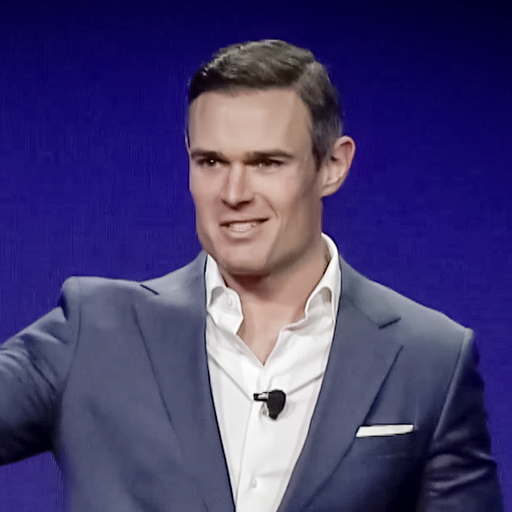
Women in B2B sales: where the profession stands today
Women hold roughly 39% of sales roles globally, according to LinkedIn Workforce Report data, yet represent fewer than 25% of sales leadership positions. The gap between entry-level representation and senior advancement is one of the defining structural tensions in the profession today. At ZoomInfo, an all-in-one AI GTM Platform, sellers like Jessica Rogers and Megan Hanisko are part of a cohort rewriting what a top-performing sales career looks like.
Rogers, an Account Executive at ZoomInfo, puts it plainly: "Yes it's true, women are a minority in the tech environment, but I think the beauty of this career that we've chosen is it's the leaderboard that counts. At the end of the day, it's the money you put up and the deals you bring in."
That framing matters. In a profession where advancement has historically depended on who you know as much as what you close, the leaderboard is a leveler. Women in B2B sales and women in tech sales are increasingly building careers on exactly that logic.
Why the old sales playbook was written without women in mind
Women in B2B sales have long navigated a profession whose norms were built around a different archetype. Research published by the Academy of Marketing Science documents several structural and cultural barriers that have kept women underrepresented: male-dominated workplace norms, the persistent association between "aggressive selling" and sales competence, and a near-absence of visible female role models in senior sales leadership.
The numbers reflect this. According to McKinsey's Women in the Workplace research, women hold fewer than one in four senior sales leadership roles in corporate America, a figure that has moved slowly despite years of stated organizational commitment to diversity. The pipeline of women entering sales has grown, but the pathways to advancement have not kept pace.
The barriers are not simply a matter of individual preference or aptitude. They are structural: hiring practices that favor candidates who fit an existing cultural mold, mentorship networks that form along gender lines, and performance evaluation criteria that can conflate communication style with capability. Women who enter sales with consultative, relationship-oriented approaches sometimes find those strengths undervalued in cultures that reward high-volume, high-pressure tactics.
The good news is that the profession is changing, and the change is not cosmetic. As enterprise B2B buying has grown more complex, the skills that were once treated as soft have become hard competitive advantages. Women who understand the structural context can navigate it with more agency, and build careers on the terms that actually drive modern deals.
The competitive advantage women bring to complex B2B deals
Harvard Business Review has argued that women are the future of B2B sales. The argument is not sentimental, it is structural. Modern enterprise buying involves multiple stakeholders, extended cycles, and decisions made by consensus across functions. The skills that drive outcomes in those environments are consultative listening, empathy mapping, and the ability to build trust across a buying committee where no single person controls the outcome.
These are not soft skills. They are the mechanics of how complex B2B deals close. A rep who can identify the unspoken concern of a procurement lead, or who can hold a multi-threaded conversation without losing track of each stakeholder's priorities, has a measurable advantage in late-stage deals. Consultative communication reduces the late-stage surprises that kill pipeline. Relationship-building skills extend the lifetime value of accounts after the close.
Megan Hanisko, Sales Development Representative at ZoomInfo, describes finding her own version of this: "I like that I get to define what that role means for me. It doesn't have to be what works for everyone else. For me, I found what works and it's cool that it shows on the leaderboard."
That observation is the business case in miniature. The leaderboard does not care about style, it cares about outcomes. Women in tech sales who lean into their natural strengths rather than mimicking an archetype that was never designed for them are increasingly finding that those strengths are exactly what modern enterprise selling rewards.
What female mentorship actually changes on a sales team
The Hanisko-Rogers dynamic at ZoomInfo illustrates something that mentorship research has documented but rarely makes concrete: the difference between knowing advancement is theoretically possible and seeing it modeled by someone one career stage ahead of you.
Hanisko, an SDR who sets meetings for Rogers, an Account Executive, describes the effect directly: "One thing that I love about working alongside Jessica is that I know that it's not some pie in the sky dream of being able to accomplish the success that she has. I just know that if I lean on her, if I work hard enough, if I put in the hours and the effort that she does, that it's completely attainable."
This is what female mentorship actually changes. It is not only about having someone to ask questions you would not raise with a male colleague, though that matters, and mentors do help new hires navigate topics that women have historically been more reluctant to discuss in mixed-gender settings. It is also about the visibility of the career ladder itself.
When women hold management and leadership positions, incoming female professionals receive a clear signal that growth is possible. When that visibility exists at the peer level, an SDR watching an AE one step ahead of her, the career ladder becomes something you can trace with your own hands, not just read about in a company values document.
There is also a structural impact that extends beyond individual relationships. Female mentorship programs create a feedback loop: women who advance become mentors, which increases the visibility of the ladder for the next cohort, which improves retention and representation over time. The SDR-to-AE dynamic is the early stage of that loop in action. What changes when women can see their own trajectory modeled by a peer is not just motivation, it is the concrete knowledge that the path exists and someone has already walked it.
The B2B sales career ladder: where women advance and where they stall
The standard progression in B2B sales runs from SDR to AE to Senior AE to Sales Manager to Director of Sales to VP of Sales. Each stage has a typical timeline and a key skill unlock: SDRs build prospecting fundamentals and pipeline generation habits (12-18 months); AEs develop full-cycle deal management and multi-threading skills (2-3 years); Senior AEs take on larger territories and more complex buying committees; Managers shift from personal quota to team quota and coaching; Directors add cross-functional coordination and forecasting ownership; VPs own the full revenue number and organizational design.
Women advance through the early stages of this ladder at rates close to their male peers. The stall points come later, and they are well-documented. McKinsey's Women in the Workplace research identifies the individual contributor-to-manager transition as the "broken rung", the point where women are promoted at lower rates than men with equivalent performance, often because sponsorship (active advocacy by a senior leader) is less available to them than mentorship. The manager-to-VP transition compounds this: women who do reach management face a narrower pipeline of VP-level opportunities and are more likely to be passed over for roles that require high organizational visibility.
What moves the needle at these stall points is specific. Sponsorship matters more than mentorship at the manager level: a senior leader who actively advocates for a candidate in a promotion conversation has more impact than a mentor who offers advice. Leaderboard performance creates the visibility that sponsors need to make that case. Building internal advocates across functions, not just within the sales org, expands the network of people who can speak to a candidate's readiness.
The Hanisko-Rogers dynamic is the early-stage version of this ladder in action: an SDR building the habits and relationships that make the AE transition concrete, not hypothetical.
How women are reshaping what top performance looks like in B2B sales
Women in B2B sales are not just participating in the profession, they are redefining what quota attainment looks like in organizations that give them the right tools and environment. McKinsey research on gender diversity and revenue performance has consistently found that companies in the top quartile for gender diversity outperform their peers on profitability. Salesforce State of Sales data points in the same direction: teams with stronger gender representation report higher quota attainment rates.
The platform a rep works on shapes how much of that potential translates into closed revenue. ZoomInfo's approach to this starts with the most comprehensive B2B data available: 500M contacts, 120M direct-dial phone numbers, and 200M+ verified business emails, continuously verified by 300+ human researchers. Accurate data eliminates the prospecting friction that disproportionately erodes selling time, the wrong numbers, the bounced emails, the sequences that die before they start.
On top of that data foundation sits the GTM Context Graph, the intelligence layer that processes 1.5B+ data points daily to tell reps not just what happened in an account, but why. It fuses ZoomInfo's B2B data with CRM records, conversation intelligence, and behavioral signals into a unified reasoning layer, so reps walk into every conversation with the context that makes it compelling. And through GTM Workspace, that intelligence is available inside the workflows sellers already use, without adding another tool to the stack.
The outcomes are concrete. Seismic achieved a 54% productivity gain and saved 11.5 hours per week per rep using ZoomInfo GTM Workspace. Thomson Reuters saw a 40% increase in closed-won deals and 115% average monthly quota attainment.
If you want to see how ZoomInfo's AI GTM Platform supports sellers at every stage of the career ladder, request a demo.
Where women in B2B sales are finding the most opportunity
Sales jobs for women are not equally distributed across verticals. Some industries have moved faster on representation, culture, and compensation structure, and understanding where the opportunity concentrates is practical career intelligence.
A brief intro before the breakdown: the verticals below are not ranked by prestige, they are ranked by the combination of growing female representation, accessible entry points, and strong OTE potential that practitioners and workforce researchers consistently cite.
SaaS and tech sales. The highest OTE potential in B2B sales, with remote-friendly cultures and a growing cohort of women in sales leadership. LinkedIn Workforce Report data shows SaaS has seen the fastest growth in women in sales management roles over the past decade. Best for women who want high earning potential and flexibility in how they work.
Pharmaceutical and life sciences. One of the longest-standing verticals for women in sales, with strong representation at the field rep level and a culture that has historically valued relationship-building skills. Glassdoor data consistently shows pharmaceutical sales among the highest-rated industries for work-life balance. Best for women with science backgrounds or interest in healthcare who want a structured, high-touch sales motion.
Financial services. Growing representation at the individual contributor level, with increasing investment in DEI programs at major firms. RepVue data points to financial services as a high-quota-attainment vertical for reps with strong consultative skills. Best for women who want complex, multi-stakeholder deals and long-term client relationships.
Professional services. Consulting, legal tech, HR tech, and adjacent categories reward the consensus-building and relationship-management skills that research consistently associates with women's sales strengths. Best for women who want to sell solutions that require deep discovery and multi-year account relationships.
A note on intersectionality: women of color face compounded barriers in all of these verticals, including additional layers of credibility bias and narrower sponsorship networks. Organizations specifically serving this community include Sistas in Sales (founded by Chantel George, focused on women of color in sales) and GirlzWhoSell (founded by Heidi Solomon-Orlick, providing training and community for women across sales roles). Both are worth knowing about regardless of where you are in your career.
Communities and voices shaping women in B2B sales
The women-in-B2B-sales community on LinkedIn has matured into a recognized professional development channel, with dedicated organizations, founders, and content creators serving thousands of practitioners. If you are building a career in this space, these are the communities and voices worth following.
Sistas in Sales (Chantel George, Founder): Community and professional development organization focused specifically on women of color in sales. Provides networking, mentorship, and advocacy resources for an underserved segment of the profession.
GirlzWhoSell (Heidi Solomon-Orlick, Founder): Training, community, and career development for women across all stages of a sales career. Known for practical skills programming and a strong LinkedIn presence.
Women in Sales Leadership Forum (Gina Stracuzzi, Founder): Leadership development organization focused on advancing women into senior sales roles. Programming addresses the specific barriers at the manager-to-VP transition where women disproportionately stall.
She Sells / Superhuman Selling (Elyse Archer, Founder): Coaching and community for women in sales, with a focus on identity, confidence, and building a sales approach that aligns with personal strengths rather than mimicking a generic playbook.
Score More Sales (Lori Richardson, Founder): Sales strategy, advocacy, and content focused on helping women build sustainable sales careers. Richardson is one of the most cited voices on women's representation in sales leadership.
DemandJen (Jen Allen-Knuth): Demand creation content and community with a strong focus on modern B2B selling skills. Allen-Knuth's content on cold outreach, multi-threading, and buyer psychology is widely followed by practitioners at every career stage.
Frequently asked questions
Why are there so few women in B2B sales?
Research from the Academy of Marketing Science points to structural and cultural barriers: male-dominated workplace norms, a lack of visible female role models in senior sales roles, and stereotypes that associate aggressive selling styles with masculinity. These are systemic issues, not individual preference gaps. Companies investing in female mentorship programs and visible career ladders are seeing measurable improvements in retention and representation of women in B2B sales.
Are women effective in B2B sales roles?
Research and practitioner experience both point to yes, and for specific structural reasons. Complex B2B buying processes involve multiple stakeholders, long cycles, and consensus-building, which align well with consultative communication styles, active listening, and relationship-building skills. Harvard Business Review has argued that women are the future of B2B sales precisely because modern enterprise selling rewards these competencies in women in B2B sales and beyond.
What organizations support women in B2B sales?
Several women-founded organizations serve this community: Sistas in Sales (Chantel George, focused on women of color in sales), GirlzWhoSell (Heidi Solomon-Orlick, training and community), Women in Sales Leadership Forum (Gina Stracuzzi, leadership development), She Sells (Elyse Archer, coaching), and Score More Sales (Lori Richardson, sales strategy and advocacy). All are active on LinkedIn and provide community, coaching, and DEI advocacy resources.
What B2B sales verticals offer the best opportunities for women?
SaaS and tech sales, pharmaceutical/life sciences, and financial services are consistently cited as high-opportunity verticals for women, combining strong OTE potential with growing representation and remote-friendly cultures. SaaS in particular has seen significant growth in women in sales leadership over the past decade. The best fit for sales jobs for women depends on communication style, industry interest, and desired compensation structure.
How does ZoomInfo support women in sales careers?
ZoomInfo, an all-in-one AI GTM Platform, employs quota-carrying sellers like Jessica Rogers and Megan Hanisko who have spoken publicly about how the leaderboard-driven culture rewards performance over politics. The platform itself reduces the research and data-quality friction that disproportionately erodes selling time, giving every rep more hours to spend on the activities that move deals. Sellers interested in learning more can talk to our team.
How do women handle credibility bias in B2B sales conversations?
Credibility bias, being perceived as less authoritative than male peers, is a real challenge women face in enterprise sales, particularly in male-dominated buying committees. Effective responses include leading with data and customer outcomes early in the conversation, building a track record of specific metrics that speak for themselves, and leveraging the consultative listening skills that research shows are a genuine competitive advantage in complex deals. The leaderboard ultimately validates performance over perception.