
Choosing between Bitrix24 vs. HubSpot for your business often comes down to these five questions:
Do you need an affordable all-in-one workspace, or a CRM platform with marketing automation?
Is flat-rate pricing for your entire team more important than the best user experience?
Are you managing internal operations alongside sales, or focused on revenue growth?
Do you need project management, HR tools, and a website builder bundled with your CRM?
Is your biggest challenge managing the deals you already have, or finding the right accounts to pursue?
In short, here's what we recommend:
Bitrix24 is the all-in-one workspace for teams that want CRM, project management, team chat, HR tools, and a website builder under a single flat-rate subscription. Its team-based pricing with no per-user charges makes it attractive for growing teams: the Professional plan at $199/month covers up to 100 users, a cost structure no major competitor matches. For teams on tight budgets that need to replace five or six separate tools, Bitrix24 delivers breadth. The tradeoff is complexity. Its scope creates a steep learning curve and an interface reviewers call overwhelming. Customer support lags behind the platform itself.
HubSpot is a CRM platform for companies that grow through inbound marketing and structured sales. Its six integrated Hubs (Marketing, Sales, Service, Content, Data, Commerce) share a single Smart CRM, so marketing, sales, and service teams get one view of every customer interaction. HubSpot's Breeze AI automates prospecting, customer service, and content creation, while a 2,000+ app marketplace connects to almost any tool in your stack. The catch is cost. Per-seat pricing, mandatory onboarding fees at Professional and Enterprise tiers, and a rule that bills all Core Seats at your highest subscription tier's rate push costs up fast as teams grow.
Both platforms give you tools to manage sales pipelines, automate workflows, and track customer relationships. But for B2B companies, neither solves the problem upstream of your CRM: identifying the right accounts, detecting when they're ready to buy, and knowing what to say when you reach out. Your CRM manages the deals in your pipeline. The question is what fills that pipeline in the first place.
ZoomInfo is an AI GTM platform built on the largest B2B dataset available: 500M contacts, 100M companies, 135M+ verified phone numbers, and 200M+ verified business email addresses. ZoomInfo's GTM Context Graph fuses that data with your CRM records, conversation transcripts, and behavioral signals (processing 1.5B+ data points daily). The result: visibility into not just which accounts sit in your pipeline, but why deals move or stall and which accounts deserve attention next. Your team accesses this intelligence through GTM Workspace for sellers, GTM Studio for marketers and RevOps, or APIs and MCP in any front-end. ZoomInfo integrates with HubSpot and Salesforce, so it enhances your existing CRM rather than replacing it.
If finding and engaging the right B2B buyers is your primary growth constraint, see how ZoomInfo works.
Bitrix24 vs. HubSpot vs. ZoomInfo at a glance
Bitrix24 | HubSpot | ZoomInfo | |
|---|---|---|---|
Primary function | All-in-one business workspace | CRM and marketing automation platform | AI GTM platform |
Pricing model | Flat team-based, no per-user charges | Per-seat, per-hub with mandatory onboarding fees | Custom-quoted, consumption-based |
Starting price | Free (2 users); $49/month (5 users) | Free (2 users); $20/seat/month | Free (ZoomInfo Lite); custom for paid plans |
CRM capability | Full CRM with omnichannel contact center | Full CRM with marketing and sales automation | B2B contact and company intelligence with sales execution |
B2B data | Limited to your own records | Your records + some AI enrichment | 500M contacts, 100M companies, 135M+ verified phones |
AI capabilities | CoPilot across CRM, tasks, chat, video | Breeze AI agents across all Hubs | GTM Context Graph powering AI prospecting and signals |
Marketing tools | Email, social ads, landing pages | Full marketing automation, content hub, AEO | Account-based marketing, intent signals, native DSP |
Project management | Full (Kanban, Gantt, Scrum) | Limited (Beta) | Not a project management tool |
Integrations | 700+ marketplace apps | 2,000+ marketplace apps | 120+ integrations plus APIs and MCP access |
Best for | Budget-conscious teams consolidating tools | Scaling B2B/B2C companies with inbound strategy | B2B sales and marketing teams needing buyer intelligence |
Three platforms, three philosophies
Comparing Bitrix24, HubSpot, and ZoomInfo side-by-side is like comparing a utility knife, a chef's knife, and a metal detector. They're all useful, but they solve different problems at different stages of the same process.
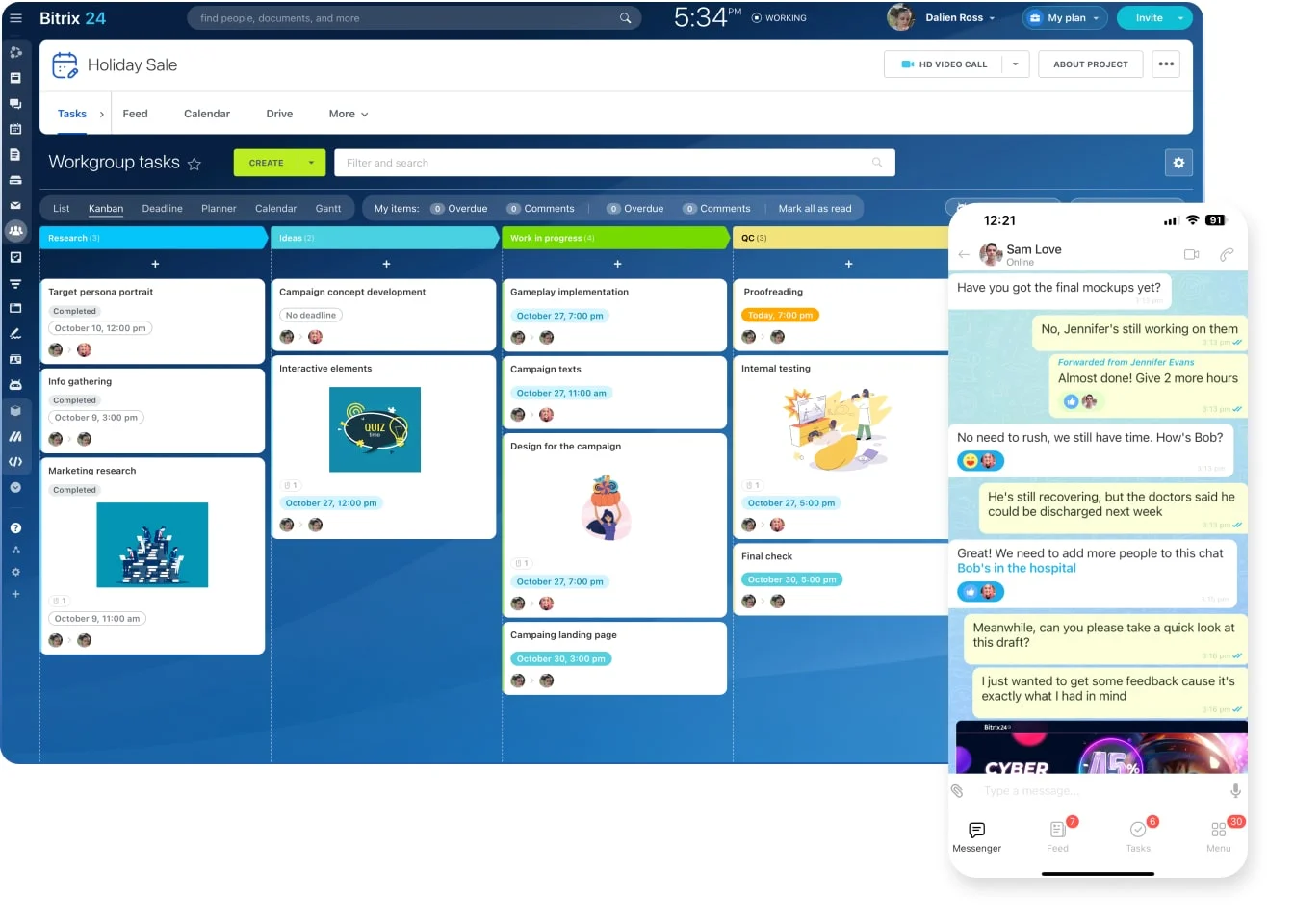
Bitrix24 starts from the premise that businesses overpay for fragmented tool stacks. Its answer: put CRM, project management, team collaboration, HR, a website builder, and an online store into one workspace with flat pricing.
Source: Bitrix24
The platform calls itself a "free online workspace for your business" and markets to everyone from solo entrepreneurs to enterprises. The tradeoff for this breadth is depth. Bitrix24's CRM handles pipelines and deals capably, but it doesn't generate the B2B buyer intelligence that sales teams increasingly need.
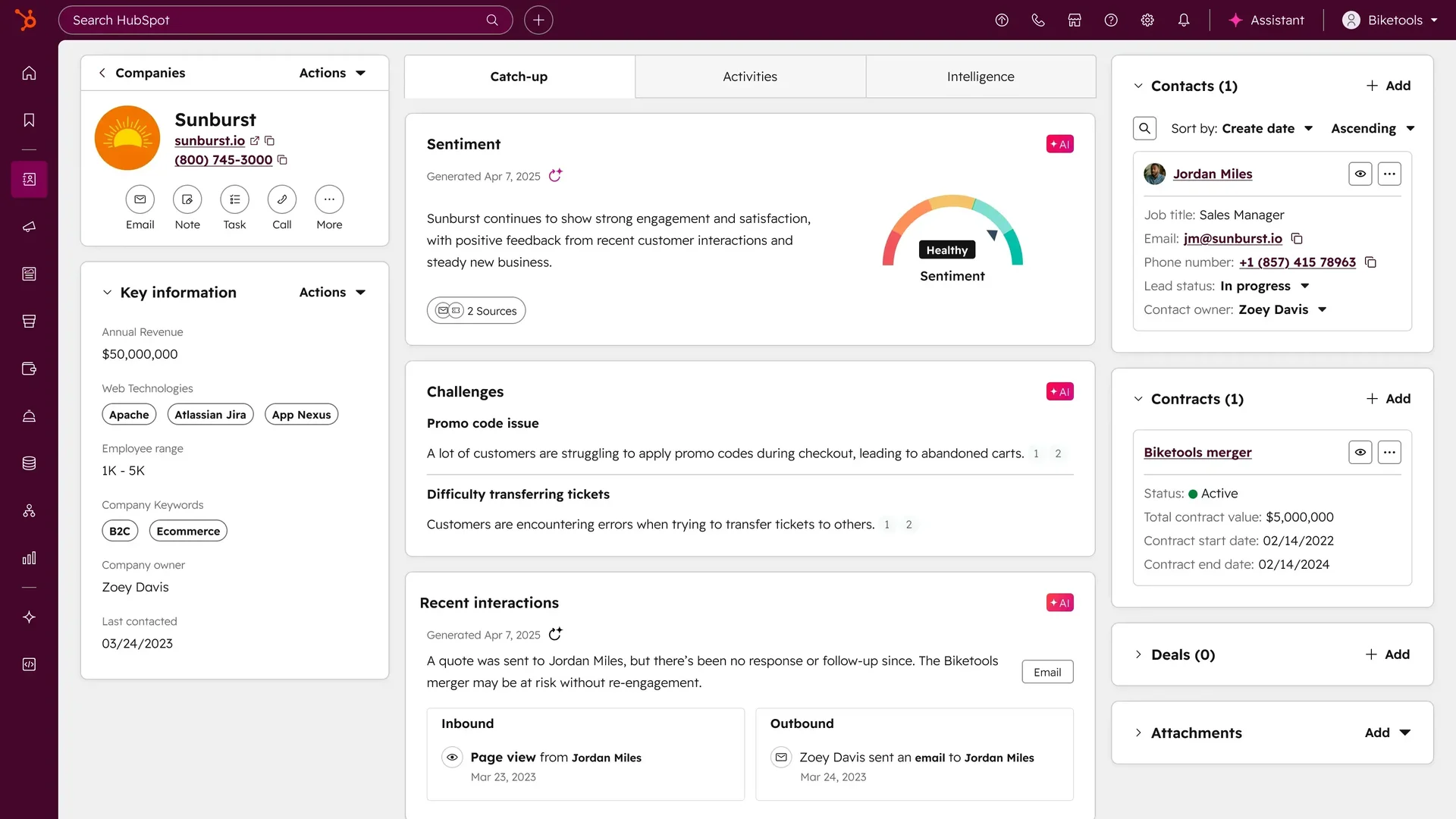
HubSpot starts from the premise that marketing, sales, and service should operate on shared data. Its six Hubs sit on a single Smart CRM that captures every interaction, from first website visit through closed deal and ongoing support.
Source: HubSpot
The platform positions itself as "the agentic customer platform" with AI agents that handle prospecting, customer service, and data management. HubSpot excels at turning inbound interest into pipeline. But its data is limited to what your team enters and what visitors reveal through your own channels.
ZoomInfo starts from a different question: what if AI had the full context of your deals and your market? The platform's GTM Context Graph fuses the largest B2B dataset available with your CRM data, conversation transcripts, and behavioral signals.
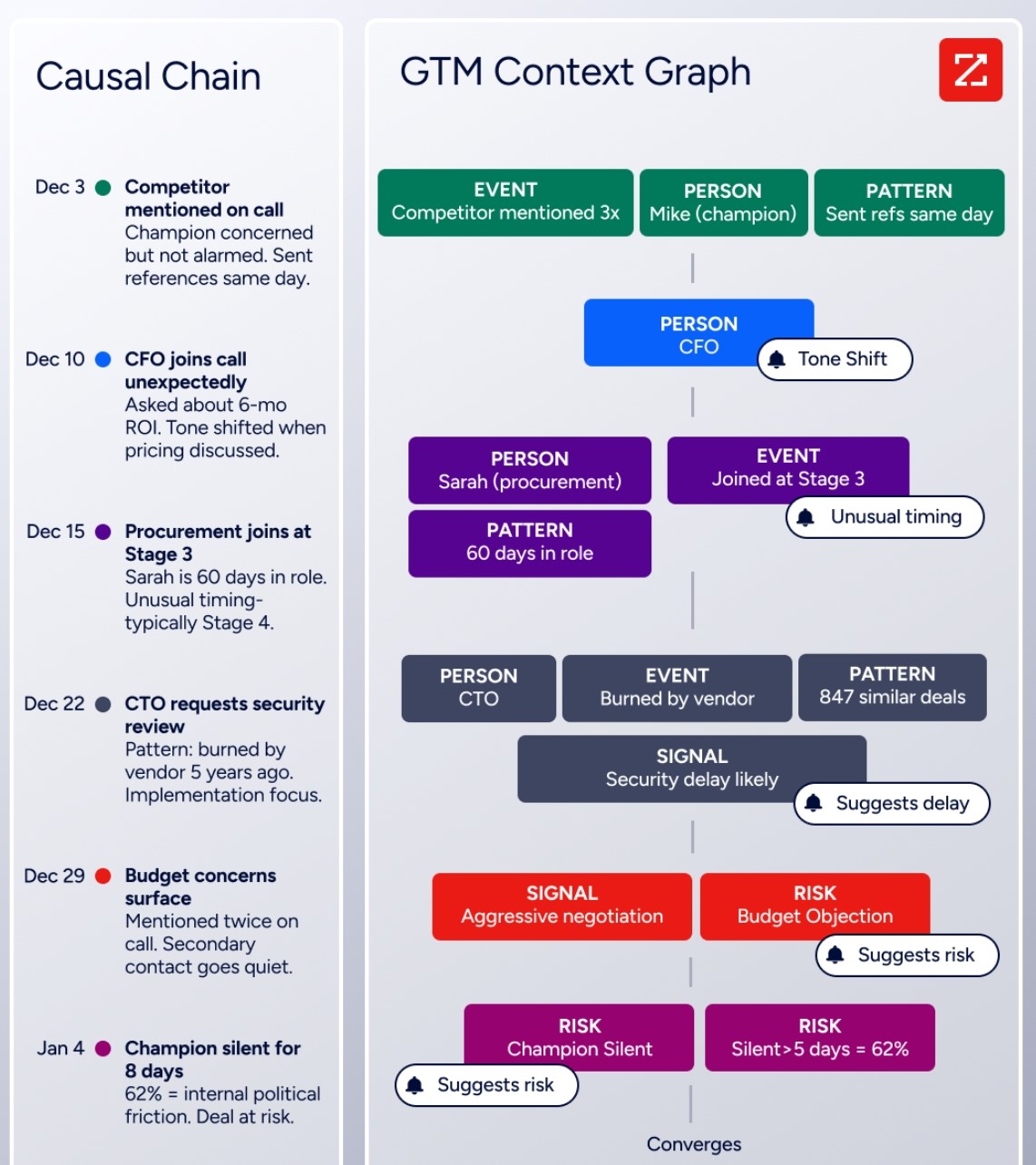
CRMs record that a deal moved stages. Conversation intelligence captures what the VP of Finance said on the last call. ZoomInfo connects all of it to surface why the deal moved and which accounts should get attention next.
For B2B companies, the choice often isn't between these three. It's about which layer matters most for your growth right now: operational breadth (Bitrix24), inbound automation (HubSpot), or buyer intelligence (ZoomInfo).
CRM and pipeline management compared
Bitrix24 and HubSpot are both legitimate CRM platforms. ZoomInfo is not a traditional CRM, but its workspaces are increasingly where B2B sellers spend their time.
Bitrix24's CRM offers configurable modes: Classic CRM with leads (full lead-to-deal pipeline) or Simple CRM without leads (every inquiry becomes a deal immediately).
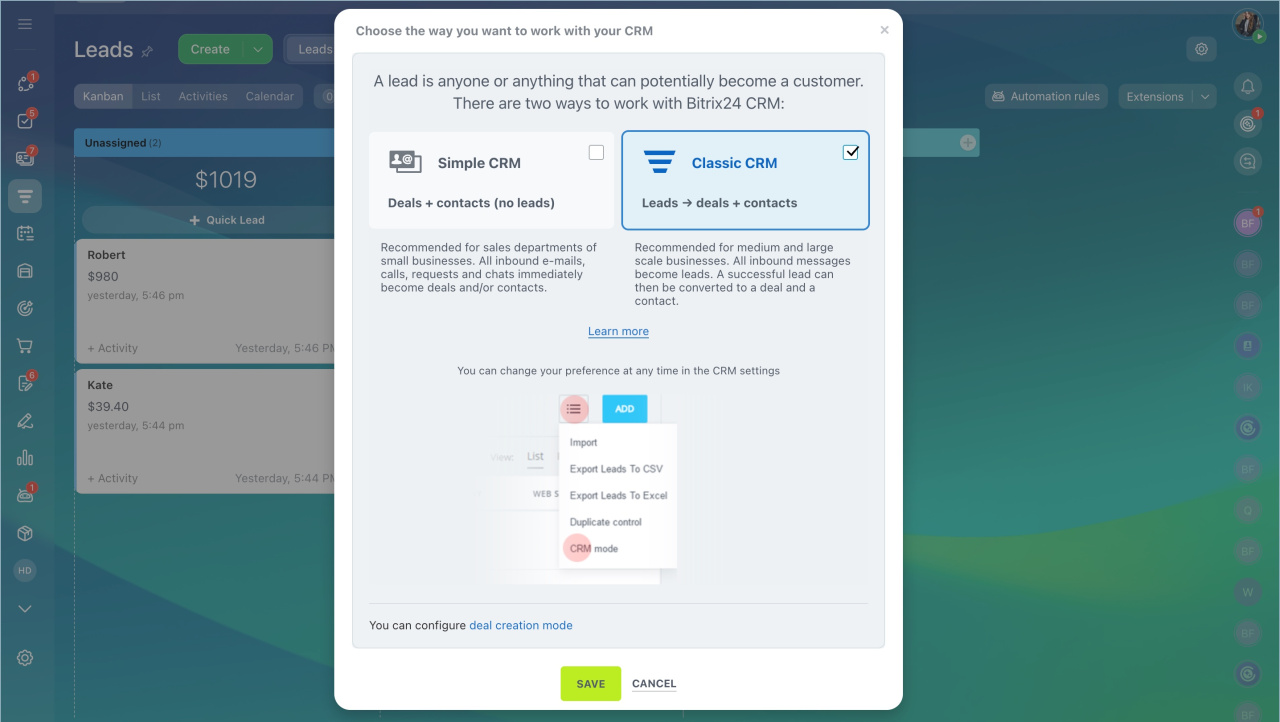
Source: Bitrix24
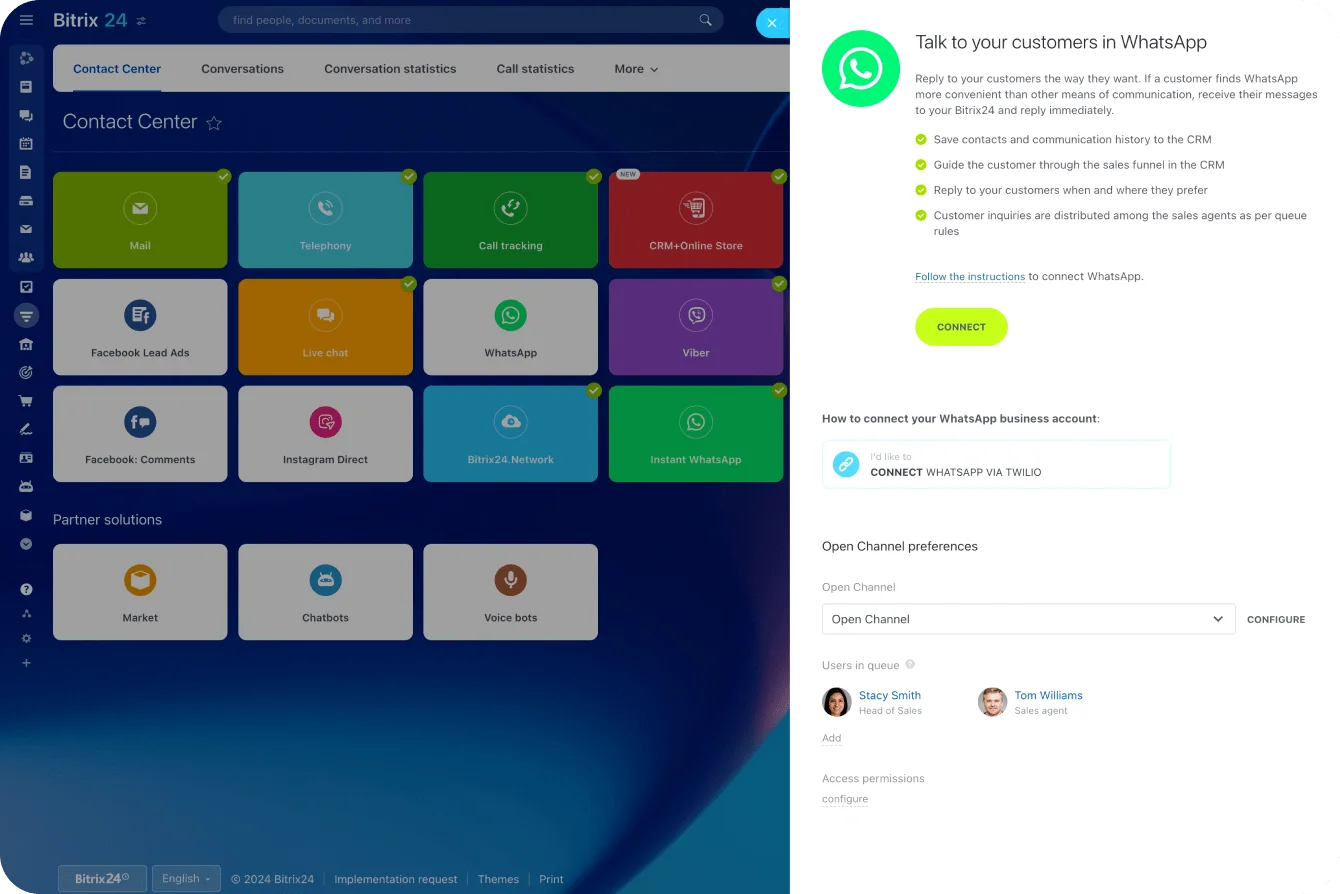
The omnichannel Contact Center pulls WhatsApp, Instagram, live chat, telephony, email, and web forms into a single inbox and creates CRM records automatically. For SMBs handling customer inquiries across channels, this built-in integration sets Bitrix24 apart.
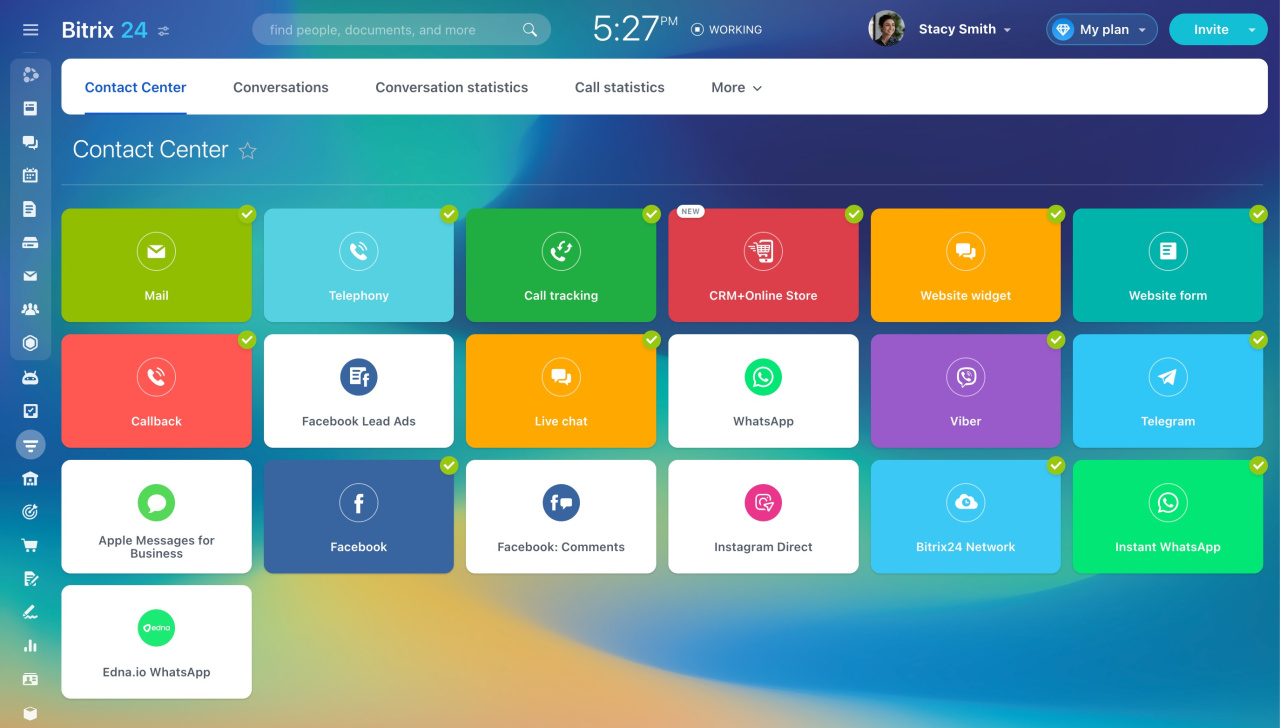
Source: Bitrix24
The CRM also includes invoicing, online payments, a product catalog with inventory management, and e-signature, so small teams can run sales operations from quote to payment without bolt-on tools.
Where Bitrix24's CRM falls short is in sophistication. G2 reviewers confirm that the platform requires heavy customization for complex sales organizations. Capterra reviewers note that automation workflows don't always pull updated contact information, so corrected records can still trigger messages with old data.
HubSpot's CRM is deeper and more polished. The Smart CRM supports up to 15 million contacts (expandable to 50 million), custom objects, field-level permissions, and sandbox environments. Sales Hub includes AI Guided Selling that surfaces prioritized queues and daily action summaries, Conversation Intelligence for call recording and coaching, and CPQ software that generates quotes from deal context.
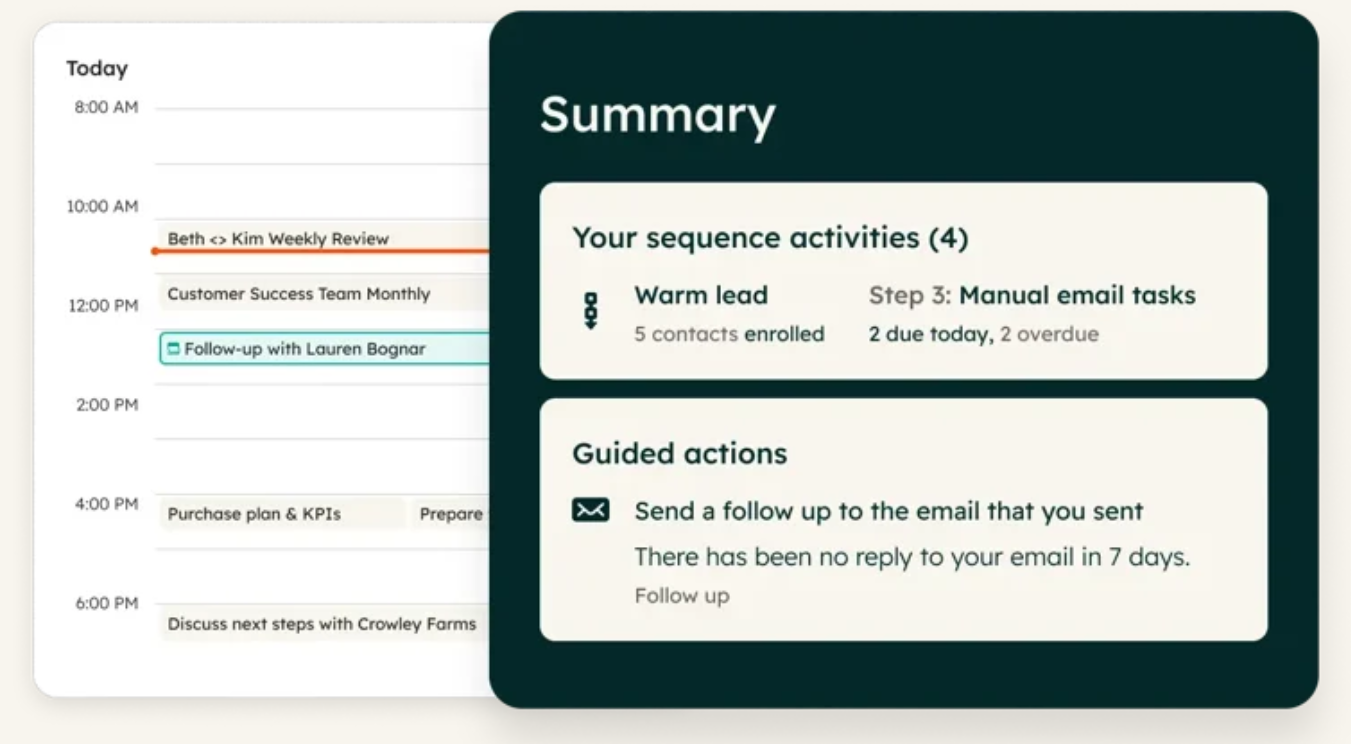
Source: HubSpot
For companies with structured sales processes and multiple pipeline stages, HubSpot offers more granular control and better reporting.
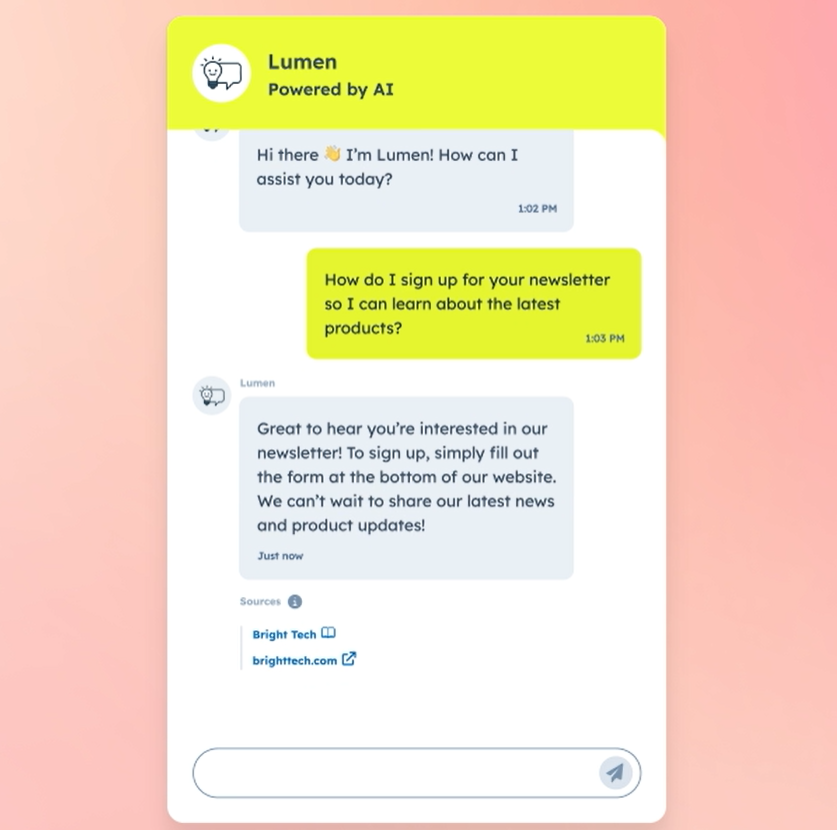
HubSpot also wraps customer service into the same data layer through Service Hub. The Breeze Customer Agent handles support inquiries across chat, email, WhatsApp, and Facebook Messenger.
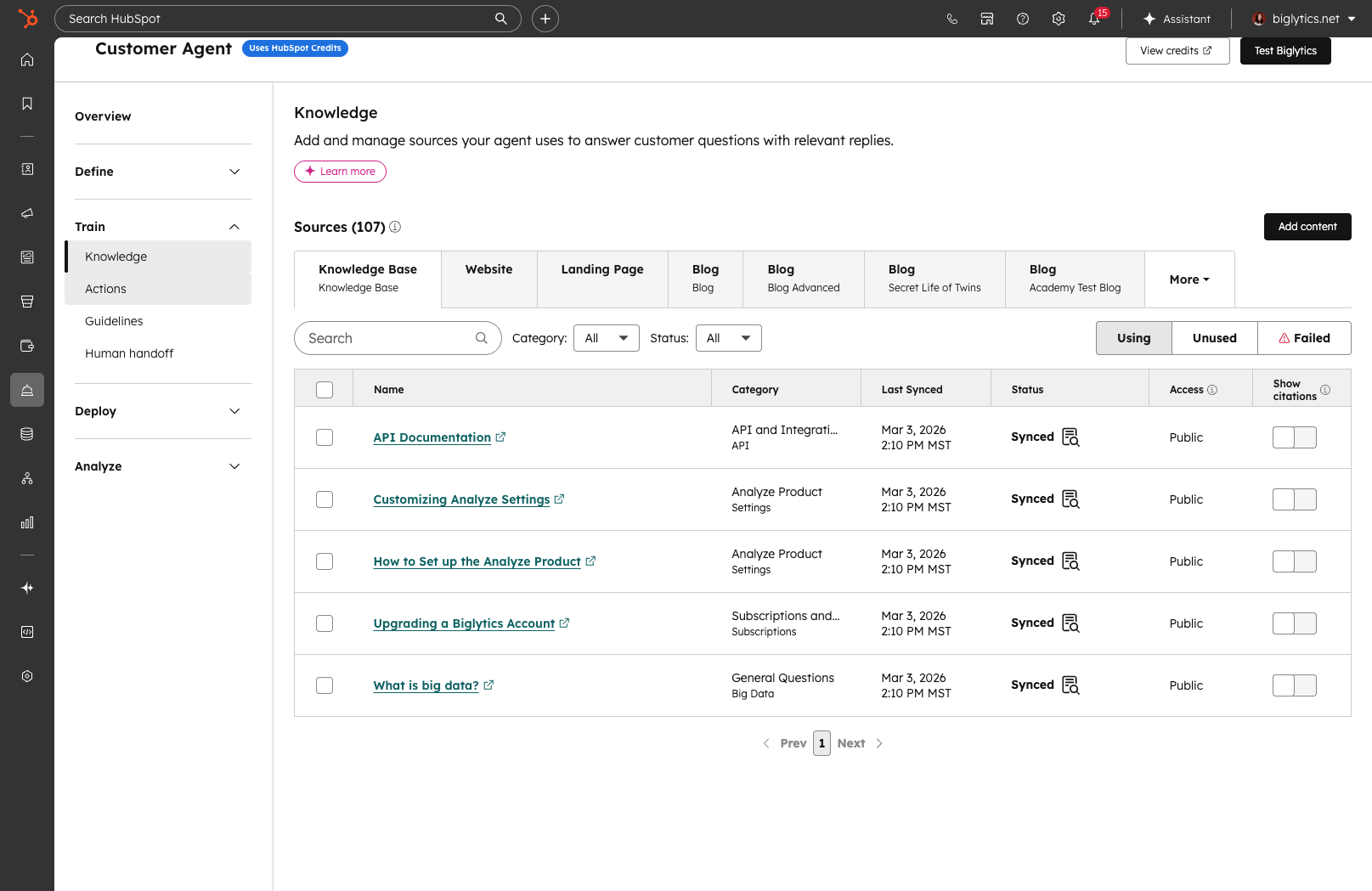
Source: HubSpot
ZoomInfo takes a different approach to pipeline. Instead of managing deals, ZoomInfo fills your pipeline with the right accounts and contacts. GTM Workspace gives sellers a Book of Business view that combines CRM data with real-time buying signals, AI-drafted outreach, and account briefs pulling together CRM history, company news, and stakeholder context in seconds.
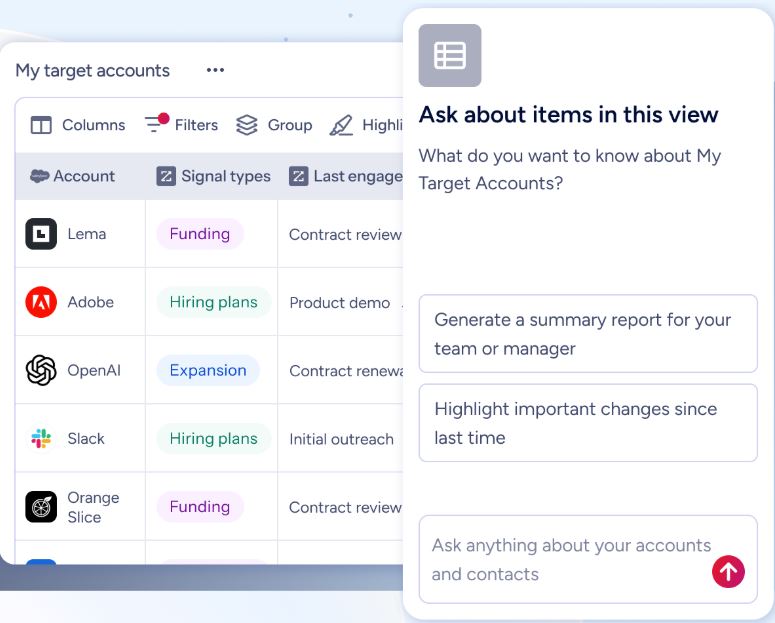
The Action Feed streams in-market buyers matched to your criteria, with pre-drafted messages on every signal. ZoomInfo integrates with Salesforce, HubSpot, and Microsoft Dynamics, so the intelligence flows into whichever CRM you already use.
Seismic's sales team attributed 39% of active pipeline to opportunities identified or influenced by ZoomInfo signals, with 54% productivity gains and 11.5 hours saved per week per seller. (Seismic)
The pricing gap is wider than you think
The pricing structures tell you who these platforms are built for.
Bitrix24 uses flat team-based pricing with no per-user charges:
Free: $0/month (perpetual), up to 2 users, 5 GB storage. Basic CRM, tasks, collaboration, website builder.
Basic: $49/month (annual), up to 5 users, 24 GB. Adds sales pipelines, telephony, email integration.
Standard: $99/month (annual), up to 50 users, 100 GB. Adds sales automation, invoicing, e-commerce.
Professional: $199/month (annual), up to 100 users, 1 TB. Adds CoPilot AI, call tracking, email marketing, RPA, HR tools.
Enterprise: Starts at $399/month for 250 users, scaling to $7,999/month for 10,000 users.
The math is simple. A 50-person team on the Standard plan pays $99/month total, roughly $2 per user per month. Try that with HubSpot.
HubSpot uses per-seat, per-hub pricing that compounds as you scale. The starting points look reasonable, but costs climb steeply:
Marketing Hub Professional: $800/month (annual) with a $3,000 mandatory onboarding fee. Includes 3 Core Seats and 2,000 marketing contacts.
Sales Hub Professional: $90/seat/month (annual) with a $1,500 mandatory onboarding fee.
Enterprise tiers: Marketing Hub at $3,600/month ($7,000 onboarding), Sales Hub at $150/seat/month ($3,500 onboarding).
The hidden cost that catches most buyers: when you subscribe to multiple Hubs at different tiers, all Core Seats are billed at the highest tier's rate. A company running Marketing Hub Professional and Sales Hub Enterprise pays Enterprise rates for every Core Seat across both Hubs.
HubSpot does offer a free tier: permanent access to basic CRM with unlimited contacts (up to 1M records), meeting scheduler, email tracking, and live chat, capped at 2 user seats. The Starter Customer Platform at $9/seat/month (annual) bundles Starter editions of all Hubs.
ZoomInfo uses custom-quoted, consumption-based pricing with no published dollar amounts. Pricing scales around seats, data credits (1 credit = 1 exported profile), features, and AI consumption. Direct price comparisons are difficult, but ZoomInfo targets enterprise and upper mid-market buyers, and the pricing reflects that.
ZoomInfo offers two free entry points: ZoomInfo Lite (permanent, no credit card required) with 10 monthly export credits and access to the B2B database, plus a 7-day free trial with access to core platform features.
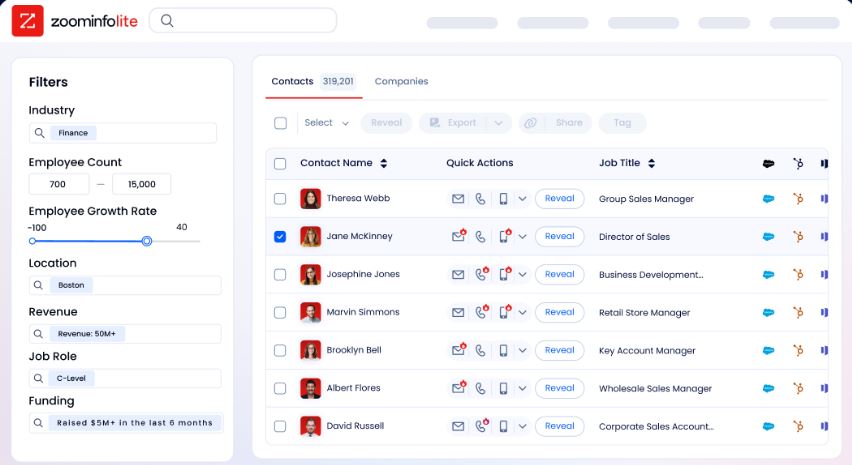
The pricing comparison highlights the positioning difference. Bitrix24 competes on affordability and breadth. HubSpot charges a premium for CRM depth and marketing automation. ZoomInfo's pricing reflects the value of verified B2B data and intelligence that neither CRM provides on its own.
The data gap most CRM buyers overlook
This is where the comparison shifts from tools to foundations. Bitrix24 and HubSpot manage the data your team enters and the interactions that happen through your channels. ZoomInfo generates the data your team needs before those interactions begin.
Bitrix24 stores contacts, companies, and deals. Data enters through manual input, web forms, and the omnichannel Contact Center. The platform has no native B2B data enrichment beyond what you or your customers provide. Want to know which companies in your target market use a specific technology stack?
How many VP-level decision-makers sit on a prospect's buying committee? Whether an account is researching your competitors? Bitrix24 can't tell you.
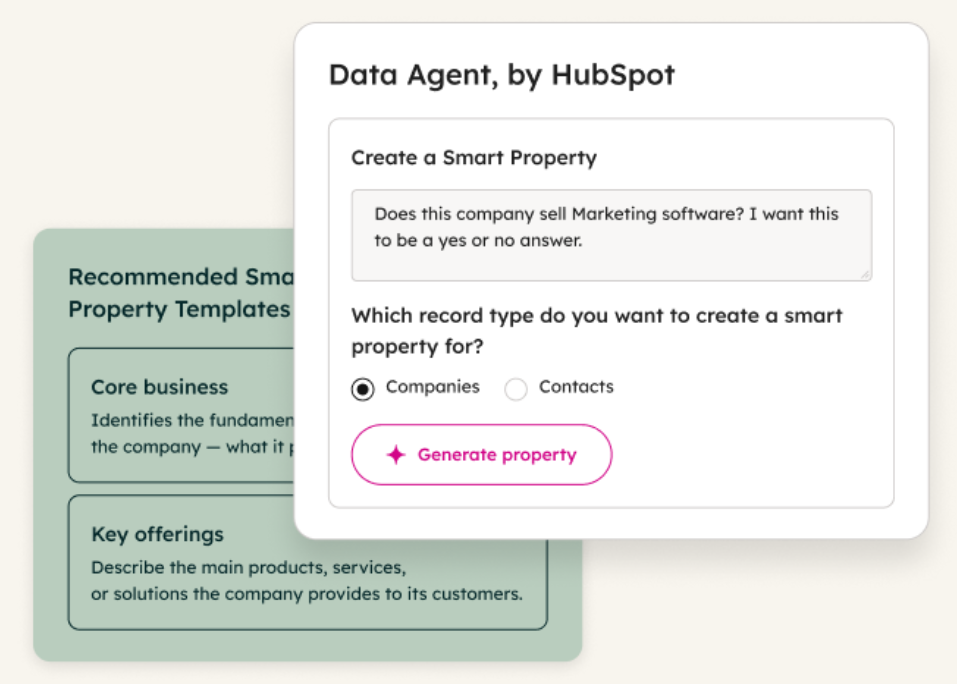
HubSpot is better positioned. Smart CRM includes AI-powered data enrichment that fills in missing contact and company fields from conversations and external sources. The Data Agent answers natural-language questions about your customers by searching CRM records, call recordings, and email threads.
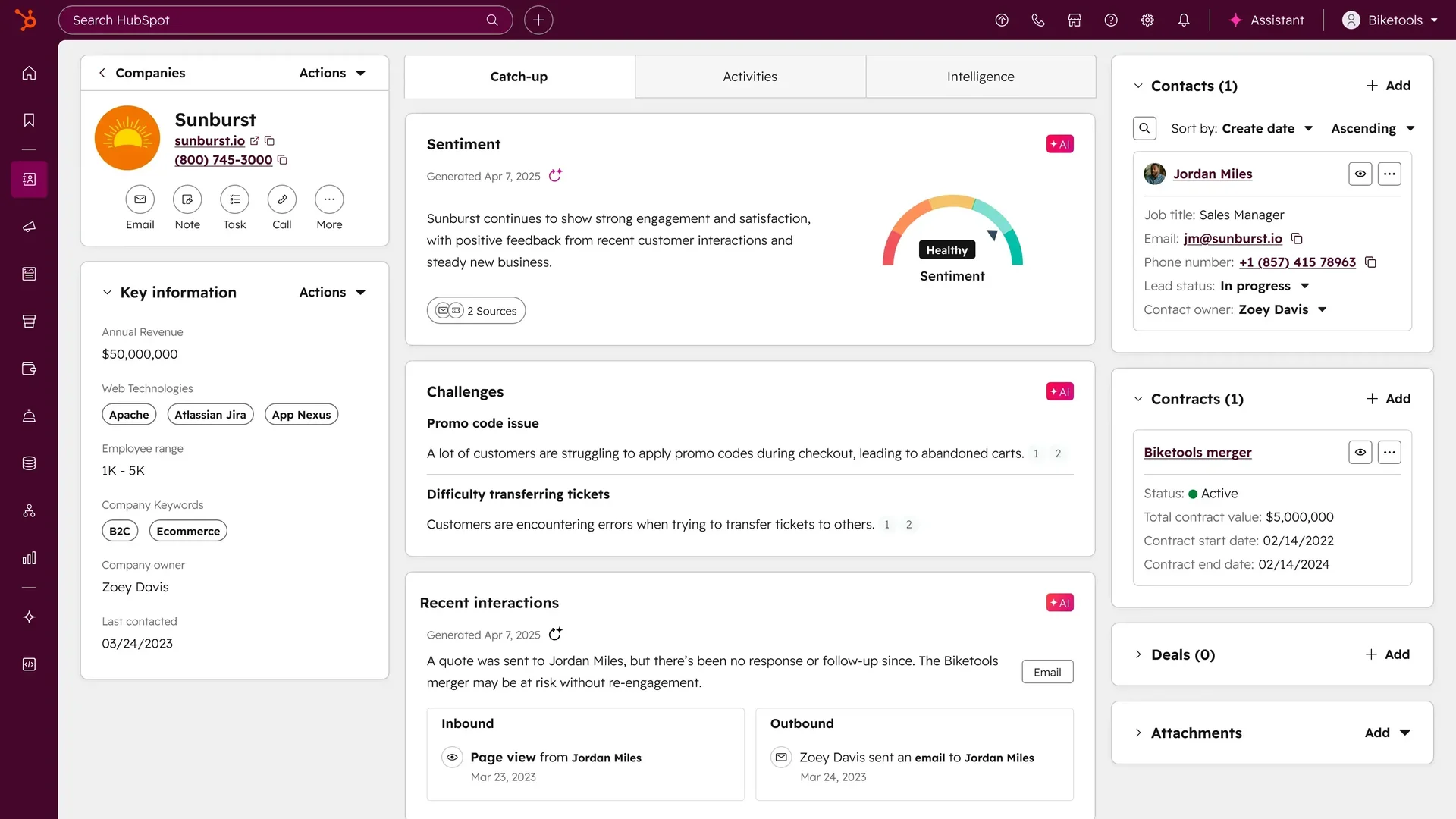
Source: HubSpot
These are real capabilities, but HubSpot's enrichment is reactive (it improves records you already have) rather than proactive (it doesn't surface the accounts you should be targeting but aren't).
ZoomInfo treats B2B data as the core product, not a supporting feature. The platform covers three dimensions at once: identity data (who buyers are and how to reach them), company context (firmographics, org charts, technographics), and live signals (intent data, website visitor identification, buying activity).
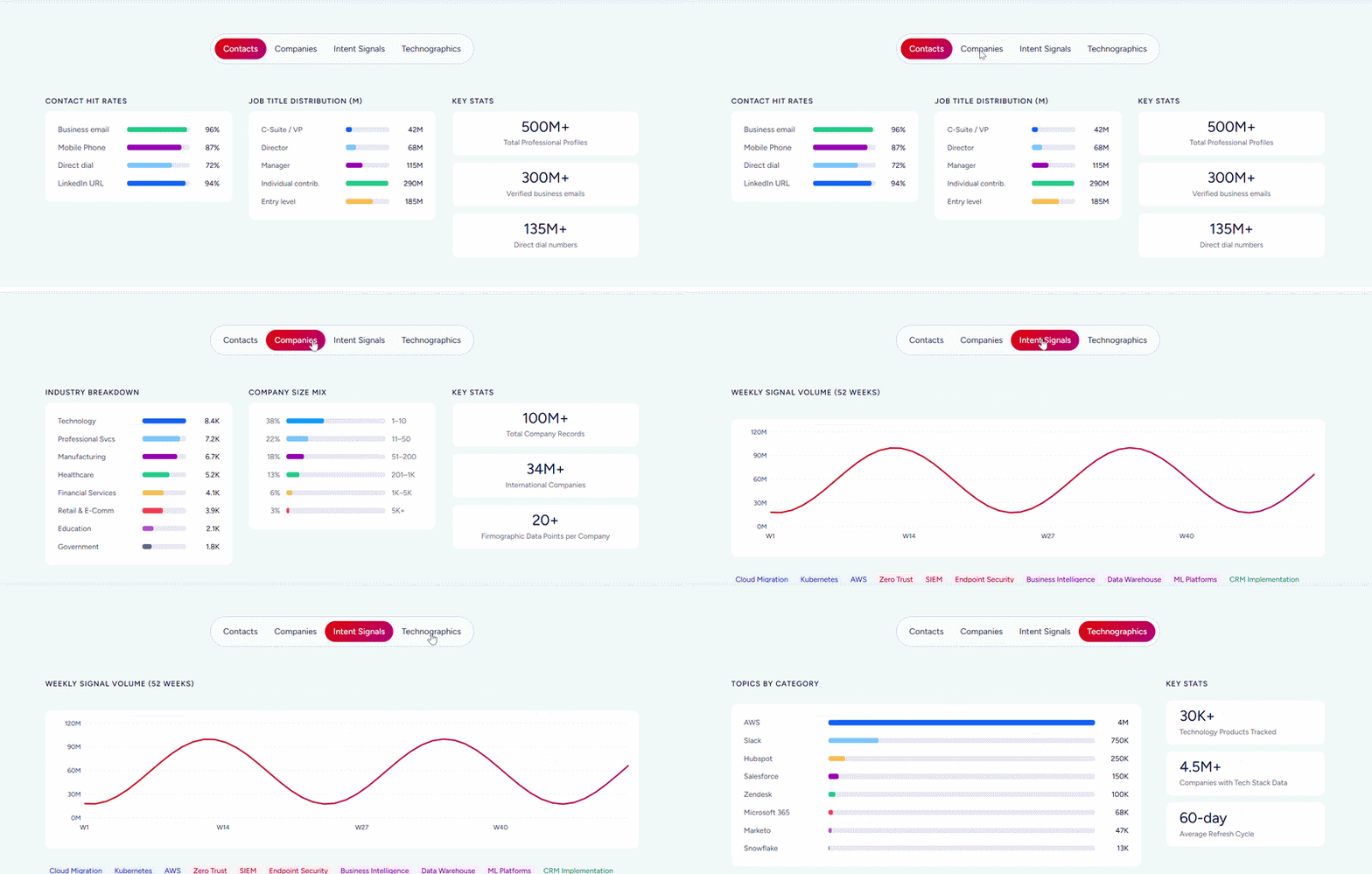
That data spans 500M contacts, 100M companies, 135M+ verified phone numbers, and 200M+ verified business email addresses, verified through a multi-source pipeline backed by 300+ human researchers with up to 95% accuracy on first-party data.
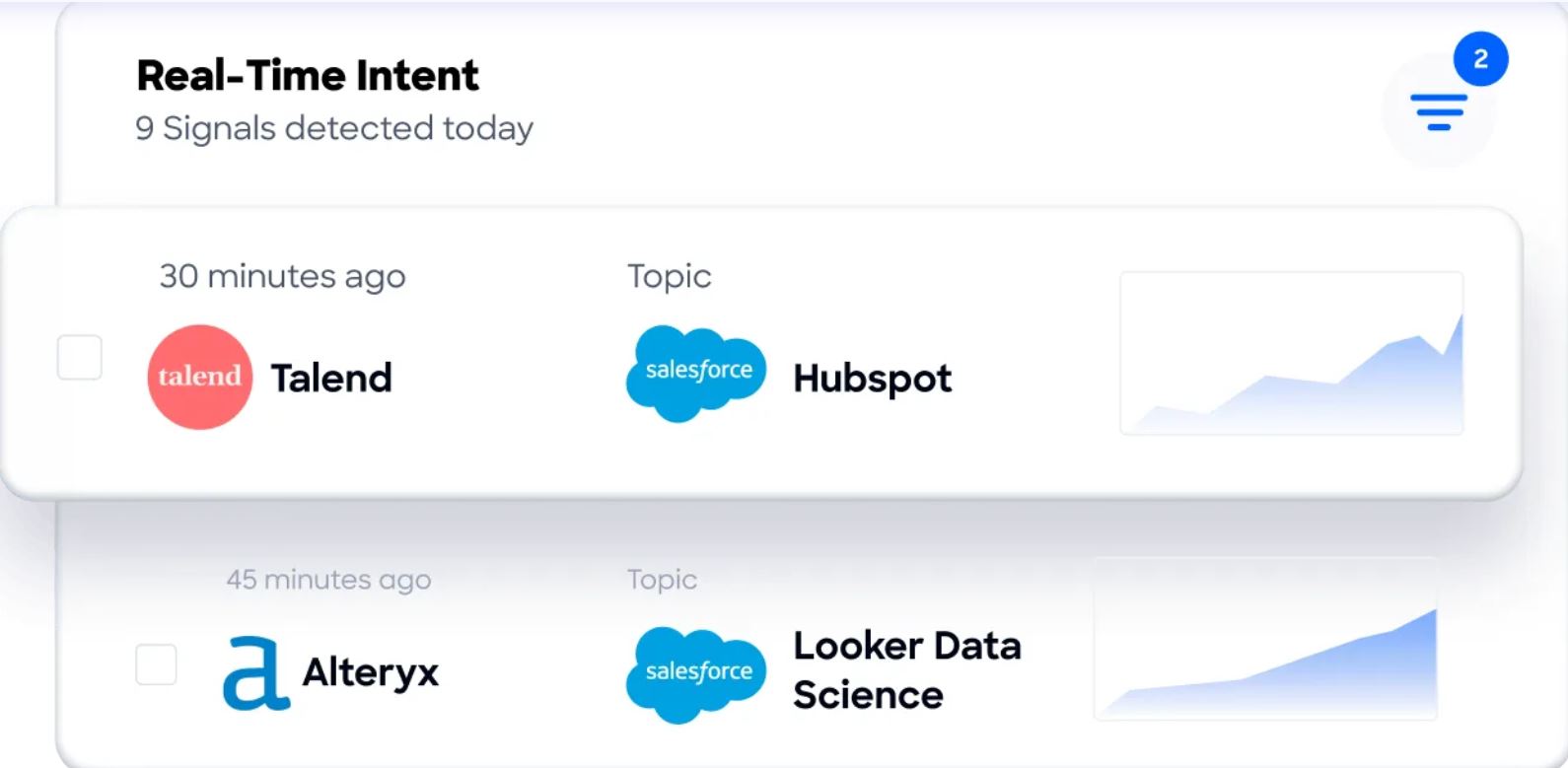
Buyer Intent data tracks signals from 210 million IP-to-Organization pairings and 6 trillion+ new keyword-to-device pairings sourced monthly.
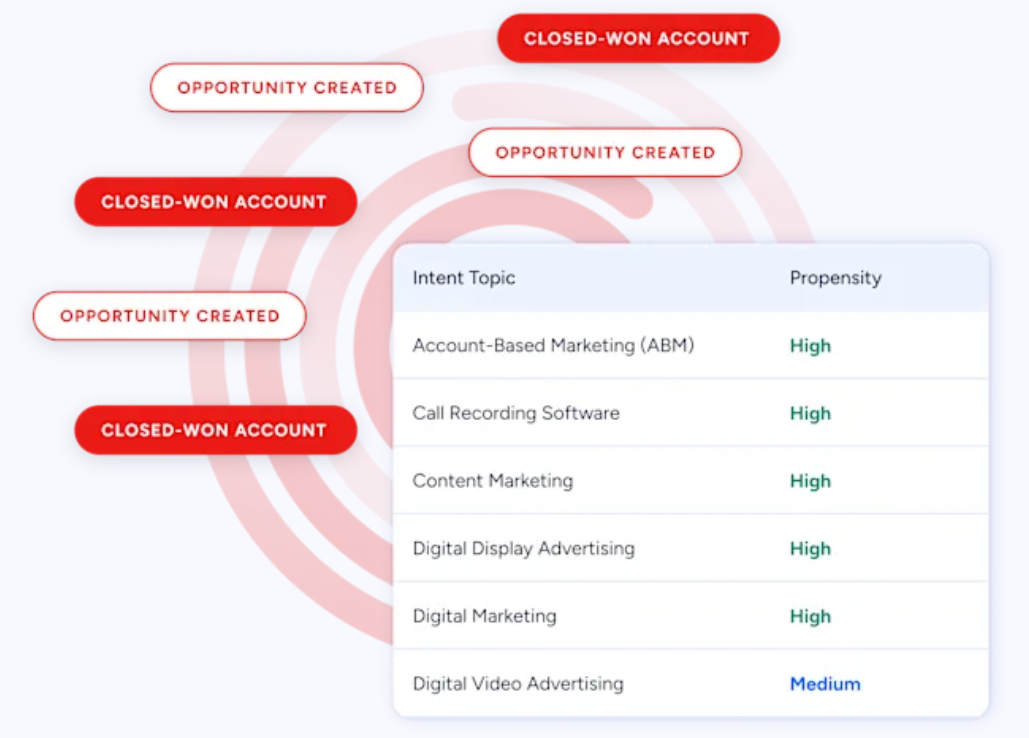
Guided Intent, exclusive to ZoomInfo, identifies topics correlated with deal success rather than requiring manual topic selection.
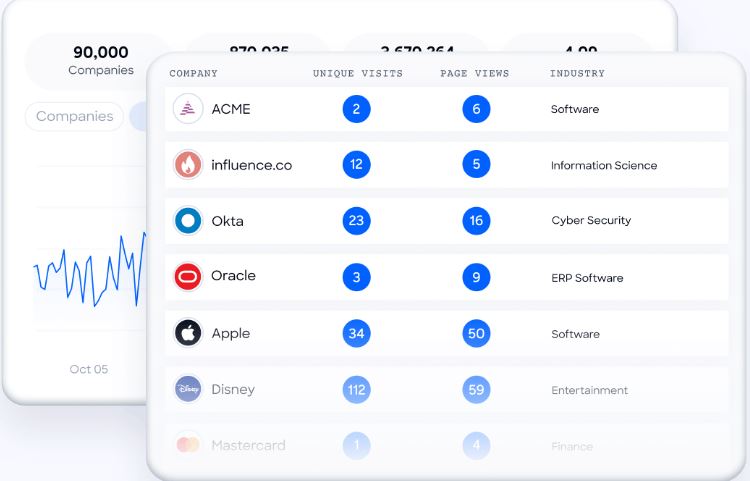
WebSights resolves anonymous website traffic to companies, including buying team identification and direct contact info.
Technographics profiles the tech stacks of 30+ million companies across 30,000+ technologies.
This data isn't locked inside ZoomInfo's interface. It flows into HubSpot, Salesforce, or any CRM through integrations and APIs. In a Fortune 500 competitive RFP analyzing 25 million contacts across vendors, the independent consultant concluded that "no other competitor came even close" to ZoomInfo's data quality.
SpringDB saw 2-3x increases in campaign conversions across channels, a 300% increase in database usability, 30-50% uplift in average deal size, and 20-40% reductions in customer churn using ZoomInfo's enriched data. (SpringDB)
For a focused look at how HubSpot and ZoomInfo compare on data quality, enrichment, and B2B intelligence, see our HubSpot vs. ZoomInfo comparison.
AI capabilities depend on what the AI knows
All three platforms invest in AI. The difference is what data the AI can access and what actions it can take.
Bitrix24's CoPilot is embedded across the platform: CRM, tasks, chat, Feed, video calls, websites, and workflows. In CRM, CoPilot transcribes call recordings, generates summaries, and auto-fills deal fields from call data.
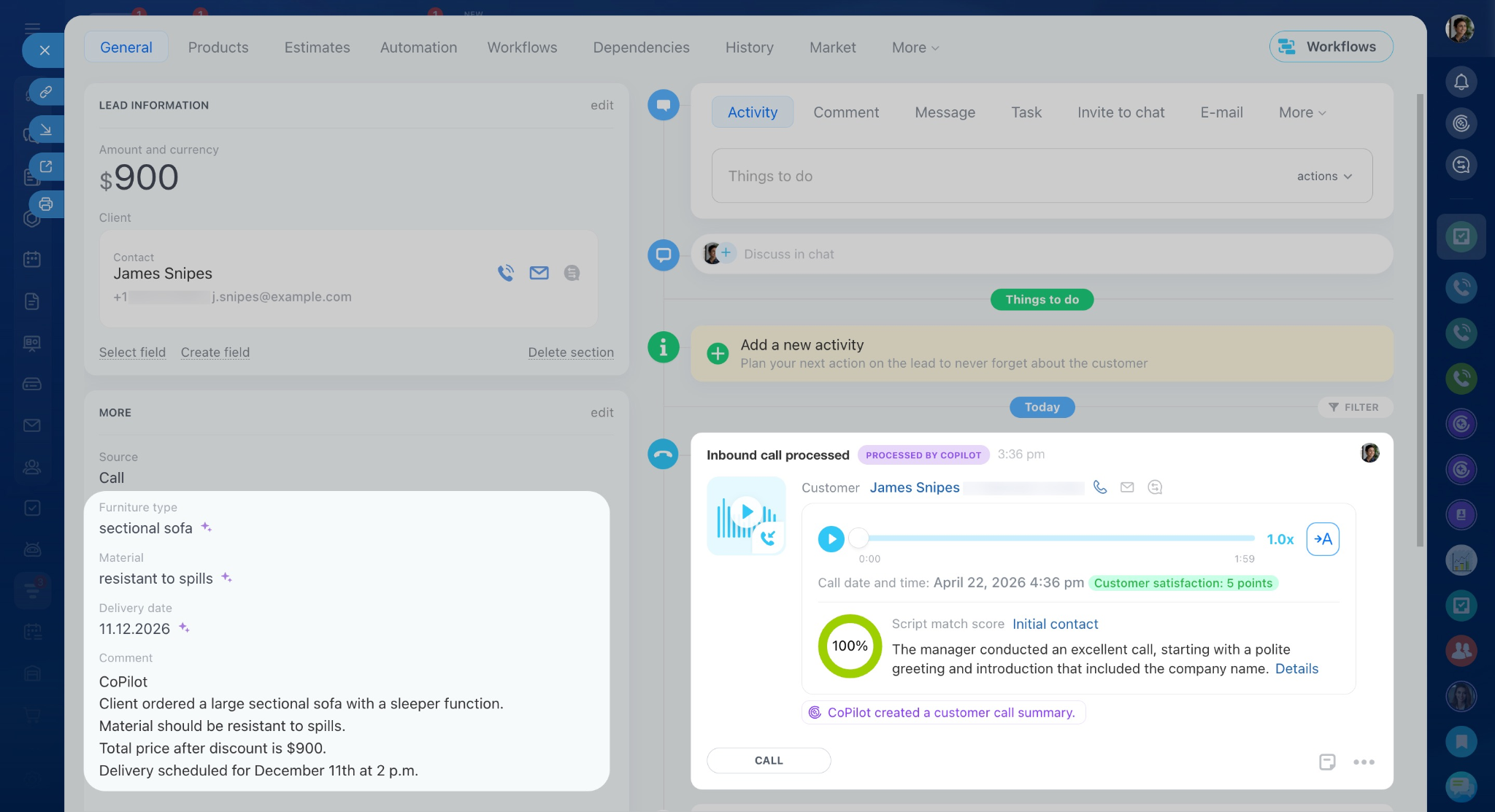
Source: Bitrix24
AI Speech analytics scores agent calls against sales scripts and recommends improvements. In tasks, CoPilot generates descriptions and checklists from brief outlines.
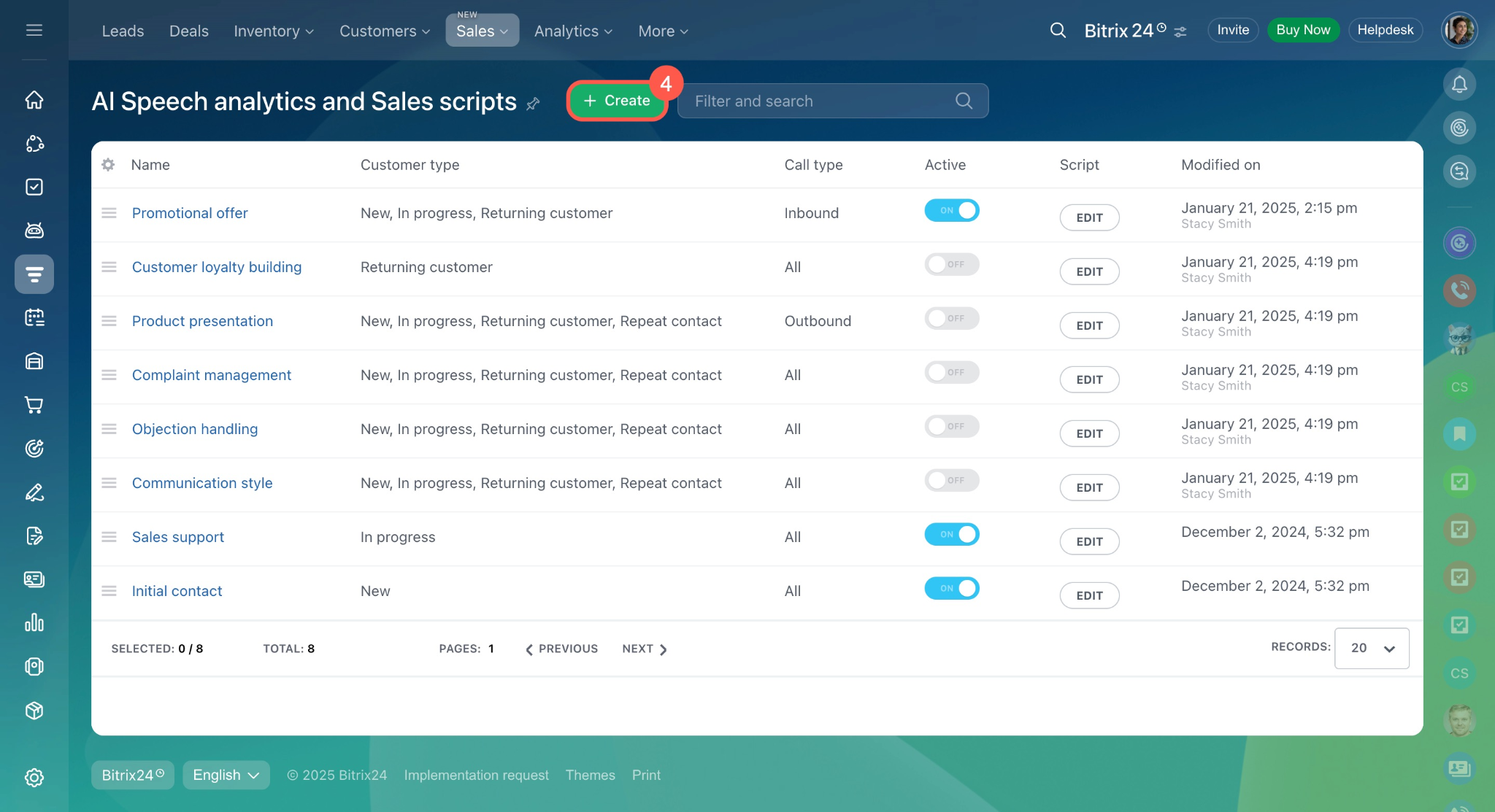
Source: Bitrix24
In video calls, CoPilot Follow-Up produces post-meeting summaries with one-click task creation. The AI is practical and spans the platform, but it operates only on data already inside Bitrix24. It won't research a prospect company or identify in-market accounts.
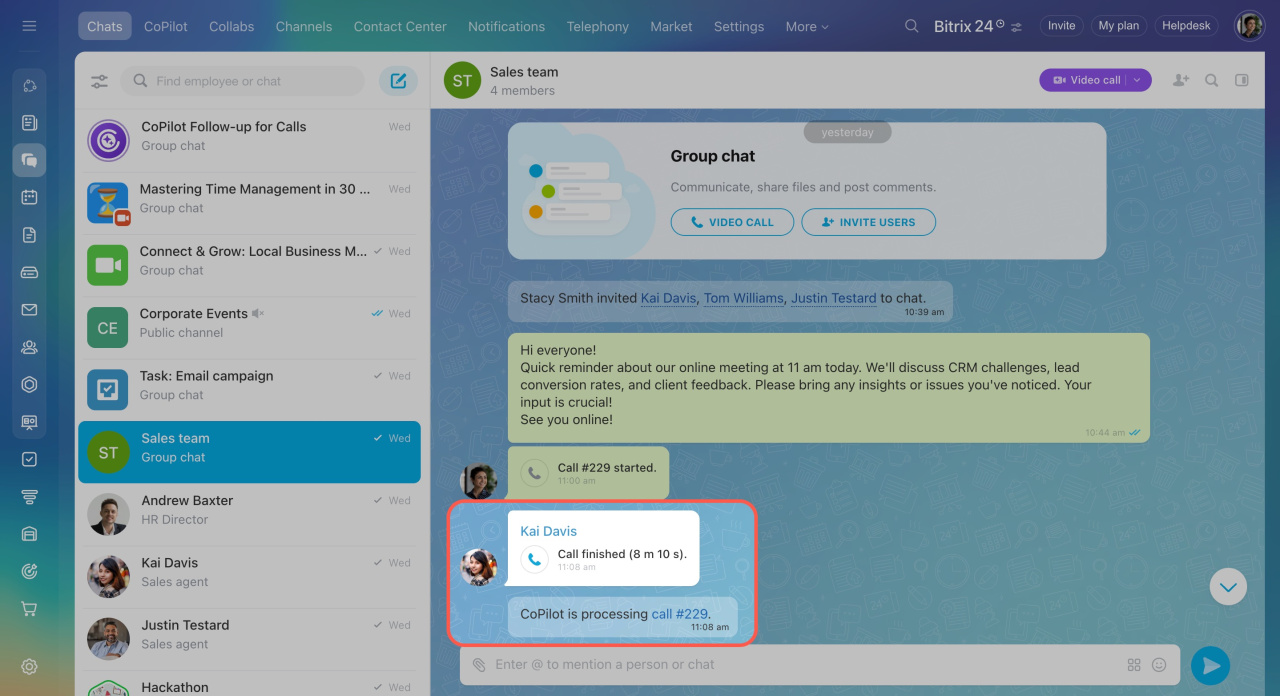
Source: Bitrix24
Bitrix24 also commits to not saving user data on third-party servers or using it for model training. CoPilot is available in the on-premise edition for organizations with strict data residency requirements.
HubSpot's Breeze is organized into three layers: Breeze Assistant (a personal AI with full CRM data access), Breeze Agents (AI agents that run full workflows), and embedded AI features throughout the platform.
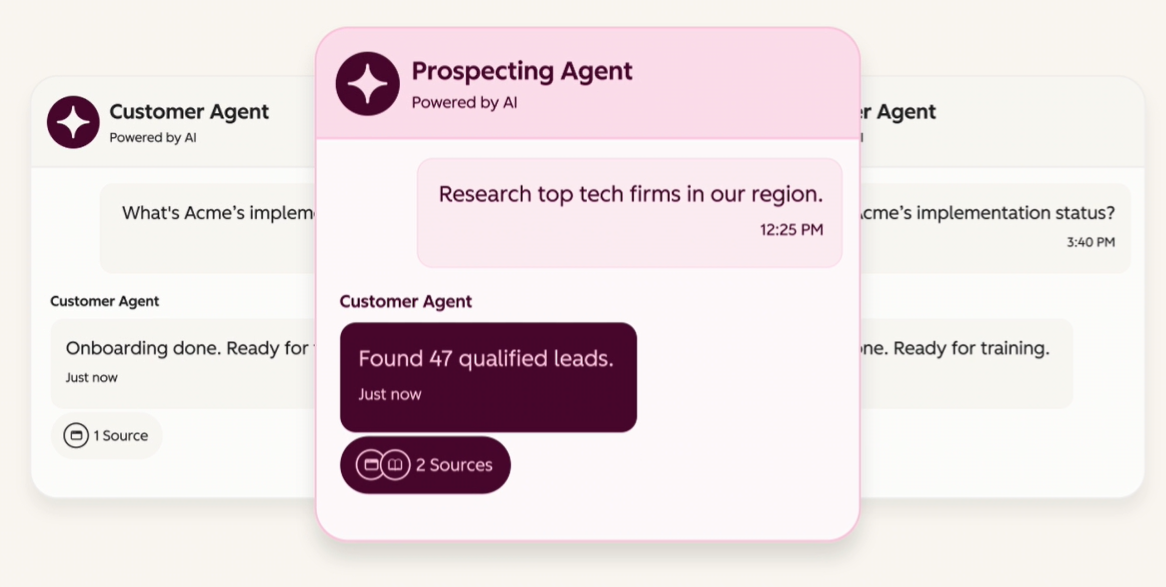
Source: HubSpot
The Prospecting Agent monitors buying signals, drafts personalized outreach from HubSpot customer history, and supports autonomous or review-first mode.
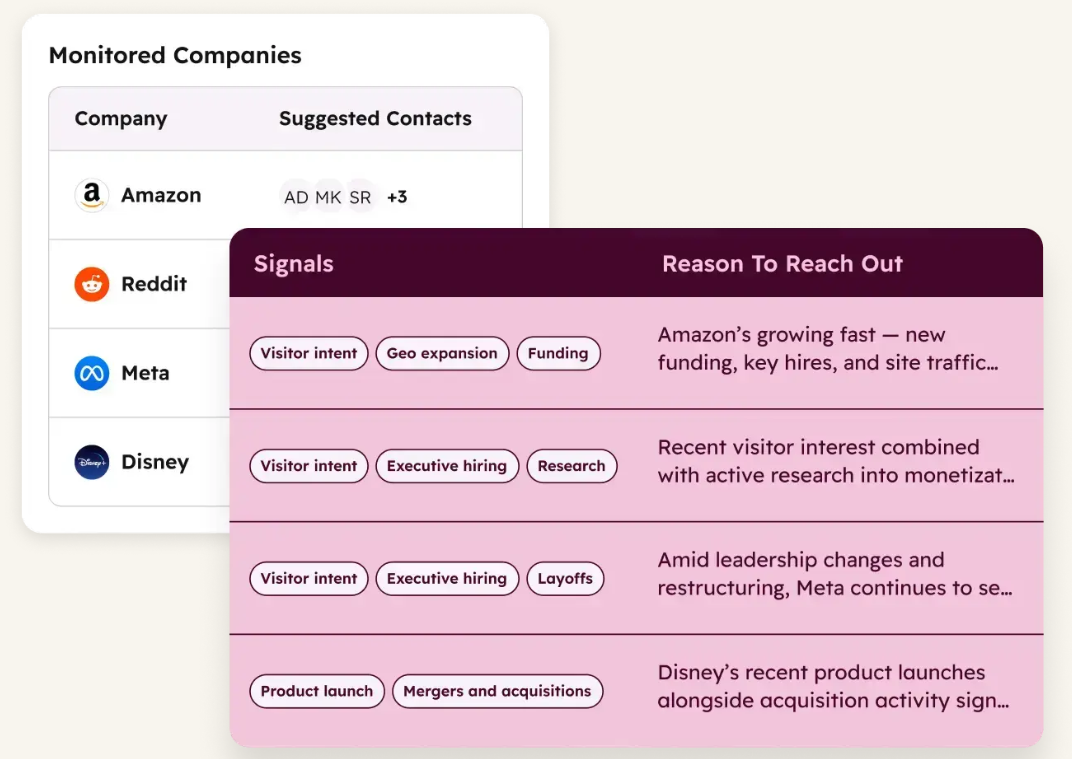
Source: HubSpot
The Customer Agent resolves inquiries across chat, email, WhatsApp, and Facebook Messenger.
Source: HubSpot
The Data Agent answers natural-language questions about your CRM data, including call recordings and email threads. Breeze is more capable than CoPilot, but it draws mainly on first-party data inside HubSpot.
Source: HubSpot
Several Breeze capabilities remain in Beta, including AI-Powered Segmentation, Personalization, AI-Powered Email, and Marketing Studio, so they are not yet ready for broad deployment.
ZoomInfo's AI is powered by the GTM Context Graph, and this creates a structural difference. Bitrix24's AI and HubSpot's AI operate mainly on your first-party CRM data. ZoomInfo's AI operates on your CRM data, conversation intelligence (via Chorus), behavioral signals, and the largest third-party B2B dataset available, all fused into one layer.
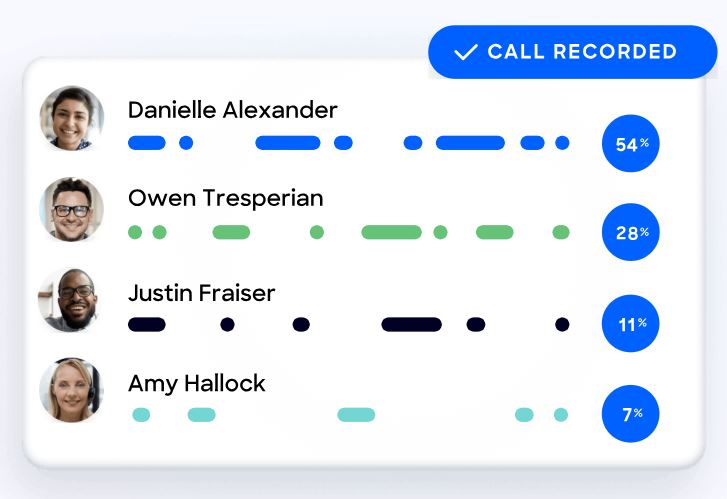
What does that mean in practice? The AI doesn't just know your deal history. It knows that the CFO joined the last call and asked about six-month ROI (from conversation intelligence), that the company just received Series C funding (from market signals), and that similar deals in your segment with this combination of signals close faster (from cross-deal pattern matching).
GTM Workspace puts this into action with AI agents that handle account research, outreach drafting, signal monitoring, and CRM updates. GTM Studio lets marketers and RevOps teams describe audiences in natural language and launch plays that get smarter as prospects respond.
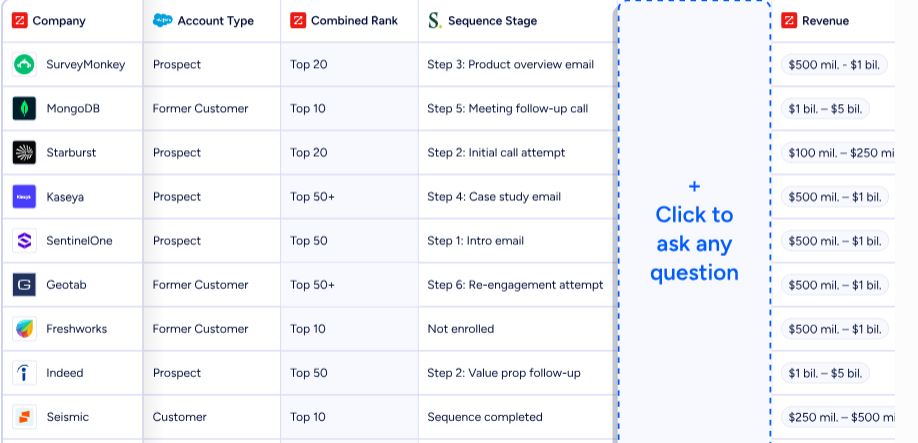
Redwood Logistics achieved a 99% reduction in cost-per-click, a 310% increase in clickthrough rate, and saved 20-25 hours per week. "It's not just the data itself. It's more about the right data at the right time to help us reach out with the right message across that full buyer journey." (Redwood Logistics)
Marketing capabilities serve different strategies
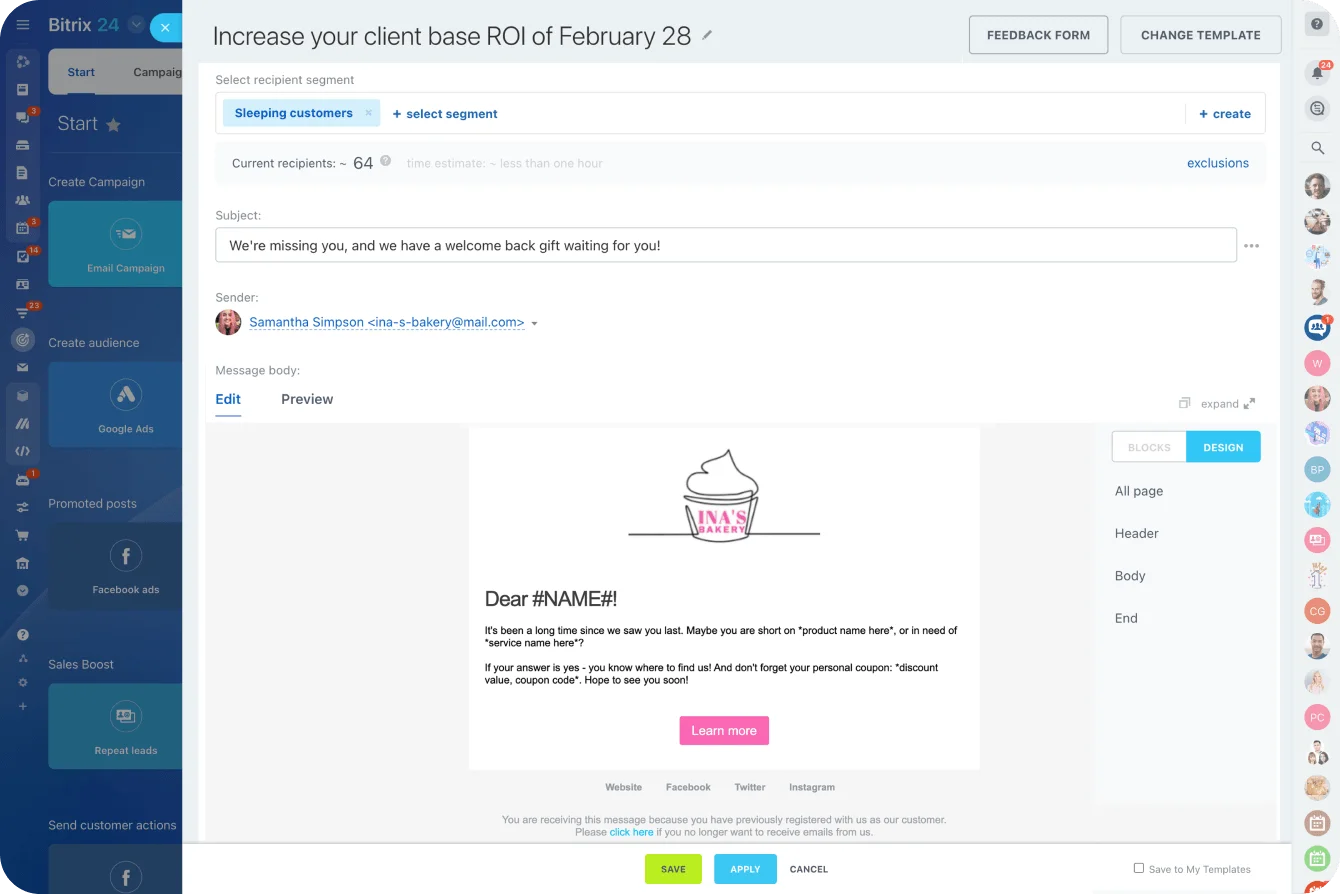
Bitrix24 includes CRM Marketing with email campaigns, SMS, telemarketing, social media ads, and landing pages, all managed from the CRM using audience segmentation.
Source: Bitrix24
The platform also supports social selling through Facebook, Instagram, WhatsApp, and Telegram, and the website builder includes 100+ industry-specific templates with free hosting. For SMBs running basic campaigns alongside their CRM, these tools cover the essentials without a separate marketing subscription.
Source: Bitrix24
Bitrix24's marketing is functional but lacks the sophistication of dedicated automation tools. Workflow logic is simpler, A/B testing options are narrower, and analytics don't match specialized tools despite improvements with the BI Builder.
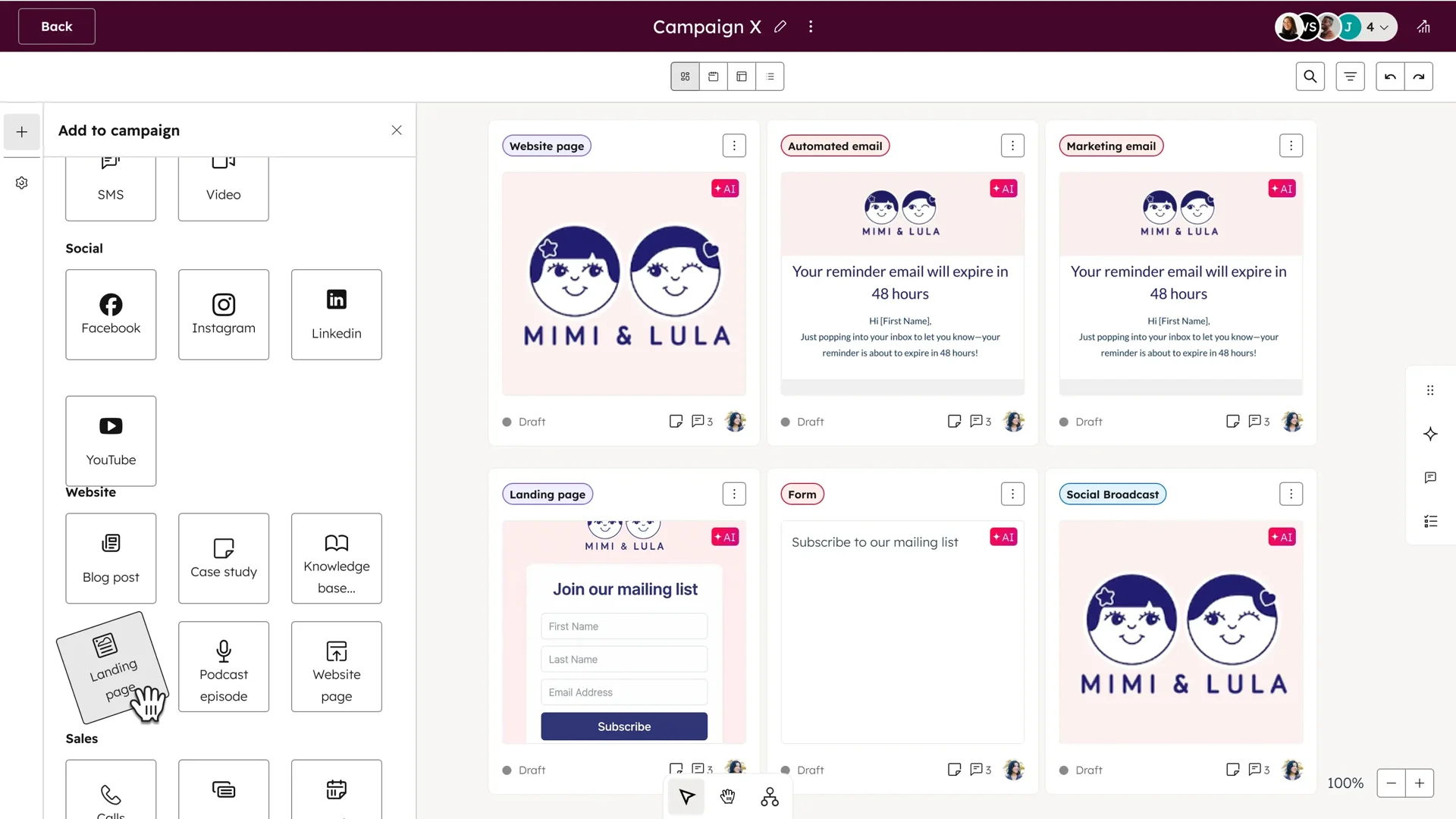
HubSpot is the strongest marketing platform of the three. Marketing Hub offers visual workflow automation, multi-touch attribution, audience segmentation, social media management, and AEO tools for ranking in AI-powered search results.
Source: HubSpot
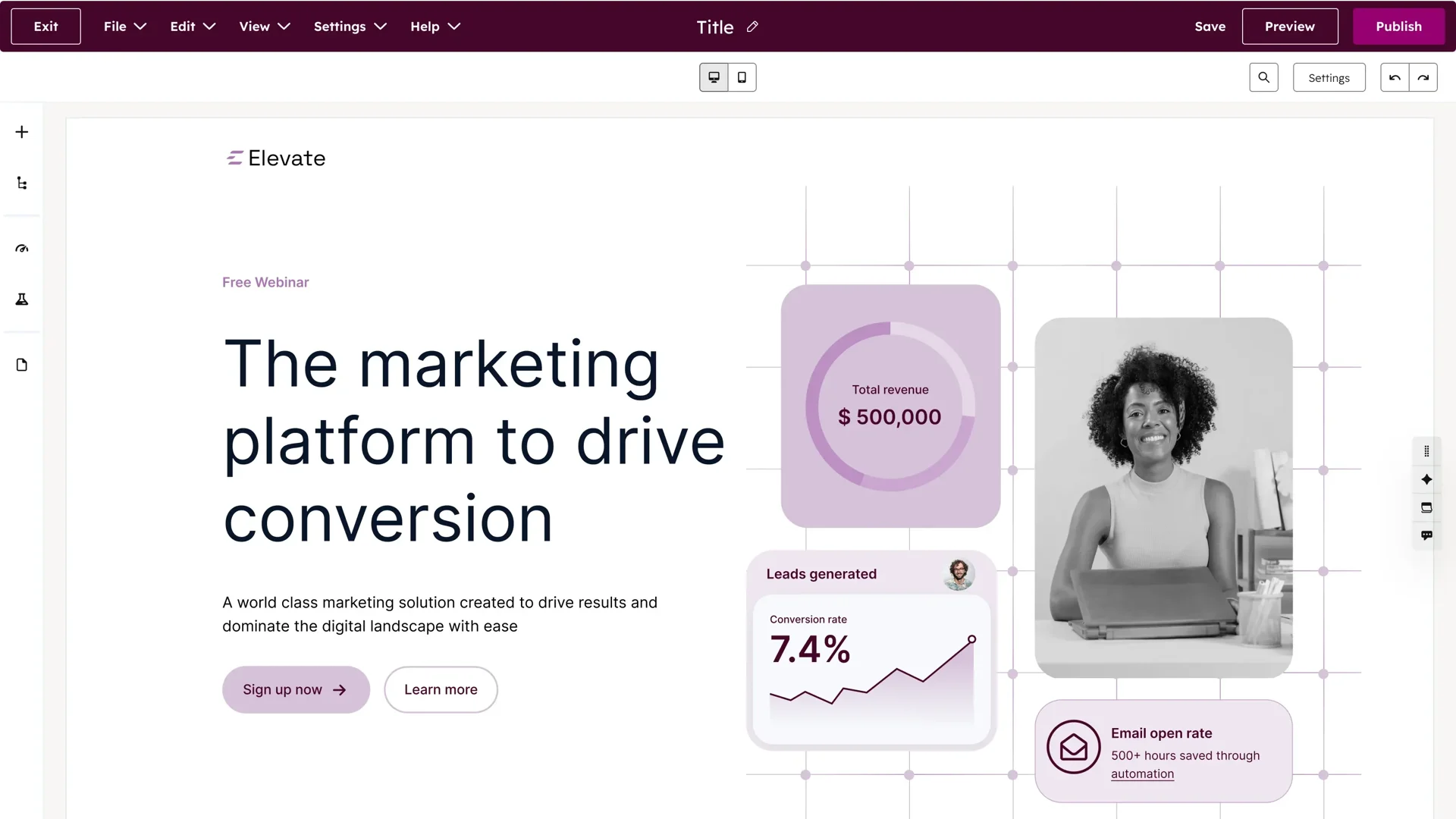
Content Hub adds a full CMS with AI content creation, Content Remix for repurposing content across channels, and podcast software.
Source: HubSpot
HubSpot's Loop Marketing framework provides a structured methodology for AI-era marketing. For companies running content-led inbound strategies, HubSpot's marketing depth is hard to match.
ZoomInfo's marketing focuses on account-based marketing for B2B. ZoomInfo Marketing uses AI signal stacking to identify buyer readiness, then orchestrates campaigns across display ads (via a native demand-side platform targeting based on 300+ company attributes), email, calls, LinkedIn, Meta, and Connected TV.
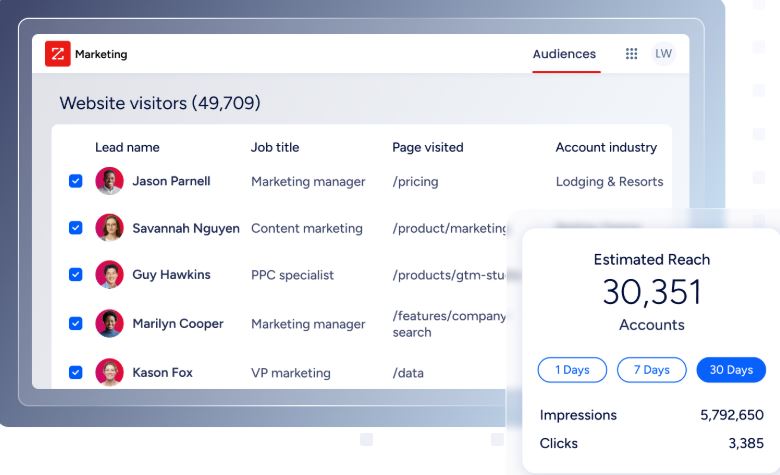
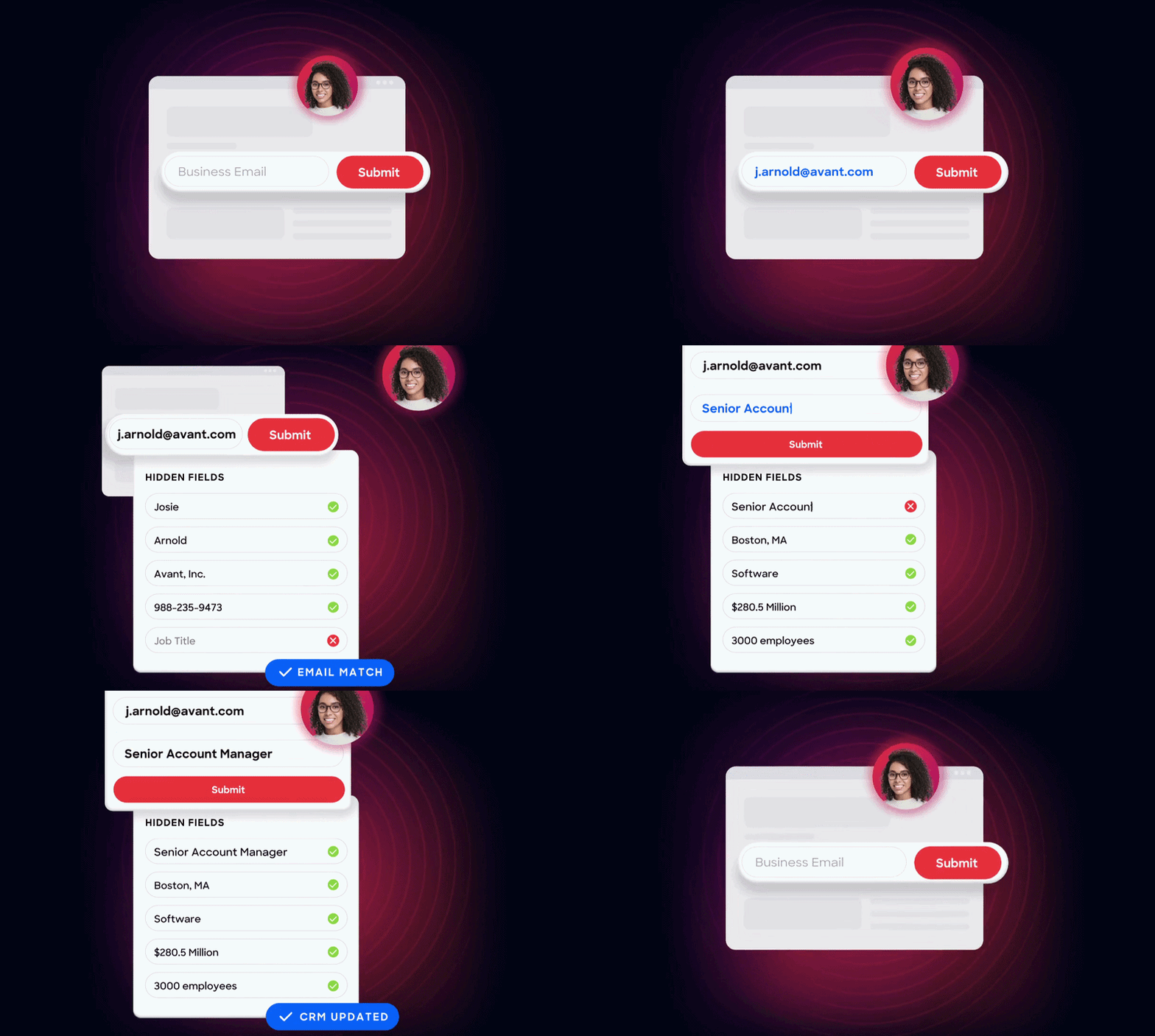
FormComplete reduces web forms to a single field, auto-appending the rest from ZoomInfo's database. Contact-level site visitor identification reveals not just which companies visit your site but which individuals.
GTM Studio makes execution faster. Pre-built plays for inbound acceleration, champion tracking, competitive displacement, and ICP targeting launch with a click. Expansion plays that used to take 3 weeks now launch in 30 minutes, without technical support. Every click, open, and reply improves targeting automatically.
The marketing comparison comes down to strategy. HubSpot excels at inbound marketing and content-driven demand generation. ZoomInfo excels at outbound intelligence and account-based marketing. Bitrix24 covers the basics for teams that don't need either at full depth.
Getting started and staying productive
How quickly your team gets value matters as much as what the platform offers on paper.
Bitrix24 has the lowest entry price but the steepest initial climb. The platform's breadth (CRM, tasks, collaboration, HR, websites, and automation) means new users face a cluttered interface where tools hide inside other tools. G2 rates Bitrix24's ease of use at 7.9/10, reflecting the tension between scope and usability.
The company has 960+ certified partners in 90+ countries for implementation support, though that costs extra. The platform is available in 16 languages.
Support is tiered by plan. Free plan users get only AI agent chat. Live human support is exclusive to paid plans, and only account administrators can open tickets. G2 rates quality of support at 7.7/10, the platform's lowest score.
HubSpot balances power and usability better than most enterprise platforms. The free CRM works as a low-friction onboarding ramp, and the interface stays consistent across all Hubs.
HubSpot Academy offers all courses and certifications free online, with over 200,000 professionals certified. The Knowledge Base is available in 17+ languages.
Support follows a tiered model: community-only for free users, email and chat for Starter, and phone support at Professional and Enterprise tiers.
ZoomInfo requires an onboarding investment proportional to the platform's depth. ZoomInfo redesigned its onboarding program from 30 to 90 days, structured across planning, implementation, education, and adoption phases. The redesign produced a 25% improvement in customer satisfaction scores and won Rocketlane's Golden Comet award for Best Customer Onboarding Team of 2024.
ZoomInfo University provides role-specific learning paths for Sales, Marketing, Administration, and Customer Success.

CEO Henry Schuck has noted that GTM Workspace deploys in weeks, not months, though the full platform (Chorus, GTM Studio, and API integrations) takes longer to operationalize across an organization.
"Anything that minimizes our team's need to switch contexts is beneficial. ZoomInfo offers a unified view, eliminating the need to navigate between systems." (Spekit)
Bitrix24 vs. HubSpot vs. ZoomInfo: Which should you choose?
The right platform depends on which problem is most urgent for your business.
Choose Bitrix24 if:
You need CRM, project management, team chat, and HR in one tool
Flat-rate pricing matters more than depth in any single area
Your team is 10+ people and per-user costs on other platforms are prohibitive
You're willing to invest time (or hire a certified partner) to configure the platform
You don't need B2B buyer intelligence or marketing automation
Choose HubSpot if:
Marketing automation and inbound lead generation are central to your growth strategy
You want a polished CRM that sales, marketing, and service teams can share
A large app ecosystem and established integrations matter for your stack
You're prepared for per-seat pricing and mandatory onboarding fees at higher tiers
You value ease of use and fast time-to-value over the lowest possible price
Choose ZoomInfo if:
Your growth depends on identifying and engaging the right B2B buyers before competitors reach them
You need verified contact data, buyer intent signals, and account intelligence at scale
Your sales team spends too much time researching accounts instead of selling
You want AI that draws on your deals, conversations, and market signals, not just your CRM fields
You need intelligence that works inside your existing CRM, or through ZoomInfo's own workspaces
Try ZoomInfo Lite for free or request a demo to see the full platform.
For many B2B companies, the answer isn't choosing one platform over the others. Bitrix24 or HubSpot manages your operations. ZoomInfo provides the intelligence that makes those operations productive. The companies seeing the strongest results use a CRM for execution and ZoomInfo's data layer to ensure every action targets the right account at the right time.
Bitrix24 vs. HubSpot vs. ZoomInfo FAQ
What is the fundamental difference between Bitrix24, HubSpot, and ZoomInfo?
Bitrix24 is an all-in-one business workspace that bundles CRM, project management, team collaboration, HR tools, and a website builder under flat-rate pricing with no per-user charges. HubSpot is a CRM platform with six specialized Hubs (Marketing, Sales, Service, Content, Data, Commerce) sharing a single database, built for inbound marketing and structured sales.
ZoomInfo is an AI GTM platform built on 500M contacts, 100M companies, 135M+ verified phone numbers, and 200M+ verified business email addresses, designed to help sales and marketing teams find, prioritize, and engage the right buyers.
Which platform is cheapest for a growing team?
Bitrix24 is cheaper at scale. Its Standard plan covers up to 50 users for $99/month (annual), and the Professional plan covers up to 100 users for $199/month, with no per-user charges. HubSpot's per-seat pricing starts at $20/seat/month for Starter but escalates: Sales Hub Professional costs $90/seat/month, plus mandatory onboarding fees at Professional and Enterprise tiers. A 50-person team on Bitrix24 Standard pays $99/month total. A comparable HubSpot setup could cost several thousand per month in seat fees alone.
ZoomInfo uses custom-quoted, consumption-based pricing with no published rates, targeting enterprise budgets.
Can ZoomInfo work alongside Bitrix24 or HubSpot?
Yes. ZoomInfo integrates with HubSpot and Salesforce, and provides APIs and MCP access that connect to virtually any CRM or tool. ZoomInfo Lite (the free tier) includes HubSpot integration out of the box. The typical setup has ZoomInfo providing the intelligence (who to target, when to engage, what to say) while the CRM manages pipeline execution.
Many B2B companies run ZoomInfo alongside their CRM as complementary platforms rather than choosing one over the other.
Which platform has the strongest AI capabilities?
All three invest in AI, but for different purposes. Bitrix24's CoPilot transcribes calls, generates task descriptions, and creates content across CRM, tasks, chat, and video calls, operating on data inside Bitrix24. HubSpot's Breeze includes AI agents for prospecting, customer service, content creation, and data management, drawing on CRM data and some external enrichment.
ZoomInfo's AI draws on the GTM Context Graph, which fuses CRM data with the largest B2B dataset available, conversation intelligence, and buying signals. This lets ZoomInfo's AI surface why deals move or stall and which accounts to prioritize, not just manage what's already in the CRM.
Which platform is best for B2B sales teams specifically?
ZoomInfo is built for B2B sales and marketing. Its data (500M contacts, 135M+ verified phone numbers, 200M+ verified business emails), combined with buyer intent signals and account intelligence, addresses the core challenge B2B teams face: finding and reaching the right buyers.
HubSpot is a strong choice if your B2B sales motion is primarily inbound-driven. Bitrix24 can manage a B2B sales pipeline but lacks native B2B buyer data and intelligence.
Which platform is easiest to learn and use?
HubSpot has the smoothest onboarding, with a free CRM that works immediately, a consistent interface across all Hubs, and free certifications through HubSpot Academy. Bitrix24 has the steepest learning curve due to its breadth; G2 rates ease of use at 7.9/10 and reviewers note tools hidden in unexpected locations.
ZoomInfo's GTM Workspace deploys in weeks for sellers, though the full platform takes longer to operationalize. All three offer free starting points: Bitrix24's free plan, HubSpot's free CRM, and ZoomInfo Lite.
Do I need a CRM if I use ZoomInfo?
For most companies, yes. ZoomInfo provides the intelligence layer (verified contacts, buyer signals, account context) while a CRM like HubSpot or Bitrix24 provides the operational layer (managing deals, tracking interactions, running workflows). ZoomInfo integrates directly with these CRMs so intelligence flows into the tools your team already uses.
Some sellers use ZoomInfo's GTM Workspace as their primary work surface, but it complements a CRM rather than replaces one.
See how Bitrix24 stacks up against other platforms:
