

If you're comparing Bitrix24 and Pipedrive, you're weighing two different ideas about what a CRM should be. One platform tries to replace your entire software stack. The other focuses on doing one thing well.
The questions that should guide your decision:
Do you need a CRM, or do you need a CRM plus project management, HR, websites, and internal communications in one place?
How many people on your team will use the platform, and does per-user pricing or flat-rate pricing save you more?
Is your priority managing deals, or managing an entire business operation?
How much time can your team invest in learning a new system?
Is the quality of your prospect data a bottleneck in your sales process?
In short, here's what we recommend:
Bitrix24 is the all-in-one workspace for businesses that want to consolidate. It bundles CRM, task and project management, team collaboration, website and store building, and HR tools into a single platform with no per-user pricing. For a 50-person team, Bitrix24's Standard plan costs $99/month total, a fraction of what most per-seat tools charge.
The tradeoff is complexity. G2 reviewers rate ease of use at 7.9/10, and Capterra users note that "some tools are hidden in unexpected locations inside other tools." Bitrix24 gives you everything, but mastering everything takes time.
Pipedrive is the CRM built by salespeople for salespeople. It pioneered the kanban-style pipeline view that has become an industry standard, and every feature decision starts from one question: does this help close deals? The result is a platform that sales teams actually use without being forced to.
Pricing starts at $14/month per seat, making it affordable for small teams. The limitation is scope: Pipedrive is a sales tool, not a business platform. Project management is an afterthought, and there are no built-in HR, website, or collaboration features.
Both platforms help you manage customer relationships and close deals. But a CRM is only as good as the data inside it. If your contact records are incomplete, your team prospects from guesswork, and you have no visibility into which accounts are ready to buy, no pipeline view will fix that. That's where ZoomInfo comes in.
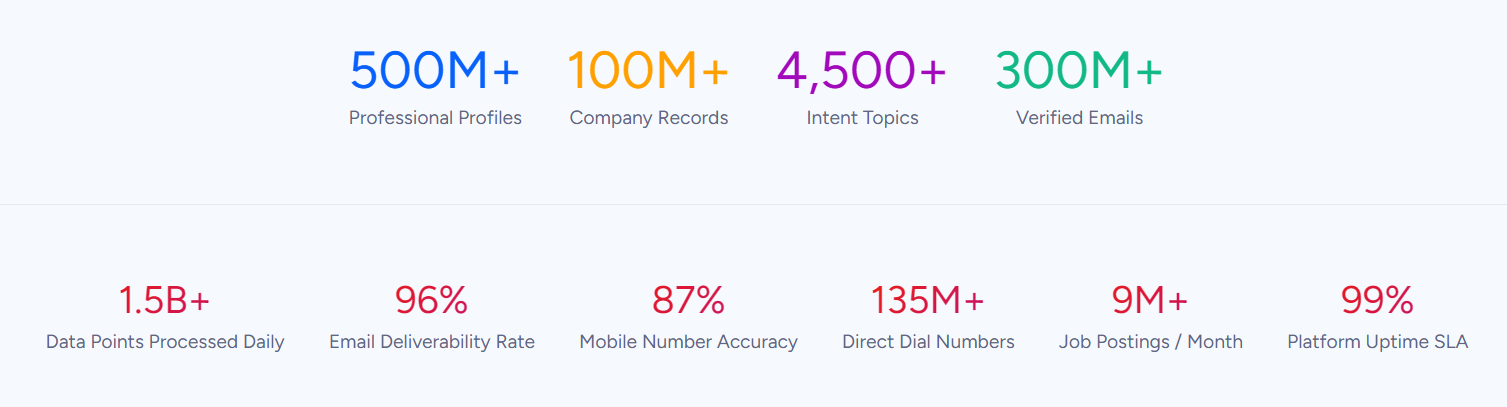
ZoomInfo is a B2B data and GTM platform built on 500M contacts, 100M companies, 135M+ verified phone numbers, and 200M+ verified business emails. Its GTM Context Graph processes 1.5B+ data points daily, fusing this data with your CRM records, conversation transcripts, and behavioral signals to reveal not just who to call, but why they're likely to respond.
Your team accesses that intelligence through GTM Workspace for sellers, GTM Studio for marketers and RevOps, or APIs and MCP inside any tool in your stack.
If building your sales process on verified data and real buying signals sounds like the missing piece, see how ZoomInfo works.
Bitrix24 vs. Pipedrive vs. ZoomInfo at a glance
Bitrix24 | Pipedrive | ZoomInfo | |
|---|---|---|---|
Core function | All-in-one business workspace | Sales CRM and pipeline management | B2B data intelligence and GTM execution |
Pricing model | Flat team-based (no per-user fees) | Per seat, per month | Consumption-based (custom quoted) |
Starting price | Free (2 users); $49/month for 5 users | $14/month per seat | Free (ZoomInfo Lite); paid plans custom quoted |
CRM capability | Full CRM with omnichannel contact center | Pipeline-first CRM with deal management | B2B data intelligence, intent signals, buyer research |
Project management | Full (Kanban, Gantt, Scrum) | Basic add-on | Not applicable |
AI features | CoPilot across CRM, tasks, chat, video | AI Sales Assistant, AI email writer | GTM Context Graph, AI-powered account intelligence |
Integrations | 700+ marketplace apps | 500+ marketplace integrations | 120+ partner integrations, API, MCP |
Ease of use | Steep learning curve | Intuitive for salespeople | Moderate (enterprise onboarding) |
Best for | SMBs consolidating multiple tools | Sales teams focused on closing deals | Teams that need prospect intelligence and data quality |
The all-in-one vs. the specialist
Bitrix24 and Pipedrive represent opposite philosophies about how software should serve a business.
Bitrix24 tries to be everything.
Open the platform and you'll find a CRM with 35 sales tools, a project management suite with Kanban, Gantt, and Scrum views, video conferencing for 100+ participants, a website builder with 100+ templates, an HR module with org charts and approval workflows, and an AI assistant called CoPilot embedded throughout.
Source: Bitrix24
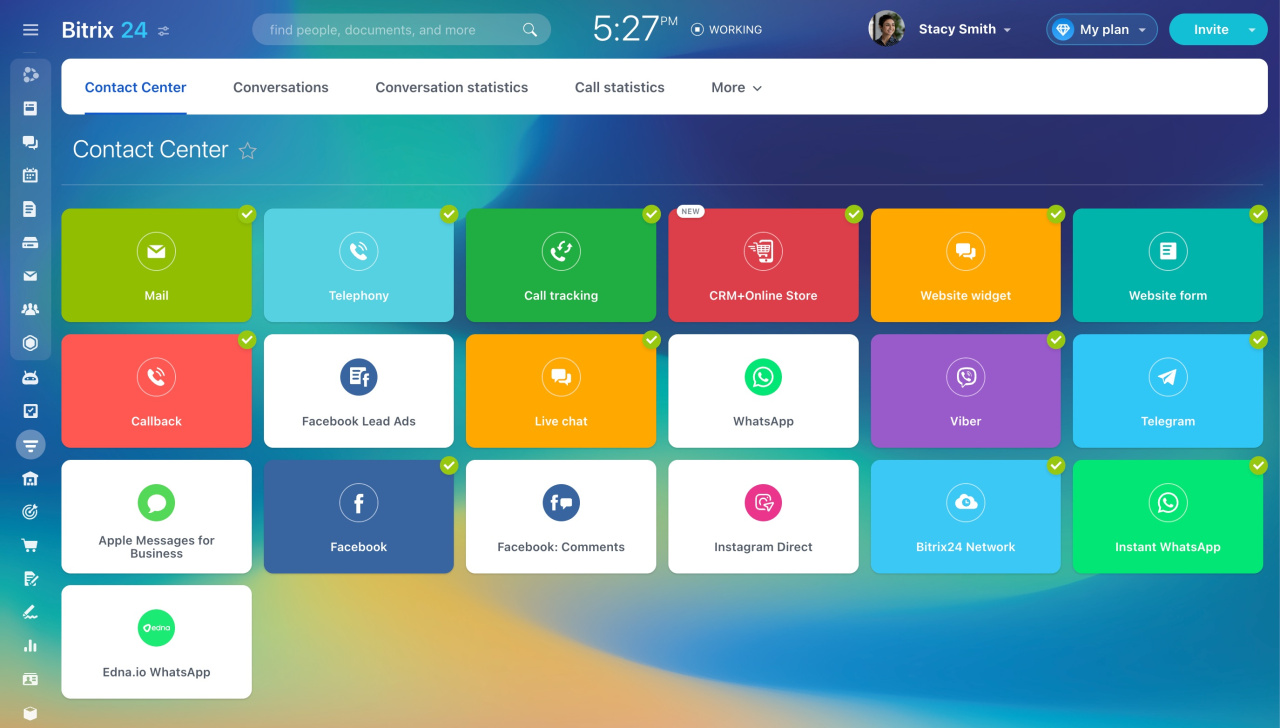
A built-in contact center handles WhatsApp, Instagram, live chat, telephony, and email in a single inbox.
This breadth has real value. A 30-person company using separate tools for CRM, project management, chat, video calls, HR, and website hosting might spend several hundred dollars per month across subscriptions. Bitrix24's Professional plan covers up to 100 users for $199/month, replacing four to six tools with one login and one bill.
Pipedrive ignores all of that. It does one thing: help salespeople manage their pipeline and close deals.
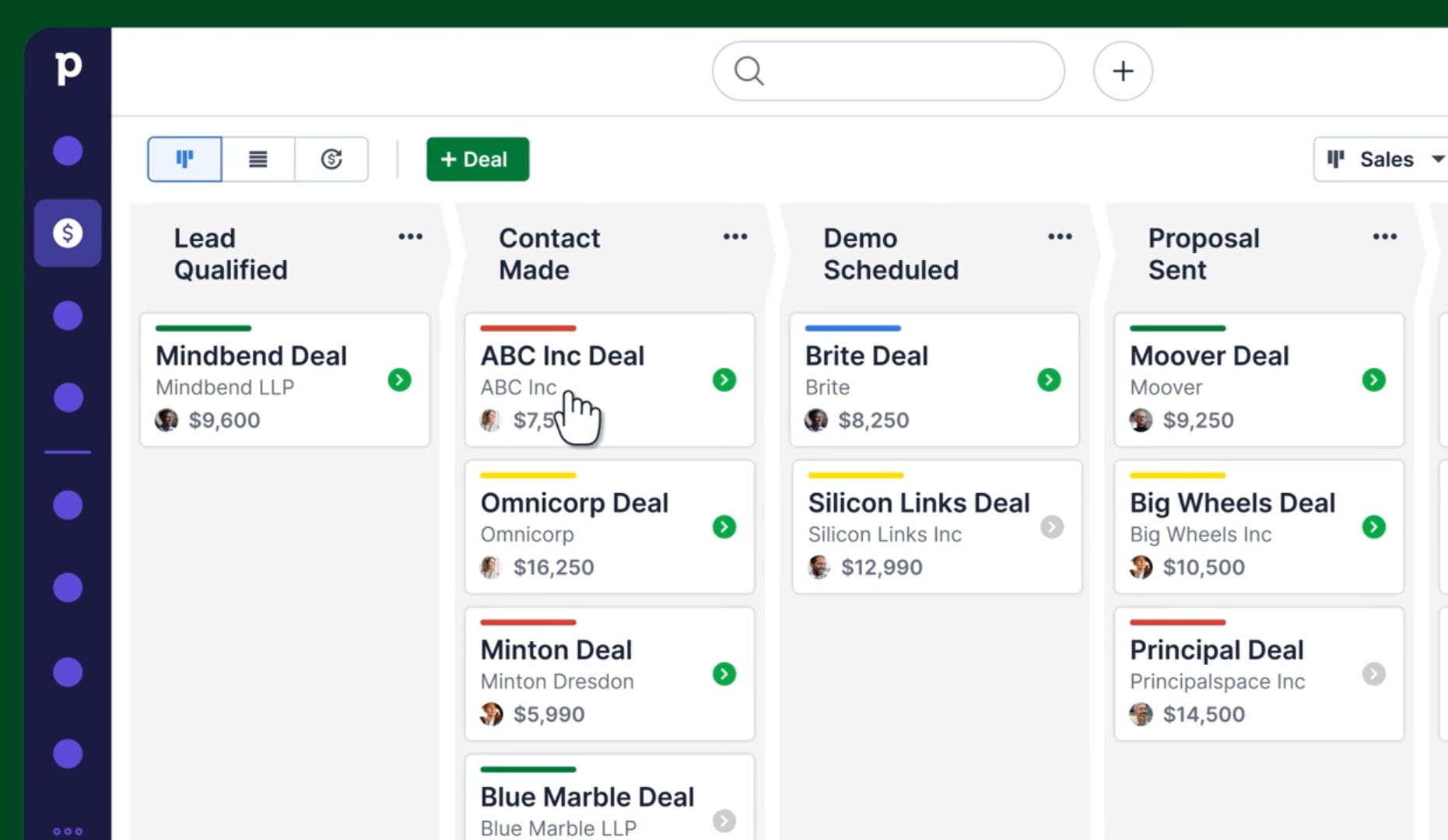
The visual pipeline is the center of the experience. Deals live on a kanban board. Each deal has activities attached (calls, emails, meetings). Colored cues flag deals going cold. Drag and drop moves deals between stages. That's the core workflow, and Pipedrive has refined it over 16 years.
Source: Pipedrive
The tradeoff is straightforward. Bitrix24 gives you breadth at the cost of complexity. Pipedrive gives you focus at the cost of scope. A sales team that also needs project management, HR tools, and a website will save money and reduce context-switching with Bitrix24. A sales team that just needs to track deals and close them faster will find Pipedrive simpler and more productive.
Pipeline and deal management compared
Since both platforms serve as CRMs, the pipeline experience matters most.
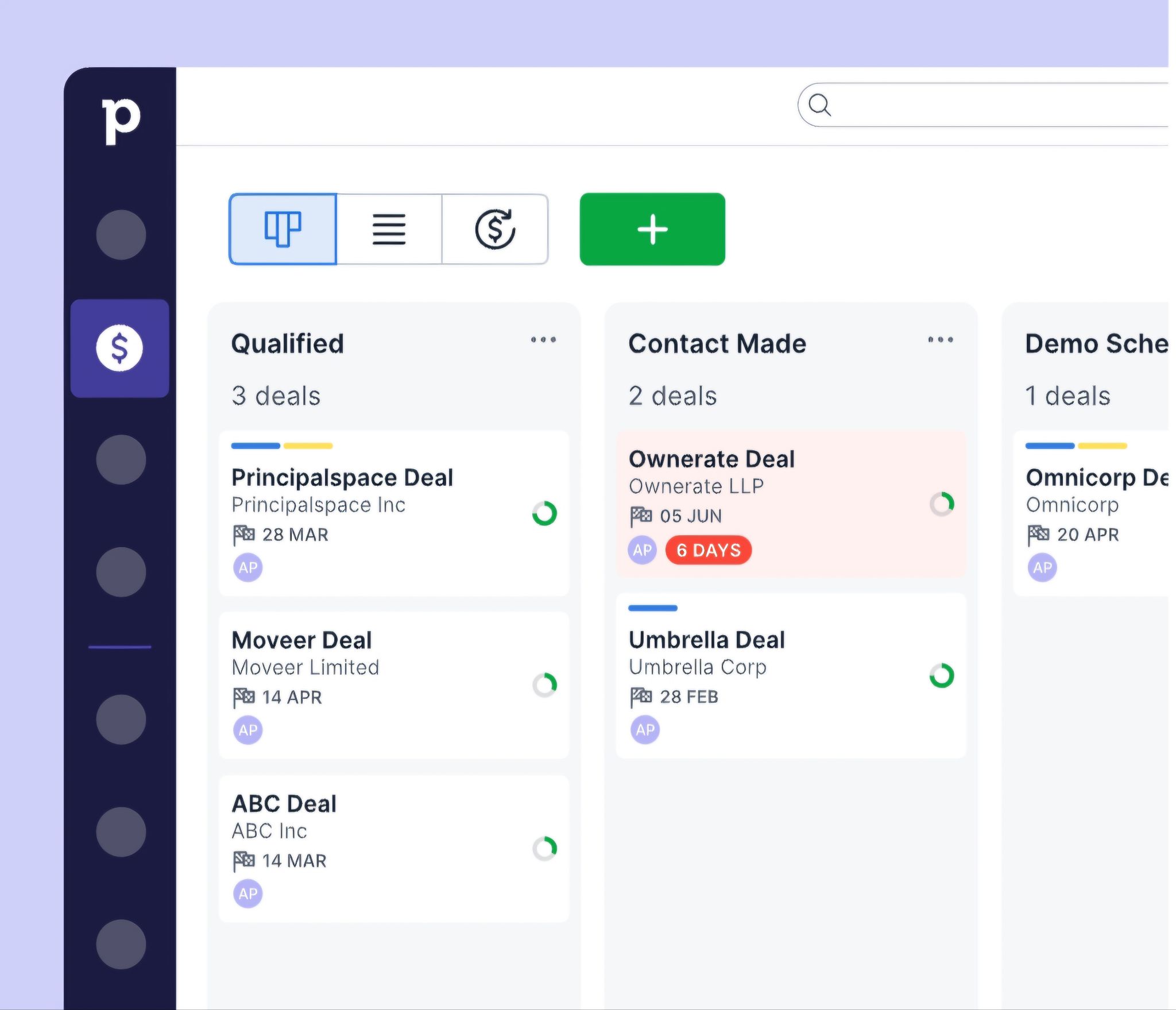
Pipedrive's pipeline was designed before anything else on the platform existed. You create deals with values, win probabilities, and expected close dates.
Custom pipelines with custom stages let you model any sales process. The Leads Inbox separates unqualified contacts from active deals, keeping the pipeline clean. Deal rotting alerts surface idle deals so nothing slips through.
Source: Pipedrive
Three views (kanban, list, and forecast) give different perspectives on the same data. The newer Pulse toolkit adds data enrichment, custom lead scoring, and automated sequences for prospecting.
Bitrix24's CRM is comprehensive but less polished for pure sales use.
It offers two configurable modes: Classic CRM with a lead qualification step, and Simple CRM where every inquiry becomes a deal immediately. The pipeline supports customizable stages, CRM rules and triggers for automating deal progression, and CoPilot for transcribing calls and auto-filling deal fields.
Where Bitrix24 pulls ahead is the omnichannel contact center, which aggregates inquiries from WhatsApp, Instagram, Telegram, telephony, email, and web chat into one inbox tied directly to CRM records.
Source: Bitrix24
For teams where inbound communication from multiple channels is the primary lead source, Bitrix24's contact center is a genuine differentiator. For teams that run outbound sales with a defined pipeline, Pipedrive's focus on deal progression produces a tighter experience.
Your CRM runs on data, so the data has to be right
This is where the comparison takes an important turn.
Bitrix24 and Pipedrive are both capable CRMs.
They'll track your deals, manage your contacts, and automate your workflows. But neither addresses the question that determines whether those deals materialize in the first place: how do you find the right prospects, and how do you know when they're ready to buy?
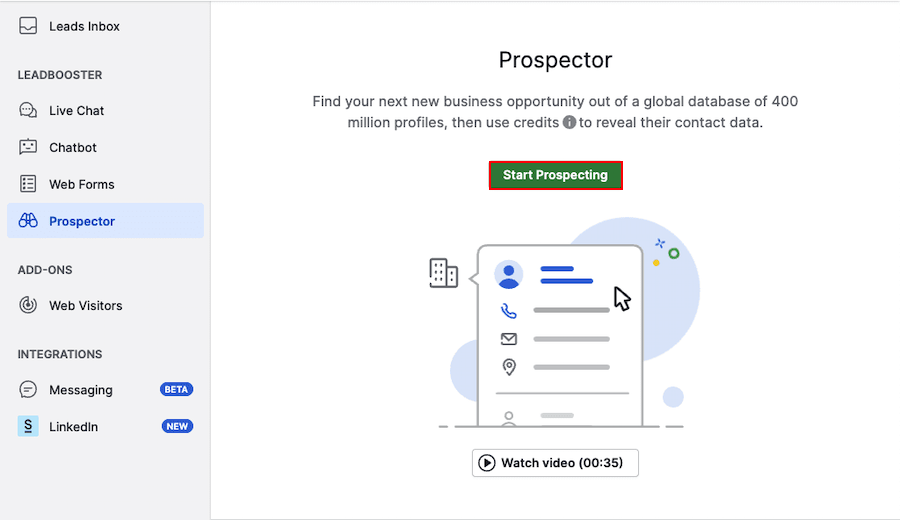
Pipedrive's Prospector tool offers access to over 400 million profiles and 10 million companies, with an AI engine that verifies and updates up to 800,000 profiles daily. It's a useful start for outbound prospecting. Bitrix24 offers web forms, live chat, and social channel integration to capture inbound leads, but has no native prospecting database.
Source: Pipedrive
ZoomInfo operates at a different scale.
The platform covers 500M contacts, 100M companies, 135M+ verified phone numbers, 120M direct-dial phone numbers, and 200M+ verified business email addresses, verified by 300+ human researchers and achieving up to 95% accuracy on first-party data.
In a Fortune 500 competitive RFP analyzing 25 million contacts across vendors, an independent consultant concluded that "no other competitor came even close."
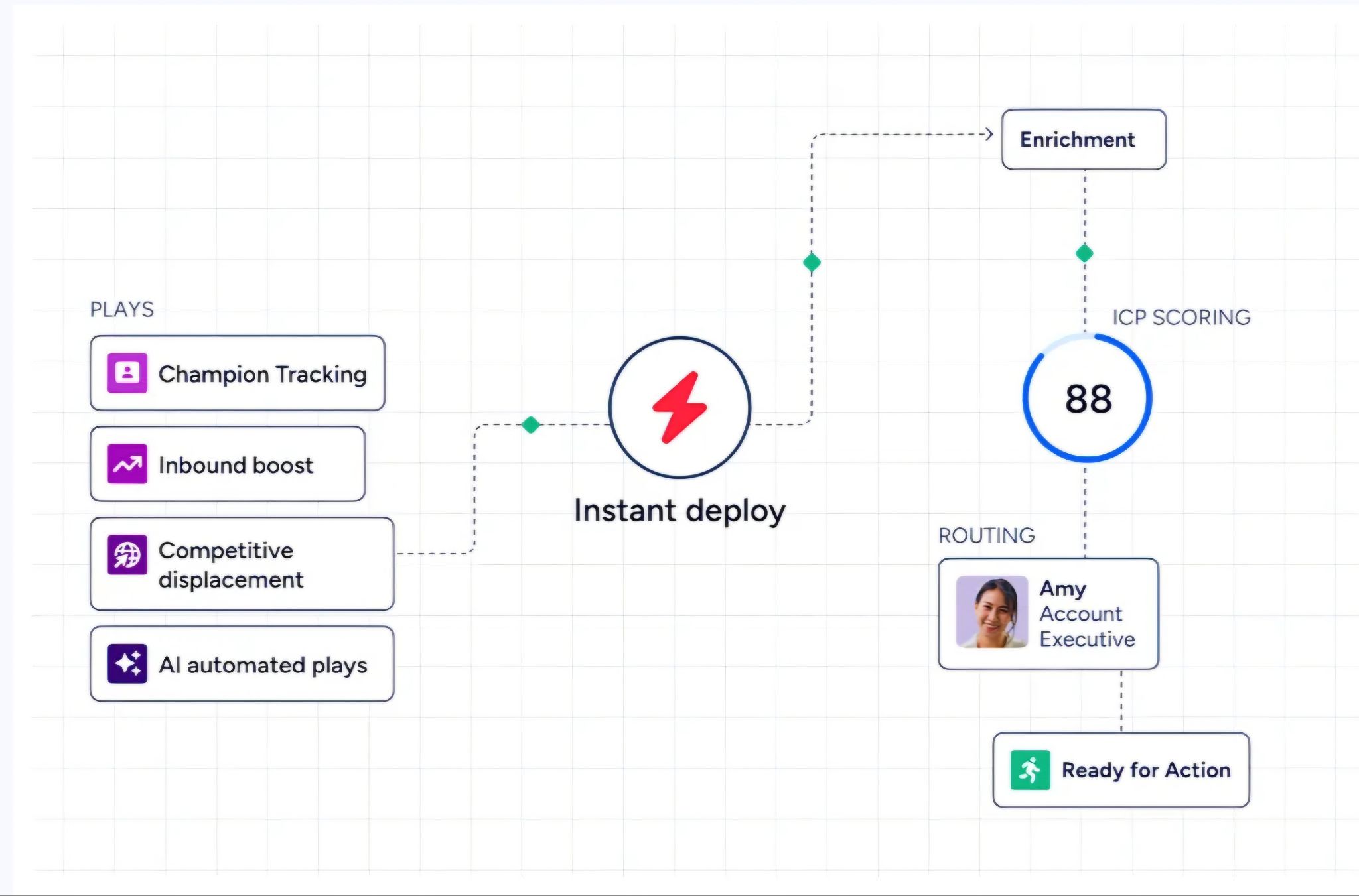
But scale alone isn't the point. ZoomInfo's GTM Context Graph fuses verified data with your CRM records, conversation intelligence, and behavioral signals to reveal not just who your prospects are, but why they're likely to buy now.
Buyer Intent data tracks signals from 210 million IP-to-Organization pairings and 6 trillion+ new keyword-to-device pairings monthly. Guided Intent, exclusive to ZoomInfo, identifies topics historically correlated with closed deals in your segment rather than requiring you to pick topics manually.
This intelligence reaches your team through three channels. GTM Workspace gives sellers AI-drafted outreach and prioritized account feeds. GTM Studio gives marketers and RevOps natural-language audience building and campaign orchestration. APIs and MCP deliver the same intelligence into any tool in your stack, including your CRM.
Source: ZoomInfo
Seismic's sales team attributed 39% of their active pipeline to opportunities identified or influenced by ZoomInfo signals, while reporting 54% productivity gains and 11.5 hours saved per week per seller. (Seismic Case Study)
AI and automation capabilities
All three platforms have invested in AI, but they apply it to different problems.
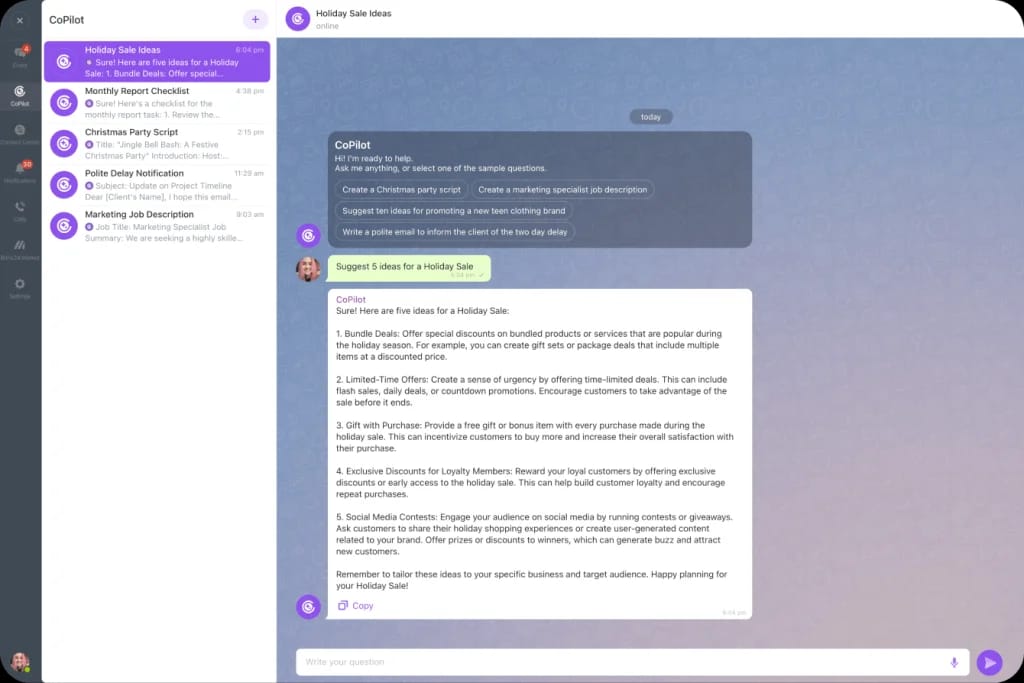
Bitrix24's CoPilot is embedded across the platform: CRM, tasks, chat, the activity feed, video calls, websites, and the product catalog.
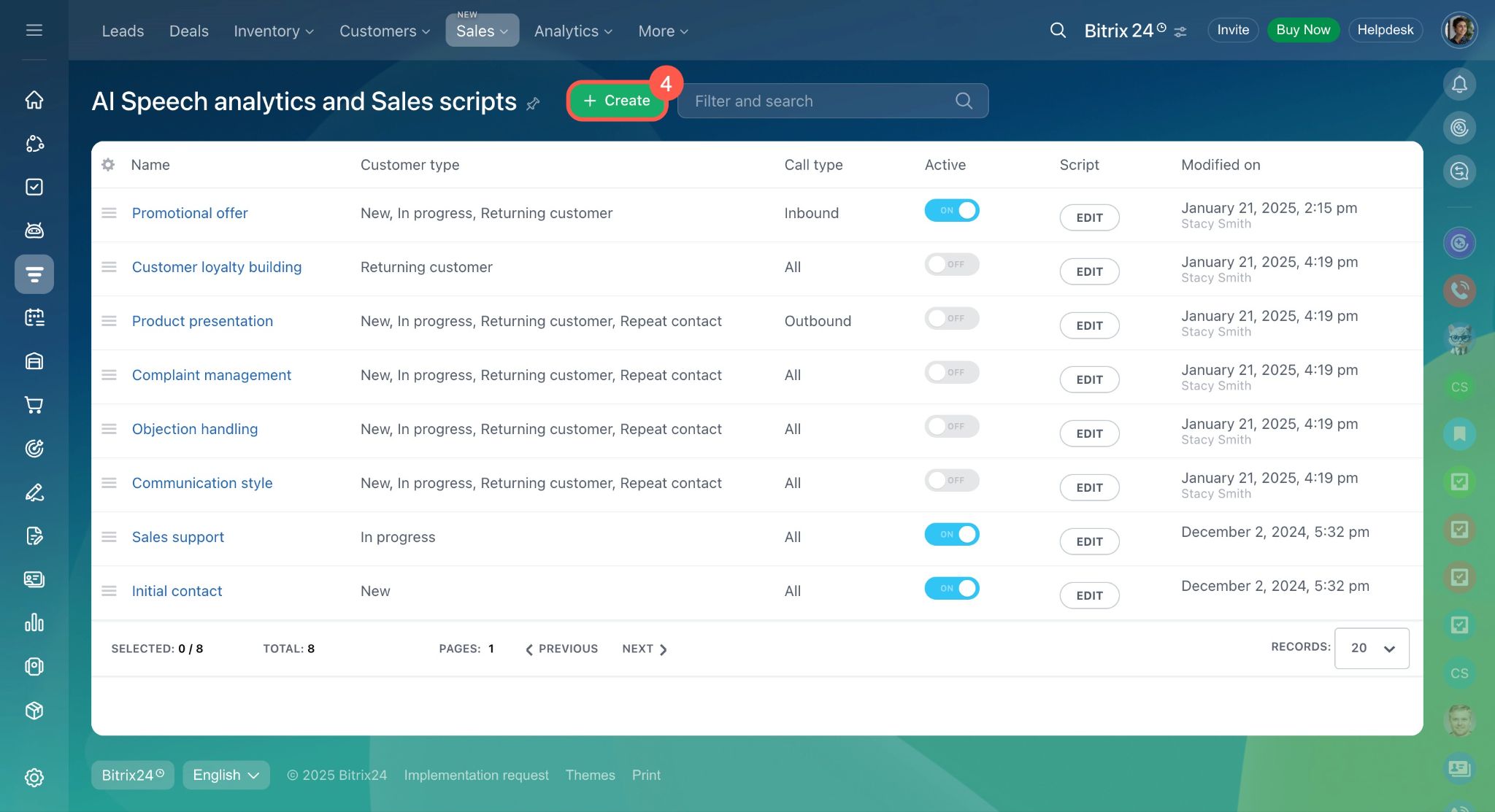
In CRM, it transcribes call recordings, generates call summaries, and auto-fills deal fields from extracted data. AI Speech analytics scores agent performance against sales scripts. In video calls, CoPilot produces post-meeting summaries with follow-up actions convertible to tasks in one click. CoPilot touches nearly every surface of the platform.
Source: Bitrix24
On the automation side, Bitrix24 offers CRM rules and triggers, no-code RPA workflows for internal processes, and Smart Process Automation for creating custom business entities with their own Kanban stages and automation rules. This is more automation depth than most all-in-one platforms provide.
Pipedrive's AI focuses on the sales workflow.
The AI Sales Assistant surfaces win probability predictions, deal activity reminders, and next-action recommendations. The AI email writer generates personalized drafts from prompts with configurable tone and length.
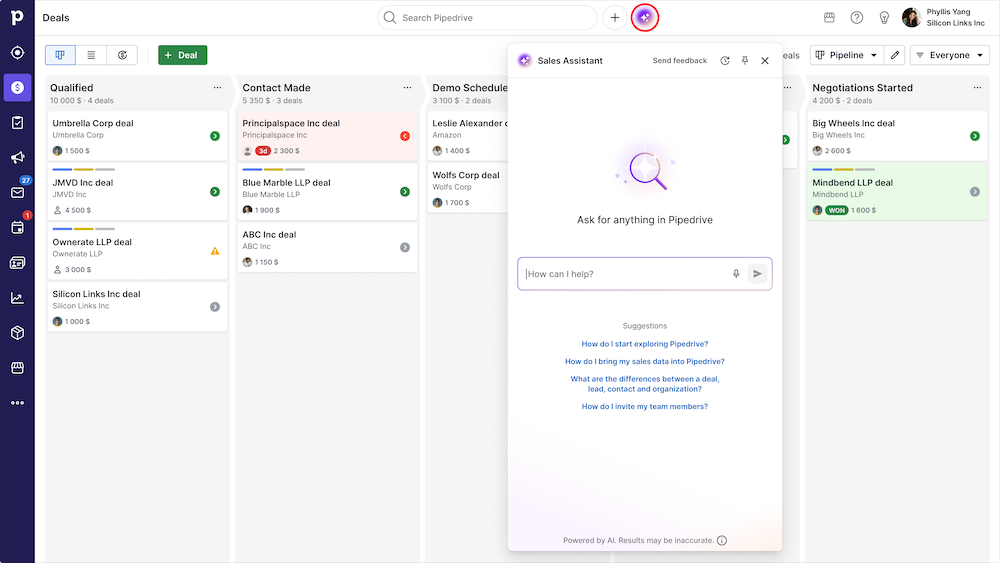
Source: Pipedrive
AI-generated reports let managers query pipeline data in natural language. Automation runs through trigger-action workflows with if/else branching, delay steps, and native integrations with Slack, Teams, Trello, and Asana.
ZoomInfo's AI operates on a different input: the GTM Context Graph, which processes 1.5B+ data points daily.
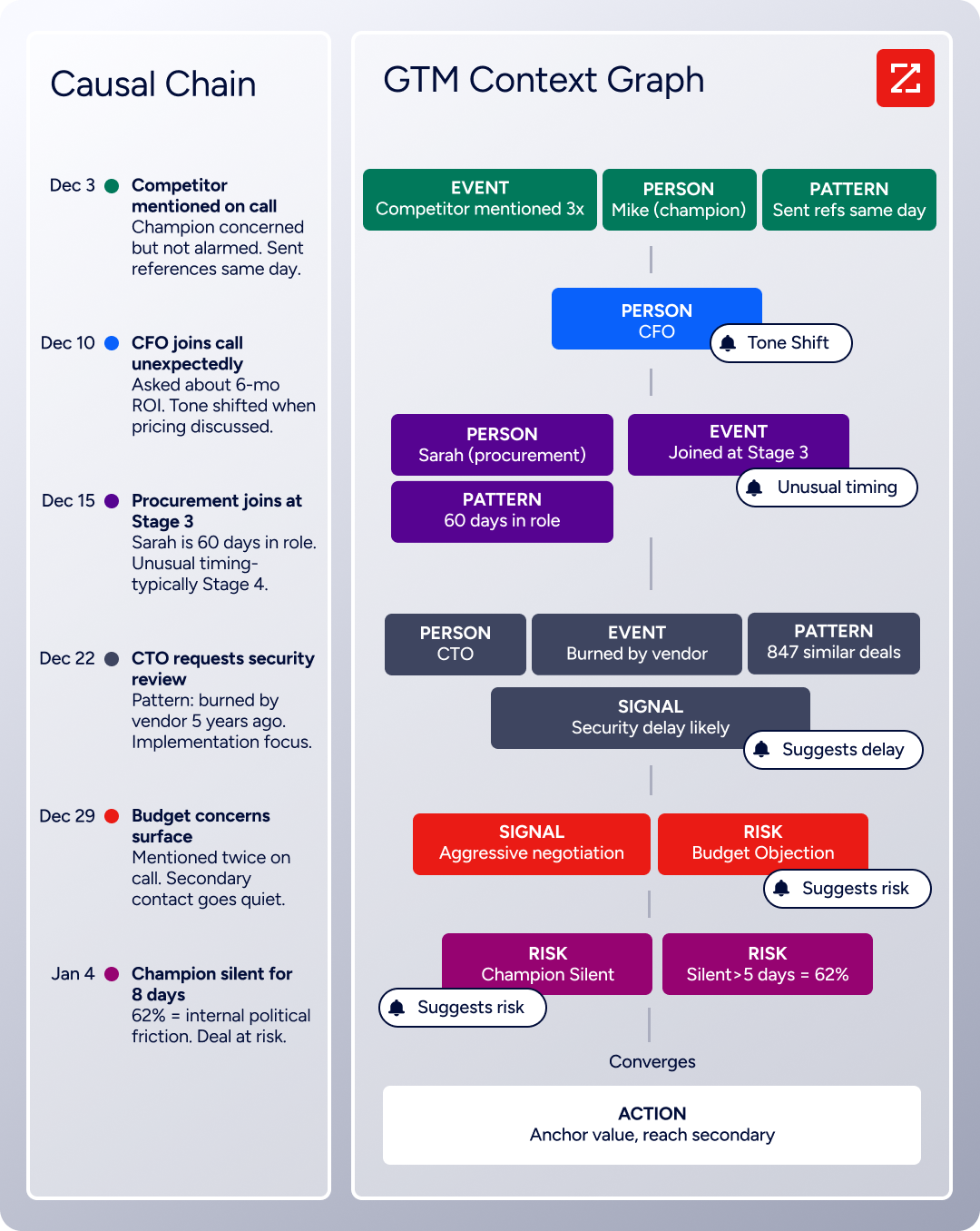
In GTM Workspace, AI agents handle account research, outreach generation, CRM updates, and signal monitoring. In GTM Studio, marketers describe audiences in natural language and launch multi-channel plays that get smarter as prospects respond.
The difference is context: Bitrix24 and Pipedrive's AI works with data already in your CRM. ZoomInfo's AI reasons across your internal data and external B2B data to surface opportunities your CRM would never see on its own.
"ZoomInfo's not just a contact data company anymore. They've built a full system of execution. GTM Intelligence actually works the list, writes the outreach, triggers the play, and helps drive predictable growth." (Levanta Case Study)
Pricing reveals who each platform is built for
The pricing models tell you everything about each platform's target buyer.
Bitrix24 charges by team, not by seat.
The Free plan includes CRM, tasks, and collaboration for up to 2 users. Basic covers 5 users for $49/month. Standard covers 50 users for $99/month. Professional covers 100 users for $199/month. Enterprise starts at $399/month for 250 users.
The math is striking at scale. A 50-person team pays $99/month on Bitrix24 Standard. That same team on Pipedrive Lite pays $700/month ($14 per seat times 50). At 100 users, the gap widens further.
Pipedrive charges per seat per month.
Plans start at $14/month per seat for Lite, scaling through Growth, Premium, and Ultimate tiers. Annual billing saves up to 42%. Features gate by tier: email sync requires Growth, and Smart Docs and LeadBooster start at Premium.
For small teams (3–5 people), Pipedrive is competitive or cheaper than Bitrix24's paid plans. For larger teams (15+), Bitrix24's flat pricing becomes far more economical. This is by design: Bitrix24 positions itself as the only major CRM without per-user pricing, and the savings compound as headcount grows.
ZoomInfo uses consumption-based pricing with no published prices.
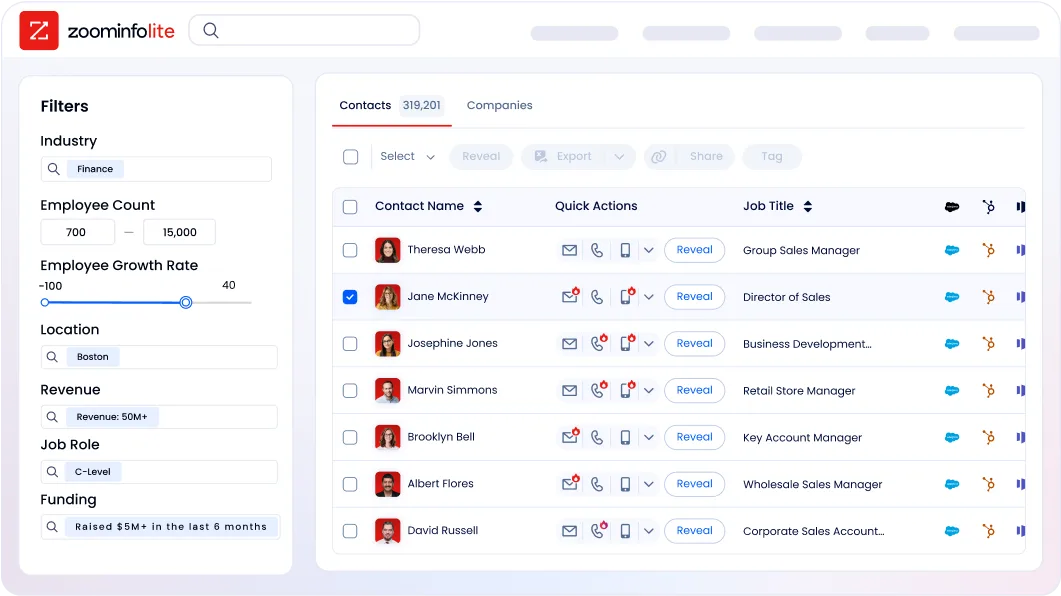
Plans are custom-quoted based on data access, API consumption, and team size. ZoomInfo Lite offers a permanent free tier with 10 monthly export credits, access to the B2B database, and a Chrome extension. For teams ready to invest in prospect intelligence, paid plans span Sales, Marketing, and Enterprise tiers.
The pricing reflects ZoomInfo's position as the data layer underneath your CRM, where ROI is measured in pipeline generated rather than dollars saved on subscriptions.
Ease of use and the complexity tradeoff
How easy a platform is to learn directly affects whether your team will actually use it.
Pipedrive is the easiest of the three.
The platform was built so salespeople, not CRM administrators, could set it up and start closing deals. The visual pipeline is intuitive from day one. A 14-day free trial with full access and no credit card required gives teams time to explore. Structured onboarding through the Pipedrive Academy includes courses, video tutorials, and webinars.
The mobile app supports offline activity scheduling, in-app calling, and a "Nearby" feature for field selling. Support is available via email for all users, live chat from Growth tier onward, and phone support on Premium and Ultimate.
Bitrix24 demands more investment up front.
G2 reviewers describe the interface as "overwhelming" during initial setup. PC Magazine noted the platform's "dizzying array of functions." The customizable main menu helps users surface their most-used tools, but with CRM, tasks, collaboration, sites, HR, and automation all in one workspace, navigation takes time to master.
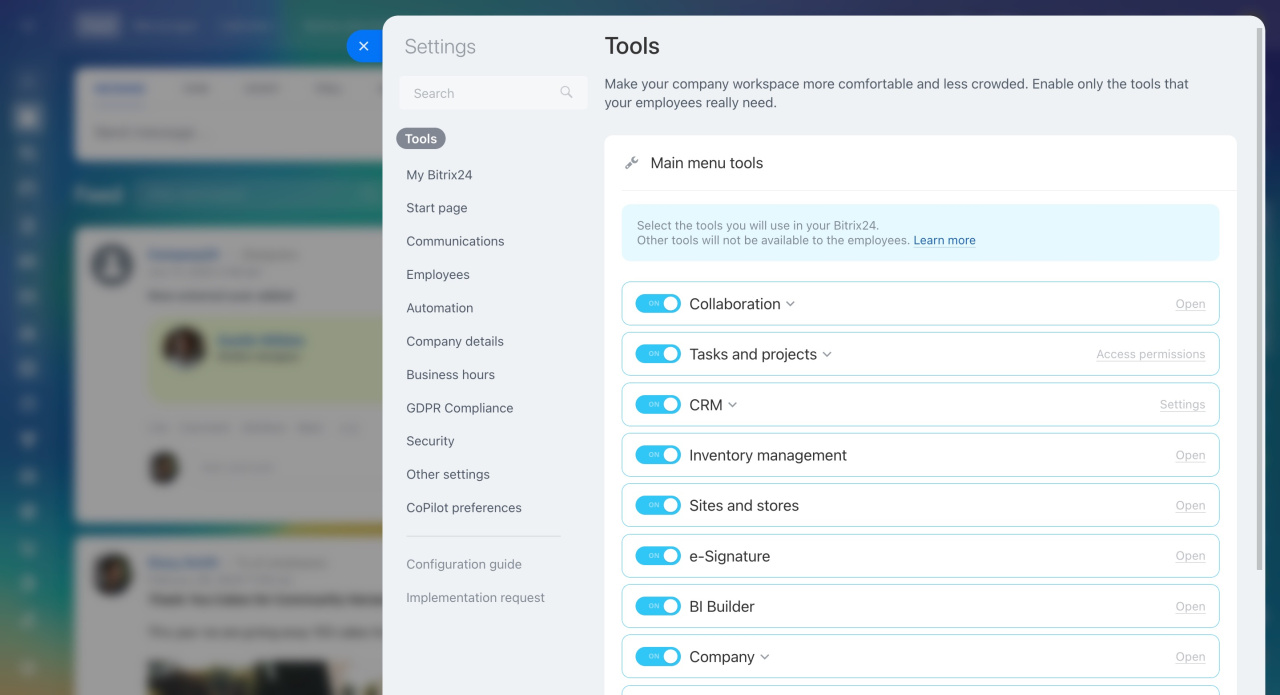
Source: Bitrix24
Capterra reviewers report performance issues on accounts with large data volumes. Live human support is only available on paid plans; free users get an AI support agent. For teams willing to invest in setup (or hire one of Bitrix24's 960+ certified partners for implementation), the payoff is a consolidated workspace that replaces multiple tools.
ZoomInfo sits between the two in the learning curve.
The platform's breadth (data, signals, AI agents, conversation intelligence, marketing automation) requires a real onboarding investment, which is why ZoomInfo redesigned its onboarding program to 90 days, producing a 25% improvement in customer satisfaction scores. ZoomInfo University offers role-specific learning paths and certifications.
For teams that want a lighter entry point, ZoomInfo Lite provides immediate access to the B2B database and basic prospecting with no commitment.
After integrating ZoomInfo's API, BDO Canada reported an 87% reduction in time spent on internal data dashboard updates. (BDO Canada Case Study)
Bitrix24 vs. Pipedrive vs. ZoomInfo: Which should you choose?
The choice depends on what problem you're solving.
Choose Bitrix24 if:
You need CRM, project management, team communication, and HR in one platform
Your team has 10+ members and flat-rate pricing would save you money
You want an on-premise deployment option for data residency requirements
You're willing to invest time in onboarding or work with a certified implementation partner
Your business relies on inbound communications across multiple channels
Choose Pipedrive if:
Your primary need is managing a sales pipeline and closing deals
You want a CRM your team will actually enjoy using
Your team is small (under 15 people) and per-seat pricing is manageable
You value speed of setup over feature breadth
Your sales process is activity-driven with clear deal stages
Add ZoomInfo if:
You want verified prospect data powering your CRM, not guesswork
Your team needs to know which accounts are in-market before reaching out
You're building outbound sales and need direct dials and verified emails at scale
You want AI that reasons about deal context, not just CRM field values
You need a data intelligence layer accessible from any tool via API or MCP
Explore ZoomInfo Lite for free or request a demo of the full platform.
The real insight isn't choosing one over the other. Bitrix24 and Pipedrive are solid CRMs for different types of businesses. But whichever you choose, the quality of your prospect data determines whether your pipeline rests on evidence or assumptions. ZoomInfo provides that evidence, connecting your CRM to verified B2B data and the intelligence layer that turns data into action.
Vensure's VP of Revenue Operations on ZoomInfo: "We don't have to go through and spend our time digging. It's already there, so we can be three steps ahead." (Vensure Case Study)
Bitrix24 vs. Pipedrive vs. ZoomInfo FAQ
Is Bitrix24 or Pipedrive better for small sales teams?
For small sales teams (under 10 people) focused on closing deals, Pipedrive is the stronger fit. Its pipeline-first design, lower learning curve, and per-seat pricing starting at $14/month make it accessible without requiring an administrator to configure.
Bitrix24 becomes more cost-effective for larger teams (15+) where flat-rate pricing saves significantly over per-seat models.
Can Bitrix24 replace Pipedrive as a CRM?
Bitrix24 includes a full CRM with pipeline management, automation, and an omnichannel contact center. For teams that also need project management, HR tools, team collaboration, and a website builder, Bitrix24 can replace both Pipedrive and several other tools.
However, Pipedrive's pipeline experience is more refined and intuitive for pure sales use cases. The choice depends on whether CRM focus or platform breadth matters more to your team.
Does ZoomInfo compete with Bitrix24 and Pipedrive?
Not directly. Bitrix24 and Pipedrive are operational CRMs for managing customer relationships and sales pipelines.
ZoomInfo is a B2B data intelligence platform that provides verified contacts, company information, buying signals, and AI-powered insights. ZoomInfo feeds data into your CRM to make prospecting and pipeline building more effective, rather than replacing the CRM itself.
How does Bitrix24's flat-rate pricing compare to Pipedrive at different team sizes?
At 5 users, Bitrix24 Basic costs $49/month total versus Pipedrive Lite at roughly $70/month ($14 per seat). At 50 users, Bitrix24 Standard costs $99/month versus Pipedrive Lite at $700/month. At 100 users, Bitrix24 Professional costs $199/month. The gap widens as teams grow, which is why Bitrix24 positions itself as the only major CRM without per-user pricing.
What prospecting capabilities does each platform offer?
Pipedrive's Prospector tool provides access to over 400 million profiles and 10 million companies, with an AI engine that verifies up to 800,000 profiles daily.
Bitrix24 focuses on inbound lead capture through web forms, live chat, and social channels but has no native prospecting database.
ZoomInfo provides the largest B2B prospecting dataset: 500M contacts, 135M+ verified phone numbers, and 200M+ verified business emails, backed by 300+ human researchers and up to 95% accuracy on first-party data.
Which platform has the best AI features for sales?
Each platform applies AI differently. Bitrix24's CoPilot covers the broadest surface area: call transcription, task generation, chat assistance, and website building.
Pipedrive's AI focuses on sales tasks like deal scoring, email drafting, and natural-language pipeline reporting.
ZoomInfo's AI operates on the deepest data foundation, reasoning across the GTM Context Graph (processing 1.5B + data points daily) to surface buying signals, prioritize accounts, and generate context-aware outreach. Bitrix24 and Pipedrive's AI works with your existing CRM data; ZoomInfo's AI adds external intelligence your CRM cannot generate on its own.
Does Bitrix24 offer an on-premise option?
Yes. Bitrix24 offers a self-hosted edition starting at $3,590 for up to 50 users, with an annual renewal at 50% of the initial price. This edition includes full source code access and is designed for organizations with data residency or compliance requirements. Neither Pipedrive nor ZoomInfo offers a comparable self-hosted deployment.
Can ZoomInfo work with both Bitrix24 and Pipedrive?
ZoomInfo provides APIs and MCP access that can deliver verified B2B data and intelligence into any CRM or application. ZoomInfo's primary native CRM integrations are with Salesforce, HubSpot, and Microsoft Dynamics.
Both Bitrix24 (700+ marketplace apps, REST API) and Pipedrive (500+ marketplace integrations, open API) support third-party data connections that can receive ZoomInfo data. ZoomInfo Lite includes a Chrome extension that works alongside any CRM in the browser.
More CRM comparisons:
