
Choosing between Bloomreach and Salesforce for your marketing and commerce stack comes down to a few questions most comparisons skip:
Is your primary challenge personalizing the shopping experience, or managing the full customer lifecycle from lead to close to renewal?
Do you need AI that understands product catalogs and purchase behavior, or AI agents that work across sales, service, marketing, and IT?
Are you consolidating around a commerce-focused platform, or investing in a CRM ecosystem that touches every department?
Is ecommerce search quality a direct revenue driver for your business, or a secondary concern?
For B2B companies: does your platform help you find the right accounts to target, or just engage the ones you already know?
In short, here's what we recommend:
Bloomreach is the platform for ecommerce brands that want commerce-specific intelligence behind every customer interaction. Its Loomi AI, trained on data from 1,400+ brands and 250 million daily searches, connects customer behavior with product catalog data in real time.
Your site search returns results based on what each shopper wants. Your email campaigns include products each recipient is likely to buy. Your marketing automation spans 13+ channels from a single customer profile. But Bloomreach has no CRM, no sales pipeline tools, and no service desk. It is a commerce experience platform, and it stays in that lane.
Salesforce is the platform for organizations that need everything under one roof. Its product suite (Sales Cloud, Service Cloud, Marketing Cloud, Commerce Cloud, Data Cloud, Slack, and Agentforce) shares a single customer record and covers the full customer lifecycle from first touch through support ticket.
Its Agentforce AI agents can handle service cases, draft sales emails, create marketing campaigns, and manage commerce operations without human involvement. The tradeoff is complexity: multi-cloud pricing compounds quickly, implementation typically requires partners, and the learning curve demands dedicated administrators.
Both platforms are strong at engaging the customers you already have. But for B2B companies, there's a harder question: how do you find the right accounts and contacts to target in the first place? That's a different problem, and it's where ZoomInfo comes in.
ZoomInfo is a B2B go-to-market platform built on a data foundation of 500 million contacts, 100 million companies, 135 million verified phone numbers, and 200 million verified business email addresses.
Its GTM Context Graph processes 1.5 billion data points daily, combining this data with your CRM records, conversation transcripts, and behavioral signals to reveal not just what happened, but why, and which actions to take next.
ZoomInfo integrates with Salesforce and can complement Bloomreach for B2B commerce companies, delivering intelligence through GTM Workspace for sellers, GTM Studio for marketers and RevOps, or APIs and MCP in any third-party tool.
If B2B prospecting data and account intelligence sound like the missing piece in your go-to-market stack, see how ZoomInfo works.
Bloomreach vs. Salesforce at a glance
Bloomreach | Salesforce | ZoomInfo | |
|---|---|---|---|
Core focus | Commerce personalization | Enterprise CRM + multi-cloud suite | B2B data intelligence and GTM execution |
AI engine | Loomi AI (commerce-trained on 1,400+ brands) | Agentforce + Atlas Reasoning Engine | GTM Context Graph (1.5B+ data points daily) |
Marketing automation | 13+ channels, commerce-native | Marketing Cloud Engagement + Account Engagement | GTM Studio for B2B plays and orchestration |
Ecommerce search | 250M searches/day, AI-native | Basic Commerce Cloud search | N/A (B2B focus) |
CRM | No native CRM | #1 CRM worldwide (IDC market share) | Integrates with Salesforce, HubSpot, Dynamics |
B2B prospecting data | Not a focus | Data Cloud (broad, not B2B-specific) | 500M contacts, 100M companies, 135M+ verified phones |
Analyst recognition | Gartner Leader for Personalization Engines; Forrester Leader for Email Marketing | Gartner Leader across 6+ categories | Gartner Leader for ABM Platforms; Forrester Leader for Intent Data |
Starting price | Custom (enterprise) | $25/user/month (Starter Suite) | Custom (consumption-based) |
Typical implementation | ~3 months (marketing), ~6 weeks (search) | Weeks to 12 months depending on scope | Weeks |
Customers | 1,400+ brands | 150,000+ companies | 35,000+ companies |
Commerce-first vs. CRM-first: the architectures are different
Bloomreach and Salesforce both serve marketing and commerce teams, but they started from opposite ends of the problem.
Bloomreach was founded in 2009 to fix ecommerce product discovery. The 2021 acquisition of Exponea added a Customer Data and Experience Platform, giving Bloomreach marketing automation, CDP capabilities, and cross-channel engagement on top of its search and merchandising foundation.
Everything in the platform revolves around one idea: connecting what customers do with what products exist, in real time, so every interaction reflects live intent.
Salesforce was founded in 1999 as a cloud CRM. Over 25 years, it expanded through acquisitions (ExactTarget for marketing, Demandware for commerce, Tableau for analytics, Slack for collaboration, Informatica for data management) into a platform covering every customer-facing function.
The CRM record is the center of gravity. Marketing Cloud, Commerce Cloud, Service Cloud, and Data Cloud all orbit around it.
This architectural difference has practical consequences. In Bloomreach, a marketing campaign and an ecommerce search query draw from the same customer profile and product catalog without ETL jobs or middleware.
In Salesforce, Marketing Cloud Engagement and Commerce Cloud are separate products that share data through Data Cloud, which requires its own configuration. Bloomreach's approach is simpler for commerce-focused companies. Salesforce's approach serves organizations that need sales, service, and marketing on one platform.
Neither architecture is wrong. But they shape what each platform does well and where each one struggles.
The B2B intelligence gap both platforms leave open
Bloomreach and Salesforce both excel at engaging customers you already know. Bloomreach personalizes the shopping experience using behavioral and catalog data. Salesforce manages the customer lifecycle across sales, service, and marketing. But neither platform was built to answer the question B2B companies face every day: who should we be targeting, and when?
Bloomreach builds customer profiles from website interactions, email engagement, and purchase history. Salesforce's Data Cloud ingests 112 trillion records and unifies them into customer profiles. Both work well for known customers. Neither provides the verified B2B contact data, direct-dial phone numbers, buyer intent signals, and account intelligence that outbound sales and account-based marketing depend on.
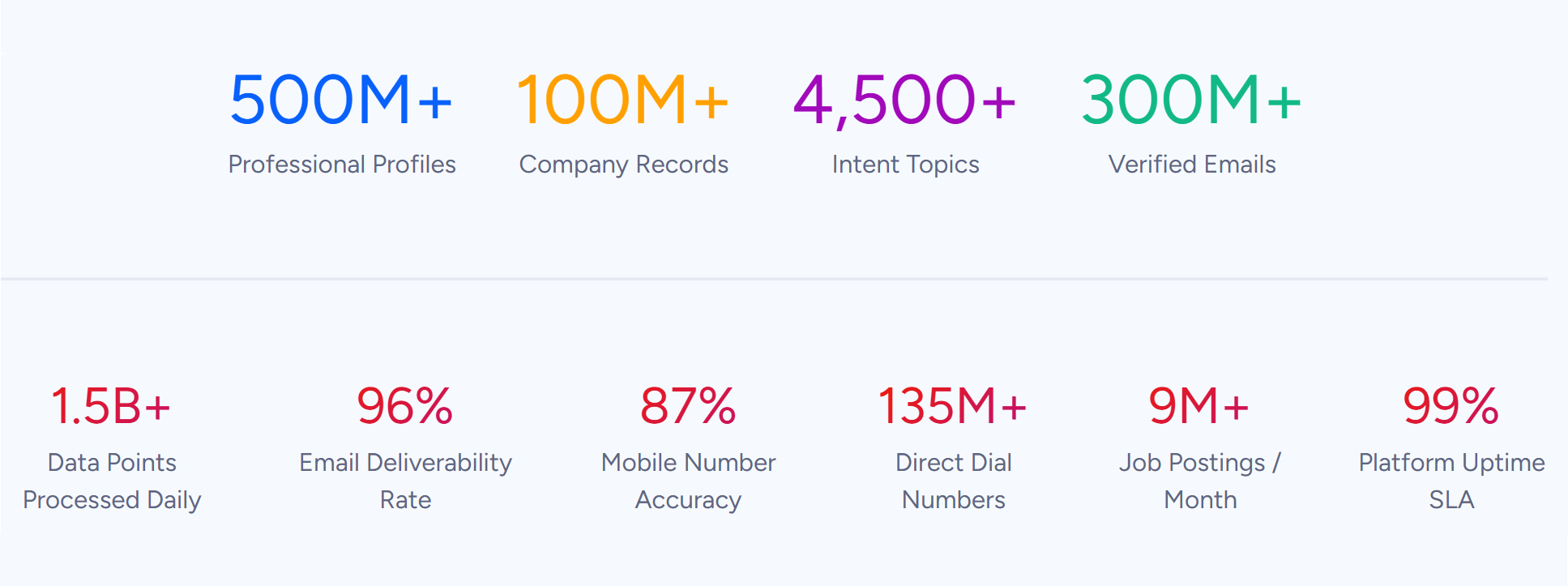
That is the problem ZoomInfo solves. ZoomInfo's data platform covers 500 million contacts, 100 million companies, 135 million verified phone numbers, and 200 million verified business email addresses, verified through a collection and verification system backed by 300+ human researchers with up to 95% accuracy on first-party data.
Source: ZoomInfo
Buyer Intent tracks signals from 210 million IP-to-Organization pairings and 6 trillion keyword-to-device pairings monthly, showing which companies are actively researching solutions like yours.

Source: ZoomInfo
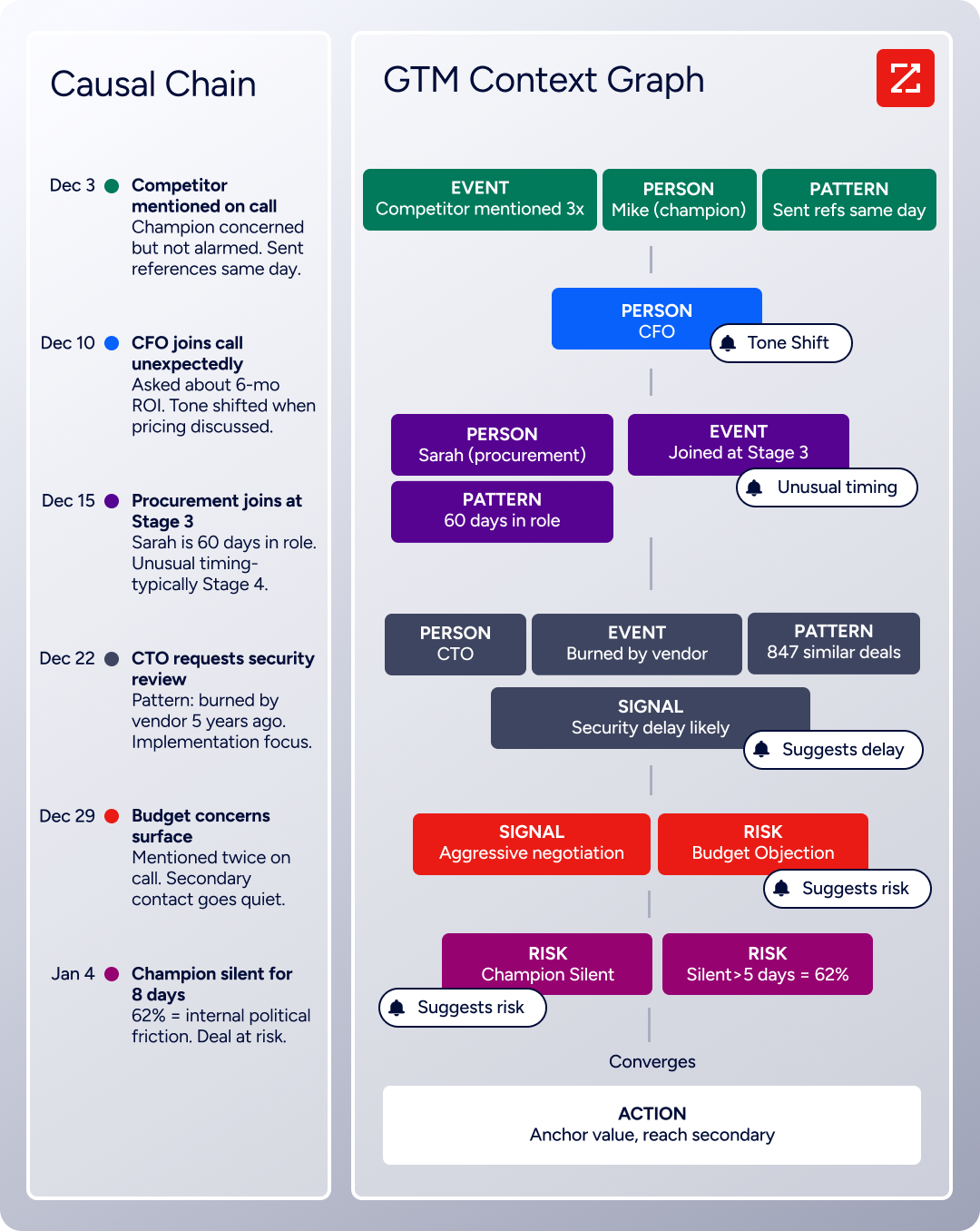
The GTM Context Graph is ZoomInfo's intelligence layer. It combines ZoomInfo's B2B data with your CRM records, conversation transcripts, and engagement signals to show why deals move or stall, not just that they did. A CRM records a stage change. The GTM Context Graph identifies that the CFO joined the last call, asked about ROI, and that this pattern matches closed-won deals in your segment.
Source: ZoomInfo
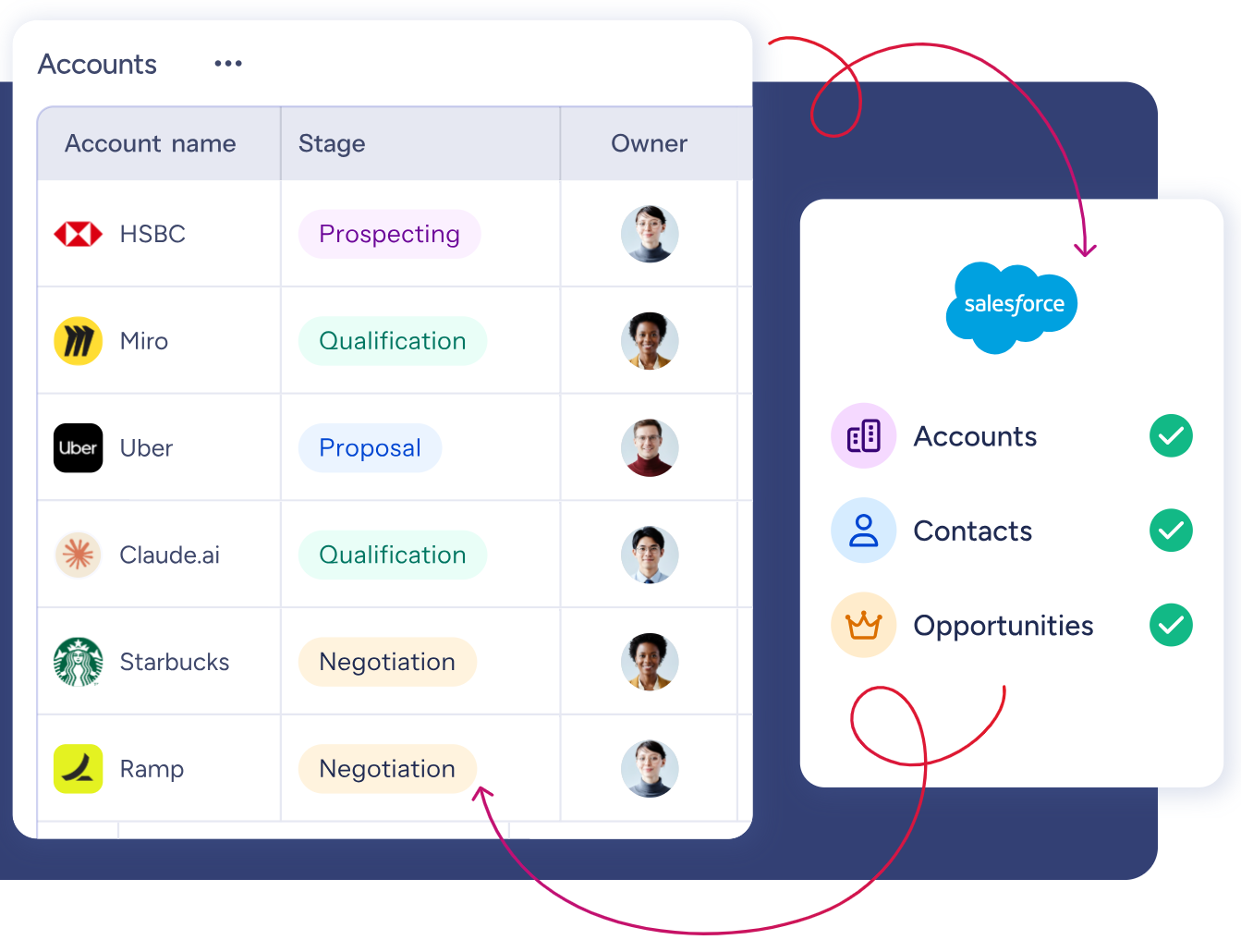
For Salesforce users, ZoomInfo plugs directly into the CRM through a native integration, enriching account and contact records with verified data and surfacing buying signals inside the workflows reps already use.
Source: ZoomInfo
For Bloomreach users running B2B ecommerce (companies like HD Supply and Sonepar are Bloomreach customers), ZoomInfo provides the account targeting layer that a commerce personalization platform doesn't include.
Whether you choose Bloomreach or Salesforce for your marketing and commerce stack, ZoomInfo fills the prospecting and account intelligence gap that neither was designed to close. The intelligence is accessible through GTM Workspace for sellers, GTM Studio for marketers and RevOps, or APIs and MCP in any third-party tool, including Salesforce and Bloomreach.
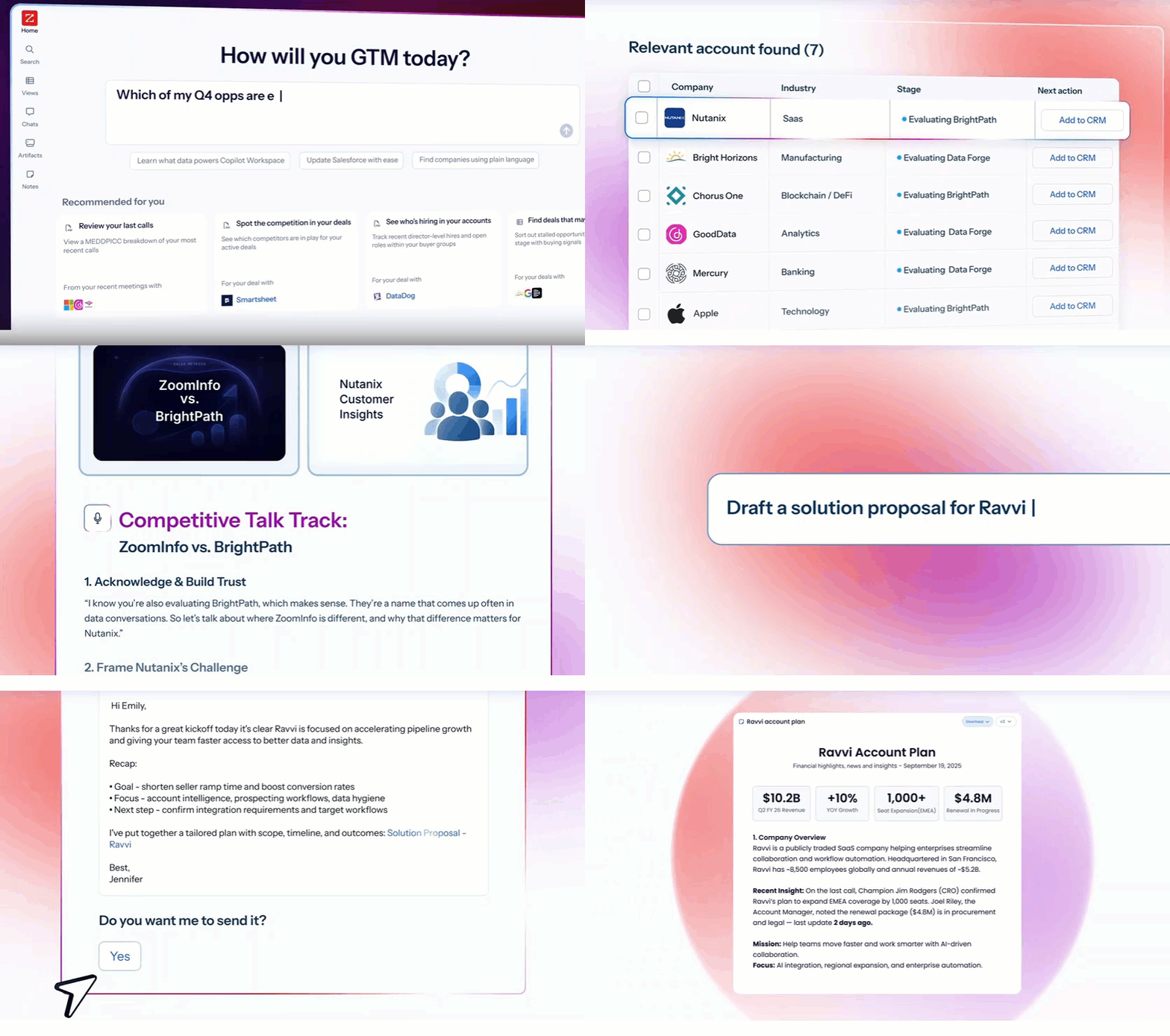
Source: ZoomInfo
For a closer look at how Salesforce and ZoomInfo stack up on data quality, features, and GTM fit, see our Salesforce vs. ZoomInfo comparison.
Seismic attributed 39% of active pipeline to opportunities identified by ZoomInfo signals and boosted sales productivity by 54%. (Seismic)
Ecommerce search is Bloomreach's territory
If product discovery directly drives your revenue, Bloomreach has an advantage Salesforce cannot match.
Bloomreach's Autonomous Search & Discovery processes 250 million searches per day using semantic understanding rather than keyword matching. The search engine interprets natural language queries, concept searches like "cottagecore decor," and visual search. It personalizes results for both identified users and anonymous visitors.
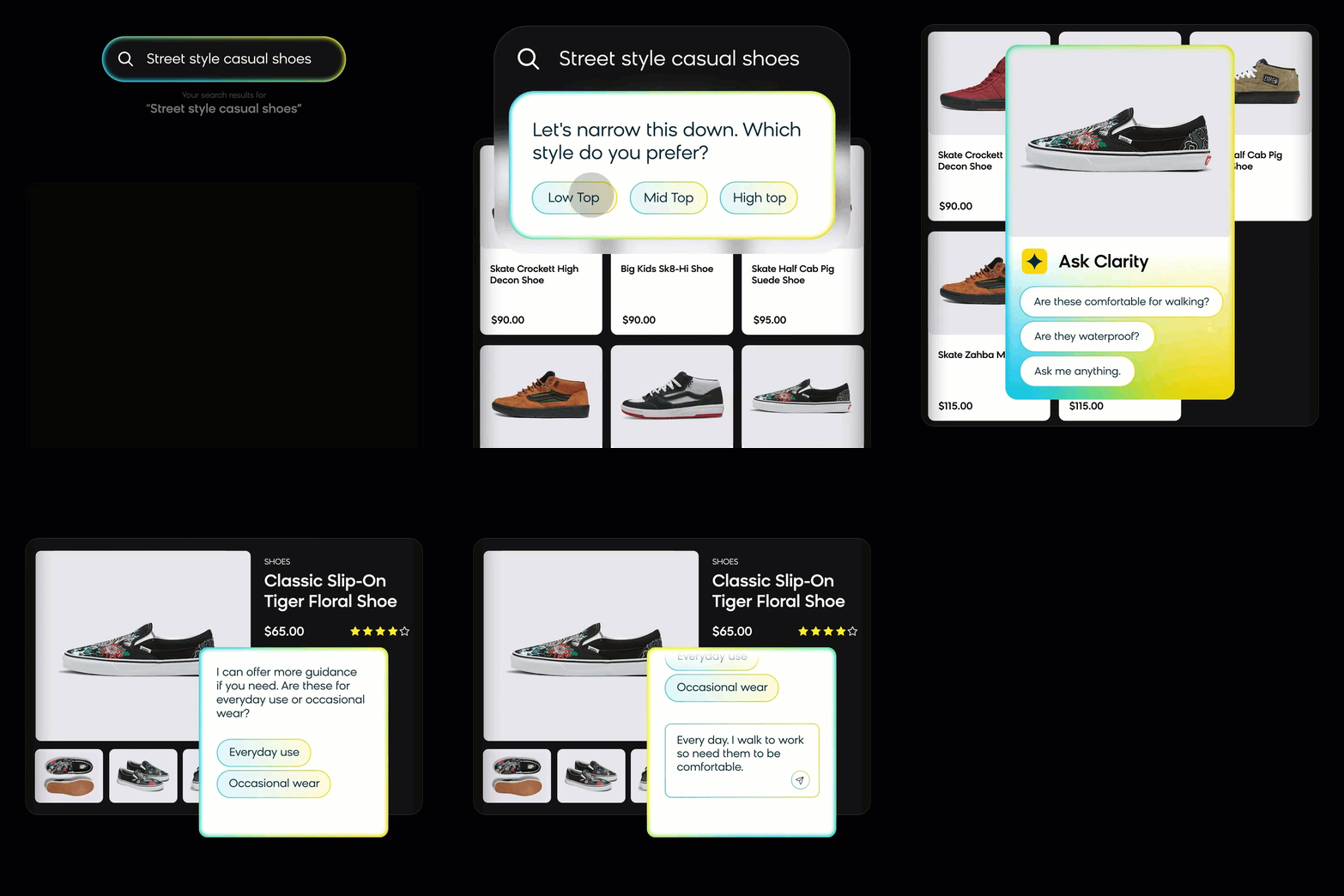
Source: Bloomreach
The Loomi Conversational Agent goes further, turning the search bar into a dialogue. Instead of browsing through filters, shoppers describe what they want in plain language. The agent responds with product suggestions grounded in the live catalog and inventory feed, so it cannot recommend products that don't exist.
Salesforce Commerce Cloud includes search, but search is not the product's differentiator. Commerce Cloud's strengths are Composable Storefront (a headless PWA architecture), order management, and AI-powered guided shopping through Agentforce.
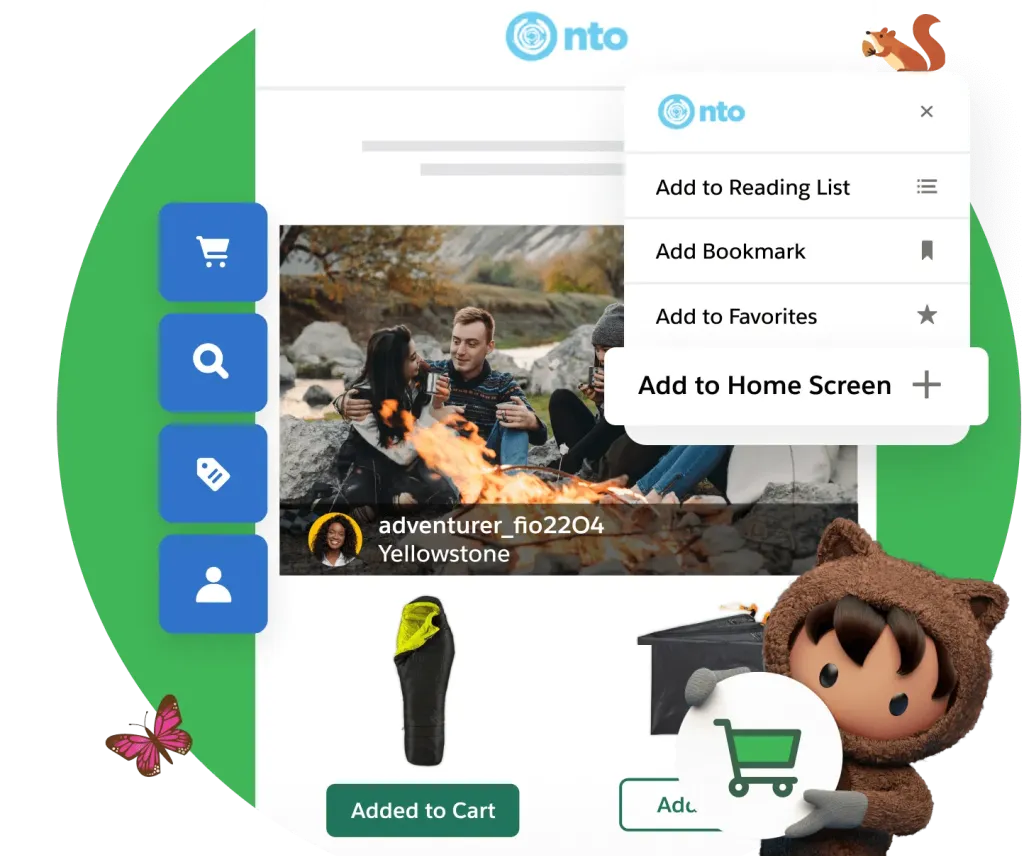
Source: Salesforce
For retailers where search is the primary conversion driver, Bloomreach's decade of search-specific AI development provides depth that Salesforce's broader platform doesn't prioritize.
Marketing automation: same goal, different machines
Both platforms automate cross-channel marketing. How they do it reveals what each values most.
Bloomreach Engagement orchestrates campaigns across 13+ channels (email, SMS, RCS, WhatsApp, mobile app, web personalization, push notifications, and paid ad audiences) from a single visual journey builder called Scenarios. Every channel shares the same customer profile, which includes real-time behavioral data and product catalog data.
The Loomi Marketing Agent converts a plain-English prompt into a complete email lifecycle campaign (audience, triggers, timing, personalized content) in under 15 minutes.
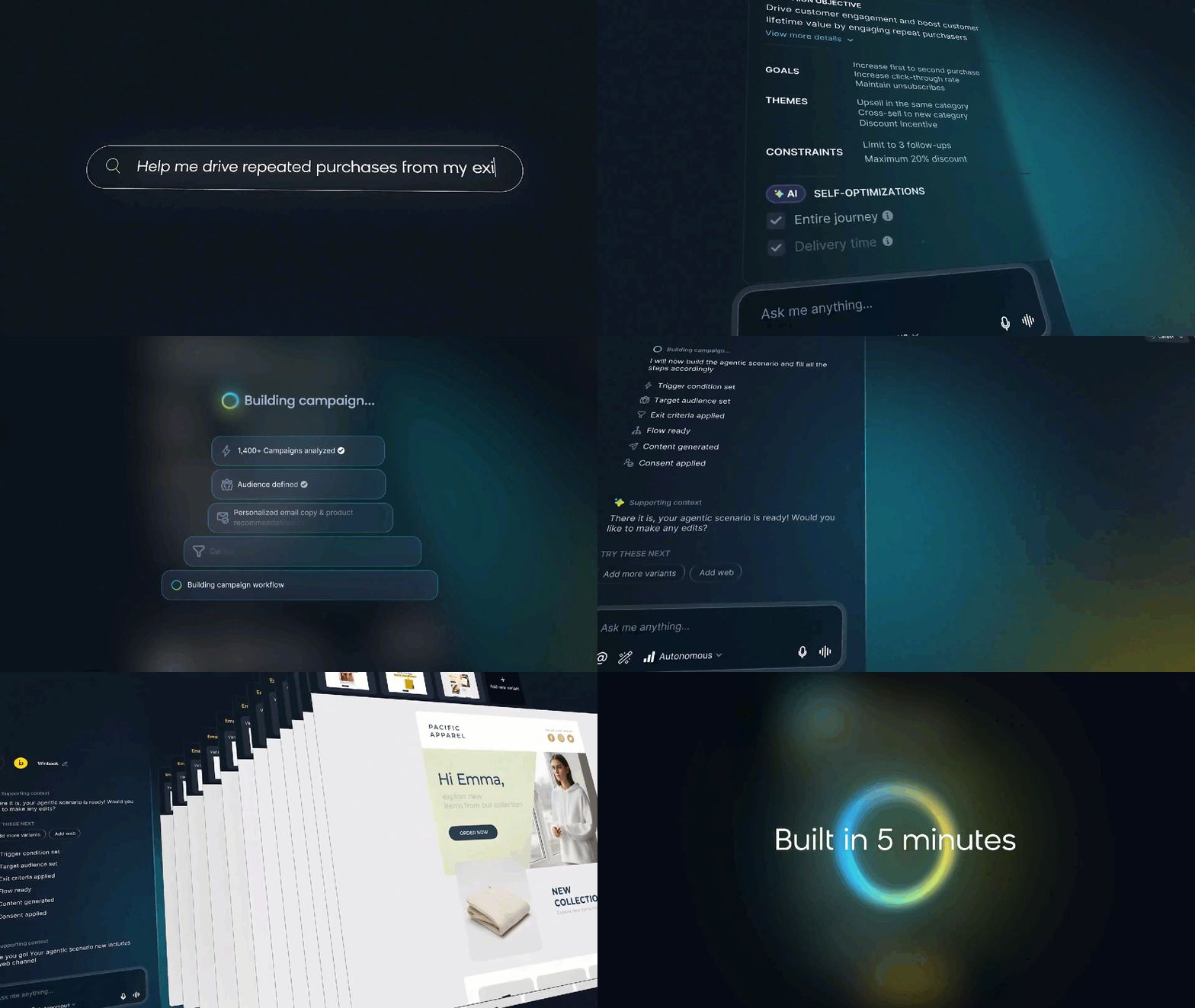
Source: Bloomreach
Salesforce Marketing Cloud splits into sub-products: Marketing Cloud Engagement for B2C cross-channel campaigns, Account Engagement (formerly Pardot) for B2B lead nurturing, Personalization for real-time recommendations, and Intelligence for marketing analytics.
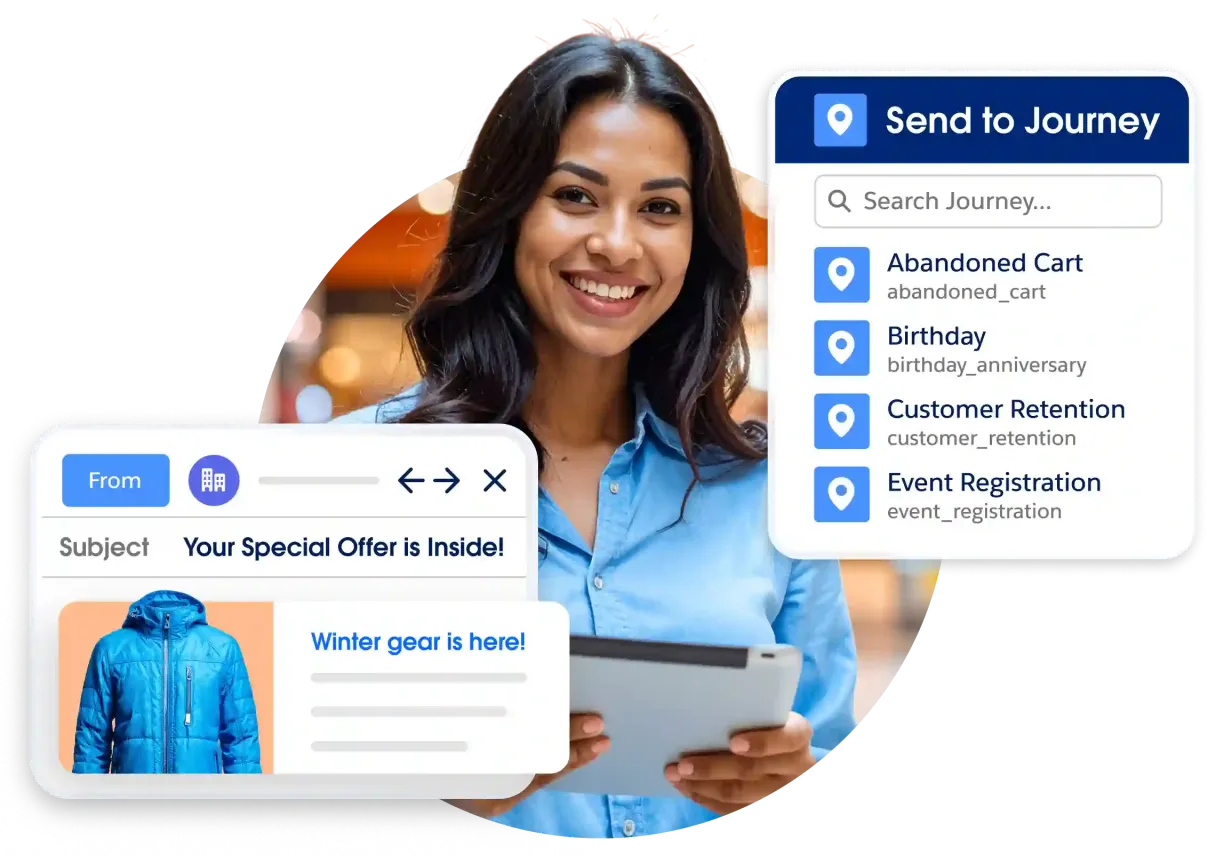
Source: Salesforce
This breadth means Salesforce handles B2B lead scoring, multi-touch attribution, and paid media optimization alongside B2C journey orchestration. The tradeoff is fragmentation: each sub-product has its own pricing, and connecting them through Data Cloud adds another layer.
For a pure ecommerce retailer sending personalized campaigns based on browse behavior and purchase history, Bloomreach's unified model is faster to deploy and easier to operate. For a company running both B2B lead nurturing and B2C commerce marketing, Salesforce's broader suite covers more ground, at the cost of more configuration and higher spend.
Bloomreach earned Forrester Wave Leader status for Email Marketing Service Providers (Q3 2024), receiving the highest scores possible in eleven criteria. Salesforce holds Gartner MQ Leader status for Multichannel Marketing Hubs for eight consecutive years. Both have third-party validation; the question is which type of marketing your business depends on.
AI strategies reflect each platform's priorities
Bloomreach and Salesforce both invest heavily in AI. Their approaches mirror their architectures.
Loomi AI trains on commerce-specific data: 250 million daily searches and 100,000 email campaigns per day across 1,400+ brands. It powers every Bloomreach product, from search ranking and product recommendations to campaign orchestration and conversational shopping.
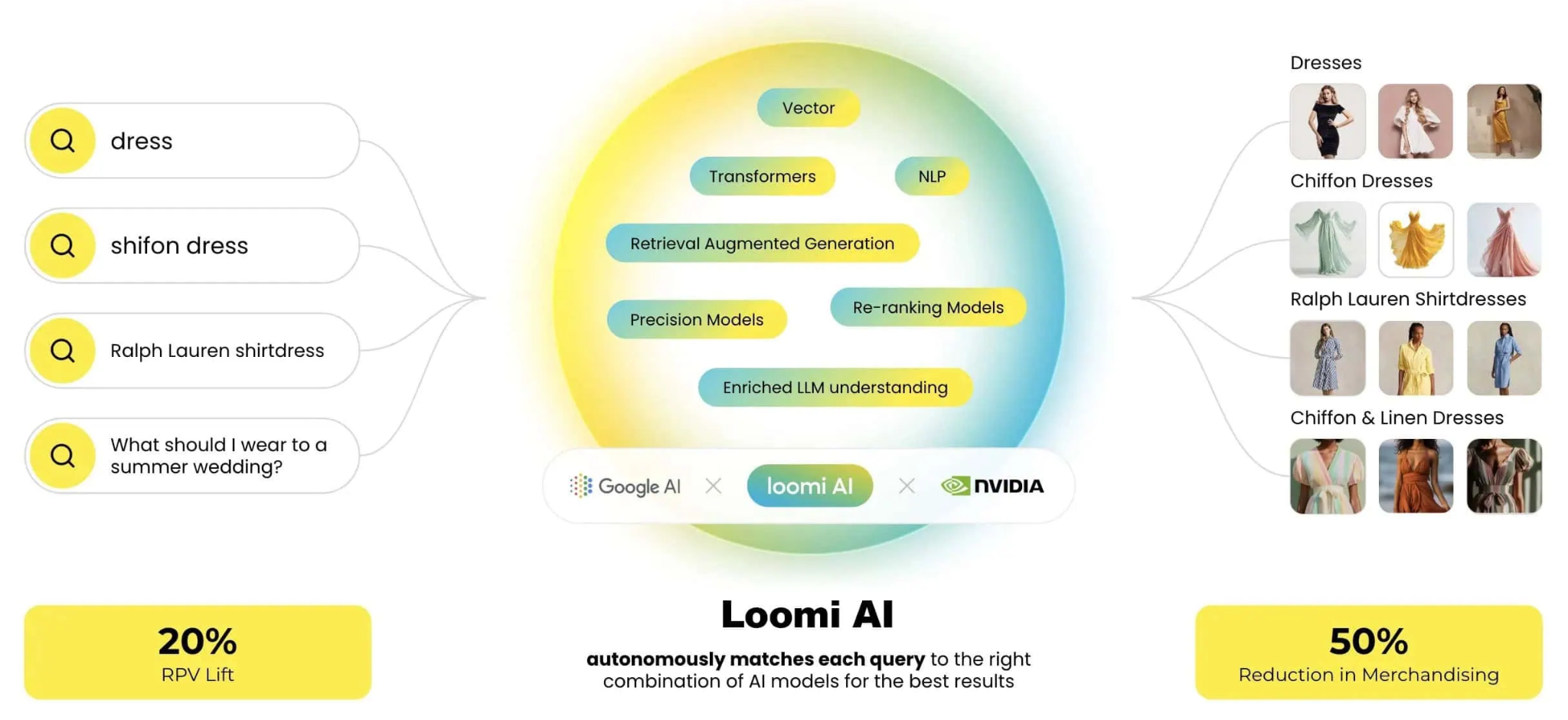
Source: Bloomreach
What sets it apart is commerce context. When the Loomi Marketing Agent builds a campaign, it knows inventory levels, product margins, and individual purchase likelihood, so it won't recommend out-of-stock items or discount products that don't need discounting. The AI responds in 5 milliseconds to 2 seconds for real-time decisions.
Agentforce is Salesforce's autonomous AI agent platform, powered by the Atlas Reasoning Engine. Where Loomi is commerce-specific, Agentforce is enterprise-wide. Pre-built agents handle service cases, sales coaching, marketing campaigns, IT service requests, and commerce tasks.
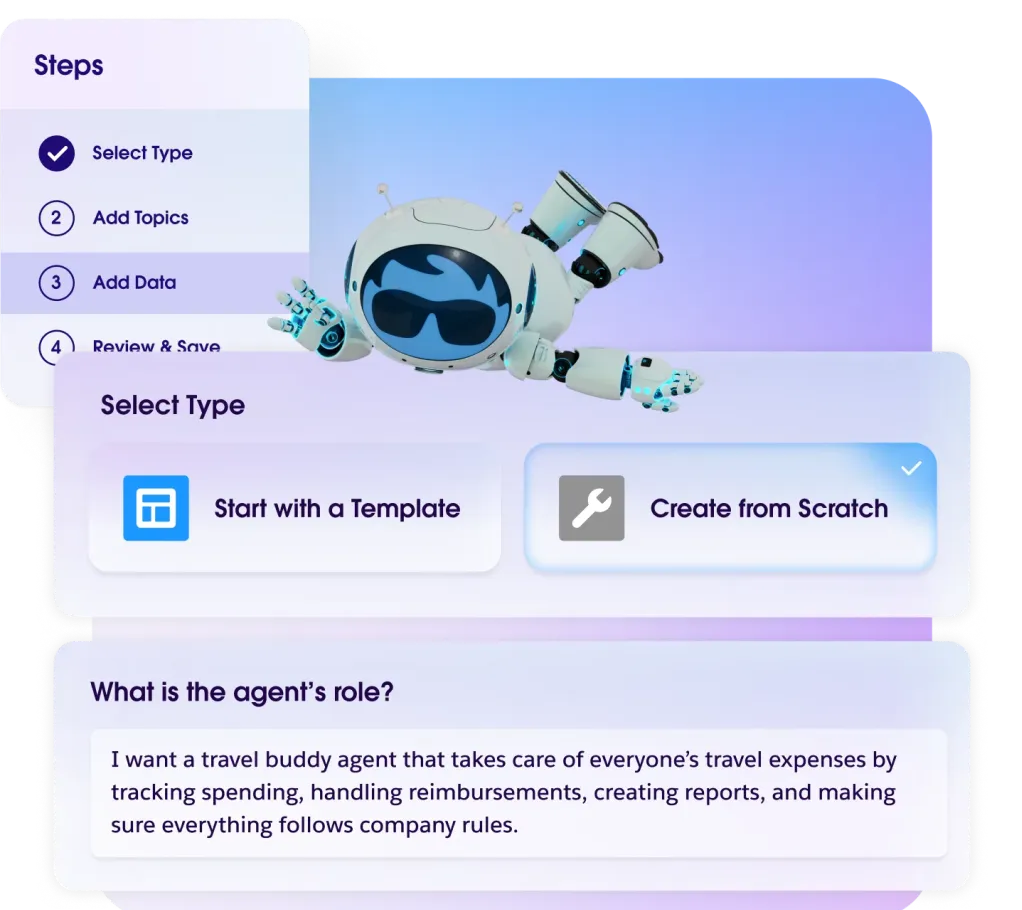
Source: Salesforce
The difference matters in practice. Bloomreach's AI goes deeper in commerce. It understands product affinity, browse-to-purchase patterns, and catalog relationships at a level a general-purpose enterprise AI doesn't reach.
Salesforce's AI goes wider. It connects sales forecasting, service automation, and marketing intelligence under a single trust layer with zero data retention, PII masking, and toxicity detection.
If your AI needs center on commerce personalization and product discovery, Loomi's specialization matters. If you need AI agents across sales, service, marketing, and operations, Agentforce covers more ground.
Pricing: both are enterprise, but the math works differently
Neither platform publishes straightforward price lists, but the pricing structures reveal different philosophies.
Bloomreach uses custom quotes based on two metrics: monthly unique visitors and billable profiles. Whichever is higher determines the tier. On top of that, a usage fee applies per channel (email sends, SMS messages, API calls for search). Seat count is not a factor, so two brands of the same size pay the same rate whether the team has three users or thirty.
Salesforce stacks per-user licensing across each cloud. Sales Cloud and Service Cloud range from $25 to $550 per user per month. Marketing Cloud Growth starts at $1,500 per org per month, with Engagement Pro+ at $2,000 and Enterprise+ at $30,000 per org per month.
Agentforce actions cost $0.10 each (or $2 per conversation). Data Cloud credits are separate at $500 per 100,000. A June 2025 restructuring raised Enterprise and Unlimited list prices by roughly 6%.
The practical difference: Bloomreach's pricing scales with traffic and customer base size, and consolidates marketing, search, and personalization into one contract. Salesforce's pricing scales with user count and cloud adoption, and compounds as you add Marketing Cloud, Commerce Cloud, Data Cloud, and Agentforce on top of a CRM license.
A Salesforce deployment covering sales, service, marketing, and commerce can reach six or seven figures annually before implementation costs, which partners typically lead in over 70% of deployments.
Both platforms reward larger commitments with better rates. Both require annual contracts. Neither is cheap. The question is whether you're buying one focused platform or assembling a multi-cloud ecosystem.
Implementation: focused deployment vs. enterprise transformation
How long it takes to go live says a lot about platform complexity.
Bloomreach's marketing automation averages three months to active use. Autonomous Search averages six weeks. Every plan includes a dedicated Customer Success Manager, onboarding support, and access to Bloomreach Academy with structured certification tracks.
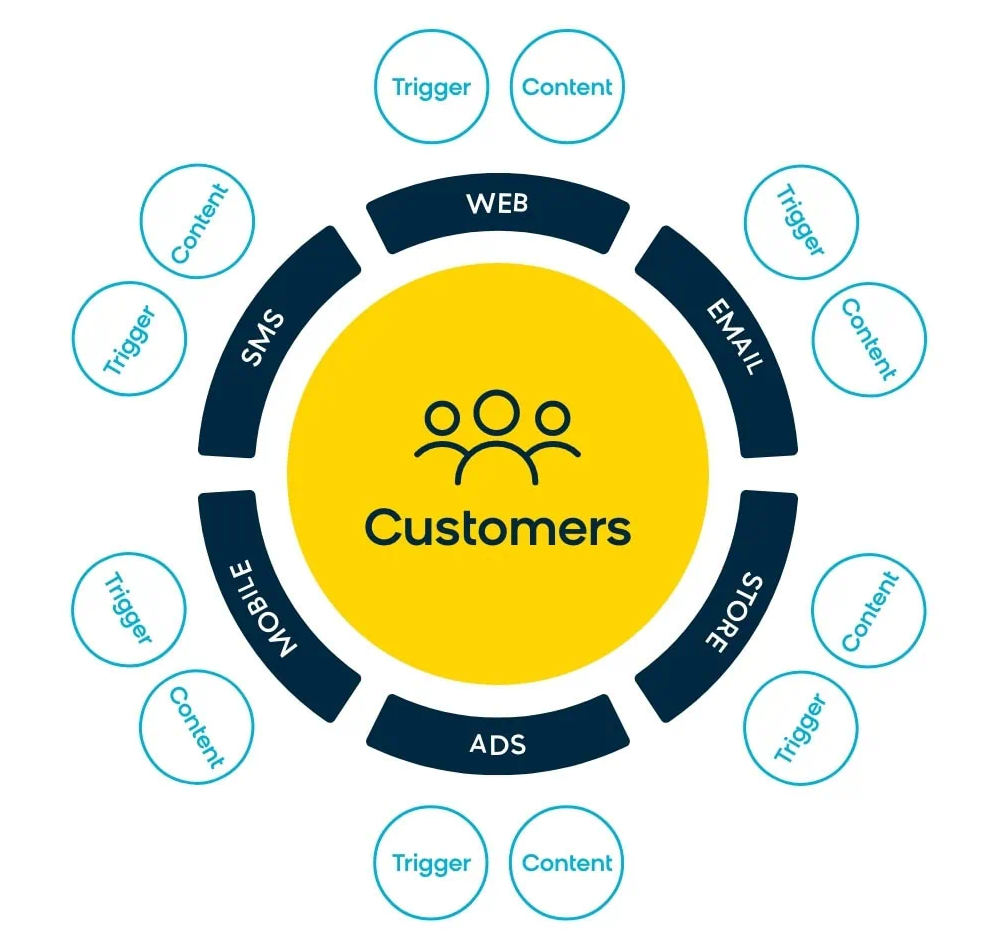
Source: Bloomreach
G2 reviews consistently highlight the responsive support team as a strength. The steepest challenge is the learning curve: advanced features and platform configuration require significant expertise, and the platform rewards technical marketing teams.
Salesforce implementation timelines range from weeks (a simple Sales Cloud setup) to 3 to 12 months (multi-cloud enterprise deployments). The platform offers three Success Plan tiers: Standard (free), Premier (30% of net fees), and Signature (custom, with a dedicated Customer Success Manager).
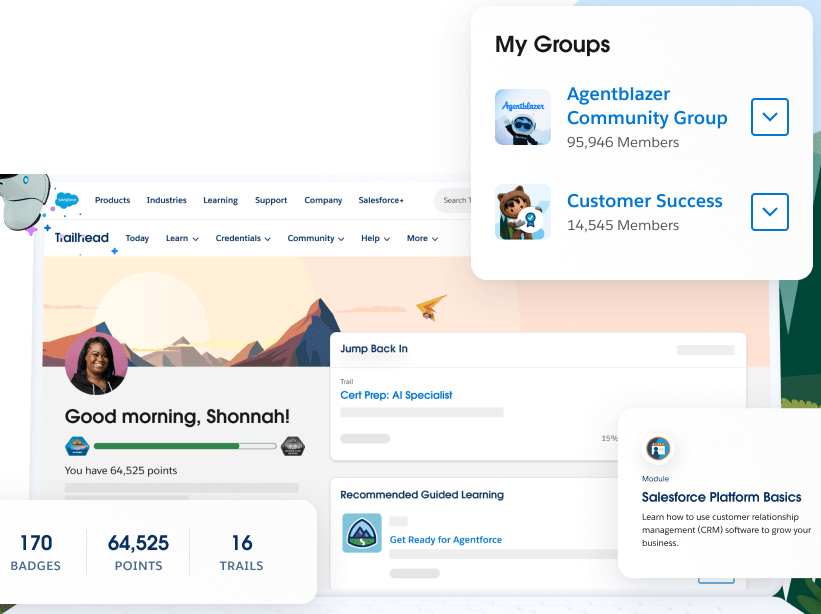
Trailhead provides 1,500+ learning badges and 60+ certifications for upskilling. The Trailblazer Community spans 20 million members. But the platform's depth demands dedicated, trained administrators.
Source: Salesforce
For a mid-market ecommerce company with a small marketing team, Bloomreach gets campaigns running faster. For an enterprise replacing multiple legacy systems with a single Salesforce ecosystem, the longer implementation pays off in consolidation. Match the platform's deployment model to your team's capacity.
Bloomreach vs. Salesforce vs. ZoomInfo: Which should you choose?
The right platform depends on what your business needs most.
Choose Bloomreach if:
You're an ecommerce brand where product discovery, site search, and on-site personalization directly drive revenue
Your marketing team needs commerce-trained AI that understands product catalogs, inventory, and purchase behavior
You want to consolidate email, SMS, web personalization, and search under one platform with one customer profile
You value faster implementation and a focused platform over breadth across departments
Your business is B2C or D2C commerce, or B2B ecommerce with a large product catalog
Choose Salesforce if:
You need a single platform covering sales, service, marketing, commerce, and analytics
Your organization spans multiple departments that need shared customer data
You want AI agents that automate tasks across every customer-facing function
You're already in the Salesforce ecosystem or need integrations through AppExchange
You operate in a regulated industry where Salesforce has a dedicated industry cloud
Add ZoomInfo if:
You're a B2B company that needs verified prospecting data, direct-dial phone numbers, and business email addresses
Your sales team needs account intelligence and buyer intent signals to know who to target and when
You want an intelligence layer that works with either Bloomreach or Salesforce rather than replacing them
You need B2B data and AI-powered GTM execution through a single platform with API and MCP access
Start your free ZoomInfo trial and see the data for yourself.
Bloomreach and Salesforce are both strong platforms. Bloomreach goes deeper in commerce personalization. Salesforce goes wider across the enterprise. But for B2B companies, neither provides the prospecting data and account intelligence that fill the top of the funnel. ZoomInfo powers that motion, regardless of which marketing or commerce platform you run downstream.
Bloomreach vs. Salesforce vs. ZoomInfo FAQ
What is the core difference between Bloomreach and Salesforce?
Bloomreach is a commerce-focused AI personalization platform built around ecommerce search, product discovery, and marketing automation for retail and ecommerce brands. Salesforce is an enterprise CRM platform covering sales, service, marketing, commerce, analytics, and collaboration. Bloomreach goes deeper in commerce; Salesforce goes wider across the customer lifecycle.
Which platform is better for ecommerce product search and discovery?
Bloomreach is stronger for ecommerce search. Its search engine processes 250 million searches per day, handles natural language and concept queries, and personalizes results for each shopper. Bloomreach reports an average 20% or more lift in revenue per visitor from its search product. Salesforce Commerce Cloud includes search, but product discovery is not its primary differentiator.
How does pricing compare between Bloomreach and Salesforce?
Bloomreach uses custom pricing based on monthly unique visitors and billable profiles, with usage fees per channel. Seat count does not affect the price.
Salesforce uses per-user licensing that stacks across each cloud: Sales Cloud ranges from $25 to $550 per user per month, Marketing Cloud Growth starts at $1,500 per org per month, and Data Cloud credits, Agentforce actions, and add-ons are each priced separately. Both require annual contracts and custom quotes for enterprise deployments.
Can I use both Bloomreach and Salesforce together?
Yes. Many organizations use Bloomreach for commerce-specific marketing automation and ecommerce search alongside Salesforce as their CRM and sales platform. Bloomreach supports integrations with Salesforce Commerce Cloud among its 175+ partner integrations, though data flow between the two platforms requires configuration.
Where does ZoomInfo fit if I'm already using Bloomreach or Salesforce?
ZoomInfo does not compete with either platform. It provides B2B prospecting data (500 million contacts, 100 million companies, 135 million verified phone numbers) and buyer intent signals that neither Bloomreach nor Salesforce specializes in.
ZoomInfo integrates directly with Salesforce to enrich CRM records with verified contact data and account intelligence. For B2B ecommerce companies using Bloomreach, ZoomInfo provides the account targeting and sales intelligence layer that a commerce platform doesn't include.
Which platform has stronger AI capabilities?
Both have strong AI, but in different domains. Bloomreach's Loomi AI trains on commerce-specific data from 1,400+ brands and excels at product recommendations, search personalization, and autonomous campaign creation through its Marketing Agent.
Salesforce's Agentforce is broader, with autonomous AI agents handling service cases, sales coaching, marketing campaigns, and IT requests across the enterprise.
ZoomInfo's GTM Context Graph applies AI to a different problem: combining B2B data with CRM records and conversation signals to identify why deals move or stall and which accounts to target next.
Which platform is faster to implement?
Bloomreach's marketing automation averages three months to active use, and its search product averages six weeks. Salesforce implementations range from weeks to 12 months depending on scope, with over 70% of deployments led by partners.
ZoomInfo typically deploys in weeks. Bloomreach's narrower scope generally means faster time to value for commerce use cases, while Salesforce's broader platform requires more upfront configuration but covers more ground.
Which platform is best for B2B companies?
It depends on the function. Salesforce is the stronger choice for B2B sales pipeline management, account-based engagement (through Account Engagement, formerly Pardot), and enterprise CRM. Bloomreach is the stronger choice for B2B ecommerce companies with large product catalogs where search and discovery matter.
ZoomInfo is built for B2B, providing the verified contact data, intent signals, and account intelligence that power prospecting and account-based marketing. Many B2B companies use ZoomInfo alongside Salesforce as their core stack.
See how Salesforce compares against other CRMs and platforms:
