
Choosing between Braze and HubSpot for customer engagement and marketing comes down to five questions:
Are you a B2C company sending behavior-triggered messages across mobile and web, or a B2B company that needs marketing, sales, and service in one system?
Do you need a dedicated cross-channel messaging engine, or a CRM platform that includes marketing automation?
Is your primary challenge personalizing messages per user across push, SMS, email, and in-app, or generating and nurturing leads through content and sales pipelines?
How important is it that the data behind your campaigns is accurate, verified, and enriched with buying signals?
Does your team have the technical resources to implement a specialized engagement platform, or do you need something marketers can run without engineering support?
In short, here's what we recommend:
Braze is built for B2C brands that need real-time, cross-channel customer engagement at scale. Its strength is orchestrating personalized journeys across mobile push, in-app messages, email, SMS, WhatsApp, and more, all triggered by live customer behavior. BrazeAI Decisioning Studio autonomously optimizes channel, timing, and content for each user. The tradeoff: Braze requires serious engineering investment to implement, pricing is opaque and enterprise-oriented, and there's no CRM, no sales pipeline, no content management. It does one thing well.
HubSpot is the combined platform for B2B companies that want marketing, sales, service, and CRM sharing the same data layer. Its Marketing Hub handles email, landing pages, social, and automation, while Sales Hub, Service Hub, and the Smart CRM cover the rest of the go-to-market workflow. Breeze AI agents handle prospecting, customer support, and data enrichment, consolidating tools that would otherwise require five or six separate subscriptions. The tradeoff: HubSpot's marketing automation is broad rather than deep. It handles email well but lacks the real-time mobile engagement, push notifications, and behavioral triggering that dedicated engagement platforms offer.
Both platforms are strong at what they do. But neither solves a problem upstream of both: the quality of the data fueling your campaigns. When your contact records are incomplete, your company data is stale, and you can't see which accounts are actively researching solutions, even the best engagement platform is guessing.
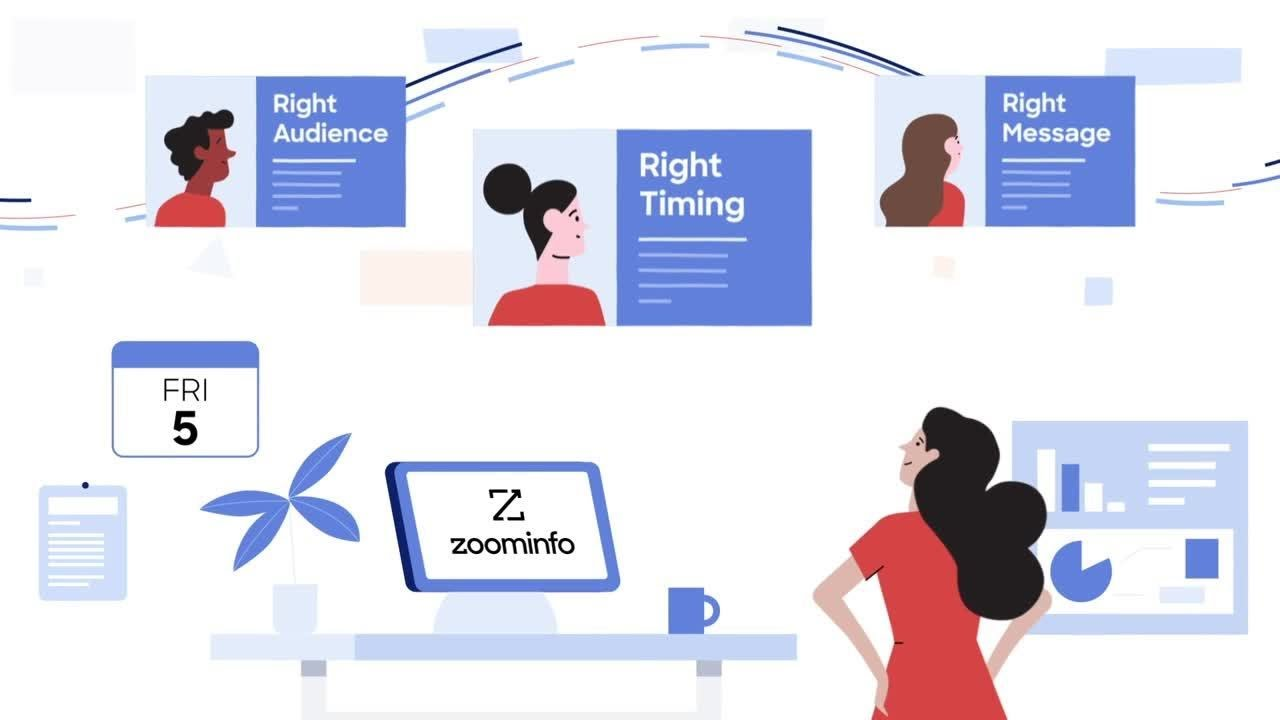
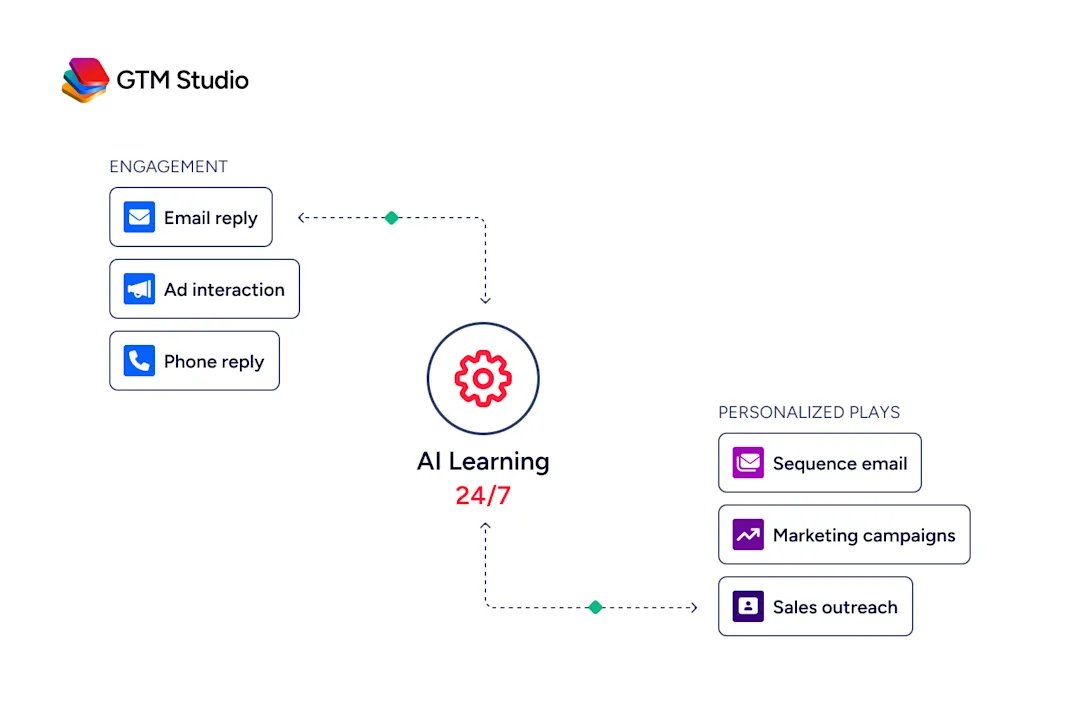
ZoomInfo is a GTM platform built on a large B2B database: 500M contacts, 100M companies, 135M+ verified phone numbers, and 200M+ verified business emails. Its GTM Context Graph processes 1.5B+ data points daily, combining this data with your CRM records, conversation transcripts, and behavioral signals to reveal not just what's happening in your accounts, but why. For teams using HubSpot or Braze, ZoomInfo enriches the data those platforms run on, surfaces the buying signals that determine which accounts to target, and ensures outreach reaches verified contacts. Access it through the GTM Workspace for sellers, GTM Studio for marketers and RevOps, or APIs and MCP inside any tool in your stack.
If building campaigns on verified, signal-rich data sounds like the missing piece, see how ZoomInfo works with your existing platform.
Braze vs. HubSpot vs. ZoomInfo at a glance
Braze | HubSpot | ZoomInfo | |
|---|---|---|---|
Primary focus | Real-time cross-channel customer engagement | CRM and marketing platform | B2B data intelligence and GTM execution |
Channels | Email, push, in-app, SMS/RCS, WhatsApp, LINE, KakaoTalk, Content Cards, web | Email, social, ads, landing pages, forms, live chat, WhatsApp | Multi-channel orchestration via GTM Studio (email, ads, calls, direct mail) |
CRM included | No | Yes (Smart CRM) | Integrates with Salesforce, HubSpot, Dynamics |
AI capabilities | BrazeAI Decisioning Studio, Operator, predictive churn | Breeze AI agents (prospecting, customer service, data) | GTM Context Graph, AI-drafted outreach, signal-based plays |
Data foundation | First-party behavioral data you collect | CRM + marketing data you generate | 500M contacts, 100M companies, buyer intent, technographics |
Pricing model | Custom-quoted (MAU + credits) | Per-seat + per-hub + contact tiers | Custom-quoted (consumption-based) |
Free option | 30-day trial | Permanent free CRM | ZoomInfo Lite (permanent) + 7-day trial |
Implementation | 3–6 months (enterprise) | Days to weeks (90-day value target) | Weeks (GTM Workspace) |
Best for | B2C brands with mobile apps and high-volume messaging | B2B companies needing marketing + sales + service | Any GTM team needing verified data, signals, and enrichment |
These platforms solve different problems
The Braze vs. HubSpot comparison misleads if you treat them as direct competitors. They overlap on email, but that's where the similarity ends.
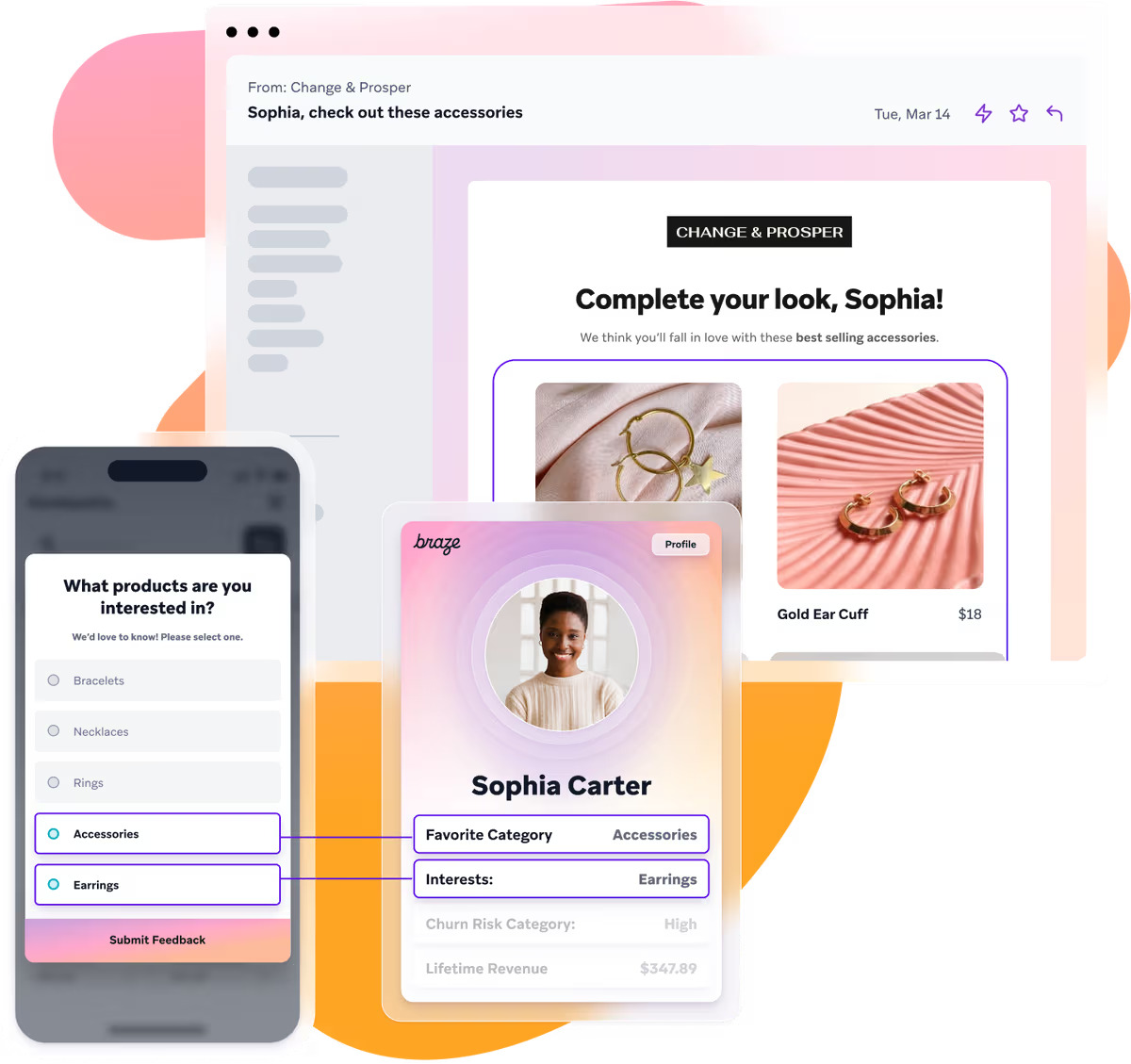
Braze started as a mobile engagement platform. It launched as Appboy in 2011, built on the thesis that mass mobile adoption would reshape brand-to-consumer communication. Today it processes 8.5 billion monthly active users and has handled 4.5 trillion Canvas actions in a single year. Its architecture centers on real-time behavioral triggers: a user abandons a cart, and within seconds Braze fires a push notification, then an email, then an SMS, each personalized to that user's history. This is its reason for existing.
Source: Braze
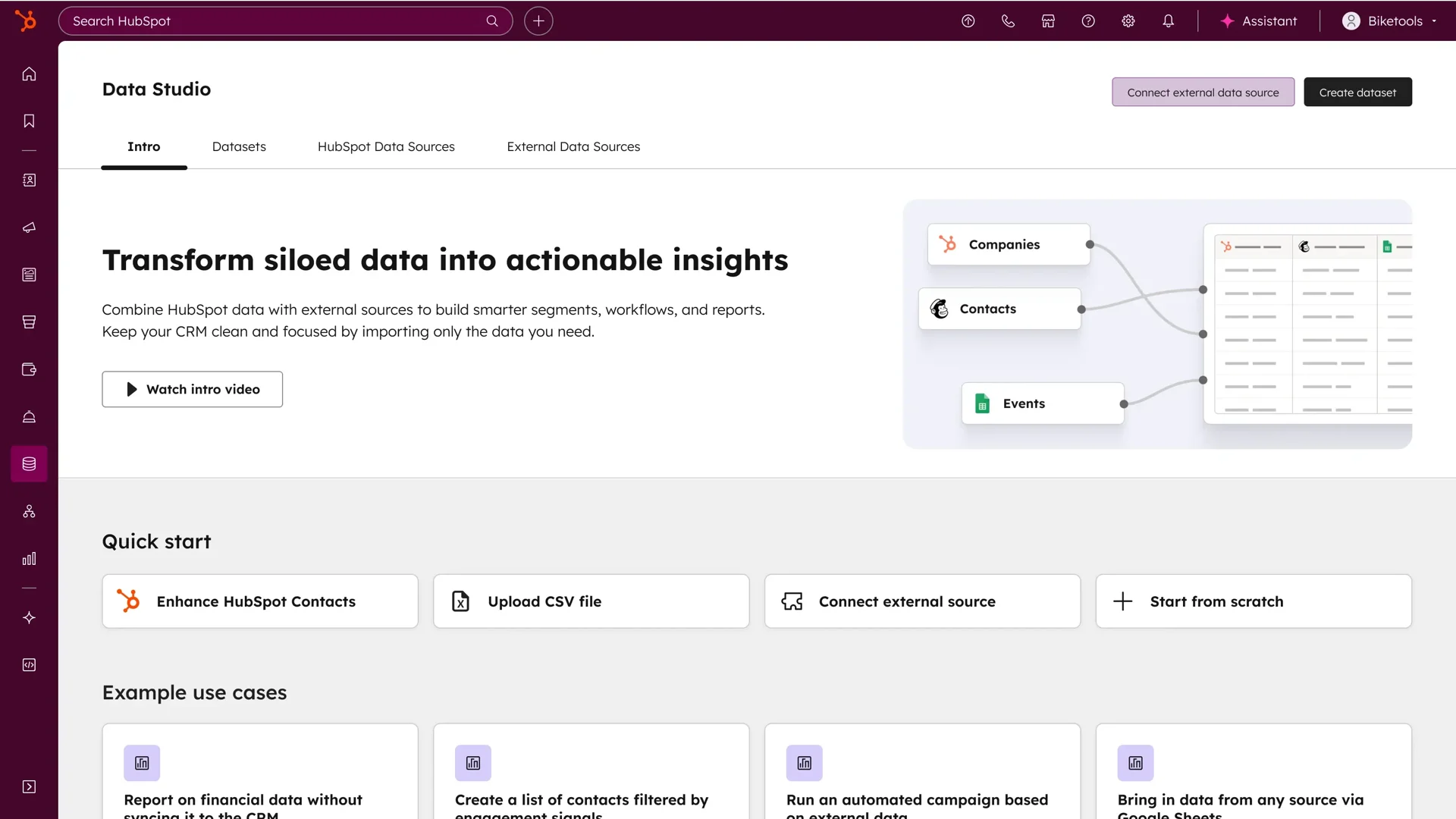
HubSpot started with a different thesis. Co-founders Dharmesh Shah and Brian Halligan coined "inbound marketing" in 2006 and built a platform around attracting buyers through content, SEO, and lead nurturing. Today HubSpot serves 288,706 customers with a suite spanning Marketing Hub, Sales Hub, Service Hub, Content Hub, Data Hub, and Commerce Hub, all connected through one Smart CRM.
Source: HubSpot
The question isn't which is better. It's which problem you have.
If you're a B2C brand with a mobile app and millions of consumers, and your challenge is orchestrating personalized, real-time engagement across push, in-app, SMS, and email, Braze was built for that. HubSpot's marketing automation would feel like bringing a Swiss army knife to a job that needs a scalpel.
If you're a B2B company that needs marketing automation alongside CRM, sales pipelines, customer service, and content management, HubSpot gives you all of it in one system. Braze would give you a strong messaging engine but leave you without a CRM, without deal tracking, without a help desk.
ZoomInfo sits upstream of both. It provides the verified contact data, company intelligence, and buying signals that determine whether your campaigns reach real people at the right moment. Whether you're triggering a Braze Canvas or running a HubSpot workflow, the quality of the underlying data determines the outcome.
Cross-channel messaging: Braze's core advantage
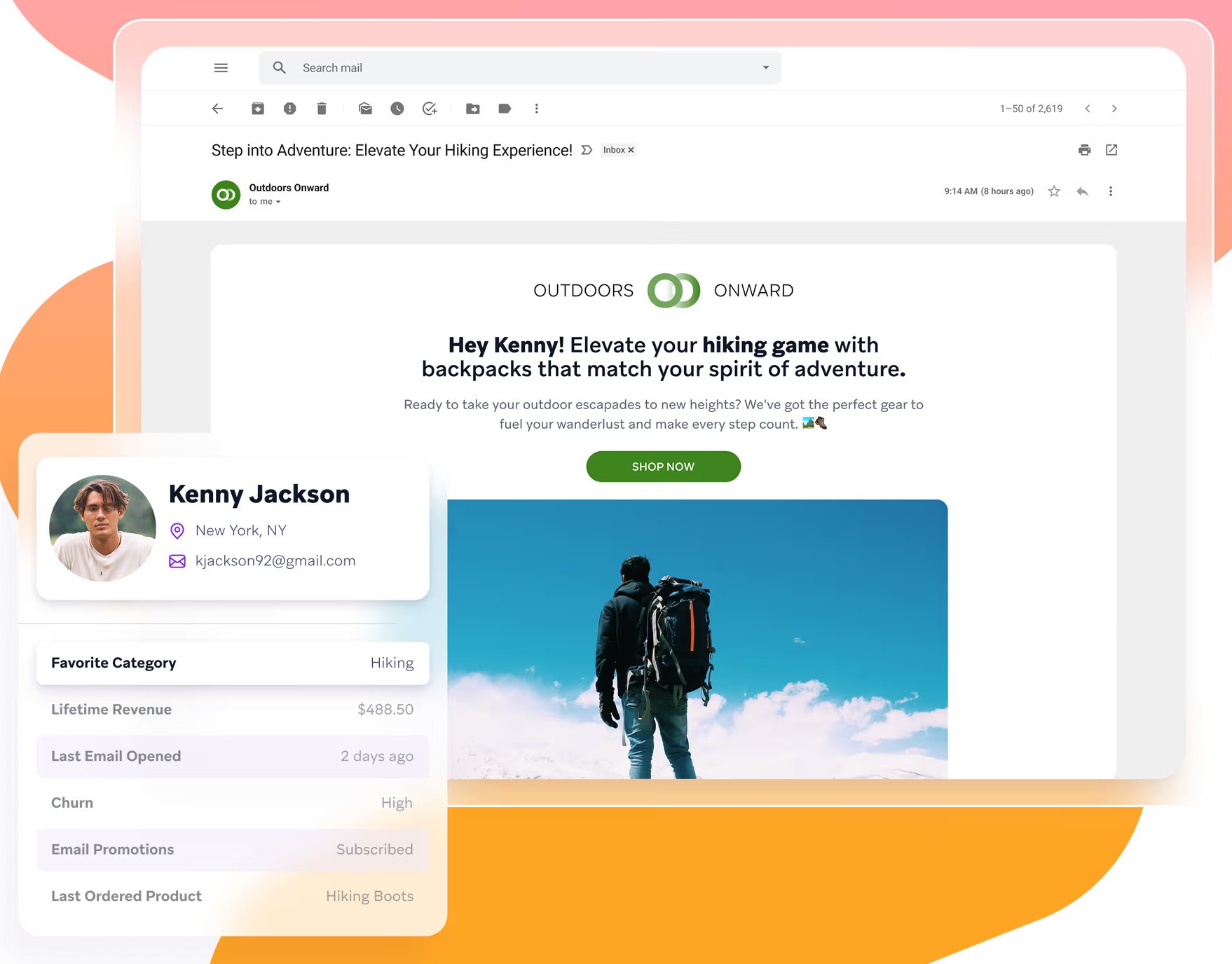
Braze's cross-channel messaging is where the platform earns its reputation. Every major channel (email, mobile push, in-app messages, Content Cards, SMS/RCS, WhatsApp, web push, LINE, and KakaoTalk) runs natively on the same data model. A user's behavior on one channel can immediately trigger a response on another, all within the same journey.
Source: Braze
Braze's mobile capabilities set it apart. The platform ranks #1 in G2's Grid for Push Notification Software, and features like iOS Live Activities (persistent lock screen updates) and Content Cards (in-app content feeds) give brands tools most competitors don't offer.
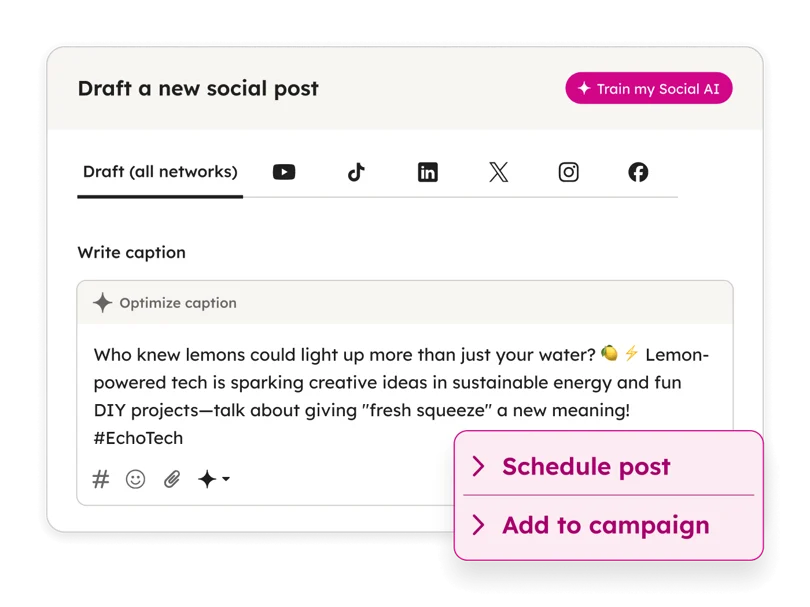
HubSpot's messaging capabilities are narrower by design. Marketing Hub handles email marketing with a drag-and-drop editor, A/B testing, and send-time optimization. It manages social media publishing and ad campaigns.
Source: HubSpot
But there's no native push notification system, no in-app messaging, no SMS orchestration, and no WhatsApp campaign builder matching Braze's depth. HubSpot includes WhatsApp for service conversations, but not for behavior-triggered marketing campaigns at scale.
For B2C brands with mobile apps, this gap is decisive. For B2B companies whose primary channels are email, social, and web, HubSpot's coverage usually suffices.
Marketing automation and journey building
Both platforms offer visual journey builders, but they're optimized for different use cases.
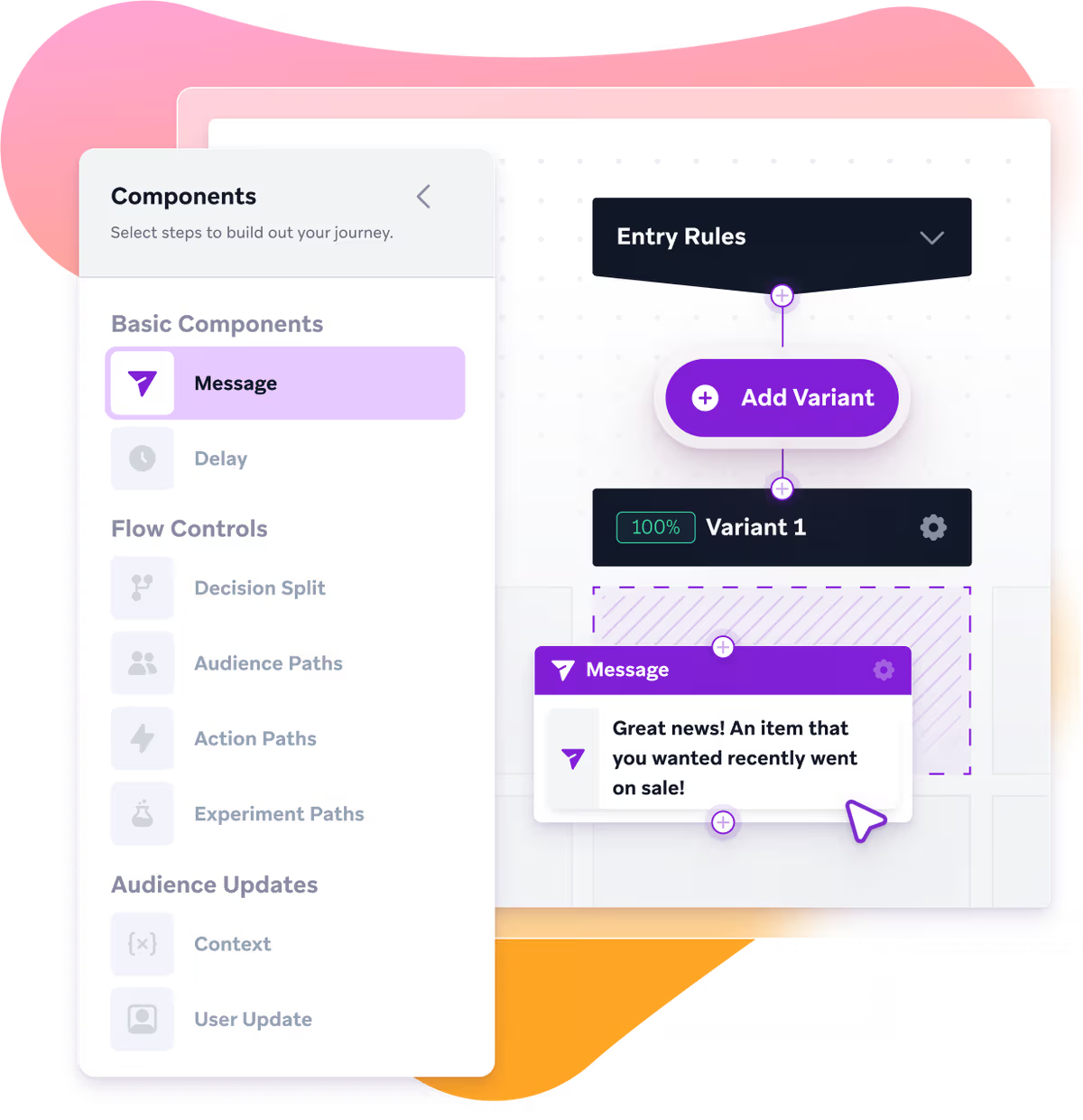
Braze's Canvas is a multi-step, cross-channel journey builder where marketers assemble flows from modular components: message steps, delay steps, action paths, audience paths, decision splits, and experiment paths. Canvas supports up to eight journey variants with a control group for testing entire journey architectures against each other. Action-based triggers fire when a user opens an app, makes a purchase, enters a geofence, or sends an inbound SMS, and the evaluation window for action paths extends up to 31 days.
Source: Braze
Canvas goes further with Experiment Paths embedded at any point within a journey (not just at the start) and Personalized Paths that use predictive models to route each user to the path most likely to convert them.
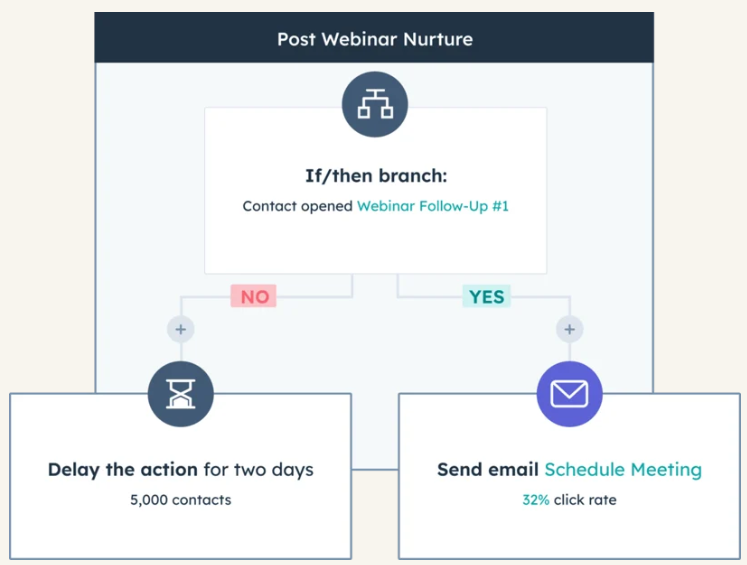
HubSpot's marketing automation Workflows serve a different purpose. They excel at lead nurturing sequences: a prospect downloads a whitepaper, gets enrolled in an email drip, gets scored based on engagement, and gets routed to sales when they hit a threshold. The visual builder supports branching logic, delays, and CRM property updates. Because Workflows connect directly to the Smart CRM, a marketing action can trigger a sales task, update a deal record, or enroll a contact in a sales sequence, all automatically.
Source: HubSpot
For B2C lifecycle marketing (onboarding, cart abandonment, re-engagement, loyalty), Braze's Canvas is more capable. For B2B lead nurturing and marketing-to-sales handoff, HubSpot's Workflow builder fits more naturally because it's connected to the CRM and sales pipeline.
AI approaches reflect different priorities
Both platforms have invested in AI, but the implementations reveal their priorities.
BrazeAI focuses on optimizing engagement at the individual level. Intelligent Timing picks the best send time per user based on historical patterns. Intelligent Channel identifies which channel each user responds to most.
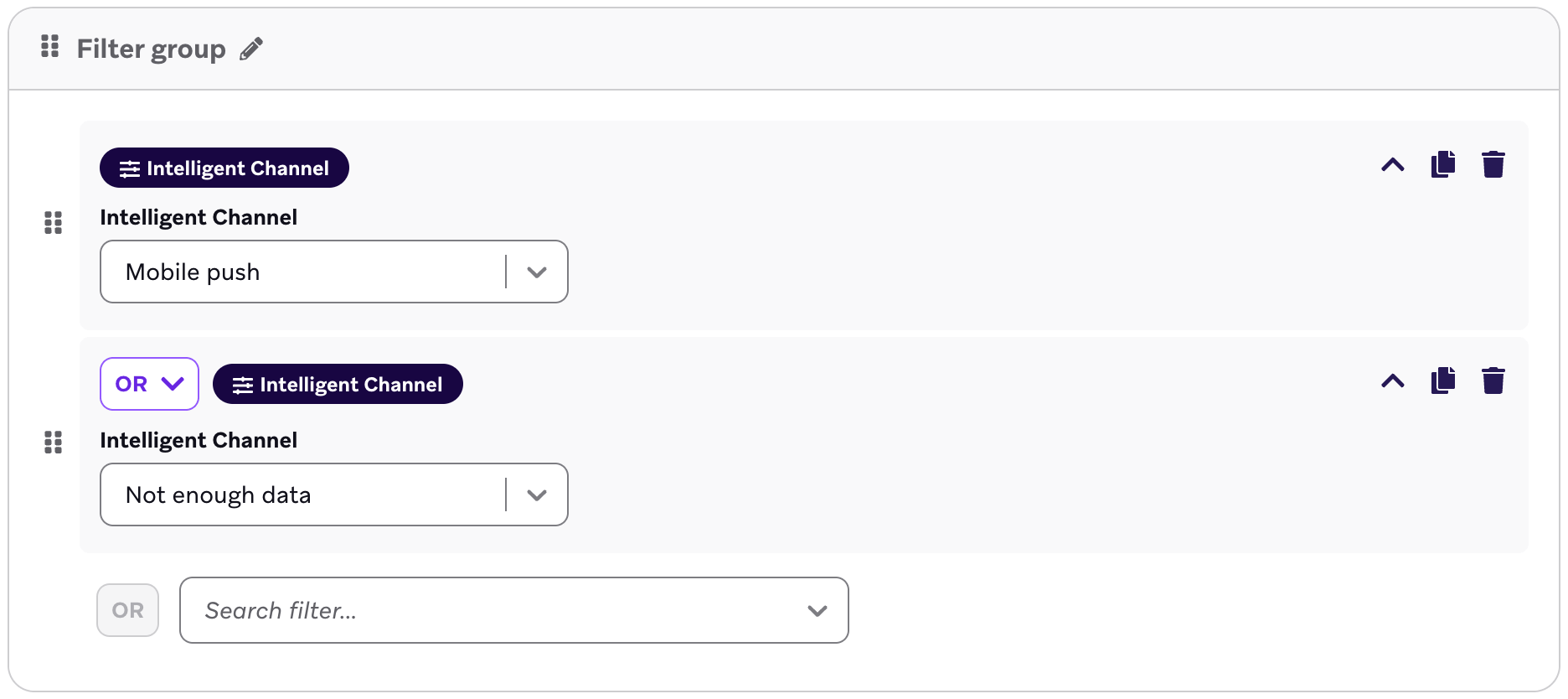
Source: Braze
BrazeAI Decisioning Studio, built on the $325M acquisition of OfferFit, uses reinforcement learning to optimize channel, timing, content, and incentive for each individual. Every decision is traceable: the platform shows which signals drove which choice.
BrazeAI Operator, a conversational AI assistant, lets marketers describe what they want in plain language and have AI build the campaign.
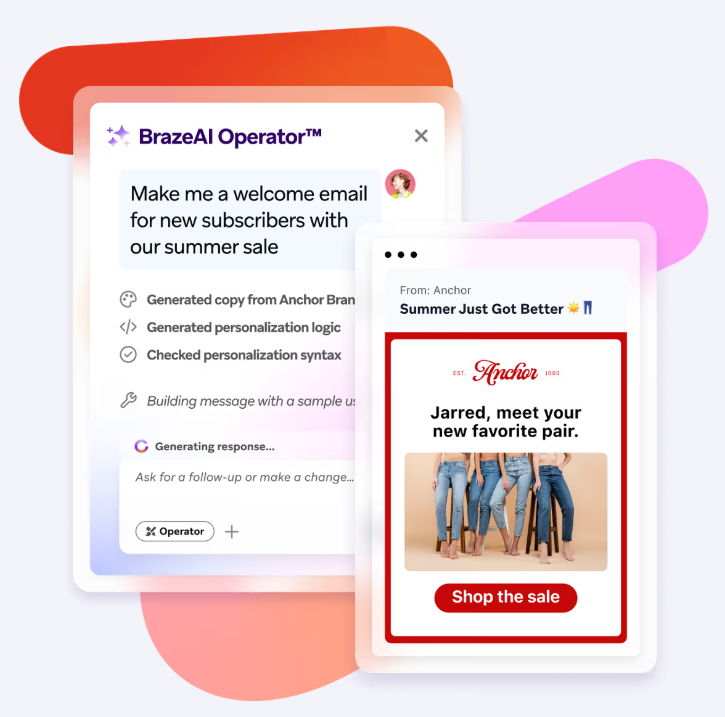
Source: Braze
HubSpot's Breeze AI takes a broader approach, embedding AI agents across the go-to-market workflow. The Customer Agent resolves customer inquiries across chat, email, WhatsApp, and voice. The Prospecting Agent monitors buying signals and drafts personalized outreach. The Data Agent answers natural-language questions about CRM data.
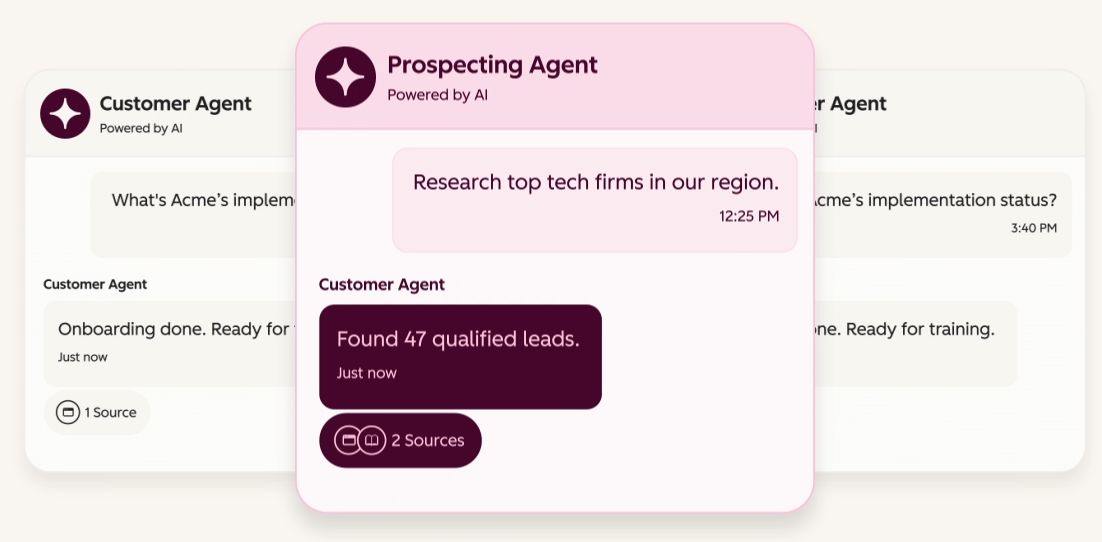
Source: HubSpot
Braze's AI goes deeper in its domain: per-user engagement optimization. HubSpot's AI goes wider: agents that handle prospecting, support, content creation, and data analysis across the customer lifecycle.
The data quality gap both platforms inherit
Here's what neither Braze nor HubSpot solves on its own: the quality of the data feeding the system.
Braze ingests and acts on first-party behavioral data. It does this well. But it relies entirely on whatever data you send it. If your customer profiles are incomplete, your segments are built on gaps. If your email addresses are stale, your deliverability suffers. Reviewers on G2 note that the platform limits event data to 250 custom attributes per user with a one-year lookback window by default.
HubSpot captures more data natively because it is the CRM. Every form fill, email open, sales call, and support ticket feeds the Smart CRM. But HubSpot's data is only as good as what enters the system. HubSpot's own Fall 2025 Spotlight acknowledged that most CRMs see only 20% of a business's data. And while HubSpot has added AI-powered data enrichment, its enrichment depth for B2B company and contact data doesn't match what a dedicated intelligence platform provides.
This is where ZoomInfo fills the gap.
With 500M contacts, 100M companies, 135M+ verified phone numbers, and 200M+ verified business emails, ZoomInfo provides the verified foundation both platforms need. A multi-source pipeline backed by 300+ human researchers delivers up to 95% accuracy on first-party data. In a Fortune 500 competitive RFP analyzing 25 million contacts across vendors, the independent consultant concluded that "no other competitor came even close."
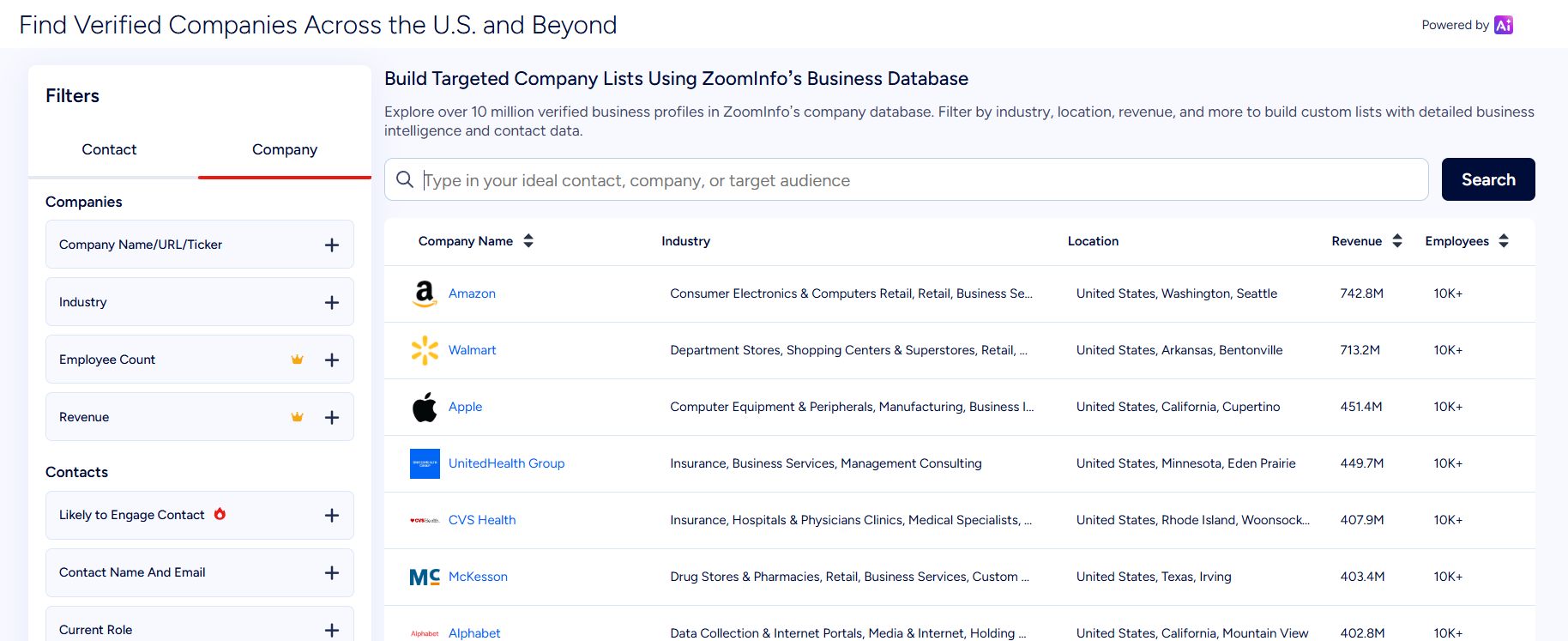
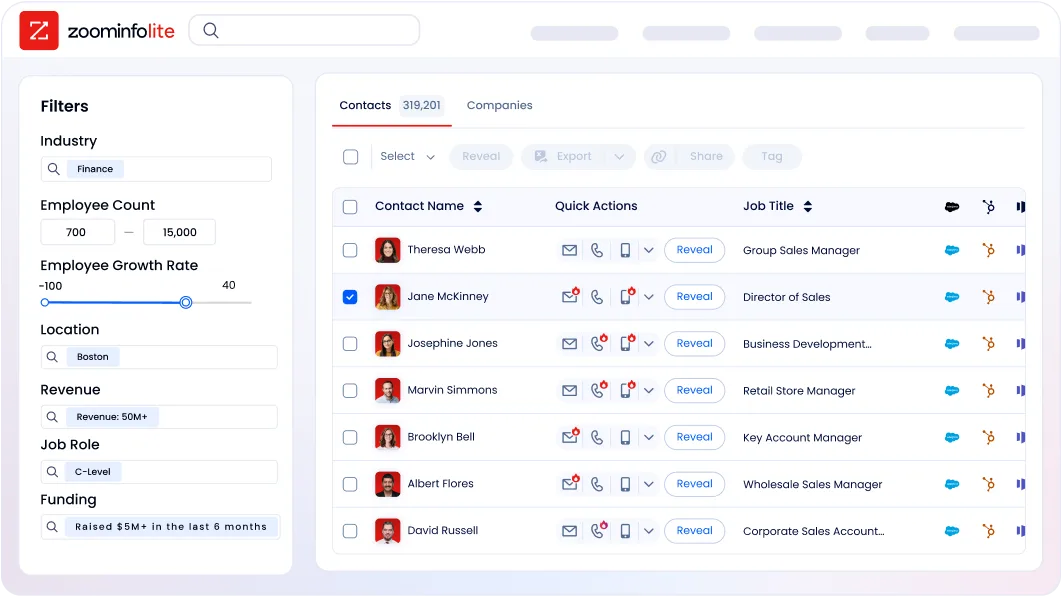
For HubSpot users, ZoomInfo integrates directly to enrich CRM records with firmographics, technographics, org charts, and intent signals, giving HubSpot's Smart CRM a more complete picture of each account. For Braze users, ZoomInfo keeps the contact information behind campaigns current and verified, and its buyer intent signals identify which accounts are actively researching solutions, so engagement campaigns target in-market audiences rather than cold lists.
For a detailed side-by-side on how HubSpot and ZoomInfo compare as platforms, see our HubSpot vs. ZoomInfo comparison.
Seismic's sales team attributed 39% of active pipeline to opportunities identified or influenced by ZoomInfo signals, while saving 11.5 hours per week per seller. (Seismic Case Study)
CRM and platform breadth
This is HubSpot's structural advantage over Braze. HubSpot isn't just a marketing tool; it's an operating system for go-to-market teams.
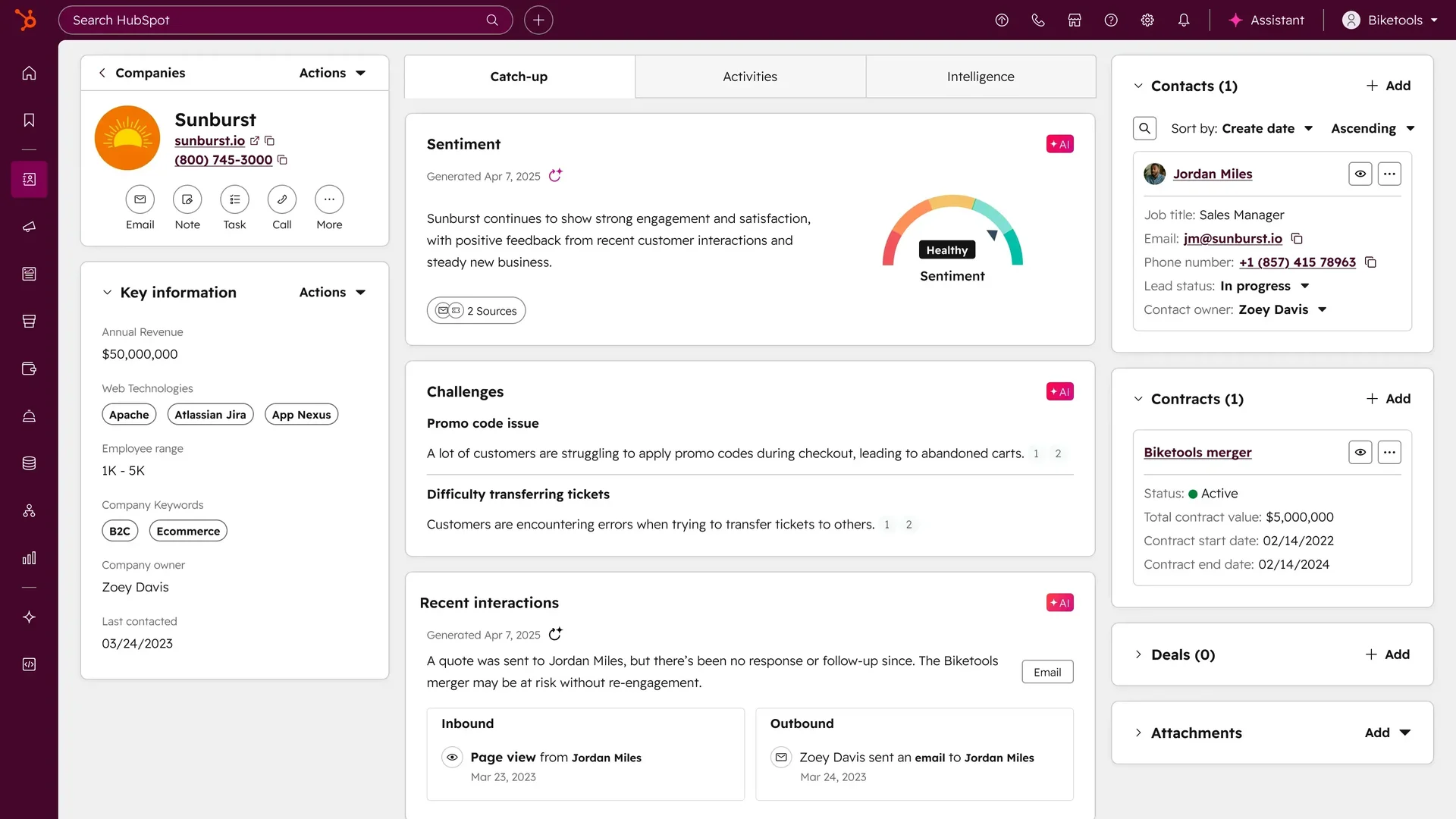
The Smart CRM stores every contact, company, deal, and interaction in one database. Sales Hub manages pipelines, sequences, and forecasting. Service Hub handles ticketing, knowledge bases, and customer health scores. Content Hub publishes websites, blogs, and podcasts. Commerce Hub processes quotes, invoices, and payments. Data Hub manages data quality and integrations.
Source: HubSpot
When a lead fills out a form, it enters the CRM, triggers a marketing workflow, gets scored, routes to a sales rep, appears in a deal pipeline, and eventually generates an invoice, all without leaving HubSpot.
Braze has no CRM, no deal pipeline, no help desk, no content management, no commerce tools. It is not trying to be these things. Braze integrates with Salesforce, HubSpot, and other CRMs through its Alloys partner network, letting it receive and act on CRM data. But the relationship management itself happens elsewhere.
For B2B companies, HubSpot's breadth means fewer tools to buy, integrate, and maintain. For B2C brands, Braze's engagement depth typically matters more than CRM breadth, and they'll pair Braze with a separate CRM.
ZoomInfo integrates with both. Its HubSpot integration enriches CRM records and syncs intent signals directly into HubSpot's contact and company records. For Braze users running Salesforce or another CRM, ZoomInfo enriches the CRM that feeds Braze. The GTM Context Graph processes 1.5B+ data points daily, unifying CRM records, conversation transcripts, and third-party signals into one intelligence layer that shows not just what happened in a deal, but why.
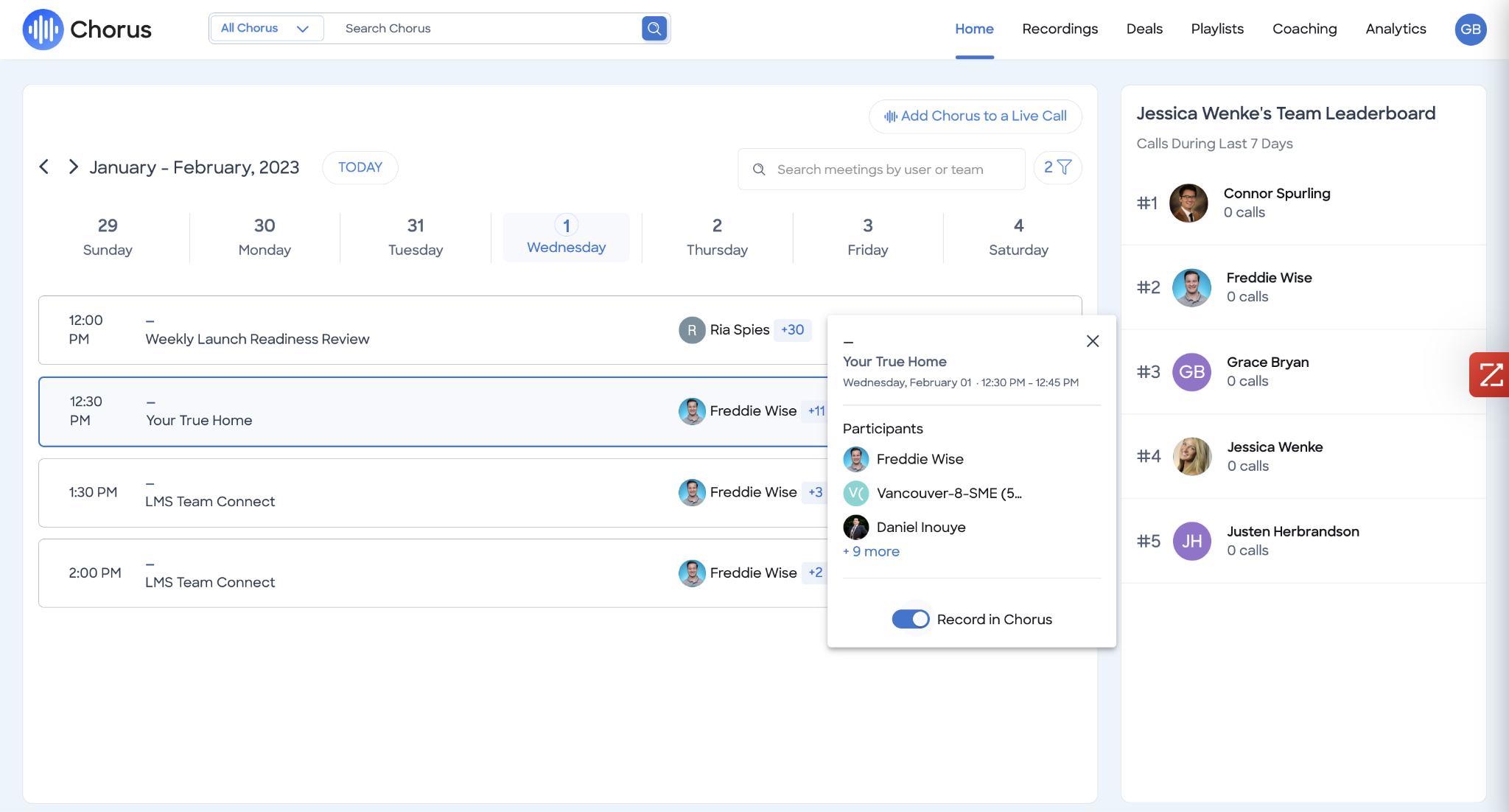
Snowflake uses ZoomInfo data for over 70 firmographic and technographic fields in their Account Propensity Scoring model. Accounts monitored using ZoomInfo-powered scores showed 90% higher opportunity open rates and 2x higher customer conversion rates. (Snowflake Case Study)
Pricing reflects different models and markets
The pricing structures tell you who each platform is built for.
Braze uses value-based pricing scaled by platform edition, active users (MAU), and Flexible Credits consumed across channels. No prices are published. There's no per-seat charge for dashboard users. Braze offers four editions: Braze Go, Braze Select, Braze Pro, and Braze Enterprise, each adding capabilities.
A 30-day free trial is available, plus a Braze for Startups program offering 4 months free for eligible VC-backed startups. The consumption-based AI credit model has drawn criticism from G2 reviewers who say it's hard to forecast costs, and contract payment obligations are non-cancelable with a 7% cap on renewal price increases.
HubSpot uses a hybrid model: per-seat pricing for most Hubs, contact-tier pricing for Marketing Hub, and flat fees for some products. Marketing Hub Professional starts at $800/month (annual) for 2,000 marketing contacts with a mandatory $3,000 onboarding fee. Marketing Hub Enterprise runs $3,600/month with a $7,000 onboarding fee. The Starter Customer Platform bundles all Hubs at $9/seat/month (annual). The permanent free CRM tier is a real entry point with no time limit. One hidden cost: when subscribing to multiple Hubs at different tiers, all Core Seats are billed at the rate of the highest tier.
ZoomInfo uses custom-quoted, consumption-based pricing based on seats, credits, and features. No public prices. ZoomInfo Lite is a permanent free tier with 10 monthly export credits and access to the B2B database. A 7-day free trial provides broader access. API access is included in all relevant plans.
For B2C engagement, Braze's pricing scales with audience size and message volume, which grows fast at scale. For B2B companies, HubSpot's per-seat model is more predictable but compounds quickly as teams grow and Hubs are added. ZoomInfo's pricing as a data layer is separate from either and typically justified by improvements in campaign targeting and conversion rates.
Implementation and learning curve
The time and effort to get value from each platform varies considerably.
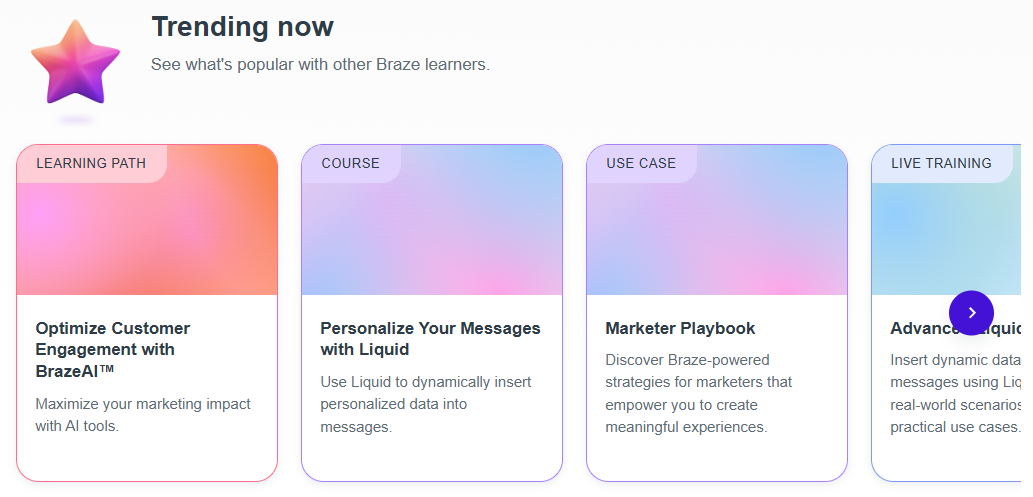
Braze requires real technical investment. G2 and TrustRadius reviewers consistently note that Braze demands engineering work for data integration, identity management, and custom event design. Non-technical marketers can find the Liquid templating language and advanced Canvas configurations challenging. Enterprise deployments typically take 3 to 6 months. Braze addresses this with Braze Learning (certifications from $25 to $150), a Bonfire community, and professional services including a 56-day email launch benchmark.
Source: Braze
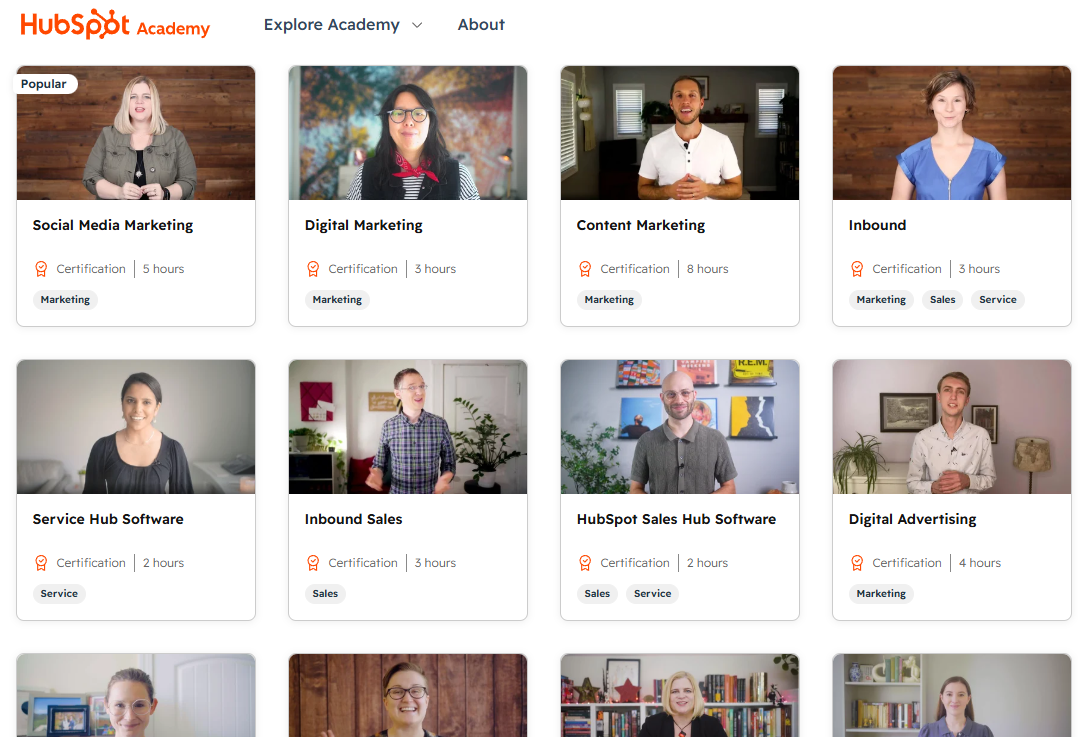
HubSpot gets teams to value faster. The platform targets results within 90 days. The free CRM requires no onboarding at all. HubSpot Academy has produced 200,000+ certified professionals with all courses and certifications free. However, complexity increases at Professional and Enterprise tiers, and mandatory onboarding fees ($1,500 to $7,000 depending on Hub) add friction.
Source: HubSpot
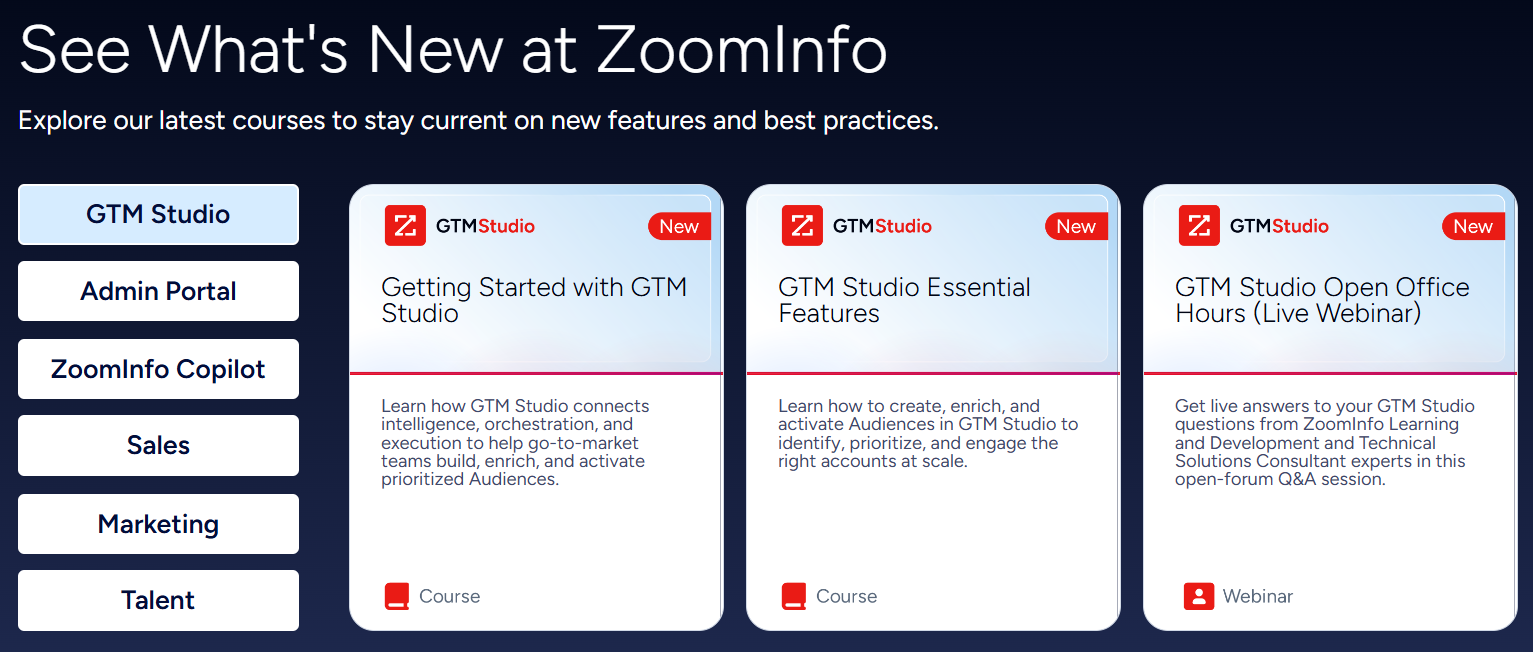
ZoomInfo redesigned its onboarding from 30 to 90 days and saw a 25% improvement in customer satisfaction scores. GTM Workspace "deploys in weeks, not months". ZoomInfo University provides role-specific learning paths and certifications.
Reporting and analytics
Both Braze and HubSpot offer built-in analytics, but they measure different things.
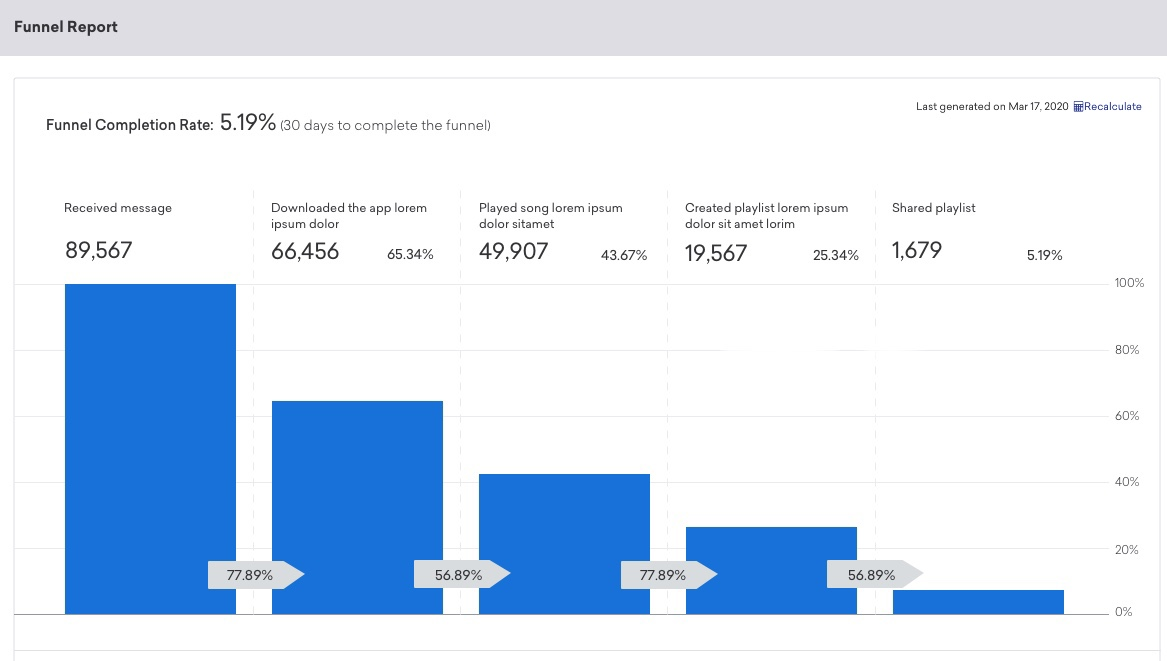
Braze's reporting suite focuses on engagement analytics. Campaign and Canvas analytics show real-time performance at every step of a journey. Funnel Reports track sequential user actions within a 30-day window. Retention Reports measure whether a message kept users coming back. The Query Builder gives analysts direct SQL access to Braze's Snowflake data, including AI-powered natural language to SQL conversion. Global Control Group Reporting measures incremental lift from the entire messaging program.
Source: Braze
However, Capterra and TrustRadius reviews note that native reporting requires extra effort for multi-touch attribution and funnel analysis, with many enterprise teams supplementing Braze with external BI tools.
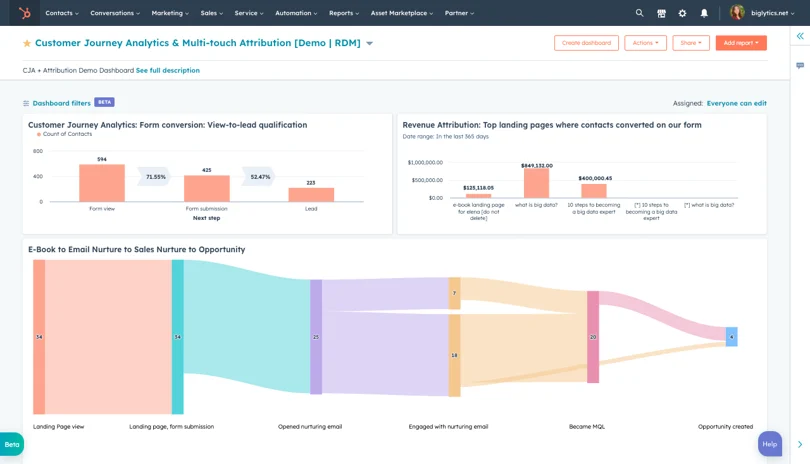
HubSpot's Advanced Marketing Reporting ties campaign activity directly to revenue through multi-touch attribution and customer journey analytics (Pathfinder). Because sales, service, and marketing data share one CRM, HubSpot can show the full path from first website visit to closed deal. Custom dashboards, deal forecasting, and service analytics are all native.
Source: HubSpot
ZoomInfo adds a different analytics dimension: AI-powered dashboards in GTM Studio track engagement, funnel progression, and top-performing segments, while the GTM Context Graph reveals which signal combinations correlate with closed-won deals. This is intelligence about your market and accounts, not your campaign performance, and it informs the strategies you execute in Braze or HubSpot.
Integrations and ecosystem
Each platform takes a different approach to integrations.
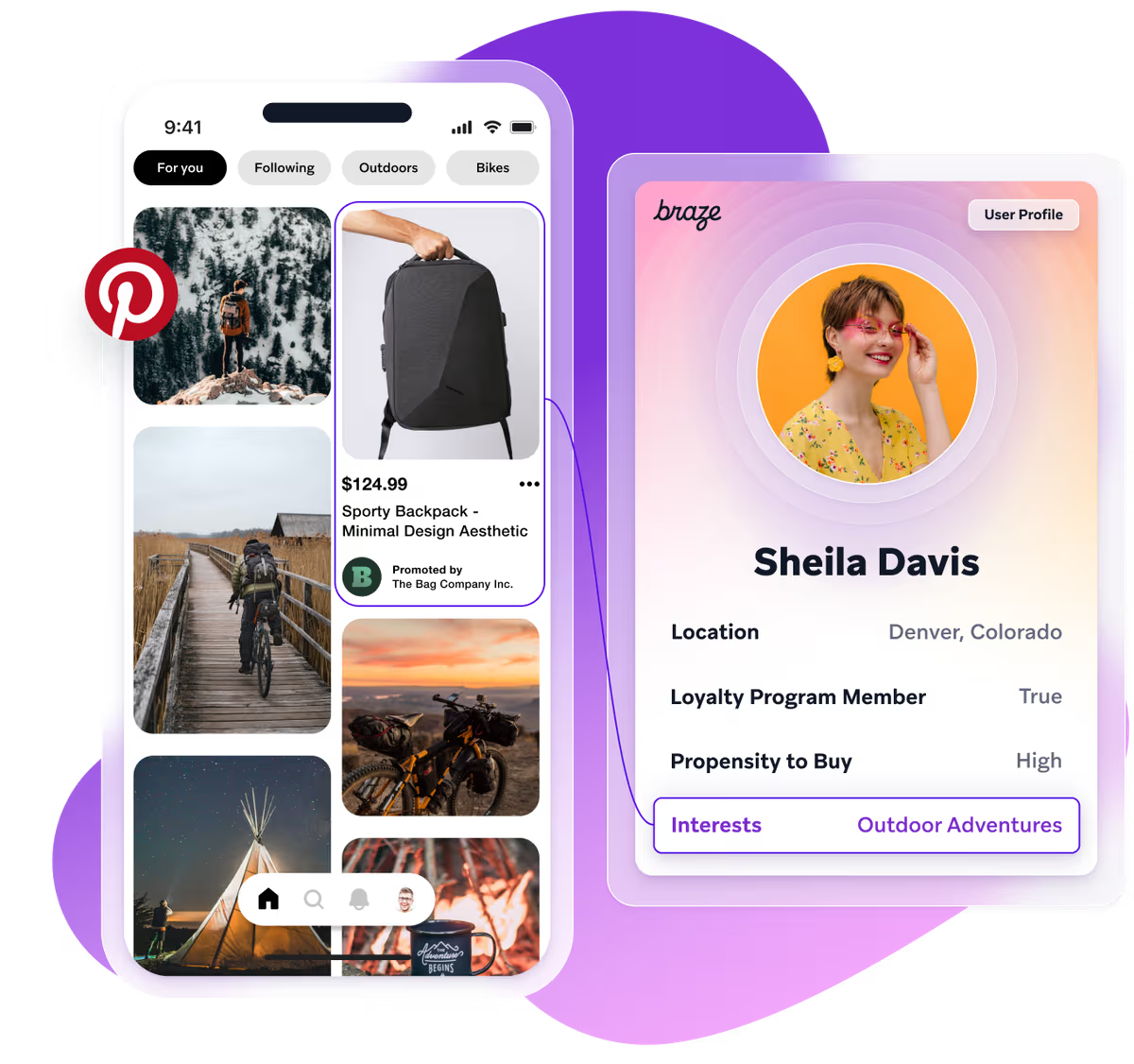
Braze's Alloys partner network covers CDPs (Segment, mParticle, Amplitude), data warehouses (Snowflake, Databricks, BigQuery), attribution platforms (Adjust, AppsFlyer, Branch), and paid media channels (Meta, Google, TikTok). The ecosystem is focused on the marketing technology stack B2C brands use. Media Audience Sync pushes first-party segments to eight major ad platforms for suppression, retargeting, and lookalike targeting.
Source: Braze
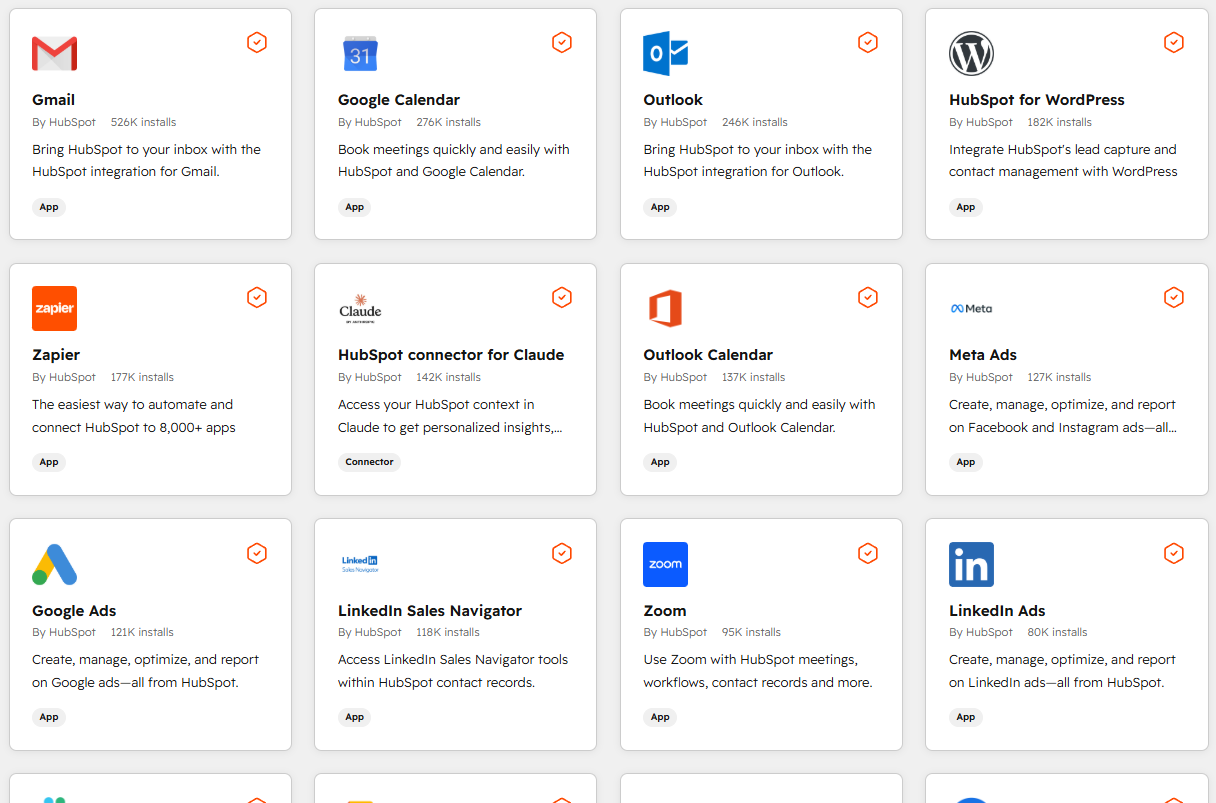
HubSpot's App Marketplace has surpassed 2,000 integrations with 2.5 million active installs. The breadth exceeds Braze's because HubSpot covers more use cases: CRM integrations, accounting tools, project management, e-commerce, and more. The Solutions Partner Program provides implementation support across a large partner network.
Source: HubSpot
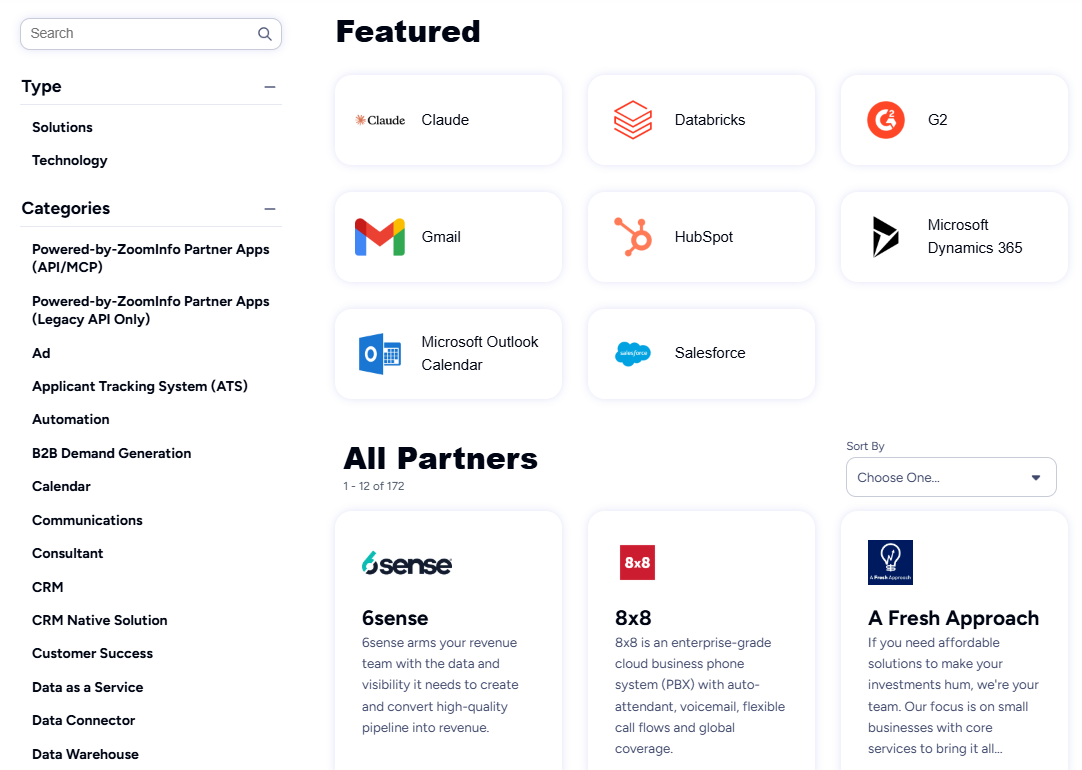
ZoomInfo's App Marketplace lists 120+ partner integrations across CRM, marketing automation, sales engagement, and data warehouses. The key differentiator: ZoomInfo integrates with both Braze (through CRM and CDP intermediaries) and HubSpot (directly). Its Enterprise API and MCP server expose ZoomInfo's data to any custom agent, internal tool, or partner platform, including Claude and ChatGPT.
"The plug-and-play aspect of the API means I can integrate it very easily into any process and get information at a moment's notice." — Jerry Wilson, Senior Marketing Intelligence Analyst, BDO Canada. BDO Canada saw an 87% reduction in time spent on internal data dashboard updates. (BDO Canada Case Study)
Security and compliance
All three platforms maintain strong security certifications.
Braze holds SOC 2 Type II (most recent audit period July 2024 to June 2025), ISO 27001, and TISAX AL3. It offers a HIPAA Business Associate Addendum with a separate HIPAA-configured instance for healthcare brands. GDPR compliance is supported through a Data Processing Addendum and Standard Contractual Clauses. EU data residency for BrazeAI Decisioning Studio is available via Google Cloud Europe.
HubSpot holds SOC 2 Type II and SOC 3, with a HIPAA independent attestation and GDPR/CCPA compliance. An EU data center is available for customers requiring EU data localization. Encryption uses AES-256 at rest and TLS 1.2/1.3 in transit. HubSpot publishes AI model cards detailing how each AI system handles customer data.
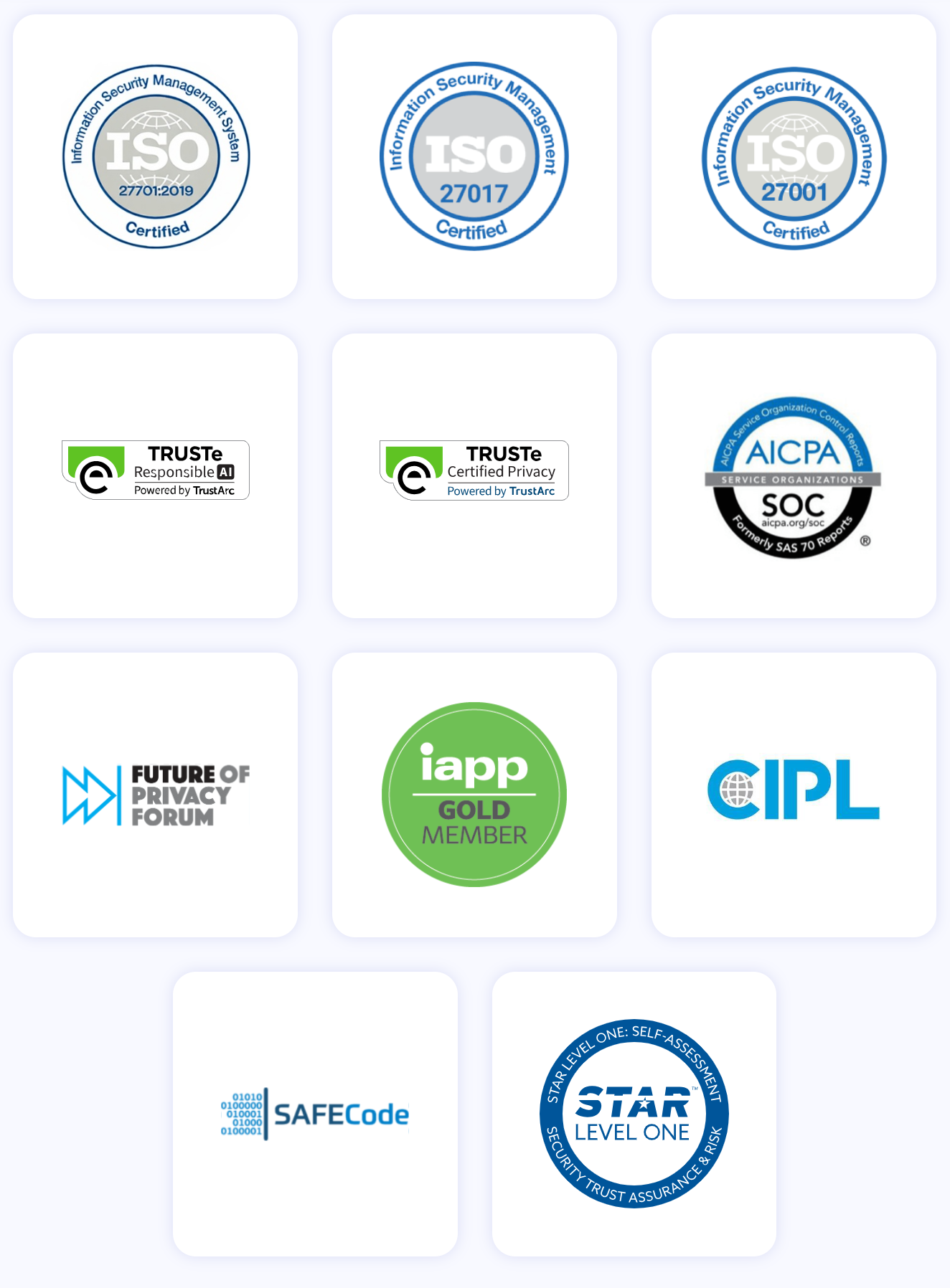
ZoomInfo maintains ISO 27001, ISO 27701, SOC 2 Type II, TRUSTe GDPR, and TRUSTe CCPA certifications, all renewed annually. It is a registered data broker in California and Vermont. The ISO 27701 privacy information management certification specifically addresses the privacy controls relevant to a data intelligence platform.
Braze vs. HubSpot vs. ZoomInfo: Which should you choose?
The right choice depends on what you're trying to do, who your customers are, and where your gaps are.
Choose Braze if:
You're a B2C brand with a mobile app and need real-time, behavior-triggered engagement across push, in-app, SMS, email, and WhatsApp
You process millions of monthly active users and need sub-second event triggering
AI-driven per-user optimization of channel, timing, and content is central to your strategy
You have the engineering resources to implement and maintain a specialized engagement platform
You already have a CRM and need a dedicated messaging engine, not a combined platform
Choose HubSpot if:
You're a B2B company that needs marketing automation, CRM, sales pipelines, and customer service in one system
You want your go-to-market team working from shared customer data without integrating multiple tools
You value ease of use and fast implementation over specialized depth in any single channel
Your primary marketing channels are email, content, social, and web rather than mobile push and in-app
You want a permanent free tier to start and a clear upgrade path as you scale
Use ZoomInfo alongside either platform if:
You need verified, accurate B2B contact and company data feeding your campaigns
You want to target accounts showing active buying signals rather than sending to cold lists
Your CRM data has gaps in firmographics, technographics, org charts, or direct-dial phone numbers
You need marketing and sales teams working from the same intelligence about who to engage and why
You want a GTM layer that understands your deals, not just your data
Try ZoomInfo Lite for free or request a demo to see how verified data transforms your pipeline.
Braze and HubSpot are both strong platforms built for different markets. But campaigns are only as effective as the data behind them. ZoomInfo provides the intelligence layer that makes either platform deliver better results: verified contacts that reach real people, buying signals that tell you when to engage, and a GTM Context Graph that connects the dots across your go-to-market workflow.
Braze vs. HubSpot vs. ZoomInfo FAQ
What is the core difference between Braze, HubSpot, and ZoomInfo?
Braze is a cross-channel customer engagement platform built for B2C brands, specializing in real-time messaging across mobile push, in-app, SMS, email, and WhatsApp. HubSpot is a CRM and marketing platform for B2B companies, combining marketing automation, sales pipelines, customer service, and content management on a shared data layer. ZoomInfo is an AI-powered GTM platform providing verified contact data, company intelligence, and buying signals that enrich the data both Braze and HubSpot rely on.
Can Braze and HubSpot be used together?
Yes. Some companies use HubSpot as their CRM and lead management system while using Braze for consumer-facing engagement campaigns. Braze integrates with HubSpot through its Alloys partner network. However, most companies choose one based on their primary use case (B2C engagement for Braze, B2B go-to-market for HubSpot) rather than running both.
Which platform is better for email marketing?
Both handle email well, but differently. Braze excels at behavior-triggered, personalized email within cross-channel journeys. It delivered over 100 billion emails during Cyber Week 2025 with 100% uptime and is named a Forrester Wave Leader for Email Marketing Service Providers. HubSpot's email marketing ties tightly to its CRM, making it strong for lead nurturing sequences where email engagement feeds directly into lead scoring and sales handoff.
Which platform has better AI capabilities?
Braze's AI is deeper in engagement optimization. BrazeAI Decisioning Studio uses reinforcement learning to optimize channel, timing, and content at the individual user level, with traceable decision-making. HubSpot's AI is broader. Breeze agents handle prospecting, customer support, data enrichment, and content creation across the go-to-market workflow. ZoomInfo's AI focuses on data intelligence, using the GTM Context Graph to identify why deals move and which accounts to prioritize.
How does ZoomInfo complement Braze or HubSpot?
ZoomInfo provides the verified data foundation both platforms need. For HubSpot users, ZoomInfo enriches CRM records with firmographics, technographics, org charts, and buyer intent signals. For Braze users, ZoomInfo keeps campaign data current and verified, and its intent signals identify which audiences to target. ZoomInfo integrates directly with HubSpot and connects to Braze through CRM and CDP intermediaries.
Which platform is most affordable for a small team?
HubSpot is the most accessible starting point, with a permanent free CRM and Starter plans at $9-20 per seat per month. ZoomInfo Lite offers permanent free access to its B2B database with 10 monthly export credits. Braze does not publish pricing and targets mid-market to enterprise buyers, though it offers a Braze for Startups program with 4 months free for eligible VC-backed companies.
Which platform requires the least technical expertise to implement?
HubSpot has the lowest barrier to entry, targeting results within 90 days with a self-serve free tier and guided onboarding. ZoomInfo's GTM Workspace deploys in weeks. Braze requires the most technical investment, with enterprise implementations typically taking 3 to 6 months and demanding engineering resources for data integration, identity management, and custom event design.
Is Braze or HubSpot better for mobile app engagement?
Braze is stronger for mobile. It was built as a mobile-first platform and ranks number one in G2's Grid for Push Notification Software. It supports push notifications, in-app messages, Content Cards, and iOS Live Activities natively. HubSpot does not offer native push notifications or in-app messaging and is designed primarily for web and email-based marketing.
More CRM comparisons worth a look:
