
Choosing between Brevo and Omnisend for your marketing often comes down to five questions:
Are you running an ecommerce store, or do you need marketing tools that work across multiple business models?
Do you want to pay based on how many emails you send, or how many contacts you store?
Is having SMS, WhatsApp, live chat, and CRM in a single platform important, or do you only need email and SMS tied to your online store?
How sophisticated do your automation workflows need to be, and how many channels should they span?
Does your go-to-market strategy depend on knowing which companies are actively researching solutions like yours?
In short, here's what we recommend:
Brevo is a marketing, sales, and transactional messaging platform that covers email, SMS, WhatsApp, web push, live chat, phone, and a built-in CRM, all priced by email volume rather than contact count.
With unlimited contacts on every plan (including Free) and a starting price of $9/month, Brevo suits growing businesses that want to consolidate tools without enterprise pricing.
The trade-off: automation workflows and reporting lack the depth of more specialized platforms, and features like WhatsApp campaigns and push notifications are locked behind the $499/month Professional plan.
Omnisend is an ecommerce marketing platform designed for online stores on Shopify, WooCommerce, or BigCommerce.
Every feature connects to store data: product blocks pull from your catalog, discount codes generate unique coupons per recipient, and automation workflows fire on cart abandonment, browse events, and post-purchase triggers.
With 40+ pre-built ecommerce workflows and email, SMS, and web push unified in a single automation canvas, Omnisend gives mid-market stores Klaviyo-level automation at roughly 35% lower cost.
The limitation: if you're not running a transactional online store, Omnisend has little to offer. No CRM, no B2B tools, no lead scoring.
Both platforms help you reach customers you already know. Neither helps you identify which companies are actively researching your market, find the decision-makers inside those companies, or understand the signals that predict whether a deal will close. That's a different problem, and it's where ZoomInfo operates.
ZoomInfo is a B2B go-to-market intelligence platform built on 500M contacts, 100M companies, 135M+ verified phone numbers, and 200M+ verified business emails.
Where Brevo and Omnisend help you market to existing contacts, ZoomInfo helps you find the right contacts first, then shows you which accounts are in-market and why deals move or stall.
The GTM Context Graph combines this data with your CRM records, conversation transcripts, and behavioral signals, giving AI the context to surface not just what happened in a deal, but why.
Sales teams access this through GTM Workspace, marketers through GTM Studio, and developers through APIs and MCP in any front-end.
If knowing which companies are researching your category right now would change how you sell, see how ZoomInfo works.
Brevo vs. Omnisend at a glance
Brevo | Omnisend | ZoomInfo | |
|---|---|---|---|
Primary focus | Marketing, sales & CRM platform | Ecommerce email & SMS automation | B2B go-to-market intelligence |
Channels | Email, SMS, WhatsApp, push, live chat, phone | Email, SMS, web push | Multi-channel orchestration (email, ads, calls, direct mail) |
Automation depth | Visual workflows; limited advanced branching | 40+ ecommerce-native pre-built workflows | AI-driven GTM plays triggered by buyer signals |
CRM | Built-in deal pipelines and sales tools | None | GTM Context Graph + CRM integrations |
Pricing model | By email volume sent; unlimited contacts | By contact count; email volume scales with tier | Custom consumption-based |
Starting paid price | $9/month | $16/month | Custom quote |
Free plan | 300 emails/day, unlimited contacts | 500 emails/month, 250 contacts | ZoomInfo Lite (permanent, 10 credits/month) |
Best for | SMBs consolidating marketing + sales tools | DTC ecommerce stores on Shopify/WooCommerce | B2B sales, marketing, and RevOps teams |
Brevo covers more channels; Omnisend goes deeper on ecommerce
Few competitors match Brevo's channel breadth at its price. From a single platform, a team can run email, SMS, WhatsApp, web and mobile push, live chat, chatbot, and VoIP phone campaigns.
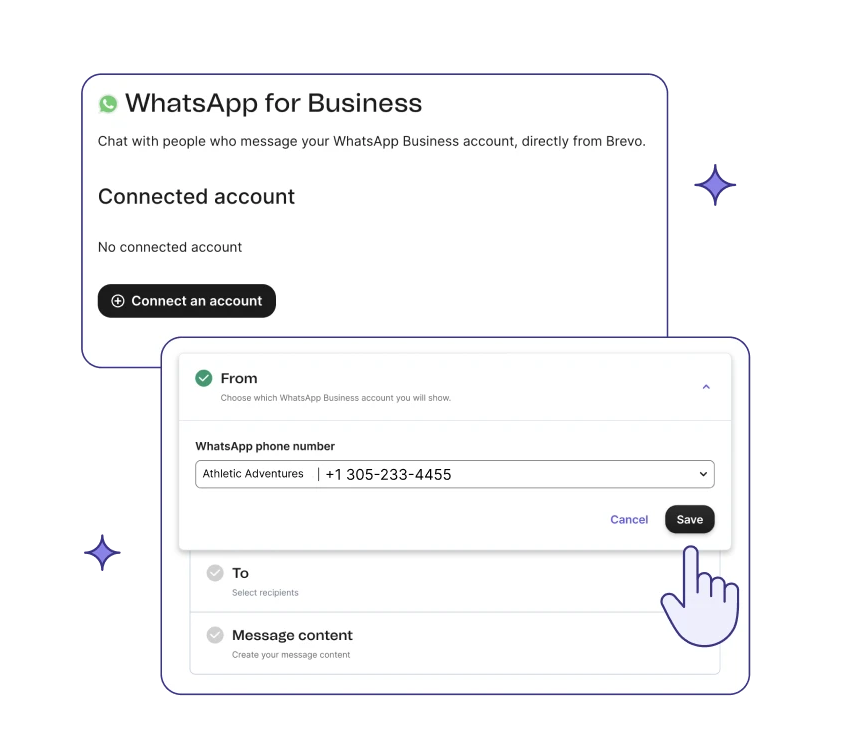
Brevo is a certified WhatsApp Business Solution Provider, so businesses get a verified profile and dedicated number through the WhatsApp Business API rather than a third-party intermediary. WhatsApp messages sit inside the same automation workflows and Conversations inbox as email and chat.
Source: Brevo
But breadth comes with depth trade-offs. G2 reviewers and Capterra reviewers consistently note that multi-step workflows and conditional logic feel limited compared to platforms like ActiveCampaign or Klaviyo.
Brevo's automation handles welcome series, abandoned cart recovery, and re-engagement sequences well. It strains when workflows need complex branching across multiple conditions.
Omnisend covers fewer channels (email, SMS, and web push) but wires each one into the ecommerce data layer.
The difference shows in the details. When you drop a product block into an email, it pulls live catalog data, keeping names, images, and prices current without manual updates.
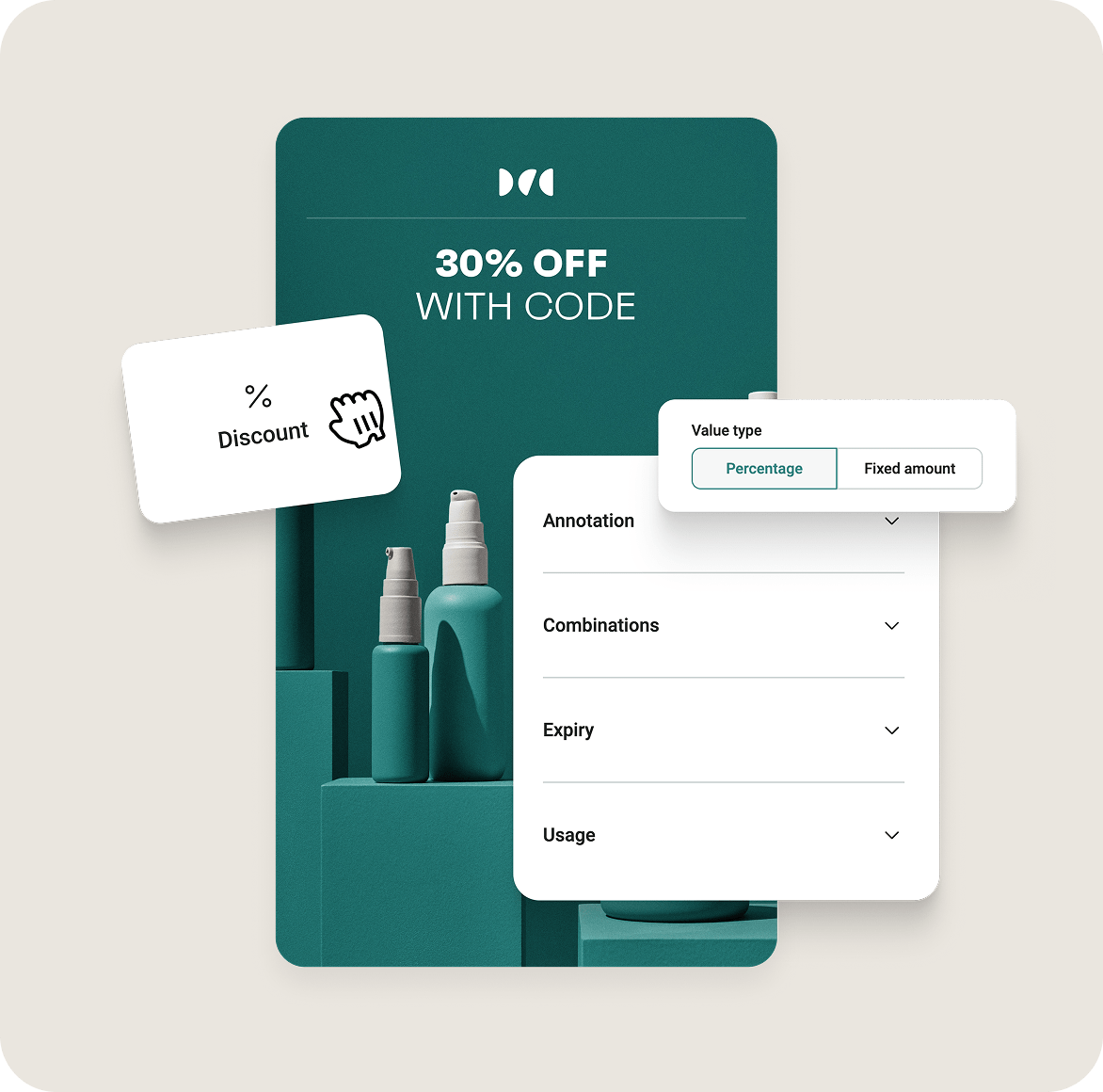
The Discount Code block generates a unique coupon per recipient and, for Shopify merchants, applies it at checkout with a single click. These aren't bolted-on features; they're built into the editor.
Source: Omnisend
Omnisend's automation canvas is where the ecommerce focus matters most. Automated emails drove 37% of all email-generated revenue from just 2% of total email volume across Omnisend's merchant base.
Six distinct order event types (Placed Order, Paid for Order, Ordered Product, Order Fulfilled, Order Canceled, and more) each carry subfilter data including products, collections, totals, and fulfillment status.
The platform exits contacts from an Abandoned Cart workflow when they begin checkout and shifts them into an Abandoned Checkout workflow, preventing duplicate messages without manual exit-condition setup.
Omnisend wins on ecommerce automation depth
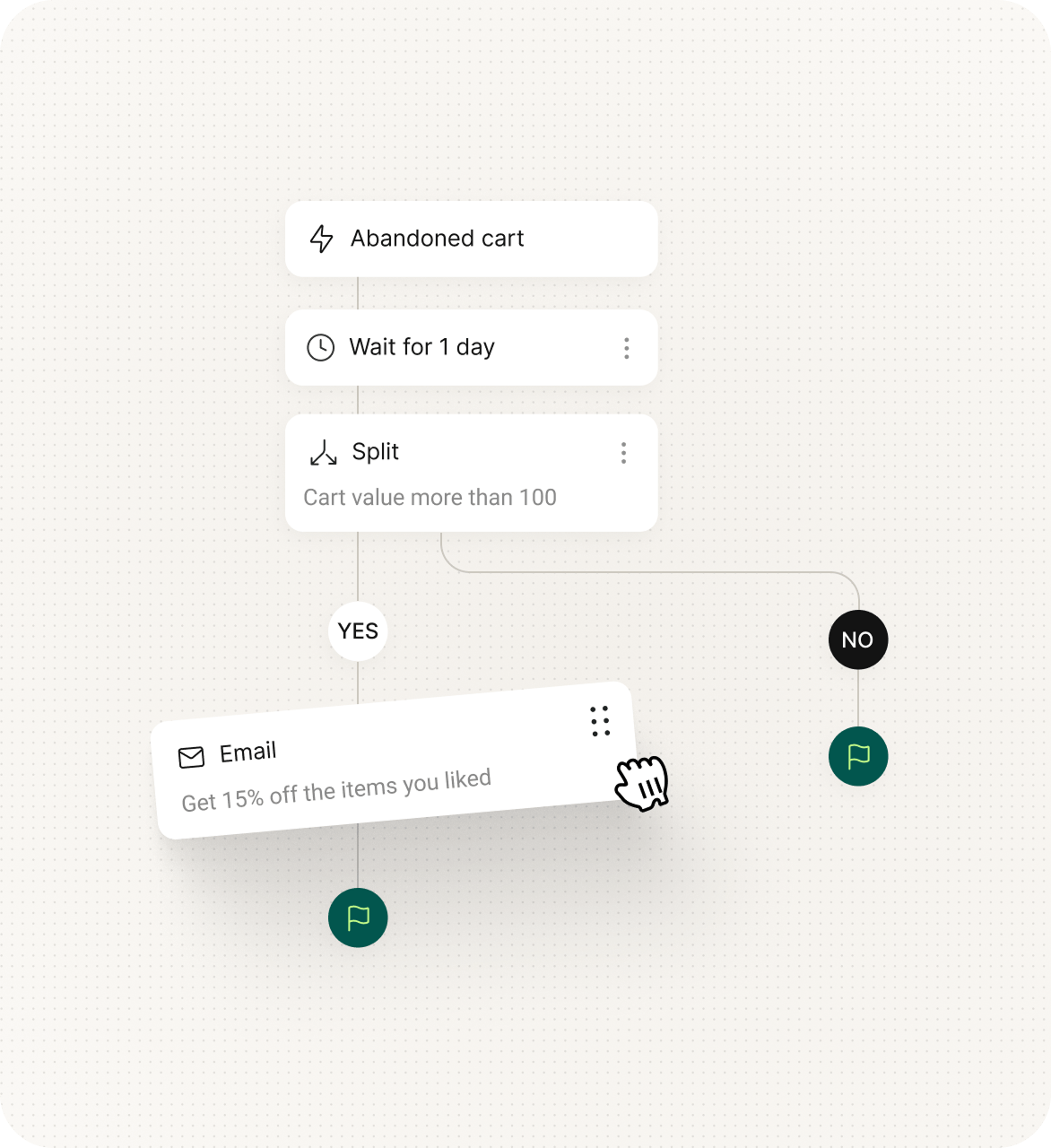
Omnisend ships 40+ pre-built automation workflows covering the full customer lifecycle: welcome series, abandoned cart, browse abandonment, product replenishment reminders, post-purchase cross-sell, birthday sequences, and win-back campaigns.
Source: Omnisend
Each template comes pre-configured with ecommerce triggers and content blocks that pull order data automatically.
The multi-channel design matters here. Email, SMS, and web push blocks coexist in a single workflow. Omnisend checks each contact's subscription status per channel and skips unavailable channels, passing the contact to the next step rather than stopping the sequence.
A typical abandoned cart workflow sends an email, waits 24 hours, checks if the cart was recovered, then sends an SMS to those who didn't open the email. No separate SMS platform or Zapier connector needed.
A/B testing runs inside automations on all plans, including free. You can split-test email against SMS as competing paths within an abandoned cart workflow, testing not just copy variations but entire channel strategies.
Brevo's automation covers similar territory with less ecommerce depth. The visual drag-and-drop workflow editor handles welcome series, abandoned cart, and date-triggered sequences across email, SMS, and WhatsApp. Pre-built templates get basic flows running quickly.
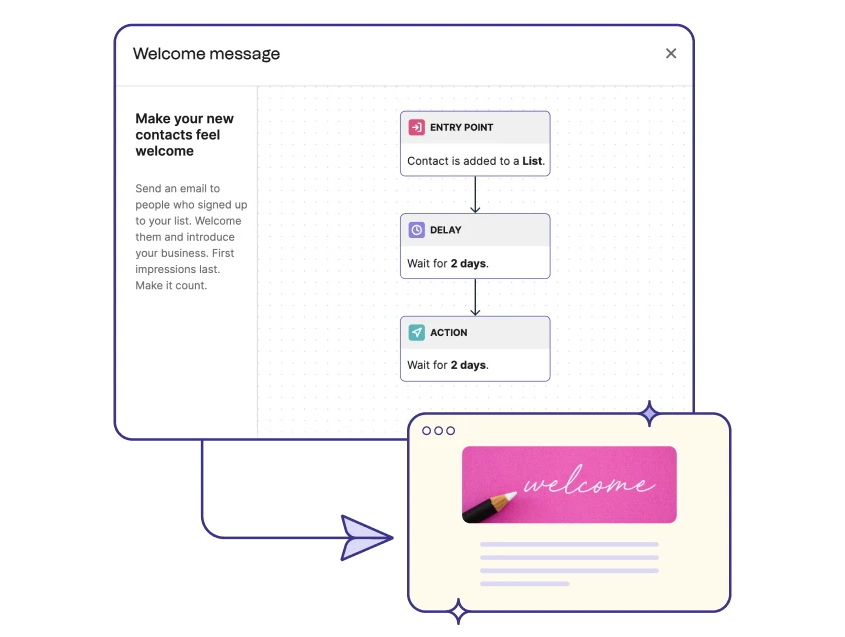
Source: Brevo
But Brevo's automation is designed for generality: it works across business types, which means it doesn't ship with the same density of ecommerce-specific triggers, event data blocks, or abandonment deduplication logic that Omnisend provides out of the box.
The free plan limits automation to 2,000 contacts and doesn't include it on Starter.
Brevo wins on breadth: CRM, transactional email, and live chat
Brevo's platform extends well beyond campaign marketing into territory Omnisend doesn't touch.
Sales CRM. Brevo includes a built-in CRM with deal pipelines, task assignment, win probability, and revenue forecasting. Reps can make and receive calls from the CRM using Brevo's cloud-based phone, with transcripts and AI-generated call summaries attached to contact records.
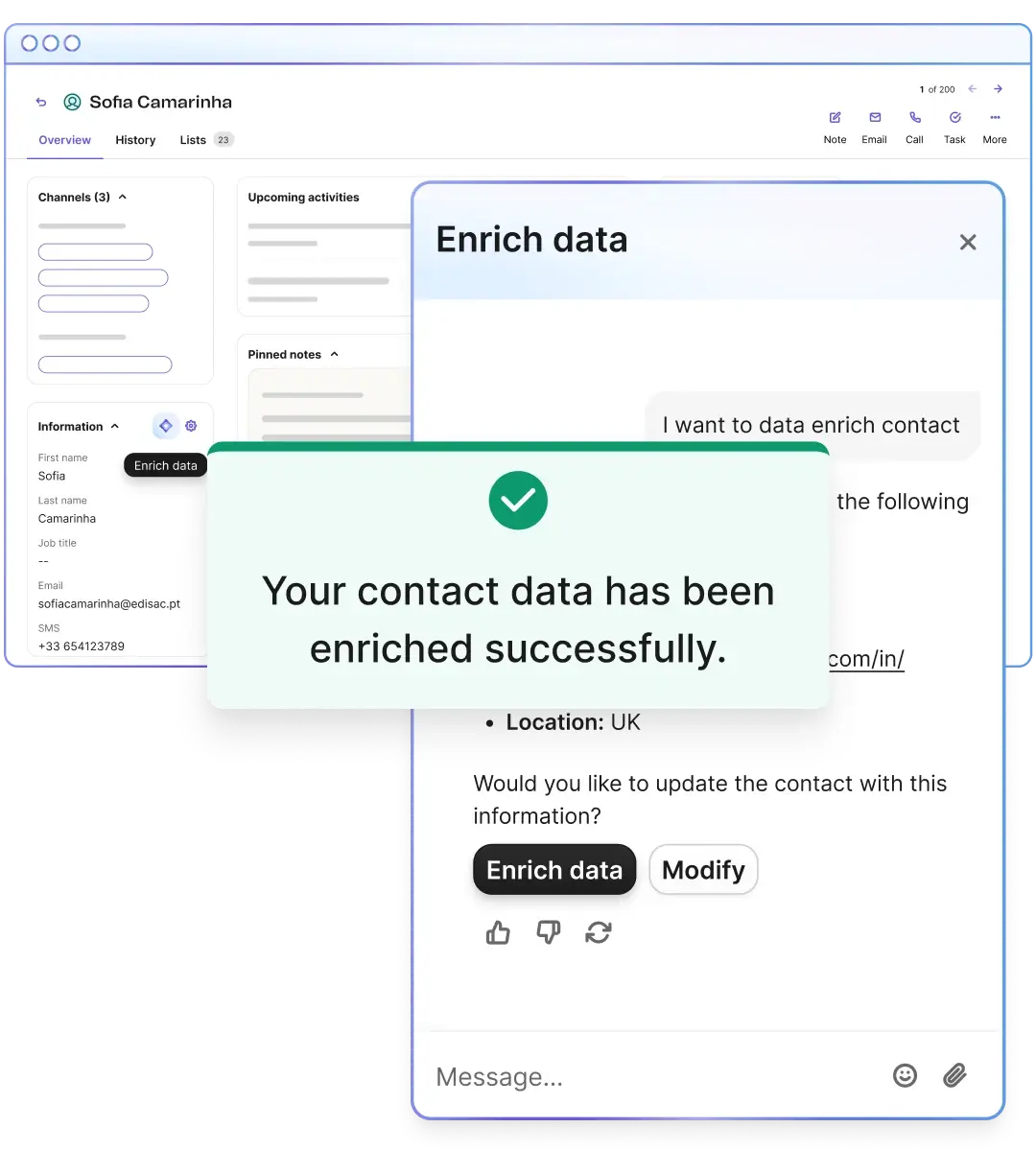
Source: Brevo
A meeting scheduler with payment collection is built in. Live chat contacts are automatically added to the CRM when a conversation ends. The Sales Free tier (included at no extra cost) supports 50 open deals and one pipeline.
Omnisend has no CRM, no deal pipeline, and no lead scoring. If your business involves any sales motion beyond automated ecommerce emails, Omnisend can't help.
Transactional email. Brevo's transactional messaging system handles order confirmations, shipping updates, password resets, and account notifications through sending infrastructure separate from marketing campaigns.
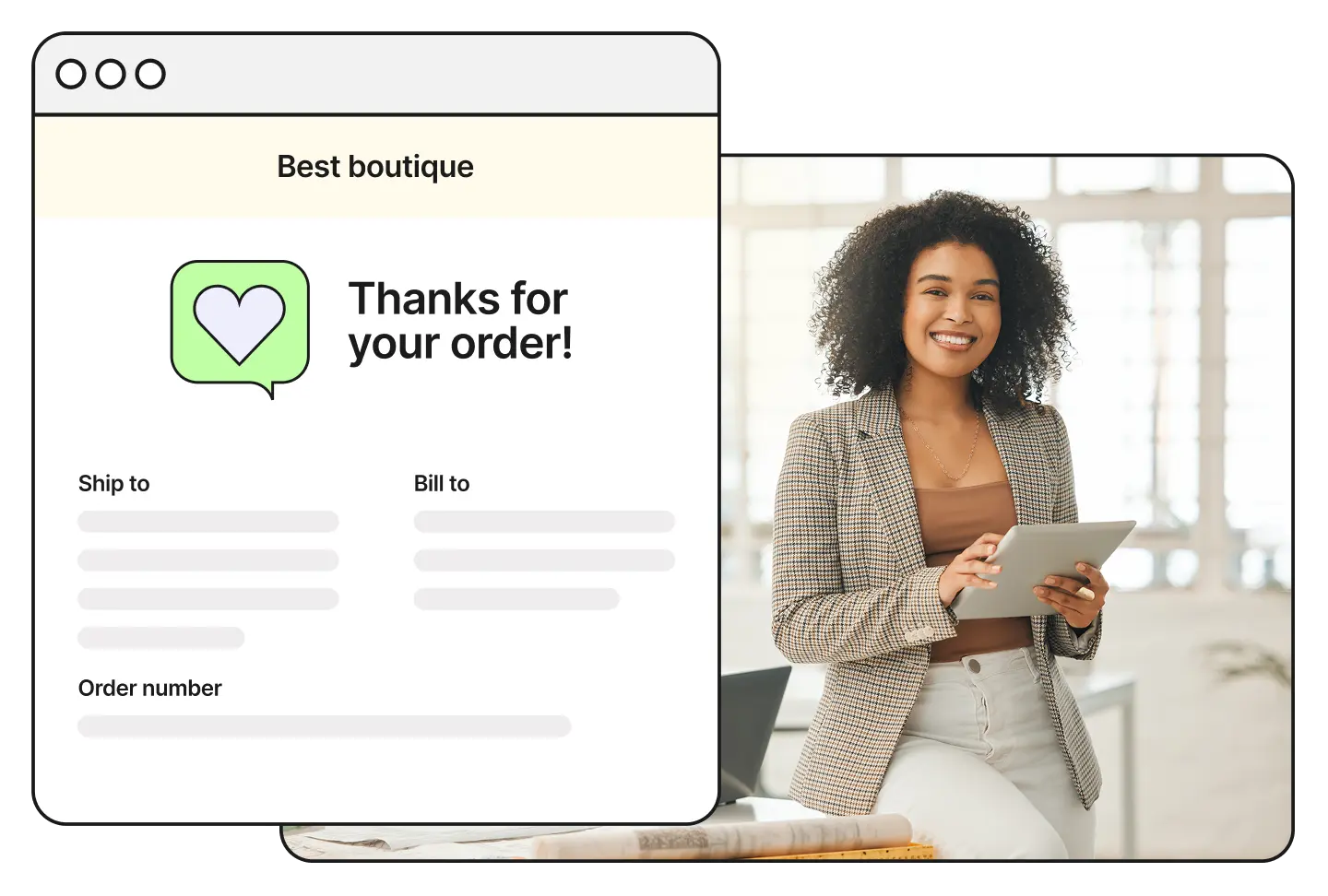
Source: Brevo
The API supports both REST and SMTP relay, with batch sending of up to 1,000 personalized versions per request and a claimed send capacity of 120,000 emails per minute. Transactional sending is included on any paid plan, with full API access available even on Free.
Omnisend can send transactional messages (order and shipping confirmations) through its automation workflows, but it's not a dedicated transactional email service with the same API depth, throughput, or developer tooling.
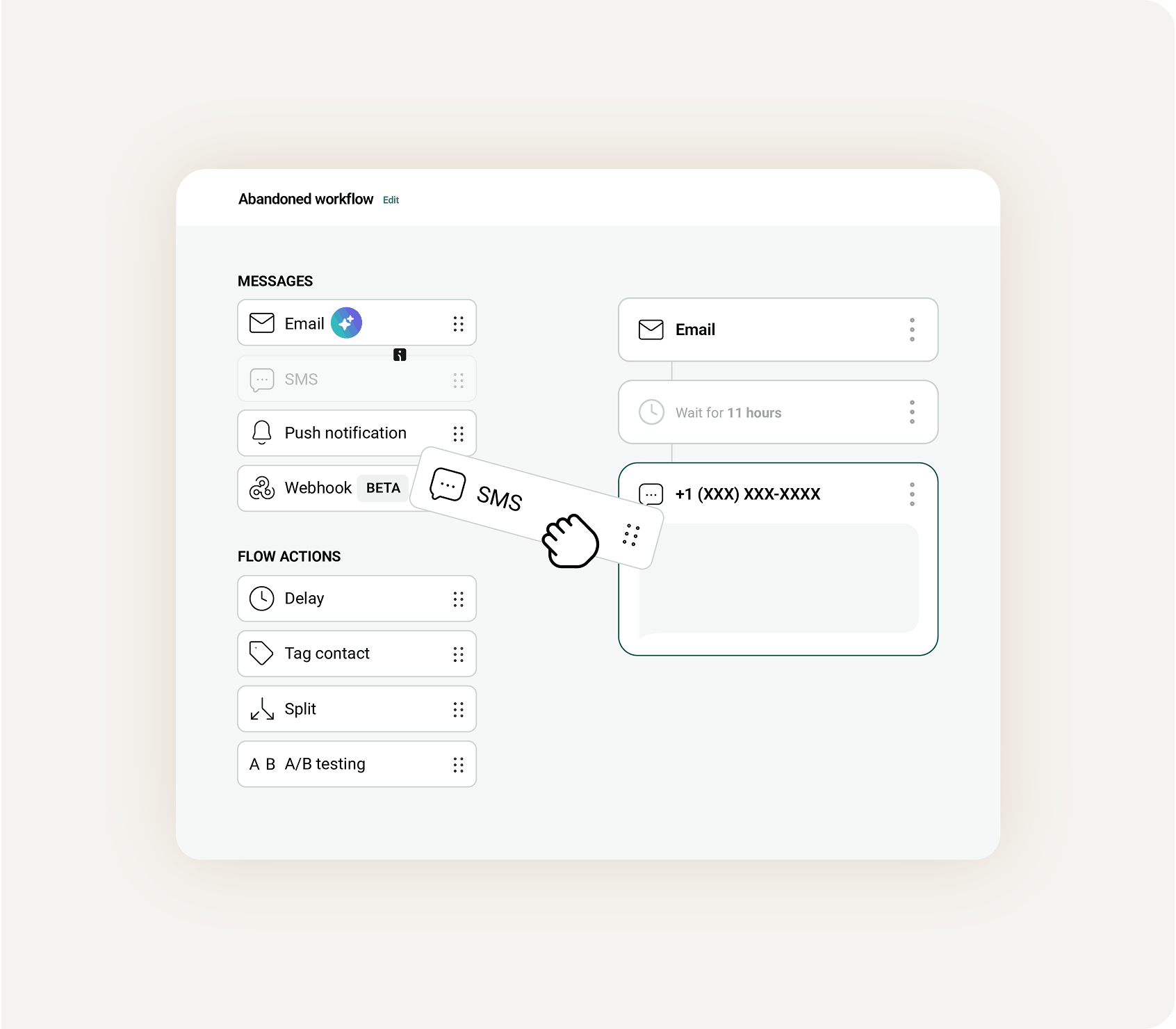
Source: Omnisend
Live chat and conversations. Brevo provides a customizable chat widget with chatbot scenarios, WhatsApp integration, and a unified inbox where support teams handle all conversation channels. Omnisend has no live chat or conversational support features.
Deliverability and list management take different approaches
Both platforms invest in deliverability, but their approaches reflect their different architectures.
Brevo claims a 99% deliverability rate for enterprise senders and provides dedicated IPs, DKIM/SPF/DMARC support, and IP warmup tools. The Professional plan includes a dedicated Deliverability Specialist.
However, Capterra reviewers report an overly sensitive suspension algorithm that pauses campaigns even with healthy open rates, and slow support response times when resolving suspensions.
Omnisend's deliverability is strong by independent measurement: 94.2% inbox placement versus an approximately 83% industry average in third-party testing.
The platform includes built-in DKIM/SPF/DMARC setup wizards and introduced custom click-tracking domains in March 2026, letting merchants use click.yourbrand.com instead of shared Omnisend domains.
One gap: Omnisend does not expose an in-dashboard deliverability score the way Klaviyo does, which limits proactive list health management for technical teams.
On segmentation, Omnisend's ecommerce-native approach stands out. A Customer Lifecycle Stage filter powered by RFM analysis surfaces stages like Champion, Loyalist, At Risk, and About to Lose as a single filter rule, without requiring merchants to build multi-condition segments manually.
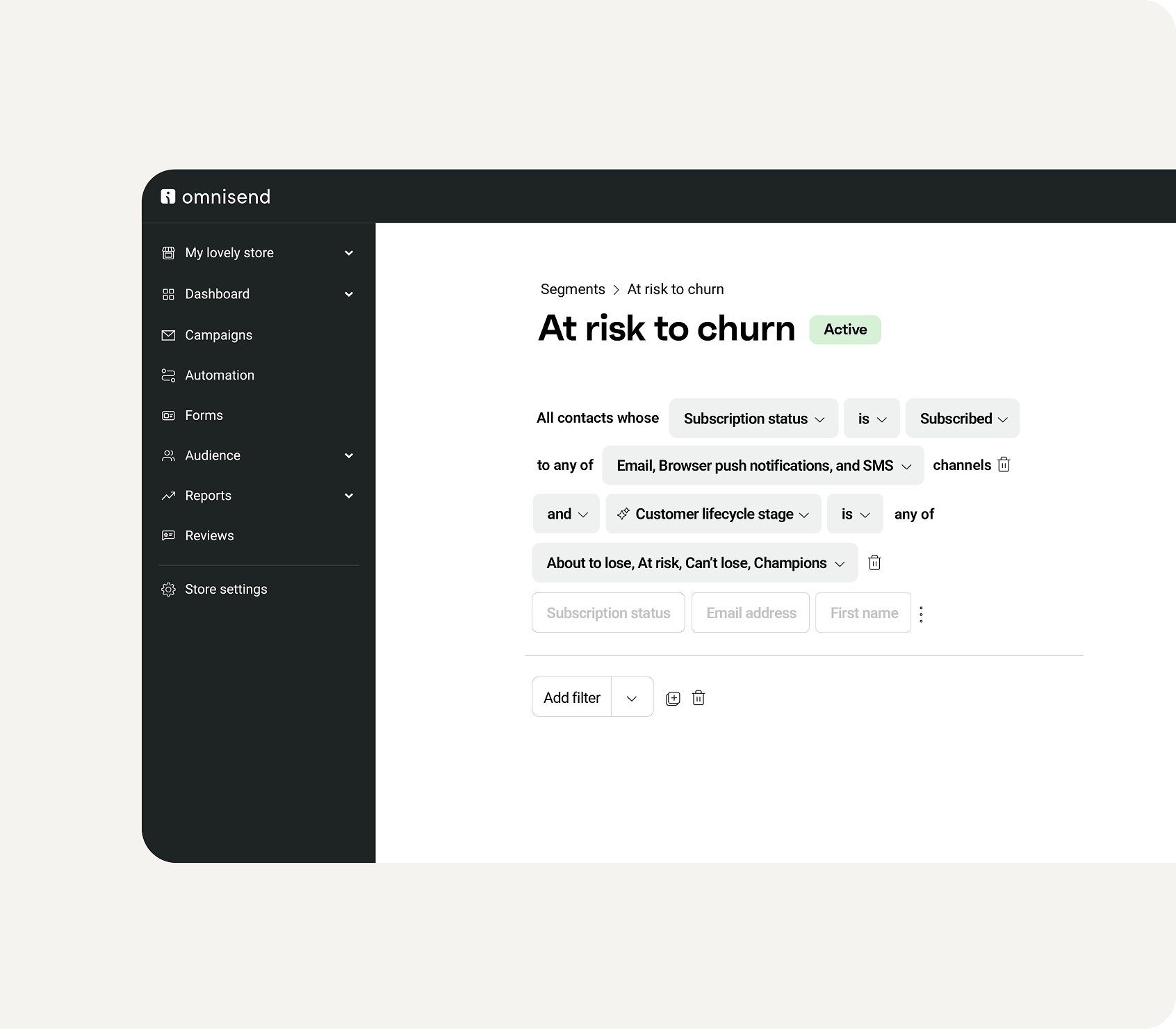
Source: Omnisend
Computed traits like Average Order Value and Total Spent update dynamically from each contact's full order history.
The AI Segment Builder accepts plain-language descriptions ("customers who ordered more than once in the last 90 days") and translates them into configured filter rules.
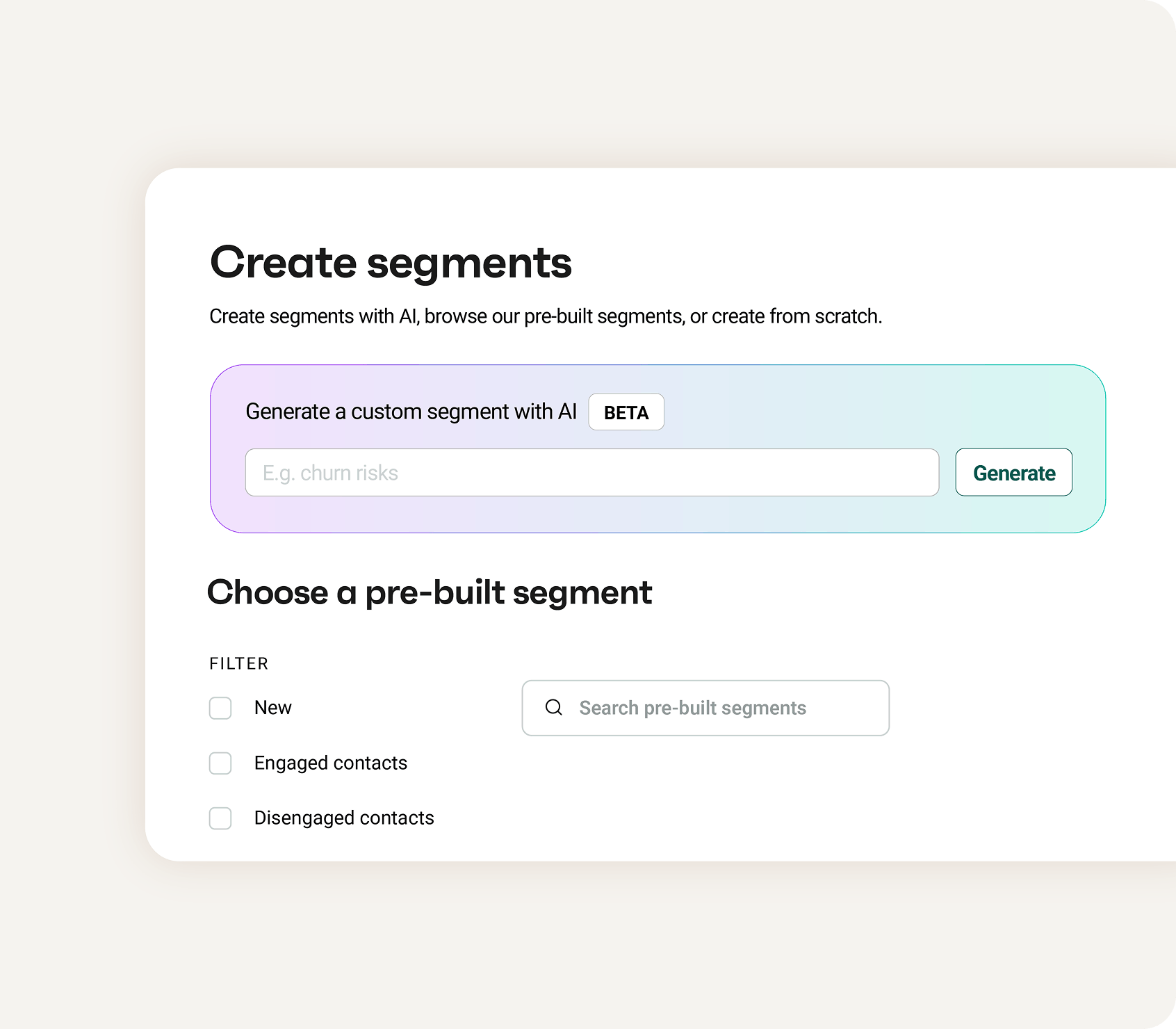
Source: Omnisend
Brevo's segmentation is capable but more general. Dynamic contact lists update based on subscriber activity, demographics, purchase history, and campaign interactions.
The Brevo Data Platform adds RFM and LTV scoring for enterprise customers, but these features sit behind higher tiers, not on the Standard plan where most growing businesses operate.
ZoomInfo adds the intelligence layer neither platform provides
Brevo and Omnisend both assume you already have a list of contacts to market to. ZoomInfo starts earlier in the funnel: identifying which companies are researching your market, finding the decision-makers inside those companies, and understanding which signals predict closed deals.
The GTM Context Graph processes 1.5B+ data points daily, combining ZoomInfo's B2B data with a customer's CRM records, conversation transcripts, and behavioral signals.
A CRM records that a deal moved from Stage 3 to Stage 4. Conversation intelligence captures that the CFO joined the last call and asked about six-month ROI. Intent data shows the company is researching competitors.
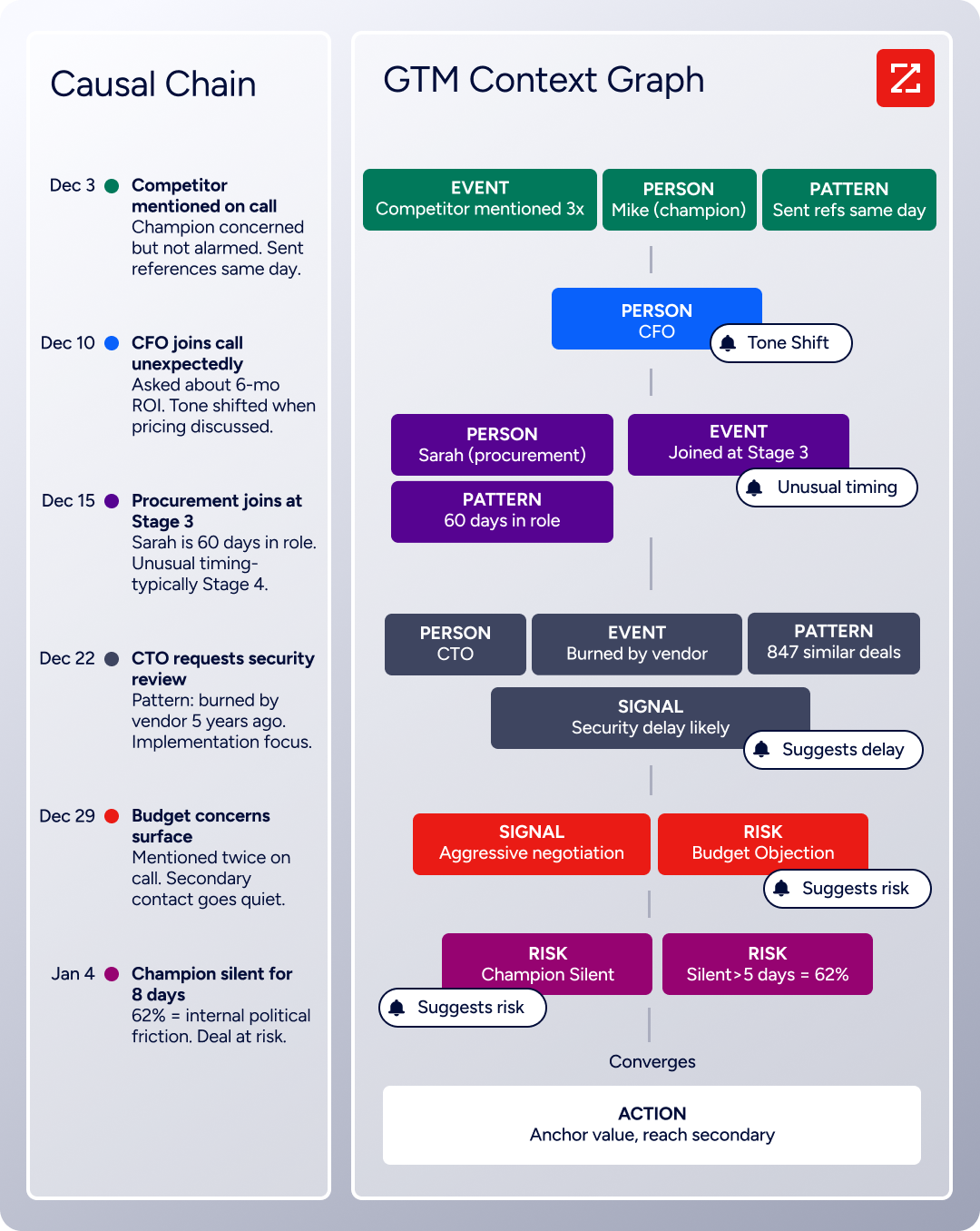
Source: ZoomInfo
The GTM Context Graph connects these signals to reveal why the deal accelerated, and which accounts with similar patterns are likely to close.
For B2B companies, this changes the marketing equation. Instead of sending campaigns to a static list and hoping for conversions, teams can target accounts that match their proven win patterns with messaging that addresses the specific concerns surfaced in deal analysis.
GTM Studio lets marketers describe audiences in natural language and launch multi-channel plays (email, ads, calls, direct mail) triggered by buyer behavior.
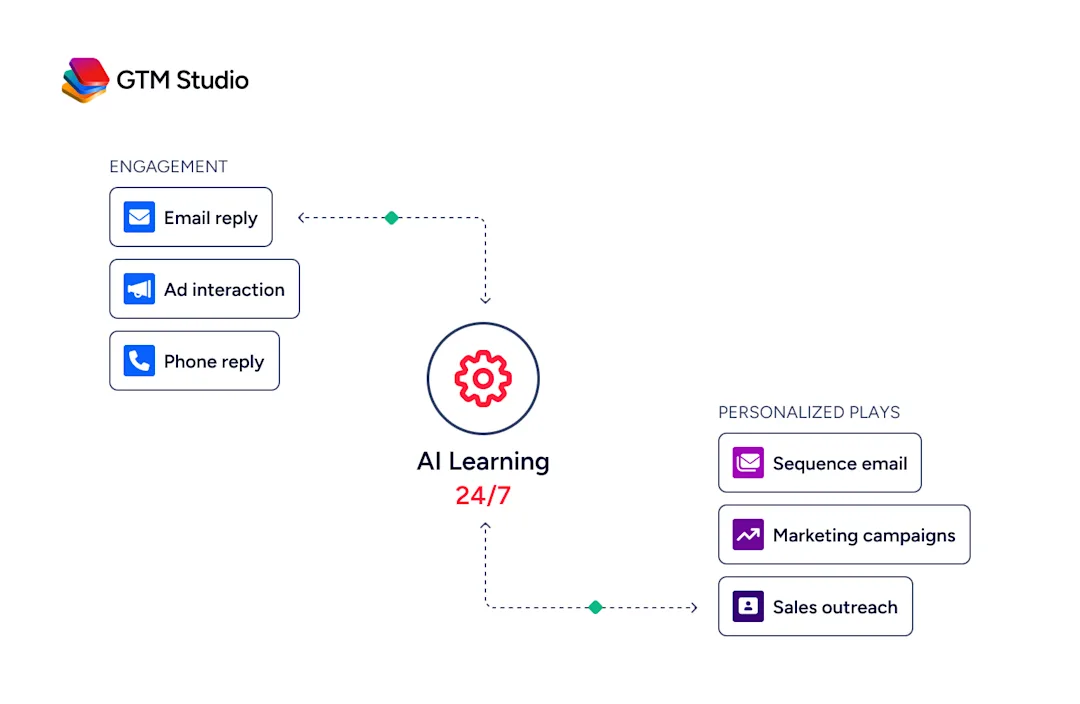
Source: ZoomInfo
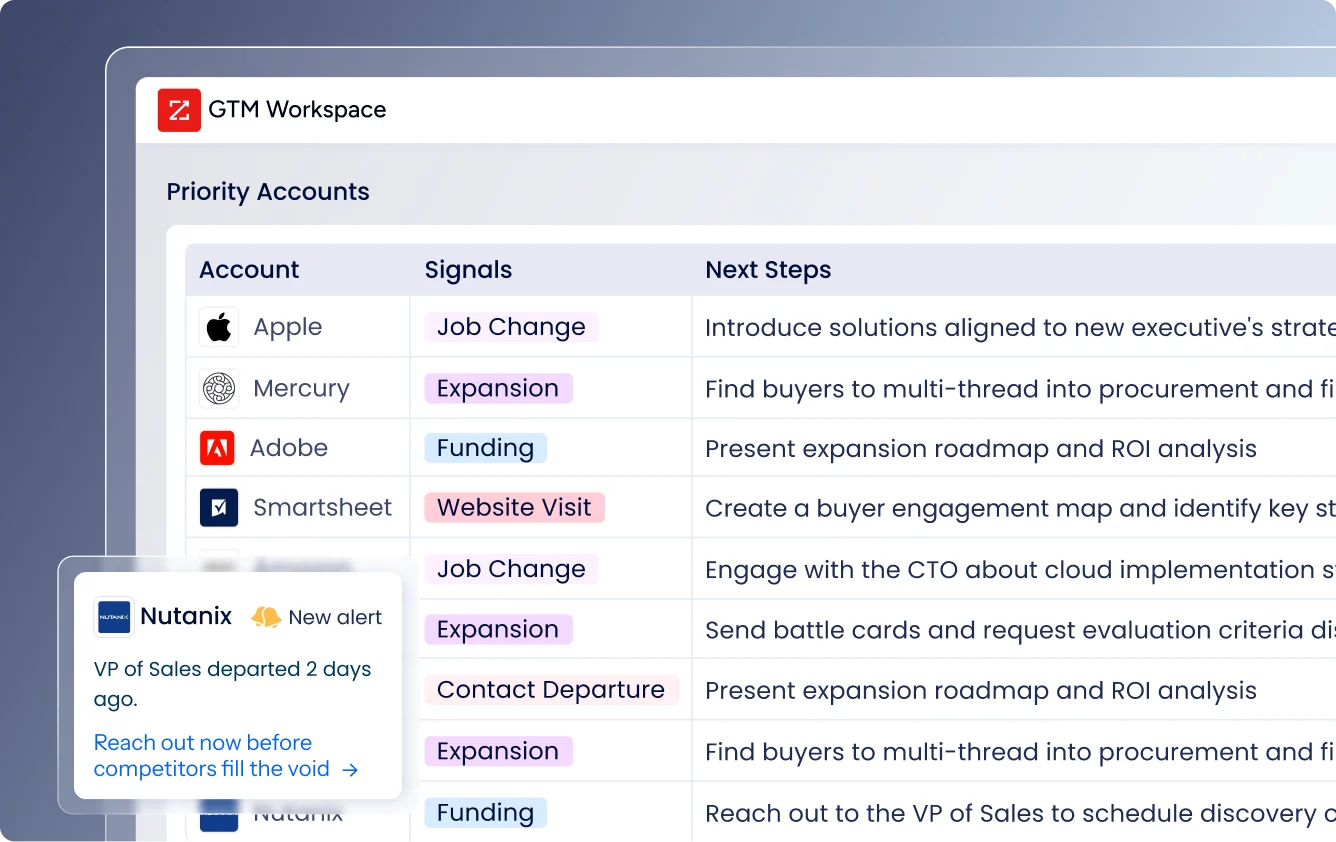
GTM Workspace gives sellers a prioritized account feed with AI-drafted outreach that addresses the context behind each deal.
Source: ZoomInfo
The data holds up at scale. In a Fortune 500 competitive RFP analyzing 25 million contacts across vendors, the independent consultant concluded that "no other competitor came even close." ZoomInfo is a Leader in the Gartner Magic Quadrant for ABM Platforms for the second consecutive year and a Leader in the Forrester Wave for Intent Data Providers.
"ZoomInfo's not just a contact data company anymore. They've built a full system of execution. GTM Intelligence works the list, writes the outreach, triggers the play, and helps drive predictable growth." (Ian Brodie, CEO & Co-Founder, Levanta)
AI features compared
All three platforms have invested in AI, but with different goals.
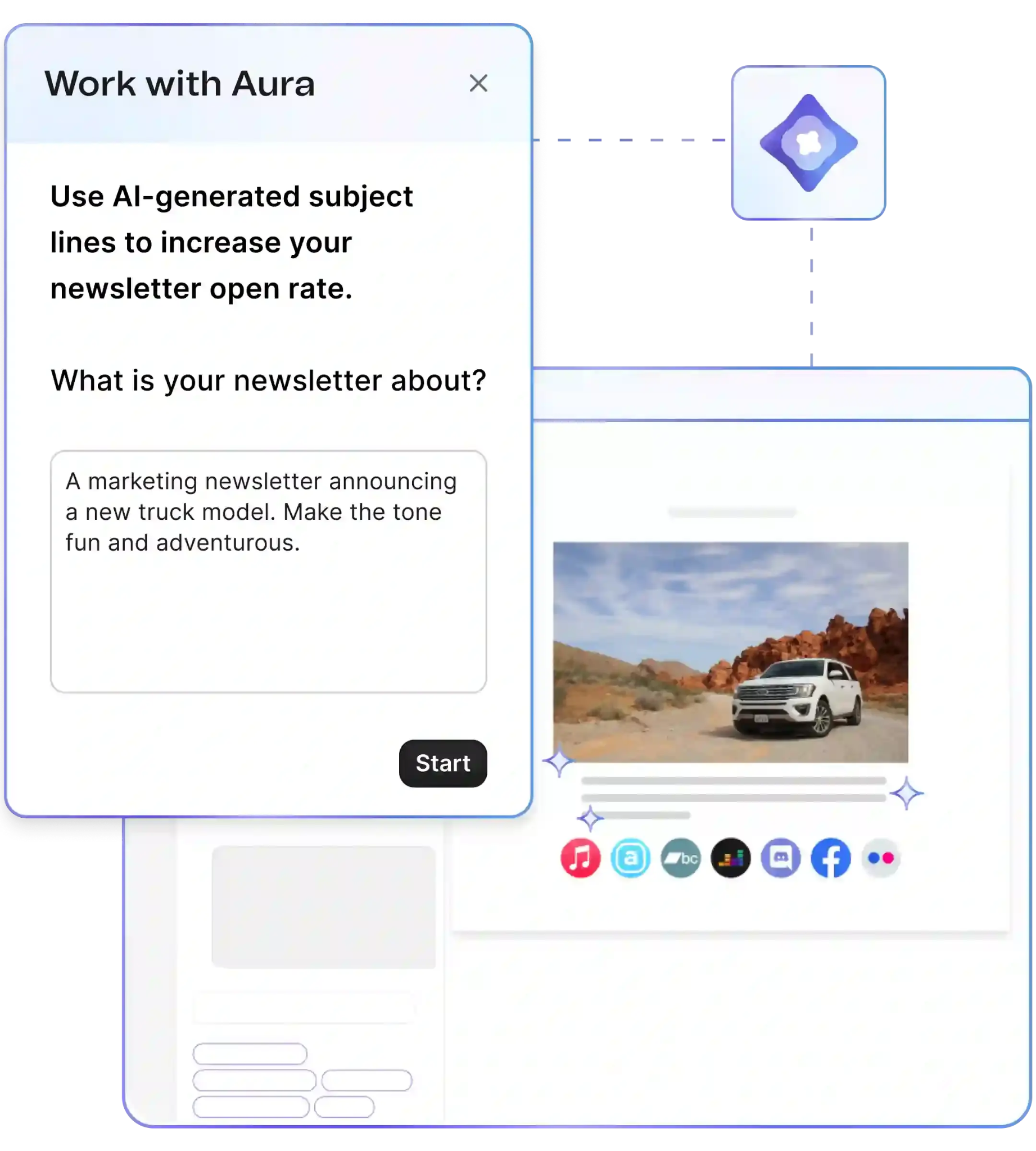
Brevo's Aura AI is a suite of four agents across the platform. The Marketing Agent generates copy, optimizes send times per recipient, segments audiences, and delivers product recommendations.
Source: Brevo
The Sales Assistant enriches contacts, drafts sales emails, and summarizes calls. The Data Analyst answers natural-language queries about campaign data. The Conversations Agent summarizes chats and adapts reply tone.
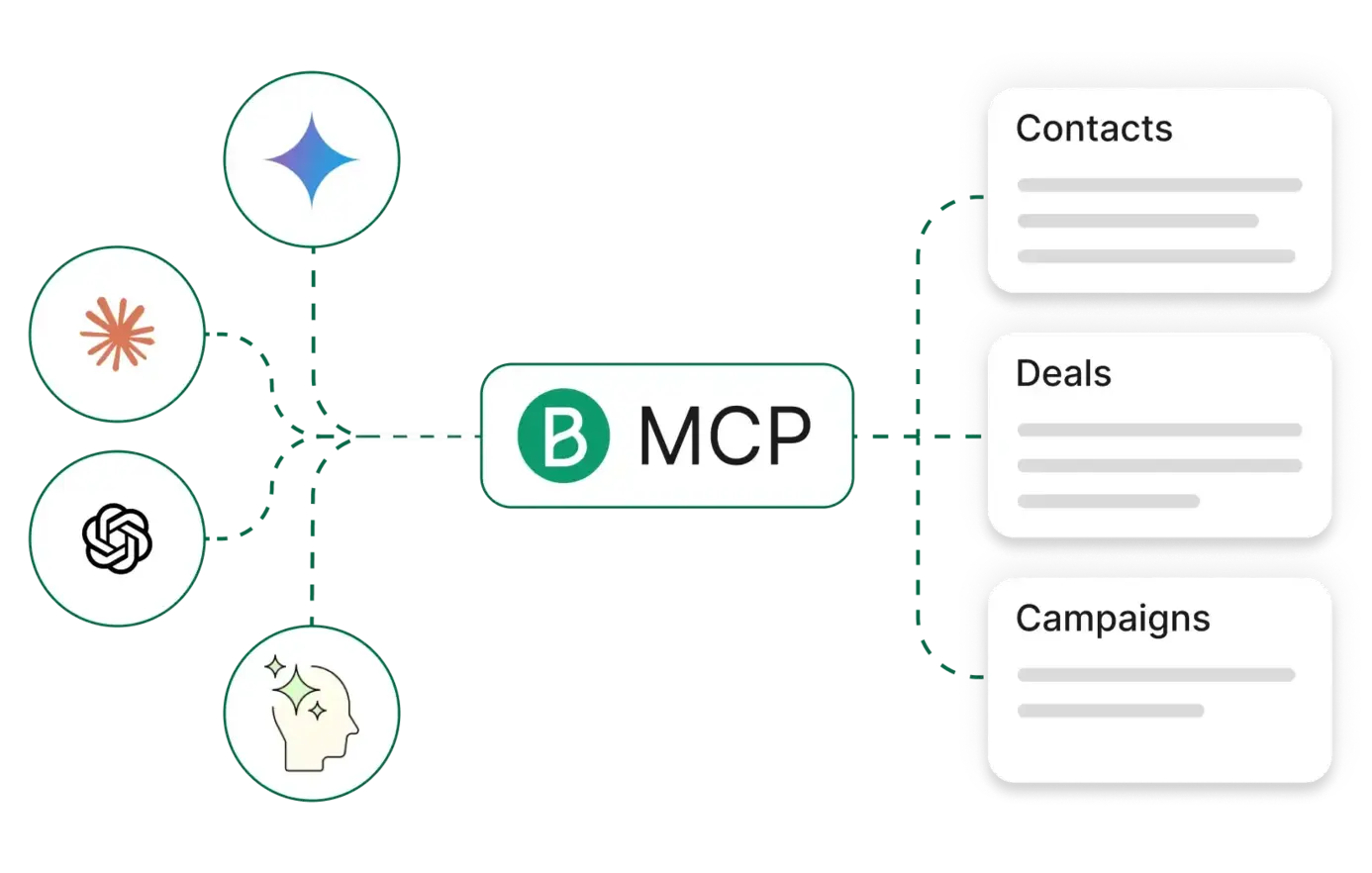
Brevo has also published an MCP server that connects to external AI assistants like Claude and ChatGPT, letting AI tools query contacts, run reports, and manage campaigns.
Source: Brevo
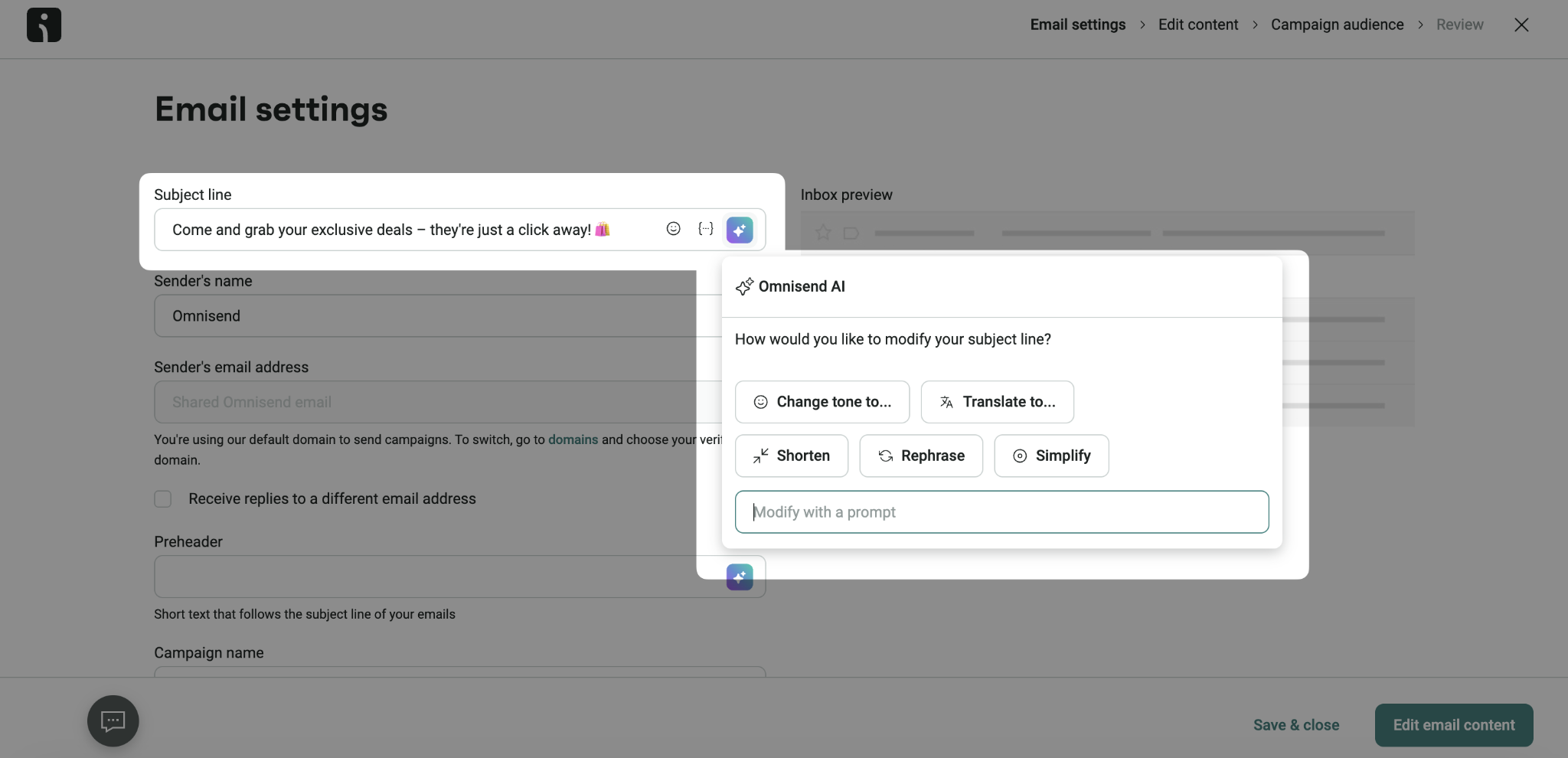
Omnisend's AI is narrower but integrated with the ecommerce workflow. The Subject Line Generator produces three variations with iterative refinement. The AI Writer generates and improves copy inline within the email editor. Forms AI builds complete signup forms from a text description.
Source: Omnisend
The AI Segment Builder translates natural language into segment filter rules. The Product Recommender populates per-recipient product blocks at send time using behavioral data. Like Brevo, Omnisend has published an MCP server for AI assistant connectivity.
ZoomInfo's AI operates at a different level. Built on Anthropic's Claude, the AI agents inside GTM Workspace handle account research, outreach generation, CRM updates, and signal monitoring.
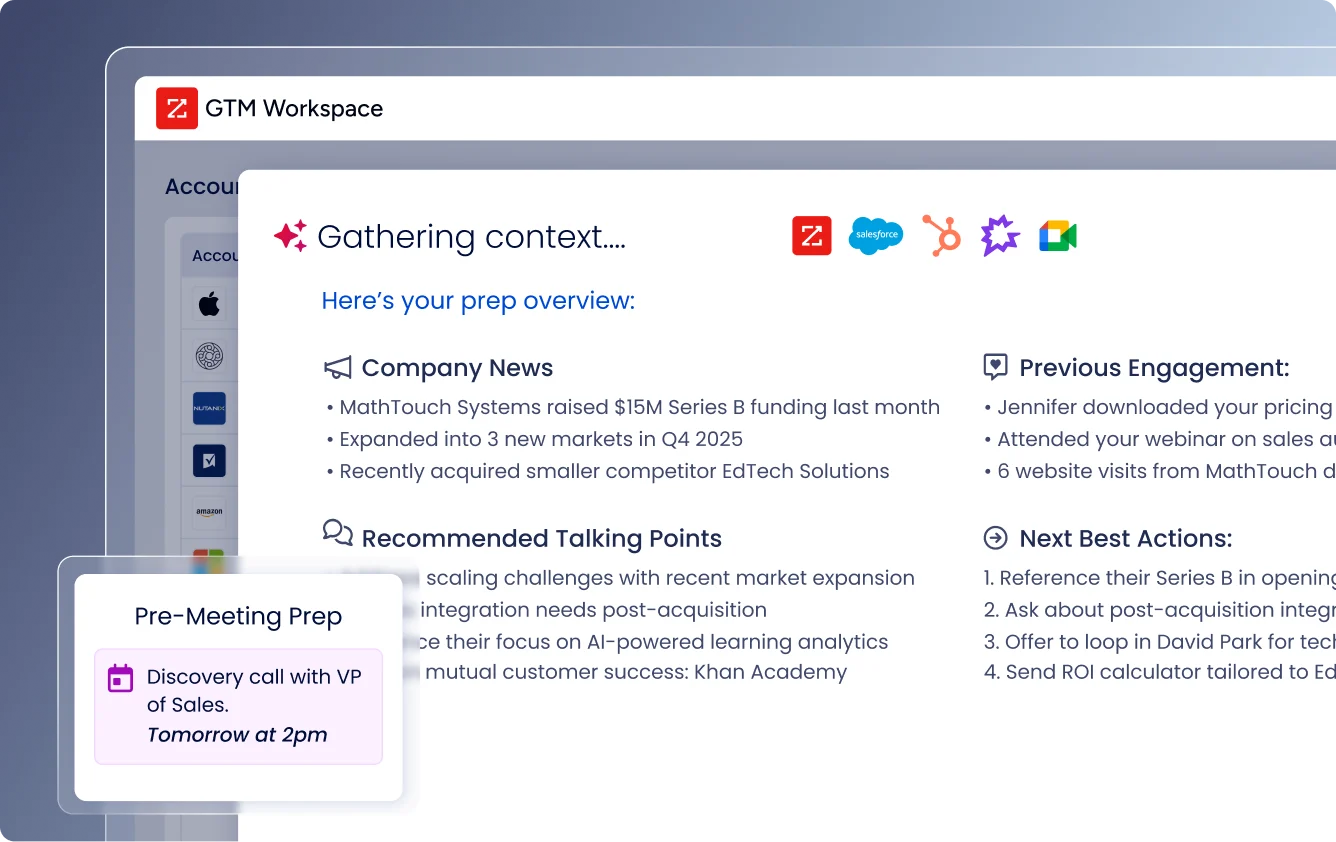
Source: ZoomInfo
The AI engine exposes Account Summary, Company Insights, Contact Recommendations, and lookalike expansion programmatically. GTM Studio uses AI to translate natural-language audience descriptions into multi-channel plays that get smarter as prospects respond.
The distinction is scope. Brevo and Omnisend use AI to speed up campaign creation and list management. ZoomInfo uses AI to identify which accounts to pursue, why, and what to say to them, drawing on the GTM Context Graph's understanding of deal patterns across thousands of interactions.
"That combination of our internal CRM data, external signals, and AI that's given all that context has helped us craft very specific account- and persona-based messages. And people have responded to them right away." (Toby Carrington, Chief Business Officer, Seismic)
Integrations and developer access
Brevo connects to 150+ third-party tools including Shopify, WooCommerce, BigCommerce, WordPress, Salesforce, Stripe, and Zapier.
The REST API covers transactional email, SMS, WhatsApp, contacts, CRM, loyalty, and custom events, with official SDKs for Node.js, PHP, Python, Java, C#, Go, and Ruby. API access is included on every plan, including Free. Rate limits scale by tier, reaching 6,000 requests per second on Enterprise.
Omnisend offers 200+ pre-built integrations through its App Market, with native one-click connections for Shopify, WooCommerce, BigCommerce, Wix, and Ecwid. The REST API covers contacts, campaigns, automations, segments, events, products, and analytics.
No official SDKs exist; developers work with curl and Postman. Rate limits are tighter: 15 requests per minute for create/update/delete operations. API access is included on all plans, though webhooks in automation workflows require a paid plan.
ZoomInfo operates a Marketplace with 172+ integration partners spanning CRM (Salesforce, HubSpot, Dynamics 365), cloud platforms (Snowflake, AWS, Databricks), and AI tools (Claude, ChatGPT).
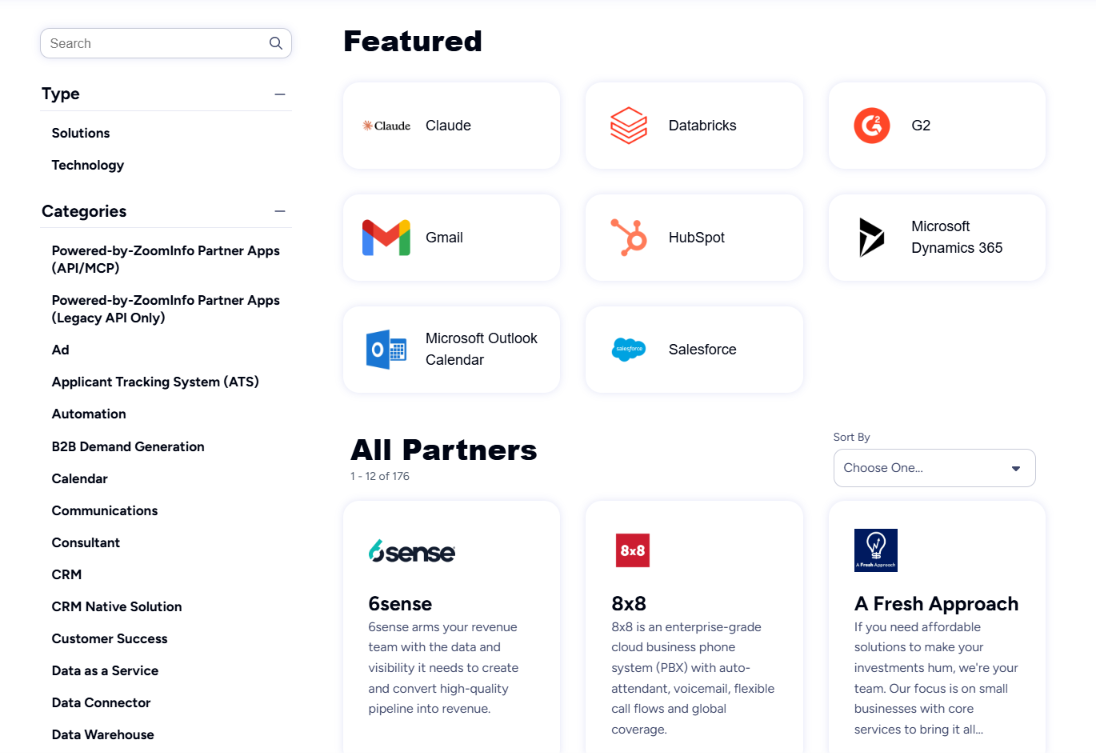
Source: ZoomInfo
The Enterprise API provides programmatic access to search, enrich, intent, and AI intelligence endpoints.
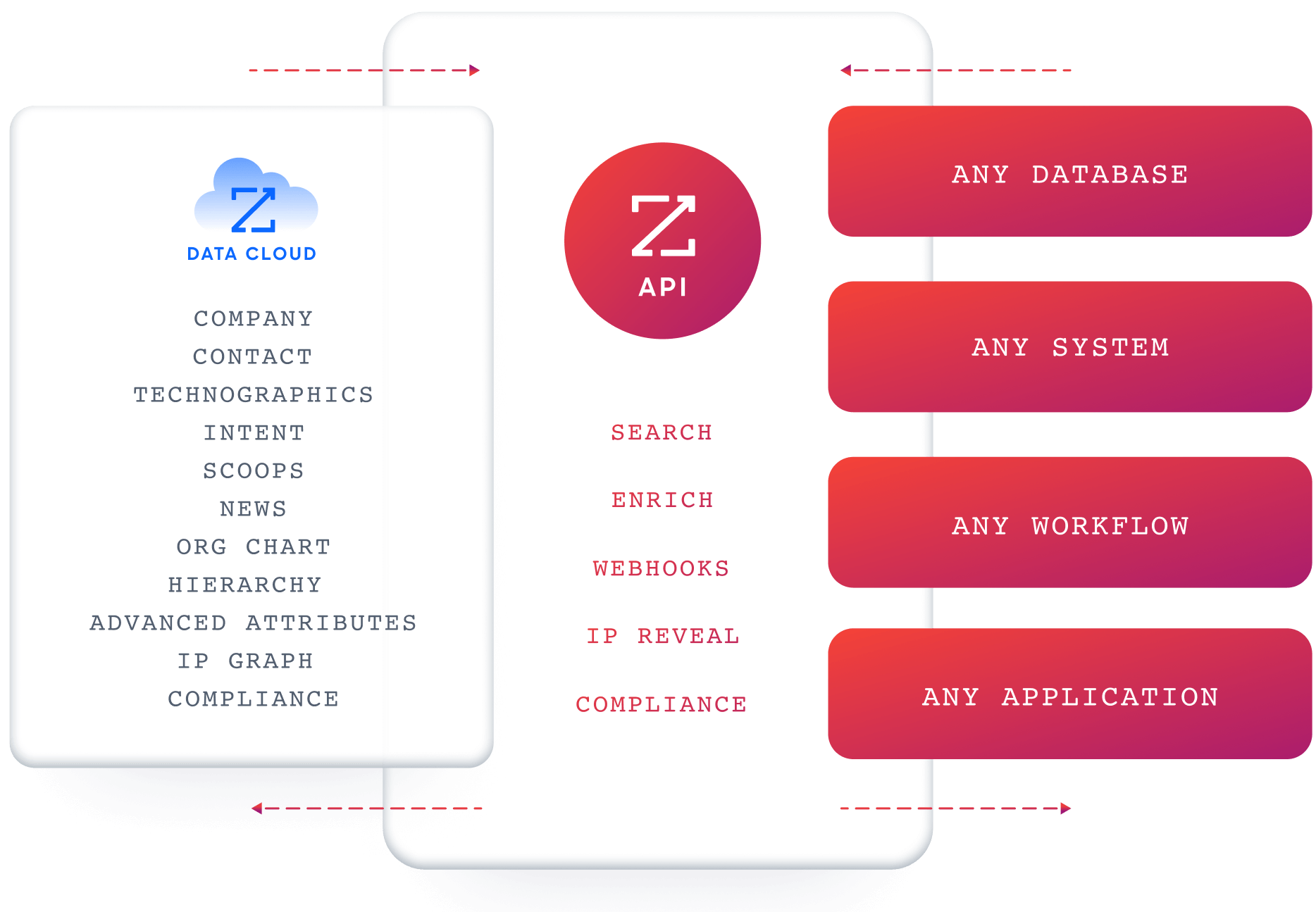
Source: ZoomInfo
The MCP server connects ZoomInfo data to any MCP-compatible AI agent. API access requires an Enterprise API or GTM Workspace package.
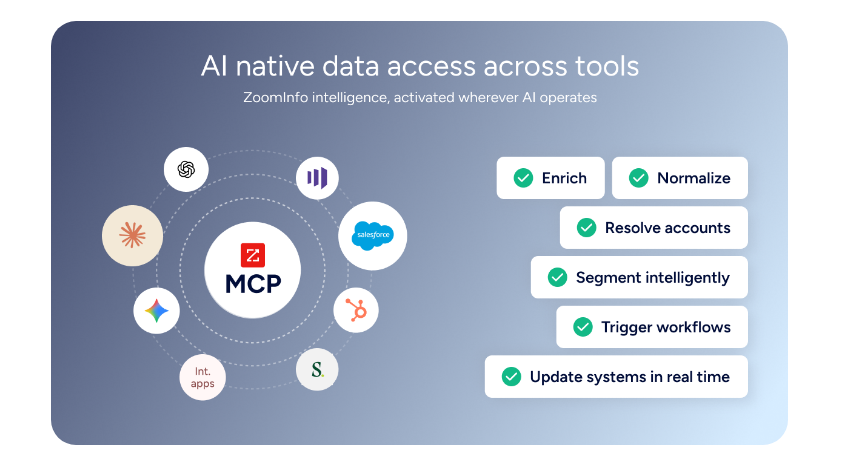
Source: ZoomInfo
The pricing models reveal what each platform values
Brevo and Omnisend charge for different things, and those choices shape who gets the most value from each.
Brevo charges by email volume, not contact count. Store as many contacts as you want on any plan, including Free. The Free plan allows 300 emails per day with no credit card required.
Starter begins at $9/month for 5,000 emails. Standard starts at $18/month. Professional, which unlocks WhatsApp campaigns, push notifications, and phone support, jumps to $499/month with a minimum of 150,000 emails. Enterprise pricing is custom.
This model rewards businesses with large contact lists that send at moderate frequency. A company with 50,000 contacts sending two campaigns per month pays the same as one with 500 contacts at the same send volume. Brevo's own comparison content claims savings of up to 9x over Mailchimp for bulk sends in certain scenarios.
The catch: several features that feel essential sit behind upgrades or add-ons. Removing Brevo's logo costs $10.80/month on Starter (included on Standard and above). Marketing automation requires Standard. SMS is billed separately by destination country on every plan.
Omnisend charges by contact count, with email volume tied to tier. The Free plan covers 250 contacts and 500 emails per month.
Standard starts at $16/month and gives you 12x your contact count in monthly emails (500 contacts = 6,000 emails). Pro starts at $59/month and includes unlimited emails.
The contact-based model works well for growing stores, but introduces a billing wrinkle: billable contacts include non-subscribers who received transactional messages.
A customer who placed an order without opting into marketing still counts. During peak seasons like Black Friday, this can push stores into higher tiers mid-cycle.
At equivalent scale, Omnisend consistently undercuts Klaviyo. At 10,000 contacts, Omnisend's Standard plan runs approximately $132/month versus Klaviyo's $240.
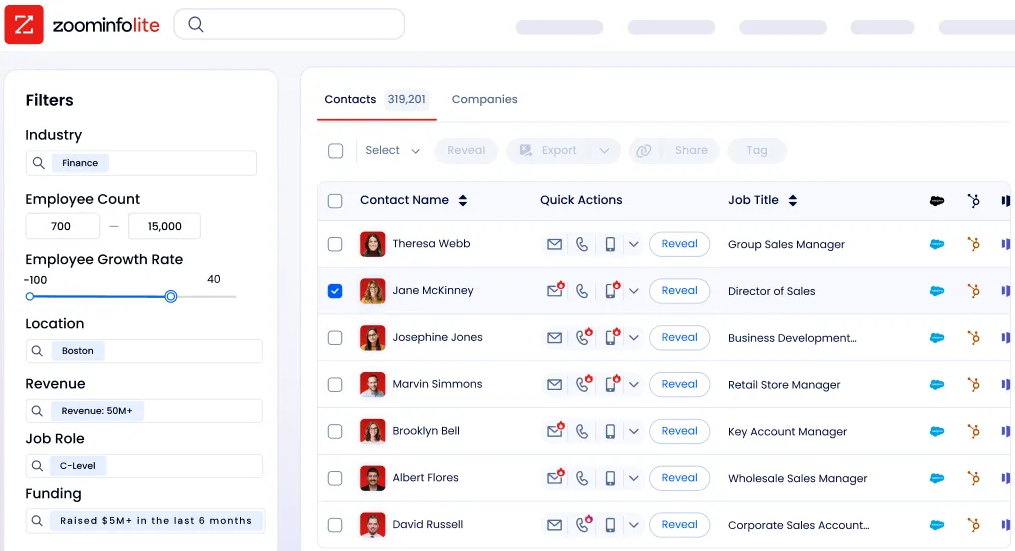
ZoomInfo uses consumption-based pricing built around enterprise license agreements, data credits, and AI activity. No prices are published; everything is custom-quoted.
ZoomInfo Lite offers a permanent free tier with 10 monthly export credits and access to the B2B database, and a 7-day free trial is available for full platform access.
Source: ZoomInfo
Support models reflect each platform's audience
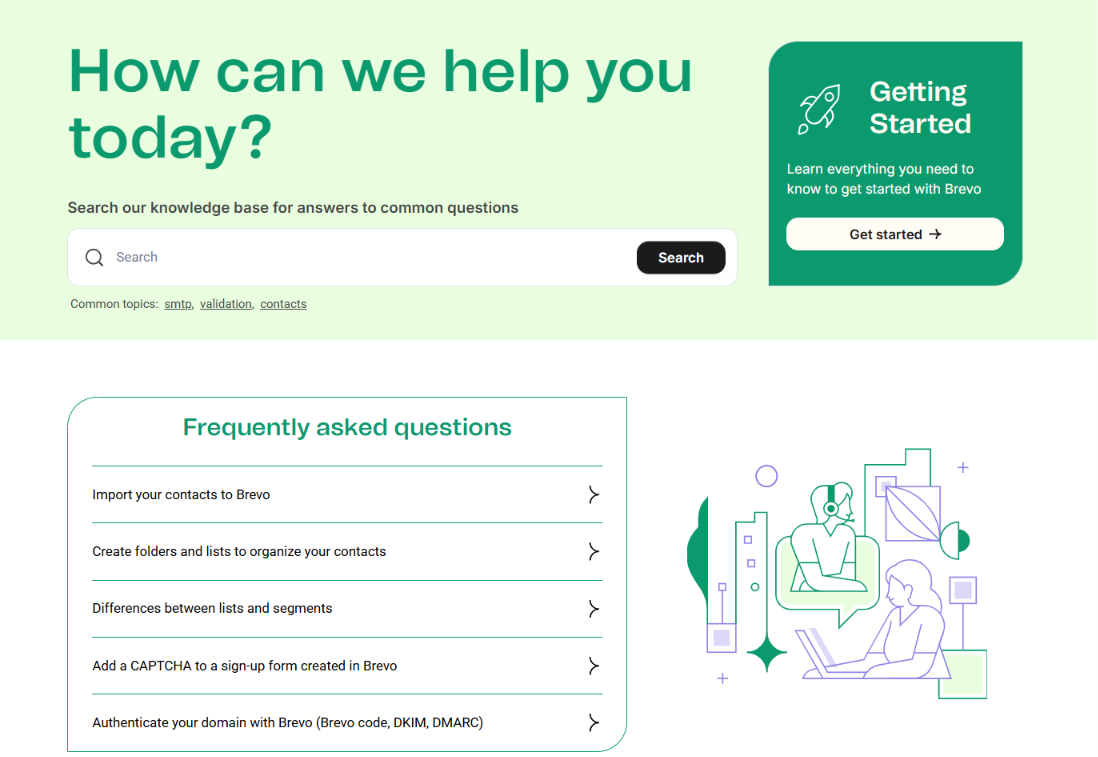
Brevo tiers its support by plan. Free and Starter get email support and the Help Center. Professional adds phone support and a dedicated Deliverability Specialist. Enterprise includes a Customer Success Manager and tailored onboarding. Support runs 24/7 in six languages.
Source: Brevo
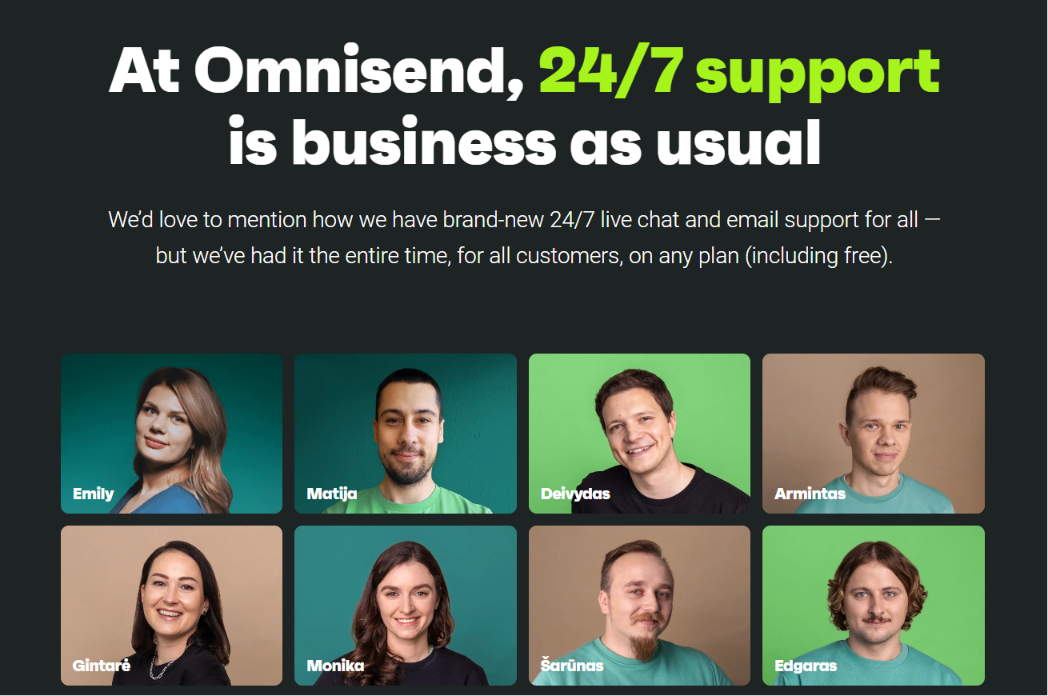
Omnisend provides 24/7 live chat and email support on all plans, including free. This is a deliberate differentiator: competitors like Klaviyo and Mailchimp gate live support behind paid tiers. Customers on plans at $400/month or higher receive a dedicated Account Expert.
Source: Omnisend
Omnisend holds a 4.6/5 on G2 from 1,172+ reviews and a 4.7/5 on Shopify from 2,968+ reviews (90% five-star). The Stevie Awards recognized Omnisend for customer service in two consecutive years.
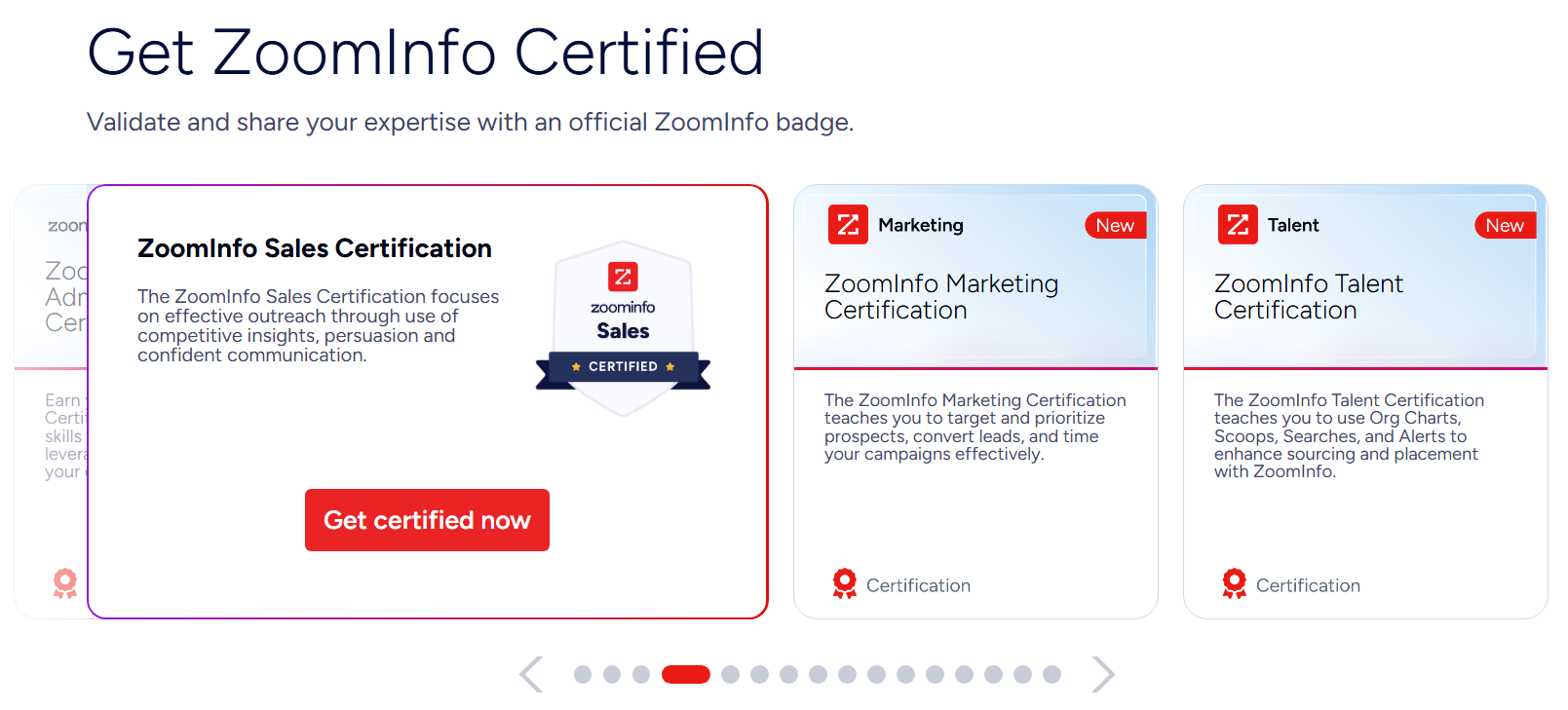
ZoomInfo provides support through a Help Center, ZoomInfo University (role-specific learning paths and certifications), a Modern GTM Community, and direct phone support. Enterprise tiers include dedicated customer service managers and hands-on onboarding.
Source: ZoomInfo
The platform earned the Gartner Customers' Choice distinction as the only vendor in the Customers' Choice quadrant, with a 4.7/5.0 average rating.
Brevo vs. Omnisend vs. ZoomInfo: Which should you choose?
The choice depends on what problem you're solving and where your business sits.
Choose Brevo if:
You need marketing, sales CRM, and transactional email in one platform
You have a large contact list and want to pay by send volume, not list size
WhatsApp, live chat, and phone are important channels for your business
You're an SMB or mid-market company consolidating tools to reduce costs
GDPR compliance and EU data residency are non-negotiable
Choose Omnisend if:
You run a Shopify, WooCommerce, or BigCommerce store
Ecommerce-specific automation (abandoned cart, post-purchase, browse abandonment) is your priority
You want email, SMS, and web push unified in a single workflow canvas
You're looking for Klaviyo-level automation at a lower price
24/7 live support on every plan matters to your team
Choose ZoomInfo if:
Your go-to-market motion depends on identifying and reaching B2B buyers
You need to know which companies are researching your market
Data quality and verified contact information drive your sales pipeline
You want AI that understands deal context, not just campaign metrics
Your team needs intelligence accessible through CRM, APIs, or AI agents
Try ZoomInfo free and see which accounts are in-market today.
Brevo and Omnisend serve different marketing needs well. Brevo gives growing businesses a consolidated toolkit at an accessible price. Omnisend gives ecommerce stores the automation depth to compete with brands spending far more on marketing technology. But for B2B companies whose growth depends on finding the right accounts and understanding why deals close, ZoomInfo provides intelligence that marketing automation platforms aren't designed to deliver. The most effective go-to-market teams aren't choosing one or the other. They use the right tool for each job.
Brevo vs. Omnisend vs. ZoomInfo FAQ
What is the fundamental difference between Brevo, Omnisend, and ZoomInfo?
Brevo is a marketing and sales platform covering email, SMS, WhatsApp, live chat, CRM, and transactional email, priced by email volume with unlimited contacts.
Omnisend is an ecommerce marketing automation platform connecting email, SMS, and web push to store data on Shopify, WooCommerce, and BigCommerce.
ZoomInfo is a B2B go-to-market intelligence platform providing verified contact data for 500M contacts and 100M companies, buyer intent signals, and AI-powered deal intelligence.
Which platform is cheapest for a small business?
Brevo has the most accessible entry point: its free plan includes 300 emails per day with unlimited contacts and no credit card. Omnisend's free plan allows 500 emails per month but caps at 250 contacts.
For paid plans, Brevo starts at $9/month and Omnisend at $16/month. ZoomInfo Lite is free with 10 monthly export credits; paid plans are custom-quoted.
Can I use Brevo or Omnisend for ecommerce?
Both work for ecommerce, but Omnisend is designed for it. Omnisend's product blocks pull live from your store catalog, discount codes generate unique coupons per recipient, and 40+ pre-built automation workflows cover cart abandonment, post-purchase follow-up, and browse abandonment.
Brevo integrates with Shopify, WooCommerce, and BigCommerce and offers abandoned cart workflows, but its ecommerce features are less integrated than Omnisend's native store connection.
Which platform has better automation capabilities?
Omnisend has deeper ecommerce automation with six distinct order event types, automatic abandonment deduplication, and email/SMS/push blocks in a single workflow canvas.
Brevo's automation covers more channels (adding WhatsApp and live chat) but reviewers consistently note it feels limited on conditional branching compared to specialized platforms.
ZoomInfo's automation works differently, using buyer signals and AI to trigger multi-channel GTM plays that improve from engagement data.
Does Brevo or Omnisend include a CRM?
Only Brevo includes a built-in CRM with deal pipelines, task assignment, cloud-based phone with AI call summaries, meeting scheduling, and live chat. Omnisend has no CRM or sales tools by design, since it focuses on ecommerce marketing.
ZoomInfo provides a GTM Context Graph that integrates with existing CRMs (Salesforce, HubSpot, Dynamics 365) rather than replacing them.
How do the platforms handle SMS pricing?
Brevo bills SMS separately by message volume and destination country on any paid plan. Omnisend includes SMS as a paid add-on on the Pro plan (for accounts created after May 4, 2026), with volume-based pricing starting at $0.009 per SMS in the US. The Pro plan includes bonus SMS credits equal to the plan's monthly cost.
ZoomInfo does not offer SMS as a messaging channel; it provides the contact data and signals that feed into engagement tools.
Which platform is best for B2B companies?
ZoomInfo is built for B2B go-to-market teams. It provides verified business contact data, buyer intent signals, company intelligence, and AI-driven deal analysis.
Brevo has a basic CRM that can serve B2B needs at the SMB level, but it lacks the data depth and intelligence that B2B sales and marketing teams require. Omnisend is designed for B2C ecommerce and has no B2B features.
Can I use these platforms together?
Yes. A common combination for B2B ecommerce companies is using ZoomInfo for prospecting and account intelligence, and Brevo or Omnisend for campaign execution and customer retention.
ZoomInfo's APIs and MCP server let its data flow into any front-end, while Brevo and Omnisend each integrate with major ecommerce and CRM platforms through their respective marketplaces.
Keep comparing Brevo:
