
Choosing between Capsule vs. HubSpot for your CRM often comes down to five questions:
Do you need a simple tool to organize contacts and track deals, or a full marketing, sales, and service platform?
Is your team small enough that ease of use matters more than feature depth?
Are you managing existing relationships, or prospecting for new business?
Do you need basic pipeline visibility, or intelligence that tells you which deals will close and why?
Is your growth bottlenecked by disorganized data, or by not having the right data in the first place?
In short, here's what we recommend:
Capsule is the CRM for small businesses that want clarity without complexity. Its clean interface, fast onboarding, and 9.4/10 ease-of-use rating on G2 mean you can go from signup to managing your pipeline in hours. Built-in project management, task tracking, and AI features like email drafting and contact enrichment give small teams real capability at a reasonable price. The limits: automation lacks conditional logic, reporting is basic on lower plans, and contact caps tighten as you grow.
HubSpot is the customer platform for growing companies that need marketing automation, sales pipeline management, and customer service under one roof. With 288,706 customers and a Smart CRM connecting six product hubs, HubSpot handles everything from lead capture to deal closing to post-sale support. Its Breeze AI agents draft outreach, resolve support tickets, and enrich records automatically. The tradeoff is pricing complexity (per-seat, per-hub, with mandatory onboarding fees at higher tiers) and a feature set that can overwhelm teams who only need basic CRM.
Both platforms handle the customer relationships you already have. But neither solves finding the right prospects, knowing when they're ready to buy, or understanding why deals move or stall. That intelligence gap is where revenue opportunities hide.
ZoomInfo is an AI GTM platform built on the largest B2B dataset available: 500M contacts, 100M companies, 135M+ verified phone numbers, and 200M+ verified business email addresses. While Capsule and HubSpot manage your pipeline, ZoomInfo fills it. Its GTM Context Graph combines this data with your CRM records, conversation transcripts, and behavioral signals to reveal not just what happened in a deal, but why. Sellers use GTM Workspace, marketers use GTM Studio, and any tool can connect through APIs and MCP. For B2B teams that need to find and win new business, ZoomInfo provides data and intelligence that CRMs were never built to deliver.
If building your pipeline with verified data and AI-powered prospecting sounds like the missing piece, see how ZoomInfo works.
Capsule vs. HubSpot vs. ZoomInfo at a glance
Capsule | HubSpot | ZoomInfo | |
|---|---|---|---|
Core focus | Simple CRM for small businesses | All-in-one customer platform | AI GTM intelligence platform |
Contact capacity | 250 (Free) to 120,000 (Advanced) | Up to 15M (expandable to 50M) | 500M searchable B2B contacts |
Sales pipeline | Kanban boards with stale deal alerts | Visual pipeline with AI forecasting | AI-prioritized accounts with buyer signals |
Marketing tools | Transpond add-on ($11+/mo) | Built-in Marketing Hub | Built-in GTM Studio and ABM |
AI capabilities | Email drafts, summaries, enrichment | Breeze agents across all hubs | GTM Context Graph, AI agents, intent signals |
Buyer intent data | None | Limited | 210M IP-to-org pairings, 6T+ keyword signals |
Integrations | 100+ | 2,000+ | 120+ native plus API/MCP access |
Free plan | Yes (2 users, 250 contacts) | Yes (unlimited contacts, 2 users) | Yes (ZoomInfo Lite, 10 exports/mo) |
Paid pricing | ~$21-75/user/month | $15-$3,600+/month | Custom (consumption-based) |
Best for | Small service businesses (1-20 users) | Scaling companies (20-2,000+) | B2B sales and marketing teams |
Two CRM philosophies, one shared limitation
Capsule and HubSpot sit at opposite ends of the CRM spectrum.
Capsule was born in the 2008 financial crash, bootstrapped by founders who had lost a major client and decided to serve many small businesses instead of a few large ones. That origin shaped the product: lean by design, built for businesses that have outgrown spreadsheets but find Salesforce suffocating. Within 30 months of launch, Capsule had 10,000 users and £1 million in revenue, profitable without outside investment.
HubSpot started from the opposite premise. Founded in 2006 around "inbound marketing," it has grown into a $3.13 billion revenue company offering eight integrated products spanning marketing, sales, service, content, data, and commerce. Where Capsule limits scope to stay simple, HubSpot expands scope to become the single platform a company runs on.
Both philosophies work. But both share one limitation: they manage relationships after you've found them. Neither tells you which companies are researching your category right now, who the decision-makers are, or what signals predict a closed deal. That's the gap between a CRM and a GTM intelligence platform.
Contact management tells different stories at different scales
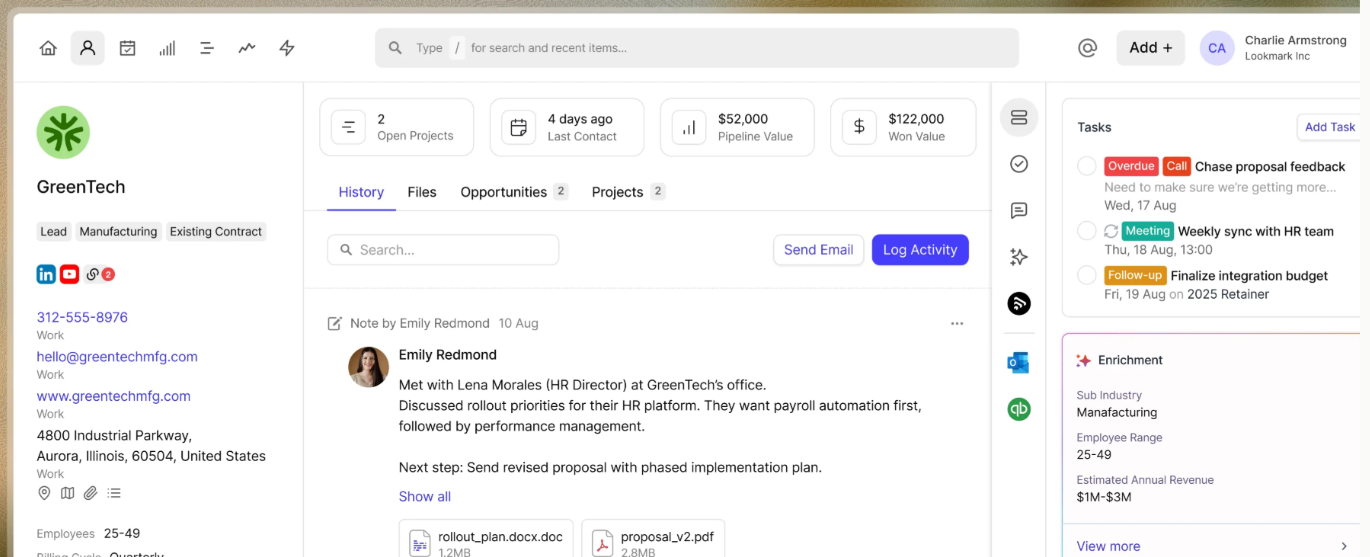
Capsule treats contact management as a relationship tool. Each person and organization links bidirectionally, with a chronological timeline of every interaction.
Source: Capsule
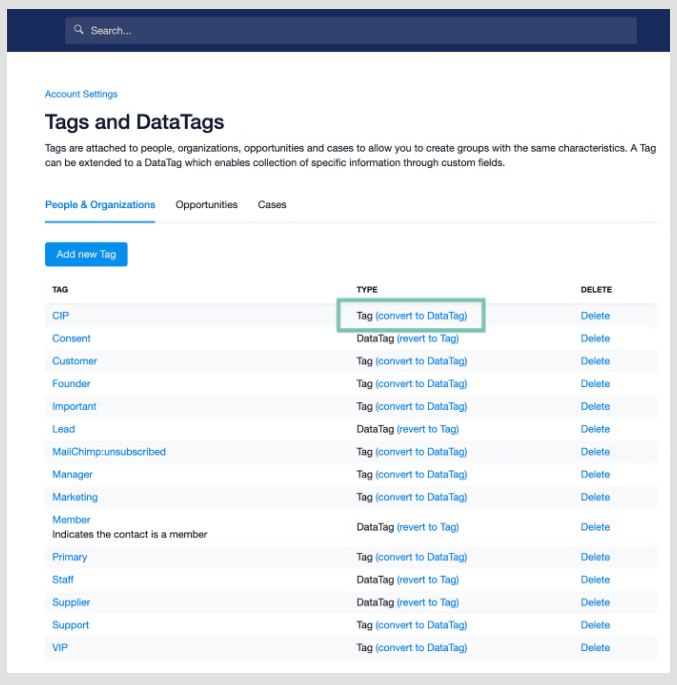
DataTags (a Capsule-specific feature) trigger structured data fields when a tag is applied: tagging a contact as "Member" can prompt you to enter their membership number and level. For a small firm juggling dozens of client relationships, this detail matters.
Source: Capsule
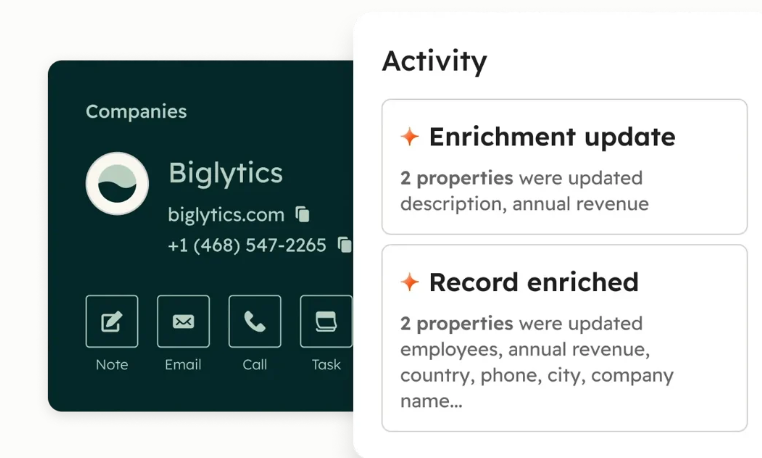
HubSpot treats contact management as a data platform. The Smart CRM stores up to 15 million contacts (expandable to 50 million) with custom objects, field-level permissions, and automatic duplicate detection. AI enrichment pulls missing data from emails, calls, and external sources.
Source: HubSpot
For growing companies, the difference is structural: HubSpot gives you the data model to support complex organizational hierarchies, while Capsule gives you the clarity to use what you have.
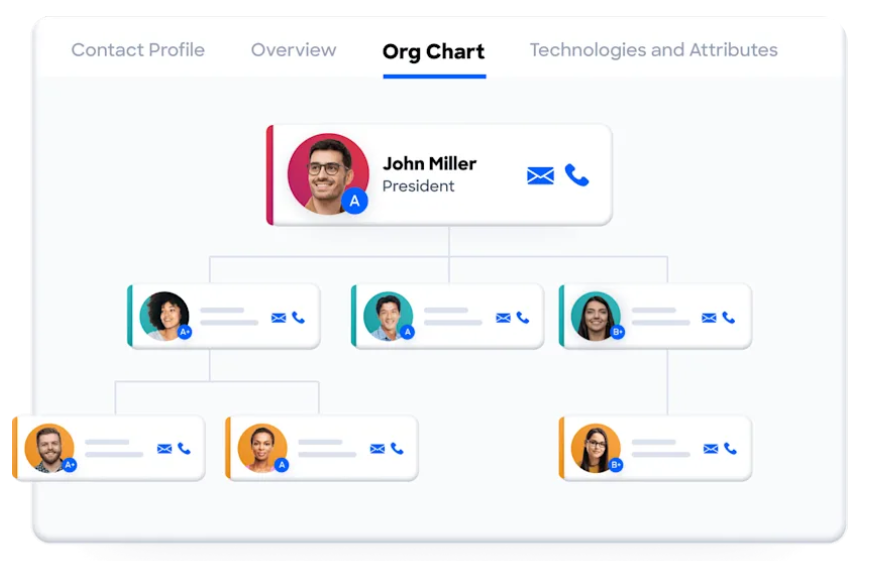
ZoomInfo reframes the question. Instead of storing the contacts you've gathered, it provides access to 500M contacts and 100M companies you can search, filter, and export into any CRM. Each record comes with verified direct-dial phone numbers, business email addresses, company context, technographics, and org chart data. Capsule and HubSpot help you organize the contacts you have; ZoomInfo helps you find the contacts you need.

Source: ZoomInfo
The practical difference: a salesperson using Capsule or HubSpot opens a contact record and sees what they've logged. A salesperson using ZoomInfo opens an account and sees who the decision-makers are, what technology the company runs, whether they've recently raised funding, and whether they're researching solutions in your category.
Vensure scaled prospecting using ZoomInfo's data: "ZoomInfo gives us the information we need to execute. We don't have to go through and spend our time digging. It's already there, so we can be three steps ahead." (Vensure case study)
Pipeline management vs. pipeline intelligence
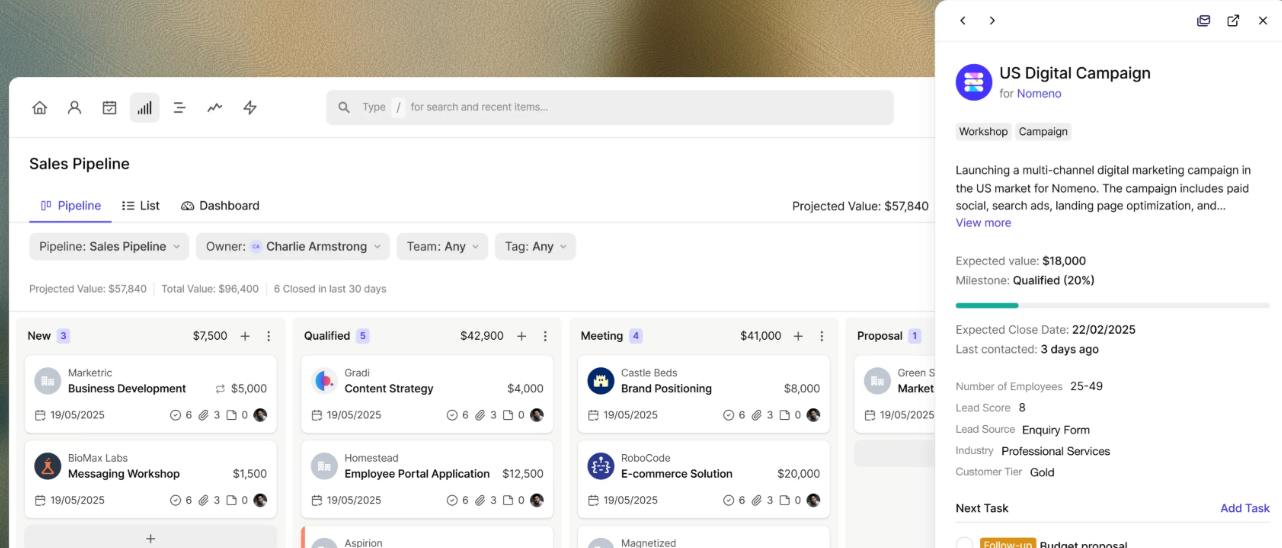
Capsule's sales pipeline is straightforward. Deals sit on a kanban board where you drag them between custom milestones. Each milestone has a configurable probability percentage that feeds into revenue forecasting.
Source: Capsule
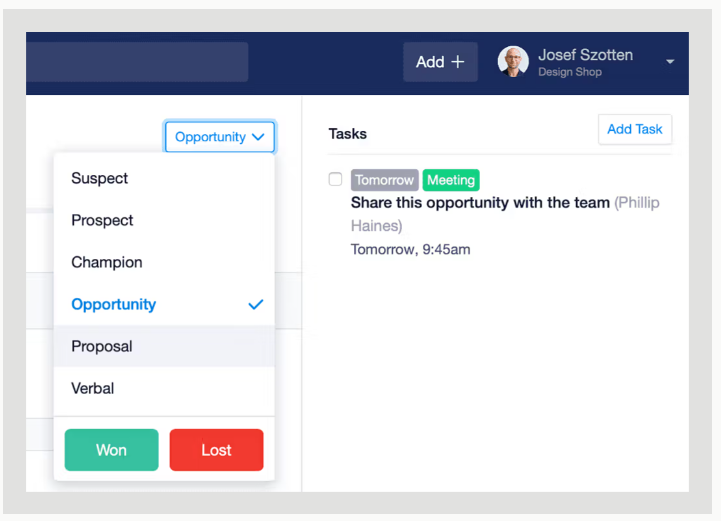
A useful touch: stale opportunity detection flags deals that haven't moved, with thresholds you set per stage. A deal in "Proposal Sent" might go stale after three days, while "Early Inquiry" gets two weeks. For small sales teams, this visual simplicity works.
Source: Capsule
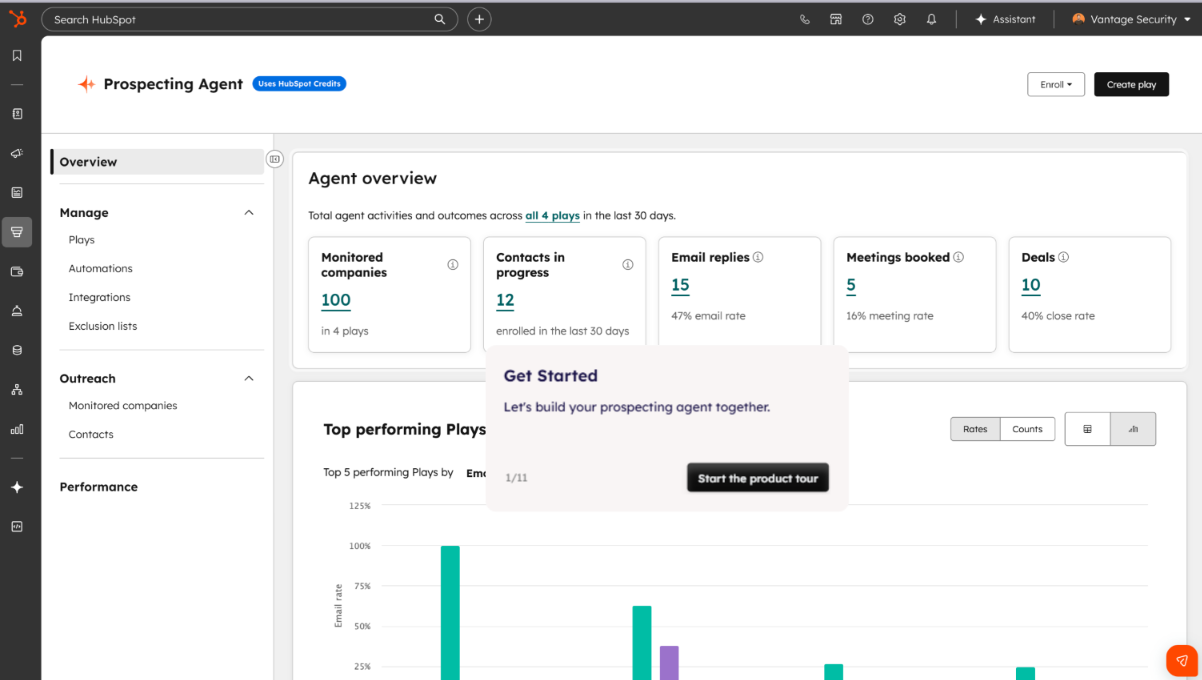
HubSpot's pipeline operates at a different altitude. Its Sales Hub adds AI deal scoring, predictive forecasting, conversation intelligence, and a Breeze Prospecting Agent that monitors buying signals and drafts personalized outreach. Sequences automate multi-step outreach with emails, calls, and LinkedIn tasks. For teams with dedicated sales staff, HubSpot's pipeline is less a tracking tool and more an execution engine.
Source: HubSpot
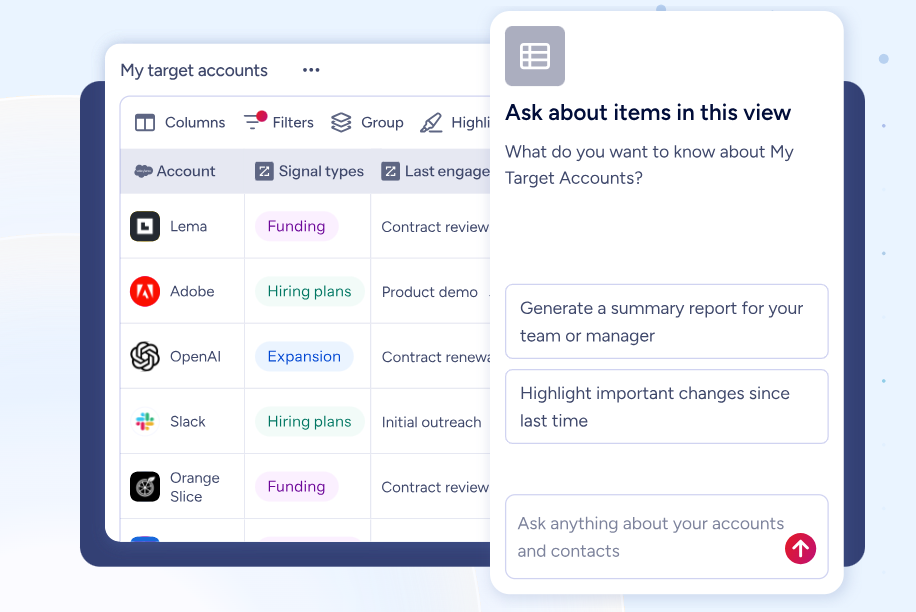
ZoomInfo's GTM Workspace takes a different approach. Instead of waiting for reps to populate the pipeline, it presents a prioritized feed of accounts already showing buying signals.
Source: ZoomInfo
The GTM Context Graph processes 1.5B+ data points daily to surface why a deal is moving (a CFO joined the last call and asked ROI questions) or why it's stalling (a champion went quiet during a budget battle). AI agents handle account research, draft outreach, update CRM fields, and surface next actions without the rep switching between tools.

Source: ZoomInfo
The distinction matters most at scale. When you're managing 20 deals, Capsule's stale-deal alerts are enough. When you're managing 200, HubSpot's automation prevents things from slipping through cracks. When you need to know which of those 200 accounts are in-market and why, ZoomInfo provides answers that neither CRM was built to generate.
Seismic's sales team attributed 39% of active pipeline to opportunities identified or influenced by ZoomInfo signals, boosted productivity by 54%, and saved 11.5 hours per week per seller. (Seismic case study)
Automation capabilities reflect different audiences
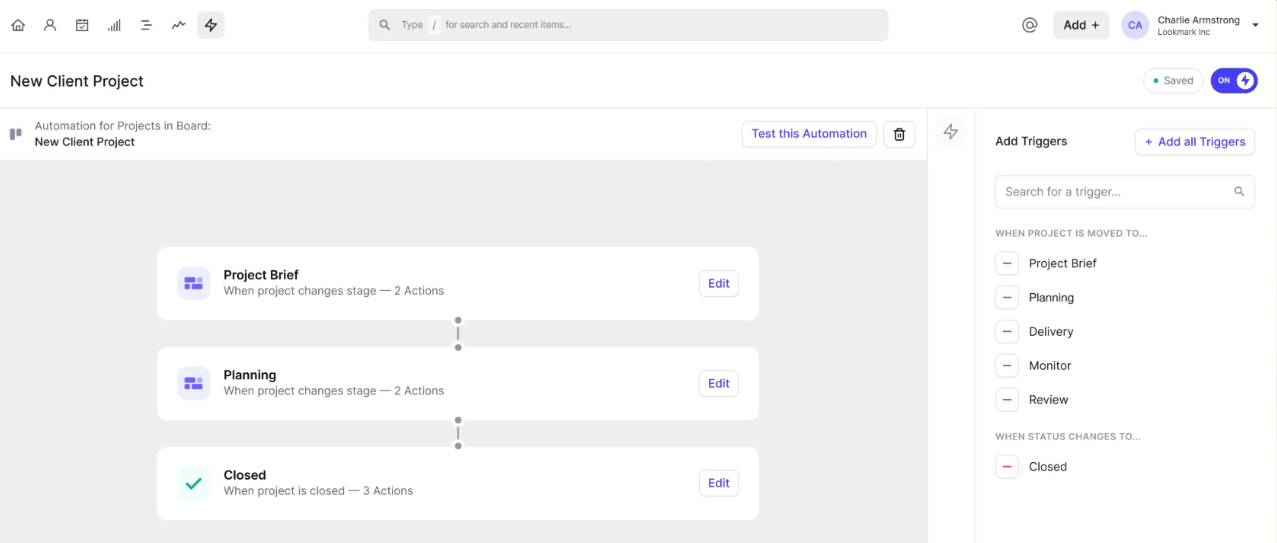
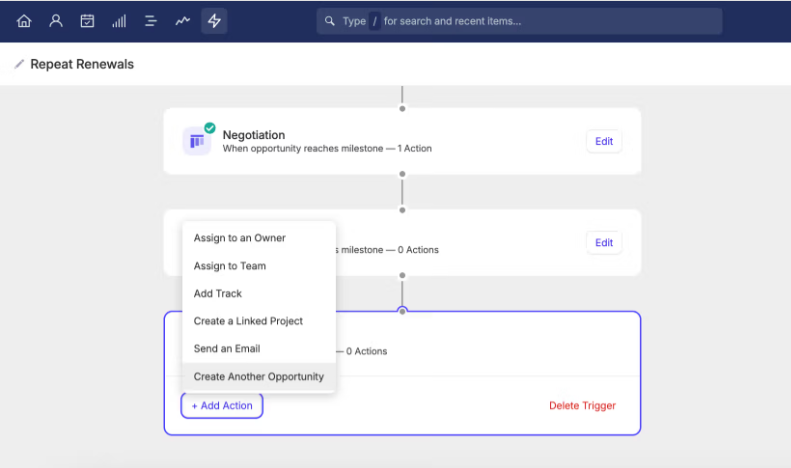
Capsule's automation is limited by design. Workflow Automations fire when an opportunity reaches a specific milestone or is marked won or lost. Actions include assigning to a user, applying a task sequence (Track), sending an email template, or creating a linked project.
Source: Capsule
The Track-completion gating feature is clever: a deal can't advance until every required checklist item is done. But there's no conditional branching, no time delays, and no activity-triggered automation. Automation requires the Growth plan.
Source: Capsule
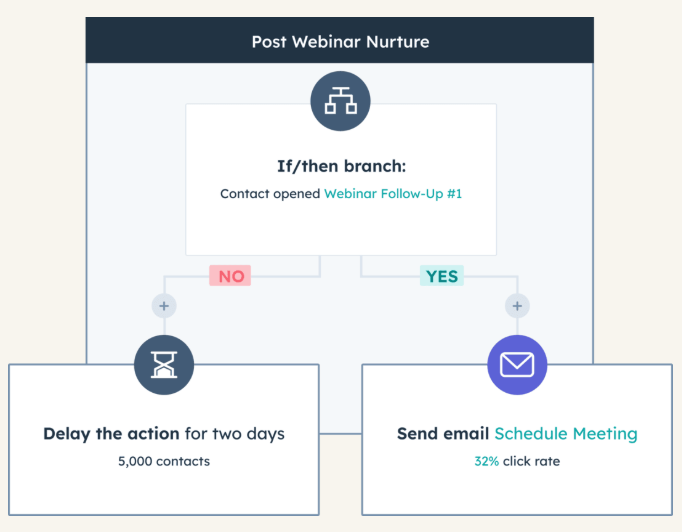
HubSpot's marketing automation is a different category. Visual workflow builders support multi-step, branching nurture sequences triggered by any contact behavior, lifecycle stage, or form fill. The platform handles email marketing, social media scheduling, landing page creation, audience segmentation, and multi-touch attribution, all feeding data back into the Smart CRM. For companies running content-driven inbound strategies, HubSpot's marketing engine is strong.
Source: HubSpot
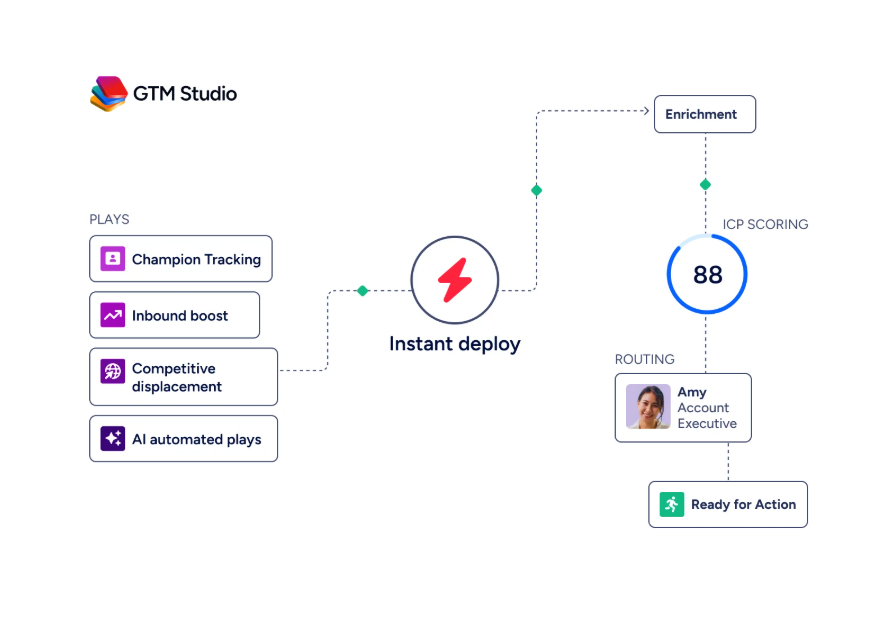
ZoomInfo's automation operates at the intelligence layer. GTM Studio lets marketers and RevOps teams define audiences in natural language, launch multi-channel plays (email, calls, ads, direct mail) triggered by buyer behavior, and activate pre-built plays like inbound acceleration, champion tracking, and competitive displacement. Expansion plays that used to take three weeks now launch in 30 minutes. The plays improve as prospects engage: every click, open, and reply refines targeting automatically.
Source: ZoomInfo
For a five-person consulting firm, Capsule's automation handles the essentials. For a marketing team running campaigns across channels, HubSpot's automation is hard to match. For B2B teams that need campaigns targeting accounts showing buying intent right now, ZoomInfo's signal-driven orchestration adds what campaign automation alone can't.
The data enrichment gap
How each platform handles data enrichment reveals its priorities.
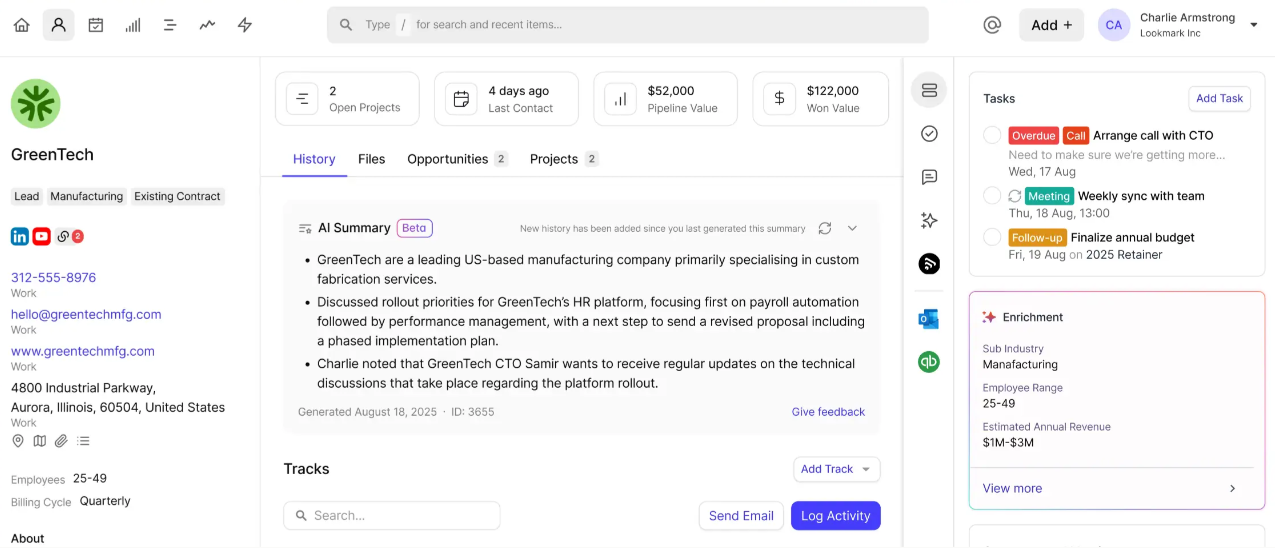
Capsule's AI Business and Contact Enrichment populates company records with industry, employee range, location, and estimated revenue. Contact enrichment adds job roles, LinkedIn profiles, and missing contact details. It fills gaps in records you've already created, with clear quotas: 100 enrichments per user on Growth, 200 on Advanced and Ultimate.
Source: Capsule
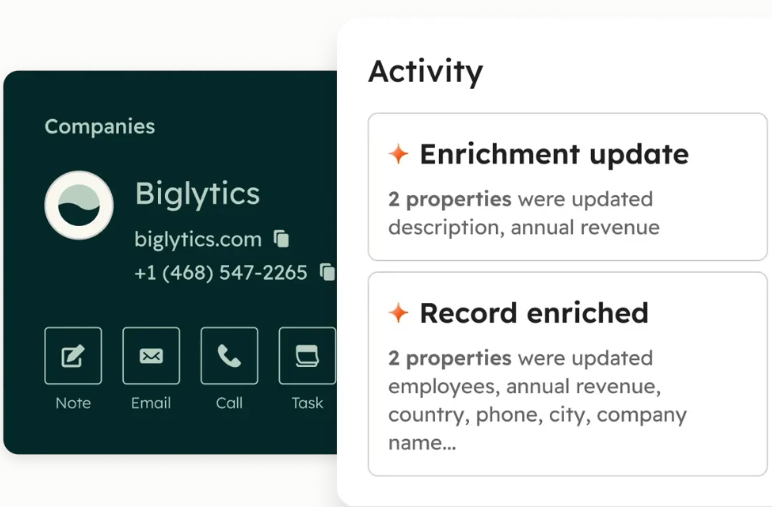
HubSpot's Smart CRM enrichment is broader. AI pulls data from email threads, recorded calls, company websites, and HubSpot's proprietary dataset. Records re-enrich automatically when key properties change. The Data Agent answers natural-language questions by searching across CRM records, call recordings, emails, and web sources.
Source: HubSpot
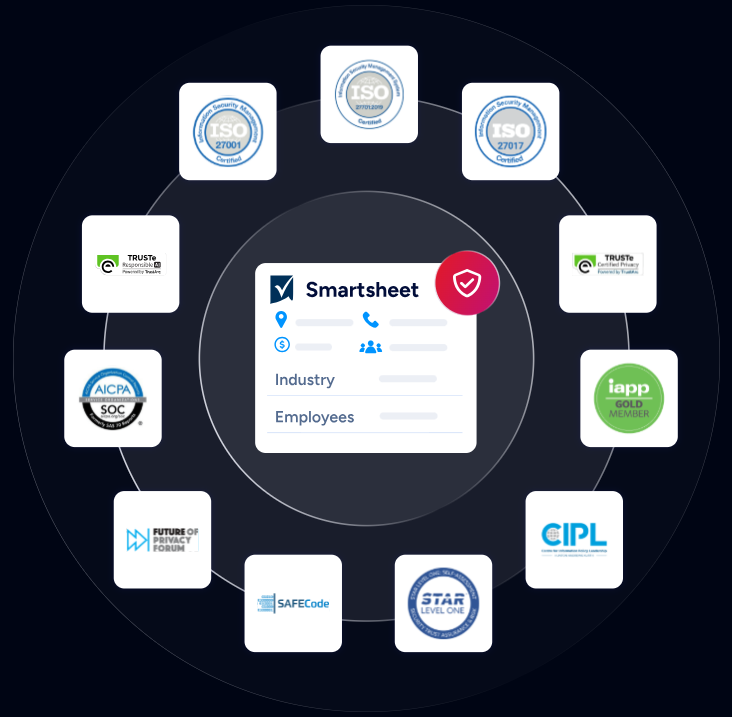
ZoomInfo operates at a different scale. Its data pipeline scans 28 million site domains daily, draws from a community of 200,000+ users who share data back, and employs 300+ human researchers. First-party data reaches up to 95% accuracy. In a Fortune 500 competitive RFP analyzing 25 million contacts across vendors, the independent consultant concluded that "no other competitor came even close."
Source: ZoomInfo
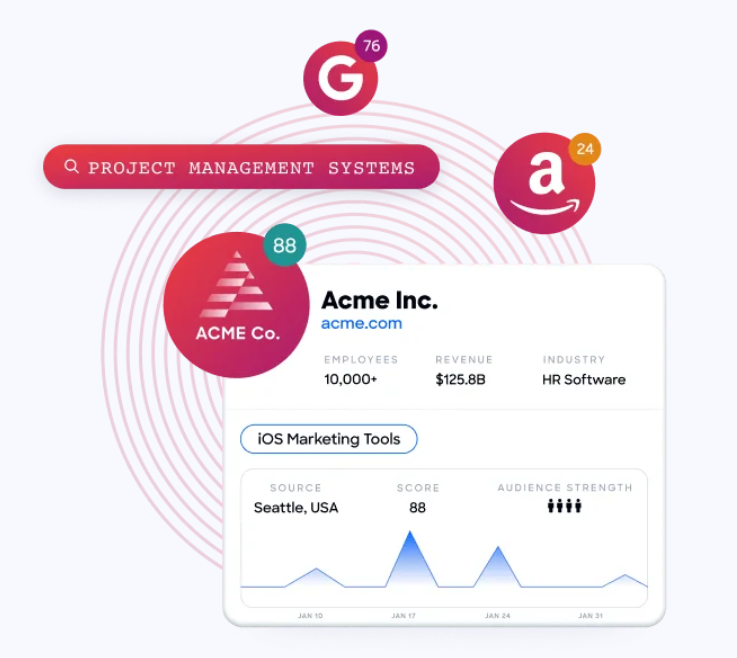
Beyond static enrichment, ZoomInfo provides dynamic signals. Buyer Intent tracks signals from 210 million IP-to-Organization pairings and 6 trillion+ new keyword-to-device pairings sourced monthly.
Source: ZoomInfo
WebSights resolves anonymous website traffic to companies and identifies buying team members. Technographics profiles the tech stacks of 30+ million companies across 30,000+ technologies. Capsule and HubSpot enrich the records you have. ZoomInfo tells you which records matter right now.
Source: ZoomInfo
Snowflake feeds over 70 ZoomInfo company and technographic data fields into their Account Propensity Scoring model. Accounts monitored using ZoomInfo-powered scores showed 90% higher opportunity open rates and 2x higher customer conversion rates. (Snowflake case study)
Pricing structures serve different buyers
Capsule's pricing is straightforward. A permanent free plan covers 2 users and 250 contacts. Paid plans scale per user per month (billed annually), with the Starter tier around $21/user/month and the Ultimate tier around $75/user/month. No setup fees, no onboarding costs, 14-day free trial with no credit card required. The Growth plan (their recommended tier) unlocks workflow automations, advanced reporting, multiple pipelines, and AI enrichment. For a five-person team on Growth, the monthly bill stays manageable.
HubSpot's pricing is more complex. The permanent free CRM is generous (unlimited contacts up to 1M records), but paid plans scale across multiple dimensions. Sales Hub runs from $9/seat/month to $150/seat/month (Starter through Enterprise). Marketing Hub jumps to $800/month or $3,600/month (Professional and Enterprise) as flat-rate tiers. Mandatory onboarding fees add $1,500 to $7,000 depending on the product and tier. A hidden cost: when subscribing to multiple Hubs at different tiers, all Core Seats are billed at the rate of the highest tier. For a growing company, these costs compound fast.
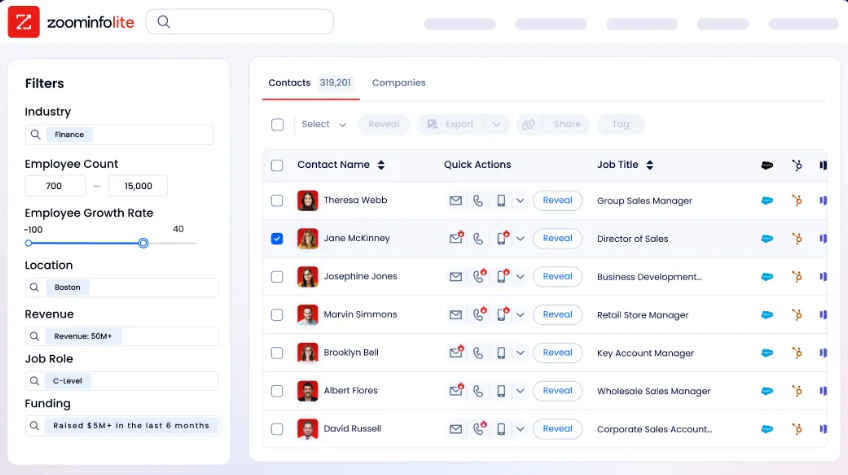
ZoomInfo uses custom, consumption-based pricing with no publicly listed prices. Costs scale around seats, data credits (1 credit = 1 export), features, and AI activity.
The ZoomInfo Lite free tier provides permanent access to the B2B database with 10 monthly exports, no credit card required. A 7-day free trial of the full platform is also available. ZoomInfo is priced for enterprise and upper mid-market buyers, and the ROI case rests on outcomes: Thomson Reuters increased closed-won deals by 40%, and Databricks reached prospects 50% faster.
Source: ZoomInfo
The pricing question isn't just about monthly cost. It's about what you're paying for. Capsule costs less because it does less. HubSpot costs more because it does more. ZoomInfo costs what it costs because it provides data and intelligence that neither CRM generates on its own.
Integration ecosystems show different strategies
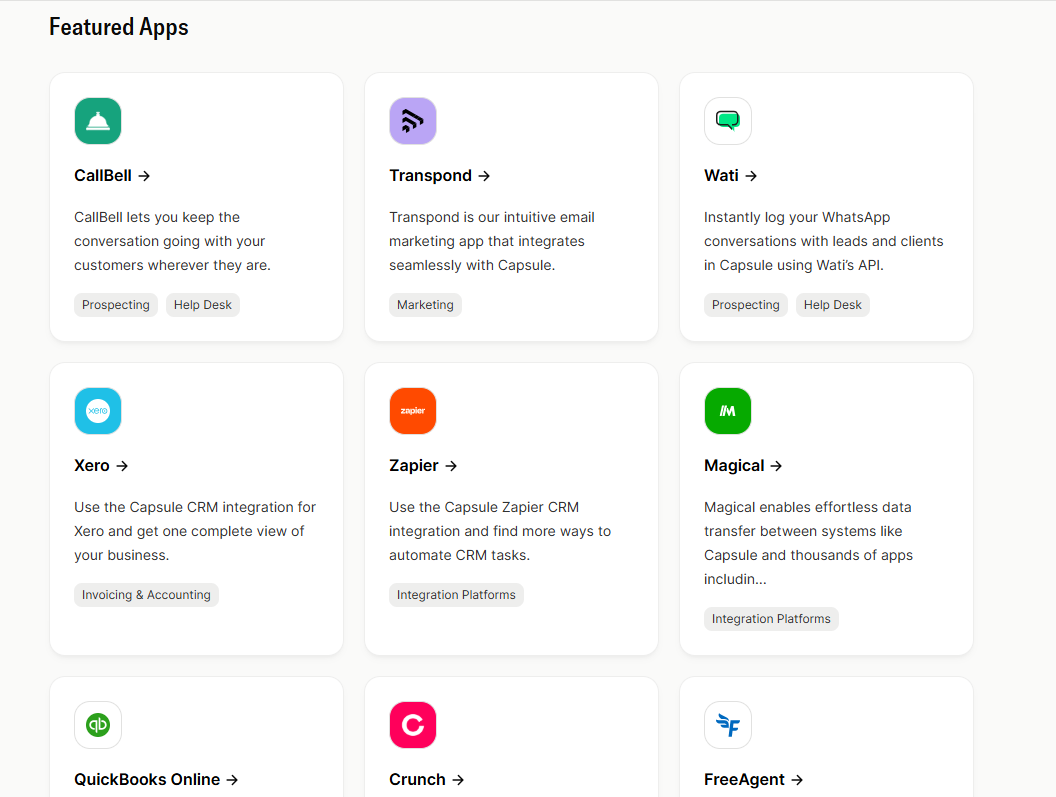
Capsule offers 100+ integrations focused on the tools small businesses actually use: QuickBooks, Xero, Gmail, Outlook, Mailchimp, and Zapier. Accounting integrations are a strength, with invoice data surfacing on contact records.
Source: Capsule
The REST API supports full CRUD operations with OAuth 2.0 authentication. For a small business, this covers the essentials.
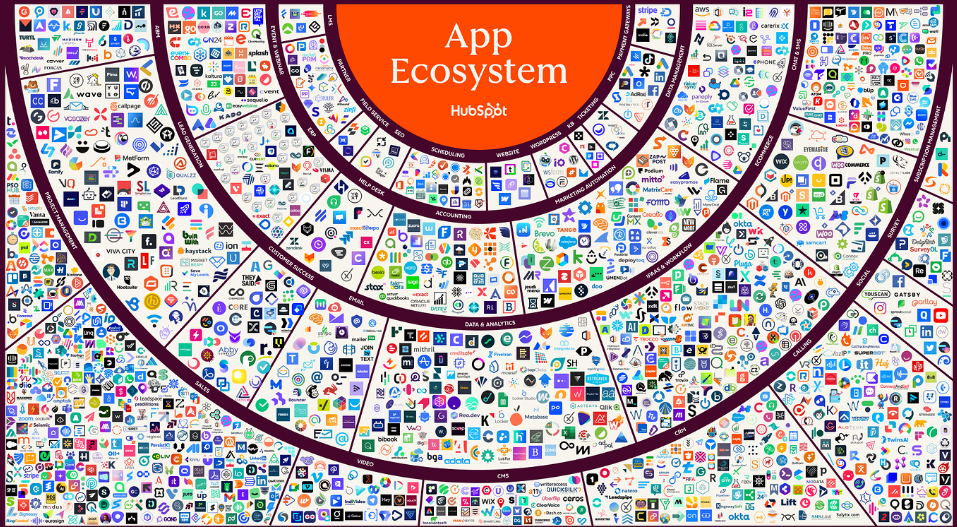
HubSpot's App Marketplace has over 2,000 integrations with 2.5 million active installs. The developer platform supports UI extensions, custom objects, and programmable automation (JavaScript and Python natively in workflows). For companies with complex tech stacks, HubSpot's integration breadth is an advantage.
Source: HubSpot
ZoomInfo approaches integrations differently. Rather than connecting to everything, it integrates with the platforms that matter for GTM execution: Salesforce, HubSpot, Microsoft Dynamics, Outreach, Salesloft, and cloud data platforms like Snowflake and AWS.
Source: ZoomInfo
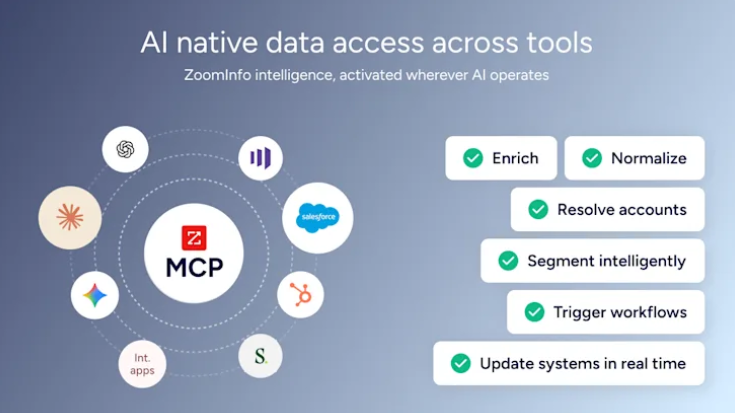
The Enterprise API and MCP server make ZoomInfo's data accessible to any custom tool or AI agent. API access is included in all relevant plans. ZoomInfo works alongside your CRM (whether Capsule, HubSpot, or Salesforce) rather than replacing it, providing the intelligence while the CRM handles relationship management.
Source: ZoomInfo
BDO Canada activated ZoomInfo data within their internal systems: "The plug-and-play aspect of the API means I can integrate it very easily into any process and get information at a moment's notice." The integration delivered an 87% reduction in time spent on internal data dashboard updates. (BDO Canada case study)
AI features reflect each platform's ambitions
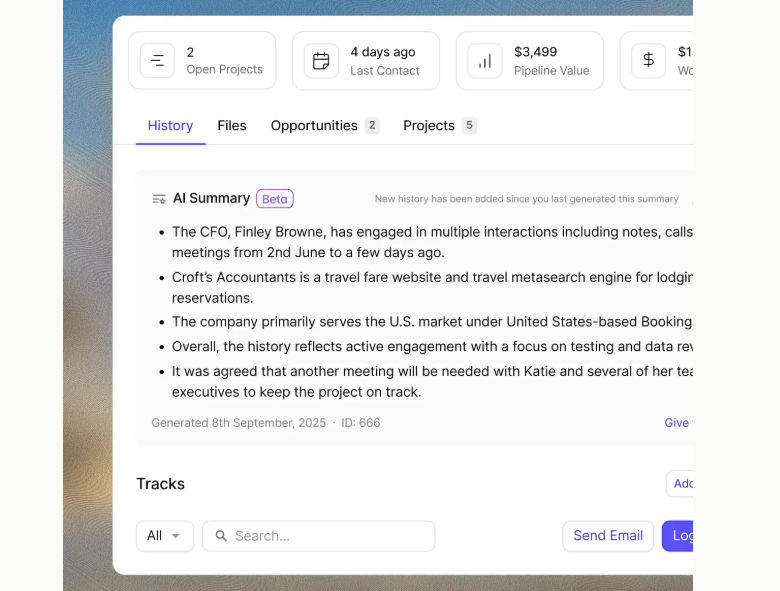
Capsule's approach to AI is modest. CEO Steven Ledgerwood calls it "sensible AI": features that remove admin burden rather than add complexity. AI Email Assist drafts follow-ups from a short prompt. AI Summaries compile the last 50 activities on any record into a readable brief.
Source: Capsule
The AI Pipeline Generator builds custom pipeline stages from a plain-text business description. All features are optional, and you can turn them off at the account level. For small teams that want AI without a learning curve, Capsule delivers.
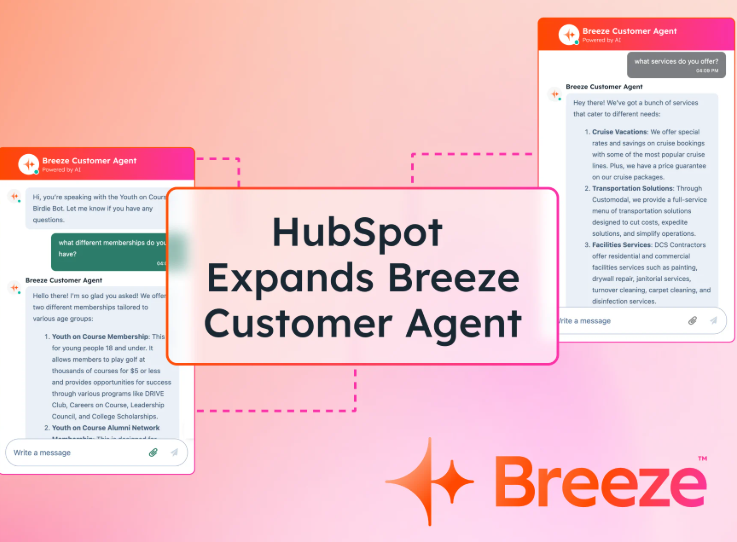
HubSpot's Breeze AI is more ambitious. The Customer Agent resolves over 50% of customer conversations autonomously. The Prospecting Agent monitors buying signals and drafts personalized outreach using the complete HubSpot customer history.
Source: HubSpot
The Data Agent answers natural-language questions about customers by analyzing CRM data, call recordings, and web sources. These agents run on HubSpot Credits, included by plan tier with additional credits available for purchase. Several features (AI-Powered Segmentation, Marketing Studio, Flexible CRM Views) are still in Beta.
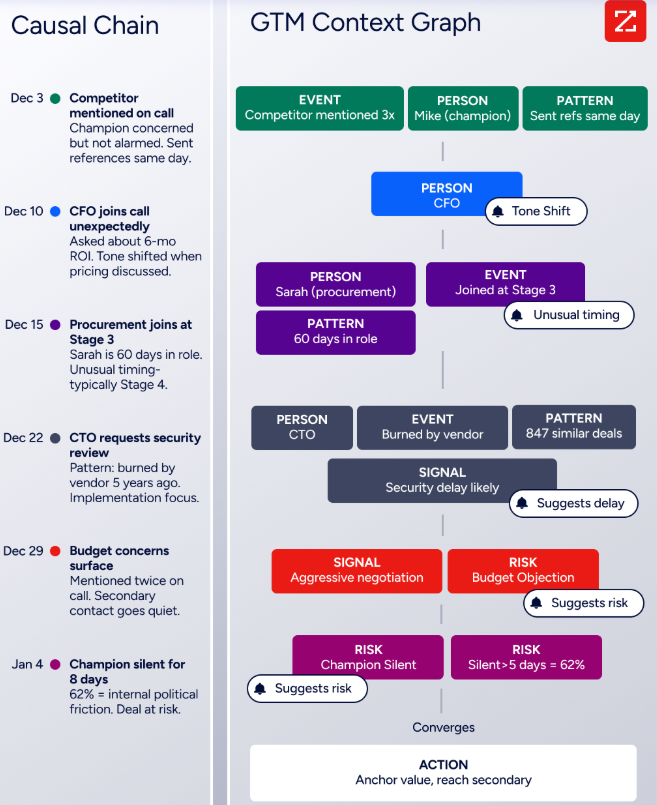
ZoomInfo's AI is built on a different foundation. The GTM Context Graph goes beyond your CRM data: it combines your internal records with ZoomInfo's third-party intelligence (500M contacts, intent signals, technographics, org charts) to reason about why deals move or stall.
Source: ZoomInfo
As CPO Dominik Facher writes: "The CRM recorded the state change. It has no record of why it happened." The GTM Context Graph captures that context: which stakeholders champion or block deals, what actions led to outcomes, and what patterns across thousands of similar deals suggest will happen next.
The AI gap comes down to data. Capsule's AI knows what you've logged. HubSpot's AI knows what's in the HubSpot platform. ZoomInfo's AI knows what's happening across the B2B market and correlates it with your pipeline. That difference separates email drafting from deal intelligence.
For a direct head-to-head on how HubSpot and ZoomInfo compare across data, AI, and GTM capabilities, see our HubSpot vs. ZoomInfo comparison.
Capsule vs. HubSpot vs. ZoomInfo: Which should you choose?
The right choice depends on what's limiting your growth.
Choose Capsule if:
You're a small service business with 1-20 people
You want a CRM your team will use within hours
Contact management and pipeline tracking are your primary needs
Budget matters and you need straightforward pricing
You value simplicity over feature depth
Choose HubSpot if:
You need marketing automation, sales tools, and customer service in one platform
Your company is scaling and needs infrastructure that grows with you
Content-driven inbound marketing is central to your strategy
You have the budget for professional or enterprise tiers
You want a large integration ecosystem and certified partner network
Choose ZoomInfo if:
Your biggest challenge is finding and winning new B2B customers, not just managing existing ones
You need verified contact data, buyer intent signals, and account intelligence
You want AI that understands why deals move, not just what happened in the CRM
Your sales and marketing teams need a shared intelligence layer
You want data and intelligence that powers any tool through APIs and MCP
See ZoomInfo in action with a free trial.
The smartest approach may be a combination. Many B2B companies use a CRM (Capsule or HubSpot) for relationship management and ZoomInfo for the intelligence that feeds it. ZoomInfo integrates natively with HubSpot and works with any CRM through its API. The CRM tells you where your deals stand. ZoomInfo tells you which deals to pursue and why they'll close.
Capsule vs. HubSpot vs. ZoomInfo FAQ
What is the core difference between Capsule, HubSpot, and ZoomInfo?
Capsule is a simple CRM for small businesses that need contact management, sales pipeline tracking, and project management in one clean interface. HubSpot is a full customer platform with six integrated hubs covering marketing, sales, service, content, data, and commerce, built for growing companies. ZoomInfo is an AI GTM intelligence platform with 500M searchable B2B contacts, buyer intent signals, and a GTM Context Graph that tells teams who to target, when to engage, and why deals move or stall.
Which platform is cheapest to get started with?
All three offer free tiers. Capsule's free plan covers 2 users and 250 contacts. HubSpot's free CRM supports unlimited contacts (up to 1M records) with 2 user seats. ZoomInfo Lite provides permanent free access to the B2B database with 10 monthly exports. For paid plans, Capsule is the most affordable at roughly $21-75 per user per month. HubSpot's paid plans range from $9/seat/month (Starter) to $3,600/month (Marketing Hub Enterprise), with mandatory onboarding fees at Professional and Enterprise tiers. ZoomInfo uses custom consumption-based pricing.
Can ZoomInfo replace a CRM like Capsule or HubSpot?
ZoomInfo is not a traditional CRM. Its GTM Workspace provides a seller execution interface, and GTM Studio handles marketing orchestration, but most companies use ZoomInfo alongside a CRM rather than instead of one. ZoomInfo integrates natively with HubSpot and Salesforce (and other CRMs via API), feeding verified contact data, intent signals, and account intelligence into the CRM. The CRM manages the relationship; ZoomInfo provides the intelligence that makes it productive.
Which platform has the strongest AI capabilities?
Each platform approaches AI differently. Capsule focuses on practical AI that reduces admin work: email drafting, contact enrichment, and record summaries. HubSpot's Breeze AI is broader, with agents that handle customer support, prospect outreach, and data queries across its platform. ZoomInfo's AI is differentiated by the data it reasons over. Its GTM Context Graph combines 500M contacts, intent signals, conversation intelligence, and CRM data to understand why deals progress, not just what state they're in. For B2B prospecting and deal intelligence, ZoomInfo's AI operates with the broadest context available.
How do the platforms handle data enrichment?
Capsule offers AI-powered enrichment for contact and company records, with quotas of 100-200 enrichments per user depending on plan. HubSpot's Smart CRM enriches records from emails, calls, and web sources, with continuous auto-enrichment. ZoomInfo operates at a different scale: its GTM Context Graph processes 1.5 billion data points daily, and its database spans 500M contacts and 100M companies, verified by 300+ human researchers with up to 95% accuracy on first-party data. ZoomInfo also provides buyer intent signals, technographic data, and org charts that neither Capsule nor HubSpot generates.
Which platform is best for small businesses with limited technical resources?
Capsule is the clear choice for small, non-technical teams. G2 reviewers rate its ease of use at 9.4 out of 10, and most users report being productive on their first day. HubSpot's Starter tier is accessible, but the platform grows complex at Professional and Enterprise levels. ZoomInfo offers a redesigned onboarding program and ZoomInfo University for training, though it serves B2B sales and marketing teams with dedicated roles rather than generalist small businesses.
Do any of these platforms offer buyer intent data?
Only ZoomInfo provides comprehensive buyer intent data. Its intent engine tracks signals from 210 million IP-to-Organization pairings and 6 trillion+ keyword-to-device pairings sourced monthly. Guided Intent (exclusive to ZoomInfo) identifies topics historically correlated with deal success rather than requiring manual topic selection. HubSpot offers some behavioral tracking within its platform but does not provide third-party B2B intent data at ZoomInfo's scale. Capsule does not include intent data.
How do the three platforms compare on security and compliance?
ZoomInfo holds ISO 27001, ISO 27701, SOC 2 Type II, TRUSTe GDPR and CCPA certifications, all renewed annually. HubSpot has SOC 2 Type II, HIPAA attestation, GDPR and CCPA compliance, EU Cloud Code of Conduct Level 2 certification, and TRUSTe certification. Capsule hosts on AWS with data encrypted in transit and at rest, maintains PCI-DSS compliance, offers GDPR compliance documentation, and undergoes regular independent penetration testing. All three platforms offer two-factor authentication and SSO options.
More CRM comparisons worth a look:
