
Choosing between HubSpot and Marketing 360 often comes down to five questions:
Do you want to run marketing yourself with software, or hand everything to a team that executes for you?
Is your priority automating multi-step campaigns, or getting marketing done without learning new tools?
Do you need a platform that scales from startup to enterprise, or one built for local and small businesses?
How important is it that your marketing data connects directly to sales prospecting and pipeline intelligence?
Are you comparing marketing platforms, or do you need better data about who to market to?
In short, here's what we recommend:
HubSpot is the platform for marketing, sales, and service teams that want to own their growth engine. Its six connected hubs share a single Smart CRM, giving teams one view of every contact from first website visit through closed deal and ongoing support. Marketing Hub alone covers email automation, landing pages, social media, SEO, ad management, and multi-touch attribution. With 288,706 customers and over 2,000 app integrations, HubSpot is a mature ecosystem.
But its strength comes with complexity: pricing scales steeply as you add hubs and seats, mandatory onboarding fees apply at Professional and Enterprise tiers, and getting full value requires a team willing to learn and configure the platform.
Marketing 360 is built for the small business owner who wants to stop thinking about marketing. Instead of handing you software and saying "go," Marketing 360 assigns a dedicated Marketing Success Manager backed by content, ad, social, and design specialists who execute on your behalf. The platform covers websites, CRM, email, ads, social media, reputation management, listings, and payments under one login. It has served 40,000+ businesses and manages over $124.1M in ad spend.
But service quality depends on the team you're assigned, pricing is not publicly disclosed, and the platform lacks the automation and customization that growing mid-market companies need.
Both platforms help businesses attract and convert customers. But neither solves a problem that sits upstream of all marketing: knowing who your best prospects are, what signals indicate they're ready to buy, and how to reach decision-makers with verified contact data. That's where ZoomInfo comes in.
ZoomInfo is a B2B data and go-to-market platform built on 500M contacts, 100M companies, 135M+ verified phone numbers, and 200M+ verified business emails. Its GTM Context Graph (an intelligence layer processing 1.5B+ data points daily) connects this data with your CRM records, conversation transcripts, and behavioral signals to reveal not just what's happening in your pipeline, but why deals move or stall.
For teams using HubSpot or Marketing 360 to execute campaigns, ZoomInfo provides the targeting intelligence that makes those campaigns precise: verified contacts, buyer intent signals, and account insights that turn generic outreach into relevant conversations. You access it through the GTM Workspace for sales execution, GTM Studio for marketing orchestration, or the API and MCP that pipe the same intelligence into any tool in your stack, including HubSpot.
If better targeting data and buyer intelligence sound like the missing layer in your marketing stack, see how ZoomInfo works.
HubSpot vs. Marketing 360 vs. ZoomInfo at a glance
HubSpot | Marketing 360 | ZoomInfo | |
|---|---|---|---|
Core approach | Self-serve marketing automation platform | Done-for-you marketing with software | B2B data and GTM intelligence |
Marketing automation | Visual workflows, branching sequences | Basic email automation, team handles execution | GTM plays triggered by intent and buying signals |
CRM | Full-featured Smart CRM with AI enrichment | Basic contact and deal management | Enriches and activates data inside your existing CRM |
Data quality | CRM data only as good as what teams input | CRM data only as good as what teams input | 500M contacts, multi-source verification, up to 95% accuracy |
Buyer intent signals | Limited (website activity, email engagement) | Limited (call tracking, form fills) | 210M IP-to-Organization pairings, third-party intent, Guided Intent |
Ad management | Native social and search ad tools | Managed multi-channel ads with dedicated specialist | Native DSP, cross-channel advertising with 300+ targeting attributes |
Pricing transparency | Published tiers; complex per-seat, per-hub model | Not publicly disclosed; quote-based | Custom-quoted; consumption-based |
Free option | Permanent free CRM and tools | Free trial, no credit card required | ZoomInfo Lite (permanent free tier) + 7-day trial |
Integrations | Zapier + limited native integrations | 120+ native integrations, API, and MCP for any tool | |
Best for | Mid-market teams running their own marketing | Local/small businesses wanting managed execution | B2B teams that need verified prospect data and buyer signals |
DIY software vs. done-for-you services vs. intelligence layer
These three platforms occupy different positions in a marketing stack. Understanding that distinction matters more than any feature comparison.
HubSpot gives you the tools and expects you to use them.
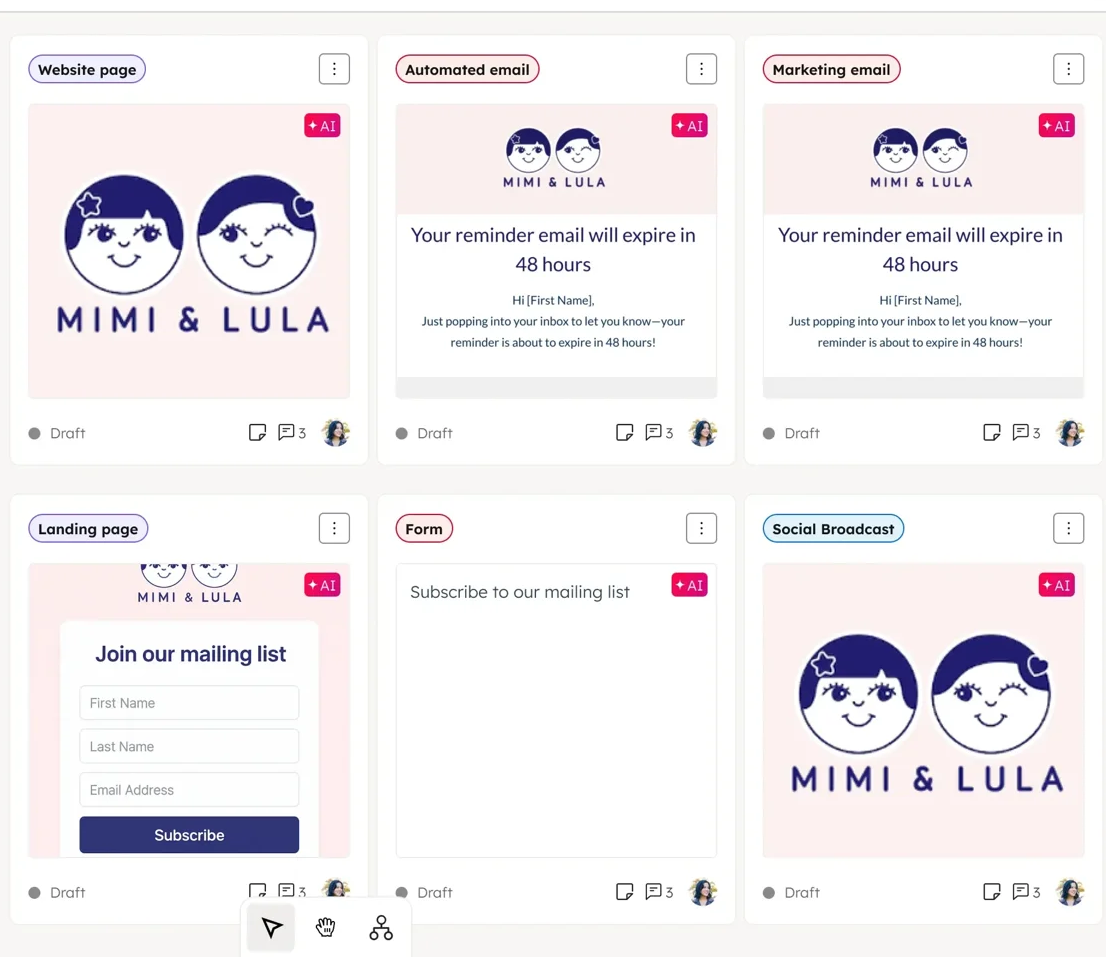
Its Marketing Hub includes a visual workflow builder for automated email sequences, a drag-and-drop landing page editor, social media scheduling, ad management, and multi-touch revenue attribution. You can build branching nurture sequences triggered by a contact's behavior, segment audiences based on dozens of CRM properties, and trace the full path from first ad click to closed deal.
But all of this requires someone on your team who knows what to build, how to configure it, and how to read the results.
Source: HubSpot
Marketing 360 makes the opposite bet.
Instead of handing you a workflow builder, they assign you a team of specialists who do the work. Your Marketing Success Manager coordinates with content writers, ad specialists, social media managers, and designers to execute your marketing. You review reports and provide feedback. For a solo business owner running a dental practice or a painting company, this model eliminates the need to learn marketing software.
But it also means your results depend on the people assigned to your account, not on a system you control.
ZoomInfo operates at a different layer.
It doesn't send your emails or manage your social media. It tells you who your best prospects are, when they're researching solutions, and how to reach the right decision-makers. Its GTM Context Graph processes 1.5B+ data points daily to surface connections between signals and outcomes, so your HubSpot workflows or Marketing 360 campaigns target the accounts most likely to convert. That's a different job than either platform performs.

Marketing automation depth is not close
HubSpot's automation puts it in a different category from Marketing 360.
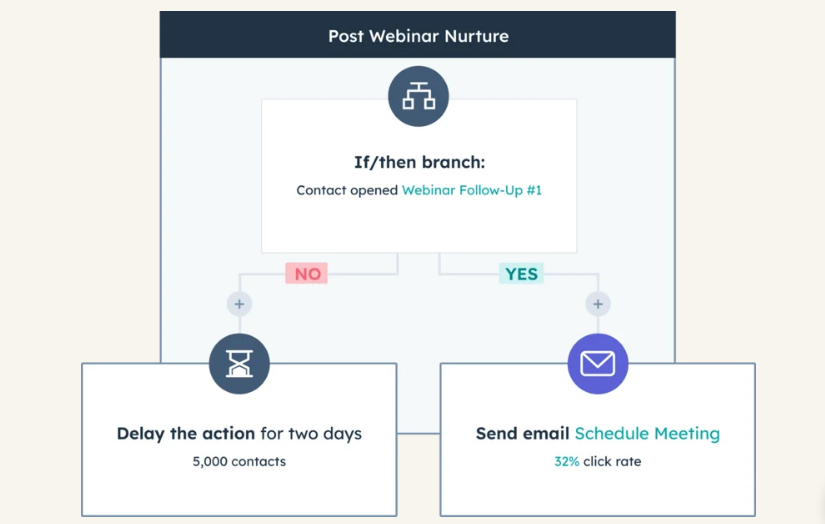
Marketing Hub's workflow builder lets you design multi-step, branching sequences triggered by virtually any contact behavior: form submissions, email clicks, page visits, lifecycle stage changes, deal stage movements, or custom property updates.
You can build a sequence that sends a different email based on which link a prospect clicked, waits three days, checks if they visited your pricing page, and routes them to sales if they did. Personalization tools (currently in beta) use AI to adjust landing pages, emails, and CTAs in real time based on visitor attributes.
Source: HubSpot
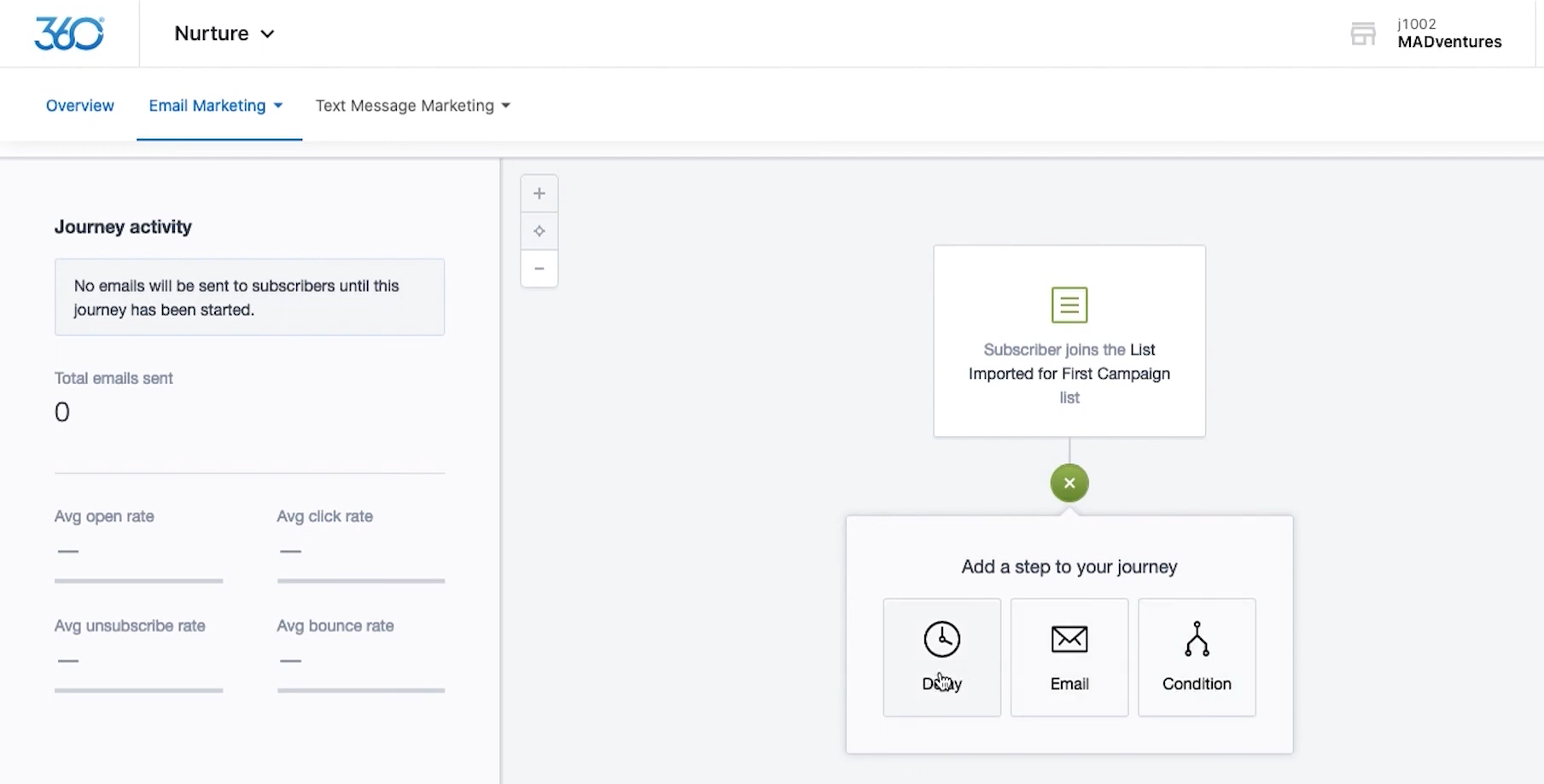
Marketing 360's email tool, Nurture, covers the basics: regular campaigns, A/B testing, CRM-triggered sequences, and scheduling.
But the automation logic is simpler. You won't find the branching, multi-condition workflows that HubSpot offers. Marketing 360 compensates with human execution: instead of building a complex automated sequence yourself, your assigned team builds and sends campaigns for you. This works if your marketing needs are straightforward. It becomes a bottleneck if you need personalized, behavior-driven nurturing that scales without human intervention.
Source: Marketing 360
ZoomInfo approaches engagement from the data side.
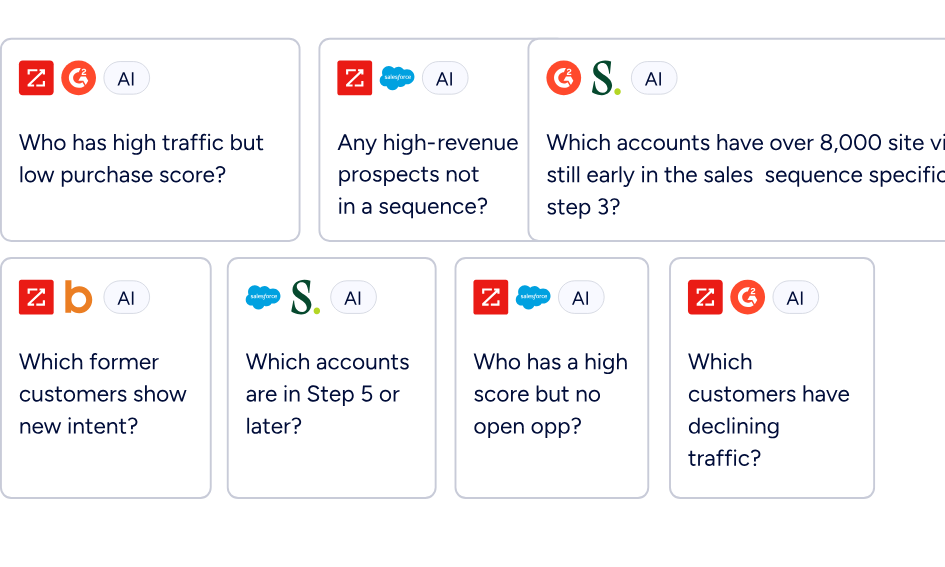
GTM Studio lets marketers define audiences using natural language, then launch multi-channel plays (email, ads, direct mail, calls) triggered by buyer behavior. The plays get smarter as prospects respond.
Where HubSpot automates based on what contacts do inside your system, ZoomInfo triggers action based on what prospects do across the web, including intent signals from third-party research activity.
Source: ZoomInfo
CRM and data: different problems, different solutions
All three platforms include some form of contact management, but they solve different problems.
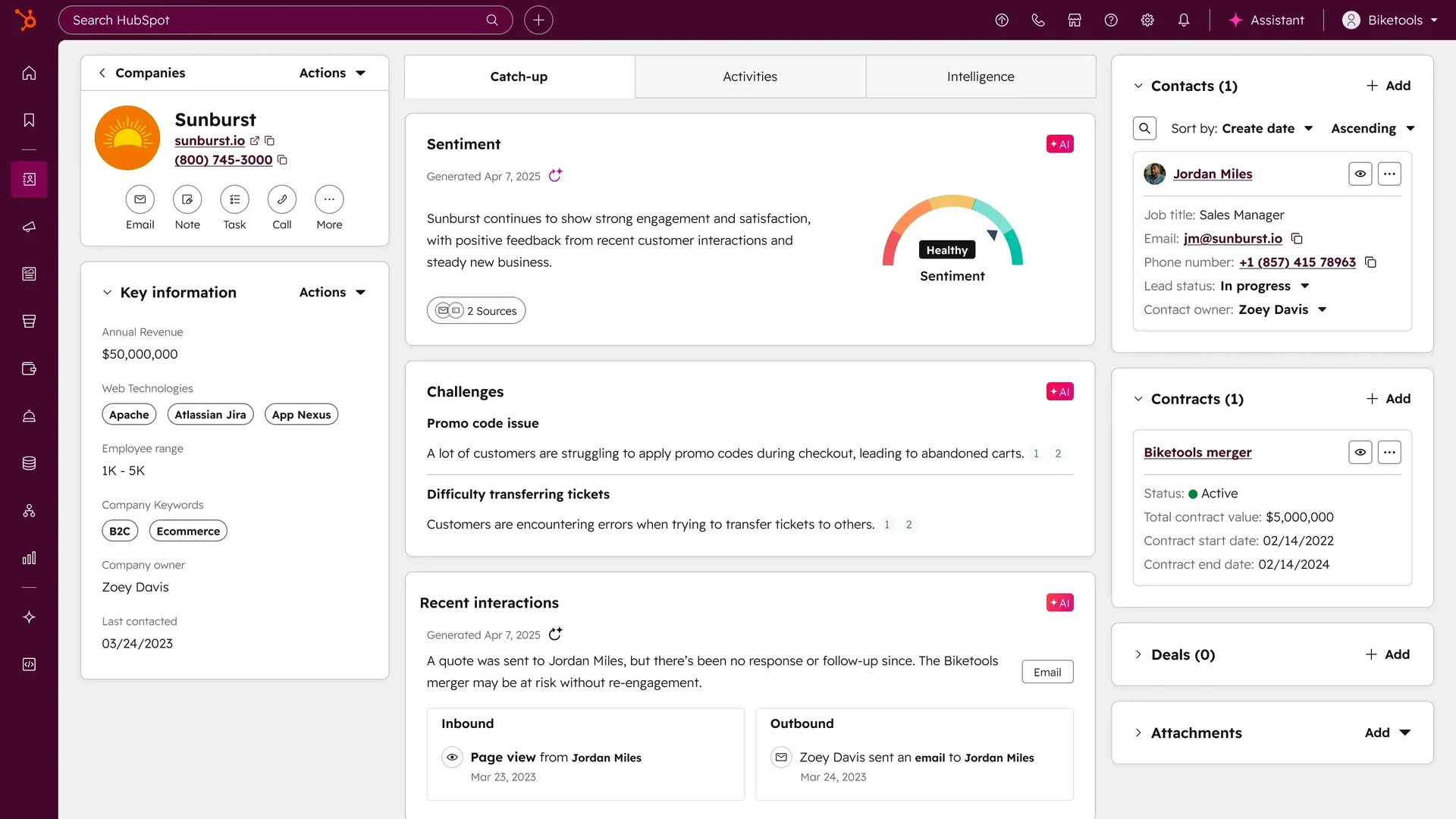
HubSpot's Smart CRM is a full customer database supporting contacts, companies, deals, tickets, and custom objects. AI enrichment pulls data from emails, calls, and web activity.
It handles up to 15 million contacts (expandable to 50 million), with field-level permissions, sandbox environments, and SSO. For companies consolidating their tech stack, HubSpot's CRM is the connective layer: marketing data flows to sales, sales data flows to service, and every team sees the same customer record.
Source: HubSpot
Marketing 360's CRM is simpler.
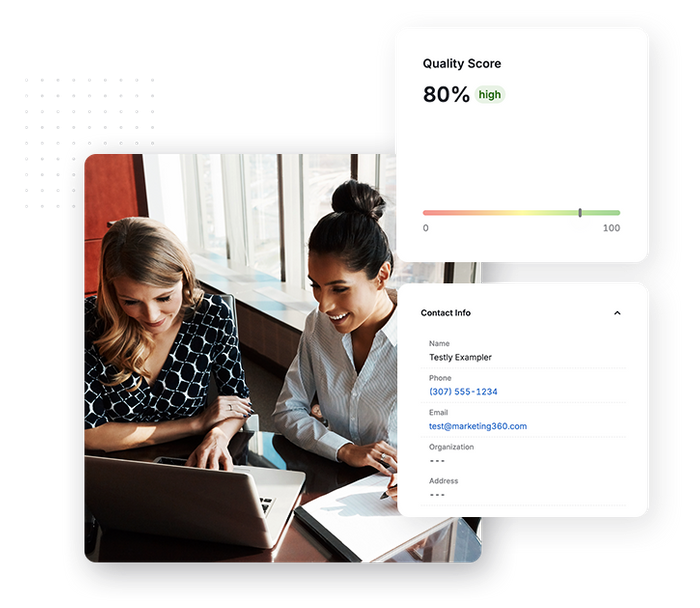
It tracks contacts, deals, tasks, and organizations with customizable fields and stages. Its standout feature for small businesses is Automated Quality Scores, a 0-100 lead scoring system based on tracked behavior. The CRM connects natively with Marketing 360's forms, payments, and email tools.
But it caps at 25,000 contacts on the base plan, and it lacks the custom objects, programmable automation, and enterprise governance features that growing companies need.
ZoomInfo isn't a CRM. It enriches and activates the CRM you already have.
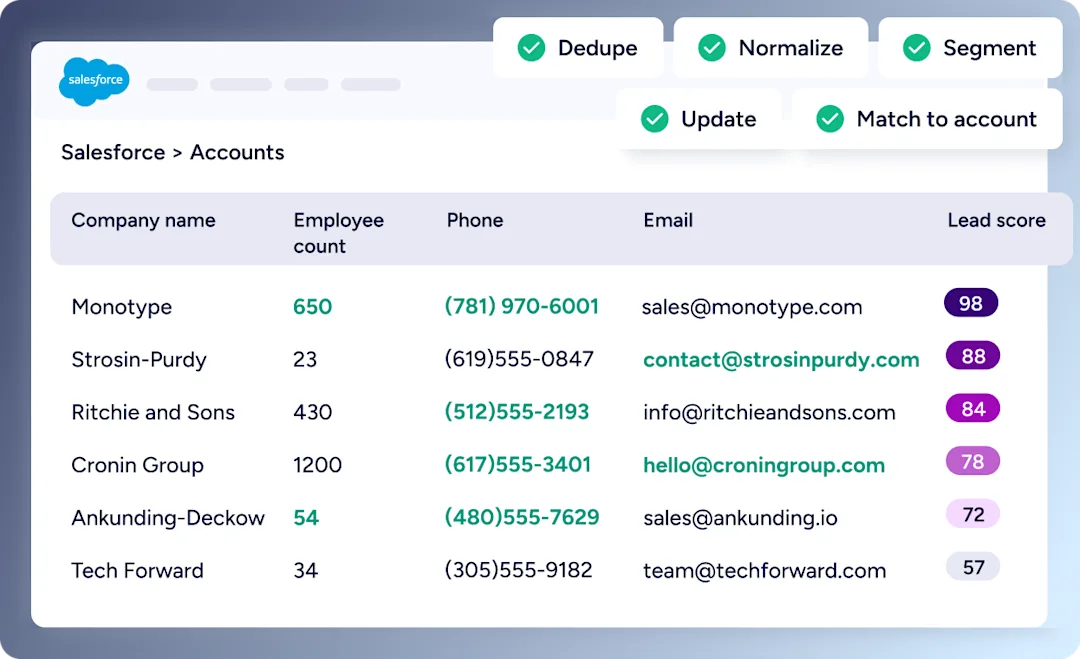
Through native integrations with Salesforce, HubSpot, and Microsoft Dynamics, ZoomInfo appends verified contact data, company attributes, org charts, and technographics to your existing records. Data enrichment workflows from ~60 vendors run through a codeless interface, with perimeter protection that blocks bad data at entry.
The result: your HubSpot CRM (or any other) gets continuously updated with comprehensive B2B data, without manual research.
Source: ZoomInfo
Vensure scaled prospecting with ZoomInfo's data. As their Vice President of Revenue Operations put it: "ZoomInfo gives us the information we need to execute. We don't have to go through and spend our time digging. It's already there, so we can be three steps ahead." (Vensure)
Who you're reaching matters as much as how you reach them
This is where the three platforms diverge most sharply.
HubSpot knows what your contacts do inside your ecosystem. It tracks website visits, email opens, form submissions, and deal movements.
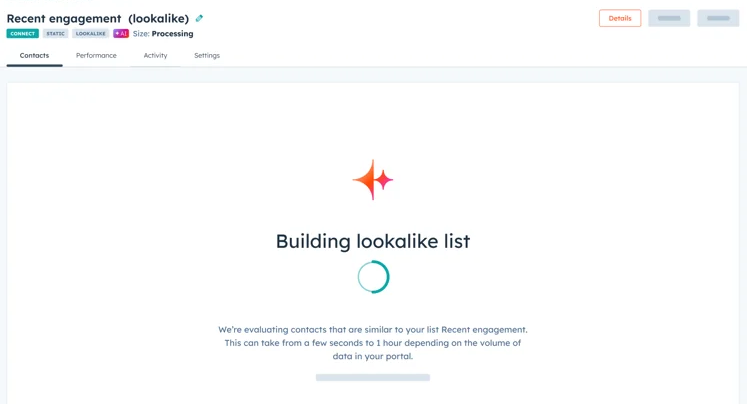
Audience Segments update in real time based on behavioral and firmographic properties stored in the CRM. Lookalike Lists find contacts resembling your best customers. These are useful tools, but they're limited to contacts already in your database and behaviors on your own properties.
Source: HubSpot
Marketing 360 tracks inbound activity: call tracking, form submissions, and website analytics through its Intelligence module. It shows which channels generated each lead. But the intelligence is retrospective: it tells you what happened, not what's about to happen.
ZoomInfo provides a different category of intelligence.
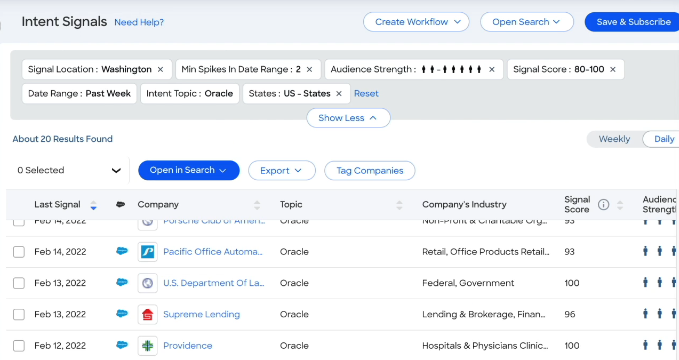
Buyer Intent Data tracks signals from 210 million IP-to-Organization pairings and 6 trillion+ new keyword-to-device pairings sourced monthly to identify companies researching topics related to your product. Guided Intent, exclusive to ZoomInfo, identifies which topics historically correlate with closed deals in your business, rather than requiring you to guess which keywords matter.
WebSights resolves anonymous website traffic to companies and buying team members with direct contact info, including automatic filtering that separates real visitors from bots.
Source: ZoomInfo
The practical difference: HubSpot tells you that a known contact opened your email. Marketing 360 tells you that a lead came from Google Ads. ZoomInfo tells you that a company matching your ideal customer profile just started researching your category, their VP of Marketing has visited your pricing page twice, and here's her verified direct dial and email address.
Seismic attributed 39% of active pipeline to opportunities identified or influenced by ZoomInfo signals. Their Chief Business Officer noted: "That combination of our internal CRM data, external signals, and AI that's given all that context has helped us craft very specific account- and persona-based messages. And people have responded to them right away." (Seismic)
Advertising and campaign execution
HubSpot includes native ad management for Google, Facebook, Instagram, and LinkedIn inside Marketing Hub.
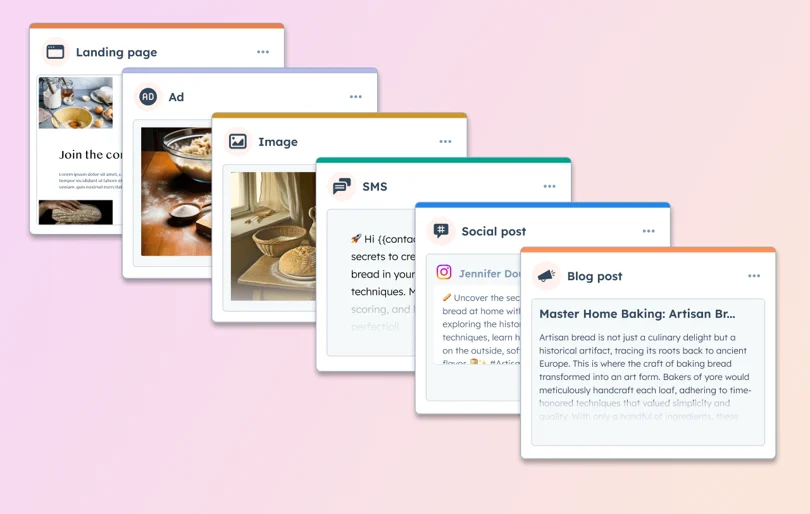
You can create ads, sync audiences from your CRM, and track attribution from ad click to closed deal without leaving the platform. Social media scheduling and monitoring are built in. The Content Remix tool transforms blog posts into social media updates, email copy, and other formats. For teams managing their own campaigns, this consolidated workflow saves time.
Source: HubSpot
Marketing 360 takes the managed-service approach to advertising.
A dedicated Ad Specialist handles strategy, creative, and optimization across search, social, display, retargeting, Google Local Services Ads, shopping ads, and digital out-of-home and streaming audio/video. The channel coverage for a managed service is notable: few SMB-focused platforms combine search, social, local, shopping, digital billboards, and CTV/OTT streaming in one offering.
Marketing 360 holds Google Partner, Meta Business Partner, and Bing Advertising Partner certifications, which require ongoing performance standards.

Source: Marketing 360
ZoomInfo approaches advertising from the targeting side.
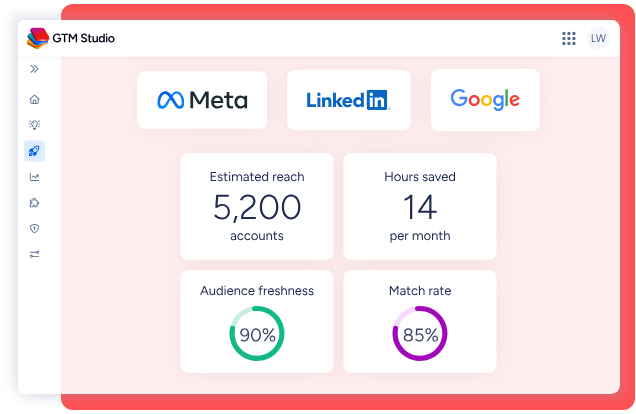
Its native Demand-Side Platform deploys display ads based on 300+ company attributes across major networks, with audiences that auto-update as account data changes. Through GTM Studio, marketers orchestrate multi-channel campaigns (email, ads, calls, direct mail) triggered by buyer behavior and intent signals.
Redwood Logistics achieved a 99% reduction in CPC and 310% increase in CTR by using ZoomInfo's audience data.
Source: ZoomInfo
AI capabilities take different shapes
All three platforms have invested in AI, but the applications reflect their different purposes.
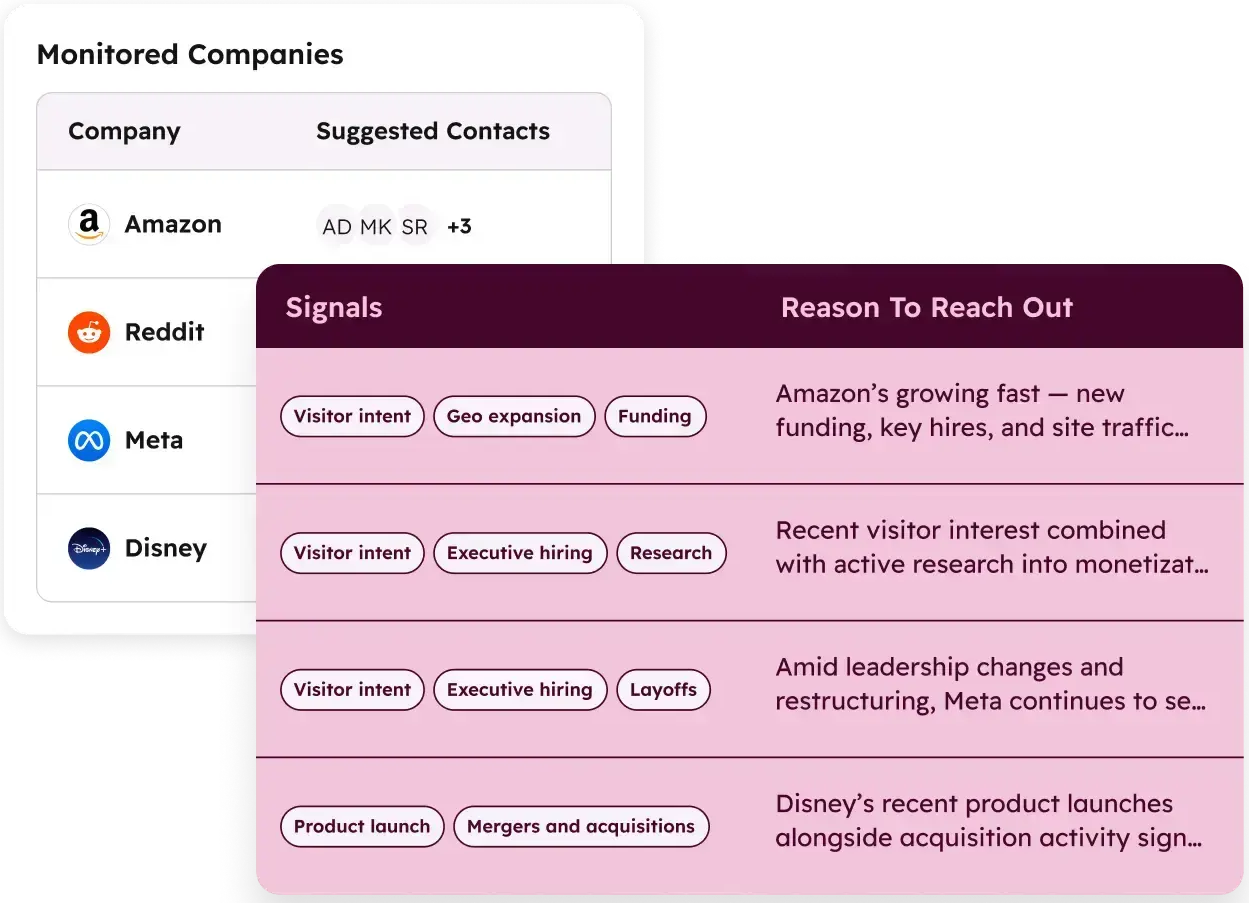
HubSpot's Breeze is an AI layer running across all hubs.
The Customer Agent handles support conversations and reportedly resolves 65%+ of customer inquiries without human help. The Prospecting Agent monitors buying signals and drafts personalized outreach using full customer history. The Data Agent answers natural-language questions about CRM data.
Several features, including AI-Powered Segmentation and Marketing Studio, are still in beta. Breeze runs on HubSpot Credits, a consumption-based system included by tier with more purchasable as add-ons.
Source: HubSpot
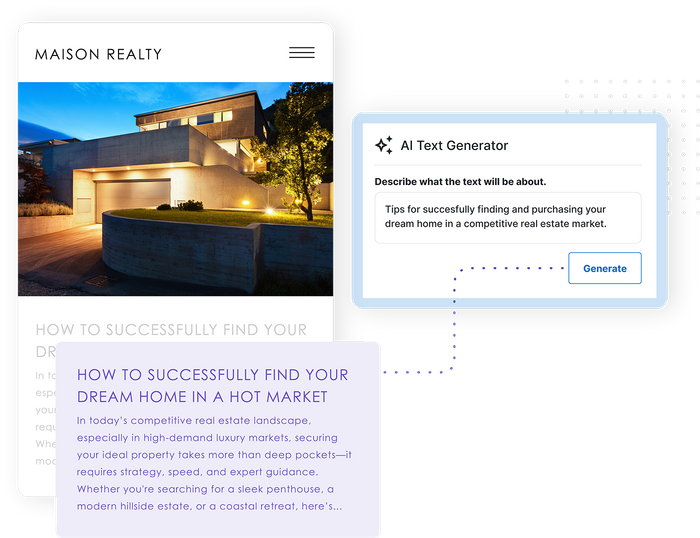
Marketing 360's MADi is an AI engine focused on content creation and search optimization.
It generates blog content, SEO metadata, and social posts from the business's Brand Profile data. Its most forward-looking feature is generative engine optimization (GEO): helping businesses appear in ChatGPT, Gemini, and Claude answers through schema markup and local keyword optimization. MADi draws on 15 years of platform data across 40,000+ client businesses for its recommendations. The AI models behind MADi are not publicly disclosed.
Source: Marketing 360
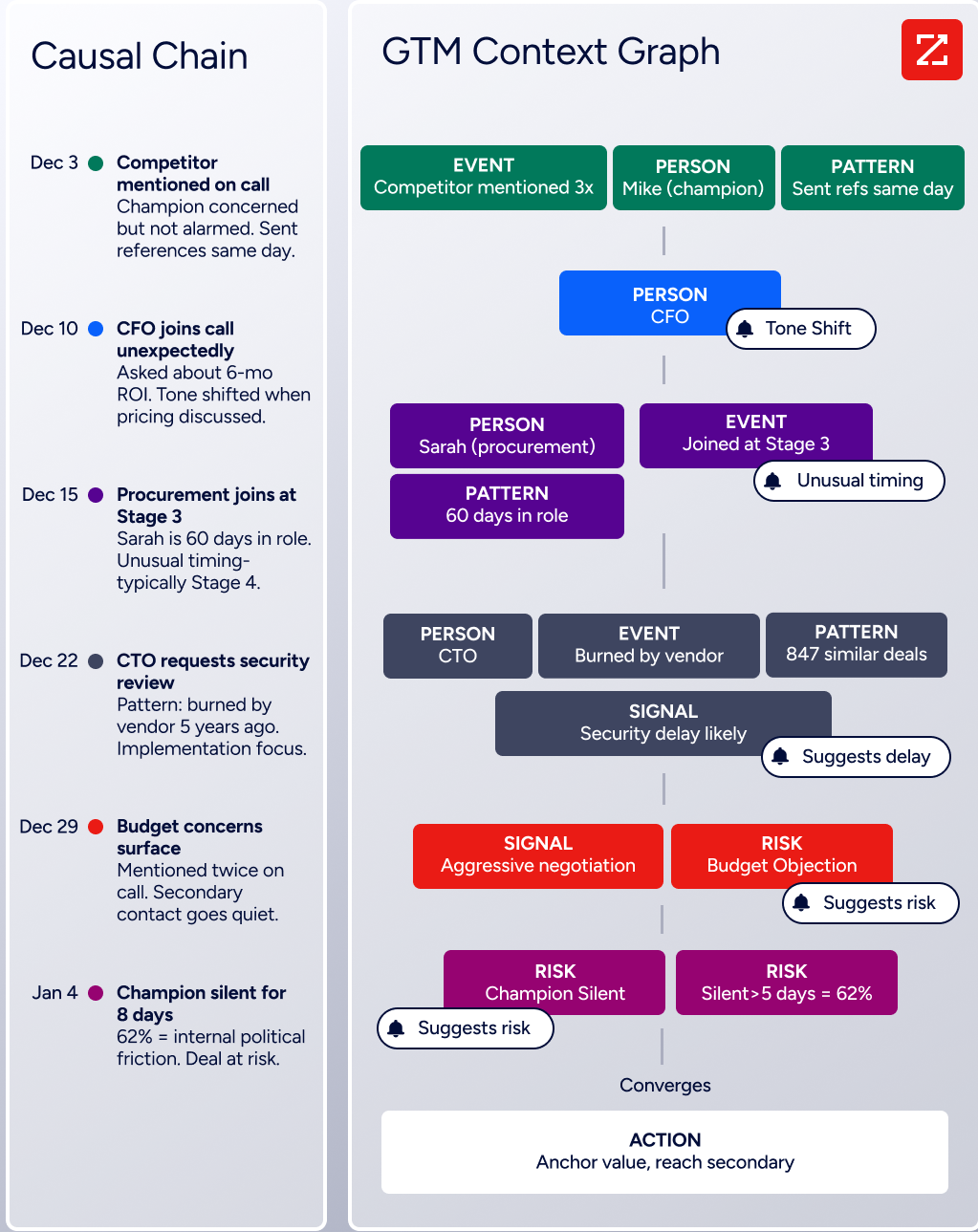
ZoomInfo's AI is built into the GTM Context Graph, which reasons across CRM data, conversation intelligence, intent signals, and behavioral data to understand why deals move or stall.
In GTM Workspace, AI agents built on Anthropic's Claude handle account research, draft outreach, monitor signals, and update CRM fields. In GTM Studio, AI agents handle enrichment, scoring, routing, and message creation. The difference: ZoomInfo's AI reasons about your deals and market position, not just your content and campaigns.
Source: ZoomInfo
Impartner saw a 45% increase in website engagement after using ZoomInfo's data and insights for account-based marketing. Their Sr. Director of Marketing Operations said: "ZoomInfo has literally changed the way we go to market." (Impartner)
Pricing models reflect fundamentally different businesses
HubSpot publishes its pricing, though the model is complex.
Marketing Hub starts free, then jumps to $20/seat/month for Starter, $800/month (annual) for Professional (includes 3 seats and 2,000 marketing contacts), and $3,600/month for Enterprise (5 seats, 10,000 marketing contacts). Professional requires a $3,000 one-time onboarding fee; Enterprise requires $7,000.
Additional marketing contacts cost extra. If you subscribe to multiple hubs at different tiers, all Core Seats are billed at the highest tier, a hidden cost that catches many buyers. The permanent free tier is genuinely useful for getting started.
Marketing 360 does not publish pricing.
Contracts typically run six months minimum with a $2,350 onboarding fee (waived if you commit to the full term, but clawed back on early cancellation). Ad management under the default model retains 49% of ad spend as management fee (reduced to 25% on Pro plans). Email sends above 2,500/month cost $0.004/message.
G2 reviewers rate pricing satisfaction at 51% negative, and Capterra reviewers describe fees that were vaguely explained or omitted during onboarding. The lack of transparency is the most-cited frustration.
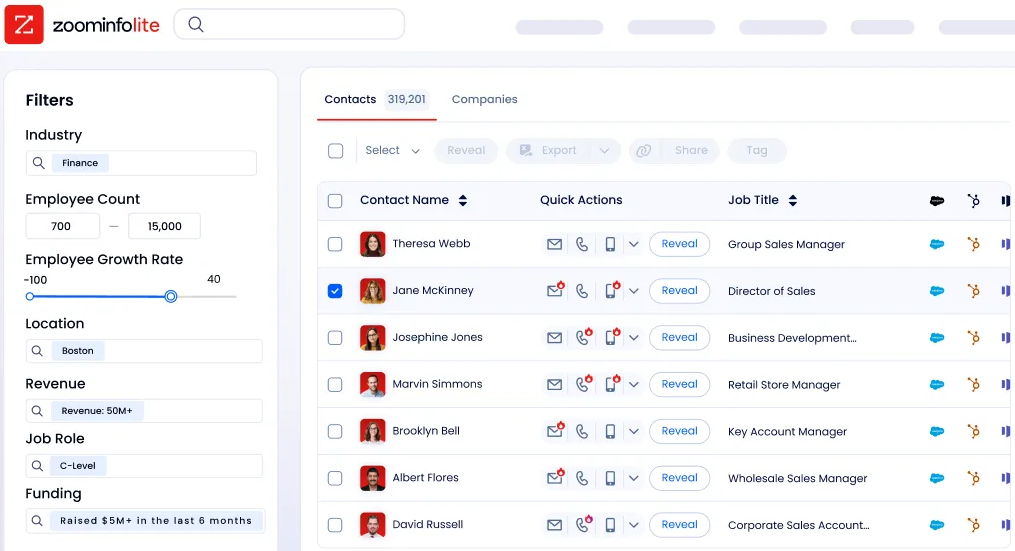
ZoomInfo uses custom-quoted, consumption-based pricing with no published dollar amounts for paid tiers. Pricing depends on seats, monthly credit volume, features, and contract length.
ZoomInfo Lite is a permanent free tier with access to the B2B database and 10 monthly export credits. A 7-day free trial of the full platform is also available. ZoomInfo is premium-priced and targets enterprise and upper mid-market buyers where the ROI from better data justifies the investment.
Source: ZoomInfo
Website and content tools
HubSpot's Content Hub is a full CMS with a drag-and-drop website builder, AI content writer, blog tools, podcast hosting (beta), video marketing, and SEO recommendations.
It includes Content Remix for multi-channel repurposing and personalization tokens that tailor pages using CRM data. Content Hub Professional starts at $450/month (annual). For companies that want marketing and website under one roof, HubSpot's content tools are more capable than standalone website builders.
Marketing 360's website builder offers industry-specific templates, a no-code editor, and mobile preview. Automatic schema markup on every page is a useful detail that most small business builders skip.
The Content Marketing Pro add-on includes up to four optimized blog posts per month, companion social posts, and monthly email newsletters, all created by Marketing 360's team. The e-commerce Shop App supports multi-channel selling across Facebook, Instagram, Amazon, and eBay. For a small business owner who needs a professional site without touching code, it's a solid package.

Source: Marketing 360
ZoomInfo doesn't build websites or create content. It provides the intelligence that makes content more targeted: which companies are researching your category, what topics correlate with deal success, and who the decision-makers are at those companies.
Integration ecosystems and technical flexibility
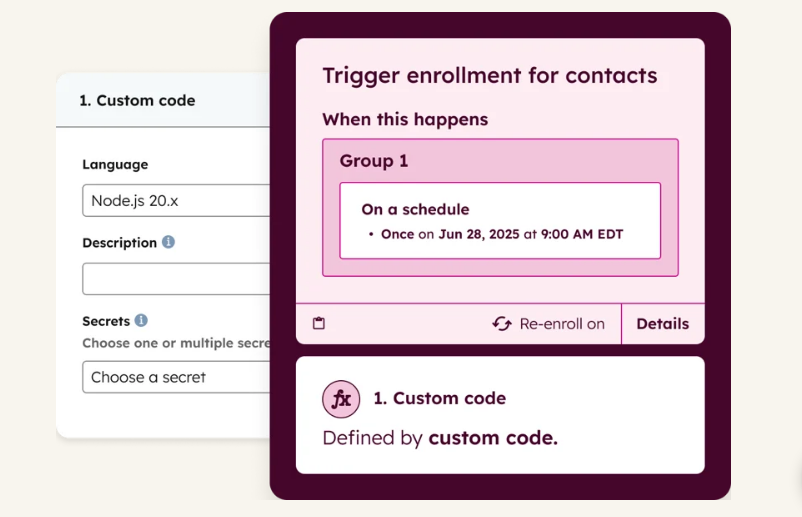
HubSpot's App Marketplace has surpassed 2,000 integrations with 2.5 million active installs. The public REST API covers the full CRM data model. Data Hub supports bidirectional sync with data warehouses and includes programmable automation that runs custom JavaScript or Python natively inside workflows. For technical teams, HubSpot is extensible.
Source: HubSpot
Marketing 360's integration story is thinner.
Native integrations cover key platforms like WooCommerce, Shopify, Gravity Forms, QuickBooks, and Stripe. A REST API covers CRM and Payments with OAuth authentication and rate limiting at 5 requests/second. Zapier connectivity extends reach to 5,000+ third-party apps, but Zapier connections are workarounds, not native integrations.
For businesses with simple stacks, this is adequate. For companies with complex data flows, it's limiting.
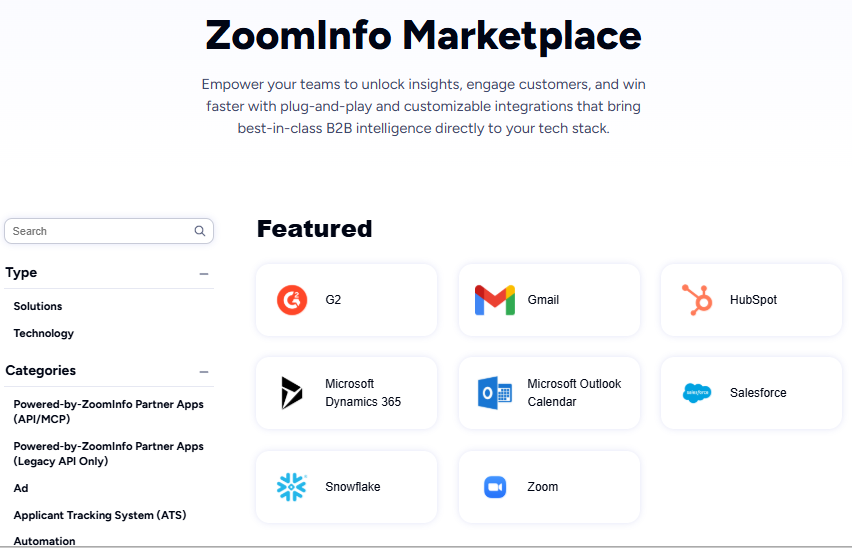
ZoomInfo's App Marketplace lists 120+ partner integrations across CRM, marketing automation, sales engagement, data warehouses, and communications platforms.
The Enterprise API provides programmatic access to search, enrich, audience management, and AI intelligence endpoints. The MCP server connects AI models directly to ZoomInfo's data. API access is included in all relevant plans, and Cloud Partners enables direct data ingestion into AWS, Google Cloud, Snowflake, and Databricks.
Source: ZoomInfo
BDO Canada activated ZoomInfo's data within their internal systems via the API. Their Senior Marketing Intelligence Analyst said: "The plug-and-play aspect of the API means I can integrate it very easily into any process and get information at a moment's notice," achieving an 87% reduction in time spent on internal data dashboard updates. (BDO Canada)
Support and onboarding
HubSpot's support is tiered by subscription level.
Free users get community forums only. Starter adds email and chat. Professional and Enterprise add phone support. HubSpot Academy has produced over 200,000 certified professionals through free courses, certifications, and guided onboarding. The knowledge base spans 17+ languages.
For a self-serve platform, the educational resources are extensive. But complex implementations depend on the Solutions Partner ecosystem, since HubSpot's own professional services revenue is only ~2% of total revenue.
Marketing 360's support model is different: every client gets a dedicated Marketing Success Manager reachable by call, text, email, or scheduled meeting. An online help center provides task-oriented articles and walkthrough videos.
The human-first support model is a strength when the assigned team is strong and a liability when it isn't. Capterra reviews describe a recurring pattern: experienced salespeople close the deal, then hand off to junior account managers.
ZoomInfo offers support through its Help Center, ZoomInfo University with role-specific learning paths and certifications, and direct phone support.

The company redesigned its onboarding from 30 to 90 days, producing a 25% improvement in satisfaction scores and winning Rocketlane's Golden Comet award for Best Customer Onboarding Team. ZoomInfo Labs and Data Services provide professional services for complex data implementations.
Security and compliance
HubSpot holds SOC 2 Type II, HIPAA attestation, GDPR compliance, CCPA compliance, and EU Cloud Code of Conduct Level 2. Data is encrypted with AES-256 at rest and TLS 1.2/1.3 in transit. An EU Data Center is available for data residency. SSO, 2FA, and IP allowlisting are supported.
Marketing 360's security centers on payment compliance: PCI-DSS and PA-DSS compliance through Stripe infrastructure, plus a Data Processing Agreement covering GDPR, UK GDPR, CCPA/CPRA, and Colorado CPA. SOC 2 and ISO 27001 certifications are not publicly disclosed.
For small business marketing, PCI and GDPR coverage handles the primary compliance needs. Businesses in regulated verticals should verify HIPAA applicability directly.
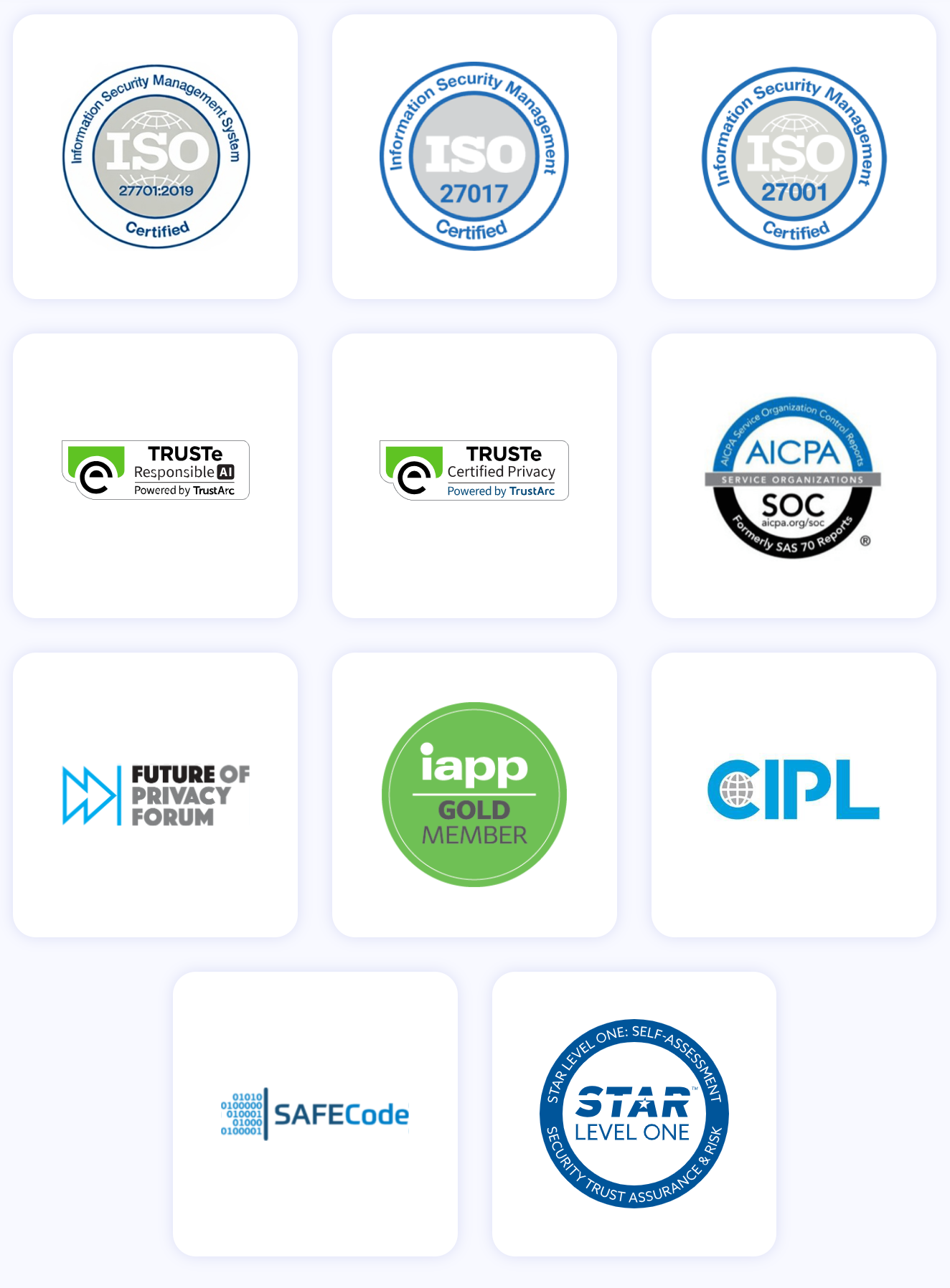
ZoomInfo maintains the broadest certification stack of the three: ISO 27001, ISO 27701, SOC 2 Type II, TRUSTe GDPR, and TRUSTe CCPA, all renewed annually. ZoomInfo is a registered data broker in California and Vermont. A dedicated Trust Center provides public documentation. For enterprise buyers in regulated industries, this compliance depth matters.
HubSpot vs. Marketing 360 vs. ZoomInfo: Which should you choose?
The best choice depends on what problem you're solving.
Choose HubSpot if:
You have a marketing team (or plan to build one) that will own campaign execution
You want automation with visual workflows, branching logic, and behavioral triggers
Consolidating marketing, sales, and service on a single CRM is a priority
You need a mature integration ecosystem that connects to your existing tools
You value self-serve control and are willing to invest time learning the platform
Choose Marketing 360 if:
You're a local or small business owner with no internal marketing staff
You want professionals to handle your marketing execution end-to-end
Your needs span website, ads, social, email, and reputation management under one vendor
You prefer a single point of accountability over managing multiple tools
Speed of getting started matters more than depth of customization
Choose ZoomInfo if:
You need verified B2B contact data, buyer intent signals, and account intelligence
Your marketing campaigns underperform because you're targeting the wrong people, not because your tools are wrong
You want AI that reasons about your deals and prospects, not just your content
You need data infrastructure that powers your entire GTM stack, from HubSpot workflows to custom AI agents
You're ready to move from reactive marketing to proactive, signal-driven engagement
Start with ZoomInfo Lite for free, or request a demo of the full platform.
Most B2B companies don't need to choose just one. HubSpot or Marketing 360 handles campaign execution. ZoomInfo provides the data layer that makes those campaigns reach the right people at the right time. The platforms work better together than apart, and ZoomInfo's native HubSpot integration makes combining them straightforward.
For a detailed head-to-head breakdown of how HubSpot and ZoomInfo compare on features, pricing, and use cases, see our HubSpot vs. ZoomInfo comparison.
The real question isn't which platform has more features. It's whether your growth is limited by your marketing tools, your marketing execution, or your knowledge of who to target. Answer that honestly, and the right investment becomes clear.
HubSpot vs. Marketing 360 vs. ZoomInfo FAQ
What is the core difference between HubSpot, Marketing 360, and ZoomInfo?
HubSpot is a self-serve marketing automation platform where your team builds and runs campaigns using visual workflows, email tools, CRM, and analytics.
Marketing 360 is a managed-service platform where a dedicated marketing team handles execution on your behalf using bundled software.
ZoomInfo is a B2B data and intelligence platform providing verified contact data, buyer intent signals, and account insights that feed into your marketing and sales tools.
Which platform is best for a small business with no marketing team?
Marketing 360 is designed for this scenario. Every account gets a dedicated Marketing Success Manager plus content, ad, social, and design specialists who execute marketing on your behalf. HubSpot's Starter tier is usable for simple campaigns, but getting real value from its automation requires marketing knowledge. ZoomInfo targets B2B teams with existing go-to-market operations.
Can ZoomInfo and HubSpot be used together?
Yes. ZoomInfo has a native HubSpot integration that enriches CRM records with verified contact data, company attributes, and intent signals. ZoomInfo's buyer intent data and account insights can trigger HubSpot workflows, giving your automation more precise targeting. API access is included in all relevant ZoomInfo plans.
How does pricing compare across the three platforms?
HubSpot publishes tiered pricing starting from free, with Marketing Hub Professional at $800/month (annual) plus a $3,000 onboarding fee. Marketing 360 does not publish pricing and requires a sales call; contracts typically run six months minimum. ZoomInfo uses custom-quoted consumption-based pricing with a permanent free tier (ZoomInfo Lite). All three scale in cost as usage grows.
Which platform has the best data quality for targeting prospects?
ZoomInfo's data infrastructure is in a different category. It maintains 500M contacts, 100M companies, 135M+ verified phone numbers, and 200M+ verified business emails with up to 95% accuracy on first-party data. HubSpot and Marketing 360 both depend on data that teams input or that enters through form submissions and marketing activity, so data quality is only as good as your inbound activity.
Which platform is best for account-based marketing?
ZoomInfo is the strongest choice for ABM, with buyer intent data tracking 210M IP-to-Organization pairings, a native demand-side platform for display advertising using 300+ company attributes, and AI-powered account scoring. ZoomInfo is recognized as a Leader in both the Gartner Magic Quadrant for ABM Platforms and the Forrester Wave for Intent Data Providers.
HubSpot supports ABM workflows through its CRM and ad tools but lacks third-party intent signals. Marketing 360 does not offer dedicated ABM capabilities.
What kind of support does each platform provide?
HubSpot tiers support by subscription: free users get community forums, Starter adds email and chat, Professional and Enterprise add phone. Marketing 360 assigns every client a dedicated Marketing Success Manager reachable by call, text, or email, though service quality varies by account team.
ZoomInfo provides a Help Center, phone support, ZoomInfo University with certifications, and professional services through ZoomInfo Labs, with a structured 90-day onboarding program.
Which platform handles reporting and analytics best?
HubSpot offers the deepest self-serve analytics, including multi-touch revenue attribution, customer journey analytics, and customizable dashboards across marketing, sales, and service.
Marketing 360's Intelligence module consolidates marketing performance, leads, and calls into one dashboard with period-over-period comparison.
ZoomInfo provides AI-powered dashboards tracking engagement, funnel progression, and top-performing segments through GTM Studio, plus deal intelligence and forecasting through GTM Workspace.
See how HubSpot stacks up against other tools:
