
Choosing between Close and noCRM.io for your sales team usually comes down to five questions:
Do you need built-in calling and multi-channel communication, or is a lightweight pipeline with follow-up reminders enough?
Is high-volume outbound dialing your primary sales motion, or do you sell through shorter, action-driven follow-up sequences?
How much CRM complexity can your team handle before adoption drops?
Do you already have a reliable way to find and prioritize the right prospects, or are you working from stale lists?
Is European data hosting a compliance requirement for your organization?
In short, here's what we recommend:
Close is the all-in-one sales platform for inside sales teams that want calling, email, SMS, and pipeline management in a single tool. Its built-in Power and Predictive Dialers let small teams work through large lead lists without a separate phone system, and its Chloe AI agent (currently in beta) can call inbound leads, qualify them, and book meetings on its own.
Close works best for B2B teams under 100 people running high-volume outbound, where consolidating your dialer, email, and CRM into one platform saves time and money.
The trade-off: limited reporting depth, no custom objects for complex data models, and a steep price jump from $35 to $99 per seat when you need automation and the Power Dialer.
noCRM.io is the anti-CRM for salespeople who refuse to fill out forms. Built around a lead-first, action-driven philosophy, noCRM enforces the discipline of always knowing your next step on every deal. Create a lead with just a title, set a reminder, and the system resurfaces it when it's time to act.
For solopreneurs, small teams, and telesales operations that need fast adoption without CRM overhead, noCRM delivers. It's also 100% hosted in Europe with ISO 27001 certification, a concrete differentiator for data-sensitive European buyers. The trade-off: limited reporting, no native dialer, and a single-next-step model that can feel restrictive on complex deals.
Both platforms are strong execution tools for small sales teams. But they share a limitation: they help you manage leads you already have. Neither tells you which companies are researching solutions in your category, whether you're reaching the right decision-makers, or when a prospect's buying signals spike. That intelligence gap is where deals get lost before they ever enter your pipeline.
ZoomInfo is an AI-powered go-to-market platform built on B2B data at scale: 500M contacts, 100M companies, 135M+ verified phone numbers, and 200M+ verified business email addresses.
Its GTM Context Graph processes 1.5B+ data points daily, combining this data with your CRM records, conversation transcripts, and behavioral signals to show which accounts are in-market, who the decision-makers are, and what's driving their buying decisions.
Your team accesses that intelligence through GTM Workspace (a seller-facing workspace with AI-drafted outreach and prioritized accounts), GTM Studio (an orchestration canvas for marketers and RevOps), or APIs and MCP that feed intelligence into any CRM or tool you already use.
If knowing exactly who to sell to and when they're ready to buy sounds like the missing piece in your sales process, see ZoomInfo in action with a free trial.
Close vs. noCRM.io vs. ZoomInfo at a glance
Close | noCRM.io | ZoomInfo | |
|---|---|---|---|
Core focus | All-in-one sales CRM with built-in calling | Action-driven lead management | AI-powered go-to-market platform |
Built-in calling | Native Power & Predictive Dialer | No (integrates with CloudTalk, JustCall, Aircall) | Intelligent dialing via GTM Workspace |
AI capabilities | Chloe AI agent (autonomous calls), AI email drafts | AI-powered help center search | GTM Context Graph, AI-drafted outreach, buyer intent signals |
Data & intelligence | CRM data only | CRM data only | 500M contacts, 100M companies, intent signals, technographics |
Pipeline management | Smart Views, Kanban pipeline | Drag-and-drop Kanban, enforced next-step discipline | GTM Workspace with AI-prioritized accounts |
Reporting | Basic activity and pipeline reports | Pipeline and team performance stats | AI-powered dashboards, deal intelligence |
Data hosting | AWS (US-based) | 100% European | US-based, ISO 27001/27701, SOC 2 Type II |
Free option | 14-day trial | 15-day trial | ZoomInfo Lite (permanent free tier) |
Starting price | $9/seat/month (Solo) | Check nocrm.io/pricing | Custom-quoted |
Best for | Inside sales teams doing high-volume outbound | Small teams wanting simple pipeline management | Teams that need to find, prioritize, and engage the right buyers |
Two philosophies for the same problem
Close and noCRM both want to help salespeople spend less time on admin and more time selling. They disagree on how.
Close's answer is consolidation. Instead of toggling between a CRM, a dialer, an email tool, and an SMS platform, Close puts everything in one interface. Click a lead, make a call, send an email, fire off a text, and log the outcome, all without leaving the screen.
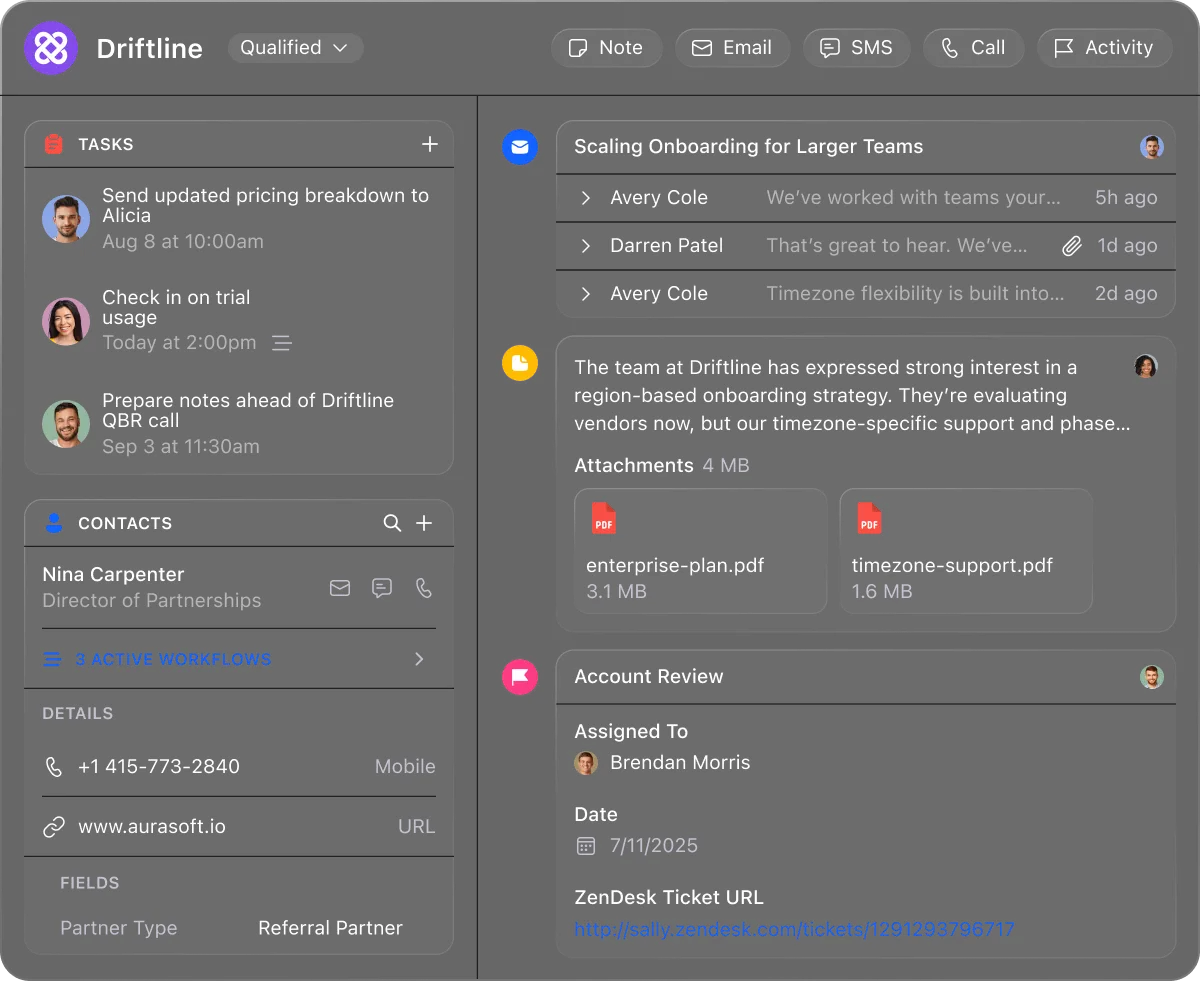
The platform assumes your bottleneck is tool sprawl, and the fix is putting every sales channel within arm's reach.
noCRM's answer is elimination. Instead of adding features, noCRM strips the CRM down to its core function: tracking deals and enforcing follow-up. Create a lead with nothing but a title. Set a next action and a reminder date.
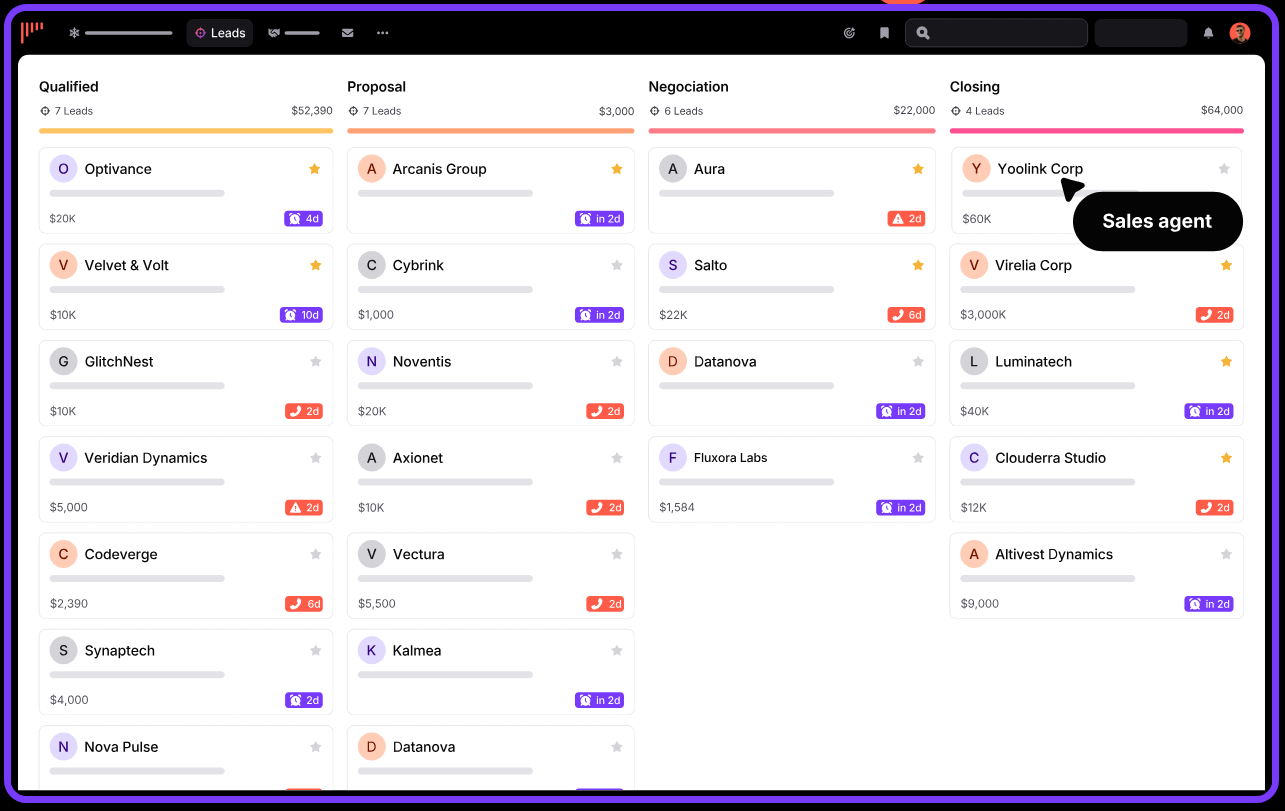
When the reminder fires, the lead moves back to your To Do list. No contact database to maintain, no mandatory fields to fill, no configuration overhead before you start selling.
These philosophies produce different daily experiences. A Close user opens their inbox to a unified view of calls, emails, and texts across all their leads, then fires up the Power Dialer to work through a Smart View.
A noCRM user opens to a clean list of leads that need action today, picks one, makes a call through their VoIP integration, logs the outcome, and sets the next step.
Neither approach is wrong. Close makes sense when your team's primary motion is high-volume outbound calling and multi-channel follow-up. noCRM makes sense when CRM complexity is killing adoption.
Close's built-in dialer changes the math on outbound calling
If your sales motion revolves around making a lot of calls, Close has a structural advantage that noCRM can't match through integrations alone.
Close's Power Dialer queues the next lead the moment a call ends. Build a Smart View of leads matching your criteria, hit start, and the dialer works through the list without manual clicking.
The Predictive Dialer (Scale plan only) goes further: it dials multiple numbers at once and routes live answers to the next available rep, so reps only hear conversations, never dead rings.
Source: Close
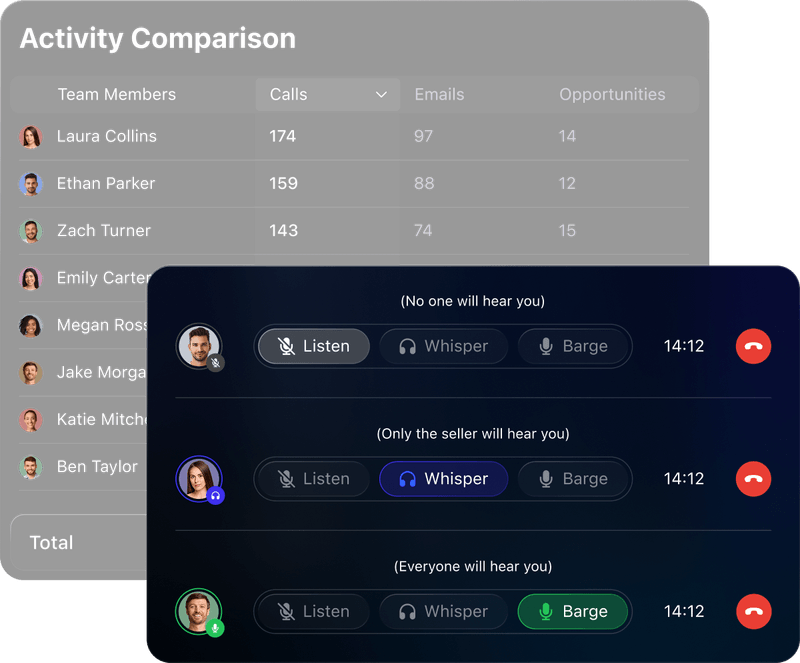
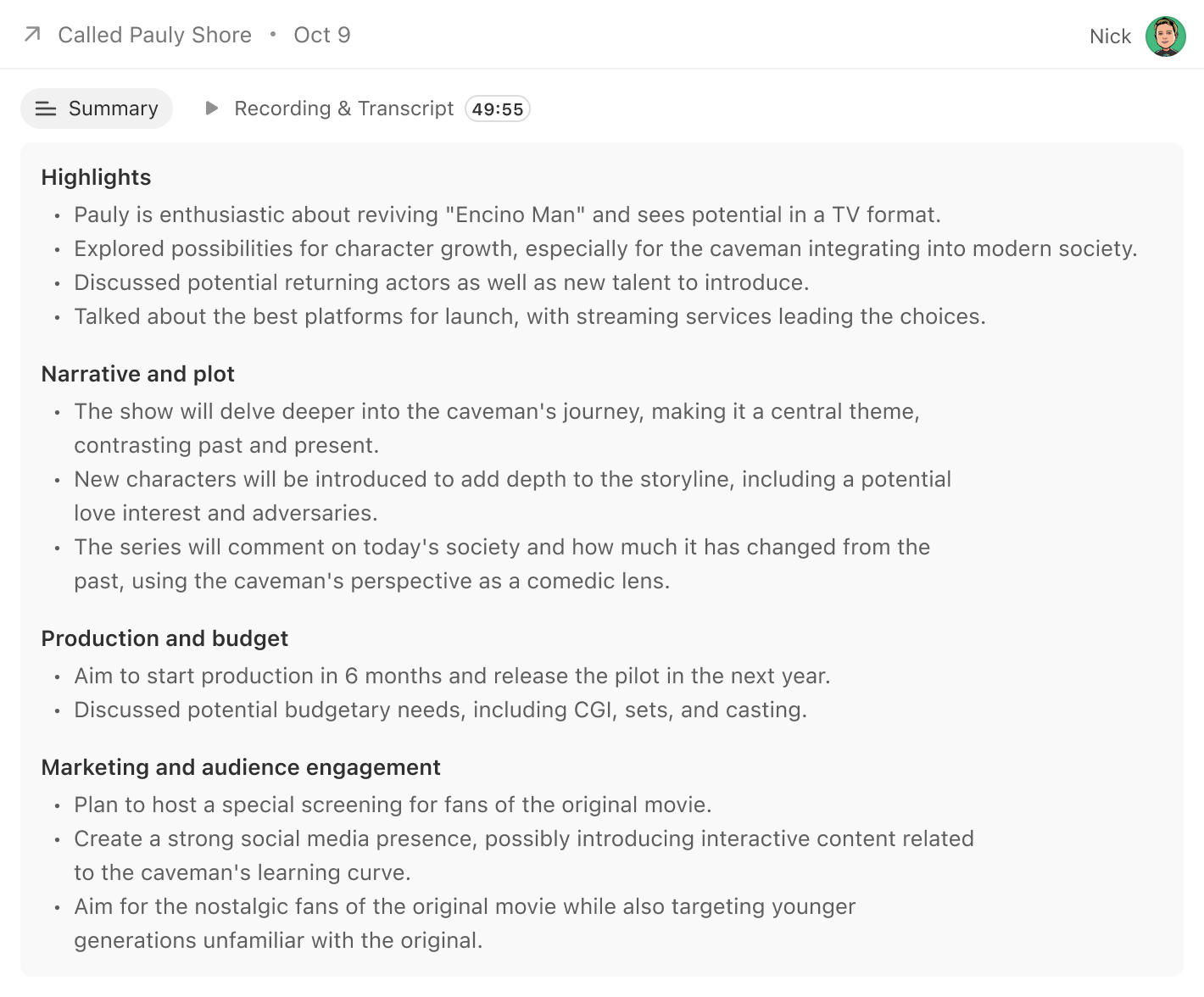
The calling infrastructure runs natively on Twilio and works from the browser, desktop app, or mobile. Every call logs automatically to the lead timeline with disposition, duration, and notes. Managers can listen silently, whisper coaching that only the rep hears, or join the call in real time.
The AI Call Assistant ($50/month plus $0.02/min) transcribes calls in 20 languages, generates summaries, and makes every conversation searchable across the CRM.
Source: Close CRM
Then there's Chloe, Close's AI sales agent (currently in beta). Chloe calls inbound leads on her own, qualifies them through real voice conversations, books meetings, and logs everything back into the CRM.
She discloses she's an AI assistant at the start of every call (this can't be overridden), and organizations can create multiple Agents for different use cases, each with its own instructions, skills, and phone number.
noCRM handles calling through third-party VoIP integrations with CloudTalk, JustCall, and Aircall. These integrations deliver one-click dialing, automatic call logging, and AI-generated summaries from the VoIP provider.
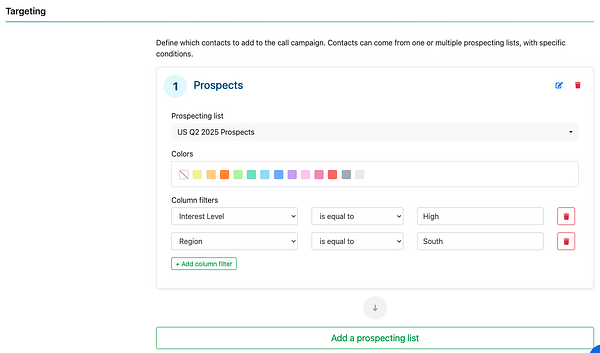
noCRM's Call Campaigns add structured outbound dialing with conditional lead assignment from Prospecting Lists, preventing duplicate calls across campaigns sharing the same list. It works, and for teams already paying for one of these VoIP providers, the integration adds pipeline context to their calling workflow.
Source: noCRM.io
But Close's advantage is that calls, recordings, transcripts, coaching, and CRM data all live in the same system. There's no sync to manage, no separate billing for a VoIP provider, and no gap between what the dialer knows and what the CRM knows. For teams making hundreds of calls daily, that native integration saves real time.
Pipeline management: Smart Views vs next-step discipline
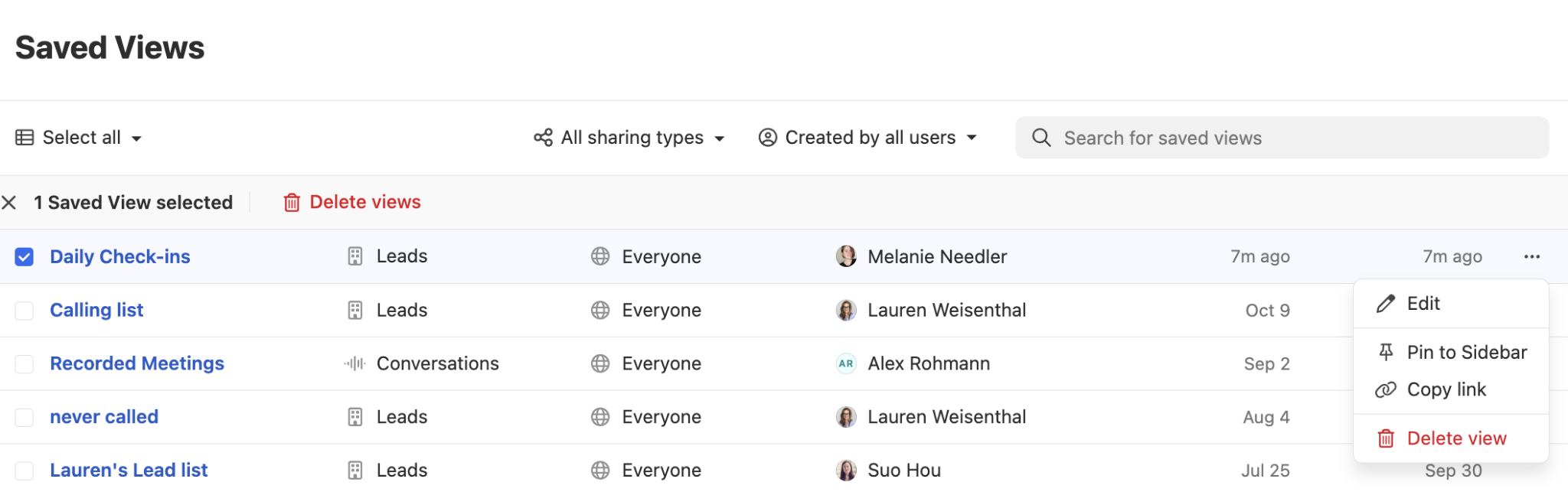
Close organizes sales data around Leads (accounts) containing Contacts (people) and Opportunities (deals). Smart Views are the primary workflow tool: saved, dynamic filters that update in real time as leads move in and out of criteria.
Source: Close CRM
Instead of maintaining static task lists, you build views like "leads with no activity in 7 days" or "opportunities closing this month over $5,000" and work through them each morning.
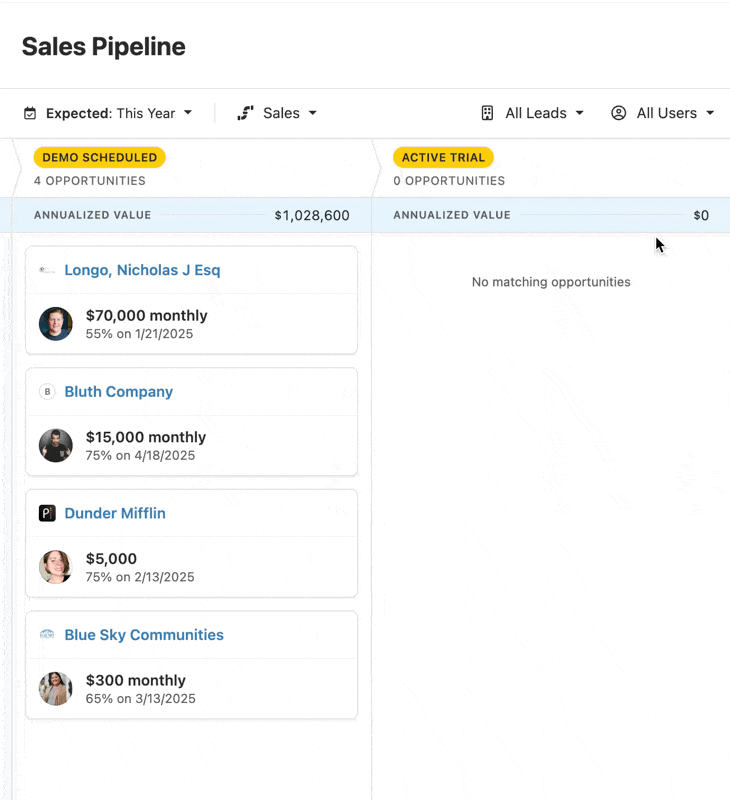
Pipeline Guidance (Growth plan and above) flags opportunities with passed close dates, stalled stages, or unanswered messages, then pushes them into the rep's inbox with suggested actions: launch the dialer, draft an email, or mark it lost with one click.
Source: Close
The system nudges reps toward deals that need attention rather than waiting for them to notice.
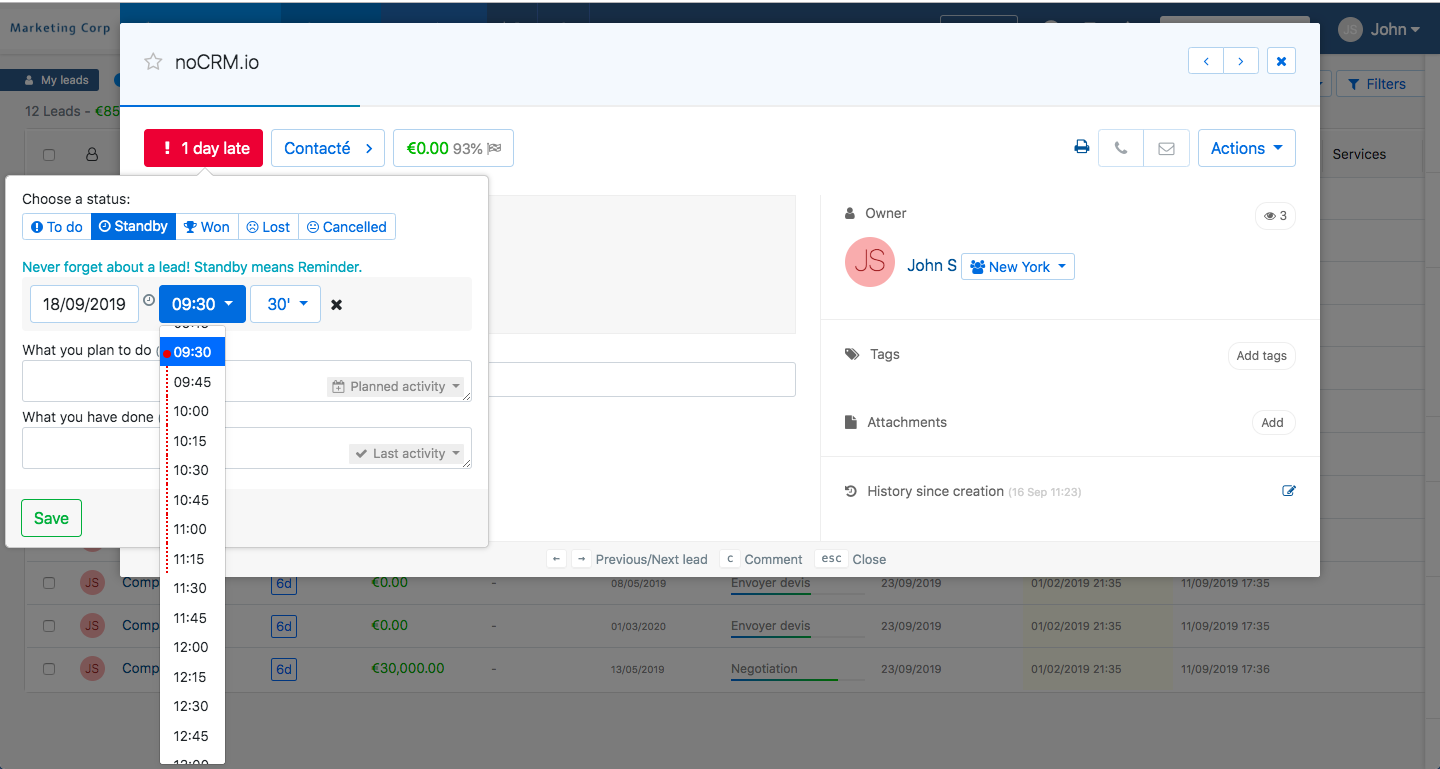
noCRM takes a different structural approach. Every deal is a Lead that carries one of five statuses: To Do (needs action now), Standby (waiting with a reminder set), Won, Lost, or Cancelled. The system enforces the logic: after you act on a lead, you set it to Standby with a specific next action and reminder date.
Source: noCRM.io
When the reminder fires, the lead reverts to To Do and surfaces at the top of your queue. A visible counter shows how long a lead has been overdue if no action is taken.
This status loop is noCRM's defining feature. It creates accountability without manager intervention and ensures no deal sits idle without a scheduled next action.
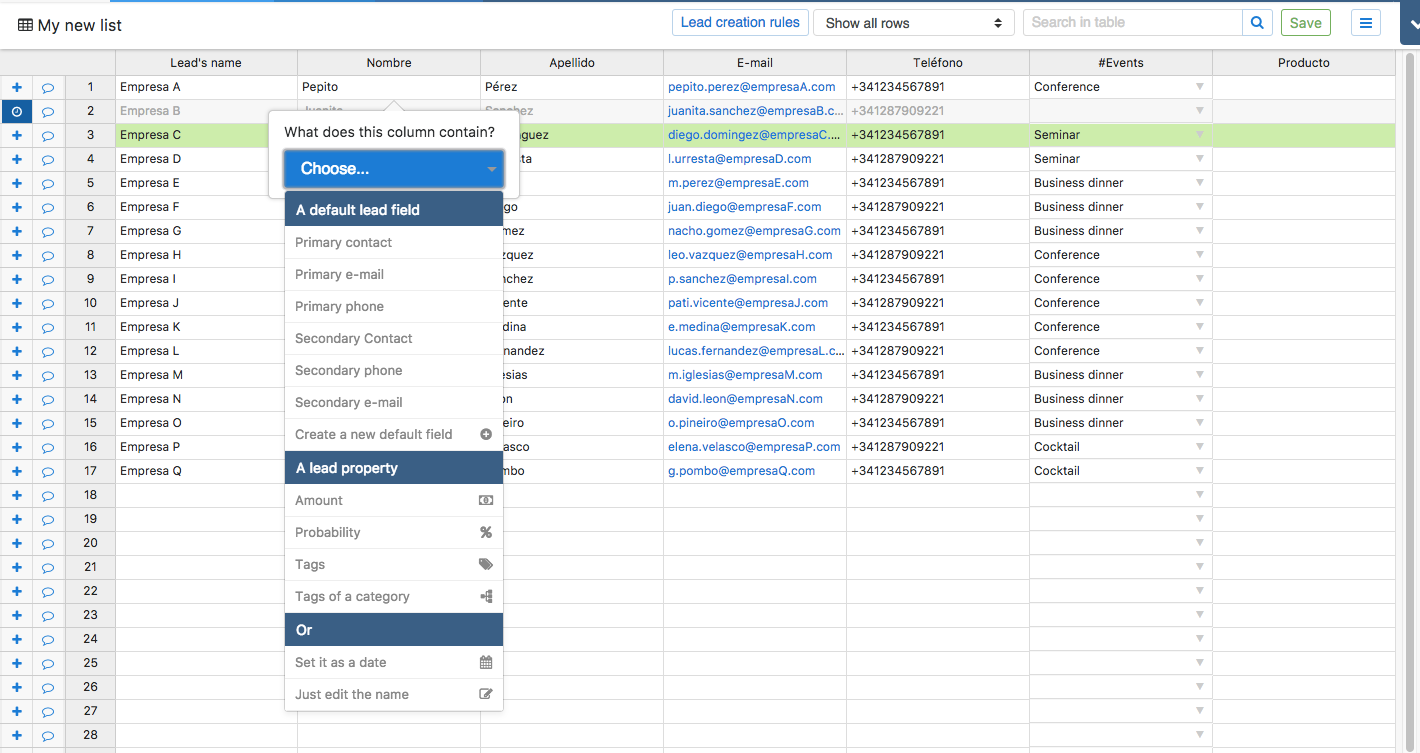
Prospecting Lists add a pre-pipeline layer for unqualified contacts, keeping the pipeline clean by separating cold prospects from active opportunities. Once qualified, a prospect becomes a lead in a single click.
Source: noCRM.io
The trade-off is flexibility. noCRM supports only one scheduled next step per lead at a time. If you need to schedule a call on Tuesday and track a contract deadline on Friday for the same deal, you can't do both natively.
Close doesn't have this constraint; its task system and Smart Views allow multiple concurrent actions per lead.
For teams with straightforward sales cycles where "always know your next step" prevents deals from falling through the cracks, noCRM's approach works. For teams managing complex multi-touch sequences across email, phone, and SMS simultaneously, Close's flexibility is essential.
The intelligence gap both platforms leave open
Here's what neither Close nor noCRM solves: where your leads come from and whether you're reaching the right ones.
Close gives you tools to call, email, and follow up with leads in your pipeline. noCRM gives you a clean system for tracking those leads and keeping them warm. But both platforms start after the critical decisions have already been made. Who should you be calling? Which accounts are evaluating solutions right now? Are you talking to the actual decision-maker or someone without budget authority?
These aren't abstract questions. A rep making 80 calls a day through Close's Power Dialer is only as effective as the list they're dialing. A noCRM user with perfect follow-up discipline on 50 leads still loses if those leads were never qualified prospects in the first place.
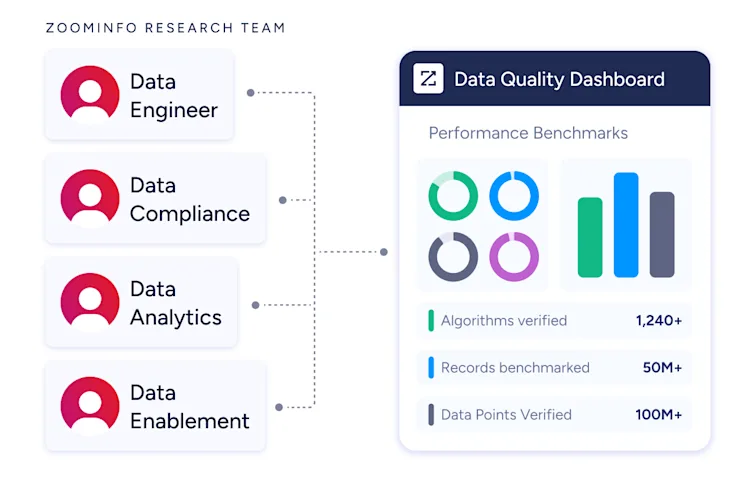
ZoomInfo addresses this at its foundation. The platform maintains 500M contacts, 100M companies, 135M+ verified phone numbers, and 200M+ verified business email addresses, built through a multi-source pipeline backed by 300+ human researchers and achieving up to 95% accuracy on first-party data.
Source: ZoomInfo
In a Fortune 500 competitive RFP analyzing 25 million contacts across vendors, the independent consultant concluded that "no other competitor came even close."
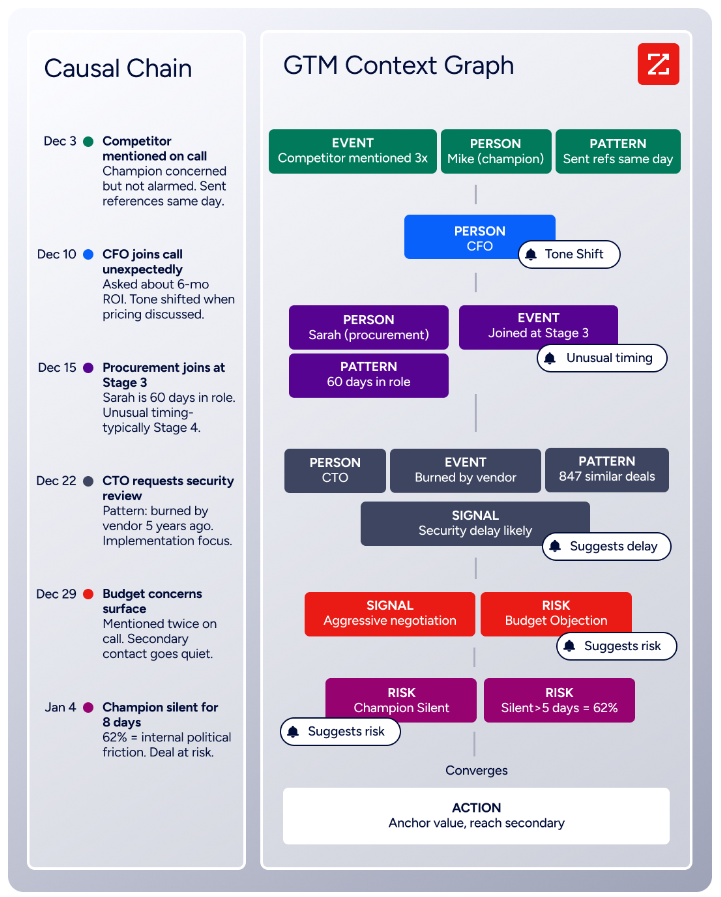
But raw data isn't the full story. ZoomInfo's GTM Context Graph combines that B2B data with your CRM records, conversation intelligence, and behavioral signals to reveal not just who your prospects are, but why and when they're ready to buy.
Source: ZoomInfo
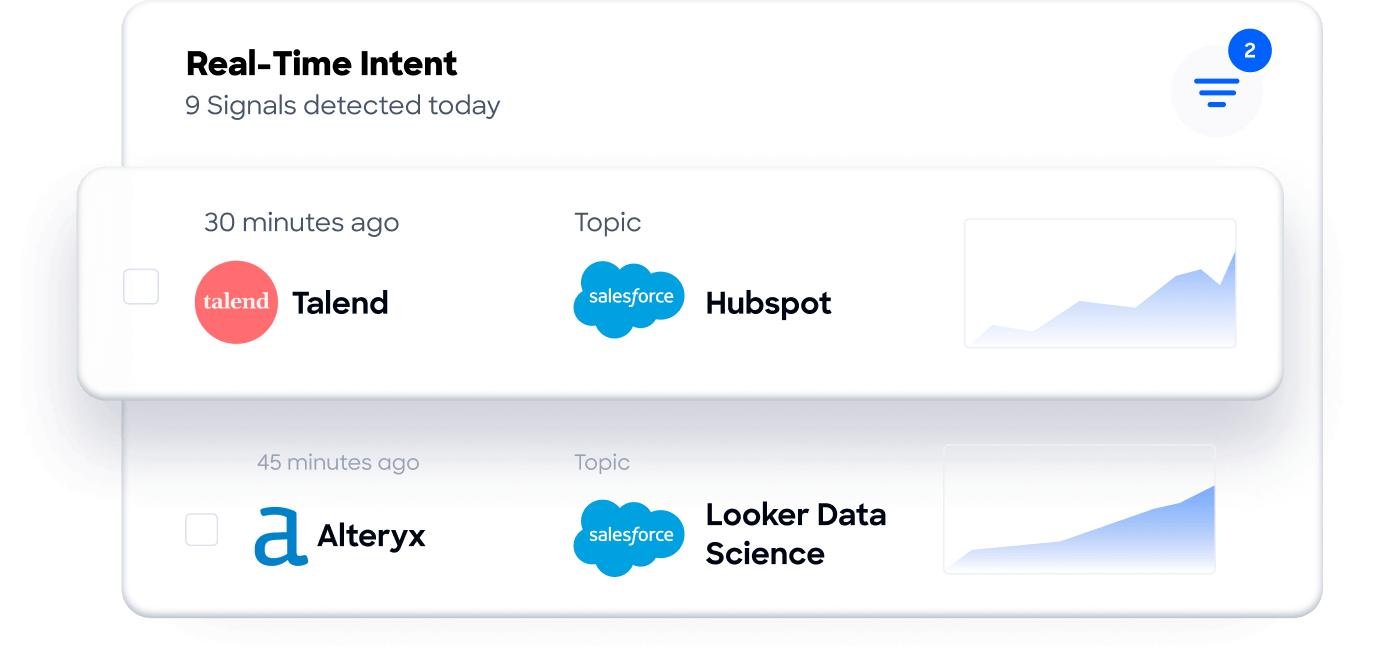
Buyer Intent data tracks signals from 210 million IP-to-Organization pairings, identifying which companies are researching topics related to your product.
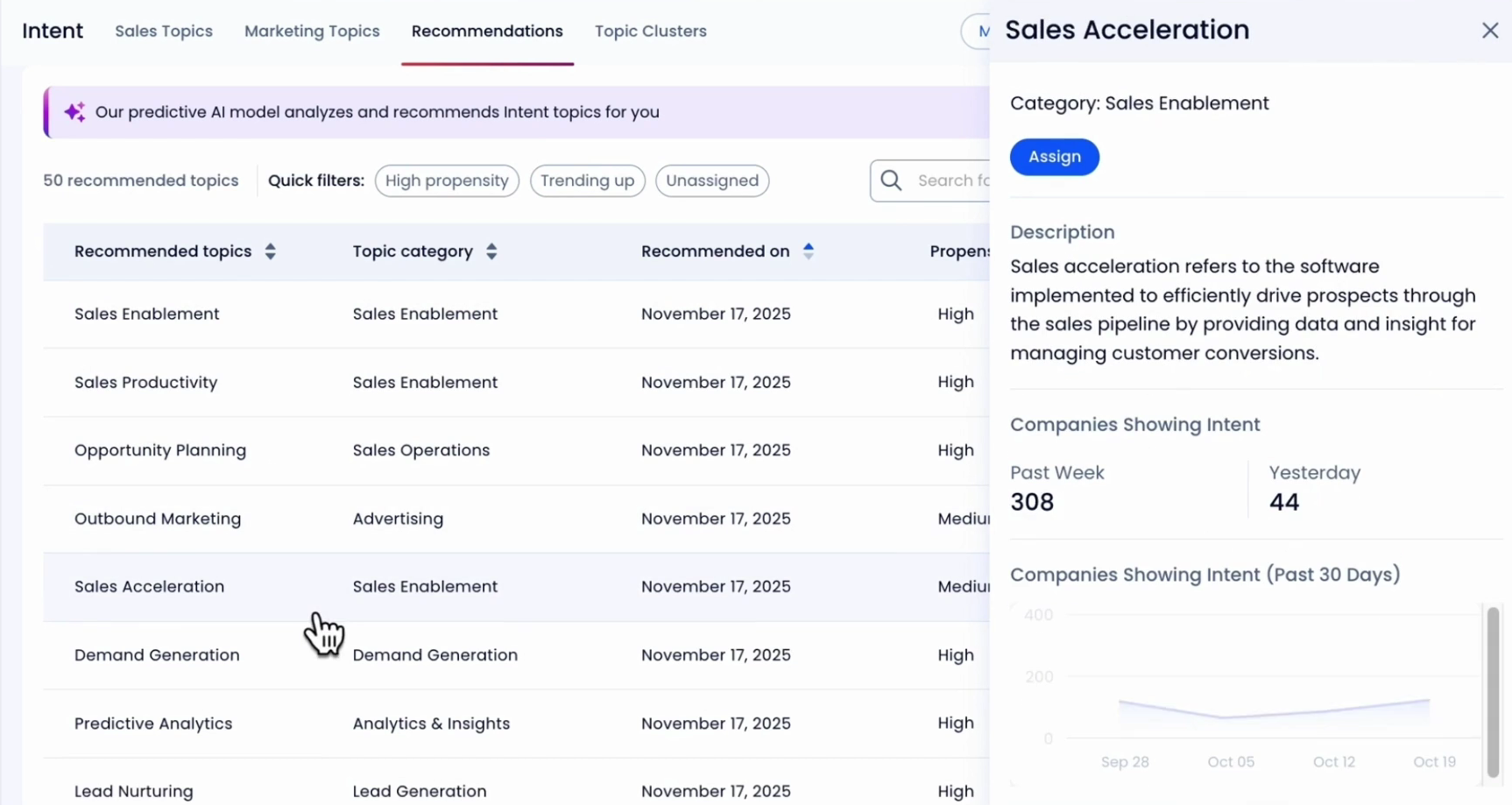
Guided Intent (exclusive to ZoomInfo) identifies the specific topics correlated with closed deals in your pipeline, rather than requiring manual topic guesswork.
Source: ZoomInfo
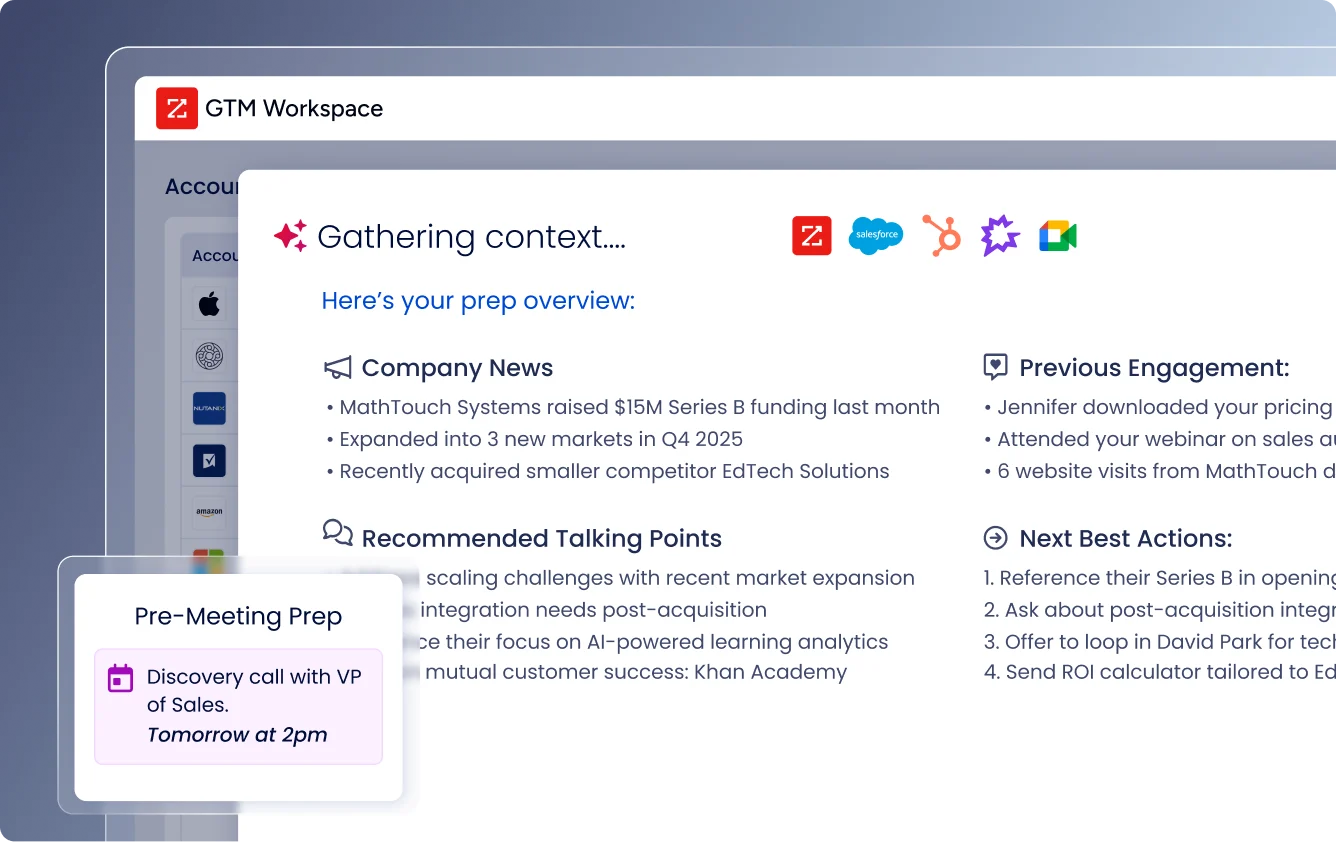
For sellers, this intelligence flows into GTM Workspace, where AI agents surface prioritized accounts, draft personalized outreach from full account context, and handle research that would otherwise consume hours of a rep's day.
Source: ZoomInfo
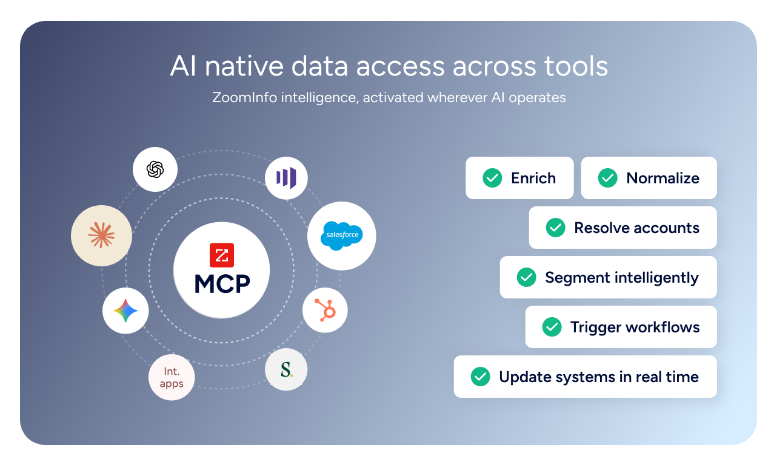
For teams using Close or noCRM as their CRM, ZoomInfo's APIs and MCP feed the same intelligence into any external tool, so verified contacts and buying signals reach reps wherever they work.
Source: ZoomInfo
The practical difference: instead of dialing through a list of contacts you hope are still at their company, your reps call verified direct dials for decision-makers at accounts showing active buying signals this week.
Seismic's sales team attributed 39% of active pipeline to opportunities identified or influenced by ZoomInfo signals, boosted productivity by 54%, and saved 11.5 hours per week. (Seismic)
Automation and workflow capabilities
All three platforms offer automation, but the scope and approach differ.
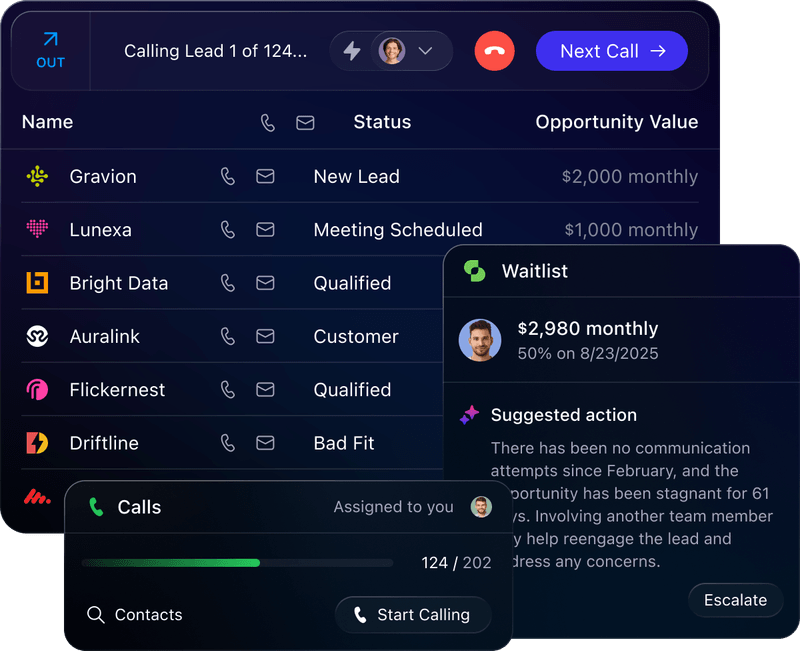
Close's Workflows (Growth plan, $99/seat/month and above) are multi-step sequences combining email, SMS, call tasks, and CRM updates. Triggers fire on lead events, form submissions, opportunity changes, and more.
Source: Close
Communication windows stagger sends to the contact's local timezone to mimic human behavior, and Workflow Goals stop a run when a desired outcome occurs (a reply, a booked meeting, a status change), showing exactly which step converted. Close reports that 98% of users say it saves them at least 3 hours of admin work per week.
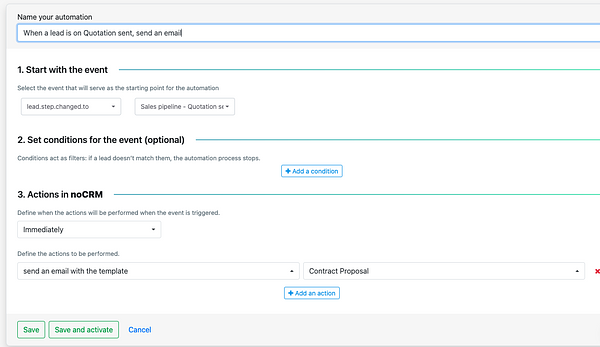
noCRM's built-in Automations (Dream tier only) use an event-condition-action model. Ten trigger events cover the full lead lifecycle: lead created, field updated, email received, status changed, pipeline step changed, and others.
Source: noCRM.io
Actions include notifications, lead assignment with round-robin distribution, tagging, and sending predefined email templates. Multi-step chains with time delays are supported, and all automated actions run under a system account called "The Butler" to keep activity logs and attribution clean.
For automation beyond the native module, noCRM connects through Zapier and Make to 3,000+ external services.
noCRM also includes something neither Close nor most CRMs at this price point offer: a native Quotes and Invoices module (Expert tier and above).
Reps generate proposals from lead cards, convert accepted quotes to invoices in one click, and automatic status changes tie to invoice events (quote accepted moves the lead to Won). For solopreneurs and service businesses that need quoting without switching tools, this is a practical advantage.
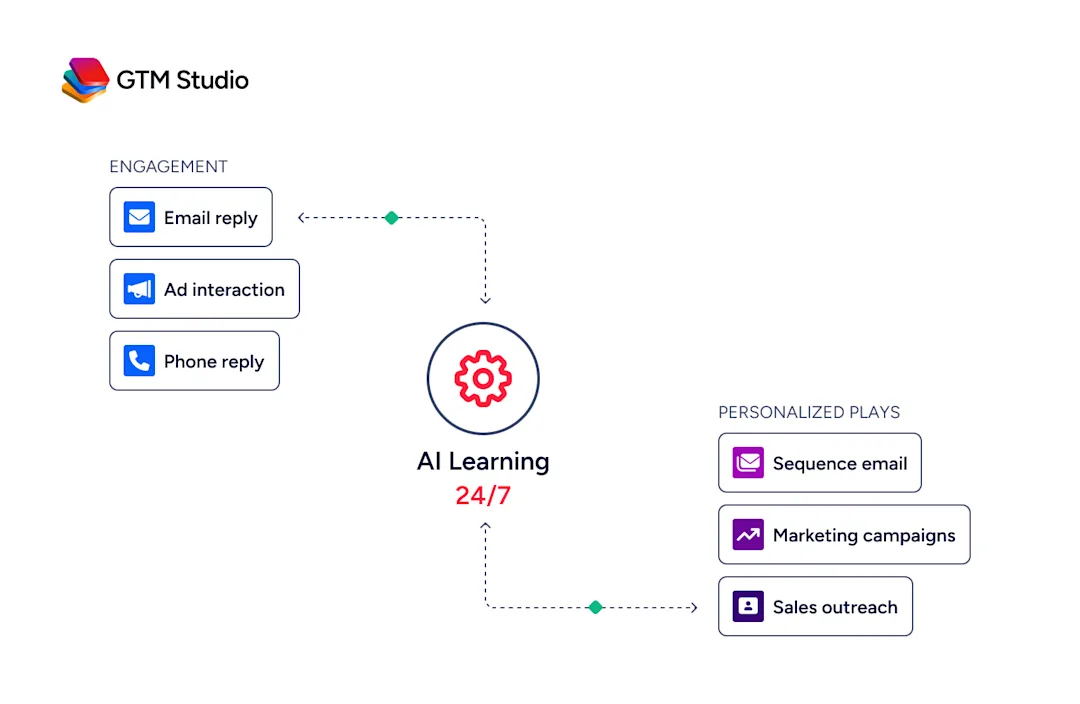
ZoomInfo operates at a different automation layer. GTM Studio lets marketers and RevOps teams build audiences using natural language, define signal-based triggers, and launch multi-channel plays (email, calls, ads, direct mail) that activate when buying signals fire.
Source: ZoomInfo
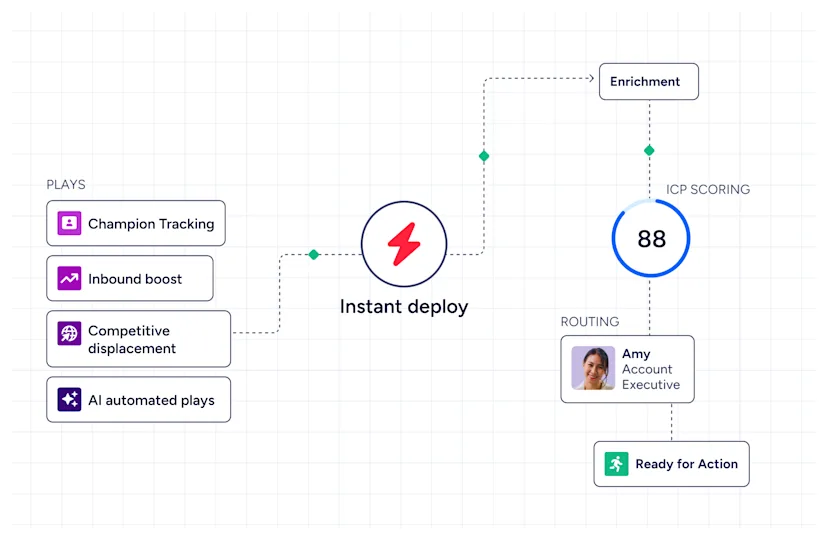
Pre-built GTM plays for inbound acceleration, champion tracking, and competitive displacement launch in one click. Expansion plays that used to take 3 weeks now launch in 30 minutes, without technical support.
Source: ZoomInfo
These plays feed prioritized accounts and recommended actions into GTM Workspace, where AI agents draft outreach and update CRM records automatically.
The distinction: Close and noCRM automate the actions you've already decided to take. ZoomInfo automates the decision of which actions to take, based on signal intelligence and pattern matching across your pipeline.
Redwood Logistics achieved a 99% reduction in CPC and 310% increase in CTR using ZoomInfo's data-driven targeting. Chelsea Kenyon, Senior Director of Digital Strategy: "It's not just the data itself. It's more about the right data at the right time to help us reach out with the right message across that full buyer journey." (Redwood Logistics)
Pricing reflects different ambitions
Close publishes transparent per-seat pricing with four tiers billed monthly or annually:
Solo ($9/month annual, $19 monthly): One user, 10,000 leads max. Basic CRM with calling, email, and SMS. No workflows or AI features.
Essentials ($35/month annual, $49 monthly): Unlimited leads and users. Full CRM with Smart Views, multiple pipelines, and built-in communication. No automation.
Growth ($99/month annual, $109 monthly): Everything in Essentials plus Workflows, Power Dialer, AI Email Assistant, Chloe AI agent, Pipeline Guidance, and Custom Activities.
Scale ($139/month annual, $149 monthly): Everything in Growth plus Predictive Dialer, role-based access, lead visibility rules, and unlimited call recording.
Calling is billed separately at Twilio's per-minute rates on all plans. The AI Call Assistant adds $50/month plus $0.02 per transcribed minute. Premium Phone Numbers cost $19/month per line for features like lead-based call routing and IVR menus.
The pricing reality that matters most: the jump from Essentials ($35) to Growth ($99) is where most teams land, because Workflows, the Power Dialer, and Chloe are all locked behind Growth.
For a 10-person team, that's $990/month versus $350/month on annual billing, a real difference when calling and automation are non-negotiable.
noCRM uses per-seat pricing across three tiers (Starter, Expert, Dream), with annual billing offering up to 40% savings. Specific per-user prices are rendered dynamically on the pricing page.
The feature progression is clear: Starter caps at 500 leads in a single pipeline with BCC-only email sync. Expert unlocks unlimited leads, multiple pipelines, two-way email sync, quotes and invoices, and email templates.
Dream adds WhatsApp and VoIP integrations, team management with roles and permissions, advanced automations, and priority support.
One constraint worth noting: all users in the same noCRM account must be on the same plan. You can't mix tiers within a single account.
ZoomInfo uses consumption-based pricing with no publicly listed prices. Costs scale around seat count, monthly credit volume (1 credit = 1 exported profile), feature access, and contract length.
Sales, Marketing, and Chorus plans each have their own tier structure (Professional, Advanced, Enterprise for Sales; Marketing Demand, ABM Lite, ABM Enterprise for Marketing). The platform is premium-priced and oriented toward enterprise and upper mid-market teams.
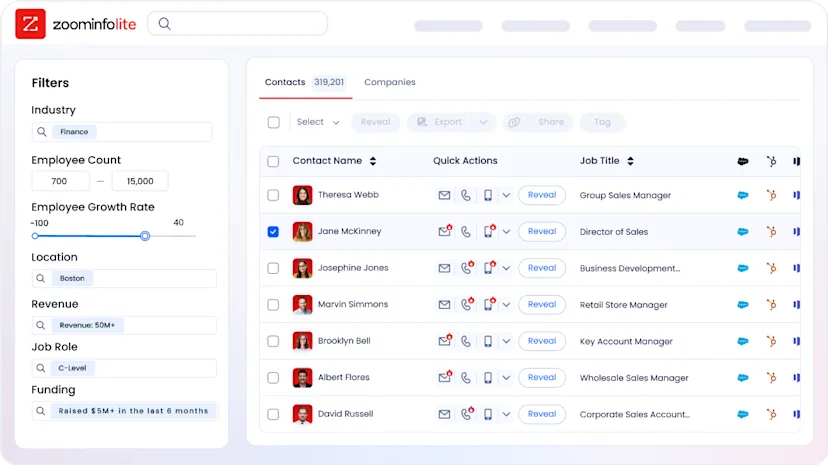
However, ZoomInfo offers something neither Close nor noCRM provides: a permanent free tier. ZoomInfo Lite gives individual users access to 100M+ verified profiles, 10 monthly export credits, advanced search filters, the ReachOut Chrome Extension, and website visitor identification (up to 10 reveals per day), with no time limit and no credit card required.
Source: ZoomInfo
Teams using Close or noCRM can use ZoomInfo Lite to supplement their CRM with verified contact data at no additional cost.
Support, security, and the things you notice after you buy
Close provides email and phone support on all plans, plus Office Hours for live Q&A with Close experts and a Customer Slack community for peer help. All plans include free data migrations and dedicated customer success, a contrast with competitors that charge for both.
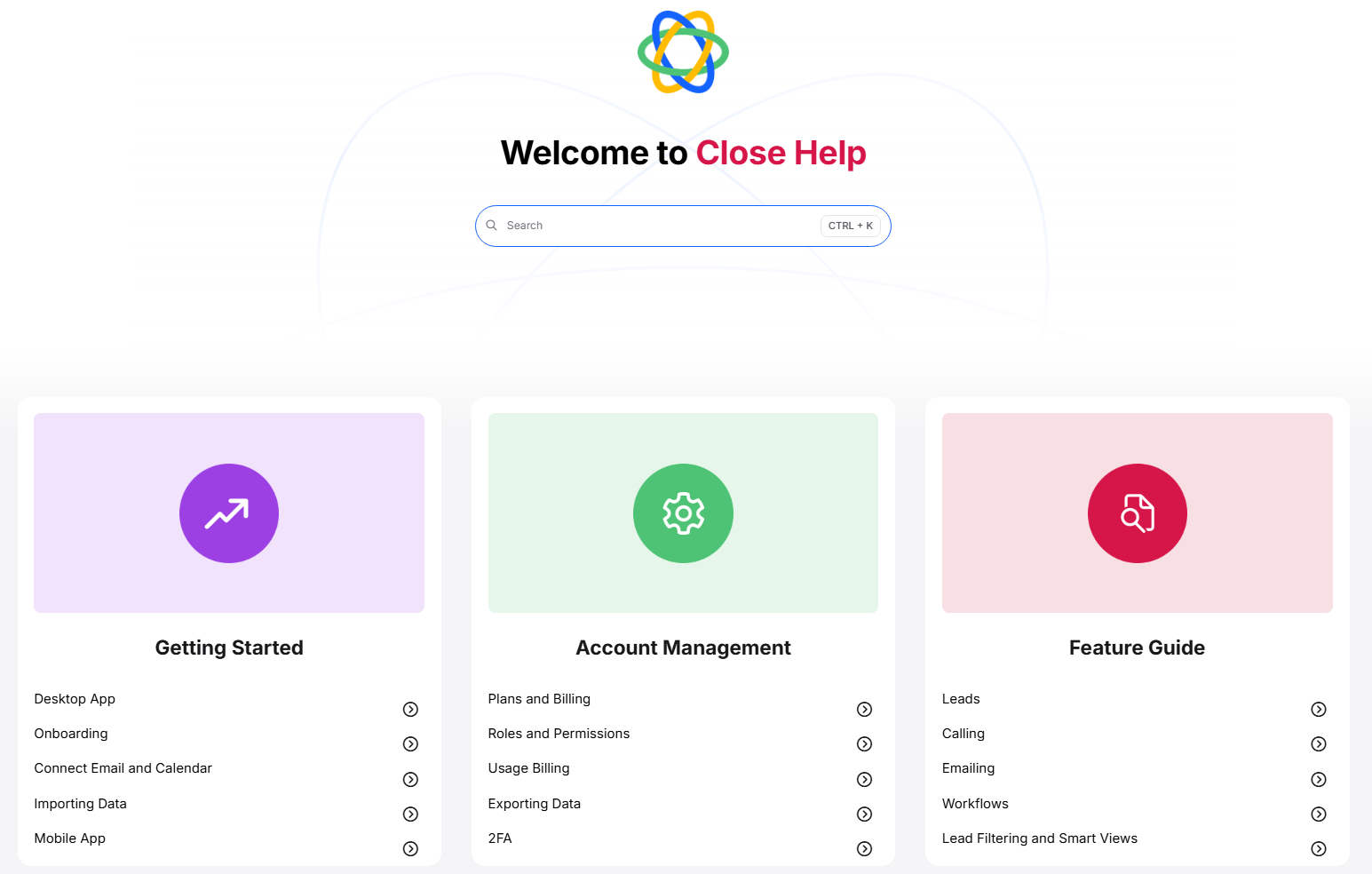
Documentation lives at help.close.com with the developer API reference at developer.close.com. Close is SOC 2 Type 2 certified covering all five trust service principles, with GDPR and CCPA compliance, 2FA on all plans, and Google SSO.
Source: Close
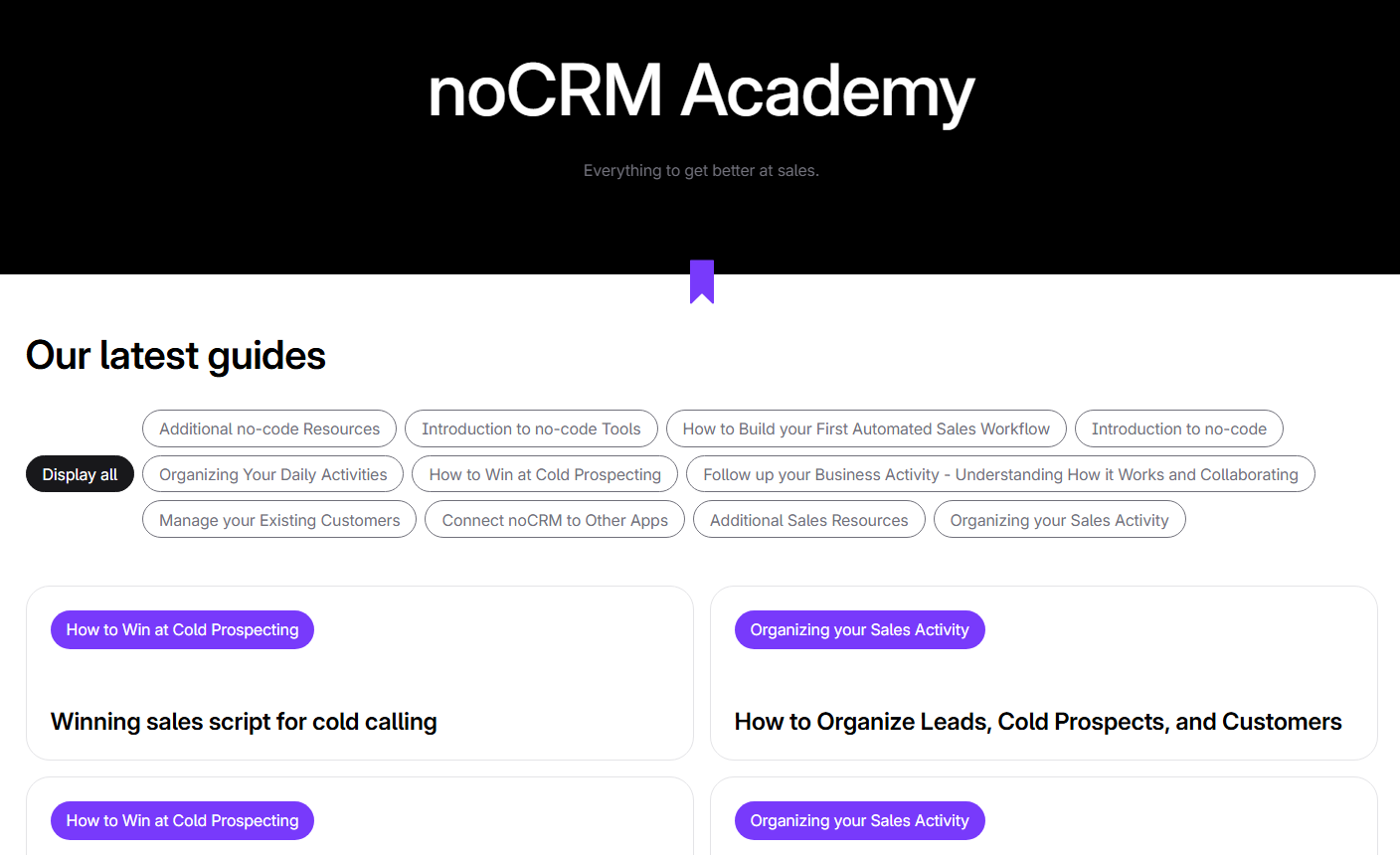
noCRM publishes a help center with 120+ articles across 17 categories, a dedicated Academy, no-code Academy with step-by-step Zapier and Make guides, live webinars, and an AI-powered search bar. Dream plan accounts with 5+ users receive personalized onboarding and priority support.
Source: noCRM.io
noCRM's security centers on European sovereignty: ISO 27001 certification, 100% European hosting, GDPR compliance with published Data Processing Agreements, and a top-3 EU Score sovereignty ranking from an independent non-profit framework.
For European organizations with strict data residency requirements, noCRM offers a verified compliance path that US-hosted CRMs cannot match without additional contractual arrangements.
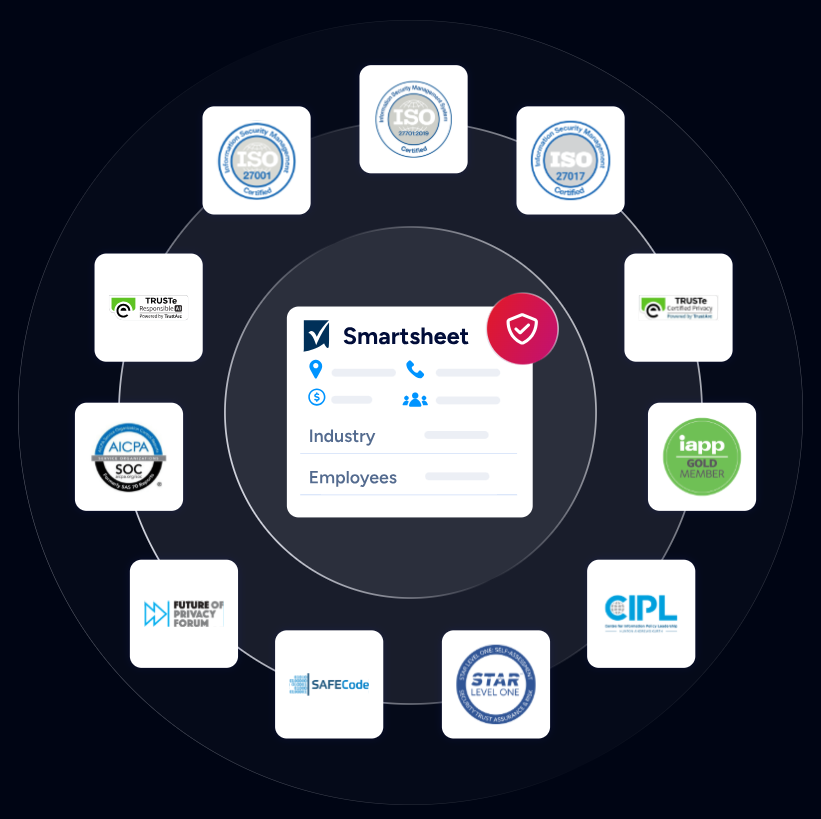
ZoomInfo maintains the most extensive certification stack of the three: ISO 27001, ISO 27701, SOC 2 Type II, TRUSTe GDPR, and TRUSTe CCPA validations, all renewed annually.
Source: ZoomInfo
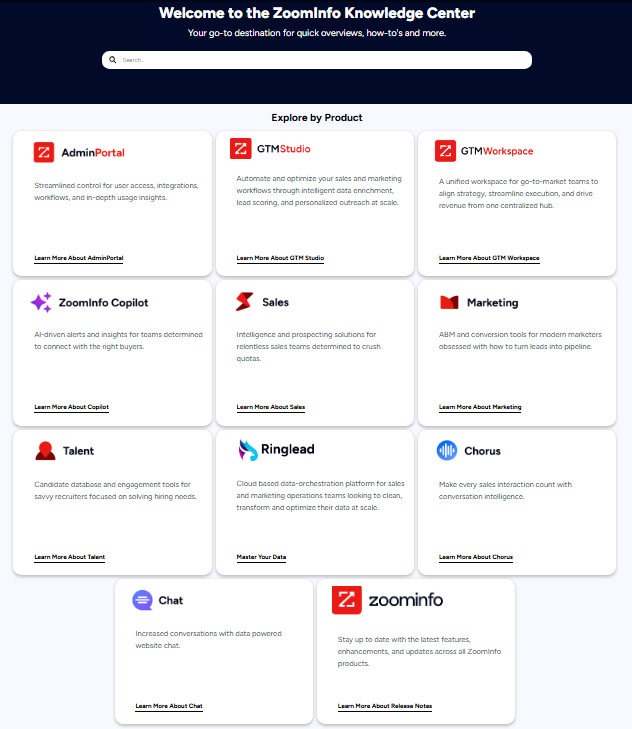
Support includes a Knowledge Center, ZoomInfo University with role-specific learning paths and certifications, a Modern GTM Community, and direct phone support at +1 866-904-9666.
Source: ZoomInfo
Enterprise customers receive dedicated service managers, and ZoomInfo's redesigned 90-day onboarding program won Rocketlane's Golden Comet award for Best Customer Onboarding Team.
Close vs. noCRM.io vs. ZoomInfo: Which should you choose?
The right platform depends on your team's primary challenge. Are you struggling with tool sprawl and need everything in one place? Are you struggling with CRM adoption and need something simpler? Or are you struggling to find the right people to sell to in the first place?
Choose Close if:
Your team makes high-volume outbound calls daily and needs a built-in dialer
You want email, calling, SMS, and CRM in a single platform with no integrations to manage
You need workflow automation that mixes communication channels in multi-step sequences
You're a B2B inside sales team under 100 people, particularly in SaaS, financial services, or coaching
You value call coaching features (Listen, Whisper, Barge) for training distributed reps
Choose noCRM.io if:
Your team resists traditional CRMs and you need the simplest adoption path
Follow-up discipline is your biggest gap, and enforced next-step reminders would fix it
You sell through shorter cycles where knowing "what to do next" matters more than complex automation
European data hosting and ISO 27001 certification are compliance requirements
You're a solopreneur or small team that also needs built-in quoting and invoicing
Choose ZoomInfo if:
Your team's biggest problem isn't managing leads but finding the right ones
You need verified contact data, direct dials, and business emails at scale
Knowing which accounts are in-market would change how you prioritize your pipeline
You want AI that surfaces account intelligence, drafts outreach, and identifies buying committees
You need an intelligence layer that feeds into your existing CRM or powers its own seller workspace
Start with ZoomInfo Lite for free, or request a demo of the full platform.
Close and noCRM are both effective tools for their intended audiences: Close for high-volume inside sales teams that need communication channels built into their CRM, noCRM for small teams that need pipeline discipline without complexity.
But any CRM's effectiveness depends on the quality of data flowing into it. ZoomInfo provides that data layer: verified contacts, company intelligence, buyer intent signals, and AI-powered insights that help your team identify who to call, when to call them, and why they're likely to respond.
Whether you access it through ZoomInfo's own GTM Workspace or feed it into Close or noCRM through APIs, the intelligence makes every other tool in your sales stack work harder.
Vensure's William Kenimer, Vice President of Revenue Operations: "ZoomInfo gives us the information we need to execute. We don't have to go through and spend our time digging. It's already there, so we can be three steps ahead." (Vensure)
Close vs. noCRM.io vs. ZoomInfo FAQ
What is the core difference between Close, noCRM.io, and ZoomInfo?
Close is a sales CRM with built-in calling, email, and SMS, designed for high-volume inside sales teams under 100 people.
noCRM.io is a lightweight lead management tool built around action-oriented pipeline management and enforced next-step discipline, with a strong European data sovereignty posture.
ZoomInfo is an AI-powered go-to-market platform that provides B2B data at scale (500M contacts, 100M companies, 135M+ verified phone numbers, 200M+ verified business email addresses), buyer intent signals, and AI-driven insights. ZoomInfo operates as the intelligence layer that powers prospecting and prioritization upstream of any CRM.
Which platform is best for high-volume outbound calling?
Close is the strongest choice for outbound calling. Its native Power Dialer auto-advances through lead lists, and its Predictive Dialer dials multiple numbers at once and routes live answers to available reps.
noCRM.io handles calling through third-party VoIP integrations with CloudTalk, JustCall, and Aircall, which work but require a separate subscription.
ZoomInfo provides intelligent dialing through GTM Workspace and an AI-powered action feed that prioritizes which accounts to call based on buying signals, so outbound efforts focus on accounts most likely to convert.
Can I use ZoomInfo with Close or noCRM?
Yes. ZoomInfo's APIs and MCP feed verified contact data, company intelligence, and buyer intent signals into any CRM or tool. ZoomInfo's data can enrich CRM records with direct dials, verified emails, and account context.
For teams that want to start smaller, ZoomInfo Lite provides 10 free monthly export credits to supplement lead data in either platform at no cost.
Which platform has the lowest learning curve?
noCRM.io has the simplest adoption path. The only required field to create a lead is a title, and the enforced To Do / Standby status cycle teaches the workflow through daily use.
Close is more feature-rich and takes longer to learn, though it claims the fastest onboarding and adoption ratings in CRM based on G2 data, and Underground Ecom reported full adoption in 2 weeks.
ZoomInfo's full platform requires a real onboarding investment given its breadth, though ZoomInfo Lite provides a simple starting point.
Is noCRM.io actually compliant with European data residency requirements?
noCRM.io is 100% made and hosted in Europe, ISO 27001 certified, and part of Positive Group, which ranked top 3 in the EU Score sovereignty framework (an independent non-profit certification).
For European organizations with strict data residency requirements, noCRM provides verified compliance that US-hosted CRMs cannot match without additional contractual arrangements.
Close is hosted on AWS (US-based) with SOC 2 Type 2 certification and GDPR compliance.
ZoomInfo holds ISO 27001, ISO 27701, SOC 2 Type II, and TRUSTe GDPR validations, with its infrastructure based in the US.
Which platform offers the best free option?
ZoomInfo offers the most generous free option with ZoomInfo Lite, a permanent free tier (not a trial) that includes access to 100M+ verified profiles, 10 monthly export credits, advanced search filters, the ReachOut Chrome Extension, and website visitor identification (up to 10 reveals per day), with no time limit and no credit card required. Close offers a 14-day free trial with no credit card required.
noCRM offers a 15-day free trial (extendable to 30 days) with full feature access on the chosen plan.
Do any of these platforms include quoting or invoicing?
noCRM.io is the only platform with a native Quotes and Invoices module (Expert tier and above). Reps generate proposals from lead cards, convert accepted quotes to invoices in one click, and lead statuses update automatically based on invoice events.
Close does not include proposal, quoting, or invoicing tools.
ZoomInfo focuses on intelligence, prospecting, and go-to-market execution rather than post-sale document generation.
Which platform is best for a team of 5-10 salespeople?
It depends on the team's primary challenge. If the team runs high-volume outbound calls and wants everything in one platform, Close's Growth plan ($99/seat/month) provides the dialer, automation, and AI features they need.
If the team wants the simplest pipeline tool that enforces follow-up discipline with fast adoption, noCRM's Expert or Dream tier delivers.
If the team's main problem is finding and prioritizing the right prospects to fill the pipeline, ZoomInfo's intelligence layer will have the most direct impact on results, either through its own GTM Workspace or by feeding verified data and buying signals into whichever CRM the team uses.
Keep comparing your options:
