
Consensus is the #1 platform in Demo Automation, helping B2B software companies turn product demos into buying decisions. With on-demand video demos, interactive product tours, a live demo platform, and its proprietary Demolytics® analytics engine, Consensus gives presales and sales teams the tools to scale demo delivery while surfacing hidden stakeholders across the buying committee.
But as your go-to-market strategy matures, you may find that demo automation is only one piece of the puzzle. Some teams need to identify the right buyers before sending a demo. Others need fully interactive, cloned product environments rather than video walkthroughs. And many growing companies need transparent pricing they can evaluate without a multi-week sales cycle.
That's where this guide comes in. Whether you're looking to:
Power your entire GTM motion with AI-driven buyer intelligence and B2B data
Deliver fully interactive, cloned demo environments for enterprise technical evaluations
Build AI-assisted interactive demos at published pricing for mid-market teams
Start with self-serve demo automation at transparent price points
Get started with demo automation without any upfront budget commitment
Produce polished, multi-channel product demos in under 15 minutes
Create pixel-perfect HTML demos at a flat monthly rate that doesn't scale with headcount
We'll explore Consensus alternatives that excel in these areas.
Some teams might use these tools to complement Consensus in a specific area, while others might replace it entirely with a custom stack. This isn't about finding a "better" platform; it's about finding the right fit as your GTM requirements evolve.
Let's look at the alternatives and find which ones match your business goals.
The Best Consensus Alternatives | |
|---|---|
Best Alternative for AI-Driven Buyer Intelligence & Full-Funnel GTM Execution We chose ZoomInfo because it addresses the intelligence gap upstream of demos: B2B data (500M contacts, 100M companies), buyer intent signals, and the GTM Context Graph, an intelligence layer that reveals which accounts to target, when to engage, and what they care about. | |
Best Alternative for Fully Interactive, Cloned Demo Environments We chose Reprise because its application cloning technology produces self-contained sandbox demos that behave like the live product, making it a strong fit for enterprise presales teams running complex technical evaluations. | |
Best Alternative for AI-Assisted Demo Creation at Published Pricing We chose Navattic because its HTML DOM capture, AI Copilot, and transparent quarterly pricing let mid-market SaaS teams build interactive product replicas without a multi-year enterprise contract. | |
Best Alternative for Small Teams With Published Pricing & Built-In Buyer Intent We chose Storylane because it combines screenshot, video, and HTML capture in a unified editor with engagement scoring, Account Reveal, and published pricing starting at $40/month, making it the most accessible self-serve option for growing teams. | |
Best Alternative for Teams Starting Without a Budget Commitment We chose Supademo because its permanent free plan, AI-powered URL-to-demo creation, and Scale tier at $38/month per creator offer the lowest barrier to entry in demo automation. | |
Best Alternative for Fast, Multi-Channel Product Demo Production We chose Arcade because it takes teams from screen capture to a published, branded interactive demo in minutes, with GIF, MP4, and AI video exports that distribute across email, social, and ads from a single recording session. | |
Best Alternative for Pixel-Perfect HTML Demos at a Flat Monthly Rate We chose HowdyGo because its flat-rate pricing (unlimited users and demos) and pixel-perfect HTML capture produce an editable demo library that scales with your team without per-seat cost increases. |
What is Consensus?
Source: Consensus
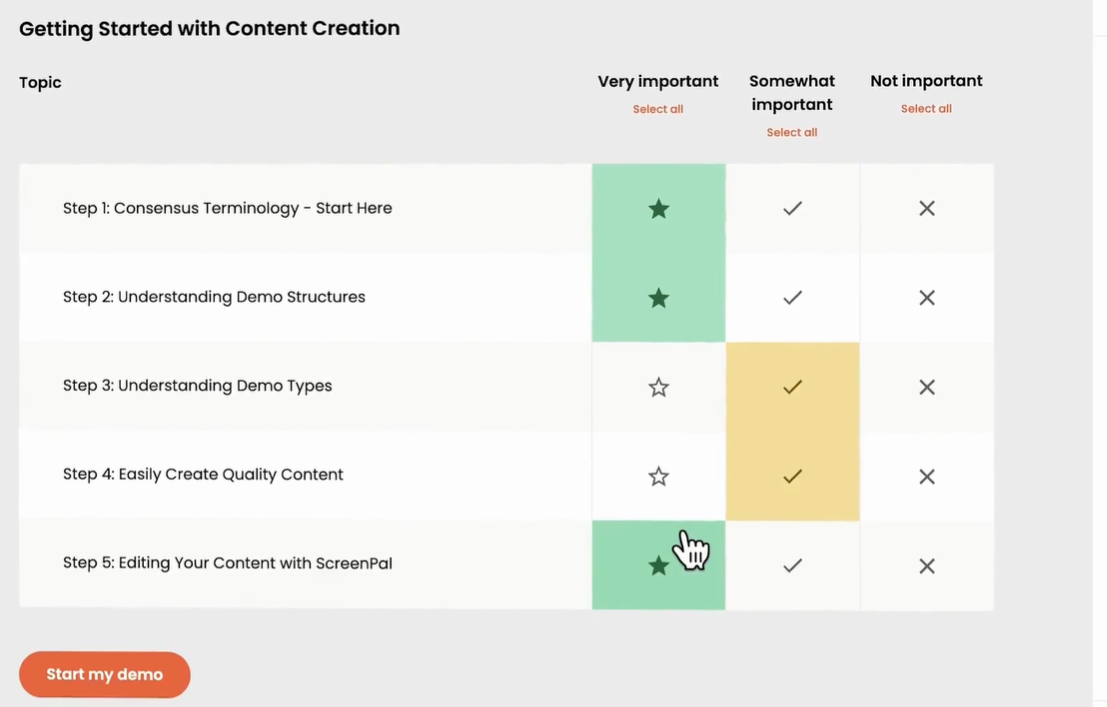
Consensus is a demo automation and buyer enablement platform that helps B2B software companies turn product demos into buying decisions. Positioned as the "#1 in Demo Automation", it serves GTM teams across presales, sales, marketing, customer success, and channel functions with tools that let buyers self-educate on their own schedule.
Its key features include:
On-Demand Video Demos with Feature Personalization that assembles a custom video sequence per viewer based on their stated priorities
Interactive Product Tours using HTML capture, video capture, and sandbox environments
A Live Demo Platform (powered by Saleo) that injects personalized data into the native product environment
Demolytics®, a proprietary analytics engine that tracks stakeholder engagement and surfaces hidden buying committee members through viral demo sharing
AI-powered demo creation and personalization, including AI Prompting, Scripting, Voiceovers, and AI Agents
Native integrations with Salesforce, Salesloft, Outreach, Marketo, Gong, HubSpot, Gmail, and Outlook
When a sales rep sends a Consensus demo, the platform captures each viewer's feature priorities, tracks watch behavior through per-viewer heatmaps, and monitors when they share the demo with colleagues.
However, Consensus's video-first architecture, opaque pricing (starting at $600/month with no public pricing page), and demo creation timelines (simple demos take 1-2 days; complex demos take 3-4 weeks) mean that some teams need a different approach, faster creation, or more accessible entry points.
Looking for a platform that shows you which accounts are ready to buy before you send a demo? ZoomInfo combines B2B data with buyer intent signals and AI-powered GTM execution. Learn more about what ZoomInfo can do for your team.
How We Curated Our List of Consensus Alternatives
After researching Consensus and the broader demo automation and GTM market, we found that teams searching for alternatives typically have needs that Consensus's all-in-one demo automation approach doesn't fully address. While Consensus excels at scaling async demo delivery for enterprise presales organizations, growing businesses often need more specialized tools for:
Identifying which accounts are actively in-market and building buying committee profiles before any demo is sent
Creating fully interactive, cloned demo environments where prospects can explore the real product rather than watch video recordings
Building AI-assisted interactive demos quickly, with published pricing and flexible contract terms
Starting with self-serve demo automation at transparent price points without a full enterprise sales cycle
Producing polished, multi-channel demo content in minutes rather than days
Maintaining high-volume, editable HTML demo libraries at flat-rate pricing that doesn't scale per seat
Each tool on this list leads in one of these areas. You might use them alongside Consensus or switch entirely; it depends on what your growing GTM team needs most.
DISCLAIMER: We aren't covering every demo automation or GTM tool on the market! Our focus is on the best alternatives that address some of Consensus's limitations for various use cases. The goal is to highlight tools that serve specific business needs. |
|---|
1. ZoomInfo: Best Alternative for AI-Driven Buyer Intelligence & Full-Funnel GTM Execution
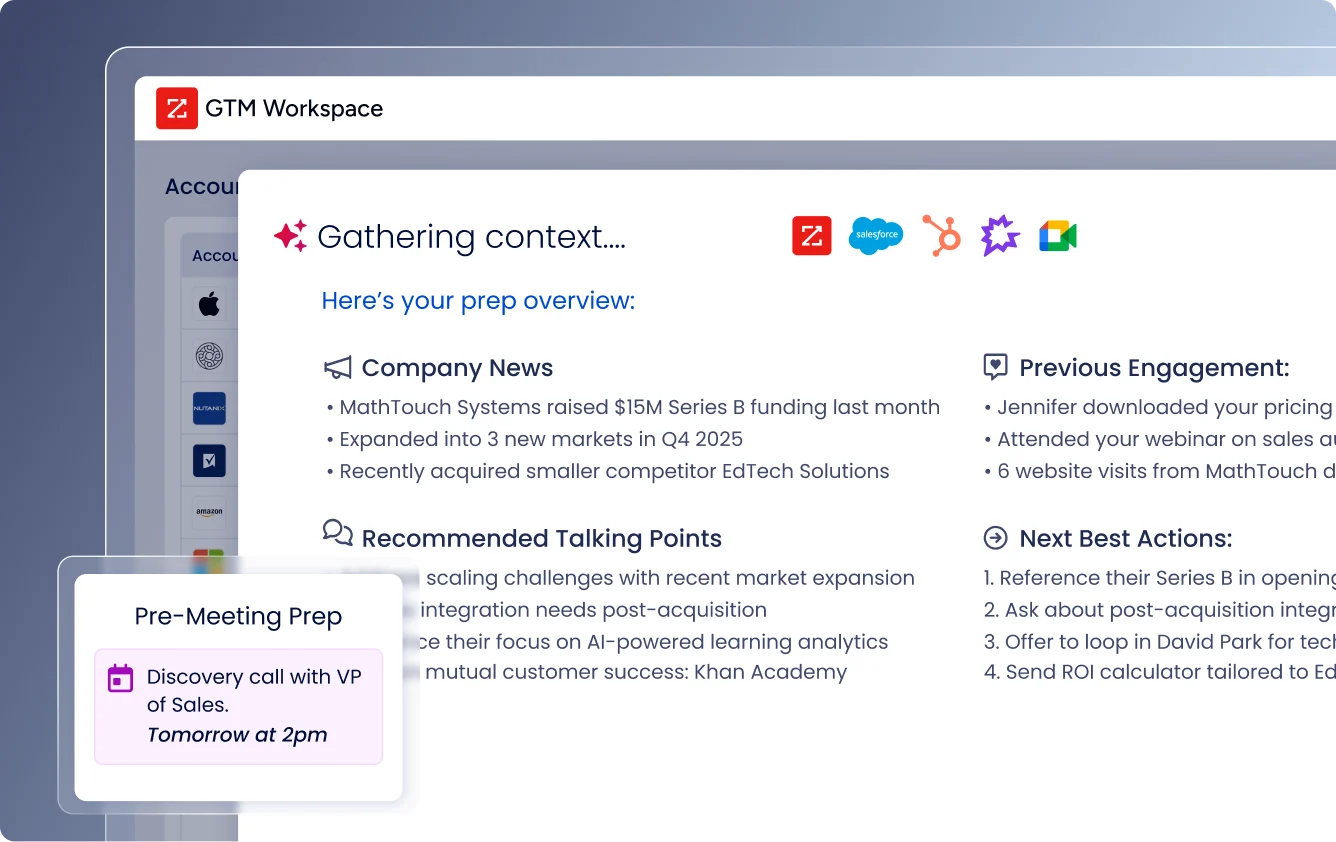
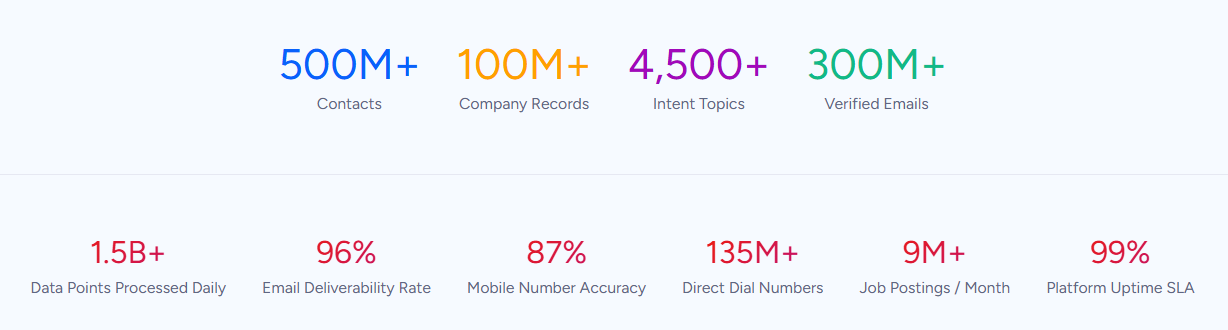
ZoomInfo is an all-in-one AI GTM platform built on a large B2B data foundation: 500M contacts, 100M companies, 135M+ verified phone numbers, and 200M+ verified business emails. Its key features include:
B2B data covering identity data, company context, and buying signals, verified at scale with 300+ human researchers and up to 95% accuracy on first-party data
Buyer Intent Data tracking signals from 210 million IP-to-Organization pairings and 6 trillion+ new keyword-to-device pairings monthly, with Guided Intent that identifies topics historically correlated with deal success
GTM Context Graph, an intelligence layer that fuses B2B data with CRM records, conversation intelligence, and behavioral signals to capture not just what happened, but why it happened
GTM Workspace for sellers and GTM Studio for marketers and RevOps
ZoomInfo takes a different approach to the same goal Consensus addresses. Consensus helps you deliver better demos. ZoomInfo helps you ensure every demo reaches the right person, at the right time, with the right context. For teams whose demo conversion problems stem from targeting gaps rather than demo format, ZoomInfo addresses the root cause.
Why Choose ZoomInfo Over Consensus for Buyer Intelligence & GTM Execution
Consensus excels at automating demo delivery and tracking. ZoomInfo provides the intelligence layer that makes every downstream GTM action (including demos) more effective. Here's where ZoomInfo steps up:
Buyer Intent & Signal Intelligence: Know Who to Demo Before You Send
Consensus's Demolytics® tracks engagement after a demo is sent: which stakeholders watched, what features they prioritized, and how long they engaged. But it only generates intelligence from people who have already received and opened a demo link.
ZoomInfo Intent operates upstream. It tracks buying signals across 210 million IP-to-Organization pairings, identifying which companies are actively researching topics related to your solution before any outreach occurs.
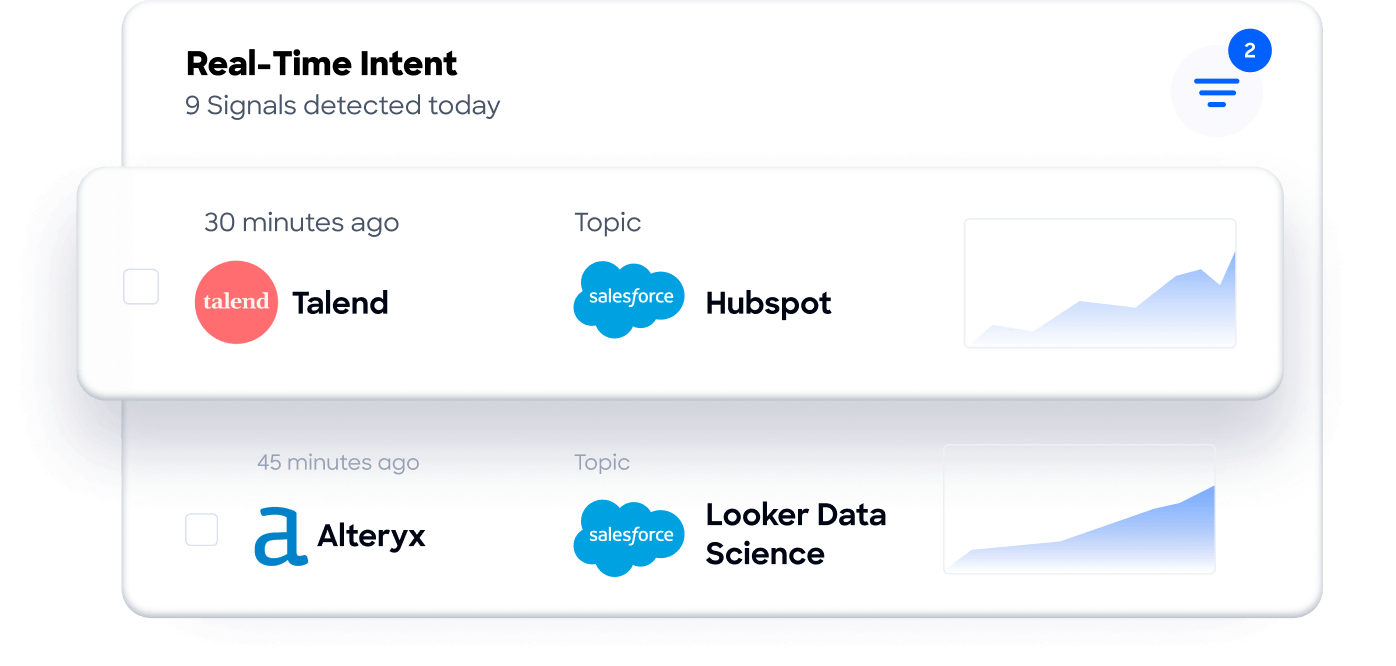
Guided Intent, exclusive to ZoomInfo, goes further by automatically identifying the topics historically correlated with your closed-won deals rather than requiring manual topic selection.
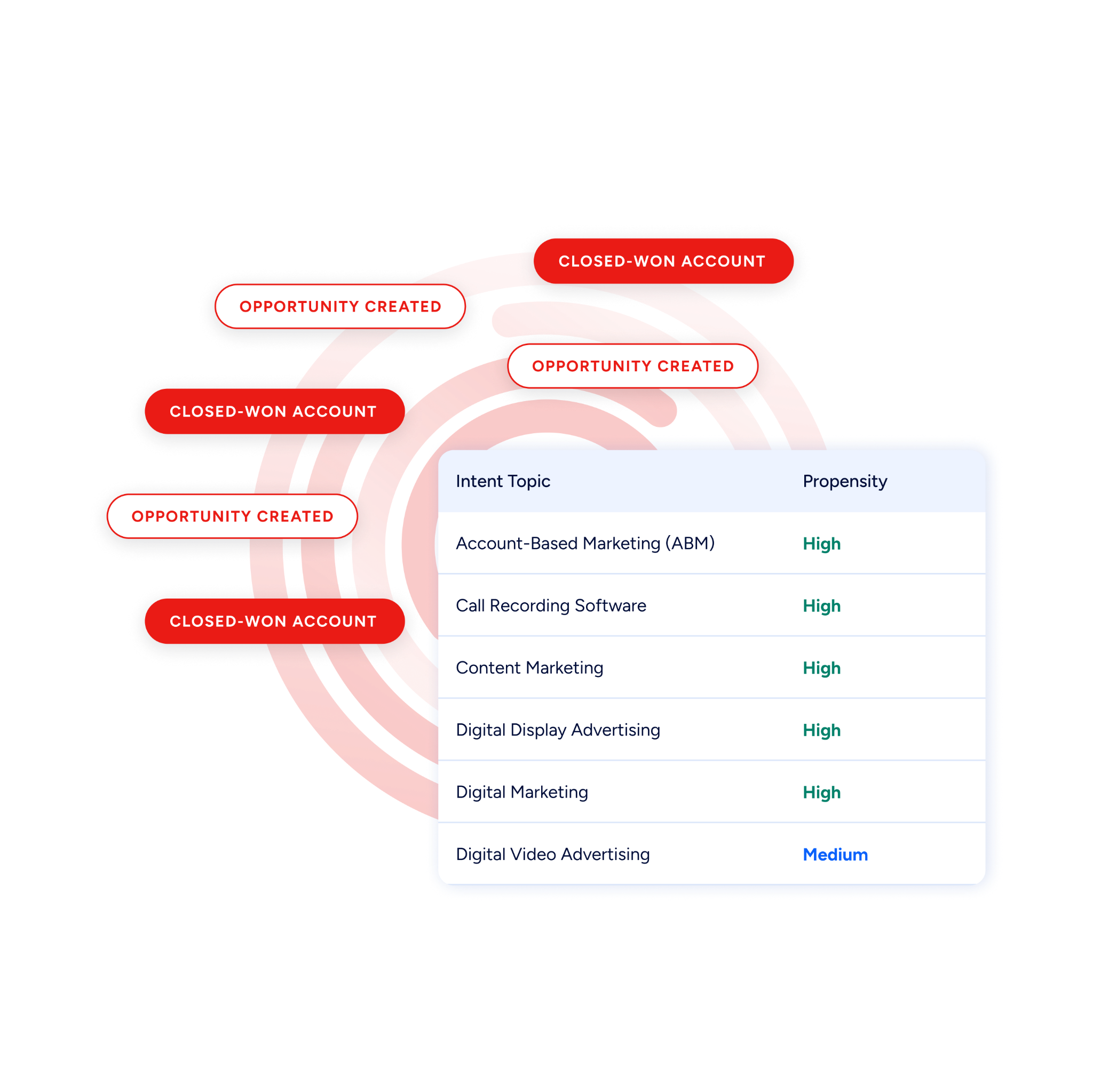
WebSights resolves anonymous website traffic to companies, including buying team identification and direct contact info, with Automatic Traffic Filtering that separates real company traffic from bot activity.
ZoomInfo in Action: Your marketing team notices a spike in intent signals from a Fortune 500 account researching your product category. ZoomInfo surfaces the entire buying committee: the VP of Sales Engineering driving the evaluation, the CFO who joined the research two weeks ago, and the IT security lead reviewing compliance requirements.
Before your sales rep sends a single demo, they already know who the stakeholders are, what they care about, and that the account is actively in-market. Demolytics can only surface that intelligence after a demo has been shared and forwarded.
"ZoomInfo's not just a contact data company anymore. They've built a full system of execution. GTM Intelligence actually works the list, writes the outreach, triggers the play, and helps drive predictable growth." (Levanta)
Comprehensive Contact Data: Reach the Full Buying Committee From Day One
Consensus's stakeholder discovery is reactive by design: it surfaces hidden buyers when a champion forwards a demo link internally. That's valuable, but it means the selling team depends on a single champion to reach the rest of the buying group.
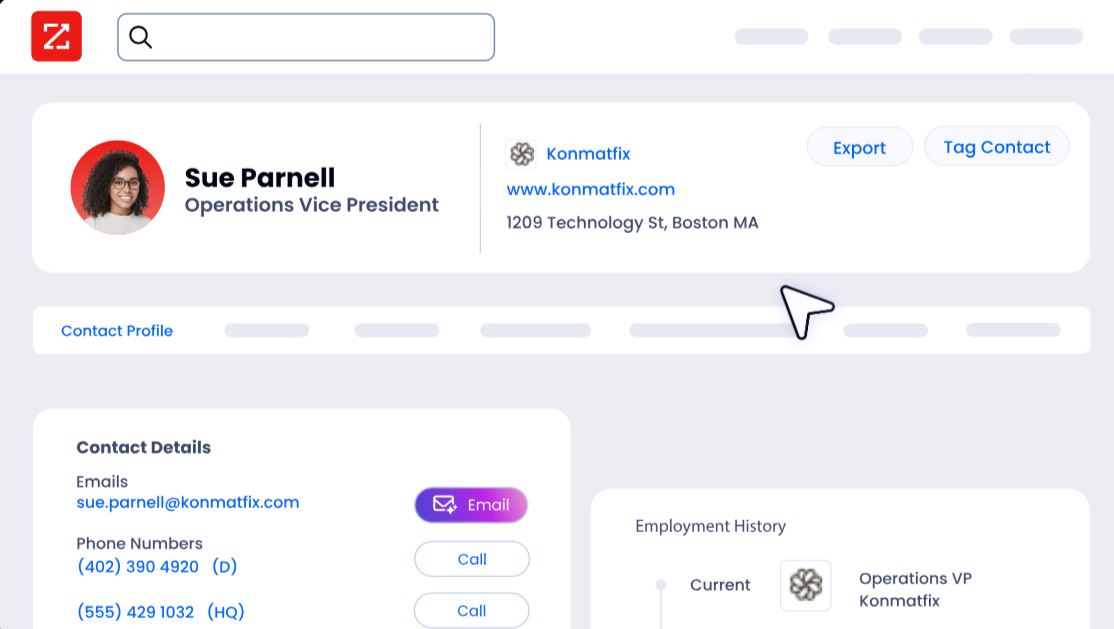
ZoomInfo provides the buying committee upfront. With 500M contacts, 120M direct-dial phone numbers, and 200M+ verified business email addresses, your team can identify and reach every relevant stakeholder from the start, not just the contact who raised their hand.
Department org charts with decision-makers' direct dials and emails, 300+ company attributes for market segmentation, and contact tracking with job-change alerts mean you're never relying on a single thread into an account.
The data quality has external validation: in a Fortune 500 competitive RFP analyzing 25 million contacts across vendors, the independent consultant concluded that "no other competitor came even close."
ZoomInfo in Action: Instead of sending one demo to a single sales contact and hoping they share it, your rep uses ZoomInfo to map the full buying committee: three decision-makers, two technical evaluators, and a procurement lead. Each person receives tailored outreach addressing their role in the evaluation, with messaging informed by the account's tech stack, recent funding, and competitive research activity.
The result: multi-threaded engagement from day one, not just when someone decides to forward a link.
"That combination of our internal CRM data, external signals, and AI that's given all that context has helped us craft very specific account- and persona-based messages. And people have responded to them right away." (Seismic)
GTM Context Graph & AI Execution: Understand Why Deals Move or Stall
Consensus tracks what buyers do with demos.
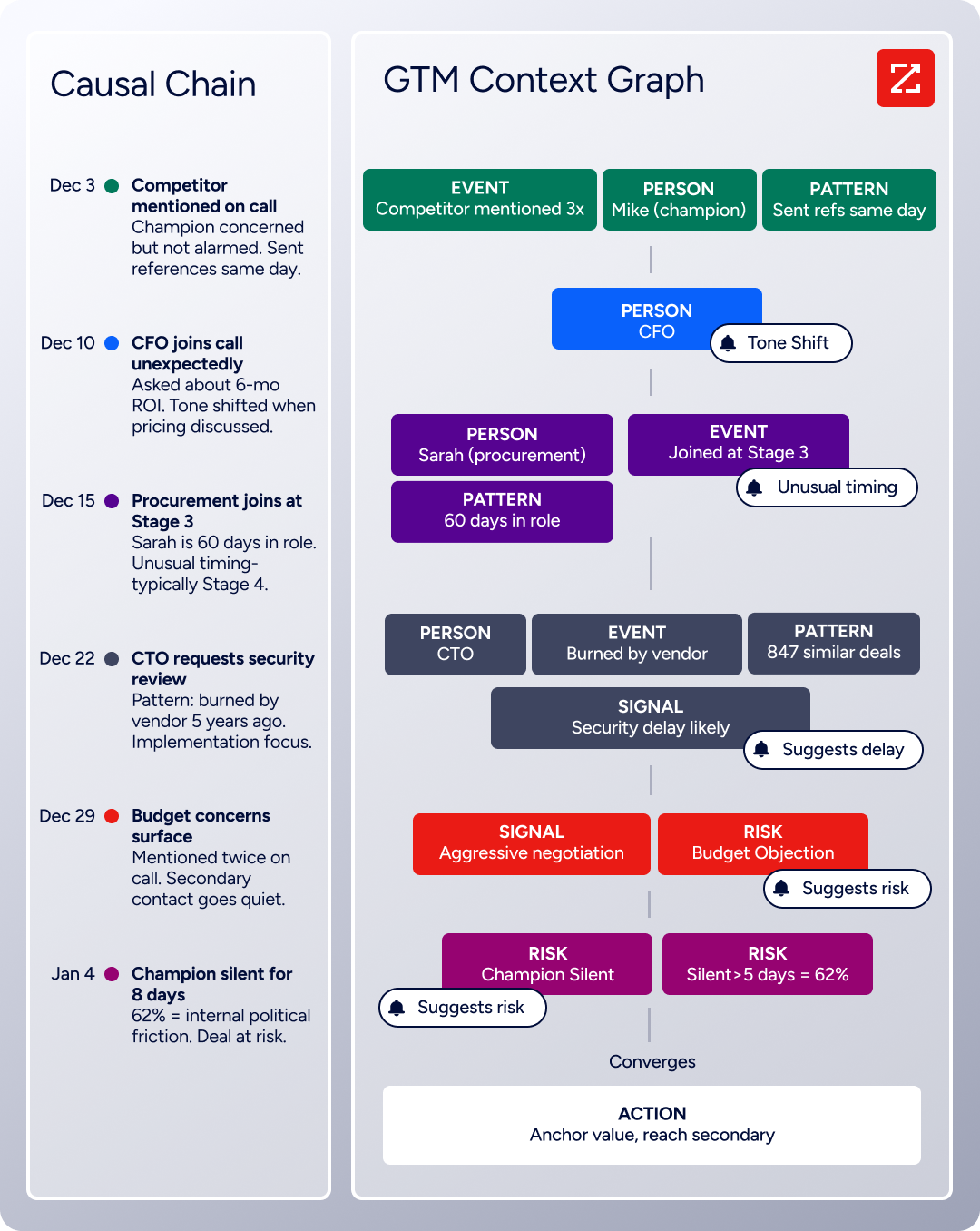
ZoomInfo's GTM Context Graph, which processes 1.5B+ data points daily, captures why deals progress or stall by fusing your CRM records, conversation intelligence from calls and meetings, and third-party signals into one intelligence layer.
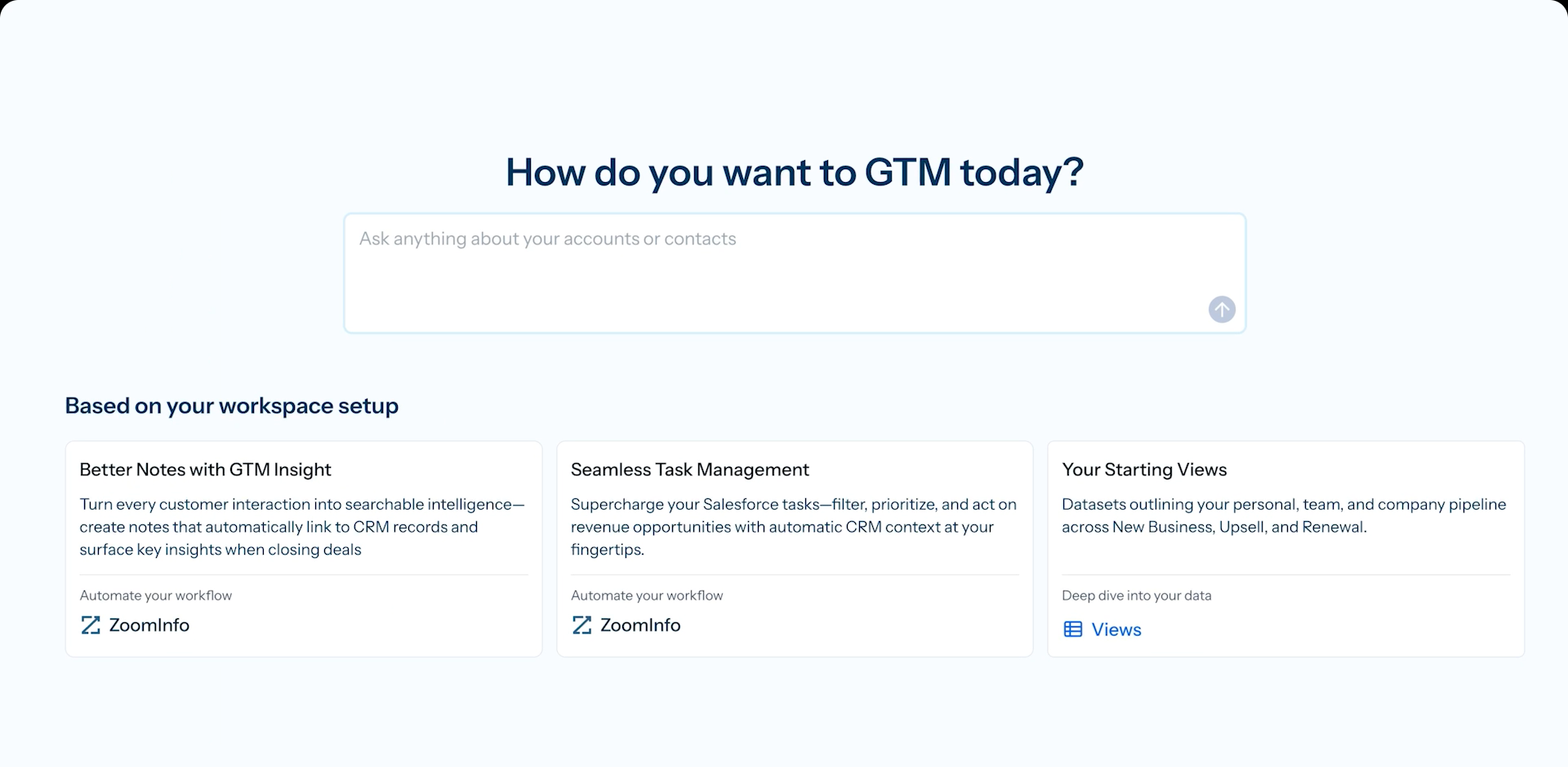
GTM Workspace gives sellers a single surface where prioritized accounts, AI-drafted outreach, and deal execution converge.
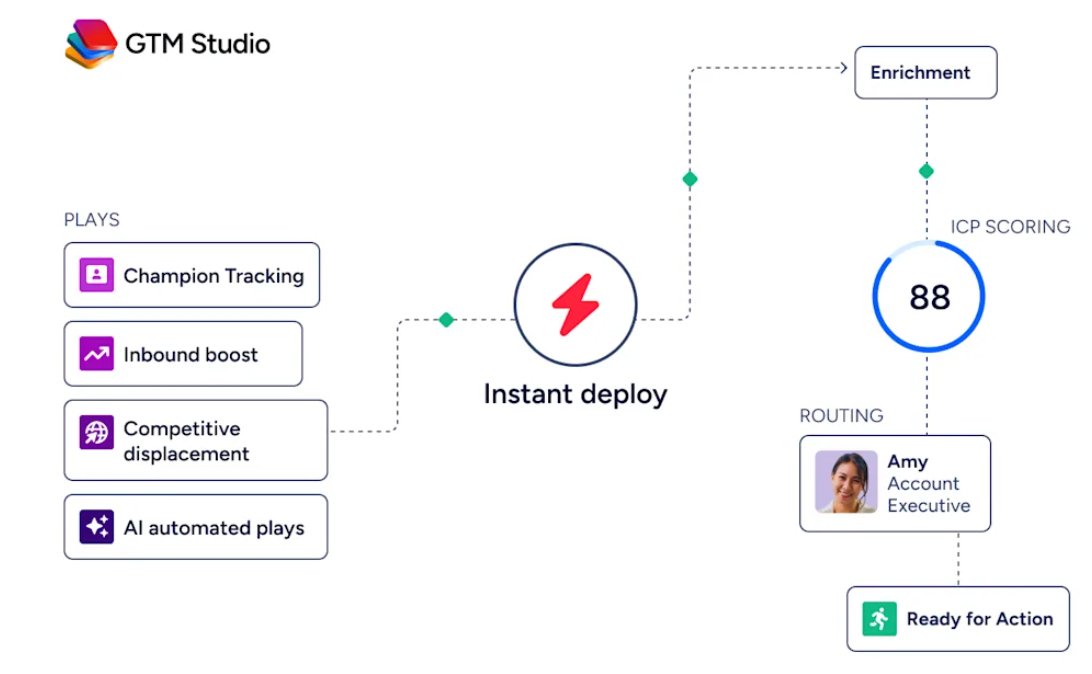
GTM Studio gives marketers and RevOps a builder environment where audience definition, campaign orchestration, and pipeline measurement happen in natural language.
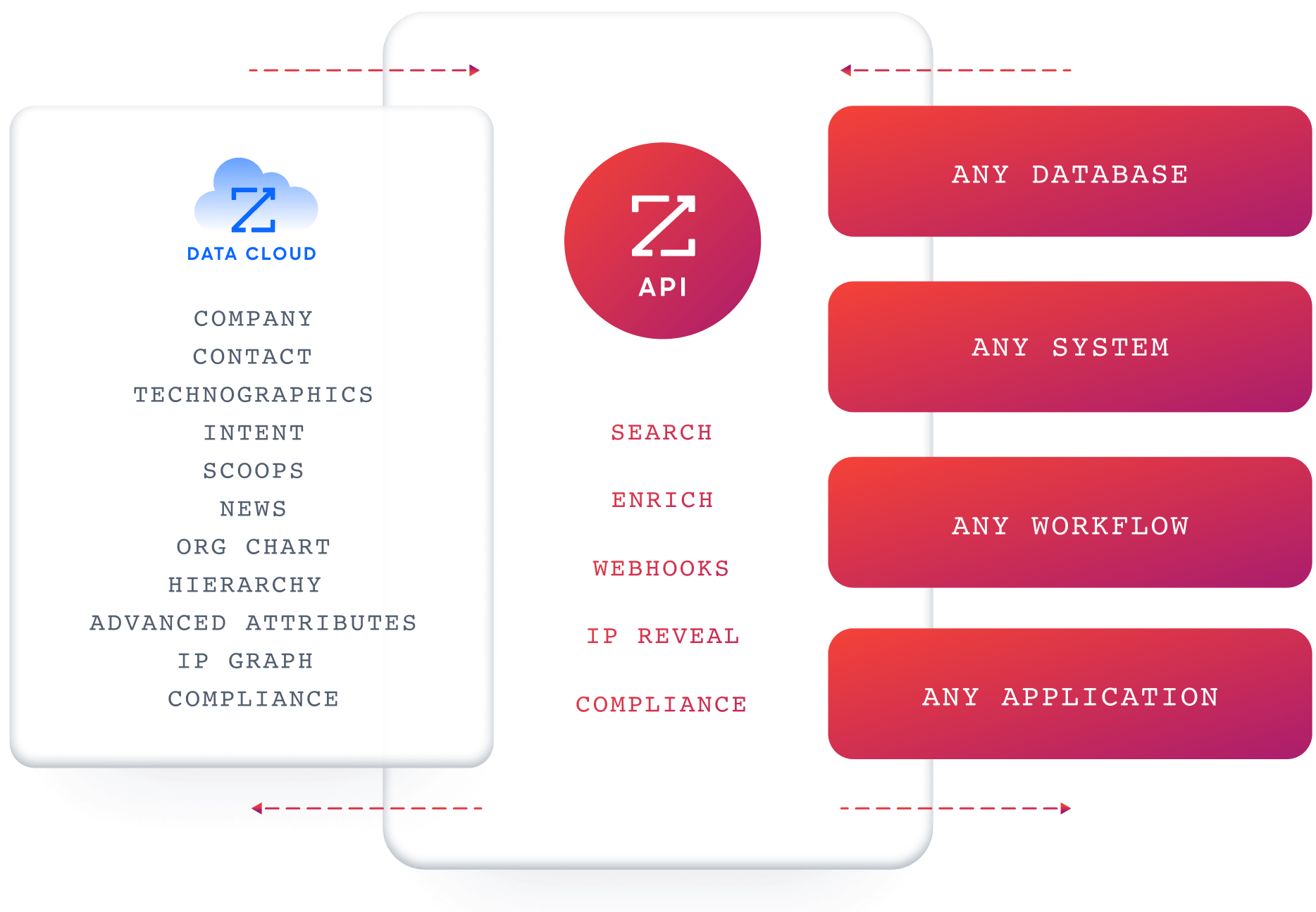
For teams building beyond ZoomInfo's own products, APIs and MCP expose the same intelligence to any custom agent, internal tool, or partner platform.
ZoomInfo in Action: Your account executive opens GTM Workspace and sees that a target account's CFO joined the last sales call and asked about six-month ROI, while a VP went quiet for eight days due to an internal budget review.
The GTM Context Graph connects these signals to patterns from thousands of similar deals, recommending a follow-up that addresses the CFO's concern while re-engaging the quiet VP through a different stakeholder. That contextual reasoning is the difference between AI that has your data and AI that understands your deals.
"It's not just the data itself. It's more about the right data at the right time to help us reach out with the right message across that full buyer journey." (Redwood Logistics)
ZoomInfo Pricing
ZoomInfo uses a consumption-based pricing model with custom-quoted plans. Pricing scales around enterprise license agreements, data access, API consumption, and AI activity.
The platform is organized into three product lines:
Sales plans (Professional, Advanced, Enterprise) for prospecting, intent signals, and AI-powered outreach
Marketing plans (Marketing Demand, ABM Lite, ABM Enterprise) for audience targeting, cross-channel advertising, and account-based marketing
Additional products including Chorus (conversation intelligence) and Chat (data-powered website chat)
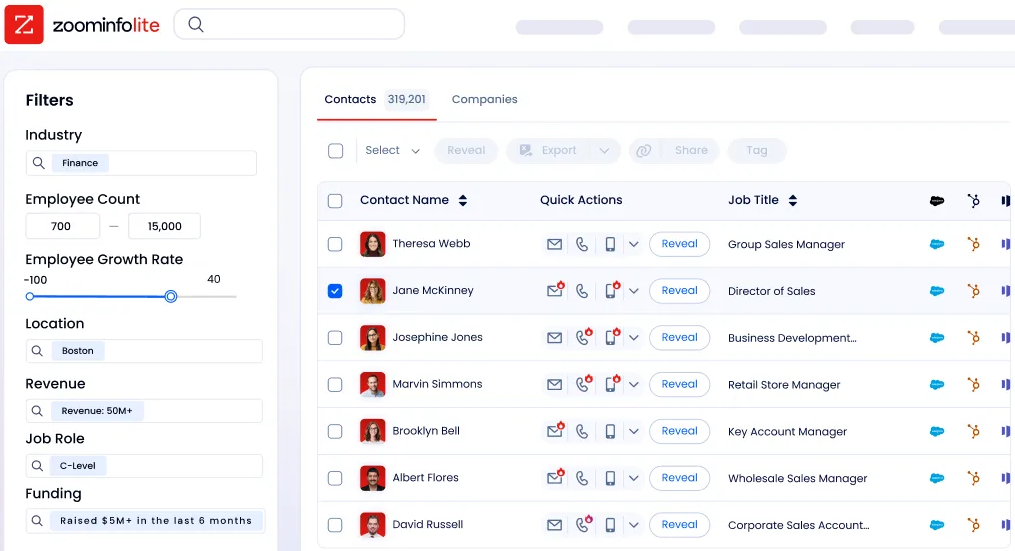
ZoomInfo Lite is a permanent free tier (no credit card, no time limits) that includes access to ZoomInfo's B2B database with 10 monthly export credits, individual and company searches, the ReachOut Chrome Extension, and HubSpot integration. A 7-day free trial of the full platform is also available.
API access is included in all relevant plans, and MCP is available through partners including Anthropic Claude and Google.
Who Should Use ZoomInfo?
Choose ZoomInfo if:
You want to improve demo and outreach conversion by targeting only the accounts showing active buying intent, rather than sending demos to every inbound lead and hoping the right ones engage.
You need to reach the full buying committee from day one, with verified direct dials and business emails, rather than relying on a single champion to forward a demo link.
You're looking for a platform that covers the entire GTM motion (prospecting, intent monitoring, outreach, CRM enrichment, pipeline intelligence) rather than optimizing only the demo delivery stage.
Want to know which accounts are ready to buy before you send a single demo? Explore what ZoomInfo can do for your GTM team.
2. Reprise: Best Alternative for Fully Interactive, Cloned Demo Environments
Source: Reprise
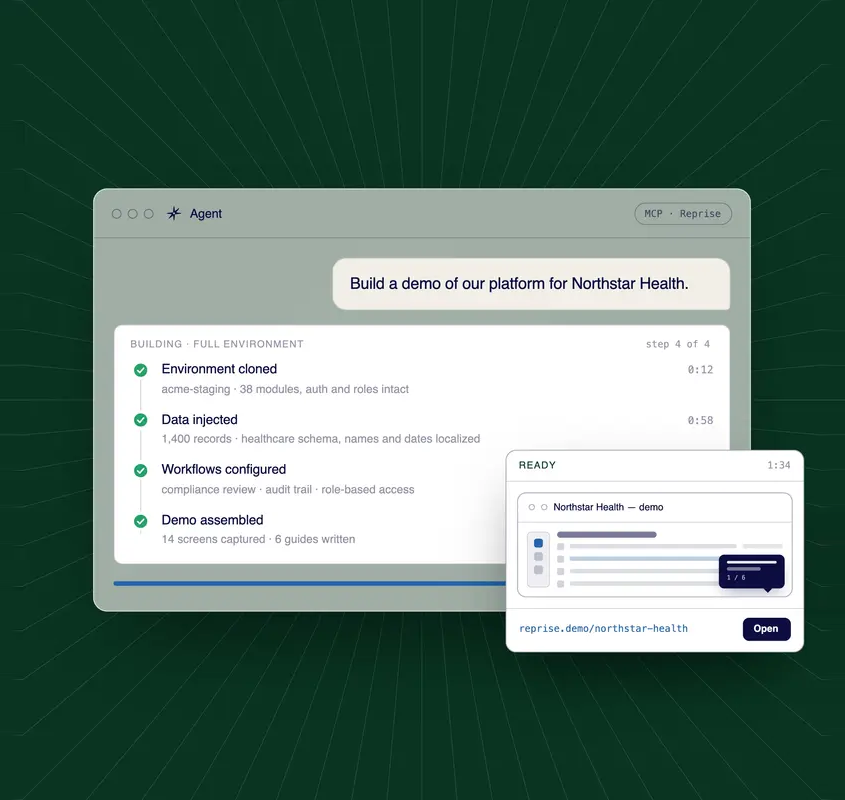
Reprise is an enterprise demo creation platform covering product tours, live data injection, and full application cloning within a single product. Where Consensus is built around video-first async demo automation, Reprise is built around demo fidelity: the experience a prospect gets inside a Reprise demo behaves like the live product. Its key capabilities include:
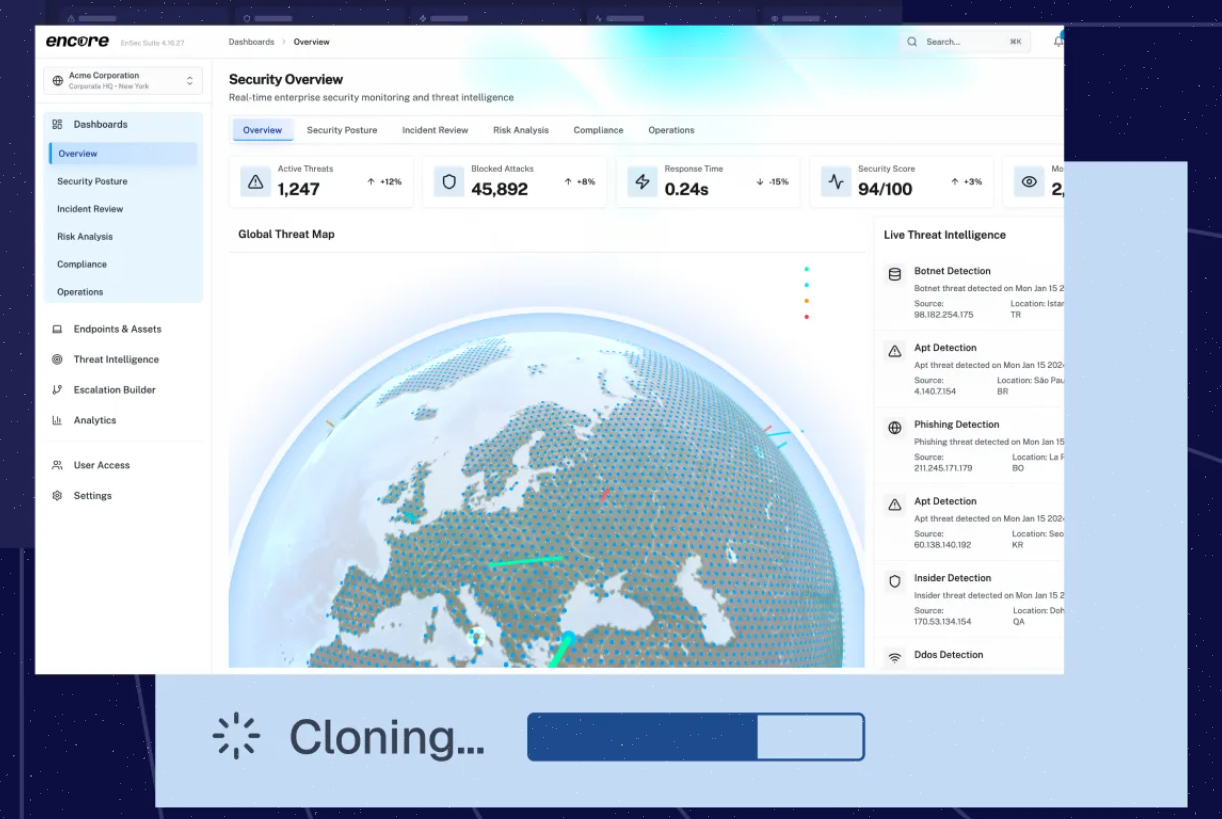
Reprise Replicate captures the entire front end and network request/response layer of a web application to produce a self-contained sandbox where every workflow behaves as it does in production
Reprise Reveal injects prospect-specific data, company branding, and industry-relevant datasets into a live or cloned environment in seconds
Reprise Replay captures the product front end at the HTML/CSS/JS layer to produce fully interactive demos with unbreakable clickpaths and offline mode
SOC 2 Type II and ISO/IEC 27001:2022 certification included at every package tier
Why Choose Reprise Over Consensus for Enterprise Demo Environments
Reprise stands out in the following areas:
Full Behavioral Fidelity vs. Video-Based Async Demos
Consensus's core demo format delivers curated video playlists assembled based on a buyer's stated feature priorities. That works for qualification and stakeholder discovery, but buyers watching a Consensus demo are watching the product, not using it. Reprise Replicate takes the opposite approach: the Clone environment captures not just the visual front end but also the underlying network request/response pairs, so a cloned demo can process multi-step enterprise workflows exactly as the live product does. For teams selling technically complex software where buyers need to click through dashboards, run queries, or trigger workflows to understand value, Reprise's cloning technology closes a gap that video automation cannot.
Source: Reprise
Three Capture Technologies in a Single Platform
Consensus serves one primary motion well: send an async video demo that buyers can watch and share. Reprise covers three distinct demo motions within one platform: Replay (HTML-captured tours and leave-behinds), Reveal (live data injection for SE-led demos), and Replicate (self-contained sandbox environments). These run on shared demo asset infrastructure, shared analytics, and shared permissions, so a presales team can build one demo library and serve it across website embeds, live calls, and champion leave-behinds without duplicating work.
Dual Enterprise Security Certification at Every Tier
Consensus holds SOC 2 Type II attestation. Reprise holds SOC 2 Type II and ISO/IEC 27001:2022 certification, both included in every package tier rather than as enterprise add-ons. This matters in regulated industries (financial services, healthcare IT, government) where procurement teams require specific certifications before a vendor can proceed to commercial negotiation.
NOTE: We also evaluated Demostack and Walnut for the enterprise environment-cloning archetype. Demostack offers full environment cloning at a comparable range with strong enterprise adoption. Walnut's enterprise tier includes guided demos with personalization tooling. Reprise offers the strongest fit for teams needing all three demo capture methods (overlay, HTML capture, and full cloning) alongside dual security certification verified at the platform level.
Reprise Pricing
Reprise operates on a fully quote-based pricing model. The pricing page describes the model as an annual platform fee covering all features (including SOC 2 Type II, ISO 27001, SSO, RBAC, and analytics) with flexible per-user licenses layered on top. No free trial or self-serve signup exists; both entry points route through the Reprise sales team.
Who Should Use Reprise?
Choose Reprise if:
Your sales team sells technically complex enterprise software where a video walkthrough is not enough, and prospects need to explore the product in a fully functional, interactive replica.
Your SE team is a bottleneck and you need a demo library model where SEs build reusable environments once that AEs can deploy independently.
Your prospects are enterprise buyers in security-conscious industries and both SOC 2 Type II and ISO 27001 certifications are hard requirements for vendor selection.
3. Navattic: Best Alternative for AI-Assisted Demo Creation at Published Pricing
Source: Navattic
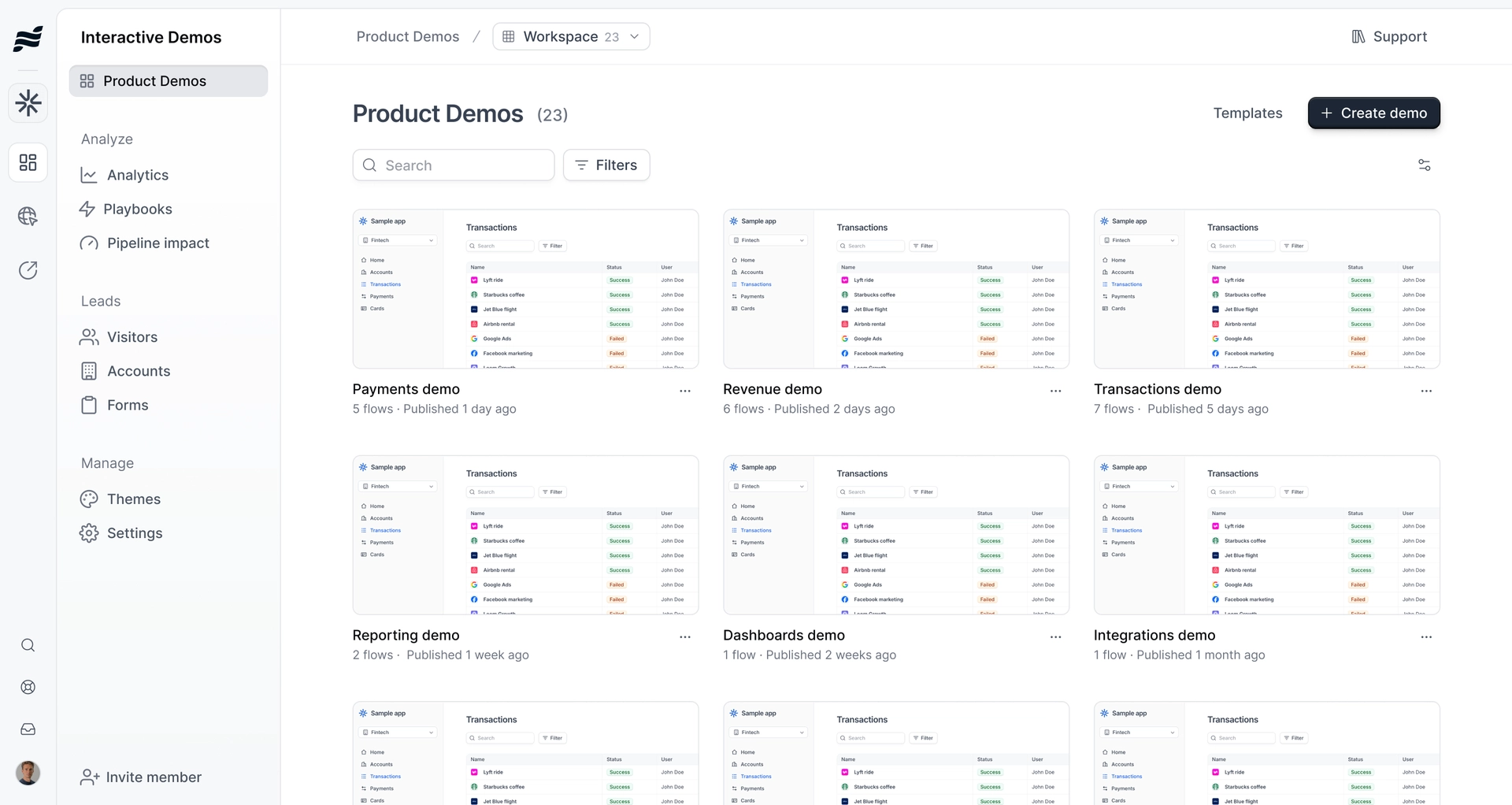
Navattic is a demo automation platform that places interactive product experiences at every stage of the buyer journey. Where Consensus was built around a video-first, presales-heavy workflow, Navattic's differentiation starts at the capture layer: its HTML DOM capture technology produces fully interactive, clickable replicas of the actual product interface rather than recorded video walkthroughs. Its key capabilities include:
HTML DOM capture preserving hover states, animations, and scroll interactions so prospects click through real product screens
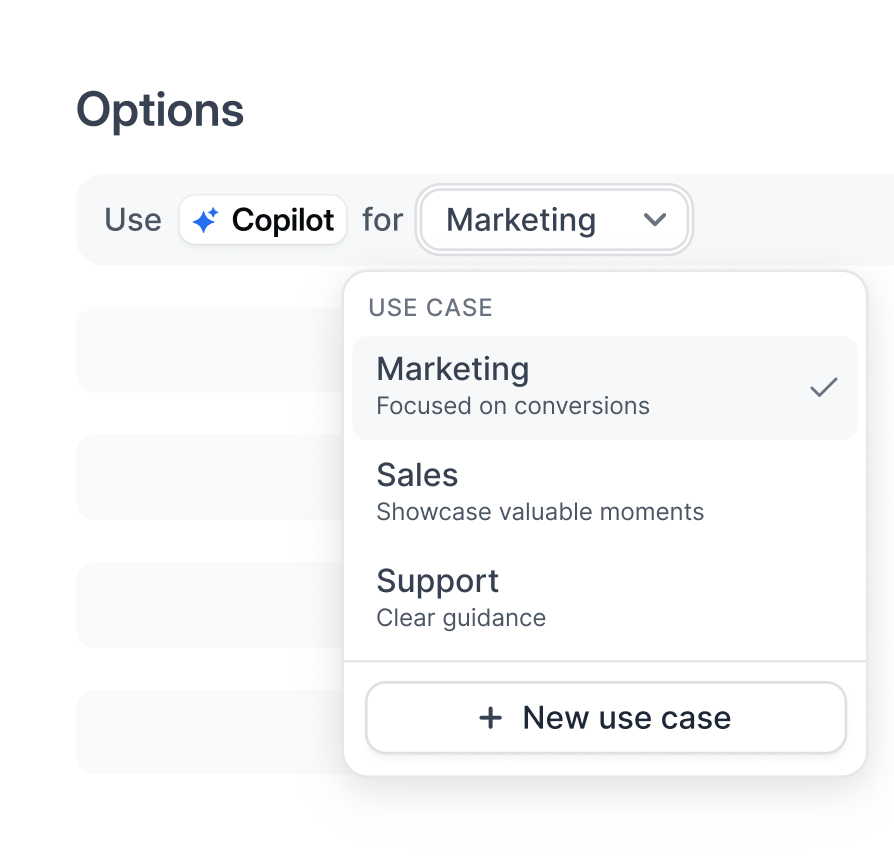
AI Copilot that generates tour annotations, step titles, and CTA text from a single natural language prompt
Sandbox environments on the Growth tier for free product exploration during presales calls
A/B testing available on the Base plan, not locked to enterprise tiers
Transparent quarterly pricing with plans available on minimum 3-month terms
Why Choose Navattic Over Consensus for Mid-Market Demo Automation
Navattic stands out in the following areas:
HTML DOM Capture Produces Interactive Product Replicas, Not Video Recordings Consensus's primary on-demand demo format is video-based. Navattic's core capture format differs: the Chrome extension captures a static HTML DOM snapshot, preserving hover states, scroll interactions, and animation behaviors so the resulting demo is a clickable replica of the real product. 86% of top-performing demos on Navattic use HTML/CSS web captures. The Magic Editor toolset extends this with no-code capabilities including Find & Replace across entire capture collections, Table AI for bulk data editing, and Animating Text for typewriter-effect animations.
AI Copilot Cuts Demo Creation Time
Consensus's own 2026 B2B Buyer Behavior Report reveals that simple demos take 1-2 days and complex demos take 3-4 weeks, with 55% of creators citing bandwidth as their primary constraint. Navattic Copilot addresses this directly: Copilot Generate reads URLs from captures to pull actual product details, then generates step titles, tooltip content, and CTA text for the entire flow in one pass. Copilot Prompt handles post-generation editing via natural language, and Copilot Review audits the finished demo against performance benchmarks.
Source: Navattic
Transparent Quarterly Pricing Removes the Sales Cycle Prerequisite
Consensus's pricing is fully gated. Navattic publishes its tier structure publicly: a permanent free Starter plan (1 seat, 1 demo), and paid plans (Base at 5 seats, Growth at 10 seats) billed on annual terms with a minimum 3-month quarterly commitment option. Per the Terms of Service, price increases at renewal are capped at 5% with 60 days' advance notice.
NOTE: We also evaluated Walnut (mid-market positioning) and Storylane (comparable HTML capture capability). While Walnut is designed for mid-market sales workflows and Storylane offers comparable depth at competitive pricing, Navattic offers the strongest combination of AI Copilot for production speed, A/B testing for optimization, sandbox demos for enterprise evaluations, and published pricing for self-serve budget qualification.
Navattic Pricing
Starter (Free, Permanent): 1 seat, 1 HTML or media demo, Starter AI Copilot, unlimited views
Base (Billed Annually): 5 seats, unlimited HTML demos, full AI Copilot suite, 25+ integrations, A/B testing, dedicated CSM
Growth (Billed Annually): 10 seats, Launchpad sandbox demos, account identification, advanced analytics, SSO, SCIM
Enterprise (Custom Quote): All Growth features plus offline demos, audit logs, professional services, priority support
Who Should Use Navattic?
Choose Navattic if:
Your team needs to produce interactive demos faster than a video-recording workflow allows, and wants AI-assisted creation that drafts content from captured screens automatically.
You want to run A/B tests to optimize demo flows on a mid-tier plan rather than paying enterprise pricing for testing capability.
You prefer to self-qualify on pricing structure before entering a full sales cycle.
4. Storylane: Best Alternative for Small Teams With Published Pricing & Built-In Buyer Intent
Source: Storylane
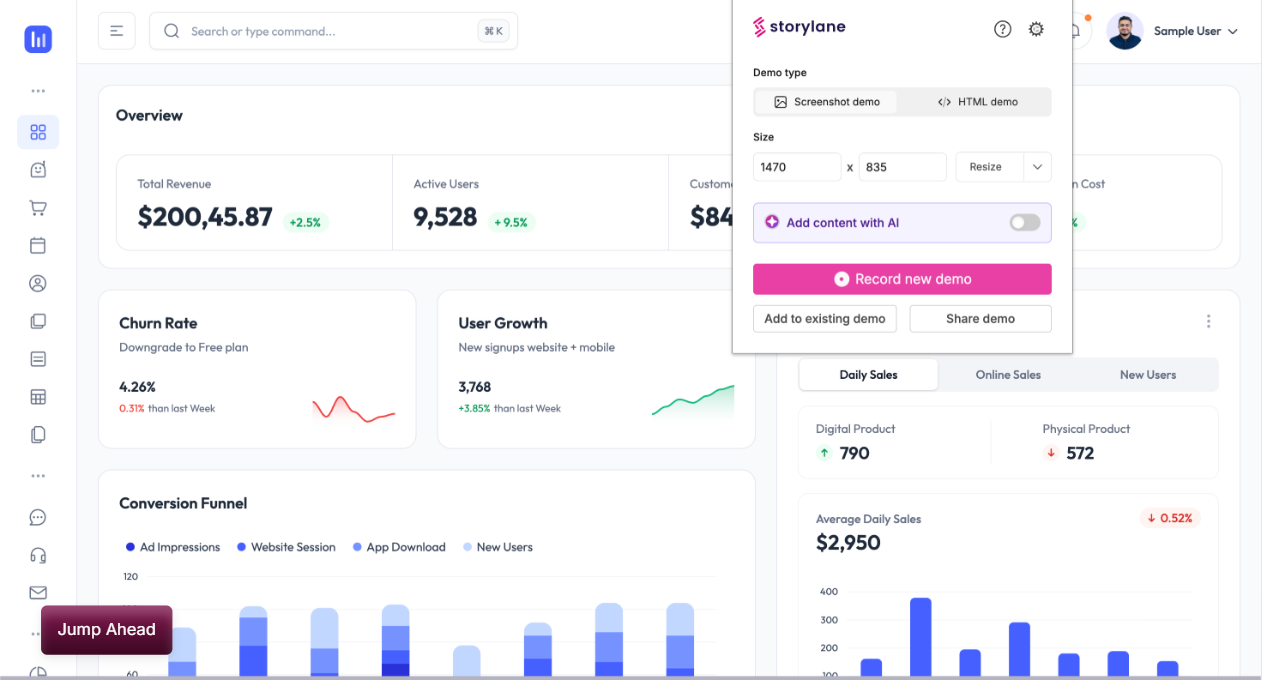
Storylane is an interactive demo automation platform for B2B SaaS teams who need to show their product at every stage of the buying journey, starting from a self-serve pricing model. Its key capabilities include:
A unified editor handling screenshot, video, and HTML capture types in a single interface
Hubs that bundle demos, PDFs, case studies, and videos into shareable buyer experience pages
Account Reveal for IP-based company identification without form fills
Engagement scoring with automatic Low/Medium/High intent classification
Published pricing starting at $40/month (annual), no sales call required
Why Choose Storylane Over Consensus for Self-Serve Demo Automation
Storylane stands out in the following areas:
Published Pricing vs. a Gated Sales Process
Consensus requires a sales conversation before a buyer can determine cost. The lowest documented tier starts at $600/month for five seats. Storylane publishes its full pricing ladder without gating: a permanent free plan (one seat, one published demo), Starter at $40/month, and clear tier structure through Premium. Storylane prices on creator seats, not demo views, so costs stay flat regardless of prospect volume.
Unified Demo Editor Across Three Capture Modes
Consensus's architecture remains video-first with tours and live demos as supplementary layers. Storylane's editor handles screenshot, video, and HTML demos in the same interface. A team can start with screenshot capture and build toward HTML demos that produce editable, responsive product replicas without switching tools. AI guide generation runs during recording, auto-generating contextual tooltips and hotspots as the user clicks through.
Self-Serve Buyer Intelligence at Accessible Pricing
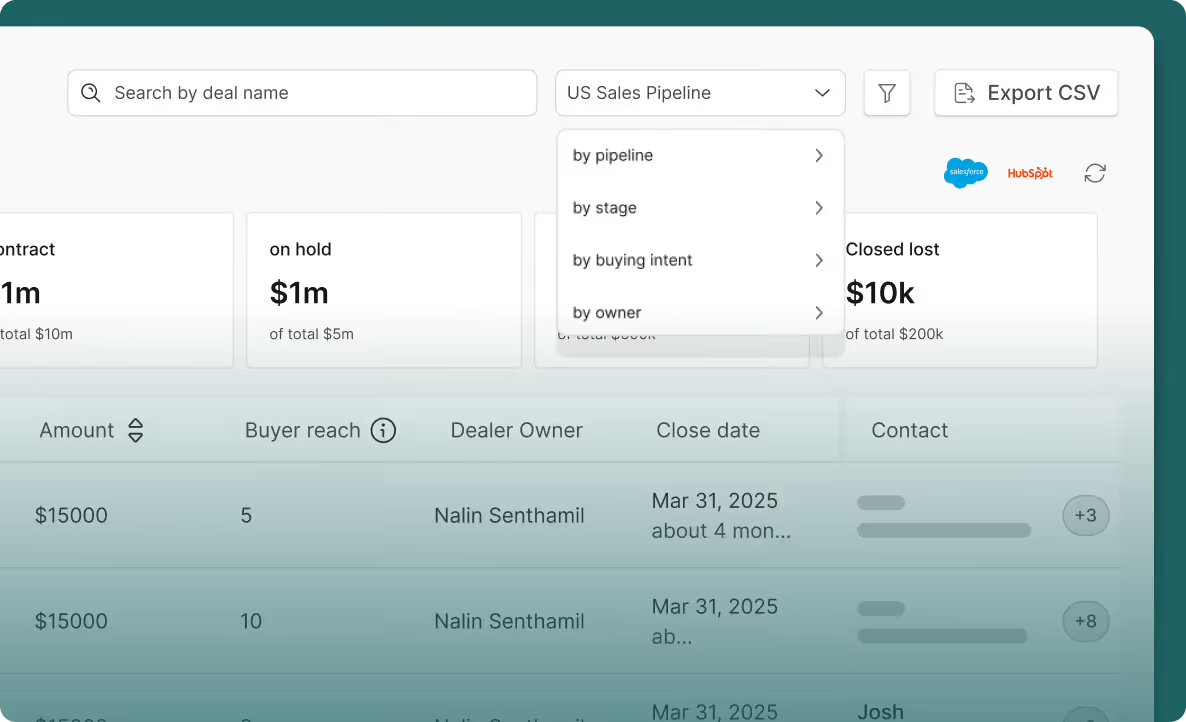
Account Reveal surfaces which companies are engaging with demos starting at 250 de-anonymized visitors per month on Starter. Lead Attribution retroactively links anonymous sessions to known contacts when a form is submitted. Deal Intelligence connects engagement signals to HubSpot or Salesforce opportunities. All available at published prices with no 90-day cancellation notice requirement.
Source: Storylane
NOTE: We also evaluated Arcade and Supademo. While Arcade excels at quick, embeddable tours with a comparable price range, and Supademo offers affordable screenshot-based demos for early-stage teams, Storylane offers the strongest combination of demo creation breadth, published pricing, buyer intent tracking, and multi-stakeholder buyer rooms for small teams.
Storylane Pricing
Free ($0/month): 1 seat, 1 published demo, screenshot and video capture, AI Content Assistant, basic analytics
Starter ($40/month annual / $50/month monthly): Unlimited demos, Account Reveal (250/month), AI Voiceovers, custom branding, HubSpot and Zapier integrations
Growth ($500/month annual): 5 seats, HTML capture, AI HTML Editor, A/B Testing, 2,500 Account Reveal/month, full integration suite
Premium ($1,200/month annual): 10 seats, Hubs included, Salesforce integration, SSO, Deal Intelligence, 10,000 Account Reveal/month
Enterprise (Custom): Sandbox Demos, API access, enterprise security
Who Should Use Storylane?
Choose Storylane if:
Your team has 1-5 demo creators and needs a published price you can put in a budget proposal without scheduling a sales call.
You need buyer intent signals (which companies are viewing demos, how engaged they are) but aren't running enough volume to justify a $600+/month platform.
You want to consolidate demo delivery, buyer room creation, and engagement tracking into one tool rather than stitching together a screen recorder, a deal room, and a separate analytics layer.
5. Supademo: Best Alternative for Teams Starting Without a Budget Commitment
Source: Supademo
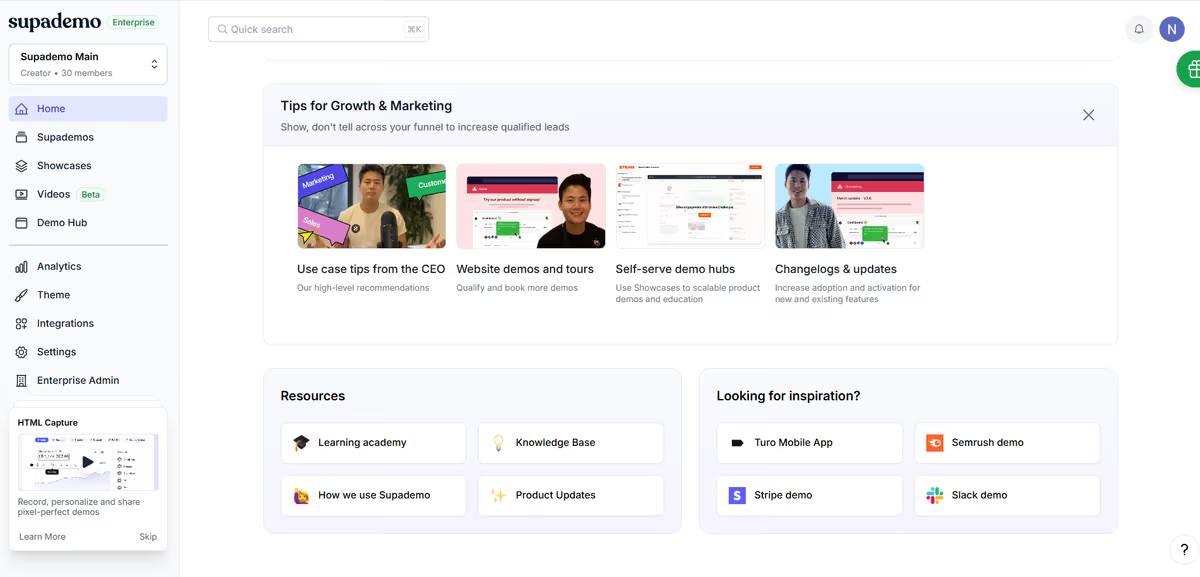
Supademo is an interactive demo platform for GTM teams that need to create, share, and analyze product walkthroughs without pricing barriers or content production overhead. Its key capabilities include:
Permanent free plan with five demos and unlimited views, no credit card required
URL-to-demo AI creation that generates a shareable interactive walkthrough from any public product URL
Scale plan at $38/month per creator billed annually
Six demo capture formats: HTML walkthroughs, screenshot demos, sandbox environments, screen recordings, Figma captures, and desktop app captures
Multi-channel distribution (link sharing, embedding, video export, PDF) on all tiers including Free
Why Choose Supademo Over Consensus for Budget-Conscious Teams
Supademo stands out in the following areas:
A Permanent Free Plan That Requires No Sales Conversation
Consensus requires every prospect to enter a sales conversation before accessing the platform. The minimum disclosed price is $600/month for five seats. Supademo's Free plan is permanent, requires no credit card, and supports one creator with five guided interactive demos and unlimited views. A Startup plan extends discounted pricing for pre-Series A companies with under $2M raised.
AI-Powered Demo Creation That Removes the Recording Prerequisite
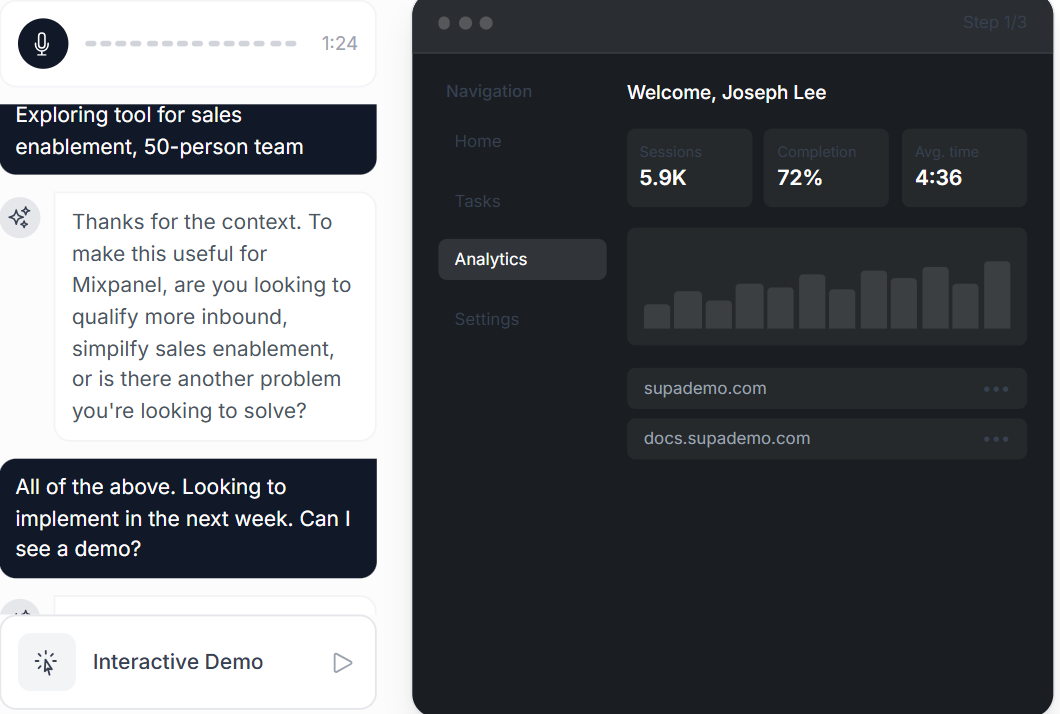
Consensus's demo creation requires recording within the platform or uploading pre-recorded video. Supademo offers a different entry point: paste any public product URL and Supademo's AI captures and structures the product interface into a shareable interactive demo without a screen recording session. A sales rep can generate a demo during prospect research, a CS manager can build a tour from a help page, or a marketer can create a feature walkthrough from a landing page, all without a browser extension or scheduled recording.
Source: Supademo
Published Pricing With Flexible Contract Terms
Supademo's pricing is fully transparent: Free ($0), Scale ($38/month per creator), Growth ($350/month for five creators), and Enterprise (custom, starting at 10 creators). Monthly subscriptions can be cancelled at any time, effective at the end of the billing period, compared to Consensus's 90-day cancellation notice requirement.
NOTE: We also evaluated Arcade as an alternative for zero-budget teams. While Arcade also offers a permanent free plan, Supademo's free tier includes five demos with unlimited views and AI-powered URL-to-demo creation, making it the more complete zero-cost option.
Supademo Pricing
Free (Permanent): $0 forever, 1 creator, 5 guided demos, unlimited views, all distribution formats
Scale ($38/month per creator, annual): Unlimited demos, Supademo AI, conditional branching, CRM integrations (HubSpot, Salesforce, Marketo)
Growth ($350/month for 5 creators): Adds Route Hub, HTML demos, clickable sandbox demos, AI voice cloning; AI Demo Agent available as usage-based add-on
Enterprise (Custom, 10+ creators): SSO, SAML, custom data residency, multiple workspaces
Who Should Use Supademo?
Choose Supademo if:
You want to test interactive demo automation and need to validate ROI before committing to a $600+/month platform that requires an enterprise sales conversation.
Your demos are created by a single marketer, CS manager, or founder rather than a dedicated presales team.
You're pre-budget or pre-Series A and need a permanent free plan to create and share demos before any money is spent.
6. Arcade: Best Alternative for Fast, Multi-Channel Product Demo Production
Source: Arcade
Arcade is a visual storytelling platform that lets product marketers, growth teams, and sales engineers build and publish interactive product demos and AI-generated marketing videos in minutes. Its key capabilities include:
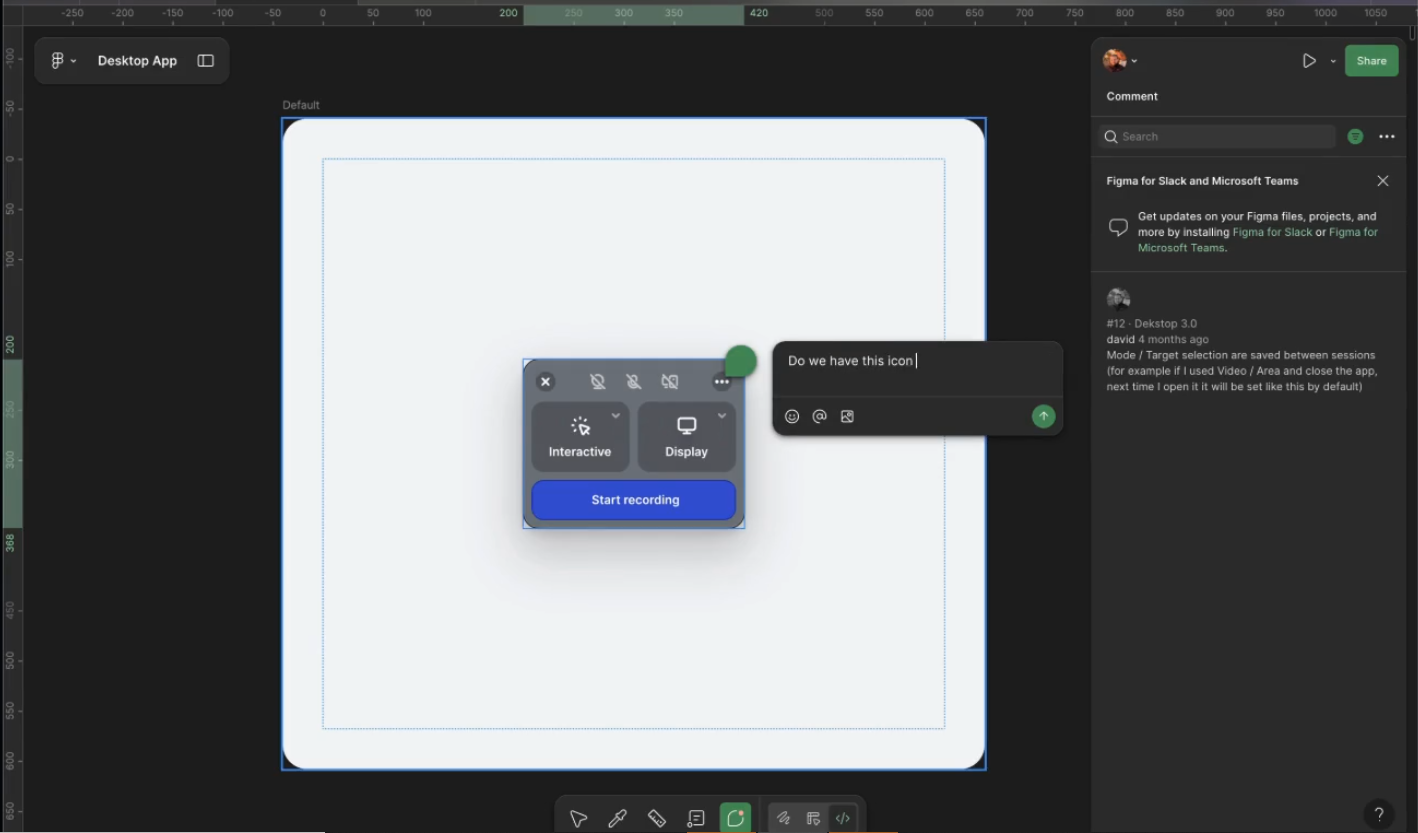
Screen recording and HTML capture in a single browser-based editor, plus a Desktop App for native applications and Figma-to-demo conversion
AI voiceover (Avery) available on all plans including the free tier
GIF and MP4 export on paid plans for distribution inside email campaigns, LinkedIn messages, and ad creatives
Creator Studio for generating on-brand teaser videos and social graphics through a conversational AI interface
Permanent free tier with unlimited AI demo creation and 200 AI credits per month
Why Choose Arcade Over Consensus for Fast Demo Production
Arcade stands out in the following areas:
Minutes to Publish vs. Days to Weeks
Consensus's own 2026 B2B Buyer Behavior Report reports that simple demos take 1-2 days and complex multi-path demos take 3-4 weeks. Arcade's median publish time is 6 minutes from screen capture to a finished, published demo. Avery, Arcade's built-in AI writing assistant, generates step annotations in real time during capture by analyzing the HTML of clicked elements and the visual state of the page.
Multi-Channel Content Output Beyond a Demo Link
Consensus distributes demos through DemoBoards: tracked, analytics-instrumented landing pages. Arcade's output range is broader: embedded interactive demos, animated GIFs for email, MP4 for paid ad networks, and AI-generated video content and social visuals through Creator Studio, all from a single screen capture session. For product launch cycles, campaign asset production, and pipeline nurture, Arcade's multi-channel model produces broader marketing reach.
Self-Serve Free Tier and Transparent Pricing
Consensus does not publish pricing publicly and no free trial is documented in official sources. Arcade offers a permanent free tier at $0/month that includes unlimited AI demo creation, AI voiceover, AI text-to-video, 200 AI credits per month, and Arcade MCP server access. The Growth plan at $50/month per seat unlocks GIF/MP4 exports, Audience Reveal analytics with Clearbit data, and native CRM integrations.
NOTE: We also evaluated Loom and Trupeer for this archetype. While Loom excels at async screen recording for general team communication, and Trupeer offers AI-generated voiceover with basic tour creation, Arcade offers the strongest demo-specific experience: branded interactive demos with multi-channel export, AI voiceover at $0/month, HTML capture alongside screen recording, and a dedicated analytics layer.
Arcade Pricing
Free ($0/month, permanent): 1 published demo + 1 AI video, unlimited AI demo creation, AI voiceover, 200 AI credits/month
Growth ($50/month per seat): Unlimited published demos, GIF/MP4 export, Audience Reveal analytics, CRM integrations, 800 AI credits/month shared
Enterprise (Custom): RBAC, SSO (SAML), multiple teams, 100,000 AI credits/year, dedicated CSM, SOC 2 Type II documentation
Who Should Use Arcade?
Choose Arcade if:
Your constraint is creation speed: you need to go from product capture to a published, branded demo in under 15 minutes without engineering or design dependencies.
You need a single recorded asset that distributes as an embedded demo, a GIF in email sequences, an MP4 for paid social, and an AI-generated video for a product launch.
Your primary buyers are product marketers or growth marketers rather than presales engineers, and you need a GTM content production platform rather than a presales demo automation system.
7. HowdyGo: Best Alternative for Pixel-Perfect HTML Demos at a Flat Monthly Rate
Source: HowdyGo
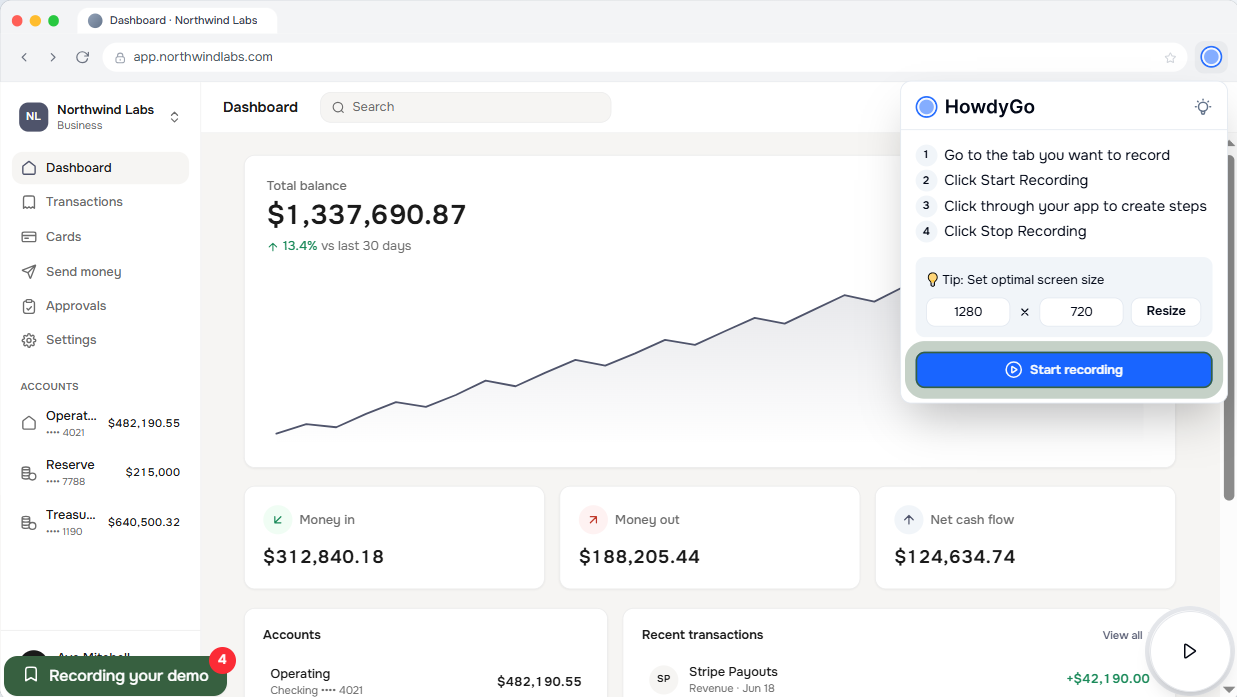
HowdyGo is an interactive product demo platform for B2B SaaS teams who need to give prospects hands-on product access without engineering involvement, live login credentials, or per-seat pricing that compounds as headcount grows. Its core differentiation is structural: where Consensus charges per seat with gated pricing, HowdyGo charges a flat rate with unlimited users and demos, with HTML capture as its technical foundation. Key capabilities include:
Pixel-perfect HTML demo capture via a Chrome extension that records the full DOM (HTML, CSS, images, fonts) rather than screenshots or video
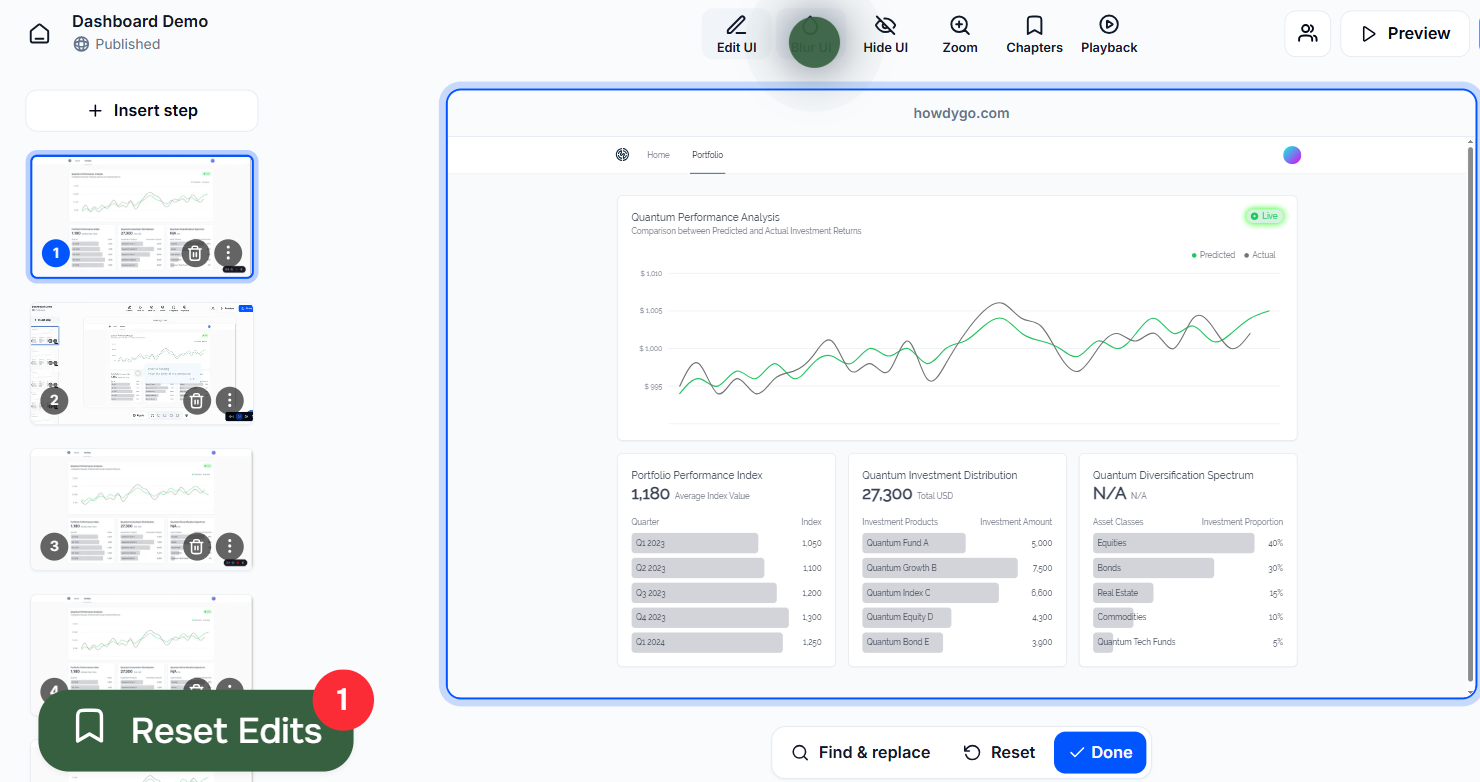
No-code UI editing: edit text, swap images, blur sensitive data, and apply find-and-replace across all steps without re-recording
Guided demos for async distribution and Sandbox environments for live sales calls (available as a Pro add-on)
Howdy AI agent for automated annotation writing, tone adjustment, translation, and prospect personalization
Collections for bundling multiple demos into shareable hubs
Why Choose HowdyGo Over Consensus for HTML Demo Libraries
HowdyGo stands out in the following areas:
Flat-Rate Pricing That Scales With Your Team, Not Against It
Consensus operates on a per-seat subscription model starting at approximately $600/month for 5 seats. Every additional user is an additional license. HowdyGo's Starter plan at $159/month includes unlimited users and unlimited HTML demos with no per-seat charge. A team of three that grows to fifteen pays the same monthly rate. The pricing structure reflects the company's bootstrapped independence: the team states it has "no VC expectations to meet or pressure to try squeeze every dollar out of every deal."
HTML Capture Produces Demos That Look and Behave Like the Real Product
Consensus's core demo format is video-based. G2 reviewers consistently flag the absence of in-platform video editing tools. HowdyGo captures the full HTML and CSS of each screen during recording, so the rendered demo is structurally and visually identical to the live product. Because the underlying DOM is stored per step, the no-code HTML editor can modify the captured interface directly: change displayed text, replace images, blur sensitive data, and apply find-and-replace across the entire demo without re-recording. This lets teams maintain large, editable demo libraries (30-100+ personalized demos) that would be impractical with a video-based workflow.
Source: HowdyGo
Speed to First Demo and Lower Operational Overhead
Consensus's demo board setup friction is the most common complaint across Capterra and G2, with reviewers describing excessive clicks and overly complicated workflows. HowdyGo's creation workflow averages under one hour from signup to first published demo. The Chrome extension operates on a one-click-per-step capture model with no staging environment or engineering handoff required.
NOTE: We also evaluated Navattic and Arcade for this slot. While Navattic offers deeper enterprise features (SSO, SCIM, advanced analytics) at $500/month with per-seat limits, and Arcade provides lighter-weight screenshot-based demos with a free tier, HowdyGo offers the strongest combination of HTML capture quality, flat-rate pricing, and speed to value for growth-stage teams.
HowdyGo Pricing
Starter ($159/month; ~$127/month billed annually): Unlimited users and HTML demos, 1 demo collection, Howdy AI, no-code editing, GIF/MP4 export, lead capture forms
Pro ($399/month; ~$319/month billed annually): Unlimited collections, full analytics suite, CRM integrations (HubSpot, Salesforce, Marketo, GA4), custom domain, Sandbox environments available as add-on at $99/month
Enterprise (Custom): SAML/SSO, SCIM, role-based access, automated brand replacement, multi-team onboarding
A 14-day free trial is available on both Starter and Pro.
Who Should Use HowdyGo?
Choose HowdyGo if:
Your team is growing and per-seat pricing compounds your software budget: the flat-rate model is especially valuable for teams where marketing, sales, and CS all need demo access.
You need a high-volume, editable demo library and can't afford to re-record every time copy changes or UI updates.
Your product is visual and complex, and prospects need to experience it interactively before they can evaluate it.
The Final Verdict
Consensus leads in demo automation and buyer enablement, but different teams have different requirements. Based on our research, here are the best alternatives:
ZoomInfo for buyer intelligence, B2B data, and full-funnel GTM execution that ensures you're targeting the right accounts before any demo is sent
Reprise for fully interactive, cloned demo environments where prospects experience the real product, not a video recording
Navattic for AI-assisted interactive demo creation with published pricing and flexible quarterly terms
Storylane for small teams that need demo creation, buyer intent tracking, and published pricing starting at $40/month
Supademo for teams entering demo automation without a budget commitment, with a permanent free plan and AI-powered URL-to-demo creation
Arcade for fast, multi-channel product demo production that goes from capture to published demo in minutes
HowdyGo for pixel-perfect HTML demo libraries at a flat monthly rate that doesn't scale with headcount
You don't have to choose between Consensus and these alternatives exclusively. Many teams use Consensus alongside other tools to cover different stages of their GTM motion. Consider your needs, team size, and growth plans when deciding which solution fits best.
Want to know which accounts are ready to buy before you send a single demo? ZoomInfo combines B2B data with buyer intent signals and GTM execution tools. Start your free trial or explore ZoomInfo Lite.
Consensus Alternatives FAQ
Why do businesses look for Consensus alternatives?
Consensus works well as an enterprise demo automation platform, but businesses often look elsewhere because of its opaque pricing (starting at $600/month with no public pricing page), the time to produce demos (1-2 days for simple demos, 3-4 weeks for complex ones), and its video-first architecture that may not suit teams needing interactive HTML demos or broader GTM intelligence.
What is the best overall Consensus alternative?
There is no single best alternative because Consensus covers a specific function (demo automation) within a broader GTM stack. ZoomInfo is the top choice for teams that need upstream buyer intelligence and full-funnel GTM execution. Reprise leads for enterprise teams needing interactive, cloned demo environments. Storylane is the strongest option for small teams wanting accessible pricing with built-in buyer intent tracking.
Is there a free alternative to Consensus?
Yes, several alternatives offer permanent free plans. Supademo's free plan includes five demos with unlimited views and AI-powered URL-to-demo creation. Arcade's free tier includes unlimited AI demo creation with AI voiceover. Navattic's free Starter plan provides one HTML or media demo. Storylane's free plan supports one published demo with screenshot and video capture.
Which Consensus alternative is best for enterprise teams?
Reprise is built for enterprise presales teams, offering full application cloning (Replicate), live data injection (Reveal), and HTML capture tours (Replay) in a single platform with both SOC 2 Type II and ISO 27001 certifications included at every tier. ZoomInfo is the best enterprise option for teams whose primary challenge is buyer intelligence and GTM execution rather than demo format.
How does ZoomInfo compare to Consensus?
ZoomInfo and Consensus address B2B sales acceleration from different angles. Consensus automates demo delivery and tracking. ZoomInfo provides the intelligence layer upstream: B2B data (500M contacts, 100M companies), buyer intent signals, and the GTM Context Graph, which identifies which accounts to target, when to engage, and why deals move or stall. Many teams use both together.
Which alternative is most affordable for small teams?
Supademo offers the lowest published paid tier at $38/month per creator on its Scale plan. Storylane's Starter tier at $40/month provides demo creation with Account Reveal and engagement scoring. Arcade's Growth plan at $50/month per seat adds GIF/MP4 export and CRM integrations. All three publish their pricing publicly, unlike Consensus, which requires a sales conversation.
Which Consensus alternative has the fastest demo creation workflow?
Arcade reports a median time of 6 minutes from screen capture to a published, branded demo, with its AI writing assistant generating step annotations in real time during capture. Supademo offers AI-powered URL-to-demo creation that generates a walkthrough from any public URL without a recording session. HowdyGo averages under one hour from signup to first published demo.
Can I use Consensus alongside these alternatives?
Yes. Many teams use Consensus for its core strength (async video demo automation with Demolytics stakeholder tracking) while adding complementary tools for other needs. For example, ZoomInfo for upstream buyer intelligence and account targeting, Reprise for complex live demo environments, or Arcade for rapid marketing content production. The tools serve different stages and functions within the GTM motion.
More sales tool comparisons:
