

If you're searching for a Contactually vs. Salesforce comparison in 2026, here's what you need to know first: Contactually was permanently shut down on March 31, 2022. The platform real estate agents relied on for contact management is gone.
But the question behind the search still matters. Whether you used Contactually and need a replacement, or you've heard about its relationship-first approach and want something similar, the real questions are:
Do you need a CRM that manages your full sales operation, or a platform that tells you who to contact, when to engage, and what to say?
Is your primary challenge organizing contacts and remembering to follow up, or finding the right buyers and understanding what drives their decisions?
Do you want a tool focused on one industry (like real estate), or B2B sales intelligence that works across verticals?
How important is having verified, continuously updated prospect data versus relying on what you manually enter?
Are you looking for a standalone CRM, or an intelligence layer that makes your existing CRM more effective?
In short, here's what we recommend:
Contactually was a cloud-based CRM built for real estate agents and brokerages that did one thing well: making follow-up systematic.
Its "Buckets" system let agents categorize contacts by follow-up frequency, and gamification drove adoption rates most CRMs never reach.
But Compass acquired Contactually in February 2019 and shut it down three years later, leaving users to find alternatives.
Salesforce is the world's #1 CRM, serving over 150,000 companies with a platform covering sales, service, marketing, commerce, and analytics. Its Agentforce platform handles everything from autonomous case resolution to AI-drafted outreach.
Salesforce is the safe enterprise choice, but its depth carries real costs: pricing that starts at $25/user/month and climbs to $550/user/month, a steep learning curve, and implementations that often stretch months.
Both platforms tackled the same problem from different eras: helping sales teams build the relationships that drive revenue. Contactually tried to solve it with reminders and follow-up cadences. Salesforce solves it with a full CRM platform. But underneath both approaches sits the factor that determines whether any of it works: the quality of your data and the intelligence you extract from it.
ZoomInfo is an AI GTM platform built on a large B2B dataset: 500M contacts, 100M companies, 135M+ verified phone numbers, and 200M+ verified business email addresses.
Where Contactually organized your existing contacts and Salesforce records your sales activity, ZoomInfo tells you who to pursue, when they're ready to buy, and what to say.
Its GTM Context Graph combines this data with your CRM records, conversation transcripts, and behavioral signals to capture not just what happened in a deal, but why. Sellers access this through GTM Workspace, marketers through GTM Studio, and developers through APIs and MCP in any tool.
If verified data and AI-driven intelligence behind every sales conversation sounds like what you've been missing, see how ZoomInfo works.
Contactually vs. Salesforce vs. ZoomInfo at a glance
Contactually | Salesforce | ZoomInfo | |
|---|---|---|---|
Status | Discontinued (March 2022) | Active, #1 CRM worldwide | Active, AI GTM platform |
Core function | Relationship CRM for real estate | Enterprise CRM platform | AI GTM platform with B2B data |
Primary audience | Real estate agents and brokerages | Companies of all sizes, all industries | B2B sales, marketing, and RevOps teams |
Data source | Your email and social connections | What your team manually enters | 500M contacts, 100M companies, verified and continuously updated |
AI capabilities | Basic send-time optimization | Agentforce autonomous agents | GTM Context Graph with account intelligence |
Follow-up intelligence | Bucket-based reminders | Activity tracking and task management | AI-identified signals telling you who, when, and why |
Pricing | Was $59–$399/month per user | $25–$550/user/month | Custom consumption-based pricing; free Lite tier available |
CRM integration | Was a standalone CRM | Is the CRM | Integrates with Salesforce, HubSpot, and Microsoft Dynamics |
Learning curve | Minimal | Steep | Moderate; GTM Workspace deploys in weeks |
What made Contactually worth remembering
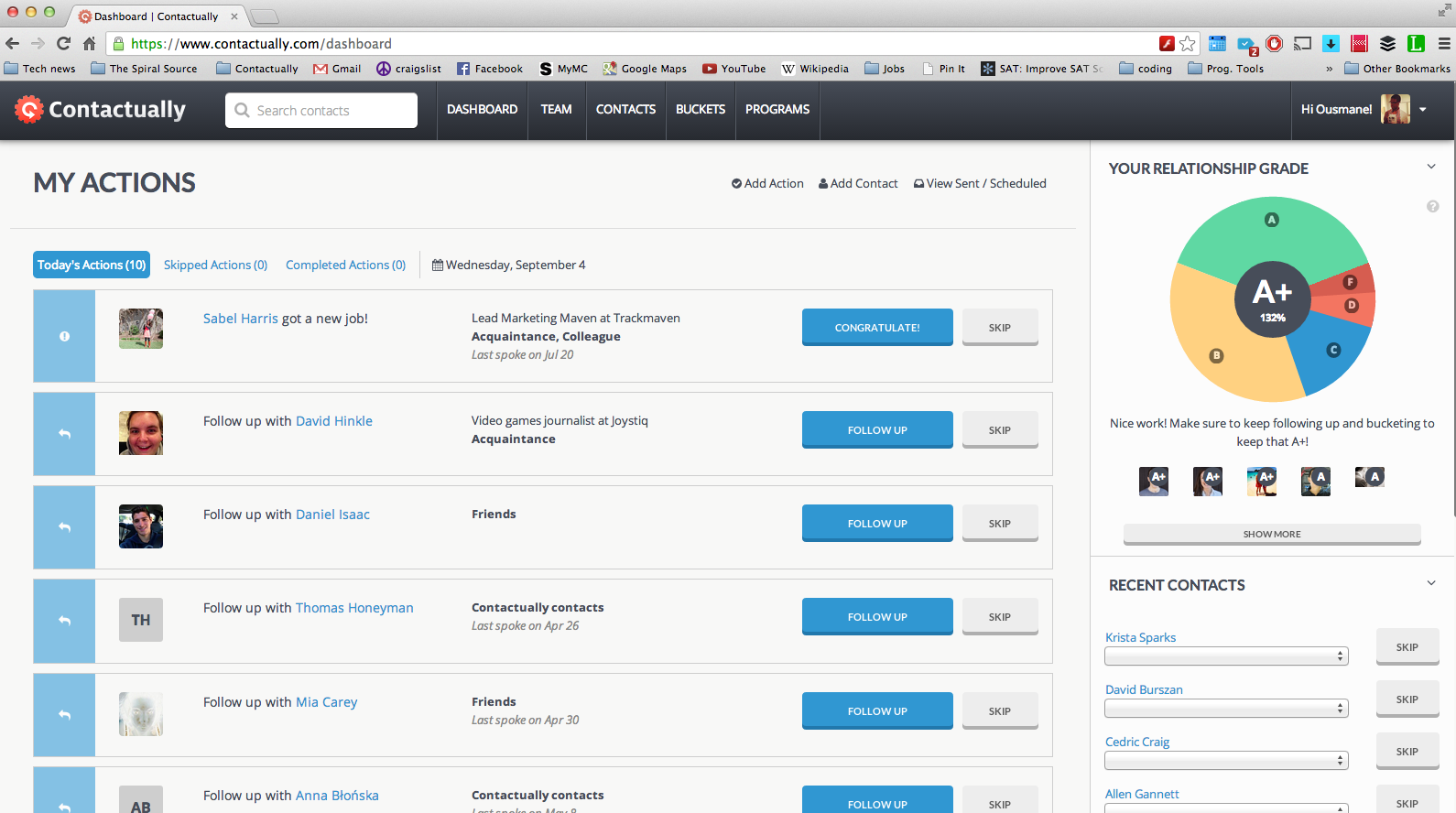
Contactually earned loyalty from real estate professionals because it solved a specific problem: agents accumulate hundreds of contacts but have no system for staying in touch with all of them.
Source: Software For Projects
Only 35% of homeowners remember who their realtor was two years after closing. A forgotten relationship is a lost commission.
The platform's Buckets system worked on a simple concept: group contacts by follow-up frequency ("New Leads" every 7 days, "Sphere of Influence" every 30 days), and the system surfaces only people who are overdue.
Instead of reminding you to contact everyone, Contactually reminded you to contact the right people at the right time. The gamified "Bucket Game" turned contact sorting into a quick, keyboard-driven exercise.
The platform also offered automated drip campaign "Programs" that could run for months or years, email templates with merge variables, and a daily digest telling agents exactly who to contact each morning.
But Contactually had clear limitations even before it shut down. It lacked transaction management, had no agent website builder or MLS integration, scored 6 out of 10 on functionality, and was considered expensive for what it offered.
When Compass acquired the company in February 2019, non-Compass agents immediately worried about a competitor owning their contact database.
Those concerns proved valid. Within seven months, Contactually support was notifying clients that Compass was directing resources to its internal CRM, and the platform shut down permanently in March 2022.
Salesforce covers the full sales operation, at enterprise scale
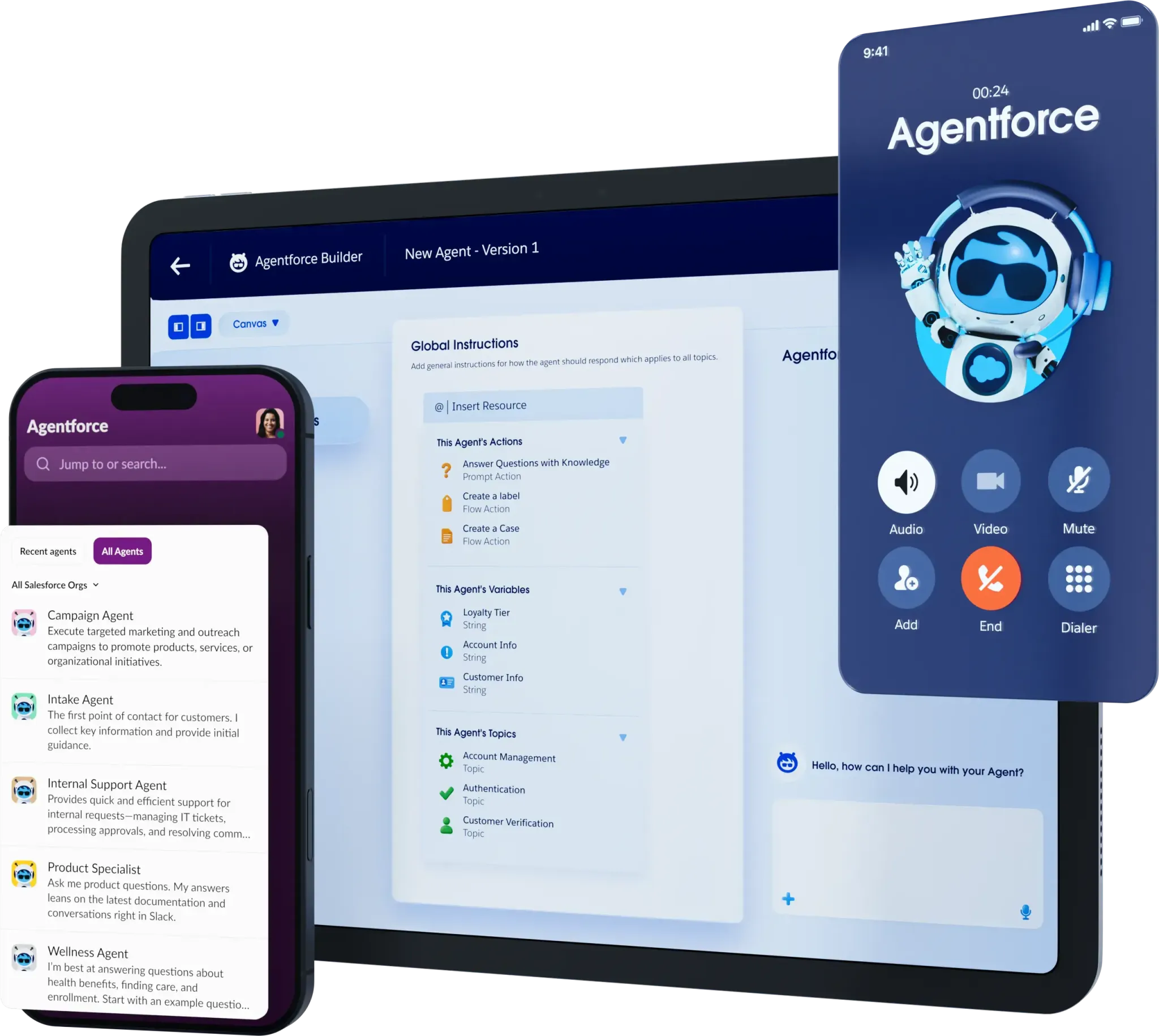
Where Contactually focused on relationship follow-up, Salesforce covers everything: lead management, opportunity tracking, pipeline forecasting, email automation, AI coaching, territory planning, partner management, analytics, and now autonomous AI agents through Agentforce.
Source: Salesforce
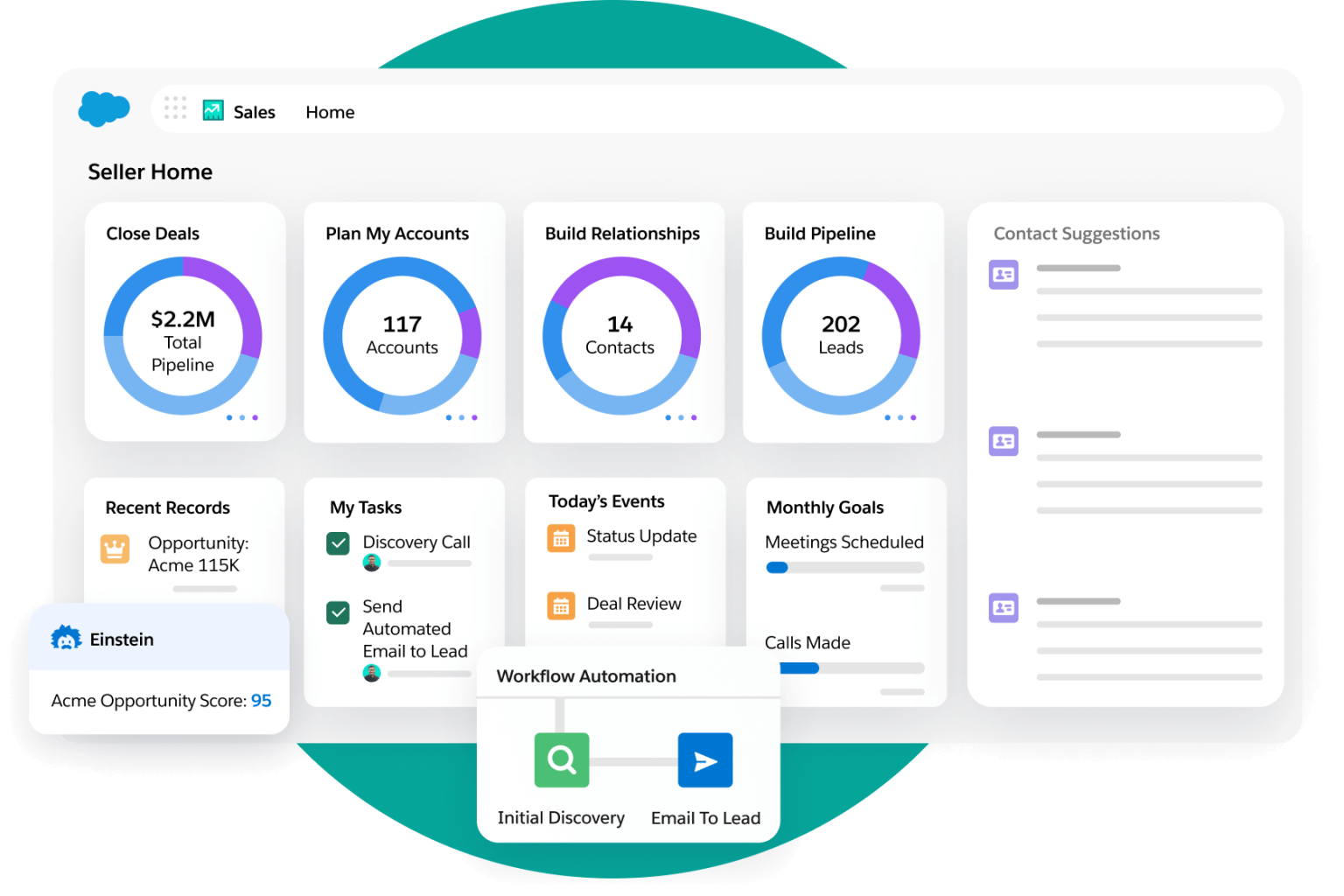
Depth defines the platform. Sales Cloud (now branded Agentforce Sales) gives teams Einstein Lead Scoring, AI-generated account plans, pipeline health signals, conversation intelligence, and automated quoting.
Source: Salesforce
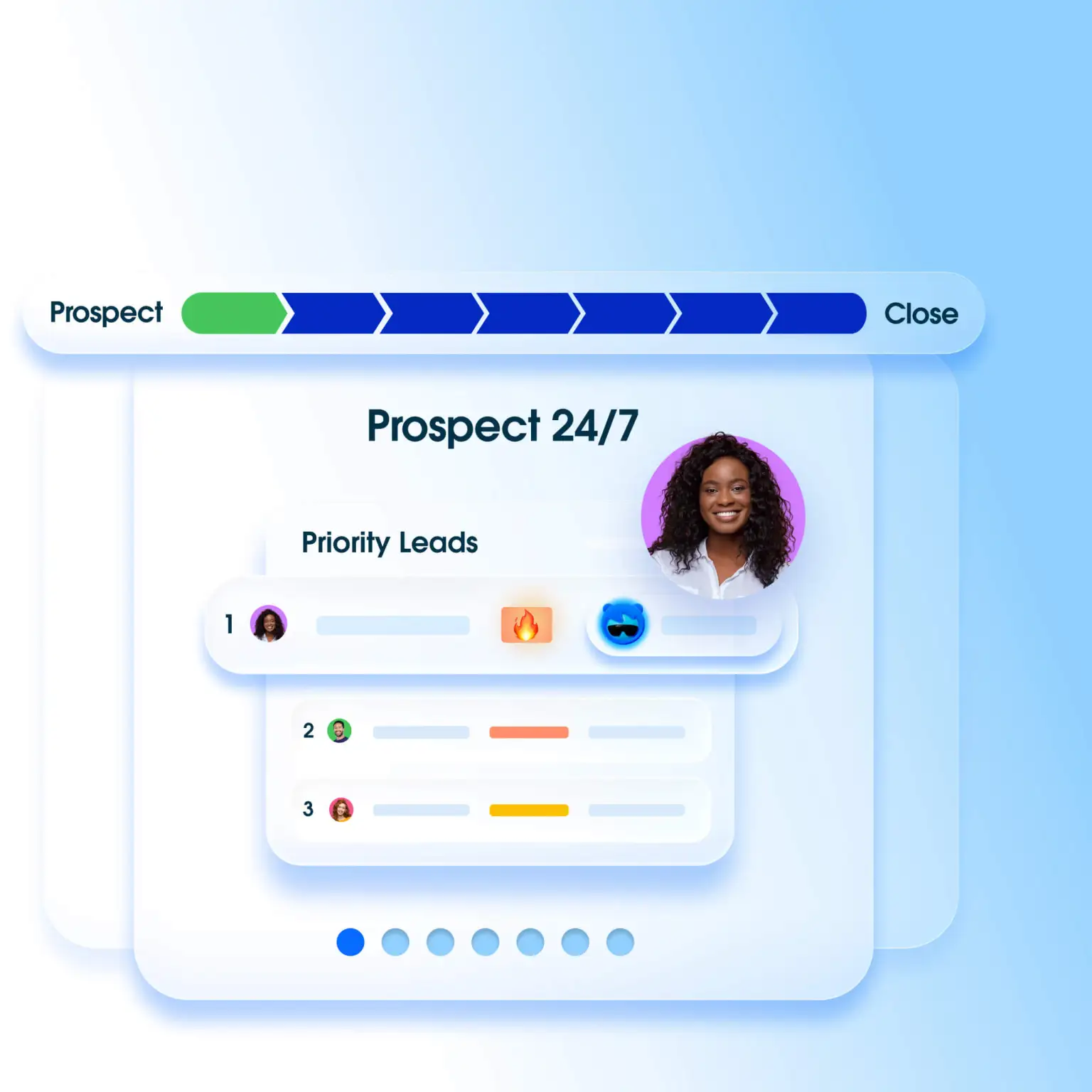
Agentforce agents can research accounts, generate follow-ups, and update CRM fields on their own.
Source: Salesforce
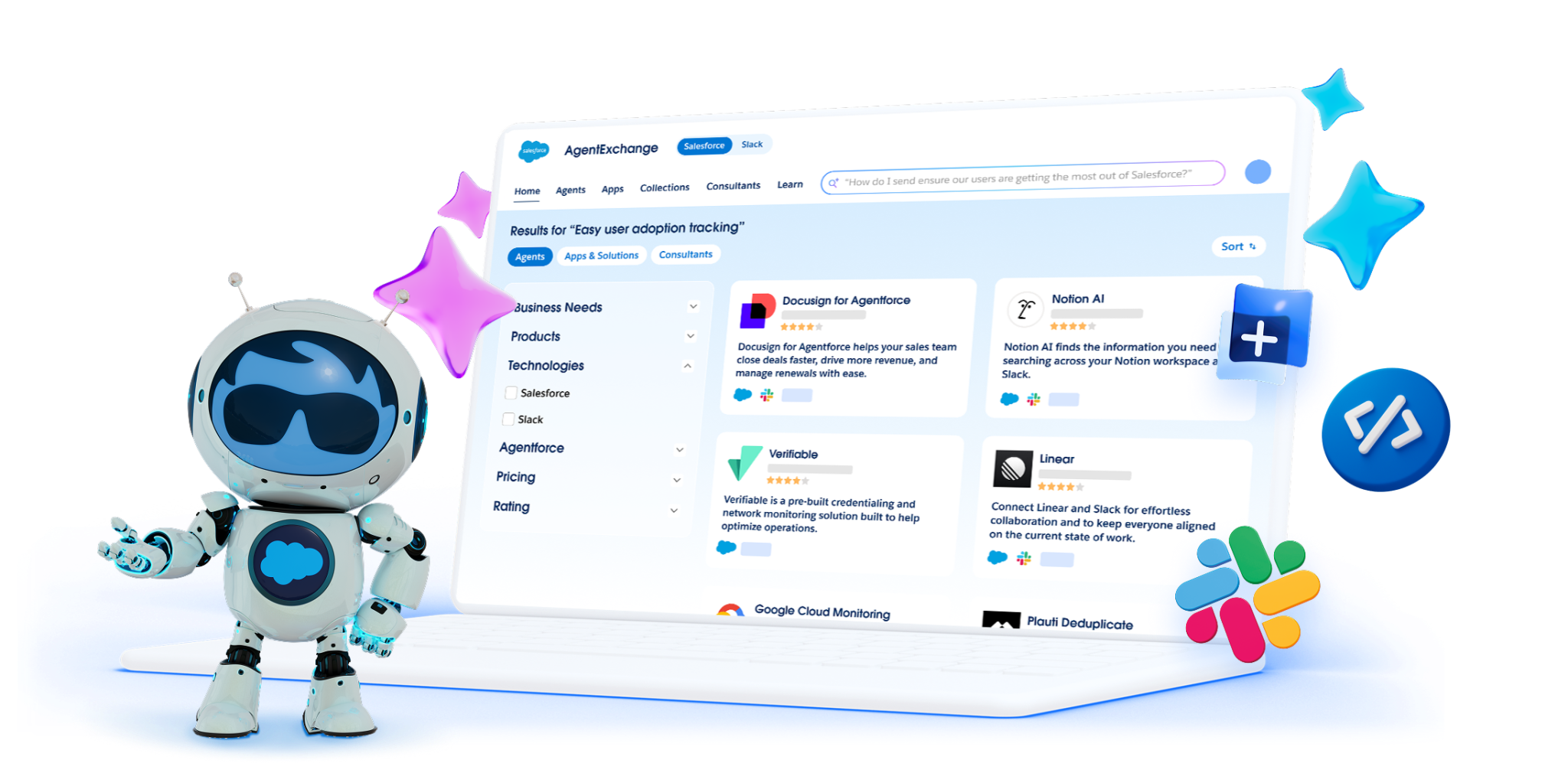
The AppExchange hosts 9,000+ partner apps with 14+ million installs. If you need a specific integration, it almost certainly exists. Trailhead serves 6+ million learners with 1,500+ badges for training.
Source: Salesforce
Salesforce has held the Gartner Magic Quadrant Leader position for Sales Force Automation for 19 consecutive years.
None of this comes cheap or easy. Salesforce acknowledged its pricing model "needed to be easier to understand, more predictable, and more flexible".
The Starter Suite costs $25/user/month, but most teams need the Enterprise edition at $175/user/month for real AI and automation features.
Add Premier Support at 30% of license fees, plus the partner-led implementations that over 70% of deployments require, and total costs climb fast. The learning curve is steep enough that Salesforce built an entire university around it.
For enterprises with dedicated sales operations teams and the budget to invest, Salesforce is the standard. For smaller teams that valued Contactually's simplicity, Salesforce can feel like buying a commercial kitchen when you needed a good set of knives.
The intelligence gap: knowing who to contact vs. knowing why to contact them
Contactually's core insight was correct: sales professionals need a system that tells them who to contact and when. The limitation was that it relied entirely on data the agent already had.
If a contact wasn't in your email inbox or social networks, Contactually didn't know they existed. If a prospect was researching solutions but hadn't emailed you, Contactually couldn't see it.
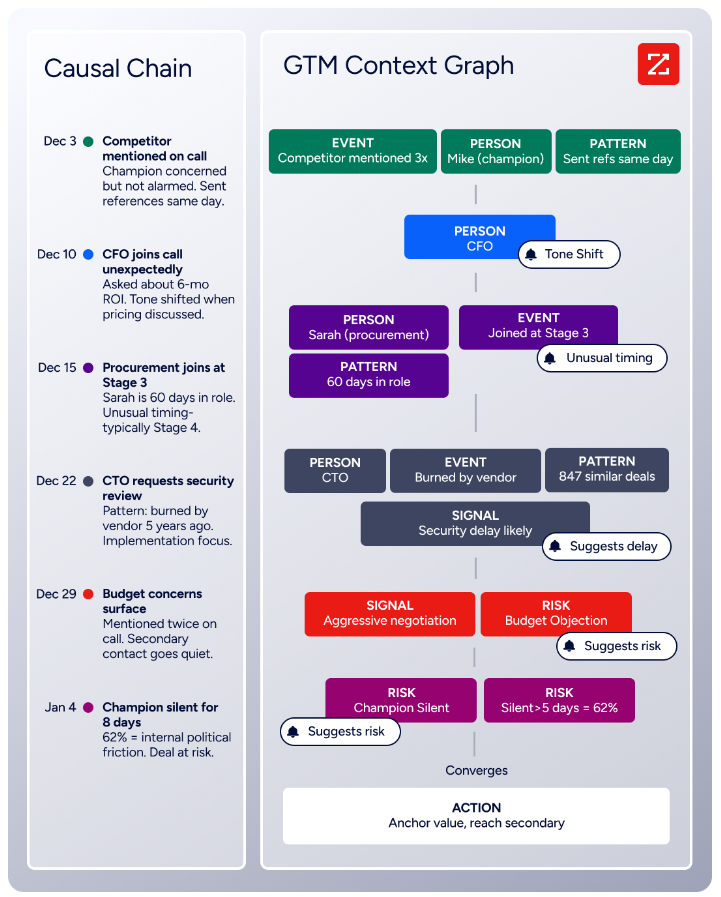
Salesforce records what happens in your deals, but as ZoomInfo's Chief Product Officer Dominik Facher writes: "The CRM recorded the state change. It has no record of why it happened." Your deal moved from Stage 3 to Stage 4, but the CRM doesn't capture that the CFO joined the last call and asked about six-month ROI (the thing that actually accelerated it).
ZoomInfo approaches the problem differently. Instead of relying on data you've collected yourself, ZoomInfo starts with a large B2B data platform covering identity data, company context, and signals that reveal when accounts are in market.
The GTM Context Graph then combines this external intelligence with your CRM records, conversation transcripts, and behavioral signals to build context for every account and deal.
Source: ZoomInfo
In a Fortune 500 competitive RFP analyzing 25 million contacts across vendors, the independent consultant concluded that "no other competitor came even close" to ZoomInfo's data quality.
The practical difference: Contactually could remind you to follow up with a past client in 30 days. Salesforce can show you a deal moved to a new stage. ZoomInfo can tell you the prospect's company just posted three new VP openings, showed intent signals around your product category, and the champion from your last deal just moved to a new account that fits your ICP. That combination of signals and context is what ZoomInfo's GTM Workspace delivers to sellers in a single workspace.
Seismic's sales team attributed 39% of active pipeline to opportunities identified or influenced by ZoomInfo signals, reported 54% productivity gains, and saved 11.5 hours per week per seller. Their Chief Business Officer noted: "That combination of our internal CRM data, external signals, and AI that's given all that context has helped us craft very specific account- and persona-based messages." (Seismic case study)
Data quality determines everything downstream
Contactually pulled contact data from your email and social accounts and scraped 120+ social sites to enrich profiles.
For agents with established networks, this worked. But your database was only as good as your existing connections. If you hadn't emailed someone, they didn't exist in your world.
Salesforce's data quality depends on your team's discipline. The platform provides structure, but the data is only as good as what reps and admins enter.
Benioff himself acknowledged at Dreamforce 2025: "You have got to get your data right." Salesforce's 2026 CIO AI Trends research found that trust in data is the #1 bottleneck for AI adoption.
You can build AI agents on Salesforce, but if the underlying data is stale or incomplete, the agents inherit those blind spots.
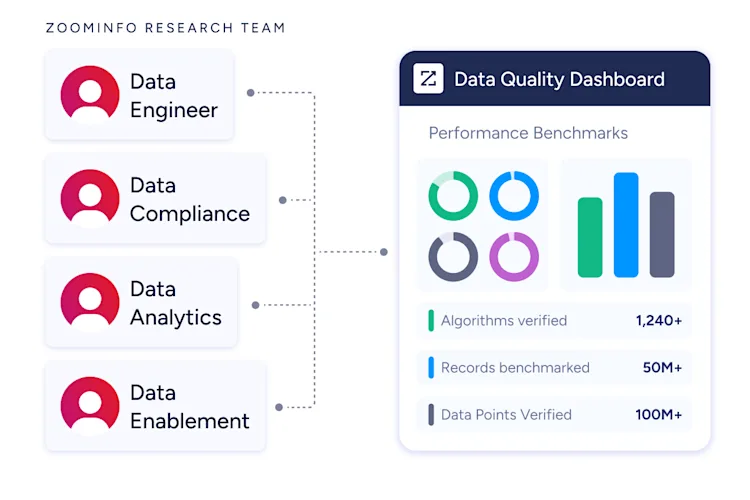
ZoomInfo inverts this dependency. Rather than relying on reps to enter data or email scraping to discover contacts, ZoomInfo maintains its B2B data through a multi-source verification process backed by 300+ human researchers, achieving up to 95% accuracy on first-party data.
Source: ZoomInfo
The GTM Context Graph processes 1.5B+ data points daily, combining verified data with your CRM records and behavioral signals to surface context behind every account.
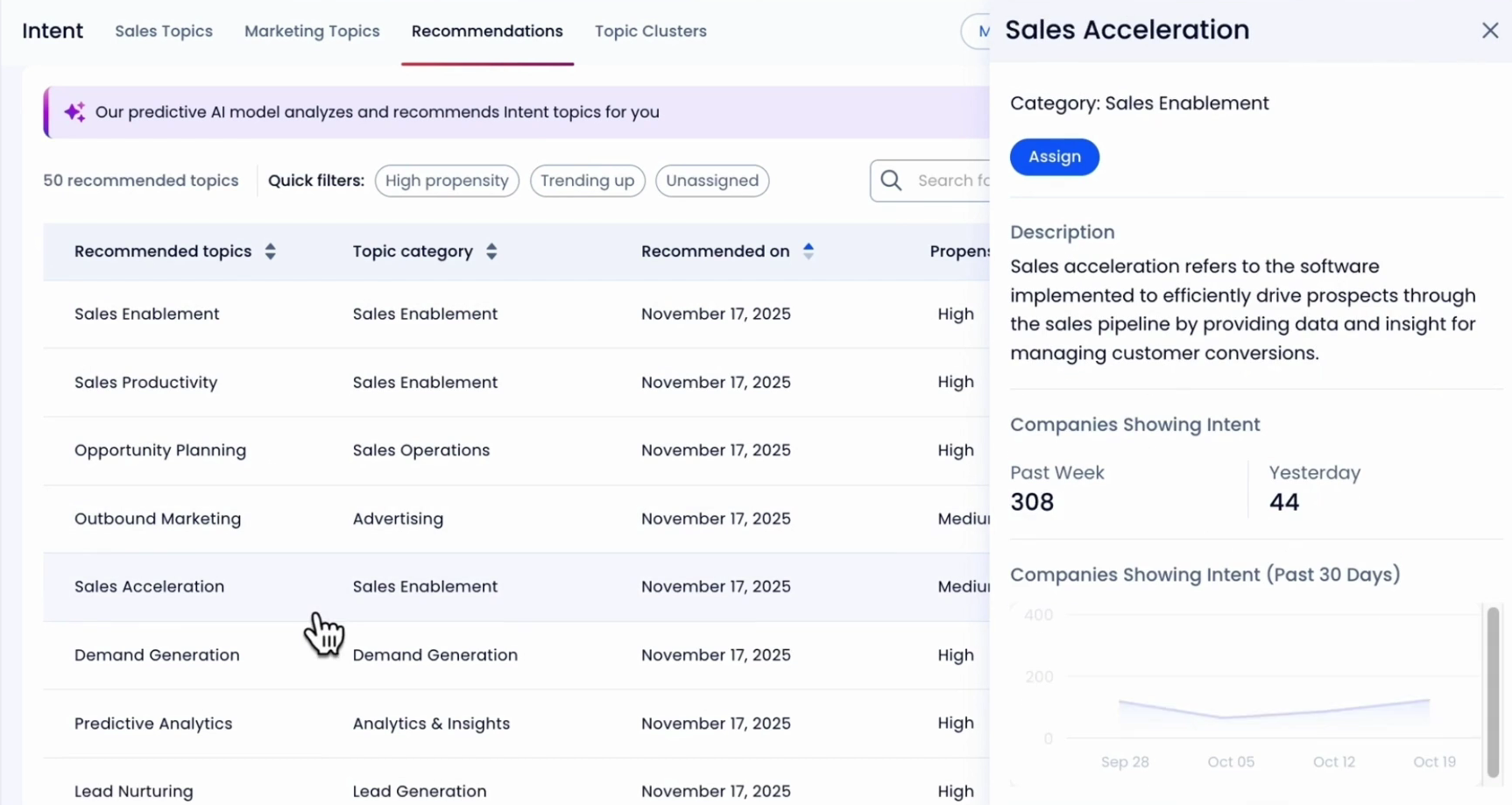
The platform covers 120M direct-dial phone numbers, tracks the tech stack of 30+ million companies across 30,000+ technologies, and monitors buyer intent signals from 210 million IP-to-Organization pairings.
For sales teams, this means the direct dial connects and the email lands. For revenue operations, enrichment doesn't require stitching together multiple vendors. For marketers, TAM modeling draws on a continuously verified census of your actual buyable market.
Snowflake uses ZoomInfo for at least one-third of the most critical data features in their Account Propensity Scoring model, feeding over 70 company-attribute and technographic data fields. Accounts monitored using ZoomInfo-powered scores showed 90% higher opportunity open rates and 2x higher customer conversion rates. (Snowflake case study)
From manual follow-ups to AI-powered execution
Contactually's Programs feature was good automation for its era. Agents could build multi-step drip campaigns that ran for months or years, with a "Reset delay if we interact" toggle that paused the sequence whenever agent and contact had a real conversation.
The pre-built Program library gave agents ready-made sequences they could deploy immediately. It was useful, but reactive: you set up a cadence, and the system reminded you to follow it.
Salesforce's automation layer is more capable. Agentforce agents handle multi-step workflows on their own, from prospecting to deal coaching to CRM updates.
The Atlas Reasoning Engine uses a reason-act-observe-adapt loop rather than following fixed scripts.
The capability is real, but accessing it requires the Enterprise tier ($175/user/month) plus Agentforce consumption credits, and configuring agents well demands Salesforce administration expertise.
ZoomInfo's GTM Workspace provides AI-powered execution drawing on the GTM Context Graph. AI agents handle account research, outreach generation, signal monitoring, and CRM updates from a single workspace.
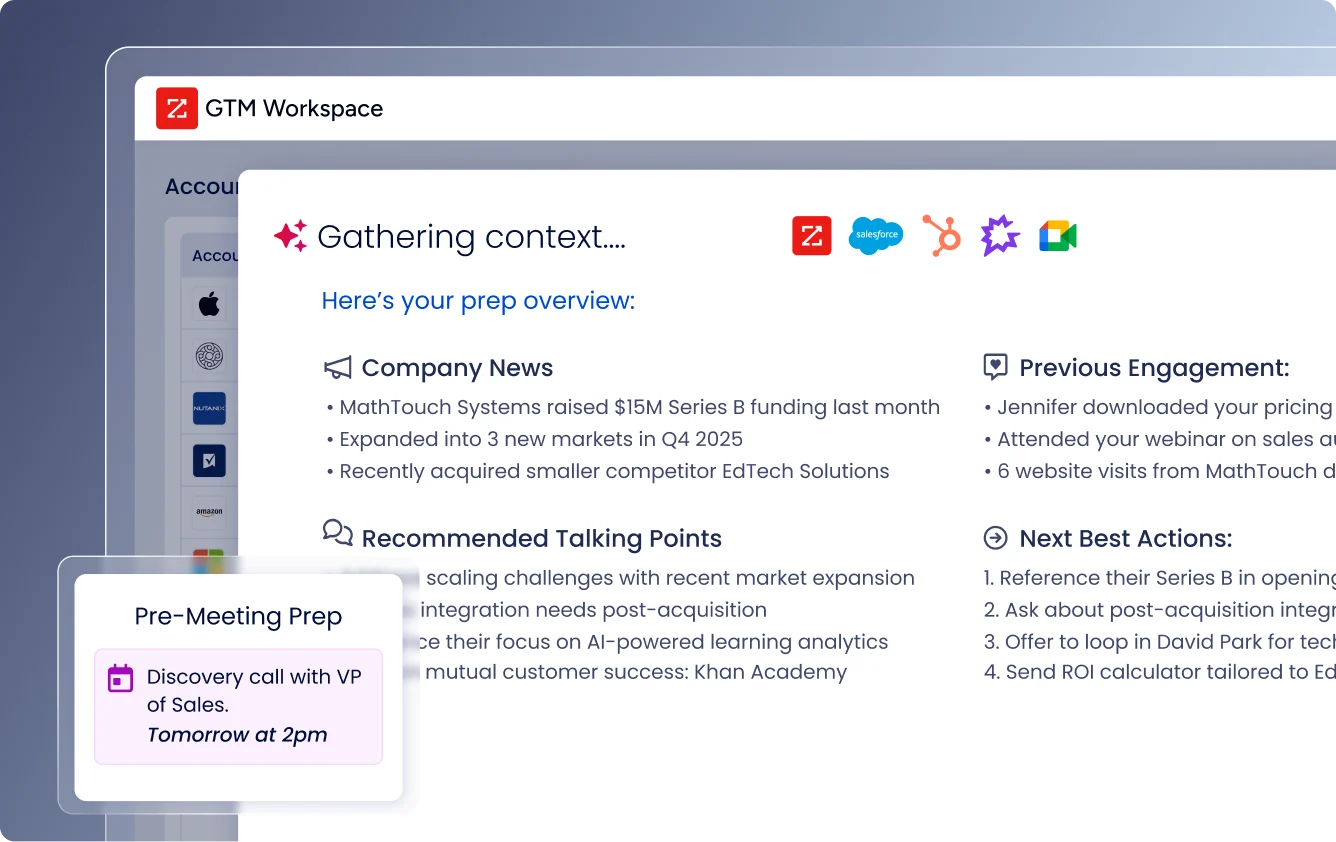
Source: ZoomInfo
The Action Feed delivers a live stream of in-market buyers matched to your target criteria, with pre-drafted actions on every signal.
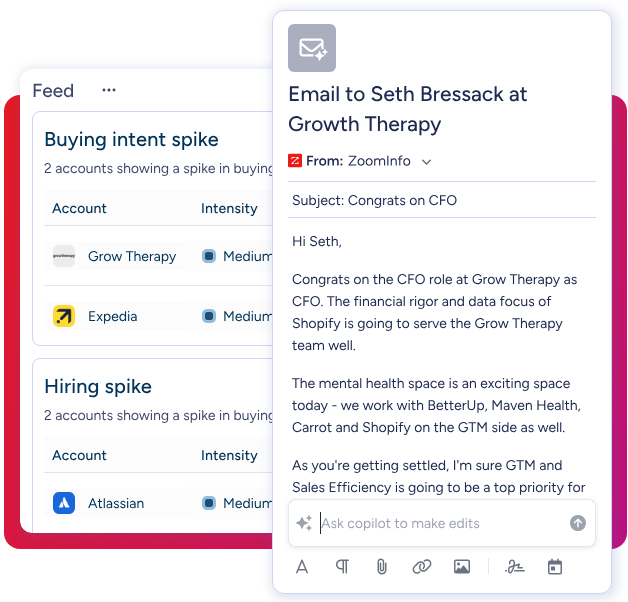
Source: ZoomInfo
Where Contactually gave you a list of overdue follow-ups and Salesforce gives you a pipeline view, GTM Workspace gives you prioritized accounts with the context to act: the specific concern the prospect raised, the signal that triggered urgency, and the AI-drafted message addressing both.
On the marketing and operations side, GTM Studio lets teams describe audiences in natural language, launch multi-channel plays, and watch pipeline impact in real time. Expansion plays that used to take three weeks now launch in 30 minutes.
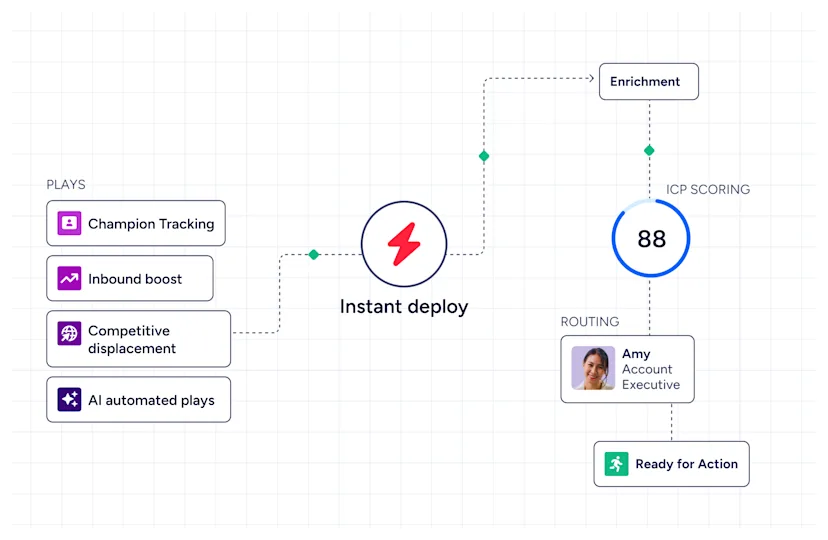
Source: ZoomInfo
Vensure scaled prospecting using ZoomInfo's data and intelligence. "ZoomInfo gives us the information we need to execute. We don't have to go through and spend our time digging. It's already there, so we can be three steps ahead," said William Kenimer, Vice President of Revenue Operations. (Vensure case study)
Integration and ecosystem comparison
Contactually's integration story was honest but limited. Hooquest summarized it: "It has relatively few integrations beyond Zapier, but the few direct integrations they have are very well done ones."
Native connections included Gmail, Outlook, MailChimp, dotloop for transaction management, and Kixie for phone dialing. Most other integrations required a separate Zapier subscription.
Salesforce sits at the opposite end. With 9,000+ apps on the AppExchange, REST and SOAP APIs, native integrations with Google Workspace and Microsoft Outlook and Teams, plus MuleSoft for enterprise integration, Salesforce connects to almost anything.
The trade-off: integration at enterprise scale requires technical expertise and often partner-led implementation.
ZoomInfo integrates with the tools teams already use. The ZoomInfo App Marketplace covers 120 partner integrations including Salesforce, HubSpot, Microsoft Dynamics 365, and Snowflake.
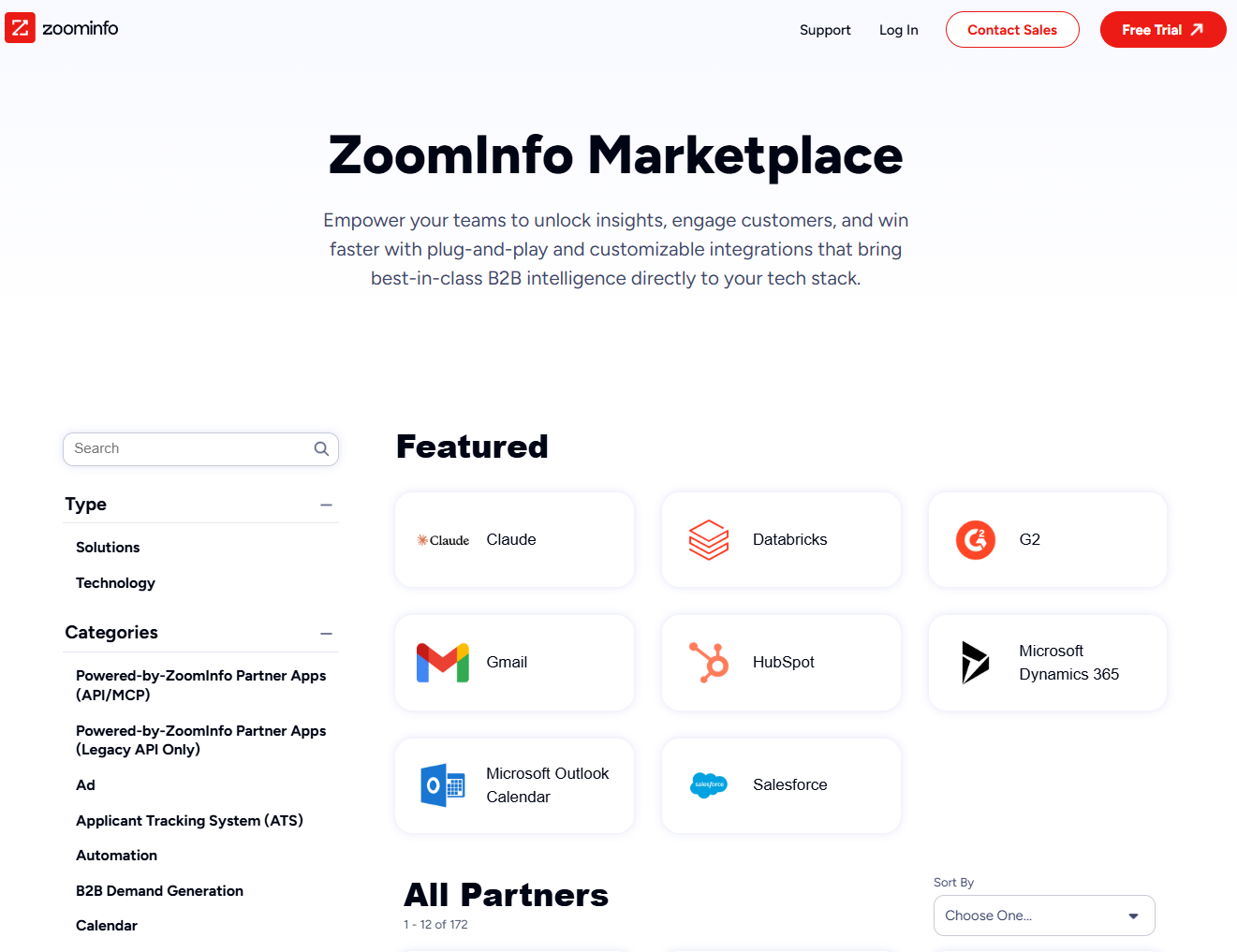
Source: ZoomInfo
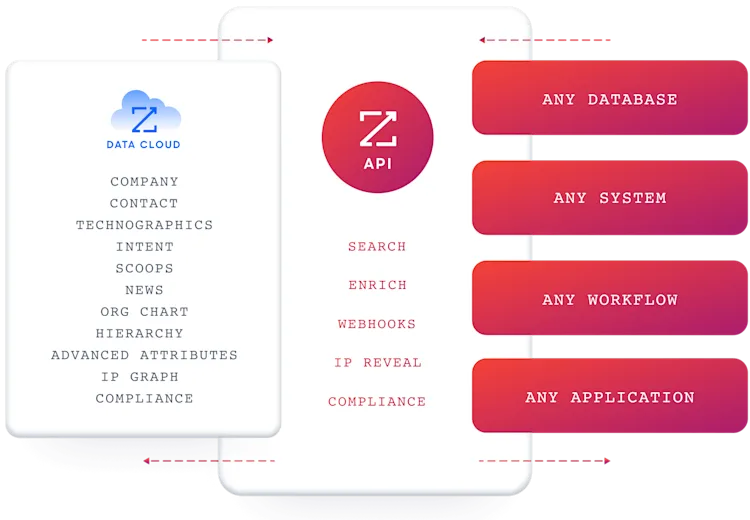
The Enterprise API provides programmatic access to ZoomInfo's data and intelligence.
Source: ZoomInfo
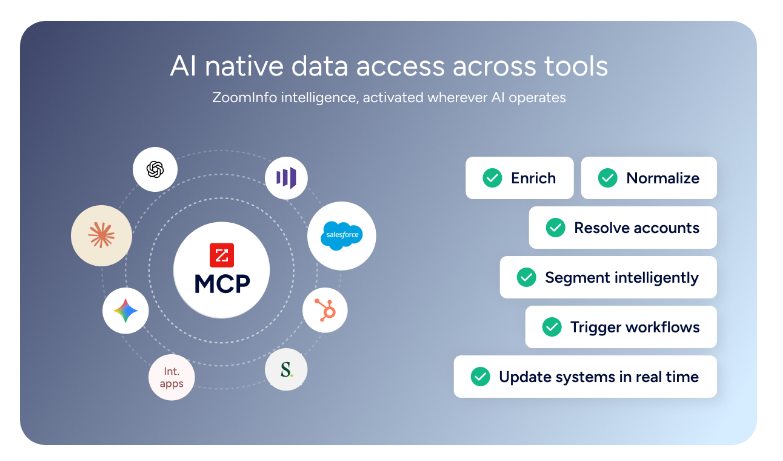
And the MCP server connects AI models directly to ZoomInfo's B2B data without custom coding, currently supporting Claude and ChatGPT.
Source: ZoomInfo
The key difference: ZoomInfo doesn't replace your CRM. It makes your CRM more effective. API access comes included in all relevant plans, so the same intelligence powering ZoomInfo's own products is available in any tool, any workflow, any AI agent.
Smartsheet's Senior Manager of Sales Technology Enablement described ZoomInfo as "our one source of truth for account data, and even more so for contact data. There's no other provider in the market that provides you with that level of detail." He added: "Without ZoomInfo, it would be extremely difficult (if not impossible) to achieve our business objectives." (Smartsheet case study)
Pricing reflects each platform's target buyer
Contactually priced for individual agents and small brokerages. The Professional plan ran $59/month (annual) or $69/month (monthly), including email intelligence, pipeline management, and mobile apps.
The Accelerator plan at $99/month (annual) added a dedicated customer success manager, pre-built real estate templates, and priority support.
A Concierge tier at $399/month included a managed service that functioned, per Hooquest, "almost as your own internal sales agent." The pricing was straightforward but considered expensive for what it offered.
Salesforce's pricing spans a wide range. The free CRM supports two users with basic lead management. Starter Suite at $25/user/month adds unlimited users and lead routing.
Pro Suite at $100/user/month unlocks customization, forecasting, and AppExchange access. Enterprise at $175/user/month adds AI and workflow automation. Unlimited at $350/user/month adds the full AI suite and Premier Support.
The top-tier Agentforce 1 edition at $550/user/month includes unmetered Agentforce, Tableau Next, and Slack Enterprise+.
Beyond license fees, Agentforce consumption starts at $2 per conversation or $500 per 100,000 Flex Credits, and Premier Support costs 30% of net license fees unless bundled with Unlimited.
ZoomInfo uses custom-quoted, consumption-based pricing with no published prices. Costs scale around seats, monthly credit volume, features selected, and contract length.
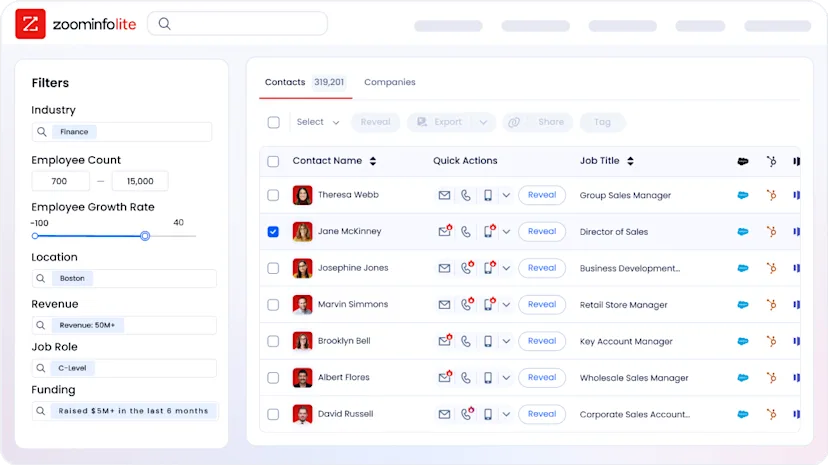
ZoomInfo Lite is a permanent free tier (not a trial) with access to the B2B database, 10 monthly export credits, advanced search, the Chrome extension, and website visitor identification.
Source: ZoomInfo
A 7-day free trial of the full platform is also available. Paid tiers span Professional, Advanced, and Enterprise for both Sales and Marketing product lines.
The pricing comparison is not apples-to-apples, and that's the point. Contactually charged for a relationship CRM. Salesforce charges for an enterprise platform. ZoomInfo charges for intelligence infrastructure. Many teams use ZoomInfo alongside Salesforce (or HubSpot or Dynamics), with each platform handling what it does best.
Contactually vs. Salesforce vs. ZoomInfo: Which should you choose?
Since Contactually is no longer available, the practical decision is between Salesforce and ZoomInfo, and they're not mutually exclusive.
Contactually was right for you if:
You were a real estate agent focused on sphere-of-influence and referral business
You needed a simple CRM that reminded you to stay in touch
You valued gamification and low friction over feature depth
Your contact database was your primary business asset
Choose Salesforce if:
You need a CRM that covers sales, service, marketing, and commerce
Your organization has dedicated sales operations or CRM administration staff
You want the largest ecosystem of integrations and partner apps
Enterprise-grade security, compliance, and scalability are requirements
You have the budget and timeline for a full platform implementation
Choose ZoomInfo if:
You want verified B2B data and intelligence that tells you who to pursue, when they're ready, and why
You need an intelligence layer that makes your existing CRM (Salesforce, HubSpot, Dynamics) more effective
Identifying in-market buyers through intent signals and account context is a priority
You want AI-powered execution that surfaces prioritized accounts with pre-drafted, context-aware outreach
You want access to intelligence through native products, APIs, or AI agents in any tool
Start with ZoomInfo Lite for free, or request a demo to see GTM Workspace and GTM Studio in action.
The lesson from Contactually's rise and fall is that the relationship-first approach to sales was right. Knowing who to contact and when has always mattered more than logging activities after the fact. What's changed is where that intelligence comes from. Contactually derived it from your email history. ZoomInfo derives it from a large B2B data platform combined with your CRM, your conversations, and real-time buying signals. The insight is the same. The scale is not.
Contactually vs. Salesforce vs. ZoomInfo FAQ
Is Contactually still available?
No. Contactually shut down permanently on March 31, 2022. Compass acquired the platform in February 2019 and absorbed its technology into Compass's internal agent platform, available only to Compass real estate agents.
The Contactually website no longer operates. Former users have migrated to other CRMs or sales intelligence platforms.
What made Contactually different from other CRMs?
Contactually's signature feature was its "Buckets" system, which organized contacts by follow-up frequency rather than deal stages. Each bucket had a configurable reminder interval, and the system surfaced only contacts overdue for outreach.
The gamified "Bucket Game" turned contact sorting into a fast, keyboard-driven exercise. This approach drove high adoption rates, including 90% agent adoption at Engel & Völkers Minneapolis.
Can ZoomInfo replace Salesforce, or do I need both?
ZoomInfo and Salesforce serve different functions. Salesforce is a CRM that manages your sales pipeline, customer records, and business workflows. ZoomInfo is an intelligence platform that provides verified B2B data, buyer intent signals, and AI-powered account context. Most teams use them together.
ZoomInfo integrates natively with Salesforce, enriching CRM records with verified contacts, company data, and buying signals. ZoomInfo also works with HubSpot and Microsoft Dynamics for teams not on Salesforce.
For a direct look at how the two platforms stack up, see our Salesforce vs. ZoomInfo comparison.
How does ZoomInfo's data compare to what Contactually offered?
Contactually pulled contact data from your existing email and social accounts, enriching profiles by scraping social sites. Your database was limited to people you had already interacted with.
ZoomInfo covers 500 million contacts, 100 million companies, and 135 million verified phone numbers. ZoomInfo verifies this data continuously through automated scanning of 28 million site domains daily, a contributory network of 200,000 users who share data back, and 300 human researchers.
What is the cheapest way to get started with Salesforce or ZoomInfo?
Salesforce offers a free CRM for up to two users with basic lead and opportunity management. Paid plans start at $25 per user per month. Z
oomInfo offers ZoomInfo Lite, a permanent free tier with access to the B2B database, 10 monthly export credits, the Chrome extension, and website visitor identification. Both also offer free trials of their full platforms.
Which platform is best for a small sales team without dedicated CRM administrators?
For small B2B teams, ZoomInfo Lite or a paid ZoomInfo plan paired with a lightweight CRM (like HubSpot's free CRM or Salesforce Starter) gives you prospecting intelligence without the overhead of enterprise CRM administration.
Salesforce's full platform is capable but requires dedicated administration to configure and maintain. Contactually was designed for this use case but is no longer available.
Does ZoomInfo work for real estate professionals who used Contactually?
ZoomInfo is built for B2B sales and marketing, not residential real estate. Real estate agents looking for a direct
Contactually replacement may find better fits in real estate-specific CRMs like Follow Up Boss or LionDesk.
However, commercial real estate professionals and B2B-focused teams who valued Contactually's relationship management approach will find ZoomInfo's intelligence and outreach capabilities relevant.
How does Salesforce's Agentforce compare to ZoomInfo's AI capabilities?
Salesforce Agentforce provides autonomous AI agents that operate within the Salesforce CRM ecosystem, handling tasks like case resolution, outreach drafting, and CRM updates.
ZoomInfo's AI operates on a different foundation: the GTM Context Graph, which combines verified third-party B2B data with your first-party CRM and conversation data. Salesforce AI is strongest at automating CRM workflows.
ZoomInfo AI is strongest at identifying who to pursue, when they're in market, and what context matters for the conversation.
Teams using both get CRM automation from Salesforce and buyer intelligence from ZoomInfo.
Comparing Contactually and Salesforce? These related breakdowns go deeper:
