
Choosing between Unanet CRM by Cosential and Salesforce often comes down to five questions:
Are you in architecture, engineering, construction, or government contracting, or do you operate across multiple industries?
Do you need a CRM that understands project-based selling and proposal workflows natively, or one that can be customized to fit any sales motion?
Is your primary challenge winning proposals and managing pursuits, or building a sales and marketing engine across your organization?
Do you have the resources and budget to implement and maintain an enterprise platform, or do you need something designed for your vertical out of the box?
How important is B2B data quality and go-to-market intelligence in your sales process?
In short, here's what we recommend:
Unanet CRM by Cosential is built for AEC and GovCon firms. It handles the project-based sales motion these industries depend on: tracking pursuits, managing go/no-go decisions, assembling proposals from stored resumes and past performance records, and coordinating business development across offices. AI tools like ProposalAI generate first-draft proposals up to 70% faster, and OpportuneAI scores opportunity fit, cutting the labor in proposal-heavy workflows. The tradeoffs: Unanet CRM serves only these two verticals, requires considerable setup, and does not publish pricing.
Salesforce is the #1 CRM by market share, serving over 150,000 companies across every industry. Its Customer 360 platform unifies sales, service, marketing, and commerce on a single codebase, with Agentforce deploying autonomous AI agents that handle tasks from lead engagement to case resolution. Salesforce offers breadth, a 9,000+ app ecosystem, and 17 industry-specific clouds. The tradeoffs are complexity, cost, and the need for dedicated administrators to get full value from it.
Both platforms solve CRM challenges from different angles. Unanet CRM goes deep in two verticals. Salesforce goes wide across every industry. But neither was built to solve the intelligence gap upstream of every CRM: knowing who to sell to, when to reach them, and why they're likely to buy.
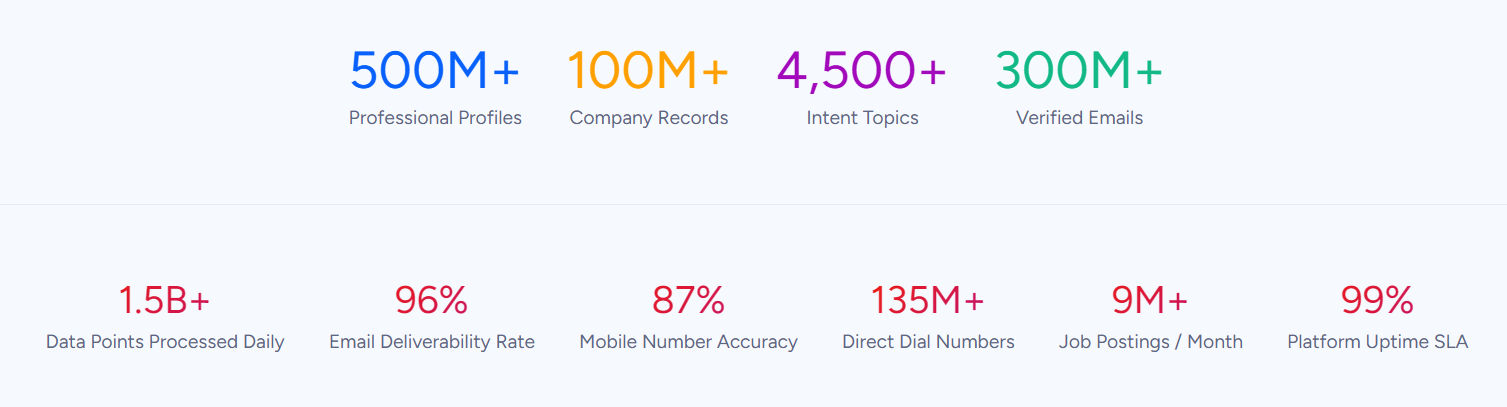
ZoomInfo is a GTM platform that lets your sales reps walk into every call knowing why the deal is moving, who's championing it, and what's likely to happen next. That depth comes from the GTM Context Graph, an intelligence layer built on a B2B dataset of 500M contacts, 100M companies, 135M+ verified phone numbers, and 200M+ verified business emails, unified with your CRM records, conversation transcripts, and behavioral signals, processing 1.5B+ data points daily. Your team accesses it through GTM Workspace for sellers, GTM Studio for marketers and RevOps, or APIs and MCP in any front-end. ZoomInfo sits underneath whichever CRM you use.
If you want to see how ZoomInfo's data and intelligence can improve your go-to-market results, start a free trial.
Unanet CRM by Cosential vs. Salesforce vs. ZoomInfo at a glance
Unanet CRM by Cosential | Salesforce | ZoomInfo | |
|---|---|---|---|
Primary purpose | Vertical CRM for AEC and GovCon | Horizontal CRM for any industry | GTM intelligence platform |
Industry focus | AEC and GovCon exclusively | B2B across all industries | |
AI capabilities | ProposalAI, OpportuneAI, Champ AI (vertical-specific) | Agentforce, Einstein AI, Atlas Reasoning Engine | GTM Context Graph, AI agents in GTM Workspace, Guided Intent |
Pricing transparency | No public pricing | Published tiers starting at $25/user/month | Custom-quoted; free tier available |
Data coverage | AEC/GovCon project and proposal data | CRM records you create and maintain | 500M contacts, 100M companies, intent signals, technographics |
Implementation time | Significant; structured onboarding required | Weeks to months depending on scope | |
Integrations | Procore, Sage, Viewpoint, Outlook | 9,000+ AppExchange apps, MuleSoft | 120+ integrations, Salesforce, HubSpot, APIs, MCP |
Best for | AEC/GovCon firms managing pursuits and proposals | Organizations needing CRM, service, marketing, and commerce | Teams needing B2B data, buyer signals, and AI outreach |
These platforms solve different problems
Comparing Unanet CRM by Cosential to Salesforce requires understanding that they were designed for different buyers.
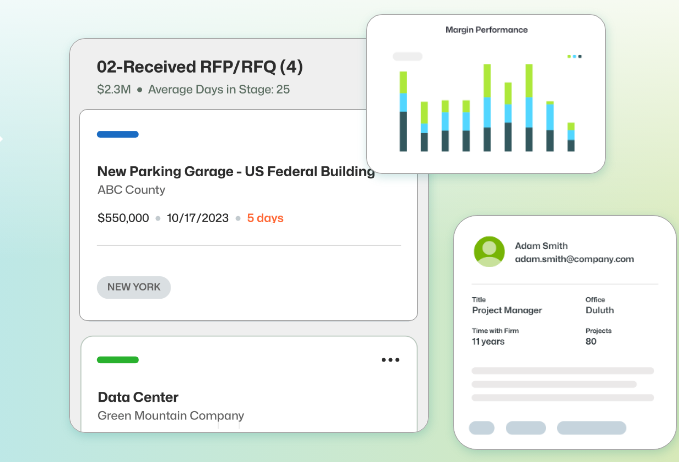
Unanet CRM exists because AEC and GovCon firms have a sales motion that generic CRMs handle poorly.
When an engineering firm pursues a government contract, the process involves identifying the opportunity, scoring it through go/no-go gates, assembling a proposal team, pulling resumes and past project records from a content library, and producing a compliant submission (often an SF330 or similar government form). This workflow doesn't map to the lead-to-opportunity pipeline that horizontal CRMs assume.
Cosential was founded in 1999 by AEC marketing professionals who lived this problem. By 2018, half of the top 100 AEC firms in the US used the platform. After Unanet acquired Cosential in 2020, the CRM gained a bridge to Unanet's ERP, connecting pursuit data with project delivery and financials.
Source: Unanet
Salesforce was founded the same year with a different ambition: replacing installed enterprise software with cloud-delivered CRM for any business.
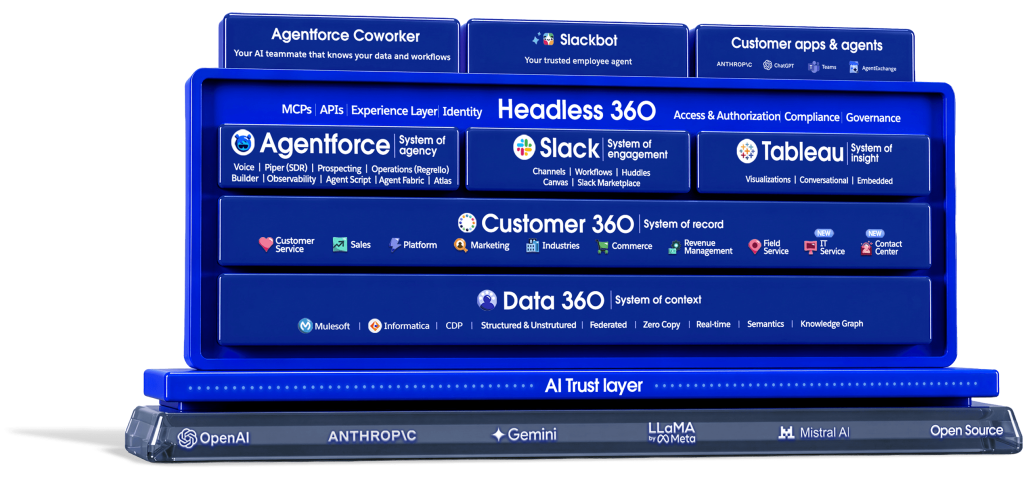
Twenty-seven years and $41.5 billion in annual revenue later, Salesforce has expanded far beyond CRM into a platform covering sales, service, marketing, commerce, analytics, integration, and AI agents. It can be configured for AEC or GovCon workflows, but that configuration takes time, consulting budget, and ongoing maintenance.
Source: Salesforce
ZoomInfo addresses the upstream question both platforms leave to the user: where does accurate buyer data come from? A CRM records the contacts and opportunities your team creates. ZoomInfo tells you which contacts to create, which accounts are in-market, and what signals suggest a deal is likely to close.

Unanet CRM is built for proposal-driven selling
What separates Unanet CRM from horizontal CRMs is its proposal generation engine.
AEC firms managing 75+ proposals per month need a system that stores resumes, project histories, certifications, and past performance records in a searchable library, then assembles them into proposal documents automatically. Unanet CRM does this natively. Marketers access a centralized database of past project profiles, team qualifications, and pre-formatted statements without chasing project managers for data.
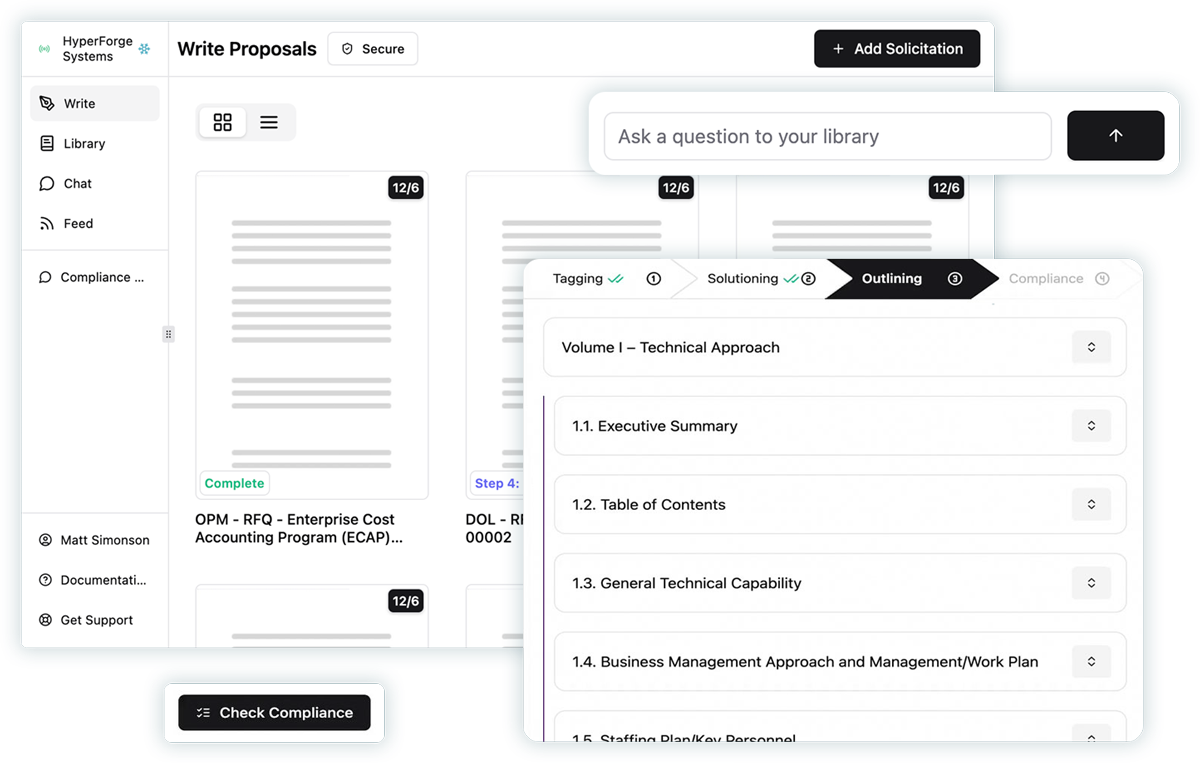
ProposalAI adds an AI layer.
It parses a solicitation document, breaks it into requirements, maps each to a response section, and generates a first draft using the firm's own CRM data. The system draws only from content the firm has provided rather than inventing answers, and flags "no relevant content found" when source material is absent.
Source: Unanet
For GovCon firms, the CRM adds Capture Management with configurable PWIN (probability of win) scoring, go/no-go forms compatible with the Shipley Method, and one-click integration with market intelligence tools like GovWin and Bloomberg Government.
Salesforce has no equivalent out of the box. You could build proposal workflows on the Salesforce Platform using custom objects, Flows, and AppExchange apps, but you'd be assembling from parts what Unanet delivers as a finished system.
Salesforce wins on platform breadth and ecosystem
Where Unanet CRM goes deep in two industries, Salesforce goes wide across every business function.
Sales Cloud handles pipeline management, forecasting, and AI deal insights. Service Cloud manages customer cases across every channel. Marketing Cloud runs campaigns, journey orchestration, and B2B lead nurturing. Commerce Cloud powers storefronts. Data Cloud unifies customer data from disparate sources. Tableau provides analytics. Slack connects it all through team collaboration.
The differentiator is the ecosystem.
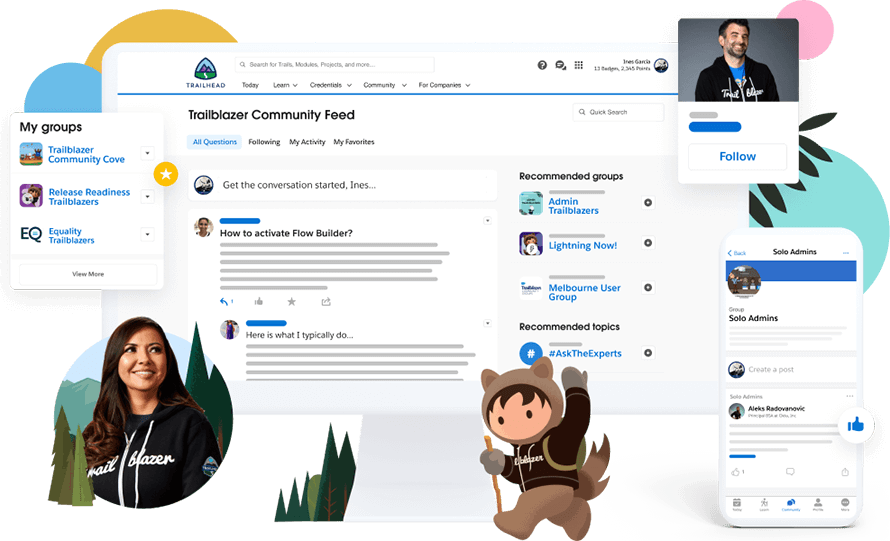
AppExchange offers 9,000+ partner apps with 14+ million installs, and 91% of Salesforce customers use at least one. MuleSoft provides hundreds of pre-built connectors for enterprise integration. The Trailblazer Community spans 20 million members across 1,300+ local groups in 90 countries.
Source: Salesforce
For AEC or GovCon firms that also need customer service, marketing automation, e-commerce, or multi-department collaboration, Salesforce provides all of it on one platform. Unanet CRM covers business development and proposals but relies on its ERP integration for project delivery, with limited marketing or service capabilities.
Salesforce has also pushed hard into AI.
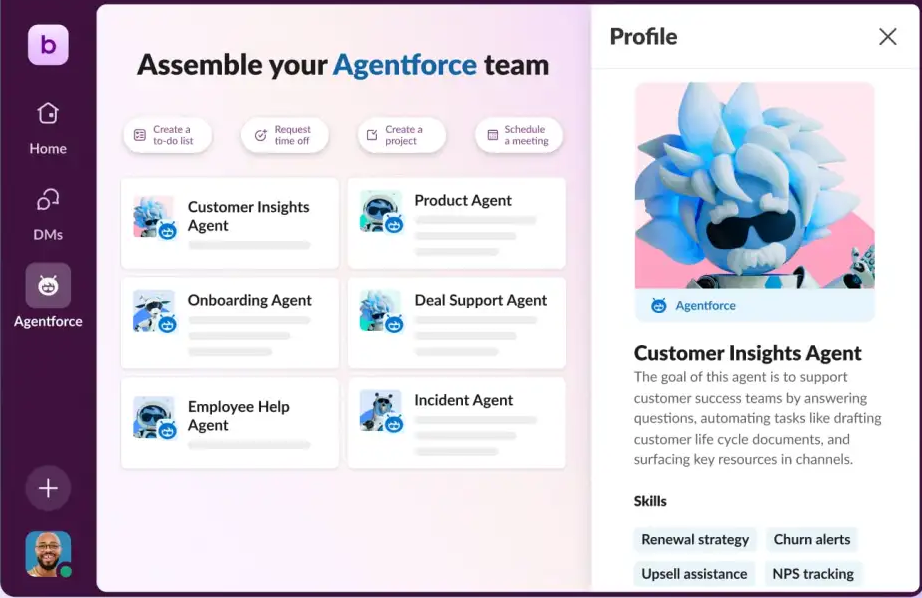
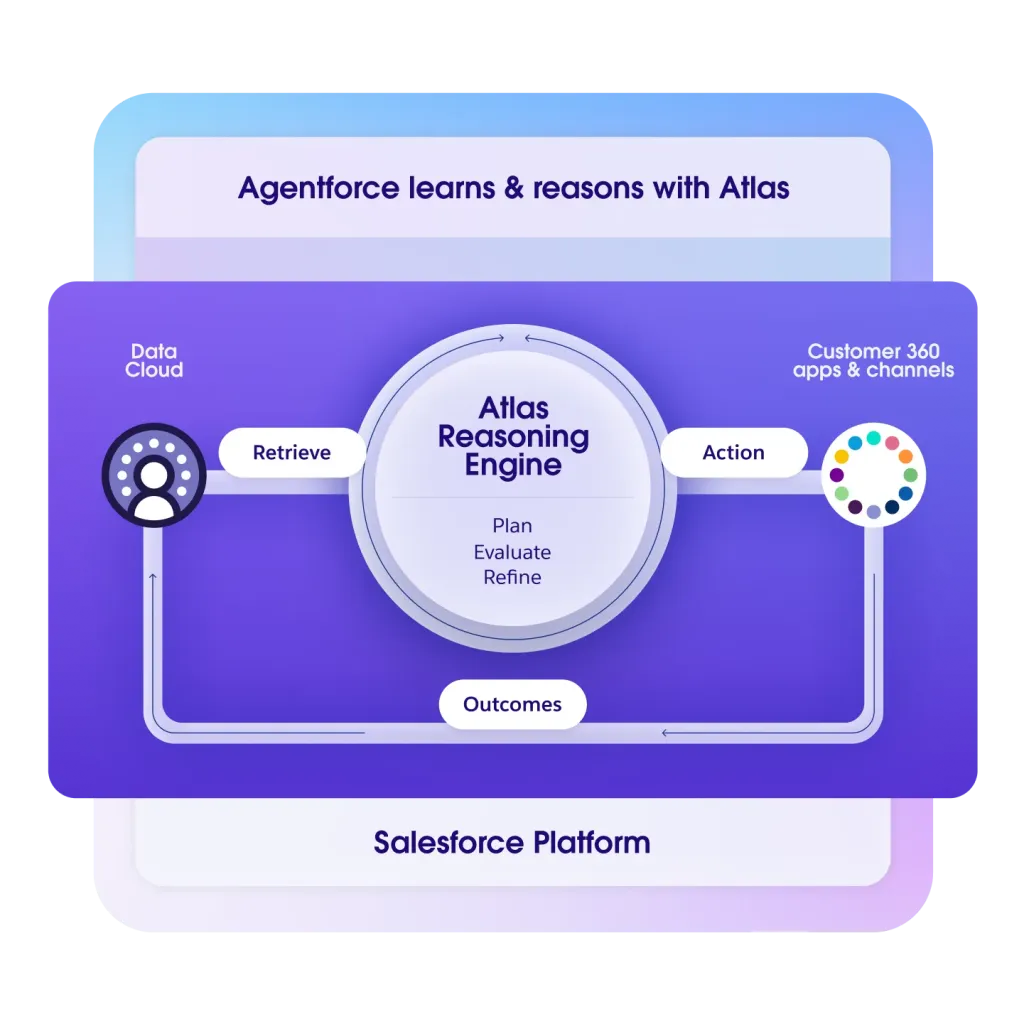
Agentforce has reached $800M ARR, with autonomous agents resolving 85% of its own support requests without human escalation. The Atlas Reasoning Engine uses a reason-act-observe loop to handle multi-step processes, and the Einstein Trust Layer ensures zero data retention with LLM partners.
Source: Salesforce
ZoomInfo fills the intelligence gap both CRMs leave open
A CRM is only as good as the data inside it. Both Unanet CRM and Salesforce depend on their users to populate contact records, update deal stages, and track interactions. Neither was designed to answer the question: who should we be selling to right now?
ZoomInfo was built for this.
Its data platform covers 500M contacts across 100M companies, with 135M+ verified phone numbers and 200M+ verified business email addresses. A verification process backed by 300+ human researchers maintains up to 95% accuracy on first-party data. In a Fortune 500 competitive RFP analyzing 25 million contacts across vendors, an independent consultant concluded that "no other competitor came even close."
Source: ZoomInfo
But data alone is a starting point.
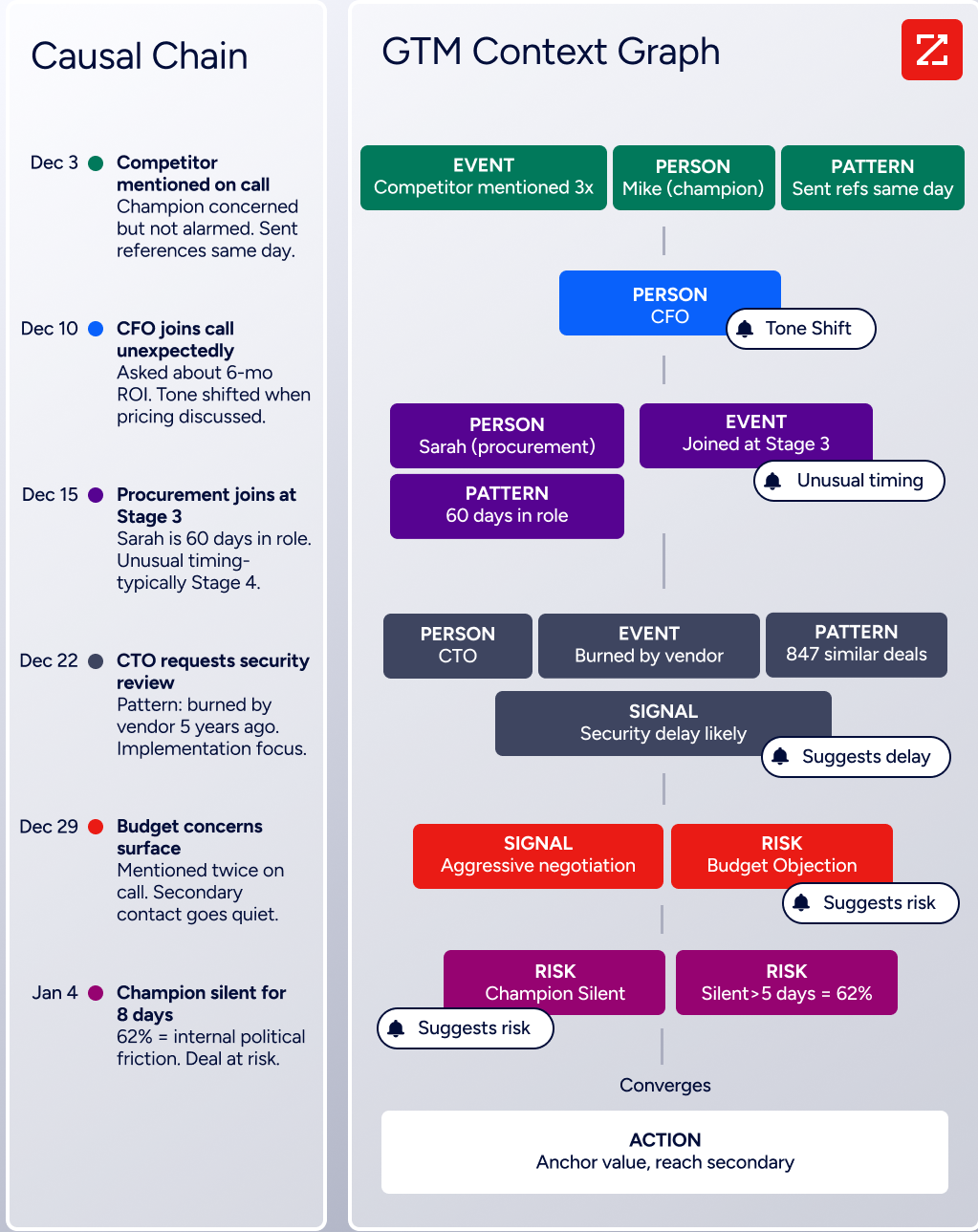
The GTM Context Graph combines ZoomInfo's B2B data with a customer's CRM records, conversation intelligence from Chorus, email interactions, and behavioral signals into one intelligence layer. As ZoomInfo's CPO Dominik Facher explains: "The CRM recorded the state change. It has no record of why it happened." The GTM Context Graph captures the reasoning behind deal movement, not just the stage labels.
For a GovCon firm using Unanet CRM, ZoomInfo can identify the decision-makers at target agencies, surface intent signals showing which organizations are researching relevant capabilities, and provide the verified contact data needed to build relationships before an RFP drops.
For a Salesforce user, ZoomInfo enriches CRM records, triggers workflows based on buying signals, and provides AI-drafted outreach through GTM Workspace.
Source: ZoomInfo
For a deeper look at how these two platforms compare head-to-head, see our Salesforce vs. ZoomInfo comparison.
"It's not just the data itself. It's more about the right data at the right time to help us reach out with the right message across that full buyer journey." (Chelsea Kenyon, Senior Director of Digital Strategy, Redwood Logistics)
Pipeline management reflects each platform's design philosophy
All three platforms help users manage their sales pipelines. The differences reveal what each was designed to prioritize.
Unanet CRM builds pipeline management around the AEC seller-doer model.
Architects, engineers, and project managers who both deliver work and bring in new business can move opportunities through stages using drag-and-drop within Outlook, so they never need to open a separate application. The pipeline connects to hard and soft backlog and resource capacity, so go/no-go decisions account for whether the firm can deliver the work, not just whether the revenue looks attractive. Weighted go/no-go forms standardize pursuit qualification across offices.
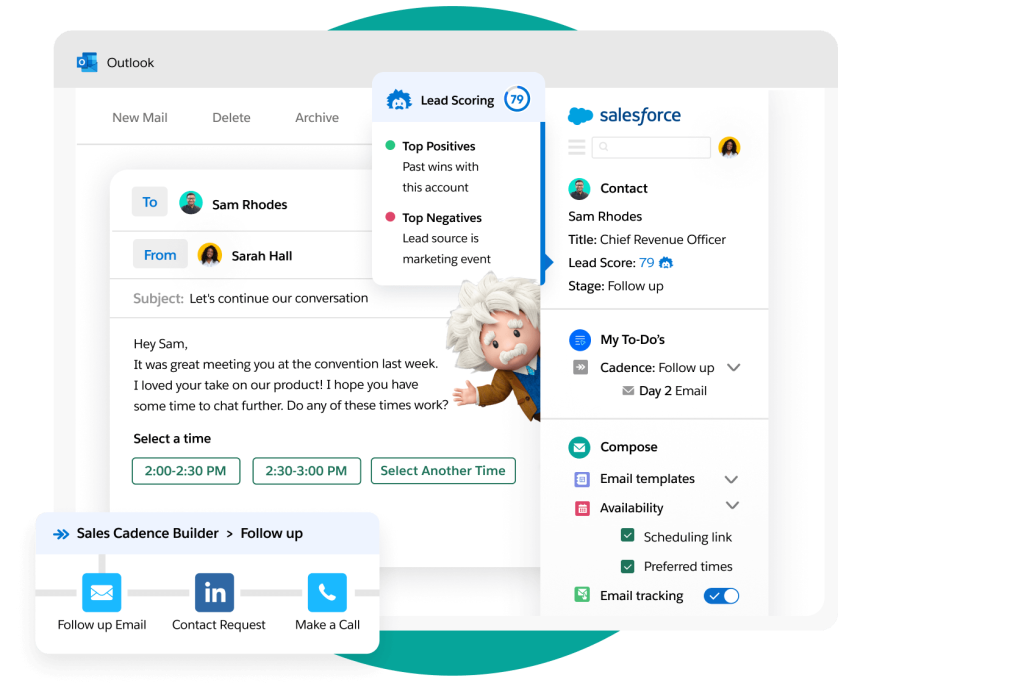
Salesforce Sales Cloud provides a pipeline with AI-generated account plans including SWOT analysis, Einstein deal scoring, and forecast management with AI overlay.
Agentforce adds prospecting agents, sales coaching agents, and automated quoting (75% faster). The pipeline integrates natively with Service Cloud, Marketing Cloud, and Data Cloud, so sales reps see the full customer picture. However, configuring Salesforce's pipeline for a project-based pursuit model (with sub-opportunities, teaming partners, and compliance gates) requires custom development.
Source: Salesforce
ZoomInfo approaches pipeline from the intelligence side.
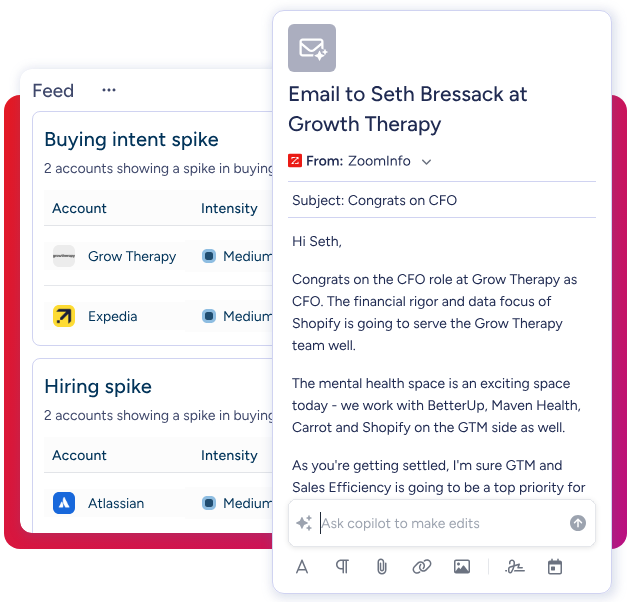
GTM Workspace gives sellers a single view of their book of business, combining CRM data with real-time buying signals, AI-drafted outreach, and account research. The Action Feed surfaces in-market buyers matched to target criteria, with pre-drafted actions on every signal. Rather than replacing your CRM's pipeline, ZoomInfo fills it with better-qualified opportunities and helps reps prioritize the ones most likely to close.
Source: ZoomInfo
"ZoomInfo's not just a contact data company anymore. They've built a full system of execution. GTM Intelligence actually works the list, writes the outreach, triggers the play, and helps drive predictable growth." (Ian Brodie, CEO & Co-Founder, Levanta)
AI capabilities serve different use cases
Each platform has invested in AI, but the applications reflect their core missions.
Unanet CRM's AI suite is built for AEC and GovCon.
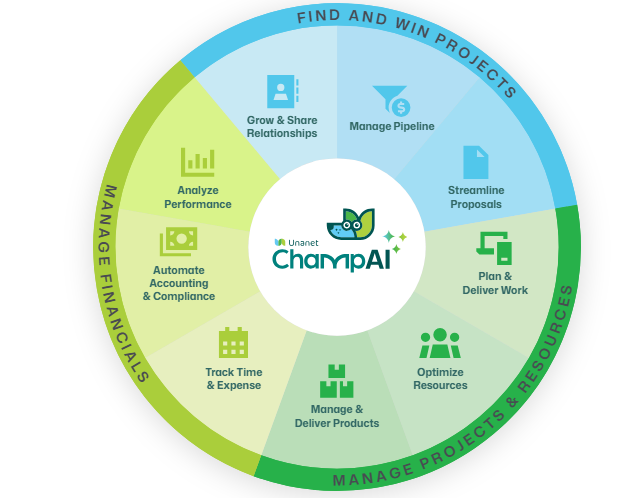
Champ AI is the platform-wide engine, grounded in each firm's own ERP and CRM data rather than generic training data. ProposalAI generates compliant proposal drafts from content libraries. OpportuneAI scores opportunities against historical win patterns, surfacing similar past contracts and identifying relevant personnel and teaming partners. GovIntel automates solicitation ingestion and applies AI scoring to prioritize opportunities.
Each tool runs in a private cloud with no data shared with third parties, which matters for GovCon firms handling sensitive contracting information. The GovCon AI model is trained on FAR, DFAR, and DAWIA knowledge standards.
Source: Unanet
Salesforce's AI is broad.
Agentforce deploys autonomous agents across sales, service, marketing, commerce, and IT. Pre-built agents cover SDR tasks, sales coaching, customer service, personal shopping, and campaign management. The Atlas Reasoning Engine powers multi-step reasoning, and Agentforce Script lets developers blend deterministic logic with LLM reasoning.
Source: Salesforce
ZoomInfo's AI is built on proprietary GTM data.
The GTM Context Graph reasons across CRM records, conversation transcripts, intent signals, and behavioral data to explain why deals move or stall. Guided Intent, exclusive to ZoomInfo, identifies topics historically correlated with deal success rather than requiring manual topic selection. AI agents in GTM Workspace handle account research, outreach drafting, CRM updates, and signal monitoring. GTM Studio lets marketers describe audiences in natural language and launch multi-channel plays without engineering support.
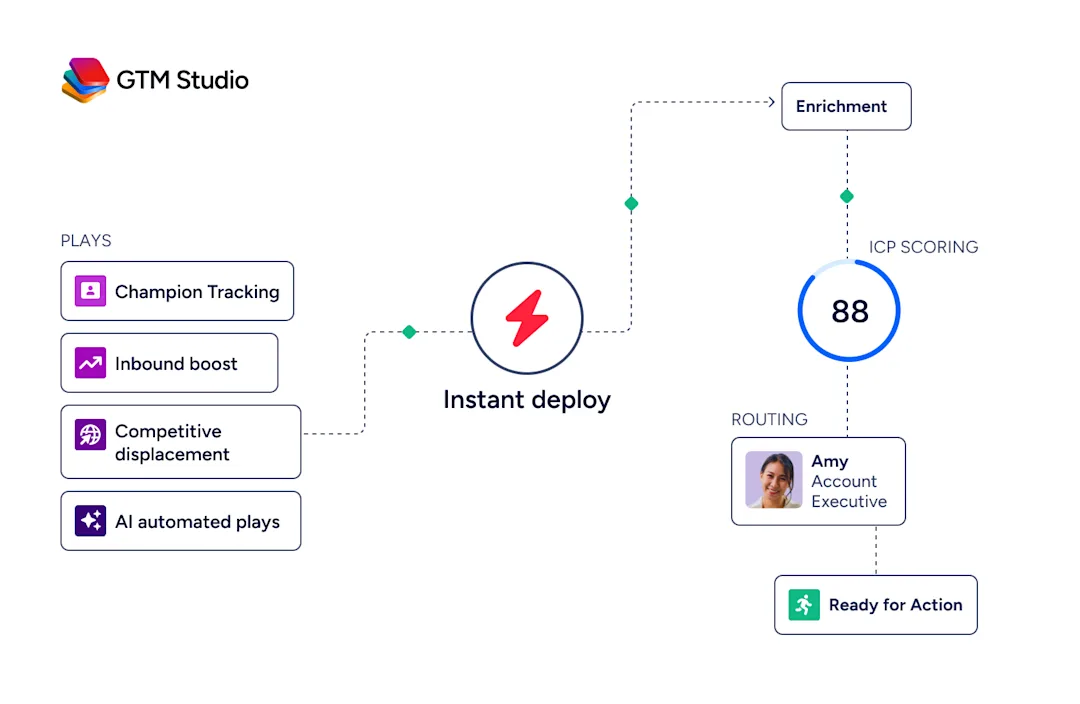
Source: ZoomInfo
"That combination of our internal CRM data, external signals, and AI that's given all that context has helped us craft very specific account- and persona-based messages. And people have responded to them right away." (Toby Carrington, Chief Business Officer, Seismic)
Pricing structures reflect different markets
Unanet CRM by Cosential does not publish pricing.
All product pages direct buyers to a "Talk to an Expert" form, typical of enterprise vertical software. Implementation is a real cost; Unanet offers two tracks: Unanet Go (pre-configured for speed) and Custom Implementations for complex configurations. No free tier or free trial is advertised.
Salesforce publishes tiered pricing.
Sales Cloud starts at $25/user/month for Starter Suite and scales to $550/user/month for Agentforce 1, which includes unmetered Agentforce, Tableau Next, and Slack Enterprise+. Most businesses need at least the Enterprise tier at $175/user/month for meaningful AI and automation.
Additional costs include Agentforce consumption (Flex Credits at $500 per 100,000), Data Cloud credits ($500 per 100,000), and Premier Support at 30% of net license fees. Over 70% of implementations are partner-led, adding further cost.
ZoomInfo uses custom-quoted, consumption-based pricing.
There is no published price list for paid tiers, but ZoomInfo offers two free entry points: ZoomInfo Lite (a permanent free tier with 10 monthly export credits and access to the B2B database) and a 7-day free trial with full platform access. Paid plans are organized into Sales (Professional, Advanced, Enterprise) and Marketing (Marketing Demand, ABM Lite, ABM Enterprise) tiers, each with progressively deeper access to intent signals, AI features, and workflow automation.
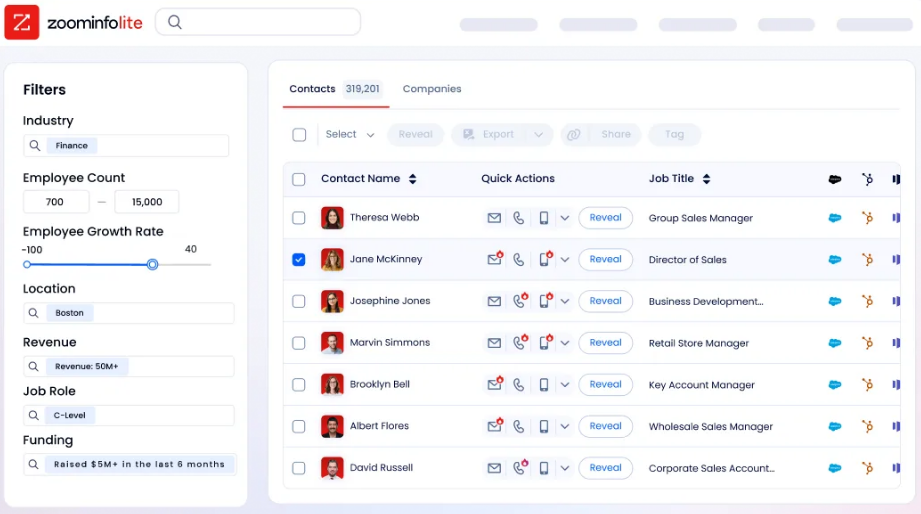
Source: ZoomInfo
Integration approaches differ by design
Unanet CRM integrates with the tools AEC and GovCon firms use: Procore (bidirectional sync), Viewpoint, Sage 100, Sage 300, Trimble Construction, and Microsoft Outlook.
The Unanet Connect platform provides 100+ pre-built connectors. The native bridge between Unanet CRM and Unanet ERP is a strength for firms already on or evaluating the ERP. The Cosential Compass API covers core CRM entities for custom development. However, there is no Google Workspace integration, which G2 reviewers have flagged as a gap for firms using Gmail.
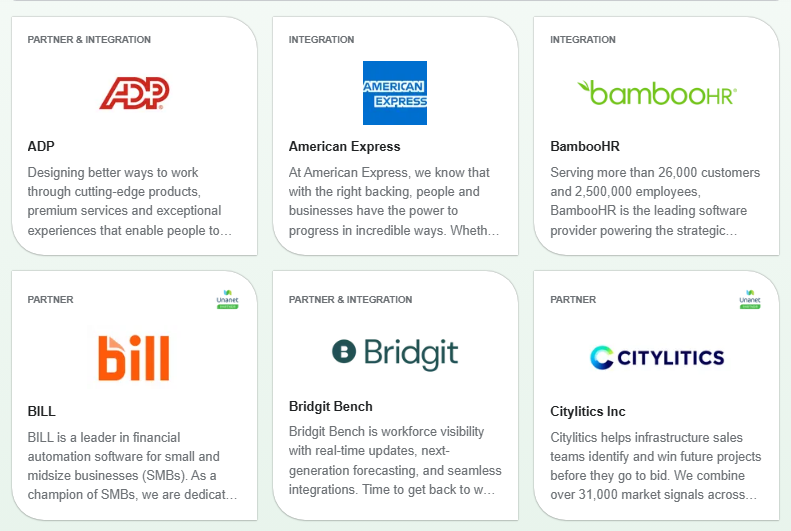
Source: Unanet
Salesforce has the widest integration ecosystem.
AppExchange provides 9,000+ apps. MuleSoft handles complex enterprise integrations with hundreds of pre-built connectors. Native integrations cover Google Workspace, Microsoft Outlook and Teams, and Slack. Salesforce provides developer access through multiple API types including REST, SOAP, Bulk, Metadata, and Pub/Sub.
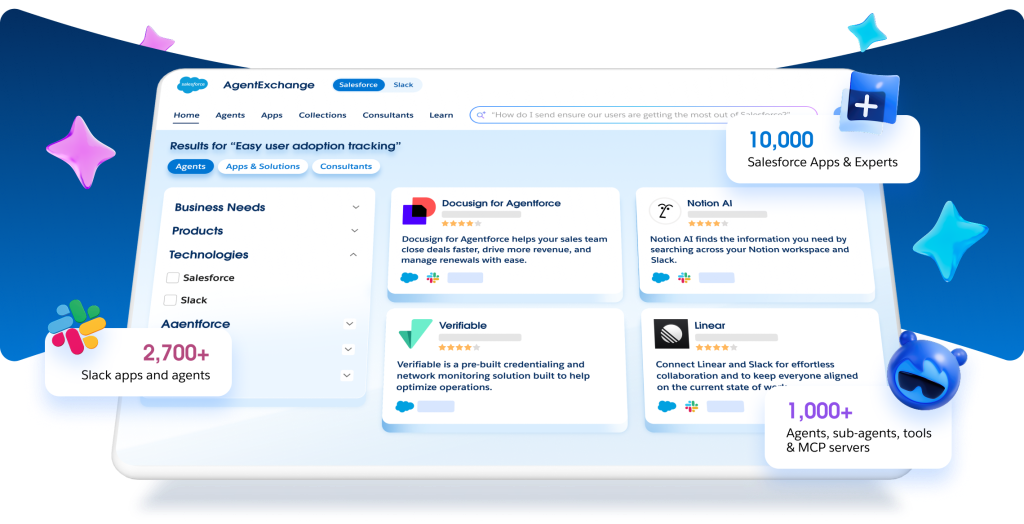
Source: Salesforce
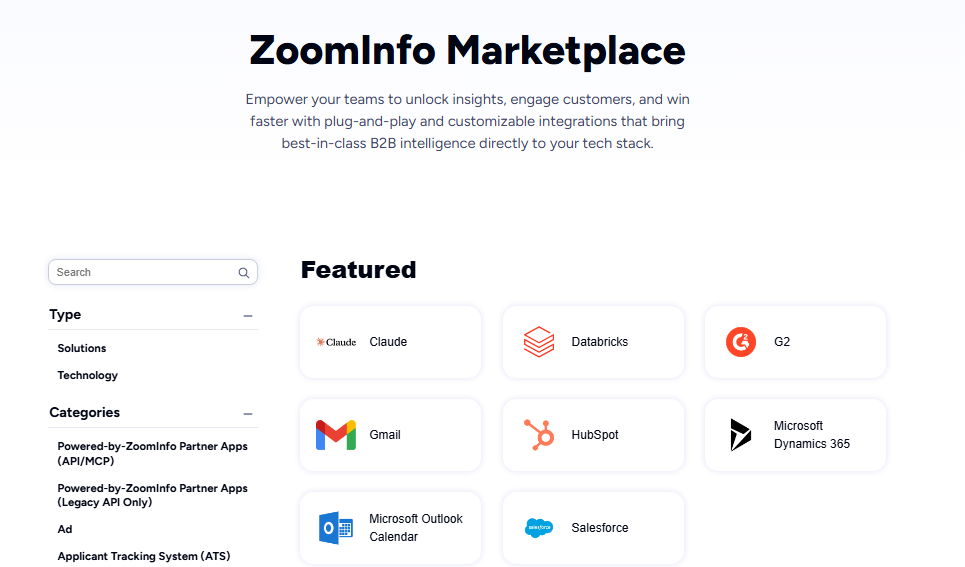
ZoomInfo integrates with major CRM and sales platforms: Salesforce, HubSpot, Microsoft Dynamics 365, Outreach, Salesloft, and 120+ others. The Enterprise API exposes data and intelligence programmatically. The MCP server connects AI models directly to ZoomInfo's data with no custom coding, currently supporting Claude and ChatGPT. API access is included in all relevant plans.
Source: ZoomInfo
"The plug-and-play aspect of the API means I can integrate it very easily into any process and get information at a moment's notice." (Jerry Wilson, Senior Marketing Intelligence Analyst, BDO Canada)
User experience and adoption
Unanet CRM is shaped around AEC-specific workflows, which makes it familiar to industry practitioners but harder to learn for users accustomed to generic CRMs.
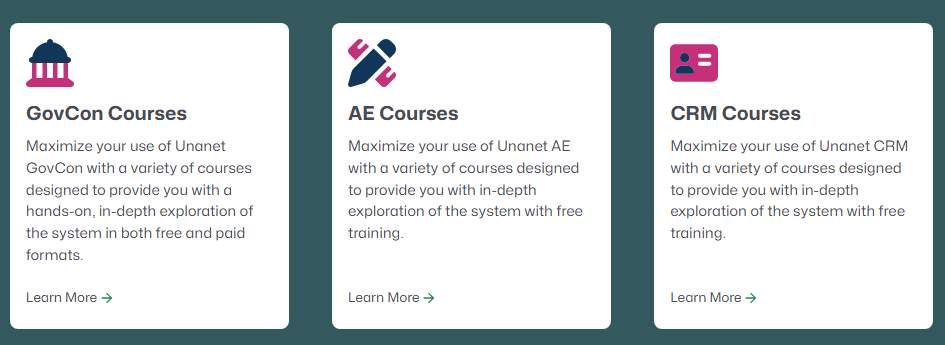
Reviews on G2 note the system "feels a little outdated, both in terms of appearance and capabilities," and the reporting module is described as "rather complicated for non-engineering minded" users. Unanet University offers role-specific training and a formal CRM Administrator certification. Support tiers include Standard (phone/email, business hours) and Premium (24x7 for cloud customers). Multiple Capterra reviewers describe the support team as "personal, attentive, and understanding of the A/E industry."
Source: Unanet
Salesforce is capable but complex.
Real configuration requires dedicated, trained administrators. Trailhead provides 1,500+ badges and 6+ million learners for training. Support ranges from Standard (free, self-service) to Premier (30% of net license fees, 1-hour response) to Signature (24/7, 15-minute response for critical issues). Implementation timelines range from weeks for simple Sales Cloud setups to 3-12 months for enterprise multi-cloud deployments.
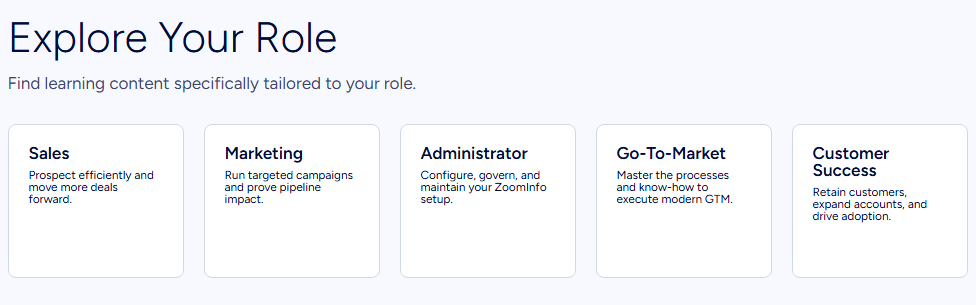
ZoomInfo redesigned its onboarding program from 30 to 90 days, producing a 25% improvement in customer satisfaction scores. ZoomInfo University provides role-specific learning paths and certifications. GTM Workspace "deploys in weeks, not months".
ZoomInfo was the only vendor positioned in Gartner's Customers' Choice quadrant in the 2025 Voice of the Customer report, with the highest volume of reviews and a 4.7/5.0 average rating.
Source: ZoomInfo
Security and compliance capabilities
For GovCon firms especially, security posture matters.
Unanet CRM maintains SOC 2 Type II certification and achieved FedRAMP Moderate Equivalency for its ERP GovCon solution in January 2026, with CRM, GrowthStudio, and ProposalAI on the certification roadmap. ProposalAI runs in a private cloud with AI providers contractually prohibited from using customer content for model training. Unanet also publishes a CMMC Guide to support GovCon customers pursuing CMMC Level 2 certification.
Salesforce holds extensive compliance certifications: ISO 27001/27017/27018, SOC 1/2/3, FedRAMP (Government Cloud), and HITRUST. Salesforce Shield adds event monitoring, platform encryption with BYOK, and field audit trail for regulated industries. The Einstein Trust Layer provides zero data retention with LLM partners, PII masking, and toxicity detection.
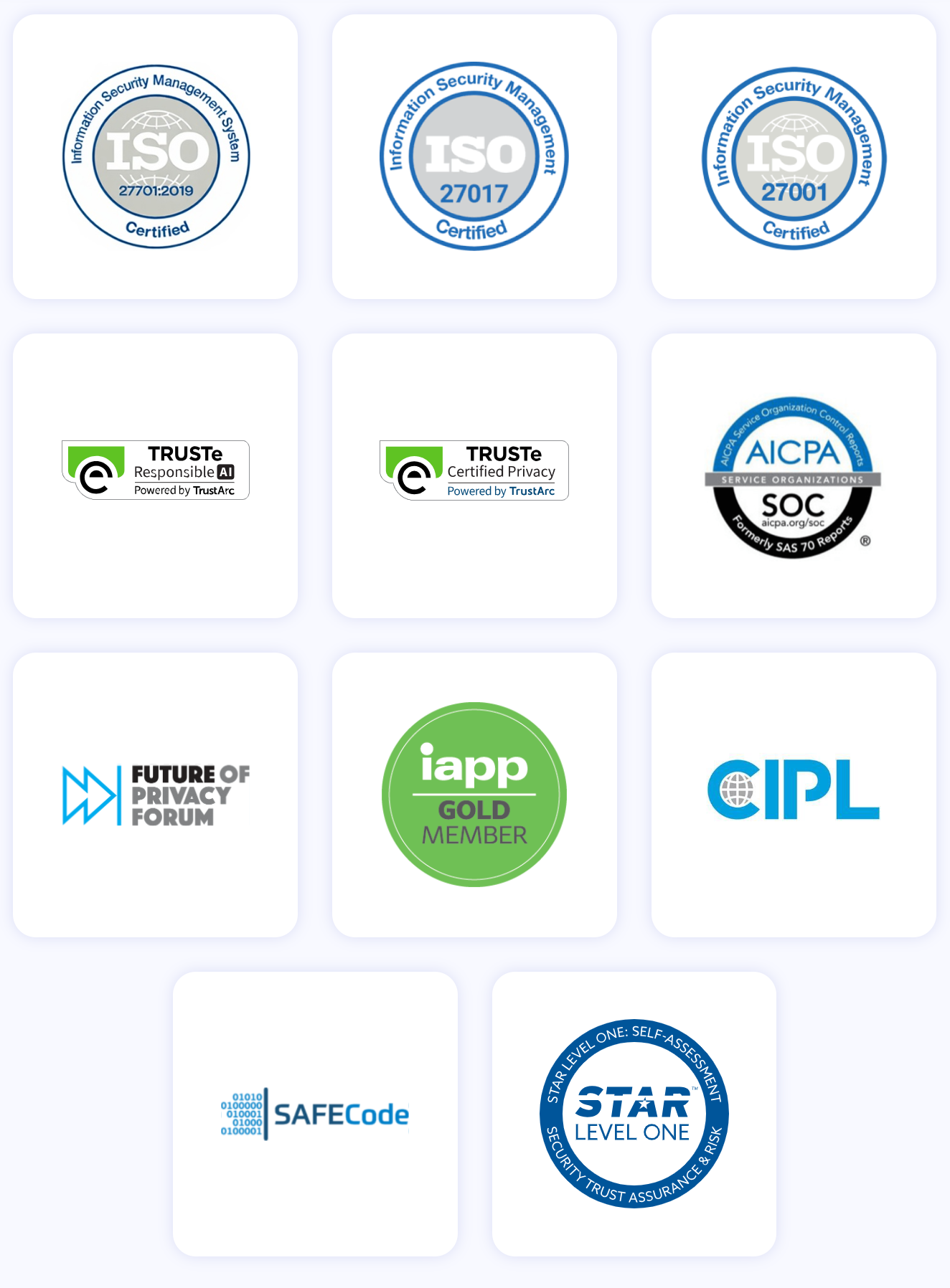
ZoomInfo maintains multiple compliance certifications (ISO 27001, ISO 27701, SOC 2 Type II, TRUSTe GDPR, and TRUSTe CCPA), all renewed annually. ZoomInfo is a registered data broker in California and Vermont.
Unanet CRM vs. Salesforce vs. ZoomInfo: Which should you choose?
The right choice depends on your industry, your primary challenge, and how much of your go-to-market stack you want from a single vendor.
Choose Unanet CRM by Cosential if:
You're an AEC or GovCon firm where proposal production and pursuit management are your primary sales activities
You need a CRM that understands SF330 submissions, go/no-go gates, teaming partners, and PWIN scoring natively
You manage 20+ active pursuits simultaneously and need a centralized content library for resumes and project histories
You're already on or evaluating Unanet ERP and want a single vendor from pursuit to profit
You value industry-specific support from a team that understands AEC and GovCon workflows
Choose Salesforce if:
You need a CRM that spans sales, service, marketing, commerce, and analytics on one platform
Your organization operates across multiple industries or business units with different needs
You have the budget and resources for dedicated Salesforce administration
You want access to the largest enterprise app marketplace and partner ecosystem
AI-powered autonomous agents across every business function are a priority
Choose ZoomInfo if:
You need accurate B2B data to fuel your CRM and outreach
Your sales team spends too much time on manual research instead of selling
You want AI that understands why deals move, not just that they moved
You need buyer intent signals, verified contact data, and AI-drafted outreach in one platform
You want intelligence that works inside any CRM or tool, not locked to a single application
Start a free trial or explore ZoomInfo Lite at no cost.
These platforms are not always competing for the same budget line. Unanet CRM serves a specific vertical with depth no horizontal CRM matches out of the box. Salesforce provides the broadest platform for organizations that need everything in one place. ZoomInfo provides the data foundation that makes any CRM more effective.
For many teams, the strongest stack combines a CRM that fits their workflow with ZoomInfo's data and signal intelligence powering what goes into it.
Unanet CRM by Cosential vs. Salesforce vs. ZoomInfo FAQ
What is the main difference between Unanet CRM by Cosential, Salesforce, and ZoomInfo?
Unanet CRM by Cosential is a vertical CRM built for architecture, engineering, construction, and government contracting firms, with native proposal generation, pursuit tracking, and go/no-go decision workflows.
Salesforce is a horizontal CRM platform serving any industry, with cloud products spanning sales, service, marketing, commerce, and AI agents.
ZoomInfo is a go-to-market intelligence platform providing B2B data, buyer intent signals, and AI execution tools that complement any CRM.
Can ZoomInfo work alongside Unanet CRM or Salesforce?
Yes. ZoomInfo integrates with Salesforce through a native connector on the ZoomInfo App Marketplace, and its Enterprise API and MCP server let data flow into any system.
While ZoomInfo does not list a direct integration with Unanet CRM, its API can feed enriched contact and company data into any platform that accepts programmatic input. ZoomInfo is designed as an intelligence layer underneath your CRM, not a replacement for it.
Which platform is best for a GovCon firm?
Unanet CRM by Cosential is the best fit for the GovCon-specific sales motion, with capture management, Shipley Method-compatible go/no-go gates, PWIN scoring, and ProposalAI trained on FAR/DFAR standards.
Salesforce can be configured for GovCon through its Government Cloud and custom development, but lacks these capabilities natively. ZoomInfo can complement either by providing verified contact data for agency decision-makers, intent signals showing which agencies are researching relevant capabilities, and AI-drafted outreach.
How does pricing compare across the three platforms?
Unanet CRM does not publish pricing and requires a sales conversation. Salesforce publishes tiered pricing from $25 to $550 per user per month for Sales Cloud, with additional consumption costs for Agentforce, Data Cloud, and premium support. ZoomInfo uses custom-quoted, consumption-based pricing with no published rates for paid tiers, but offers a permanent free tier (ZoomInfo Lite) and a 7-day free trial.
Which platform has the best AI capabilities?
Each platform's AI serves a different purpose.
Unanet CRM's AI is built for AEC/GovCon, with ProposalAI generating compliant proposal drafts and OpportuneAI scoring opportunity fit against historical data. Salesforce's Agentforce is the broadest, deploying autonomous agents across sales, service, marketing, and commerce.
ZoomInfo's GTM Context Graph reasons across CRM data, conversation intelligence, and buying signals to explain why deals move or stall, powering account research, outreach, and prioritization.
Do any of these platforms offer a free tier or trial?
ZoomInfo offers the easiest free entry: ZoomInfo Lite (permanent, no credit card required, 10 monthly export credits) and a 7-day free trial of the full platform. Salesforce offers a free CRM for up to 2 users and 14-day trials of paid editions. Unanet CRM does not advertise a free tier or free trial.
Which platform is easiest to implement?
ZoomInfo's GTM Workspace deploys in weeks. Salesforce's implementation ranges from weeks for simple setups to 3-12 months for multi-cloud enterprise deployments, with over 70% of implementations led by partners. Unanet CRM requires structured onboarding with considerable configuration work, and reviewers consistently cite a steep initial learning curve.
Is Salesforce overkill for an AEC or GovCon firm?
It depends on the firm's needs. If the primary challenge is pursuit management and proposal production, Unanet CRM handles those workflows natively without custom development. If the firm also needs customer service, marketing automation, e-commerce, or multi-department collaboration, Salesforce's breadth becomes valuable.
Many mid-market AEC firms find that the cost and complexity of configuring Salesforce for their specific workflow exceeds the benefit when a vertical alternative exists.
See how Salesforce compares against other CRMs and platforms:
