
Choosing between EngageBay vs. HubSpot for your CRM and marketing automation often comes down to five questions:
Are you a small team looking for one affordable platform, or a scaling company ready to invest in a full go-to-market system?
Do you need basic marketing automation and a sales pipeline, or AI agents that prospect, qualify, and follow up on their own?
Is your priority keeping costs under $100/month, or getting the most from every dollar you spend on sales and marketing?
How important is accurate, verified contact data for your outreach and campaigns?
Do you need a platform your team can learn in a day, or one that grows with you from startup to enterprise?
In short, here's what we recommend:
EngageBay is an affordable all-in-one CRM for startups and small businesses that need marketing, sales, and support tools without enterprise pricing. Its free plan supports up to 15 users, and paid plans start at $12.74/user/month, making it one of the cheapest options for teams outgrowing spreadsheets or stitching together separate tools. EngageBay covers email marketing, automation, deal pipelines, helpdesk, and live chat in a single subscription. But performance can slow with larger contact databases, native integrations are limited (roughly 30 direct connections, with the rest handled through Zapier), and reporting and revenue attribution fall short of what mature sales teams need.
HubSpot is the complete customer platform for companies ready to bring marketing, sales, service, content, and data operations under one roof. With 288,706 customers and over 2,000 app integrations, HubSpot offers features EngageBay can't match: Breeze AI agents for customer service and prospecting, multi-touch revenue attribution, CPQ and payment processing, and a content management system with built-in SEO tools. But it costs accordingly. Professional-tier plans with mandatory onboarding fees can push costs into thousands per month, and mixing hub tiers means all seats get billed at the highest tier's rate.
Both platforms give you tools to capture leads, nurture prospects, and manage deals. But neither solves the problem upstream of all of them: knowing who to target, when they're ready to buy, and what your outreach should say. That's a different capability.
ZoomInfo is an AI-powered go-to-market platform built on one of the largest B2B data foundations: 500M contacts, 100M companies, 135M+ verified phone numbers, and 200M+ verified business email addresses. Its GTM Context Graph processes 1.5B+ data points daily, combining this data with your CRM records, conversation transcripts, and behavioral signals to build a complete picture of your accounts. That context lets AI show not just what happened, but why, and what to do next. Your team can run sales plays from the GTM Workspace, build automated plays in GTM Studio, or connect their own tools through the API and MCP.
If your CRM has the tools but not the data to drive them, see how ZoomInfo can help.
EngageBay vs. HubSpot vs. ZoomInfo at a glance
EngageBay | HubSpot | ZoomInfo | |
|---|---|---|---|
Primary focus | Affordable all-in-one CRM for small business | Full customer platform for scaling companies | AI-powered go-to-market intelligence and execution |
Marketing automation | Visual builder, 16 triggers | Workflows with AI personalization | GTM Studio: AI plays and orchestration |
Sales pipeline | Drag-and-drop deals with custom tracks | AI-guided selling with Breeze Prospecting Agent | GTM Workspace: AI agents with buyer context |
B2B contact data | CRM records only | CRM records with AI enrichment | 500M contacts, 135M+ verified phone numbers |
Buyer intent signals | Not available | Not available | Intent data from 210M IP-to-Organization pairings |
Native integrations | ~30 native; 250+ via Zapier | 2,000+ app marketplace | 120+ integrations; APIs and MCP for any tool |
AI capabilities | Email writing, lead scoring, chatbot | Breeze agents across all hubs | GTM Context Graph powering AI across all tools |
Starting price | Free (15 users); $12.74/user/mo | Free (2 users); $15/seat/mo (Starter) | Free (ZoomInfo Lite); custom-quoted paid plans |
Best for | Budget-conscious small businesses (1-50 employees) | Scaling companies (20-2,000 employees) | B2B teams that need verified data and intelligence |
EngageBay delivers real value for budget-conscious small teams
EngageBay exists because of a simple observation: most small businesses can't afford HubSpot. Founded in 2017 by Sreedhar Ambati, the platform was designed to deliver HubSpot-level capability at a fraction of the cost.
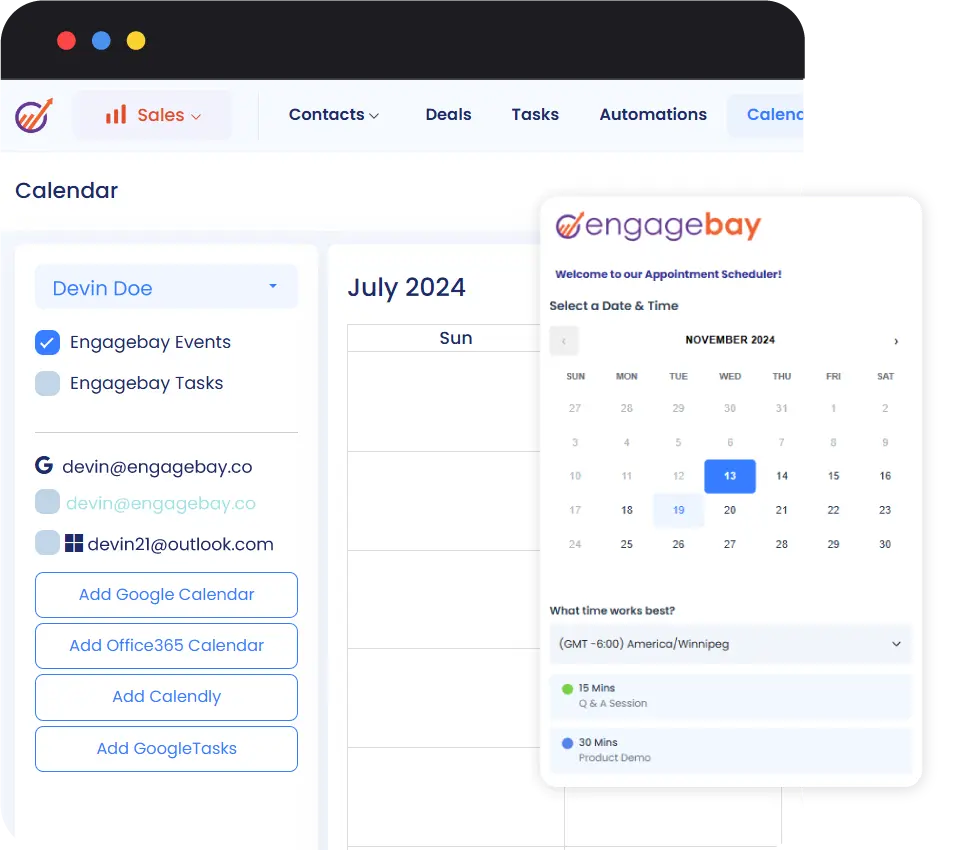
What makes EngageBay work at this price is breadth. The platform covers email marketing, automation, landing pages, web forms, lead scoring, deal pipelines, appointment scheduling, helpdesk ticketing, live chat, and an AI chatbot in one subscription.
Source: EngageBay
The free plan is generous: 250 contacts, 1,000 emails/month, full CRM, helpdesk, and live chat for up to 15 users, no credit card required. That's a real starting point for teams testing whether an all-in-one CRM fits their workflow.
EngageBay's limits show as you grow. G2 and Capterra reviewers consistently flag slow performance with larger contact databases, limited native integrations, and reporting that can't match premium CRMs on funnel analytics or revenue attribution. Marketing automation is unavailable on the Free and Basic plans, gated behind the Growth tier at $55.24/user/month, which creates a steep jump for teams that need it.
HubSpot earns its premium with platform depth
HubSpot has spent nearly two decades evolving from an inbound marketing tool into what it now calls "the agentic customer platform." The gap between HubSpot and EngageBay isn't just feature count. It's a deeper platform where marketing, sales, service, content, data, and commerce share a single CRM database, and AI agents operate across all of them.
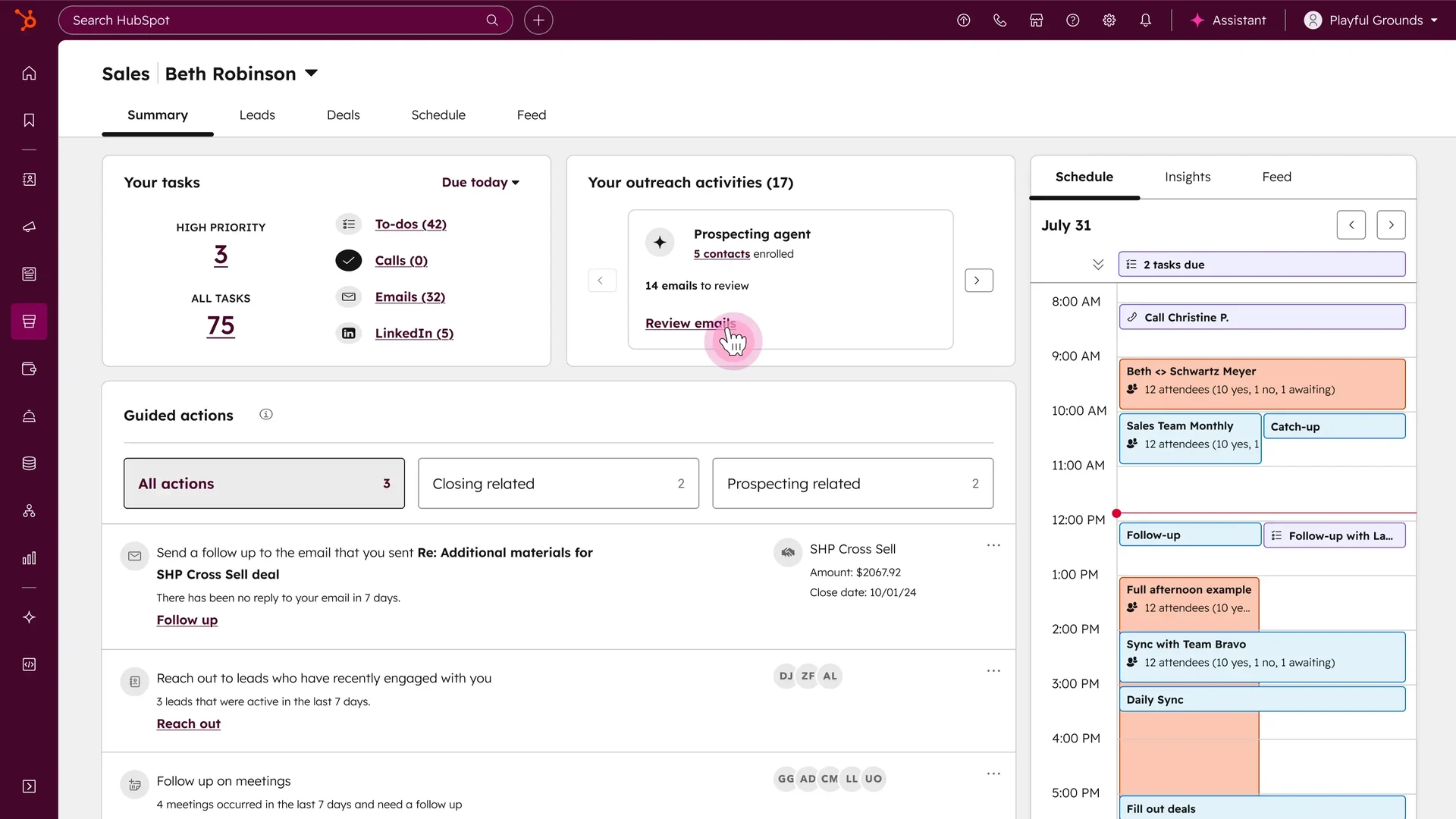
The depth shows up in specifics. Marketing Hub offers multi-touch revenue attribution, AI audience segmentation, and an AEO (Answer Engine Optimization) toolset for ranking in AI-generated search results. Sales Hub includes a Breeze Prospecting Agent that researches accounts, monitors buying signals, and drafts personalized outreach on its own. Service Hub deploys a Breeze Customer Agent that resolves customer conversations without human intervention.
Source: HubSpot
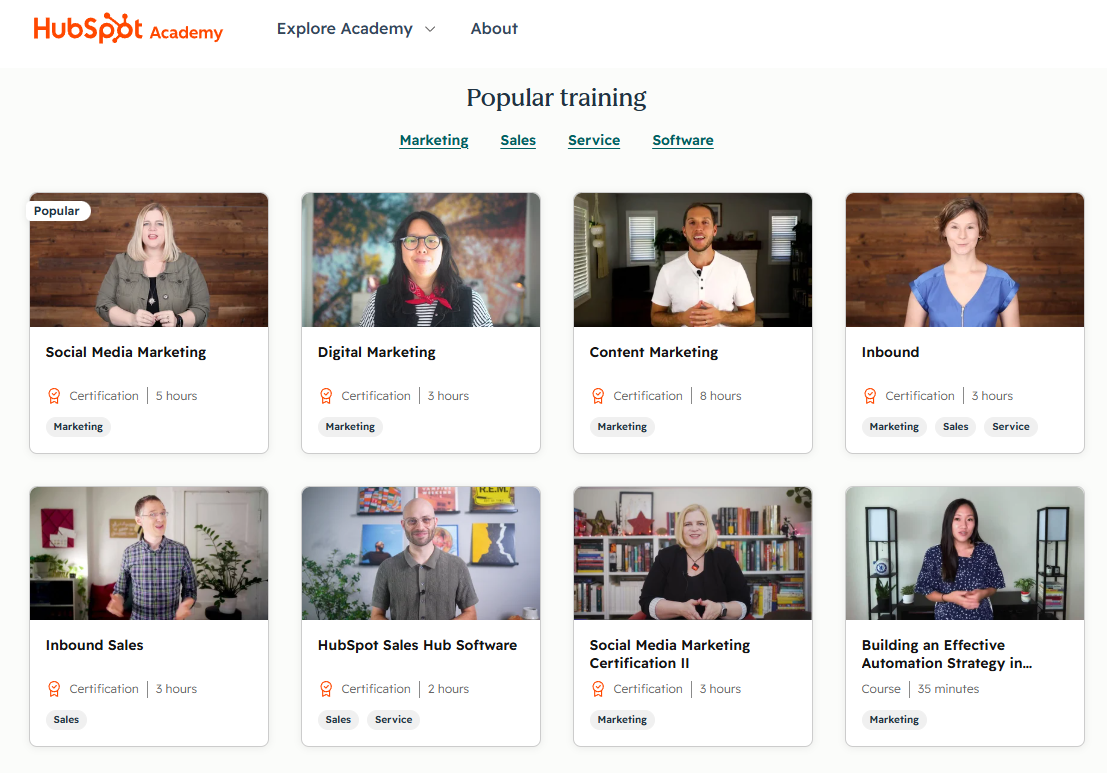
The ecosystem reinforces this. With over 2,000 app integrations and 2.5 million active installs, HubSpot connects to nearly any tool a growing business uses. HubSpot Academy has certified over 200,000 professionals, and a large Solutions Partner network provides implementation support that EngageBay's smaller team can't replicate.
Source: HubSpot
But HubSpot's pricing deserves scrutiny. Marketing Hub Professional costs $800/month (annual) with a $3,000 mandatory onboarding fee. Sales Hub Professional runs $90/seat/month with a $1,500 onboarding fee. A team buying both for five reps faces approximately $14,100/year in seat costs alone, before onboarding fees and contact tier overages.
The Starter tier is more accessible at $15/seat/month (monthly), bundling all hubs. But Professional is where the real capability lives.
Cancellation adds another constraint. Paid subscriptions can only be canceled at the end of the commitment term, not mid-contract, and all payments are non-refundable except in narrow circumstances.
The data gap neither CRM fills
Both EngageBay and HubSpot manage relationships and automate outreach. But they depend on one input neither provides: knowing who your best prospects are, how to reach them, and when they're ready to buy.
EngageBay stores the contacts you import or capture through forms. HubSpot enriches records using its Smart CRM, pulling information from emails, calls, and web activity. Both approaches rely on data you already have or data that arrives passively. Neither gives you verified direct-dial phone numbers for decision-makers you haven't reached, signals showing which companies are actively researching your category, or org charts mapping the buying committee at a target account.
This is the gap ZoomInfo fills. With 500M contacts, 100M companies, 135M+ verified phone numbers, 120M direct-dial phone numbers, and 200M+ verified business email addresses, ZoomInfo operates one of the largest B2B data platforms available. A proprietary verification system backed by 300+ human researchers checks this data, reaching up to 95% accuracy on first-party records.
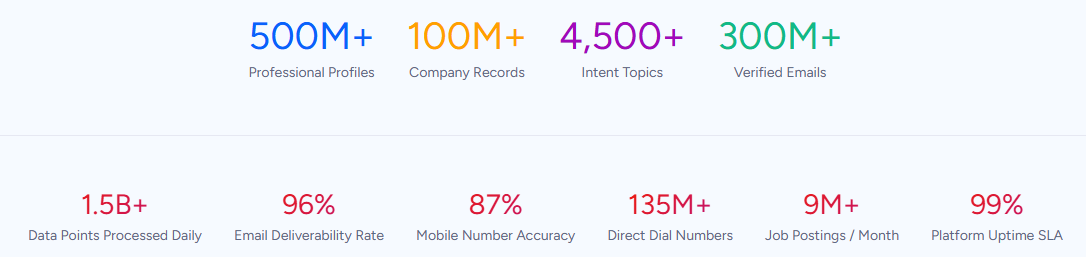
The practical difference: when a sales rep opens EngageBay or HubSpot, they see the contacts marketing has captured. When they open ZoomInfo's GTM Workspace, they see accounts ranked by buying signals, with verified contact details for decision-makers and AI-drafted outreach tailored to each prospect's concerns.
Vensure scaled prospecting using ZoomInfo's B2B data: "ZoomInfo gives us the information we need to execute. We don't have to go through and spend our time digging. It's already there, so we can be three steps ahead." (Vensure)
For a more detailed look at how HubSpot and ZoomInfo's data and intelligence capabilities compare head to head, see our HubSpot vs ZoomInfo comparison.
Marketing automation: breadth vs. depth vs. intelligence
All three platforms approach marketing automation differently, and the differences reveal what each was designed to do.
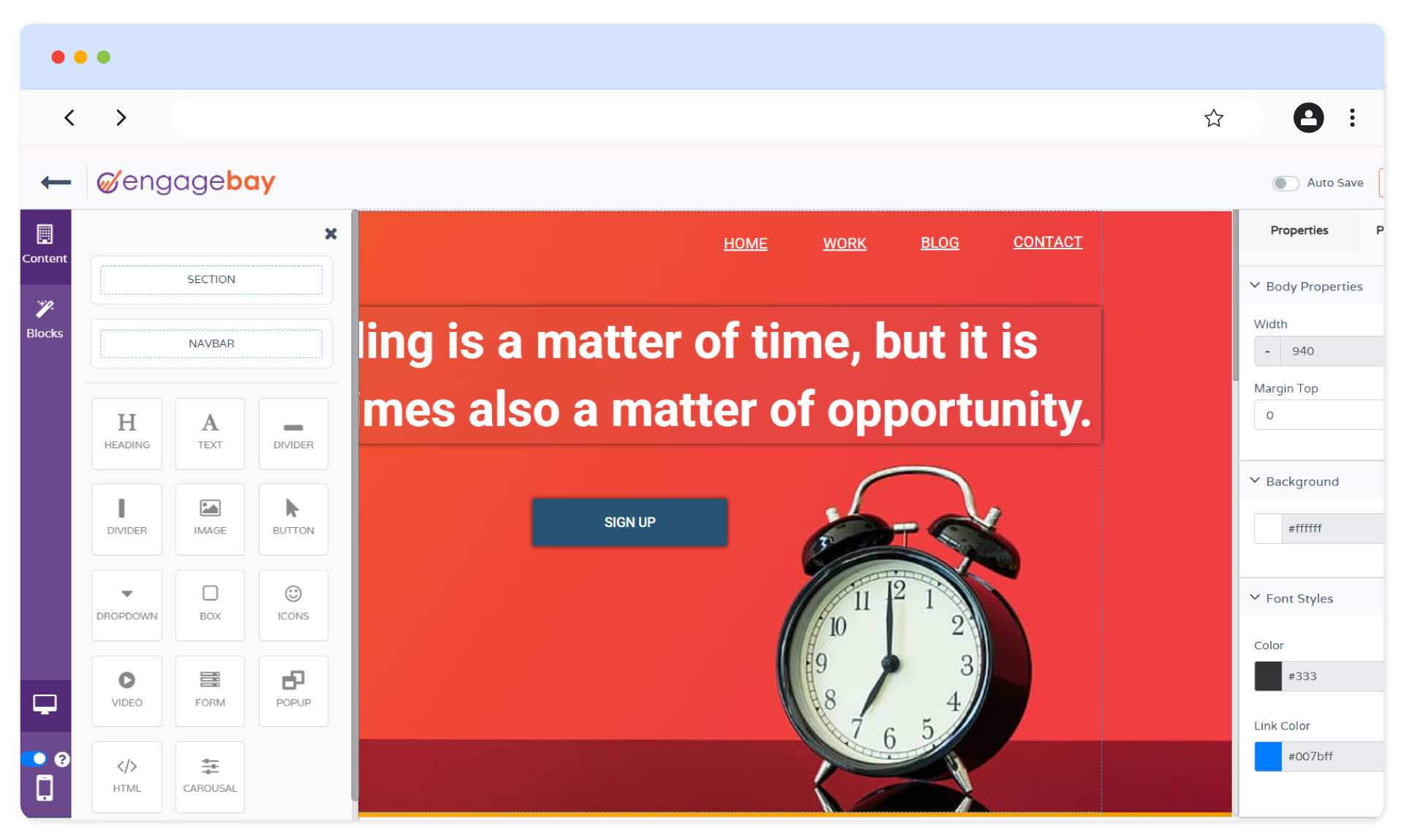
EngageBay offers a visual, drag-and-drop automation builder with 16 trigger types, including cart abandonment, purchase events, web page visits, and incoming/outgoing calls. For an SMB-priced tool, this is solid depth. The platform separates Automations from Workflows: Automations are event-triggered and always running, while Workflows run manually on a batch of contacts. An OpenAI integration embeds GPT directly into the automation canvas, letting AI-generated content flow into subsequent steps.
Source: EngageBay
The catch: marketing automation is unavailable on Free and Basic plans. You need the Growth tier ($55.24/user/month, biennial) to access it, and even then you're capped at 10 workflows with 15 nodes each. Pro ($101.99/user/month) unlocks unlimited workflows.
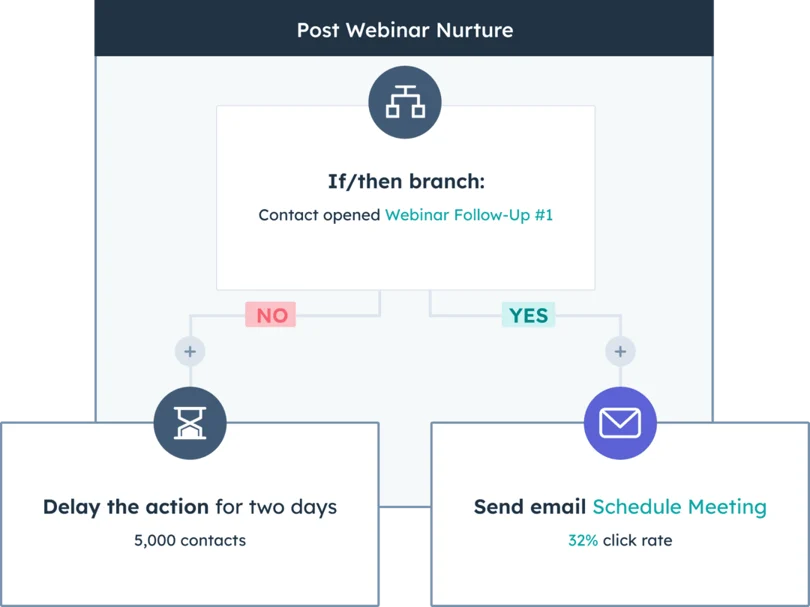
HubSpot operates at a different scale. Marketing Hub's workflows support multi-step branching sequences with AI personalization, Lookalike Lists that discover high-potential contacts, and Content Remix that turns a single piece of content into assets for every channel. The Breeze Social Agent automates social posting, and the AEO toolset helps content rank in AI-powered search results. The capability is real, but it requires Professional tier ($800/month) to access.
Source: HubSpot
ZoomInfo takes a different approach through GTM Studio. Rather than building automations around contacts you already have, GTM Studio lets marketers describe audiences in plain language, enrich them with first- and third-party data, and launch multi-channel plays targeting accounts that match proven win patterns. Pre-built plays for inbound acceleration, champion tracking, and competitive displacement launch in one click. Expansion plays that used to take 3 weeks now launch in 30 minutes, without engineering support.
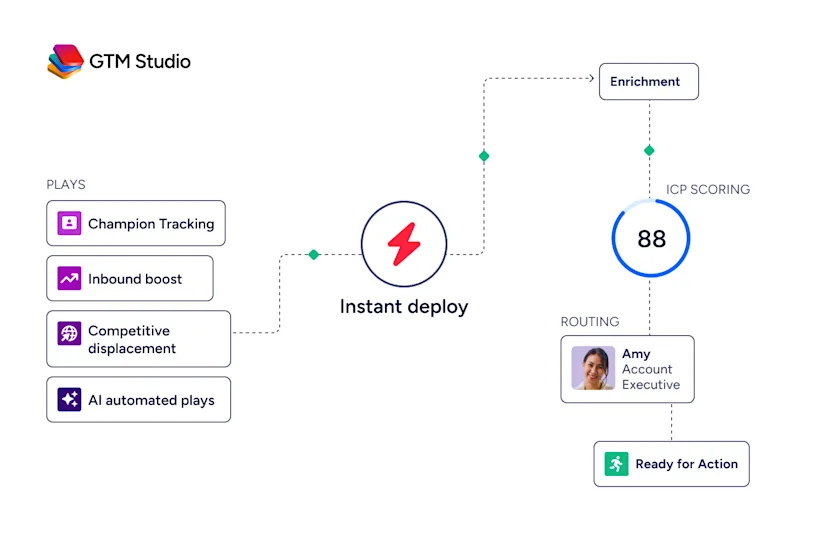
The distinction matters: EngageBay and HubSpot automate what happens after a lead enters your system. ZoomInfo finds the right leads first and orchestrates plays against accounts showing buying signals.
Redwood Logistics achieved a 99% reduction in CPC and a 310% increase in CTR using ZoomInfo's audience data: "It's not just the data itself. It's more about the right data at the right time to help us reach out with the right message across that full buyer journey." (Redwood Logistics)
Sales pipeline management comparison
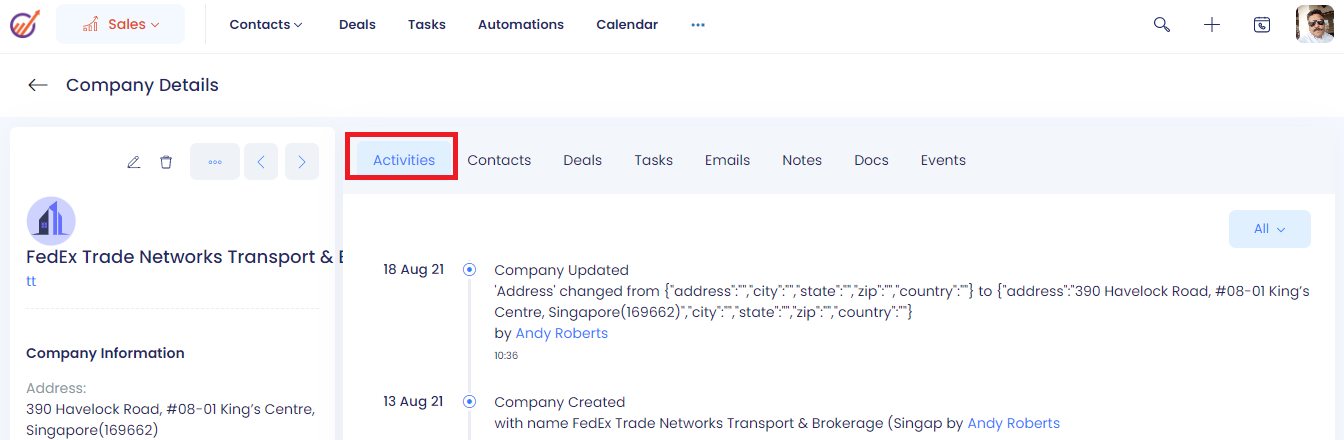
EngageBay's CRM organizes deals into Tracks with custom Milestones carrying win-probability percentages. Each contact record shows a 360-degree view aggregating email history, call notes, web activity, social profiles, lead score, and linked deals. Built-in telephony lets reps call from any contact record, with full history surfaced during the call. Reps can create and track proposals with e-signatures without leaving the platform. For a small sales team, this covers the full workflow at a price that's hard to beat.
Source: EngageBay
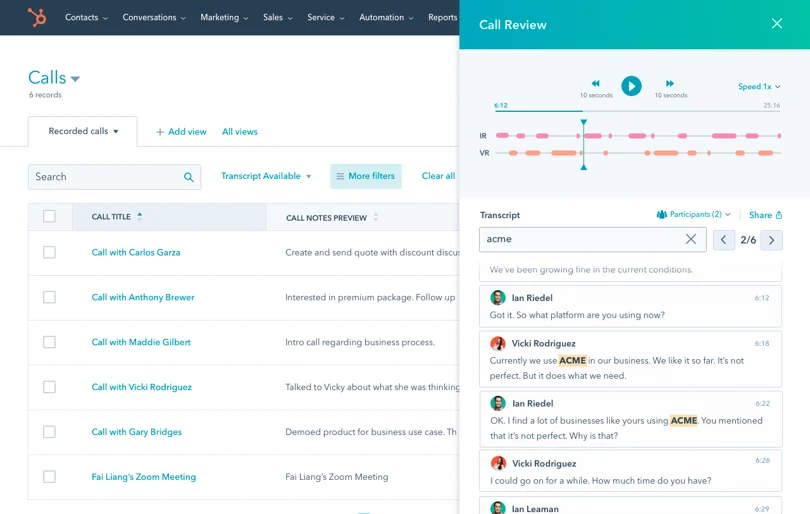
HubSpot's Sales Hub adds layers that matter for larger teams. AI Guided Selling prioritizes daily actions and surfaces deal recommendations. The Breeze Prospecting Agent monitors enrolled prospects for buying signals (leadership changes, funding rounds, engagement spikes), drafts personalized outreach, and operates in either review mode or fully autonomous mode. CPQ software generates branded quotes directly from deal records. Conversation Intelligence records and transcribes calls for coaching.
Source: HubSpot
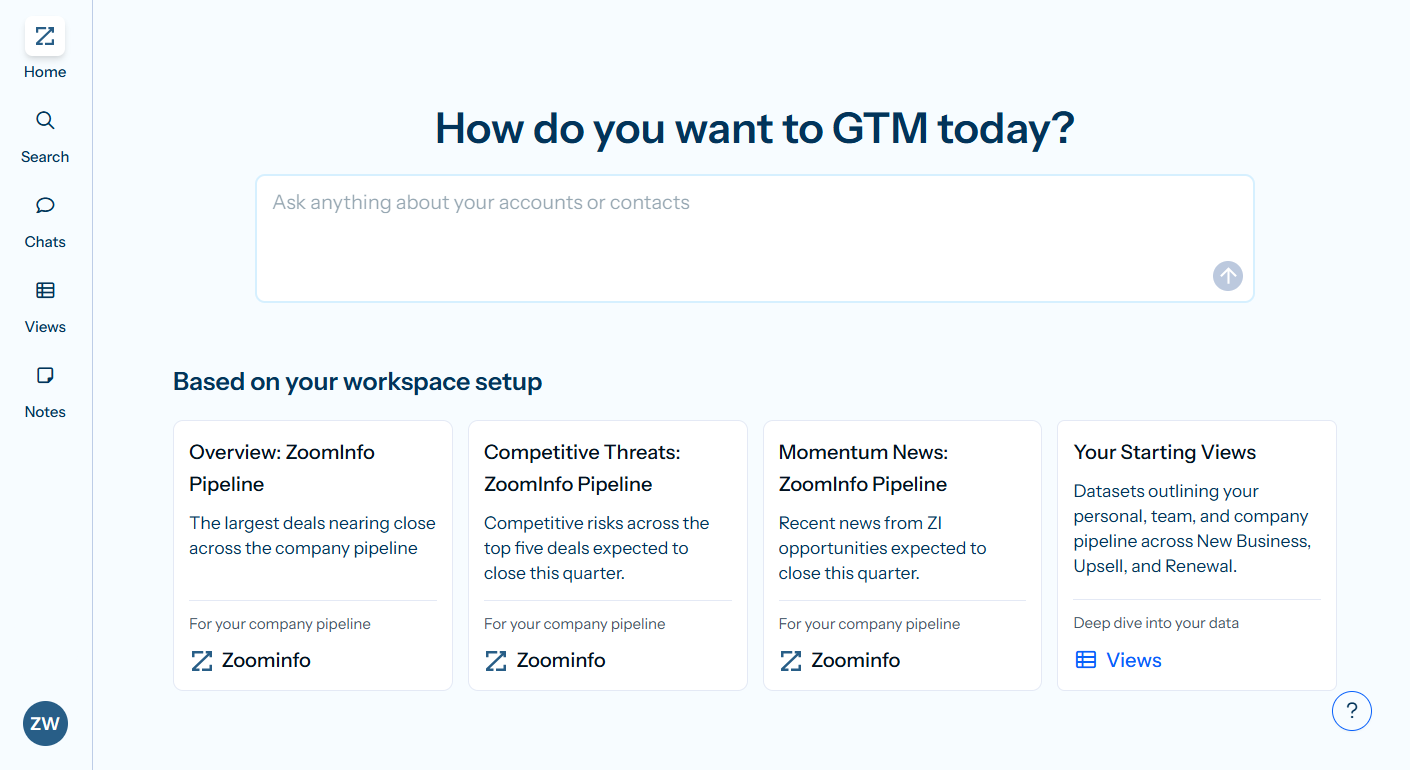
ZoomInfo's GTM Workspace starts from the intelligence layer. Instead of waiting for leads to enter the CRM, Workspace shows a Book of Business view that merges CRM data with ZoomInfo's verified contacts, conversation history, and market signals. An Action Feed streams in-market buyers matched to target criteria, with pre-drafted actions for every signal. AI agents handle account research, outreach drafting, CRM updates, and signal monitoring.
The results are documented. Seismic's sales team boosted productivity by 54% and attributed 39% of active pipeline to ZoomInfo signals. Thomson Reuters increased closed-won deals by 40% and achieved 115% average quota attainment each month. Databricks reached prospects 50% faster.
For teams using EngageBay or HubSpot as their CRM, ZoomInfo doesn't replace the pipeline. It feeds verified, signal-rich data into it through native integrations with Salesforce, HubSpot, and Microsoft Dynamics.
Seismic attributed 39% of active pipeline to ZoomInfo signals while saving 11.5 hours per week per rep: "That combination of our internal CRM data, external signals, and AI that's given all that context has helped us craft very specific account- and persona-based messages." (Seismic)
Pricing tells you who each platform is for
The pricing structures reflect different target customers.
EngageBay is built for teams counting every dollar:
Plan | Price (biennial) | Contacts | Branded emails/mo |
|---|---|---|---|
Free | $0 (up to 15 users) | 250 | 1,000 |
Basic | $12.74/user/mo | 500 | 3,000 |
Growth | $55.24/user/mo | 5,000 | 25,000 |
Pro | $101.99/user/mo | 50,000 | 50,000 |
No mandatory onboarding fees. No annual contract required. Free migration from any platform. One caveat: all plans send branded emails with EngageBay's logo by default. Removing the branding requires purchasing email credits at $4 per 1,000 emails or connecting a third-party SMTP relay.
HubSpot is built for companies investing in growth infrastructure:
Marketing Hub Professional alone costs $800/month (annual) with a $3,000 one-time onboarding fee. Sales Hub Professional runs $90/seat/month with a $1,500 onboarding fee. A team buying both for five reps faces approximately $14,100/year in seat costs alone, before onboarding fees and contact tier overages.
The Starter tier is more accessible at $15/seat/month (monthly), bundling all hubs. But Professional is where the real capability lives.
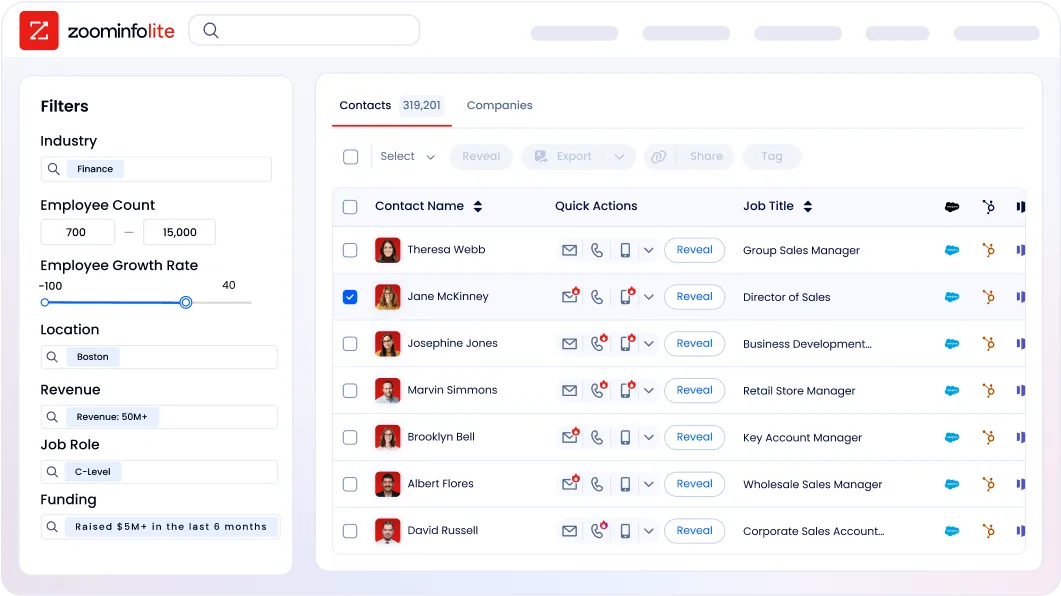
ZoomInfo uses consumption-based pricing. No published dollar amounts for paid plans. Pricing scales around seats, data credit volume, features, and contract length. ZoomInfo Lite provides a permanent free tier with access to the B2B database, 10 monthly export credits, and WebSights Lite (up to 10 website visitor reveals per day). A 7-day free trial with full feature access is also available.
The question isn't which is cheapest. It's which delivers the most value per dollar for your situation. A 5-person startup managing 500 contacts will get everything it needs from EngageBay's Basic plan at under $65/month. A 50-person company running multi-channel campaigns needs HubSpot's Professional tier for meaningful automation and reporting. A B2B sales team that needs verified decision-maker contacts, intent signals, and AI prospecting needs ZoomInfo regardless of which CRM it uses.
Integration ecosystems show different stages of maturity
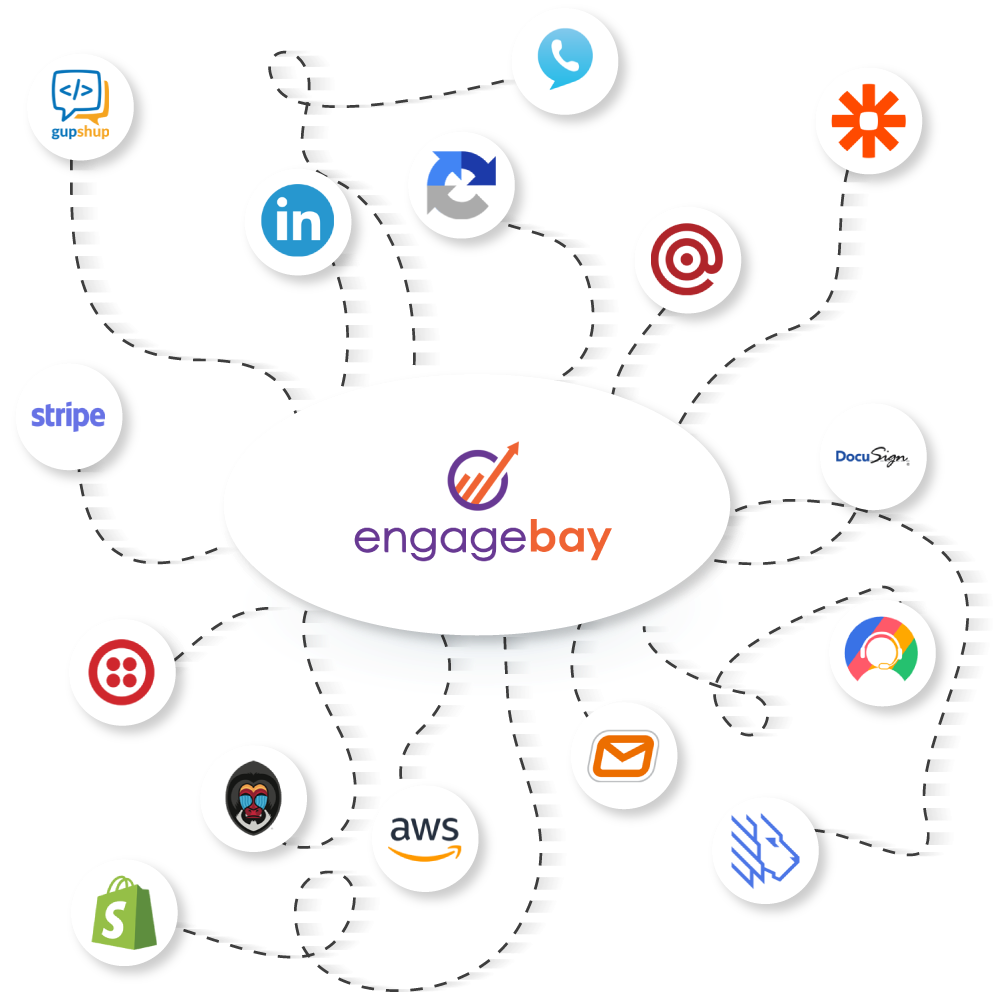
EngageBay lists connectivity with 500+ apps on its integrations page, but roughly 30 are native. The rest rely on Zapier. Native connections cover the essentials: Shopify, Stripe, Twilio, SendGrid, Zoom, and Slack. G2 reviewers cite "very few native integrations" as a persistent limitation. The REST API is functional and documented on GitHub, with Pro plan access capped at 750,000 API calls/month.
Source: HubSpot
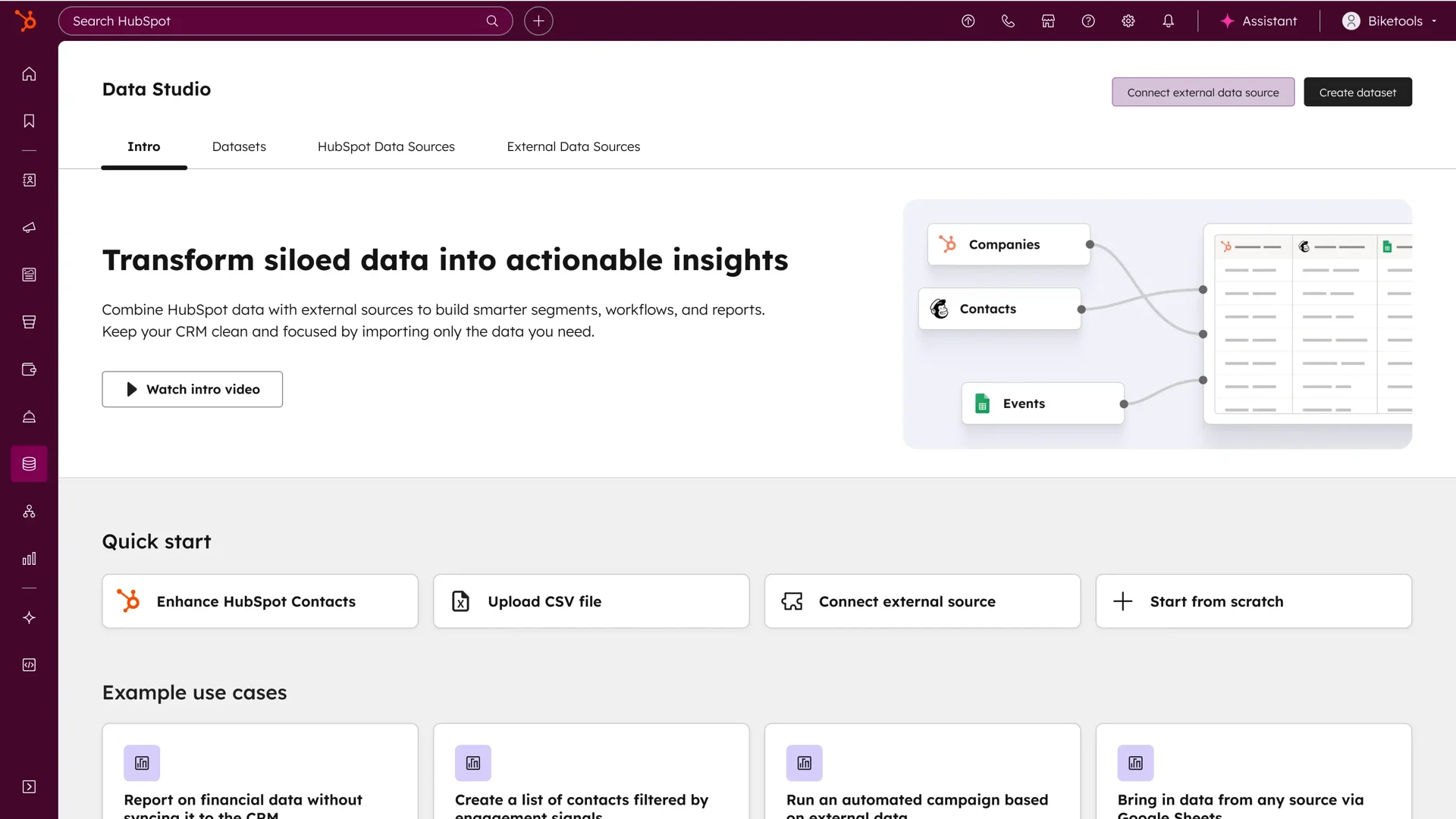
HubSpot operates at a different scale. The App Marketplace has over 2,000 integrations with 2.5 million active installs. The REST API covers the full CRM data model with standardized endpoints for 30+ object types, a developer portal for building custom apps, and Data Hub for running custom JavaScript or Python inside workflows. For teams with complex tech stacks, HubSpot's ecosystem is a clear advantage.
Source: HubSpot
ZoomInfo approaches integrations from the data side. The ZoomInfo App Marketplace includes 120+ partner integrations covering CRM, marketing automation, sales engagement, and data warehouses. The Enterprise API provides access through four areas: Data API (search and enrich), Copilot API (AI intelligence), Marketing API (audience management), and Platform API (engagement data). The MCP server connects AI models directly to ZoomInfo's data, supporting Claude and ChatGPT. API access is included in all relevant plans.
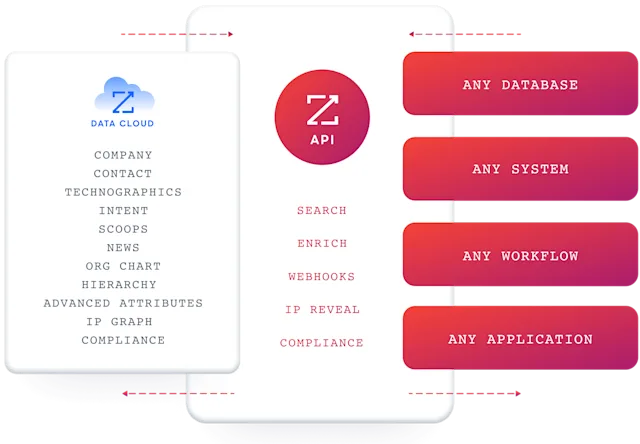
The point: ZoomInfo's data and intelligence flow into any CRM through APIs and native integrations. A team using EngageBay or HubSpot can pipe ZoomInfo's verified contacts, intent signals, and AI recommendations directly into the tools they already use.
BDO Canada activated ZoomInfo data within internal systems, achieving an 87% reduction in time spent on data dashboard updates: "The plug-and-play aspect of the API means I can integrate it very easily into any process and get information at a moment's notice." (BDO Canada)
Customer support and service capabilities
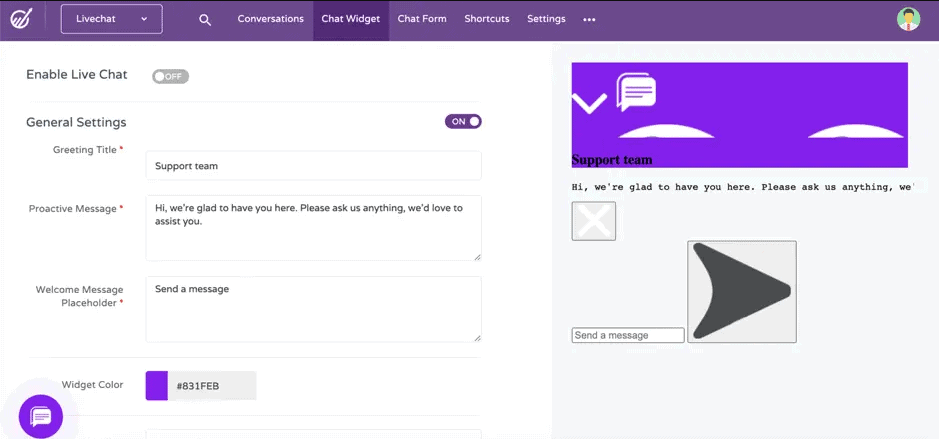
EngageBay's Service Bay bundles helpdesk ticketing, live chat, service automations, a knowledge base, and an AI chatbot into the same platform as its CRM and marketing tools. Because everything shares one contact record, a support agent sees the customer's full deal history, email campaigns received, and web activity without switching applications. The AI chatbot trains on a company's own uploaded articles and files. Helpdesk and live chat are included on the free plan for up to 15 users.
Source: EngageBay
HubSpot's Service Hub works at enterprise scale. The Breeze Customer Agent handles conversations across chat, email, WhatsApp, Facebook Messenger, and voice, resolving over 50% of inquiries without human intervention. Configurable SLA goals with conditional SLAs at Enterprise. A Customer Success Workspace tracks health scores, renewal pipelines, and expansion opportunities, competing with dedicated customer success platforms. A branded customer portal enables self-service ticket tracking.
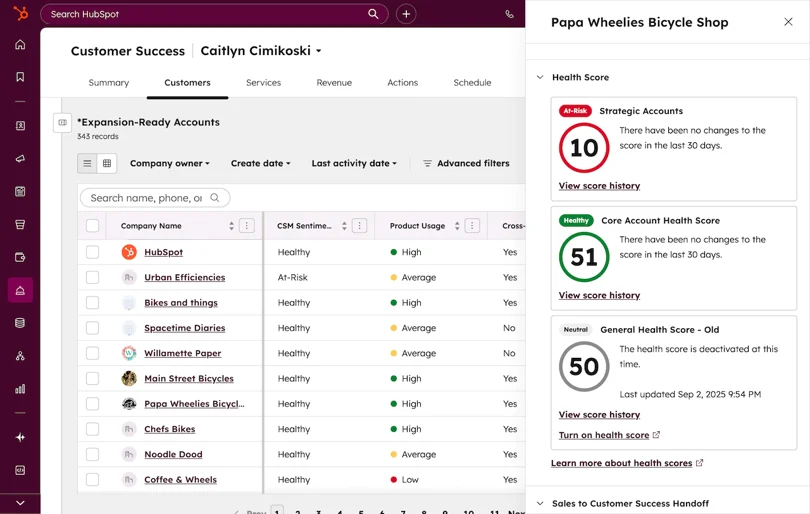
Source: HubSpot
ZoomInfo doesn't compete in the helpdesk or support ticket space. Its contribution to customer service is upstream: the intelligence helps sales teams sell to well-matched accounts (reducing support issues from poor-fit customers) and gives customer success teams signals (job changes, funding rounds, competitive research activity) that predict churn risk before it appears in ticket volumes.
Security and compliance matter more than you think
For teams evaluating platforms that will hold customer data, each vendor's security posture matters.
EngageBay publishes a Privacy Policy, GDPR Policy, and Data Processing Agreement. The platform is certified compliant with the EU-U.S. Data Privacy Framework and states it will never sell personal information. EngageBay does not publish a SOC 2 Type II certification, ISO 27001 certification, or dedicated security trust page. For teams with formal vendor security assessment requirements, this may be a consideration.
HubSpot maintains SOC 2 Type II, HIPAA attestation, GDPR compliance, CCPA compliance, and EU Cloud Code of Conduct Level 2. Data encryption uses AES-256 at rest and TLS 1.2/1.3 in transit. An EU Data Center is available for data residency requirements. Regular penetration testing and a Bugcrowd bug bounty program back this up.
ZoomInfo holds ISO 27001, ISO 27701, SOC 2 Type II, TRUSTe GDPR, and TRUSTe CCPA certifications, all renewed annually. ZoomInfo is a registered data broker in California and Vermont, with a dedicated Trust Center. For enterprises in regulated industries, these certifications are table stakes.
EngageBay vs. HubSpot vs. ZoomInfo: Which should you choose?
The right choice depends on your team's size, budget, and what's holding back your go-to-market results.
Choose EngageBay if:
You're a small business or startup with 1-50 employees
Budget is a primary constraint (under $100/month for CRM)
You need marketing, sales, and support in one platform without enterprise pricing
You're replacing a patchwork of separate tools and want consolidation
You value responsive support and fast implementation over advanced analytics
Choose HubSpot if:
You're a scaling company ready to invest in a full customer platform
You need advanced marketing automation, AI agents, and multi-touch attribution
Your team benefits from 2,000+ integrations and a mature partner ecosystem
You want enterprise-grade security certifications and compliance infrastructure
You're prepared for Professional-tier pricing with mandatory onboarding fees
Add ZoomInfo if:
Your CRM has the tools but lacks the verified contact data to fuel them
You need to know which accounts are actively researching solutions in your category
Your sales team spends too much time on manual research and not enough time selling
You want AI that understands why deals move, not just that they moved
You need B2B intelligence accessible in any tool: your CRM, your own apps, or AI agents
See how ZoomInfo's data and intelligence can strengthen your pipeline.
EngageBay and HubSpot are both strong CRM platforms at different price points. But neither was built to solve the hardest problem in B2B sales: finding the right buyers, knowing when they're ready, and understanding what will move them. That's where ZoomInfo's data, GTM Context Graph, and open access layer create value across every tool in your go-to-market stack. The CRM manages the relationship. ZoomInfo provides the intelligence to make that relationship happen.
EngageBay vs. HubSpot vs. ZoomInfo FAQ
What is the core difference between EngageBay, HubSpot, and ZoomInfo?
EngageBay is an affordable all-in-one CRM combining marketing, sales, and support for small businesses at a fraction of HubSpot's cost. HubSpot is a full customer platform with AI agents, broad integrations, and enterprise-grade capabilities for scaling companies. ZoomInfo is an AI go-to-market platform that provides verified contact data, buyer intent signals, and AI insights through its GTM Context Graph. Rather than competing as CRMs, ZoomInfo complements both by filling the data and intelligence gap upstream of the CRM.
Which platform is cheapest for a small team?
EngageBay is significantly cheaper. Its free plan supports up to 15 users with CRM, helpdesk, and live chat included. Paid plans start at $12.74/user/month (biennial billing) with no onboarding fees. HubSpot's free plan is limited to 2 users, and its Professional tiers (where the real features live) start at $800/month for Marketing Hub with a $3,000 mandatory onboarding fee. ZoomInfo offers a permanent free tier (ZoomInfo Lite) with 10 monthly export credits, and paid plans are custom-quoted.
Can ZoomInfo work with EngageBay or HubSpot?
Yes. ZoomInfo integrates natively with HubSpot through the ZoomInfo App Marketplace, and ZoomInfo Lite includes HubSpot integration on the free plan. For EngageBay, ZoomInfo data connects via the REST API or Zapier. ZoomInfo's APIs and MCP server also enable custom integrations with virtually any tool, so verified contacts, intent signals, and AI recommendations can flow into whichever CRM a team uses.
Which platform has the best marketing automation?
HubSpot has the most advanced marketing automation, with AI personalization, multi-touch attribution, and a content management system with AEO tools. EngageBay offers a capable visual automation builder with 16 trigger types at a much lower price, though it's gated behind the Growth tier. ZoomInfo's GTM Studio takes a different approach: it uses AI to identify and target the right accounts before marketing automation runs, with pre-built plays that launch multi-channel campaigns in minutes.
How does data quality compare across the three platforms?
EngageBay and HubSpot both rely on data their users enter or capture through forms and website activity. HubSpot adds AI enrichment from emails and calls. ZoomInfo operates at a different scale: 500M contacts, 135M+ verified phone numbers, and 200M+ verified business email addresses, backed by 300+ human researchers and up to 95% accuracy on first-party data. In a Fortune 500 competitive evaluation analyzing 25 million contacts across vendors, an independent consultant concluded that no other competitor matched ZoomInfo's data quality.
Which platform is best for B2B sales prospecting?
ZoomInfo is designed for B2B prospecting. GTM Workspace provides AI agents that research accounts, draft personalized outreach, and monitor buying signals, backed by the largest B2B contact database. HubSpot's Breeze Prospecting Agent offers similar AI outreach but works only with data already in the CRM. EngageBay provides a functional pipeline and telephony tools but no external prospecting data or intent signals.
Do any of these platforms offer buyer intent data?
Only ZoomInfo provides native buyer intent data, tracking signals from 210 million IP-to-Organization pairings and 6 trillion+ new keyword-to-device pairings sourced monthly. Guided Intent (exclusive to ZoomInfo) identifies topics historically correlated with deal success rather than requiring manual topic selection. Neither EngageBay nor HubSpot includes intent data as a core capability.
Which platform is easiest to get started with?
EngageBay has the lowest barrier to entry: most businesses are up and running within a day, with free onboarding sessions on every plan. HubSpot's free CRM is also easy to start, but accessing meaningful features requires Professional tiers with multi-thousand-dollar onboarding fees. ZoomInfo Lite requires no credit card and gives immediate access to contact search and export, with the full platform available through a 7-day free trial.
More HubSpot comparisons:
