
If you're comparing Gainsight vs. ChurnZero, you're choosing the operating system for your post-sale customer relationships. Both are strong platforms. But the decision involves more than picking a CS tool:
Do you need a platform that covers the full post-sales lifecycle (onboarding, adoption, community, education), or one focused on CS team workflows?
Is your CS operation mature enough to justify a 3-to-6-month implementation, or do you need faster time to value?
How important is it that your CS platform connects to real-time account intelligence, not just CRM fields and product usage data?
Are you managing complex enterprise accounts with multi-subsidiary hierarchies, or a more uniform book of business?
Does your CS team have a dedicated admin who can configure and maintain a complex platform?
In short, here's what we recommend:
Gainsight is the enterprise CS platform that defined the category, covering health scoring, lifecycle automation, product analytics, customer education, and community management under its CustomerOS umbrella. With 20,000+ customers including Docusign, Adobe, and LinkedIn, Gainsight is the default for large B2B organizations with mature CS operations.
The trade-off: implementation takes months, a dedicated Gainsight admin is practically required, and the platform's depth comes with real complexity and cost.
ChurnZero is the focused, faster-to-deploy alternative built for subscription businesses that need to scale CS without scaling headcount. Its Plays automation engine and in-app communications suite let CS teams reach customers inside their product at the moment of action, while 15+ AI agents handle everything from meeting prep to risk detection.
ChurnZero trades Gainsight's breadth for speed and usability, with a learning curve and implementation timeline that suit teams who can't wait six months to see value.
Both platforms manage what's happening with your customers today. But the signals that predict what happens next (whether a champion just changed jobs, whether an account is researching competitors, or whether a buying committee has shifted) often live outside the CS platform entirely. That's the gap where go-to-market intelligence changes the equation.
ZoomInfo is an AI-powered GTM platform built on a large B2B data foundation: 500M contacts, 100M companies, 135M+ verified phone numbers, and 200M+ verified business emails. For CS teams, ZoomInfo fills the intelligence blind spot that neither Gainsight nor ChurnZero can cover alone.
Its GTM Context Graph combines your CRM data with third-party signals (intent data, technographic changes, org chart movements, conversation intelligence via Chorus) to surface churn risk and expansion opportunities before they appear in health scores. Whether accessed through GTM Workspace, GTM Studio, or APIs and MCP, ZoomInfo's intelligence flows into whatever CS platform you choose.
If adding an intelligence layer to your CS stack sounds like the missing piece, see ZoomInfo in action.
Gainsight vs. ChurnZero vs. ZoomInfo at a glance
Gainsight | ChurnZero | ZoomInfo | |
|---|---|---|---|
Primary function | Full post-sales platform (CS, PX, Communities, Education) | Customer success platform for subscription businesses | GTM intelligence and account data platform |
Founded | 2009 | 2015 | 2007 |
Target buyer | Enterprise CS teams (20+ CSMs) | Mid-market to enterprise CS teams | Sales, marketing, CS, and RevOps teams |
AI approach | Atlas AI Agents + Staircase AI (conversation intelligence) | 15+ AI agents with flat-rate pricing | GTM Context Graph powering AI agents across all workflows |
Implementation timeline | 3–6 months typical | Faster; structured implementation tiers | Deploys in weeks |
Health scoring | Configurable Scorecards with Rules Engine | ChurnScore + Relationship Score (dual-layer) | Intent signals + account intelligence (external signals) |
In-app engagement | Gainsight PX (separate product) | Native in-app messaging, WalkThroughs, Success Centers | N/A (feeds intelligence to CS platforms) |
Renewal forecasting | Renewal Center with ML likelihood scoring | Renewal Hub with 15-min CRM sync | Churn risk detection via intent and behavioral signals |
Pricing | Quote-based; six-figure annual commitments typical | Quote-based; no public pricing | Custom-quoted; consumption-based |
Analyst recognition | Gartner MQ Leader (2024, 2025); Forrester Wave Leader | Gartner MQ Leader (2024, 2025); Forrester Strong Performer | Gartner MQ Leader (ABM, 2024–2025); Forrester Wave Leader (Intent Data) |
Gainsight built the category. ChurnZero is rewriting the playbook.
Gainsight didn't just enter the customer success market. It created it.
Nick Mehta joined as CEO in 2013 when there were roughly 1,000 Customer Success Managers worldwide. The company launched the Pulse conference that same year, co-authored the Customer Success book in 2016, and built the institutional framework the entire profession now uses. That history shows in the product: Gainsight's depth reflects 15 years of solving CS problems at enterprise scale.
The product portfolio spans six products under the CustomerOS umbrella: Customer Success (the core platform), Product Experience (PX), Staircase AI (conversation intelligence), Atlas AI Agents, Skilljar (customer education), and Customer Communities. No competitor covers this much post-sales ground.
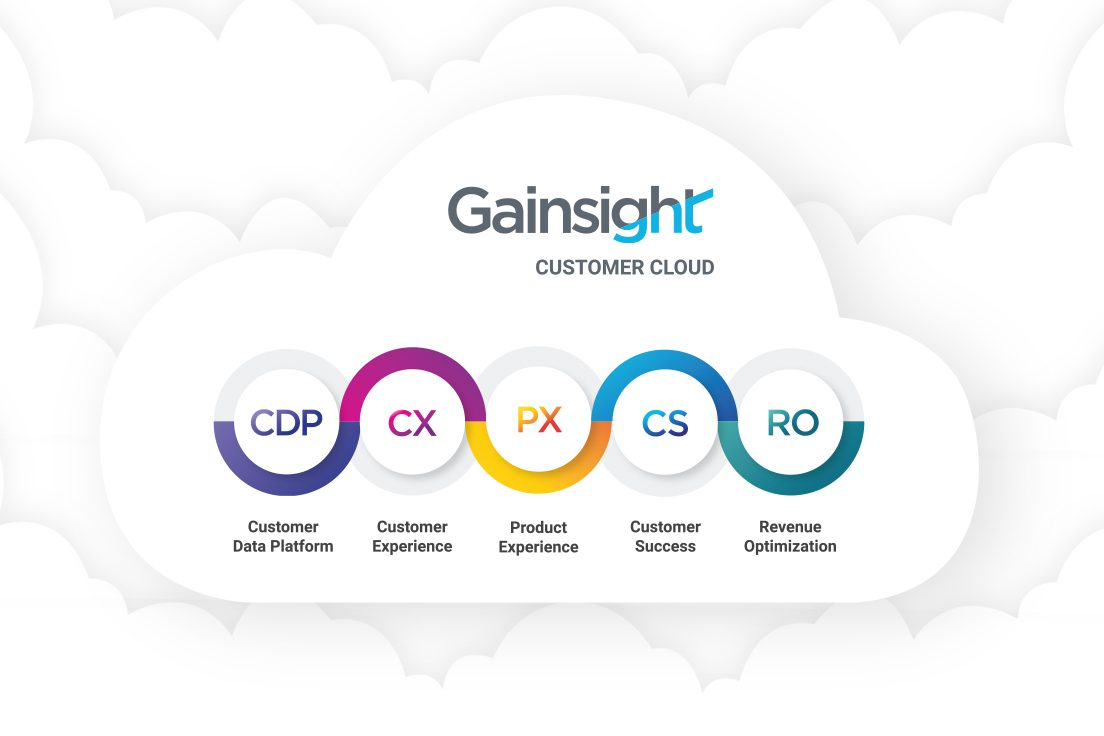
Source: Gainsight
Companies like DocuSign and LinkedIn use three or more of these products together, consolidating what would otherwise be four separate vendor relationships.
ChurnZero takes a different approach.
Founded in 2015 by CEO You Mon Tsang, who experienced subscription churn firsthand as a CMO at a publicly traded software company, ChurnZero focuses on the CS team's daily workflow. It doesn't try to be a product analytics platform, an LMS, or a community tool. Instead, it optimizes the core CS motion: identify risk, automate outreach, engage customers in-product, and forecast renewals.
Source: ChurnZero
This difference in scope has practical consequences. Gainsight's CustomerOS platform promises that "a lead becomes a client becomes a project becomes a repeat customer, all in the same system." That works for enterprises that can invest in the full ecosystem. But for teams that need a CS platform, not a post-sales operating system, the narrower scope is an advantage.
ChurnZero delivers health scoring, automation, in-app engagement, and renewal forecasting without requiring you to also adopt a separate product analytics tool, LMS, and community platform.
The intelligence gap both CS platforms share
Here's what Gainsight and ChurnZero have in common: they both work with data generated after the sale. Product usage, support tickets, CSM notes, survey responses, journey completion (these are all internal signals from your existing customer relationship). They're essential. They're also incomplete.
Consider what neither platform can tell you from internal data alone:
A champion who left the company three weeks ago but hasn't been updated in the CRM. An account whose procurement team is researching your competitor. Three new VPs who joined the account last quarter and haven't been added to any stakeholder map. A technology stack change that signals the account is consolidating vendors.
These signals exist outside the CS platform, in the broader market. And they're often the earliest indicators of churn risk or expansion opportunity.
ZoomInfo closes this gap.
Its GTM Context Graph processes 1.5B+ data points daily, combining your CRM records and conversation transcripts with third-party intelligence: 500M contacts with verified direct dials and emails, org chart movements, intent signals from 210 million IP-to-Organization pairings, technographic changes across 30,000+ technologies, and hiring patterns that indicate strategic direction.
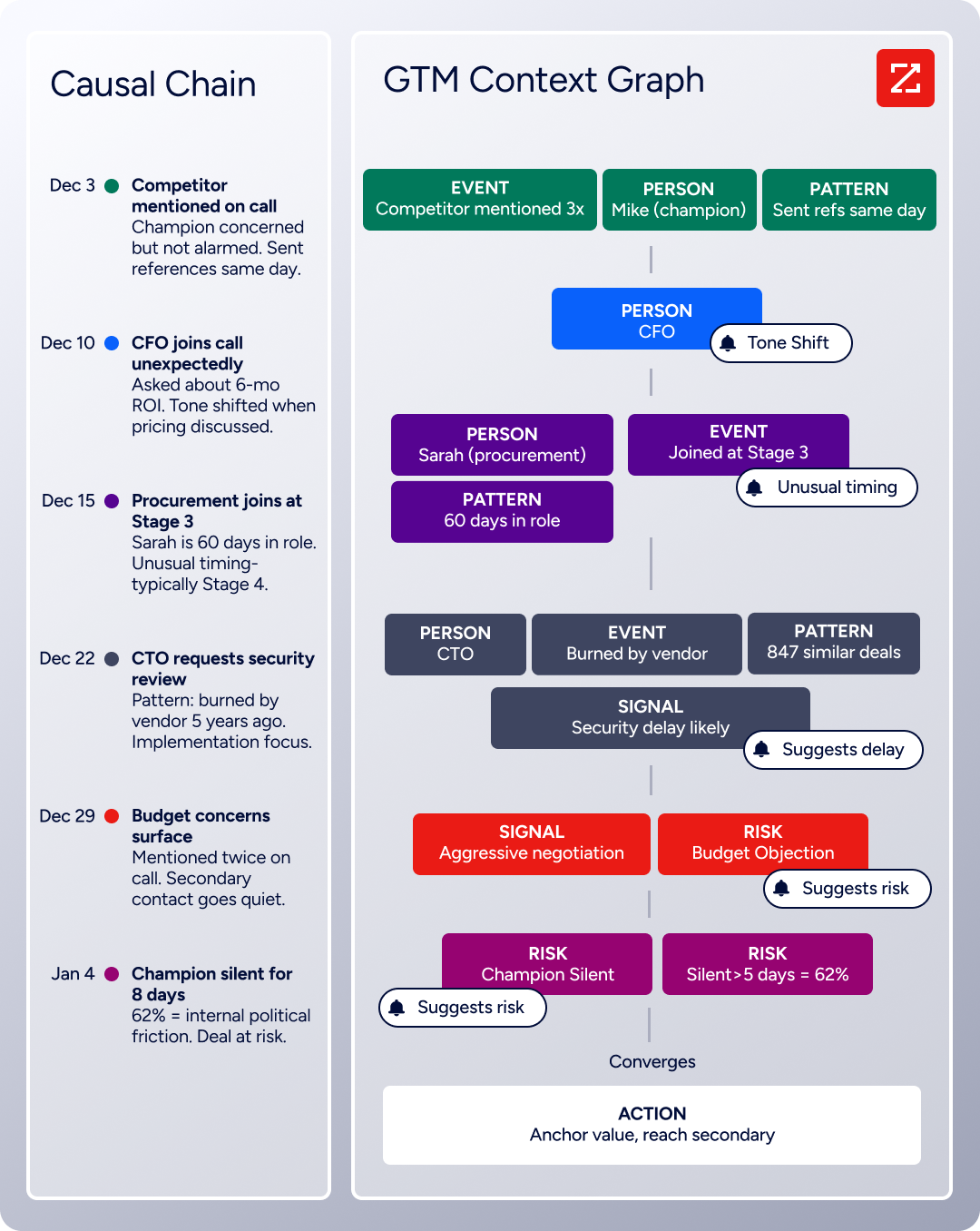
For CS teams, this means:
Stakeholder intelligence. When a champion changes jobs, ZoomInfo's Contact Tracker surfaces the move, often before the CRM is updated. When new decision-makers join an account, ZoomInfo identifies them with verified contact information and role context. Gainsight's Sponsor Tracking monitors LinkedIn for executive changes; ZoomInfo does this across 500M contacts with multi-source verification.
Churn risk from external signals. ZoomInfo Intent detects when existing customers are researching competitors, a signal that no amount of product usage data can reveal. Guided Intent, exclusive to ZoomInfo, identifies topics historically correlated with deal outcomes rather than requiring manual topic selection.
Expansion opportunity identification. When an account is hiring in a department that uses your product, or when their tech stack changes in ways that create integration opportunities, ZoomInfo surfaces these signals. A CS platform sees that the account is healthy. ZoomInfo sees that the account is ready to grow.
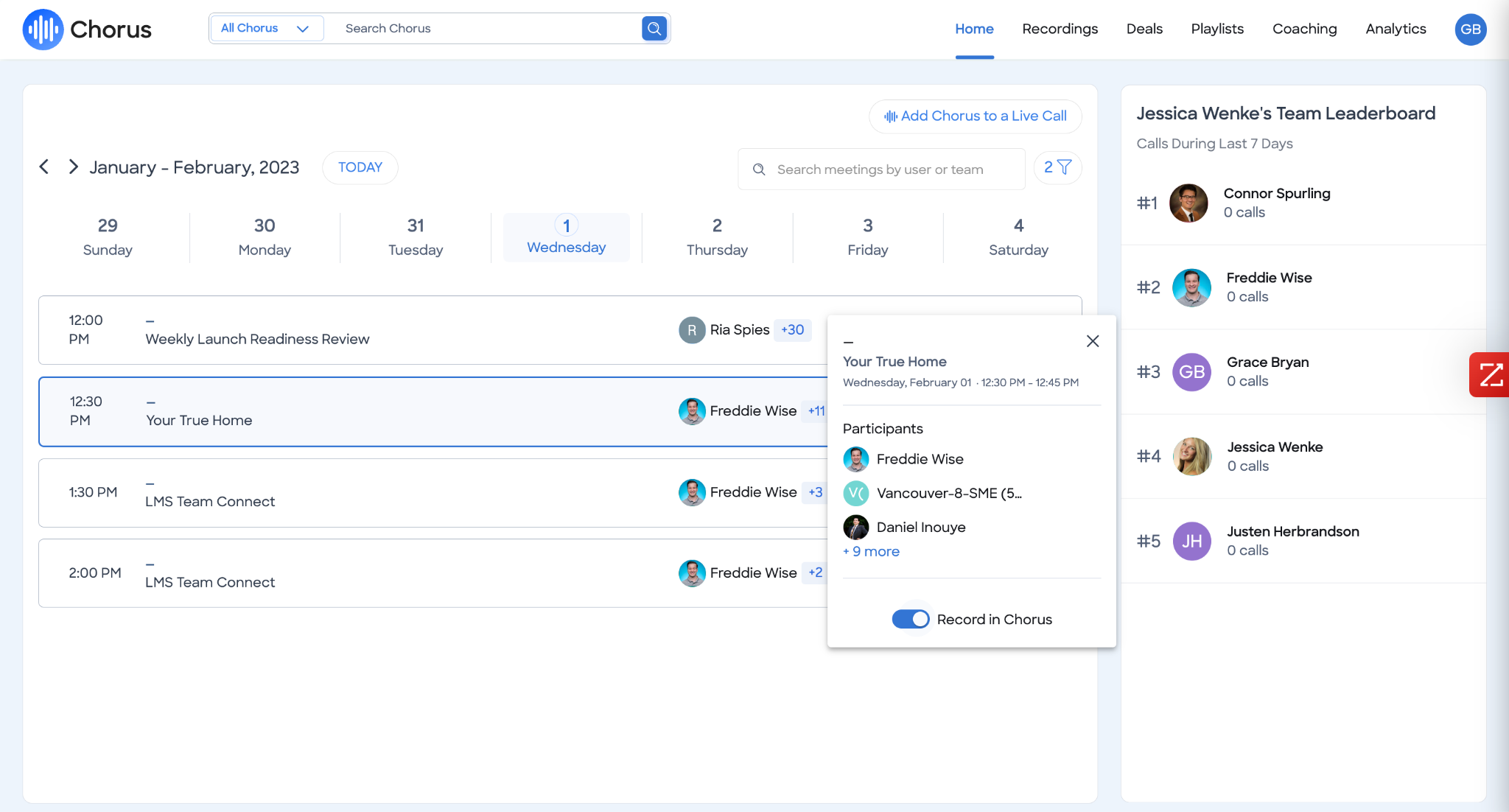
Conversation intelligence that feeds both platforms. Chorus captures and analyzes customer calls, meetings, and emails, extracting not just what was said but why it matters. Competitive mentions, objection patterns, and sentiment shifts surface automatically.
Source: ZoomInfo
This intelligence flows into GTM Workspace, where account managers and CS reps see every customer interaction alongside ZoomInfo's third-party data.
The practical impact: ZoomInfo doesn't replace your CS platform. It makes whichever one you choose more effective by filling the intelligence gaps that internal data can't cover.
Seismic's sales team attributed 39% of active pipeline to opportunities identified or influenced by ZoomInfo signals, with their Chief Business Officer Toby Carrington noting: "That combination of our internal CRM data, external signals, and AI that's given all that context has helped us craft very specific account- and persona-based messages." (Seismic Case Study)
Health scoring reflects two different philosophies
Health scoring is the heartbeat of any CS platform. Both Gainsight and ChurnZero treat it as a core capability, but their approaches reveal different design priorities.
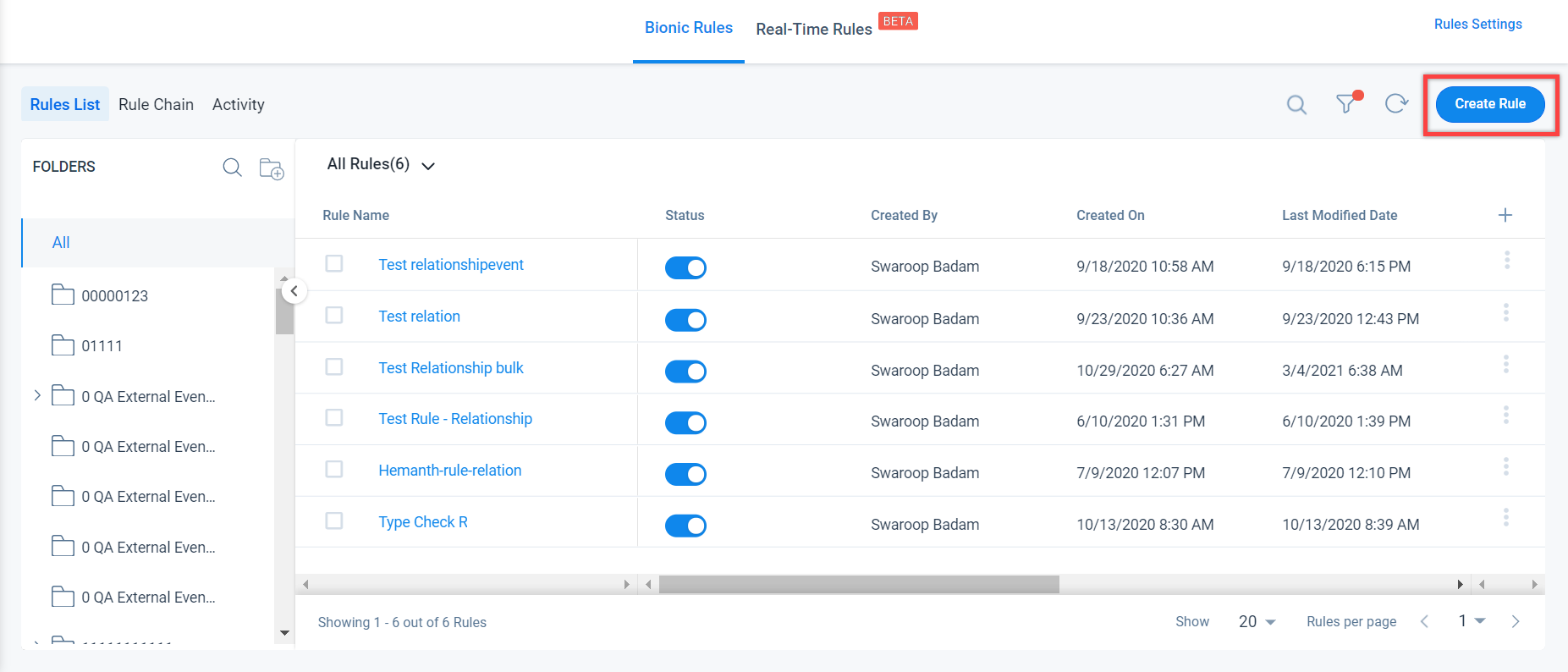
Gainsight's Scorecards track multiple dimensions of customer health, with each dimension called a Measure.
Measures can be grouped (a "Support" group might contain ticket age and severity sub-measures), and scoring schemes are configurable as numeric ranges, letter grades, or color bands. Scores can be set automatically via the Rules Engine or manually by CSMs for subjective measures. Multiple Scorecards can exist for different customer segments, though only one is active per customer at a time.
Source: Gainsight
The Rules Engine underneath is where Gainsight's enterprise strength shows. It runs multi-step, in-memory data transformations across large datasets (aggregations, multi-dataset merges, formulas, and time-series calculations), then uses those results to set Scorecard scores and trigger Calls to Action automatically.
For CS operations teams that want to build early-warning logic from combinations of product usage, support history, and engagement metrics, this is hard to match.
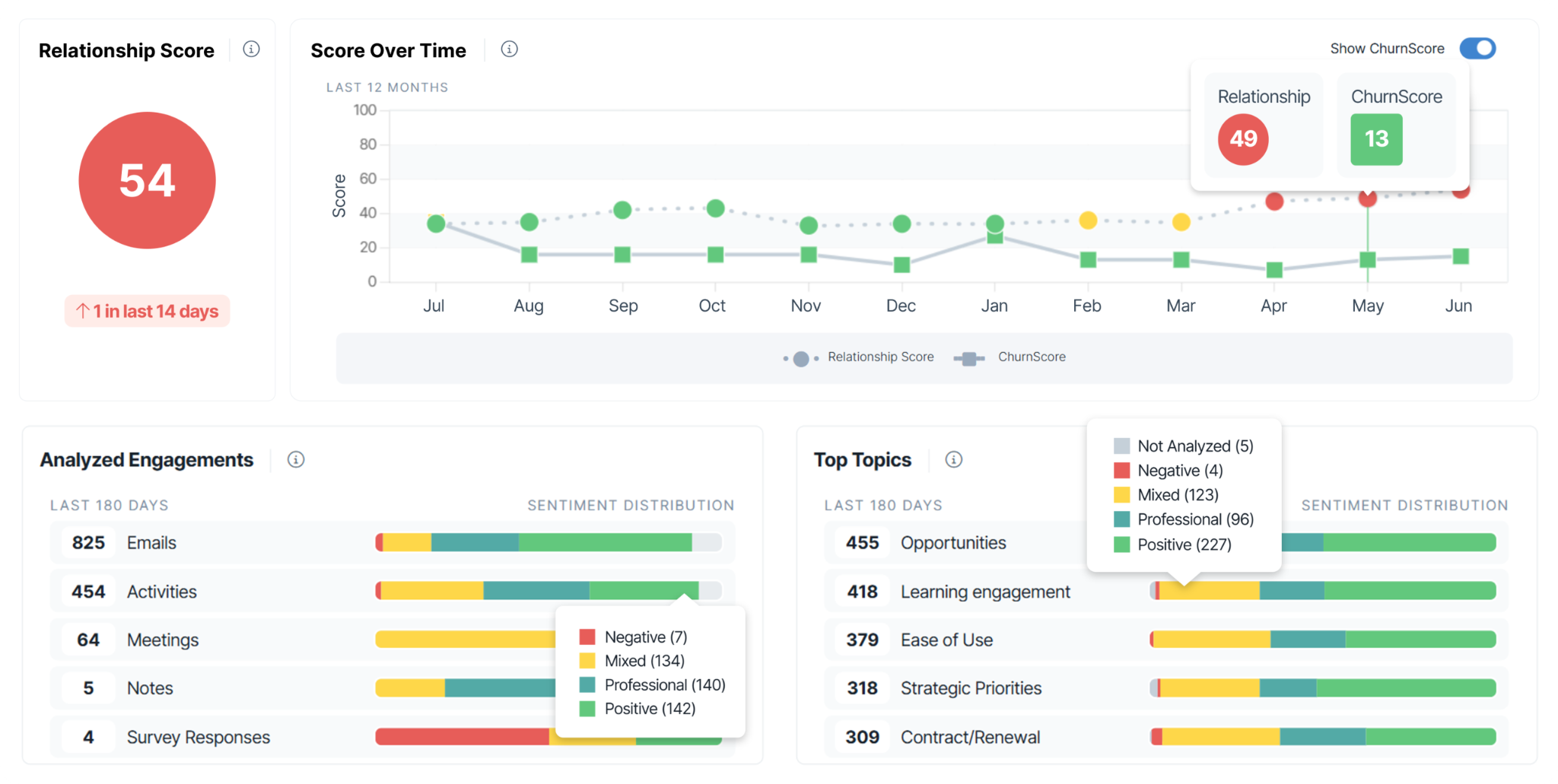
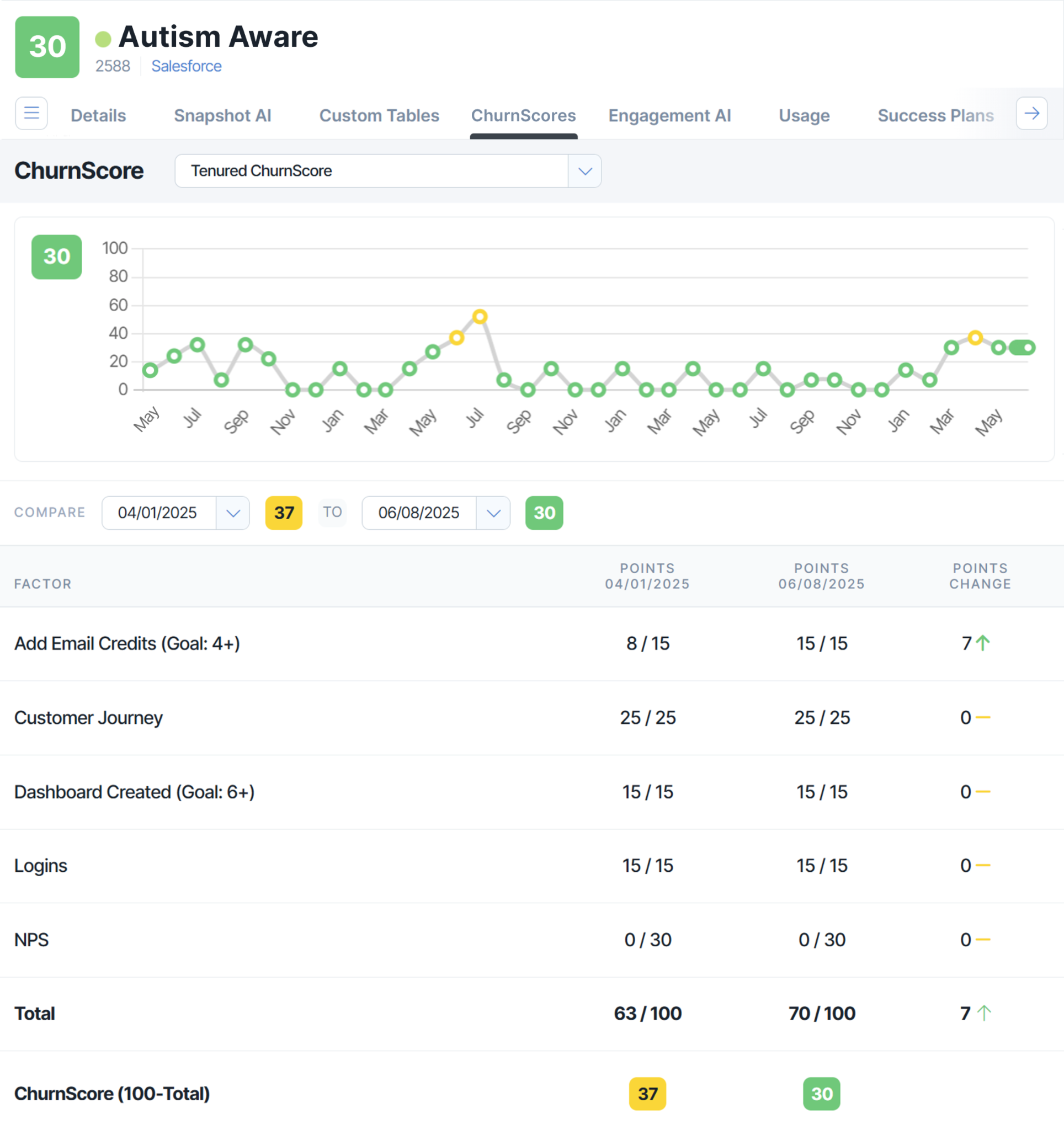
ChurnZero brands its health scoring as ChurnScore, a proprietary engine combining qualitative and quantitative data into a weighted composite.
Configurable inputs include account attributes, engagement, product usage, journey progression, license utilization, support history, and NPS/CSAT/CES results. What sets ChurnZero apart is the addition of Relationship Scores, a layer that reveals what customers care about and why through sentiment and topic trends from actual customer communications.
This dual-layer approach (behavioral signals plus relationship intelligence) gives CSMs a more complete picture than usage data alone.
ChurnZero also supports multiple health scores per account at once: distinct scores for SMB, mid-market, and enterprise segments, different lifecycle stages, industries, and regions. For CS teams managing a varied customer base, this segmented scoring is a structural advantage.
Source: ChurnZero
Both platforms use AI to enhance health scoring. Gainsight's Staircase AI analyzes emails, meetings, support tickets, and Slack threads to surface sentiment shifts up to six weeks before usage data alone would reveal them. ChurnZero's Harbinger agent detects early relationship risk, while the Vibes agent surfaces changes in customer signals before they escalate.
But both platforms share a limitation: their health scores are only as good as the data they ingest. A champion who quietly leaves the company, an account evaluating competitors, a buying committee that has shifted, these signals often originate outside the CS platform entirely.
Automation and workflows: Plays vs. Journey Orchestrator
Automation separates CS platforms from glorified CRM plugins. Both Gainsight and ChurnZero offer mature workflow engines, but they're built for different operator profiles.
ChurnZero's Plays are the platform's most-praised feature, cited by 19% of G2 reviewers as a top strength.
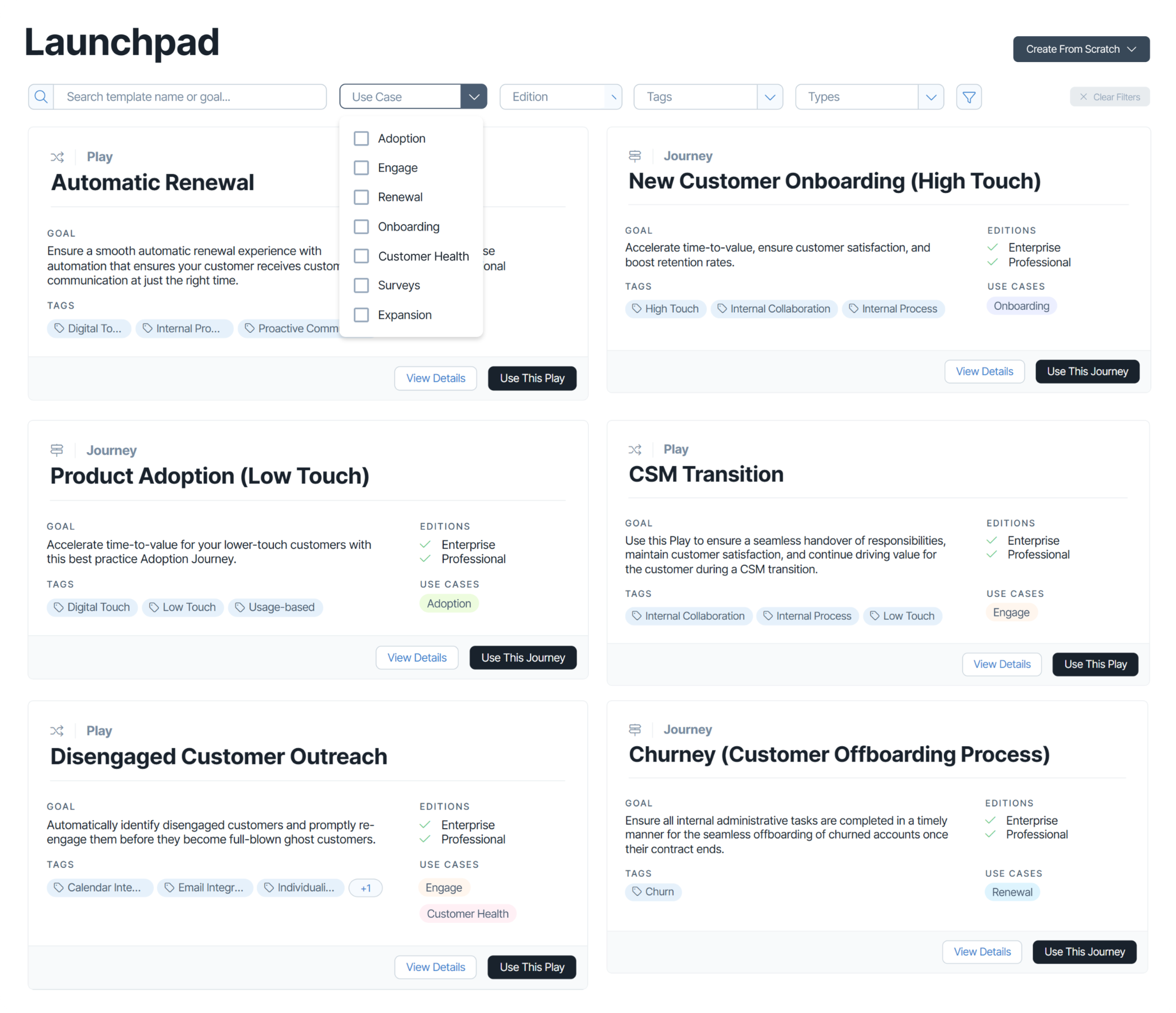
Plays follow a three-phase model: segment customers based on health scores, behavior, or lifecycle stage; determine the steps (emails, in-app announcements, tasks, field updates, data pushes); and apply conditional logic so the Play shifts direction based on customer responses.
CSMs can approve or remove accounts from running Plays, preserving human judgment within automation. Pre-built Launchpad templates cover all lifecycle stages, so teams can start automating before building custom workflows.
Source: ChurnZero
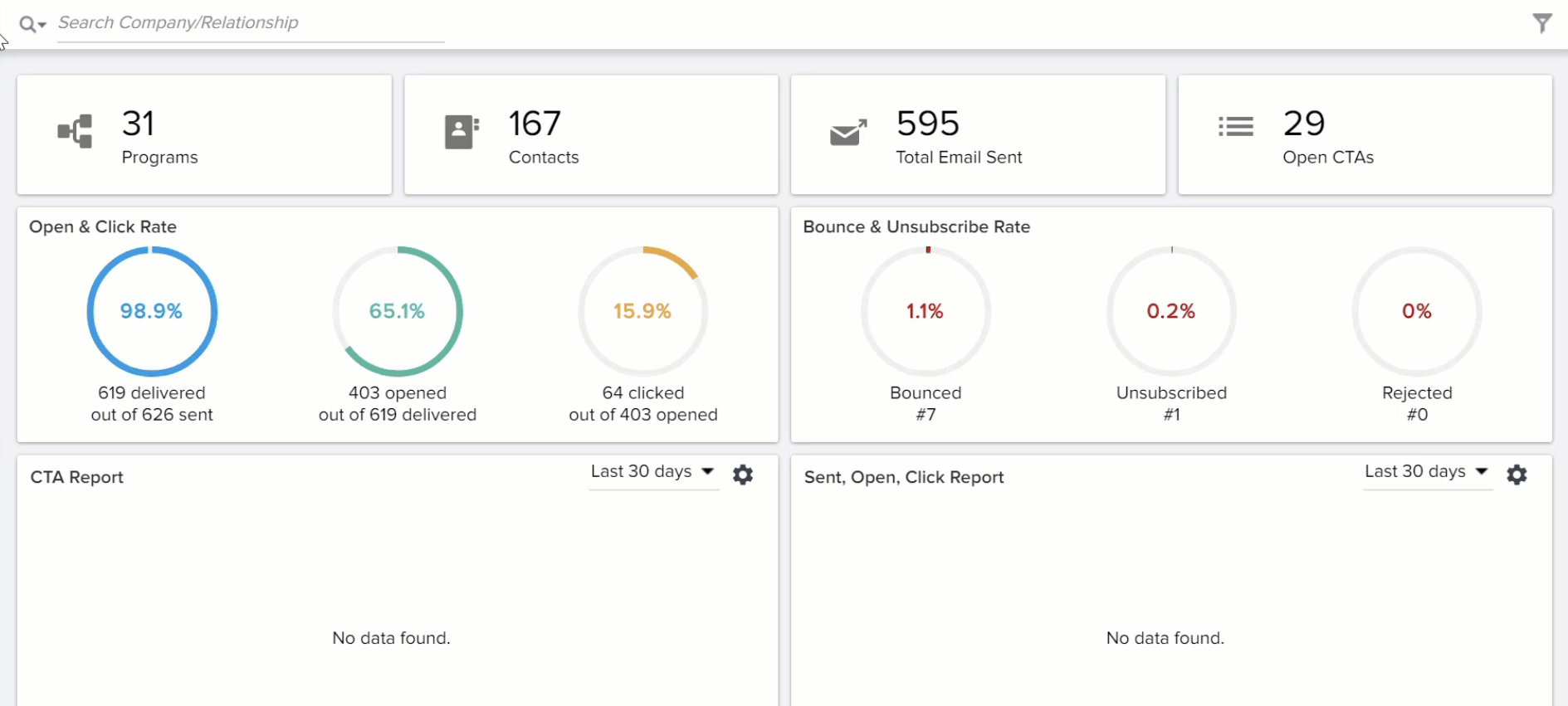
Gainsight's Journey Orchestrator is the equivalent, but it's a paid add-on rather than a core feature.
Source: Gainsight
It lets CS teams design multi-step email campaigns triggered by health score changes, product usage thresholds, or survey results. The Conditional Wait branching model routes customers down different paths based on email opens, survey responses, or inaction. Four pre-built models (NPS Survey, CSAT, Generic Survey, Email Chain) cover the most common CS outreach patterns.
Journey Orchestrator's strength is its integration with Gainsight's full data model. A survey response can update a health score. A health score drop can trigger a program. A program step can open a CTA for a CSM to handle the high-touch follow-up. That closed loop works well for mature CS operations.
The weakness is usability. TrustRadius and Capterra reviewers flag Journey Orchestrator as complex and counterintuitive, sometimes requiring the entire program to be cloned to make a simple revision. ChurnZero's Plays are more approachable for CS teams that don't have a dedicated admin configuring automation logic.
The AI agent race has two distinct strategies
Both platforms have committed to agentic AI in 2025-2026, but their strategies differ in meaningful ways.
Gainsight's AI strategy spans two acquired products and a new agent platform.
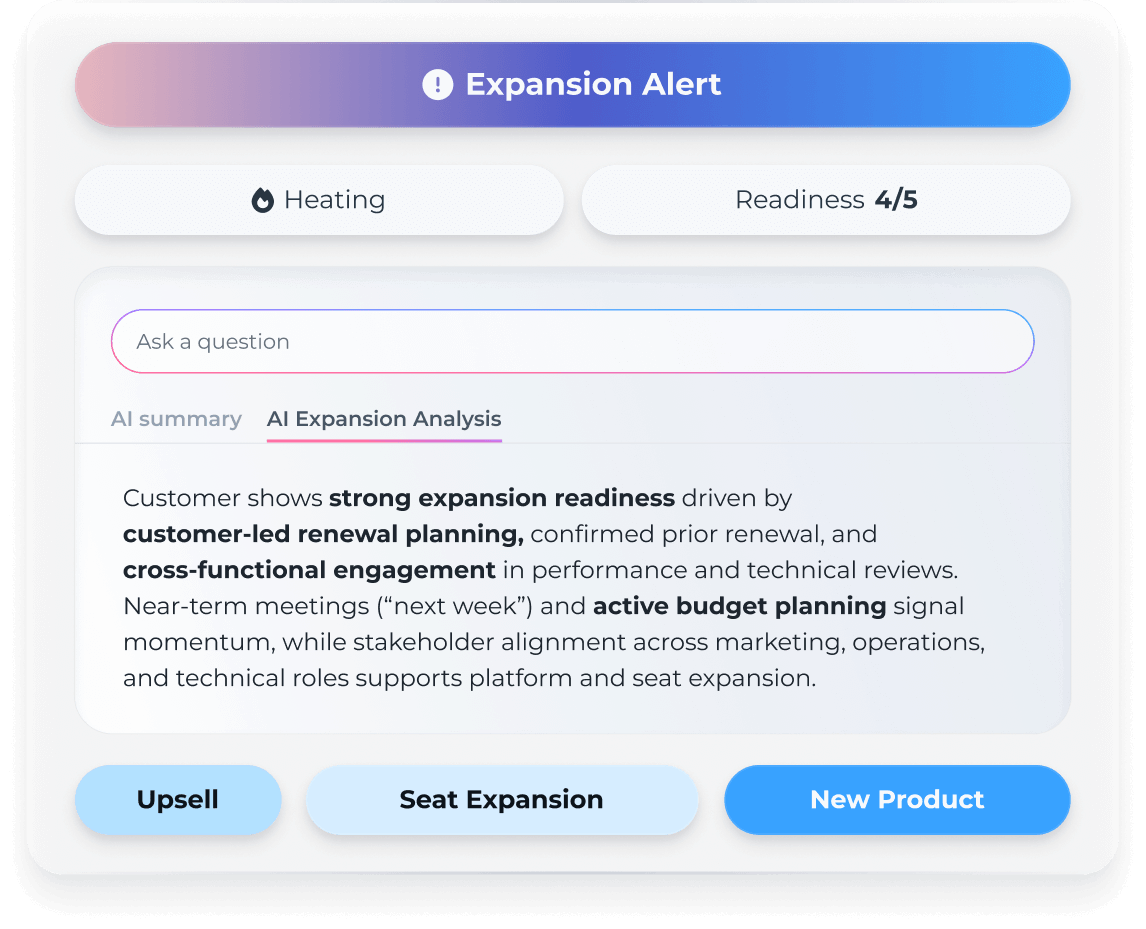
Staircase AI (acquired 2024) ingests all customer communications (emails, meetings, Slack threads, and support tickets) and surfaces sentiment, relationship health, and engagement signals without requiring CSMs to log anything manually.
Source: Gainsight
On top of that, Atlas AI Agents (launched May 2025) handle specific CS workflows autonomously: the Renewal AI Agent manages retention outreach across the long tail, while the Staircase AI Agent scans communications for hidden risk.
Gainsight positions Atlas as more than a feature. It's framed as a managed service where Gainsight "owns the outcome", pairing AI agents with dedicated human renewal specialists. The platform reports an 86% autonomy rate for agent-driven workflows, with fifteen years of institutional retention knowledge built into the agents' decision logic.
ChurnZero's AI strategy differs in structure but matches in ambition.
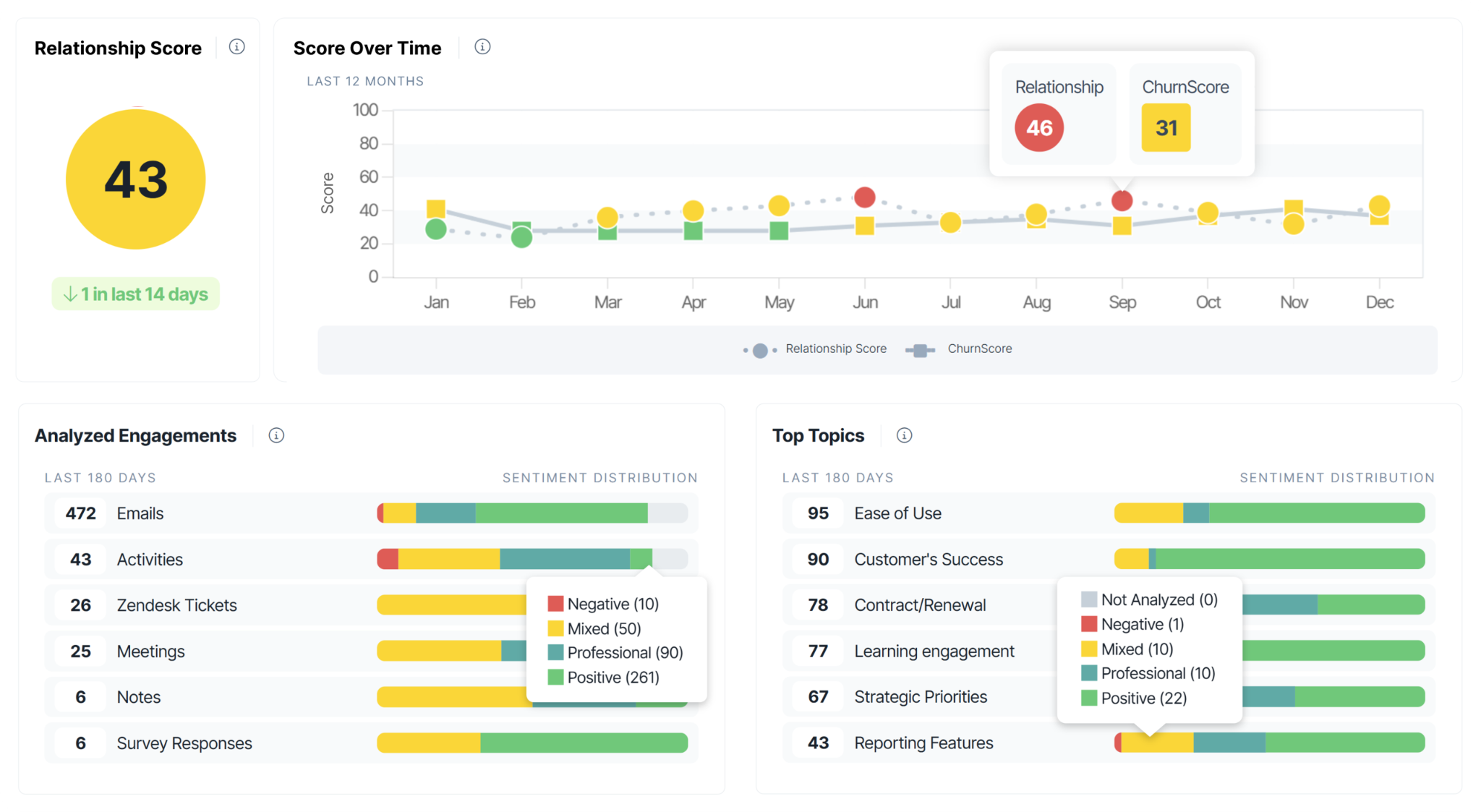
The June 2026 Agentic Essentials launch delivered 15+ agents across three categories: workflow assistance (Consult, Compass, Scribe, Recap), signal detection (Beacon, Echo, Harbinger, Spotlight), and data enrichment (Archetype, Herald, Intel, Pulse, Vibes).
Source: ChurnZero
Three Handoff Agents (Baton, Liftoff, Transfer) carry structured context through ownership transitions, addressing one of CS's most common failure points.
A notable difference in ChurnZero's approach is pricing transparency. Agentic Essentials is a flat-rate subscription with pre-purchased AI credits, directly addressing the usage-based pricing anxiety that enterprise AI buyers face.
Both platforms also offer Model Context Protocol (MCP) integrations, extending their intelligence into Claude and ChatGPT. This signals a shared belief that CS workflows will increasingly happen inside general-purpose AI assistants.
In-app engagement is ChurnZero's home turf
This is where ChurnZero pulls ahead most clearly.
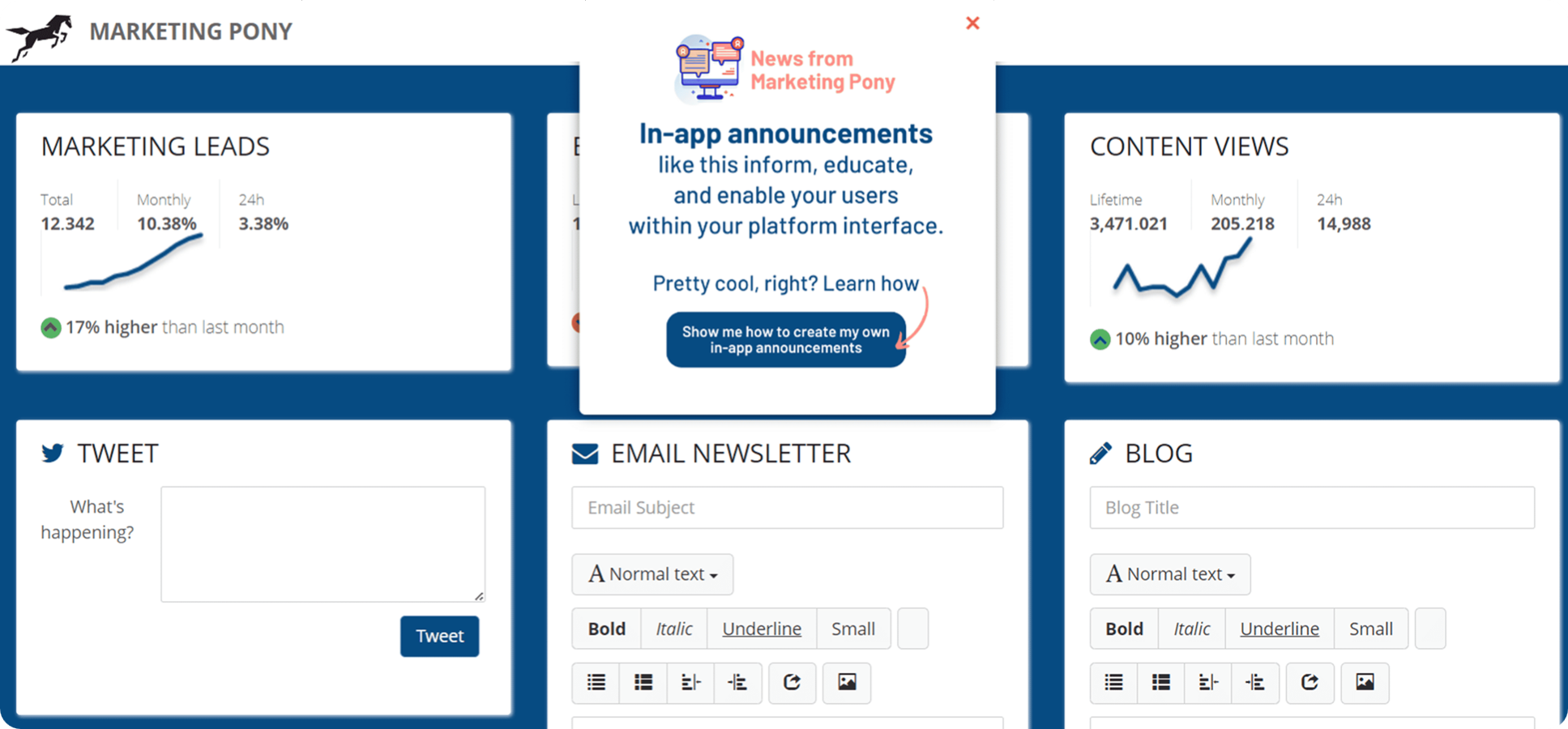
ChurnZero's in-app communications suite includes four tools: In-app Announcements (targeted messages when users log in), WalkThroughs (multi-step guided overlays with per-step analytics), Surveys (NPS, CSAT, CES, and custom surveys embedded in the product), and Success Centers (a persistent in-app panel showing resources, journey progress, support tickets, and announcements).
Source: ChurnZero
The critical difference is ownership. ChurnZero's in-app tools are built for CS teams to manage without engineering support. Content, targeting, and outcomes (onboarding completion, health score changes, renewal readiness) map to the CS workflow, not the product team's analytics stack.
Gainsight offers similar capabilities through Gainsight PX, but PX is a separate product (originally Aptrinsic, acquired in 2018) that requires its own implementation and licensing.
PX is designed for product teams, not CS teams. It provides deeper product analytics (path analysis, retention analytics, funnel reports) and supports native SDKs for iOS, Android, React Native, Windows Desktop, C#, and Java. But that depth comes with added complexity and cost.
For CS teams that want to reach customers inside the product without depending on a product team or licensing a separate analytics suite, ChurnZero's integrated approach is simpler. For organizations where product teams and CS teams need separate tools with shared data, Gainsight PX's analytical depth is the better fit.
Renewal forecasting: where revenue visibility meets CS
Renewal management is where CS platforms prove their revenue impact.
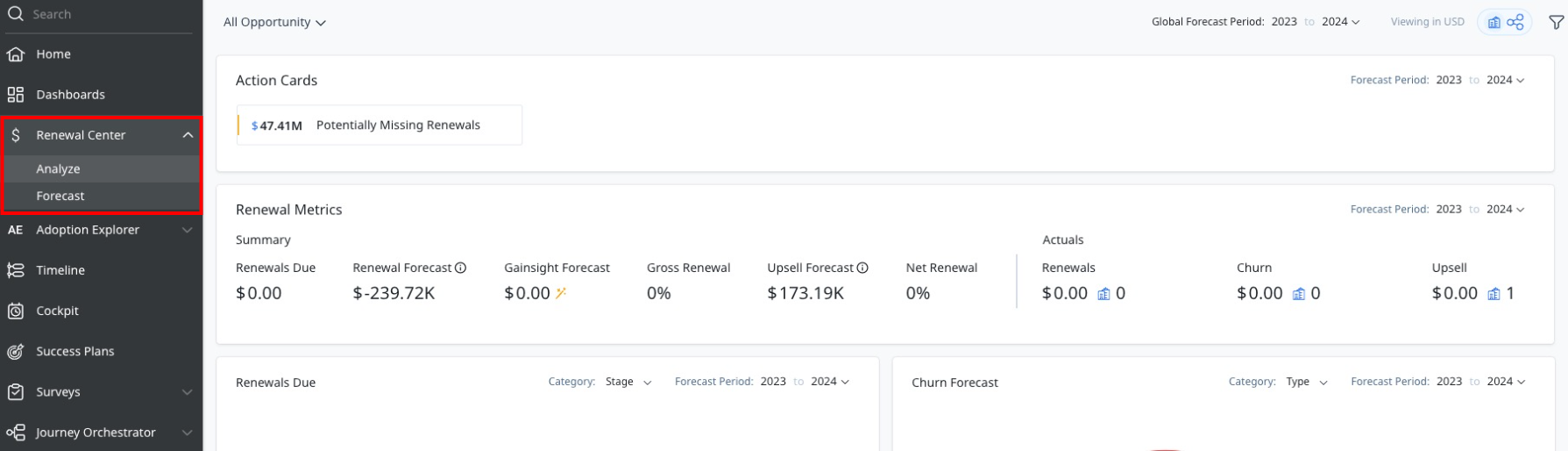
Gainsight's Renewal Center synchronizes bidirectionally with Salesforce, layering ML likelihood-to-renew scores on top of live CRM opportunity data.
Source: Gainsight
The algorithm learns from each company's own historical renewal outcomes, improving predictions as more data accumulates. A waterfall visualization tracks how the pipeline flows from Renewals Due through churn, downsell, and upsell to Net Renewal.
The platform also includes People Maps (interactive org charts) and Sponsor Tracking that monitors executive sponsors' LinkedIn profiles for title or company changes.
Renewal Center is an Enterprise-tier feature, not available on the Essentials plan. This pricing gate reflects Gainsight's positioning: organizations with high-volume, mature renewal operations are the target.
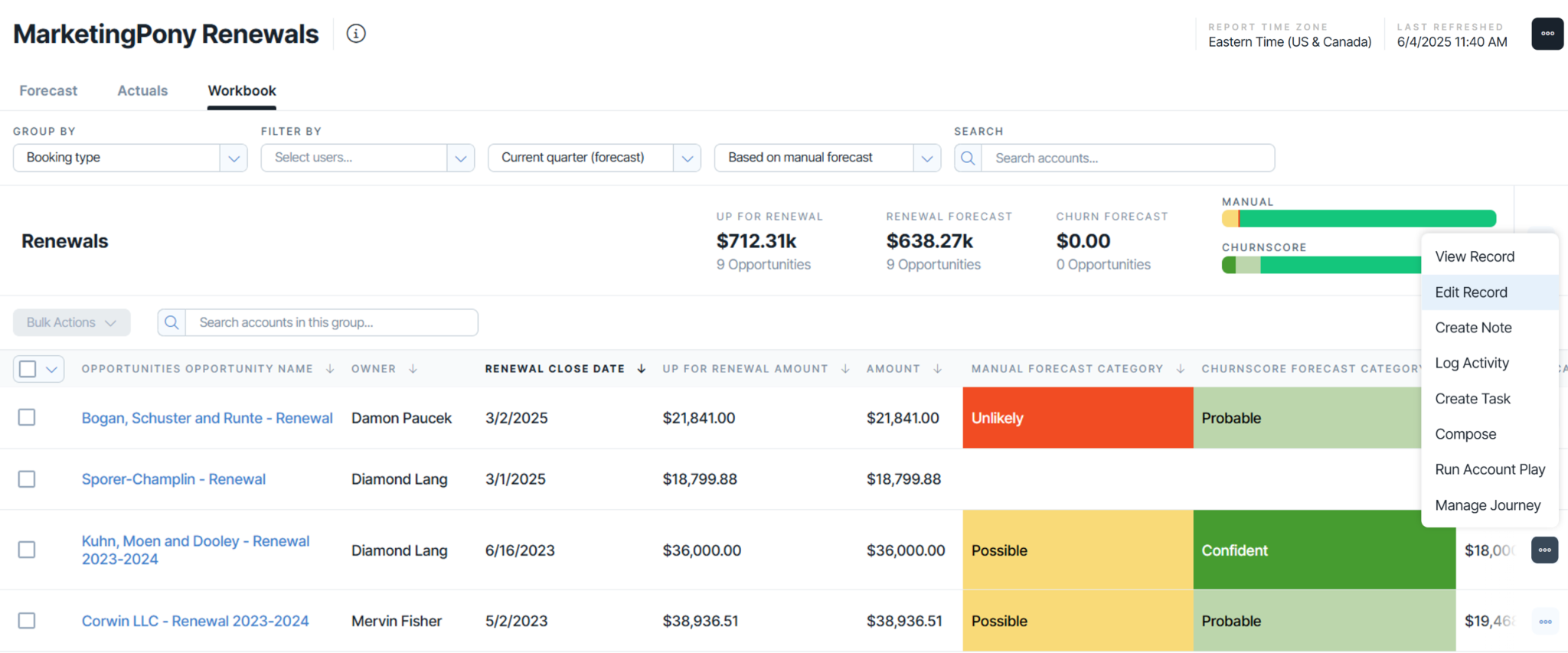
ChurnZero's Renewal Hub takes a similar approach, syncing with CRM every 15 minutes and layering ChurnScores into the forecast.
Source: ChurnZero
Revenue metrics appear in dollar figures, filterable by renewals, expansions, contractions, upsells, downsells, churn, GRR, and NRR. Five AI agents support the renewal cycle: Vibes (sentiment shifts), Pulse (decision dynamics), Harbinger (early risk), Beacon (buying intent), and Spotlight (proof of value).
Both platforms forecast renewals using internal signals: product usage, health scores, CSM activity, and survey responses. But internal signals tell only half the story.
Implementation and time to value
Implementation timelines reveal how quickly a platform delivers on its promise.
Gainsight's implementation typically takes 3 to 6 months.
The platform requires defining data models, configuring Rules Engine triggers, setting up health Scorecards, building Journey Orchestrator programs, and establishing data pipelines from CRM, product analytics, and support systems. A dedicated Gainsight admin is practically required for ongoing maintenance.
The platform offers Gainsight University, SAML SSO, and SCIM provisioning, but the learning curve remains the most consistent criticism among G2 reviewers, who describe the interface as requiring too many clicks and formal training.
ChurnZero deploys faster, with three implementation tiers including a dedicated project team and CSM.
Pre-built Launchpad templates for Plays, Journeys, and engagement workflows reduce time-to-value by giving teams working automations from day one. That said, G2 reviewers note that initial setup is still complex and ChurnZero's terminology can be unintuitive.
ZoomInfo takes a different approach.
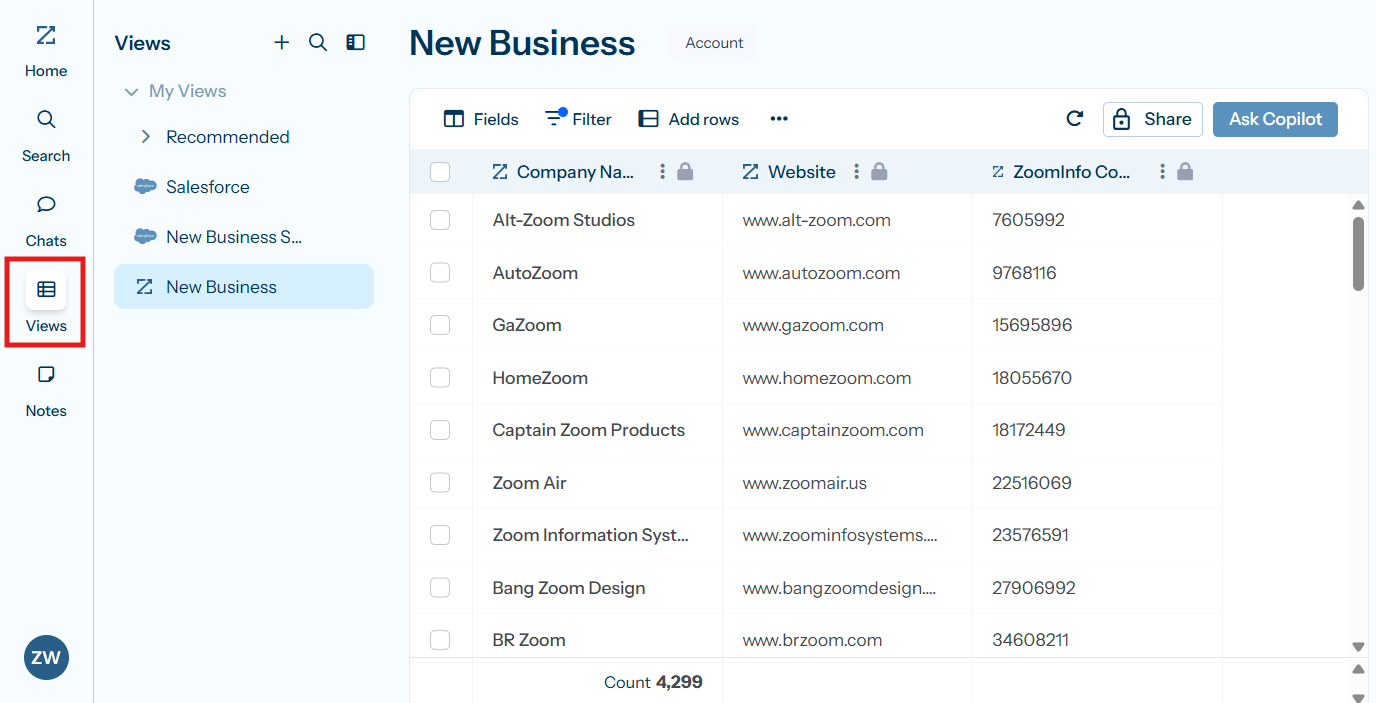
GTM Workspace deploys in weeks, not months, because it doesn't require rebuilding your CS data model. It integrates with your existing CRM and CS platform, enriching the data already there with third-party intelligence. ZoomInfo's redesigned onboarding runs 90 days from planning through adoption, producing a 25% satisfaction improvement.
Source: ZoomInfo
Pricing: what you'll actually pay
Neither Gainsight nor ChurnZero publishes pricing. Both require a sales conversation before you see a number.
Gainsight offers two CS tiers: Essentials and Enterprise.
Essentials includes 10 full users and up to 1,000 customer records. Enterprise includes 20 full users and up to 4,000 customer records, plus features locked out of Essentials: Renewal Center, Organizational Mapping, Sponsor Tracking, and Company Teams.
Third-party sources estimate total annual cost at $100,000 or more for enterprise deployments, with professional services adding to that figure. Journey Orchestrator is a paid add-on. Gainsight PX, Skilljar, and Customer Communities each carry separate pricing.
ChurnZero also keeps pricing behind a sales conversation, with no pricing page on its website.
AI agents are priced through the Agentic Essentials subscription at a flat annual rate with pre-purchased credits. Additional Professional Services (Silver, Gold, Platinum tiers providing 8 to 32 monthly hours) are sold separately.
Contract terms deserve attention. Gainsight's CS contracts require 3 months' advance notice for non-renewal and are non-cancellable mid-term. ChurnZero requires 45 days' notice before auto-renewal. Both lock you in for the full term once signed.
ZoomInfo uses consumption-based pricing, with ZoomInfo Lite available as a permanent free tier including access to the B2B database, 10 monthly export credits, and basic search.
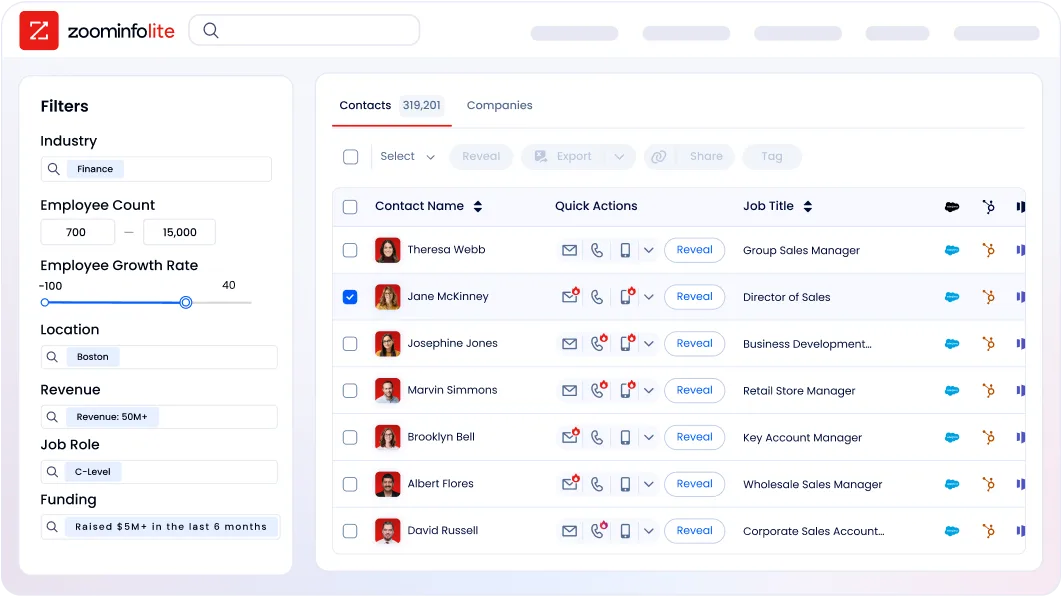
A 7-day free trial of paid features is also available. For teams evaluating whether external intelligence adds value to their CS stack, the barrier to testing is low.
Gainsight vs. ChurnZero vs. ZoomInfo: Which should you choose?
The choice depends on what's limiting your CS operation today.
Choose Gainsight if:
You're an enterprise with 20+ CSMs managing complex, multi-product accounts
You want to consolidate CS, product analytics, customer education, and community under one vendor
You have a dedicated Gainsight admin (or budget to hire one)
You can invest 3 to 6 months in implementation for long-term platform depth
Your CS operation is mature enough to take advantage of the Rules Engine, Journey Orchestrator, and Renewal Center
Choose ChurnZero if:
You need a focused CS platform that deploys quickly and your team can adopt without a dedicated admin
In-app customer engagement (WalkThroughs, Success Centers, in-app surveys) is central to your CS motion
You want AI agents at a flat rate without usage-based pricing anxiety
Your customer base is subscription-based and you need to scale coverage without proportional headcount growth
You value a platform that CS teams, not product teams, can own and configure directly
Add ZoomInfo to your stack if:
You want to detect churn risk and expansion signals before they appear in your CS platform's health scores
Stakeholder changes (champion departures, new decision-makers, org restructures) are a blind spot
You need verified contact data for multi-threading across customer accounts
Intent signals showing your customers researching competitors would change how you prioritize your book
You want conversation intelligence from Chorus feeding into your account strategy
Your CS, sales, and marketing teams need a shared intelligence layer rather than siloed data
Start with ZoomInfo Lite for free, or request a demo to see how GTM intelligence enhances your CS operation.
Snowflake uses ZoomInfo for at least one-third of the most critical data features in their Account Propensity Scoring model. Accounts monitored using ZoomInfo-powered scores showed 90% higher opportunity open rates and 2x higher customer conversion rates. (Snowflake Case Study)
The most effective CS organizations don't choose between a CS platform and an intelligence layer. They use both. Gainsight or ChurnZero manages the customer relationship. ZoomInfo provides the external signals that make every health score, every Play, and every renewal forecast more accurate. The CS platform tells you what's happening. ZoomInfo tells you what's about to happen.
Gainsight vs. ChurnZero vs. ZoomInfo FAQ
What is the fundamental difference between Gainsight, ChurnZero, and ZoomInfo?
Gainsight is a full post-sales platform covering customer success, product analytics, customer education, and community management under one umbrella.
ChurnZero is a focused customer success platform built for subscription businesses, with native in-app engagement and workflow automation.
ZoomInfo is a GTM intelligence platform that provides external account signals (contact data, intent signals, org chart changes, conversation intelligence) to complement whichever CS platform you use.
Which CS platform is better for mid-market companies?
ChurnZero is generally the stronger fit for mid-market. It deploys faster, doesn't require a dedicated admin, and its Plays automation engine and in-app communications are accessible to CS teams without extensive training.
Gainsight's depth and cost structure are built for enterprises with 20+ CSMs and budget for a multi-month implementation. Both hold Gartner Magic Quadrant Leader positions, but ChurnZero's faster time to value is a practical advantage for teams that can't wait six months.
How do the AI capabilities compare between Gainsight and ChurnZero?
Both platforms launched agentic AI strategies in 2025-2026. Gainsight's Atlas AI Agents combine Staircase AI's conversation intelligence (analyzing emails, meetings, and Slack for sentiment shifts) with agents for renewals and adoption.
ChurnZero's Agentic Essentials delivers 15+ named agents across workflow assistance, signal detection, and data enrichment categories. A notable pricing difference: ChurnZero offers flat-rate AI agent subscriptions with pre-purchased credits, while Gainsight's AI pricing structure is less publicly detailed.
Why would I add ZoomInfo to my existing CS platform?
CS platforms work with data generated after the sale: product usage, support tickets, CSM notes, and survey responses. ZoomInfo fills the gaps that internal data misses. It detects when a champion changes jobs, when an account is researching competitors, when new decision-makers join, and when technology stack changes create expansion or risk signals.
These external signals often surface churn risk and expansion opportunities weeks before internal health scores would flag them.
Which platform has the best in-app customer engagement tools?
ChurnZero leads here. Its in-app communications (WalkThroughs, Announcements, Surveys, and Success Centers) are built into the core platform and managed by CS teams without engineering support.
Gainsight offers comparable capabilities through Gainsight PX, but PX is a separate product with its own implementation and licensing, designed primarily for product teams rather than CS teams.
How do the platforms handle renewal forecasting?
Gainsight's Renewal Center uses machine learning to generate likelihood-to-renew scores trained on each company's own historical data, with bidirectional Salesforce synchronization and waterfall pipeline visualizations. It is an Enterprise-tier feature.
ChurnZero's Renewal Hub syncs with CRM every 15 minutes and layers ChurnScores into the forecast, with five named AI agents covering distinct parts of the renewal and expansion workflow.
ZoomInfo complements both by detecting external renewal risk signals such as competitor research intent and stakeholder departures.
Which platform requires the least ongoing maintenance?
ChurnZero requires less ongoing admin overhead than Gainsight. Its Launchpad templates provide pre-built Plays and Journeys, and CS teams can configure most automations without a dedicated administrator.
Gainsight's Rules Engine, Scorecard configuration, and Journey Orchestrator typically require a dedicated Gainsight admin for ongoing maintenance and optimization.
ZoomInfo's intelligence layer runs independently, enriching your existing CRM and CS data without requiring separate platform administration.
Can I use ZoomInfo with both Gainsight and ChurnZero?
Yes. ZoomInfo integrates with both platforms through CRM enrichment and API connections. ZoomInfo data flows into your CRM, which feeds Gainsight or ChurnZero's health scores and automation triggers. Chorus conversation intelligence data also enriches account context regardless of which CS platform you use.
The ZoomInfo MCP server extends this intelligence into Claude and ChatGPT, making account insights accessible across any workflow.
Comparing Gainsight and ChurnZero? These related breakdowns go deeper:
