
Choosing between HubSpot and Iterable for marketing and customer engagement comes down to five questions:
Do you need a full CRM platform that connects marketing, sales, and service, or a dedicated cross-channel messaging engine?
Is your primary challenge managing the entire customer relationship, or delivering personalized messages across email, push, SMS, and in-app channels at scale?
Are you a B2B company with a sales team that needs pipeline visibility, or a B2C brand focused on lifecycle marketing and consumer engagement?
How important is it that your marketing platform shares data natively with your sales and service teams?
Does your go-to-market strategy depend on knowing who to target and why they're ready to buy, or on optimizing how you reach people already in your database?
In short, here's what we recommend:
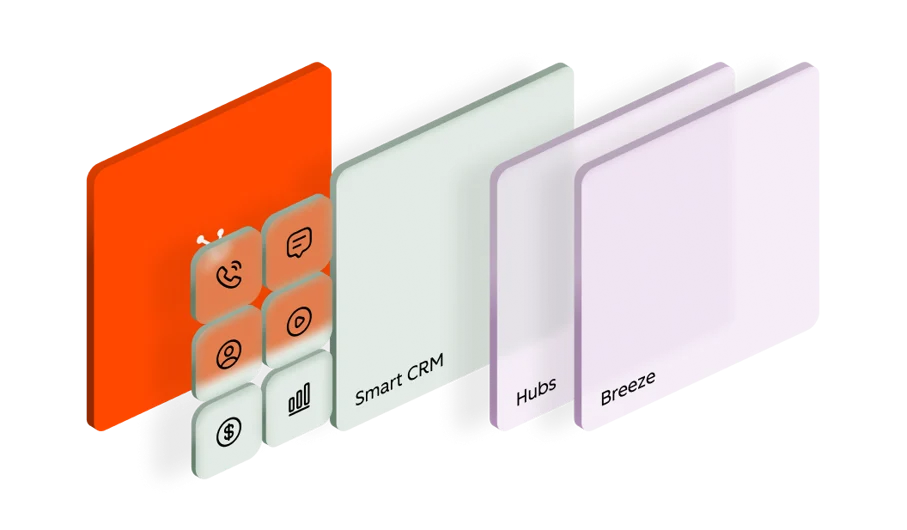
HubSpot is the all-in-one customer platform for companies that want marketing, sales, service, and CRM under one roof. Its Smart CRM connects Marketing Hub, Sales Hub, Service Hub, Content Hub, Data Hub, and Commerce Hub so every team works from shared customer data. For B2B companies, that means a lead captured by marketing flows directly into a sales pipeline, then into a service ticket, without switching tools or syncing databases. HubSpot serves 288,706 customers across 135+ countries, from startups on the free CRM to enterprises like eBay and DoorDash. The trade-off: its per-seat, per-hub pricing can escalate quickly, and its cross-channel messaging for consumer-facing use cases doesn't match platforms built for that purpose.
Iterable is a cross-channel engagement platform built for consumer brands that need to orchestrate personalized messaging across email, SMS, push notifications, in-app, web push, WhatsApp, and mobile inbox. Its Journey Builder and Nova AI suite let marketing teams create lifecycle programs without engineering tickets, while its flexible data architecture handles real-time behavioral signals at scale. Brands like Fabletics, HelloFresh, and the Washington Post use Iterable to power billions of customer interactions. The trade-off: Iterable has no CRM, no sales pipeline, no service desk. It does one thing (cross-channel customer engagement) and does it well, but teams that need broader go-to-market coverage will need additional tools.
Both platforms are strong in their domains. HubSpot connects your internal teams around shared customer data. Iterable connects your messages to customers across every channel. But neither starts with the question that drives most B2B go-to-market success: who should you be targeting in the first place, and why are they ready to buy right now?
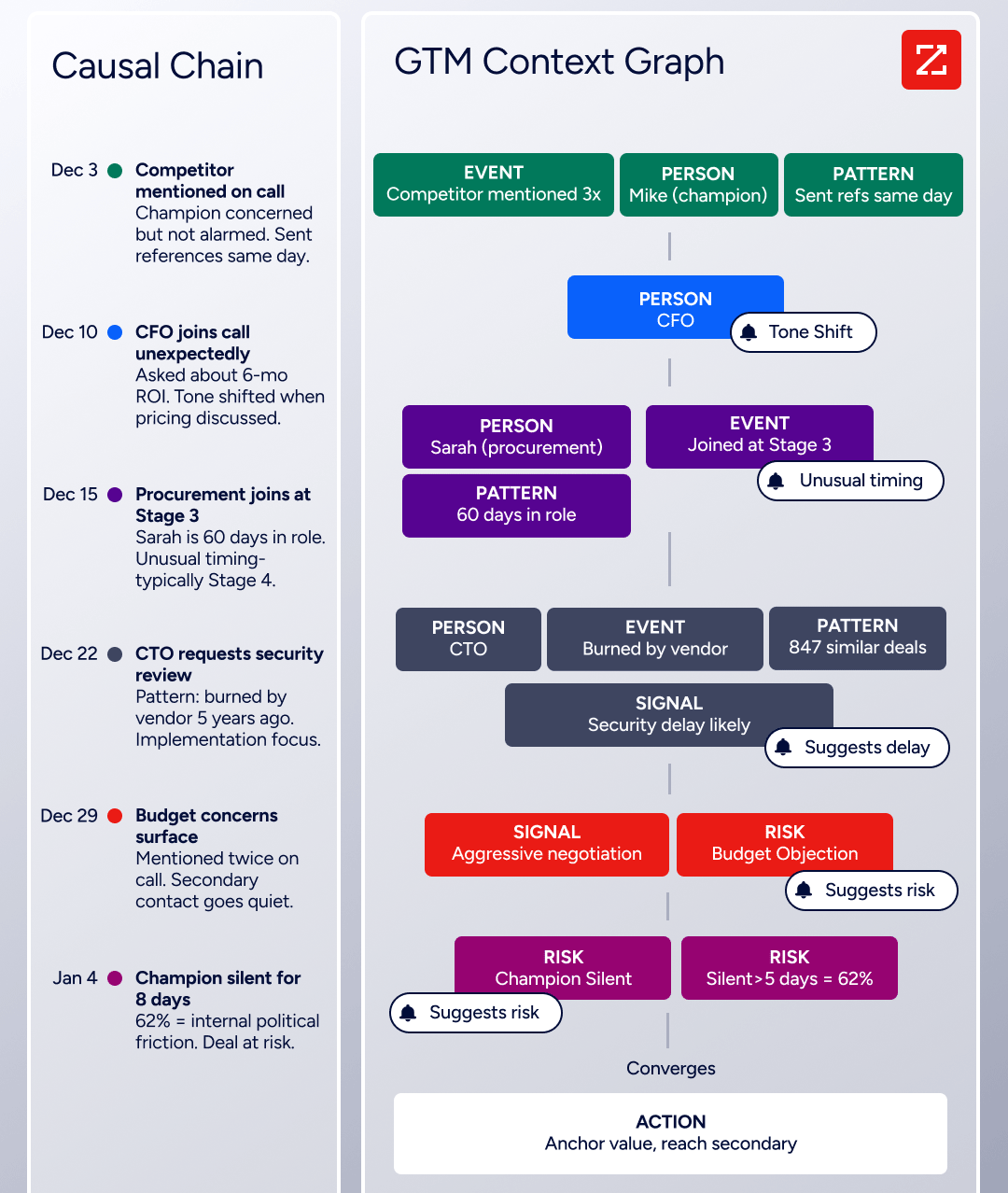
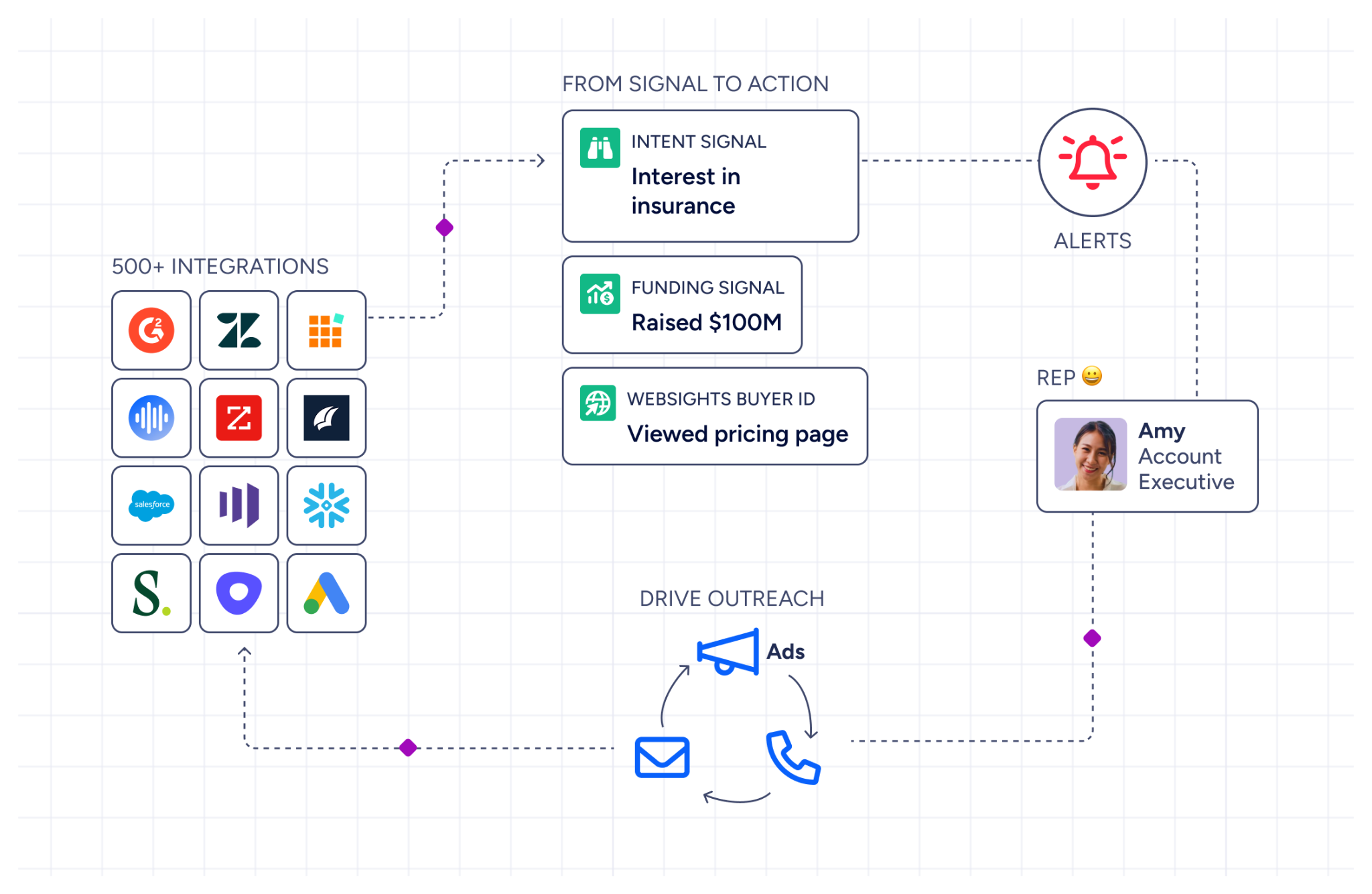
ZoomInfo is an AI-powered GTM platform built on a B2B data foundation of 500M contacts, 100M companies, 135M+ verified phone numbers, and 200M+ verified business emails. It fuses this data with your CRM records, conversation transcripts, and behavioral signals through its GTM Context Graph, which processes 1.5B+ data points daily to reveal not just what happened in your deals, but why. Sales teams access this through GTM Workspace, marketers and RevOps build plays through GTM Studio, and any team can power their own tools through APIs and MCP. For B2B organizations, ZoomInfo answers the upstream question that both HubSpot and Iterable depend on: which accounts are worth pursuing, which buyers matter, and when the timing is right.
If identifying the right accounts and buyers before your first outreach sounds like the missing piece of your go-to-market strategy, see how ZoomInfo works.
HubSpot vs. Iterable vs. ZoomInfo at a glance
HubSpot | Iterable | ZoomInfo | |
|---|---|---|---|
Core function | Unified CRM + marketing/sales/service platform | Cross-channel customer engagement | B2B data intelligence + GTM execution |
Channels | Email, ads, social, chat, phone | Email, SMS, push, in-app, web push, WhatsApp, mobile inbox | Multi-channel outreach, display ads, direct mail, chat |
CRM included | Yes (Smart CRM) | No | Contact and company database with buyer intelligence |
Sales tools | Full pipeline, CPQ, forecasting | None | AI-powered prospecting, deal intelligence, conversation intelligence |
AI capabilities | Breeze (content, prospecting, customer service agents) | Nova (predictive audiences, channel decisioning, agentic execution) | GTM Context Graph (deal reasoning, signal-driven prioritization) |
Data foundation | Customer-generated CRM data | Customer behavioral data | 500M contacts, 100M companies, intent signals, technographics |
Pricing model | Per-seat + per-hub + contact tiers | Custom enterprise contracts | Custom consumption-based |
Free option | Permanent free CRM | None (demo only) | ZoomInfo Lite (permanent) + 7-day trial |
Best for | B2B companies wanting one platform for all teams | B2C brands needing lifecycle messaging at scale | B2B teams needing to find, prioritize, and engage the right buyers |
These platforms solve different problems
The comparison between HubSpot and Iterable is less about which is "better" and more about which problem you're solving.
HubSpot is a customer platform. It manages the entire relationship: the first website visit, the lead form, the sales call, the deal negotiation, the support ticket, the renewal. Its advantage is that all of this lives in one database. When a service rep opens a ticket, they see the marketing emails that contact received, the sales calls they had, and the deal they closed. That context matters for companies where sales, marketing, and service teams need to coordinate around the same accounts.
Source: HubSpot
Iterable is a messaging engine. It takes a database of known users and figures out the right message, the right channel, and the right moment to reach each one. Its advantage is cross-channel orchestration: an onboarding sequence that starts with email, moves to push when the user installs the app, and falls back to SMS when engagement drops. That orchestration matters for consumer brands where the quality of lifecycle messaging directly drives retention and revenue.

Source: Iterable
ZoomInfo operates upstream of both. Before you can nurture a lead in HubSpot or trigger a lifecycle journey in Iterable, you need to know which companies are worth targeting, which people at those companies make buying decisions, and whether the timing is right. ZoomInfo's GTM Context Graph answers those questions by fusing its B2B dataset with your CRM history, conversation intelligence, and real-time buying signals.
Marketing automation: broad platform vs. deep channel expertise
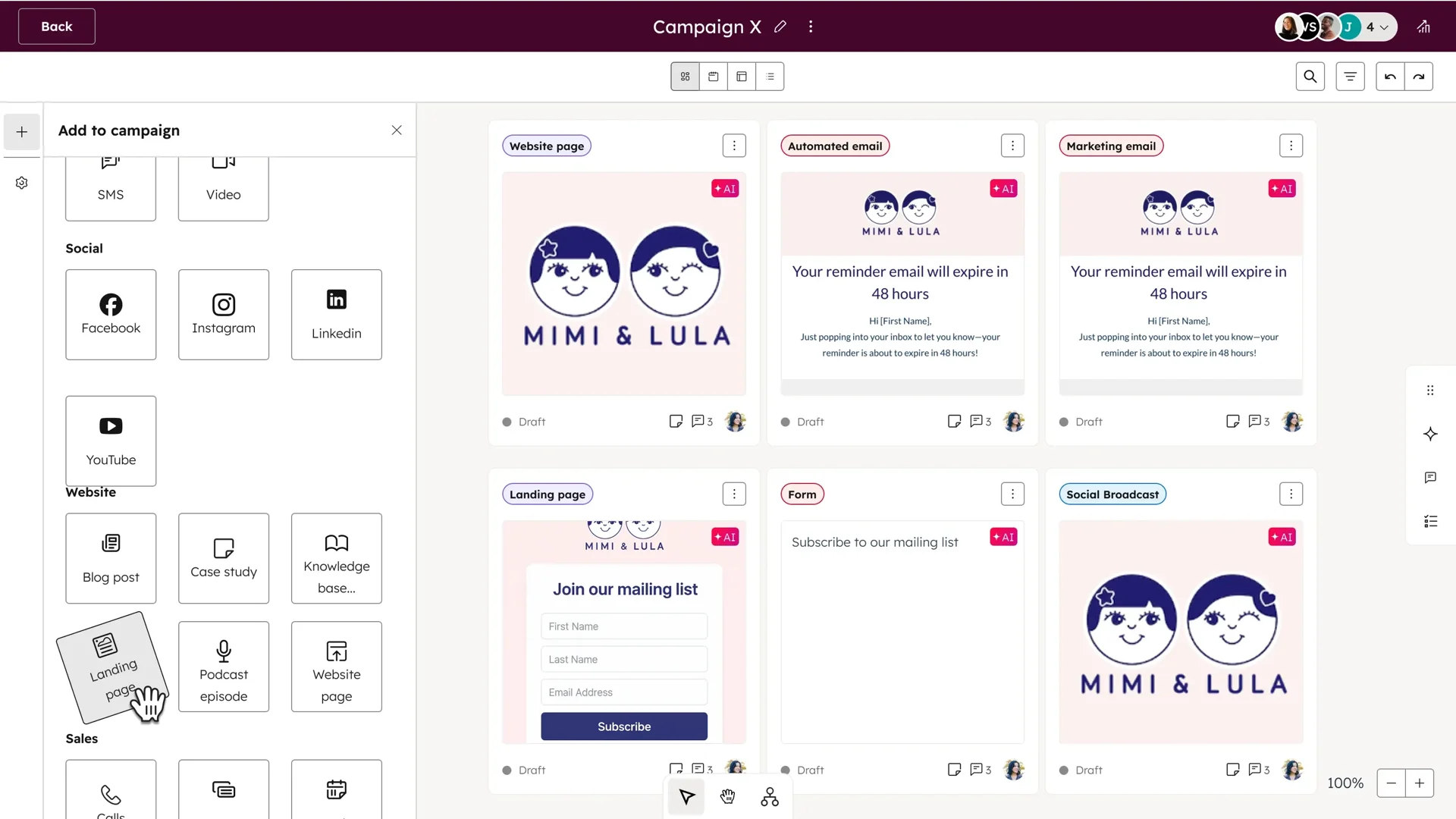
HubSpot's Marketing Hub covers the full marketing workflow: email campaigns, landing pages, forms, social media management, ad management, SEO tools, and automation workflows. The automation builder uses a visual, branching-logic interface for multi-step nurture sequences triggered by contact behavior, lifecycle stage, or form submissions. For B2B marketing teams, this breadth means one tool handles blog publishing, lead scoring, email nurturing, and ad retargeting without additional software.
Source: HubSpot
But HubSpot's channel depth is limited. Email is strong. SMS requires third-party integrations. Push notifications, in-app messaging, and mobile inbox are not part of the platform. For companies whose customers live on mobile apps or whose engagement model depends on multi-channel message orchestration, HubSpot's marketing automation stops at the inbox.
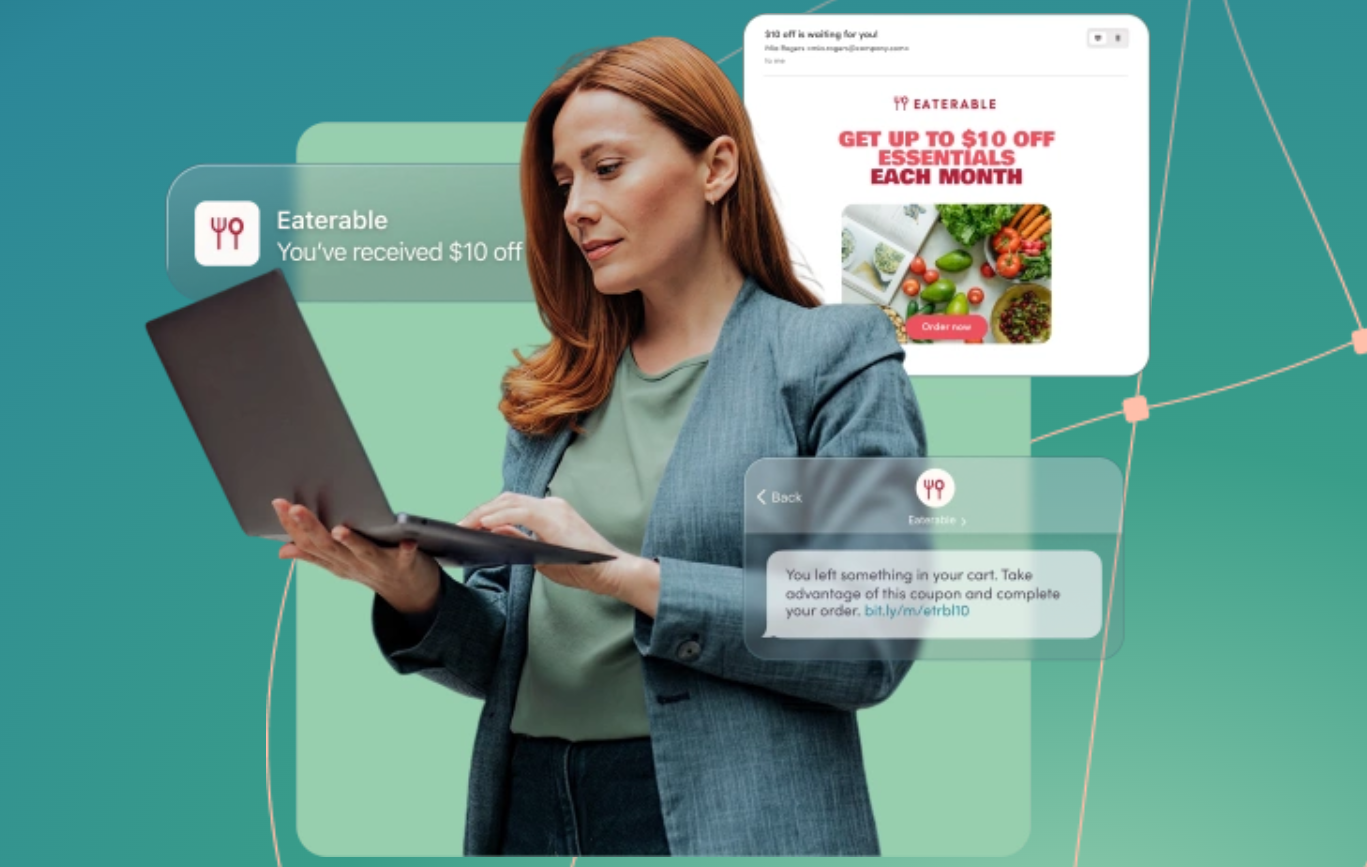
Iterable's Campaigns and Journeys modules go deep where HubSpot goes wide. The platform supports email, SMS/MMS, mobile push, web push, in-app messages, embedded messages, WhatsApp, and mobile inbox from a single workspace. The Journey Builder orchestrates these channels on a visual canvas where a single lifecycle program can branch across channels based on real-time user behavior. The Nova AI layer adds Channel Decisioning, which selects the best channel and send frequency for each individual automatically.
Source: Iterable
The result: HubSpot gives a B2B marketing team everything it needs in one place. Iterable gives a consumer marketing team the channel depth and behavioral precision it needs to engage users wherever they are.
CRM and sales: HubSpot's advantage, Iterable's absence
This is where the platforms diverge most sharply.
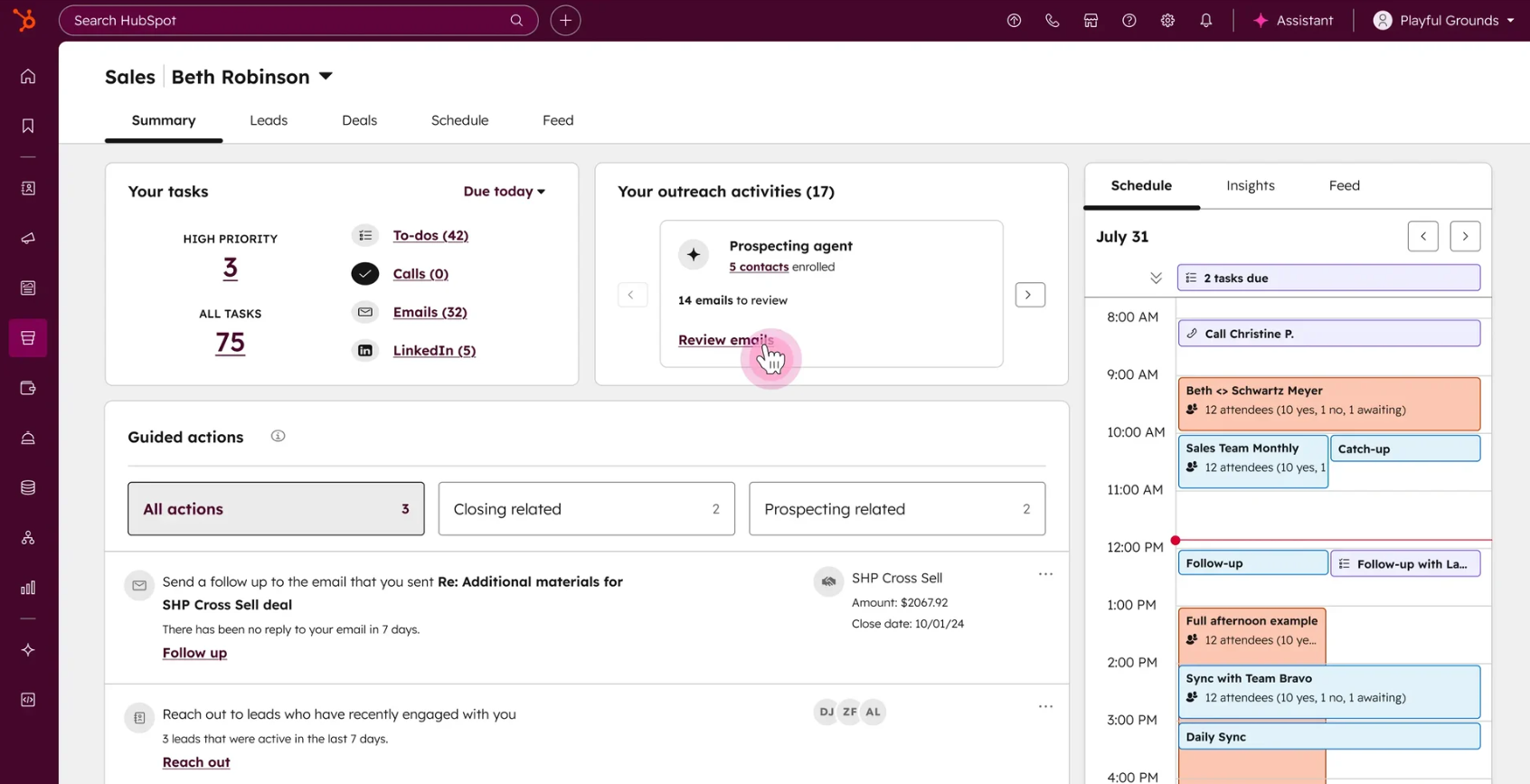
HubSpot's Sales Hub provides a complete sales workspace: deal pipelines, lead management, sequences for automated outreach, call tracking, CPQ for generating quotes, conversation intelligence, and AI-powered forecasting. The Breeze Prospecting Agent monitors buying signals and drafts personalized outreach using the full HubSpot customer history. Because Sales Hub shares the same database as Marketing Hub and Service Hub, a rep can see every marketing touchpoint and support interaction before making a call.
Source: HubSpot
Iterable has no CRM, no sales pipeline, and no sales tools. It was never designed to manage deals or coordinate sales teams. For B2C brands where "sales" means a customer clicking "buy" after a well-timed push notification, that's fine. For B2B organizations where a salesperson needs to understand an account's full history before a meeting, Iterable doesn't participate in that workflow.
ZoomInfo fills a different part of the sales equation. While HubSpot manages the pipeline after contacts enter the CRM, ZoomInfo identifies which contacts and companies should enter it in the first place. GTM Workspace gives sellers a prioritized account feed, AI-drafted outreach, and deal intelligence drawn from 500M contacts and 100M companies. AI agents handle account research, outreach drafting, CRM updates, and signal monitoring. Seismic's sales team attributed 39% of active pipeline to opportunities identified or influenced by ZoomInfo signals and reported a 54% productivity increase.
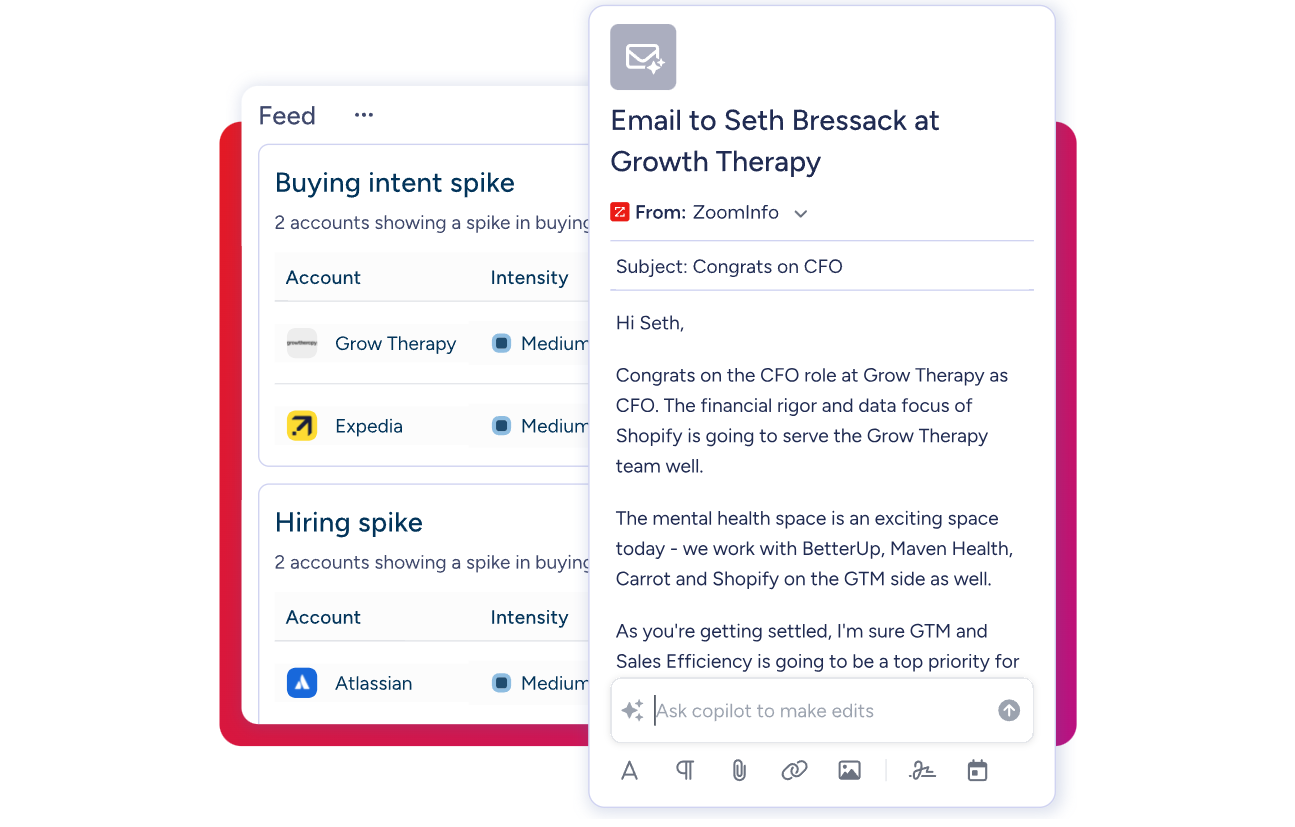
Thomson Reuters increased closed-won deals by 40% and achieved 115% average quota attainment each month using ZoomInfo's GTM Workspace. (ZoomInfo)
Data architecture and intelligence
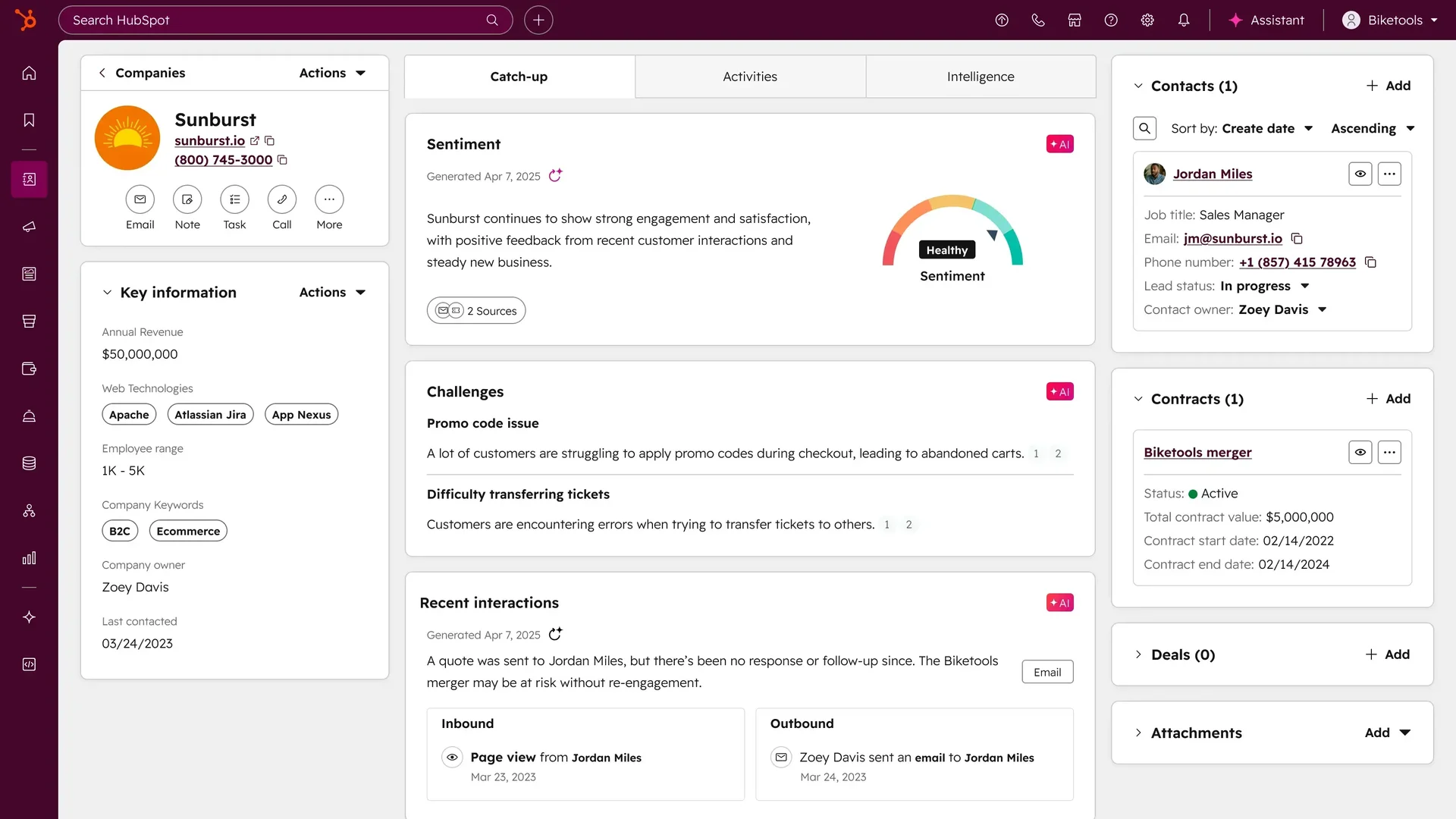
HubSpot's Smart CRM stores everything your teams generate: form submissions, email opens, website visits, sales calls, support tickets, deal records. It supports up to 15 million contacts (expandable to 50 million), custom objects, and field-level permissions. The AI layer, Breeze, enriches records from email threads and call recordings. HubSpot reports that 83% of users say the platform unifies all their data. But the data is only as good as what your teams put in. HubSpot captures interactions that happen inside HubSpot. It doesn't independently know who works at a target account, what technology they use, or whether they're researching your category.
Source: HubSpot
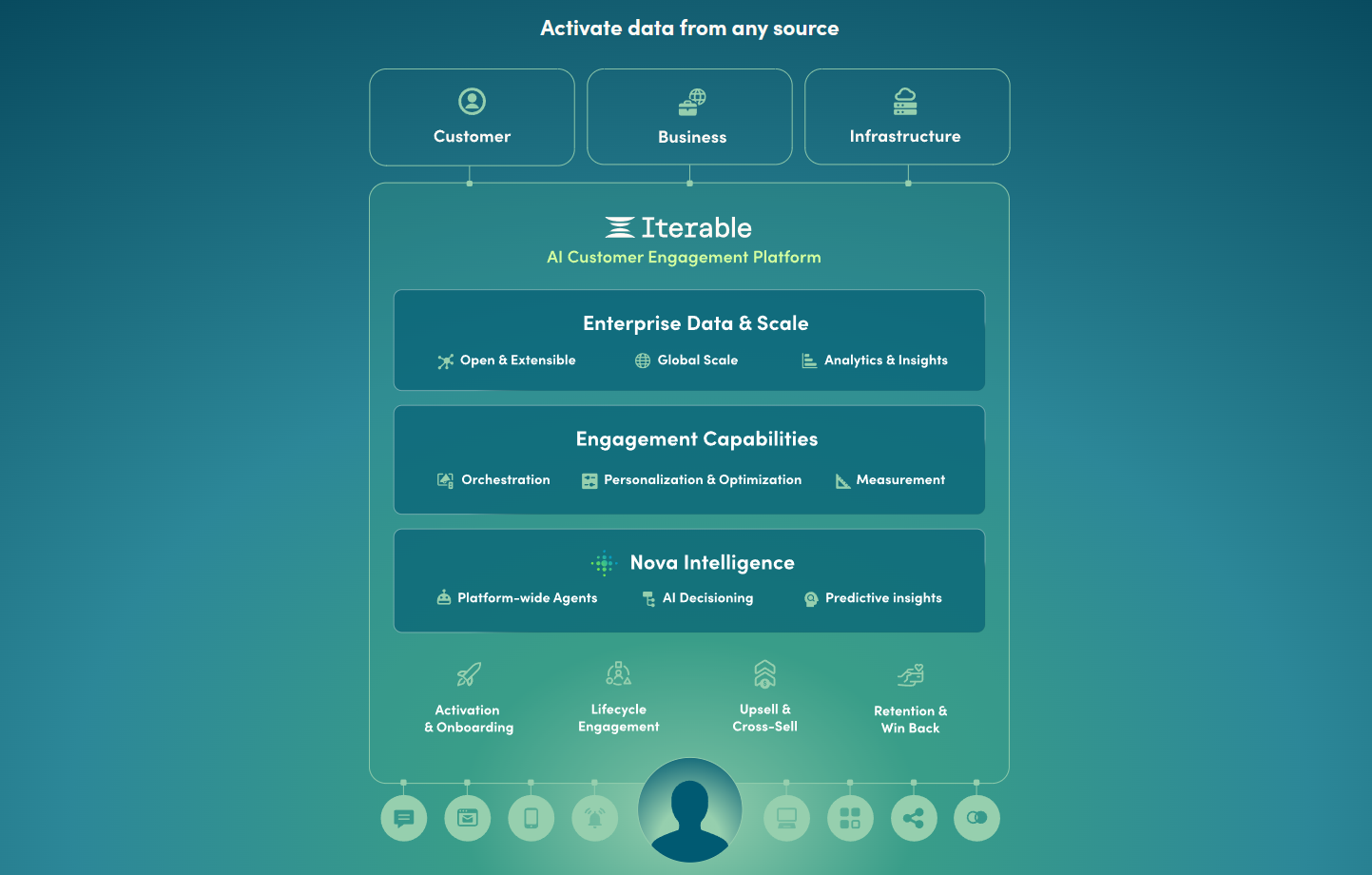
Iterable's data architecture is built for behavioral event streams. It ingests real-time events from apps, websites, and data warehouses and stores them in a nested data model that allows fine-grained segmentation without SQL. The platform's strength is activation speed: a user abandons a cart, and within milliseconds Iterable can trigger a personalized push notification on the right channel. But like HubSpot, Iterable's data is first-party only. It knows what your users did; it doesn't know what's happening outside your walls.
Source: Iterable
ZoomInfo starts with the external world. Its data platform covers 500M contacts, 100M companies, 135M+ verified phone numbers, and 200M+ verified business email addresses, verified through a pipeline backed by 300+ human researchers achieving up to 95% accuracy on first-party data. Intent data tracks signals from 210 million IP-to-organization pairings and 6 trillion+ new keyword-to-device pairings monthly. The GTM Context Graph then fuses this external intelligence with your CRM records, conversation intelligence, and behavioral signals to build a view that captures why deals move or stall, not just that they did.
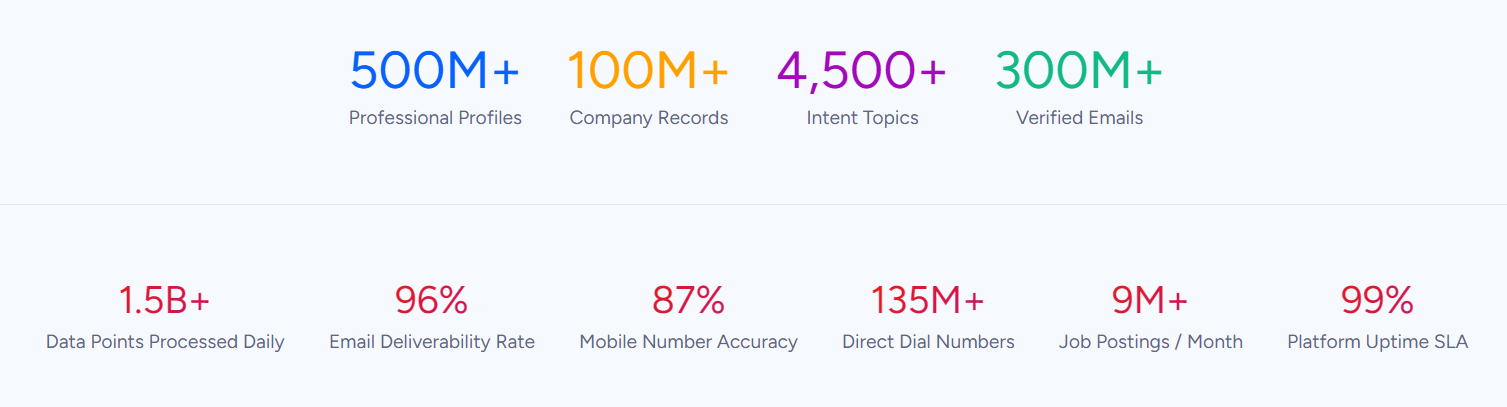
In a Fortune 500 competitive RFP analyzing 25 million contacts across vendors, an independent consultant concluded that "no other competitor came even close" to ZoomInfo's data quality.
Snowflake uses ZoomInfo data for at least one-third of the most critical features in their Account Propensity Scoring model. Accounts monitored with ZoomInfo-powered scores showed 90% higher opportunity open rates and 2x higher customer conversion rates. (ZoomInfo)
AI capabilities take different approaches
All three platforms have invested in AI, but each applies it to a different problem.
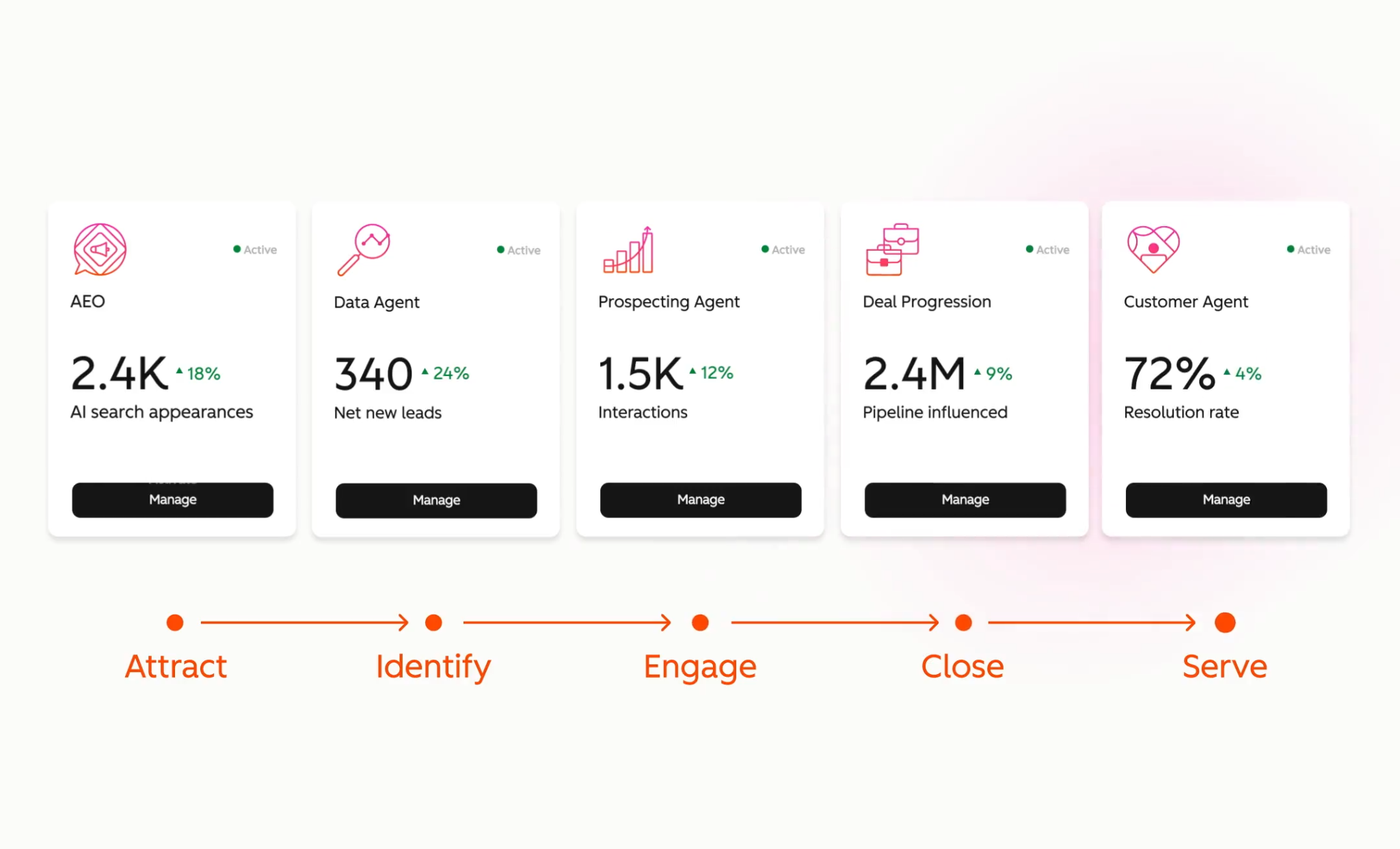
HubSpot's Breeze runs across the platform as an AI layer with three components: Breeze Assistant (meeting prep, content drafting), Breeze Agents (autonomous workflow execution for customer service, prospecting, and knowledge base creation), and embedded AI features (blog writing, email generation, content remixing). The Customer Agent resolves over 50% of customer conversations autonomously. Because Breeze operates on the full HubSpot CRM, it has context from marketing, sales, and service interactions. But its AI is bounded by the data inside HubSpot.
Source: HubSpot
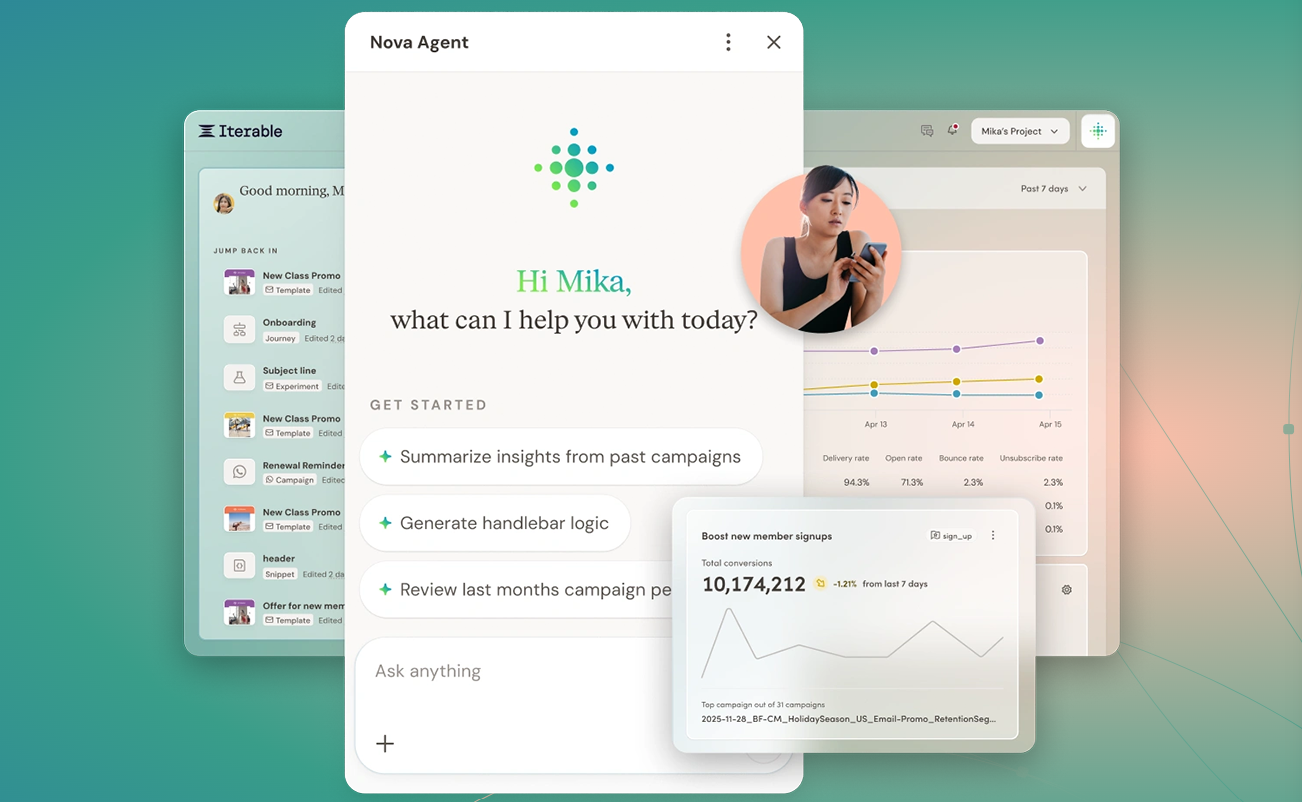
Iterable's Nova Intelligence suite applies AI to the messaging decision loop. Predictive Goals scores users on their probability of completing any custom-defined business outcome (purchase, churn, activation). Brand Affinity classifies contacts as loyal, positive, neutral, or negative based on cross-channel engagement patterns. Nova Agents handle campaign setup, template QA, A/B testing, and performance analysis autonomously. The distinguishing feature is Iterable's "Glassbox AI" approach: every decision is explainable and auditable, so marketers understand exactly why the AI chose a particular channel or timing.
Source: Iterable
ZoomInfo's AI operates on a different dataset. The GTM Context Graph reasons across both first-party CRM data and ZoomInfo's external intelligence. It doesn't just know your CRM recorded a stage change; it understands that executive sponsorship entering at this stage, combined with ROI-focused questions from the CFO on the last call, matches the pattern behind closed-won deals in your segment. That reasoning powers every action downstream: the Prospecting Agent in GTM Workspace drafts outreach that addresses the specific concern behind a deal-moving moment, and GTM Studio targets accounts whose signal combinations match actual win patterns. As ZoomInfo's CPO Dominik Facher wrote: "The CRM recorded the state change. It has no record of why it happened."
Pricing models reflect different markets
HubSpot uses a layered pricing model that combines per-seat fees, per-hub subscriptions, and marketing contact tiers. The free CRM is permanent and useful, but paid tiers add up. Marketing Hub Professional starts at $800/month (annual) with a $3,000 mandatory onboarding fee. Sales Hub Professional runs $90/seat/month (annual) with a $1,500 onboarding fee. A hidden cost worth noting: when subscribing to multiple Hubs at different tiers, all Core Seats are billed at the rate of the highest tier. A company mixing Marketing Hub Enterprise with Sales Hub Starter pays Enterprise seat rates across the board.
Iterable does not publish pricing. Access requires a demo and a negotiated enterprise contract. Contracts auto-renew unless canceled 30 days before term end, and services contracted cannot be decreased mid-term. Professional services, premium support, and implementation are all separate costs. The opacity makes comparison difficult, but the enterprise-only model reflects Iterable's positioning: this is not a platform for small teams experimenting with email marketing.
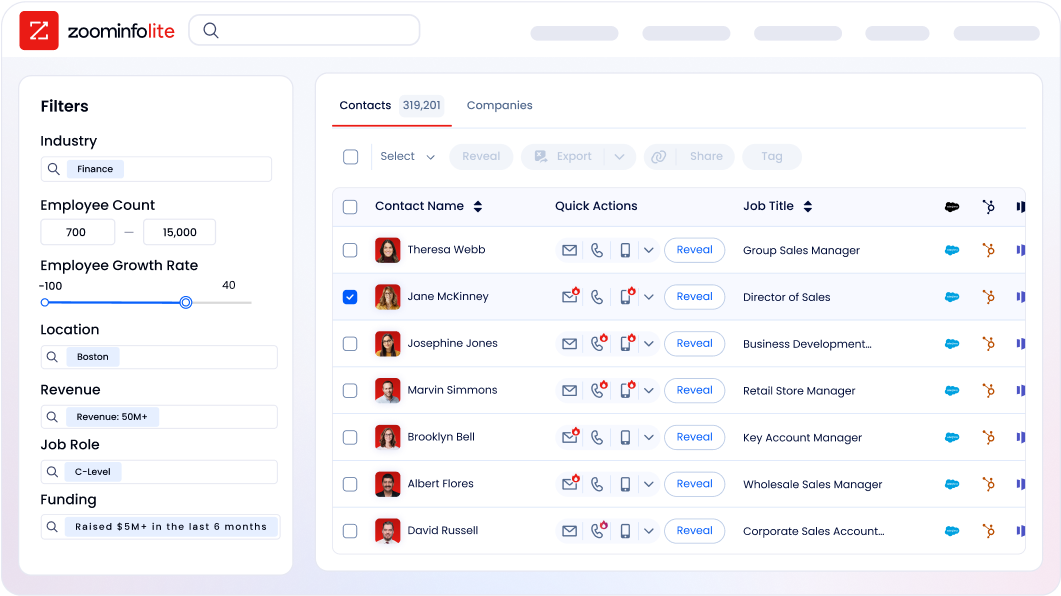
ZoomInfo uses custom consumption-based pricing scaled to usage patterns, credit volume, and features. ZoomInfo Lite provides a permanent free tier with access to the B2B database, 10 monthly export credits, and WebSights Lite. A 7-day free trial is also available with fuller access. Paid plans are organized across Sales, Marketing, and ABM tiers with increasing data access, intent signals, and AI capabilities. Like Iterable, specific pricing requires a conversation with sales, but ZoomInfo's free entry points let teams evaluate the data before committing.
Integration ecosystems serve different workflows
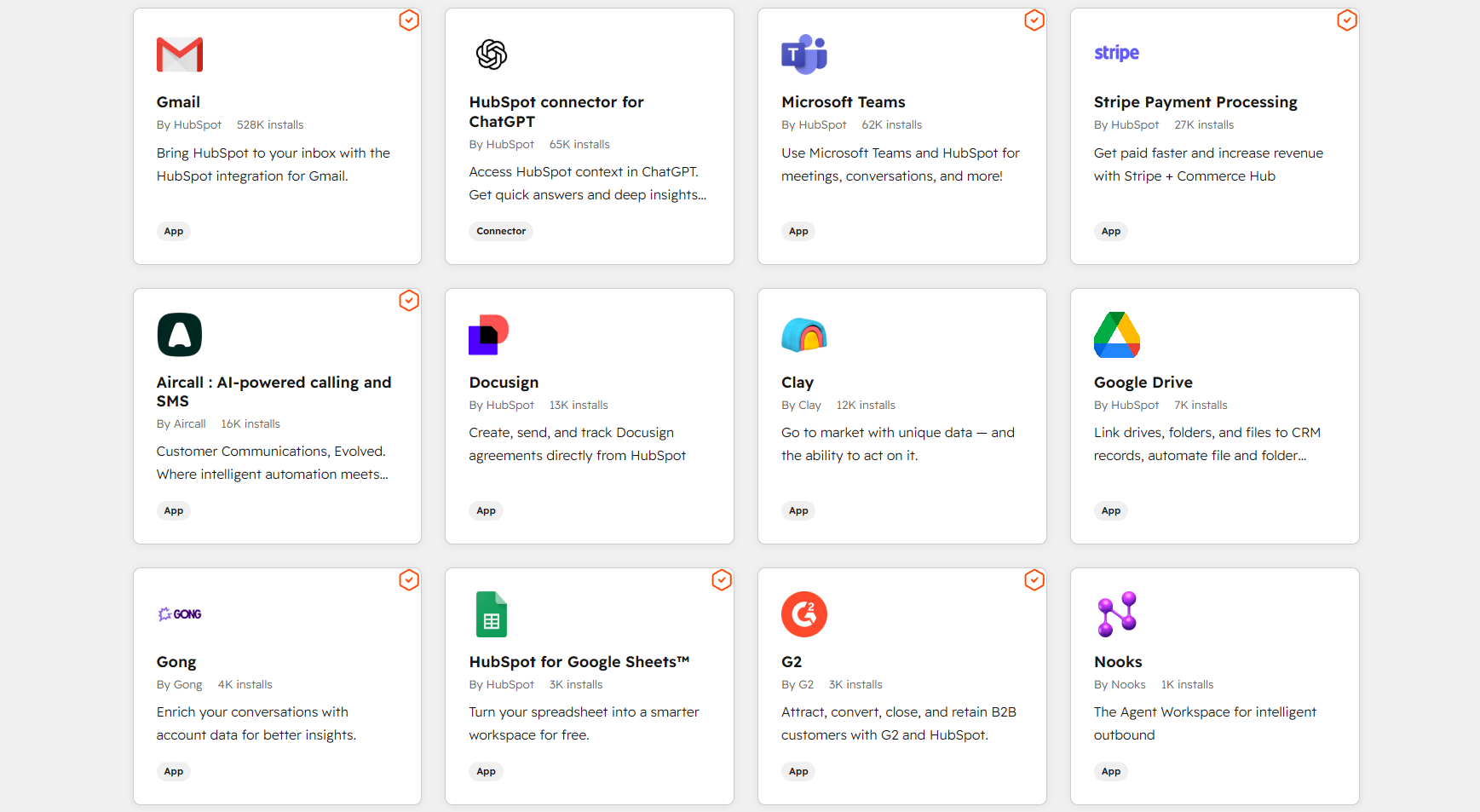
HubSpot's App Marketplace offers over 2,000 integrations with 2.5 million active installs. The ecosystem covers CRM, sales engagement, e-commerce, analytics, communications, and content tools. Native integrations with Salesforce, Slack, Zoom, Gmail, Outlook, and LinkedIn are well built. HubSpot also offers Data Sync for bidirectional, real-time sync with 100+ business apps without code. For developers, the REST API covers the full CRM data model with official SDKs in six languages and a remote MCP server for AI agent access.
Source: HubSpot
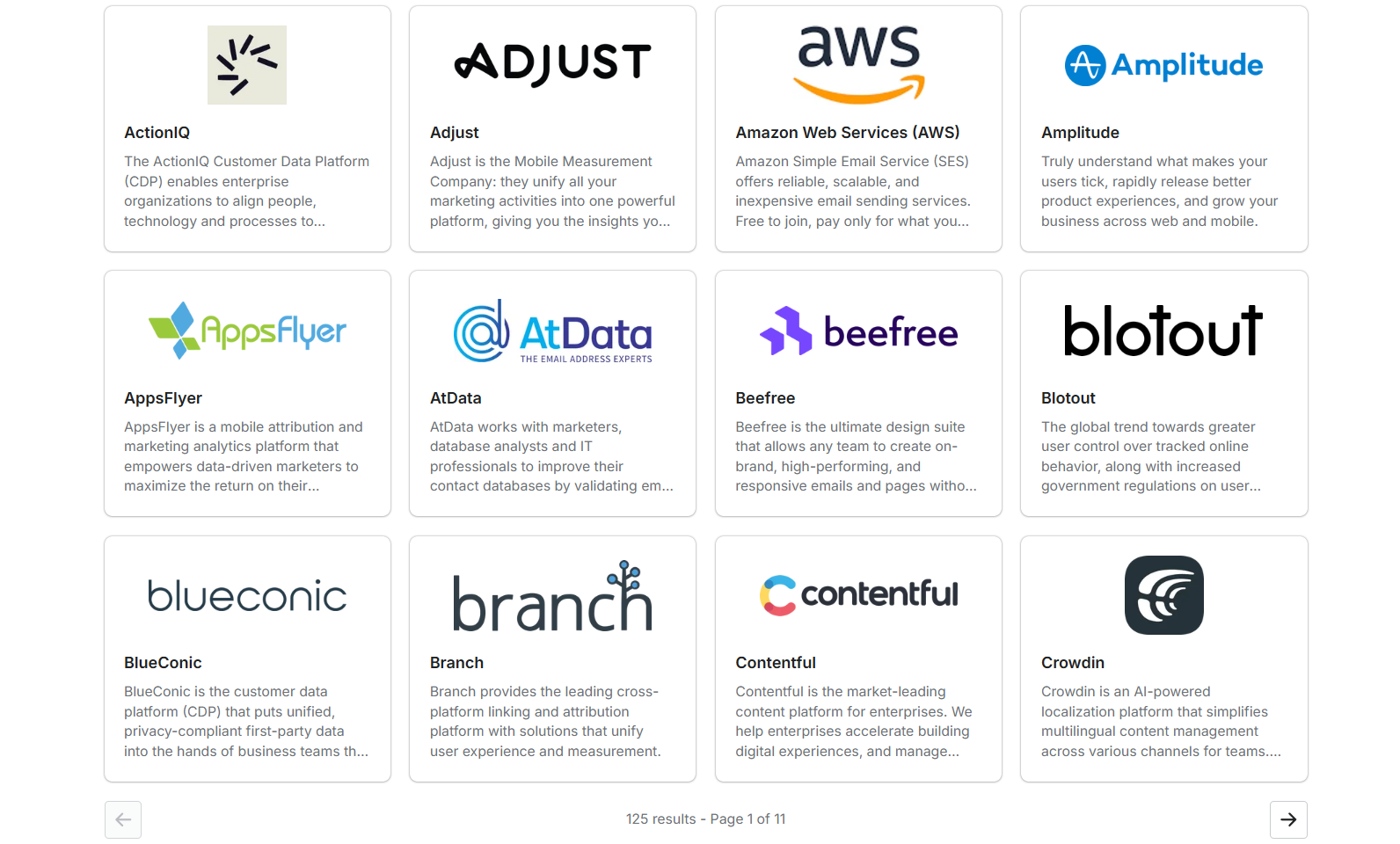
Iterable's technology partner directory lists 125+ integrations focused on the data and engagement ecosystem. Key partners include Segment, Amplitude, Snowflake, Shopify, and Hightouch. The REST API covers users, events, campaigns, lists, and catalog data. Official SDKs exist for iOS, Android, React Native, and Web. Iterable prioritizes data ingestion and channel execution over broad tool connectivity. It lacks HubSpot's breadth but goes deeper on the data warehouse and CDP integrations that matter most for its B2C audience.
Source: Iterable
ZoomInfo's Marketplace lists 172+ integrations spanning CRM, sales engagement, marketing automation, data warehouses, and AI platforms. Native integrations with Salesforce, HubSpot, and Microsoft Dynamics 365 connect ZoomInfo's intelligence directly to the systems sales teams already use. Cloud Partners deliver data directly into AWS, Snowflake, Google Cloud, and Databricks. The Enterprise API and MCP server let any AI agent or custom tool access ZoomInfo's data and GTM Context Graph. As CEO Henry Schuck described, a large financial services firm built an internal app using ZoomInfo's MCP server: "That's a surface area we would never see before."
BDO Canada's Senior Marketing Intelligence Analyst reported an 87% reduction in time spent on data dashboard updates thanks to ZoomInfo's API: "The plug-and-play aspect of the API means I can integrate it very easily into any process and get information at a moment's notice." (ZoomInfo)
Support and onboarding differ by model
HubSpot offers tiered support: community-only for free users, email and chat for Starter, and email, chat, and phone for Professional and Enterprise. HubSpot Academy provides free certifications and courses, with over 200,000 professionals certified. The Solutions Partner ecosystem handles complex implementations. HubSpot says customers achieve meaningful value within 90 days, compared to "traditional enterprise systems that can take 12+ months."

Source: HubSpot
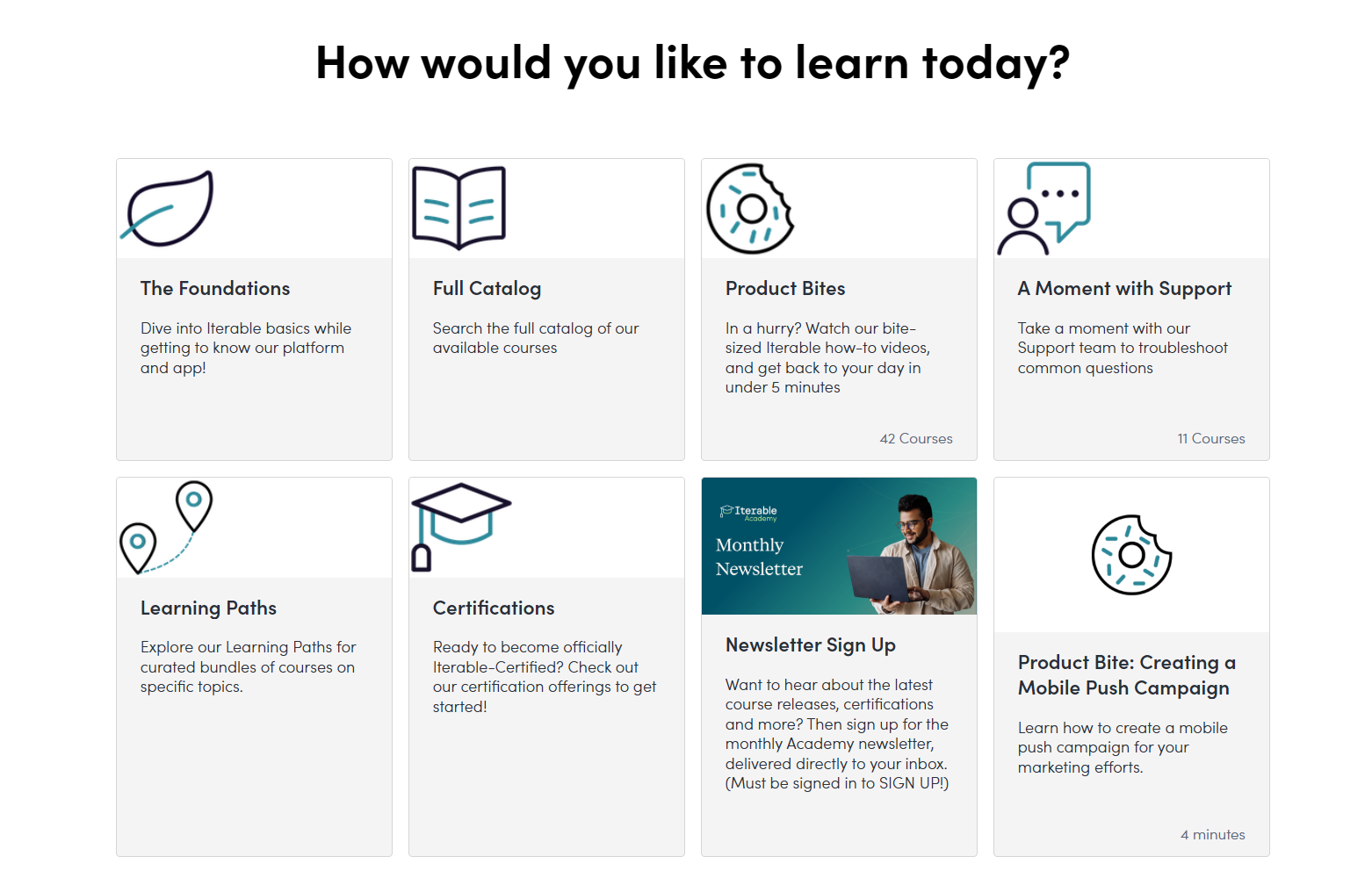
Iterable offers email support for all customers with live chat reserved for higher-tier plans. Professional services include dedicated onboarding, adoption services, deliverability consulting, and education programs. The Iterable Academy is open to everyone. A 50,000+ member community and annual Activate Summit round out the ecosystem. Onboarding is implementation-assisted rather than self-guided, reflecting the platform's complexity.
Source: Iterable
ZoomInfo provides support through its Help Center, ZoomInfo University with role-specific learning paths, and direct support by phone and form. Professional services are available through ZoomInfo Labs. The company redesigned its onboarding program from 30 to 90 days, producing a 25% improvement in customer satisfaction scores. GTM Workspace "deploys in weeks, not months."

Security and compliance
All three platforms hold enterprise security certifications, though the specifics vary.
HubSpot holds SOC 2 Type II, HIPAA attestation, GDPR/CCPA compliance, and EU Cloud Code of Conduct Level 2. Data is encrypted with AES-256 at rest and TLS 1.2/1.3 in transit. An EU Data Center is available for data residency requirements. SSO, 2FA, and IP allowlisting are supported.
Iterable holds SOC 2 Type 2, ISO 27001, HIPAA, EU-U.S. Data Privacy Framework, and Global Cross-Border Privacy Rules. GDPR compliance uses Standard Contractual Clauses for international transfers. MFA, granular permissions, and project-level access controls are available.
ZoomInfo maintains ISO 27001, ISO 27701, SOC 2 Type II, TRUSTe GDPR, and TRUSTe CCPA certifications, all renewed annually. ZoomInfo is a registered data broker in California and Vermont. Compliance is built into the data layer itself, which matters given the volume and sensitivity of the B2B contact data the platform manages.
HubSpot vs. Iterable vs. ZoomInfo: Which should you choose?
The right platform depends on the problem you're solving and the go-to-market model you operate.
Choose HubSpot if:
You need a unified platform for marketing, sales, and service teams
Your business model involves a sales team managing a pipeline of deals
You want a free CRM as a starting point with room to grow
Marketing automation, content management, and lead nurturing are your primary marketing needs
You value ease of use and fast time-to-value over channel depth
Choose Iterable if:
You're a B2C brand focused on lifecycle marketing across mobile and digital channels
Cross-channel orchestration (email, push, SMS, in-app, WhatsApp) is central to your engagement strategy
Your marketing team needs to build journeys without engineering support
You have a large consumer user base and need AI-driven personalization at scale
You don't need CRM or sales tools from the same vendor
Choose ZoomInfo if:
Your go-to-market success depends on finding and prioritizing the right accounts and buyers
You need verified B2B contact data, intent signals, and deal intelligence that your CRM alone can't provide
Your sales team needs to know who to contact, when to engage, and what to say, powered by AI that understands deal context
You want an intelligence layer that works inside your existing tools through APIs and MCP, not just inside its own UI
You need the upstream data foundation that makes both your CRM and your marketing automation more effective
Try ZoomInfo free and see how B2B data changes the quality of every downstream action.
These three platforms aren't direct competitors so much as parts of a complete go-to-market engine. ZoomInfo identifies who to target and why the timing is right. HubSpot manages the relationship from lead to customer across teams. Iterable delivers personalized messages across every consumer channel. The strongest go-to-market operations use intelligence, coordination, and execution together. ZoomInfo is the foundation that makes the other layers work harder.
HubSpot vs. Iterable vs. ZoomInfo FAQ
What is the core difference between HubSpot, Iterable, and ZoomInfo?
HubSpot is a CRM platform connecting marketing, sales, and service teams around shared customer data. Iterable is a cross-channel engagement platform for orchestrating personalized messages across email, SMS, push, in-app, and WhatsApp. ZoomInfo is a B2B data intelligence and GTM execution platform that identifies the right accounts and buyers using 500M contacts, 100M companies, intent signals, and AI-powered deal reasoning.
Which platform is best for B2B companies?
HubSpot and ZoomInfo both serve B2B companies, but in complementary ways. HubSpot manages the customer relationship (pipeline, deals, service tickets) once contacts are in your CRM. ZoomInfo identifies which contacts and companies should be in your CRM in the first place, using verified data, intent signals, and the GTM Context Graph. Iterable is designed primarily for B2C companies with high-volume consumer engagement needs.
Can I use HubSpot and ZoomInfo together?
Yes. ZoomInfo has a native HubSpot integration that enriches CRM records with verified contact data, company intelligence, and buying signals. HubSpot is also listed as a featured integration in ZoomInfo's Marketplace. Many B2B companies use ZoomInfo for prospecting intelligence and data enrichment while using HubSpot to manage the resulting pipeline and customer relationships. For a full feature-by-feature breakdown of how the two platforms compare, see our HubSpot vs. ZoomInfo comparison.
Which platform has the best marketing automation?
It depends on the type of marketing. HubSpot offers broader marketing automation covering email, landing pages, forms, social media, ads, and SEO in one platform. Iterable offers deeper cross-channel messaging automation across email, SMS, push, in-app, WhatsApp, and mobile inbox with AI-driven channel selection. ZoomInfo's GTM Studio provides marketing orchestration focused on account-based plays, audience targeting, and display advertising using B2B intelligence data.
How does pricing compare?
HubSpot offers a permanent free CRM, with paid Marketing Hub starting at $800/month (Professional, annual) plus mandatory onboarding fees. Iterable does not publish pricing and requires enterprise contracts negotiated through sales. ZoomInfo offers a permanent free tier (ZoomInfo Lite) and a 7-day trial, with paid plans custom-quoted based on usage. All three platforms increase in cost as teams and usage scale.
Which platform has the strongest AI capabilities?
Each platform applies AI to a different problem. HubSpot's Breeze AI automates content creation, prospecting, and customer service across its platform. Iterable's Nova AI optimizes messaging decisions including channel selection, send timing, and predictive audience scoring. ZoomInfo's GTM Context Graph reasons across CRM data, conversation intelligence, and external signals to explain why deals move or stall, powering AI-driven account prioritization and outreach. The choice depends on whether your bottleneck is content creation, message optimization, or account intelligence.
Does Iterable have a CRM?
No. Iterable is a dedicated cross-channel messaging and journey orchestration platform. It stores user profiles and behavioral data for segmentation and personalization, but it does not include pipeline management, deal tracking, sales tools, or service desk functionality. B2B companies using Iterable typically pair it with a separate CRM.
Which platform is easiest to get started with?
HubSpot has the lowest barrier to entry with its permanent free CRM and self-serve onboarding. ZoomInfo Lite offers a permanent free tier for exploring B2B data. Iterable has no free plan or self-serve signup. Access requires a sales demo and enterprise contract negotiation, making it the hardest to evaluate initially.
See how HubSpot stacks up elsewhere:
