
Choosing between HubSpot and Mautic for marketing automation often comes down to five questions:
Are you willing to pay $800+/month for a platform that works out of the box, or would you rather spend that budget on hosting and technical talent for an open-source alternative?
Do you need just marketing automation, or a full CRM with sales, service, and content tools under one roof?
How important is complete data ownership and the ability to host everything on your own servers?
Does your team have the technical skills to install, configure, and maintain a self-hosted platform?
Are you optimizing campaign execution, or do you first need to solve a more basic problem: knowing which companies to target and when?
In short, here's what we recommend:
HubSpot is the all-in-one customer platform for teams that want marketing automation, CRM, sales, service, and content tools connected through a single database. Its Marketing Hub handles email campaigns, landing pages, social media, and multi-touch attribution, while the Smart CRM gives every team a shared view of each contact. With 288,706 customers and over 2,000 app integrations, HubSpot delivers a polished, well-supported experience. The tradeoff is cost: Marketing Hub Professional starts at $800/month with a $3,000 mandatory onboarding fee, and pricing climbs as your contact list and team grow.
Mautic is the open-source alternative for teams that prioritize flexibility, data ownership, and cost control. The self-hosted version is free, with no contact limits and no per-seat charges. Its visual campaign builder, lead scoring, dynamic content, and multi-channel capabilities (email, SMS, web notifications) rival features found in platforms costing thousands per month. But Mautic requires technical expertise to install, configure, and maintain. The interface is less polished than HubSpot's, community support replaces dedicated customer service, and you're responsible for your own hosting, security, and updates.
Both platforms execute marketing campaigns well. But campaigns only perform as well as the data behind them. If your contact list is incomplete, your intent signals are missing, and you're guessing which accounts are in-market, even the best automation will underperform. That's the gap ZoomInfo fills.
ZoomInfo is a B2B intelligence and GTM platform that gives sales reps the context they need before every call: why the deal is moving, who's championing it, and what's likely to happen next. Marketers can describe audiences in plain language and launch plays against accounts that match proven win patterns, with no engineering ticket required. Leaders can see deal risk before it shows up in CRM stage fields.
That depth comes from the GTM Context Graph, an intelligence layer built on a B2B dataset of 500M contacts, 100M companies, 135M+ verified phone numbers, and 200M+ verified business email addresses, unified with your CRM records, conversation transcripts, and behavioral signals. Your team accesses it through GTM Workspace for sellers, GTM Studio for marketers and RevOps, or the API and MCP in any front-end.
For HubSpot users, ZoomInfo integrates directly to enrich CRM data and power targeted campaigns. For Mautic users, ZoomInfo's API can feed verified contacts and intent signals into Mautic's open architecture.
If building campaigns on verified B2B intelligence sounds like the missing piece, see how ZoomInfo works.
HubSpot vs. Mautic vs. ZoomInfo at a glance
HubSpot | Mautic | ZoomInfo | |
|---|---|---|---|
Core approach | All-in-one CRM and marketing platform | Open-source marketing automation | B2B intelligence and GTM platform |
Pricing model | Per-seat + per-contact + mandatory onboarding fees | Free (self-hosted); managed hosting available | Custom-quoted, consumption-based |
Marketing automation | Full-featured, native to CRM | Full-featured, requires self-hosting | GTM plays and multi-channel orchestration via GTM Studio |
B2B data and intelligence | CRM data you collect yourself | Contact data you collect yourself | 500M contacts, 100M companies, 135M+ verified phone numbers, 200M+ verified business email addresses, buyer intent signals |
Data ownership | Cloud-hosted on HubSpot's servers (EU data center available) | Full ownership via self-hosting | Cloud-hosted with ISO 27701, SOC 2 Type II compliance |
AI capabilities | Breeze AI (agents, assistant, content tools) | None native | GTM Context Graph processing 1.5B+ data points daily |
Learning curve | Moderate; scales with tier | Steep; requires technical skills | Moderate; 90-day structured onboarding |
Free option | Permanent free CRM (limited features) | Free self-hosted software | ZoomInfo Lite (permanent) + 7-day full trial |
Best for | Teams wanting unified marketing + CRM + sales | Technical teams wanting open-source flexibility and data control | B2B teams needing verified data and intelligence to power campaigns |
The cost equation: free doesn't mean cheap
HubSpot's pricing looks straightforward until you read the fine print. Marketing Hub Professional costs $800/month (annual) with a $3,000 one-time onboarding fee and includes only 2,000 marketing contacts. Need more? Overages cost $250 per 5,000 additional contacts per month. Add Sales Hub Professional at $90/seat/month with its own $1,500 onboarding fee, and a ten-person team can exceed $20,000 annually before sending a single email.
A subtler trap: if you subscribe to multiple Hubs at different plans, all Core Seats are billed at the highest plan. Mix Marketing Hub Professional with Sales Hub Enterprise and every seat costs Enterprise rates.
Mautic's software is free. But free software isn't free infrastructure. You need server hosting (typically $20-100+/month depending on traffic and contact volume), an email delivery service like Amazon SES or SendGrid (variable cost per email), and someone who can configure and maintain a Linux server, MySQL database, and PHP application. If you lack in-house technical talent, you're either hiring a developer or paying for managed Mautic hosting, which narrows the cost gap with HubSpot.
ZoomInfo uses consumption-based pricing with no published rates. The investment is higher than either HubSpot or Mautic for marketing automation alone. But ZoomInfo solves a different problem: it provides the verified B2B data and intelligence that feed your marketing automation, regardless of which platform runs it. Teams that measure ROI by pipeline generated (rather than software cost) often find that accurate data and timely signals produce returns that offset the platform investment.
HubSpot covers the full customer lifecycle
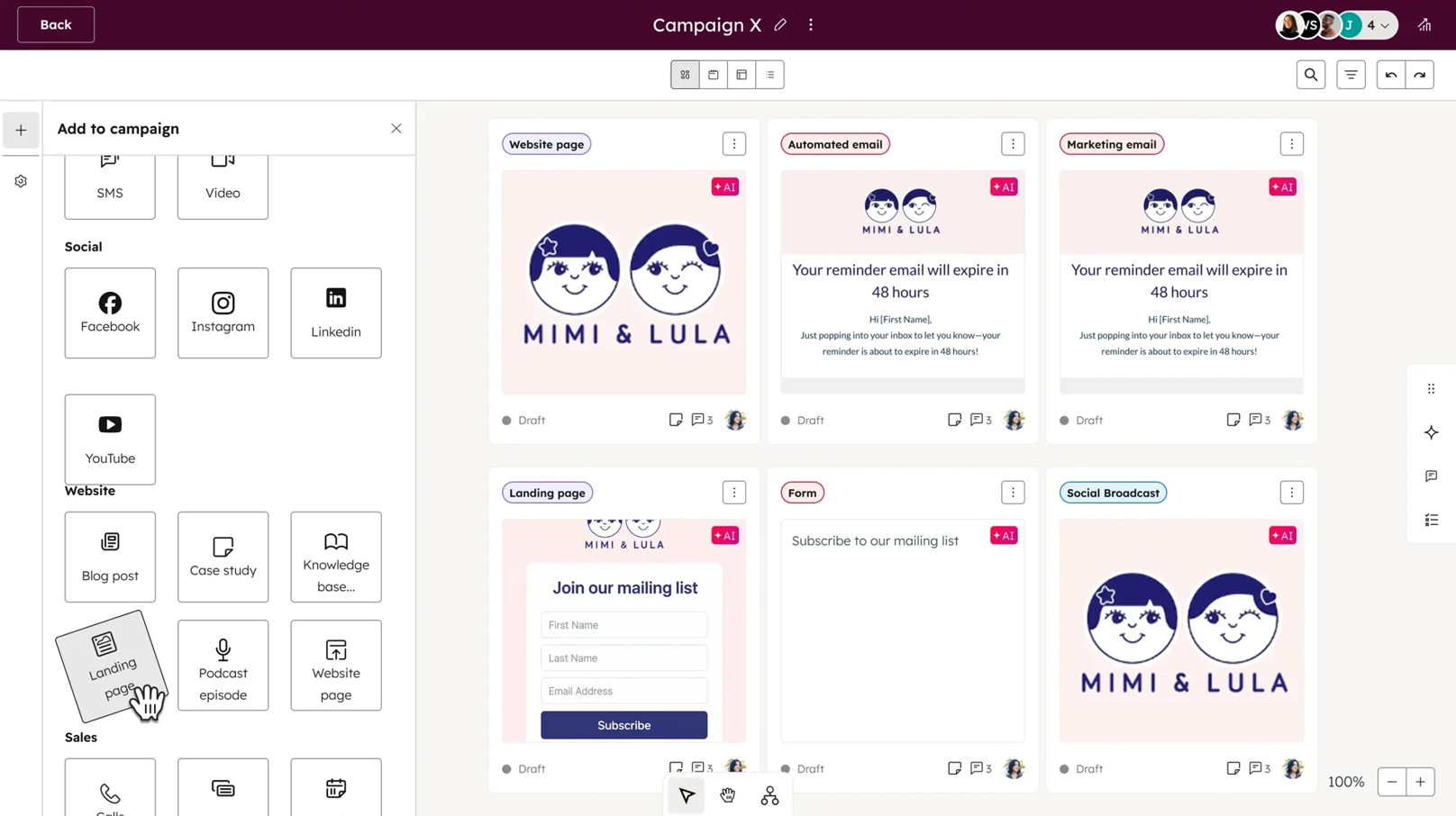
HubSpot's advantage is scope. Marketing Hub handles email marketing, landing pages, forms, social media management, ad tracking, automation workflows, and multi-touch attribution reporting, all connected to the same Smart CRM that Sales Hub, Service Hub, Content Hub, and Commerce Hub share.
Source: HubSpot
The practical benefit: when a contact submits a form, their record is instantly available to sales. When a deal closes, service sees the full history. When a customer opens a support ticket, marketing knows not to send them a promotional email. This shared data eliminates the manual syncing and CSV exports that fragment most marketing stacks.
HubSpot's Breeze AI adds automation across the platform. The Customer Agent reportedly resolves over 50% of conversations without human help. The Prospecting Agent drafts personalized outreach using customer history. Content tools generate blog posts, emails, and social copy aligned to a stored brand voice.
The cost of this breadth is complexity. HubSpot's pricing spans six Hubs, four plans each, with seat types, contact tiers, credit allotments, and mandatory onboarding fees. A company using Marketing, Sales, and Service at Professional plan could spend $30,000-50,000 annually, and that figure scales with headcount and contact volume.
Mautic trades convenience for control
Mautic offers a different bargain. You get a marketing automation platform with visual campaign builders, lead scoring, dynamic content, A/B testing, multi-channel messaging (email, SMS, web notifications), landing pages, forms, and detailed reporting, with no licensing fees, no contact limits, and no per-seat charges.
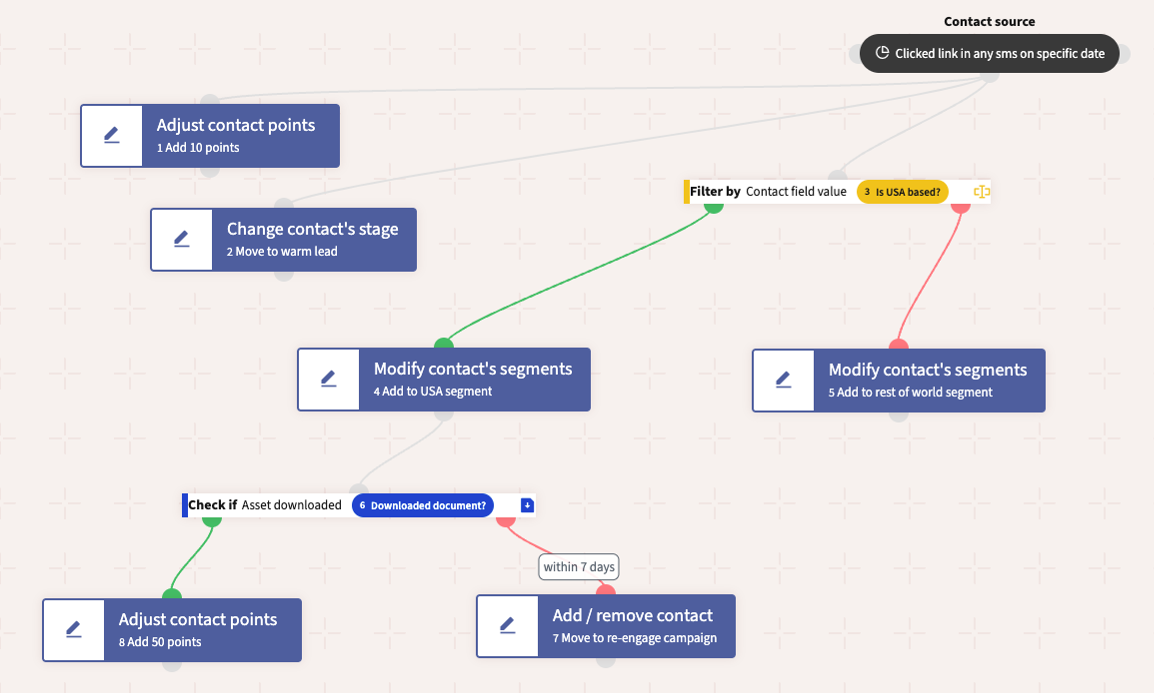
The campaign builder is Mautic's centerpiece. It provides a drag-and-drop canvas where you map multi-step workflows using actions (send an email, update a field, adjust a score), decisions (did the contact open the email?), and conditions (is the contact in New York?). These workflows can be as simple or complex as your strategy requires. Time-based triggers support drip campaigns with delays measured in minutes, hours, or days, and you can restrict actions to specific days or times.
Source: Mautic
Data ownership is Mautic's strongest differentiator. Because you host the platform on your own infrastructure, every contact record, every behavioral event, and every campaign result stays on your servers. For companies in regulated industries or regions with strict data residency requirements, this eliminates concerns about third-party data access.
The tradeoffs are real. Installation requires configuring a web server, PHP, MySQL, and cron jobs. Keeping the platform updated, secure, and performing well is ongoing work. The interface, while improving, is less polished than HubSpot's. Community forums and Slack channels replace dedicated phone support. And Mautic is purely a marketing automation tool: no built-in CRM, no sales pipeline, no service desk, no content management system. Those capabilities require additional tools and integrations.
Both platforms share the same blind spot
HubSpot and Mautic both execute marketing well: sending the right message through the right channel at the right time. But neither answers a more basic question: who should you target in the first place?
HubSpot's Smart CRM contains the contacts you've already collected. Mautic's database holds the people who've submitted your forms or been imported via CSV. Both platforms are reactive. They work with the data you already have. For B2B teams, this creates a structural problem. Your total addressable market extends far beyond the contacts in your database. Companies are researching solutions like yours right now, but if they haven't visited your website or filled out your form, neither HubSpot nor Mautic knows they exist.
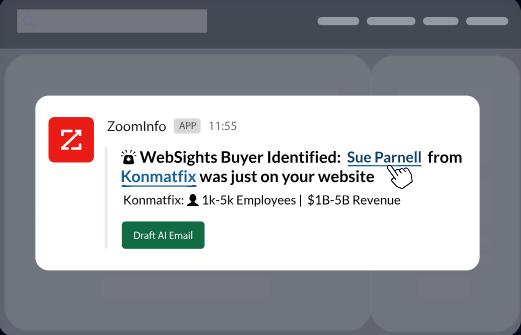
ZoomInfo fills this gap. Its platform provides 500M contacts and 100M companies with verified direct-dial phone numbers, business emails, company attributes, technographics, and org charts. Buyer Intent data tracks signals from 210 million IP-to-Organization pairings to identify companies researching topics relevant to your business. WebSights resolves anonymous website visitors to companies and buying team members.
This intelligence integrates into HubSpot through ZoomInfo's native connector, enriching CRM records and triggering workflows based on buying signals. For Mautic users, ZoomInfo's Enterprise API and MCP server provide programmatic access to the same data, feeding verified contacts and intent signals into Mautic's open architecture.
The result: instead of waiting for prospects to find you, you identify them before they engage, reach them with verified contact information, and prioritize the ones showing active buying behavior.
Source: ZoomInfo
Redwood Logistics saw a 99% reduction in cost-per-click and a 310% increase in clickthrough rates after using ZoomInfo's data to improve targeting. "It's not just the data itself. It's more about the right data at the right time to help us reach out with the right message across that full buyer journey." (Redwood Logistics)
For a deeper look at how HubSpot and ZoomInfo compare on data capabilities, pricing, and GTM fit, see our HubSpot vs. ZoomInfo comparison.
AI capabilities take different paths
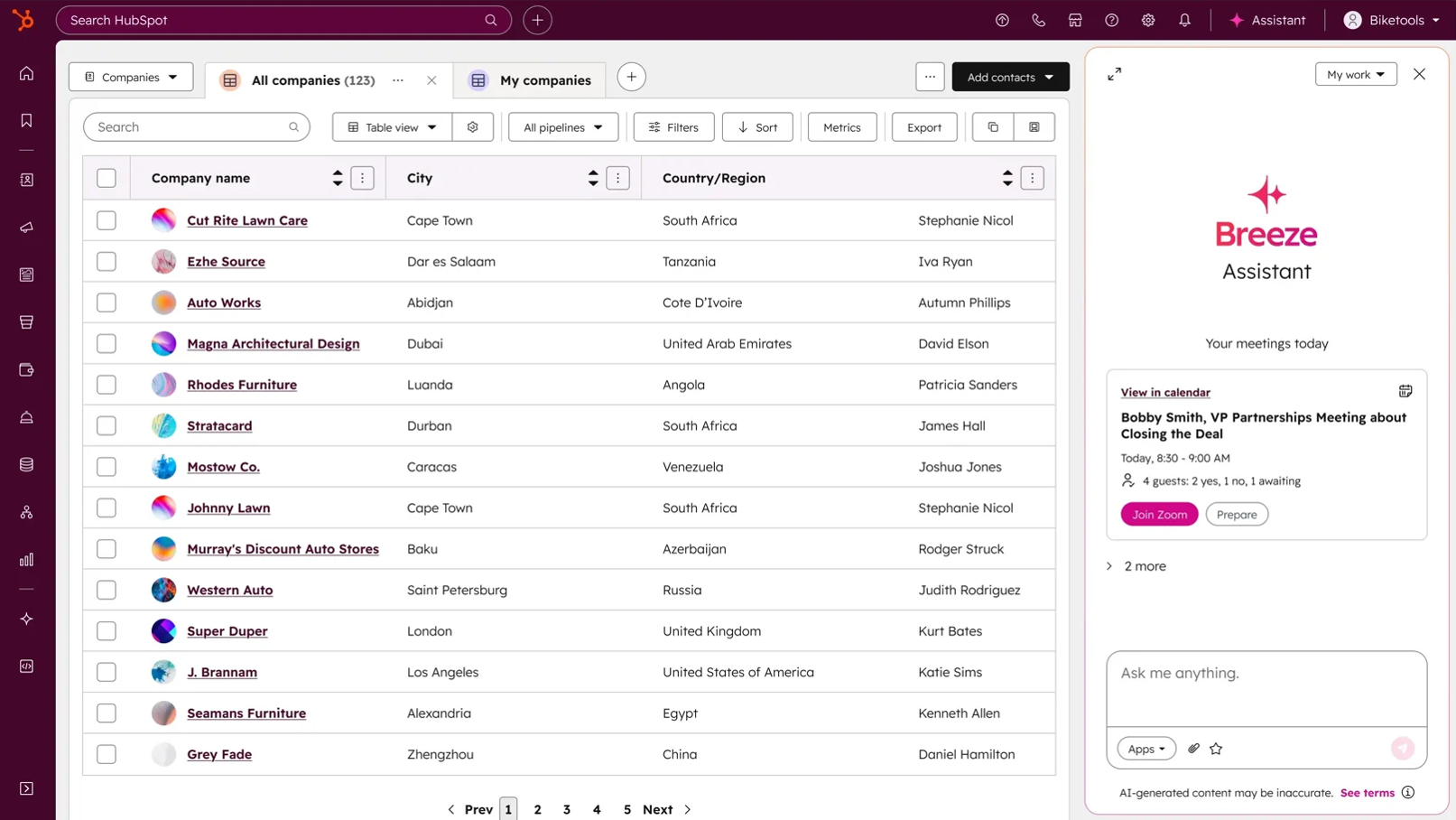
HubSpot's Breeze AI is embedded across its platform. It generates content, drafts emails, summarizes calls, recommends next actions, and powers agents for customer service and prospecting. Breeze draws context from HubSpot's Smart CRM, so its outputs reflect the data your team has collected internally.
Source: HubSpot
Mautic has no native AI. Its campaign logic relies on manual rules, conditions, and triggers defined by the user. This gives you full control over every decision point, but it also means you handle the analysis that AI performs in other platforms. Third-party integrations could add AI functionality, but nothing is built in.
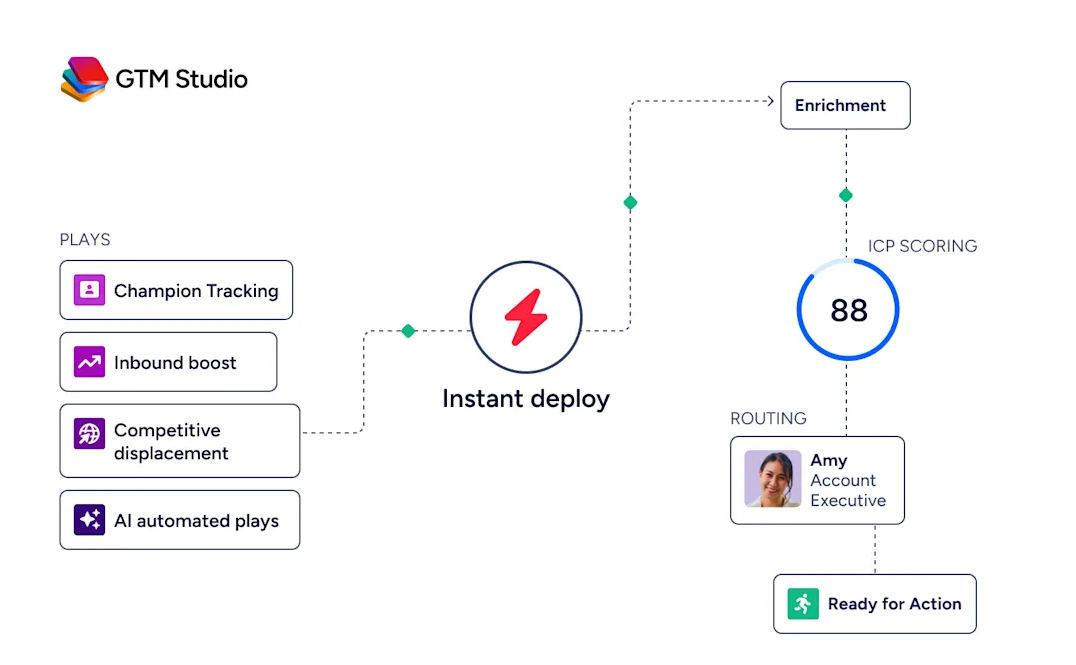
ZoomInfo's AI operates on a different data foundation. The GTM Context Graph processes 1.5B+ data points daily, unifying ZoomInfo's B2B intelligence with your CRM records, conversation transcripts, and behavioral signals. Where HubSpot's AI knows what happened inside your CRM, ZoomInfo's AI captures why it happened: why a deal accelerated (executive sponsorship entered), why a champion went quiet (internal budget battle), what a competitive mention predicts about deal risk.
This context powers GTM Workspace for sellers (AI-drafted outreach addressing specific deal dynamics) and GTM Studio for marketers, RevOps, and GTM engineers (natural-language audience building and automated play execution). Guided Intent, exclusive to ZoomInfo, identifies intent topics historically correlated with your closed deals rather than requiring manual topic selection.
Source: ZoomInfo
Seismic attributed 39% of active pipeline to opportunities identified or influenced by ZoomInfo signals, with sales teams reporting 54% productivity gains. "That combination of our internal CRM data, external signals, and AI that's given all that context has helped us craft very specific account- and persona-based messages. And people have responded to them right away." (Seismic)
Data ownership and compliance take different forms
Mautic's self-hosting model gives you the most direct data control. Your contact data lives on your servers, in your data center, under your jurisdiction. For organizations subject to strict data residency requirements, this eliminates third-party risk. Mautic includes consent management, tracking control, IP anonymization, and automated data cleanup to support GDPR and CCPA compliance, but implementing these correctly is your responsibility.
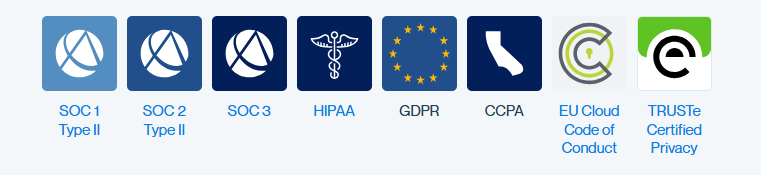
HubSpot hosts data in the cloud, primarily on AWS in the United States, with an EU Data Center for organizations requiring EU data localization. HubSpot holds SOC 2 Type II certification and HIPAA attestation, supports SSO and 2FA, and encrypts data with AES-256 at rest and TLS 1.2/1.3 in transit.
Source: HubSpot
ZoomInfo maintains ISO 27001, ISO 27701, SOC 2 Type II, TRUSTe GDPR, and TRUSTe CCPA certifications, all renewed annually. ZoomInfo is a registered data broker in California and Vermont, with a Trust Center that documents its data handling practices.
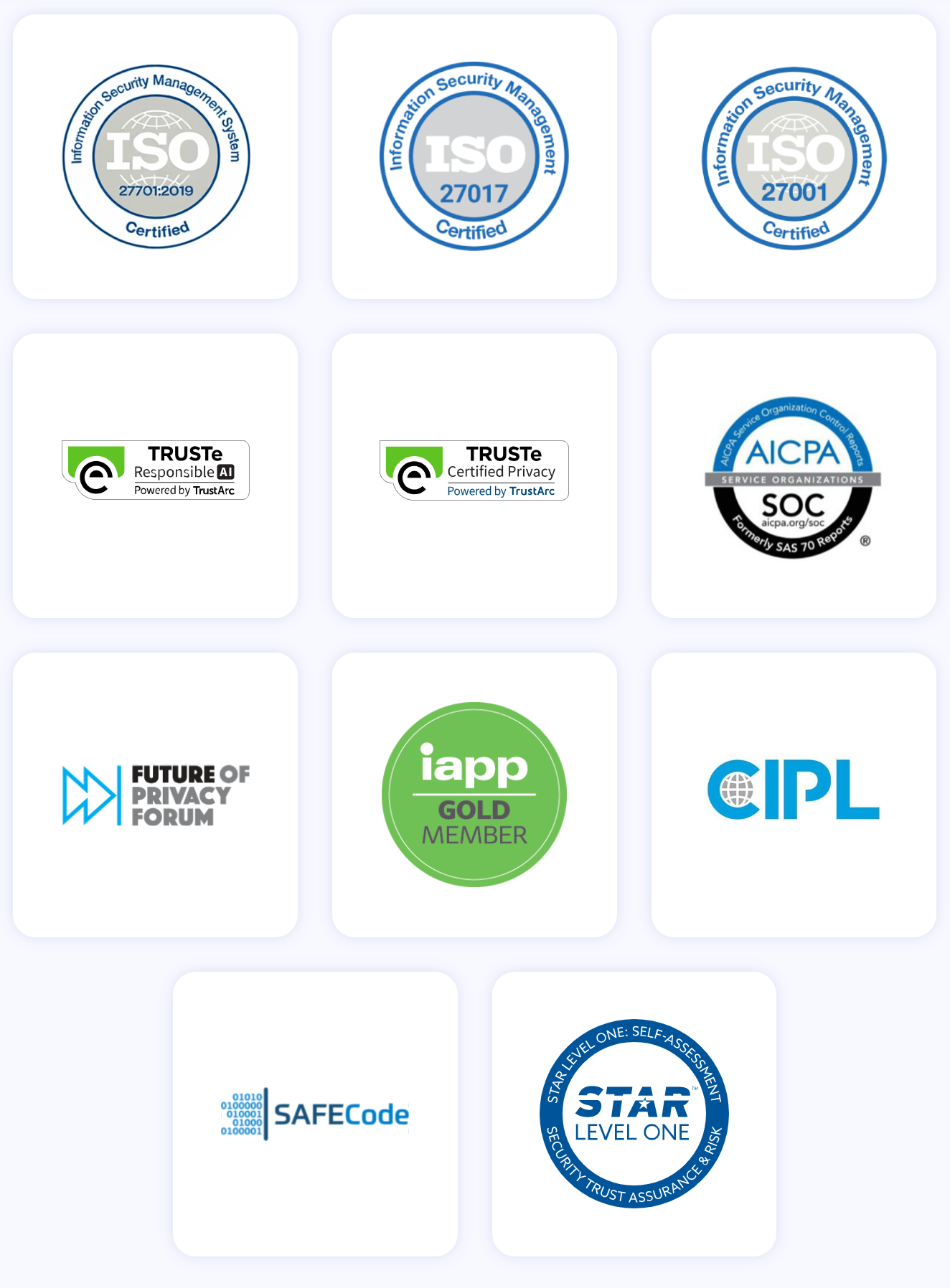
The distinction matters based on your situation. If regulations require on-premises data storage, Mautic is the only option among these three. If you need enterprise-grade cloud compliance with third-party verification, HubSpot and ZoomInfo both deliver. If you need verified B2B data collected and maintained under international privacy standards, ZoomInfo's compliance stack is built for that.
Integration ecosystems reflect different philosophies
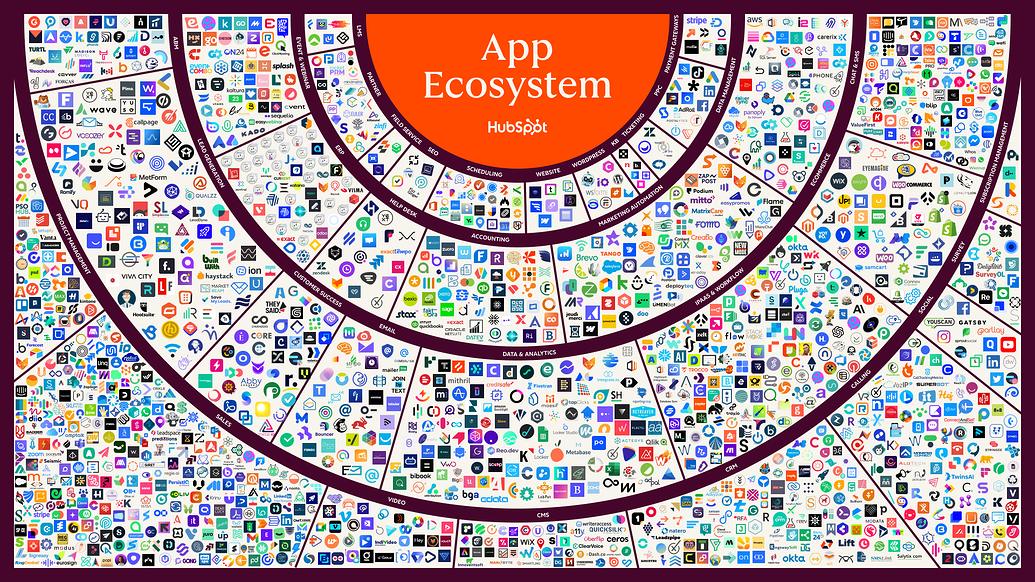
HubSpot's App Marketplace lists over 2,000 integrations with 2.5 million active installs. For most business tools, a native HubSpot connector exists. The platform also includes a REST API, webhooks, and a developer platform for custom integrations. This ecosystem maturity means HubSpot fits into nearly any tech stack without significant development work.
Source: HubSpot
Mautic takes an open-source approach. Its REST API supports programmatic access to contacts, companies, campaigns, emails, and more. A growing Mautic Marketplace (currently in beta) provides community-built plugins. Integrations with WordPress, Drupal, and Joomla are available through plugins. But the ecosystem is smaller than HubSpot's, and many integrations require custom development or middleware like Zapier.
ZoomInfo connects to over 120 partner integrations across CRM, marketing automation, sales engagement, data warehouses, and communications tools. Native connectors exist for Salesforce, HubSpot, Microsoft Dynamics 365, Snowflake, Outreach, and Salesloft. The Enterprise API provides programmatic access to ZoomInfo's full data and intelligence, and the MCP server connects AI models directly to ZoomInfo's B2B data. API access is included in all plans, not sold as an add-on.
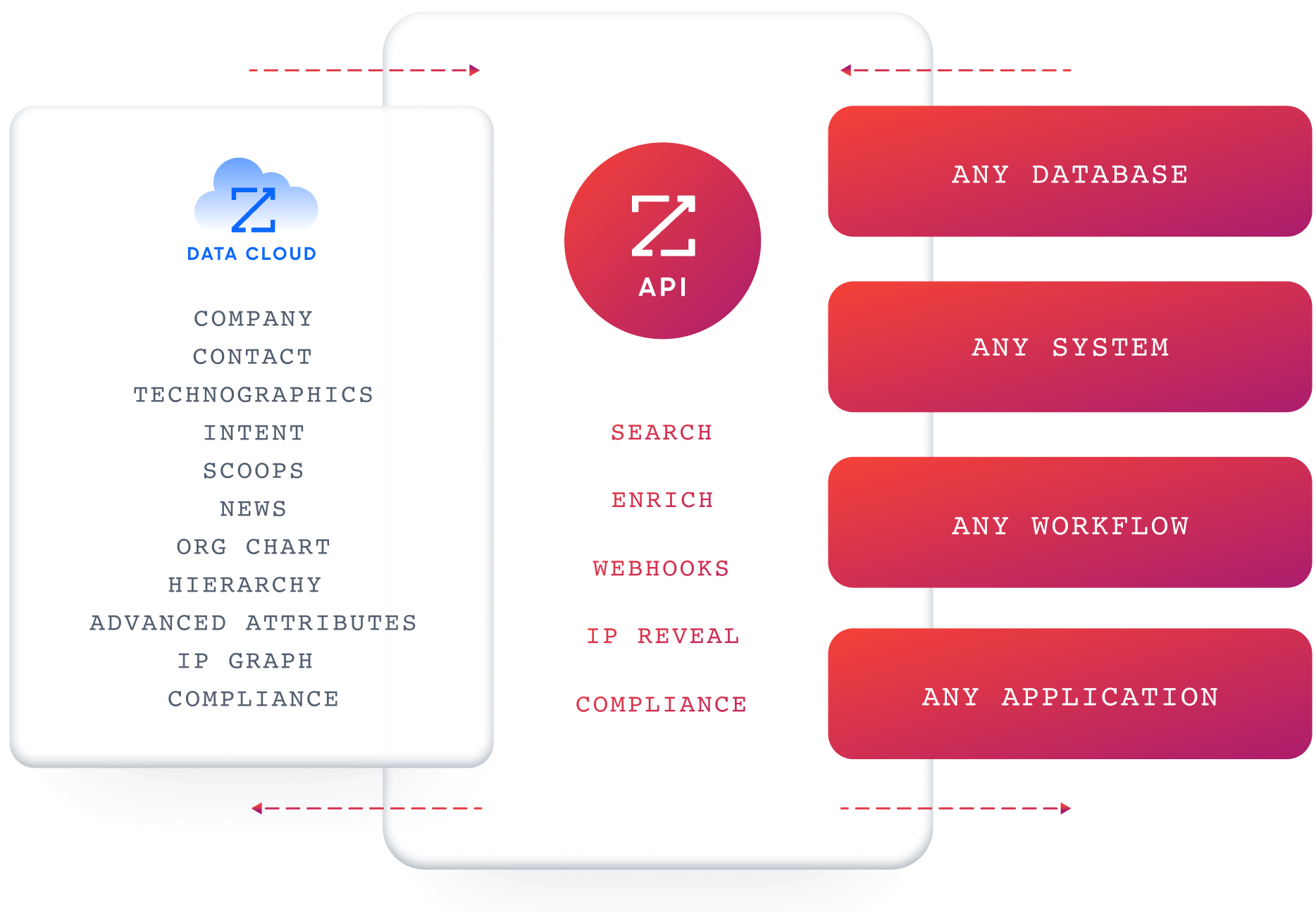
The practical takeaway: HubSpot integrates with nearly everything. Mautic integrates with anything, if you're willing to build the connection. ZoomInfo integrates where B2B data needs to flow, and provides the API and MCP infrastructure for teams that want intelligence in any tool they choose.
BDO Canada activated ZoomInfo data within internal systems using the API, cutting time spent on data dashboard updates by 87%. "The plug-and-play aspect of the API means I can integrate it very easily into any process and get information at a moment's notice." (BDO Canada)
HubSpot vs. Mautic vs. ZoomInfo: Which should you choose?
The right choice depends less on features and more on where your biggest bottleneck sits.
Choose HubSpot if:
You want marketing automation, CRM, sales tools, and service under one platform
Your team values ease of use and fast time to value
You have the budget for per-seat and per-contact pricing that scales with growth
You need a large integration ecosystem that works without custom development
AI-powered content creation and customer service agents are priorities
Choose Mautic if:
Data ownership and self-hosting are non-negotiable
You have technical resources to install, maintain, and secure the platform
Your budget prioritizes infrastructure costs over software licensing
You need unlimited contacts without per-contact pricing
Customization matters more than out-of-the-box convenience
Choose ZoomInfo if:
Your biggest challenge isn't executing campaigns, but knowing which companies to target and when they're ready to buy
You need verified B2B contact data, buyer intent signals, and account intelligence to fuel your marketing
You want an intelligence layer that integrates with HubSpot, works alongside Mautic via API, or provides its own GTM execution through GTM Studio and GTM Workspace
AI-powered audience building, account prioritization, and outreach generation would accelerate your pipeline
Compliance with international data privacy standards is a procurement requirement
Start with ZoomInfo Lite for free or request a demo of the full platform.
The most effective B2B marketing stacks don't choose between execution and intelligence. They layer both. HubSpot or Mautic handles the campaign workflow. ZoomInfo provides the verified data and buying signals that determine whether those campaigns reach the right people at the right time. The platform you start with depends on your immediate need. The platform you add next depends on where your results plateau.
SpringDB saw 2x-3x increases in campaign conversions and a 300% increase in database usability after layering ZoomInfo's data into their marketing operations. "You'll get 10x the value if you think of ZoomInfo as a full platform and not just a tool for one team." (SpringDB)
HubSpot vs. Mautic vs. ZoomInfo FAQ
Is Mautic really free, or are there hidden costs?
Mautic's software is free to download and use, with no licensing fees, no contact limits, and no per-seat charges. But running a self-hosted instance requires server hosting, an email delivery service, and technical expertise for installation, configuration, security, and ongoing maintenance. If you lack in-house technical resources, managed hosting or outside developers add cost. The total cost of ownership depends on your infrastructure choices and team capabilities.
Can ZoomInfo replace HubSpot or Mautic for marketing automation?
ZoomInfo's GTM Studio provides multi-channel campaign orchestration, audience building, and automated play execution, but it's designed around B2B intelligence and account-based plays rather than traditional email marketing workflows. HubSpot and Mautic offer deeper capabilities for email template design, drip campaigns, landing page creation, and form management. Most B2B teams get the best results by using ZoomInfo's data and intelligence alongside a dedicated marketing automation platform.
How does ZoomInfo integrate with HubSpot?
ZoomInfo offers a native HubSpot integration across its product lines, including the free ZoomInfo Lite plan. The integration enriches HubSpot CRM records with verified contact data, company attributes, technographics, and buyer intent signals. ZoomInfo's Sales, Marketing, and Operations products all support bidirectional data flow with HubSpot, and GTM Studio can activate plays that push enriched contacts and signals into HubSpot workflows.
How does ZoomInfo work with Mautic?
There is no native connector between ZoomInfo and Mautic. But ZoomInfo's Enterprise API and MCP server provide programmatic access to its full B2B dataset, and Mautic's REST API supports contact creation and updates from external systems. Technical teams can build integrations that push ZoomInfo's verified contacts and intent signals into Mautic segments, enriching campaigns with data Mautic cannot generate on its own.
Which platform is best for a small B2B team with a limited budget?
Mautic has the lowest software cost (free) but requires technical resources. HubSpot's free CRM and Starter plan (starting at $15/seat/month annually) provide a low-friction entry point with limited marketing features. ZoomInfo Lite is permanently free with 10 monthly export credits and access to the B2B database. A small team could start with HubSpot's free CRM or Mautic's self-hosted software for execution, then add ZoomInfo Lite for prospecting data, scaling each as budget allows.
Which platform gives you the most control over your data?
Mautic offers the most direct control through self-hosting, where all data resides on your own infrastructure under your jurisdiction. HubSpot stores data in its cloud with an EU data center option, SOC 2 Type II certification, and HIPAA attestation. ZoomInfo maintains ISO 27001, ISO 27701, SOC 2 Type II, and TRUSTe GDPR/CCPA certifications, renewed annually. The best fit depends on whether your compliance requirements mandate on-premises storage or accept certified cloud hosting.
What is the learning curve for each platform?
HubSpot has a moderate learning curve with documentation in 17+ languages, a free Academy with over 200,000 certified professionals, and tiered support (including phone support for Professional and Enterprise customers). Mautic has a steep learning curve, particularly for non-technical users, with community support through forums and Slack. ZoomInfo redesigned its onboarding into a 90-day structured program covering planning, technical implementation, education, and adoption, which improved customer satisfaction scores by 25%.
Does HubSpot have built-in B2B contact data like ZoomInfo?
HubSpot's Smart CRM enriches records using data from emails, calls, and web activity within the platform, plus HubSpot's own dataset. But HubSpot is not a B2B data provider. It does not offer a searchable database of 500M contacts with verified phone numbers and business emails, buyer intent signals, technographics, or org chart data. Teams needing to prospect beyond their existing contacts typically pair HubSpot with a data intelligence platform like ZoomInfo.
See how HubSpot stacks up against other tools:
