
Choosing between HubSpot vs. Nimble for your CRM often comes down to five questions:
Do you need a full marketing automation and sales platform, or a simple relationship manager that lives inside your inbox?
Is your team five people or fifty? Are you selling to enterprises or running a solo consulting practice?
How important is verified B2B contact data to your outbound prospecting?
Are you willing to pay for breadth you may not use, or do you want a focused tool at a lower price?
Does your sales process depend on knowing when target accounts are researching solutions, or is your pipeline built on personal relationships?
In short, here's what we recommend:
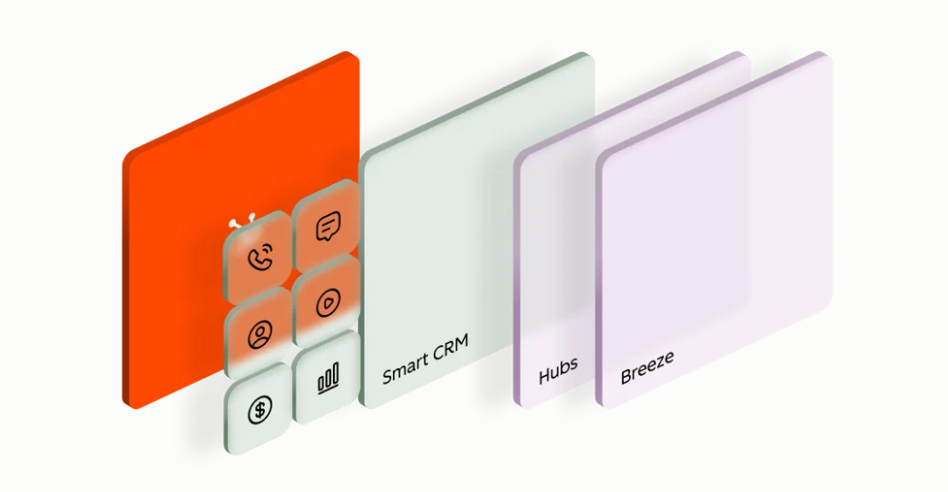
HubSpot is the CRM platform for scaling B2B companies that need marketing automation, sales pipeline management, customer service, and content tools under one roof. Its Smart CRM connects six product hubs on a single data layer, and the Breeze AI layer adds agents for prospecting, customer support, and data enrichment. With 288,706 customers across 135+ countries, HubSpot handles complex go-to-market operations. However, per-seat, per-hub pricing gets expensive fast, mandatory onboarding fees add friction, and the platform's contact data relies on what your team manually enters or imports.
Nimble is the relationship-first CRM for solopreneurs and small teams who want organized contact management, light email sequences, and LinkedIn prospecting without the complexity or cost of a full platform. At $24.90/seat/month with all core features included, it's built for consultants, recruiters, real estate agents, and small business owners who run on personal networks. Forbes named it the 2025 Best CRM for Solopreneurs and Small Teams. But Nimble's reporting is basic, its automation lacks conditional branching, and its 2GB storage cap per seat creates add-on costs for active users.
Both platforms manage your customer relationships. Neither solves the fundamental problem behind most failed B2B sales efforts: not knowing enough about the companies and people you're selling to. Your CRM is only as good as the data inside it, and that's where the conversation changes.
ZoomInfo is an AI-powered GTM platform that lets your sales reps walk into every call knowing why the deal is moving, who's championing it, and what's likely to happen next. Your marketers can describe audiences in plain language and launch plays against accounts matching your proven win patterns. Your leaders can see deal risk before it shows up in CRM stage fields.
That depth comes from the GTM Context Graph, an intelligence layer built on the largest B2B dataset in the industry (500M contacts, 100M companies, 135M+ verified phone numbers, and 200M+ verified business email addresses), unified with your CRM records, conversation transcripts, and behavioral signals.
Teams access this intelligence through GTM Workspace (for sellers), GTM Studio (for marketers and RevOps), or APIs and MCP that pipe it into HubSpot, Nimble, or any other tool in your stack.
If B2B intelligence sounds like the missing layer in your go-to-market strategy, see ZoomInfo in action with a free trial.
HubSpot vs. Nimble vs. ZoomInfo at a glance
HubSpot | Nimble | ZoomInfo | |
|---|---|---|---|
Primary function | Full CRM + marketing automation platform | Relationship CRM for small teams | B2B data intelligence + GTM execution |
Best for | Scaling B2B companies (20-2,000 employees) | Solopreneurs and teams under 25 | Enterprise and mid-market B2B sales teams |
Contact database | What you import or capture via forms | 25,000 base + enrichment credits | 500M contacts, 100M companies |
Verified phone numbers | Not included natively | 100 enrichment credits/month | 135M+ verified, 120M direct dials |
Buyer intent data | Not available | Not available | Built-in intent from 210M+ IP pairings |
AI capabilities | Breeze agents for prospecting, support, data | AI email generation, AI chat helper | GTM Context Graph, AI agents, Chorus |
Starting price | Free CRM; Starter at $15/seat/mo | $24.90/seat/mo (annual) | Custom-quoted; free Lite tier available |
Ease of use | Moderate; scales with tier complexity | Low learning curve | Steeper; designed for GTM professionals |
CRM integrations | Native (it is the CRM) | Microsoft 365, Google Workspace | Salesforce, HubSpot, Dynamics 365, 120+ |
HubSpot covers breadth, Nimble covers simplicity, ZoomInfo covers depth
These three platforms solve different parts of the same problem: helping B2B teams find, engage, and retain customers. They approach it from opposite directions.
HubSpot starts from the CRM and builds outward. It gives you a database for contacts and companies, then layers on tools for emailing them, tracking deals, managing support tickets, publishing content, and running marketing campaigns. The philosophy is consolidation: replace your scattered marketing, sales, and service tools with one platform where data flows between teams automatically. If you're a 50-person company running inbound marketing, content campaigns, and a multi-stage sales pipeline, HubSpot gives you all of that without stitching together separate tools.
Source: HubSpot
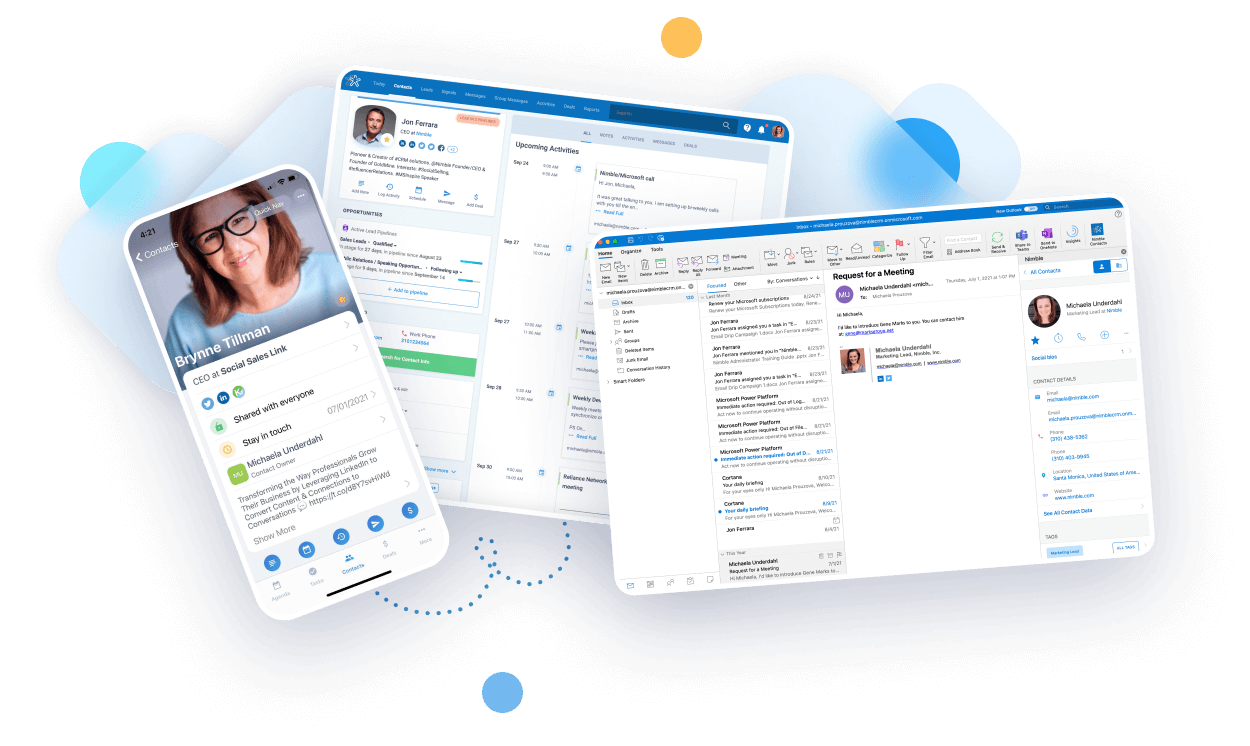
Nimble starts from the relationship and stays there. It gives you a contact record enriched with social profiles and company data, embeds it inside your inbox and browser, and adds just enough pipeline and automation features to keep deals moving. The philosophy is focus: do the essentials well at a price point that doesn't require budget approval. If you're a solo consultant or a five-person team whose business runs on personal relationships and LinkedIn connections, Nimble puts your CRM where you already work.
Source: Nimble
ZoomInfo starts from the data and builds intelligence. It answers the question that neither HubSpot nor Nimble can: who should you be selling to right now, and why? While HubSpot and Nimble manage the contacts you already have, ZoomInfo identifies the contacts you don't have yet, tells you when they're researching solutions, and surfaces the signals that separate warm opportunities from cold lists. This isn't a CRM replacement. It's the intelligence layer that makes any CRM more effective.
The data gap is the real differentiator
The most expensive problem in B2B sales isn't bad software. It's missing data.
HubSpot's CRM starts empty. Every contact, company, and deal enters the system because someone on your team typed it in, imported a spreadsheet, or captured a form submission. HubSpot offers data enrichment through its Smart CRM, pulling information from emails, calls, and HubSpot's own dataset. But the enrichment works on contacts already in your system. If a potential buyer hasn't visited your website or filled out your form, they don't exist in your HubSpot instance.
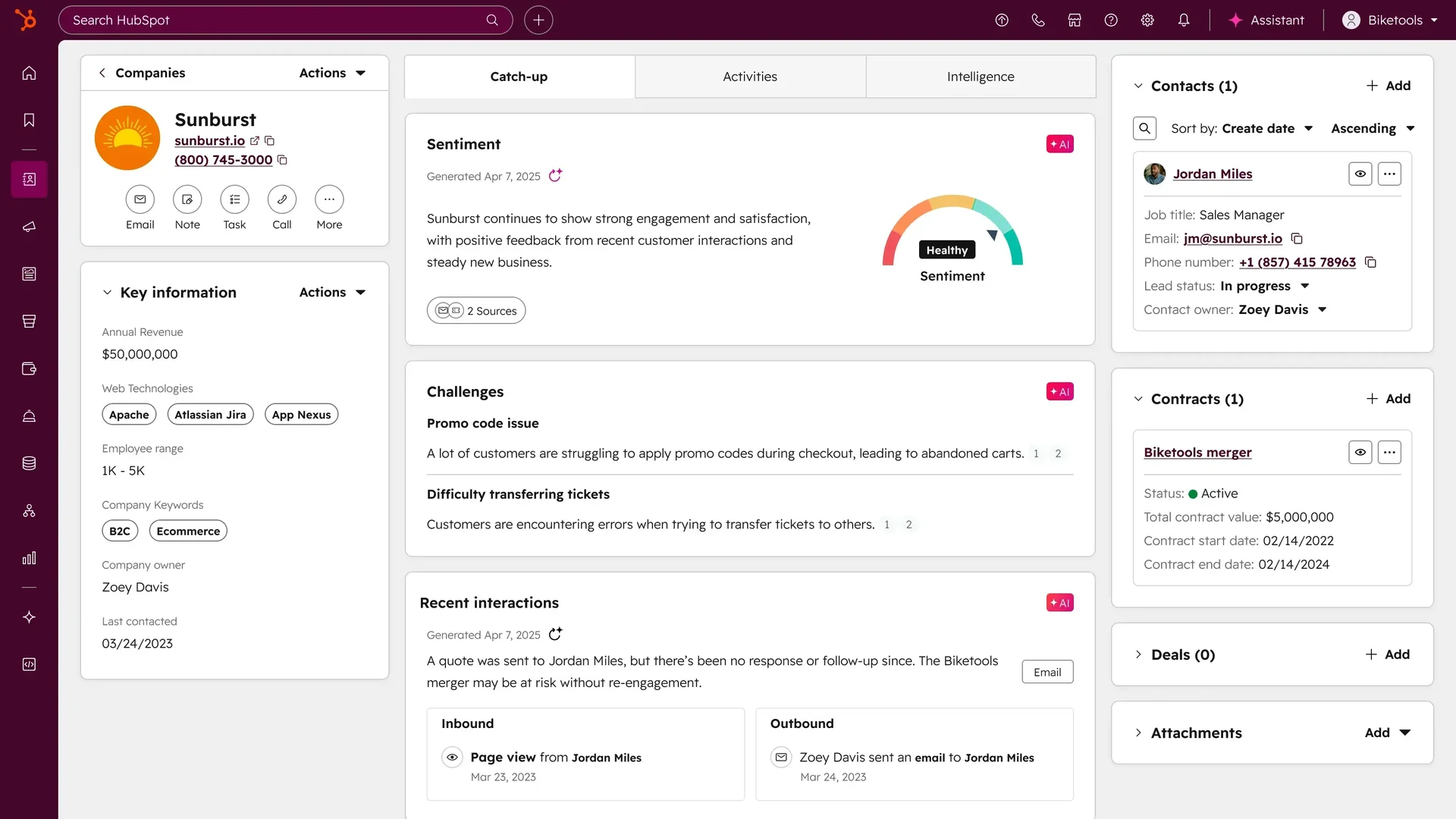
Source: HubSpot
Nimble improves on this with its Prospector browser extension, which lets you capture and enrich contacts from LinkedIn and other websites. Each lookup returns verified email, phone, company data, and social profiles. But the scale is limited: the base plan includes 100 enrichment credits per user per month, with each email lookup consuming 4 credits. That's roughly 25 new contacts per month per user.
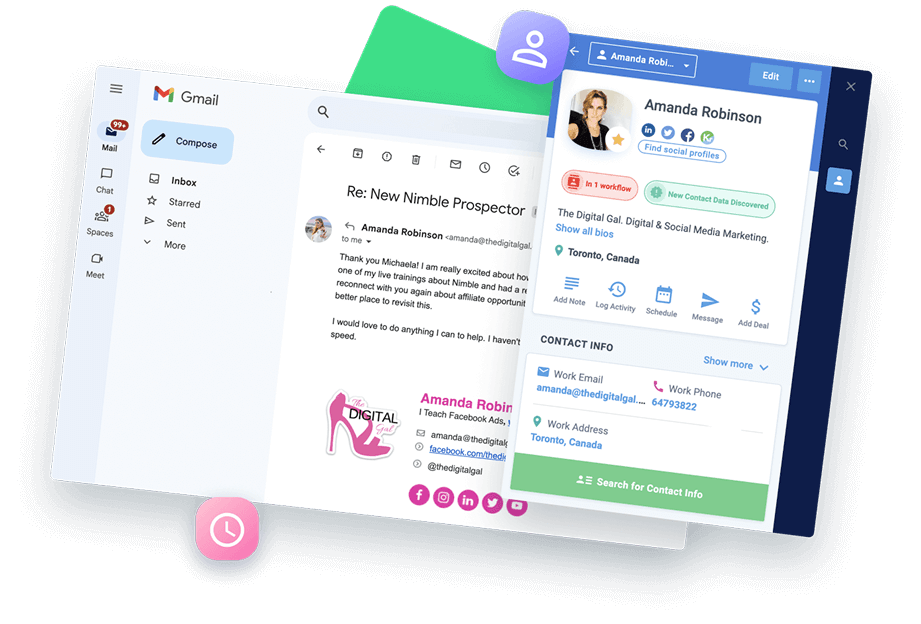
Source: Nimble
ZoomInfo operates at a different scale. The platform maintains 500M contacts and 100M companies, verified through a multi-source pipeline that includes automated ML scanning of 28 million site domains daily, third-party data covering 95 million businesses, and an in-house Data Training Lab of 300+ human researchers. First-party data reaches up to 95% accuracy. When a Fortune 500 company ran a competitive RFP analyzing 25 million contacts across vendors, the independent consultant concluded that "no other competitor came even close."
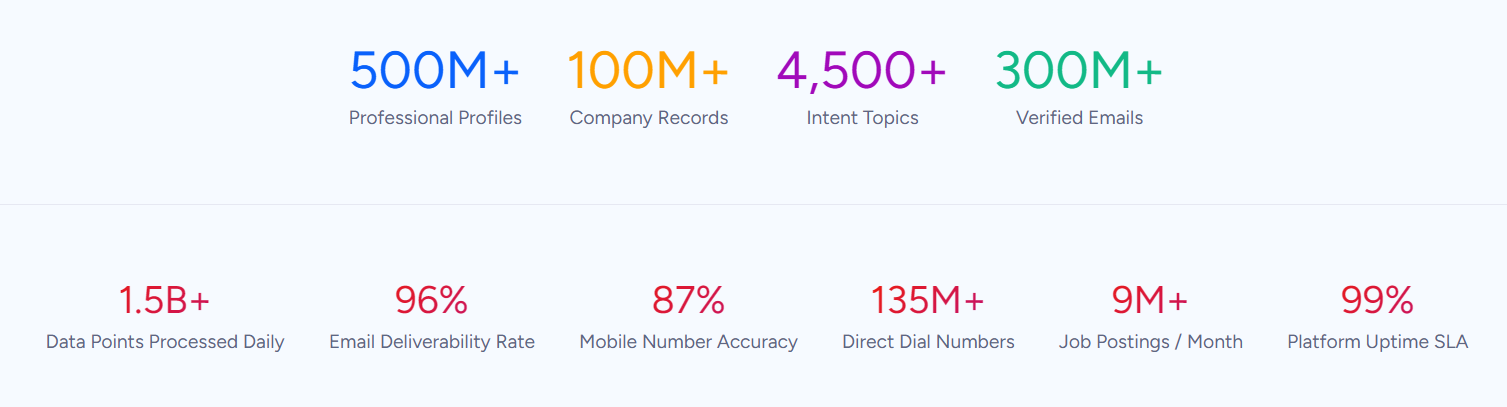
For sales teams, this gap shows up in everyday work. With HubSpot or Nimble, a rep researching a target account pieces together contact information from LinkedIn, company websites, and manual searches. With ZoomInfo, that rep searches by industry, company size, department, seniority, and technology usage, then exports a verified list of decision-makers with direct-dial phone numbers and business emails in minutes.
"ZoomInfo gives us the information we need to execute. It's already there, so we can be three steps ahead." (Vensure)
Buyer intent separates proactive selling from reactive waiting
Neither HubSpot nor Nimble tells you when a target company starts researching solutions in your category. Both platforms are reactive: they help you manage contacts who've already raised their hand.
HubSpot tracks what happens on your website and in your emails. If a prospect visits your pricing page, you'll know. If they open your marketing email, you'll see it. But if they're reading competitor reviews, attending industry webinars, or researching your product category on third-party sites, HubSpot has no visibility.
Nimble's intelligence is narrower still. The platform enriches contacts with social and company data, but it has no intent signal capability. You know who your contacts are. You don't know when they're ready to buy.
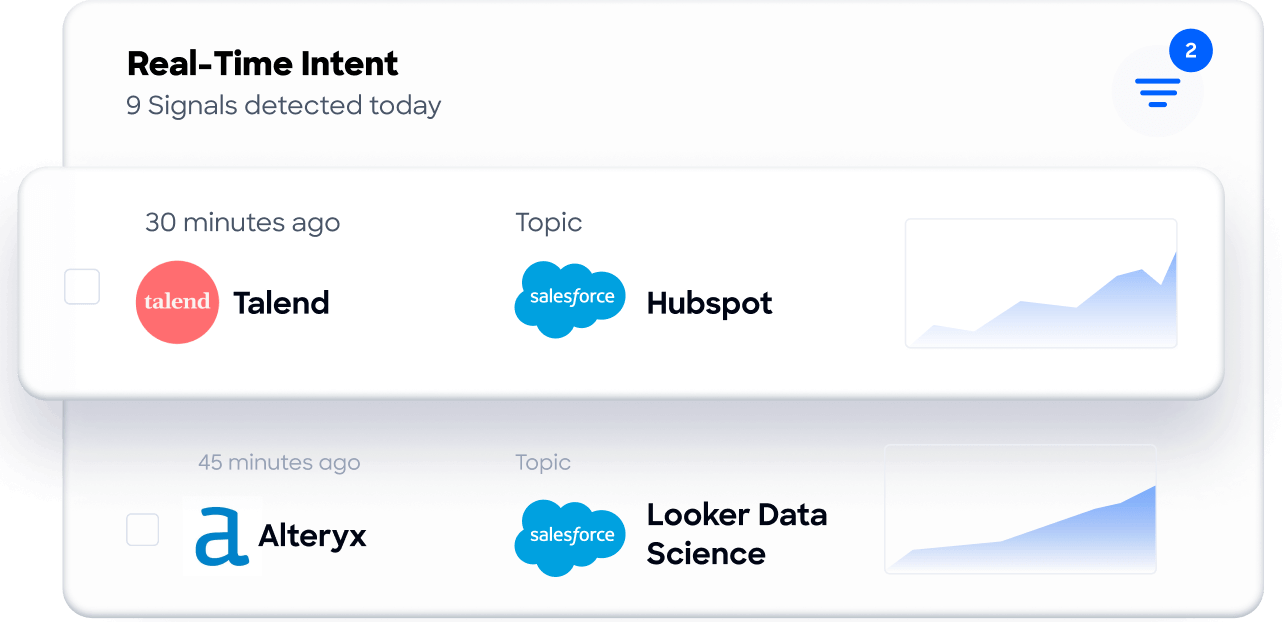
ZoomInfo's Buyer Intent data tracks signals from 210 million IP-to-Organization pairings and 6 trillion+ new keyword-to-device pairings sourced monthly. When a company starts researching topics relevant to your product, ZoomInfo surfaces that activity alongside verified contacts at those companies. Guided Intent, exclusive to ZoomInfo, identifies topics historically correlated with deal success in your specific market rather than requiring you to guess which keywords matter.
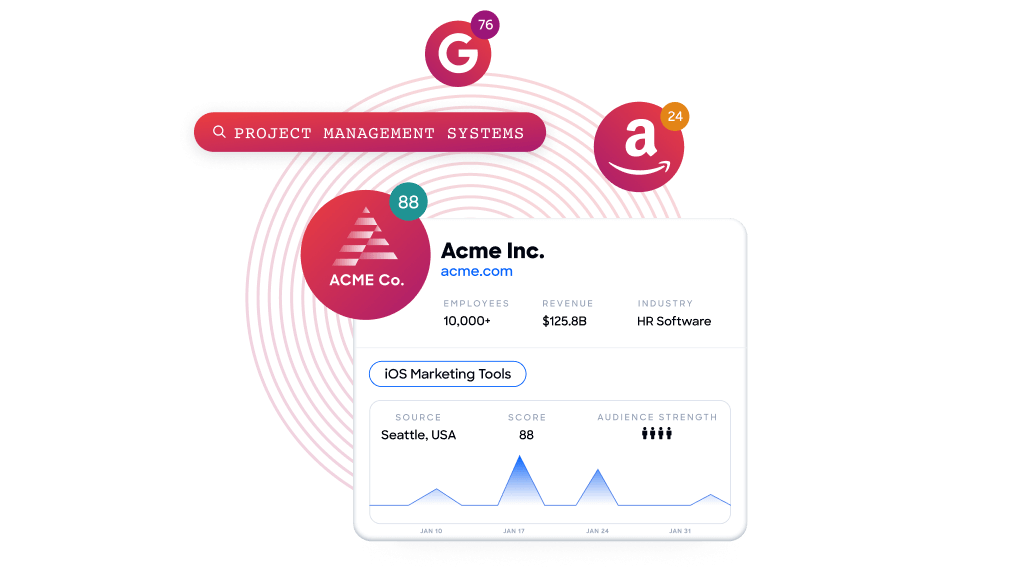
This changes the sales motion. Instead of cold outreach to a static list, reps engage companies showing active buying behavior, with context about what they're researching and who the decision-makers are.
"The combination of our internal CRM data, external signals, and AI has helped us craft very specific account-based messages, and people have responded right away." Seismic attributed 39% of active pipeline to ZoomInfo signals. (Seismic)
CRM and pipeline management: HubSpot leads, Nimble simplifies, ZoomInfo complements
For day-to-day CRM work, HubSpot and Nimble are purpose-built. ZoomInfo is designed to feed them, not replace them.
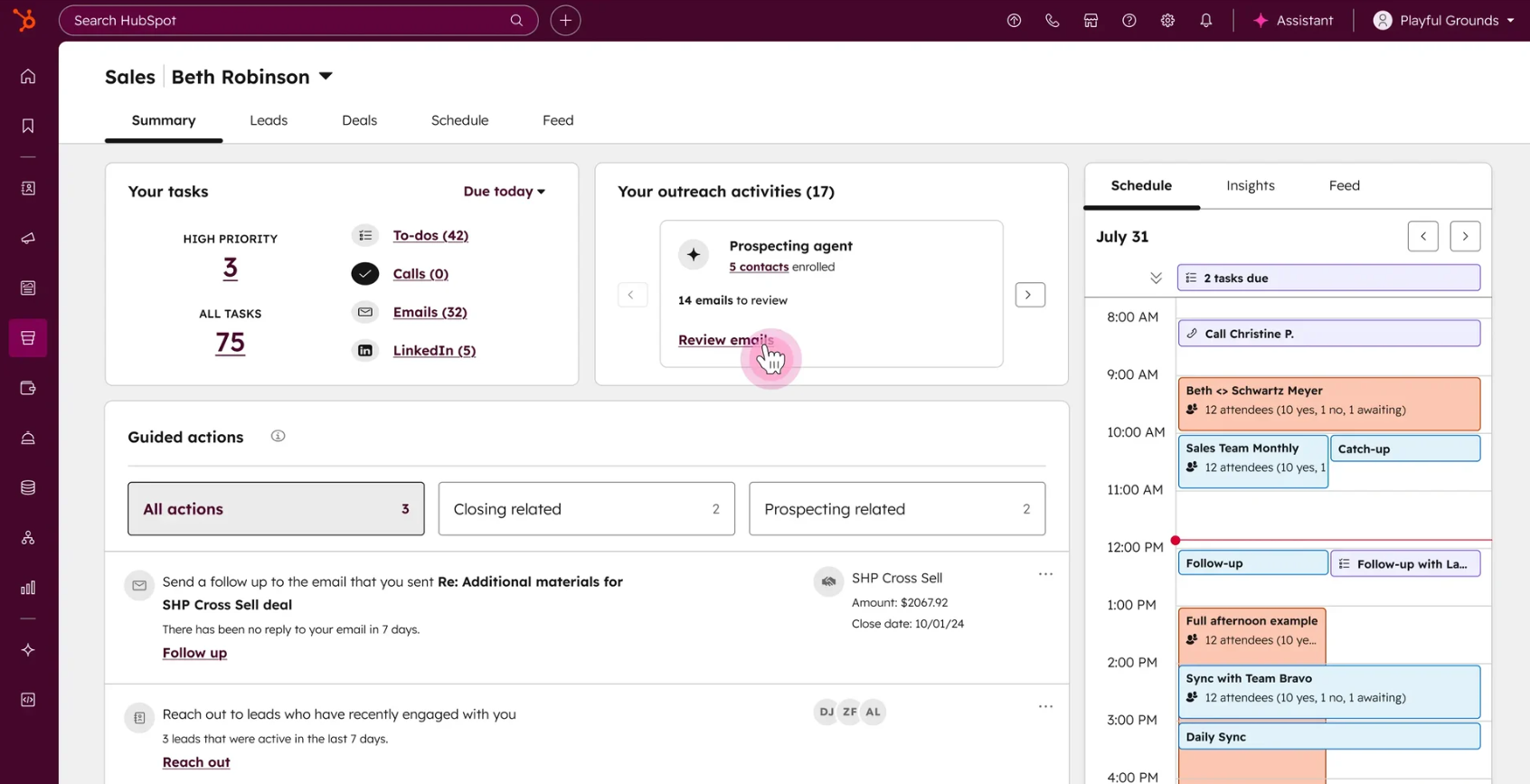
HubSpot's CRM is the most capable of the three. The Smart CRM supports custom objects, field-level permissions, sandbox environments, and scales to 15 million contacts (expandable to 50 million). Deal pipelines are fully customizable. Sales Hub adds sequences, call tracking, conversation intelligence, CPQ, and forecasting. The Breeze Prospecting Agent drafts personalized outreach using the full HubSpot customer history, and it operates in review mode or fully autonomous mode. For organizations running complex multi-stage sales processes with multiple teams, HubSpot provides the infrastructure.
Source: HubSpot
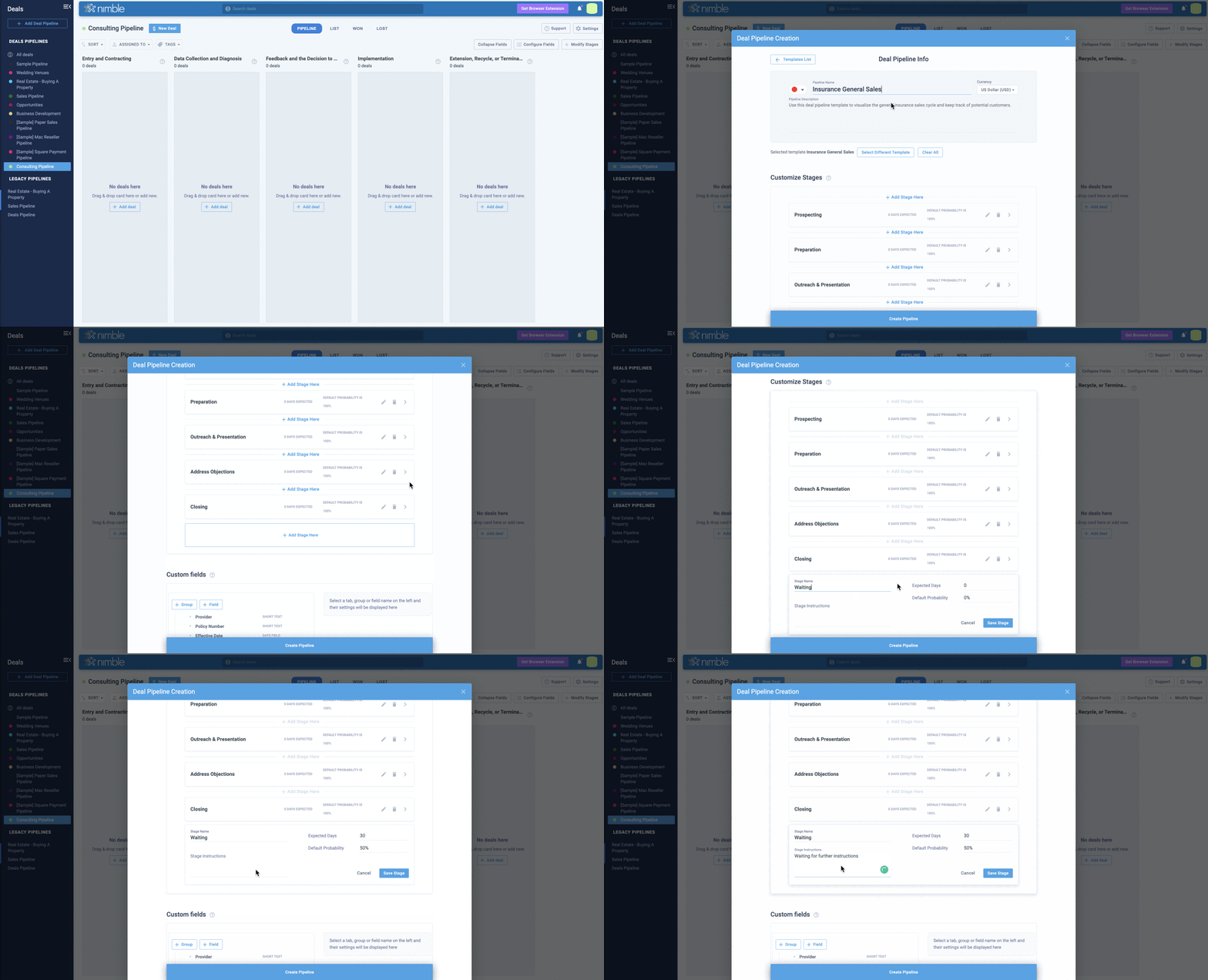
Nimble's pipeline is lighter but well-designed for its audience. Unlimited custom pipelines with Kanban and list views, vertical industry templates for real estate, insurance, consulting, and other SMB verticals, and stuck-deal detection that highlights stalled opportunities. Reporting covers deal velocity, activity counts, and revenue forecasts, with interactive drill-through from charts to individual deals. For a five-person team, it's enough. For a team needing attribution reporting, A/B testing, or lead scoring, Nimble acknowledges its own limitations: "HubSpot Marketing Hub Pro does more: landing pages, A/B testing, lead scoring, attribution reporting, and a much deeper marketing automation graph."
Source: Nimble
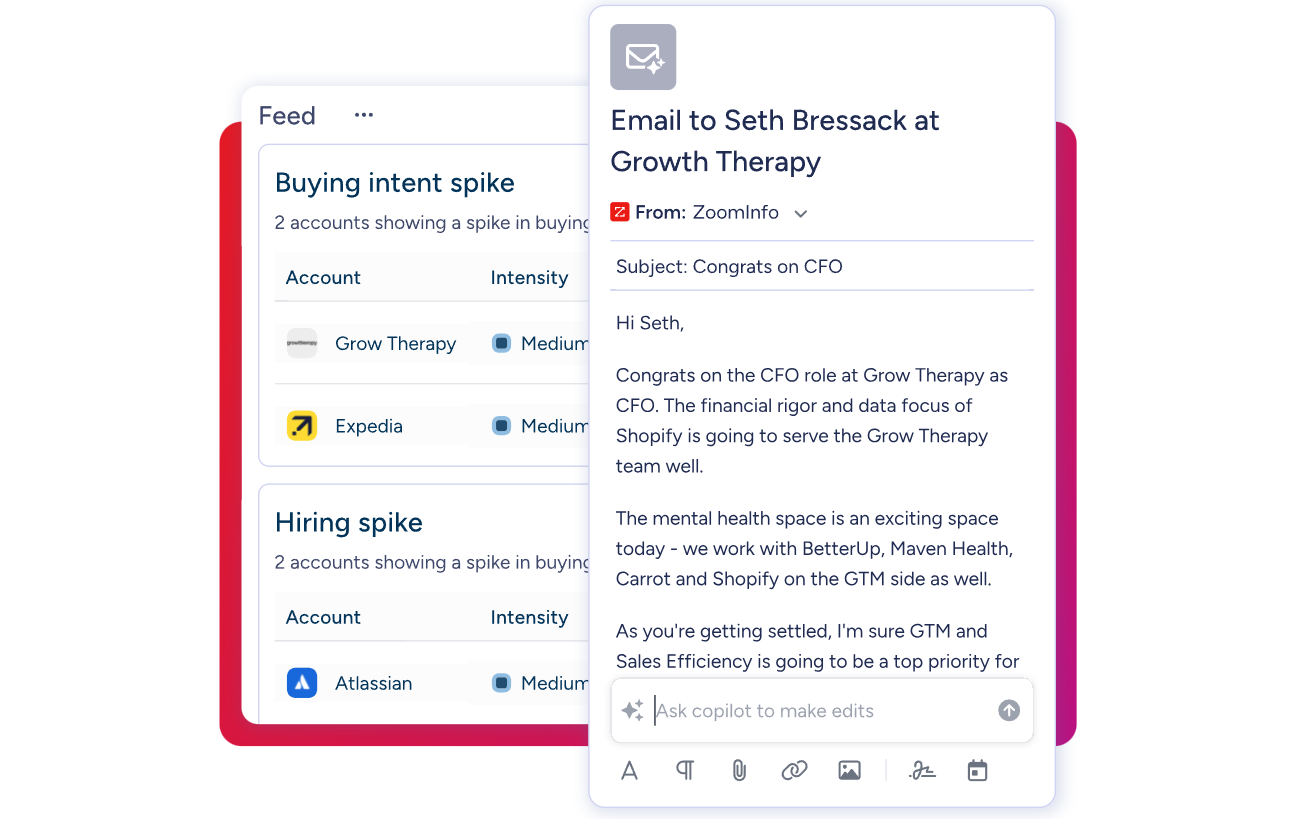
ZoomInfo's GTM Workspace gives sellers a book-of-business view that combines CRM data with real-time buying signals, AI-drafted outreach, and deal intelligence. But it's designed to work alongside a CRM, not replace one. ZoomInfo integrates natively with Salesforce, HubSpot, and Dynamics, pushing enriched data and signals into whatever CRM a team uses. The value is in what ZoomInfo adds to the CRM: verified contacts, org charts, technographic data, intent signals, and AI-generated account summaries that no CRM captures on its own.
Marketing automation: enterprise capabilities vs. small-business essentials
HubSpot and Nimble both offer email marketing, but at different scales.
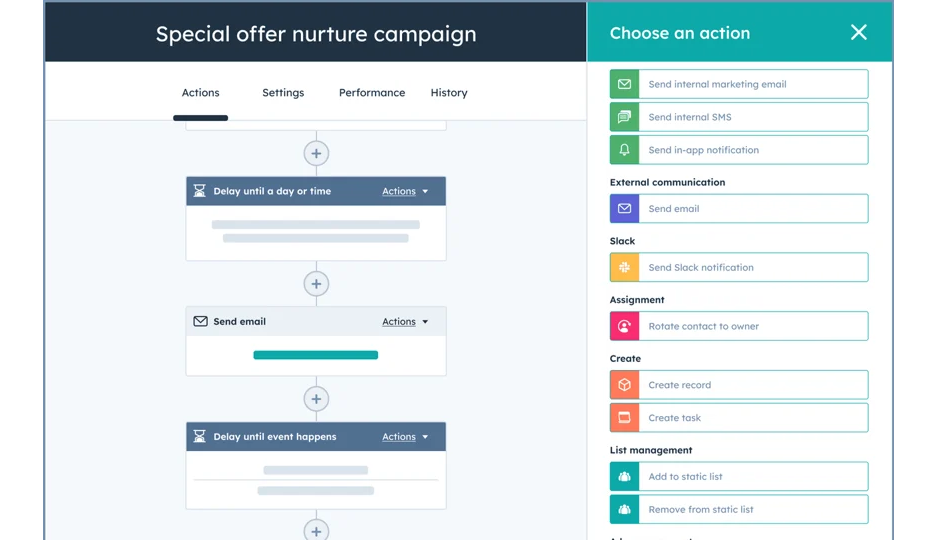
HubSpot's Marketing Hub is a full marketing automation platform. Visual workflow builders power multi-step nurture sequences with branching logic. Advanced Marketing Reporting provides multi-touch revenue attribution. The platform includes landing pages, forms, social media management, ad tracking, and a Content Hub with AI content creation tools. For B2B marketing teams running account-based campaigns, lifecycle marketing, and content-driven lead generation, HubSpot is built for it.
Source: HubSpot
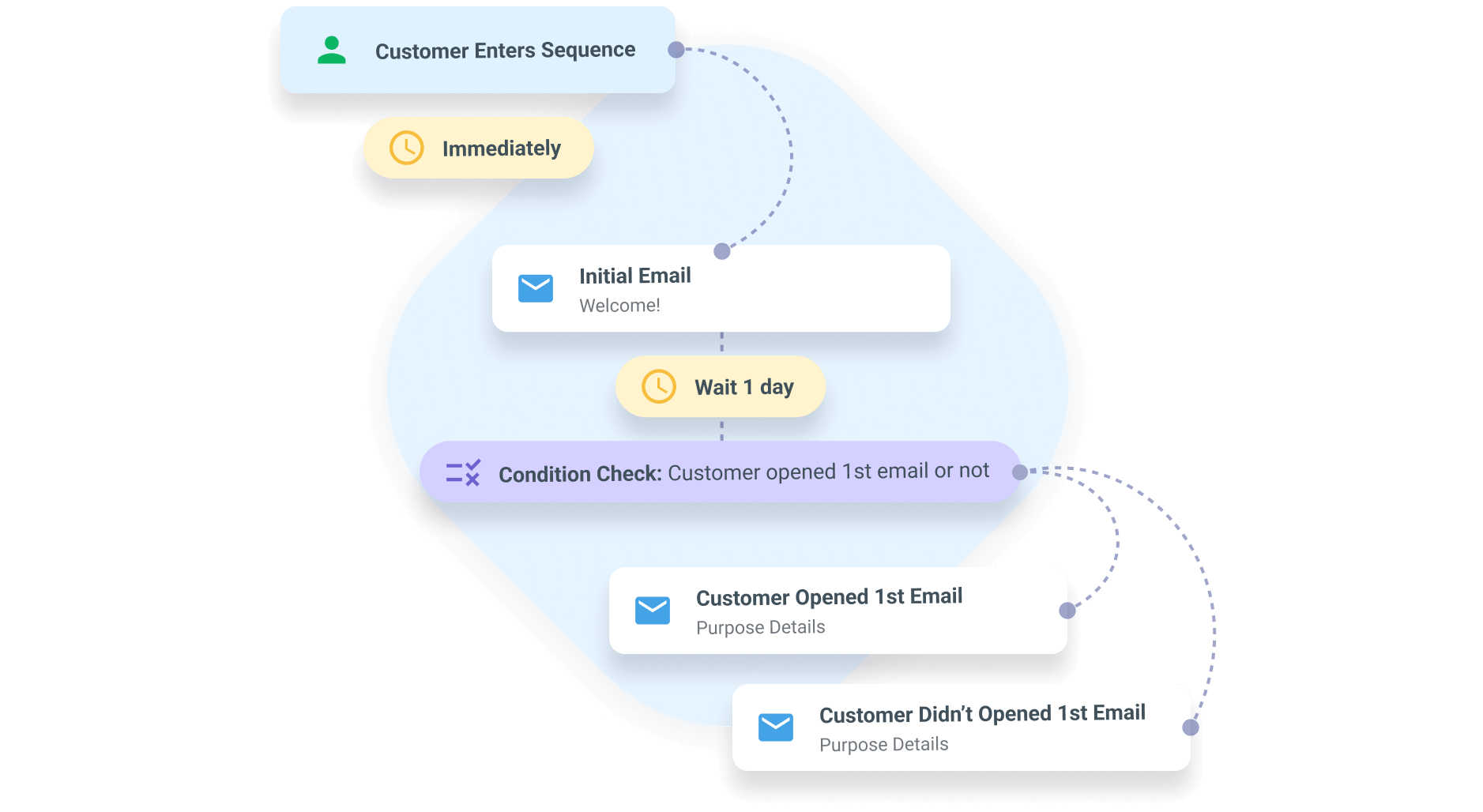
Nimble's email marketing is a $15/month company-wide add-on that provides an AI email builder, drag-and-drop design templates, and the ability to send unlimited emails via Nimble's marketing engine from a custom domain. It also includes email sequences with time-based and activity-based triggers and basic if-then branching. For a small team sending newsletters and personal outreach, it covers the basics at a fraction of HubSpot's cost.
Source: Nimble
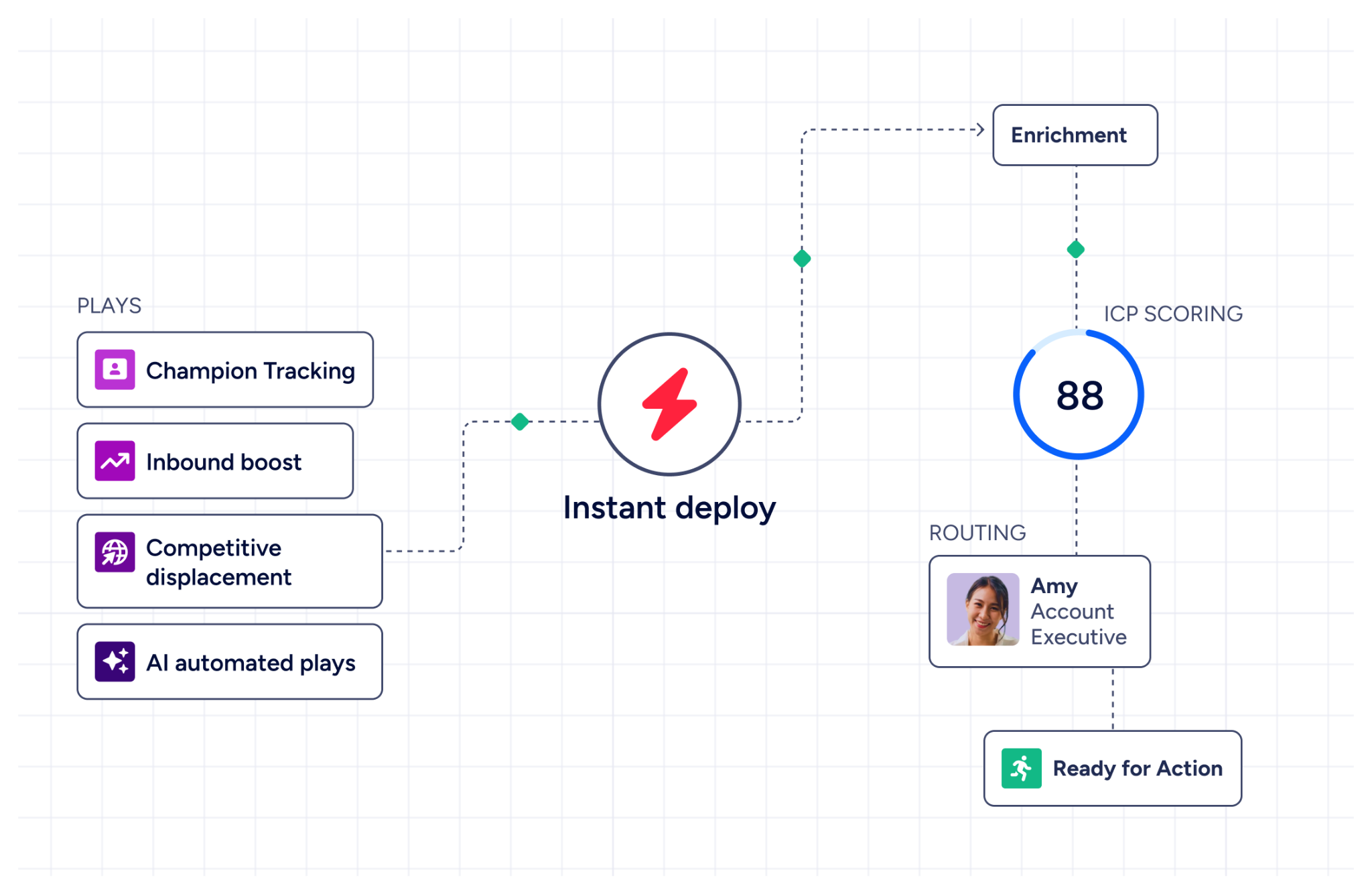
ZoomInfo's marketing capabilities focus on account-based marketing rather than email automation. GTM Studio lets marketers describe audiences in natural language, launch multi-channel plays across email, display ads, social, and direct mail, and measure pipeline impact. The native demand-side platform deploys display ads based on 300+ company attributes. FormComplete reduces web forms to a single field while auto-appending the rest. Smartsheet reported a 40%+ increase in form fills, 84% increase in MQLs, and 59% increase in win rate after implementing it. This isn't newsletter marketing. It's signal-driven demand generation at scale.
AI capabilities reflect different priorities
All three platforms have invested in AI, but with different goals.
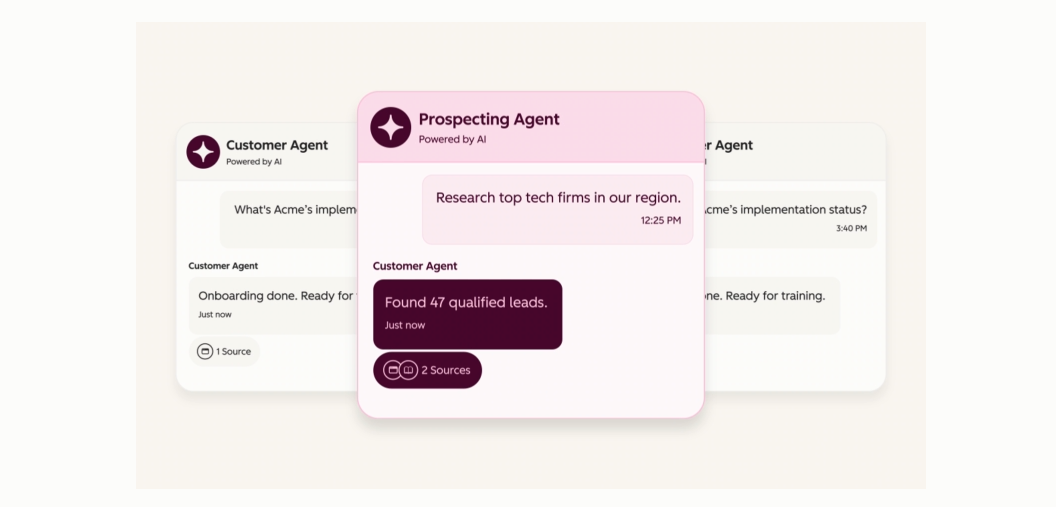
HubSpot's Breeze covers the most ground. The Customer Agent resolves over 50% of customer conversations autonomously. The Prospecting Agent monitors buying signals and drafts personalized outreach. The Data Agent answers natural-language questions about CRM data. AI content writers, social agents, and blog research agents handle marketing tasks. Breeze features come with Professional and Enterprise subscriptions, running on a credit-based consumption system. Several features, including AI-Powered Segmentation and Marketing Studio, are still in Beta.
Source: HubSpot
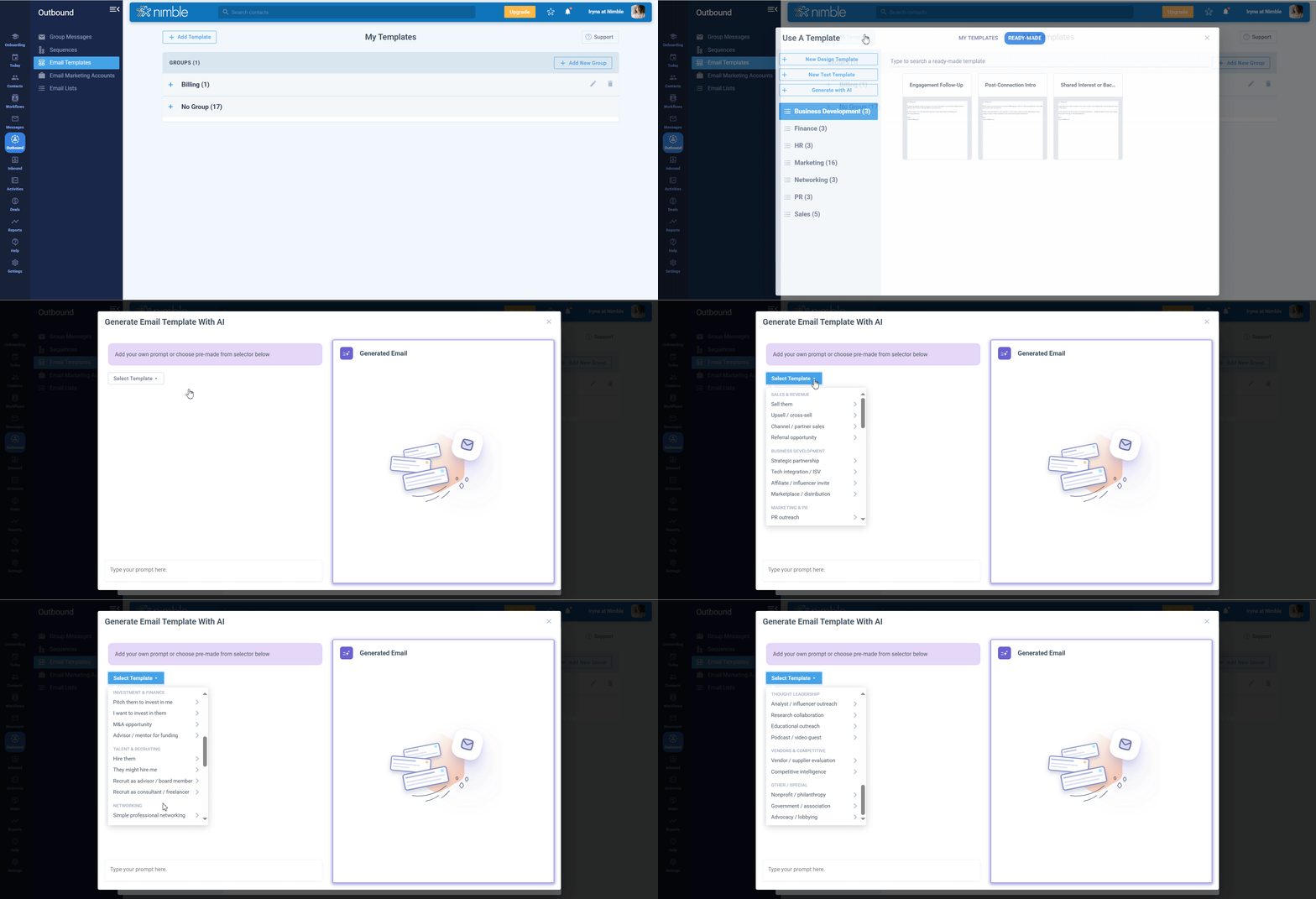
Nimble's AI is focused and practical. The AI email generator creates both text and designed email templates from natural-language prompts. The AI Chat Helper engages website visitors with predefined qualification questions and generates chat summaries. An AI Sequence Generator builds multi-step sequences from scratch. These features work well for their target user, but they operate on Nimble's own data, not a broader intelligence layer.
Source: Nimble
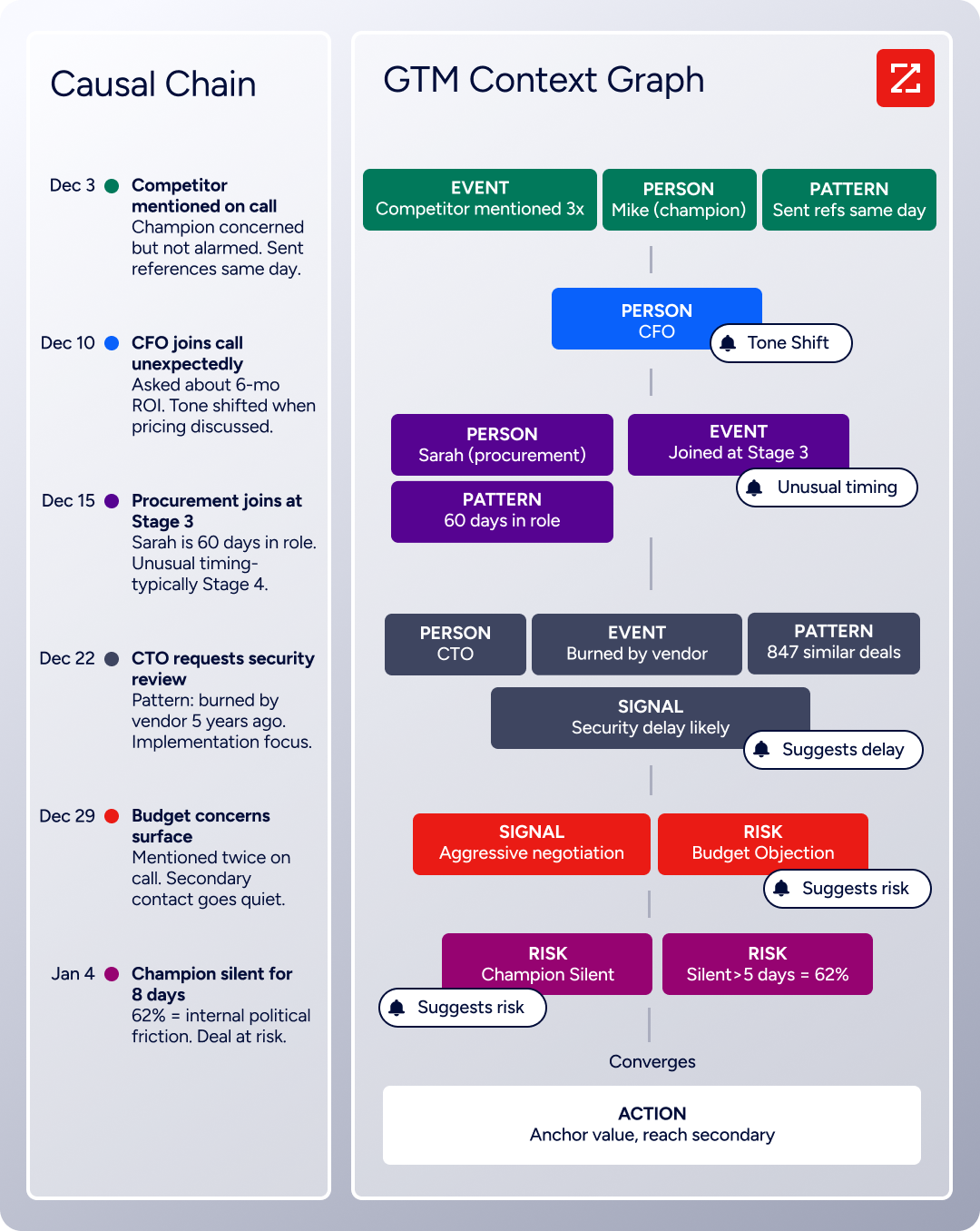
ZoomInfo's AI is powered by the GTM Context Graph, which processes 1.5B+ data points daily and fuses ZoomInfo's B2B data with a customer's CRM records, conversation transcripts, and behavioral signals. The difference is structural: HubSpot's and Nimble's AI work with the data you've put into those platforms. ZoomInfo's AI reasons across the largest B2B dataset in the industry combined with your first-party data to capture not just what happened in a deal, but why it happened. Chorus, ZoomInfo's conversation intelligence engine (backed by 14 technology patents), captures every call, meeting, and email, then extracts the context behind it: why a deal accelerated, why a champion went quiet, what a competitive mention predicts about deal risk.
Pricing models serve different markets
The pricing structures reveal who each platform is designed for.
HubSpot uses a hybrid model combining per-seat pricing, contact-based tiers, and flat-fee products. The free CRM is genuinely useful (unlimited contacts up to 1M records, basic tools, 2-user cap). Starter begins at $15/seat/month annually. But scaling up gets complex: Marketing Hub Professional costs $800/month (annual) with a $3,000 mandatory onboarding fee, and Enterprise runs $3,600/month with a $7,000 onboarding fee. Sales Hub Professional is $90/seat/month (annual) with a $1,500 onboarding fee. When subscribing to multiple Hubs at different tiers, all Core Seats are billed at the rate of the highest tier, a hidden cost that catches many buyers off guard. A mid-market team using Marketing Hub Professional and Sales Hub Professional can easily spend $2,000-3,000/month before adding extra seats.
Nimble is the simplest. One plan at $24.90/seat/month (annual) or $29.90 monthly. All core features included. But the real cost picture includes add-ons: Email Marketing at $15/month (company-wide), Web Forms and Web Chat at $12/month, extra storage at $10/month per 10GB beyond the 2GB/seat base, extra contacts at $10/month per 10,000 beyond 25,000, and enrichment credits at $10/month per 1,000. Nimble's own analysis shows a 5-seat team paying roughly $152/month on Nimble versus $1,300+ on HubSpot for comparable capability. That math holds at the small-team level. At 25+ seats with active usage, the add-on costs narrow the gap.
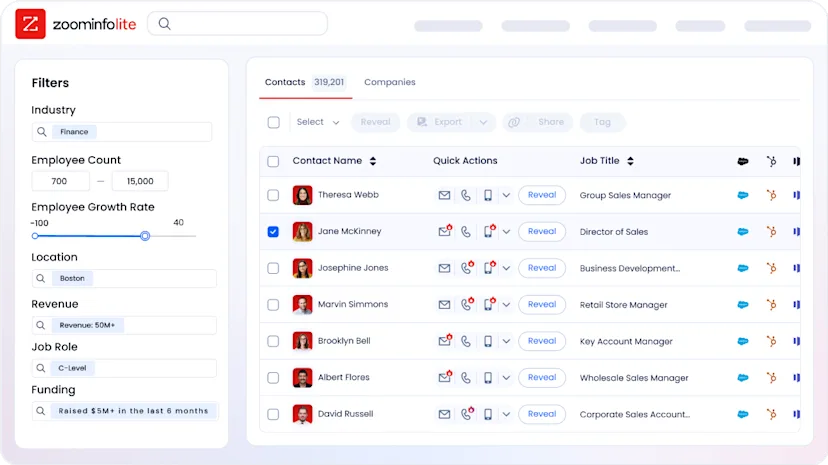
ZoomInfo uses consumption-based pricing with no publicly listed prices. This reflects its enterprise positioning. Costs depend on seats, credit volume, features, and contract length. The entry barrier is lower than it appears: ZoomInfo Lite is a permanent free tier (no credit card, no time limit) with access to ZoomInfo's database, 10 monthly export credits, the Chrome extension, and WebSights Lite. A 7-day free trial of the full platform is also available. For teams that have outgrown their CRM's data capabilities but aren't ready for enterprise pricing, these entry points let you test the value.
Integration approaches tell you what each platform prioritizes
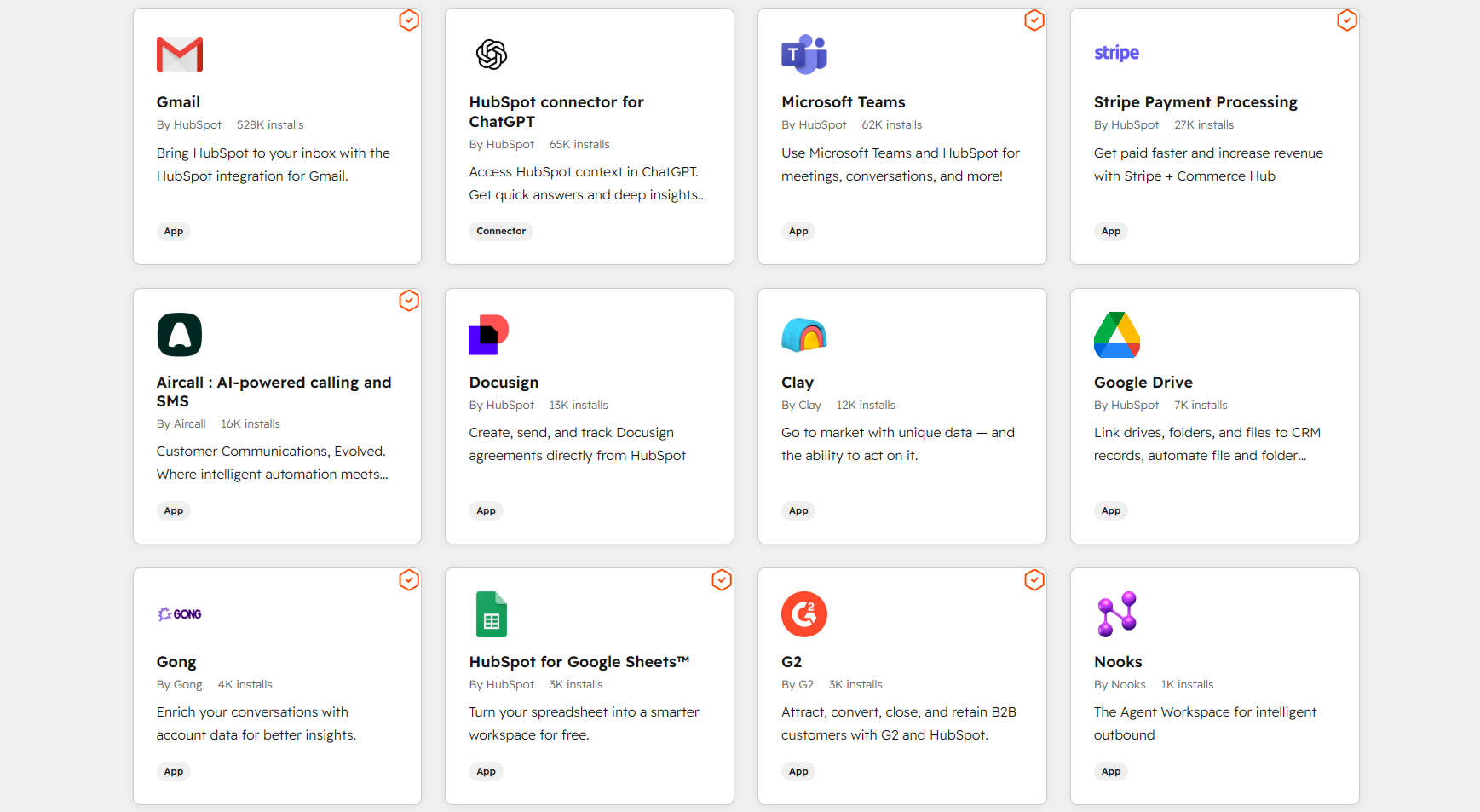
HubSpot treats integrations as ecosystem expansion. The App Marketplace has over 2,000 integrations with 2.5 million active installs. But the platform's real integration strength is internal: Marketing Hub, Sales Hub, Service Hub, and Content Hub all share the same database, so data flows between teams without middleware. For external tools, HubSpot provides a REST API and developer platform.
Source: HubSpot
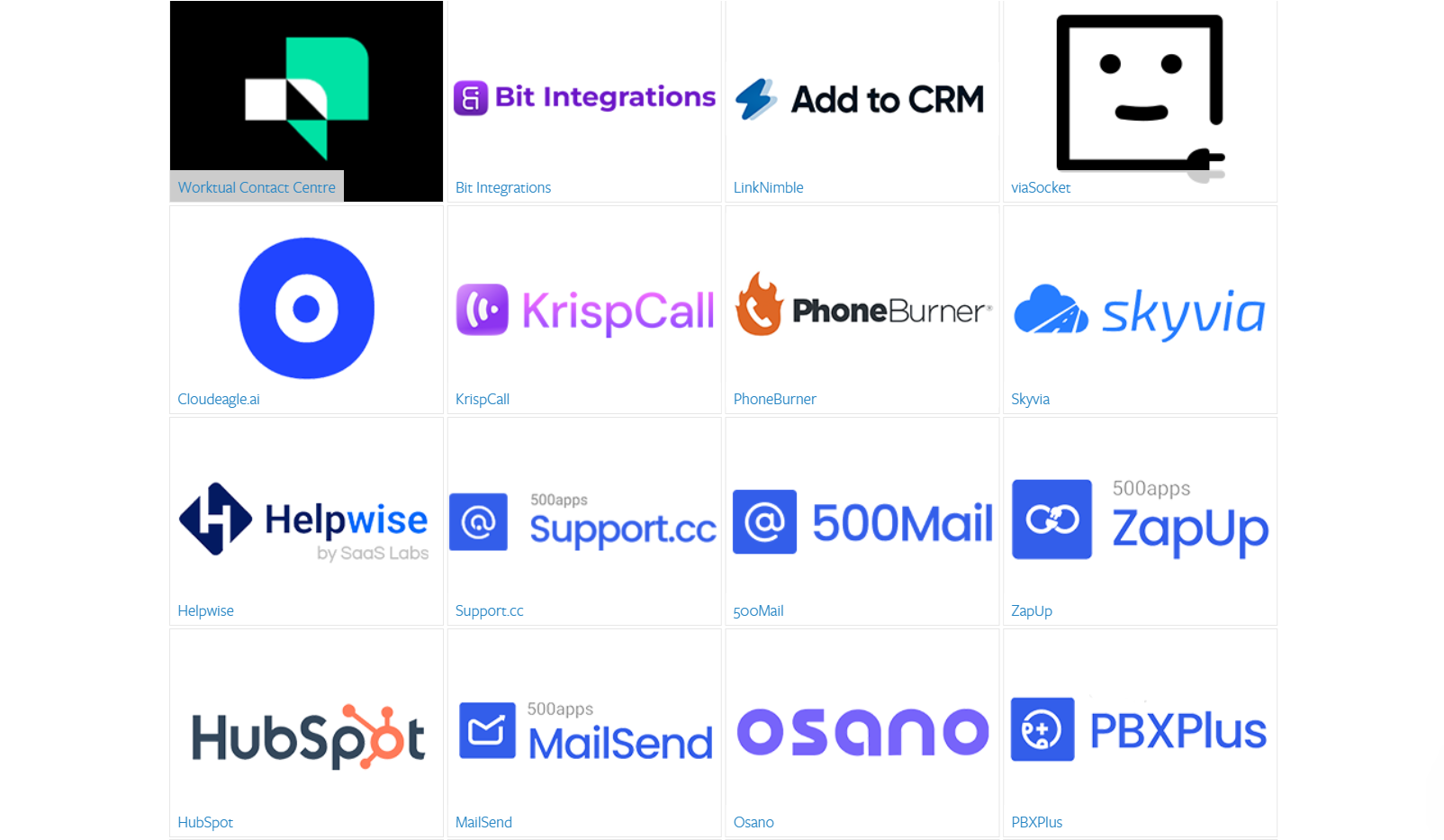
Nimble prioritizes integration where its users live: inside Microsoft 365 and Google Workspace. The bidirectional sync with Outlook, Gmail, and calendar apps is the product's core workflow. Beyond that, Nimble connects to tools through Zapier, Make.com, and its own REST API. The integration list is shorter than HubSpot's, but for a team that lives in Outlook and LinkedIn, the depth of those specific integrations matters more than breadth.
Source: Nimble
ZoomInfo treats integration as open access. The Enterprise API and MCP server expose ZoomInfo's data and intelligence to any tool, including AI agents built on Anthropic's Claude or Google. The App Marketplace lists 120+ partner integrations across CRM, marketing automation, sales engagement, and data warehouse categories. Native connectors for Salesforce, HubSpot, and Dynamics 365 mean ZoomInfo works with whatever CRM you choose, pushing enriched data into your existing workflows. As CEO Henry Schuck described it: a large financial services firm is building an internal app using ZoomInfo's MCP server, accessing ZoomInfo's intelligence in a way that wouldn't exist without open access.
"The plug-and-play aspect of the API means I can integrate it into any process and get information at a moment's notice." BDO Canada reported an 87% reduction in time spent on internal data dashboard updates. (BDO Canada)
Support and learning curve
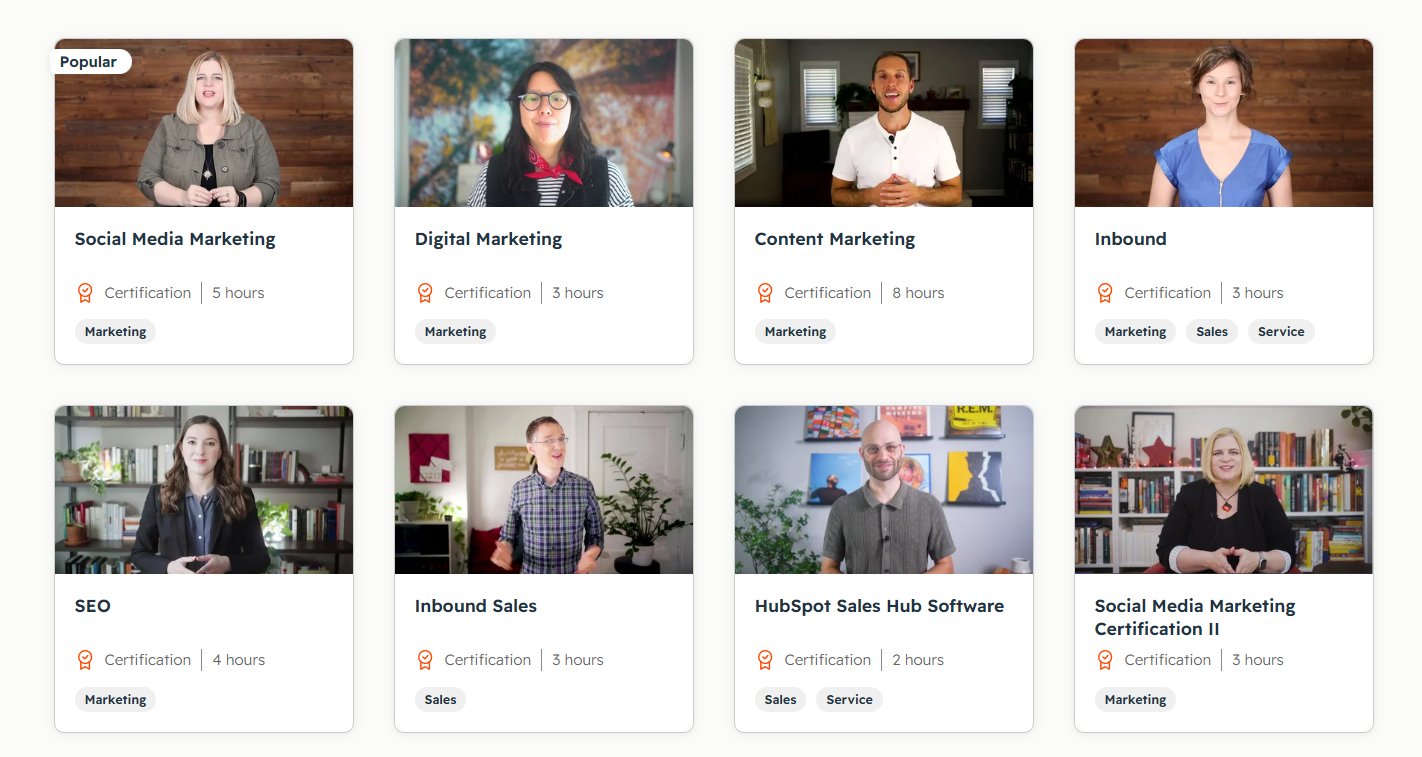
HubSpot has the most extensive support infrastructure. Free users get community access only. Starter adds email and chat; Professional and Enterprise add phone support. HubSpot Academy offers free certifications (over 200,000 professionals certified), and the knowledge base covers 17+ languages. The platform is intuitive at the Starter level, but complexity scales with tier. Professional and Enterprise features like custom objects, programmable automation, and multi-touch attribution require real onboarding time.
Source: HubSpot
Nimble keeps support personal but limited. The team offers daily live Q&A sessions (weekdays, 9-9:30 AM PT), free 1:1 onboarding calls, and email support during business hours. There's no phone support and no 24/7 availability. G2 reviewers rate Nimble's ease of use at 8.9/10 with a 9.20 implementation score, reflecting low friction. Kennesaw State University uses it to teach CRM concepts to students, which says something about the learning curve.
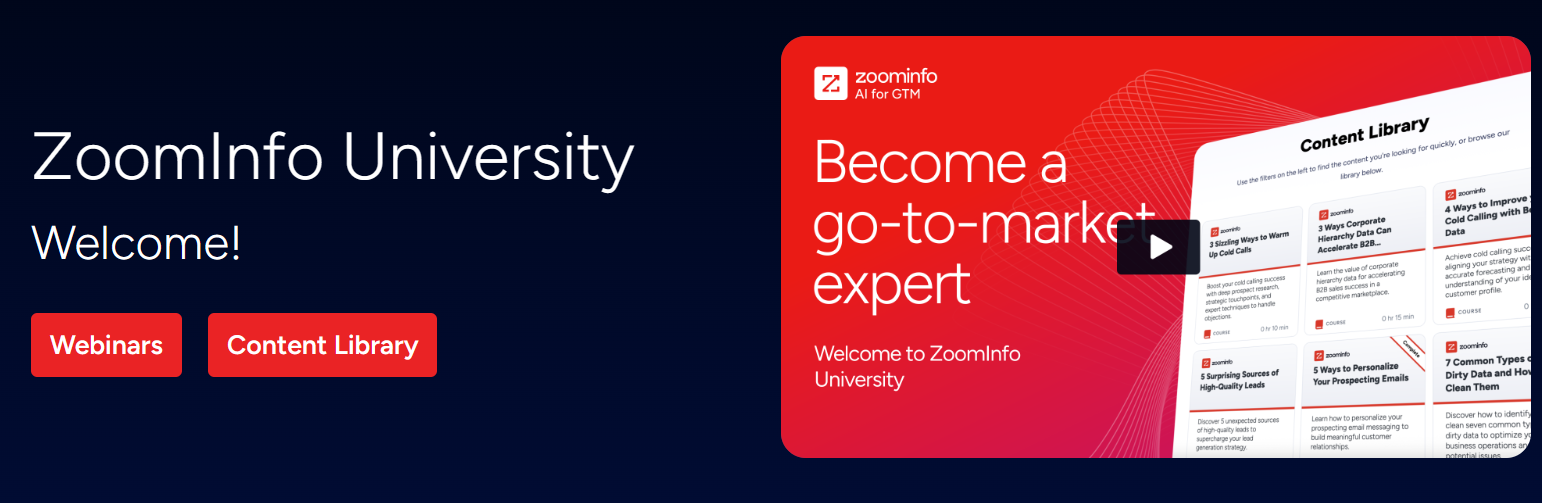
ZoomInfo invests in structured onboarding. The company redesigned its onboarding program from 30 to 90 days across planning, technical implementation, education, and adoption phases, earning Rocketlane's Golden Comet award for Best Customer Onboarding Team of 2024. ZoomInfo University provides role-specific learning paths, certifications, and live webinars. Support is available through a Help Center, knowledge base, phone support, and professional services via ZoomInfo Labs. The learning curve is steeper than either CRM, but the platform is built for teams with dedicated sales and marketing operations, not casual users.
Security and compliance
For regulated industries, the compliance gap between these platforms is significant.
HubSpot maintains SOC 2 Type II, HIPAA attestation, GDPR and CCPA compliance, and TRUSTe certification. Data is hosted on AWS with an EU Data Center option. Encryption uses AES-256 at rest and TLS 1.2/1.3 in transit. SSO, 2FA, and IP allowlisting are available.
Nimble is GDPR compliant and certified under the EU-U.S. Data Privacy Framework. Data is stored on Microsoft Azure servers. However, Nimble is explicitly not HIPAA compliant, and no SOC 2 or ISO 27001 certification is documented.
ZoomInfo has the most extensive compliance portfolio: ISO 27001, ISO 27701, SOC 2 Type II, TRUSTe GDPR, and TRUSTe CCPA certifications, all renewed annually. The company is a registered data broker in California and Vermont. For enterprise buyers in financial services, healthcare, or other regulated industries, this compliance infrastructure is a requirement, not a bonus.
HubSpot vs. Nimble vs. ZoomInfo: Which should you choose?
The right choice depends on what's limiting your go-to-market efforts today.
Choose HubSpot if:
You need a unified platform for marketing, sales, and service teams
Your company is scaling past 20 employees and needs structured workflows
Inbound marketing and content-driven lead generation are core to your strategy
You want one system where every team shares the same customer data
You can budget for Professional or Enterprise tiers and the associated onboarding
Choose Nimble if:
You're a solopreneur or small team (under 25 people) running on relationships
You work primarily in Microsoft 365 or Google Workspace and want a CRM in your inbox
Simple pipeline management and personal outreach are your primary sales activities
Budget is a primary constraint and you need core CRM features under $30/seat/month
You don't need advanced reporting, attribution, or enterprise-grade automation
Add ZoomInfo if:
You need verified B2B contact data at scale to build pipeline faster
Knowing when target accounts are researching solutions would change your sales approach
Your CRM data is incomplete and your reps spend too much time on manual prospect research
You're running account-based marketing and need intent signals, technographics, and org charts
You want an intelligence layer that powers any CRM, any workflow, and any AI agent
Try ZoomInfo Lite for free or request a demo of the full platform.
"ZoomInfo's not just a contact data company anymore. They've built a system that works the list, writes the outreach, triggers the play, and helps drive predictable growth." — Ian Brodie, CEO (Levanta)
HubSpot and Nimble are both strong CRMs for their respective audiences. But the question most B2B teams should be asking isn't which CRM to use. It's whether their go-to-market data is good enough to make any CRM effective. A CRM with incomplete contact records, no intent signals, and no visibility into buying committees is a filing cabinet, not a revenue engine. ZoomInfo turns it into one.
HubSpot vs. Nimble vs. ZoomInfo FAQ
What is the core difference between HubSpot, Nimble, and ZoomInfo?
HubSpot is a full CRM and marketing automation platform for scaling companies with 20 to 2,000+ employees, offering sales, marketing, service, content, and commerce tools on a shared database. Nimble is a relationship-first CRM for solopreneurs and small teams under 25, focused on contact management, email sequences, and LinkedIn prospecting at a flat per-seat price. ZoomInfo is a B2B data intelligence and GTM execution platform that provides 500M contacts, 100M companies, buyer intent signals, and AI tools for prospecting, marketing, and revenue operations. ZoomInfo integrates with both HubSpot and Nimble as the intelligence layer that powers them.
Which platform is cheapest for a small team?
Nimble is the most affordable at $24.90/seat/month (annual billing), with all core CRM features included. HubSpot offers a free CRM with basic tools (capped at 2 users), and Starter plans begin at $15/seat/month, though Professional tiers with meaningful automation start at $800-890/month plus mandatory onboarding fees. ZoomInfo Lite is permanently free with 10 monthly export credits, but paid plans use consumption-based pricing and target enterprise budgets.
Can ZoomInfo replace HubSpot or Nimble?
ZoomInfo is not designed to replace a CRM. It complements one. ZoomInfo provides the B2B data, intent signals, and intelligence that make a CRM more effective. It integrates with HubSpot, Salesforce, and Microsoft Dynamics, pushing enriched contact data and buying signals into your existing CRM workflows. Teams that use ZoomInfo alongside their CRM report faster pipeline generation and higher conversion rates.
Which platform has the best contact data?
ZoomInfo's contact database is the largest and most thoroughly verified in B2B, with 500M contacts, 135M+ verified phone numbers, 120M direct dials, and 200M+ verified business emails, maintained by 300+ human researchers and ML systems processing 1.5B+ data points daily. HubSpot's contact data depends on what users import or capture through forms and website activity. Nimble offers enrichment through its Prospector tool at 100 credits per user per month, which covers roughly 25 new contacts monthly.
Which platform is best for account-based marketing?
ZoomInfo is the strongest fit for ABM, with native intent data, a demand-side advertising platform, audience management tools in GTM Studio, and FormComplete for web form optimization. Gartner named ZoomInfo a Leader in ABM Platforms for two consecutive years. HubSpot offers marketing automation that can support ABM strategies but lacks native intent data and a built-in advertising platform. Nimble does not offer ABM capabilities.
Does ZoomInfo work with HubSpot?
Yes. ZoomInfo has a native HubSpot integration that pushes enriched contacts, company data, and buying signals into HubSpot's CRM. ZoomInfo Lite (the permanent free tier) includes HubSpot integration. The Enterprise API and MCP server provide deeper programmatic access for teams building custom workflows. Teams commonly use HubSpot as their CRM and execution layer while using ZoomInfo as their data and intelligence layer.
For a full side-by-side breakdown of how the two platforms stack up, see our HubSpot vs. ZoomInfo comparison.
Which platform is easiest to learn?
Nimble has the lowest learning curve, with G2 reviewers scoring ease of use at 8.9/10 and implementation at 9.20. HubSpot is intuitive at the Starter level but grows more complex at Professional and Enterprise tiers, where features like custom objects and programmable automation require training. ZoomInfo is the most complex, designed for GTM professionals, though its 90-day structured onboarding program won Rocketlane's Best Customer Onboarding Team award in 2024.
What happens to my data if I cancel?
HubSpot downgrades your account to the free tier; your data stays accessible with reduced features. Nimble deletes all data upon cancellation and gives you 60 days to restore by purchasing a paid plan before permanent deletion. ZoomInfo's cancellation is managed through account management, with annual contracts as the standard.
See how HubSpot stacks up against other tools:
