
Choosing between HubSpot and Odoo comes down to five questions most comparison articles skip:
Do you need a platform focused on marketing and sales, or one that covers your entire business (inventory, manufacturing, and accounting included)?
Are you willing to pay per seat and per hub, or would you prefer per-user pricing across all modules?
Is your priority getting started quickly with minimal setup, or having the flexibility to customize every process?
Do you need CRM intelligence that tells you who to sell to and why, or an operational backbone that runs your business end to end?
How important is the quality and accuracy of your contact data and buyer signals for driving revenue?
In short, here's what we recommend:
HubSpot is the go-to-market platform for scaling companies that run on marketing, sales, and customer service. Its six integrated Hubs share a single Smart CRM, giving marketing, sales, and service teams one view of every customer interaction. With 288,706 customers across 135+ countries and a free CRM tier, HubSpot makes it easy to start and grow. Its Breeze AI layer automates content creation, prospecting, and customer support. But pricing gets complicated as you add Hubs and seats, mandatory onboarding fees apply at Professional and Enterprise tiers, and the platform stops at the CRM boundary. It won't run your inventory, manufacturing, or accounting.
Odoo is the open-source business platform for companies that want a single system covering CRM, accounting, inventory, manufacturing, HR, eCommerce, and more. With 28 million active users and pricing starting at €11.90/user/month, Odoo offers broad coverage at a fraction of what legacy ERPs charge. Its modular architecture lets you start with one app and expand as needed. But that flexibility comes with implementation complexity, and companies typically need a certified partner to configure it properly. Odoo's CRM handles pipeline management well, but it lacks the B2B intelligence, buyer intent signals, and verified contact data that revenue teams need to find and close deals.
Both platforms solve real problems. HubSpot excels at attracting, engaging, and converting leads. Odoo excels at running the operational side of a business. But neither solves a problem that sits upstream of both: knowing who your buyers are, what they care about, and when they're ready to act. That's where ZoomInfo fits in.
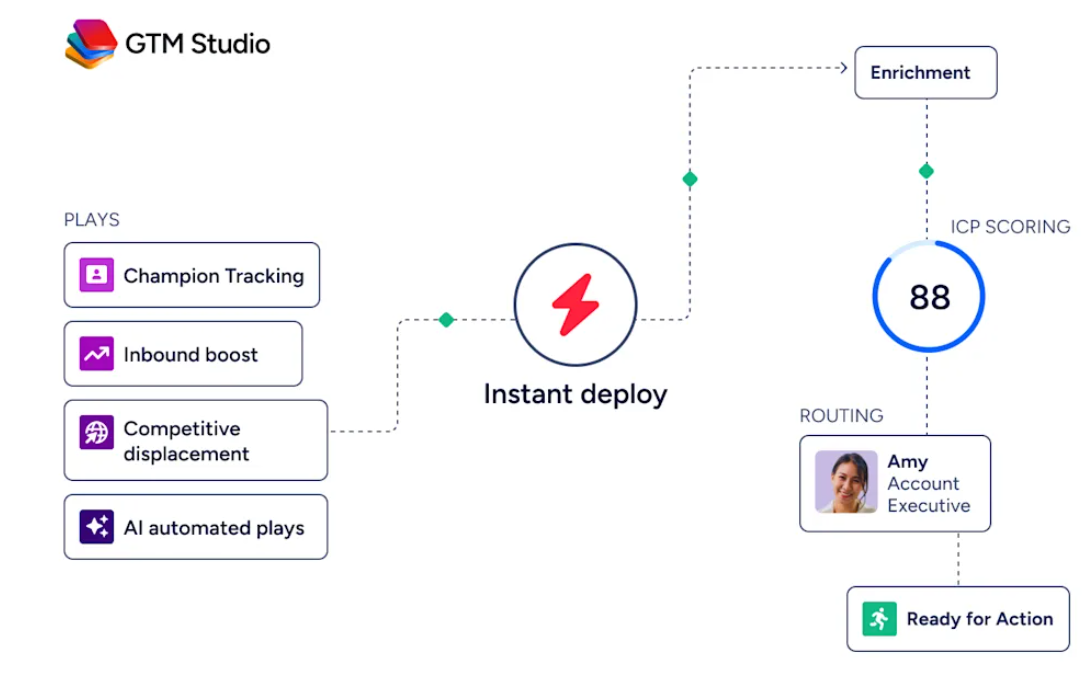
ZoomInfo is an AI-powered GTM platform built on a B2B data foundation of 500M contacts, 100M companies, 135M+ verified phone numbers, and 200M+ verified business emails. ZoomInfo's GTM Context Graph combines this data with your CRM records, conversation transcripts, and behavioral signals, processing 1.5B+ data points daily to reveal not just what happened in a deal, but why. That intelligence flows into any tool through APIs and MCP, into a seller workspace via GTM Workspace, and into a marketing and RevOps canvas via GTM Studio For teams using HubSpot or Odoo as their CRM, ZoomInfo is the data and intelligence layer that makes those platforms far more effective. ZoomInfo Agent Teams build on that same foundation to run complete GTM plays end to end: coordinated specialist agents share context, work from each account's current state, and act within the approvals and limits you set, available in GTM Studio and headless through GTM.AI.
If feeding verified, signal-rich buyer data into your CRM sounds like the missing piece, see how ZoomInfo works.
HubSpot vs. Odoo vs. ZoomInfo at a glance
HubSpot | Odoo | ZoomInfo | |
|---|---|---|---|
Core strength | Marketing, sales, and service automation | Full-business ERP (CRM to accounting to manufacturing) | B2B data intelligence and GTM execution |
CRM | Native Smart CRM | Native CRM module | Integrates with HubSpot, Salesforce, Dynamics |
B2B contact database | No proprietary database | No proprietary database | 500M contacts, 200M+ verified emails |
Buyer intent signals | No | No | Yes (210M IP-to-org pairings, Guided Intent) |
ERP capabilities | Limited (Commerce Hub for CPQ/payments) | Full (accounting, inventory, manufacturing, HR) | None (GTM-focused) |
AI capabilities | Breeze AI (content, prospecting, service agents) | Document OCR, lead scoring, natural-language queries | GTM Context Graph, AI agents for sellers and marketers |
Integrations | 2,000+ marketplace apps | 40,000+ community apps | 172+ marketplace partners + API/MCP |
Pricing model | Per-seat + per-hub + contact tiers | Per-user across all apps | Custom consumption-based |
Starting paid price | $15/seat/month (Starter) | €11.90/user/month (Standard) | Custom quoted |
Free tier | Permanent free CRM (limited features) | One app free, unlimited users | ZoomInfo Lite (permanent, 10 credits/month) |
Best for | Go-to-market teams at scaling companies | SMBs needing one system for every department | Revenue teams that need to find, prioritize, and engage buyers |
HubSpot is a marketing and sales machine, Odoo is a business operating system
This comparison is unusual because HubSpot and Odoo solve different problems, with only modest overlap in CRM and sales.
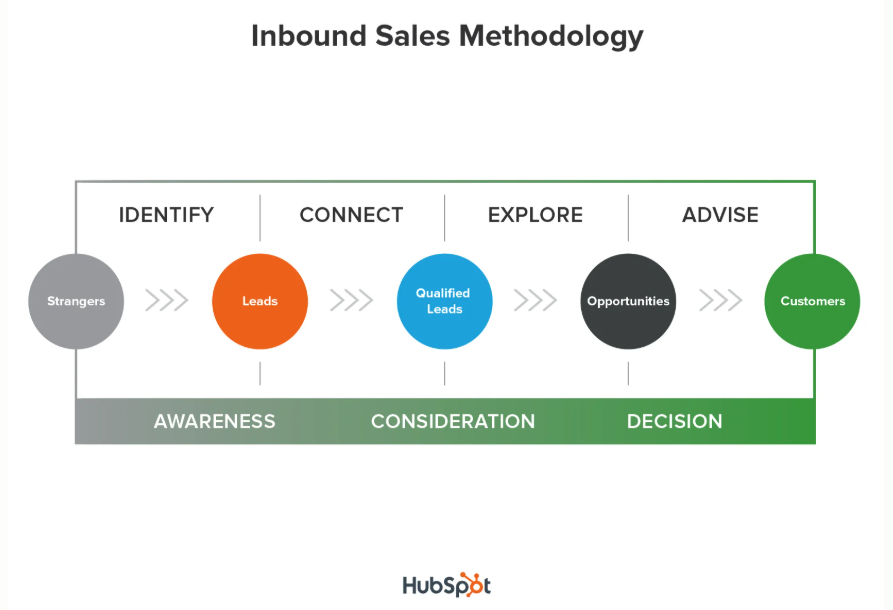
HubSpot was built for go-to-market teams. Its roots are in inbound marketing, and every product decision since 2006 has expanded that mission: email automation, sales pipeline management, customer service ticketing, content management, and AI-powered prospecting.
Source: HubSpot
The platform excels at demand generation and deal management. A marketer creates a campaign, a lead fills out a form, the CRM tracks every interaction, a salesperson follows up with AI-suggested talking points, and a service agent resolves post-sale issues. This end-to-end workflow is where HubSpot delivers real value.
But HubSpot stops at the CRM boundary. It doesn't manage inventory. It doesn't run payroll. It doesn't handle manufacturing. Commerce Hub covers CPQ, quotes, and payment processing, but it's not an accounting system. Companies using HubSpot for go-to-market still need separate tools for operations, finance, and supply chain.
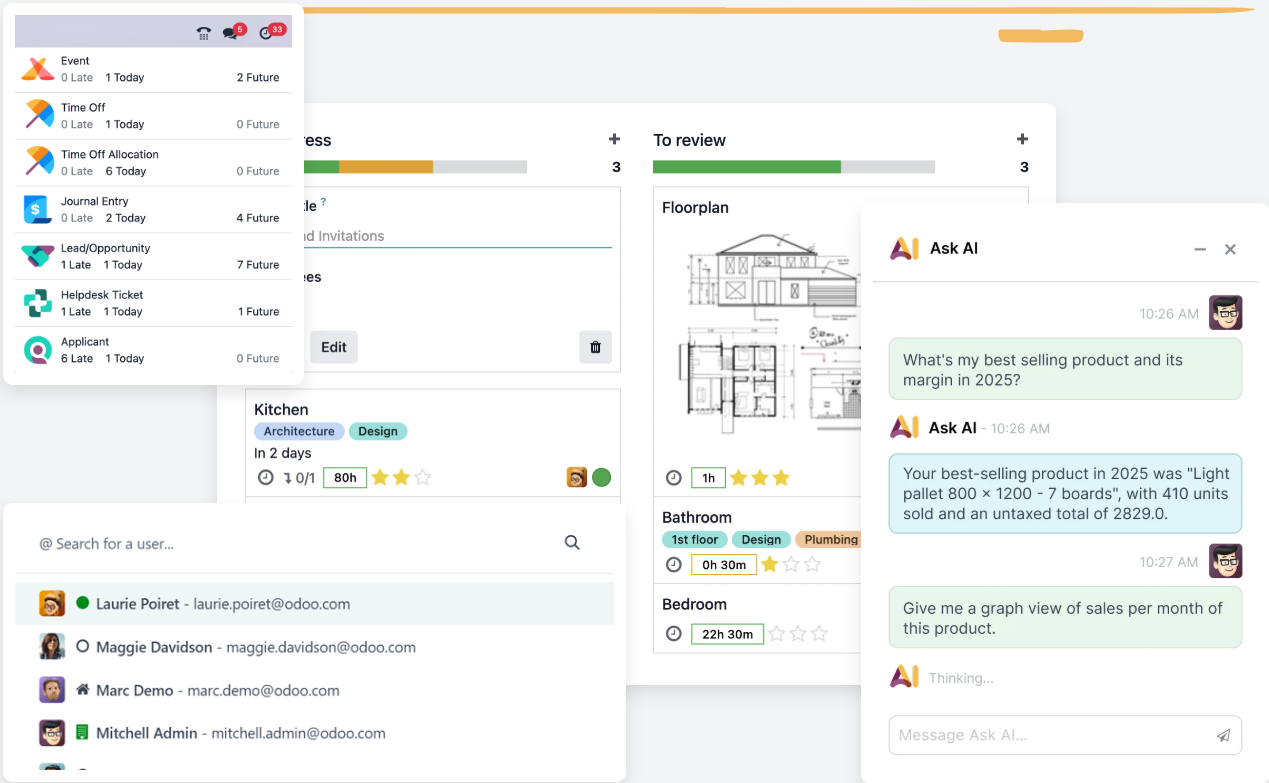
Odoo starts where HubSpot stops and extends much further. It's a full business platform covering CRM, accounting, inventory, manufacturing, HR, eCommerce, point of sale, project management, and more.
Source: Odoo
When a salesperson closes a deal in Odoo's CRM, the system generates a delivery order in Inventory, triggers a manufacturing order if stock is insufficient, creates an invoice in Accounting, and posts the journal entry. No API integration, no middleware, no duplicate data entry.
Odoo's CRM module handles pipeline management competently. It includes predictive lead scoring, quotation building with electronic signatures, and a customer portal. But it wasn't designed for demand generation. It lacks HubSpot's depth in email marketing automation, content management, social media scheduling, and AI-powered outreach at scale.
The overlap between the two platforms is narrow: basic CRM, email campaigns, and eCommerce. Everywhere else, they diverge.
CRM depth vs. CRM intelligence: Different problems entirely
Both HubSpot and Odoo include CRM functionality. Neither includes the B2B data intelligence that makes CRM data actionable.
HubSpot's Smart CRM was built for go-to-market teams. It tracks contacts, companies, deals, and tickets in a shared database across all Hubs. The system captures email opens, website visits, form submissions, and meeting activity automatically.
Breeze AI enriches records using signals from emails and calls, and the Data Agent answers natural-language questions about customer data. For managing the customer lifecycle from first touch to renewal, HubSpot's CRM is polished and effective.
Source: HubSpot
Odoo's CRM takes a more operational approach. It tracks leads and opportunities through a Kanban pipeline, generates quotations from deal records, and connects directly to invoicing and delivery. The real strength is what happens after the deal closes: the order flows into Inventory, Manufacturing, or Project Management without leaving the system.
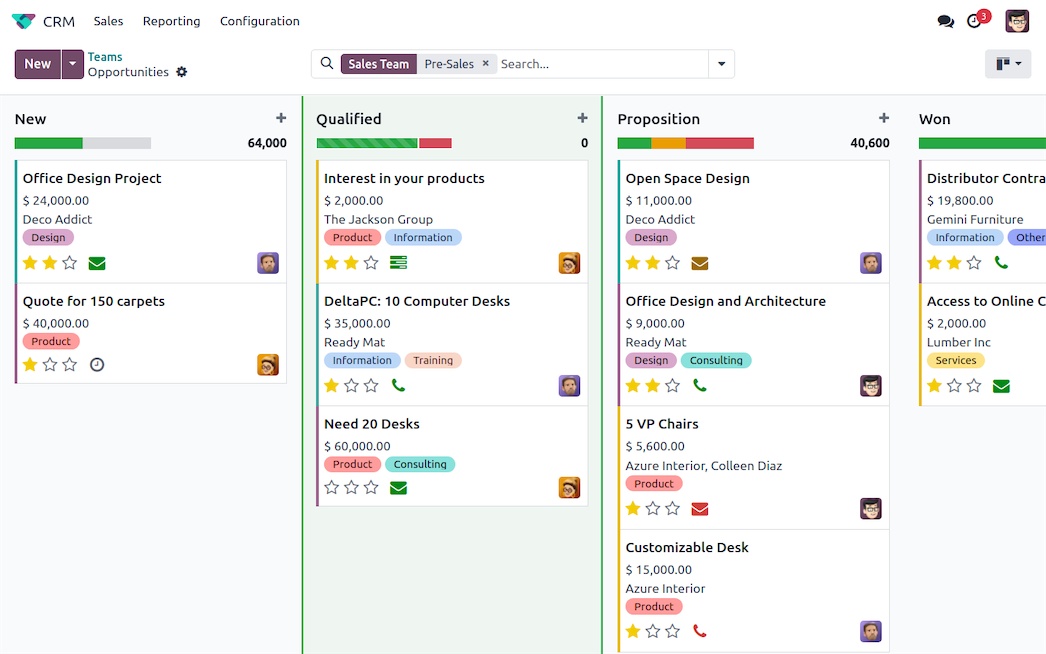
Source: Odoo
For companies where post-sale operations are as complex as the sale itself, this continuity matters.
ZoomInfo fills a gap neither platform addresses: knowing who your buyers are before they show up in your CRM. HubSpot and Odoo track leads that arrive through forms, emails, and inbound channels. ZoomInfo identifies the buyers you should be pursuing, surfaces when they're actively researching solutions, and provides verified contact data to reach them.
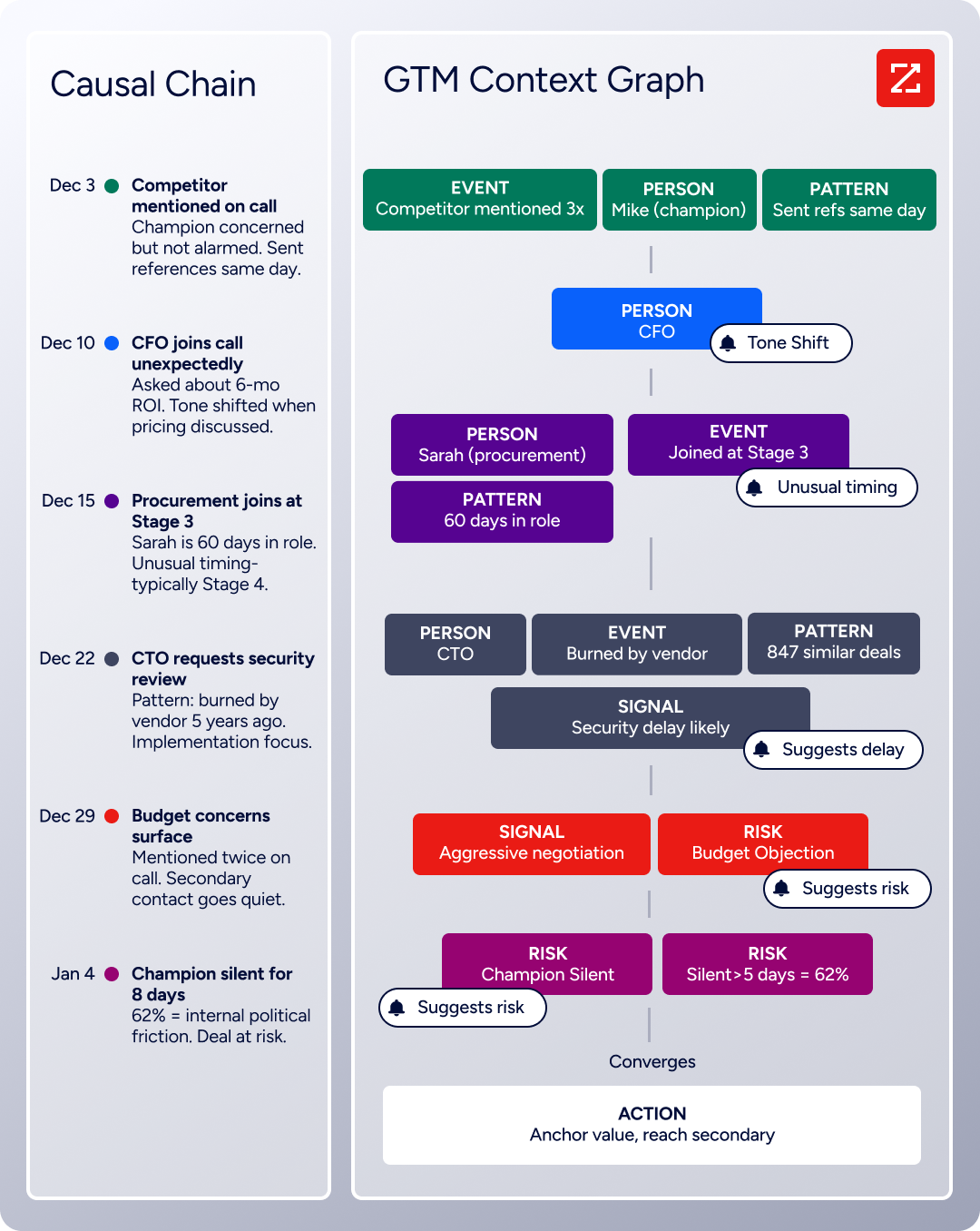
The GTM Context Graph goes further. It unifies your CRM records, conversation intelligence, and behavioral signals with ZoomInfo's third-party data to reveal why deals move or stall. A CRM records that a deal advanced to stage 4.
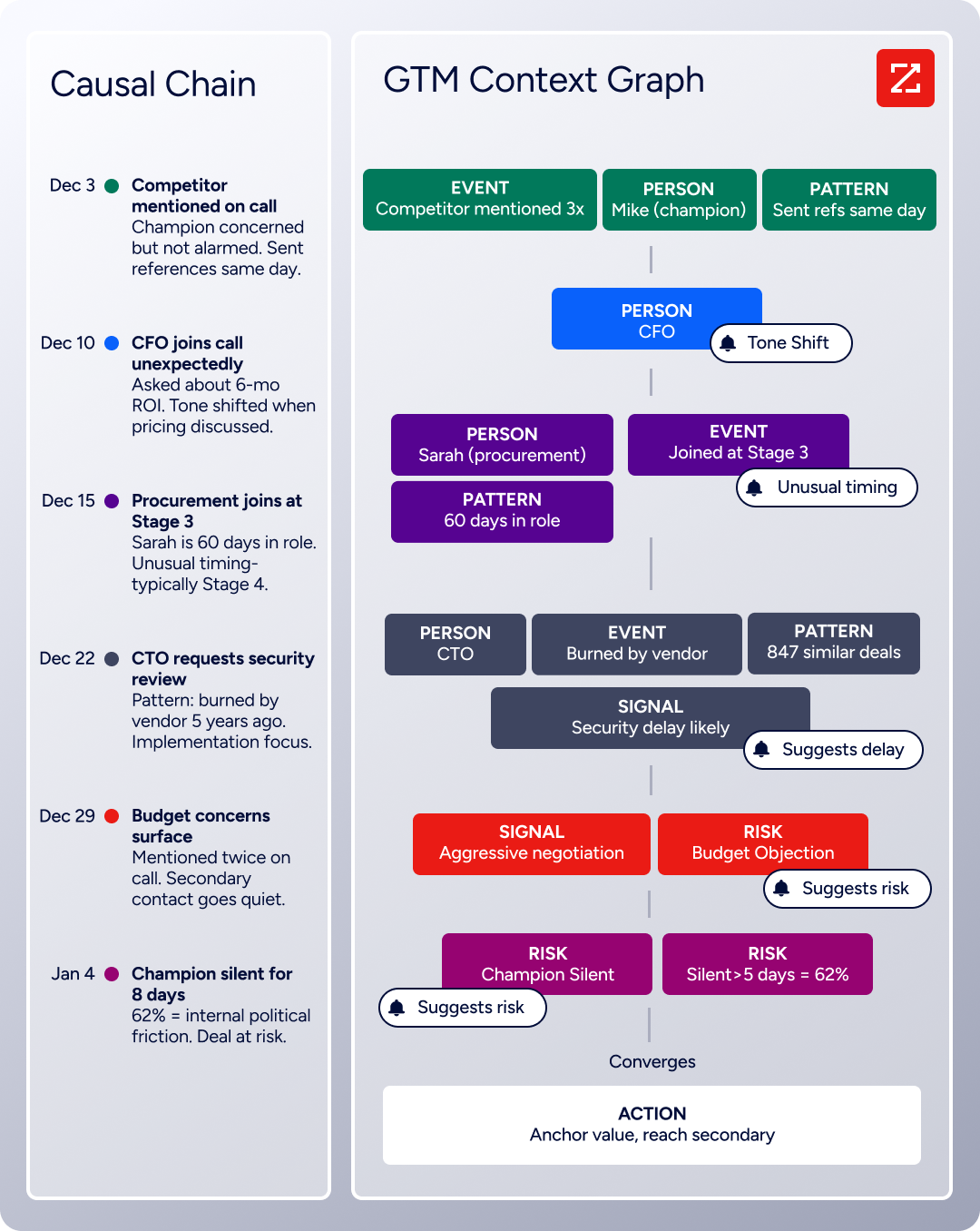
ZoomInfo's intelligence layer captures that the CFO joined the last call, asked about six-month ROI, and the company just posted three VP-level job openings (signals that map to patterns behind similar closed-won deals).
ZoomInfo integrates natively with HubSpot, Salesforce, and Microsoft Dynamics. Whether you run HubSpot or Odoo as your CRM, ZoomInfo can feed verified contacts, enriched company data, and intent signals directly into your pipeline.
Vensure's VP of Revenue Operations reported: "ZoomInfo gives us the information we need to execute. We don't have to go through and spend our time digging. It's already there, so we can be three steps ahead." (Vensure case study)
If you're weighing HubSpot and ZoomInfo as standalone platforms, see our HubSpot vs. ZoomInfo comparison for a deeper side-by-side breakdown.
Marketing automation: depth vs. integration
HubSpot's Marketing Hub is a capable marketing automation platform. Visual workflow builders support multi-step, branching nurture sequences triggered by contact behavior.
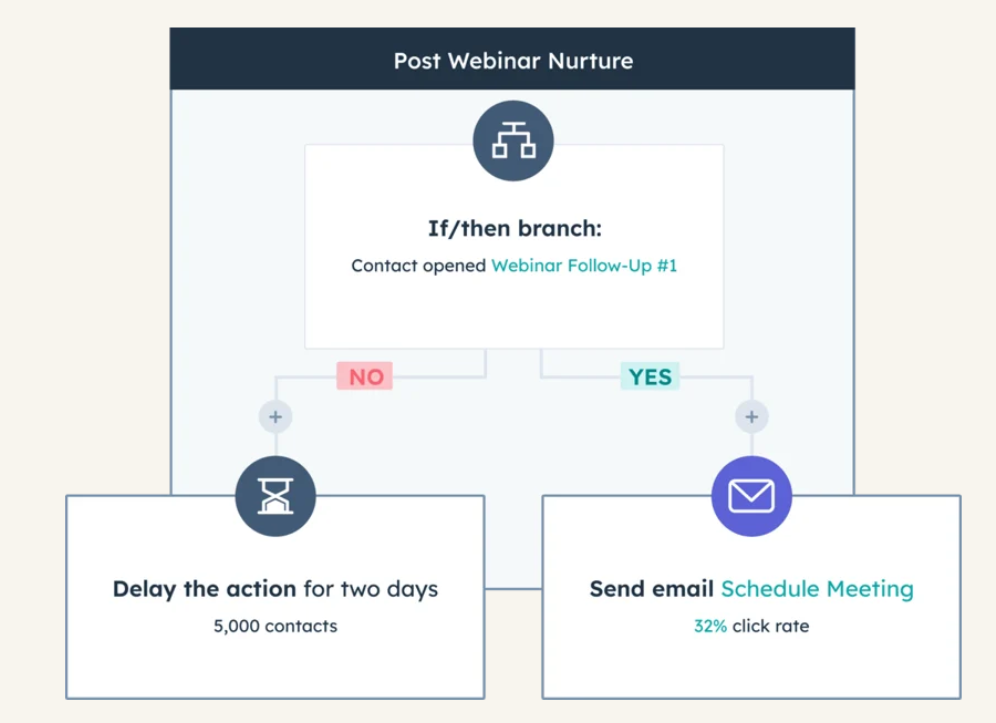
Source: HubSpot
The platform handles email marketing with send-time optimization, social media scheduling, ad management, landing page creation, and SEO tools. Content Remix turns a blog post into social posts, email copy, and video scripts.
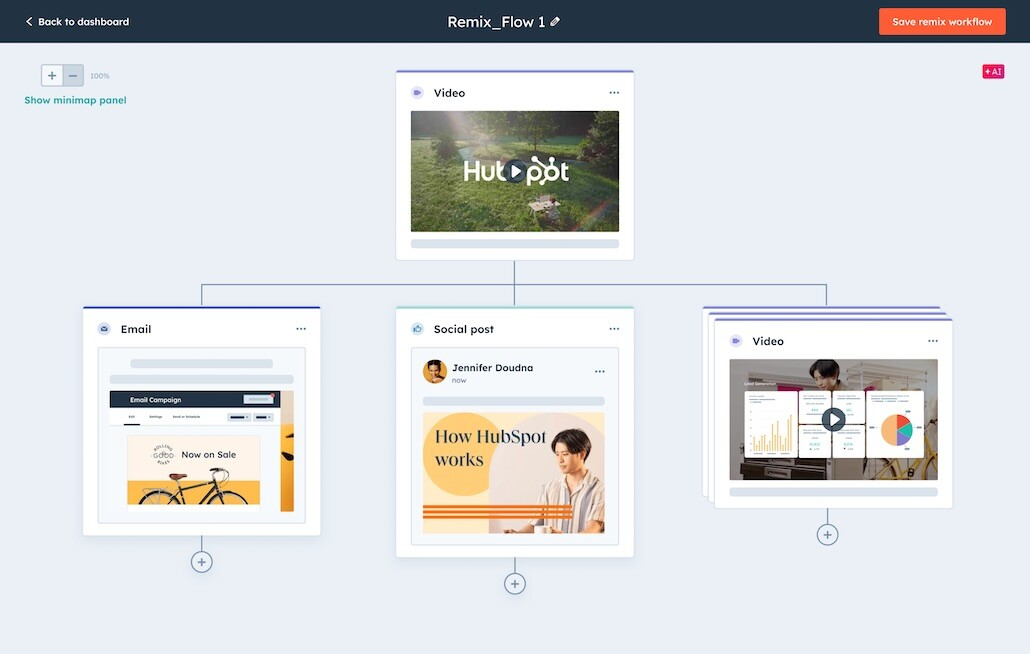
Source: HubSpot
The AEO Grader helps content rank in AI-generated search results.
Marketing Hub's pricing, however, scales with contact volume. Professional tier starts at $800/month for 2,000 marketing contacts, with overages at $250 per 5,000 additional contacts. For companies with large databases, this adds up fast.
Odoo's marketing tools are functional but narrower. The Email Marketing module offers a drag-and-drop builder with audience segmentation by CRM fields.
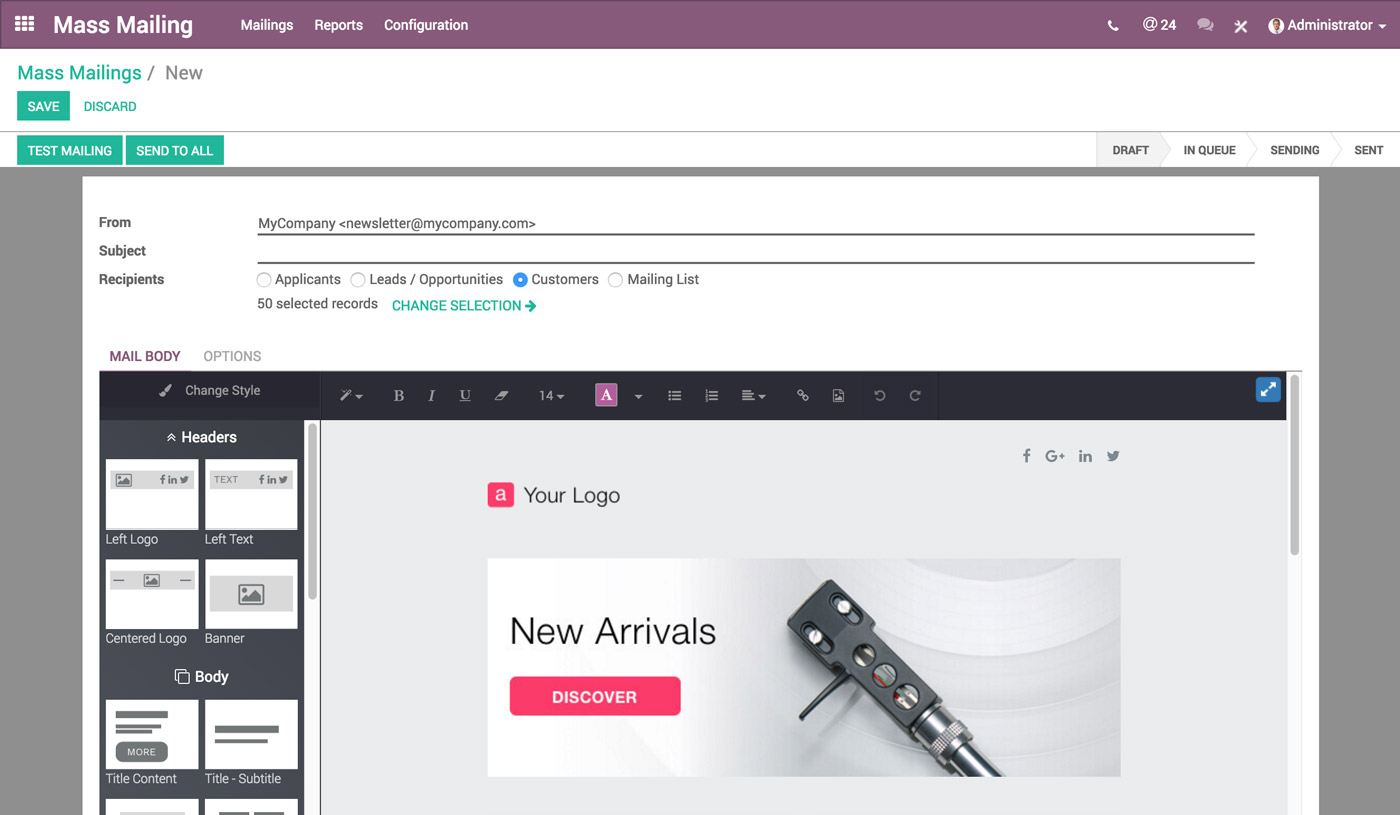
Source: Odoo
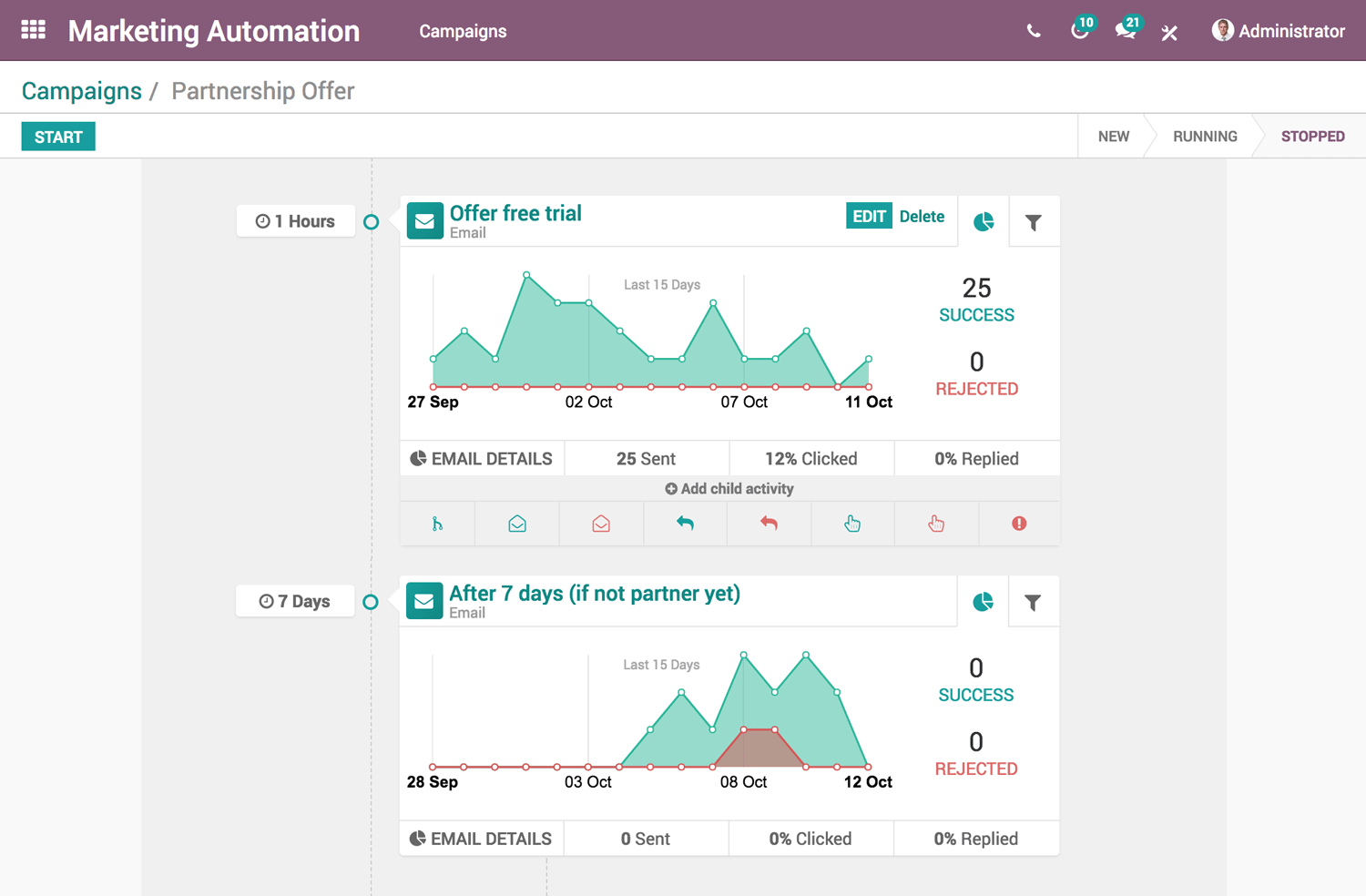
Marketing Automation provides a visual workflow canvas with branching logic. Social Marketing handles multi-channel publishing.
Source: Odoo
These tools cover core email and campaign workflows, but they lack HubSpot's depth in content management, SEO, social analytics, and AI-powered content generation.
Where Odoo's marketing gains an edge is the operational connection. An abandoned cart in Odoo's eCommerce module feeds directly into Marketing Automation for re-engagement sequences. Campaign conversions flow into CRM opportunities that trigger sales orders, deliveries, and invoices, all without leaving the system.
And Odoo charges per user, not per contact, so a business emailing 100,000 contacts pays the same as one emailing 1,000.
ZoomInfo strengthens marketing from the data layer. GTM Studio lets marketers describe audiences in natural language, launch multi-channel plays across email, ads, and direct mail, and track pipeline impact in real time.
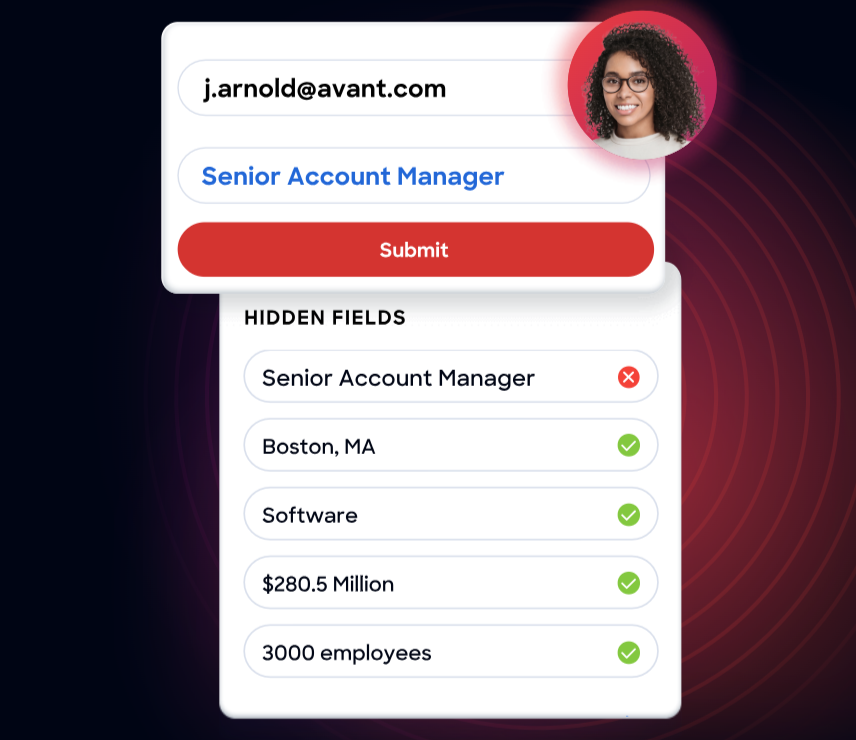
FormComplete reduces web forms to a single field while auto-appending the rest from ZoomInfo's database. Smartsheet reported a 40%+ increase in form fills and 59% increase in win rate after implementing it.
ZoomInfo's native Demand-Side Platform deploys display ads based on 300+ company attributes, with audiences that auto-update as buying signals change.
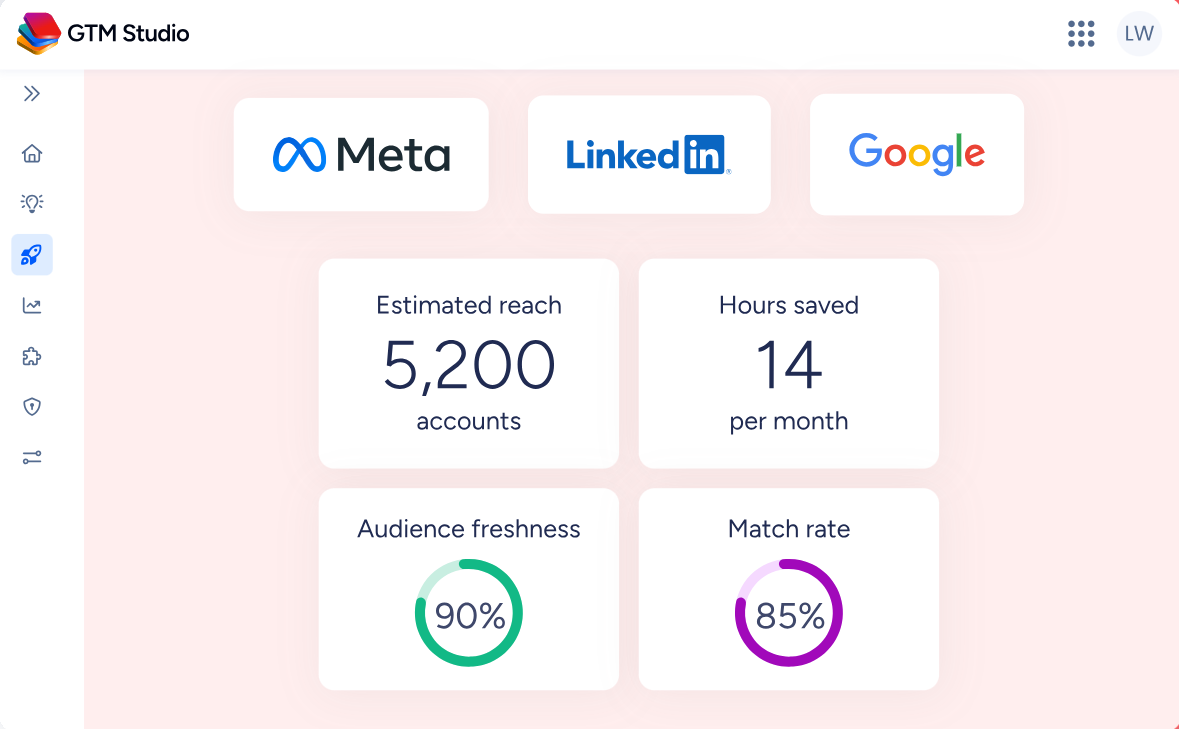
Redwood Logistics saw a 99% reduction in cost-per-click and a 310% increase in click-through rate using ZoomInfo's audience targeting. "It's not just the data itself. It's more about the right data at the right time to help us reach out with the right message across that full buyer journey," said Chelsea Kenyon, Senior Director of Digital Strategy. (Redwood Logistics case study)
AI capabilities: Three different approaches
All three platforms have invested in AI, but their implementations serve different purposes.
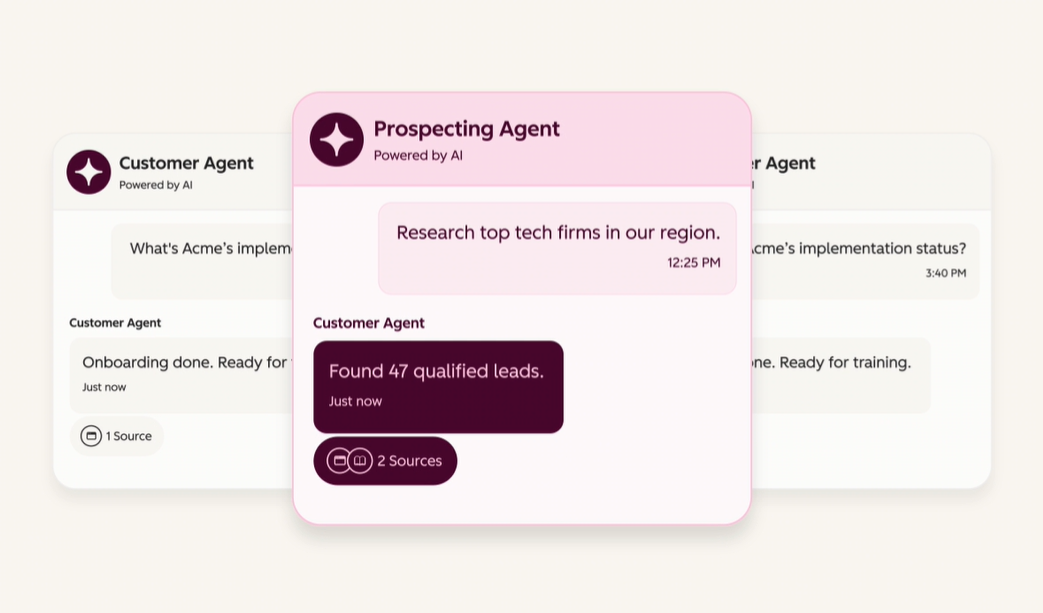
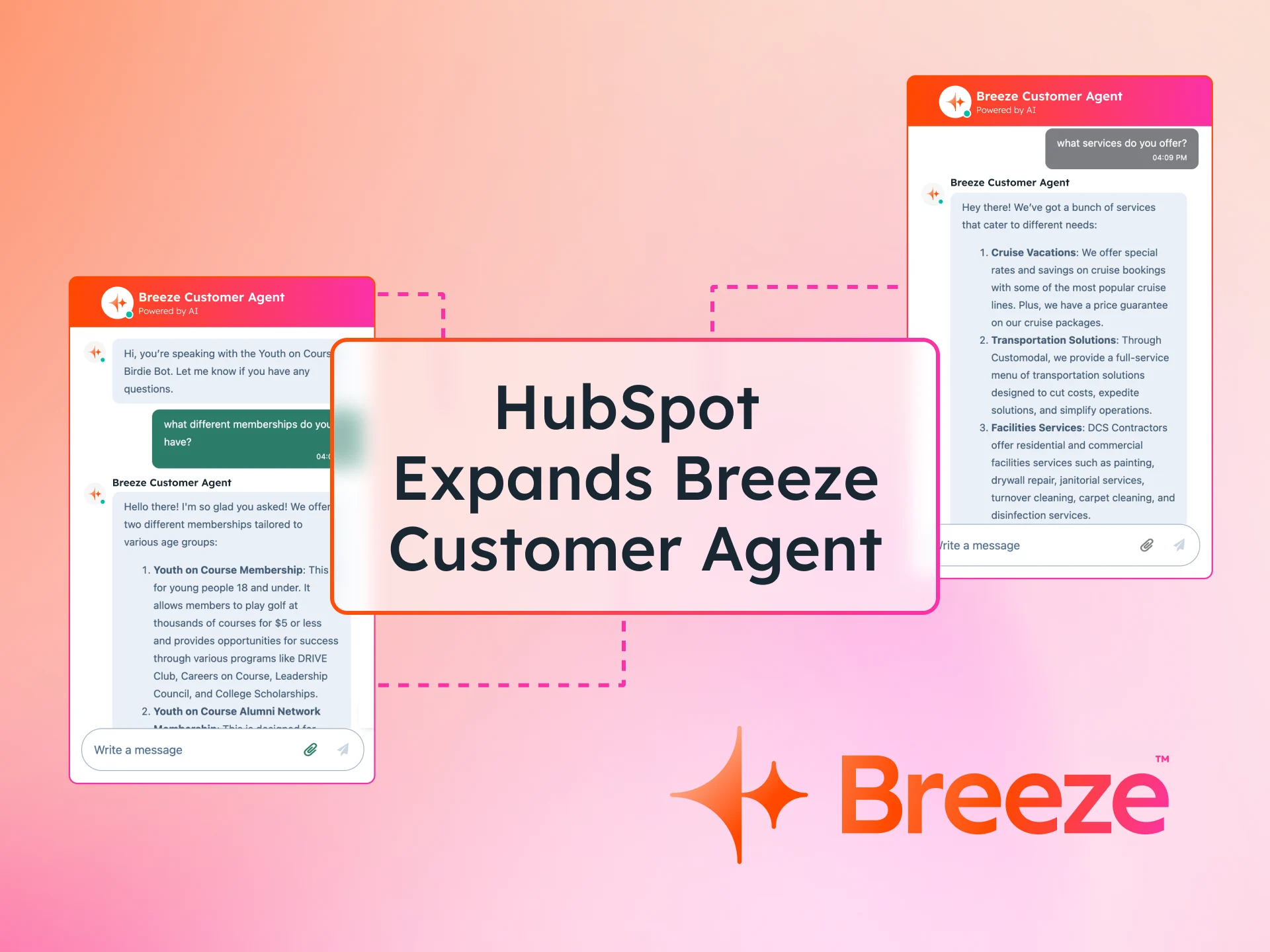
HubSpot's Breeze covers the broadest range of tasks. The Customer Agent resolves over 50% of support conversations autonomously.
Source: HubSpot
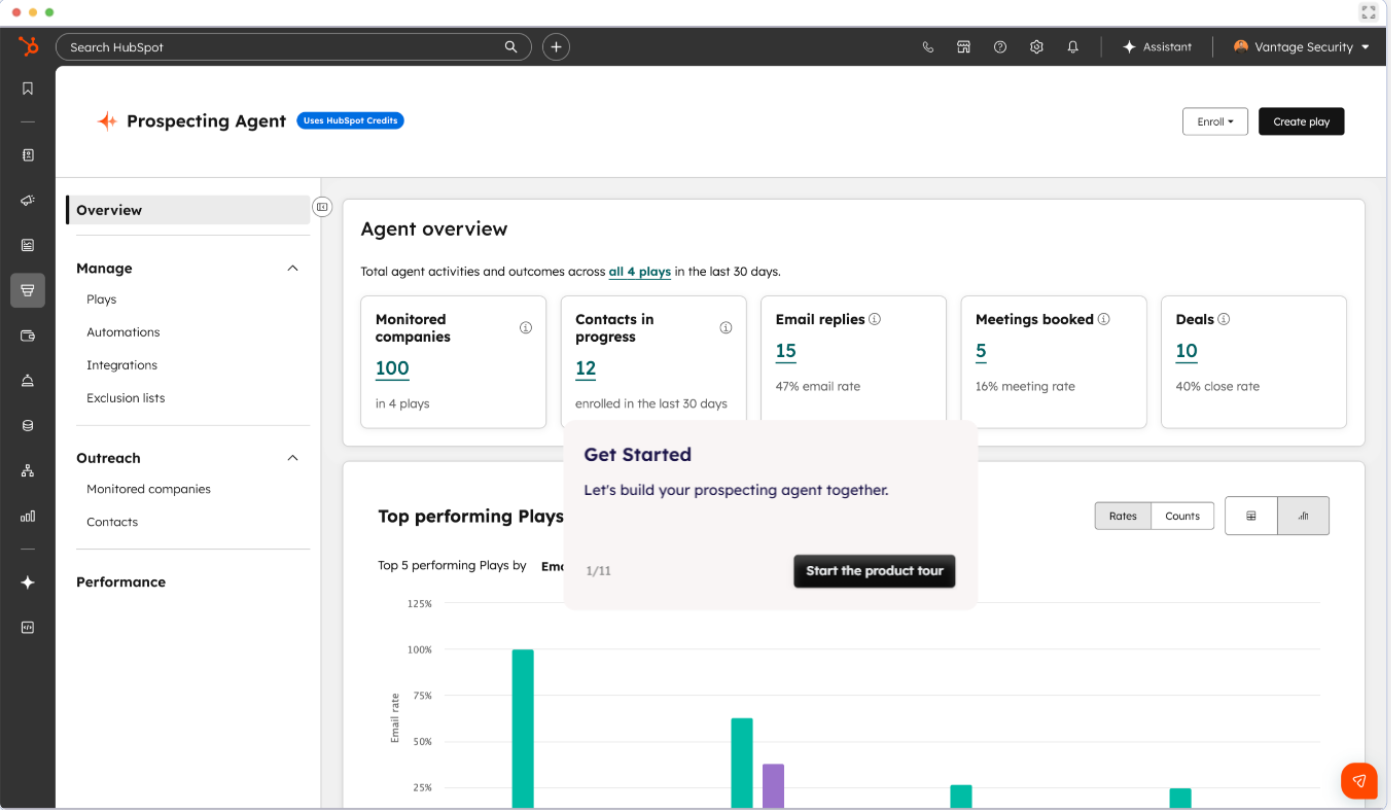
The Prospecting Agent monitors buying signals and drafts personalized outreach using the customer's complete HubSpot history.
Source: HubSpot
The Content Agent and Blog Research Agent accelerate content creation. Breeze runs on HubSpot Credits, a consumption-based system where Professional plans include 3,000 credits per month and Enterprise plans include 5,000. Several features, including AI-Powered Segmentation, Personalization, and Marketing Studio, are still in Beta.
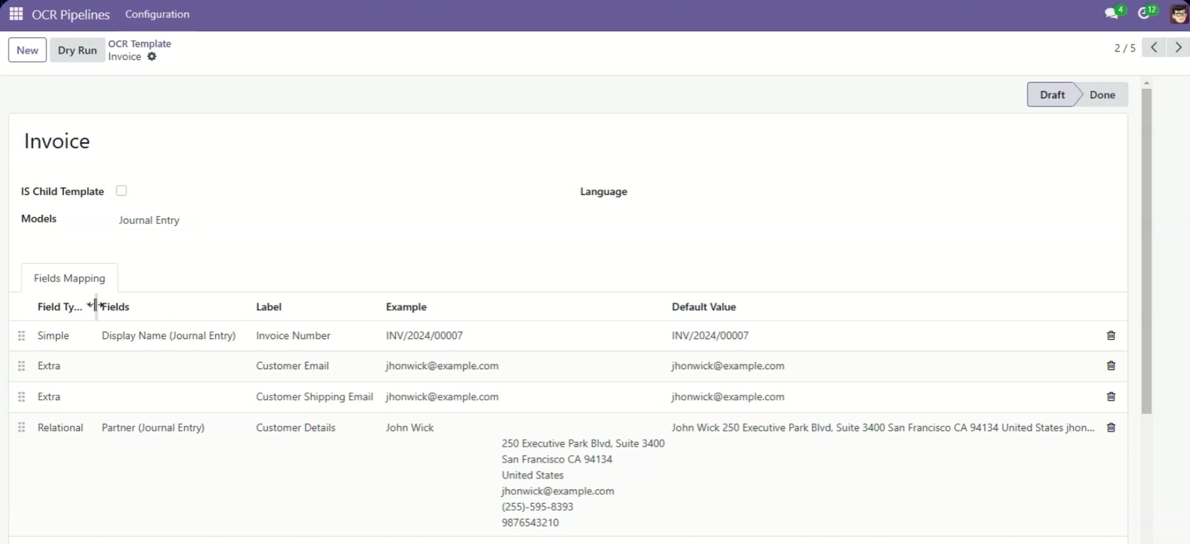
Odoo's AI is more targeted. Invoice digitization uses OCR to extract vendor, date, and line items from scanned documents, reportedly achieving a 98% recognition rate.
Source: YouTube
Predictive lead scoring uses historical win/loss data to compute deal probability. A natural-language "Ask AI" feature lets users query across modules. An AI-assisted website builder applies layout changes from plain-language descriptions.
These capabilities are practical but narrower than HubSpot's, and Odoo's roadmap for autonomous AI agents is slated for Odoo 20, expected at Odoo Experience 2026.
ZoomInfo's AI operates at a different layer. The GTM Context Graph reasons across CRM data, conversation intelligence, intent signals, and behavioral data to capture why deals move or stall.
AI agents inside GTM Workspace handle account research, draft outreach, monitor signals, and update CRM fields.
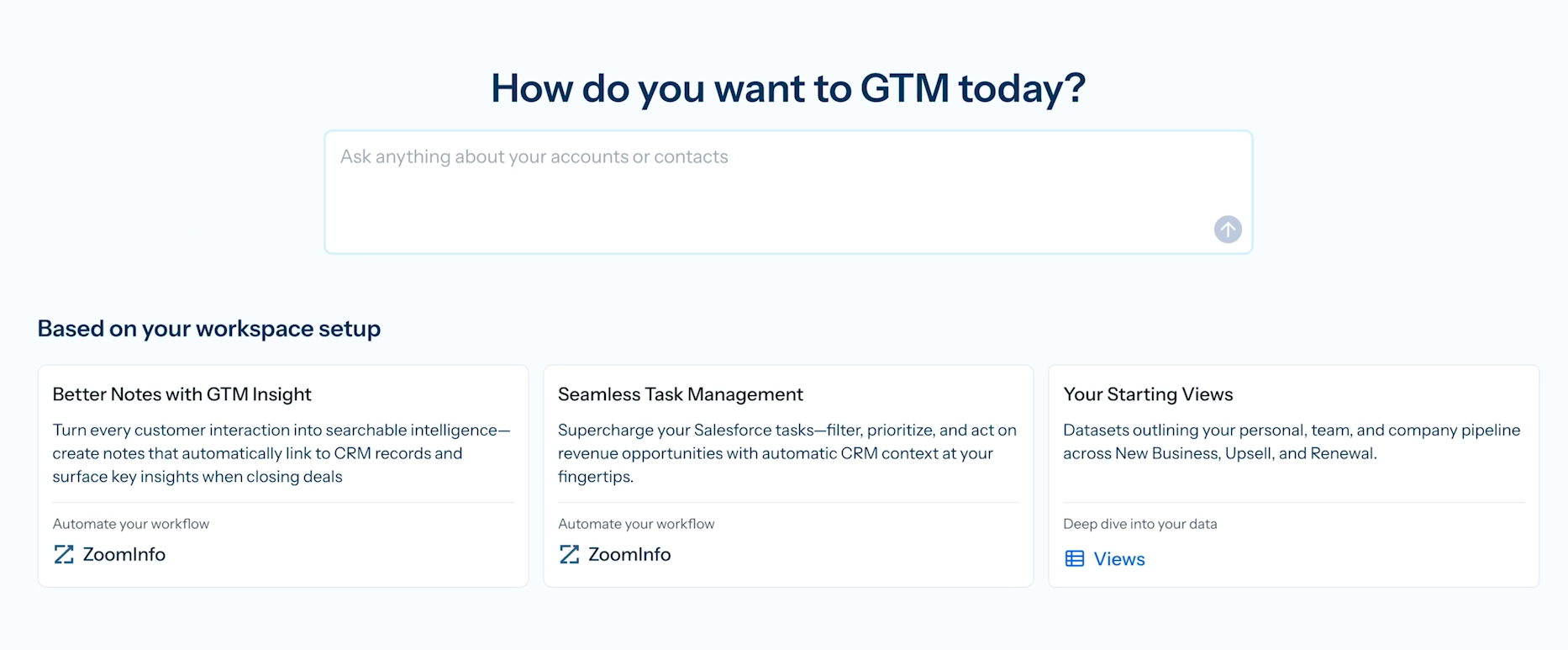
These agents are built on Anthropic's Claude and draw on ZoomInfo's verified data to ground outputs in facts rather than training data alone. Seismic's sales team saved 11.5 hours per week and attributed 39% of pipeline to ZoomInfo signals.
The difference: HubSpot's AI automates tasks within your CRM. Odoo's AI digitizes operational workflows. ZoomInfo's AI identifies the right targets, surfaces the right signals, and explains why those signals matter for your specific deal patterns.
The pricing models reflect what each platform values
HubSpot and Odoo take opposite approaches to pricing, and understanding the structure matters more than comparing sticker prices.
HubSpot charges along multiple dimensions at once. Each Hub (Marketing, Sales, Service, Content, Data, Commerce) has its own tier structure. Sales Hub Starter costs $15/seat/month on annual billing. Marketing Hub Professional is $800/month with a mandatory $3,000 onboarding fee.
Enterprise tiers run higher. The complexity compounds when you mix tiers: if you subscribe to Marketing Hub Professional and Sales Hub Enterprise, all Core Seats are billed at the Enterprise rate. Marketing Hub also charges by contact tier, with overages billed immediately.
For a 20-person team using Marketing Hub Professional and Sales Hub Professional with 10,000 marketing contacts, the annual cost reaches $15,000–$25,000 before add-ons.
Odoo simplifies this. Standard plan pricing is €11.90/user/month on annual billing, covering access to all apps. No per-module upsell, no contact-tier pricing. The same 20-person team pays roughly €2,856/year for full access to CRM, Accounting, Inventory, Manufacturing, HR, and everything else. The Custom plan at €17.90/user/month adds Odoo Studio, multi-company support, and external API access.
The catch: Odoo's sticker price doesn't include implementation. Complex deployments typically require a certified partner, and implementation packs from Odoo range from €280 for 4 hours to €9,180 for 200 hours.
Companies with non-standard processes can spend multiples of their annual subscription on initial setup. Certain features (SMS messaging, lead enrichment, document OCR) also consume IAP credits billed separately.
ZoomInfo uses custom consumption-based pricing with no published rates. It's a premium investment, but the ROI is measurable. Seismic attributed 39% of active pipeline to ZoomInfo signals and reported 54% productivity gains. Snowflake achieved 200% higher conversion rates on accounts scored using ZoomInfo data.
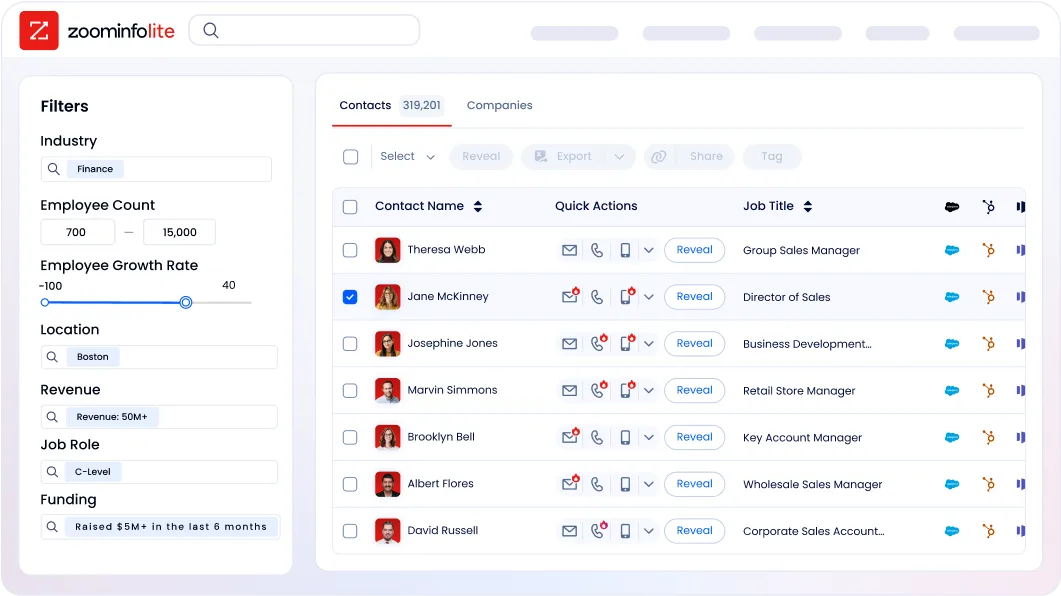
For teams where finding the right buyers is the bottleneck, ZoomInfo pays for itself in pipeline acceleration. A permanent free tier, ZoomInfo Lite, offers 10 monthly export credits for individual prospecting.
Integrations and ecosystem
HubSpot operates one of the largest SaaS ecosystems. The App Marketplace has surpassed 2,000 integrations with 2.5 million active installs. Native connectors cover Salesforce, Slack, Zoom, Google Workspace, Microsoft Teams, Jira, LinkedIn, and most major marketing and sales tools.
The REST API supports date-based versioning with an 18-month support window per version, and official SDKs exist for Python, TypeScript, Java, Ruby, Go, and PHP. A remote MCP server gives AI agents read/write access to HubSpot CRM data.
Odoo has breadth through volume. The Apps Store lists 40,000+ community and official modules, covering payment gateways (Stripe, PayPal), shipping carriers (FedEx, UPS, DHL), and marketplace connectors (Amazon). However, native integrations with major SaaS platforms (Salesforce, HubSpot, Shopify) typically require third-party apps or custom development.
The external JSON-2 API is available only on the Custom plan (€17.90/user/month). Odoo supports Zapier, Make, and n8n for no-code automation, but its integration approach is more self-contained than outward-facing.
ZoomInfo is built to serve as infrastructure. The Enterprise API provides programmatic access to contact search, company enrichment, intent data, and AI intelligence.
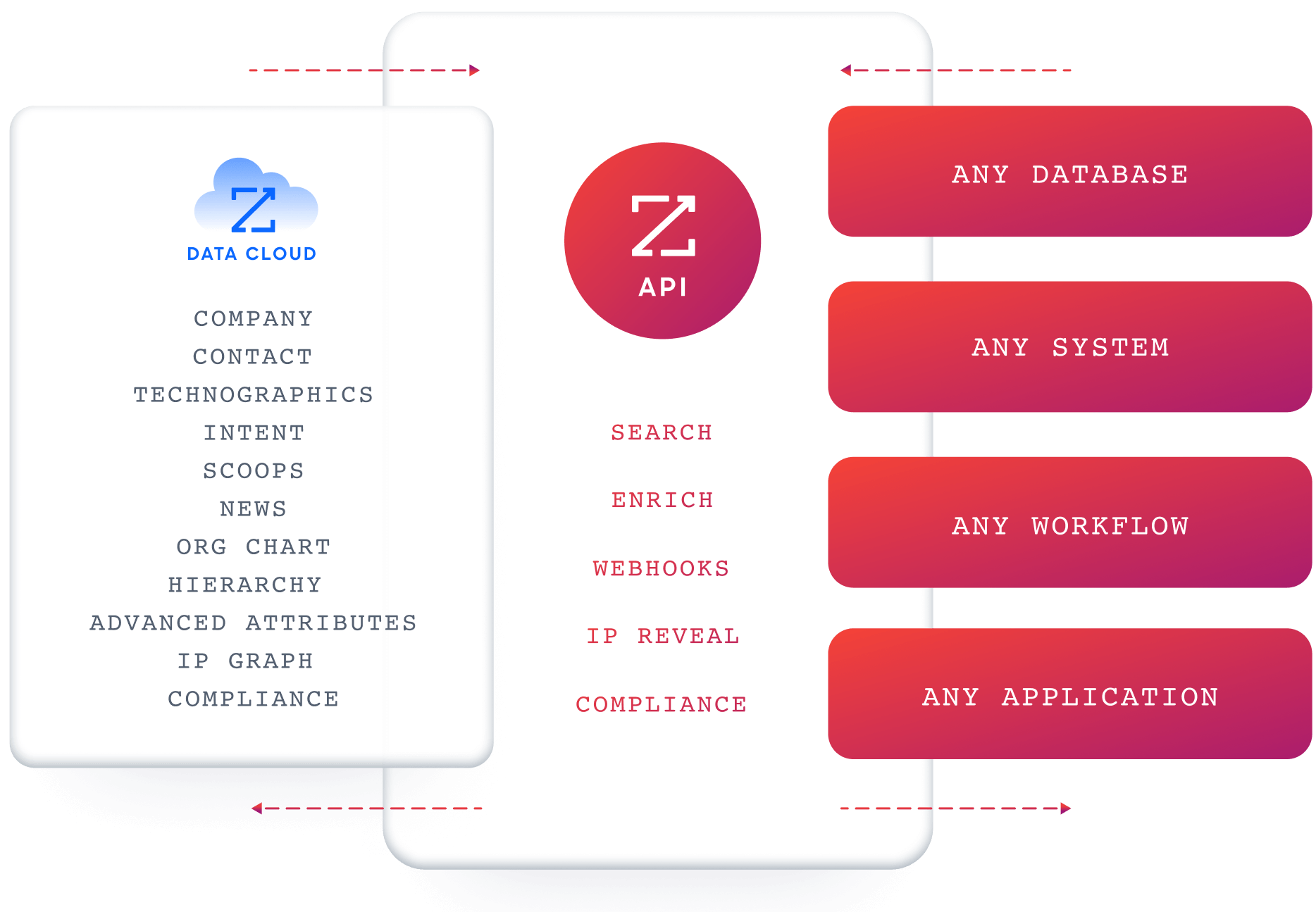
The MCP server connects ZoomInfo to any MCP-compatible AI agent, including Claude and ChatGPT.
Cloud Data Cubes deliver ZoomInfo data directly into AWS, Snowflake, Google Cloud, and Databricks. The Marketplace lists 172+ partners spanning CRM, marketing automation, sales engagement, and data platforms.
BDO Canada's Senior Marketing Intelligence Analyst reported: "The plug-and-play aspect of the API means I can integrate it very easily into any process and get information at a moment's notice," achieving an 87% reduction in time spent on data dashboard updates. (BDO Canada case study)
ERP and operational capabilities: Odoo's territory
This is where Odoo stands alone. Neither HubSpot nor ZoomInfo attempts to be an ERP.
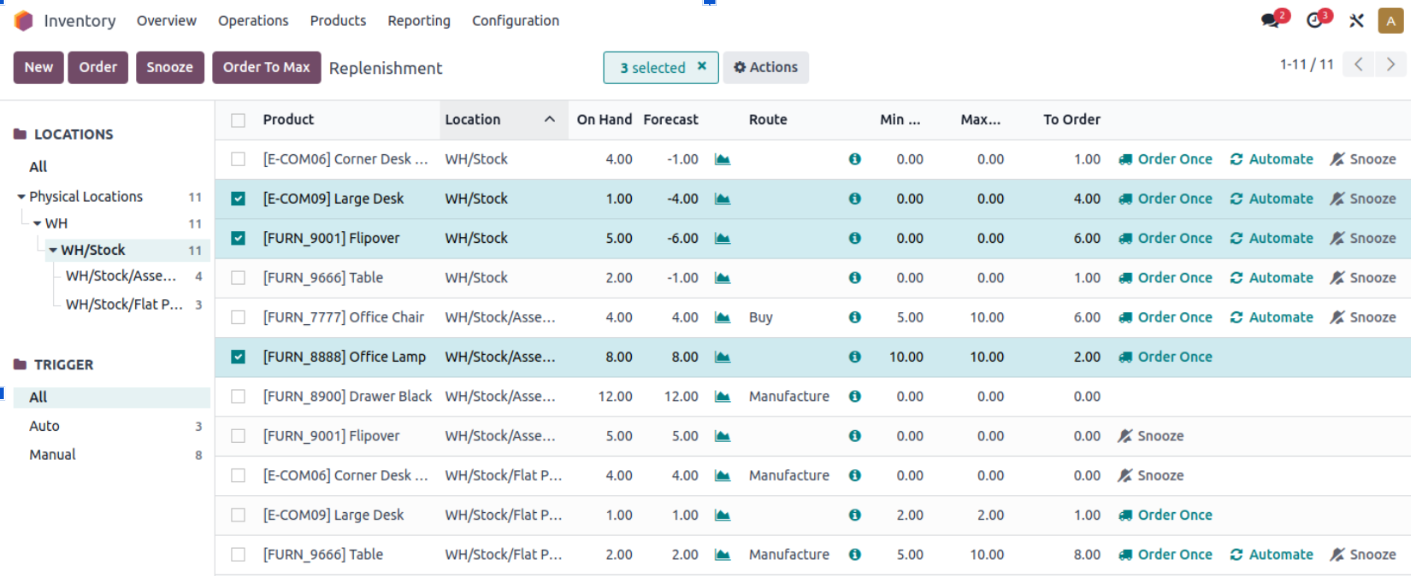
Odoo covers accounting with automated bank feeds from 28,000+ institutions and AI-powered invoice digitization. Inventory management handles multi-warehouse stock with barcode scanning, lot tracking, and wave picking.
Source: Odoo
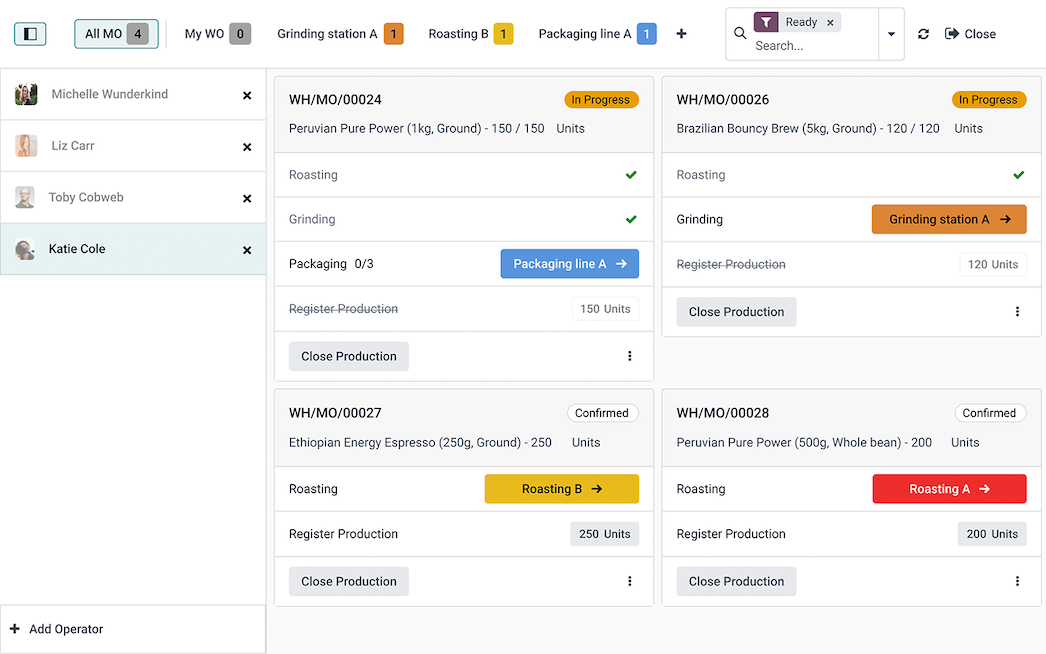
Manufacturing includes multi-level Bills of Materials, MRP scheduling, shop floor tablet apps, and PLM with engineering change orders.
Source: Odoo
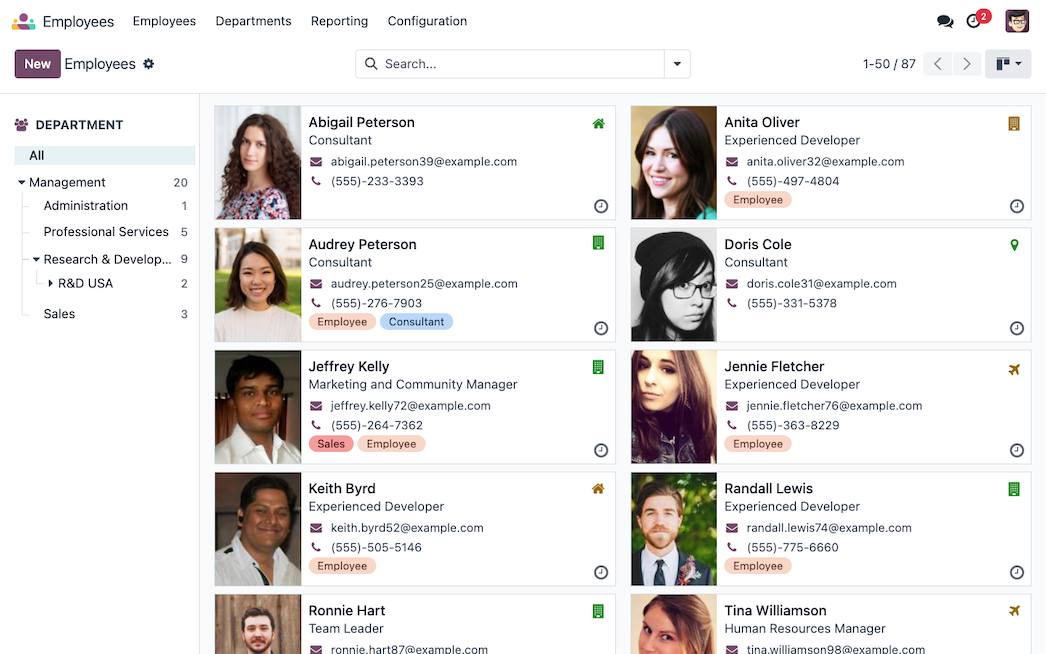
HR manages recruitment, time off, appraisals, fleet, and payroll.
Source: Odoo
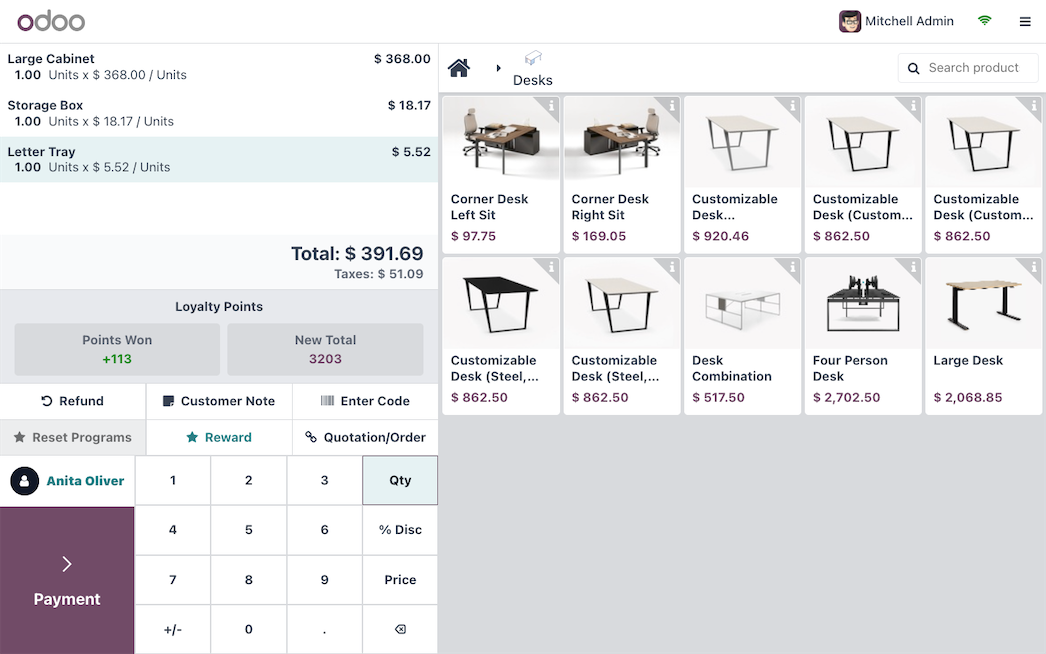
Point of Sale runs retail and restaurant operations with offline capability.
Source: Odoo
All of this shares one database. A sale in the POS reduces inventory. Low inventory triggers a purchase order. The purchase order generates a vendor bill in Accounting. The vendor bill posts to the general ledger. No export, no import, no reconciliation.
HubSpot's Commerce Hub handles CPQ, invoicing, and payment processing, covering the quote-to-cash workflow for B2B sales teams. It supports payments in 130+ currencies through HubSpot Payments or Stripe. But it's not an accounting system, not an inventory manager, and not a manufacturing planner.
ZoomInfo makes no claim to operational capabilities. It's a GTM intelligence platform, not an ERP. Companies running Odoo for operations and ZoomInfo for sales intelligence get the best of both: Odoo runs the business, ZoomInfo identifies and reaches the right buyers.
Security and compliance
All three platforms take security seriously, but certifications differ.
ZoomInfo holds the broadest certification set: ISO 27001, ISO 27701, SOC 2 Type II, TRUSTe GDPR, and TRUSTe CCPA, all renewed annually. It's a registered data broker in California and Vermont. For enterprise buyers in regulated industries, this matters.
HubSpot maintains SOC 2 Type II, SOC 3, and HIPAA attestation. The platform offers EU data residency, AES-256 encryption at rest, and TLS 1.2/1.3 in transit. SSO, 2FA, and IP allowlisting are available. A public Trust Center provides transparency into how AI models interact with customer data.
Odoo holds CSA STAR Level 1 certification and maintains PCI-DSS compliance through payment acquirers. Data is encrypted with AES-256 at rest and 256-bit SSL/TLS in transit. Odoo offers on-premise deployment for companies with strict data residency requirements, a capability neither HubSpot nor ZoomInfo provides. However, Odoo does not currently hold ISO 27001 or SOC 2 certifications.
HubSpot vs. Odoo vs. ZoomInfo: Which should you choose?
These three platforms solve different problems. The right choice depends on what's holding your business back.
Choose HubSpot if:
Marketing automation, sales pipeline management, and customer service are your primary needs
You want an intuitive platform your team can adopt quickly
Your business model depends on inbound marketing and content-led growth
You're a scaling company (20–2,000 employees) that needs a unified CRM for go-to-market
You can invest in per-seat, per-hub pricing as your team grows
Choose Odoo if:
You need one system for CRM, accounting, inventory, manufacturing, and HR
You want to replace five to seven separate SaaS tools with a single platform
You have a technical resource or budget for a certified implementation partner
Per-user pricing across all modules matters more than per-seat CRM pricing
Open-source flexibility and self-hosting options are important to your organization
Choose ZoomInfo if:
Finding the right buyers and knowing when they're in-market is your biggest challenge
You need verified B2B contact data, direct dials, and business emails at scale
Your revenue team wants AI that understands deal context, not just automates tasks
You're already using HubSpot, Salesforce, or another CRM and need to supercharge it with data
You want to power your own tools with B2B intelligence via API or MCP
Start with ZoomInfo Lite for free, or request a demo.
The most effective go-to-market stacks combine platforms that each do one thing well. HubSpot or Odoo manages the customer lifecycle. ZoomInfo provides the data and intelligence that tells you which customers to pursue, when to engage them, and what to say. Together, they create a system where every outreach is informed, every deal is tracked, and every operational step flows without friction.
HubSpot vs. Odoo vs. ZoomInfo FAQ
What is the fundamental difference between HubSpot, Odoo, and ZoomInfo?
HubSpot is a CRM and go-to-market platform focused on marketing automation, sales pipeline management, and customer service. Odoo is an open-source business platform covering CRM, accounting, inventory, manufacturing, HR, and eCommerce in a single system.
ZoomInfo is a B2B data intelligence platform that provides verified contact data, buyer intent signals, and AI-powered GTM execution. The three serve different functions and can work together.
Which platform is cheapest to get started with?
All three offer free entry points. HubSpot provides a permanent free CRM with limited features. Odoo's One App Free plan gives unlimited users access to a single app with no time limit. ZoomInfo Lite is a permanent free tier with 10 monthly export credits. For paid plans, Odoo is the most affordable at €11.90/user/month for access to all apps. HubSpot Starter begins at $15/seat/month for a single Hub. ZoomInfo uses custom pricing.
Can I use ZoomInfo with HubSpot or Odoo?
ZoomInfo has a native integration with HubSpot, available through the ZoomInfo Marketplace. This allows verified contact data, intent signals, and enrichment to flow directly into HubSpot CRM. Odoo does not have a native ZoomInfo integration, but ZoomInfo's Enterprise API and MCP server enable programmatic data delivery into any system, including Odoo's Custom plan (which supports external API access).
Which platform is best for a company that needs both CRM and ERP?
Odoo is the only one of the three that functions as both a CRM and a full ERP, covering accounting, inventory, manufacturing, HR, and point of sale alongside its CRM module. HubSpot covers CRM and go-to-market functions but not ERP operations. ZoomInfo is not a CRM or ERP; it provides the B2B data and intelligence layer that feeds into either.
How does buyer intent data work, and which platform offers it?
Only ZoomInfo provides proprietary buyer intent data. It tracks signals from 210 million IP-to-organization pairings and 6 trillion+ keyword-to-device pairings sourced monthly, identifying when companies are actively researching topics related to your product. Guided Intent, exclusive to ZoomInfo, identifies topics historically correlated with your deal success.
Neither HubSpot nor Odoo offer proprietary intent data of this kind.
Which platform has better AI for sales teams?
Each platform's AI serves a different purpose. HubSpot's Breeze Prospecting Agent drafts outreach using CRM history and monitors buying signals within the HubSpot ecosystem. Odoo's AI focuses on operational tasks like predictive lead scoring and document digitization.
ZoomInfo's AI agents, powered by the GTM Context Graph, identify the right accounts, surface the signals that matter, and draft outreach grounded in verified data. Agent Teams build on this by running full GTM plays end to end, with specialist agents sharing account context and acting within the approvals and limits you set. Seismic's sales team reported 54% productivity gains and attributed 39% of pipeline to ZoomInfo signals.
Which platform is best for eCommerce businesses?
Odoo is the strongest choice for businesses that need eCommerce tightly integrated with inventory, accounting, and fulfillment. Its online store syncs stock levels in real time across warehouses, generates invoices automatically, and supports both B2B and B2C storefronts from one product catalog.
HubSpot's Content Hub and Commerce Hub handle basic commerce workflows but are not designed for inventory-connected eCommerce.
ZoomInfo does not offer eCommerce features.
How do the platforms compare on data security certifications?
ZoomInfo holds the broadest certification set: ISO 27001, ISO 27701, SOC 2 Type II, TRUSTe GDPR, and TRUSTe CCPA, all renewed annually. HubSpot maintains SOC 2 Type II, SOC 3, and HIPAA attestation, with EU data residency available. Odoo holds CSA STAR Level 1 and PCI-DSS compliance through payment acquirers, but does not currently hold ISO 27001 or SOC 2 certifications. Odoo does offer on-premise deployment for full data sovereignty, which the other two do not.
Other HubSpot matchups worth a look:
