
Choosing between HubSpot and Pardot for your B2B marketing automation often comes down to five questions:
Are you already invested in the Salesforce ecosystem, or are you open to a standalone platform?
Do you need marketing automation that also covers sales, service, and content, or is your focus purely on B2B demand generation?
How important is ease of use versus depth of CRM-native integration?
Does your team have the technical resources to manage a complex platform, or do you need something your marketers can run without dedicated admins?
Is the data feeding your marketing automation accurate and complete enough to make any platform work?
In short, here's what we recommend:
HubSpot is the customer platform for B2B teams that want marketing automation, CRM, sales, service, and content management under one roof. Its shared data layer connects 288,706 customers across six integrated Hubs, each running on the same Smart CRM. With a free tier, an intuitive interface, and Breeze AI agents handling everything from prospect research to customer support, HubSpot makes marketing automation accessible without a dedicated admin team. The trade-off: pricing grows quickly as you add seats and Hubs, and enterprise customization still trails Salesforce in certain areas.
Pardot (now Marketing Cloud Account Engagement) is the B2B marketing automation platform built natively on Salesforce CRM. For organizations already running Sales Cloud, it delivers the closest integration between marketing and sales, with a mature lead scoring and grading engine, account-based marketing dashboards, and Agentforce AI agents that can build campaigns from natural-language prompts. However, Pardot requires a Salesforce CRM license, starts at $1,250/month, and carries a learning curve that reflects the Salesforce ecosystem's complexity.
Both platforms are capable marketing automation engines. But neither solves one problem on its own: the quality of the B2B data flowing into them. Your lead scoring is only as accurate as your contact records. Your ABM campaigns only work if you can identify and reach the right buying committee members. Your nurture sequences only convert if they target accounts that are actually in-market. That data foundation separates effective marketing automation from expensive email noise.
ZoomInfo is a B2B data and GTM platform built on a large-scale data foundation: 500M contacts, 100M companies, 135M+ verified phone numbers, and 200M+ verified business email addresses. Its GTM Context Graph (an intelligence layer processing 1.5B+ data points daily) fuses this data with your CRM records, conversation transcripts, and behavioral signals to reveal not just what's happening in your pipeline, but why. ZoomInfo integrates natively with both HubSpot and Salesforce, and can be accessed through GTM Workspace for sellers, GTM Studio for marketers and RevOps, or APIs and MCP in any front-end.
If verified B2B data sounds like the missing piece in your marketing automation, see how ZoomInfo works with your platform.
HubSpot vs. Pardot vs. ZoomInfo at a glance
HubSpot | Pardot (MCAE) | ZoomInfo | |
|---|---|---|---|
Primary function | All-in-one CRM and marketing platform | B2B marketing automation on Salesforce | B2B data, intelligence, and GTM platform |
Best for | Teams wanting one platform for marketing, sales, and service | B2B teams already on Salesforce CRM | Teams that need verified data and intent signals to fuel any marketing platform |
Starting price | Free CRM; Marketing Hub Pro at $800/mo | $1,250/org/month (Growth+) | Consumption-based; free tier (ZoomInfo Lite) available |
CRM requirement | Built-in Smart CRM | Requires Salesforce CRM license | Integrates with HubSpot, Salesforce, and Dynamics |
AI capabilities | Breeze agents across all Hubs | Agentforce + Einstein scoring | GTM Context Graph with AI-powered signals and outreach |
Lead scoring | Predictive lead scoring (Enterprise) | Dual scoring + grading + Einstein AI | Account Fit Score + intent-based prioritization |
B2B contact database | No native B2B database | No native B2B database | 500M contacts, 200M+ verified emails, 135M+ verified phones |
Intent data | No native intent data | No native intent data | Buyer intent from 210M IP-to-org pairings |
Learning curve | Moderate | Steep (Salesforce ecosystem) | Moderate (90-day structured onboarding) |
Free plan | Yes, permanent free CRM | No free plan or trial | ZoomInfo Lite (permanent free tier) + 7-day trial |
HubSpot covers the full customer lifecycle; Pardot goes deep on B2B demand gen
The fundamental difference between HubSpot and Pardot is scope.
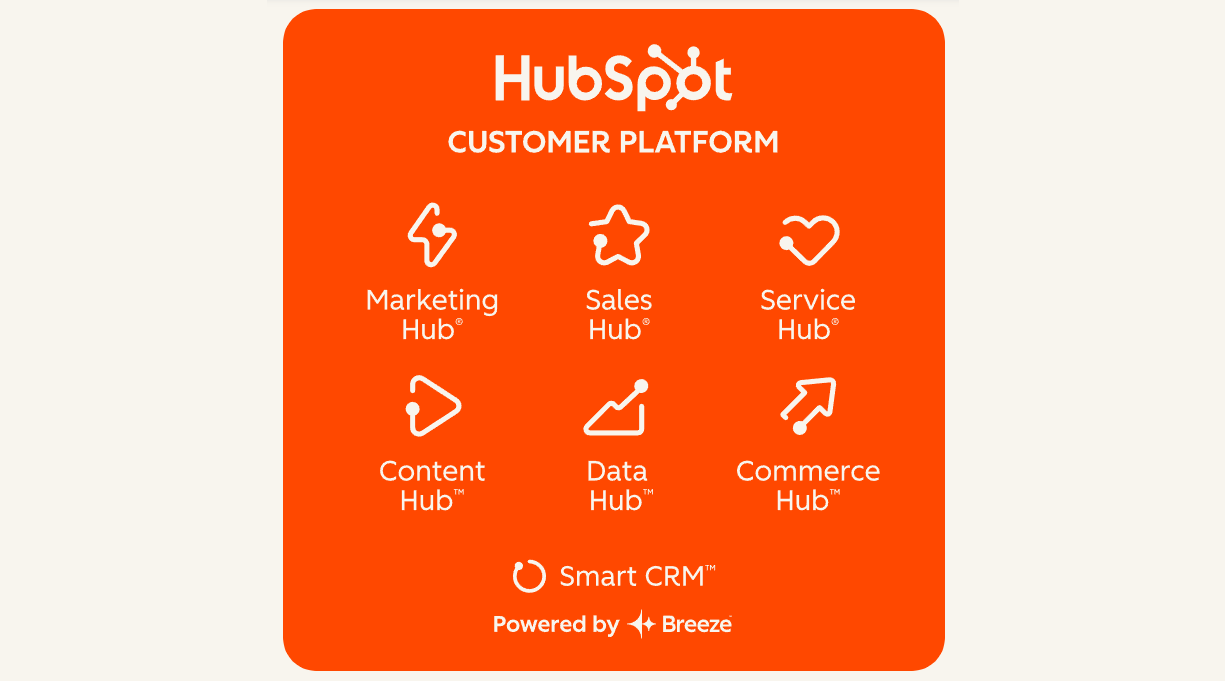
HubSpot spans marketing, sales, service, content, commerce, and data management. A contact captured by a Marketing Hub form feeds directly into Sales Hub pipelines, Service Hub tickets, and Content Hub personalization, all without integration or data sync.
Source: HubSpot
Pardot focuses on one thing: B2B marketing automation tightly integrated with Salesforce CRM. It handles lead capture, email nurturing, scoring and grading, ABM, and multi-touch attribution. If your sales team lives in Salesforce, Pardot puts marketing engagement data directly on the Lead, Contact, and Opportunity records they already use, with Engagement History Dashboards refreshing roughly every 10 minutes.
For B2B organizations that need marketing, sales, and service in one place, HubSpot's breadth eliminates tool sprawl. For organizations whose CRM is Salesforce and whose primary need is demand generation aligned to a complex sales cycle, Pardot's depth within that ecosystem is hard to match. The right choice depends on whether you value platform breadth or CRM-native depth.
Lead scoring tells two different stories
Both platforms score leads, but their approaches reflect different philosophies.
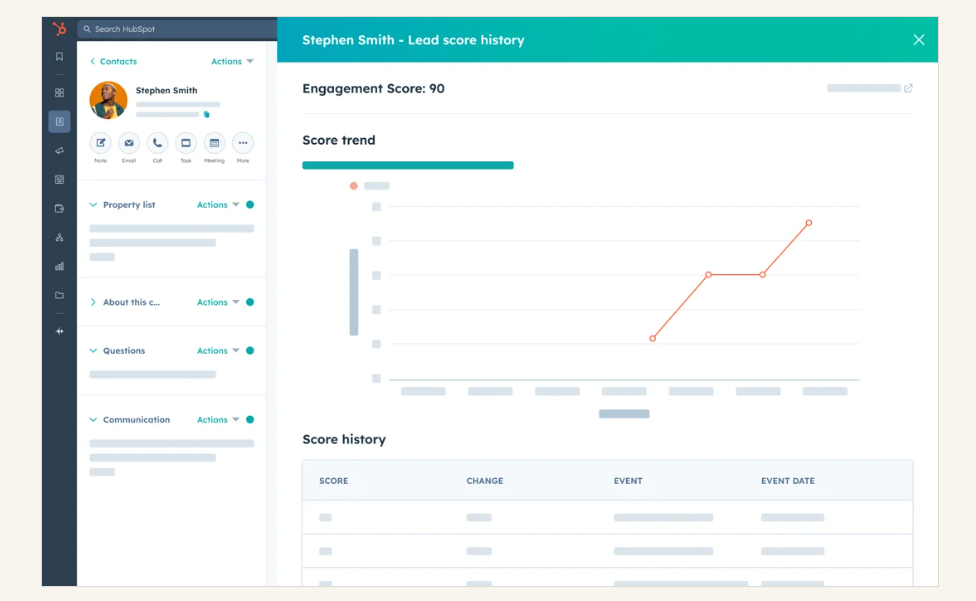
HubSpot offers predictive lead scoring at the Enterprise tier, using machine learning to analyze historical data and surface high-fit prospects. It works well and runs largely on autopilot, but it operates on data already in your CRM: form submissions, email engagement, page views, and deal outcomes.
Source: HubSpot
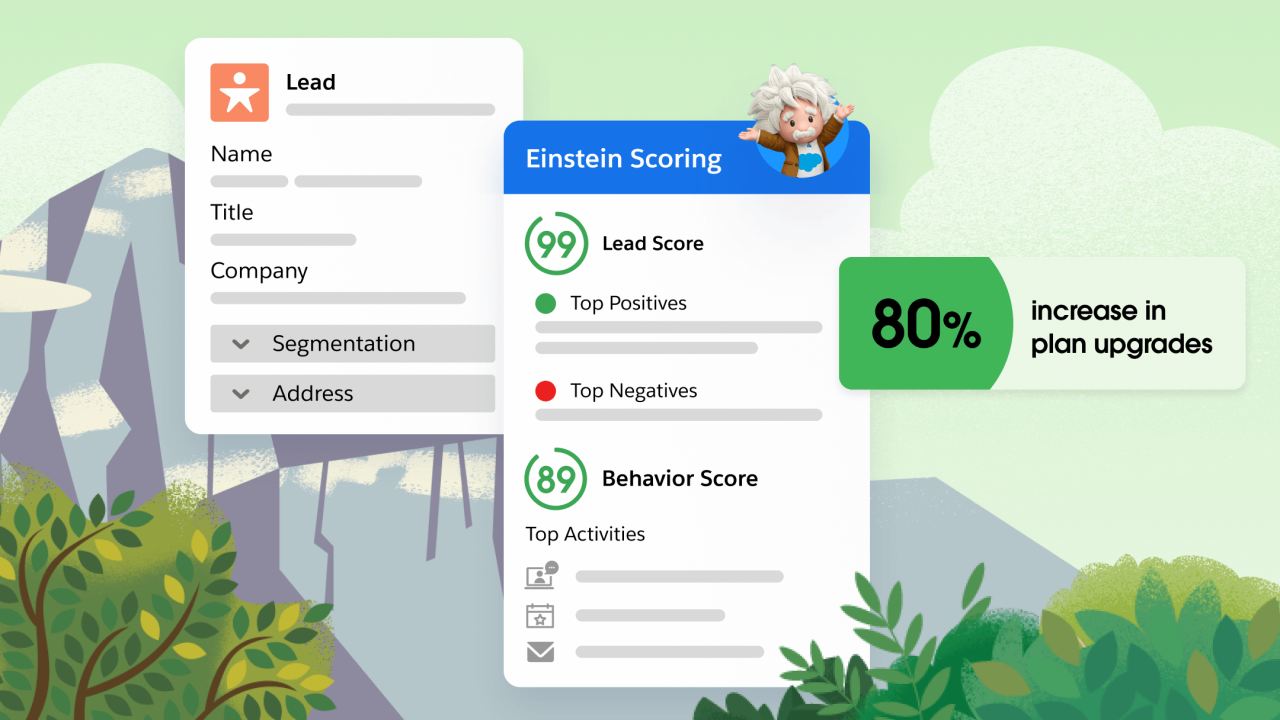
Pardot's lead qualification system works on two dimensions at once. Lead scoring assigns numerical values based on behavioral engagement (email opens, page views, content downloads), while lead grading evaluates how well a prospect matches the ideal customer profile using firmographic data (job title, company size, industry). On top of these rules-based systems, Einstein Behavior Scoring adds a machine-learning layer that assigns a 0-100 score based on engagement patterns, updating roughly every four hours.
Source: Salesforce
The dual scoring-plus-grading system gives Pardot an edge in complex B2B sales cycles where engagement alone doesn't indicate readiness to buy. A junior researcher downloading every whitepaper might score high but grade low. A VP who visits the pricing page once might score low but grade high. Pardot surfaces both signals.
But both platforms share a limitation: their scoring models can only work with the data they have. If your CRM is missing half the buying committee, if contact records lack job titles or direct phone numbers, if you can't see which accounts are researching your category, then even the best scoring engine works with incomplete inputs.
This is where ZoomInfo changes the equation. With 500M contacts and 200M+ verified business email addresses, ZoomInfo fills the gaps that make scoring meaningful. Its Buyer Intent data tracks signals from 210 million IP-to-Organization pairings, identifying which accounts are researching your category before they fill out a form. Guided Intent (exclusive to ZoomInfo) identifies the specific topics historically correlated with deal success rather than requiring manual topic selection. And ZoomInfo's Account Fit Score uses predictive AI to score accounts 0-100 based on company attribute patterns that predict conversion.
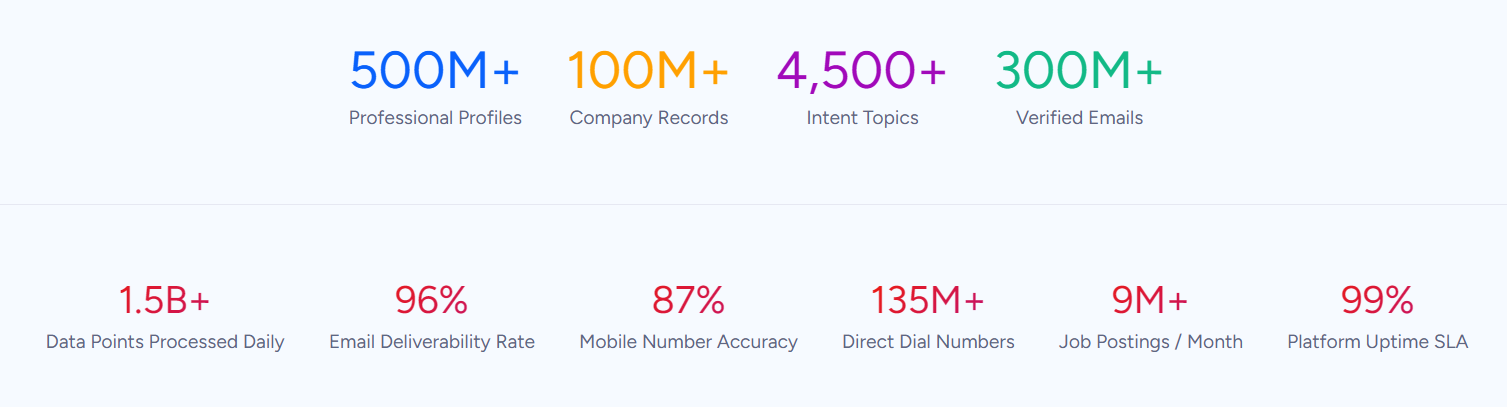
The result: instead of scoring only the leads who have already raised their hands, you identify and score the full buying committee at accounts that are actively in-market.
Account-based marketing takes different shapes
Both platforms support ABM, but the implementation differs.
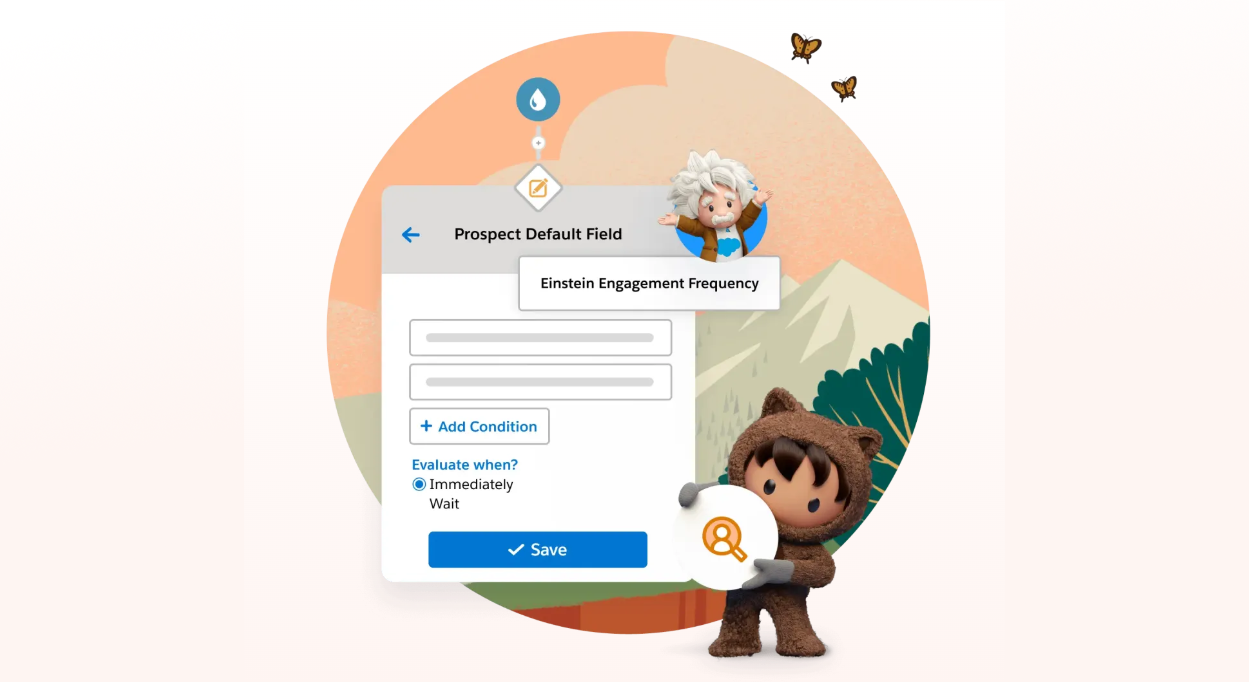
Pardot's ABM capabilities are tightly woven into Salesforce. Einstein Key Account Identification analyzes historical opportunity data to tier-rank accounts by engagement and purchase likelihood. The platform detects when multiple people from the same company engage with marketing content, flagging buying committee signals at the account level.
Source: Salesforce
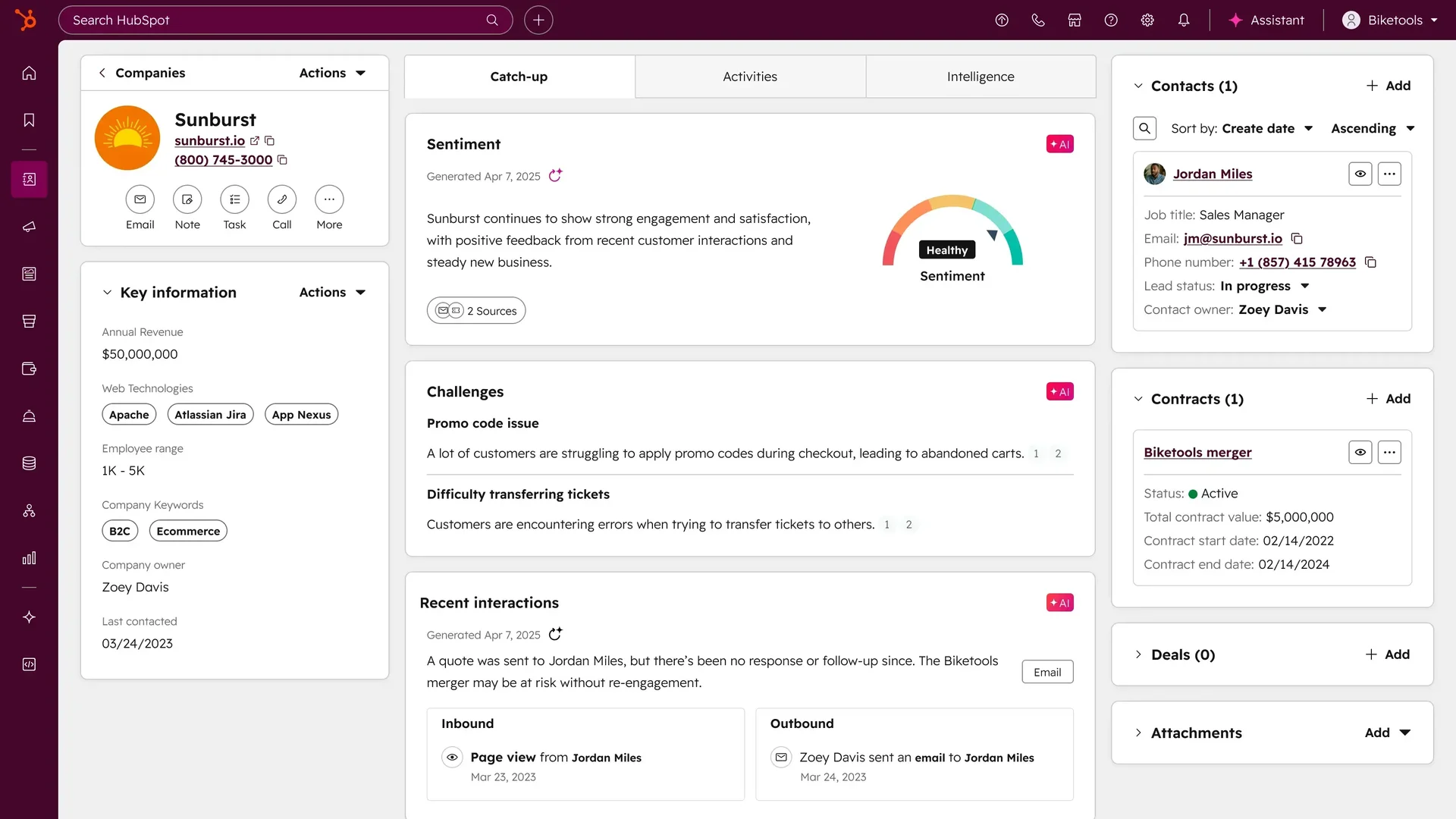
HubSpot supports account-based strategies through its Smart CRM, where contacts are associated with company records and buying behavior is tracked across the customer lifecycle. HubSpot provides the tools for ABM execution (targeted content, personalized sequences, company-level reporting), but it doesn't include the native ABM dashboards and account scoring that Pardot offers within Salesforce.
Source: HubSpot
ZoomInfo approaches ABM from the data and intelligence layer. ZoomInfo Marketing provides the account identification, contact discovery, and intent signals that make ABM programs work in either platform. Its native DSP deploys display ads based on 300+ company attributes across major ad networks, while FormComplete reduces web forms to a single field by auto-appending the rest from ZoomInfo's database. Smartsheet reported a 40%+ increase in form fills, 84% increase in MQLs, 26% increase in opportunity rate, and 59% increase in win rate using these capabilities.
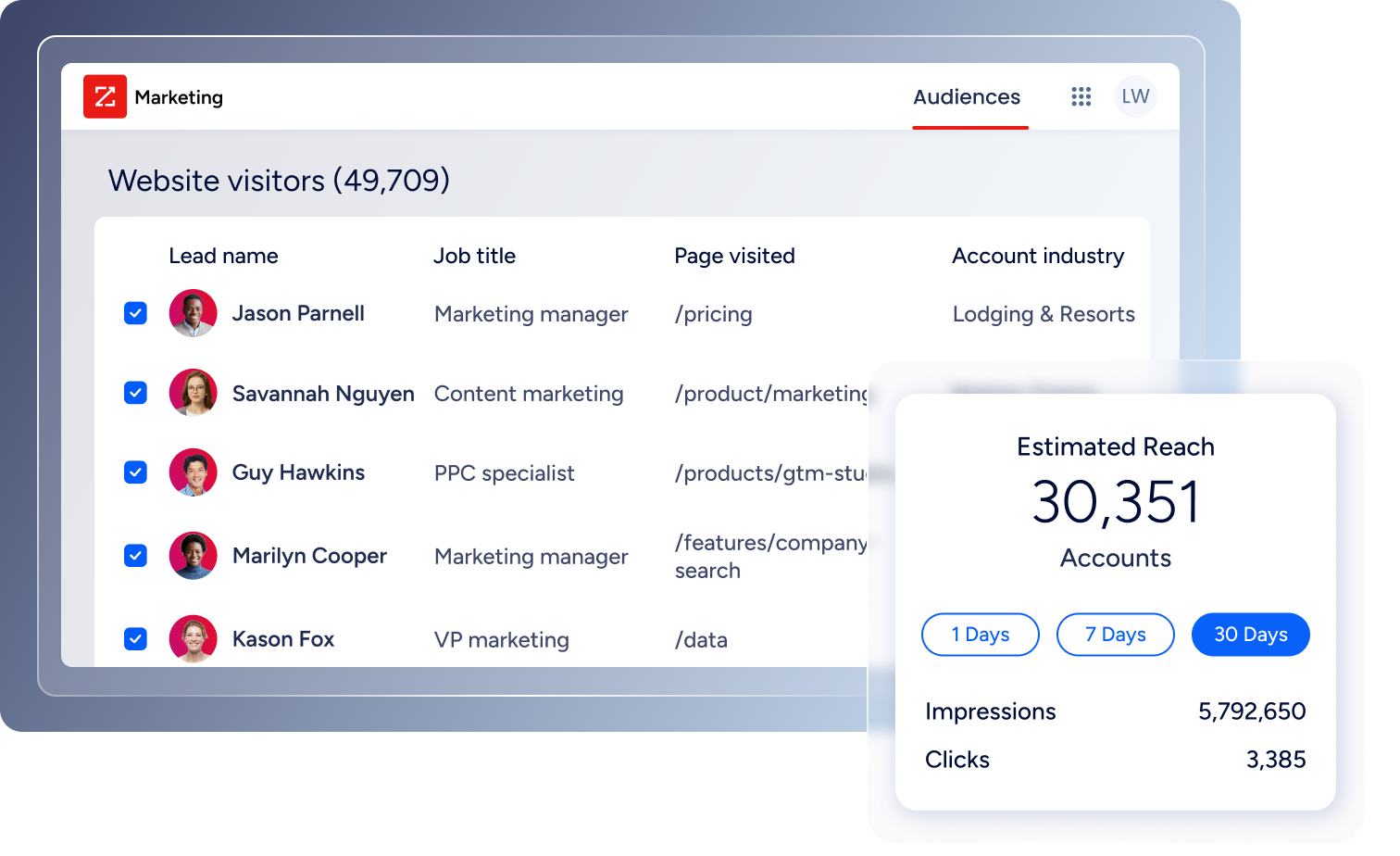
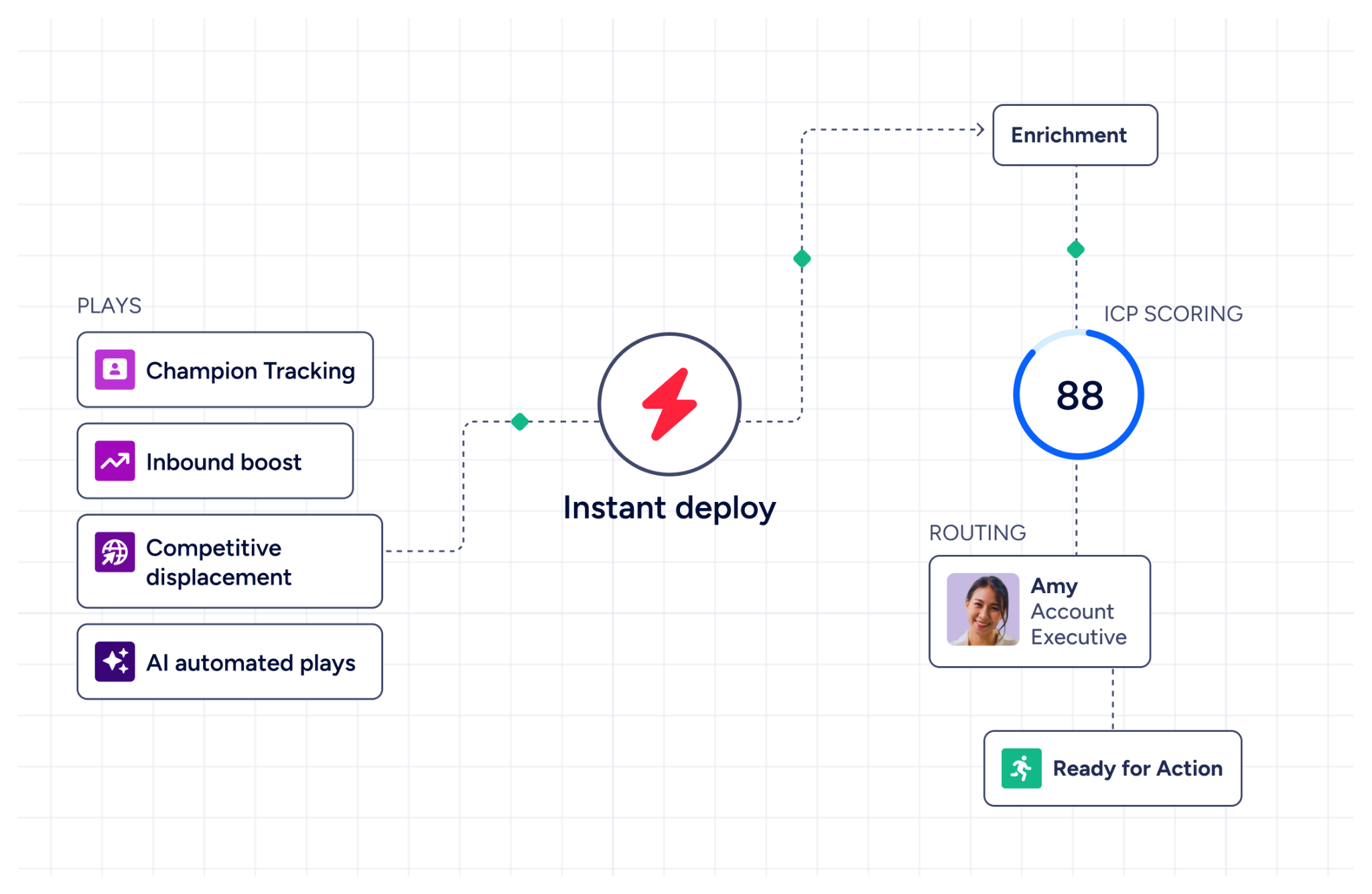
Through GTM Studio, marketers describe audiences in plain language, build multi-channel plays targeting accounts that match proven win patterns, and watch pipeline impact in real time. Expansion plays that used to take three weeks now launch in 30 minutes.
"It's not just the data itself. It's more about the right data at the right time to help us reach out with the right message across that full buyer journey." (Chelsea Kenyon, Senior Director of Digital Strategy, Redwood Logistics)
AI capabilities reflect each platform's strengths
All three platforms have invested in AI, but each applies it differently based on their core advantage.
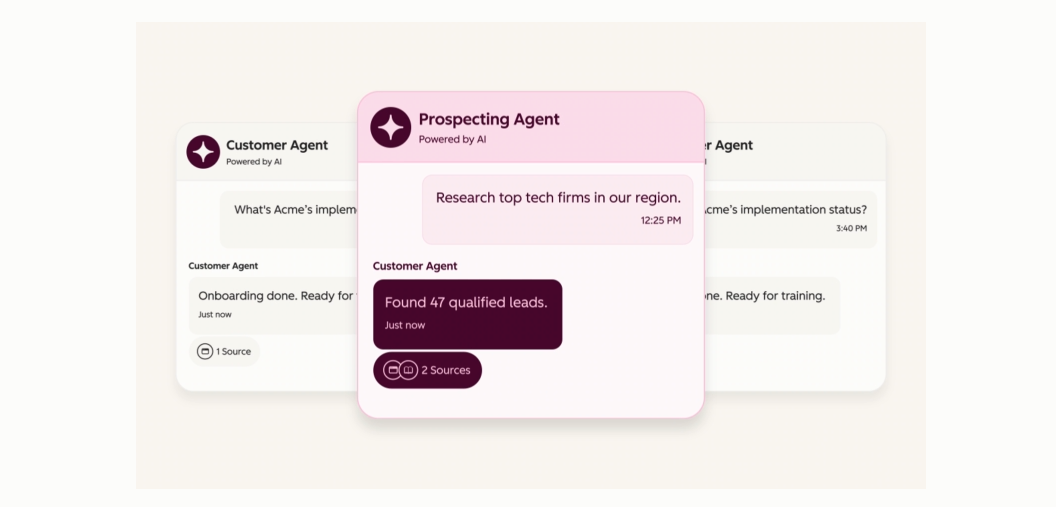
HubSpot's Breeze AI runs across all Hubs as an integrated layer. The Breeze Customer Agent resolves over 50% of customer conversations without human help. The Prospecting Agent researches accounts and drafts personalized outreach using HubSpot customer history. The Data Agent answers natural-language questions about CRM data. Breeze works because HubSpot captures data from every Hub in a shared CRM, giving the AI more context than single-function tools.
Source: HubSpot
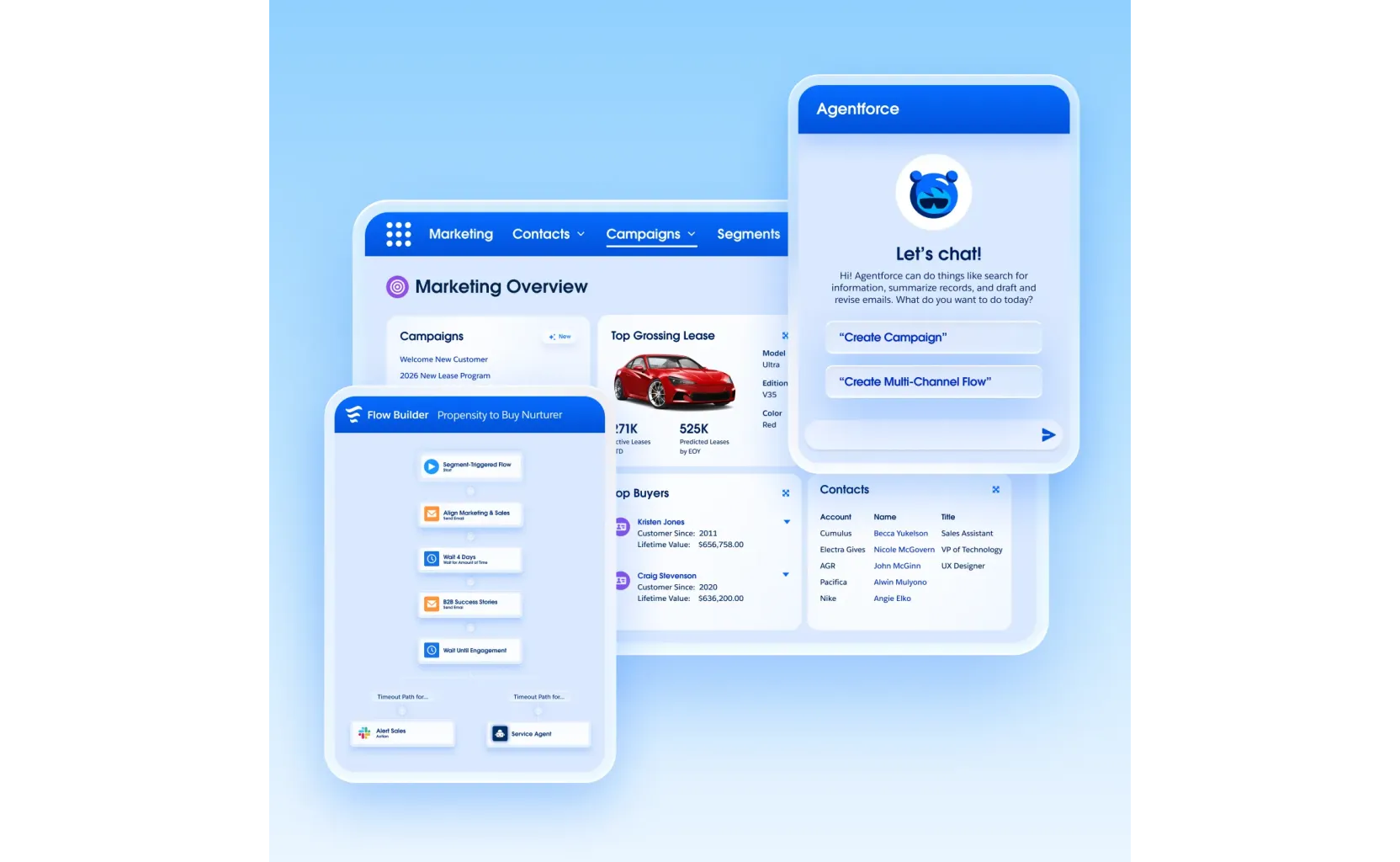
Pardot's AI comes through Agentforce and Einstein, embedded in the Salesforce platform. Agentforce Campaign Creation lets marketers generate complete campaign briefs, audience segments, email copy, and customer journeys from natural-language prompts, all grounded in real-time Data 360 customer data. Einstein adds Send Time Optimization (scheduling each send when a contact is most likely to engage) and Engagement Frequency (identifying which contacts receive too many or too few messages). The AI works well, but accessing these capabilities requires purchasing additional Einstein Request Credits, Messaging Credits, and Data 360 Credits on top of the base subscription.
Source: Salesforce
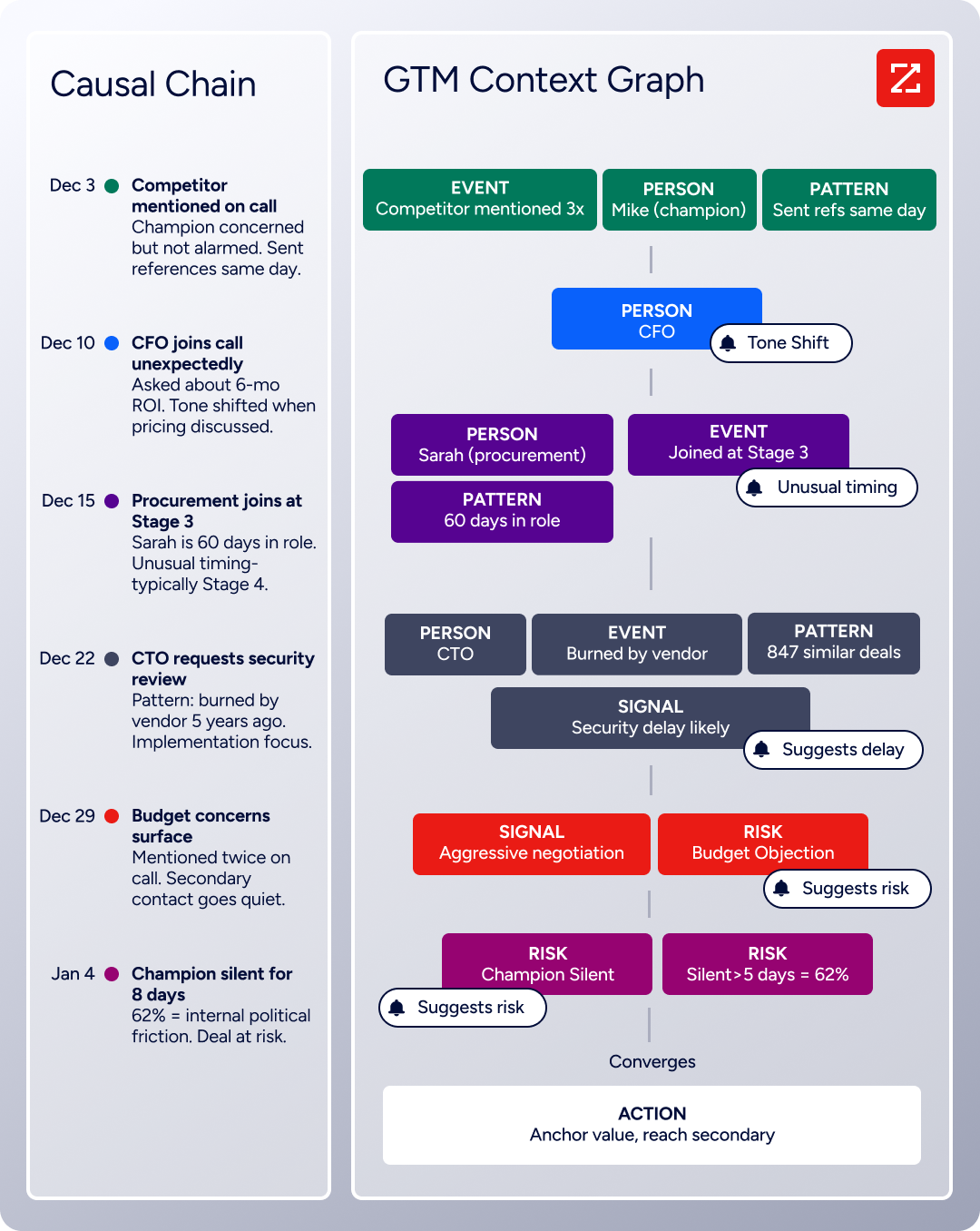
ZoomInfo's AI operates through the GTM Context Graph, an intelligence layer that processes 1.5B+ data points daily. Unlike CRM-based AI that can only reason about data already in your system, the GTM Context Graph fuses your CRM records, conversation transcripts, and behavioral signals with ZoomInfo's third-party intelligence to show why deals move or stall. The AI doesn't just know a CFO joined the last call; it connects that executive sponsorship to similar patterns across thousands of deals to predict what should happen next. Seismic attributed 39% of active pipeline to opportunities identified or influenced by ZoomInfo signals and reported 54% productivity gains.
The CRM question shapes everything
This is the single biggest factor in choosing between HubSpot and Pardot.
If your organization runs on Salesforce, Pardot has a structural advantage. Because it's built natively on the Salesforce platform (sharing the same data model, objects, and UI), there's no integration layer to maintain. Marketing engagement data appears on Lead, Contact, Account, and Opportunity records without sync delays.
If your organization doesn't use Salesforce, or isn't willing to commit to the Salesforce ecosystem, HubSpot's built-in Smart CRM eliminates the need for a separate CRM purchase. HubSpot's CRM is free for unlimited contacts (up to 1M records), includes deal pipelines, and connects natively to every Hub. For teams evaluating both a CRM and marketing automation at the same time, HubSpot provides both in a single purchase decision.
ZoomInfo integrates natively with both. Its HubSpot integration enriches CRM records and triggers workflows based on intent signals. Its Salesforce integration does the same for Pardot users, with contact and company data flowing directly into Salesforce records. Whether you choose HubSpot or Pardot, ZoomInfo serves as the data intelligence layer that makes your CRM and marketing automation more effective.
For a closer look at how HubSpot and ZoomInfo compare as standalone platforms, see our HubSpot vs. ZoomInfo comparison.
"Without ZoomInfo, it would be extremely difficult, if not impossible, to achieve our business objectives. Without it, we wouldn't be able to understand the market, have the right contact data, and make meaningful connections." (Thor Sanderson, Senior Manager of Sales Technology Enablement, Smartsheet)
Pricing models serve different buyers
The pricing structures reveal who each platform is built for.
HubSpot uses a hybrid model combining per-seat, per-hub, and contact-based pricing. A free CRM gets you started with no time limit. Marketing Hub Professional costs $800/month (annual) with 2,000 marketing contacts included and a $3,000 one-time onboarding fee. The Starter Customer Platform bundles all Hubs at $9/seat/month (annual). However, costs can escalate: when subscribing to multiple Hubs at different tiers, all Core Seats are billed at the rate of the highest tier. A mid-market team mixing Professional and Enterprise tiers across departments can find seat costs rising faster than expected.
Pardot charges a flat fee per organization, billed annually with no monthly option. Growth+ starts at $1,250/month, Plus+ at $2,750/month, Advanced+ at $4,400/month, and Premium+ at $15,000/month. Each tier includes 10,000 contacts (except Premium+ at 75,000), with overages at $100 per 10,000 additional contacts/month. Add consumption-based credits for Agentforce, SMS, and Data Cloud features, plus the Premier Success Plan at 30% of net license fees for 24/7 support, and total cost of ownership climbs well beyond the base price. None of this includes the required Salesforce CRM license.
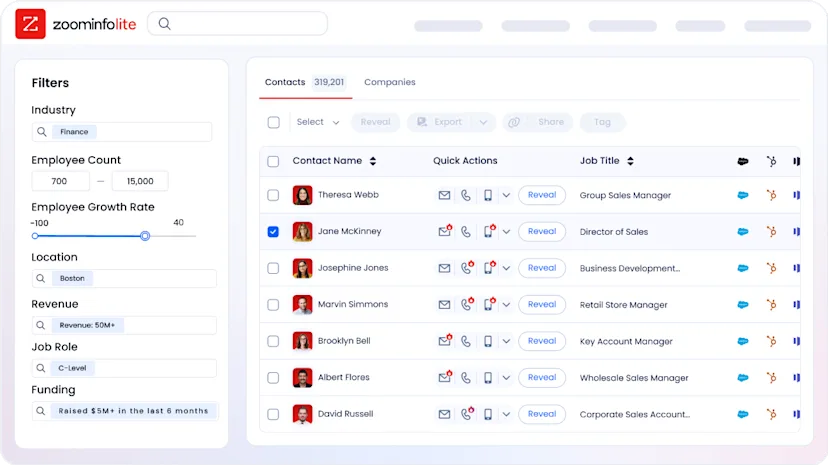
ZoomInfo uses consumption-based pricing with no publicly listed prices. Costs scale based on seats, credit volume, features, and contract length. A permanent free tier, ZoomInfo Lite, provides access to ZoomInfo's database with 10 monthly export credits and basic search at no cost. A 7-day free trial offers broader access to evaluate the platform before committing.
The pricing comparison isn't apples-to-apples because these tools occupy different positions in the stack. HubSpot and Pardot are execution platforms for campaigns and nurtures. ZoomInfo is the data and intelligence layer that feeds them. The question isn't which costs least; it's what happens to your marketing ROI when your execution platform runs on incomplete data versus verified, intent-enriched intelligence.
Ease of use versus ecosystem depth
HubSpot was built on the premise that good software shouldn't require a dedicated admin. The interface is consistent across all Hubs, the drag-and-drop builders work as expected, and a marketer can move from landing page to workflow to report without switching contexts or learning a new interface. HubSpot Academy offers free certifications across marketing, sales, and service, with over 200,000 certified professionals.

Source: HubSpot
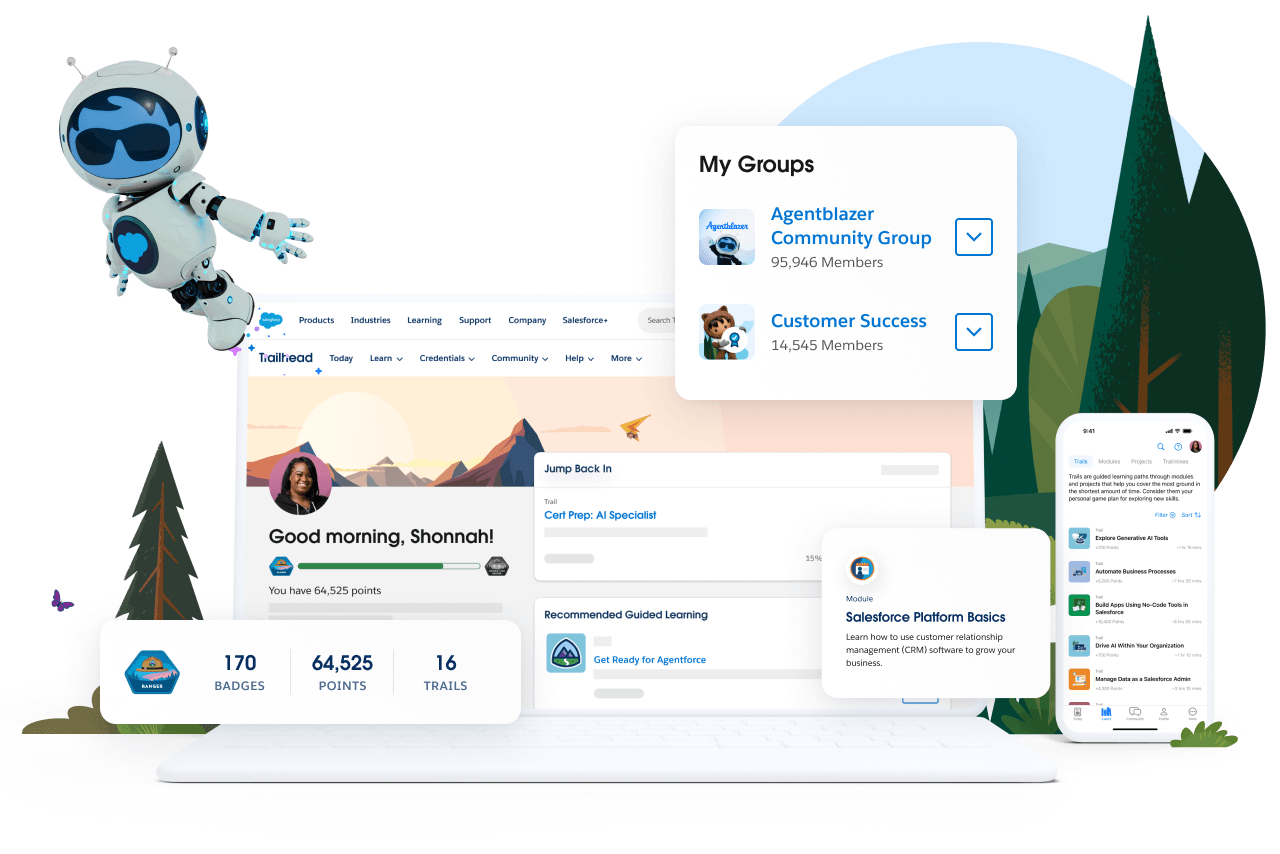
Pardot inherits the complexity of the Salesforce ecosystem. Administrators need to understand the Salesforce data model, connector sync behavior, field mapping, and permission structures before the platform works correctly. Engagement Studio, automation rules, completion actions, and segmentation lists each follow distinct logic frameworks. Capterra reviewers describe the email template builder as outdated, and TrustRadius reviewers flag that things that should be easy to edit are "sometimes very difficult for no rhyme or reason." Salesforce offers Trailhead for self-paced learning and a formal Specialist certification track, signaling that the platform's complexity is real enough to support dedicated credentialing.
Source: Salesforce
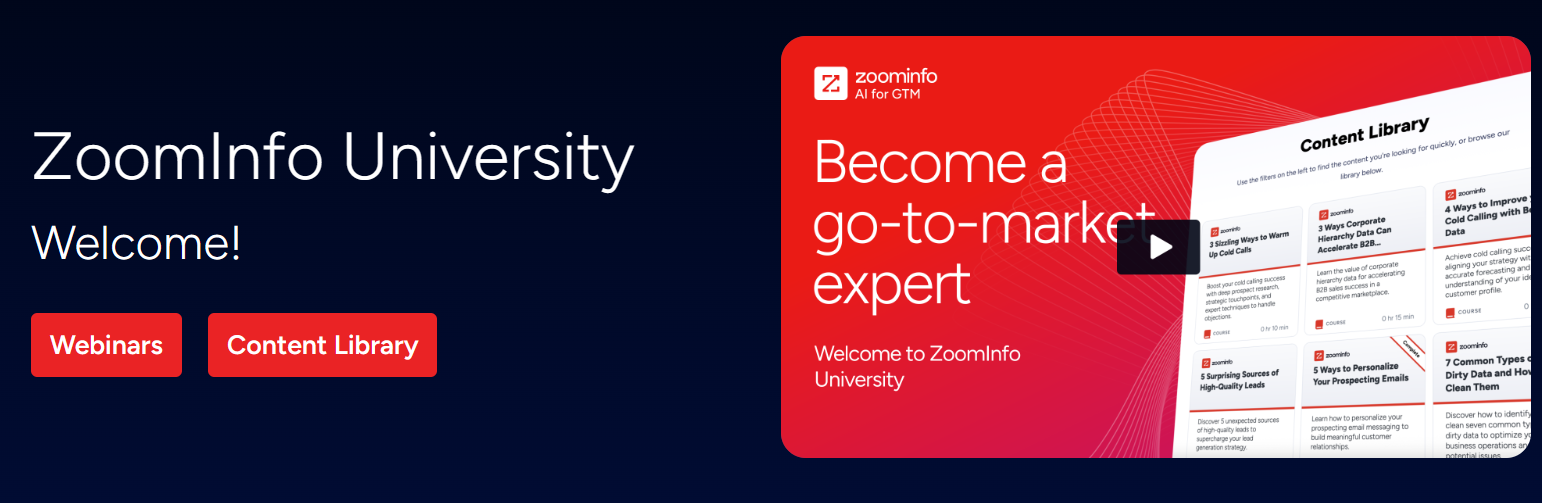
ZoomInfo redesigned its onboarding from 30 to 90 days, structured across planning, technical implementation, education, and adoption phases. The redesign produced a 25% improvement in customer satisfaction scores and won Rocketlane's Golden Comet award for Best Customer Onboarding Team of 2024. ZoomInfo University offers role-specific learning paths for sales, marketing, and administration.
Cross-channel capabilities are converging
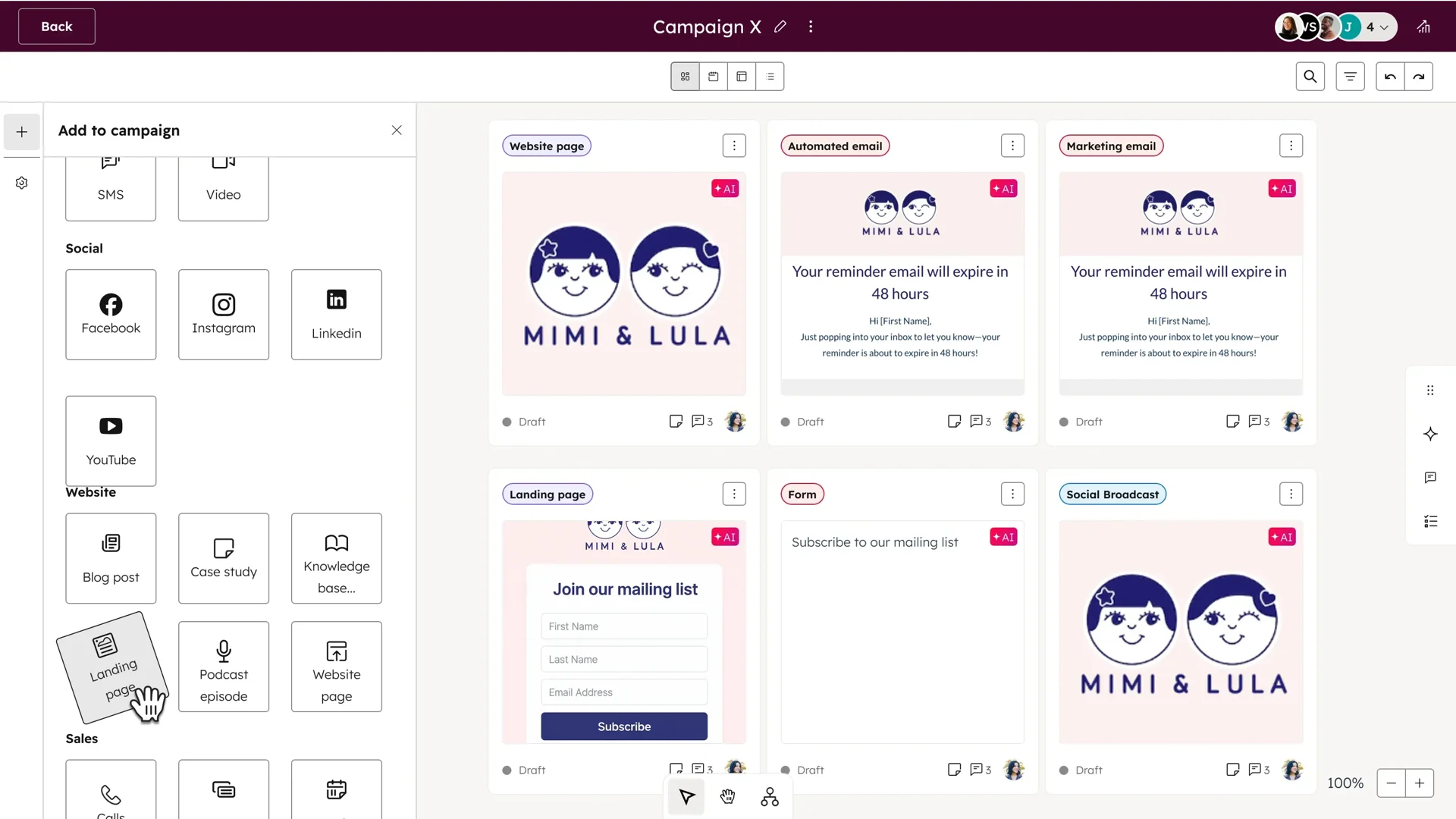
HubSpot has supported email, social, ads, chat, and web content from a single platform for years. Marketing Hub manages email campaigns, social publishing, ad targeting, landing pages, and forms without requiring third-party tools for basic multi-channel execution. WhatsApp and live chat through Service Hub extend the conversation across channels.
Source: HubSpot
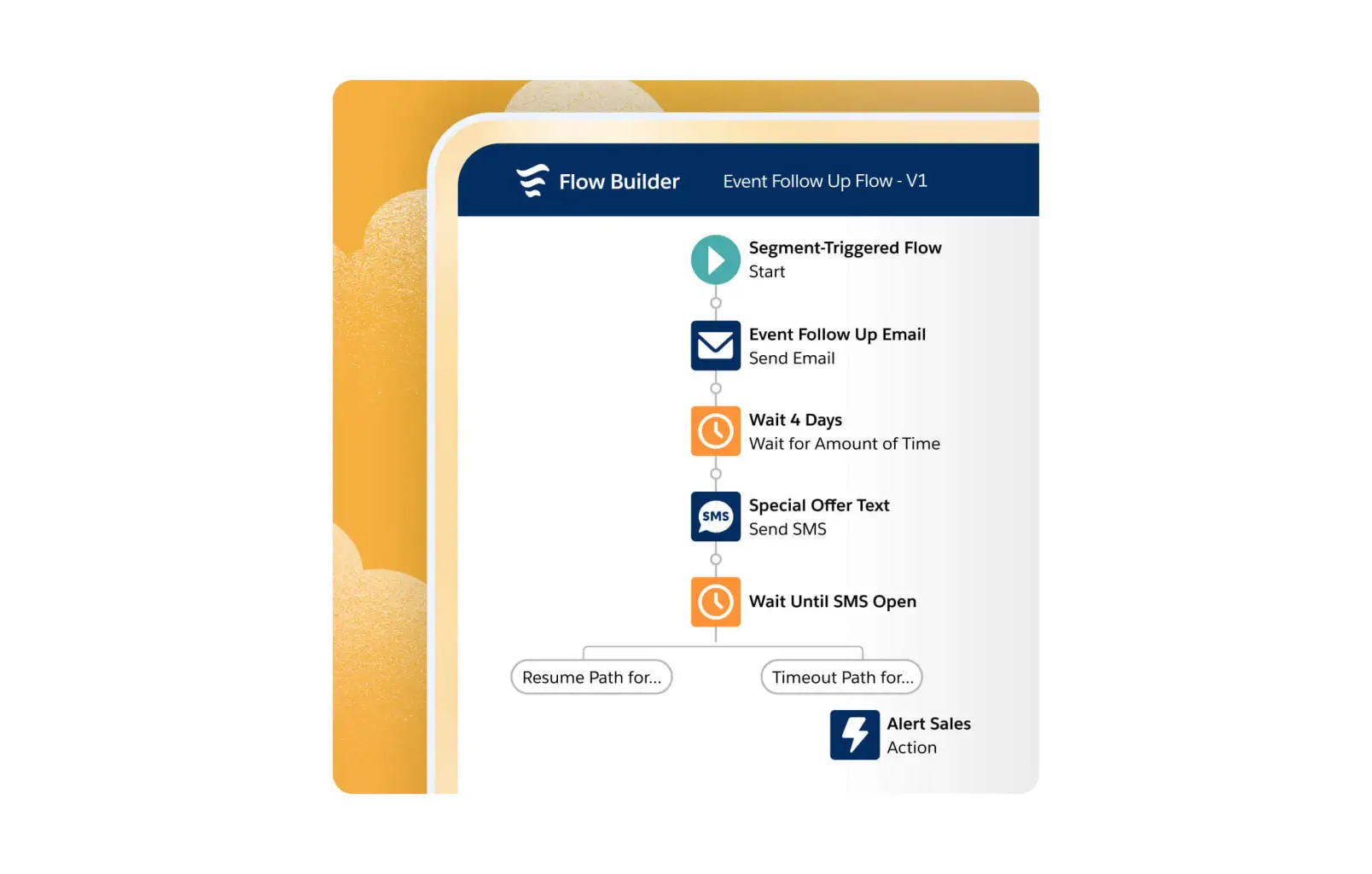
Pardot has historically been an email-first platform, but that changed in 2025. Following the launch of Marketing Cloud Next, Pardot customers can now add SMS and WhatsApp as journey steps via Account Engagement+ Permission Set Licenses. Salesforce Flow for Marketers enables cross-departmental journey orchestration, where a single canvas can include marketing email steps, Sales Cloud task creation, and Service Cloud triggers. However, these new capabilities require purchasing Messaging Credits on a consumption basis (starting at $10 per 1,000 credits), and SMS provisioning requires activating Salesforce Foundations and Data Cloud Everywhere.
Source: Salesforce
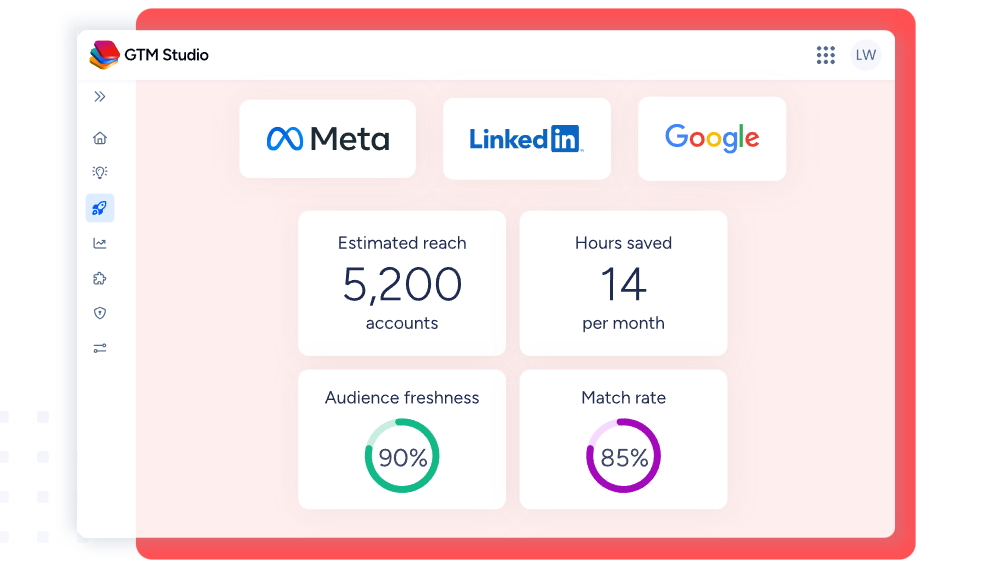
ZoomInfo extends cross-channel reach through its data and signal layer. Its native Demand-Side Platform deploys display ads based on 300+ company attributes without requiring a separate ad-tech vendor. Website visitor identification resolves anonymous traffic to companies and buying team contacts. ZoomInfo Chat identifies the company behind anonymous sessions before the visitor self-identifies, routing conversations based on company attributes and intent signals. Through GTM Studio, multi-channel orchestration across email, calls, ads, and direct mail triggers automatically based on buyer behavior.
Analytics and attribution take different approaches
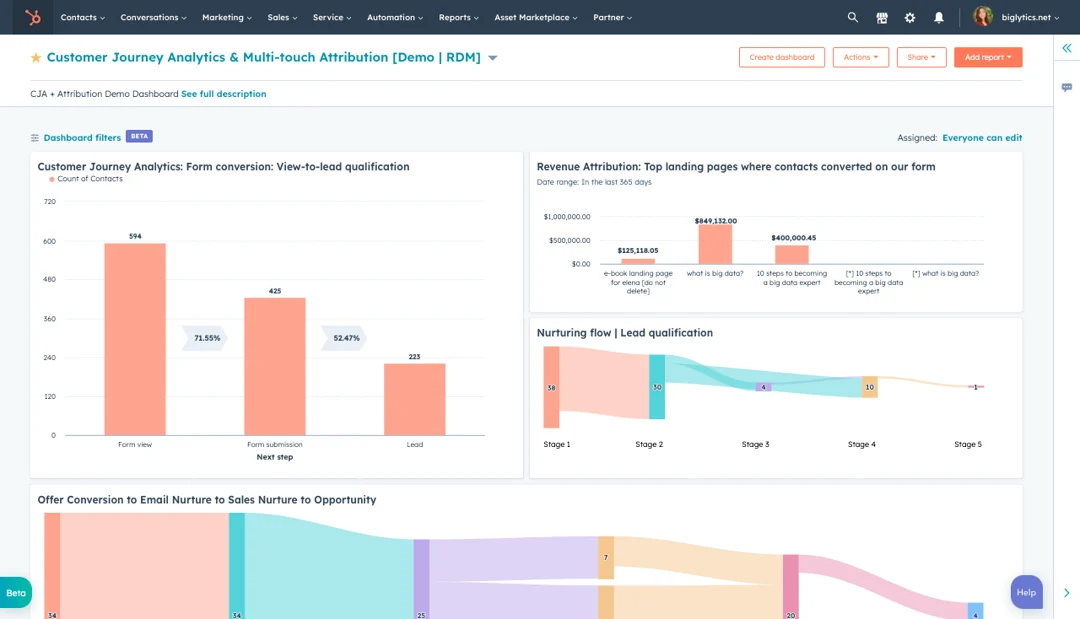
HubSpot provides Advanced Marketing Reporting with multi-touch revenue attribution and customer journey analytics (called Pathfinder). Because every Hub shares the same CRM, marketing attribution can trace a contact from first website visit through closed deal without stitching data from multiple systems. The reporting is visual, self-serve, and accessible to non-technical marketers.
Source: HubSpot
Pardot's analytics suite has more layers. Engagement History Dashboards embed directly on Campaign, Account, Lead, Contact, and Opportunity records in Salesforce. The B2B Marketing Analytics app (included from Plus+ at $2,750/month) pulls prospect and campaign data into customizable dashboards. Einstein Attribution trains a machine-learning model on your own historical conversion data to create a customized multi-touch attribution model, rather than applying static rules. This self-learning approach is one of Pardot's strongest differentiators. However, configuring these analytics tools requires significant technical expertise, and the reporting gaps on lower tiers (Growth+ doesn't include B2B Marketing Analytics) can leave smaller teams with limited visibility.

Source: Salesforce
ZoomInfo adds intelligence that neither platform can generate on its own. Its dashboards track engagement, funnel progression, and top-performing segments across GTM plays. But the more significant contribution is upstream: by enriching CRM records with verified contact data, company attributes, and intent signals, ZoomInfo ensures the data flowing into HubSpot or Pardot's attribution models is complete and accurate. Attribution models built on incomplete data produce incomplete conclusions.
HubSpot vs. Pardot vs. ZoomInfo: Which should you choose?
The answer depends on where your biggest gap is: execution, ecosystem integration, or data quality.
Choose HubSpot if:
You want marketing, sales, service, and content in a single connected platform
You don't have (or don't want) a Salesforce CRM commitment
Ease of use and fast time-to-value are priorities
Your team needs to be productive without dedicated platform admins
A free CRM tier makes sense for starting and scaling
Choose Pardot if:
Your organization is already on Salesforce Sales Cloud
You run complex B2B sales cycles with multiple decision-makers and long timelines
Account-based marketing with native CRM integration is critical
You need dual lead scoring and grading to align marketing and sales on lead quality
Your team has the technical resources to manage a Salesforce-native marketing platform
Add ZoomInfo to either if:
Your CRM has incomplete contact records, missing phone numbers, or stale company data
You need to identify in-market accounts before they fill out a form
Lead scoring and ABM programs are underperforming because the underlying data is thin
You want intent signals, verified direct dials, and buying committee maps fueling your automation
Your team needs a data and intelligence layer that works across any platform
See how ZoomInfo strengthens your marketing automation with a free trial.
The comparison between HubSpot and Pardot is real and worth making. HubSpot offers breadth and accessibility. Pardot offers depth within Salesforce. But the platform you choose matters less than the data you feed it. Marketing automation without accurate B2B data is automation running on guesswork. ZoomInfo provides the foundation that makes either platform deliver the results it promises.
"That combination of our internal CRM data, external signals, and AI that's given all that context has helped us craft very specific account- and persona-based messages. And people have responded to them right away." (Toby Carrington, Chief Business Officer, Seismic)
HubSpot vs. Pardot vs. ZoomInfo FAQ
What is the main difference between HubSpot, Pardot, and ZoomInfo?
HubSpot is a customer platform covering marketing automation, CRM, sales, service, and content in one system. Pardot (Marketing Cloud Account Engagement) is a B2B marketing automation platform built natively on Salesforce CRM, focused on lead nurturing, scoring, and account-based marketing. ZoomInfo is a B2B data and GTM platform that provides verified contacts, intent signals, and account intelligence that make either marketing automation platform more effective.
Do I need Salesforce CRM to use Pardot?
Yes. Pardot requires a Salesforce CRM license. Its core value depends on native integration with Sales Cloud and Service Cloud. Organizations not on Salesforce would need to purchase CRM licenses in addition to the Pardot subscription, which significantly increases total cost. HubSpot includes its own CRM at no additional cost.
Which platform is more affordable for a mid-market B2B team?
HubSpot is generally more accessible. Its free CRM has no time limit, and the Starter Customer Platform bundles all Hubs at $9/seat/month on annual billing. Marketing Hub Professional starts at $800/month. Pardot starts at $1,250/month for the base tier (plus a required Salesforce CRM license), with no free plan or trial available. ZoomInfo offers a permanent free tier (ZoomInfo Lite) and a 7-day trial, with paid plans on consumption-based pricing.
Which platform has better lead scoring?
Pardot's dual scoring and grading system is the most sophisticated of the three for B2B lead qualification. Scoring tracks behavioral engagement, grading evaluates fit against the ideal customer profile, and Einstein adds machine-learning-based scoring on top. HubSpot offers predictive lead scoring at Enterprise tier. ZoomInfo adds a different dimension with buyer intent data and Account Fit Scores, identifying which accounts are actively in-market before they interact with your marketing.
Can ZoomInfo be used with both HubSpot and Pardot?
Yes. ZoomInfo integrates natively with both HubSpot and Salesforce. It enriches CRM records with verified contact data, firmographics, and technographics, and triggers workflows based on intent signals. Whether you use HubSpot or Pardot for execution, ZoomInfo provides the data and intelligence layer underneath.
Which platform is easiest to learn and set up?
HubSpot has the lowest learning curve, with a consistent interface across all Hubs and free certification courses through HubSpot Academy. Pardot has the steepest learning curve due to its dependency on the Salesforce ecosystem, with a dedicated Specialist certification track. ZoomInfo falls in between, with a structured 90-day onboarding program and role-specific learning paths through ZoomInfo University.
Which platform has better account-based marketing capabilities?
Pardot has the most native ABM features within a marketing automation platform, including Einstein Key Account Identification, buying committee detection, and ABM dashboards embedded in Salesforce. HubSpot supports ABM strategies through its Smart CRM but lacks dedicated ABM dashboards. ZoomInfo provides the data foundation for ABM in either platform, with intent signals, account-level contact discovery, a native DSP for targeted advertising, and GTM Studio for multi-channel play orchestration.
Is Pardot being discontinued?
No. Salesforce has confirmed there are no End-of-Life, End-of-Sale, or End-of-Roadmap plans for Marketing Cloud Account Engagement. However, Salesforce's engineering investment is visibly concentrated on the next-generation Marketing Cloud Next platform. Existing Pardot customers are receiving new capabilities (Agentforce, SMS, Data Cloud) via Permission Set Licenses that bridge the two platforms.
See how HubSpot compares against other CRMs and platforms:
