
Choosing between HubSpot and Pulse CRM for your business often comes down to these five questions:
Do you need a platform with dozens of modules, or a simpler system your small team will actually use?
Is your priority marketing automation and multi-channel campaigns, or getting a working CRM up and running this week?
Are you willing to pay for features you may never touch, or do you want everything included at a flat rate?
Do you have a dedicated ops team to configure and maintain your CRM, or do you need someone to build the system for you?
Does your go-to-market strategy depend on quality B2B data and buying signals, or is your current contact list enough?
In short, here's what we recommend:
HubSpot is the platform for growing companies that want marketing, sales, service, and content tools under one roof. Its Smart CRM connects six product hubs sharing a single data layer, with AI features through Breeze handling everything from prospect research to customer support. HubSpot serves 288,706 customers across 135+ countries. The trade-off: pricing complexity grows fast with per-seat, per-hub billing, mandatory onboarding fees at higher tiers, and a volume of features that can overwhelm teams who just need a working sales pipeline.
Pulse CRM is built for small business owners and franchise operators who want a CRM that works on day one without a technical team. Every plan includes the full feature set (email marketing, sales pipelines, quoting, and project boards) starting at $49/month with no per-module charges. Pulse's defining promise is done-for-you implementation: the team builds your automations, pipelines, and workflows rather than handing you a blank canvas. The limitation: Pulse lacks AI features, has no native B2B data enrichment, and its integration ecosystem relies on Zapier and API access rather than native connections.
Both platforms help you manage contacts and close deals. But neither solves the problem that sits upstream of CRM: knowing which accounts to pursue, when they're ready to buy, and who on the buying committee to reach. That's a data and intelligence problem, and it's where ZoomInfo operates.
ZoomInfo is a B2B data and go-to-market platform built on a large B2B dataset: 500M contacts, 100M companies, 135M+ verified phone numbers, and 200M+ verified business emails. Its GTM Context Graph (an intelligence layer that combines this data with your CRM records, conversation transcripts, and behavioral signals) processes 1.5B+ data points daily to reveal not just what happened in your deals, but why. ZoomInfo integrates with HubSpot and other CRMs, enriching contact records, surfacing buying signals, and powering AI-driven outreach through GTM Workspace for sellers and GTM Studio for marketers and RevOps. For B2B teams, ZoomInfo doesn't replace your CRM. It makes your CRM more effective by filling it with verified data and intelligence.
If feeding your CRM with accurate B2B data and real-time buying signals sounds like the missing piece, see how ZoomInfo works.
HubSpot vs. Pulse CRM vs. ZoomInfo at a glance
HubSpot | Pulse CRM | ZoomInfo | |
|---|---|---|---|
Primary function | CRM and marketing platform | SMB CRM with done-for-you setup | B2B data, intelligence, and GTM execution |
AI capabilities | Breeze AI across all hubs | None | GTM Context Graph with AI agents |
Contact database | Stores your contacts | Stores your contacts | 500M contacts with verified emails and direct dials |
Integrations | 2,000+ app marketplace | Zapier, Make, and API | 120+ native integrations plus API and MCP |
Implementation | Self-serve with mandatory paid onboarding at higher tiers | Done-for-you expert setup | Guided onboarding; deploys in weeks |
Starting price | Free CRM; paid from $15/seat/mo | $49/mo (1 user, 500 contacts) | Free tier (ZoomInfo Lite); paid plans custom-quoted |
Contract terms | Annual commitment; no mid-term cancellation | No contracts; cancel anytime | Annual contracts standard |
Best for | Growing companies needing unified marketing, sales, and service | Small businesses and franchises wanting simplicity | B2B teams needing prospect data, buying signals, and AI-driven outreach |
HubSpot is an enterprise platform in startup clothing
HubSpot started as a marketing automation tool for small businesses. It has grown into something much larger.
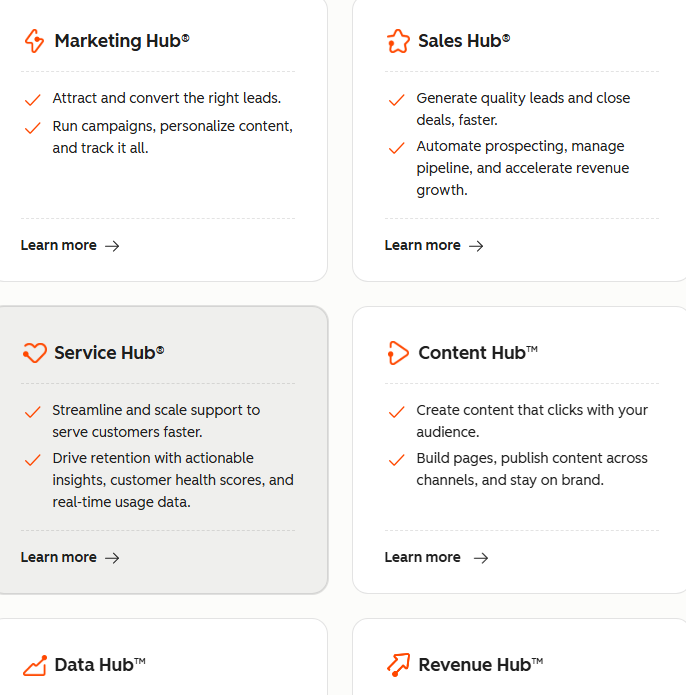
Today's HubSpot offers six product hubs (Marketing, Sales, Service, Content, Data, and Commerce), each with four pricing tiers, all connected through a Smart CRM. The platform handles email campaigns, sales pipelines, customer support ticketing, website hosting, CPQ, invoicing, and AI agents that can resolve 65% of customer inquiries without human involvement.
Source: HubSpot
For companies with dedicated marketing and sales operations teams, this breadth is valuable. A lead captured through a Marketing Hub form flows into Sales Hub's pipeline, triggers automated sequences, and lands in Service Hub for post-sale support, all sharing the same contact record.
The challenge is that HubSpot's breadth creates complexity. The pricing model charges per seat, per hub, and per contact tier, with mandatory onboarding fees ($3,000 for Marketing Hub Professional, $7,000 for Enterprise). If you subscribe to multiple hubs at different tiers, all Core Seats are billed at the rate of the highest tier, a rule that catches many buyers off guard. A small team mixing Marketing Hub Professional with Sales Hub Enterprise can see per-seat costs jump fast.
For a 10-person team running Marketing and Sales at Professional tier, annual costs can exceed $20,000 before adding contacts or onboarding fees. That's appropriate for a company generating enough pipeline to justify the investment. For a five-person service business that needs to track leads and send follow-up emails, it's overkill.
Pulse CRM does one thing well: get small businesses running
Pulse CRM took a different path. Instead of building for every company size and use case, it focused on small businesses and franchise systems that need a working CRM without a technical team to configure it.
The feature list covers the essentials: CRM contact management, email marketing (unlimited sends on every plan), text message marketing, sales pipelines, workflow automation, quoting with digital signatures, project boards, and real-time reporting. Every feature is included at every tier. The only differences between the $49/month Starter, $119/month Growth, and $199/month Pro plans are user count, contact limits, and scarcity timer views.
Pulse's differentiator isn't the feature set. It's the implementation approach. The team builds your system: automations, pipelines, and workflows configured to match your sales process.

Source: Pulse Technology
For a small business owner who has tried and abandoned a CRM because it was too much work to set up, this matters more than any feature comparison chart. G2 reviewers consistently cite the support team as the primary reason they chose and stayed with Pulse.
The limitations are real. Pulse has no AI features anywhere in the platform: no predictive lead scoring, no AI-generated email content, no smart recommendations. Native integrations rely on Zapier and API access rather than direct connections to major business tools.
Contact records reportedly lack depth for complex relationship tracking. And the company's size (2 to 10 employees) means support can slow during high-demand periods.
For a local service business, franchise, or agency managing a few hundred contacts, these limitations rarely matter. For a B2B company selling into mid-market accounts with multi-person buying committees, they're significant constraints.
ZoomInfo solves the problem that sits before CRM
Both HubSpot and Pulse CRM manage the contacts you already have. ZoomInfo's role is different: it provides the data and intelligence that determine which contacts your CRM should have in the first place.
A CRM without quality data is a filing cabinet. You can organize it, automate every follow-up, and build visual pipelines, but if the contacts are incomplete, the emails bounce, and you're targeting companies that aren't in-market, none of that infrastructure produces results.
ZoomInfo's B2B data platform covers 500M contacts and 100M companies, verified through a pipeline backed by 300+ human researchers with up to 95% accuracy on first-party data. That includes 135M+ verified phone numbers and 200M+ verified business email addresses, meaning the direct dial actually rings and the email actually lands.

Source: ZoomInfo
But data alone doesn't close deals. ZoomInfo's GTM Context Graph processes 1.5B+ data points daily, combining ZoomInfo's third-party data with your CRM records, conversation intelligence, and behavioral signals.

Source: ZoomInfo
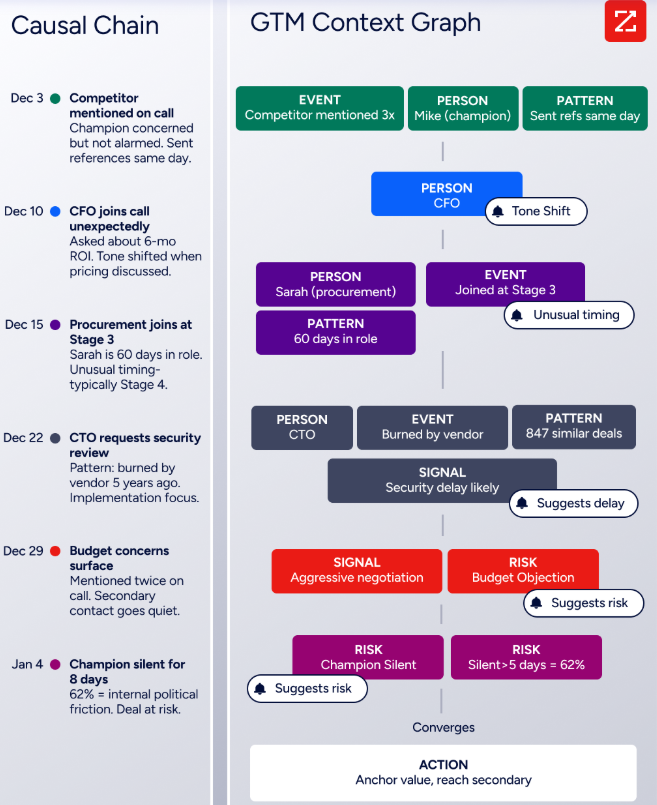
The result is an intelligence layer that captures not just what happened in a deal, but why it happened. When the CFO joins a call and asks about six-month ROI, the GTM Context Graph recognizes that executive sponsorship entering at this stage, combined with ROI-focused questions, matches the pattern behind closed-won deals in your segment.
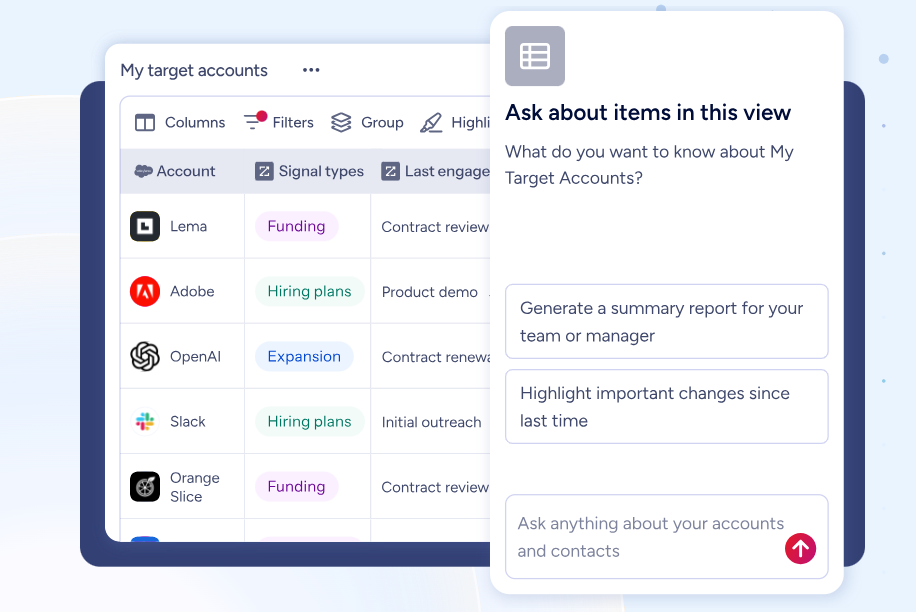
That intelligence reaches your team through three channels. GTM Workspace gives sellers a workspace with AI-drafted outreach and prioritized accounts.
Source: ZoomInfo
GTM Studio lets marketers and RevOps build and launch GTM plays in natural language. And APIs and MCP deliver the same intelligence into any third-party tool, including HubSpot.
Seismic's sales team boosted productivity by 54%, saved 11.5 hours per week, and attributed 39% of pipeline to ZoomInfo signals. (Seismic Case Study)
Marketing automation: enterprise power vs. practical simplicity
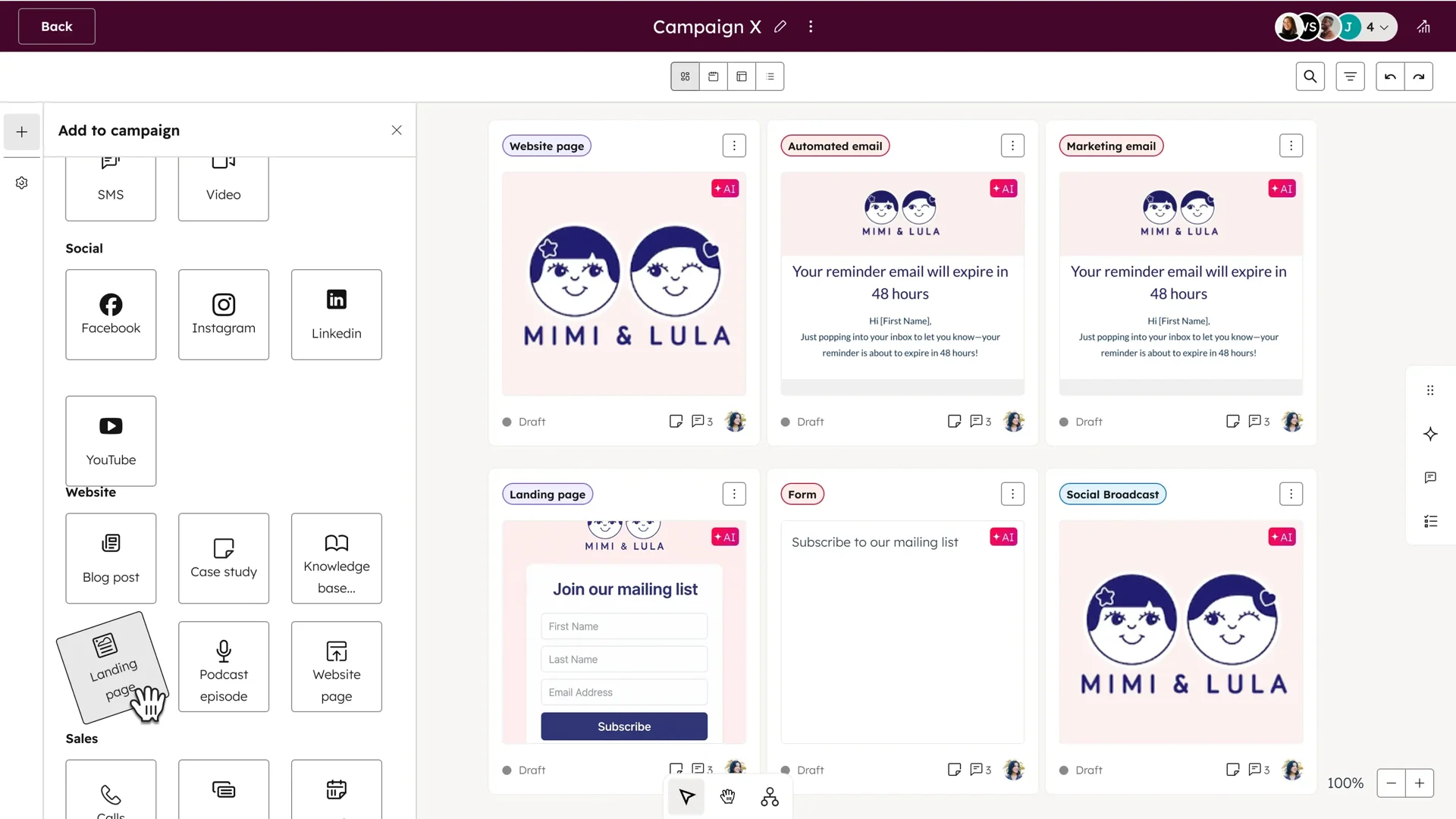
HubSpot's Marketing Hub is one of the strongest marketing automation platforms available. Visual workflow builders create multi-step nurture sequences triggered by contact behavior.
Source: HubSpot
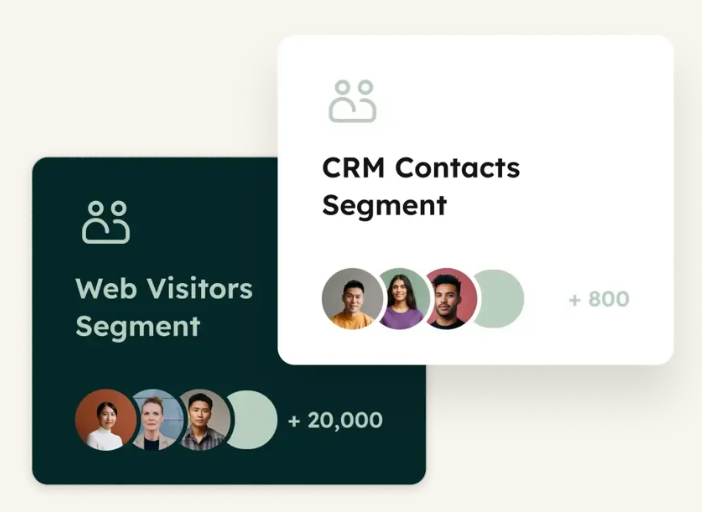
Audience segments update in real time based on CRM properties and behavioral signals. AI-powered personalization (currently in beta) adjusts landing pages and emails based on visitor attributes.
Source: HubSpot
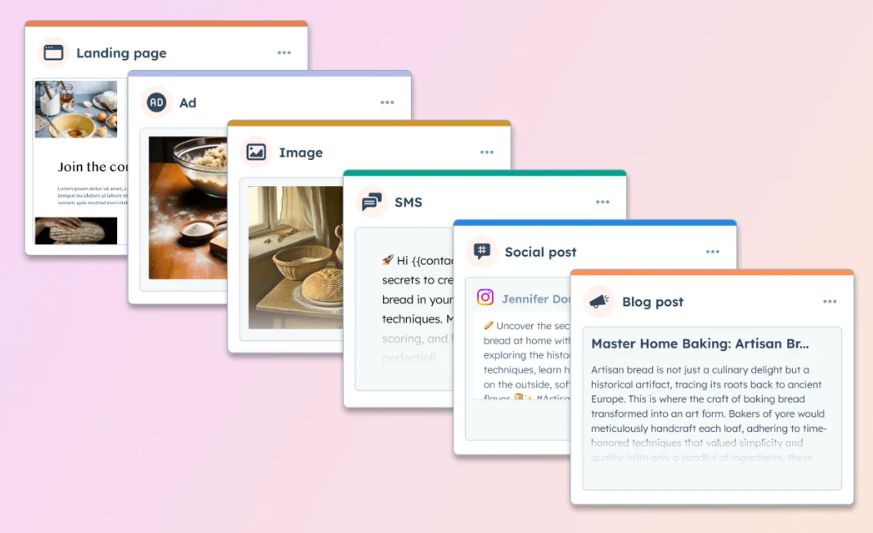
The Content Remix tool transforms a blog post into social posts, email copy, and video scripts. Marketing Hub connects natively to Sales Hub, so a marketing-qualified lead flows into the sales pipeline with full engagement history.
Source: HubSpot
The depth is real, but so is the cost. Marketing Hub Professional starts at $800/month with a $3,000 onboarding fee and includes only 2,000 marketing contacts. Additional contacts cost $250 per 5,000/month. A business with 25,000 marketing contacts on the Professional plan pays over $13,000/year in contact overages alone.
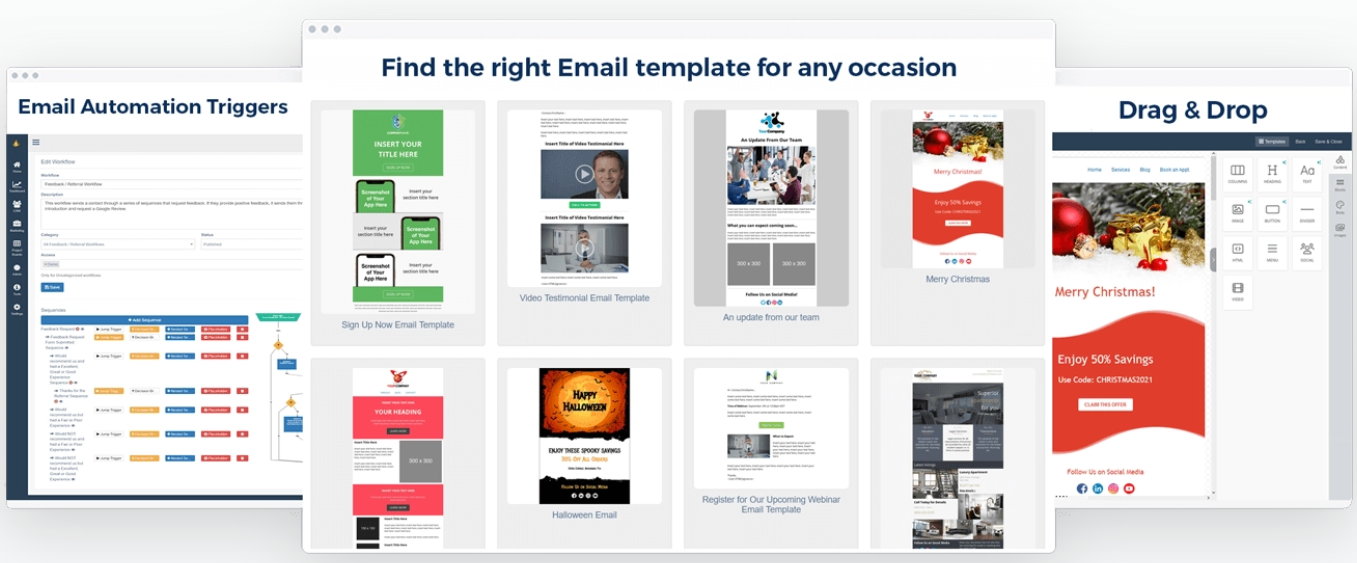
Pulse CRM takes marketing automation in a different direction. The email marketing tool includes a drag-and-drop builder, audience segmentation, and behavior-triggered campaigns.
Source: Pulse Technology
All plans include unlimited email sends, removing the volume anxiety that comes with metered email tools. Automation workflows trigger on pipeline status changes, quote approvals, and customer actions, connecting email sequences to sales pipeline stages.
It's not HubSpot-level sophistication. There's no multi-touch attribution, no AEO strategy, no AI content generation. But for a business that needs to send follow-up emails when a lead enters the pipeline and onboarding emails when a deal closes, Pulse handles it at a fraction of the cost.
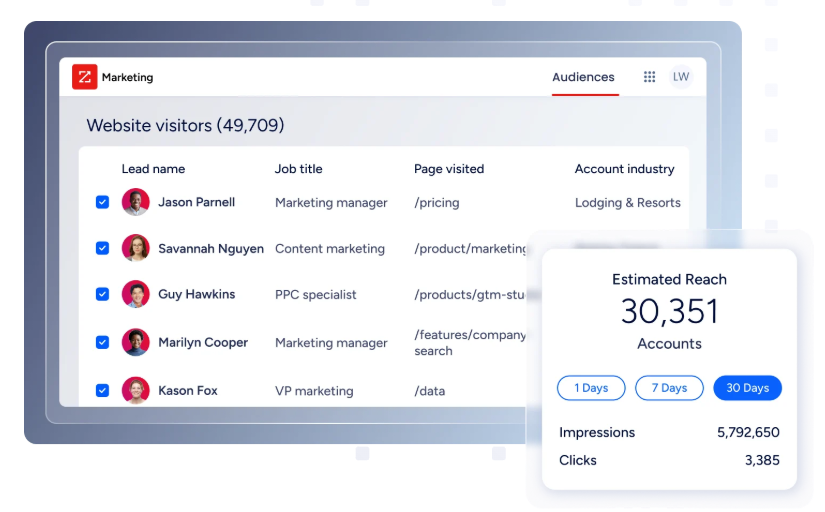
ZoomInfo operates upstream of both. Its marketing platform powers account-based marketing with intent signal stacking, a native demand-side platform for display advertising, and FormComplete, which reduces web forms to a single field while auto-appending the rest from ZoomInfo's database.
Source: ZoomInfo
Smartsheet reported a 40% increase in form fills and 84% increase in MQLs using FormComplete. The marketing intelligence feeds into CRM platforms, meaning HubSpot or any connected CRM receives enriched, signal-scored leads rather than raw form submissions.
Redwood Logistics saw a 99% reduction in cost-per-click and a 310% increase in clickthrough rate using ZoomInfo's audience data. (Redwood Logistics Case Study)
Sales pipeline management: visual boards vs. intelligent execution
All three platforms offer pipeline management, but the philosophies diverge.
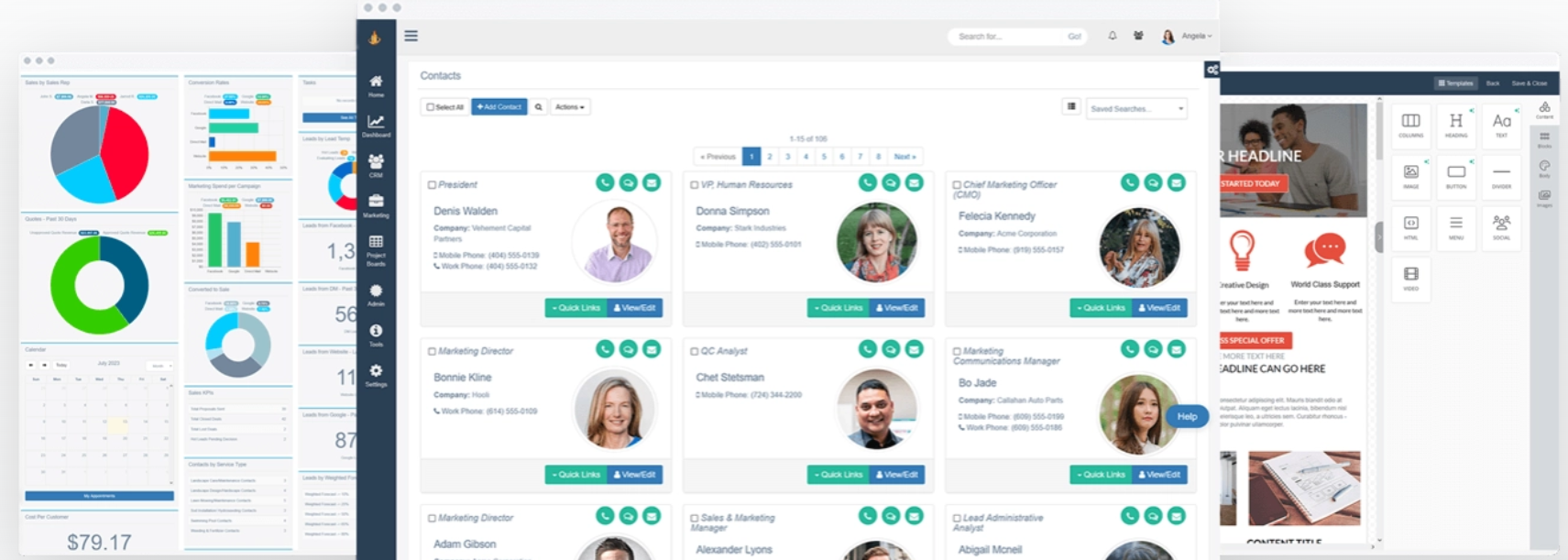
Pulse CRM provides three pipeline types: Lead Pipelines for pre-qualification, Sales Pipelines for active deal management, and Client Pipelines for post-sale project tracking.
Source: Pulse Technology
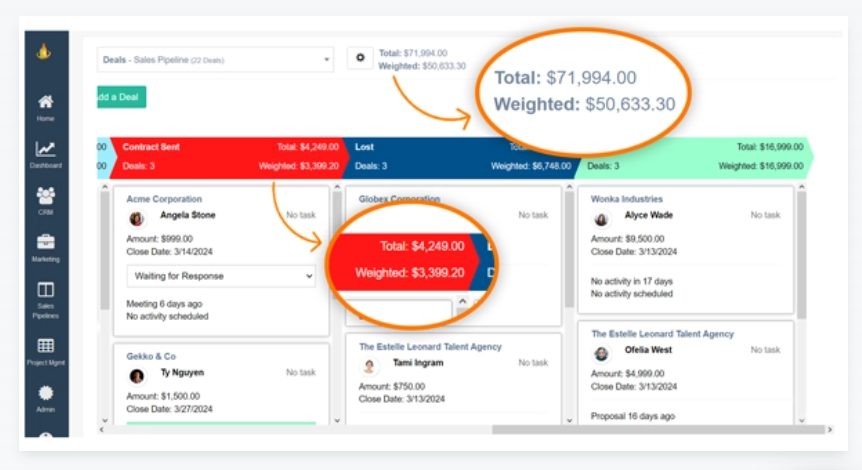
Each pipeline stage feeds sales forecasting with stage-weighted probability. Won and Lost Reason tracking surfaces patterns over time.
Source: Pulse Technology
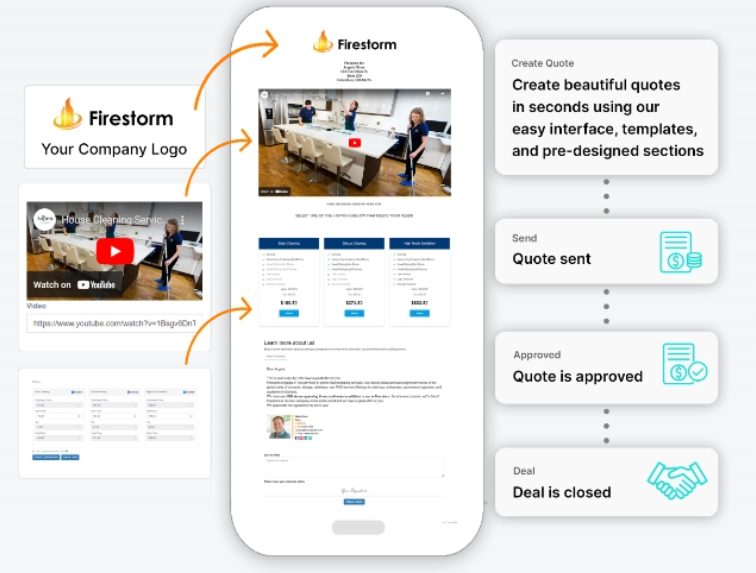
The quoting tool generates proposals from deal records, with automation triggering nurture campaigns on send and onboarding workflows on approval. For a small sales team, this is a complete deal-management system.
Source: Pulse Technology
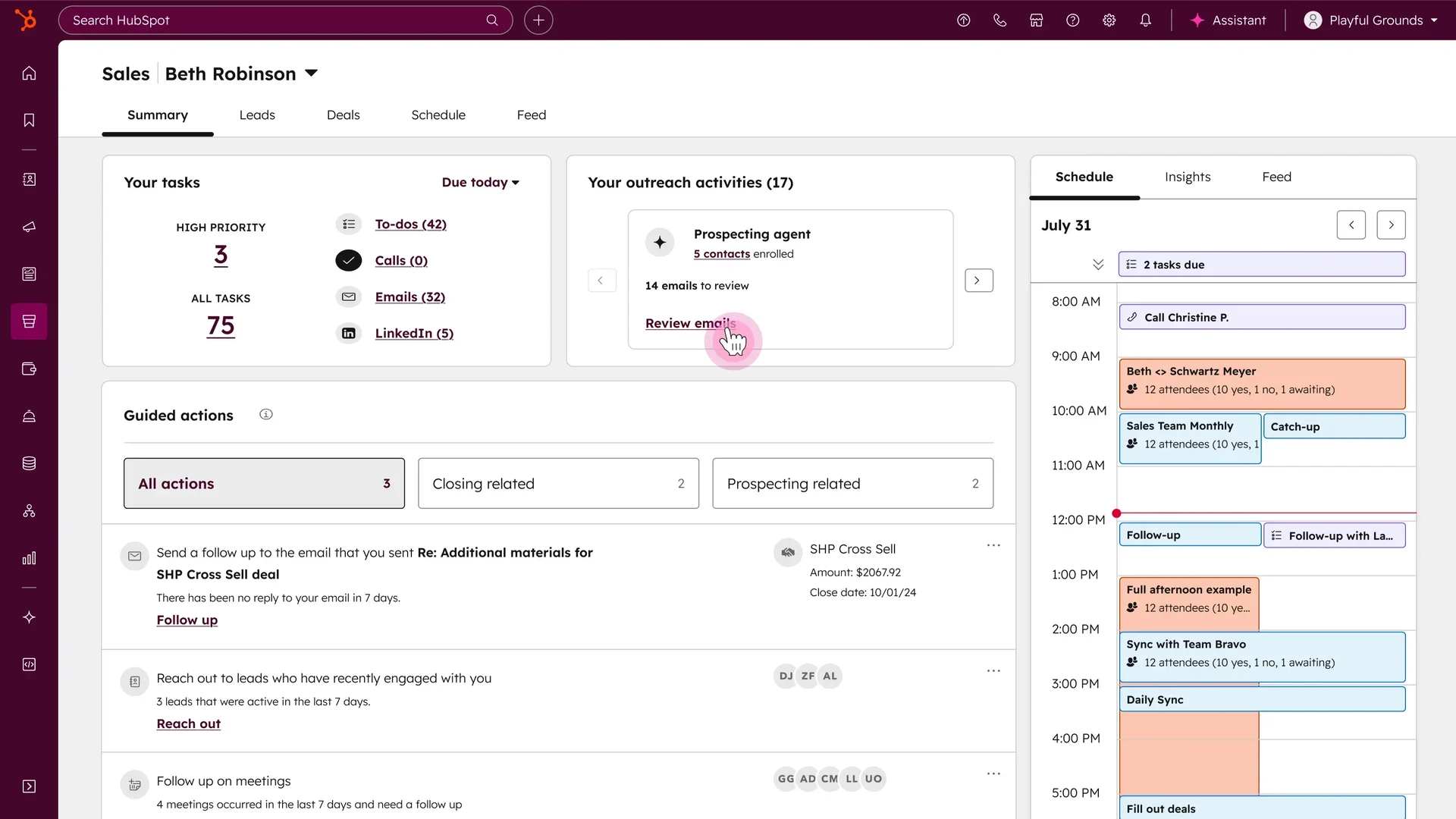
HubSpot's Sales Hub adds intelligence on top of pipeline visualization.
Source: HubSpot
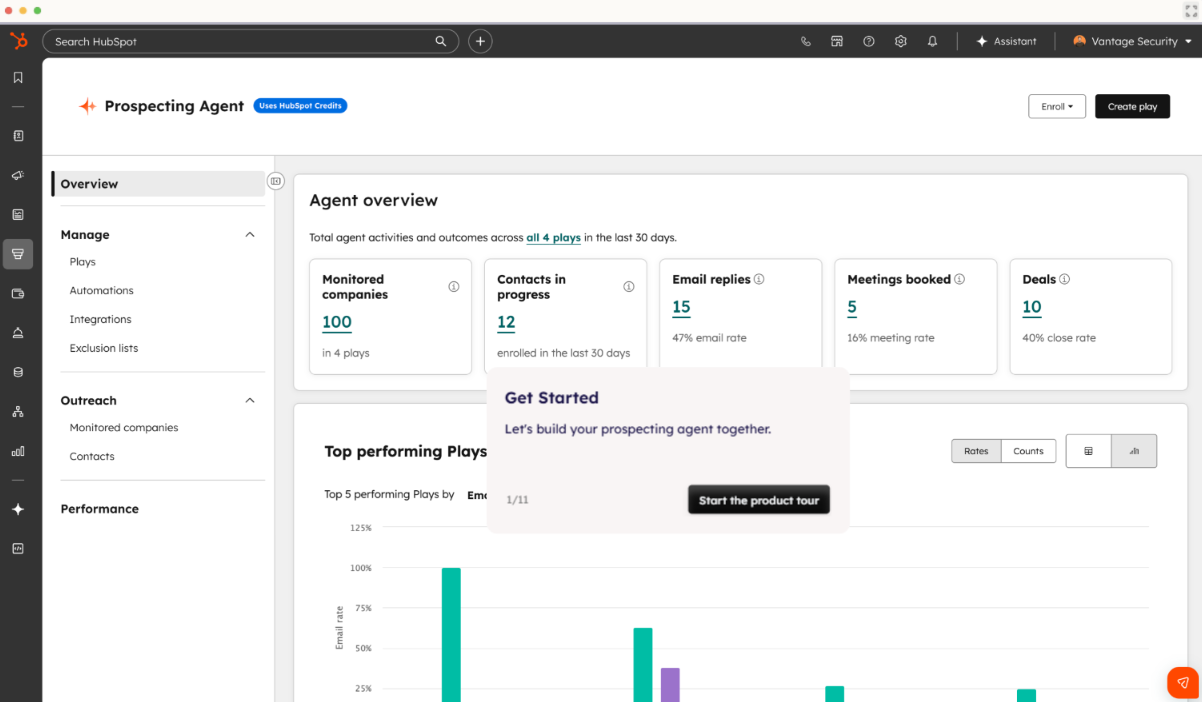
The Breeze Prospecting Agent researches prospects, monitors buying signals, and drafts personalized outreach using HubSpot's customer history.
Source: HubSpot
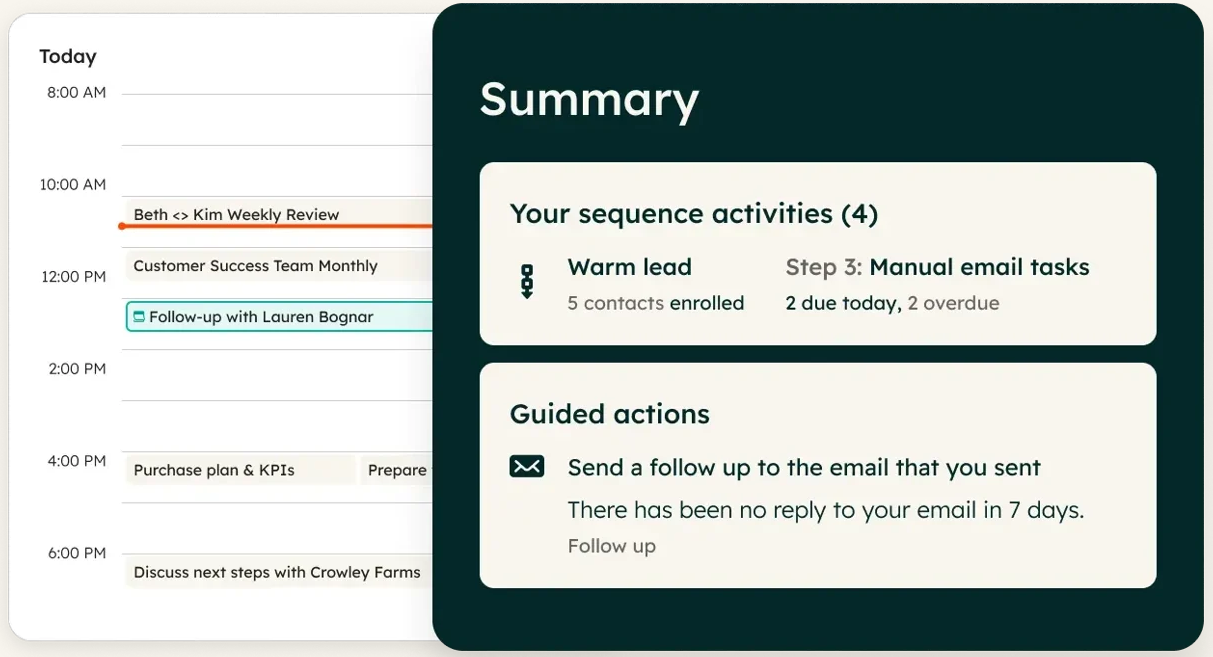
AI Guided Selling surfaces prioritized queues and daily action summaries. Conversation Intelligence records and transcribes calls for coaching. CPQ software generates quotes from deal context. The pipeline isn't just a visual tracker; it's an AI-assisted workflow.
Source: HubSpot
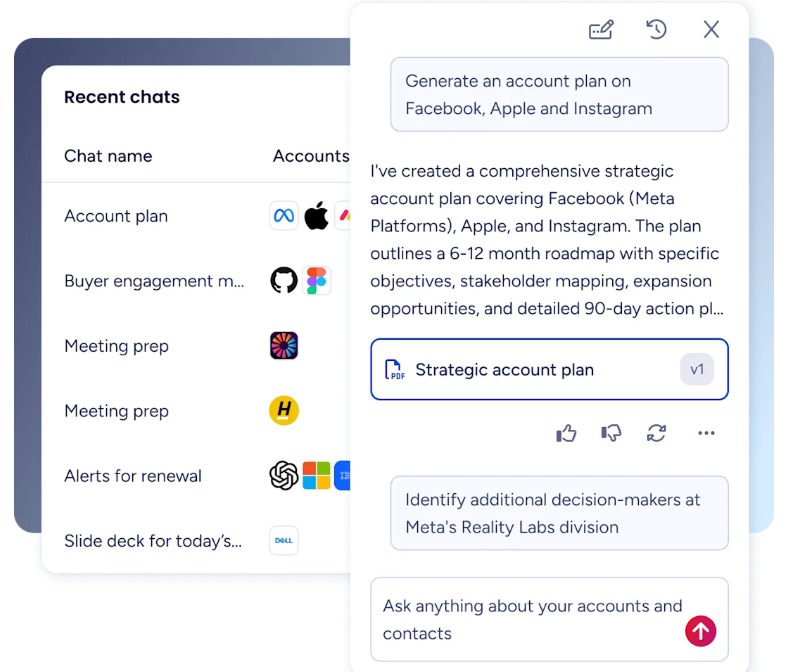
ZoomInfo's GTM Workspace changes what sellers see when they open their workspace. Instead of a static pipeline, sellers get a full book of business view combining CRM data, ZoomInfo intelligence, conversation history, and market signals.
Source: ZoomInfo
The Action Feed surfaces in-market buyers with pre-drafted actions on every signal. AI agents handle account research, outreach drafting, CRM updates, and signal monitoring. Thomson Reuters increased closed-won deals by 40% and achieved 115% average quota attainment using GTM Workspace.
The distinction matters. Pulse and HubSpot manage what happens after you've identified a prospect. ZoomInfo tells you which prospects to pursue and why, then equips sellers with the context to have better conversations.
Vensure's VP of Revenue Operations: "ZoomInfo gives us the information we need to execute. We don't have to go through and spend our time digging. It's already there, so we can be three steps ahead." (Vensure Case Study)
Data quality: stored data vs. verified intelligence
This is where the three platforms diverge most sharply.
Pulse CRM stores the data you enter. Contact records hold names, emails, phone numbers, tags, and custom fields. There's no enrichment, no verification, no external data sources. If someone on your team types the wrong email address, that's what stays in the system. For a business with 500 contacts built from direct relationships, this works fine. Manual data entry is manageable at small scale.
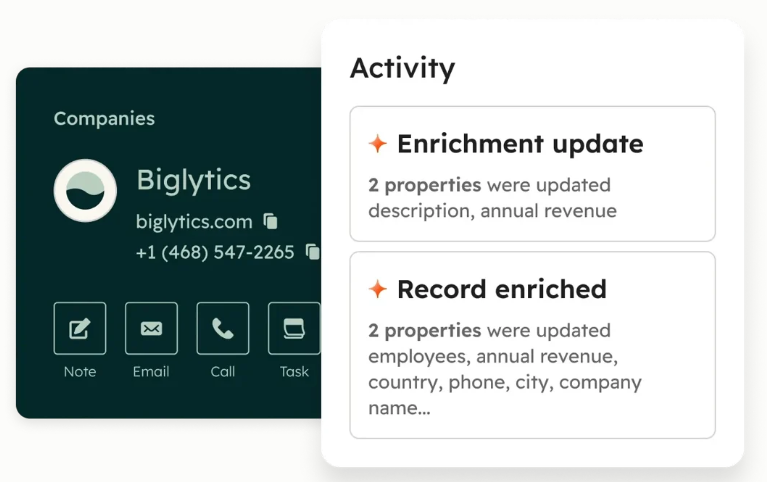
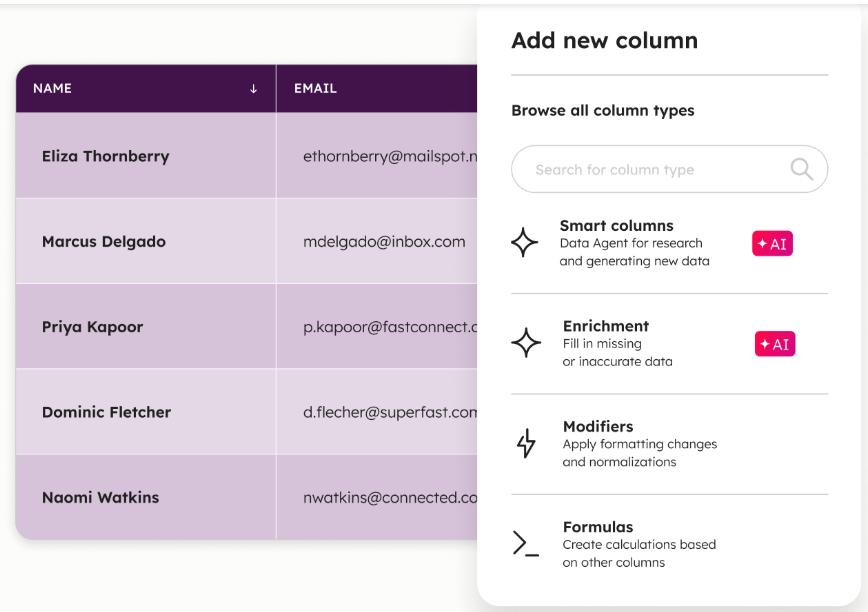
HubSpot's Smart CRM goes further. AI-powered enrichment pulls information from email threads, recorded calls, and HubSpot's own dataset to fill in missing contact and company fields. Automatic duplicate detection identifies and merges redundant records.
Source: HubSpot
The Data Hub provides a Data Quality overview that flags formatting errors and outdated records. For a company scaling beyond a few hundred contacts, these automated quality measures prevent the database from decaying.
Source: HubSpot
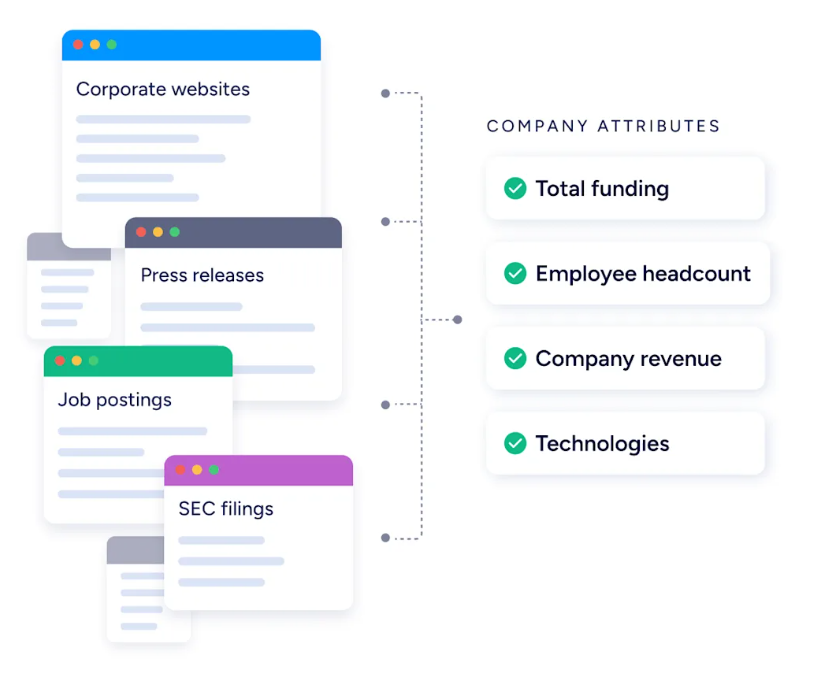
ZoomInfo operates at a different scale. The B2B database covers 500M contacts and 100M companies, built through automated ML scanning of 28 million site domains daily, a community of 200,000+ ZoomInfo Lite users who share data back, and 300+ human researchers.
Source: ZoomInfo
First-party data reaches up to 95% accuracy. In a Fortune 500 competitive RFP analyzing 25 million contacts across vendors, an independent consultant concluded that "no other competitor came even close."
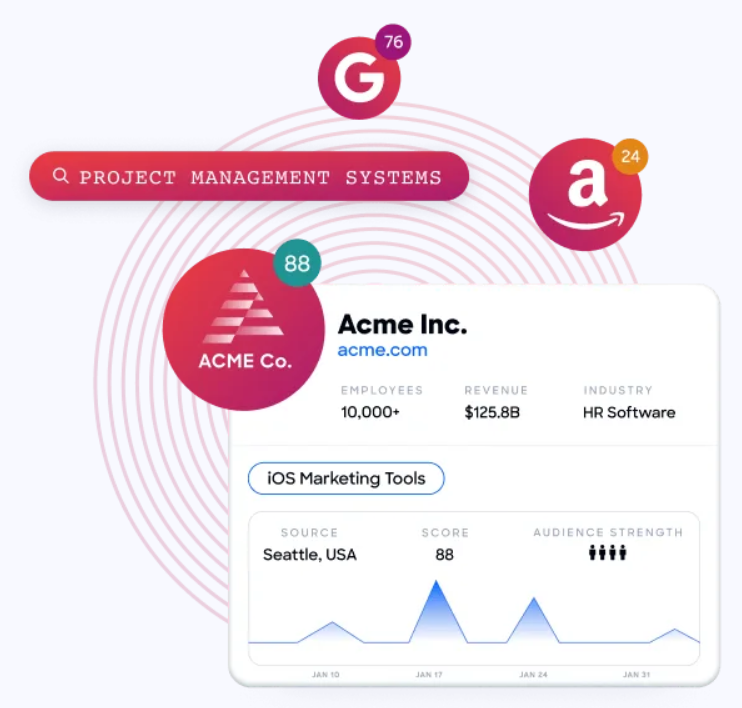
ZoomInfo's Buyer Intent data tracks signals from 210 million IP-to-Organization pairings and 6 trillion+ keyword-to-device pairings monthly.
Source: ZoomInfo
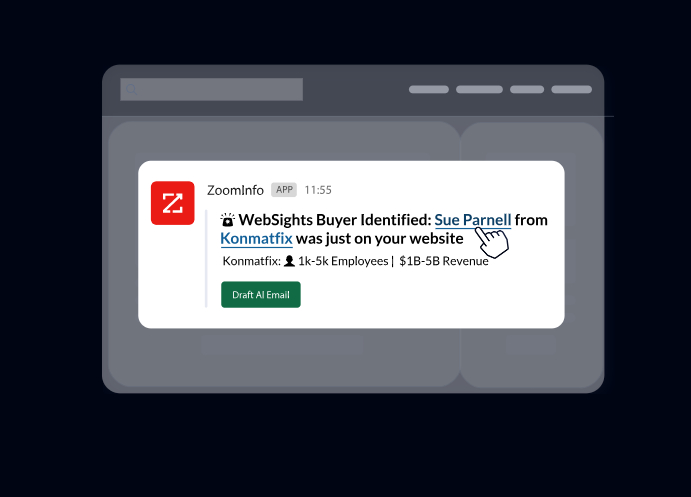
Guided Intent identifies topics historically correlated with deal success rather than requiring manual topic selection. WebSights resolves anonymous website traffic to companies, identifying buying team members with direct contact information.
Source: ZoomInfo
This data flows into any CRM. ZoomInfo integrates natively with HubSpot, Salesforce, and Microsoft Dynamics, enriching contact and company records automatically. For Pulse CRM users, Zapier could bridge the gap, though without a native integration, the workflow requires more configuration.
SpringDB enabled precise targeting for their clients using ZoomInfo's enriched data, achieving a 300% increase in database usability and 2x to 3x increases in campaign conversions. (SpringDB Case Study)
AI capabilities: three different levels
The AI gap between these platforms is wide.
Pulse CRM has no AI features. No predictive scoring, no AI-generated content, no smart recommendations. The platform relies on rule-based automation: if a pipeline stage changes, trigger an email; if a form is submitted, create a contact record. This is straightforward and reliable, but it puts the strategic thinking entirely on the user.
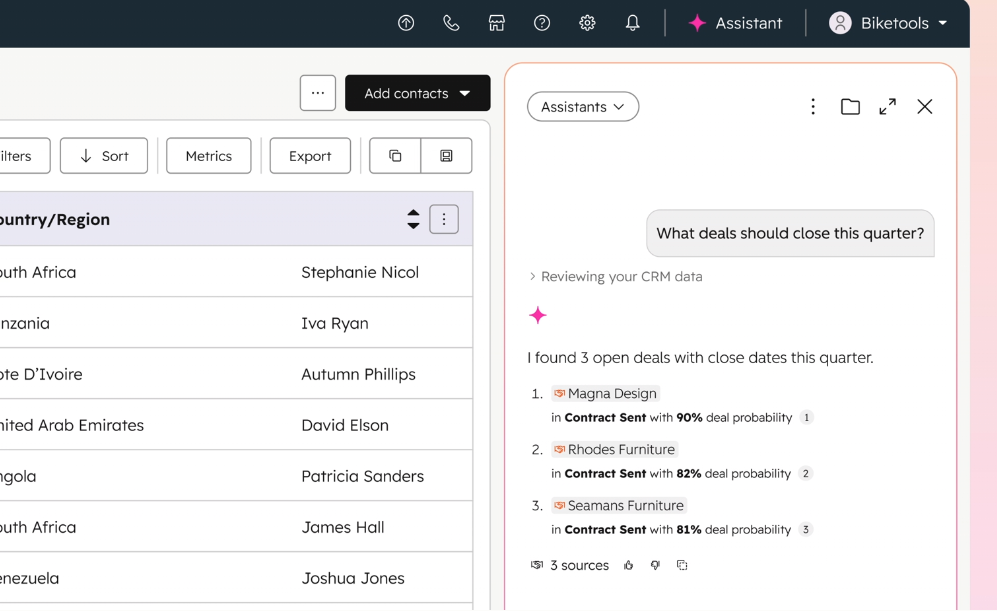
HubSpot has invested heavily in Breeze AI, which runs across the entire platform.
Source: HubSpot
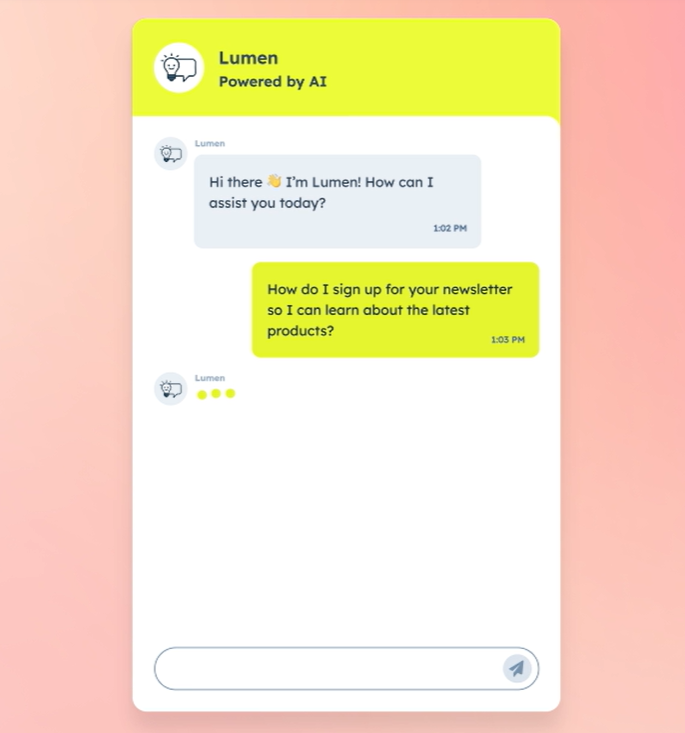
The Customer Agent handles support across chat, WhatsApp, email, and voice. The Prospecting Agent monitors buying signals and drafts outreach.
Source: HubSpot
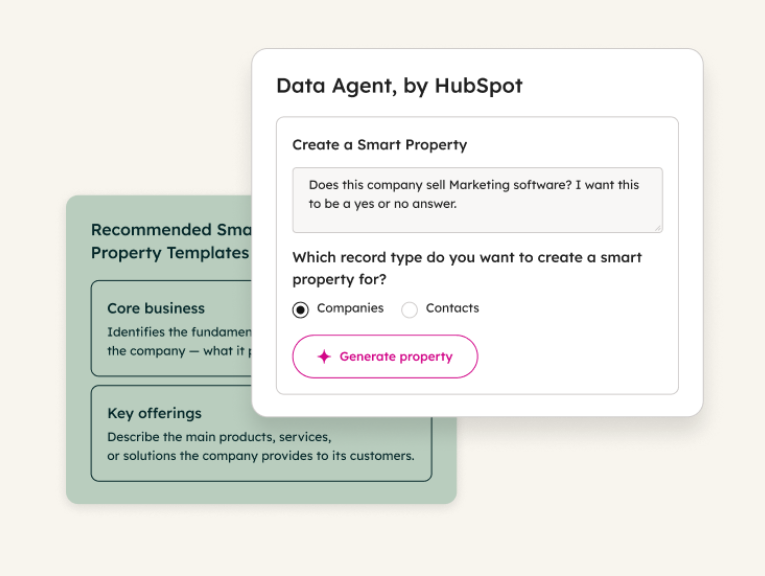
The Data Agent answers natural-language questions about CRM data. Several Breeze features remain in beta (AI-Powered Segmentation, Personalization, Marketing Studio), but the direction is clear: HubSpot is building AI into every workflow.
Source: HubSpot
ZoomInfo's AI operates at the intelligence layer. The GTM Context Graph doesn't just detect anomalies or draft emails.
Source: ZoomInfo
It reasons across CRM data, conversation intelligence, intent signals, and behavioral patterns to explain why deals move or stall. GTM Workspace's AI agents, built on Anthropic's Claude, handle account research, outreach generation, CRM updates, and signal monitoring.
GTM Studio lets marketers describe audiences in natural language and launch multi-channel plays without engineering support.
The difference: HubSpot's AI helps you work faster within HubSpot. ZoomInfo's AI tells you where to focus and why, then equips your team to act on that intelligence in any tool.
For a deeper look at how these two platforms compare across the full stack, see our HubSpot vs. ZoomInfo comparison.
Implementation and support: three models
HubSpot offers a permanently free CRM tier with no time limit, making it easy to explore the platform. HubSpot Academy provides free certifications, courses, and guided onboarding paths, with over 200,000 professionals certified.

Source: HubSpot
Paid support tiers scale from community-only (free) through email and chat (Starter) to phone support (Professional and Enterprise). The catch: Professional and Enterprise tiers carry mandatory onboarding fees ranging from $1,500 to $7,000 depending on the hub. For complex implementations, HubSpot relies on its Solutions Partner ecosystem rather than internal professional services (which account for only ~2% of total revenue).
Pulse CRM inverts the support model. Implementation is the product. The team builds your automations, pipelines, and workflows as part of the subscription. Phone support is available during business hours. A free learning platform and downloadable resources supplement direct support. No onboarding fees. No mandatory training purchases. The trade-off: the support team is small, and response times can slow during peak demand.
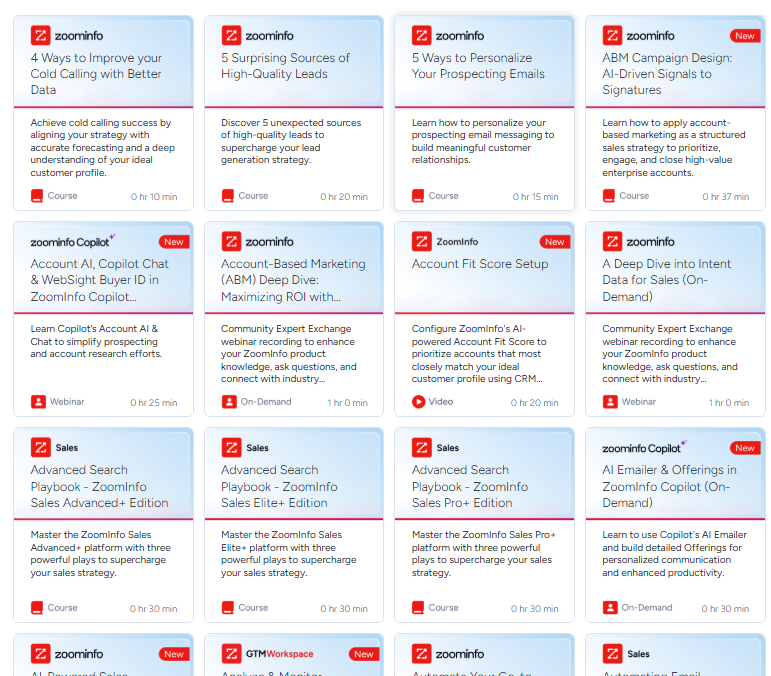
ZoomInfo redesigned its onboarding program as a structured 90-day process covering planning, technical setup, education, and adoption. The redesign produced a 25% improvement in customer satisfaction and won Rocketlane's Golden Comet award for Best Customer Onboarding Team.

Source: ZoomInfo
ZoomInfo University provides role-specific learning paths and certifications. Enterprise customers get dedicated service managers and hands-on onboarding. GTM Workspace "deploys in weeks, not months".
Source: ZoomInfo
Franchise and multi-account management
This is a niche where Pulse CRM has a genuine edge over HubSpot.
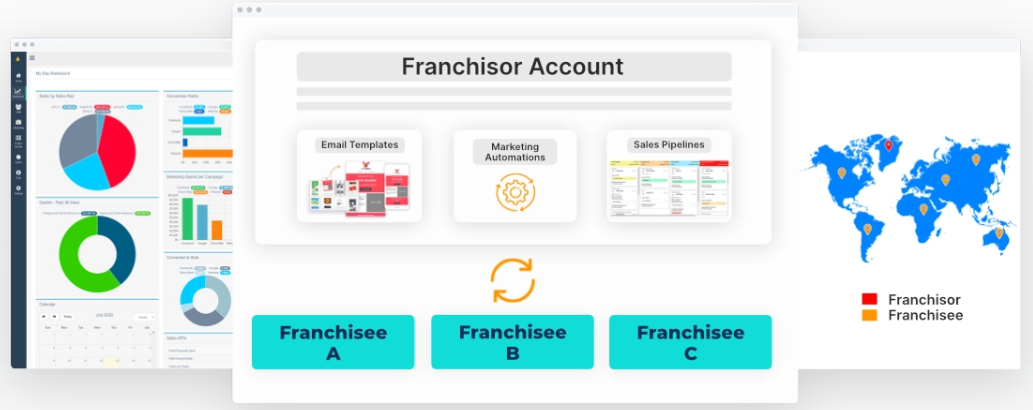
Pulse's franchise management suite offers corporate-level lead distribution by geography (census tracts, zip codes), pre-built automation templates that franchisors can push to all franchisee accounts, and consolidated reporting across locations.
Source: Pulse Technology
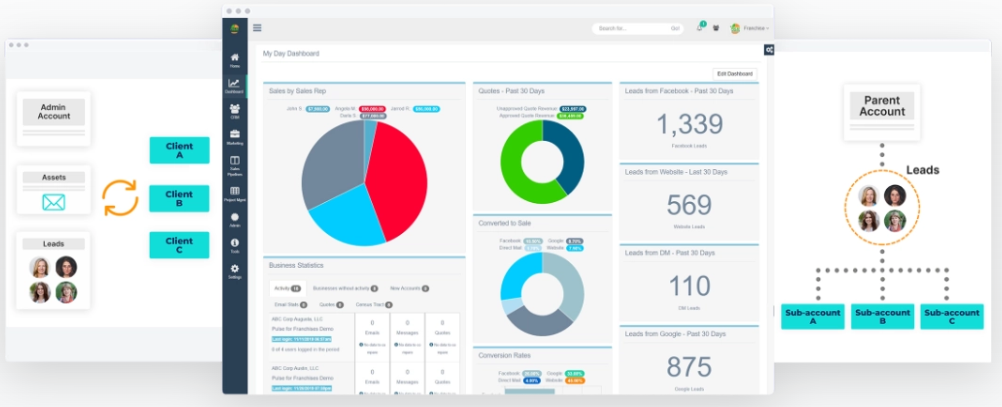
The Multi-Account Agency CRM lets agencies manage multiple client accounts from one login, with one-click sharing of campaigns and automations and real-time cross-account reporting. Changes at the corporate level automatically propagate to all client accounts.
Source: Pulse Technology
HubSpot can handle multi-location businesses through its enterprise tier, but it wasn't designed with franchise-specific hierarchy management in mind. Custom objects and team-level permissions can approximate Pulse's franchise features, but the configuration requires more effort and higher-tier plans.
ZoomInfo doesn't compete in franchise CRM management, but for franchise systems doing B2B sales, ZoomInfo launched nine vertical datasets in 2025 covering franchise ownership, restaurant operations, and commercial fleet intelligence, providing data that neither HubSpot nor Pulse includes natively.
Pricing comparison: simplicity vs. scale vs. intelligence
How each platform charges reveals who it was built for.
Pulse CRM is the most straightforward. Three plans, all features included, differences only in users and contacts:
Plan | Price | Users | Contacts |
|---|---|---|---|
Starter | 1 | 500 | |
Growth | 3 | 1,000 | |
Pro | 5 | 10,000 |
No onboarding fees. No per-module charges. Cancel anytime. Annual billing saves 25%. Additional users cost $15/month each, and additional contacts cost $50/month per 5,000.
HubSpot is more complex. The free CRM is useful (unlimited contacts, one deal pipeline, basic tools) but capped at two users with HubSpot branding on everything. Paid plans branch across multiple hubs:
Hub | Starter | Professional | Enterprise |
|---|---|---|---|
Marketing Hub | |||
Sales Hub | |||
Service Hub |
The Starter Customer Platform bundle ($9/seat/month annually) packages Starter editions of all hubs together, a reasonable entry point for small teams. But moving to Professional or Enterprise across multiple hubs introduces compounding costs and the mixed-tier seat billing rule that can surprise budget planners.
ZoomInfo uses custom-quoted, consumption-based pricing with no publicly listed prices.
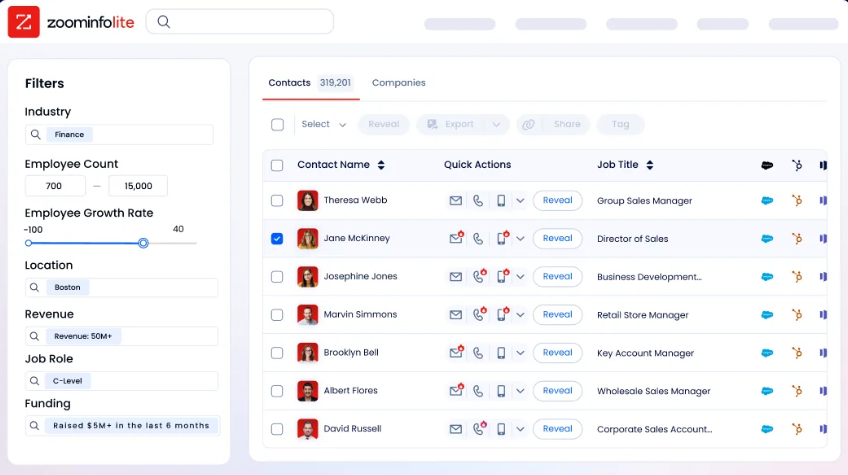
ZoomInfo Lite is a permanent free tier with access to the B2B database, 10 monthly export credits, and basic search filters. Paid plans scale around seats, credits, and feature access across Sales, Marketing, and Enterprise tiers. Annual contracts are standard. The pricing reflects ZoomInfo's enterprise focus: it's an investment justified by pipeline generated, not a utility bill.
Source: ZoomInfo
For a five-person service business spending $49/month, Pulse is the obvious fit. For a 50-person company with marketing and sales teams, HubSpot's platform consolidation can reduce total cost versus buying separate tools. For a B2B sales organization where data quality and buying signals drive revenue, ZoomInfo's pricing pays for itself in pipeline.
Integration ecosystems tell you who each platform was built for
HubSpot's App Marketplace has surpassed 2,000 apps with 2.5 million active installs. This is the deepest integration ecosystem among the three. Shopify, Salesforce, Slack, WordPress, Zoom, and hundreds more connect natively. HubSpot's REST API is well-documented, and a formal Technology Partner Program supports ISVs building on the platform. For teams running a complex tech stack, HubSpot likely connects to every tool already in use.
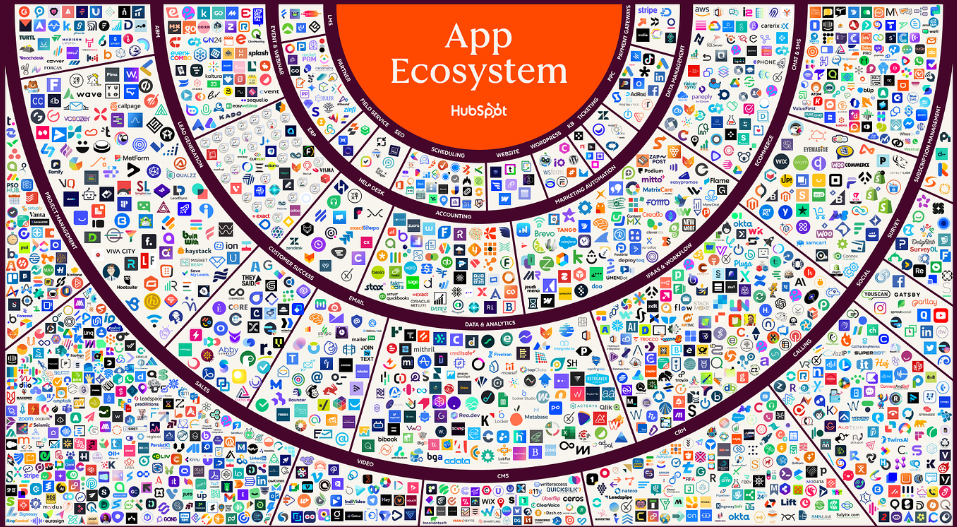
Source: HubSpot
Pulse CRM integrates through Zapier, Make, and its own API, connecting to thousands of apps indirectly. This works for basic workflows (a new lead in Pulse triggers a Slack notification, a closed deal creates a QuickBooks invoice). But it's a different experience from native integrations. Each Zapier connection adds a dependency, a potential failure point, and often a separate subscription cost.
ZoomInfo's App Marketplace lists 120+ partner integrations, covering CRM, marketing automation, sales engagement, data warehouse, and communications platforms. The Enterprise API and MCP server push ZoomInfo's intelligence into any tool, including custom AI agents. API access is included in all relevant plans, not gated as a premium add-on.
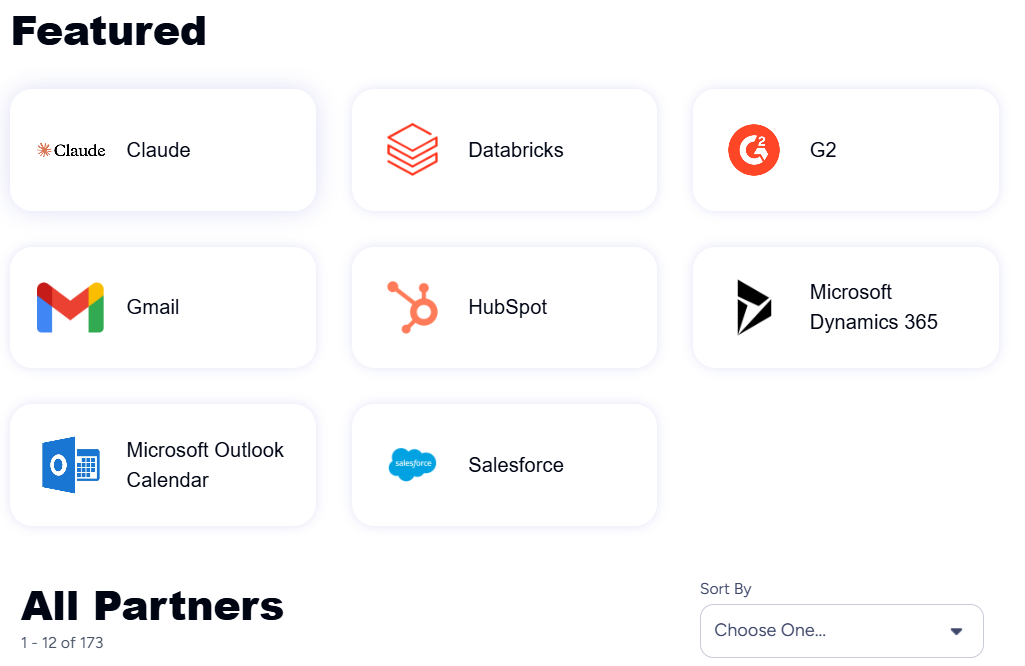
Source: ZoomInfo
The key difference: HubSpot integrates to consolidate your stack around its CRM. ZoomInfo integrates to power your existing stack with intelligence. Pulse integrates to connect with the tools its users already rely on.
Security and compliance: enterprise requirements vs. SMB realities
HubSpot carries SOC 2 Type II, HIPAA attestation, GDPR and CCPA compliance, and EU Cloud Code of Conduct Level 2. Data is encrypted with AES-256 at rest and TLS 1.2/1.3 in transit. An EU Data Center option exists for data residency requirements. SSO, 2FA, IP allowlisting, and AI model cards are all available.

Source: HubSpot
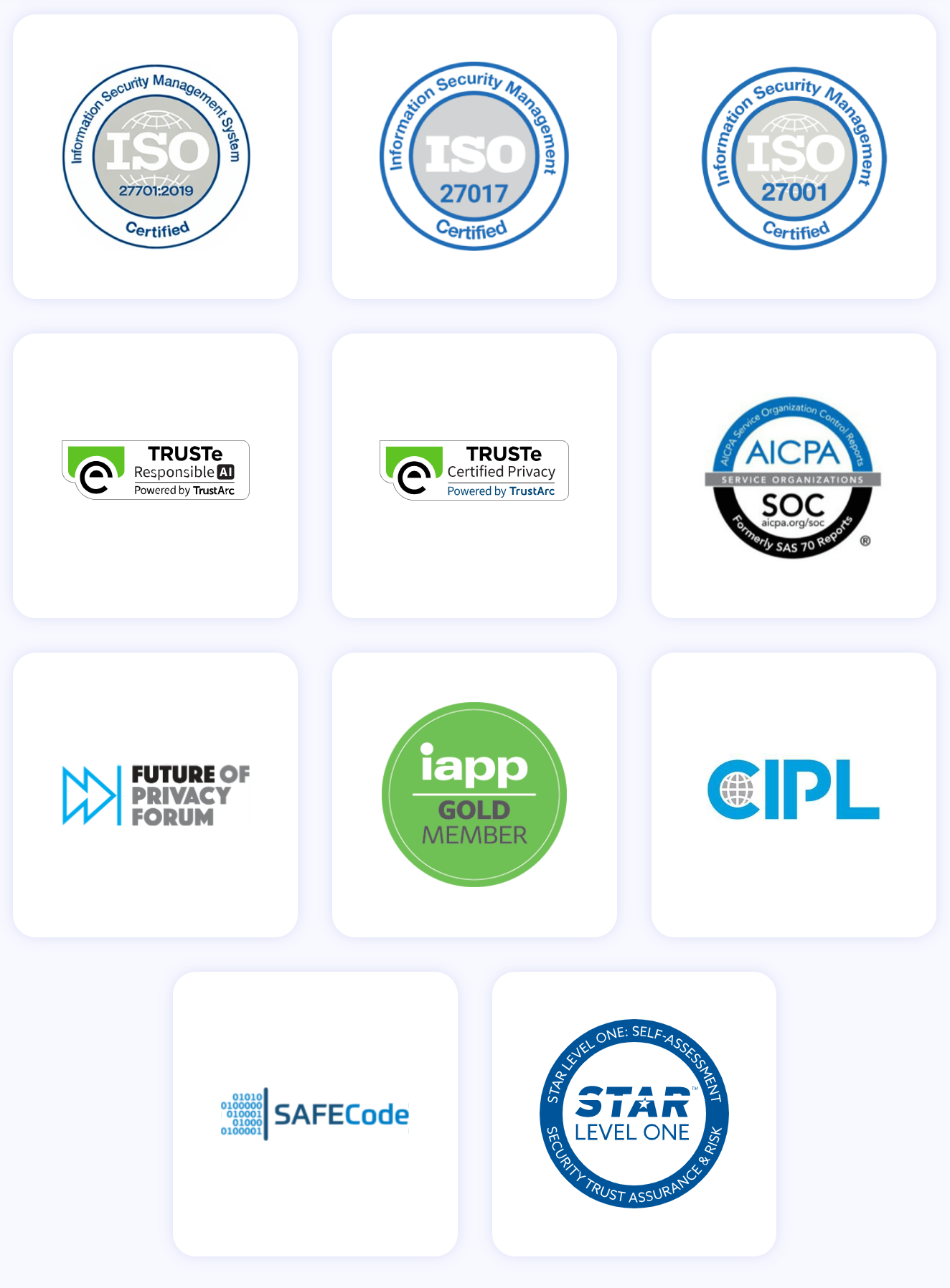
ZoomInfo holds ISO 27001, ISO 27701, SOC 2 Type II, TRUSTe GDPR, and TRUSTe CCPA certifications, all renewed annually. It's a registered data broker in California and Vermont. The Trust Center provides detailed compliance documentation.
Pulse CRM operates with standard SMB-level security practices: "commercially acceptable means to protect your Personal Data." Role-based permission controls are available. However, no formal certifications (SOC 2, ISO, HIPAA) appear on any public page. For businesses in regulated industries (healthcare, financial services, or government) this gap could be a disqualifier.
HubSpot vs. Pulse CRM vs. ZoomInfo: Which should you choose?
The right choice depends on what's actually holding your business back.
Choose Pulse CRM if:
You're a small business or franchise that needs a working CRM this week
You want someone to build the system for you, not hand you a toolkit
Your team is non-technical and you need simplicity over sophistication
Budget is a primary concern and $49 to $199/month is the right range
You value month-to-month flexibility with no contracts
Choose HubSpot if:
You need unified marketing, sales, and service on one platform
You have the team and budget to use multiple hubs effectively
Marketing automation and content management are core to your strategy
You want AI features across every department
Your tech stack requires native integrations
Choose ZoomInfo if:
Your pipeline depends on finding and reaching the right B2B buyers
Data quality and buying signals matter more than another CRM feature
You need verified direct dials and emails, not a database of guesses
Your team wants AI that explains why deals move, not just tracks that they did
You want intelligence that works inside HubSpot, Salesforce, or any other tool
Start with ZoomInfo Lite for free or request a demo.
For most B2B organizations, the real question isn't HubSpot or Pulse. It's whether your CRM has the data it needs to be useful. HubSpot is a capable CRM. Pulse is a practical one. ZoomInfo is the intelligence layer that makes either one produce results, because the best-configured pipeline in the world doesn't close deals if it's full of the wrong accounts.
HubSpot vs. Pulse CRM vs. ZoomInfo FAQ
What is the core difference between HubSpot, Pulse CRM, and ZoomInfo?
HubSpot is a CRM and marketing platform with six product hubs, AI automation, and 2,000+ integrations, built for growing companies that want unified marketing, sales, and service. Pulse CRM is an SMB CRM with done-for-you implementation, designed for small businesses and franchises that need simplicity and flat pricing starting at $49/month. ZoomInfo is a B2B data and intelligence platform with 500M contacts and 100M companies, providing verified data and buying signals that power prospecting and pipeline generation inside any CRM.
Which platform is cheapest for a small team?
Pulse CRM starts at $49/month for 1 user and 500 contacts, with all features included and no onboarding fees. HubSpot's free CRM covers basic needs for up to 2 users, with the Starter bundle at $9/seat/month annually. ZoomInfo Lite is permanently free with 10 monthly export credits. For paid plans, Pulse is the most affordable and predictable. HubSpot's costs escalate with hubs and contact tiers. ZoomInfo's paid plans are custom-quoted for enterprise buyers.
Can ZoomInfo work alongside HubSpot or Pulse CRM?
Yes. ZoomInfo integrates natively with HubSpot, enriching contact and company records with verified data and buying signals inside HubSpot's CRM. For Pulse CRM, ZoomInfo can connect through Zapier or API, though the integration requires more manual configuration since there is no native connector. ZoomInfo is designed to complement any CRM, not replace it.
Which platform has the best AI capabilities?
ZoomInfo's GTM Context Graph processes 1.5B+ data points daily to reveal why deals move or stall, power AI-drafted outreach, and surface buying signals across accounts. HubSpot's Breeze AI runs across all hubs with agents for prospecting, customer support, and data analysis, though several features remain in beta. Pulse CRM has no AI features and relies on rule-based automation.
Which platform is best for franchise systems?
Pulse CRM has the strongest franchise-specific features, including corporate-level lead distribution by geography, shared automation templates pushed to franchisees, and consolidated cross-location reporting. HubSpot can approximate franchise management through enterprise-tier configuration but lacks franchise hierarchy tools built for the purpose. ZoomInfo provides franchise ownership and territory data for B2B prospecting but does not manage franchise CRM operations.
How do the platforms handle data quality?
ZoomInfo leads clearly, with 500M contacts verified through 300+ human researchers and automated ML scanning of 28 million domains daily, achieving up to 95% accuracy on first-party data. HubSpot's Smart CRM provides AI-powered enrichment from internal signals and automatic duplicate detection. Pulse CRM stores only the data users enter manually, with no enrichment or external verification.
What are the contract and cancellation terms for each platform?
Pulse CRM has no contracts and allows cancellation anytime with 7 days notice before the next billing cycle. HubSpot locks paid plans into annual commitments that cannot be cancelled mid-contract; auto-renewal must be turned off before the renewal date. ZoomInfo uses annual contracts as standard, with multi-year agreements offering pricing advantages.
Which platform suits a company that sells to other businesses?
For B2B sales, ZoomInfo provides the strongest foundation: verified contact data, buyer intent signals, org charts, and technographics that identify which accounts are in-market before you reach out. HubSpot offers a full B2B sales and marketing stack with AI-powered prospecting and pipeline management. Pulse CRM handles basic B2B sales pipeline tracking but lacks B2B data enrichment, intent signals, and the integrations that mid-market and enterprise B2B teams typically require.
See how HubSpot compares against other CRMs and platforms:
