
Choosing between HubSpot and Wishpond for your marketing and sales stack often comes down to five questions:
Do you need a full CRM platform or a simpler tool to run campaigns and capture leads?
Is your team large enough to justify enterprise pricing, or are you a small business watching every dollar?
Do you want to manage marketing yourself with software, or hand execution to a services team?
How important is the quality of the data behind your outreach, prospecting, and targeting?
Are you planning to scale into multi-channel automation, or do you need something you can launch this week?
In short, here's what we recommend:
HubSpot is the platform for growing companies that want marketing, sales, and service under one roof. Its Smart CRM connects Marketing Hub, Sales Hub, Service Hub, Content Hub, Data Hub, and Commerce Hub into a single data layer, so every team works from the same customer record.
With 288,706 customers and over 2,000 app integrations, HubSpot delivers breadth. But that breadth comes with complexity: per-seat pricing across multiple Hubs, mandatory onboarding fees at Professional and Enterprise tiers, and costs that escalate when you mix subscription levels across departments.
Wishpond targets small businesses that need landing pages, email marketing, contests, pop-ups, and basic sales automation in one dashboard without hiring a marketing team. Its hybrid model pairs software with optional managed services (ads, SEO, graphic design, a dedicated marketing team), so small businesses can outsource execution alongside the tools.
However, Wishpond's automation is simpler than HubSpot's, its revenue dropped in fiscal 2025 during a strategic restructuring, and user reviews flag concerns about contract flexibility and billing practices.
Both platforms help you run campaigns. But campaigns are only as good as the data behind them: the contacts you're reaching, the companies you're targeting, and the signals telling you when a prospect is ready to buy. That's where ZoomInfo changes the equation.
ZoomInfo is a B2B data and go-to-market platform built on 500M contacts and 100M companies, 135M+ verified phone numbers, and 200M+ verified business email addresses. Its GTM Context Graph processes 1.5B + data points daily, combining ZoomInfo's B2B data with your CRM records, conversation transcripts, and behavioral signals to show not just what's happening in your pipeline, but why.
For B2B teams comparing HubSpot and Wishpond, ZoomInfo isn't a replacement for either. It's the intelligence layer that makes whichever platform you choose more effective, delivering verified contacts, buyer intent signals, and AI-driven account insights through GTM Workspace for sellers, GTM Studio for marketers and RevOps, or APIs and MCP in any front-end.
If building your campaigns on verified B2B data matters to your team, see how ZoomInfo works with your existing stack.
HubSpot vs. Wishpond vs. ZoomInfo at a glance
HubSpot | Wishpond | ZoomInfo | |
|---|---|---|---|
Primary function | All-in-one CRM and marketing platform | SMB marketing and lead capture platform | B2B data intelligence and GTM platform |
Marketing automation | Visual workflows with branching logic | Rule-based workflows with six pre-built types | Signal-triggered workflows via GTM Studio |
CRM depth | Full Smart CRM with custom objects | Lead database (CRM-lite); no deal stages or pipeline management | Contact and company intelligence; integrates with Salesforce, HubSpot, Dynamics |
Data quality | CRM data you enter + AI enrichment from interactions | Leads captured from your own campaigns | 500M contacts verified by 300+ human researchers; up to 95% accuracy on first-party data |
AI capabilities | Breeze AI agents across marketing, sales, and service | AI-enhanced sales automation and template suggestions | GTM Context Graph processing 1.5B+ data points daily; AI agents for prospecting and account research |
Integrations | 2,000+ app marketplace | 300+ integrations via native connectors and Zapier | 120+ native integrations; API and MCP access for any tool |
Managed services | Partner ecosystem; limited first-party services | Built-in ads, SEO, graphic design, and marketing team services | ZoomInfo Labs professional services |
Starting price | Free CRM; paid plans from $15/seat/mo | Custom pricing (not published); 14-day free trial on annual plans | Free tier (ZoomInfo Lite); consumption-based pricing, custom-quoted |
Best for | Growing companies needing unified CRM + marketing + sales | Small businesses wanting simple campaigns + optional managed services | B2B teams needing accurate contact data, intent signals, and AI-powered prospecting |
Two different answers to the same marketing problem
HubSpot and Wishpond both promise to simplify marketing, but they define "simple" very differently.
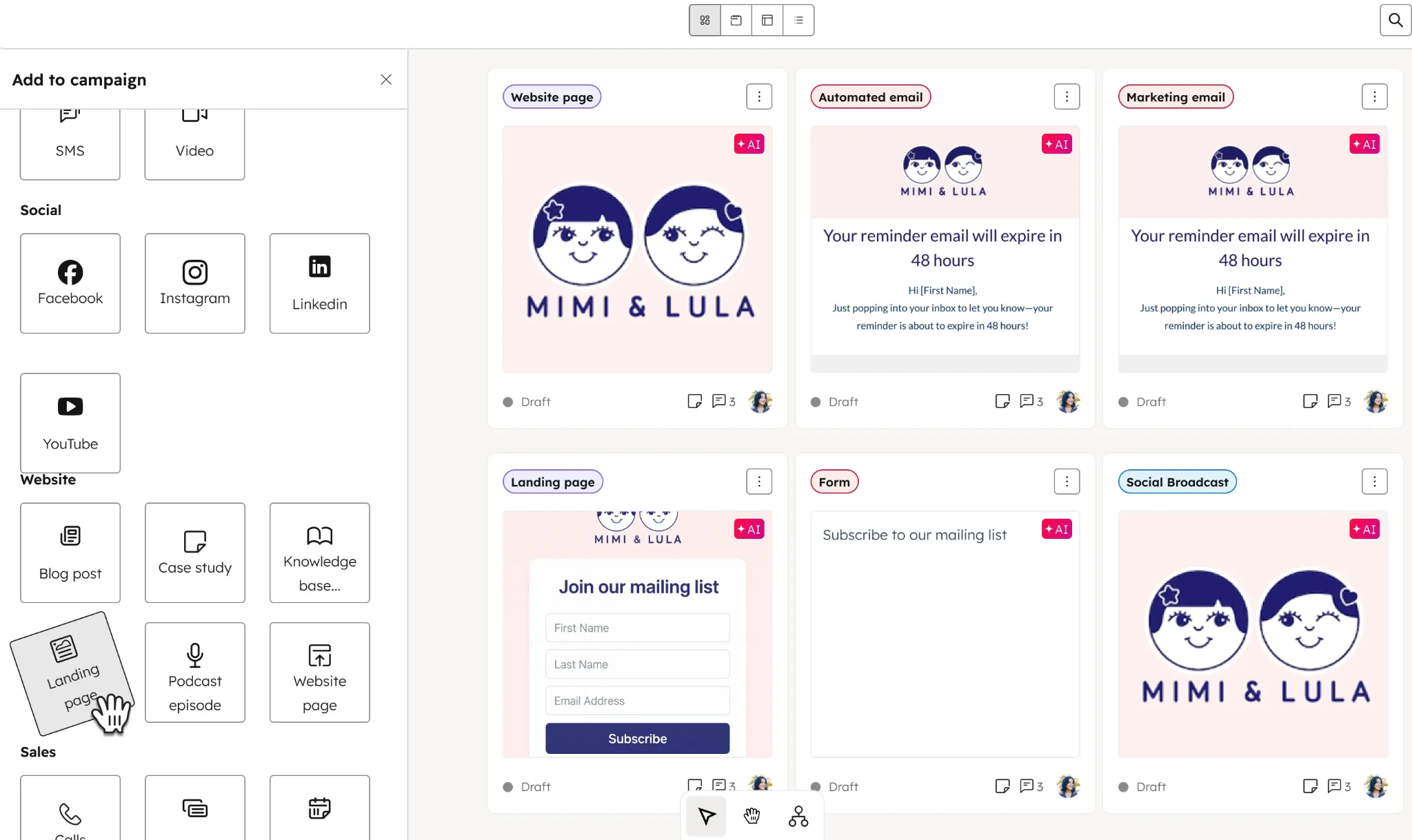
HubSpot's version of simplicity is consolidation. Instead of stitching together a CRM, an email tool, a landing page builder, a help desk, and an analytics platform, you get one system where marketing data flows automatically to sales and customer service teams.
Source: HubSpot
A lead fills out a form, gets enrolled in a nurture sequence, triggers a sales notification, and eventually becomes a support ticket, all on the same contact record. The complexity isn't gone; it's organized.
Wishpond's version of simplicity is accessibility. A small business owner who needs a contest page, a pop-up, and an email drip campaign can build all three from one dashboard without learning a CRM. If they can't do it themselves, Wishpond offers to do it for them with managed marketing services.

Source: Wishpond
The trade-off is depth: Wishpond's automation has six pre-built workflow types, while HubSpot's visual workflow builder supports branching logic with dozens of trigger types.
Neither platform solves the problem upstream: the quality of the contacts and companies you're marketing to. Both rely on data you generate yourself, through form fills, website visits, and campaign interactions. For B2B teams, that creates a ceiling. You can only market to people who've already found you.
HubSpot wins on platform depth
HubSpot isn't just a marketing tool. It's a customer platform spanning eight interconnected products, all built on a shared Smart CRM.
Source: HubSpot
Marketing Hub handles email campaigns, landing pages, social media scheduling, ad management, and multi-touch attribution. Sales Hub gives reps deal pipelines, sequences, call tracking, CPQ, and AI-guided selling.
Service Hub manages support tickets across email, chat, WhatsApp, and phone, with a Breeze Customer Agent that resolves over 50% of conversations on its own. Content Hub provides a CMS, AI content writer, and content repurposing tools. Data Hub, Commerce Hub, and the Breeze AI layer round out the suite.
Source: Hubspot
The platform supports up to 15 million contacts (expandable to 50 million), custom objects, sandbox environments, and field-level permissions.
But depth creates cost. Marketing Hub Professional starts at $800/month (annual) with a $3,000 mandatory onboarding fee. Sales Hub Professional runs $90/seat/month with another $1,500 onboarding fee. And if you subscribe to multiple Hubs at different tiers, all Core Seats are billed at the rate of the highest tier, a pricing quirk that catches many buyers off guard.
Wishpond wins on accessibility for small teams
Wishpond doesn't try to be everything. It targets small businesses that need a few key marketing tools without the overhead of a full CRM platform.
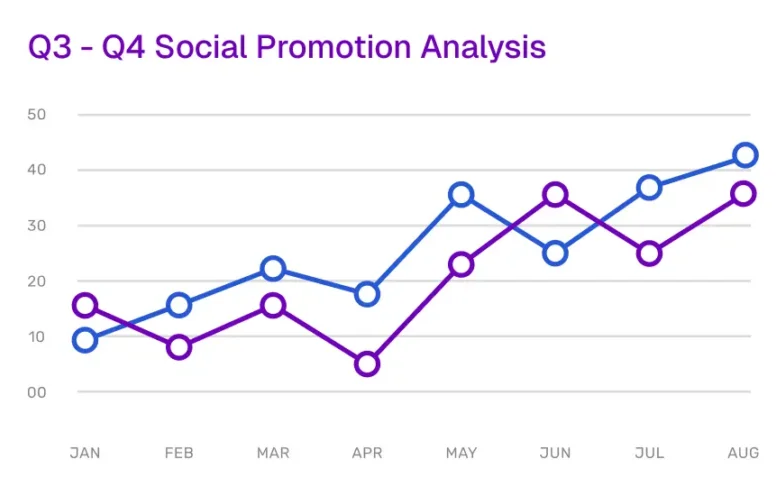
The strength is lead capture. Social Promotions offers 12+ contest types, from sweepstakes to photo contests to referral campaigns.
Source: Wishpond
The Marketing Funnels builder connects landing pages, email sequences, and checkout steps into structured journeys. Pop-ups use behavioral triggers like exit intent and scroll depth. All captured leads flow into the same Leads Database and trigger the same email automations.
The managed services layer is unusual for a platform at this price point. Wishpond bundles optional ads management, SEO services, graphic design, and a dedicated marketing team alongside the software. For a five-person company without a marketing hire, this can be the difference between running campaigns and not running them at all.
For Shopify merchants, the Shopify Marketing module with AI-powered cart recovery provides event-triggered automations based on seven Shopify events (cart additions, orders, refunds, and more), with deep-link behavior that routes customers to checkout if they reached it or to their cart if they didn't.
Where Wishpond falls short is everywhere beyond basic marketing. The Leads Database stores contacts and supports segmentation, but it lacks deal pipelines, opportunity tracking, and the CRM functionality a growing sales team needs.
Reporting is basic compared to HubSpot's multi-touch attribution. And the automation builder, while functional, supports seven condition types and seven action types in a linear flow, not the branching workflows HubSpot offers.
ZoomInfo adds the intelligence layer neither platform provides
HubSpot and Wishpond both operate on data you generate: form fills, website visits, email opens, deal notes. That data is valuable, but it's limited to people who've already interacted with you.
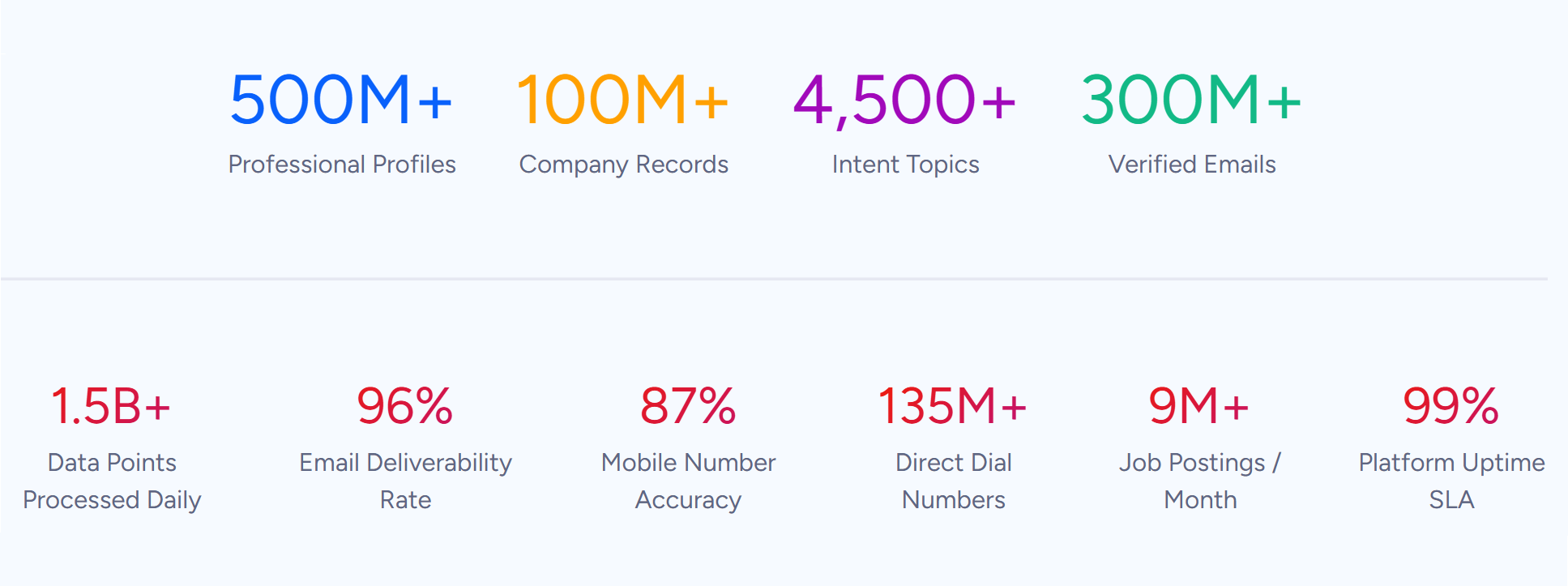
ZoomInfo operates on a different data set. Its platform covers 500M contacts and 100M companies with 135M+ verified phone numbers and 200M+ verified business email addresses, built through a multi-source pipeline backed by 300+ human researchers and achieving up to 95% accuracy on first-party data.
Source: ZoomInfo
In a Fortune 500 competitive RFP analyzing 25 million contacts across vendors, the independent consultant concluded that "no other competitor came even close."
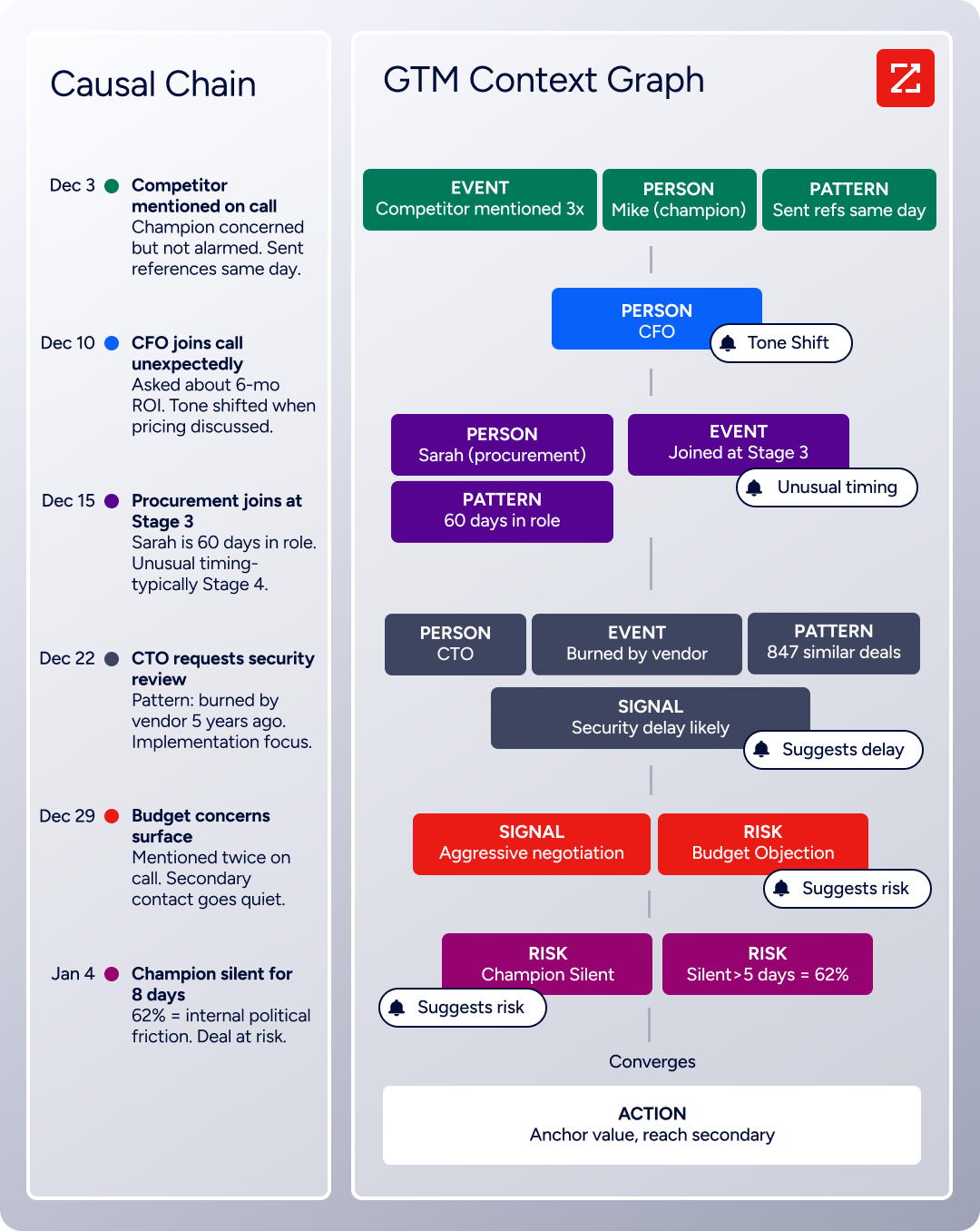
This data becomes intelligence through the GTM Context Graph, which processes 1.5B + data points daily by combining ZoomInfo's third-party data with your CRM records, conversation transcripts, and behavioral signals. The result: AI that understands not just that a deal moved stages, but why it moved, which signals preceded the movement, and what that pattern predicts for similar accounts.
Source: ZoomInfo
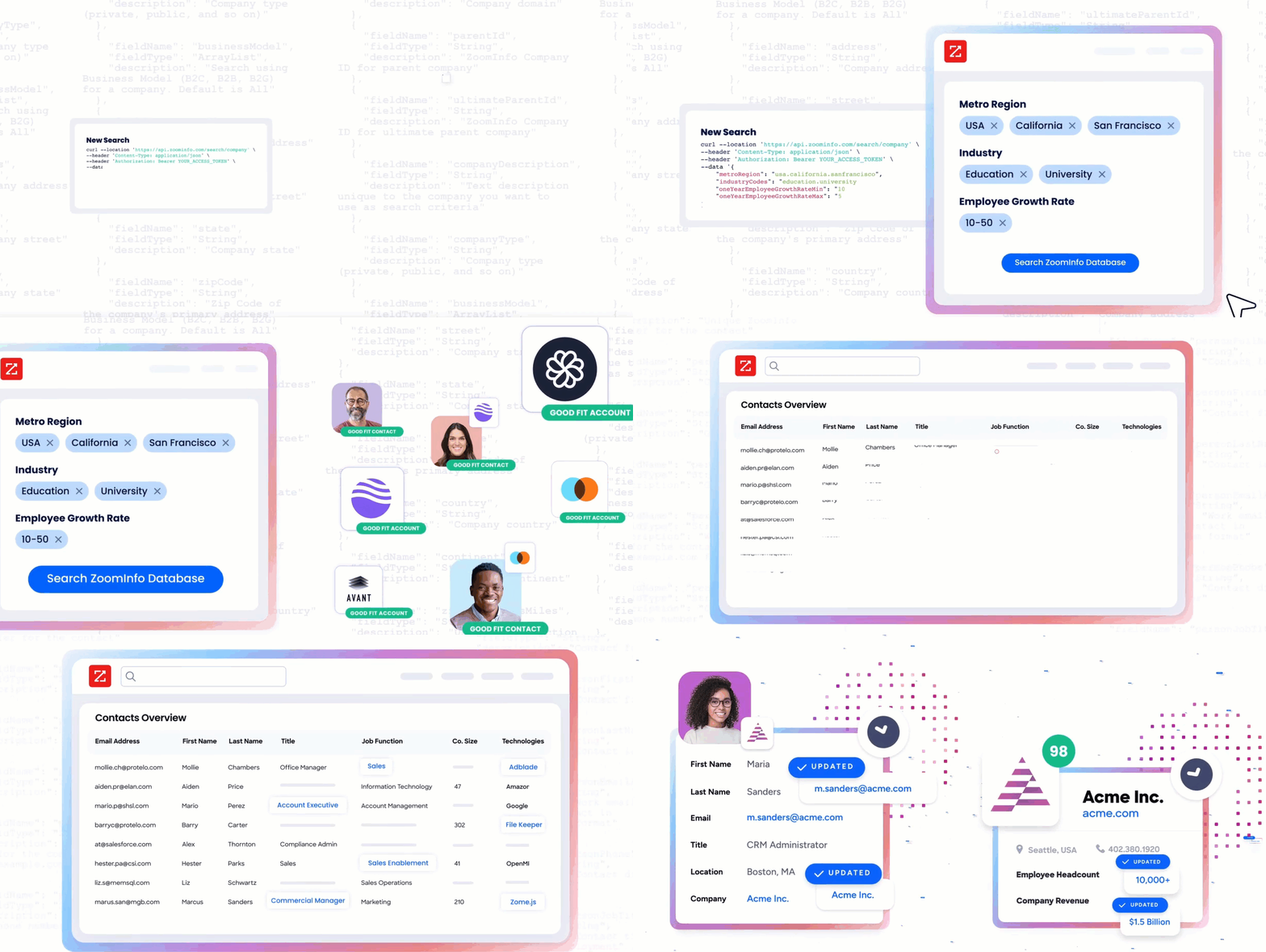
For teams already using HubSpot or considering Wishpond, ZoomInfo plugs into either workflow. Native HubSpot integration syncs enriched contacts and company data into your CRM. GTM Studio lets marketers build audiences in natural language and launch multi-channel plays.
GTM Workspace gives sellers a single view where prioritized accounts, AI-drafted outreach, and deal context converge. And APIs and MCP deliver the same intelligence into any custom tool or AI agent.
Source: ZoomInfo
Seismic's sales team attributed 39% of active pipeline to opportunities identified or influenced by ZoomInfo signals, with a 54% productivity gain and 11.5 hours saved per week per seller. (Seismic Case Study)
For a dedicated head-to-head of HubSpot and ZoomInfo, see our HubSpot vs. ZoomInfo comparison.
Marketing automation: sophistication vs. simplicity
The gap between HubSpot and Wishpond in marketing automation is large.
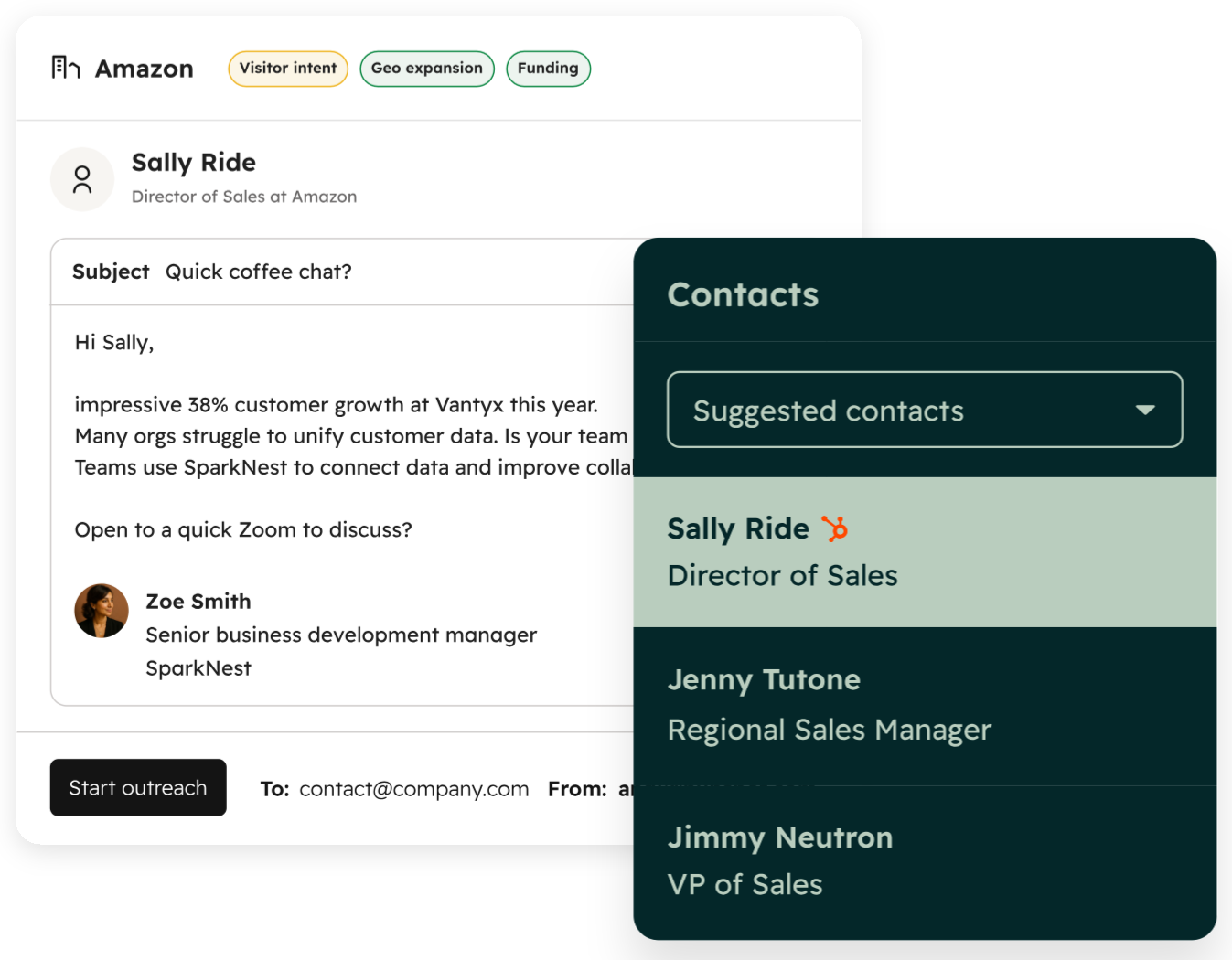
HubSpot's Marketing Automation Workflows use a visual builder with multi-step sequences, branching logic, if/then conditions, and enrollment triggers based on CRM properties, behavioral signals, and lifecycle stage changes.
You can build a workflow that enrolls contacts who visited a pricing page, waits three days, checks whether they opened your last email, splits them into two branches based on the result, and triggers a sales task if the contact's lead score exceeds a threshold. The Breeze Prospecting Agent adds AI-drafted outreach that draws on full customer history, not just contact-level data.
Source: HubSpot
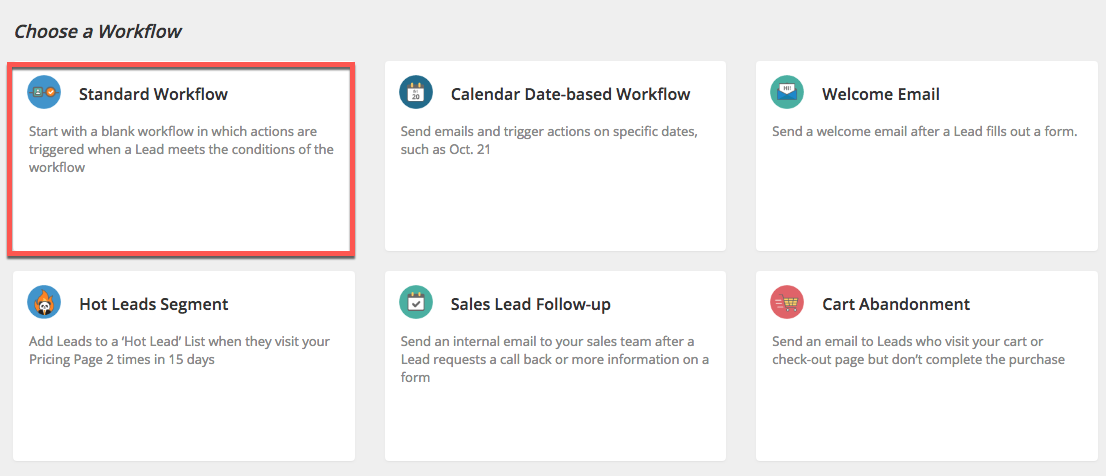
Wishpond's Automation Workflows are simpler by design. You choose from six workflow types (Standard, Calendar-based, Welcome Email, Hot Leads, Sales Follow-up, Cart Abandonment), define conditions using seven trigger types (list membership, page view, email engagement, lead property, campaign conversion, workflow status, custom API events), and chain together seven action types (send email, set lead property, add/remove from list, delay, webhook, internal email, run JavaScript).
Source: Wishpond
It works for straightforward nurture sequences and drip campaigns but doesn't support the branching complexity HubSpot handles.
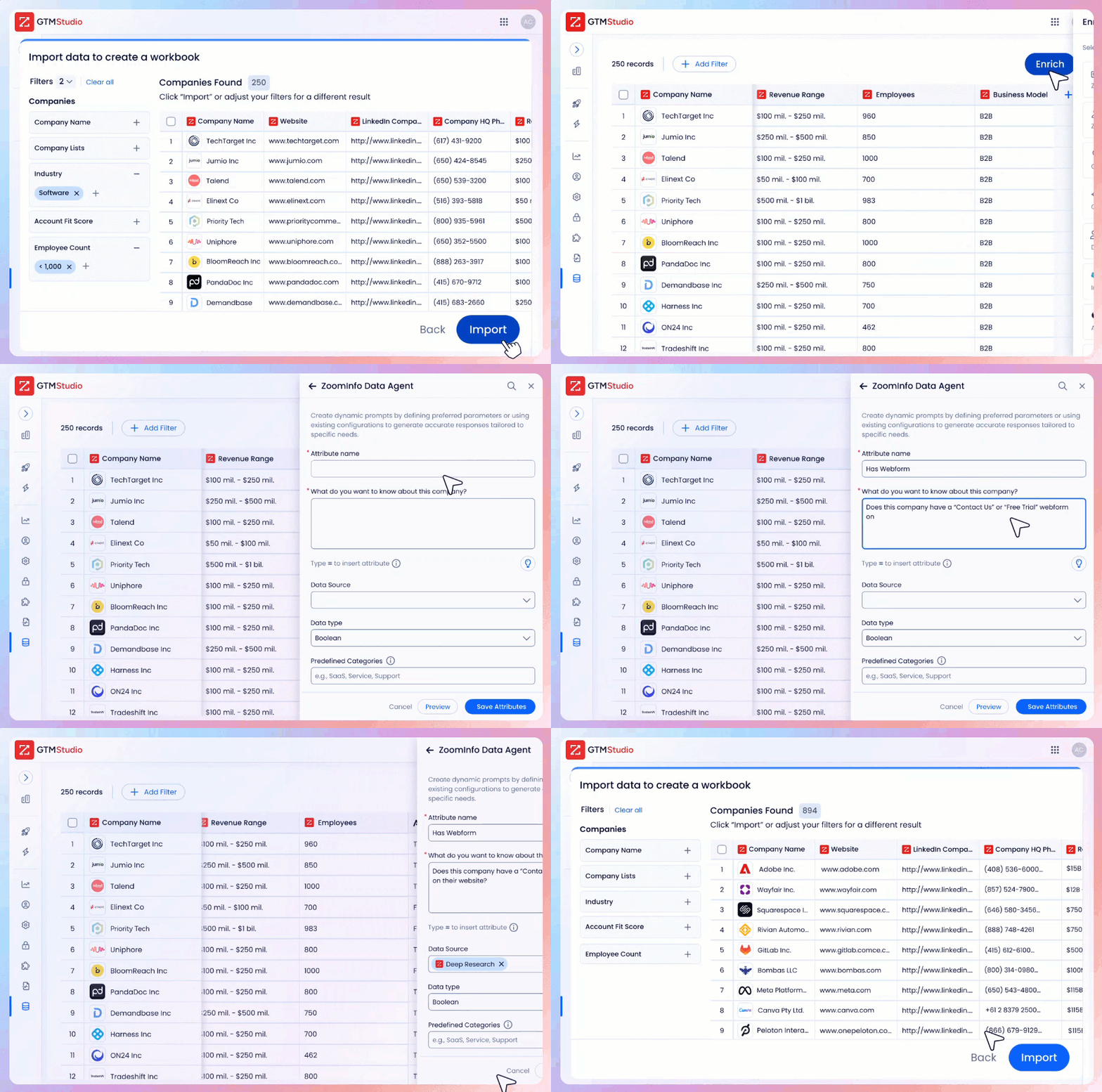
ZoomInfo approaches automation differently. Rather than building email sequences, ZoomInfo's GTM Studio lets marketing and RevOps teams design GTM plays that trigger across channels (email, calls, display ads, direct mail) based on buyer behavior and intent signals.
Source: ZoomInfo
These plays can launch in 30 minutes instead of the 3 weeks that traditional campaign setup requires, and they get smarter as prospects respond.
Data quality determines campaign ceiling
Every marketing platform is only as effective as the data feeding it. This is where the three tools diverge most.
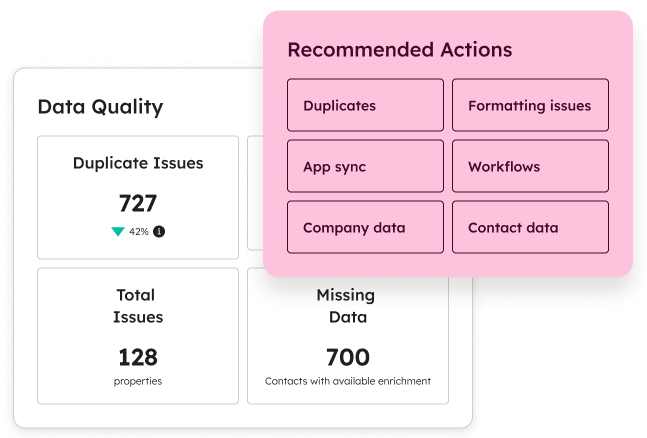
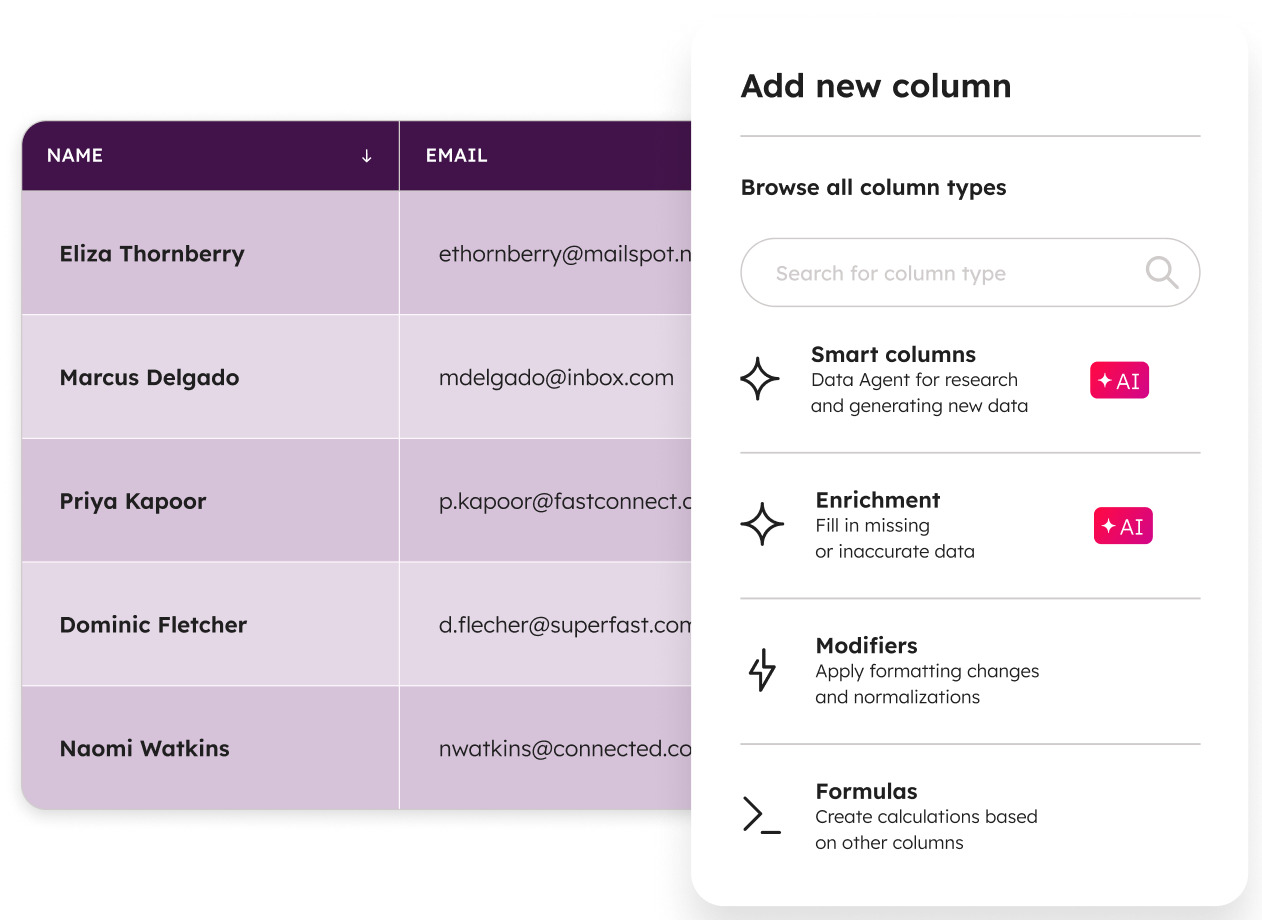
HubSpot's Smart CRM enriches records using signals from emails, call recordings, form submissions, and its own dataset. The Data Hub adds AI-powered duplicate detection, data quality monitoring, and syncs with 100+ business apps.
Source: HubSpot
It's a solid system for maintaining data you've already collected, and HubSpot reports that 83% of users say it unifies their data effectively. But it relies on first-party interactions. If a prospect hasn't engaged with you yet, they don't exist in your CRM.
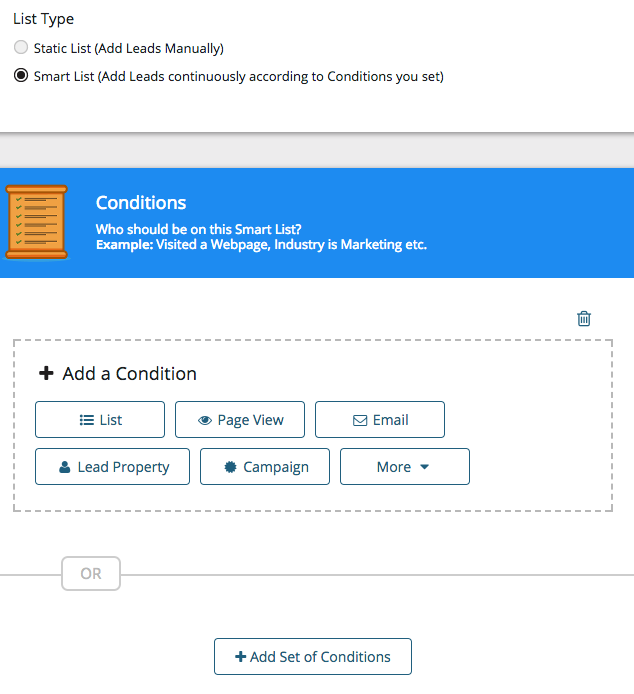
Wishpond's Leads Database stores contacts from campaigns and supports Smart Lists that auto-update based on lead properties. It's functional for tracking campaign-generated leads. But it doesn't enrich records from external sources, doesn't verify email addresses against a third-party database, and user reviews on Capterra flag email deliverability as a concern.
Source: Wishpond
ZoomInfo solves the data problem at a different scale. Its platform doesn't depend on prospects finding you first. With Buyer Intent data tracking signals from 210 million IP-to-Organization pairings and 6 trillion+ keyword-to-device pairings sourced monthly, ZoomInfo identifies companies actively researching solutions before they visit your website.

Source: ZoomInfo
WebSights resolves anonymous website traffic to actual companies and buying team contacts. Guided Intent identifies the specific topics historically correlated with deal success, rather than requiring manual topic selection.

Source: ZoomInfo
SpringDB used ZoomInfo's enriched data for precise client targeting, achieving 2x to 3x increases in campaign conversions and a 300% increase in database usability. (SpringDB Case Study)
AI capabilities show different priorities
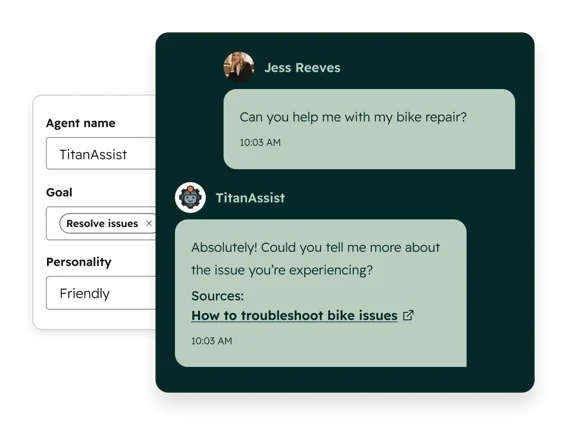
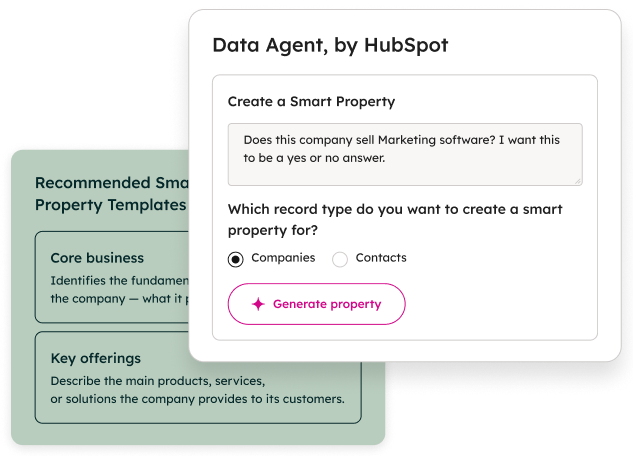
HubSpot's Breeze AI runs across the entire platform. The Customer Agent handles support inquiries 24/7 across chat, email, WhatsApp, and voice. The Prospecting Agent monitors buying signals and drafts personalized outreach. The Data Agent answers natural-language questions about CRM data.
Source: Hubspot
Several features remain in Beta (AI-Powered Segmentation, Personalization, Marketing Studio), but the direction is clear.
Wishpond markets its automation under the "AI Agents" label, but the documentation describes a rule-based workflow builder with condition-and-action logic. The AI sales agent technology that represented more advanced conversational AI was spun out as SalesCloser Technologies (TSXV: SCAI) in March 2026.
What remains in the core Wishpond platform is AI-enhanced template suggestions, design assistance, and A/B test optimization.
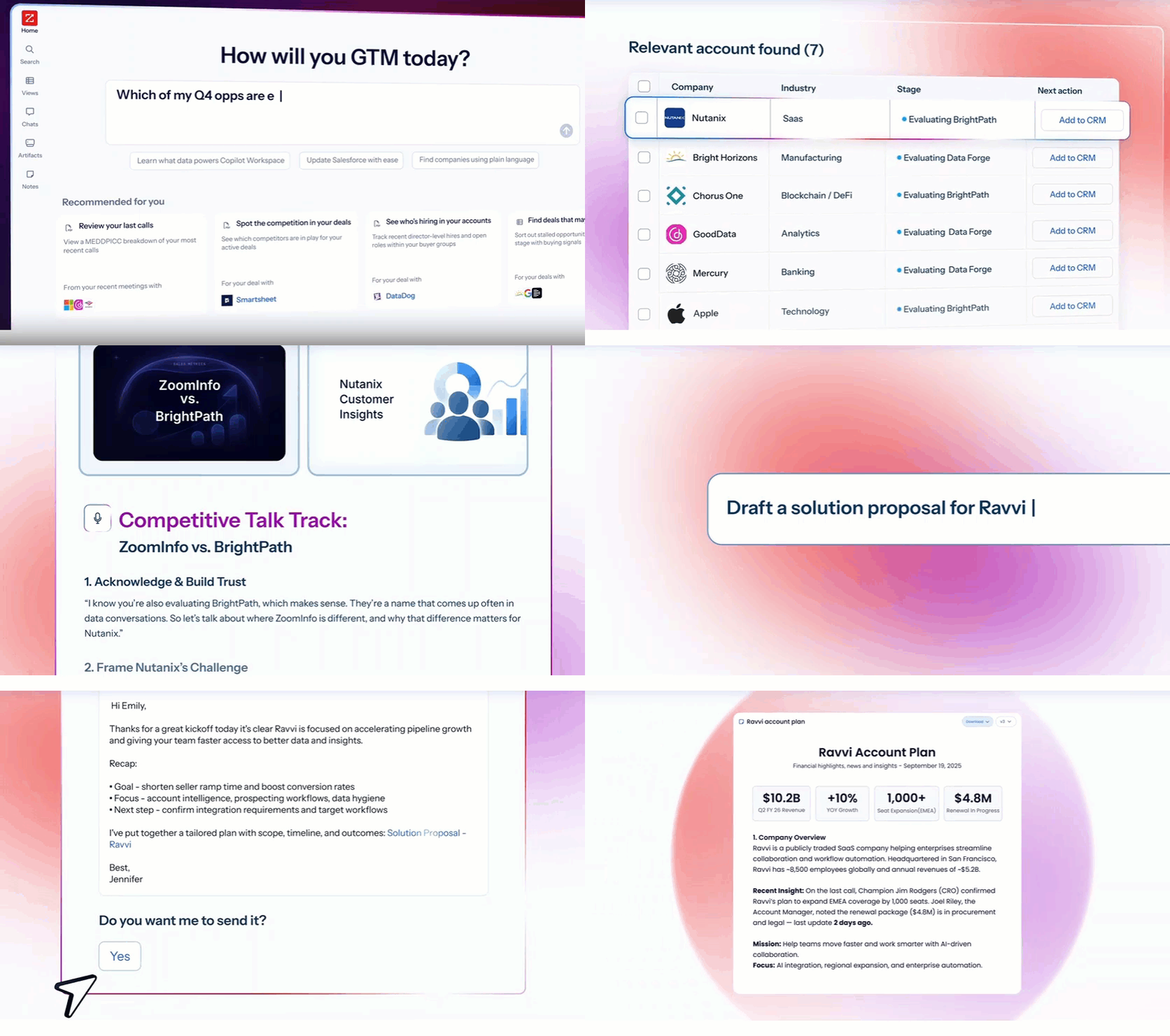
ZoomInfo's AI is built on a different foundation. Because the GTM Context Graph processes both ZoomInfo's third-party data and your first-party CRM and conversation data, its AI agents reason about deals with context neither HubSpot nor Wishpond can match.
GTM Workspace's AI agents handle account research, outreach drafting, CRM updates, and signal monitoring at the same time, built on Anthropic's Claude. Databricks reached prospects 50% faster using GTM Workspace, and Thomson Reuters increased closed-won deals by 40%.
Source: ZoomInfo
"ZoomInfo's not just a contact data company anymore. They've built a full system of execution. GTM Intelligence works the list, writes the outreach, triggers the play, and helps drive predictable growth." (Ian Brodie, CEO & Co-Founder, Levanta; Levanta Case Study)
Integration ecosystems and access flexibility
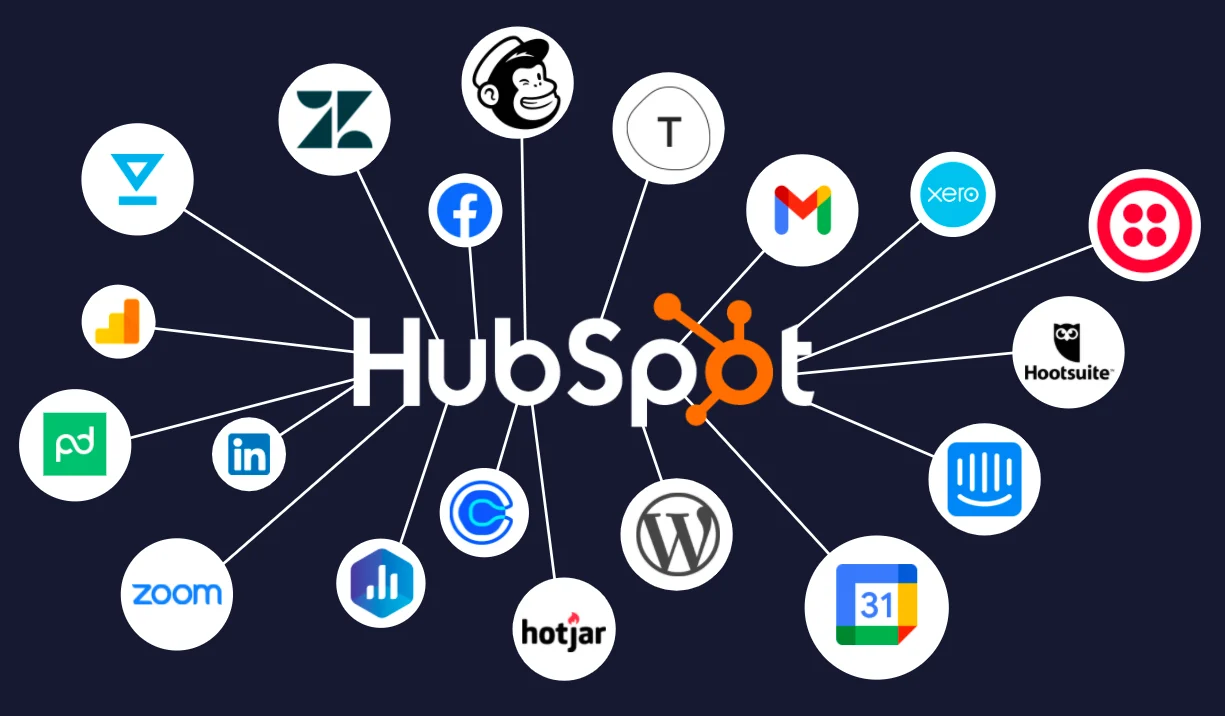
HubSpot's App Marketplace surpassed 2,000 apps with 2.5 million active installs. Native integrations cover Salesforce, Slack, Shopify, Zoom, and hundreds more. The REST API exposes the full CRM data model, and developers can build custom apps with UI Extensions. For teams building a marketing tech stack around a CRM, HubSpot's ecosystem is mature and well-documented.
Source: Hubspot
Wishpond claims 300+ integrations across email, CRM, payments, and analytics categories, with named connections to Salesforce, Pipedrive, Stripe, Shopify, and Mailchimp. A native Zapier integration extends connectivity further.
Source: Wishpond
The Marketing Automation API provides CRUD operations on leads, visitors, and lists, with a 100-request-per-minute rate limit. It's adequate for small businesses but limited compared to HubSpot's developer platform.
ZoomInfo takes a different approach to access. Rather than being one hub in a stack, ZoomInfo is designed to power every hub. The Enterprise API provides programmatic access to search, enrich, and intelligence endpoints. The MCP server connects AI models to ZoomInfo's data with no custom coding.
The App Marketplace includes 120+ integrations with Salesforce, HubSpot, Snowflake, and others. API access is included in all relevant plans. As CEO Henry Schuck described a financial services firm building an internal app via ZoomInfo's MCP: "That's a surface area we would never see before."
Source: ZoomInfo
Support and onboarding compared
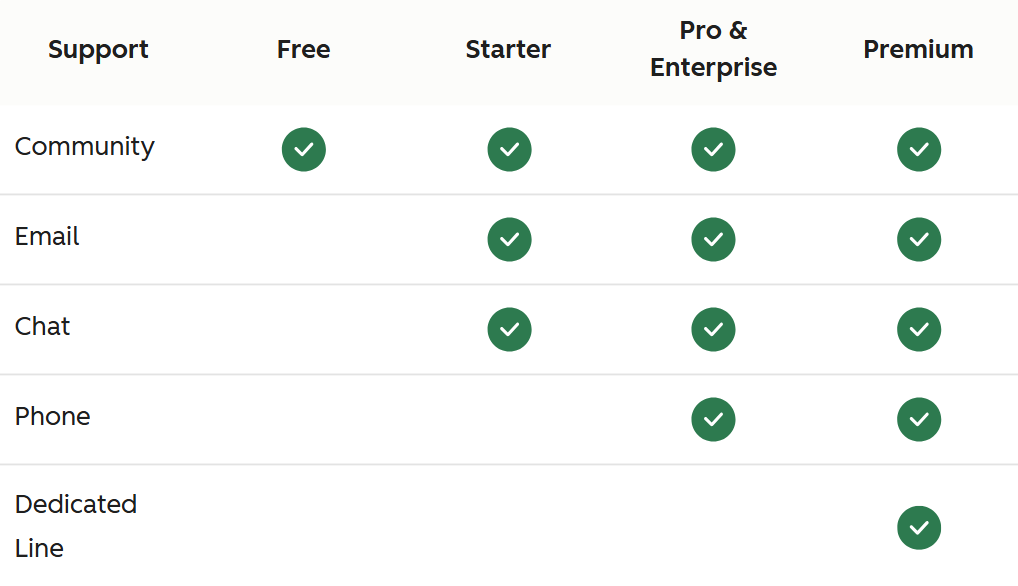
HubSpot's support scales with your subscription. Free users get the Community forum only. Starter adds email and chat. Professional and Enterprise unlock phone support. HubSpot Academy offers free certifications with over 200,000 professionals certified and courses in 17+ languages.
Source: HubSpot
The Solutions Partner ecosystem handles implementation for complex deployments, which matters given HubSpot's limited first-party professional services ($67.3 million of $3.13 billion total revenue in FY 2025).
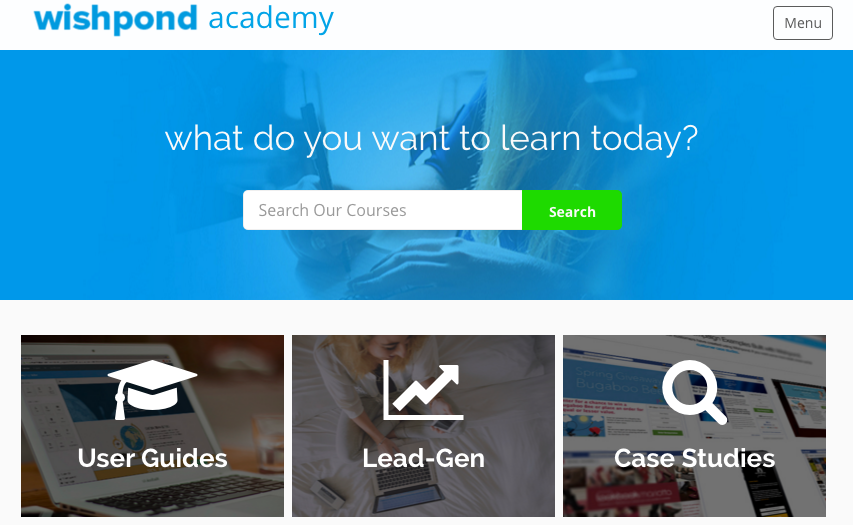
Wishpond provides email support and live chat through its knowledge base. The knowledge base contains 340+ articles across 14 collections. Wishpond Academy offers general digital marketing courses. Capterra reviewers describe account managers as helpful when available, but also report manager turnover every 3 to 4 months and multi-week waits for simple edits.
Source: Wishpond
ZoomInfo provides support through its Help Center, ZoomInfo University (role-specific learning paths and certifications), and direct phone support.

Source: ZoomInfo
The company redesigned its onboarding program from 30 to 90 days, producing a 25% improvement in customer satisfaction scores and winning Rocketlane's Golden Comet award for Best Customer Onboarding Team of 2024. ZoomInfo Labs provides professional services for complex enterprise implementations.
Pricing structures reflect different markets
HubSpot uses a hybrid model combining per-seat pricing, per-Hub flat fees, and marketing contact tiers. The free CRM is useful, with unlimited contacts and basic tools. But scaling gets expensive:
Hub | Starter | Professional | Enterprise |
|---|---|---|---|
Marketing Hub | $15/seat/mo (annual) | $800/mo (3 seats included) | $3,600/mo (5 seats included) |
Sales Hub | $9/seat/mo (annual) | $90/seat/mo (annual) | $150/seat/mo (annual) |
Service Hub | $9/seat/mo (annual) | $90/seat/mo (annual) | $150/seat/mo (annual) |
Mandatory onboarding adds $3,000 to $7,000 for Marketing Hub and $1,500 to $3,500 for Sales or Service Hub at Professional and Enterprise tiers. You can cancel only at the end of the commitment term, and amounts paid are non-refundable.
Wishpond doesn't publish pricing publicly. The pricing page redirects to a demo request form. What's confirmed: subscription-based with monthly or annual billing in U.S. dollars, with plans differentiated by data thresholds (lead volume).
A 14-day free trial is available only on annual plans, requires a credit card, and auto-charges the full annual amount if not cancelled in time. Managed services (ads, SEO, design) are priced separately and carry no refund rights. Monthly plan refunds are not available under any circumstances.
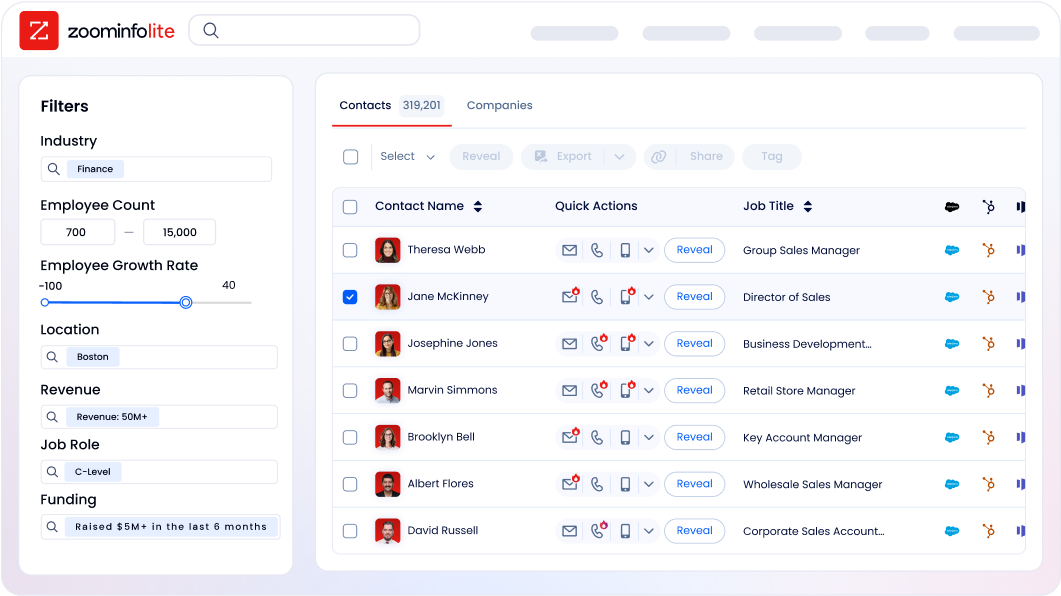
ZoomInfo uses custom-quoted, consumption-based pricing with no published dollar amounts. The free entry point is ZoomInfo Lite: a permanent free tier (no credit card, no time limit) that includes access to the B2B database, 10 monthly export credits, individual and company searches, the ReachOut Chrome Extension, and WebSights Lite.
Source: ZoomInfo
A separate 7-day free trial provides access to core platform features. Paid plans scale based on seats, credit volume, and features accessed.
Vendor stability matters for long-term decisions
HubSpot is publicly traded (NYSE: HUBS) with $3.13 billion in FY 2025 revenue (+19% YoY), its first year of GAAP operating profitability, and $1.8 billion in cash and investments. The company guides for $3.69 to $3.70 billion in 2026 revenue and authorized a $1.0 billion share repurchase program. No concerns about continuity.
Wishpond is publicly traded (TSXV: WISH) but in a different position. FY 2025 revenue dropped 33.5% to $14.37 million. The company spun out its AI sales automation business as SalesCloser (TSXV: SCAI), sold its Viral Loops product, and disclosed going concern doubts with a forbearance agreement extending through December 31, 2026.
Founder Ali Tajskandar departed as CEO. New CEO Jordan Gutierrez is focused on reducing churn, improving margins, and restoring profitable growth. Risk-sensitive buyers should weigh these factors.
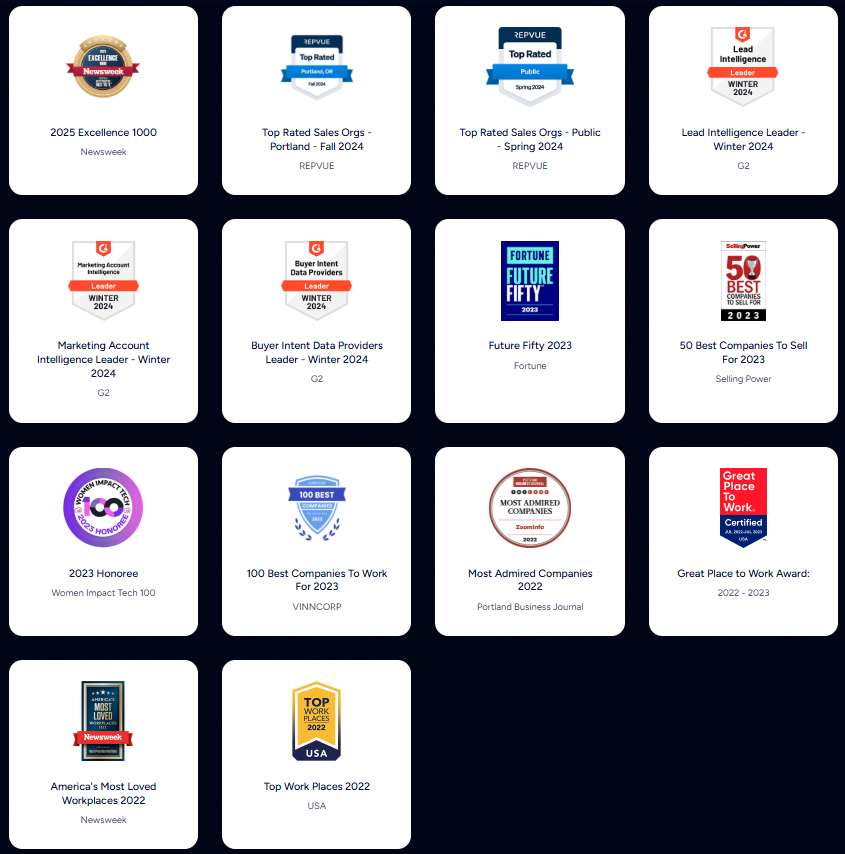
ZoomInfo is publicly traded (NASDAQ: GTM) with $1.25 billion in annual revenue and $455 million in free cash flow. The company holds annual security certifications (ISO 27001, ISO 27701, SOC 2 Type II, TRUSTe GDPR, and CCPA). Named a Gartner Magic Quadrant Leader for ABM Platforms for the second consecutive year and a Forrester Wave Leader for Intent Data Providers.
HubSpot vs. Wishpond vs. ZoomInfo: Which should you choose?
The right choice depends on your team size, your growth stage, and whether your challenge is running campaigns or finding the right people to target.
Choose HubSpot if:
You need marketing, sales, and service teams working from one CRM
Your company is growing past the point where point solutions work
You're willing to invest in a platform that scales with you
You want marketing automation with branching workflows
Your budget supports Professional or Enterprise pricing
Choose Wishpond if:
You're a small business needing landing pages, contests, and email campaigns
You want the option to outsource marketing execution with managed services
Your marketing needs are straightforward and your budget is limited
You run a Shopify store and need integrated cart recovery
You're comfortable with an annual contract after evaluating the platform
Choose ZoomInfo if:
Your campaigns need better data (verified contacts, direct dials, and company intelligence)
You want to identify and reach buyers before they find you, through intent signals and website visitor identification
Your outbound prospecting needs accurate contact data at scale
You want AI that understands deal context, not just CRM field values
You need a platform that works inside any tool through APIs and MCP
Start with ZoomInfo Lite for free, or request a demo to see GTM Workspace and GTM Studio in action.
HubSpot and Wishpond solve the execution problem: how to run campaigns, manage contacts, and automate follow-up. ZoomInfo solves the intelligence problem: who to target, when to engage, and why a particular account matters right now. For B2B teams serious about growth, the strongest stack combines execution and intelligence, a CRM platform powered by data that's been verified before you ever build your first workflow.
HubSpot vs. Wishpond vs. ZoomInfo FAQ
What is the core difference between HubSpot, Wishpond, and ZoomInfo?
HubSpot is an all-in-one CRM platform combining marketing, sales, service, content, data, and commerce tools on a shared database. Wishpond is a simpler marketing platform for small businesses, focused on landing pages, contests, email campaigns, and optional managed services.
ZoomInfo is a B2B data intelligence platform providing verified contact data for 500M contacts and 100M companies, buyer intent signals, and AI-powered prospecting. It integrates with HubSpot and other CRMs to make go-to-market execution more effective.
Which platform is best for small businesses on a tight budget?
Wishpond targets small businesses with its campaign tools and managed services, though pricing requires a sales call. HubSpot's free CRM provides real utility with unlimited contacts and basic marketing tools at no cost, making it the most accessible starting point.
ZoomInfo Lite offers a permanent free tier with access to the B2B database, 10 monthly export credits, and basic website visitor tracking, useful for small B2B teams that need prospecting data.
Can ZoomInfo replace HubSpot or Wishpond?
No. ZoomInfo is not a CRM or marketing automation platform. It doesn't send email campaigns, build landing pages, or manage support tickets. Instead, it provides the data and intelligence layer that makes those platforms more effective.
ZoomInfo integrates natively with HubSpot and other CRMs, enriching contact records with verified data, surfacing buyer intent signals, and powering AI-driven prospecting. Most B2B teams use ZoomInfo alongside their CRM, not instead of it.
How does pricing compare across the three platforms?
HubSpot starts free, with paid plans ranging from $9/seat/month (Starter) to $3,600/month (Marketing Hub Enterprise), plus mandatory onboarding fees of $1,500 to $7,000 at Professional and Enterprise tiers. Wishpond doesn't publish pricing publicly; all inquiries require a sales call, and plans default to annual contracts.
ZoomInfo uses custom-quoted, consumption-based pricing with a permanent free tier (ZoomInfo Lite) and a 7-day free trial for paid features.
Which platform has the strongest marketing automation?
HubSpot has the most developed marketing automation, with visual workflow builders supporting branching logic, dozens of trigger types, and AI agents (Breeze) that draft outreach and handle customer inquiries on their own. Wishpond offers simpler rule-based workflows with six pre-built types and seven condition triggers, functional for basic nurture sequences.
ZoomInfo's GTM Studio enables signal-triggered GTM plays across multiple channels that improve over time, but it's designed for orchestration and prospecting rather than traditional email automation.
How do the platforms handle data quality?
HubSpot enriches CRM records from email interactions, call recordings, and its own dataset, with AI-powered duplicate detection. Wishpond stores lead data captured from your own campaigns but offers no external enrichment or third-party email verification.
ZoomInfo operates the largest B2B data verification infrastructure, with 300+ human researchers, up to 95% accuracy on first-party data, and a Fortune 500 competitive evaluation where an independent consultant concluded "no other competitor came even close."
Is Wishpond a safe long-term choice given its financial situation?
Wishpond disclosed going concern doubts in mid-2025 and has a forbearance agreement extending through December 31, 2026. Revenue dropped 33.5% in fiscal 2025, the founder departed as CEO, and the AI sales agent business was spun out as a separate company.
The new CEO is focused on stabilization and profitable growth. Buyers evaluating Wishpond should consider vendor continuity risk, particularly for annual contracts.
Which platform is best for B2B prospecting and outbound sales?
ZoomInfo is built for B2B prospecting, with 120M direct-dial phone numbers, 200M+ verified business emails, buyer intent data tracking 6 trillion+ keyword signals monthly, and AI agents that research accounts, draft outreach, and prioritize prospects.
HubSpot's Sales Hub supports prospecting with sequences, call tracking, and an AI Prospecting Agent, but relies on data you've already collected. Wishpond is primarily a marketing campaign tool and lacks dedicated outbound prospecting features.
More HubSpot comparisons:
