
Choosing between Infor CRM and Salesforce often comes down to five questions most comparisons skip:
Are you already running Infor ERP, or is your tech stack vendor-agnostic?
Do you need a CRM tightly connected to supply chain and production data, or a platform spanning sales, marketing, service, and commerce?
Is deployment flexibility (cloud, on-premise, hybrid) a requirement, or are you comfortable with cloud-only?
How important is ecosystem depth — third-party apps, certified consultants, and community resources?
Does your sales team need AI agents that work autonomously, or are standard automation workflows sufficient for now?
In short, here's what we recommend:
Infor CRM is the right choice for mid-market manufacturers and distributors already running Infor ERP. Its native integration with Infor's ERP family surfaces real-time inventory, pricing, order status, and credit data directly inside the CRM, giving sales reps a complete view of the customer without switching systems. Infor CRM also offers cloud, on-premise, and hybrid deployment, which matters for organizations with data sovereignty requirements or regulated environments. However, the product has a limited mobile experience, a smaller partner ecosystem, and an install base of roughly 3,870 tracked customers, a fraction of the market leaders.
Salesforce dominates CRM for a reason. With $41.5 billion in FY26 revenue, over 150,000 customers, and Gartner Magic Quadrant Leader status for 19 consecutive years in Sales Force Automation, it offers the deepest feature set, the largest app marketplace, and an AI platform (Agentforce) that autonomously handles sales tasks at scale. Salesforce fits organizations of any size and industry that want a unified platform for sales, service, marketing, and commerce. The tradeoff is complexity: layered pricing, steep learning curves, and implementations that often require partners to execute well.
Both platforms organize and manage customer data effectively. But a CRM is only as useful as the data inside it. Incomplete contact records, missing direct dials, and outdated company information are problems neither CRM was designed to solve. That's where a dedicated intelligence layer changes the equation.
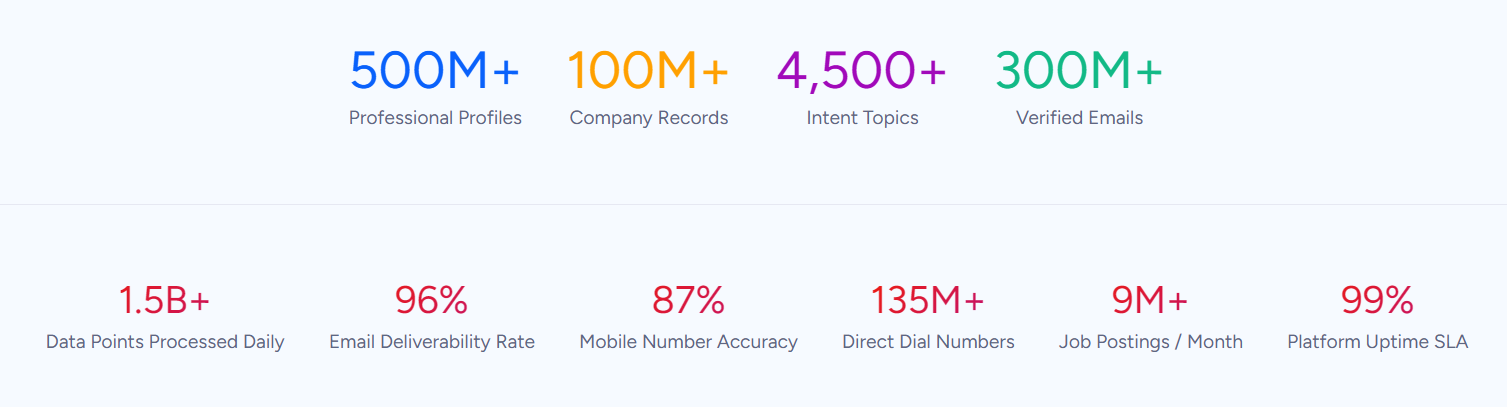
ZoomInfo is an all-in-one AI GTM platform built on the most comprehensive B2B data foundation in the industry: 500M contacts, 100M companies, 135M+ verified phone numbers, and 200M+ verified business email addresses. Its GTM Context Graph, an intelligence layer processing 1.5B+ data points daily, fuses this data with your CRM records, conversation transcripts, and behavioral signals to reveal not just what happened in a deal, but why. Whether you're running Infor CRM or Salesforce, ZoomInfo provides the prospecting intelligence, buyer intent signals, and data enrichment that keep your pipeline full and your CRM records accurate, accessible through GTM Workspace for sellers, GTM Studio for marketers and RevOps, or APIs and MCP in any front-end.
If accurate B2B data and AI-driven pipeline intelligence sound like what your CRM is missing, see how ZoomInfo works with a free trial.
Infor CRM vs. Salesforce vs. ZoomInfo at a glance
Infor CRM | Salesforce | ZoomInfo | |
|---|---|---|---|
Core function | ERP-integrated CRM | Full-stack CRM platform | B2B data and GTM intelligence |
Pricing | Custom-quoted, not published | $0–$550/user/month (tiered) | Custom, consumption-based |
AI capabilities | Emerging (v10 AI insights, Velocity Suite) | Agentforce ($800M ARR, autonomous agents) | GTM Context Graph + AI-driven prospecting |
Deployment | Cloud, on-premise, hybrid | Cloud only (Hyperforce) | Cloud (SaaS) |
Free option | No free trial or free plan | Free Suite (2 users) + Starter at $25/user/mo | ZoomInfo Lite (permanent free) + 7-day trial |
Market position | ~0.4% CRM market share | #1 CRM globally (IDC) | Leader in GTM Intelligence (Gartner, Forrester) |
Mobile experience | Limited mobile app | Full native iOS/Android app | Mobile app + Chrome extension |
Ecosystem | Infor Marketplace + ION connectors | 9,000+ AppExchange apps, 14M+ installs | 120+ integrations, API and MCP access |
Learning curve | Steep (enterprise ERP platform) | Steep (massive feature set) | Moderate (role-specific onboarding) |
Best for | Infor ERP customers in manufacturing/distribution | Organizations of any size and industry | Powering any CRM with verified data and buying signals |
Two fundamentally different CRM philosophies
Infor CRM and Salesforce were built for different problems, and those origins still define their strengths.
Infor CRM exists because manufacturers and distributors need their sales data connected to their production data. The product was acquired by Infor in September 2014 (originally built as Saleslogix in 1998), and then-CEO Charles Phillips articulated the vision as building "the first truly end-to-end demand-to-supply chain, from lead to ship, by integrating marketing and sales processes with supply chain planning, sales and operations planning, and production scheduling in real time."
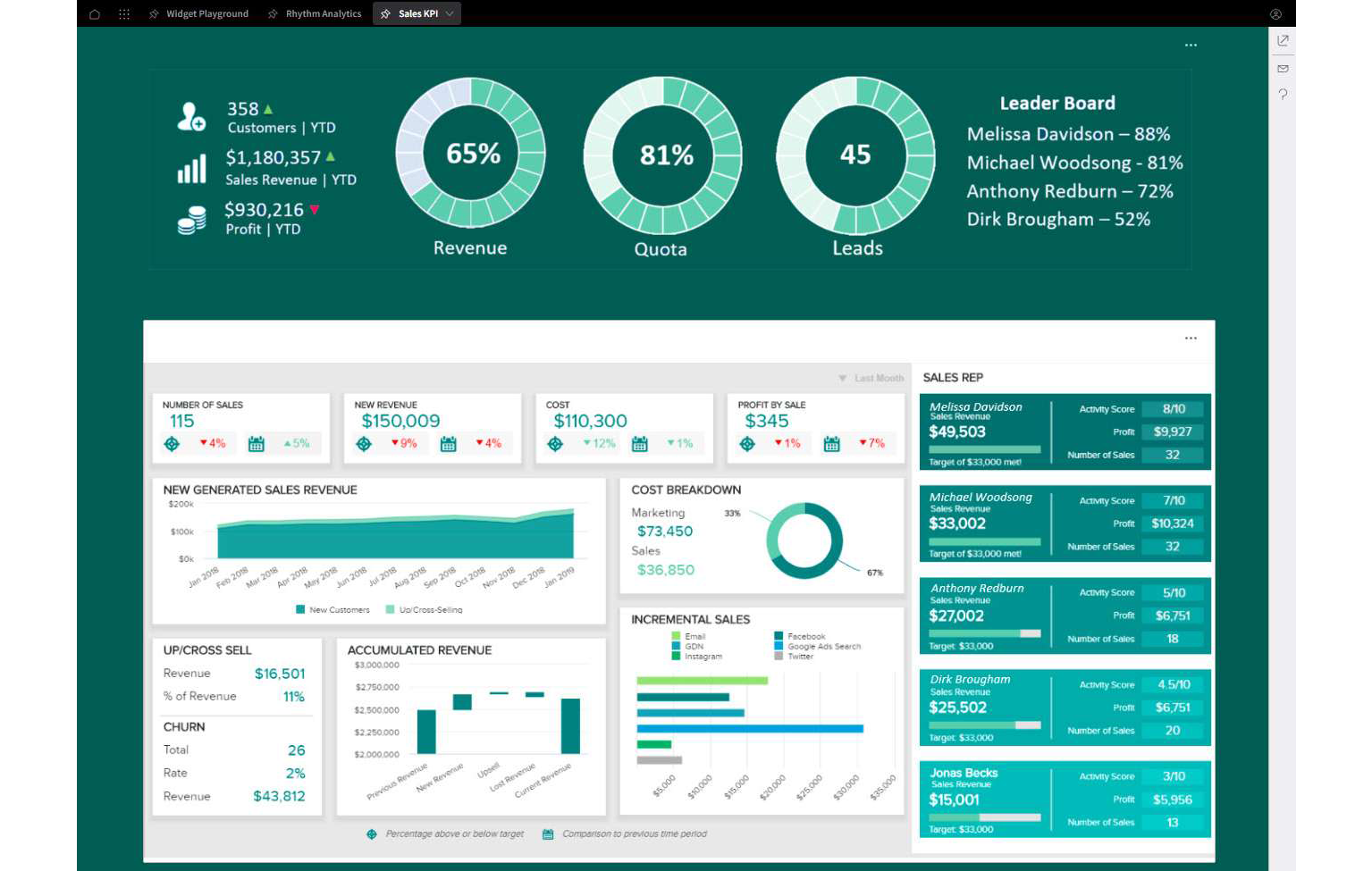
That integration thesis remains the product's defining advantage. Sales reps running Infor CRM alongside Infor ERP can see real-time inventory, pricing, order status, and creditworthiness pulled directly from the ERP without switching systems. For a distributor quoting a customer, knowing that inventory is available and the account is current saves time and prevents errors that disconnected CRMs can't catch.
Source: Infor CRM
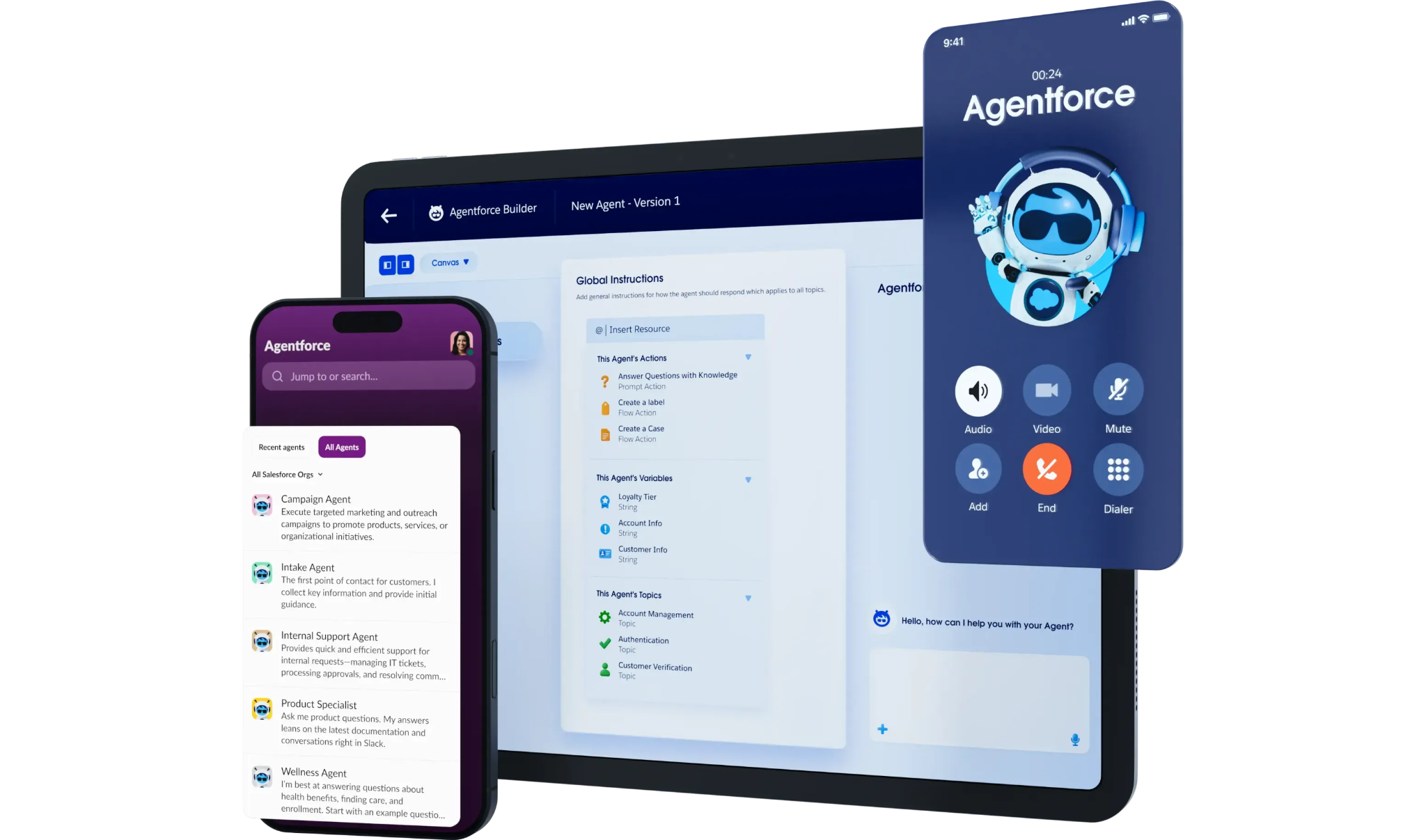
Salesforce was founded in 1999 with a different conviction: that CRM software should live in the cloud, not on servers. That idea grew into the world's #1 CRM by IDC revenue market share, covering not just sales but service, marketing, commerce, analytics, and collaboration. Salesforce's current strategy centers on the "Agentic Enterprise," where AI agents work alongside human employees across every business function. The result is a platform with broad capabilities, but one that requires serious investment in configuration, training, and ongoing administration.
Source: Salesforce
The distinction matters because it shapes everything downstream. Infor CRM assumes you want a CRM that speaks your ERP's language. Salesforce assumes you want a platform that can do nearly anything, if you invest the time to set it up.
Sales capabilities: depth vs. breadth
Both platforms cover the fundamentals of sales management (pipeline tracking, opportunity management, forecasting, territory management), but the execution differs significantly.
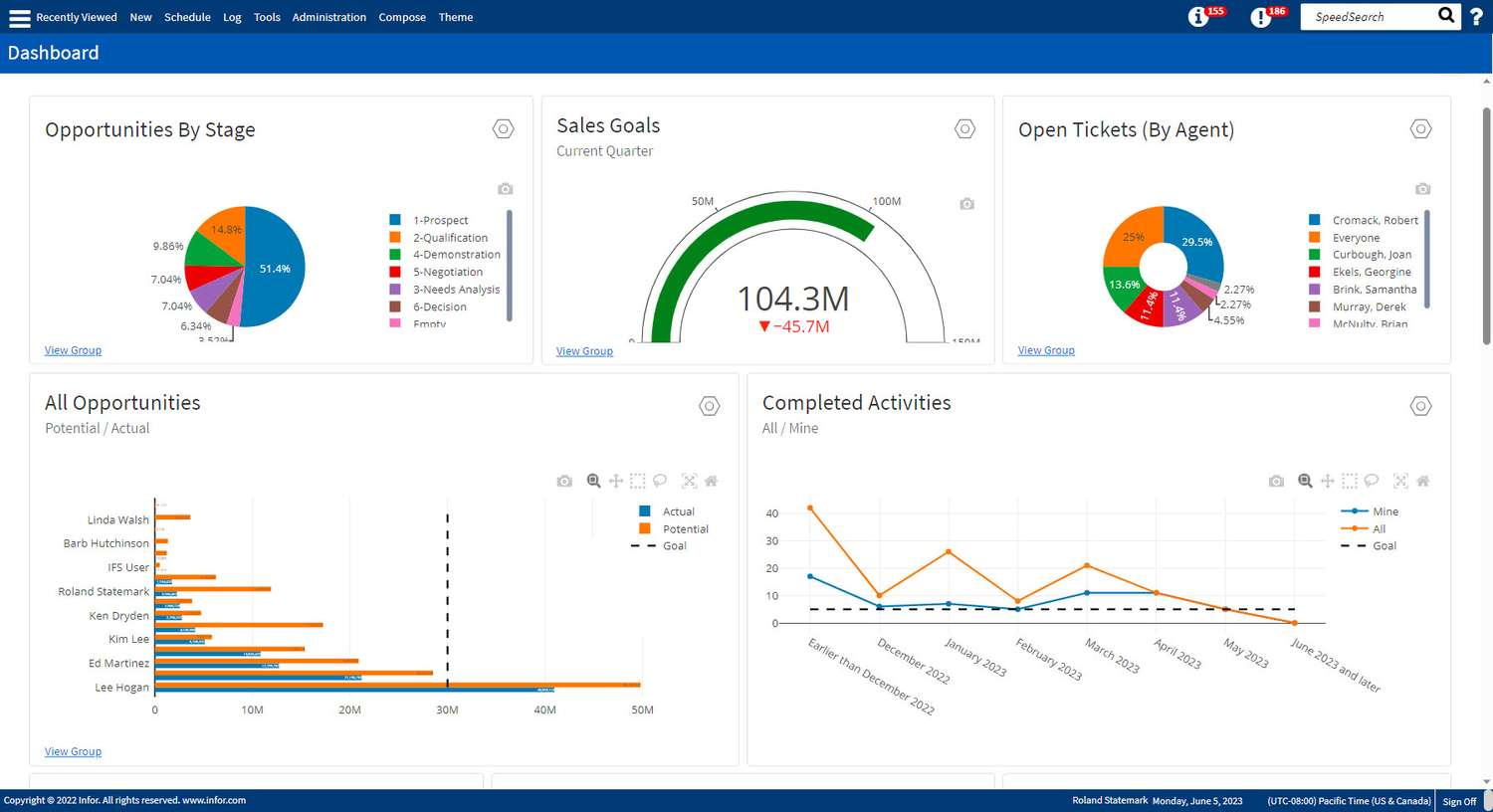
Infor CRM structures sales around configurable sales stages, proactive alerts, and guided Sales Processes that enforce consistent selling behaviors across the team. Territory management includes a Territory Realignment tool that reassigns accounts and all linked records (contacts, opportunities, tickets, quotes, returns) in bulk using custom query-based groups. Forecasting uses pipeline-based revenue projections with Forecast Worksheets, Audit trails, and point-in-time Snapshots for historical comparison. The Xbar for Outlook integration lets reps record CRM history, contacts, and documents without leaving their email client. These capabilities are bundled in a single price with no tiered add-on gating for core modules.
Source: Infor CRM
Where Infor CRM stands out is the ERP connection. Sales reps can create CRM-side quotes and promote them directly into the ERP as live sales orders, with real-time ERP pricing retrieval and inventory checks. For manufacturers processing complex quotes, this quote-to-order workflow eliminates the manual handoff between sales and operations.
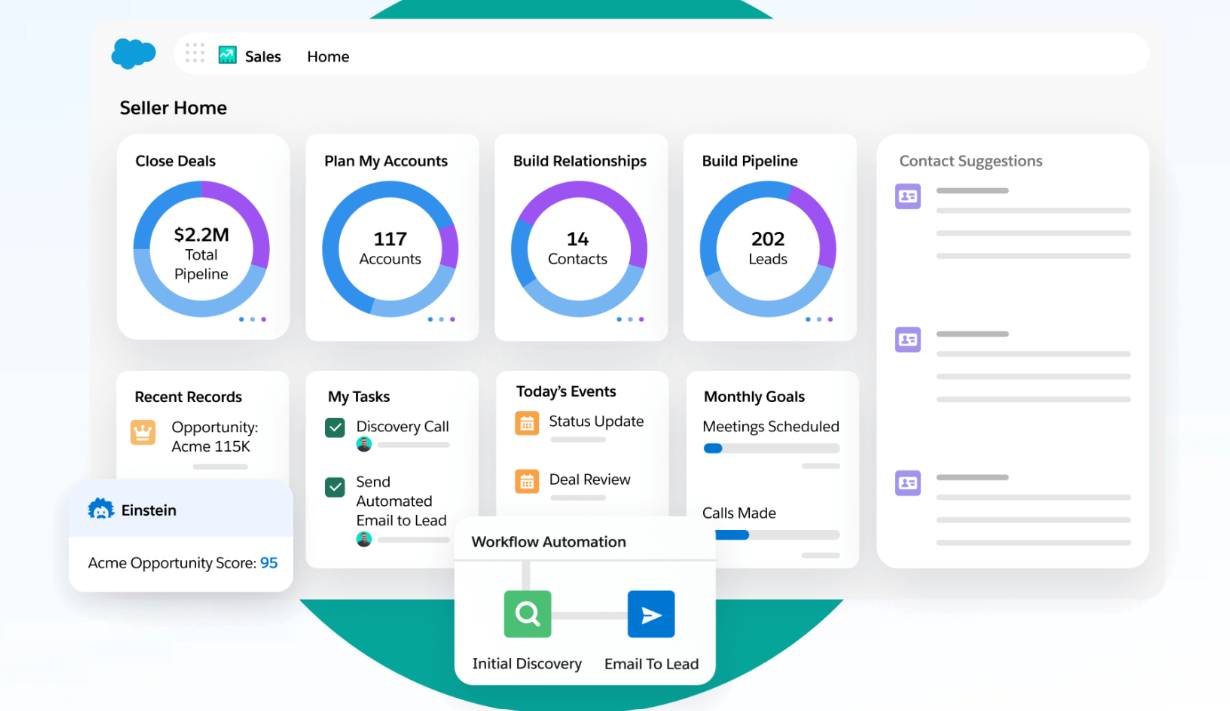
Salesforce offers deeper sales functionality at every level. Einstein Lead Scoring prioritizes prospects automatically. Einstein Activity Capture syncs emails and calendar events from Gmail and Outlook without manual logging. Pipeline management includes AI deal insights and change signals that flag at-risk deals before the forecast meeting. Revenue Lifecycle Management covers CPQ, contract lifecycle, subscription management, and billing in a unified flow. And Agentforce Sales Agents can autonomously research accounts, draft outreach, and generate quotes 75% faster than manual processes.
Source: Salesforce
The gap is widest in AI-assisted selling. Salesforce reports 33% faster meeting prep and a 10% increase in win rates from its own internal Agentforce deployment. Infor CRM's v10 release added AI-driven customer insights and enhanced KPI tracking, but AI-powered deal coaching, next-best-action recommendations, and automated call summaries are still in early stages for the platform.
The intelligence layer neither CRM provides
A CRM organizes what your team already knows about a customer. It records deal stages, logs activities, and stores contact information that someone manually entered. But it doesn't tell you who else at the account you should be talking to, whether the company is actively researching your category, or that your champion just changed jobs.
This is the gap ZoomInfo fills. Instead of waiting for reps to manually research prospects and update records, ZoomInfo provides a continuously verified data layer that feeds directly into your CRM. The platform covers 500M contacts and 100M companies with 135M+ verified phone numbers and 200M+ verified business email addresses, verified through a multi-source pipeline backed by 300+ human researchers achieving up to 95% accuracy on first-party data.
For Salesforce users, the integration is direct. ZoomInfo's native Salesforce connector enriches accounts and contacts, surfaces buying signals, and keeps records current without manual effort. For Infor CRM users, ZoomInfo's Enterprise API and MCP server provide programmatic access to the same intelligence, enabling data to flow into any system through standard open APIs.
For a closer look at how Salesforce and ZoomInfo stack up as platforms, see our Salesforce vs. ZoomInfo comparison.
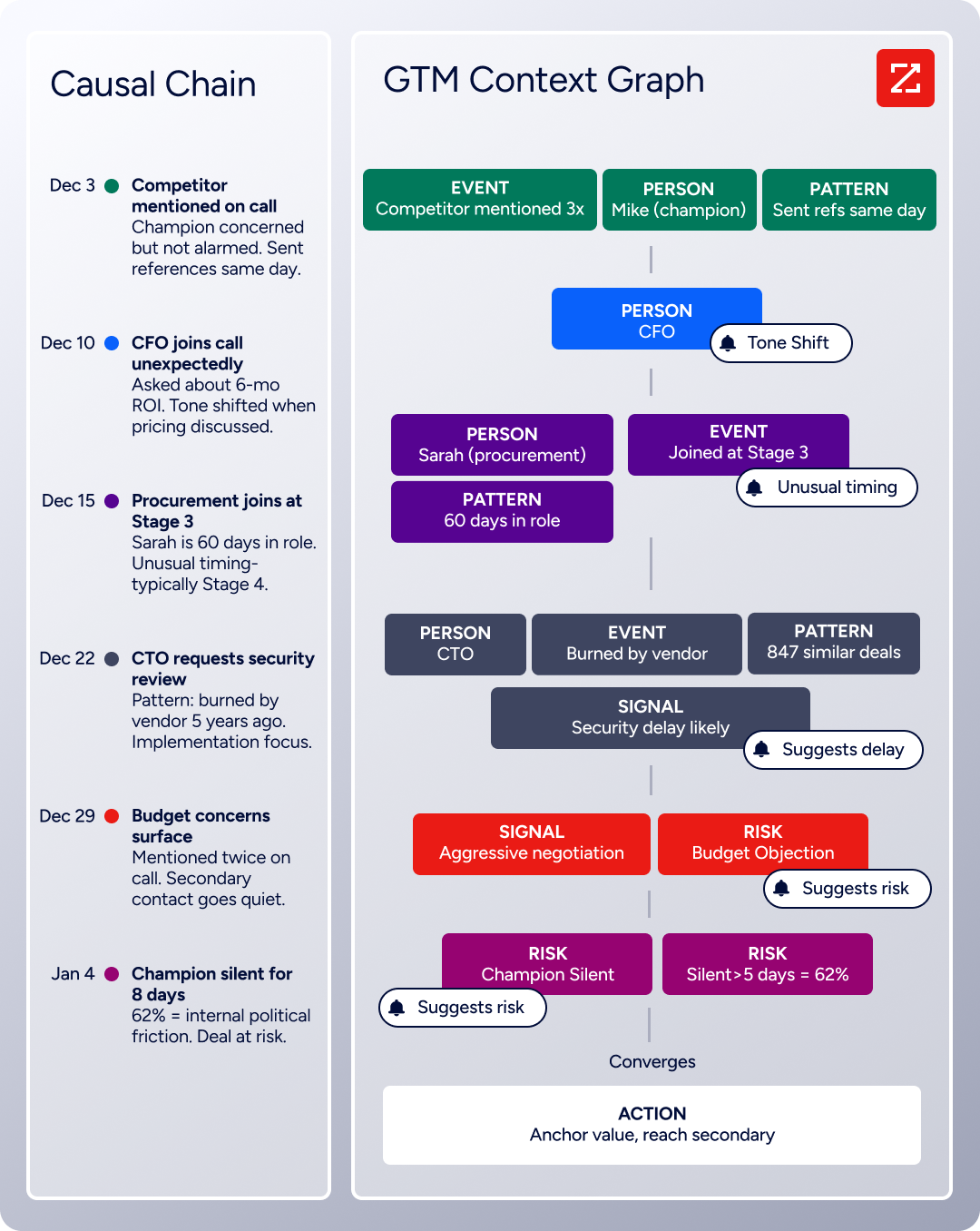
Beyond raw contact data, ZoomInfo's GTM Context Graph — an intelligence layer processing 1.5B+ data points daily — captures the context behind deal movements. As ZoomInfo's Chief Product Officer Dominik Facher writes: "The CRM recorded the state change. It has no record of why it happened." The GTM Context Graph unifies CRM records, conversation transcripts, and behavioral signals to reveal the patterns behind wins and losses, then uses that reasoning to guide the next action.
Buyer Intent data tracks signals from 210 million IP-to-Organization pairings and 6 trillion+ new keyword-to-device pairings sourced monthly, identifying accounts that are actively researching before they fill out a form. WebSights resolves anonymous website visitors to companies, including contact information for the buying team. These signals feed directly into CRM workflows, turning passive customer records into active pipeline.
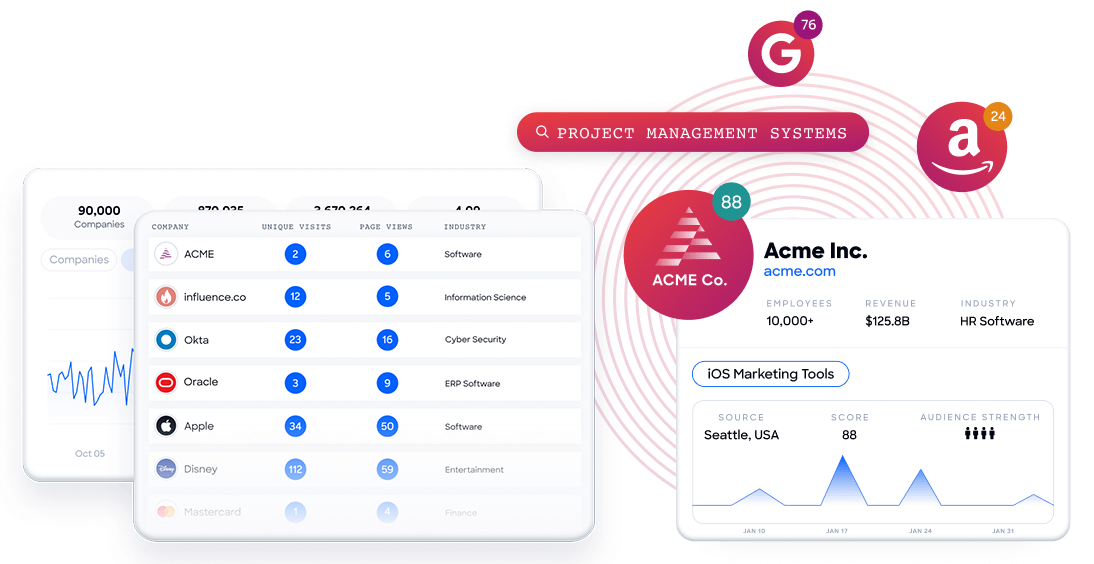
Seismic's sales team attributed 39% of active pipeline to opportunities identified or influenced by ZoomInfo signals, while boosting productivity by 54%. (Seismic)
AI capabilities reflect different ambitions
The AI gap between Infor CRM and Salesforce is significant, and it's worth understanding where ZoomInfo's intelligence fits alongside both.
Infor CRM is early in its AI journey. The v10 release introduced AI-driven customer insights and enhanced KPI tracking, and the broader Infor Velocity Suite includes an Agentic Orchestrator with industry-specific AI agents. Infor has also begun embedding GenAI directly into product workflows for summarization, auto-drafted emails, and anomaly alerts. These are promising developments, though the CRM-specific AI capabilities are still maturing relative to competitors.
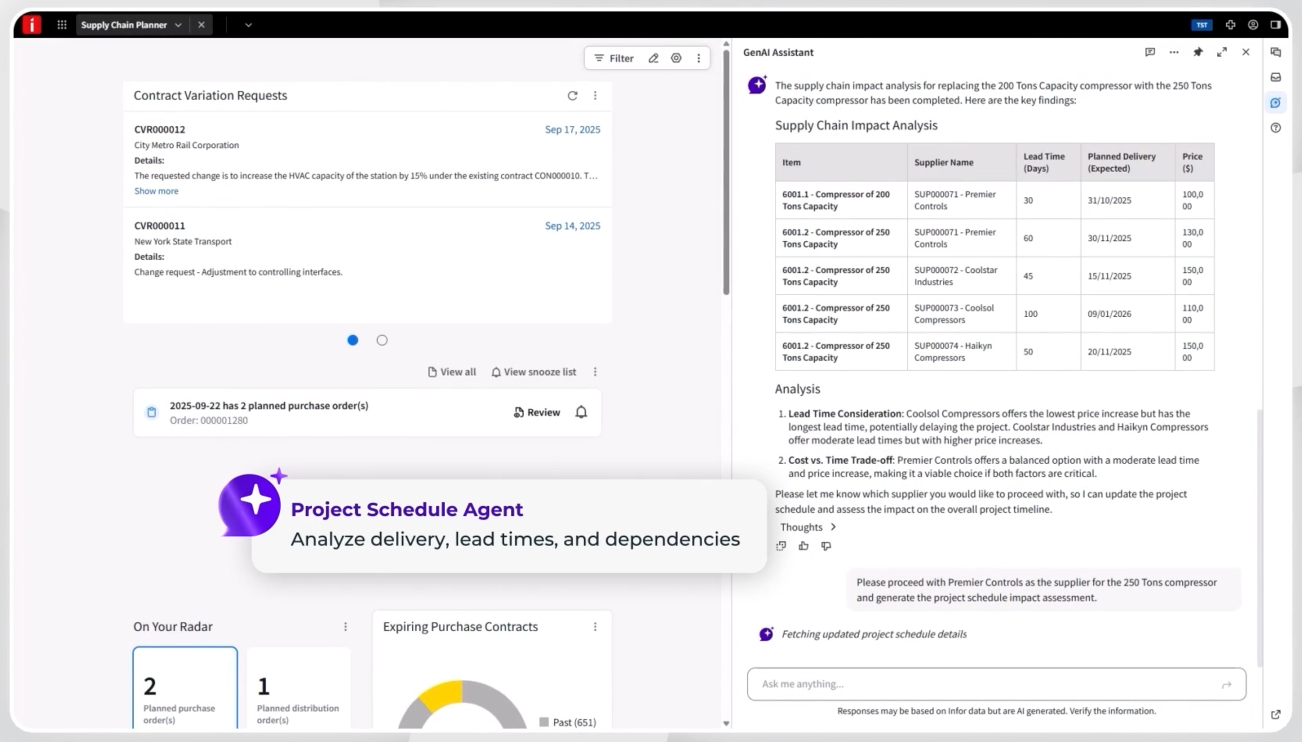
Source: Infor CRM
Salesforce has invested aggressively. The platform's Atlas Reasoning Engine uses a Reasoning and Acting (ReAct) loop where agents reason about a task, take action, observe results, and adapt. Pre-built agents handle prospecting, lead engagement, pipeline management, account research, sales coaching, and quoting. The Einstein Trust Layer provides zero data retention with LLM partners, PII masking, and toxicity detection. Salesforce reports that on its own help site, 85% of support requests resolve without human escalation.
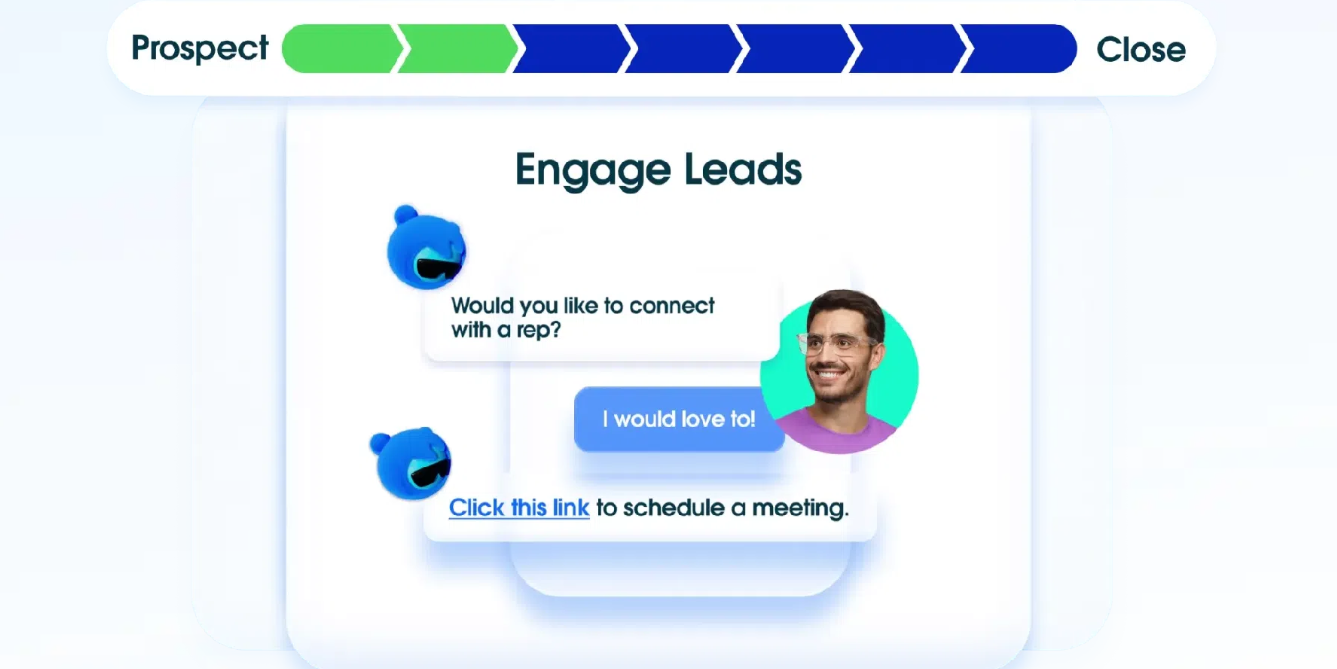
Source: Salesforce
ZoomInfo applies AI differently. Rather than automating CRM workflows, ZoomInfo's intelligence focuses on what happens before and around the CRM: identifying the right accounts, surfacing buying signals, and generating the context that makes outreach relevant. GTM Workspace provides sellers with an AI-powered execution workspace where AI agents handle account research, outreach drafting, and signal monitoring. GTM Studio lets marketers and RevOps teams describe audiences in natural language and launch plays that activate automatically when buying signals fire.
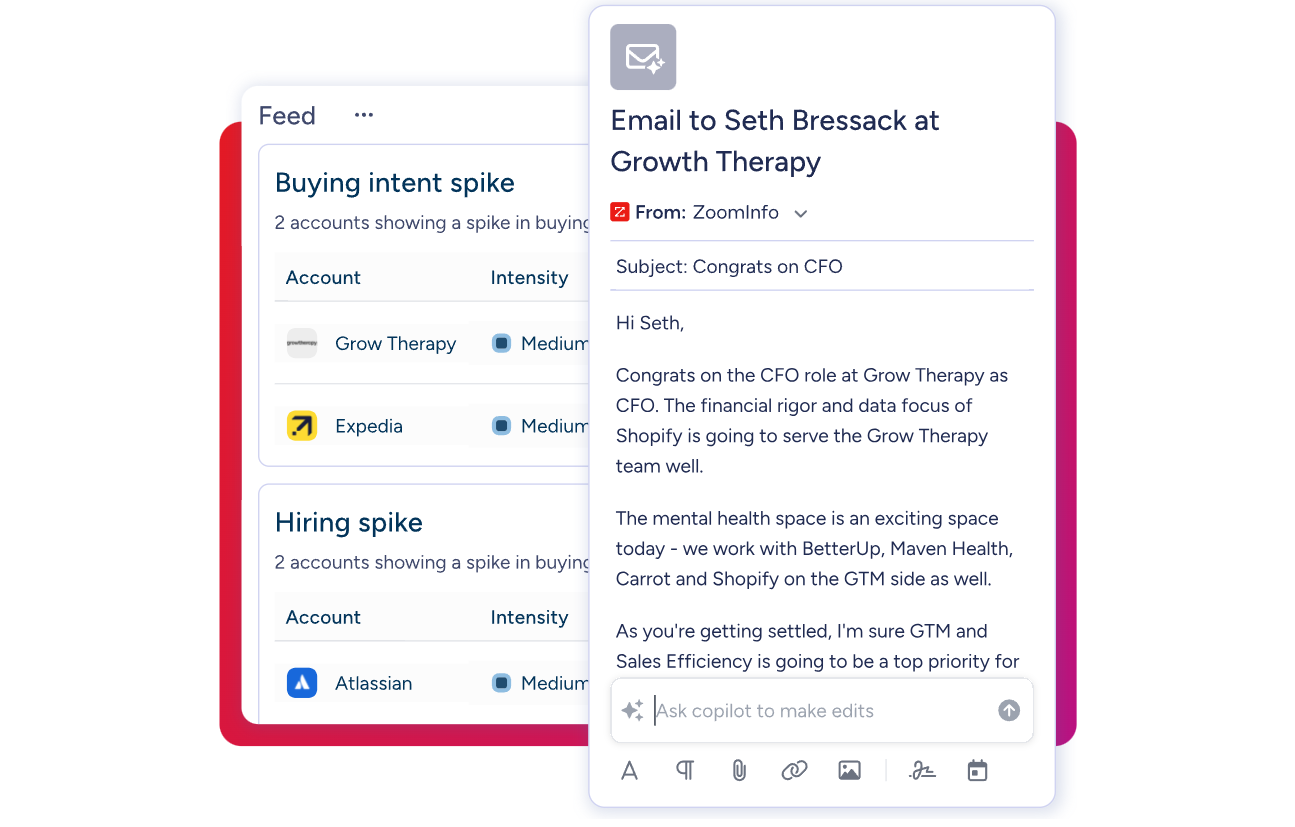
The three platforms complement rather than compete here. Infor CRM or Salesforce manages the customer record and sales process. ZoomInfo provides the intelligence that identifies who to sell to and when, then keeps the CRM's data current.
"ZoomInfo is our one source of truth for account data, and even more so for contact data. There's no other provider in the market that provides you with that level of detail." — Thor Sanderson, Senior Manager of Sales Technology Enablement, Smartsheet. (Smartsheet)
Ecosystem and integration depth
The size of each platform's ecosystem determines how easily it fits into your existing tech stack.
Salesforce has the largest enterprise cloud marketplace in existence. AppExchange lists 9,000+ partner apps with 14+ million installs, and 91% of customers use at least one AppExchange app. The partner ecosystem spans 160,000+ companies, 5,000 ISVs, and 7,000 system integrators. MuleSoft's Anypoint Platform provides hundreds of pre-built connectors for complex enterprise integrations. Trailhead has trained 6+ million learners with 1,500+ badges. This depth means you can find a connector, consultant, or community answer for nearly any use case.
Source: Salesforce
Infor CRM takes a narrower approach. The product integrates natively with Infor's own ERP systems through ION connectors, and the Infor Marketplace provides additional partner-built add-ons. Integration with non-Infor systems, however, can require third-party translation layers that some reviewers describe as less than efficient. The product's approximately 0.4% CRM market share with roughly 3,870 tracked customers means a smaller talent pool, fewer consultants, and fewer pre-built integrations compared to Salesforce or Microsoft Dynamics.
Source: Infor CRM
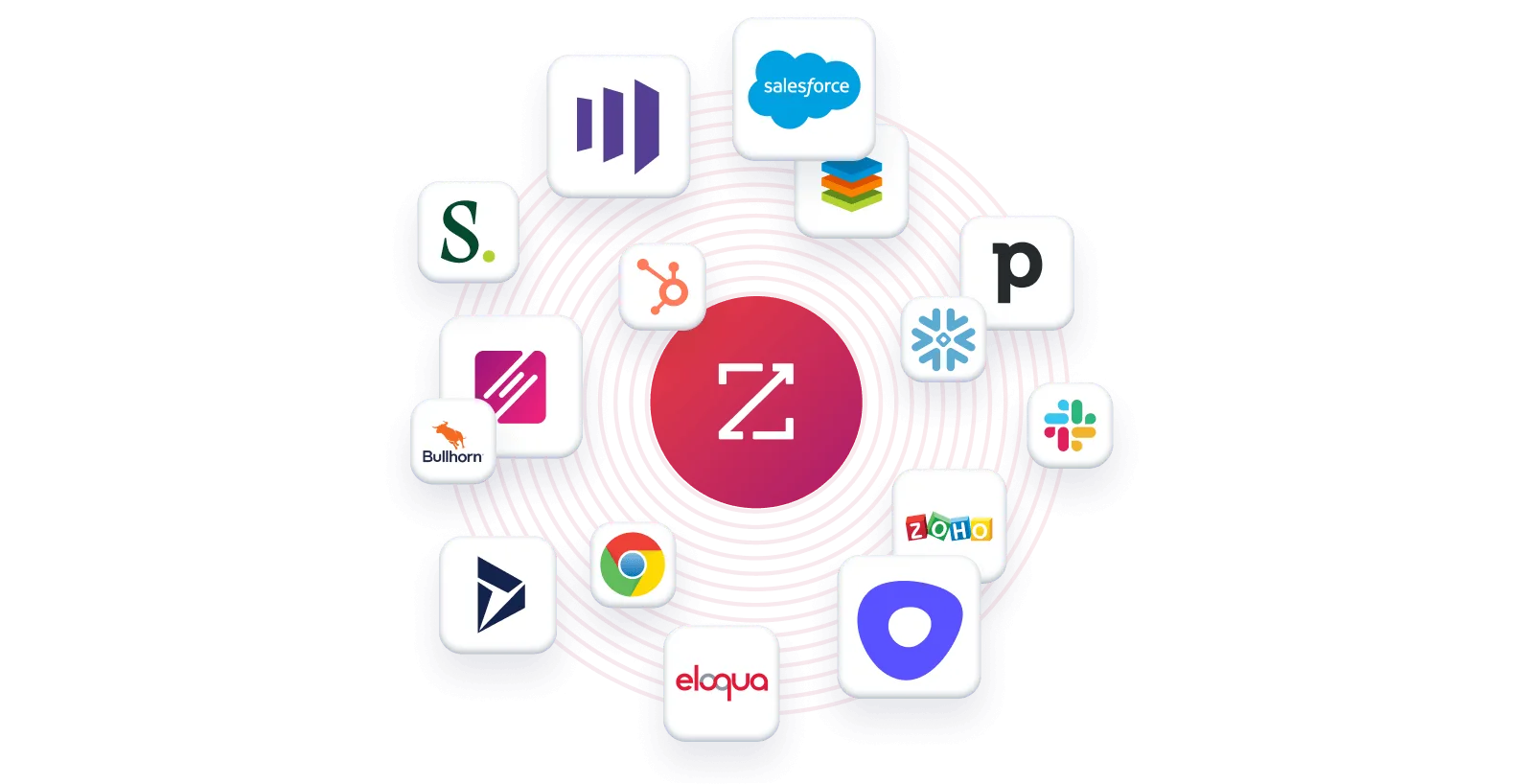
ZoomInfo bridges both ecosystems. The ZoomInfo App Marketplace lists 120+ partner integrations spanning CRM, marketing automation, sales engagement, and data warehouses. Featured connectors include Salesforce, HubSpot, Microsoft Dynamics 365, and Snowflake. For teams building custom workflows, API access is included in all relevant plans, and the MCP server connects ZoomInfo's data directly to AI models, currently supporting Claude and ChatGPT.
"The plug-and-play aspect of the API means I can integrate it very easily into any process and get information at a moment's notice." — Jerry Wilson, Senior Marketing Intelligence Analyst, BDO Canada, who reported an 87% reduction in time spent on data dashboard updates. (BDO Canada)
Pricing: opaque vs. complex
Neither platform makes pricing simple, but for different reasons.
Infor CRM does not publish pricing at all. No pricing page, no rate card, no tier structure appears on the website. The only pricing-adjacent claim is "lowest TCO on the market", directed at organizations already running Infor ERP where native integration eliminates middleware licensing. Contracts are negotiated based on user count, deployment model, and required modules. Several capabilities are sold as separate add-ons: Birst analytics, Configure Price Quote, Omni-channel Campaign Management, and Marketing Resource Management. Support is tiered across three levels (Premium, CareFor Success Professional, CareFor Success Enterprise), none publicly priced. Implementation through Infor Global Professional Services adds further cost.
Salesforce publishes list prices but the actual cost is harder to pin down. Sales Cloud tiers range from Free ($0 for 2 users) through Starter ($25/user/month), Pro ($100), Enterprise ($175), Unlimited ($350), to Agentforce 1 ($550/user/month). But the real cost includes add-ons: Digital Engagement ($75/user/month), Contact Center ($150/user/month), Agentforce AI ($125/user/month), and Premier Success Plans at 30% of net license fees. A June 2025 restructuring raised Enterprise and Unlimited list prices by an average of 6%. And over 70% of implementations are partner-led, adding implementation costs on top of the license.
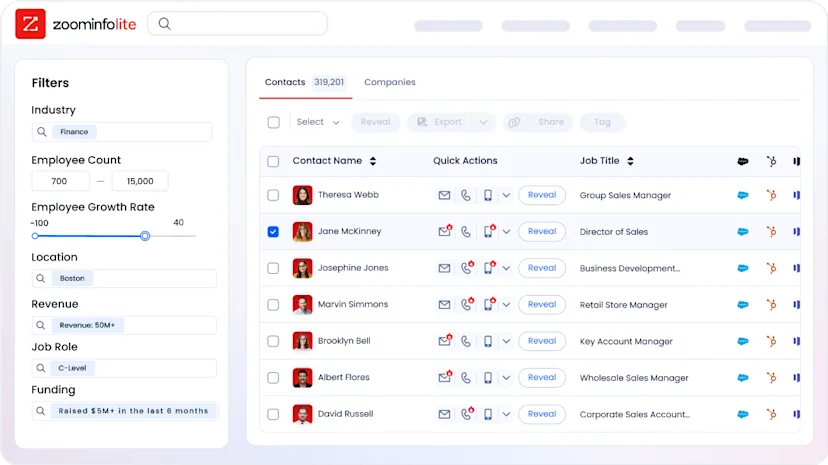
ZoomInfo uses custom-quoted, consumption-based pricing with no publicly listed prices. Pricing scales around seats, credits (1 credit = 1 contact or company export), and AI activity. ZoomInfo Lite is a permanent free tier with access to the database, 10 monthly export credits, and basic features. A 7-day free trial provides full access to paid features without a credit card. Paid tiers (Professional, Advanced, Enterprise) add progressively deeper capabilities including intent signals, AI features, and advanced integrations.
The practical takeaway: Infor CRM's TCO advantage depends almost entirely on whether you're already running Infor ERP. Without that foundation, the integration savings disappear and you're comparing an opaque price against Salesforce's published (if complex) tiers. Salesforce offers more predictable entry points but costs escalate as you add clouds, AI capabilities, and support.
Infor CRM vs. Salesforce vs. ZoomInfo: Which should you choose?
The right answer depends on your existing infrastructure, your sales team's needs, and how much you're willing to invest in getting the platform running.
Choose Infor CRM if:
You're already running Infor ERP (CloudSuite Industrial, M3, Distribution SX.e, LN, or Visual)
Real-time integration between CRM and supply chain data is a core requirement
You need cloud, on-premise, or hybrid deployment flexibility
Your sales team works primarily from Windows desktops with Outlook
You want CRM from the same vendor as your ERP, with single-vendor support
Choose Salesforce if:
You need a platform that scales across sales, service, marketing, and commerce
AI-powered autonomous agents (Agentforce) align with your sales strategy
Your team benefits from a large ecosystem of apps, integrations, and community resources
You have the budget and administrative resources for enterprise CRM
You want an industry-specific cloud for your vertical
Add ZoomInfo to either CRM if:
Your pipeline depends on outbound prospecting and accurate contact data
You need verified direct dials, mobile numbers, and business emails that actually reach buyers
Buyer intent signals and account prioritization would accelerate your sales cycle
Your CRM data decays faster than your team can manually update it
You want AI-driven account research and outreach generation, regardless of which CRM you use
Try ZoomInfo free and see how verified B2B data transforms your CRM from a record system into a revenue system.
The CRM you choose shapes how your team manages customers. But the intelligence feeding that CRM determines whether your reps spend their time on the right accounts with the right message at the right moment. Infor CRM connects your sales process to your supply chain. Salesforce connects it to an expansive platform ecosystem. ZoomInfo connects both to the data and signals that fill your pipeline in the first place.
"ZoomInfo's not just a contact data company anymore. They've built a full system of execution. GTM Intelligence actually works the list, writes the outreach, triggers the play, and helps drive predictable growth." — Ian Brodie, CEO and Co-Founder, Levanta. (Levanta)
Infor CRM vs. Salesforce vs. ZoomInfo FAQ
Is Infor CRM a competitor to Salesforce?
Infor CRM and Salesforce both manage sales pipelines, customer interactions, and forecasting, but they target different buyers. Infor CRM is designed for organizations already running Infor ERP, where the CRM's value comes from native integration with supply chain and production data. Salesforce serves any industry and any company size with a far broader feature set spanning sales, service, marketing, commerce, and AI agents. Most organizations evaluating Infor CRM are doing so because of their Infor ERP investment, not because they're comparing it feature-for-feature against Salesforce.
Does ZoomInfo replace Infor CRM or Salesforce?
No. ZoomInfo is not a CRM. It does not manage customer records, sales stages, or service tickets. ZoomInfo is a B2B data and intelligence platform that feeds CRMs with verified contact data, buyer intent signals, and AI-driven insights. It integrates directly with Salesforce and can connect to Infor CRM through APIs. ZoomInfo tells your team who to call and when, while the CRM manages what happens after they connect.
How does Infor CRM pricing compare to Salesforce?
Infor CRM does not publish pricing. The company claims the lowest total cost of ownership on the market, but this advantage depends heavily on already running Infor ERP, which eliminates integration middleware costs. Salesforce publishes tier pricing from $25/user/month (Starter Suite) through $550/user/month (Agentforce 1), though actual costs typically exceed list prices once you factor in add-on features, Premier Success Plans at 30% of net license fees, and partner-led implementation.
Can ZoomInfo work with Infor CRM?
ZoomInfo does not have a pre-built native integration with Infor CRM in the same way it does with Salesforce. However, ZoomInfo's Enterprise API provides programmatic access to its full B2B dataset, and the MCP server enables AI models to query ZoomInfo data directly. Organizations running Infor CRM can use these APIs to enrich CRM records, automate prospecting workflows, and feed buying signals into their sales process.
Which platform has the strongest AI capabilities?
Salesforce leads with Agentforce, which reached $800M ARR and autonomously handles prospecting, lead engagement, account research, and quoting. Infor CRM introduced AI-driven insights in its v10 release and is building toward AI agents through the Infor Velocity Suite, but these capabilities are still developing. ZoomInfo's AI focuses on B2B intelligence, identifying accounts, surfacing buying signals, drafting outreach, and providing contextual deal insights through the GTM Context Graph. Each platform's AI serves a different purpose: Salesforce automates CRM workflows, ZoomInfo generates pipeline intelligence, and Infor CRM is building toward AI within its ERP-connected environment.
What is ZoomInfo's GTM Context Graph?
The GTM Context Graph is ZoomInfo's intelligence layer that fuses its B2B data (500M contacts, 100M companies) with a customer's CRM records, conversation transcripts, email interactions, and behavioral signals. It processes 1.5B+ data points daily to capture not just what happened in a deal (a stage moved, a call was logged) but why it happened (executive sponsorship entered, a competitor was mentioned, a champion went quiet). This contextual understanding powers AI-driven recommendations for outreach, account prioritization, and deal coaching.
Who should consider Infor CRM over Salesforce?
Mid-market manufacturers and distributors already running Infor ERP get the most value from Infor CRM. The native integration surfaces real-time inventory, pricing, order status, and credit data inside the CRM without custom middleware. Organizations that need on-premise or hybrid deployment, or that want to avoid the complexity and cost of Salesforce, also find Infor CRM appealing. If you're not running Infor ERP, the product's core advantage disappears and Salesforce or other CRM platforms typically offer more capability for the investment.
How large is the user community for each platform?
Salesforce has the largest CRM community in the world, with over 150,000 customers, 20 million Trailblazer Community members, and 1,300+ local user groups in 90 countries. Infor CRM has approximately 3,870 tracked customers and a smaller but dedicated partner network supported by Infor's 17,000+ employees globally. ZoomInfo serves 35,000+ companies with a Modern GTM Community, ZoomInfo University for role-specific training, and a Help Center with direct phone and email support.
See how Salesforce compares against other CRMs and platforms:
