
You need to automate a workflow that touches an API, an AI model, a database, and a Slack channel. You need the logic to branch, loop, and fall back to custom code when the visual builder runs out of road.
n8n is a workflow automation platform built for technical teams. It combines a visual node-based canvas with full JavaScript and Python code access, 1,385+ native integrations, built-in AI agent orchestration, and the option to self-host on your own infrastructure. This breakdown covers every feature, how it works, who it serves, and which plan unlocks it.
n8n's feature set has you covered if:
You build multi-step automations that mix API calls, data transformations, conditional logic, and custom code in a single workflow
You want to deploy AI agents and RAG pipelines into production with human-in-the-loop checkpoints and full execution visibility
You need to self-host your automation platform on-premise or in an air-gapped environment for data sovereignty
You run IT operations, security operations, or DevOps workflows that require webhook endpoints, error handling chains, and sub-workflow modularity
You want execution-based pricing where a 50-step workflow costs the same as a 2-step workflow
You need Git-based source control with environment promotion (dev, staging, production) for your automation workflows
You'll reach the edges of its capabilities if:
You need a B2B contact and company database to fuel the automations with verified emails, direct dials, and company data
You want buyer intent signals showing which companies are researching your product category before you ever reach out
You need conversation intelligence that records, transcribes, and coaches from sales calls
You want account-based marketing orchestration with native display advertising and multi-channel campaign management
For those needs, the reference point is ZoomInfo: a B2B data foundation of 500M contacts, 100M companies, 135M+ verified phone numbers, and 200M+ verified business emails. Its GTM Context Graph processes 1.5B+ data points daily, fusing that data with your CRM records, conversation intelligence, and behavioral signals. The intelligence is accessible through APIs, MCP, GTM Workspace, and GTM Studio.
After the feature breakdown, this article covers where n8n stops and how ZoomInfo fills those gaps.
n8n Platform Overview
n8n calls itself "most popular workflow automation for technical teams", targeting developers, DevOps engineers, IT operations teams, and security operations teams who need the speed of a visual builder without giving up the control of code.
The platform serves 200,000+ users and 3,000+ enterprise customers, including Delivery Hero, Wayfair, Vodafone, Microsoft, and Meta. Thirty-four percent of Fortune 500 companies use it at the enterprise level.
The platform is organized around five capability areas:
Capability | What It Does | Plan Availability |
|---|---|---|
Visual node-based canvas with branching, looping, merging, error handling, sub-workflows, and real-time output previews | All plans (Community Edition and up) | |
Multi-step AI agents, RAG pipelines, chat interfaces, MCP client/server, human-in-the-loop, AI Evaluations | All plans; AI Workflow Builder credits vary by tier | |
Full JavaScript and Python with npm/Python library imports on self-hosted instances | All plans | |
1,385+ native app nodes, HTTP Request for any REST API, Webhook for inbound triggers, community nodes via npm | All plans | |
SSO/SAML/LDAP, RBAC with custom roles, Git source control, environments, audit logging, log streaming, external secrets | Business (self-hosted) and Enterprise |
n8n's Workflow Builder
The Workflow Builder is the core of the platform: the canvas where every automation is designed, tested, and deployed. Its design principle is that "the interface will never limit you". The visual editor handles standard logic, and JavaScript and Python code nodes step in wherever the UI falls short.
Every workflow begins with a trigger node. n8n supports app-specific event triggers for services like Slack, GitHub, and Salesforce, plus platform-level triggers: Schedule Trigger for cron-based execution, Webhook for inbound HTTP calls, Chat Trigger for AI conversation workflows, Email Trigger (IMAP) for inbox monitoring, and Manual Trigger for testing.
From the trigger, users drag nodes onto the canvas and connect them. Each connection passes structured JSON data from one node to the next, with outputs visible next to configuration at every step.
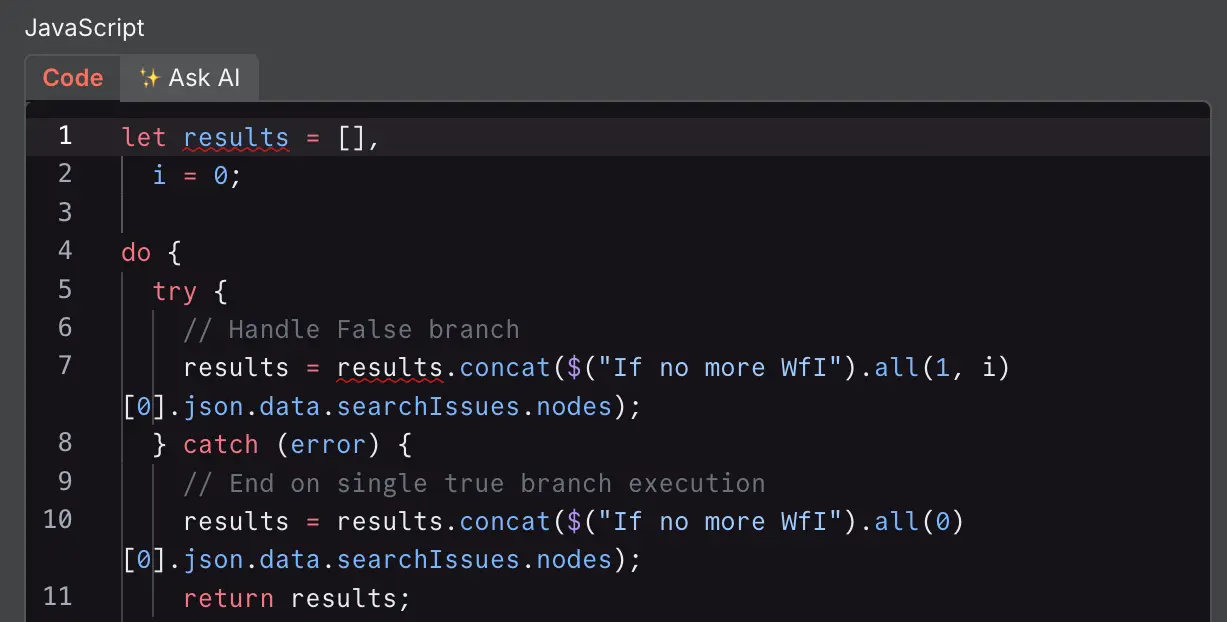
Code nodes accept full JavaScript or Python. On self-hosted instances, npm packages and Python libraries can be imported into the code environment. Every parameter field supports expressions using inline JavaScript or n8n's templating language, so dynamic values from previous nodes flow into any configuration.
Source: n8n
Workflow logic branches through the If node (binary true/false) and the Switch node (multi-way routing). The Merge node recombines parallel branches. Looping is handled by Split in Batches, and the Wait node pauses execution for a set time or until an external webhook fires.
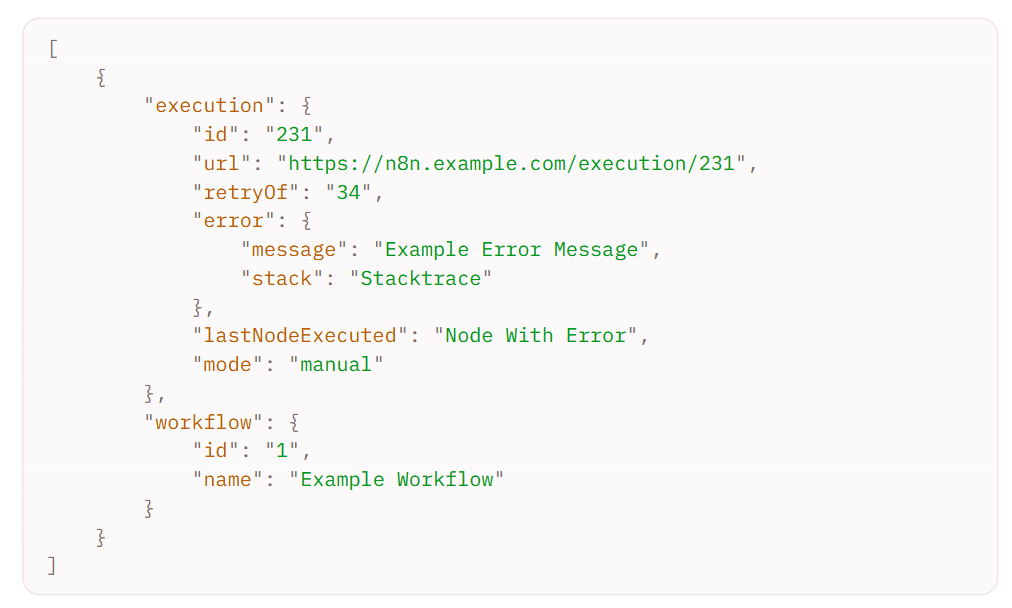
Error handling goes beyond notifications. Individual nodes can continue on failure. The Error Trigger node fires a separate "error workflow" when the main workflow fails, enabling compensating logic, structured retries, and error logging instead of a passive alert.
Source: n8n
Sub-workflows enable modular composition. The Execute Sub-workflow node calls one workflow from another, so shared logic lives in one place and can be invoked from many parent workflows. Zapier does not offer this natively.
For data transformation, the platform includes Edit Fields, Aggregate, Summarize, Remove Duplicates, Compare Datasets, and the AI Transform node for LLM-powered data processing.
The testing and debugging layer is where n8n separates from simpler tools. Partial execution lets users run just the last node, replaying previously captured data without re-triggering upstream events. Data pinning freezes a node's output for consistent testing.
Dirty node flagging highlights which nodes have changed since the last run, and a Debug Helper node generates synthetic test data. Workflow history tracks versions with timestamps, restore, and copy-to-new-workflow.
Deploying a finished workflow is a single toggle that saves and publishes it for production. On Business and Enterprise tiers, Git-based source control enables push-pull promotion between development, staging, and production environments, with workflow diffs visible before deployment.
The template library contains 8,464+ community workflow templates importable with one click, covering use cases from lead enrichment to IT ticket routing to AI agent setups.
n8n's AI and Agent Capabilities
n8n's AI layer is where the platform has invested most aggressively. The framing is AI does the "what", you decide the "how": pair AI decision-making with explicit business logic, human checkpoints, and the full node ecosystem, rather than letting an AI model operate on its own.
Source: n8n
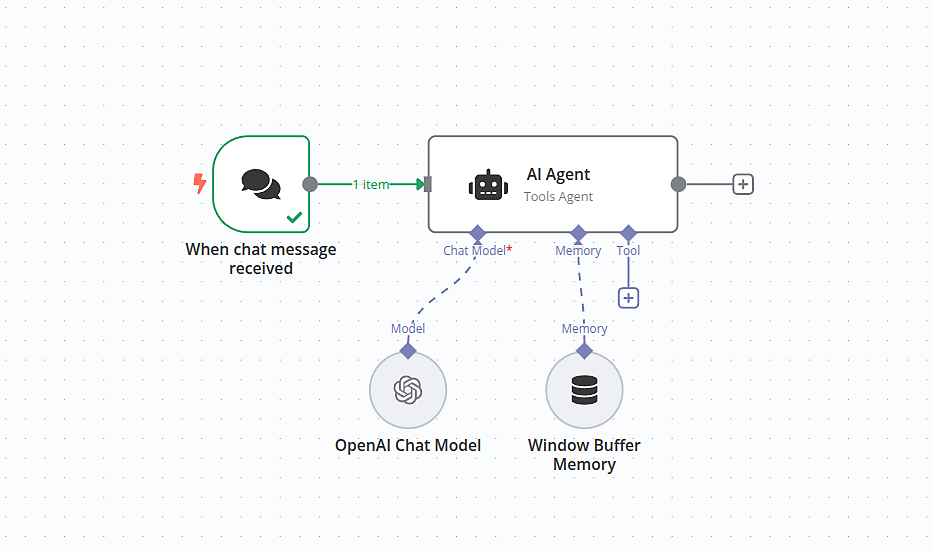
The implementation uses LangChain's JavaScript framework surfaced through visual Cluster nodes. A typical agent assembly starts with a Chat Trigger that receives a user message and connects to an AI Agent root node with sub-nodes plugged into its ports: a language model for reasoning, tool sub-nodes for actions the agent can take, and a memory sub-node for conversation history.
The agent loops (receive prompt, reason, call tools, iterate) until it can respond. Outside the agent loop, regular workflow logic (If nodes, filters, loops, sub-workflows) constrains inputs, validates outputs, and routes results.
Model support is model-agnostic. Native sub-nodes cover OpenAI, Anthropic, Ollama (for local/self-hosted models), AWS Bedrock, Mistral Cloud, Google Gemini, Hugging Face, and Cohere. Any HTTP-accessible model can be reached via the HTTP Request node. Self-hosted n8n plus Ollama enables offline, air-gapped AI automation with no feature loss.
Tool use gives agents the ability to act. Built-in tools include Calculator, Code Tool (custom JS/Python inside the agent loop), SerpAPI for web search, Vector Store Tool for RAG retrieval, and the Think Tool for extended reasoning. The standout is the Workflow Tool, which calls any other n8n workflow as a tool, turning the full 1,385+ integration catalog into agent capabilities without custom tool code.
RAG pipelines can be built end-to-end in one platform. n8n provides native vector store integrations with Pinecone, Qdrant, Supabase, Weaviate, Milvus, Zep, MongoDB Atlas, and PGVector, plus document loaders, text splitters (character, recursive, token), and embedding models from OpenAI, Ollama, Cohere, AWS Bedrock, Mistral, and Hugging Face.
Human-in-the-loop is a first-class feature. Users can place human review checkpoints at any point in a workflow or in front of any AI Agent tool call, pausing execution for approval before a high-stakes action proceeds.
AI Evaluations let teams test AI workflows with real data before deploying, tracking correctness and speed across model versions using string similarity, exact match, and LLM-as-a-Judge metrics.
MCP support works in both directions. The MCP Client node calls external MCP-enabled tools from within an n8n workflow. The MCP Server Trigger makes any n8n workflow callable by external AI platforms, so Claude, Lovable, and others can access n8n automations directly.
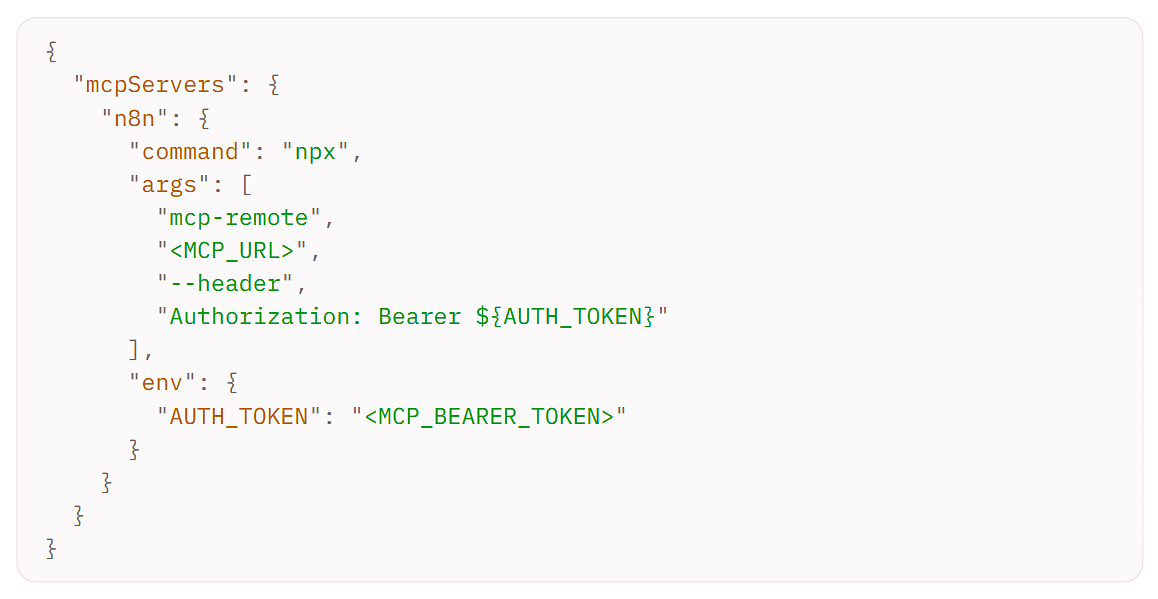
Source: n8n
Memory options for conversation context across turns include Simple Memory (session-based), Redis, Postgres, and Zep, with a Chat Memory Manager for programmatic control.
The Chat Trigger generates an embeddable chat widget for any website, and the Chat Hub (launched January 2026) gives organizations a single interface for accessing multiple AI models and n8n agentic workflows through prompts.
n8n also publishes an AI Benchmark rating 60 models on performance inside n8n workflows across tool use, hallucination resistance, logic, classification, structured output, speed, and cost.
n8n's Integration Ecosystem
The integration catalog turns n8n from a logic engine into a connective layer across the stack. 1,385 integrations span AI, Communication, Cybersecurity, Data & Storage, Development, Finance & Accounting, Marketing, Productivity, and Sales.
Every connection to an external service is a node, which falls into three types: trigger nodes that start workflows on events (80+ services have dedicated triggers, including Salesforce, Slack, GitHub, Google Sheets, Jira, HubSpot, Stripe, Telegram, and WhatsApp), action nodes that perform operations against APIs, and core nodes for data transformation and flow logic.
Credentials are stored securely and reused across workflows, with OAuth natively supported.
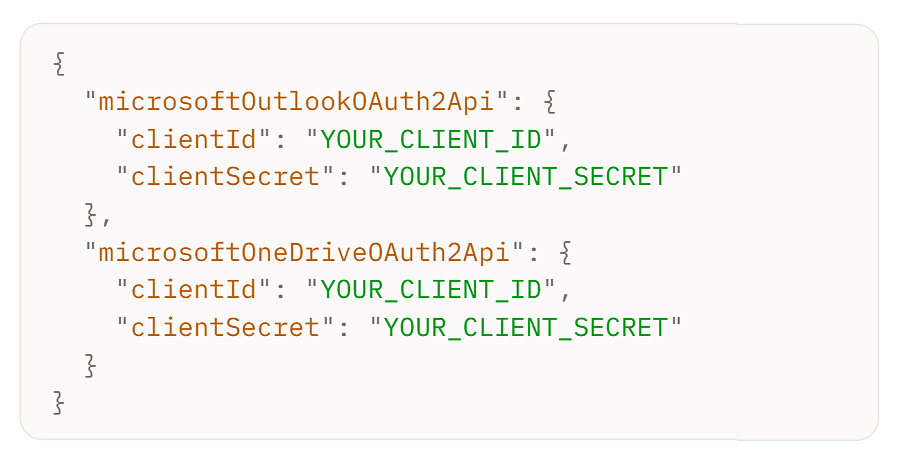
Source: n8n
The HTTP Request node is the escape hatch for anything without a dedicated integration. It connects to any REST API with configurable method, authentication, headers, and dynamic parameters. The Webhook node does the reverse: any external system can trigger an n8n workflow by hitting a unique URL.
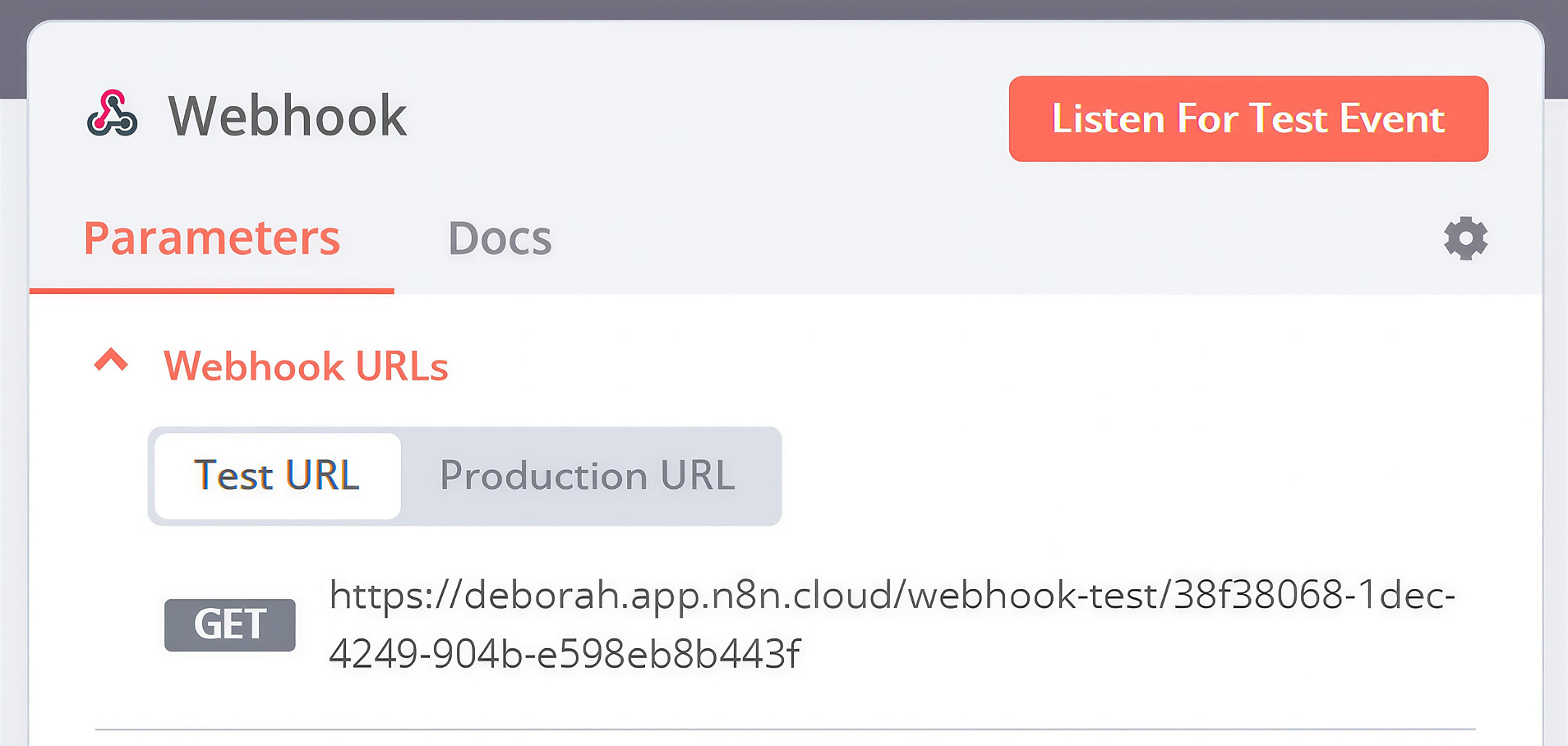
Source: n8n
Supported HTTP methods include GET, POST, PUT, PATCH, DELETE, and HEAD, with a maximum inbound payload of 16MB (configurable on self-hosted instances). Security options on incoming webhooks include Basic auth, Header auth, JWT auth, and IP whitelisting.
Community nodes extend the catalog through npm packages. Developers publish reusable integrations installable from the editor without restarting the instance, and custom node development using the n8n TypeScript SDK produces nodes identical to built-in ones.
Because n8n is source-available, the full node codebase is publicly inspectable and forkable, so teams can modify an existing integration rather than waiting for the vendor to update it.
n8n's Deployment, Scaling, and Infrastructure
n8n's deployment flexibility is a core differentiator. The platform runs three ways: n8n Cloud (managed SaaS hosted on Azure in Frankfurt, Germany), self-hosted via Docker or Kubernetes, or self-hosted via npm. Self-hosted instances can run in air-gapped environments for organizations in regulated industries.
For production workloads, Queue mode is the recommended architecture. It separates the main instance (which handles the UI, triggers, and webhook reception) from worker instances that process executions, connected through a Redis-backed queue. A multi-main setup provides high availability.
The scalability benchmark documented 162 requests per second with zero failures and sub-1.2s latency in Queue mode under 200 concurrent users. The Enterprise tier supports 200+ concurrent executions.
Single-mode deployments (one instance handling everything) suit only development or light workloads. The same benchmark showed single-mode reaching a 38% failure rate at 200 virtual users on standard hardware. Binary data processing (file handling) peaks at 5.2 requests per second even on enterprise hardware.
Database support covers SQLite (default, fine for testing), PostgreSQL (recommended for production), and MySQL/MariaDB. The platform is built on Node.js and TypeScript.
External secrets management integrates with HashiCorp Vault, AWS Secrets Manager, Azure Key Vault, GCP Secret Manager, and Infisical. Secrets are fetched at runtime and never stored in n8n.
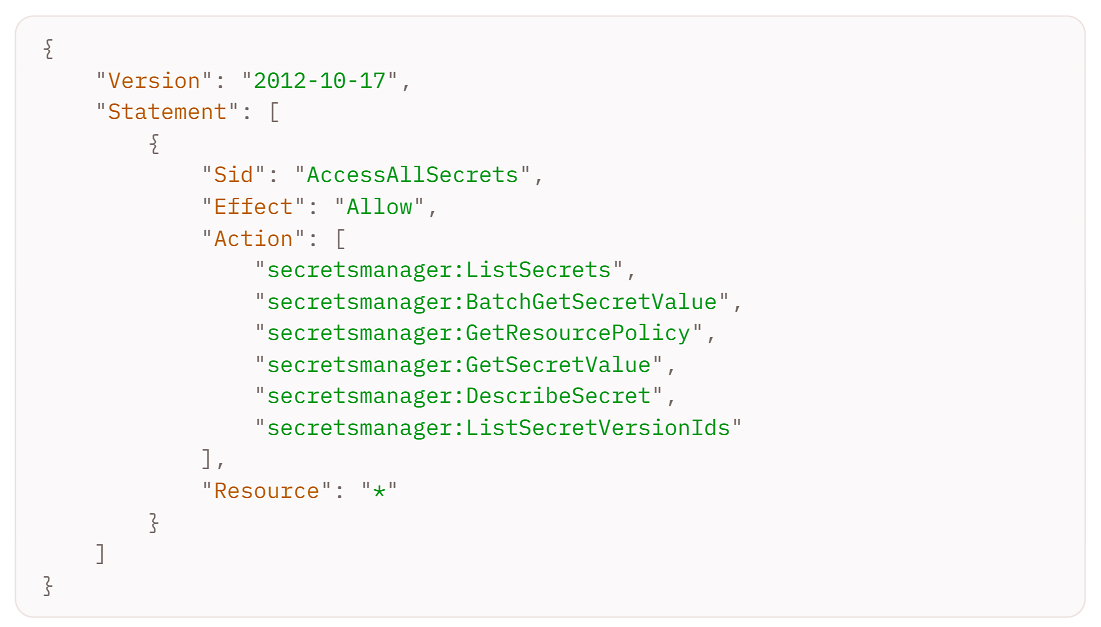
Source: n8n
The REST API enables programmatic management of workflows, executions, credentials, users, tags, variables, source control, and more. An OpenAPI specification is downloadable for tools like Postman. API access requires a paid plan (Starter and above). The n8n CLI (beta) wraps the REST API for CI/CD and AI agent tooling.

Source: n8n
n8n also exposes an instance-level MCP server that MCP-compatible clients (Claude Desktop, Lovable, Cursor) can connect to for searching, triggering, creating, and editing workflows.
n8n's Enterprise Security and Governance
n8n's security posture reflects its push into regulated enterprise deployments. The platform aligns to SOC 2 with continuous evaluation and annual audits. A SOC 2 Type II report is available to enterprise customers, and a SOC 3 report is publicly downloadable. Penetration tests run at least annually, with vulnerability scans every 90 days.
Cloud infrastructure runs on Azure Germany West Central (Frankfurt) with AES-256 encryption at rest (FIPS-140-2 compliant) via Azure Storage and TLS in transit via Cloudflare. n8n is headquartered in Berlin and subject to GDPR, with a Data Processing Agreement available.
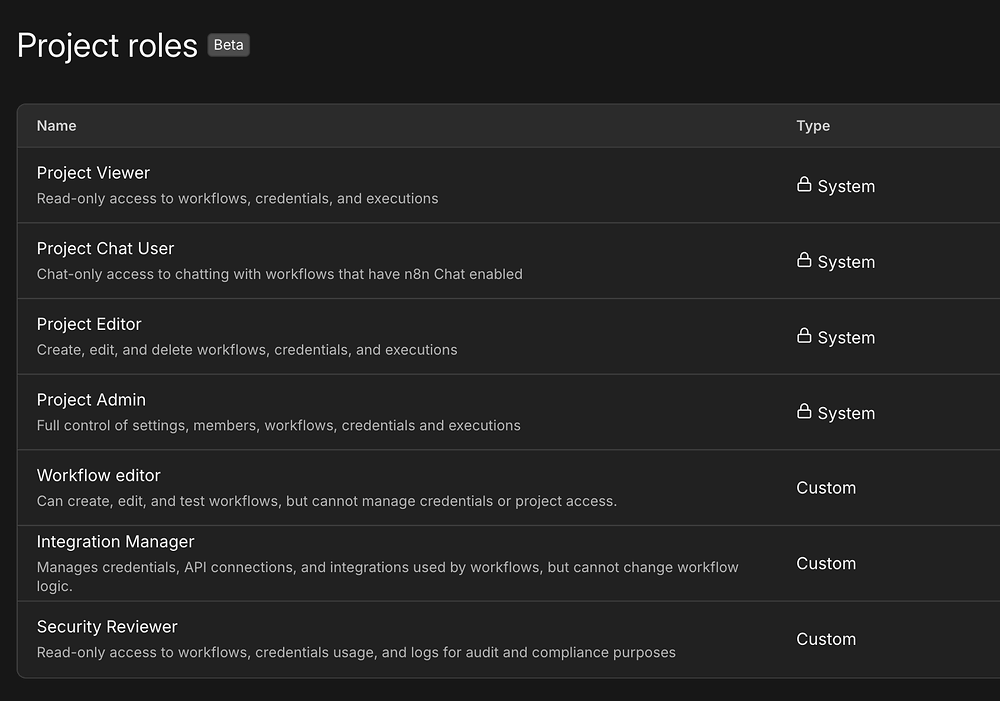
Access control uses project-based RBAC with role types on all paid plans. Enterprise adds custom roles and SSO user provisioning (introduced January 2026). Authentication options include SAML, LDAP, and OIDC on Business and Enterprise plans. Two-factor authentication is supported for all users.
Source: n8n
Audit logging provides centralized server logs with 12-month retention, 3 months immediately available. Log streaming to external observability tools (Datadog and similar) is Enterprise-only. Insights dashboards show execution counts, failure rates, and time saved per workflow, with retention ranging from 1 day (Starter) to 365 days (Enterprise).
The platform is licensed under a Sustainable Use (fair-code) model: source-available on GitHub, free self-hosting for the Community Edition, and paid tiers for collaboration and enterprise features. The license prohibits using n8n to build a competing workflow automation product for third parties but allows unlimited internal use and modification.
n8n Embed: White-Label Automation for SaaS Products
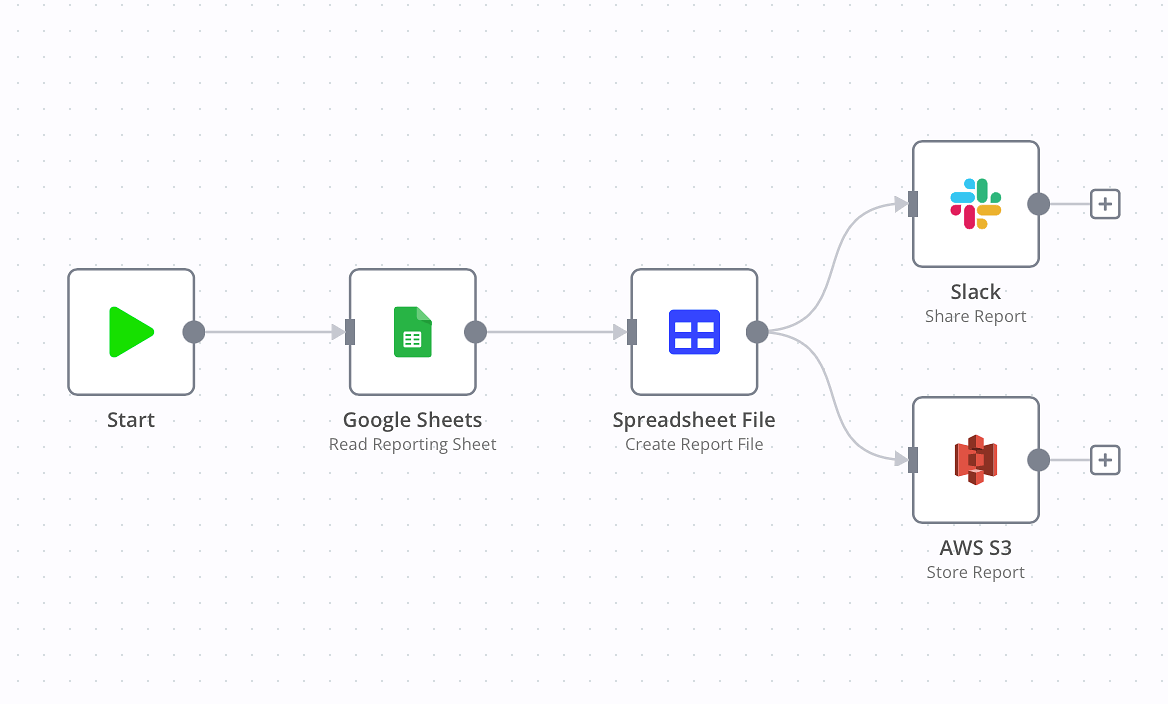
n8n Embed lets SaaS companies embed n8n's workflow automation engine into their own product under white-label branding. The SaaS product's customers get access to n8n's automation capabilities, including 500+ integrations, without knowing they are using n8n.
Source: n8n
The embedding runs on the SaaS company's infrastructure via an embed license. Setup involves configuring triggers, implementing the code, applying branding (colors, logo), and enabling user-facing workflow creation.
The license includes unlimited instances, workflows, and executions with separate user data per customer account. n8n handles third-party API changes for embedded deployments, removing the maintenance burden from the host company.
Because the codebase is source-available, the host company can build custom nodes for its own API rather than being limited to the existing catalog. Pricing is usage-based and negotiated, with no self-serve tier.
Where n8n Stops: The Gaps
n8n is a workflow automation platform, not a go-to-market data or intelligence platform. Its features run deep where technical teams need them (logic, code, AI orchestration, deployment flexibility), but it does not supply the data, signals, or sales and marketing execution that revenue teams require.
No B2B contact or company database. n8n automates workflows but does not include a database of business contacts, verified emails, direct-dial phone numbers, company attributes, or org charts. A lead enrichment workflow in n8n needs an external data source. The platform connects to CRMs and databases through its integration nodes, but the data must come from somewhere else.
No buyer intent signals. n8n can process signals once they arrive (via webhook or API poll), but it does not generate intent data showing which companies are researching specific topics. An n8n workflow can route and act on intent signals from a third-party provider, but the platform does not track buying behavior across the web.
No conversation intelligence. n8n can trigger actions based on call events (a Zoom recording webhook, for example), but it does not record, transcribe, or analyze sales calls. There is no built-in coaching, sentiment analysis, or objection detection. Teams that need to understand why deals move or stall based on conversation content need a separate tool feeding into their n8n workflows.
No marketing orchestration or ABM capabilities. n8n can automate individual marketing tasks (send an email, update a CRM record, post to Slack), but it is not a campaign orchestration platform.
There is no native display advertising, audience management, account-based targeting, or multi-channel campaign builder. Marketing teams using n8n build the logic themselves rather than working within a marketing execution platform designed for that job.
No dedicated support below Enterprise. Starter, Pro, and Business plan users receive forum support only. The Business plan at $800/month is explicitly a "self-serve option". Dedicated support with SLAs is available only on Enterprise.
How ZoomInfo Covers the Gaps
The gaps above share a common thread: n8n automates the workflow layer but depends on external platforms for the data, signals, and intelligence that make those workflows valuable for go-to-market teams. ZoomInfo supplies those layers.
ZoomInfo's B2B Data Platform: The contact and company intelligence n8n workflows need to query
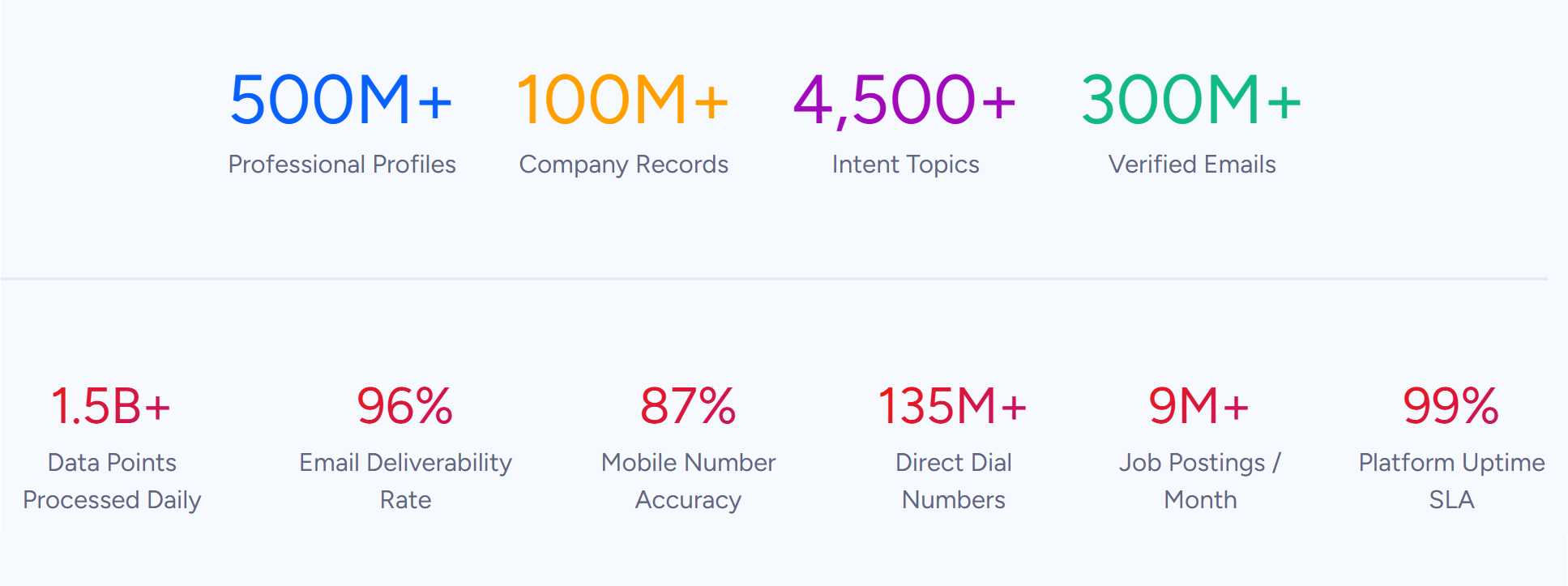
ZoomInfo operates a B2B data platform of 500M contacts, 100M companies, 135M+ verified phone numbers, 120M direct dials, and 200M+ verified business email addresses. The data flows through a verification pipeline backed by 300+ human researchers and automated ML scanning of 28 million site domains daily, reaching up to 95% accuracy on first-party data.
Source: ZoomInfo
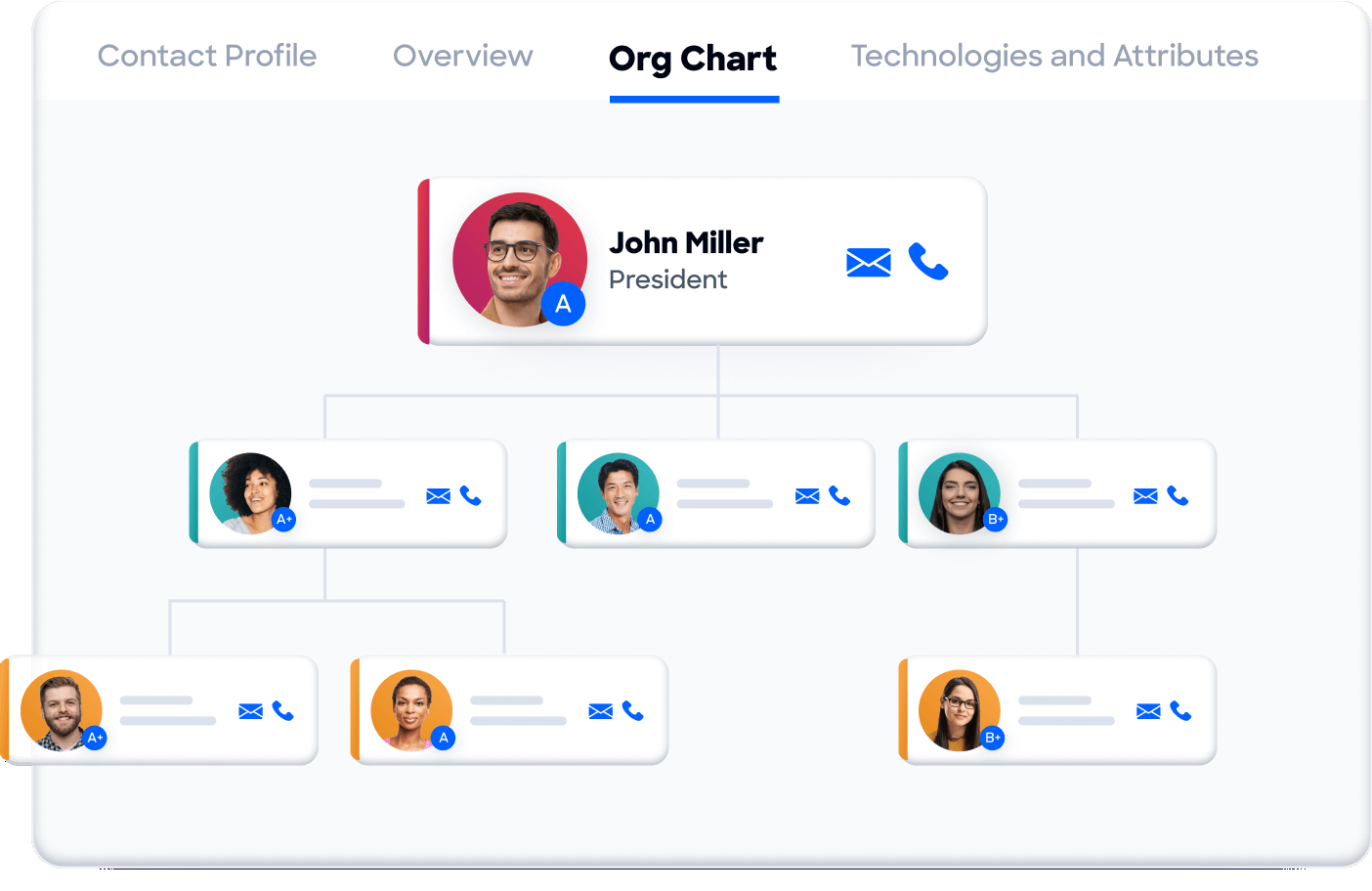
For a team building lead enrichment or prospecting workflows in n8n, this is the data source those workflows query. ZoomInfo provides department org charts with decision-makers' direct dials and emails, 300+ company attributes for segmentation, contact tracking with job-change alerts, and technographic profiles covering 30,000+ technologies across 200+ categories for 30+ million companies.
Source: ZoomInfo
The data quality is externally validated: Forrester Wave Leader for Intent Data Providers (Q1 2025), Gartner Magic Quadrant Leader for ABM Platforms for the second consecutive year, and the only Customers' Choice vendor in Gartner's quadrant with a 4.7/5.0 rating.
In a Fortune 500 competitive RFP analyzing 25 million contacts across vendors, an independent consultant concluded that "no other competitor came even close."
ZoomInfo Intent and WebSights: Signals that show who is in-market before any workflow triggers
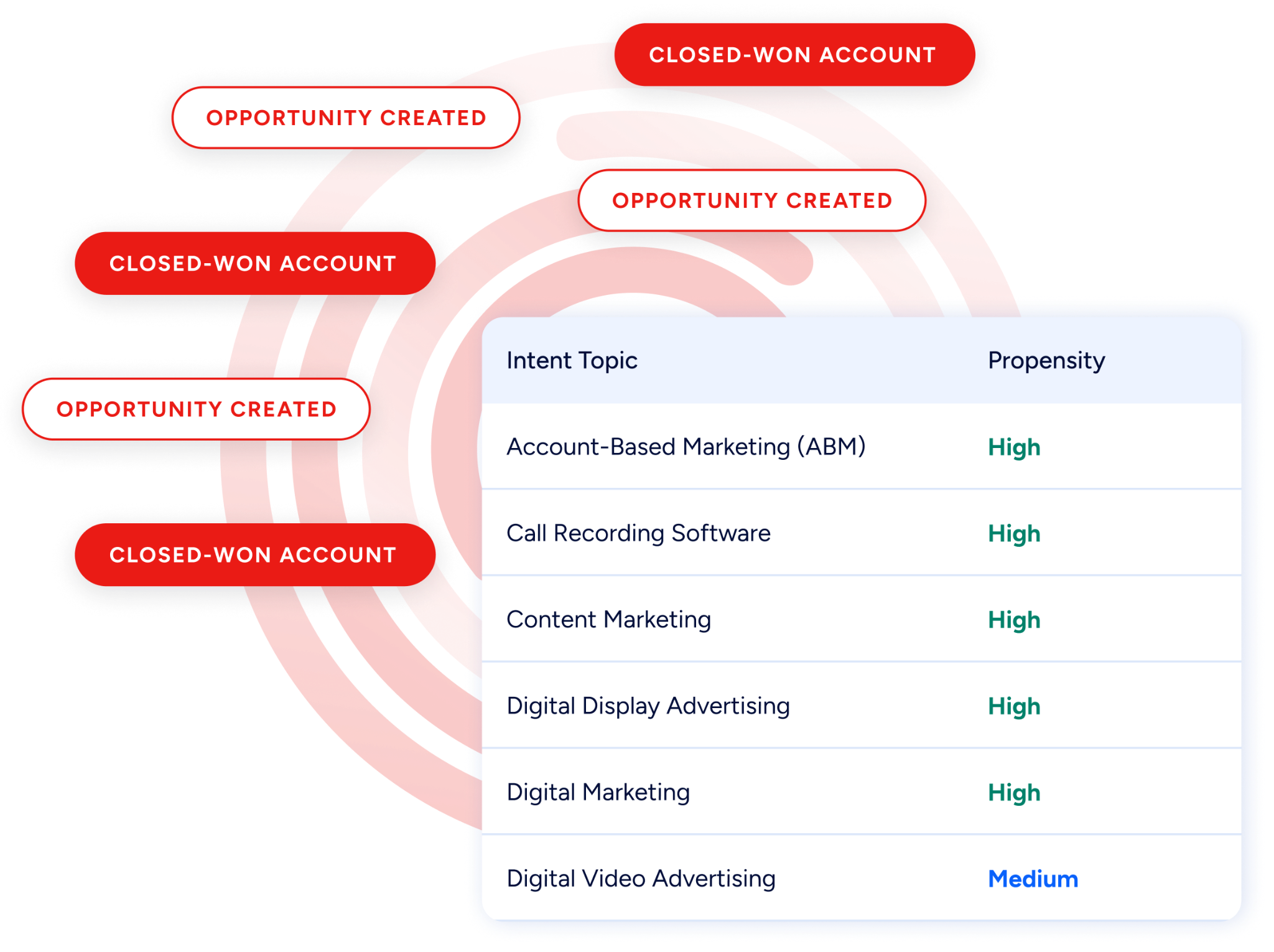
ZoomInfo Intent tracks signals from 210 million IP-to-Organization pairings and 6 trillion+ new keyword-to-device pairings sourced monthly. This reveals which companies are researching topics related to your product across the web, before any outreach begins. Guided Intent, exclusive to ZoomInfo, identifies the topics historically correlated with deal success rather than requiring manual topic selection.
Source: ZoomInfo
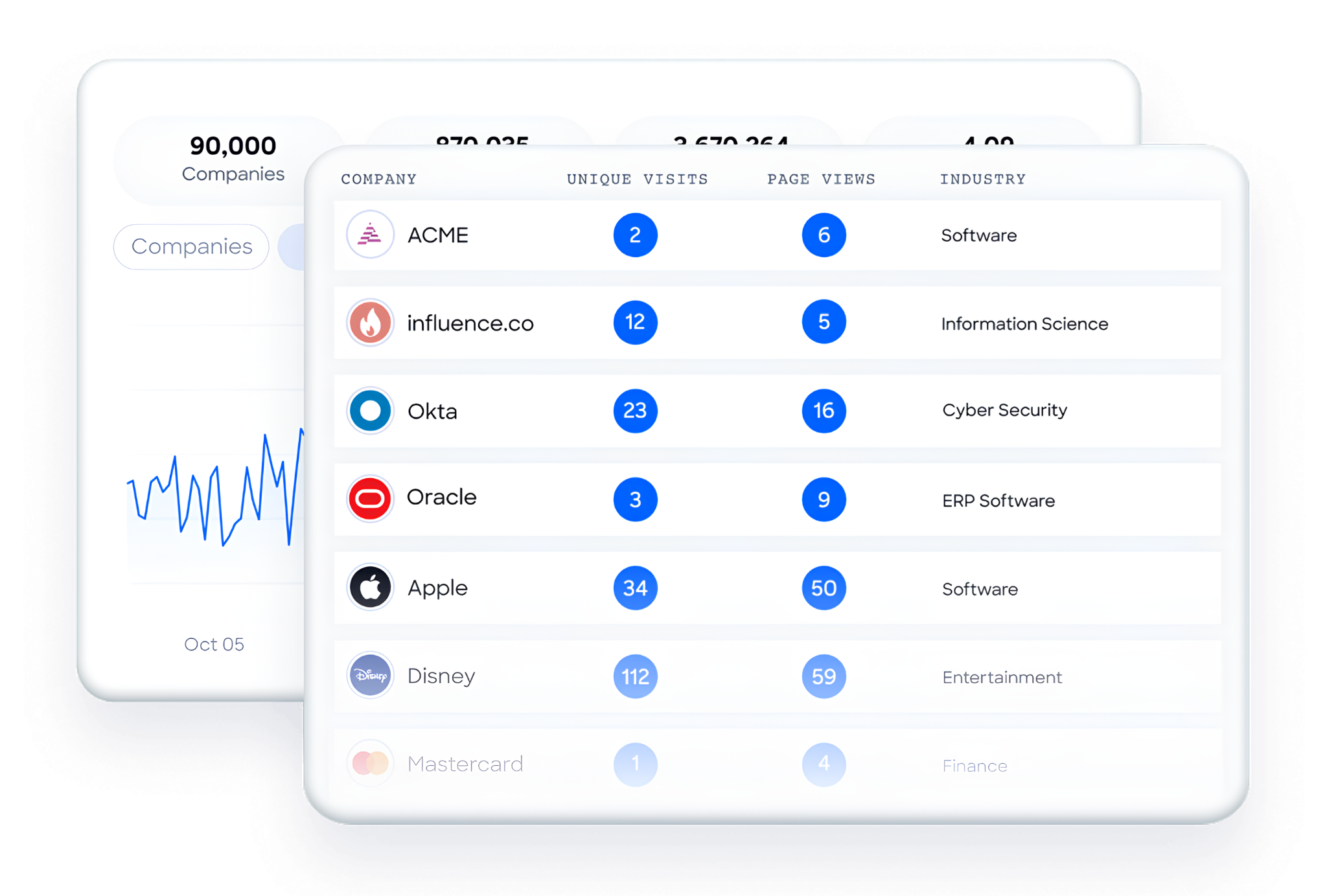
WebSights resolves anonymous website traffic to companies with Automatic Traffic Filtering to distinguish real visitors from bots. ZoomInfo Marketing goes further with contact-level site visitor identification, identifying who visited (not just which company) and triggering personalized outreach.
Source: ZoomInfo
ZoomInfo's GTM Context Graph and Chorus: Intelligence that captures why deals move
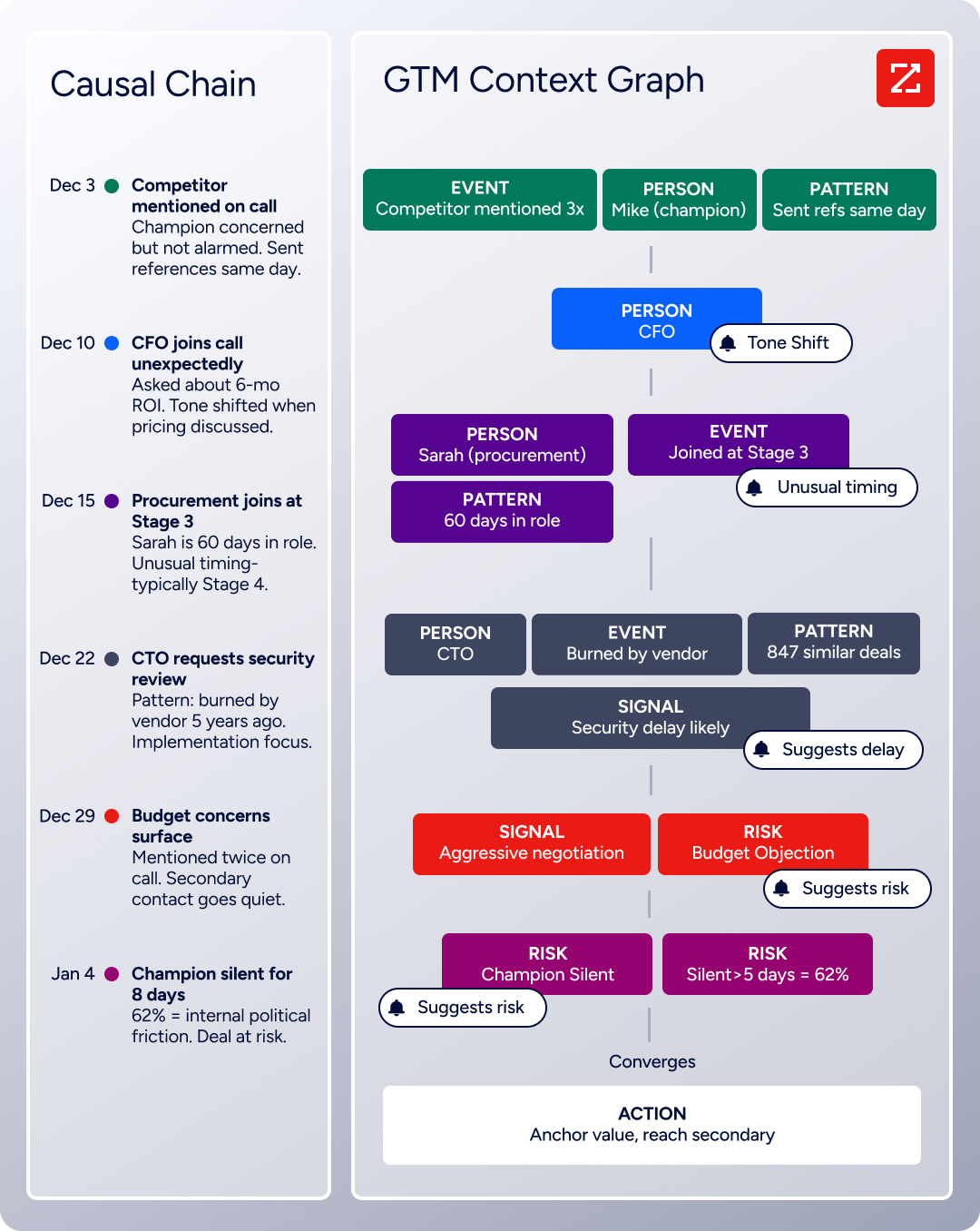
n8n can move data between systems, but it does not generate intelligence about deal context. ZoomInfo's GTM Context Graph processes 1.5B + data points daily, fusing ZoomInfo's B2B data with a customer's CRM records, conversation intelligence from Chorus, email interactions, and behavioral signals into a single intelligence layer.
Source: ZoomInfo
Chorus, backed by 14 technology patents, records and transcribes sales calls, surfaces AI-generated insights (talk ratios, sentiment, objection detection), auto-syncs deal intelligence to the CRM, and provides coaching scorecards.

Source: ZoomInfo
It captures the conversational context that workflow automation misses: why a champion went quiet, what a competitive mention means for deal risk, which objection patterns predict closed-lost outcomes.
Seismic's sales team attributed 39% of active pipeline to opportunities identified or influenced by ZoomInfo signals, boosted productivity by 54%, and saved 11.5 hours per week per seller. (Seismic Case Study)
ZoomInfo GTM Studio: Marketing orchestration and ABM without building it from scratch
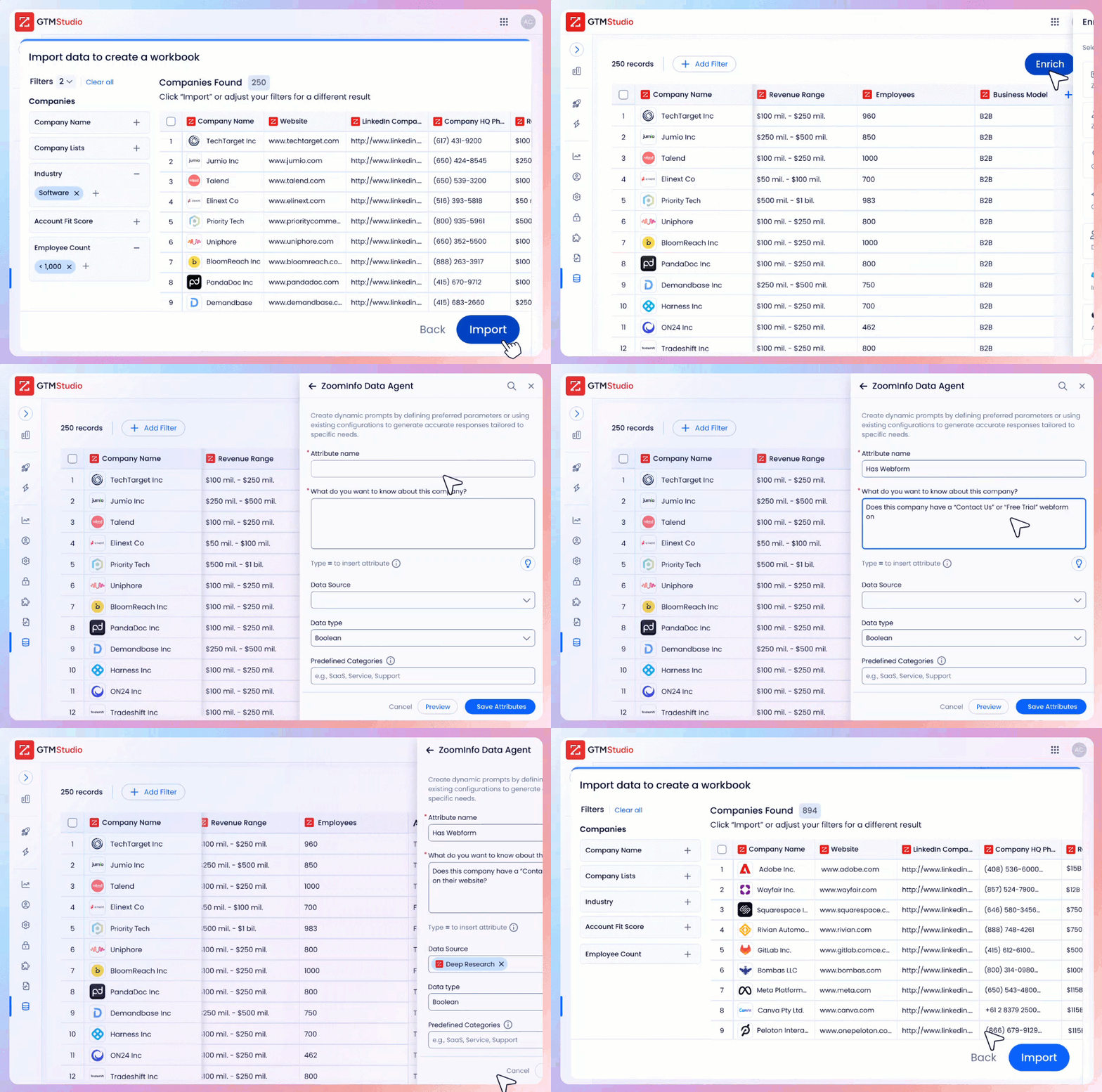
ZoomInfo’s GTM Studio addresses the marketing orchestration gap directly. Marketers, RevOps teams, and GTM engineers can build audiences in natural language, enrich with first- and third-party data, define triggers, and activate plays across channels (email, calls, display ads, direct mail, LinkedIn, Meta, Connected TV) without engineering support.
Source: ZoomInfo
Pre-built GTM plays cover inbound acceleration, champion tracking, competitive displacement, and ICP targeting. Expansion plays that used to take 3 weeks now launch in 30 minutes.
ZoomInfo Marketing includes a native Demand-Side Platform deploying display ads based on 300+ company attributes, FormComplete (reducing forms to a single field while auto-appending data), and Account Fit Scoring (predictive AI scoring 0-100 based on company attribute patterns).
ZoomInfo APIs and MCP: The same intelligence, accessible to n8n workflows and any AI agent
ZoomInfo delivers its intelligence through APIs and MCP, so the same data and GTM Context Graph powering ZoomInfo's own products is accessible inside any third-party tool or custom workflow. The MCP server connects AI models to ZoomInfo's B2B data as a native tool, currently supporting Claude and ChatGPT.
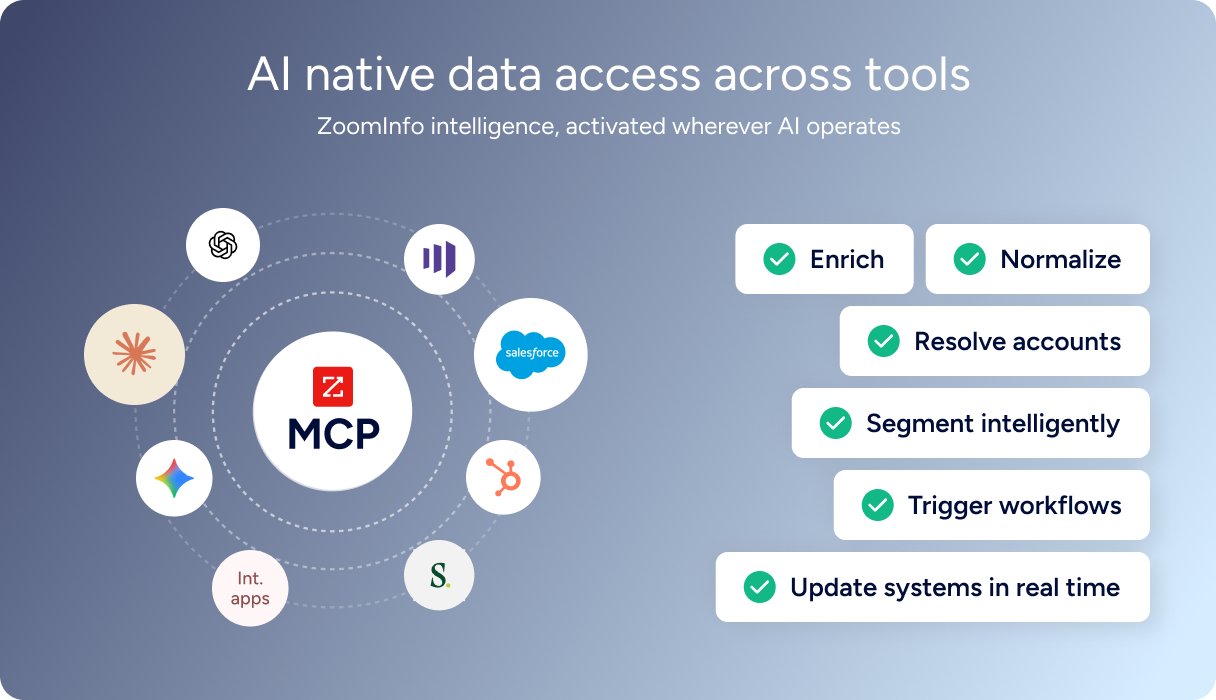
Source: ZoomInfo
API access is included in all relevant plans, and the Enterprise API covers Search, Enrich, Copilot (AI intelligence), Marketing (audience management), and Engagements endpoints. For teams already using n8n, ZoomInfo's API becomes a data source their workflows can query via the HTTP Request node.
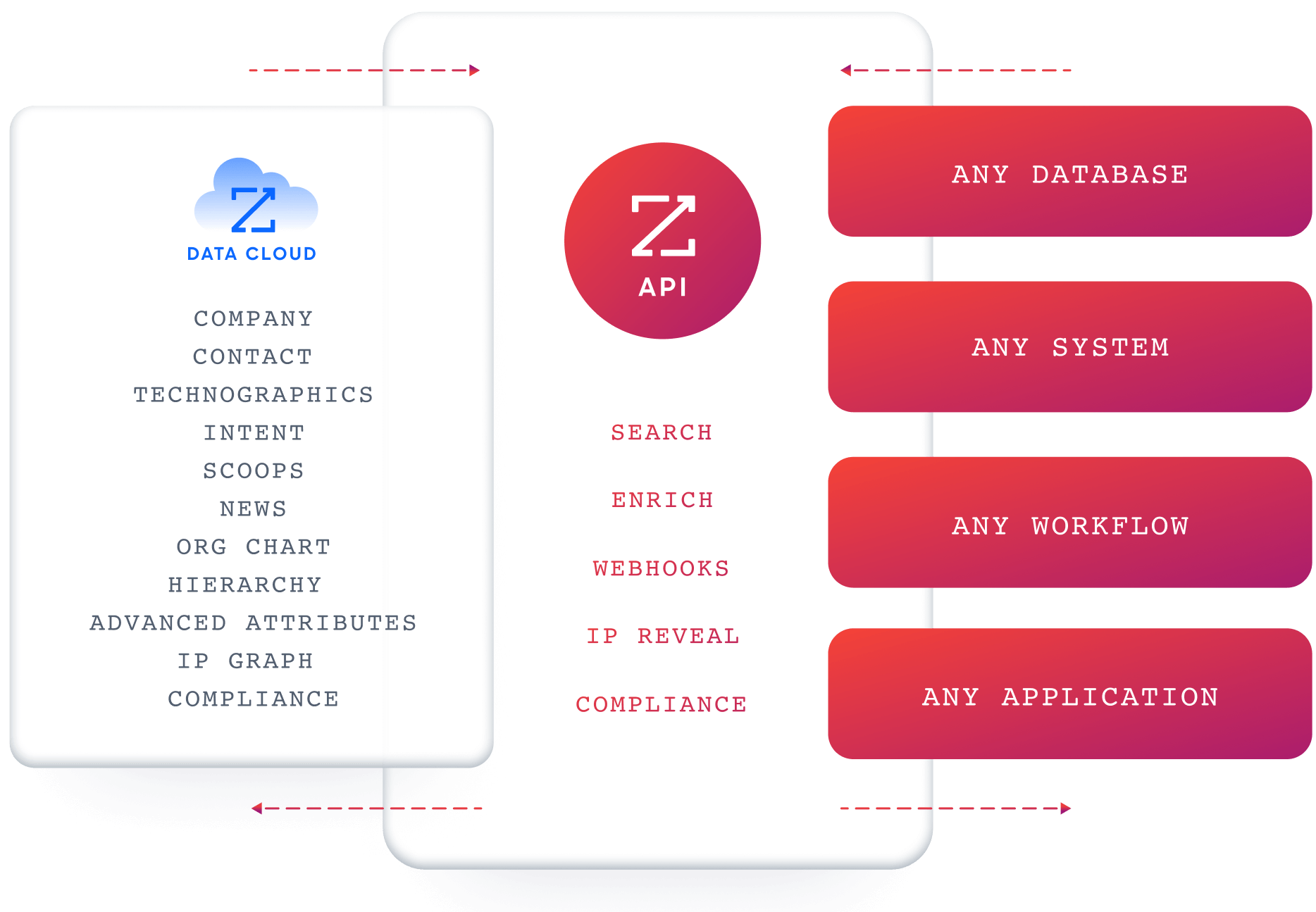
Source: ZoomInfo
ZoomInfo's Free Entry Points: A way to evaluate the data without commitment
ZoomInfo Lite is a permanent free tier with access to ZoomInfo's B2B database, 10 monthly export credits, individual and company searches, a Chrome extension, and WebSights Lite with up to 10 website visitor reveals per day. A separate 7-day free trial provides broader access with no credit card required.
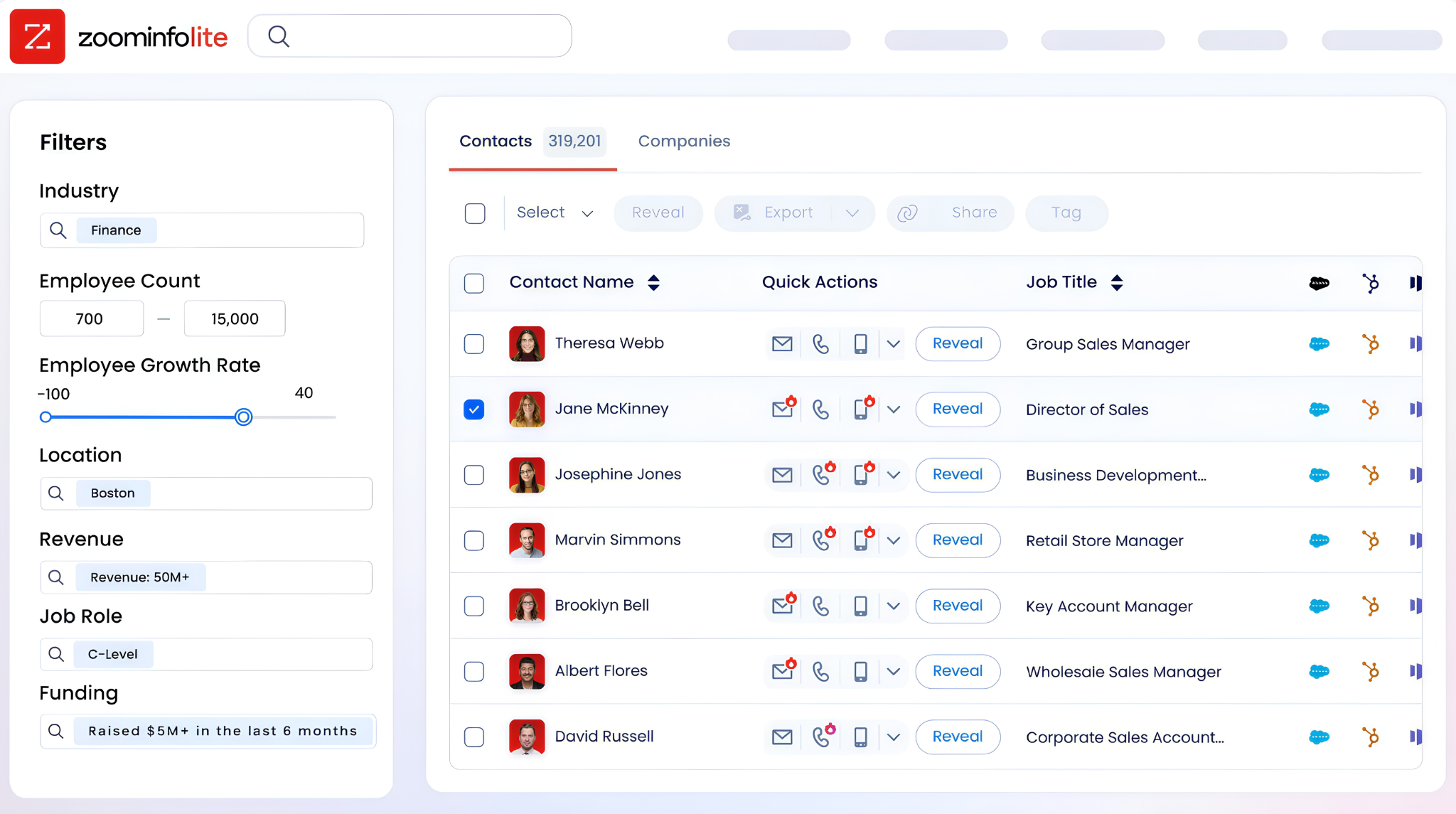
Source: ZoomInfo
Final Summary
n8n is a toolkit for technical workflow automation: a visual canvas that lets you drop into code at any point, 1,385+ integrations, production-grade AI agent orchestration with human-in-the-loop and MCP support, full self-hosting for data sovereignty, and execution-based pricing that stays predictable as workflows grow in complexity.
It fits developers, DevOps teams, and technical operators who need to automate multi-step processes across their stack with the precision of code and the speed of a visual builder.
It does not supply the data and intelligence layer underneath: no B2B contact database, no intent signals, no conversation intelligence, and no marketing orchestration or ABM capabilities.
If your workflows need verified B2B contacts, intent signals, and go-to-market intelligence, that is the ground ZoomInfo covers.
Its 500M-contact, 100M-company database supplies the verified emails and direct dials your automations run on. ZoomInfo Intent surfaces the accounts researching your category from 6 trillion+ keyword-to-device pairings monthly.
Chorus captures and analyzes every sales conversation. GTM Studio gives marketing teams multi-channel orchestration and ABM capabilities. And the GTM Context Graph fuses all of it into a single intelligence layer accessible through APIs and MCP that n8n workflows (or any AI agent) can query directly.
See what that data layer adds to your automations: start with ZoomInfo Lite for free, or request a demo to watch verified contacts and live intent signals flow into your workflows.
FAQ
Does n8n include a B2B contact database?
No. n8n is a workflow automation platform, not a data provider. It connects to external databases, CRMs, and APIs through its 1,385+ integration nodes, but it does not include its own database of contacts, companies, phone numbers, or email addresses. Teams pair n8n with a data platform like ZoomInfo, whose 500M contacts and 120M direct dials supply the records of the workflows process.
Can n8n build and deploy AI agents?
Yes. n8n provides a full AI agent framework built on LangChain, supporting multi-agent systems, RAG pipelines with native vector store integrations, human-in-the-loop checkpoints, MCP client and server nodes, and model-agnostic LLM support (OpenAI, Anthropic, Ollama, AWS Bedrock, Google Gemini, and more). The Workflow Tool lets any of the 1,385+ integrations serve as an agent capability without custom code.
Which n8n plan includes SSO and Git source control?
SSO (SAML, LDAP, OIDC) and Git-based source control with environment promotion are available on the Business plan (self-hosted, $800/month) and Enterprise. The Starter and Pro cloud plans do not include SSO or Git version control. There is no managed cloud option between Pro ($50/month) and Enterprise with custom pricing.
Is n8n free to use?
The Community Edition is permanently free to self-host with unlimited executions, all integrations, code nodes, and webhooks. Cloud plans start at $20/month (Starter, 2,500 executions). Cloud trials of Starter and Pro require no credit card. The Business plan trial is 14 days and requires a credit card. The free Community Edition excludes SSO, Git source control, environments, and audit logging.
How does n8n's pricing compare to Zapier's?
n8n charges per workflow execution regardless of step count. A 50-step workflow counts as one execution. Zapier charges per task, where each step in a multi-step Zap is a separate task. For complex workflows with many steps, n8n's model is substantially cheaper.
n8n also includes unlimited users on all plans and unlimited self-hosting on the Community Edition, while Zapier charges per seat and has no self-hosted option.
Can n8n run completely on-premise?
Yes. n8n is fully self-hostable via Docker, Kubernetes, or npm. Self-hosted instances can run in air-gapped environments with no internet connection required. Combined with Ollama for local LLM inference, the entire platform (automation engine plus AI capabilities) operates offline. Cloud data for managed instances is stored in the EU (Frankfurt, Germany).
Does n8n support conversation intelligence or call recording?
No. n8n can trigger workflows based on call events (via webhooks from Zoom, Microsoft Teams, or other platforms), but it does not include call recording, transcription, coaching, sentiment analysis, or objection detection. Teams that need to capture and analyze sales conversations pair n8n with a conversation intelligence platform.
ZoomInfo's Chorus, backed by 14 technology patents, provides recording, transcription, AI-generated insights, and coaching scorecards that feed into the GTM Context Graph.
Does n8n offer buyer intent data?
No. n8n processes data from external sources but does not generate intent signals. It can receive and act on intent data via webhook or API from a third-party provider.
ZoomInfo Intent tracks signals from 210 million IP-to-Organization pairings and 6 trillion+ keyword-to-device pairings sourced monthly, identifying in-market accounts before any outreach begins, and that data is accessible through ZoomInfo's API for use in n8n workflows or any other tool.
More sales tool comparisons:
