
People Data Labs has built one of the largest B2B person datasets available, covering 1.5 billion unique person profiles and over 74 million company profiles delivered through APIs, SDKs, and data marketplace listings. For data engineers, product teams, and GTM operators who need structured professional data at scale, PDL is the infrastructure layer powering enrichment, audience building, and workforce analytics across their stack.
But a data infrastructure layer only creates value when it connects to the systems where decisions get made.
PDL delivers person records, employment history, company firmographics, and workforce signals. On its own, it cannot execute a GTM play against in-market accounts, sync enriched contacts into your CRM without custom code, trigger multi-step automation based on enrichment outcomes, or train ML models on workforce data inside your analytics environment. The right integrations bridge those gaps: they turn raw PDL data into enriched CRM records, automated workflows, AI-driven campaigns, and analytical insights your team can act on.
This guide covers the strongest integration for each of the jobs People Data Labs users most commonly need done:
Combine PDL's person data with AI-driven GTM intelligence and execution
Run PDL enrichment inside no-code waterfall workflows with direct CRM passthrough
Automatically enrich Salesforce Leads, Contacts, and Accounts without writing code
Append professional context to HubSpot contacts via middleware enrichment
Query PDL's full person and company datasets at warehouse scale using SQL
Trigger PDL enrichment across 8,000+ apps with no-code automation
Train ML models and run investment research on PDL workforce data at scale
Route PDL-enriched records through conditional, multi-branch visual workflows
Each section walks through how the integration connects with People Data Labs, what data flows between the platforms, pricing, and who benefits most.
Best People Data Labs Integrations at a Glance
Best People Data Labs Integration for AI-Powered GTM Intelligence and Execution Connects PDL's person-level data (employment history, education, social profiles) with ZoomInfo's GTM Studio for audience enrichment, buyer intent layering, and campaign execution, giving GTM teams the combined depth of both data platforms in one orchestration environment. |
|---|
Best People Data Labs Integration for No-Code GTM Workflow Automation Embeds PDL person and company enrichment as native table actions inside Clay's waterfall enrichment engine, letting GTM teams stack PDL alongside other providers and push enriched records into CRM without writing API code. |
Best People Data Labs Integration for No-Code CRM Record Enrichment Enriches Salesforce Leads, Contacts, and Accounts automatically through PDL's native Enterprise add-on, with no-code field mapping, trigger-on-creation enrichment, and configurable refresh cadences managed from the PDL Dashboard. |
Best People Data Labs Integration for CRM and Marketing Automation Enrichment Routes PDL enrichment into HubSpot contact properties via Clay, Zapier, or Make, appending seniority, employment history, and company attributes for segmentation, lead routing, and form-submission enrichment. |
Best People Data Labs Integration for In-Warehouse Data Access Without ETL Delivers PDL's full person and company datasets into Snowflake via the Data Marketplace, queryable with standard SQL alongside internal tables, with automatic monthly refreshes and no ingestion pipeline to build or maintain. |
Best People Data Labs Integration for No-Code Enrichment Across 8,000+ Apps Connects PDL's Person and Company Enrichment APIs to virtually any business application through no-code Zap workflows, with PDL providing documented code samples for quick configuration. |
Best People Data Labs Integration for ML-Scale Talent Intelligence and Investment Research Surfaces PDL's person and company datasets inside Databricks workspaces via Delta Sharing on the Marketplace, ready for Spark ML training pipelines, workforce analytics, and company health scoring at millions-of-records scale. |
Best People Data Labs Integration for Visual Multi-Branch Workflow Automation Routes PDL-enriched records through conditional branching scenarios using four native PDL modules, directing matched and unmatched records into separate downstream systems within a single visual workflow. |
What Is People Data Labs?
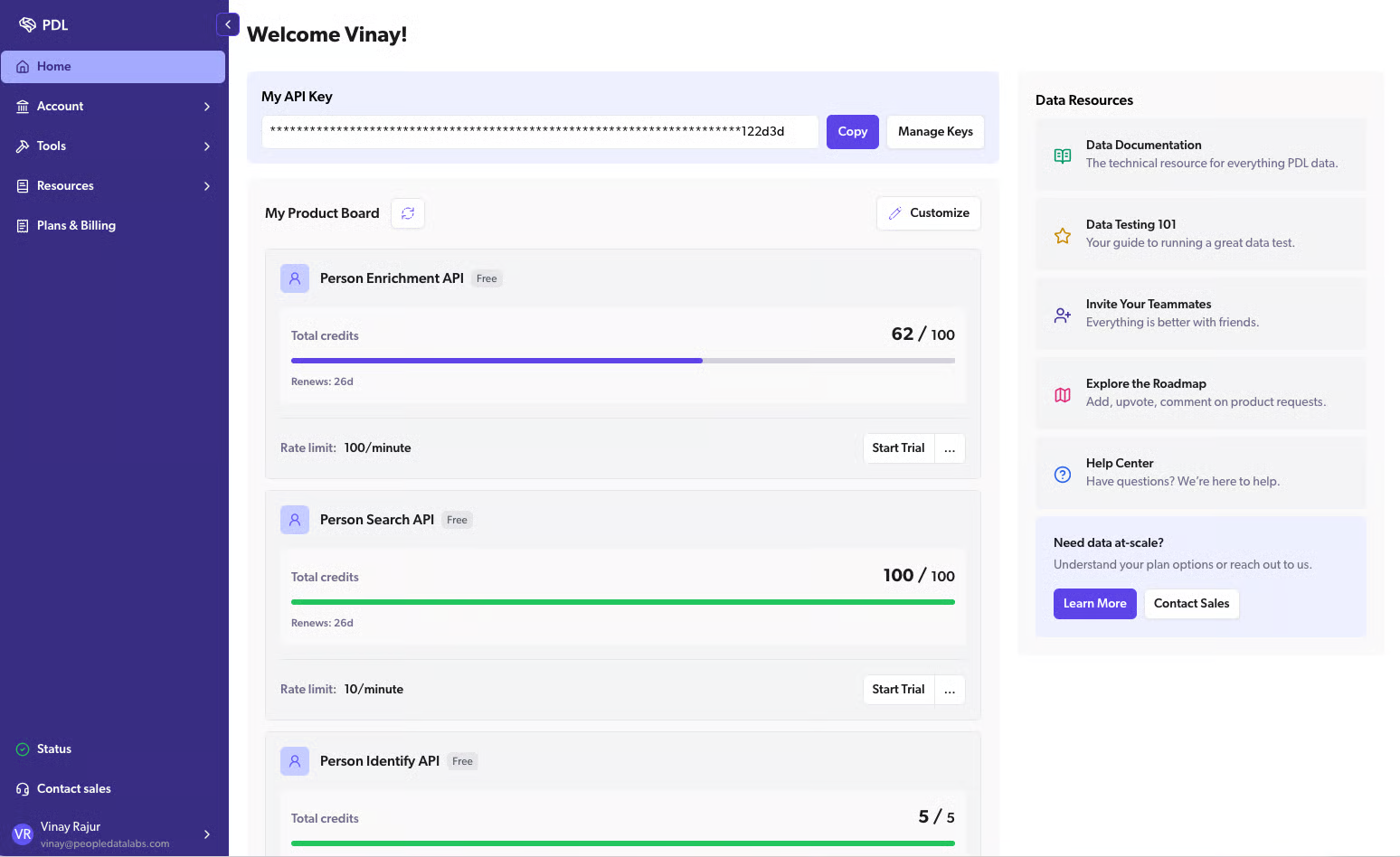
Source: People Data Labs
People Data Labs is a B2B data infrastructure provider that assembles, cleans, and delivers structured professional and company data at scale, operating under the principle "We build workforce data, so you don't have to."
The company serves a technical buyer: developers, data engineers, data scientists, and product managers who embed PDL data into their own platforms and pipelines. Named customers include S&P Global, Clay, Hire Ez, Anaconda, ServiceNow, Affinity, and Insight Partners, spanning sales intelligence, recruiting technology, and investment research.
PDL's integration ecosystem reflects its API-first architecture.
The platform delivers data through REST APIs (Person Enrichment, Company Enrichment, IP Enrichment, Search, Identify, Autocomplete, and Cleaner endpoints), official SDKs in Python, JavaScript, Ruby, Go, and Rust, and bulk Data License Feeds via AWS S3, GCP, Azure, Snowflake, and Databricks. A native Salesforce integration handles no-code CRM enrichment for Enterprise customers, and documented Zapier and Make integrations extend PDL's reach to no-code workflow builders. PDL holds ISO 27001 and SOC 2 Type 2 certifications.
The integration categories available to People Data Labs users include:
GTM intelligence and execution: ZoomInfo GTM Studio, Clay waterfall enrichment
CRM enrichment: Salesforce (native), HubSpot (via middleware)
Data warehousing and analytics: Snowflake Marketplace, Databricks Marketplace
Workflow automation: Zapier, Make
Identity and verification: Ping Identity, Bouncer email validation
Bulk data delivery: AWS S3, GCP, Azure Blob Storage, direct download
With that ecosystem as context, here are the eight integrations we selected as the best options for extending People Data Labs' capabilities across the categories that matter most to data-driven teams.
1. ZoomInfo: Best People Data Labs Integration for AI-Powered GTM Intelligence and Execution
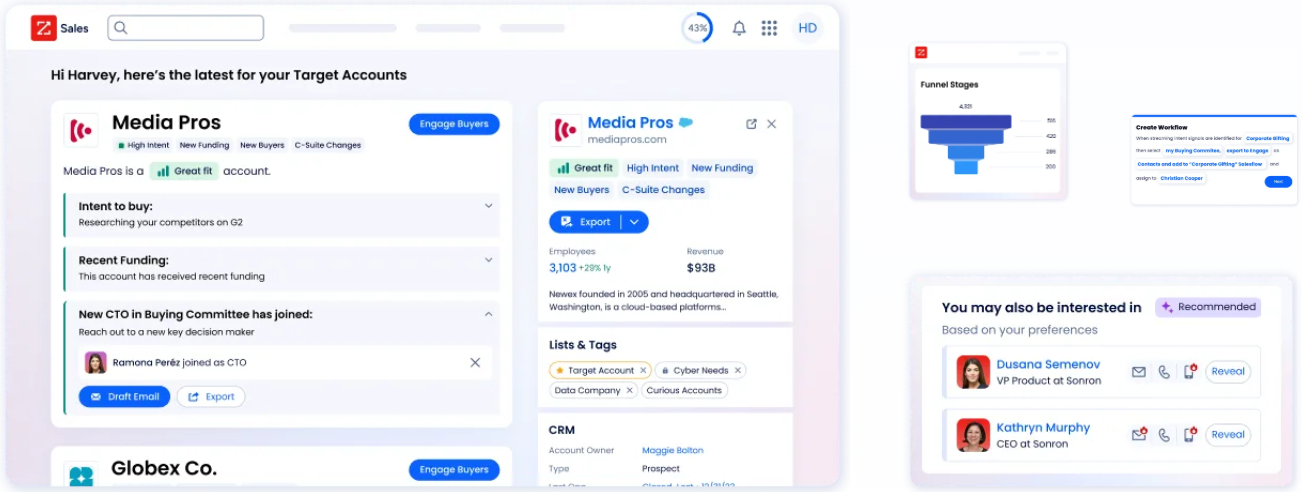
ZoomInfo is an AI-driven GTM platform built on a large B2B data foundation: 500M contacts, 100M companies, 135M+ verified phone numbers, and 200M+ verified business email addresses. It integrates with People Data Labs through a native data connector in ZoomInfo's App Marketplace, enriching GTM Studio audiences with PDL's employment history, education, social profiles, and location data.
Connecting the two platforms unlocks:
PDL's person-level attributes (full employment history, skills, education, social profiles) layered on top of ZoomInfo's verified contact data and company intelligence
Buyer intent signals from ZoomInfo combined with PDL's workforce signals (job changes, role tenure) for higher-confidence account prioritization
AI-driven GTM plays in GTM Studio that act on the combined dataset, from audience definition to multi-channel campaign execution
A single intelligence layer where both data sources feed GTM Workspace for sellers and APIs and MCP for custom workflows
How ZoomInfo Integrates with People Data Labs
People Data Labs provides a native data connector in ZoomInfo's App Marketplace, designed for enriching GTM Studio Audiences. The connector uses API-based data delivery: GTM Studio queries PDL's dataset to append person-level attributes to audience records, and the enriched data flows into ZoomInfo's orchestration and execution layers.
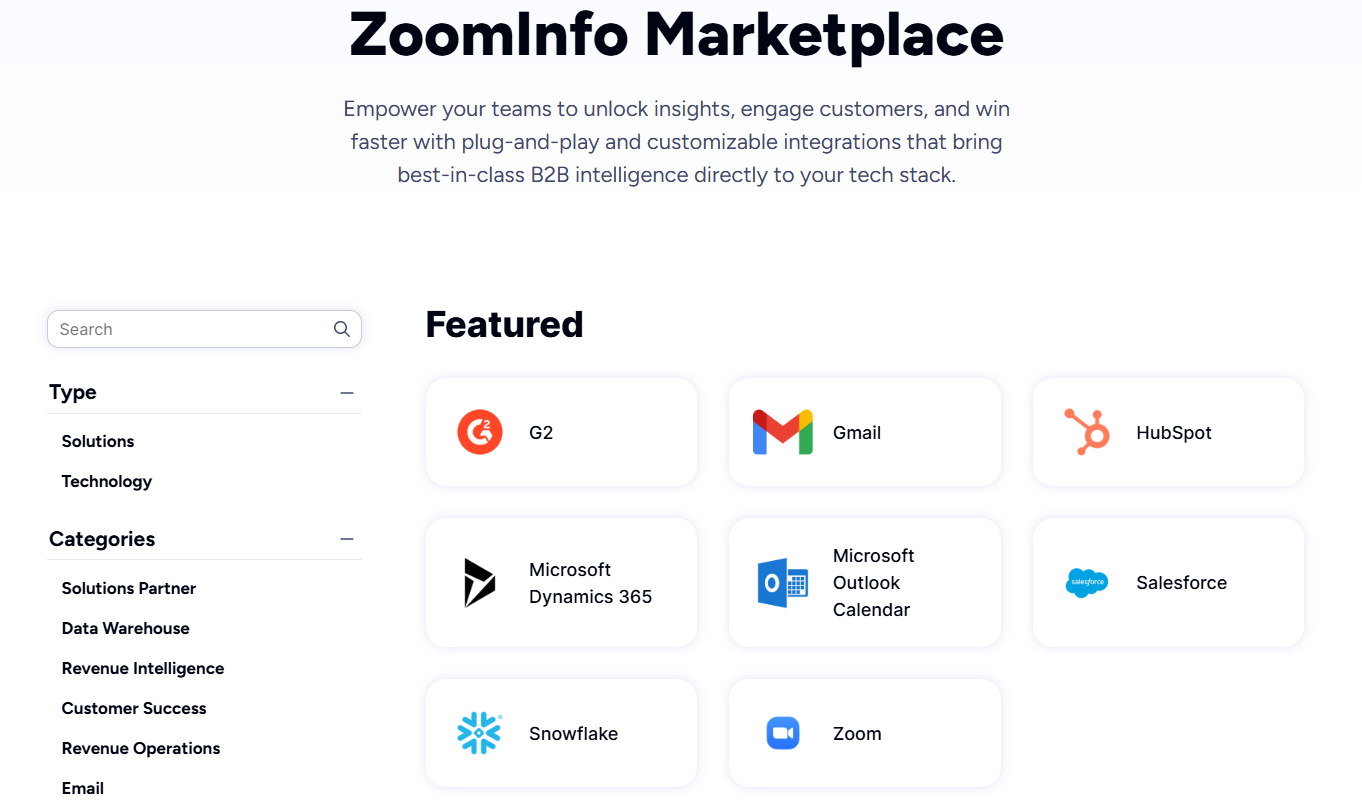
Because the integration is a first-party marketplace connector, it requires no middleware, no custom API code, and no separate data pipeline. Teams with both a ZoomInfo subscription and PDL access configure the connector in GTM Studio and gain PDL's enrichment alongside ZoomInfo's own data within the same workspace.
GTM Studio Audience Enrichment: Add Professional Depth to Your Go-to-Market Plays
GTM Studio is ZoomInfo's AI-driven orchestration canvas where marketers, RevOps, and GTM engineers define audiences, build plays, and launch campaigns using natural language instead of engineering tickets.
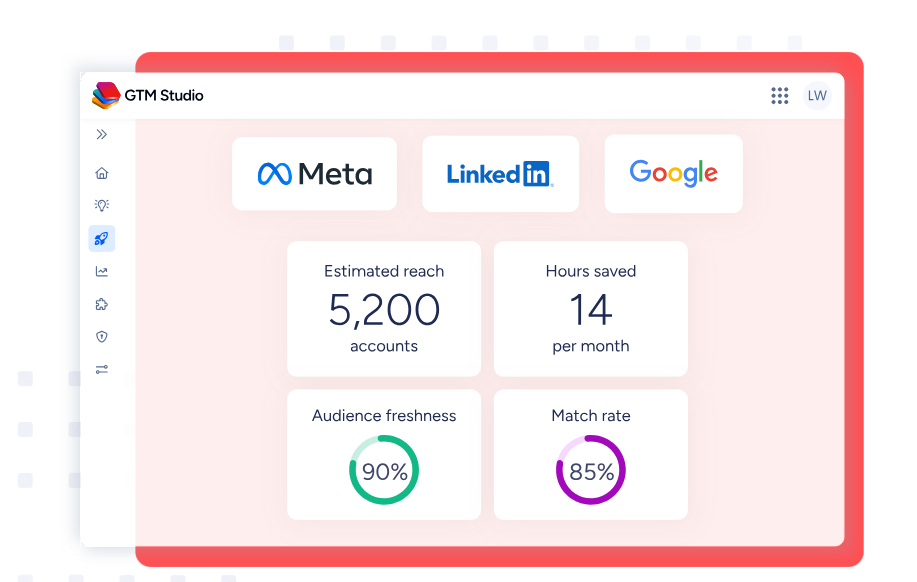
With the PDL data connector enabled, audiences built in GTM Studio gain PDL's person-level attributes: full employment history with normalized job titles, education records, skills and certifications, social profile URLs, and location data drawn from PDL's 1.5 billion unique person profiles.
This means a GTM play can target contacts based on criteria that neither dataset covers alone: "VP-level contacts in their current role for less than 12 months" (from PDL's employment history) "at mid-market companies showing buyer intent for CRM migration" (from ZoomInfo's intent data).
GTM Studio's waterfall enrichment evaluates 25+ data sources and returns the highest-confidence result, with PDL as one provider in that chain. The combined enrichment runs without manual data stitching: a marketer describes an audience in plain language, GTM Studio builds and enriches it, and the play launches across email, ads, calls, and direct mail.
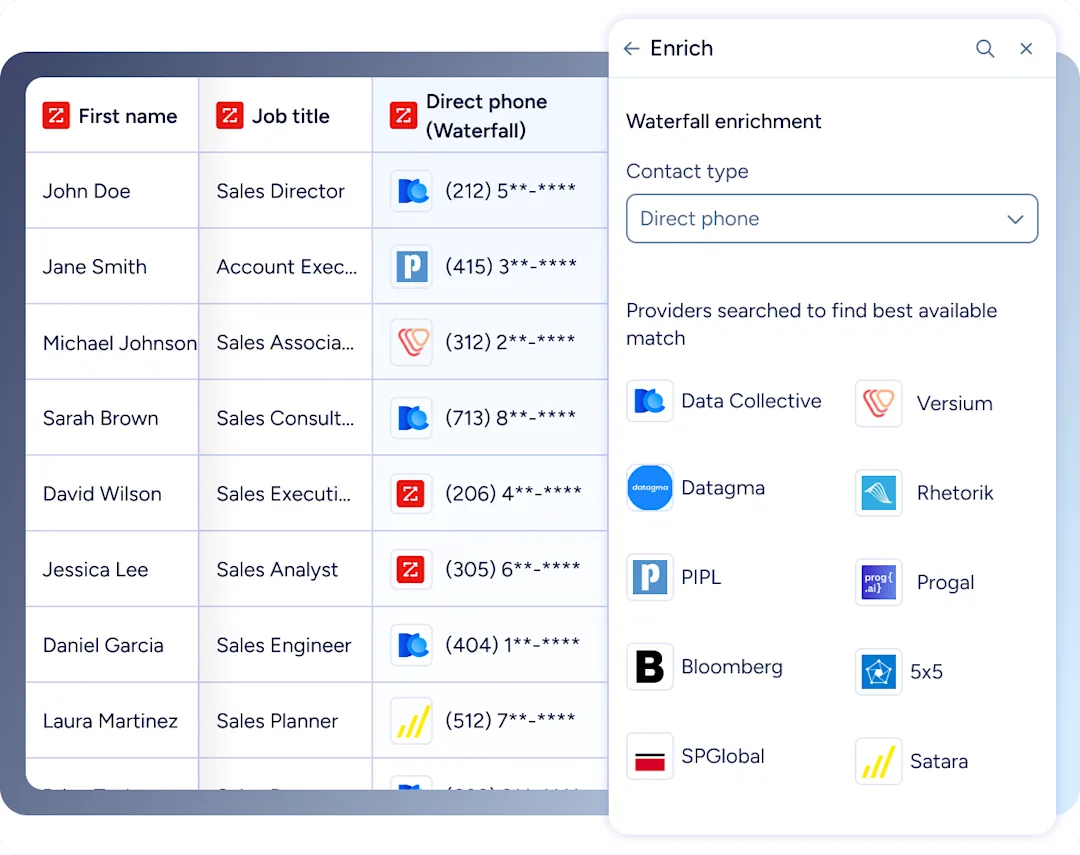
ZoomInfo in action: A SaaS company targets accounts where the VP of Sales changed jobs within the last six months and the company is actively researching "sales engagement platforms." PDL's employment history identifies the recent job changes; ZoomInfo's intent data identifies the research activity. GTM Studio merges both signals into a single audience, enriches contacts with verified direct dials from ZoomInfo and LinkedIn profiles from PDL, and launches a multi-channel play addressing the new VP's likely priority: building a sales tech stack for their new team.
Signal Layering: ZoomInfo Intent Data Meets PDL Workforce Signals
ZoomInfo's Buyer Intent tracks signals from 210 million IP-to-Organization pairings and 6 trillion+ new keyword-to-device pairings monthly, revealing which companies are actively researching topics relevant to your product. PDL tracks over 300 million job updates with 17 million job changes globally per quarter, providing a complementary workforce signal layer.
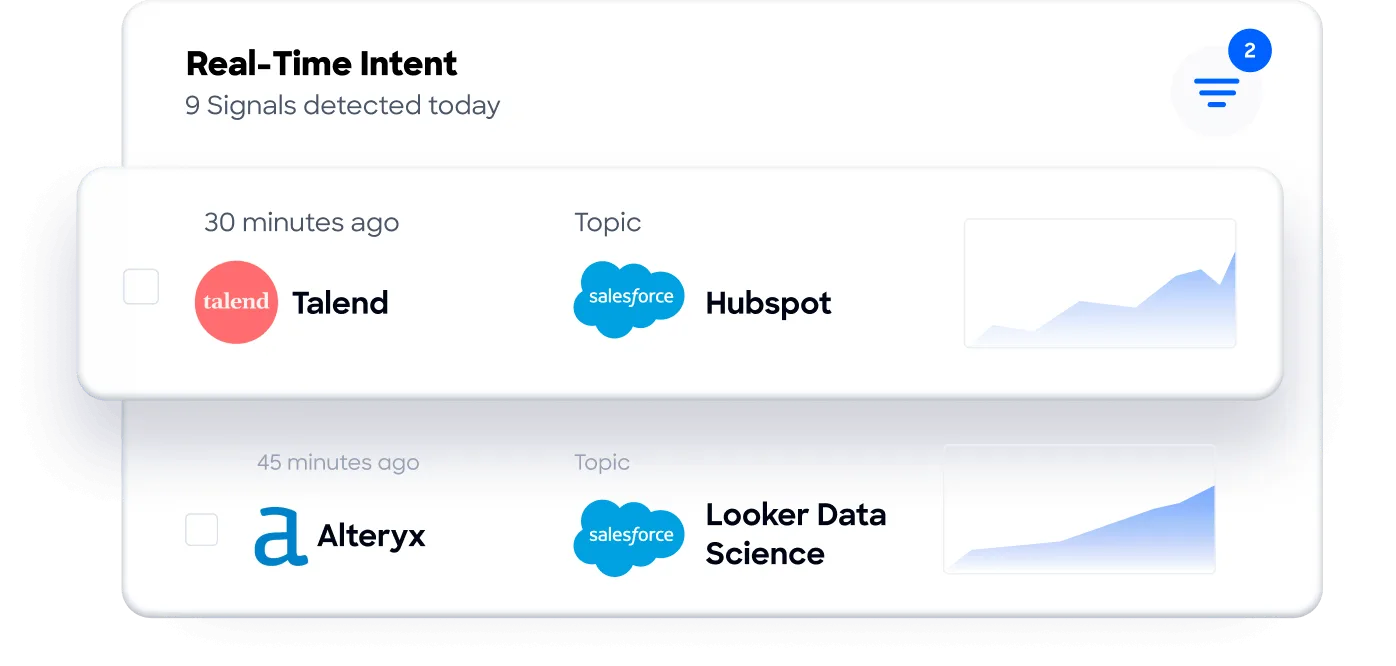
When both signal types live in the same environment, the prioritization logic sharpens. An account showing high buyer intent is worth pursuing; an account showing high buyer intent where three key decision-makers recently joined from a competitor's customer base is worth pursuing today.
ZoomInfo's Guided Intent identifies research topics historically correlated with deal success in your business, and PDL's employment data adds the "who moved where and when" context that intent alone cannot provide.
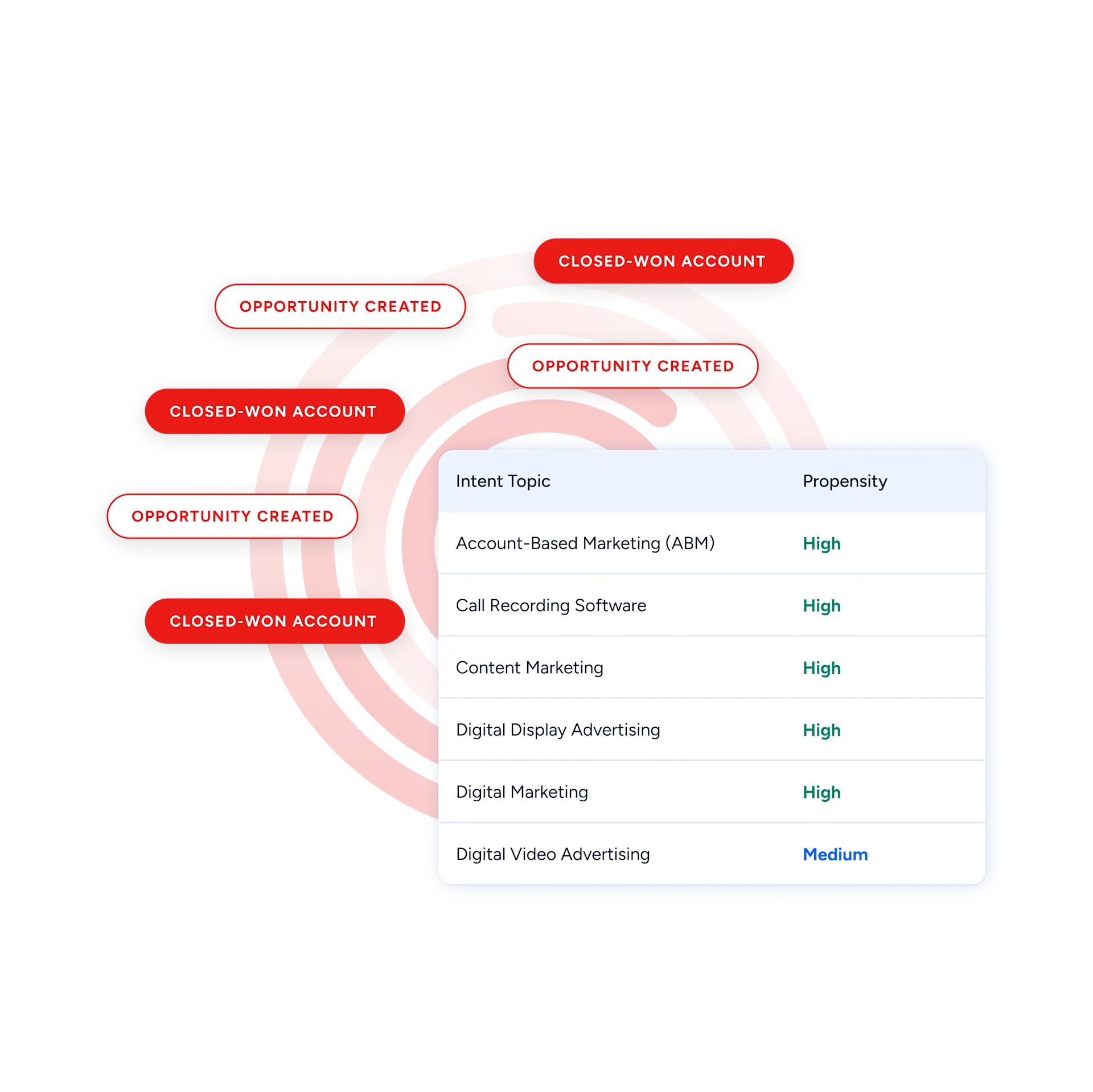
The GTM Context Graph, which processes 1.5B+ data points daily, fuses ZoomInfo's B2B data with CRM records, conversation intelligence, and behavioral signals. PDL's person-level depth feeds into this intelligence layer, giving the AI engine richer context for account scoring, play recommendations, and outreach personalization.
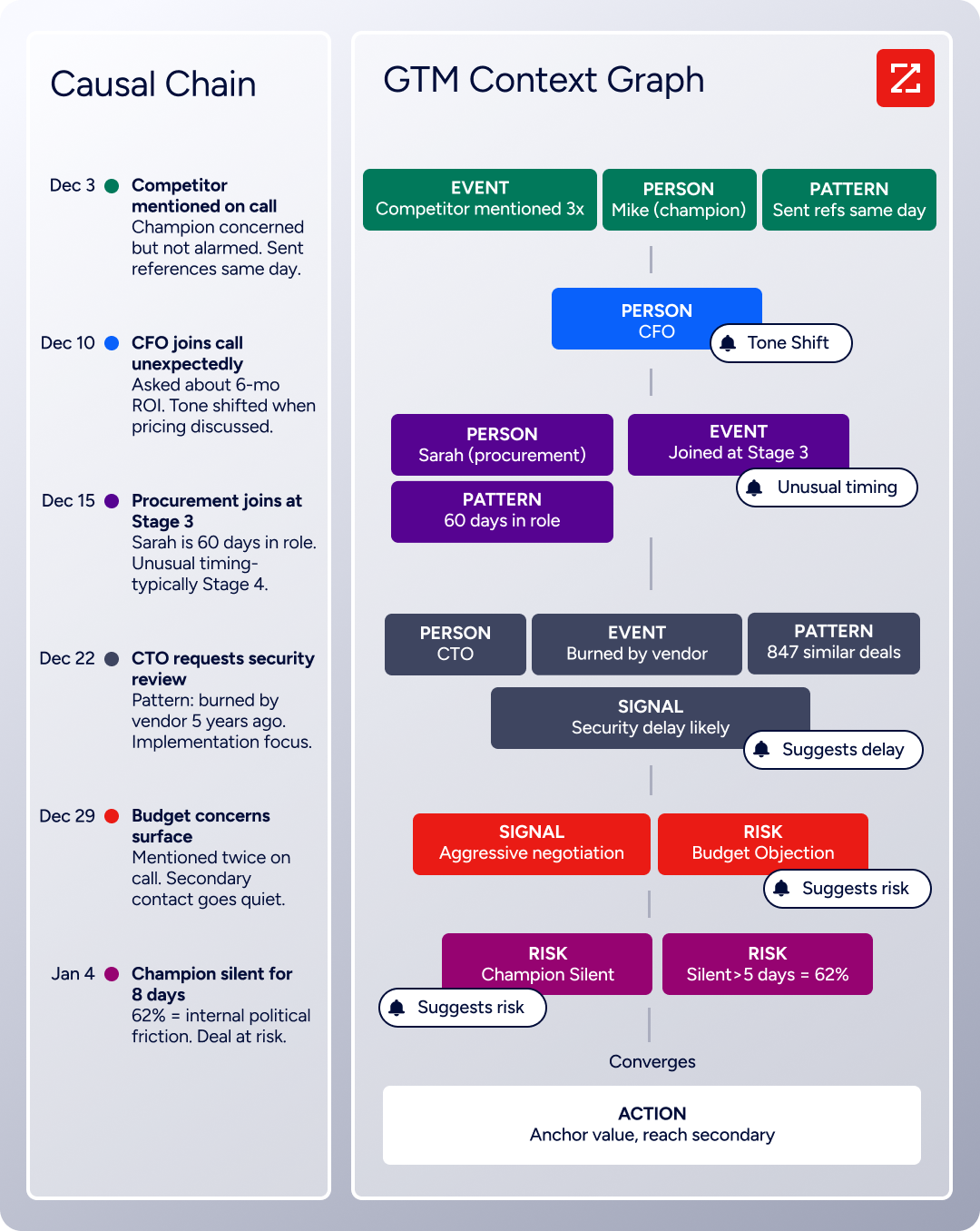
ZoomInfo in action: ZoomInfo detects a target account researching "data enrichment APIs" for two consecutive weeks. PDL's employment data reveals the company's new Head of Data Engineering started 45 days ago and previously worked at a company that used your product. GTM Workspace surfaces the account to the assigned AE with a pre-drafted email referencing the prospect's background and current research signals, and the play is already running a display ad campaign through GTM Studio.
Universal Access: Combined Intelligence in Any Tool via API and MCP
ZoomInfo's open platform architecture means the intelligence powering GTM Studio and GTM Workspace is also available through Enterprise APIs and the ZoomInfo MCP server. Teams building custom workflows, internal tools, or AI agents can query ZoomInfo's data alongside PDL-enriched attributes through the same programmatic access layer.
The MCP server connects AI models directly to ZoomInfo's B2B data as a native tool, listed in the Claude directory and supporting Claude and ChatGPT.
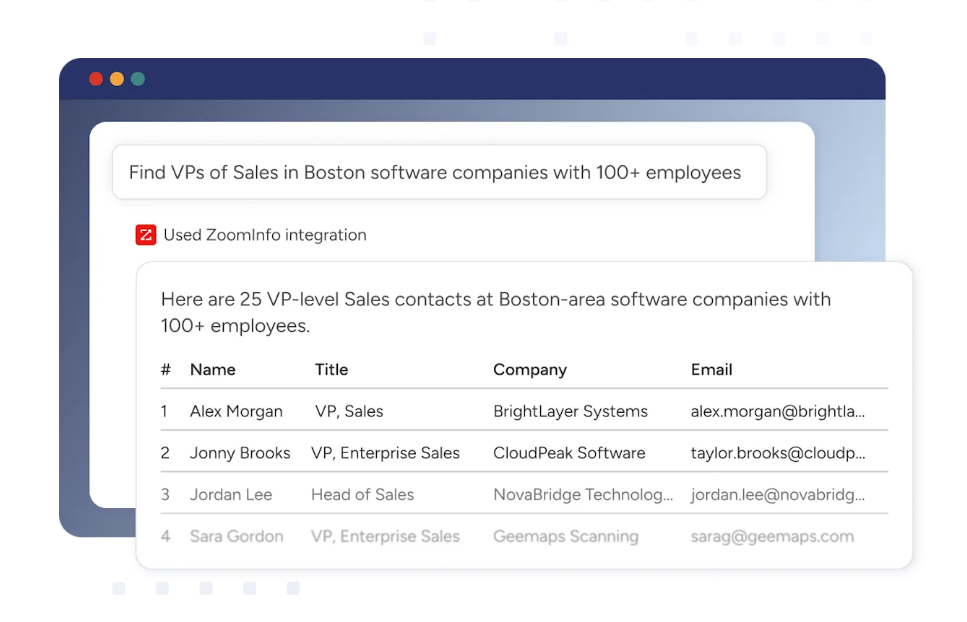
For teams that use PDL as a data infrastructure layer and ZoomInfo as their GTM intelligence platform, both datasets become accessible in the environments where AI agents and custom applications operate.
Seismic's sales team attributed 39% of active pipeline to opportunities identified or influenced by ZoomInfo signals, reporting 54% productivity gains. (Seismic Case Study)
ZoomInfo Pricing
ZoomInfo uses a consumption-based pricing model with custom quotes based on usage, users, credit volume, and features. It is organized into Sales, Marketing, and standalone product lines, each in Professional, Advanced, and Enterprise tiers.
The PDL data connector in ZoomInfo's App Marketplace is available to GTM Studio users. GTM Studio is part of ZoomInfo's marketing and operations product line, with capabilities scaling by tier: audience building, waterfall enrichment, multi-channel orchestration, and AI-driven play design.
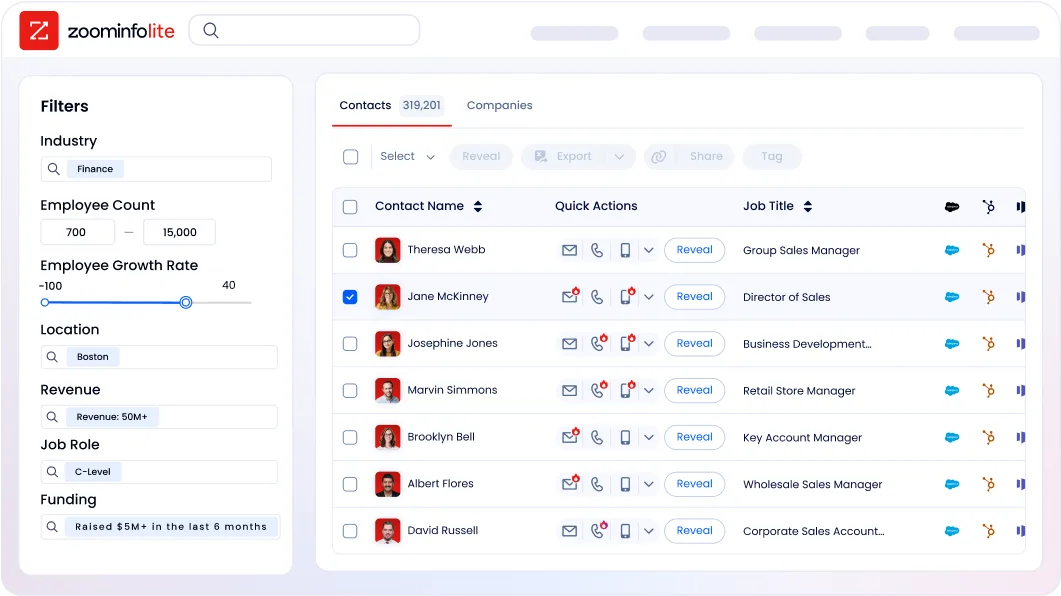
ZoomInfo Lite is a permanent free tier (no credit card, no time limit) with 10 monthly export credits, searches, the Chrome extension, and CRM integrations. A separate 7-day free trial covers paid features including intent data and AI capabilities.
Who Should Use the ZoomInfo Integration?
GTM teams that need PDL's person-level data (employment history, education, skills) combined with buyer intent signals and AI-driven execution: the integration turns raw enrichment into prioritized, actionable GTM plays without manual data stitching.
Revenue operations teams building audience-based campaigns that want ZoomInfo's verified contact data, technographic intelligence, and intent signals layered with PDL's workforce depth in a single orchestration canvas.
Organizations using PDL as a data infrastructure layer that also need an execution platform: ZoomInfo's GTM Studio runs the campaigns, GTM Workspace equips sellers, and APIs and MCP expose the combined intelligence to any tool.
2. Clay: Best People Data Labs Integration for No-Code GTM Workflow Automation
Source: Clay
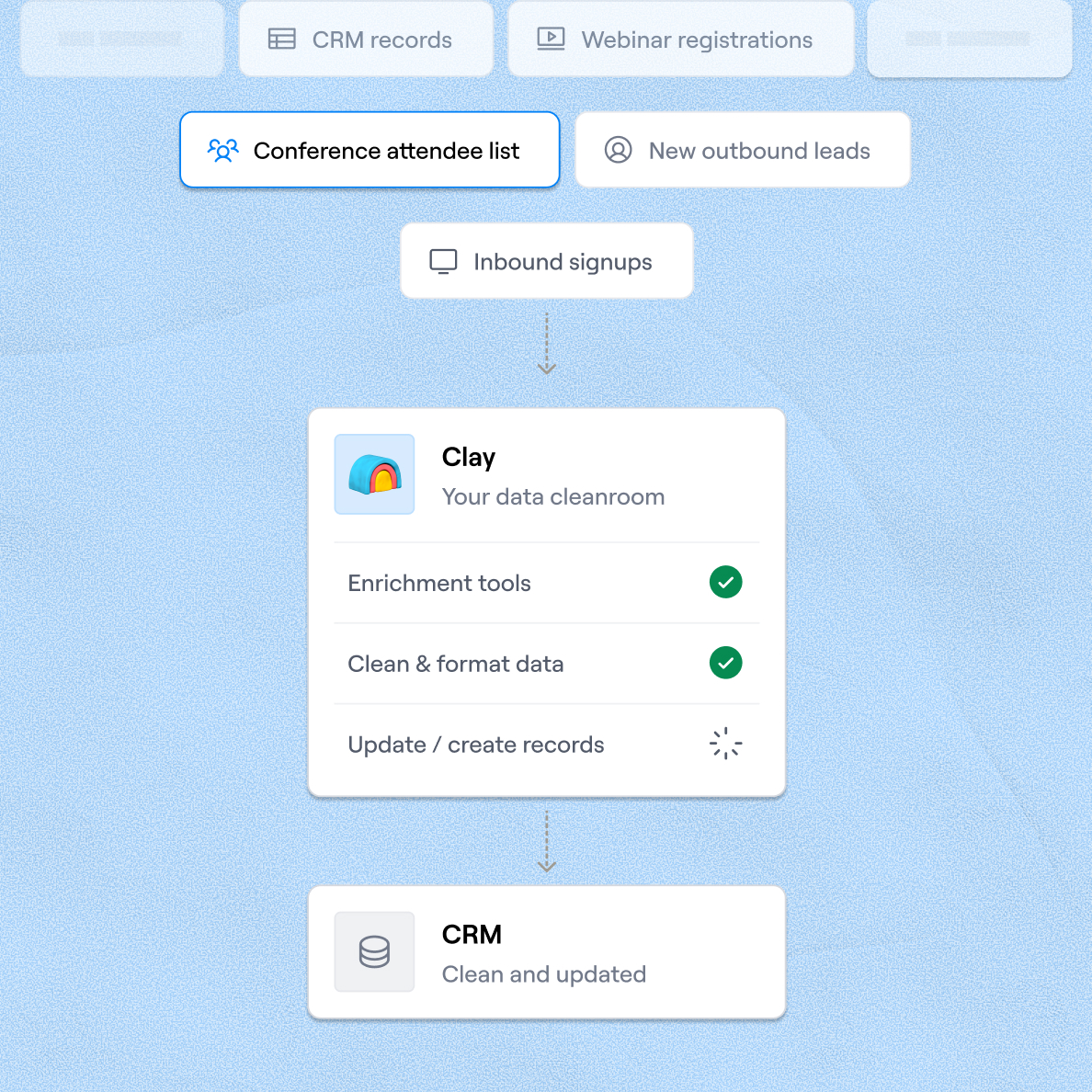
Clay is a GTM data enrichment and workflow automation platform that integrates with People Data Labs as a native data provider in Clay's marketplace, embedding PDL's person and company enrichment inside table-based workflows. GTM teams can pull PDL data, chain it into waterfall sequences alongside 150+ other providers, and push enriched records into CRM without writing code. The integration is a native first-party connector.
Key integration capabilities include:
PDL Person Enrichment and Company Enrichment as native column actions inside any Clay table, consumable through Clay's managed account or a user-supplied PDL API key
Waterfall enrichment sequencing PDL alongside other providers, with credits charged only on successful matches
Direct CRM passthrough via Clay's native HubSpot and Salesforce integrations, so PDL-enriched records flow into CRM properties automatically
How Clay Integrates with People Data Labs
Clay treats PDL as a first-party enrichment provider in its marketplace. The PDL integration runs as a column action inside Clay tables, not through middleware. Teams without a PDL subscription access PDL through Clay's managed data credits; teams with existing PDL accounts connect their API key (BYOK) and consume only a Clay action per row. The integration is a native marketplace connector.
1. Native PDL Person and Company Enrichment as Table Actions.
Users add a column, select "People Data Labs" from the enrichment menu, map input fields (email, LinkedIn URL, company domain), and Clay runs PDL enrichment row by row. PDL's full person schema (job history, contact info, education, social profiles) or company schema (firmographics, headcount, funding, hierarchy) deposits into adjacent columns. A GTM ops manager can configure, test, and deploy this in an afternoon without engineering involvement.
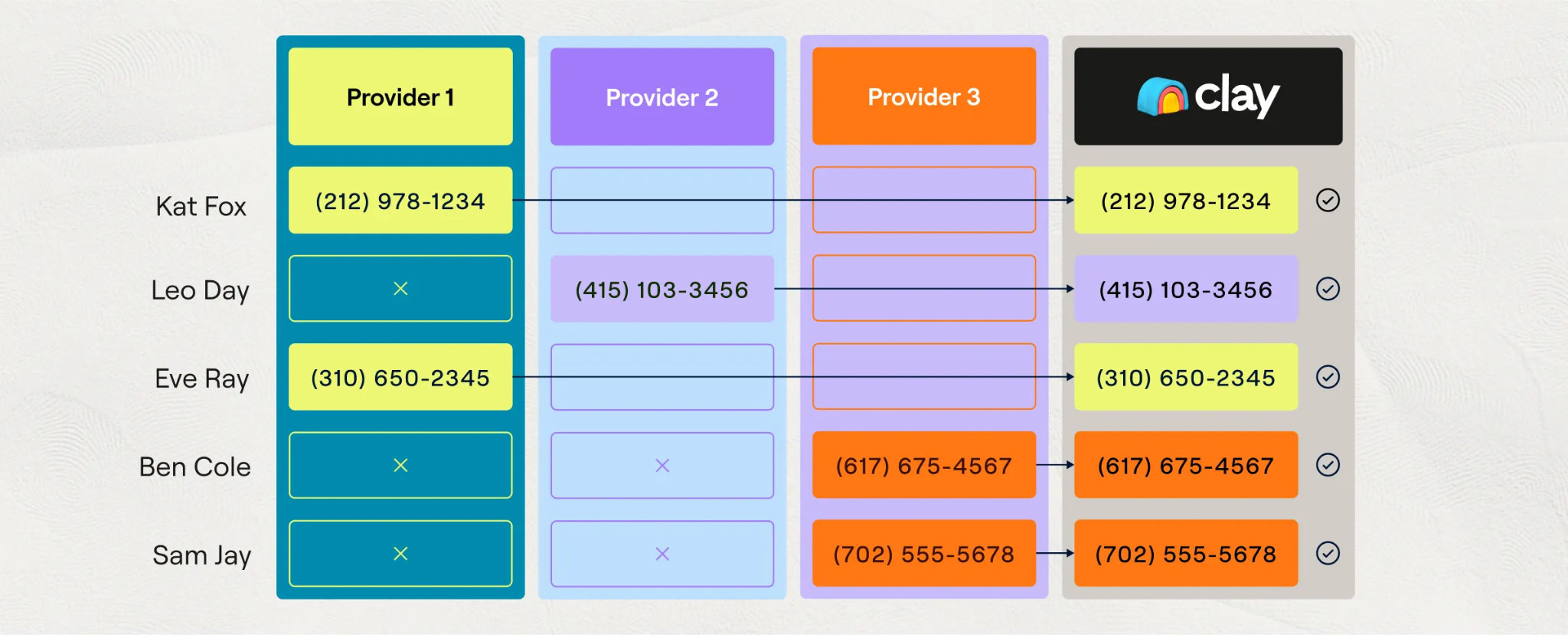
2. Waterfall Enrichment: PDL as One Layer in a Sequential Match Chain.
Clay's waterfall architecture stacks multiple data providers in sequence, querying each in turn and stopping at the first valid result.
Source: Clay
PDL's 1.5 billion unique person profiles contribute to combined match rates that triple coverage compared to single-provider approaches. Teams position PDL earlier or later in the waterfall based on observed coverage for their target segments, with credits charged only when a provider returns a result.
3. CRM Passthrough: Enriched Records to Salesforce and HubSpot Without Additional Automation.
Clay's native CRM integrations (Growth plan and above) close the loop: pull records from Salesforce or HubSpot, run PDL enrichment, map returned fields to CRM properties, and sync back. The full workflow runs in one tool without touching Zapier, Make, or any webhook configuration.
Clay Pricing
Clay uses dual-currency pricing: Actions (platform orchestration) and Data Credits (marketplace data). PDL enrichment via Clay's managed marketplace consumes Data Credits per match; BYOK consumes only Actions.
Free: $0/month (500 Actions, 100 Data Credits, 200-row tables; BYOK supported, CRM integrations excluded)
Launch: From $185/month annual (15,000 Actions, from 2,500 Data Credits; no CRM integrations)
Growth: From $495/month annual (40,000 Actions, from 6,000 Data Credits; includes CRM integrations, webhooks, HTTP API)
Enterprise: Custom pricing (200,000+ Actions, 100,000+ Data Credits; Salesforce managed package, bulk enrichment, SSO)
The Growth plan is the minimum tier for teams wanting the full PDL-enrich-then-CRM-sync workflow.
Who Should Use the Clay Integration?
GTM operations teams that need PDL enrichment without engineering resources: Clay's table interface reduces API integration to point-and-click column configuration.
Teams whose contact lists have mixed data quality and want PDL to fill gaps other providers miss inside a waterfall sequence, with credits charged only on successful matches.
Organizations enriching CRM records in Salesforce or HubSpot that want the enriched data flowing back automatically without separate automation tools.
3. Salesforce: Best People Data Labs Integration for No-Code CRM Record Enrichment
Source: Salesforce
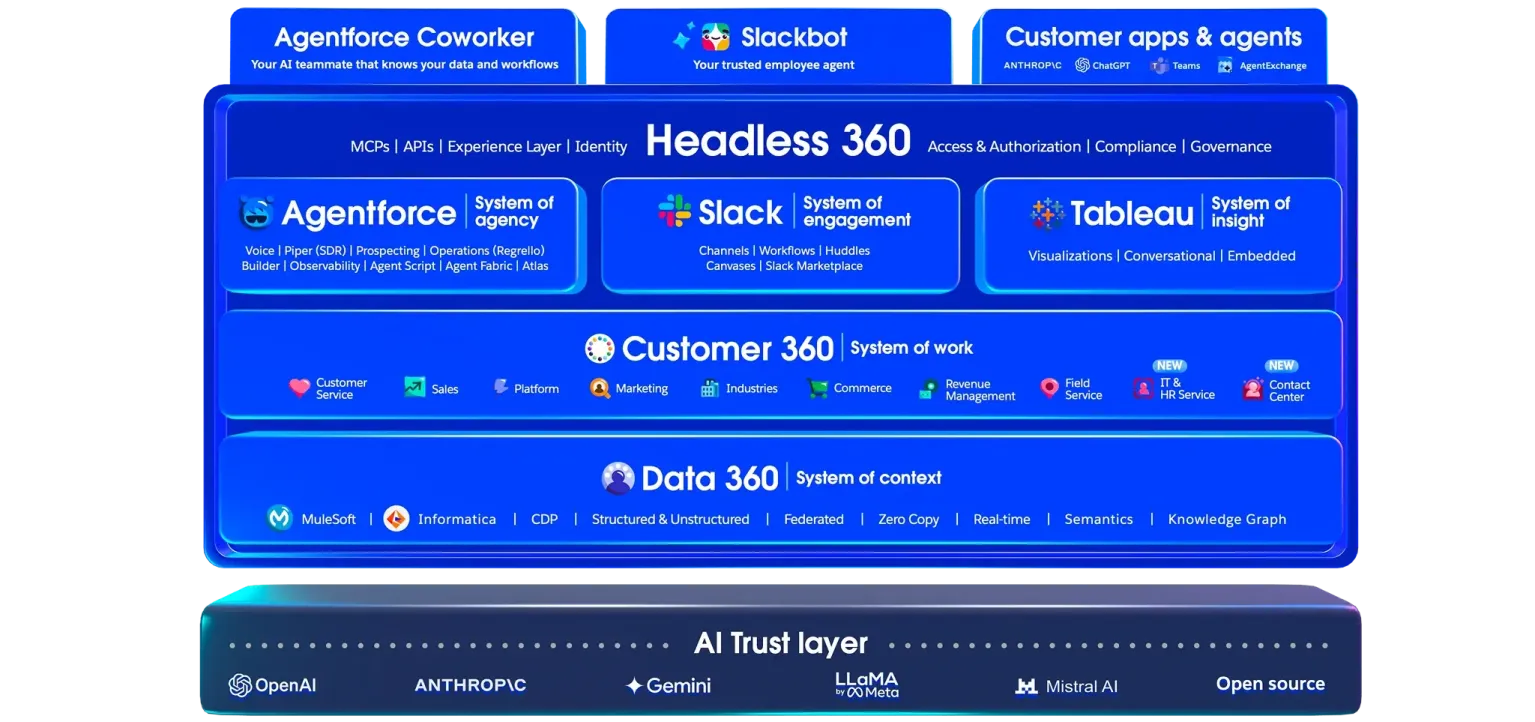
Salesforce is the #1 CRM by IDC revenue market share. It integrates with People Data Labs through a native Enterprise add-on that continuously enriches Salesforce Leads, Contacts, and Accounts with PDL's professional and company data. Admins configure the integration through the PDL Dashboard UI with no Apex code required. It is a native first-party connector available on PDL's Enterprise plan.
Key integration capabilities include:
No-code field mapping through the PDL Dashboard, connecting any PDL field to standard or custom Salesforce fields
Automatic enrichment at the moment of record creation in Salesforce
Configurable refresh cadence that re-enriches existing records on an admin-defined schedule
Enterprise-scale batch processing that handles large Salesforce databases without hitting API rate limits
How Salesforce Integrates with People Data Labs
Admins manage the native Salesforce integration from the PDL Dashboard. They configure field mappings, enrichment triggers, and refresh cadences on the PDL side. No Apex development, installed packages, or custom metadata are required.
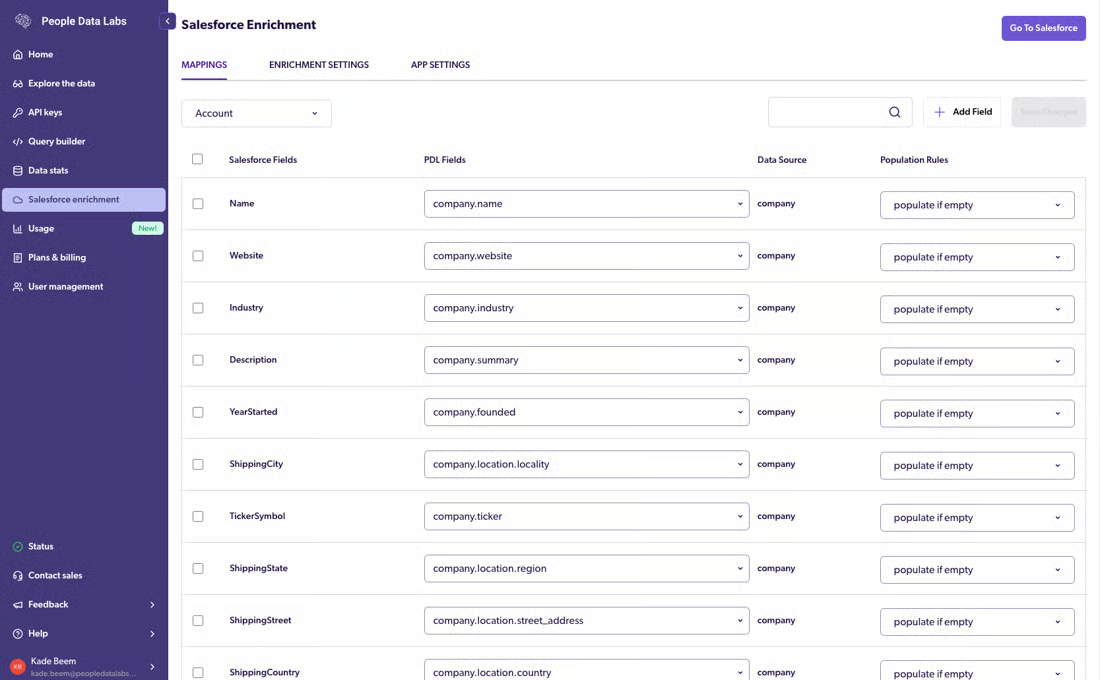
1. No-Code Field Mapping via the PDL Dashboard.
Admins connect any PDL field (job title, work email, seniority level, company headcount, employment history, or any of PDL's 300+ schema fields) to Salesforce fields declaratively. Changes to field mappings are admin-level operations, not engineering deployments. This keeps enrichment configuration in the hands of RevOps rather than competing with feature development for engineering time.
Source: PDL
2. Automatic Enrichment on Record Creation.
PDL enriches incoming Leads, Contacts, and Accounts the moment they are created. By the time a rep opens a new Lead, fields like job title, company industry, seniority level, and work email are already populated from PDL's dataset. This eliminates the manual research step that gets skipped during high-volume periods.
3. Configurable Refresh Cadence for Existing Records.
PDL tracks over 300 million job updates with 17 million job changes globally per quarter. The Salesforce integration addresses data decay through admin-configured re-enrichment frequency, turning enrichment from a periodic project into an ongoing process that runs without sustained human attention.
Salesforce Pricing
The PDL-Salesforce native integration requires PDL's Enterprise plan (custom-quoted through PDL's sales team). Pro plan users who need Salesforce enrichment must build their own Zapier or Make workflow, which lacks automatic refresh and optimized batch processing.
Salesforce tiers most relevant to teams using the PDL integration:
Enterprise: $175/user/month (annual; AI, pipeline insights, workflow automation)
Unlimited: $350/user/month (annual; full AI suite, conversation intelligence)
Agentforce 1: $550/user/month (annual; unmetered Agentforce, Tableau Next)
Note: the "Enterprise plan" requirement refers to PDL's plan tier, not Salesforce's. Any Salesforce commercial edition works with the PDL integration as long as the team holds a PDL Enterprise plan.
Who Should Use the Salesforce Integration?
Enterprise RevOps teams whose CRM records arrive incomplete or degrade within quarters: the integration fires enrichment on creation and sustains it through scheduled re-enrichment cycles.
Salesforce admins who want to own enrichment configuration without engineering dependency: the PDL Dashboard mapping keeps this a RevOps-controlled workflow.
Organizations with large Salesforce databases where batch-optimized, rate-limit-aware processing matters operationally.
4. HubSpot: Best People Data Labs Integration for CRM and Marketing Automation Enrichment
Source: HubSpot
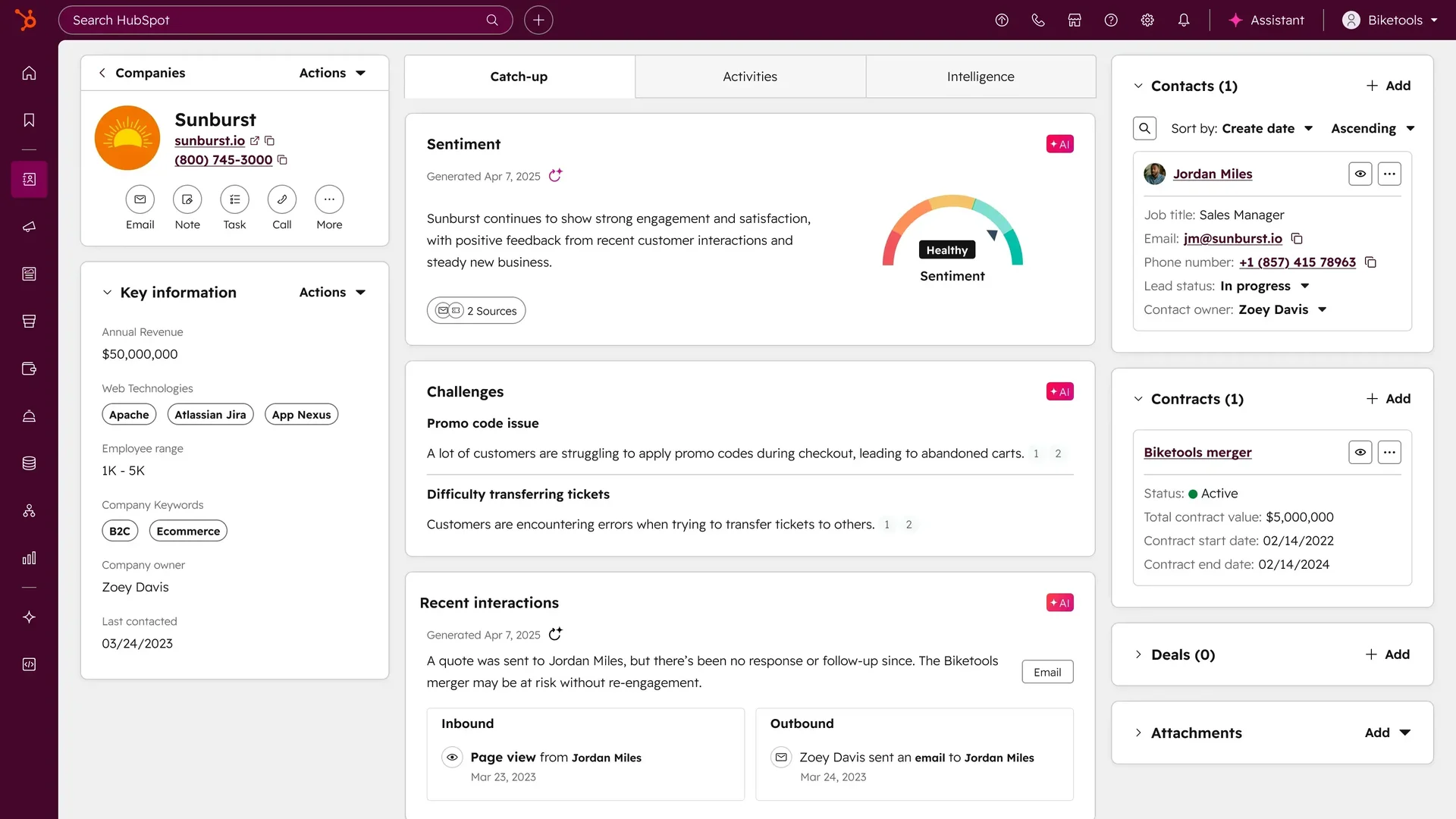
HubSpot is a CRM and customer platform that integrates with People Data Labs via third-party middleware (Clay, Zapier, or Make), giving sales and marketing teams enriched contact records, shorter lead forms, and smarter automation triggers built on PDL's professional attributes. There is no native PDL-to-HubSpot connector; all workflows run through a third-party bridge.
Key integration capabilities include:
Clay-managed enrichment pulling HubSpot active lists into Clay, running PDL enrichment, and writing fields back via Clay's native HubSpot connector
Zapier and Make event-driven enrichment triggering PDL calls on new HubSpot contact creation
Form submission enrichment appending professional context (seniority, company headcount, social profiles) to inbound leads at the moment they arrive
How HubSpot Integrates with People Data Labs
PDL has officially documented both Zapier and Make as supported integration paths, making these production-ready routes rather than undocumented workarounds. The connection runs via middleware, not a native connector.
1. Clay-Managed Enrichment Path.
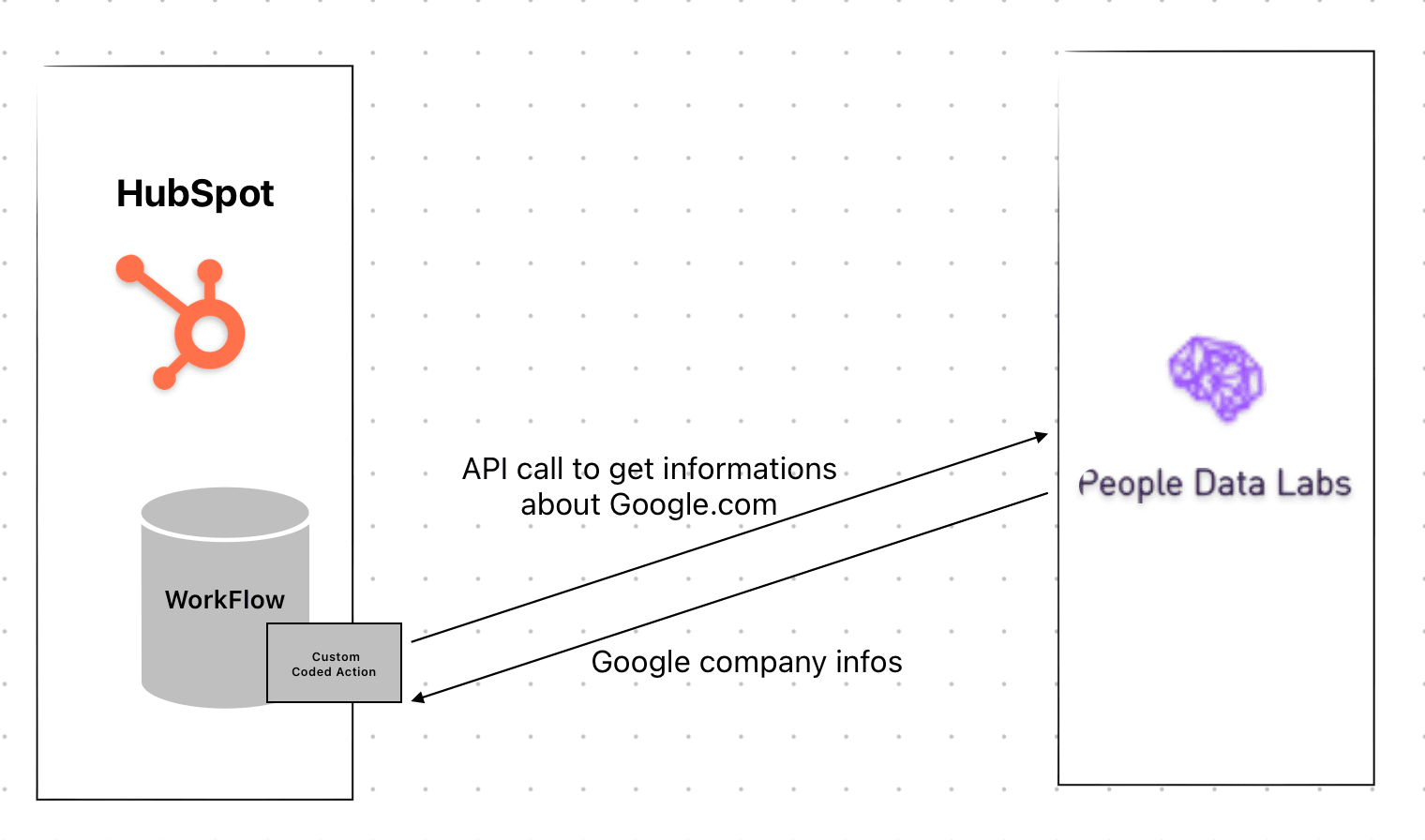
The most capable route: a team creates a HubSpot active list, syncs it to Clay, runs PDL Person Enrichment on each contact, and writes enriched fields (job title, seniority, employment history, company attributes) back to HubSpot contact properties via Clay's native connector. This handles both real-time and batch enrichment of existing contact databases.
2. Zapier and Make as Direct Alternatives.
Teams without Clay build equivalent flows in Zapier or Make. A multi-step Zap or Make scenario fires on a HubSpot trigger (new contact, form submission, list addition), calls PDL's Person Enrichment API, and maps returned fields to custom HubSpot contact properties. These paths work best for ongoing, event-triggered enrichment of new contacts rather than bulk retroactive enrichment.
3. Form Submission Enrichment.
When a prospect submits a HubSpot form, middleware passes the email address to PDL's Person Enrichment API. PDL returns seniority, current employer and title, company headcount, and social profiles, which the middleware writes to custom contact properties. The form captures only an email; PDL fills in the professional context. Reps see a qualified lead before their first outreach, and marketing workflows can segment immediately based on enriched attributes.
Source: PDL
HubSpot Pricing
HubSpot uses hybrid pricing combining flat fees and per-seat costs. Tiers relevant to PDL enrichment workflows:
Marketing Hub Professional: $890/month (3 Core Seats, 2,000 marketing contacts; workflow automation for enrichment triggers; $3,000 onboarding fee)
Marketing Hub Enterprise: $3,600/month (5 Core Seats, 10,000 marketing contacts; field-level permissions, custom objects; $7,000 onboarding fee)
Sales Hub Professional: $100/seat/month (sequences, pipeline management)
PDL costs layer on top: the Pro plan requires a minimum $100/month commitment for full field access. Middleware costs (Clay, Zapier, or Make subscription) add a third cost line.
Who Should Use the HubSpot Integration?
Mid-market teams running CRM and marketing automation in HubSpot that want PDL's professional data (seniority, employment history, company headcount) enriching contact records without a custom API build.
Marketing teams capturing leads through HubSpot forms that want professional context appended at submission time, so lead routing and nurture workflows can act on enriched attributes immediately.
Organizations using or willing to adopt Clay as an enrichment orchestration layer for the most structured and scalable PDL-to-HubSpot path.
5. Snowflake: Best People Data Labs Integration for In-Warehouse Data Access Without ETL
Source: Snowflake
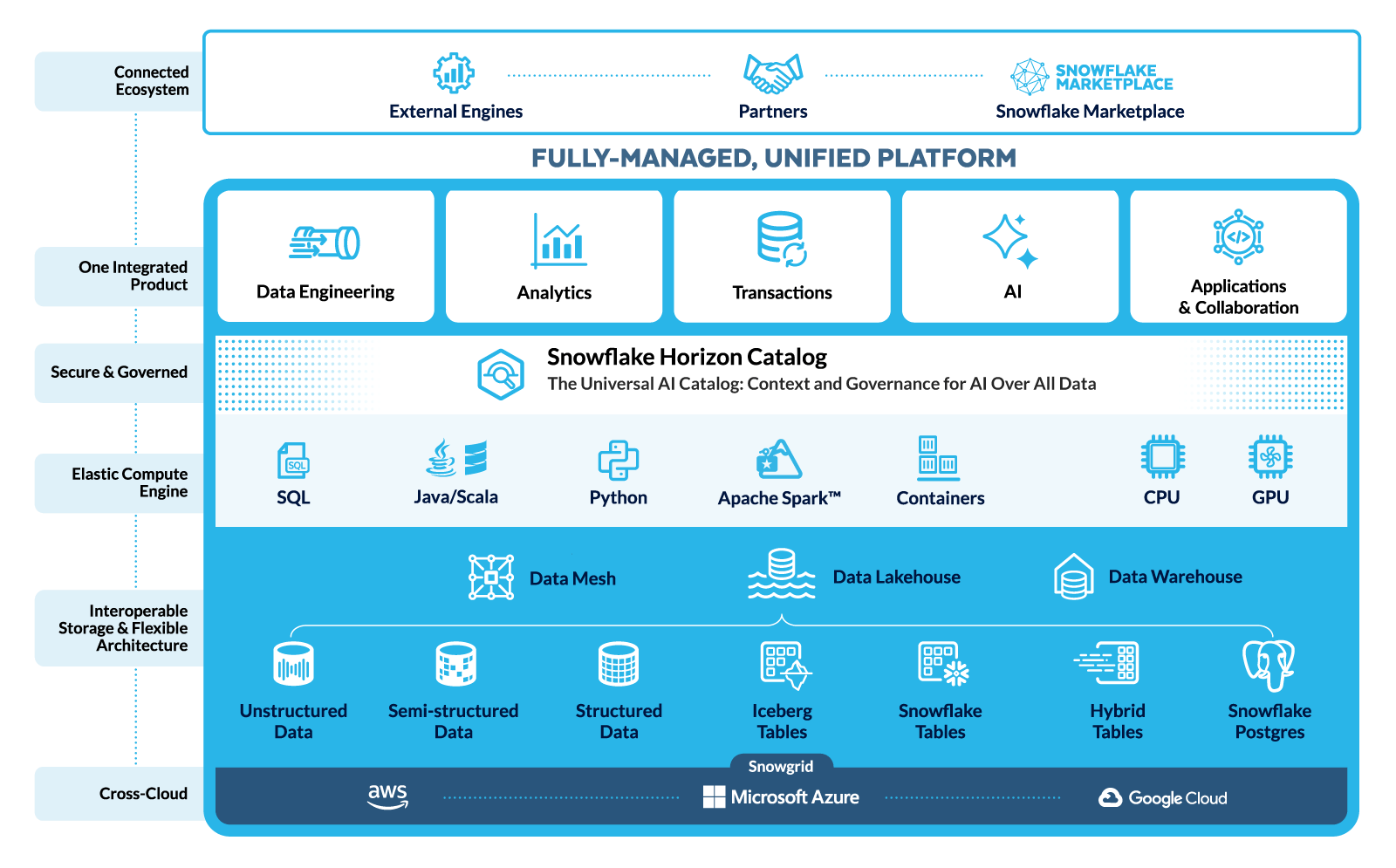
Snowflake is a cloud-native data platform that integrates with People Data Labs through the Snowflake Data Marketplace, allowing data teams to subscribe to PDL's person and company datasets and query them with standard SQL. No ETL pipelines, no file uploads, and no external API connections required. The integration uses Snowflake's Secure Data Sharing architecture.
Key integration capabilities include:
Direct Marketplace subscription with automatic monthly data refresh aligned to PDL's release cycle
Three dataset tiers: a free 22M+ global company dataset, a paid person dataset, and a paid company dataset with headcount analytics
Snowflake committed spend eligibility, meaning PDL purchases count against existing Snowflake contracts
Full SQL access alongside internal tables for JOIN-based enrichment without data movement
How Snowflake Integrates with People Data Labs
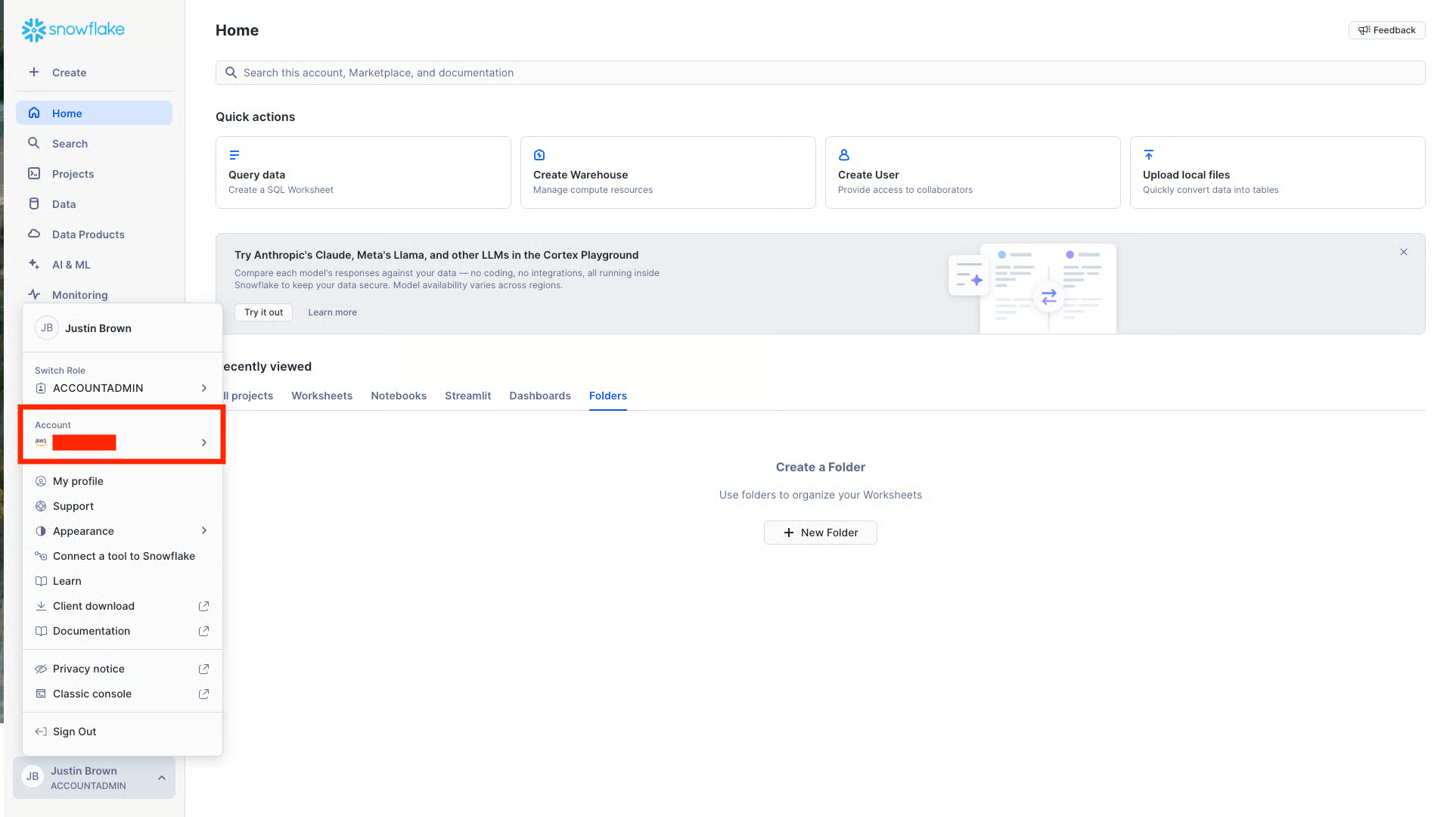
PDL lists its datasets on the Snowflake Data Marketplace, cited as a preferred delivery method. The integration is a one-time subscription: the data appears as a read-only database within the subscriber's Snowflake account, queryable immediately. The delivery mechanism uses Snowflake's Secure Data Sharing.
1. Direct Marketplace Subscription Without ETL Infrastructure.
Teams that previously accessed PDL via Data License bulk delivery (S3, GCP, Azure) needed infrastructure to move files into their warehouse and handle schema updates. The Marketplace subscription replaces all of that. Engineers write SQL queries joining PDL's person and company tables against internal CRM data without worrying about where the data lives or how to keep it current.
Source: PDL
2. Automatic Data Refresh on PDL's Monthly Release Cycle.
PDL follows a major.minor versioning cadence with monthly intermediate refreshes. Under the Marketplace subscription, updates propagate automatically. No delta files to schedule, no staging tables to rebuild. Teams querying PDL's employment data always access the current version.
3. Snowflake Committed Spend Eligible.
Enterprise teams with pre-purchased Snowflake capacity can offset PDL Marketplace costs against their existing contract, simplifying procurement. The cost flows through the Snowflake billing relationship rather than requiring a separate vendor evaluation cycle.
Snowflake Pricing
Snowflake uses consumption-based pricing measured in Snowflake Credits, with rates varying by edition (Standard, Enterprise, Business Critical) and cloud region. PDL Marketplace data does not consume storage in the subscriber's account; the primary cost is compute credits for query execution. All editions include Marketplace access.
PDL's paid dataset subscriptions carry pricing set by PDL, disclosed during the subscription flow or through PDL's sales team. The free 22M+ company dataset is available immediately for schema validation and coverage analysis at zero cost.
Who Should Use the Snowflake Integration?
Data and engineering teams already on Snowflake that want to enrich internal tables with PDL data using SQL JOINs without building a data pipeline.
Organizations with Snowflake committed spend contracts that want to apply existing capacity toward PDL data access.
Teams building analytics pipelines that need PDL's workforce data (employment history, headcount time series, talent flow) inside the same compute environment as their other data.
6. Zapier: Best People Data Labs Integration for No-Code Enrichment Across 8,000+ Apps
Source: Zapier
Zapier is a no-code workflow automation platform that connects PDL's Person and Company Enrichment APIs to over 8,000 applications, enabling non-technical teams to run PDL enrichment as a step inside any automated workflow. PDL officially documents Zapier as a supported integration, with copy-paste code samples for the most common enrichment patterns. The integration connects via Zapier's Code module with PDL API key authentication.
Key integration capabilities include:
PDL Person and Company Enrichment callable as mid-workflow action steps, accepting email, name, company domain, or LinkedIn URL
Connection to 8,000+ source and destination apps, so PDL enrichment slots between virtually any trigger and any destination
PDL-documented setup achievable in roughly three minutes using provided code samples
How Zapier Integrates with People Data Labs
The connection uses Zapier's Code by Zapier module to call PDL's REST API directly. Users authenticate with their PDL API key, paste PDL's provided code snippet, and map input fields from the trigger step. Multi-step Zaps require the Professional plan or higher. This is a native, documented integration.
1. Mid-Workflow PDL Enrichment.
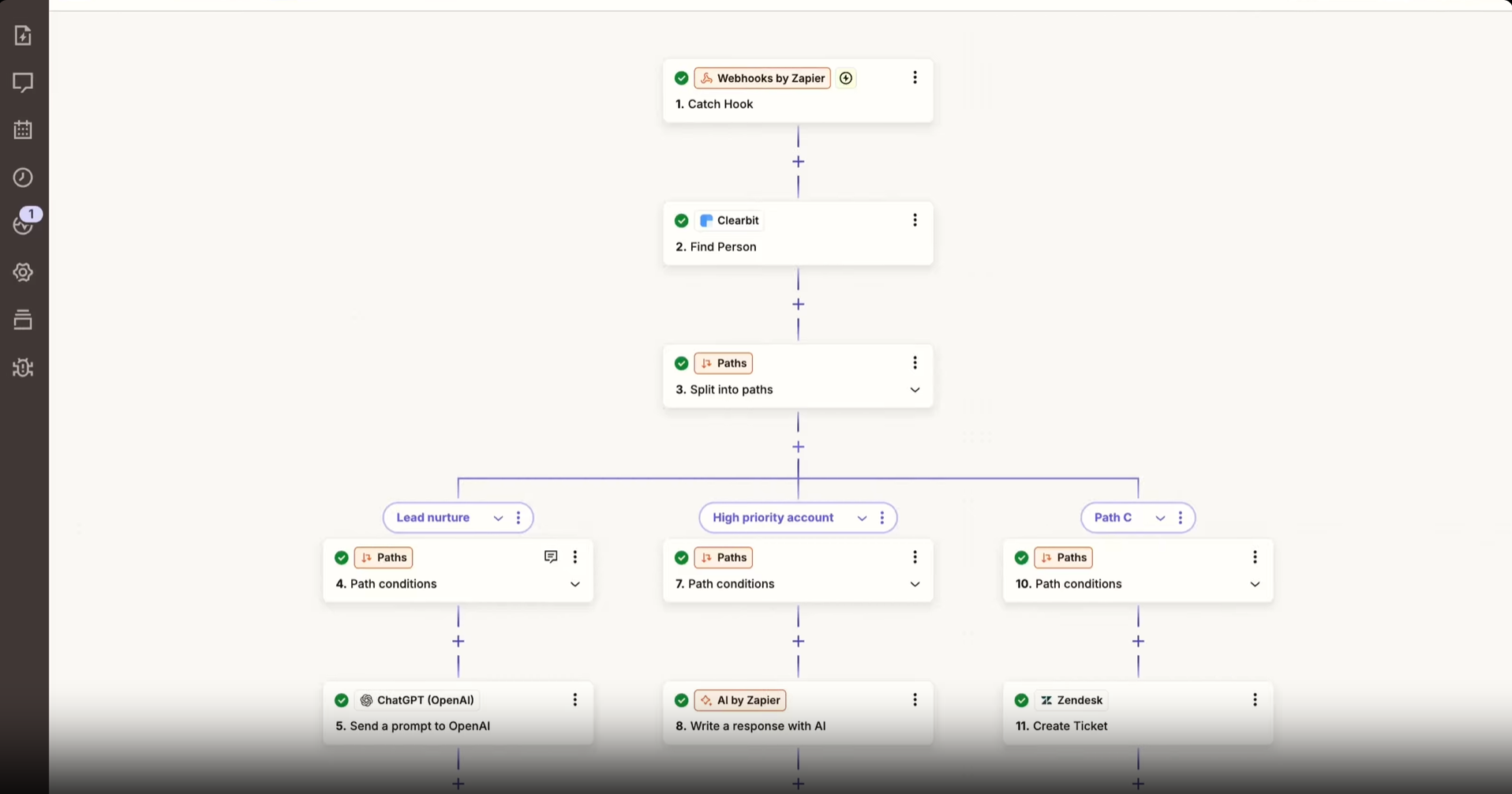
A Zap picks up a trigger event (new Google Sheets row, form submission, new CRM contact), calls PDL's Person Enrichment API in a mid-workflow step, and routes the result to a downstream destination. PDL's reference workflow demonstrates Google Sheets to PDL enrichment to Salesforce Lead creation in under three minutes of configuration.
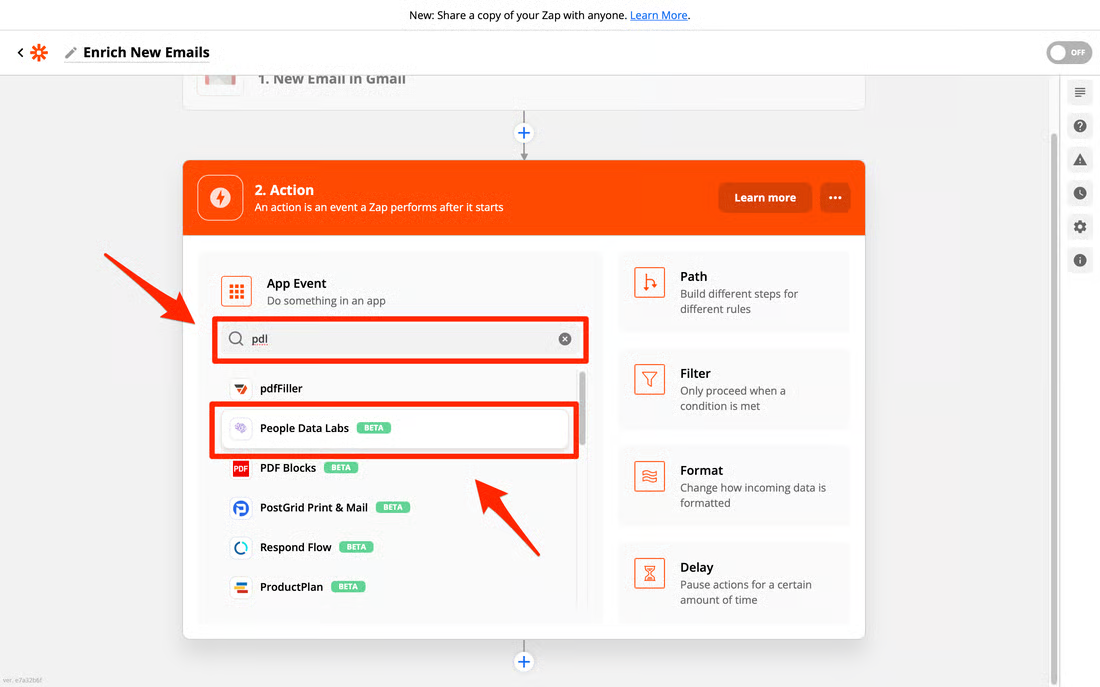
Source: PDL
2. Breadth of Trigger Sources and Destinations.
PDL enrichment becomes available wherever contact data first appears in any workflow, regardless of the source app. Typeform submissions pass emails to PDL before writing enriched records to Airtable. New HubSpot contacts trigger enrichment and write firmographic data to custom properties. The same logic applies across 8,000+ connected apps.
3. No-Code Configuration with PDL Code Samples.
PDL provides copy-paste code for Person Enrichment by email and Company Enrichment by domain. The setup requires reading the snippet and mapping one or two fields from the trigger, not writing custom API integration logic from scratch.
Zapier Pricing
Zapier uses task-based pricing where each action step counts as one task:
Free: $0/month (100 tasks, 2-step Zaps only; not compatible with PDL enrichment via Code module)
Professional: From $29.99/month (750 tasks; multi-step Zaps, Code by Zapier, Paths, Formatter)
Team: From $103.50/month (2,000 tasks; shared workspace, SAML SSO)
Enterprise: Custom pricing (unlimited seats, SCIM, admin controls)
PDL credits and Zapier tasks are separate cost lines. Both platforms charge per successful call.
Who Should Use the Zapier Integration?
Non-technical teams (RevOps, marketing ops, sales ops) that need PDL enrichment reaching apps in their stack without engineering involvement.
Teams processing event-driven enrichment (new form submissions, new CRM records) rather than bulk warehouse-scale operations.
Organizations where Zapier is already in the stack and adding PDL as a Zap step is lower-friction than deploying a new integration tool.
7. Databricks: Best People Data Labs Integration for ML-Scale Talent Intelligence and Investment Research
Source: Databricks
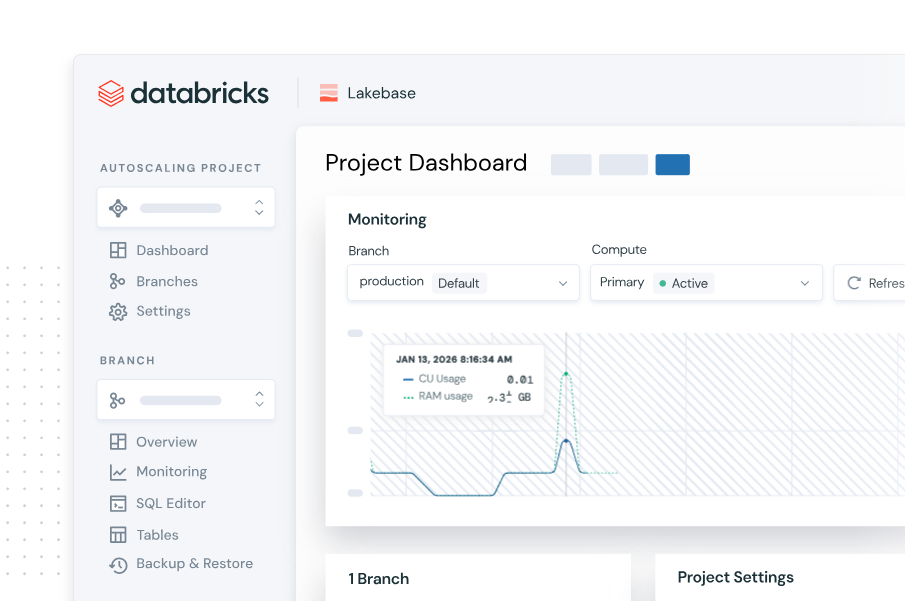
Databricks is a Data and AI platform that integrates with People Data Labs through the Databricks Marketplace via Delta Sharing, giving data science teams live access to PDL's person and company datasets inside Spark environments. PDL lists Databricks as a preferred delivery channel alongside Snowflake.
Key integration capabilities include:
PDL datasets surfacing as Spark DataFrames in notebooks, ready for SQL analytics and ML training pipelines with no ingestion step
Company headcount analytics (growth rates, churn rates, executive hires and departures, inferred revenue) joinable with internal data
PDL's free company dataset available via Delta Sharing at zero cost as an evaluation entry point
How Databricks Integrates with People Data Labs
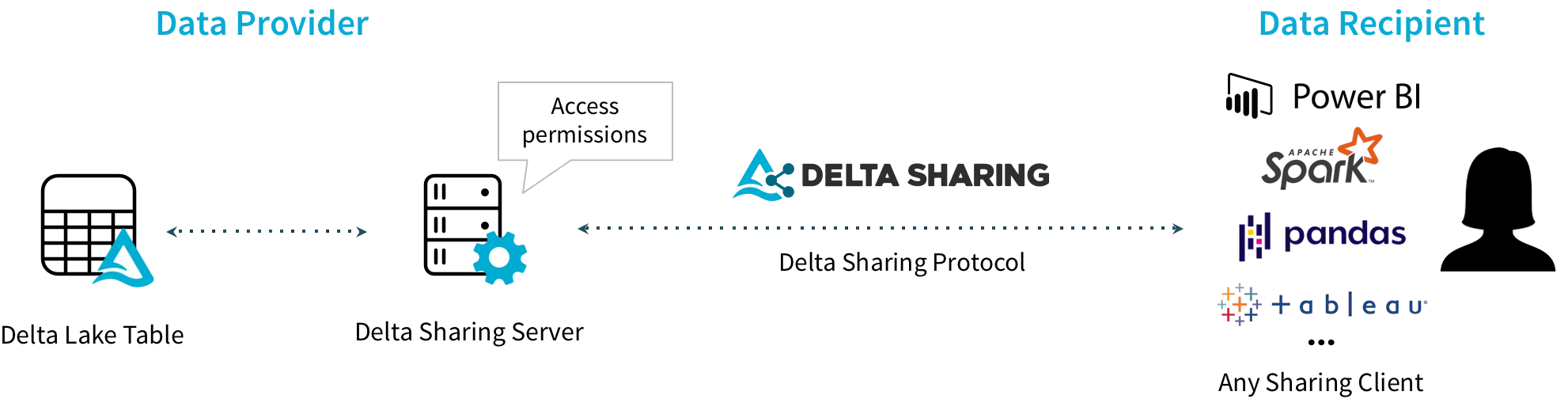
The integration runs through Delta Sharing, an open protocol that grants live, governed read access without copying data into the subscriber's storage. Setup requires a Databricks workspace with Marketplace access and a PDL data license for paid datasets. The delivery mechanism is a Databricks Marketplace listing.
1. Delta Sharing: Live Data Access Without Replication.
PDL's datasets appear as shared tables queryable in Databricks notebooks, SQL warehouses, and ML pipelines. No ETL jobs, no S3 staging, no schema conversion. Because there is no replication step, updated PDL versions are immediately available to subscribers.
Source: Delta
2. Native Spark and Notebook Consumption.
PDL data surfaces as Spark DataFrames alongside internal datasets. A data scientist can filter PDL's 74M+ company profiles by headcount growth rate, join against an internal portfolio list, and feed the result into a gradient boosted model, all within a single notebook session.
3. Company Health Scoring and Investment Research at Scale.
PDL's workforce analytics fields (employee_count_by_month, employee_growth_rate, employee_churn_rate, recent_exec_hires, recent_exec_departures, inferred_revenue) come from person-level resume data rather than self-reported sources. In Databricks, these fields become ML feature columns for deal scoring, portfolio risk monitoring, and talent flow analysis at millions-of-records scale.
Databricks Pricing
Databricks uses consumption-based pricing measured in Databricks Units (DBUs) consumed per hour, plus underlying cloud infrastructure costs (AWS, Azure, or GCP). All platform tiers include Marketplace access. A 14-day free trial provides up to $400 in free usage credits.
PDL's paid dataset subscriptions through the Marketplace carry separate pricing from PDL. The free company dataset is available immediately at zero cost for evaluation.
Who Should Use the Databricks Integration?
Data science and ML engineering teams that need to train models or run analytics against PDL's workforce data inside their existing Databricks environment without building an ingestion pipeline.
Investment research and PE firms running company health scoring, deal sourcing, or talent flow analysis that requires joining PDL's headcount and executive movement data against internal portfolio data at scale.
Teams evaluating PDL's data quality before committing: the free company dataset in the Marketplace provides a no-cost, no-pipeline entry point.
8. Make: Best People Data Labs Integration for Visual Multi-Branch Workflow Automation
Source: Make
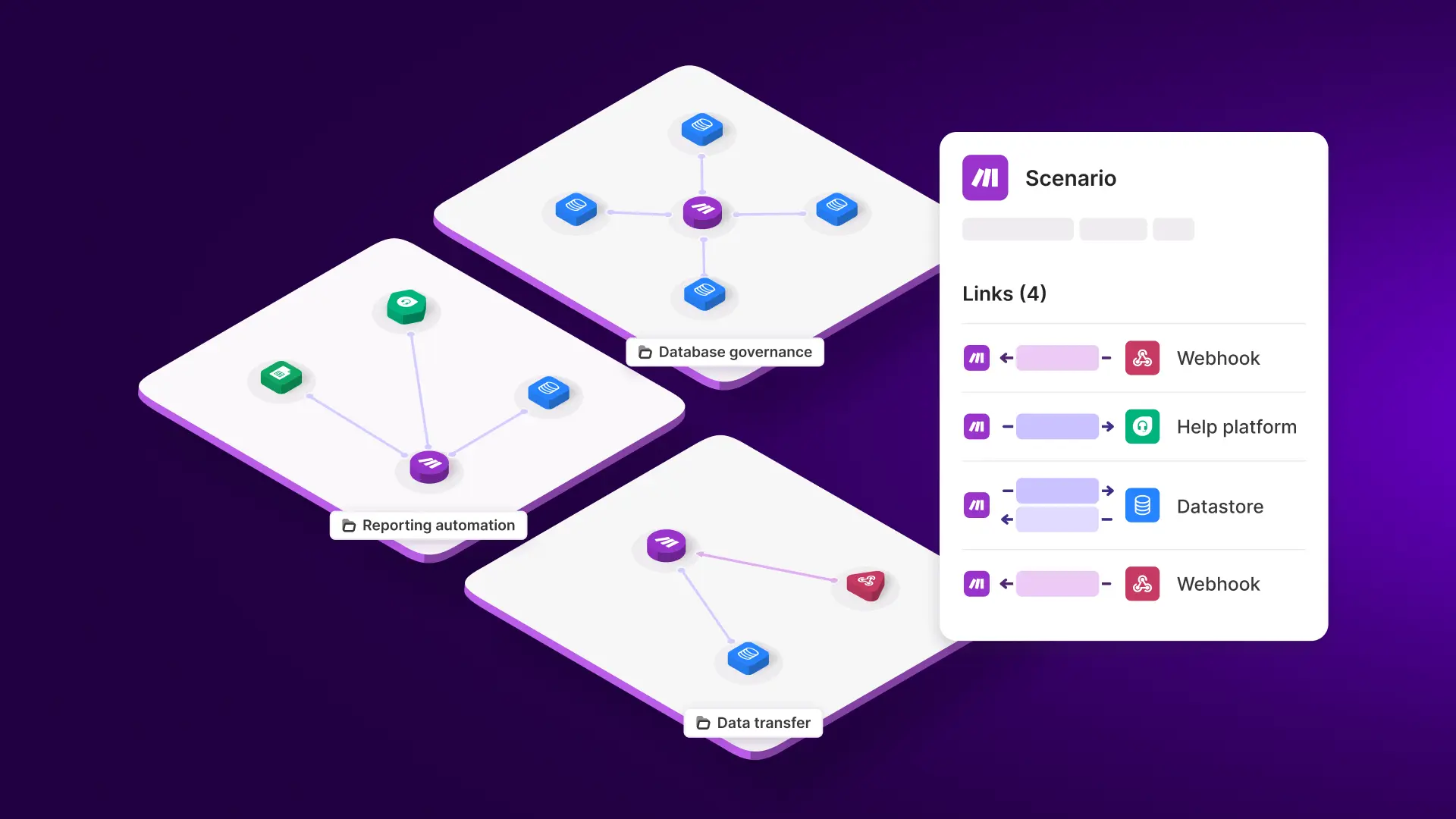
Make is a visual automation platform that integrates with People Data Labs through four native PDL modules, routing enriched person and company data through conditional branching scenarios without writing code. PDL officially documents Make as a supported integration, making it one of only two no-code platforms with maintained PDL documentation alongside Zapier. The integration is a native Make connector.
Key integration capabilities include:
Four dedicated PDL modules: Match Input Data to a Single Person, Match Input Data to a Single Company, Match Input Data to Multiple People or Companies, and Make an API Call
Visual conditional routing that branches records after enrichment, directing matches into CRM pipelines and failed matches into manual review queues
Pre-built scenario templates connecting PDL to Salesforce, Notion, LinkedIn, and Webflow
How Make Integrates with People Data Labs
Make ships native PDL modules that eliminate the HTTP-module configuration required by platforms without a dedicated connector. Users authenticate with their PDL API key in Make's interface, and PDL enrichment becomes a drag-and-drop module on the visual scenario canvas.
1. Four Native PDL Modules.
The single-person and single-company modules map to PDL's Person and Company Enrichment APIs. The multi-entity module handles batch enrichment via Iterator loops. The Make an API Call module serves as a passthrough to any PDL endpoint, including the Search API with Elasticsearch DSL queries or the IP Enrichment endpoint.
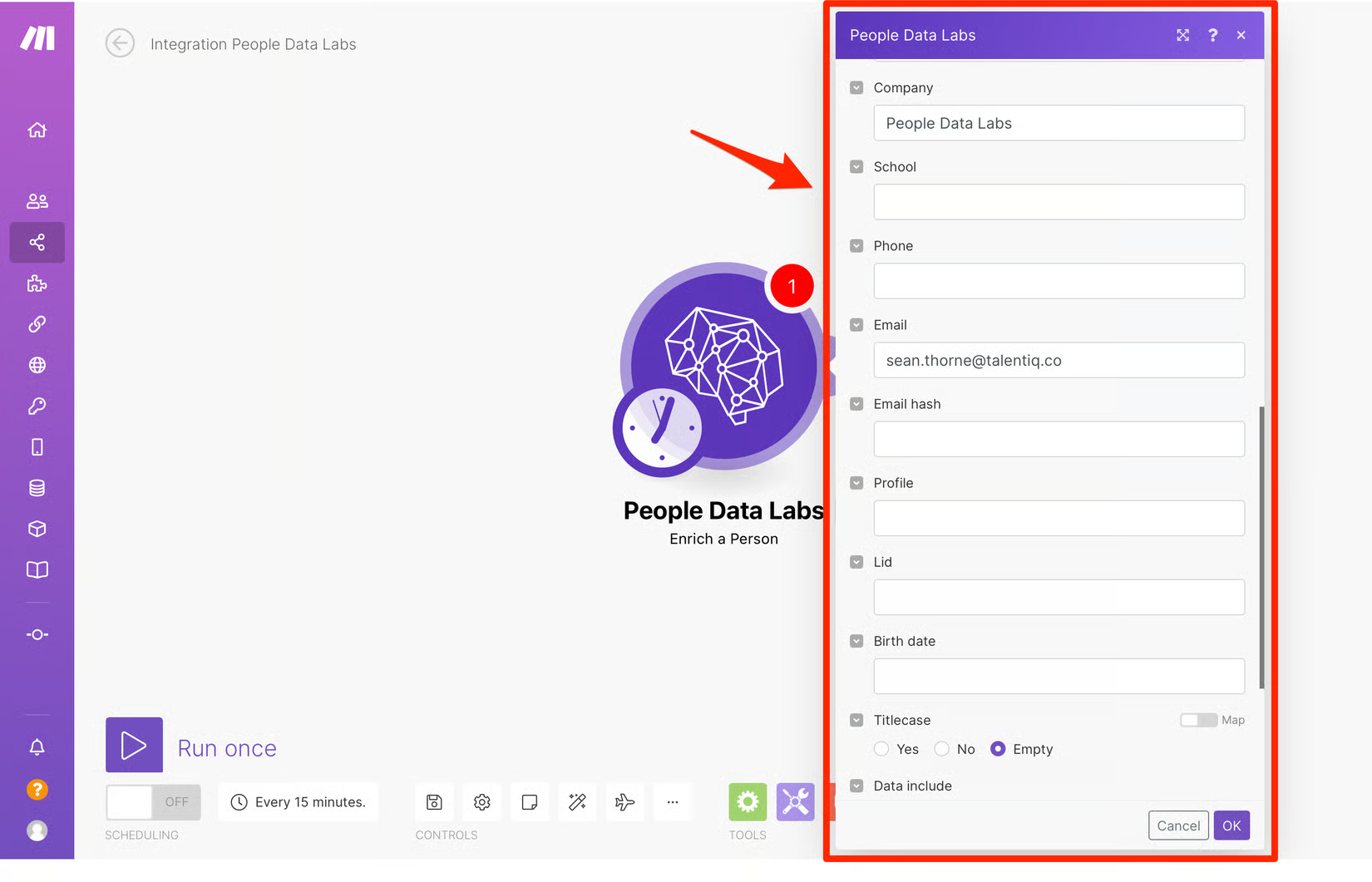
Source: PDL
2. Visual Conditional Routing After Enrichment.
Make's Router module builds branching paths after a PDL enrichment step. Records where PDL returns a match flow into a Salesforce branch; records with no match route to a Notion database flagged for manual review and a Slack notification to the data team. This handles the reality that match quality varies across records and different downstream treatments are needed for different outcomes.
3. Pre-Built Templates and Official Documentation.
Make ships PDL integration templates for common workflows. PDL maintains an official Make integration guide in its developer hub. Both teams own their documentation, so schema updates show up in the native modules rather than silently breaking a custom HTTP configuration.
Make Pricing
Make uses credit-based pricing where each module execution consumes credits. Most standard operations cost one credit per action. PDL modules are available on all plan tiers including Free.
Free: $0/month (1,000 credits, 2 active scenarios, 15-minute minimum interval)
Core: $10.59/month (10,000 credits, unlimited scenarios, 1-minute interval, API access)
Pro: $18.82/month (10,000 credits, priority execution, custom variables)
Teams: $34.12/month (10,000 credits, team roles, parallel execution)
Enterprise: Custom pricing (on-prem agent, audit logs, SSO)
A PDL enrichment scenario that reads a contact, enriches via PDL, routes to a CRM, and sends a Slack alert consumes approximately four credits per record.
Who Should Use the Make Integration?
Teams needing conditional routing after PDL enrichment: directing matched contacts into CRM pipelines and failed matches into fallback workflows within a single visual scenario.
RevOps and data ops teams that can map fields and configure API keys but lack developer resources for custom-coded enrichment pipelines.
Organizations whose enrichment workflows connect to multiple destination systems (Salesforce, Notion, Slack, Webflow) in the same run, with branching logic governing which records go where.
Final Verdict
The best People Data Labs integrations move PDL's data from an infrastructure layer into the systems where your team acts:
ZoomInfo: AI-driven GTM intelligence and execution, combining PDL's person-level depth with buyer intent signals, verified contacts, and GTM Studio's orchestration
Clay: no-code waterfall enrichment stacking PDL alongside 150+ providers with direct CRM passthrough
Salesforce: native, no-code CRM enrichment with trigger-on-creation and scheduled refresh
HubSpot: middleware-routed enrichment via Clay, Zapier, or Make for marketing automation and lead qualification
Snowflake: SQL-queryable PDL datasets inside your warehouse with automatic monthly refresh and committed spend eligibility
Zapier: no-code enrichment reaching 8,000+ apps through event-driven workflows
Databricks: ML-scale access to PDL's workforce data for company health scoring, investment research, and talent analytics
Make: visual multi-branch workflows routing PDL-enriched records conditionally across multiple destinations
These integrations also compound: you might run ZoomInfo for GTM intelligence and execution, Clay for waterfall enrichment and CRM sync, and Snowflake for warehouse-scale analytics simultaneously, each using PDL data through the delivery channel that fits the use case.
If you're connecting PDL to your GTM stack and choosing where to start, start with the intelligence and execution layer that turns enrichment into pipeline. ZoomInfo's data connector in the App Marketplace lets GTM Studio combine PDL's person-level depth with buyer intent signals, verified contact data, and AI-driven play execution. ZoomInfo Lite is a permanent free tier, so you can explore the platform before committing.
Frequently Asked Questions
How many integrations does People Data Labs support?
People Data Labs delivers data through REST APIs with official SDKs in five languages (Python, JavaScript, Ruby, Go, Rust), native integrations with Snowflake Marketplace, Databricks Marketplace, and Salesforce, and documented no-code connectors for Zapier and Make. Bulk Data License Feeds support delivery via AWS S3, GCP, Azure, Snowflake, and direct download. Beyond these documented paths, any system that can make HTTP requests can call PDL's REST API directly.
Does People Data Labs have a free plan?
PDL offers a permanent free tier with 100 monthly credits and no credit card requirement. However, contact data fields (work email, personal emails, phone numbers, and granular location) are returned as True/False flags rather than actual values on the free plan. Full field access requires the Pro plan with a minimum $100/month commitment. A separate sandbox environment provides synthetic test data at zero credit cost for integration development.
What is the difference between PDL's API and Data License delivery?
PDL's APIs handle real-time, transactional enrichment: look up one person or company at a time (or up to 100 in bulk), pay per successful match, and get immediate JSON responses. The Data License delivers the full dataset (or custom subsets) via S3, Snowflake, GCP, Azure, or direct download for teams needing warehouse-scale access without per-call billing. Use the API for enrichment pipelines and product integrations; use the Data License for analytics, ML training, and environments where the full dataset needs to live alongside internal data.
How does PDL's per-match pricing work?
PDL charges one credit per successful API call: if PDL returns a matching profile, a credit is consumed; if no match is found, no credit is charged. For Search API calls, one credit is consumed per profile returned (a single request returning 50 results uses 50 credits). Customers can further control costs using the "required" parameter, which specifies which fields must be non-null for a result to count as a billable match. Autocomplete and Cleaner API calls are complimentary for all customers.
Can I connect People Data Labs to tools that are not natively integrated?
Yes. PDL's REST API accepts standard HTTP requests from any system, and all five official SDKs simplify integration for common programming languages. For no-code solutions, Zapier connects PDL to 8,000+ apps, and Make extends connectivity to 3,000+ apps with visual branching logic. Teams building custom integrations can also use PDL's webhooks (Enterprise plan) for push-based notifications when person records change.
How often is People Data Labs data updated?
PDL follows a major.minor versioning cadence: major dataset releases quarterly, with monthly intermediate refreshes. The platform tracks over 300 million job updates with 17 million job changes globally per quarter. Snowflake and Databricks Marketplace subscribers receive updates automatically. API users always query the current dataset version. Data License customers receive standard quarterly updates, with monthly updates available at additional cost. A Person Changelog API tracks individual record changes over time.
Is People Data Labs data compliant with GDPR and CCPA?
PDL holds ISO 27001 certification and SOC 2 Type 2 attestation, adheres to NIST 800-53r5 standards, and conducts quarterly external penetration testing. All data is encrypted at rest and in transit using FIPS 140-2 compliant algorithms. PDL provides a Privacy Center with opt-out, portability, correction, and deletion forms, a Subject Request API for programmatic GDPR/CCPA processing, and an Acceptable Data Use Policy prohibiting FCRA-covered purposes including credit eligibility, employment screening, and law enforcement use.
What is the best way to combine People Data Labs data with GTM intelligence for pipeline execution?
Integrating PDL with a GTM intelligence platform that adds buyer intent signals, verified contact data, and AI-driven execution turns raw enrichment into actionable pipeline. ZoomInfo's native data connector in its App Marketplace enriches GTM Studio audiences with PDL's employment history, education, and social profile data alongside ZoomInfo's own 500 million contacts, buyer intent signals from 210 million IP-to-Organization pairings, and technographic intelligence covering 30,000+ technologies. GTM Studio then executes AI-driven plays against the combined dataset across email, ads, calls, and direct mail, turning PDL's data depth into prioritized, multi-channel outreach without manual data stitching.
Related guides worth a look:
