
Treasure Data (now Treasure AI) is an enterprise customer data platform that earned Gartner MQ Leader for CDPs, the Forrester Wave for CDPs (B2C), and the IDC MarketScape for CDPs (B2C) in the same year. With 400+ enterprise customers, billions of unified profiles, and a platform it now calls an Agentic Experience Platform, Treasure Data gives B2C marketing teams the data layer their go-to-market strategies depend on.
But a CDP only captures value when it connects to the rest of your stack.
Treasure Data collects, unifies, and resolves customer identities across hundreds of sources through its Diamond Record. On its own, it cannot generate the verified B2B contact data your sales team needs, run cross-channel messaging campaigns, query your data warehouse without moving data, or optimize paid media spend based on customer lifetime value scores. Those capabilities live in the tools around it.
The right integrations close those gaps. They feed your CDP data it can't generate alone, activate segments across every channel, connect your warehouse without copying data, and turn behavioral signals into campaigns.
This guide covers the strongest integration for each of the jobs Treasure Data users most commonly need done:
Enrich your customer and prospect data with verified B2B intelligence, buyer intent signals, and company context
Unify CRM deal-stage records with behavioral customer profiles for a single view of each account
Activate AI-built behavioral cohorts across email, push, SMS, and in-app messaging
Query and segment against your data warehouse without moving data out of its governed environment
Push CDP-powered audience segments directly into Meta's paid social campaigns
Bring in-product behavioral event data into unified customer profiles for full-lifecycle segmentation
Stream real-time e-commerce events and transaction history into the CDP for retail personalization
Each section walks through how the integration connects with Treasure Data, what data flows between the platforms, pricing, and who benefits most.
Best Treasure Data Integrations at a Glance |
|---|
Best Treasure Data Integration for B2B Data Enrichment and Go-to-Market Intelligence Enriches Treasure Data customer profiles with verified B2B contact data, buyer intent signals, and company intelligence, connecting Treasure Data's consumer behavioral data with the B2B intelligence your sales and ABM teams need. |
Best Treasure Data Integration for CRM and CDP Data Unification Merges deal-stage CRM records, account ownership, and opportunity data into Treasure Data's Diamond Record profiles, while exporting enriched behavioral data back to Salesforce so both systems share a single, current view of every customer. |
Best Treasure Data Integration for Omnichannel Campaign Activation Pushes AI-built behavioral cohorts, predicted churn scores, and LTV tiers from Treasure Data into Braze for cross-channel campaigns across email, mobile push, in-app messaging, SMS, and messaging apps like LINE and KakaoTalk. |
Best Treasure Data Integration for Zero-Copy Enterprise Warehouse Activation Lets Treasure Data run audience segmentation against live Snowflake tables through Live Connect, eliminating ETL pipelines and data duplication while preserving the warehouse's governance and compliance controls. |
Best Treasure Data Integration for Paid Social Audience Activation Exports Diamond Record customer segments to Meta's ad platform for suppression, lookalike seeding, and targeted acquisition campaigns across Facebook and Instagram's 3.56 billion daily active users. |
Best Treasure Data Integration for In-Product Behavioral Intelligence Imports in-product behavioral events into Treasure Data's unified profiles, enabling full-lifecycle segments that combine feature usage patterns with purchase history, CRM records, and cross-channel engagement data. |
Best Treasure Data Integration for Real-Time E-Commerce Event Streaming Streams real-time cart, purchase, and browse events into Treasure Data while batch-importing historical order data, giving retail brands the transaction data they need for LTV modeling, abandonment recovery, and purchase-based personalization. |
What Is Treasure Data?
Treasure Data (rebranded to Treasure AI in April 2026) is an enterprise customer data platform that unifies customer data from digital, physical, online, and offline sources into a single, governed profile.
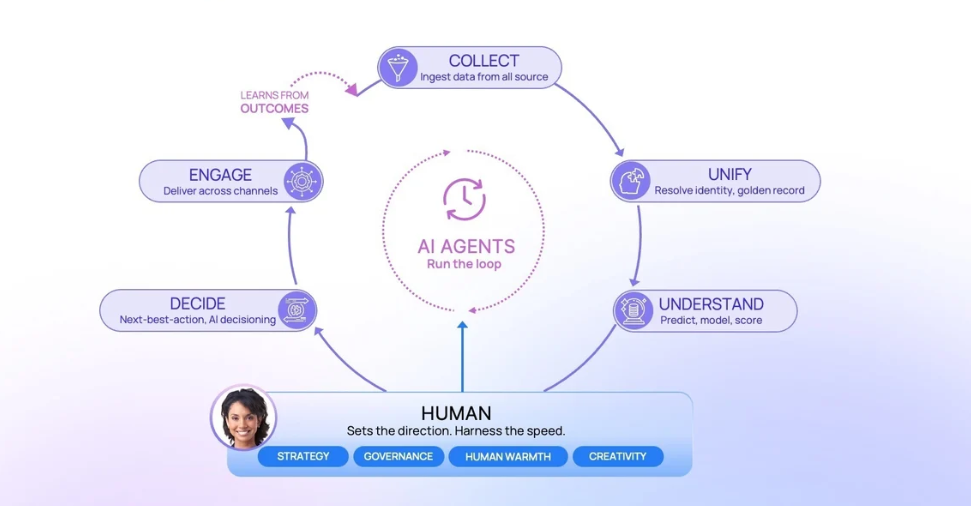
The company calls itself an "Agentic Experience Platform for Modern Marketers", built on a Customer Intelligence Loop that collects, unifies, analyzes, decides, and acts, with AI agents running continuously instead of humans clicking through tools weekly. With over 400 enterprise customers including Sony, Nestle, AB InBev, Honda, Fujitsu, and Subaru, Treasure Data serves large global brands across automotive, CPG, entertainment, financial services, retail, and travel.
Source: Treasure AI
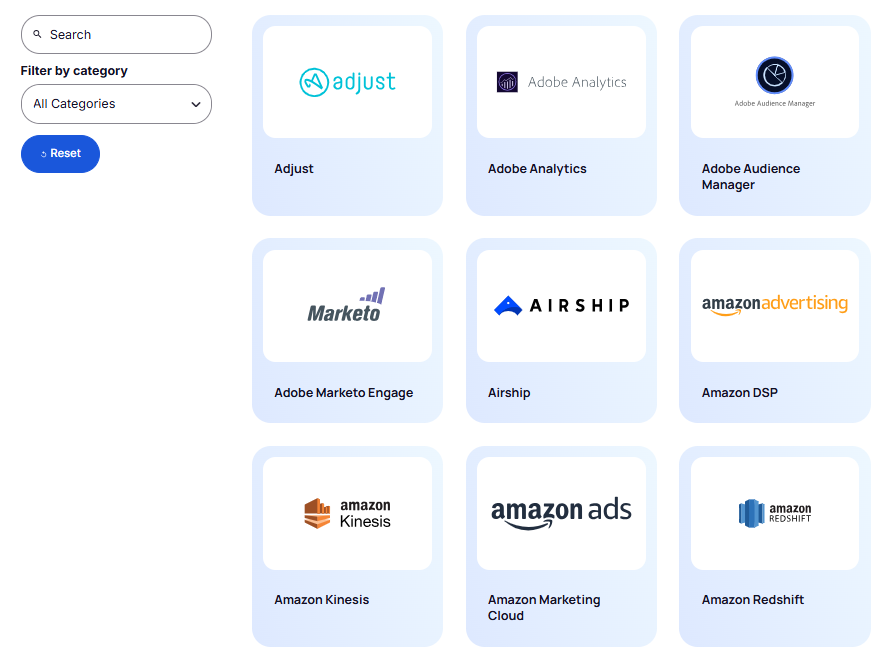
The integration catalog houses 400+ data integrations spanning CRM, marketing automation, data warehouses, analytics tools, advertising platforms, streaming event pipelines, and e-commerce systems. An in-house engineering team maintains all integrations, and the company commits to building custom connectors within 6-8 weeks for any gap.
Source: Treasure AI
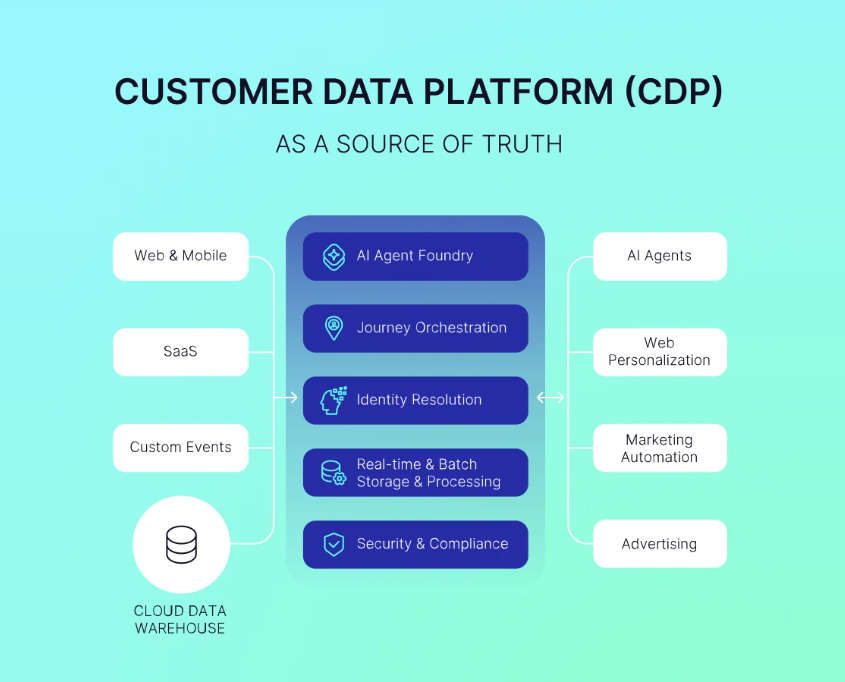
Treasure Data exposes REST APIs covering bulk data imports, database management, job scheduling, audience management, journey orchestration, workflow automation, and an LLM API for AI capabilities. The platform supports both a Complete CDP (fully managed) and a Composable CDP that layers on top of an existing data warehouse with zero-copy integration.
Source: Treasure AI
The integration categories available to Treasure Data users include:
CRM and sales data: Salesforce, HubSpot, SAP, Oracle Eloqua, Marketo
Cross-channel campaign execution: Braze, Iterable, Klaviyo, Sailthru, SendGrid
Data warehouses and cloud platforms: Snowflake, BigQuery, Databricks, Amazon Redshift
Advertising and paid media: Facebook Custom Audiences, LinkedIn, TikTok, Pinterest, Google Ads, LINE Ads
Product analytics: Amplitude, Mixpanel, Adjust, AppsFlyer
E-commerce: Shopify, Magento, Stripe, Zuora
Streaming and event pipelines: Apache Kafka, Amazon Kinesis, Segment, Fluentd
Here are the seven integrations we selected as the best options for extending Treasure Data across the categories that matter most to enterprise marketing and data teams.
1. ZoomInfo: Best Treasure Data Integration for B2B Data Enrichment and Go-to-Market Intelligence
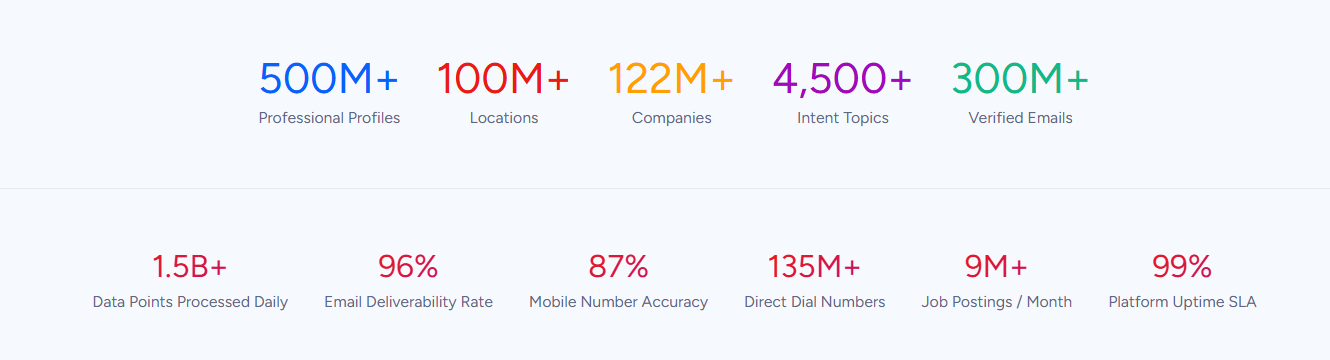
ZoomInfo is a B2B data and go-to-market platform with 500M contacts, 100M companies, 135M+ verified phone numbers, and 200M+ verified business email addresses. It connects with Treasure Data through Tray.io, a third-party automation platform, to enrich customer profiles with verified B2B data, buyer intent signals, and technographic data.
Source: ZoomInfo
Connecting the two platforms unlocks:
A CDP that carries verified B2B contact data alongside consumer behavioral profiles, so your ABM campaigns target decision-makers with accurate direct dials and business emails rather than stale CRM records
Buyer intent signals flowing into Treasure Data's segmentation layer, identifying which accounts are researching your category this week
Company data (industry, size, technographics, org charts) enriching the profiles Treasure Data's Diamond Record unifies, adding a B2B dimension the CDP cannot generate on its own
Prioritization logic powered by ZoomInfo attributes inside Treasure Data workflows, so high-value accounts surface in your activation channels first
How ZoomInfo Integrates with Treasure Data
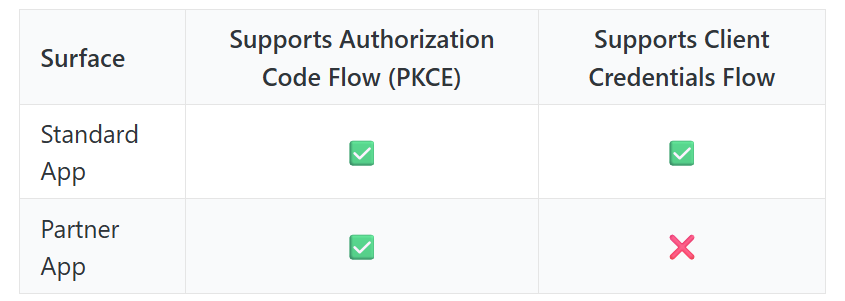
ZoomInfo connects to Treasure Data through Tray.io, an automation platform that orchestrates data flows between the two systems via their APIs. Tray handles the authentication, scheduling, and field mapping between ZoomInfo's GTM API (which uses OAuth 2.0 via Okta) and Treasure Data's TD API (which uses TD1 API key authentication).
Source: ZoomInfo
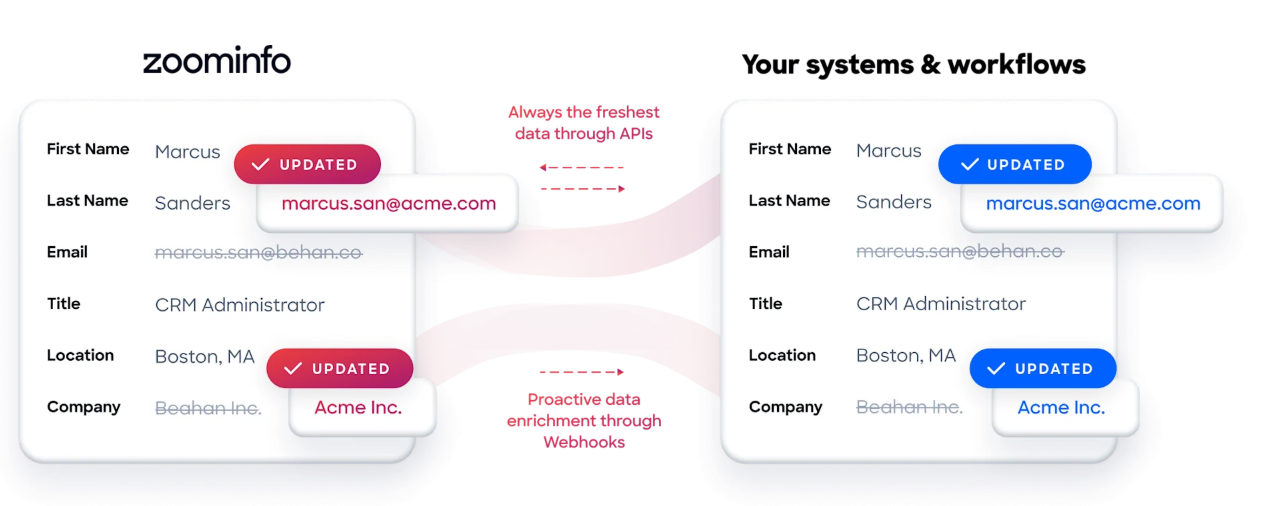
Because the connection runs through an automation layer, teams control how data flows: scheduled batches that pull ZoomInfo data into Treasure Data tables daily or hourly, event-triggered enrichment that fires when new records enter the CDP, or bidirectional workflows that push Treasure Data audiences back through ZoomInfo's search and enrich endpoints.
Contact and Company Data Enrichment: Fill the Gaps Your CDP Cannot Fill on Its Own
Treasure Data's Diamond Record unifies consumer behavioral data across touchpoints: website visits, email engagement, purchase history, app usage. What it cannot generate on its own is verified B2B data: whether a contact's phone number still works, what their current job title is, how large their company is, or what technology stack their organization runs.
ZoomInfo fills that gap. When customer records flow from Treasure Data through Tray into ZoomInfo, ZoomInfo appends verified business emails, direct dials, current titles, department and seniority data, plus company attributes and technographic data covering 30,000+ technologies. The enriched records return to Treasure Data's tables, where the Diamond Record merges them into the unified customer profile.
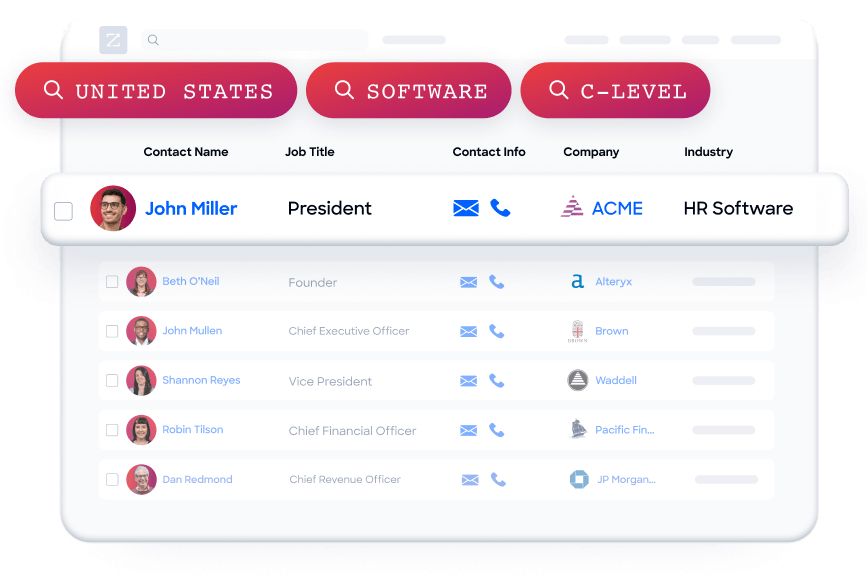
The data passes through a verification pipeline backed by 300+ human researchers, reaching up to 95% accuracy on first-party data. In a Fortune 500 competitive RFP analyzing 25 million contacts across vendors, the independent consultant concluded that "no other competitor came even close."
ZoomInfo in action: A consumer electronics brand uses Treasure Data to unify purchase and engagement data for their business accounts. Through Tray, they push 5,000 account records to ZoomInfo for enrichment, which returns verified decision-maker contacts, company attributes, and technology stack profiles.
The enriched data flows back into Treasure Data, where marketing builds ABM segments targeting IT directors at mid-market companies running a competitor's product, then activates those segments through connected channels.
Buyer Intent Data: Identify In-Market Accounts Inside Treasure Data Workflows
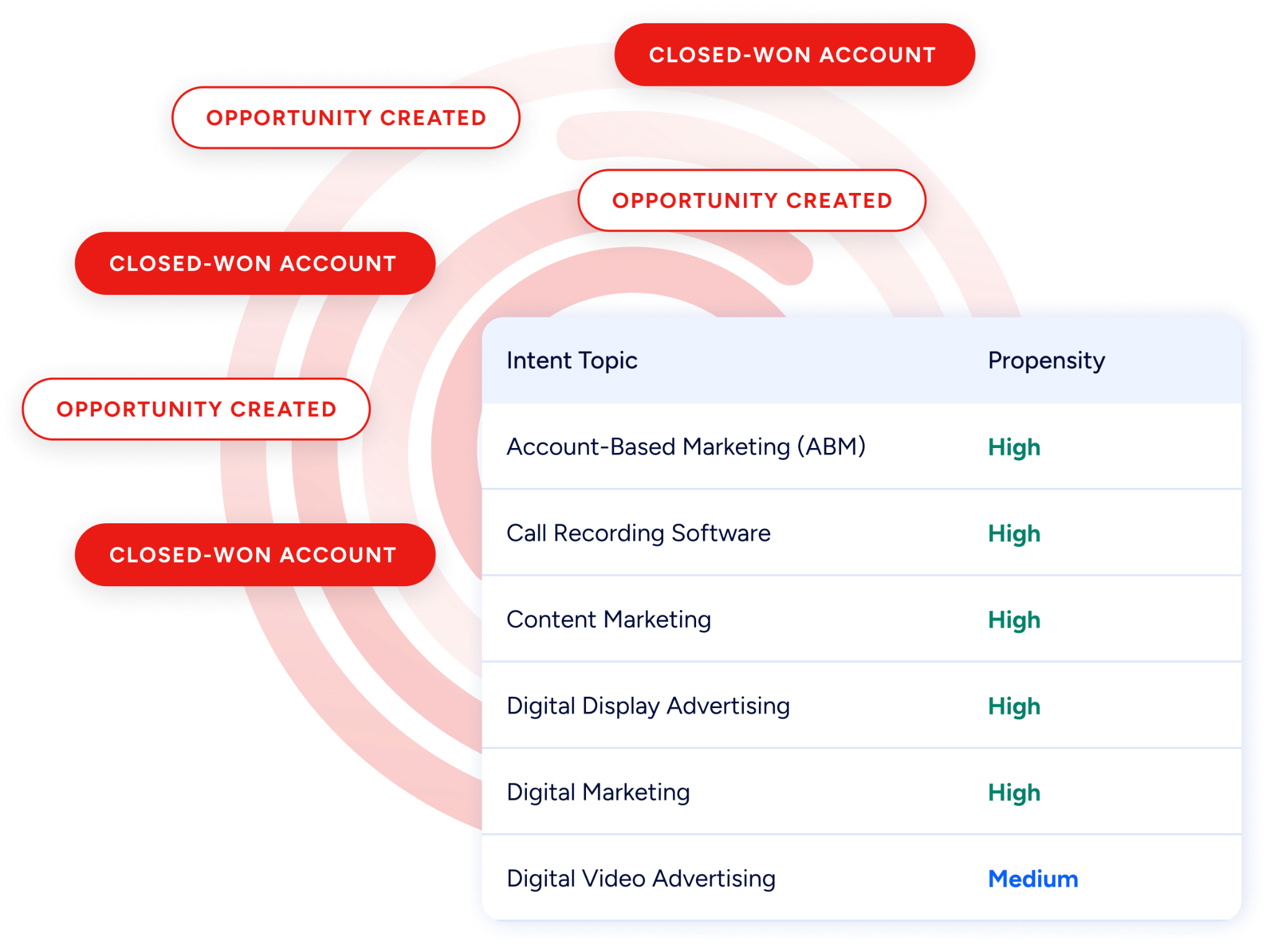
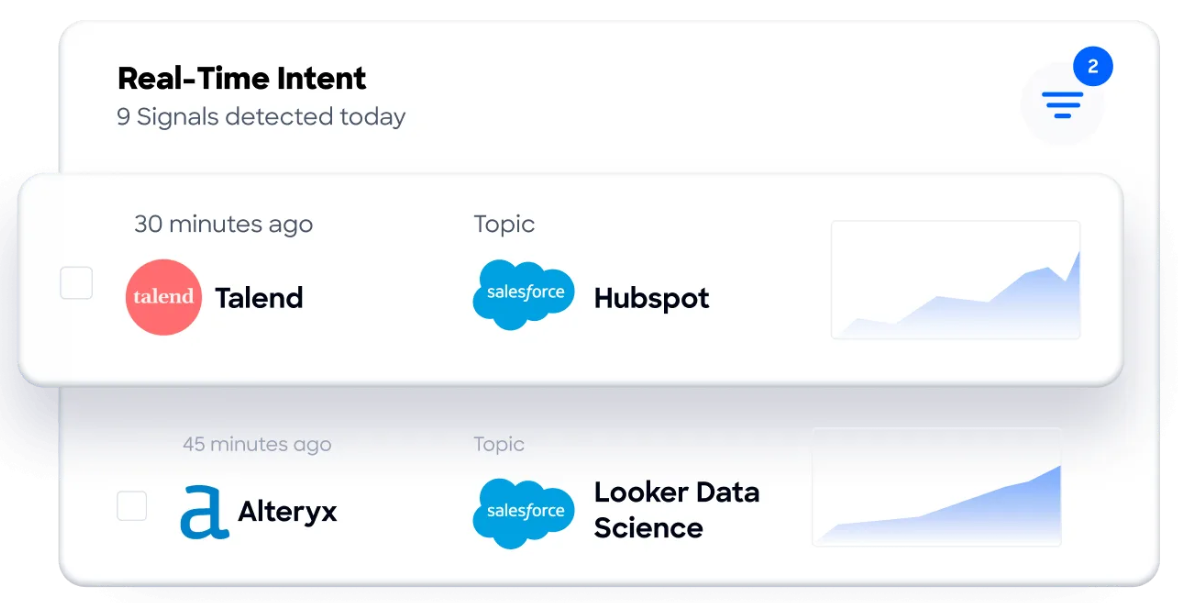
ZoomInfo's Buyer Intent tracks signals from 210 million IP-to-Organization pairings and 6 trillion+ new keyword-to-device pairings monthly, revealing which companies are researching topics relevant to your product.
Source: ZoomInfo
Through the Tray integration, intent data flows into Treasure Data tables alongside the Diamond Record's behavioral attributes. Treasure Data's segmentation engine and Treasure AI Studio can then filter, score, and activate based on intent intensity: accounts with high research activity route to nurture sequences, while accounts researching competitor solutions trigger competitive campaigns in connected channels.
Guided Intent, exclusive to ZoomInfo, identifies research topics correlated with closed deals in your business, so signals reflect your actual win patterns rather than generic keyword thresholds.
Source: ZoomInfo
ZoomInfo in action: A SaaS company uses Treasure Data as its CDP and wants to find which of its existing customers' employers are evaluating solutions in its category. ZoomInfo's intent data surfaces 200 accounts researching relevant topics.
That signal flows into Treasure Data through Tray, where it joins the Diamond Record profiles. Marketing activates a targeted campaign through Braze for contacts at those accounts, referencing specific product capabilities that address the research topics detected.
Technographic Intelligence: Filter and Score Accounts by Technology Stack
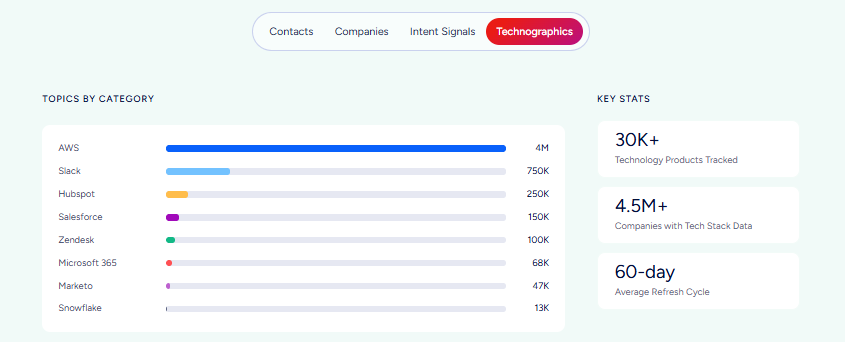
ZoomInfo profiles the tech stack of 30+ million companies, tracking 30,000+ technologies across 200+ categories. When this data enriches Treasure Data profiles through Tray, it feeds directly into segmentation and scoring.
A Treasure AI Studio query can surface all customers whose employers use a complementary technology, or flag accounts running a competitor's product that might be candidates for a migration campaign. This data updates continuously, with nearly 90% of active pairings refreshed within three months, so Treasure Data segments built on technographic filters stay current.
Seismic's sales team attributed 39% of active pipeline to opportunities identified or influenced by ZoomInfo signals, reporting 54% productivity gains and saving 11.5 hours per week per seller. (Seismic Case Study)
ZoomInfo Pricing
ZoomInfo uses a consumption-based pricing model with custom quotes based on usage, users, credit volume, and features.
The platform offers Sales, Marketing, and standalone product lines, each in Professional, Advanced, and Enterprise tiers. The Enterprise API provides the programmatic access the Tray integration requires, and all relevant plans include API access. Advanced tiers add intent signals and website visitor tracking; Enterprise adds custom intent topics, advanced workflows, and AI-generated account summaries.
Source: ZoomInfo
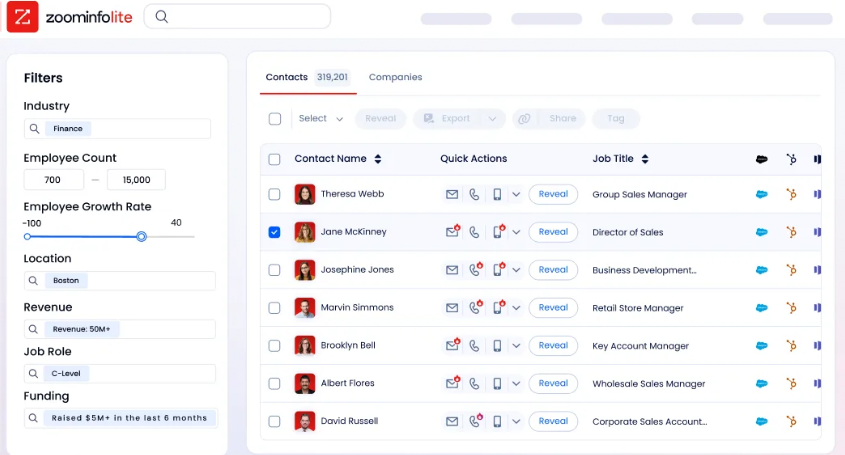
ZoomInfo Lite is a permanent free tier (no credit card, no time limit) with 10 monthly export credits, searches, the Chrome extension, and CRM integrations. A separate 7-day free trial covers paid features
including advanced intent data and AI capabilities.
Source: ZoomInfo
Tray.io pricing is separate, with custom quotes for its automation platform.
Who Should Use the ZoomInfo Integration?
B2B and hybrid B2B/B2C marketing teams whose Treasure Data CDP holds consumer behavioral data but lacks verified contact data, company attributes, and buyer intent signals that sales and ABM teams depend on
Revenue operations teams that need to enrich Treasure Data's Diamond Record profiles with technographic data, org charts, and company hierarchies so downstream segmentation reflects the full account picture
Marketing teams running account-based campaigns through Treasure Data that need to prioritize accounts showing buying signals rather than relying on static attribute lists or engagement scores alone
2. Salesforce: Best Treasure Data Integration for CRM and CDP Data Unification
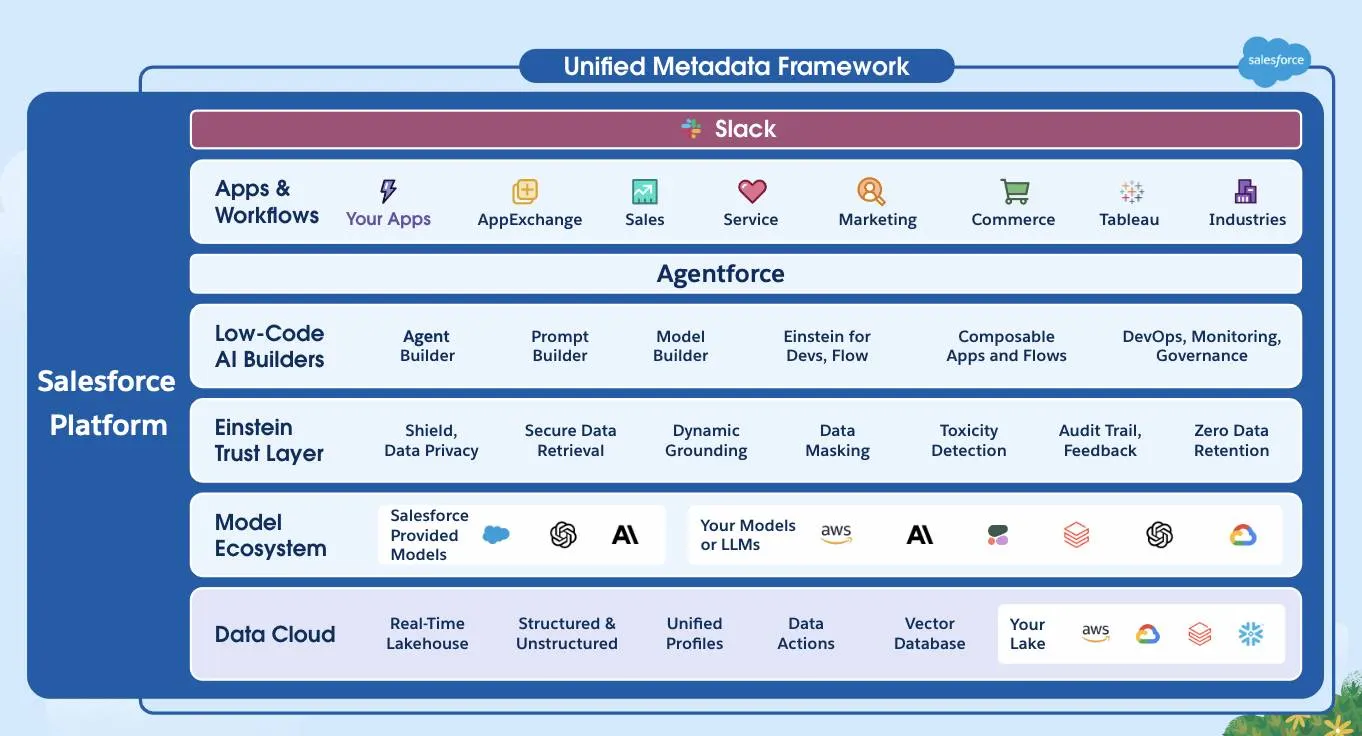
Salesforce is the world's #1 CRM by IDC revenue market share, serving over 150,000 companies worldwide. It integrates with Treasure Data through native import and export connectors to merge deal-stage CRM records into behavioral customer profiles and push enriched Diamond Record data back into Salesforce. Treasure Data's in-house engineering team maintains the connector.
Source: Salesforce
Key integration capabilities include:
SOQL-based CRM record import pulling contacts, leads, accounts, and opportunity records into Treasure Data tables with precise field selection
Bidirectional data export writing Diamond Record attributes (behavioral scores, predicted LTV, churn risk) back into Salesforce CRM records
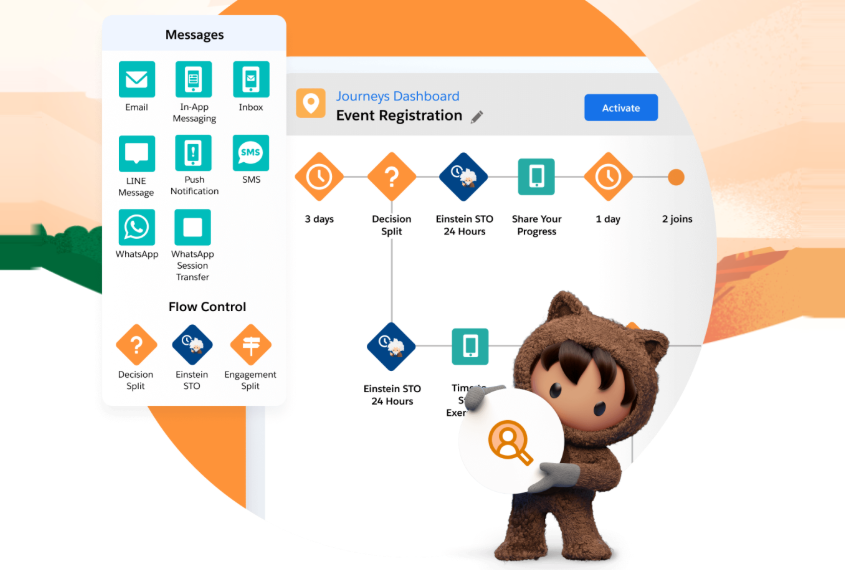
Opportunity stage-triggered journey activation using Salesforce Change Data Capture events to trigger Treasure Data journey sequences
Consent and preference sync flowing opt-in status from Salesforce into Treasure Data's governance layer
How Salesforce Integrates with Treasure Data
Treasure Data lists Salesforce as a supported import and export integration, with support for Salesforce CRM, Marketing Cloud, and Commerce Cloud. The primary path uses Treasure Data's native connector framework, authenticated via Salesforce's OAuth 2.0.
1. SOQL-Driven CRM Record Import.
The Salesforce import uses custom SOQL queries to select data, letting teams define exactly which records, fields, and relationships to pull into Treasure Data. A query can target only contacts associated with open opportunities above a certain deal value, or pull account records filtered by territory.
The result adds CRM structure (deal stage, account owner, contract history, opportunity close date) onto the behavioral profiles Treasure Data maintains through its Diamond Record. Marketers can then filter on CRM-sourced attributes alongside behavioral signals: identifying customers with open opportunities at a specific stage, or accounts whose contract renewal window is approaching.
2. Diamond Record Data Export Back to Salesforce.
Once Treasure Data has unified CRM data with behavioral signals into the Diamond Record, enriched attributes flow back to Salesforce as field values on Contact, Lead, or Account records. Predicted LTV, engagement tier, churn risk score, or last active channel surface as standard Salesforce fields, visible to reps without additional tooling.
The export runs through Treasure Data's Audience API syndications, which support scheduled exports with column mapping and destination field configuration.
3. Opportunity Stage-Triggered Journey Orchestration.
Salesforce's Change Data Capture events stream field-level changes in near real-time. When an opportunity moves to Closed Won, CDC emits an event that Treasure Data consumes via its streaming import, triggering post-purchase onboarding journeys through connected channels like Braze or the Engagement AI Suite. The handoff from sales to marketing happens in minutes rather than days.
4. Consent and Communication Preference Synchronization.
Consent status from Salesforce flows into Treasure Data's governance layer as part of the standard CRM import.
Treasure Data enforces these consent records at activation time: if a contact's Salesforce record carries an email opt-out flag, that preference is honored across every downstream channel. The governance layer (certified to ISO/IEC 27701) applies consent rules without requiring each channel to query Salesforce separately.
Source: Salesforce
Salesforce Pricing
Salesforce uses a per-user, per-month pricing model across tiered editions, billed annually:
Starter Suite: $25/user/month
Pro Suite: $100/user/month (annual required)
Enterprise: $175/user/month (annual required)
Unlimited: $350/user/month (annual required)
For the Treasure Data integration, Enterprise edition is the practical starting point: workflow automation, full API access, and Change Data Capture subscriptions are accessible without add-ons.
Who Should Use the Salesforce Integration?
Enterprise marketing teams that need CDP segments incorporating CRM context (deal stage, account owner, contract history) alongside behavioral signals, without manual data exports between teams
Organizations using Salesforce as the system of record for consent that need governance data to propagate automatically into CDP-driven activation channels
Teams whose post-sale onboarding journeys are delayed because marketing waits on manual notification from sales when deals close, and who want stage-change events to trigger Treasure Data journey sequences automatically
3. Braze: Best Treasure Data Integration for Omnichannel Campaign Activation
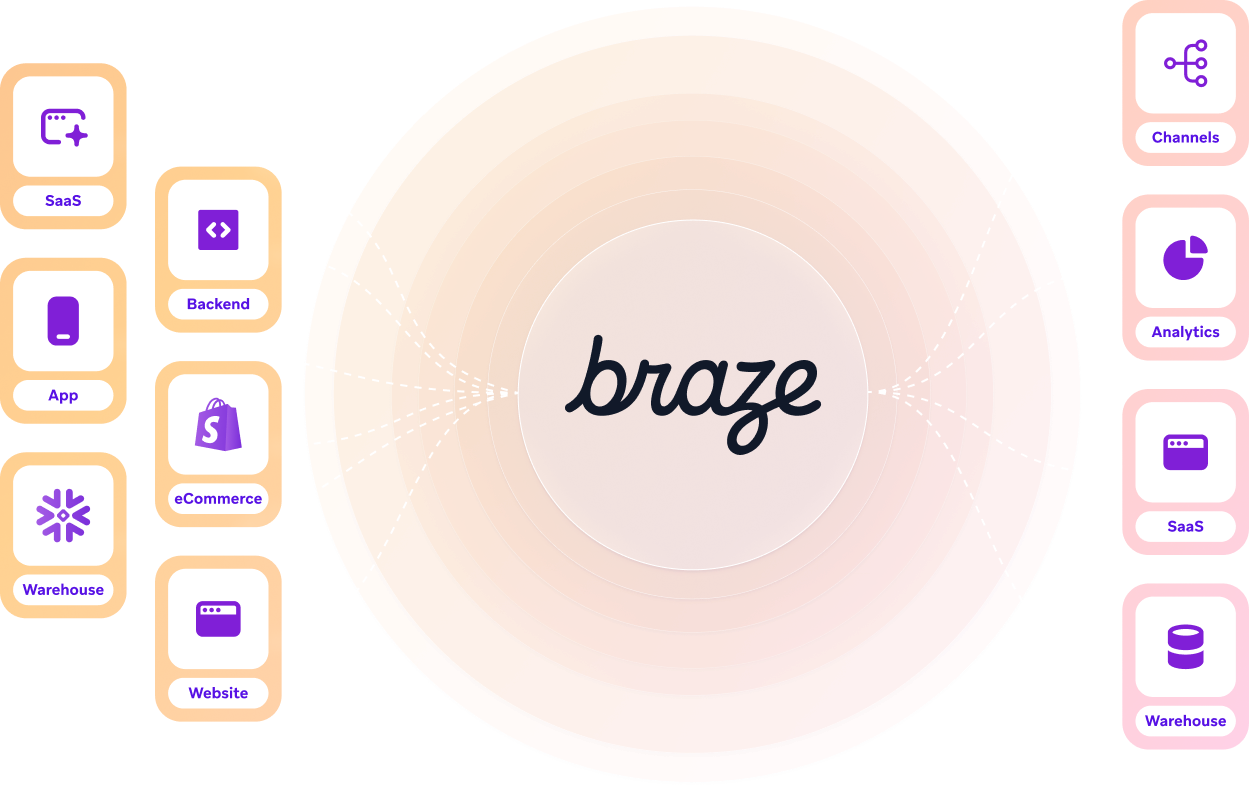
Braze is a customer engagement platform (a Gartner Magic Quadrant Leader for Multichannel Marketing Hubs three years running) that integrates with Treasure Data to push AI-built behavioral cohorts and enriched customer profiles into Braze for cross-channel campaigns. Treasure Data's catalog includes it as a native first-party connector.
Source: Braze
Key integration capabilities include:
Direct segment and attribute writes to Braze user profiles via Treasure Data's native export connector, eliminating manual CSV exports
Cohort export for targeted campaign audiences, pushing behavioral cohorts (churn-risk, high-LTV, recently reactivated) into Braze as named audiences
Custom event and purchase data sync, enabling Braze campaigns to trigger on behavioral events computed in Treasure Data
Consent and opt-out sync, keeping campaign suppression accurate across all channels
How Braze Integrates with Treasure Data
Treasure Data connects to Braze through a native export connector that pushes audience segments, cohort definitions, and profile attributes from Treasure Data to Braze using Braze's REST API. The integration also appears in the Braze Partner Marketplace. Treasure Data handles segmentation; Braze handles execution.
1. Direct Job Result and Segment Writes to Braze User Profiles.
The export connector takes the output of any Treasure Data job (a SQL query, a scheduled workflow, or an AI-generated segment from Treasure AI Studio) and writes the results onto matching Braze user profiles.
Attributes computed in Treasure Data (predicted churn score, LTV tier, product affinity label, engagement recency) land on Braze profiles as custom attributes, available in Braze's Segment Builder for targeting and in Braze's Liquid templating engine for message personalization.
2. Cohort Export for Named Campaign Audiences.
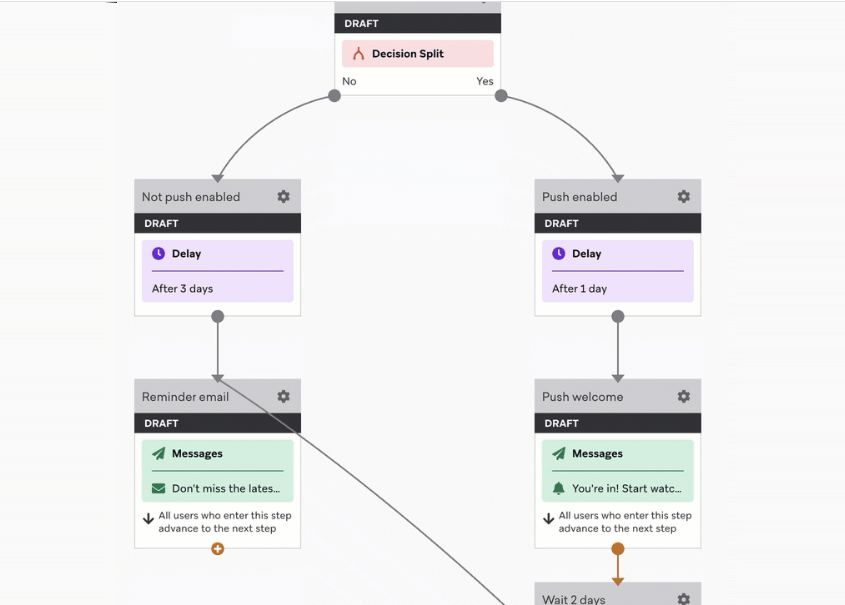
The integration pushes Treasure Data behavioral cohorts into Braze as named, reusable audience lists. Segments that need the CDP's full data model (customers who bought in a specific category, haven't returned in 60 days, and carry a predicted LTV above a set threshold) get assembled in Treasure Data and pushed to Braze as cohorts. These cohorts become targeting criteria in Canvas journey builder flows, standard campaigns, and multi-step journeys.
3. Custom Events for Trigger-Based Messaging.
The connector writes event records to Braze user profiles, letting Braze's action-based delivery fire campaigns from behavioral events computed in Treasure Data. A churn score crossing a threshold, a loyalty tier change, or a purchase propensity event can trigger a Canvas step. For organizations whose transaction data lives in a warehouse connected to Treasure Data rather than Braze's SDK, this path lets offline purchase history feed Braze's personalization.
4. Consent and Suppression Synchronization.
When a customer's consent status changes in Treasure Data, the export connector writes updated subscription statuses and opt-out flags to Braze's subscription group management endpoints. This prevents a customer who opted out through a Treasure Data preference center from still receiving a Braze campaign because the suppression list hadn't been refreshed.
Source: Braze
Braze Pricing
Braze prices by Monthly Active Users plus credits consumed across channels. No public price sheet exists; all terms are quote-based. Dashboard users incur no per-seat charges. Braze offers four tiers:
Braze Go: entry tier for growth teams; includes email and push notifications
Braze Select: adds orchestration features and a named Customer Success Manager
Braze Pro: adds predictive AI and Braze Currents for real-time event streaming back to Treasure Data
Braze Enterprise: advanced experimentation, enterprise governance, and BrazeAI Agent Console
Teams that need engagement event data flowing back from Braze into Treasure Data for model retraining should note that Braze Currents (Pro and Enterprise tiers) handles that return flow.
Who Should Use the Braze Integration?
Marketing teams running Treasure Data as their CDP that need to activate AI-built behavioral segments (churn-risk cohorts, LTV tiers, product affinity audiences) across channels without manual exports
Organizations whose customer engagement spans mobile push, in-app messaging, email, and SMS and need one platform that accepts Treasure Data cohorts as targeting inputs
Global brands with significant audiences in Japan, Southeast Asia, or South Korea where Braze's native LINE and KakaoTalk support allows Treasure Data segments to activate alongside global email and push campaigns
4. Snowflake: Best Treasure Data Integration for Zero-Copy Enterprise Warehouse Activation
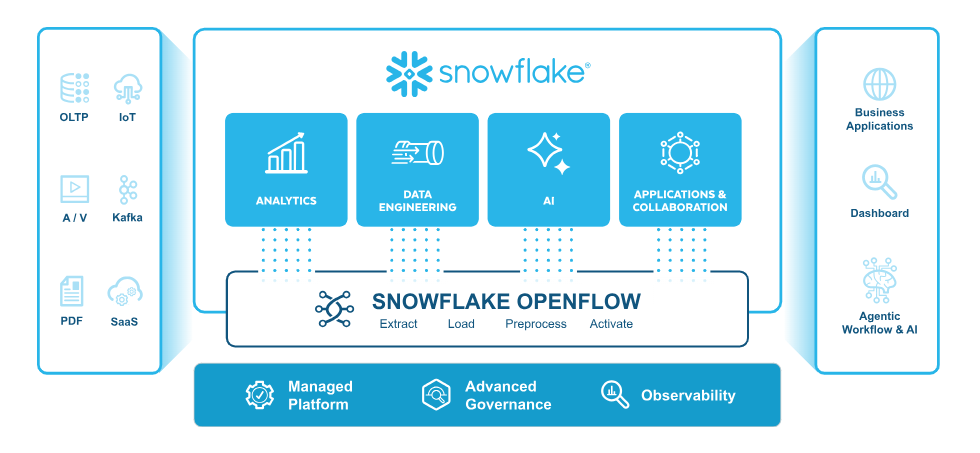
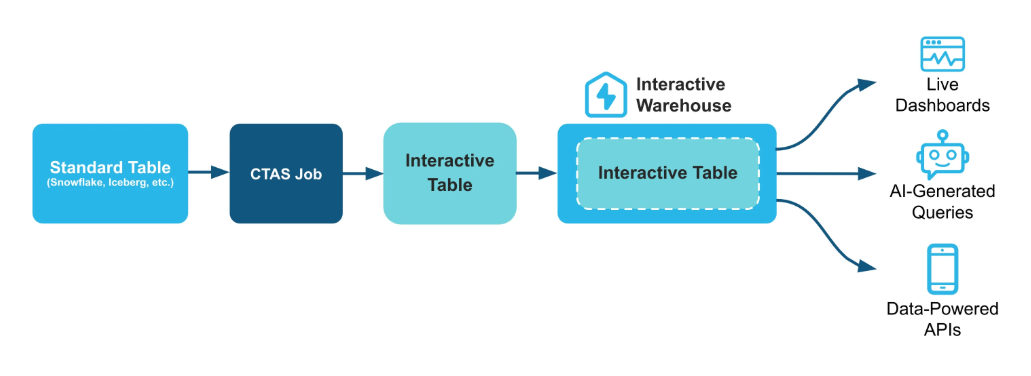
Snowflake is a cloud data platform that integrates with Treasure Data through Live Connect, a zero-copy architecture that lets Treasure Data run audience segmentation against Snowflake tables without moving the underlying data into Treasure Data's storage. This first-party connector sits at the core of Treasure Data's Composable CDP model.
Source: Snowflake
Key integration capabilities include:
Federated queries running Treasure Data audience logic against live Snowflake tables, eliminating ETL pipelines and data duplication
Zero-copy governance preserving Snowflake's access controls, encryption, and compliance perimeter
Multi-table copy mode for latency-sensitive use cases requiring a local data cache, with automatic schema mapping
Self-service segmentation on warehouse-scale data through Treasure AI Studio, translating natural-language requests into queries that run against Snowflake's Virtual Warehouses
How Snowflake Integrates with Treasure Data
The primary path is Live Connect, powered by Treasure Data's DWH Integration API. The API provides schema auto-detection, integration creation, and workflow triggers, with Digdag orchestration managing sync scheduling. A secondary path uses standard Snowflake import and export connectors for batch data movement.
Source: Snowflake
1. Federated Query Execution Without Data Movement.
When a marketer in Treasure AI Studio describes a segment, the query pushes down to Snowflake's Virtual Warehouse for execution against the source tables. Only the audience identifiers return to Treasure Data for activation.
Customer records never leave Snowflake. This eliminates the standard CDP requirement for ETL pipelines that copy warehouse data on a schedule. Where Snowflake holds transactional records, product usage logs, or financial history too sensitive to copy wholesale, CDP segmentation runs against the full warehouse history without the cost, latency, or governance risk of a duplicate.
2. Zero-Copy Data Governance.
Because Treasure Data queries Snowflake in place, all its governance controls remain active. Role-based access controls restrict queryable tables and columns. Dynamic Data Masking policies apply equally to Treasure Data's federated queries.
Row access policies carry through unchanged. Organizations that have certified their Snowflake environment (SOC 2 Type 2, HIPAA, PCI DSS, ISO/IEC 27001) don't need to certify a second environment to add CDP activation.
3. Multi-Table Copy Mode for Latency-Sensitive Activation.
For real-time web personalization or sub-second audience decisions, Live Connect's multi-table copy mode transfers specific Snowflake datasets into Treasure Data's managed storage. Teams can run both modes at once: federated query for compliance-sensitive tables that must stay in Snowflake, and copy mode for frequently accessed attribute tables where latency requirements justify a local cache.
4. Self-Service Segmentation Through Treasure AI Studio.
Treasure AI Studio connects to the Live Connect layer. Marketing and analytics teams describe audience segments in plain English against Snowflake data without writing SQL or opening engineering tickets. Studio translates natural-language requests into queries that run against Snowflake's Virtual Warehouses, surfaces audience counts for review, and pushes approved segments into the Diamond Record for activation.
Source: Snowflake
Snowflake Pricing
Snowflake operates on a consumption-based pricing model structured around compute credits and storage:
Standard Edition: full API access, Time Travel up to 1 day, Secure Data Sharing
Enterprise Edition: adds multi-cluster virtual warehouses, 90-day Time Travel, Dynamic Data Masking, Row-Level Security
Business Critical Edition: adds HIPAA and PCI DSS compliance, private connectivity, customer-managed encryption
Virtual Private Snowflake: fully isolated, dedicated cloud infrastructure
Enterprise Edition is the practical minimum for Live Connect deployments that need Dynamic Data Masking and Row-Level Security. A 30-day / $400-credit free trial is available with no credit card required.
On the Treasure Data side, the Composable CDP architecture that powers Live Connect is available within the Intelligent CDP subscription tier.
Who Should Use the Snowflake Integration?
Teams running Snowflake as their central data repository that want to activate its data through Treasure Data's CDP without rebuilding ETL pipelines or copying data outside Snowflake's governed environment
Organizations whose data governance requirements prohibit extracting raw customer records from Snowflake, but whose marketing teams need to segment and activate against that data through Treasure AI Studio
Teams deploying Treasure Data in Composable CDP mode that want a proven zero-copy warehouse integration
5. Facebook Custom Audiences: Best Treasure Data Integration for Paid Social Audience Activation
Facebook Custom Audiences is Meta's first-party data tool within Ads Manager, reaching 3.56 billion daily active users across Facebook, Instagram, and Meta's Audience Network. It integrates with Treasure Data through an OAuth-authenticated export connector that turns Diamond Record customer segments into targetable Meta audiences.
Source: Meta
Key integration capabilities include:
Audience export pushing any Treasure Data segment to a Facebook Custom Audience with scheduling and column mapping
Customer suppression excluding known purchasers from acquisition campaigns via Meta's excluded_custom_audiences targeting field
Lookalike audience seeding from high-value CDP cohorts, with support for Meta's Value-Based Lookalike Audiences
Automatic audience refresh keeping Facebook Custom Audiences current as segment membership changes in Treasure Data
How Facebook Custom Audiences Integrates with Treasure Data
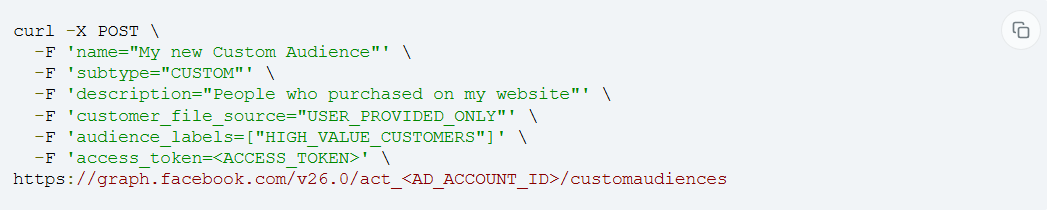
Treasure Data connects through an export connector authorized via OAuth, linking to the advertiser's Meta Business Manager account. The connector normalizes and SHA-256 hashes PII fields before data leaves Treasure Data.
1. Multi-Field Identity Matching for Higher Match Rates.
The connector passes customer identifiers from Treasure Data's Diamond Record profiles to Meta's matching system. Meta's Custom Audiences API accepts multi-field arrays combining email, phone, name, ZIP code, date of birth, gender, and mobile advertiser IDs.
Email-only uploads typically achieve 40-60% match rates; multi-field uploads commonly reach 60-78%. Because Treasure Data's Diamond Record applies deterministic, probabilistic, and rule-based identity stitching across all ingested sources, exported segments carry more identity data per profile than exports from a single system.
2. Acquisition Campaign Suppression.
A Treasure Data segment of existing customers (defined by purchase history, subscription status, or any behavioral signal) exports on a recurring schedule to Facebook as a suppression list. Segments update as new signals arrive. A customer who converts after the last manual upload keeps receiving acquisition ads until the next refresh; with the Treasure Data connector on a schedule, that window shrinks to the export interval.
3. Lookalike Audience Seeding from High-Value Cohorts.
Any Custom Audience with at least 100 members can seed a Meta Lookalike Audience. Treasure Data's predictive modeling produces cohorts defined by composite signals (predicted LTV, behavioral recency, cross-channel engagement) rather than single attributes. Meta's Value-Based Lookalike Audiences accept a LOOKALIKE_VALUE field per record, telling the algorithm to weight toward highest-value members. Treasure Data's LTV scoring maps onto this field.
4. Atomic Audience Refresh Without Learning Phase Disruption.
For full list replacements, Meta's /usersreplace endpoint performs an atomic swap: it removes all existing members and uploads the new set in one session without resetting any ad set's learning phase. Treasure Data customers whose segments rebuild regularly with updated models keep the optimization progress their campaigns have already built.
Source: Meta
Facebook Custom Audiences Pricing
Facebook Custom Audiences has no standalone price. It's a feature of Meta Ads Manager, available to any advertiser with an active account at no charge beyond ad delivery costs. Meta operates on a real-time auction model with billing by optimized CPM, cost per action, or fixed CPM for managed accounts.
Per-account audience caps apply: 500 standard Customer File Custom Audiences, 10,000 Website Custom Audiences, and 500 Lookalike Audiences. On the Treasure Data side, the Facebook Custom Audience export connector comes included at no extra per-connector cost.
Who Should Use the Facebook Custom Audiences Integration?
B2C enterprise brands running material Meta ad spend in retail, CPG, entertainment, or travel that want CDP-synchronized segments replacing manually managed audience lists
Teams whose acquisition campaigns waste budget on recently converted users because suppression lists update infrequently
Organizations that have built predictive LTV models in Treasure Data and want to seed Meta Lookalike Audiences from those cohorts using Meta's value-based algorithm
6. Amplitude: Best Treasure Data Integration for In-Product Behavioral Intelligence
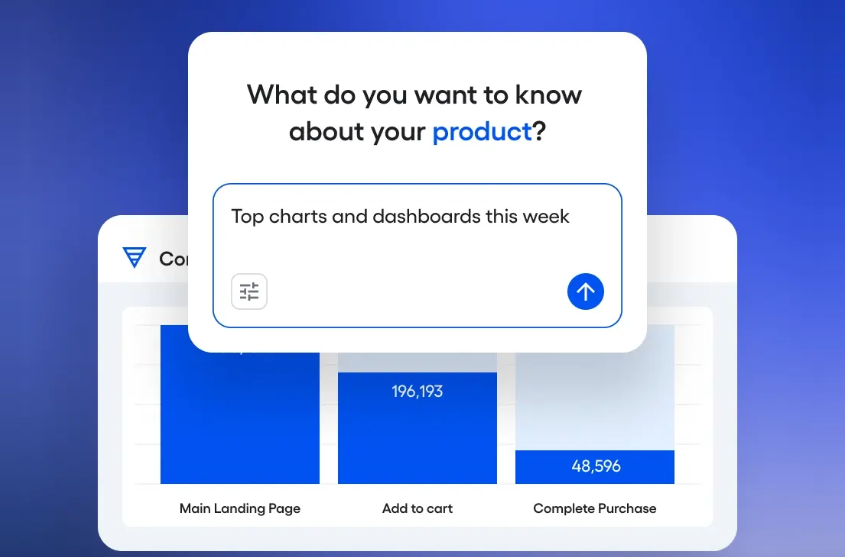
Amplitude is an analytics platform for digital product teams that integrates with Treasure Data to bring in-product behavioral event data into the CDP's unified customer profiles. Treasure Data's integration catalog documents it with support for both import and export.
Source: Amplitude
Key integration capabilities include:
Behavioral event import pulling page views, feature activations, session depth, funnel drop-offs, and conversion signals from Amplitude into Treasure Data tables
Full-lifecycle segment construction combining Amplitude's in-product behavioral data with purchase history, CRM records, and cross-channel engagement data
Audience export sending Treasure Data segments enriched with Amplitude behavioral data to downstream channels
Diamond Record enrichment with product usage data, resolving anonymous-to-known identity transitions into unified profiles
How Amplitude Integrates with Treasure Data
The Amplitude import integration pulls behavioral event data into Treasure Data tables on a schedule, where it joins the CDP's unified profile layer. The export direction sends Treasure Data cohorts back to Amplitude for in-product analysis. Treasure Data's connector framework manages both directions.
1. Behavioral Event Import into Unified Profiles.
Amplitude holds the clearest picture of what a customer does inside the product; Treasure Data holds the clearest picture of who the customer is across channels.
The import integration brings in-product events (feature activations, session depth, funnel progression, onboarding completion) into Treasure Data tables, where the Diamond Record merges them into the unified customer profile alongside transactional history, loyalty status, and CRM attributes.
A customer profile that already knows a user is a loyalty member with high purchase frequency now also reflects that they activated a premium feature six times in the last 30 days and dropped off at a particular checkout step.
2. Full-Lifecycle Segment Building Across Data Layers.
Once Amplitude events land in Treasure Data, they become queryable through Treasure AI Studio. Marketers describe segments in plain language against the combined data: "users who hit the premium feature paywall three or more times in the last month but haven't upgraded, and who have spent more than $200 in the past year."
Studio constructs the query across both data sources, including Amplitude events. Without the Amplitude integration, that paywall data would not be available to Studio.
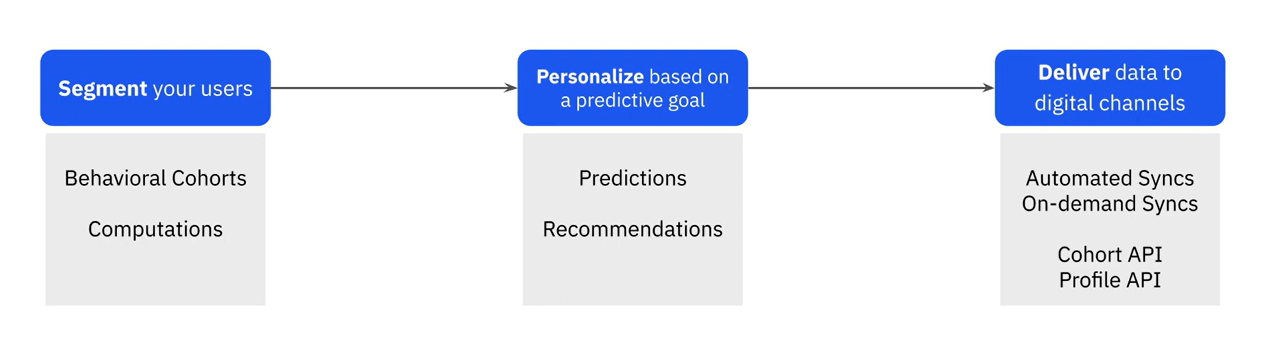
3. Behavioral Cohort-Based Audience Activation.
These segments, enriched with in-product behavioral data, activate through Treasure Data's ecosystem. A cohort of power users, churned users, or high-intent browsers can go to Braze for targeted campaigns, to Facebook Custom Audiences for paid retargeting, or to any connected channel.
Because the segments include Treasure Data's cross-channel history (loyalty status, spend data, model outputs), the audience lists target more precisely than what Amplitude's cohort sync would produce from behavioral data alone.
Source: Amplitude
Amplitude Pricing
Amplitude uses a usage-based pricing model anchored to monthly events, with unlimited seats on all plans:
Free: permanently free; 2 million events per month, basic analytics
Plus: starts at $0 for the first 2 million events, scales to 70 million; adds custom events, 20 behavioral cohorts, alerts
Growth: custom pricing; unlocks the Behavioral Cohorts API required for recurring automated cohort syncs, unlimited behavioral cohorts, forecasting
Enterprise: custom pricing; adds advanced RBAC, Data Access Controls, unlimited monitoring
Teams needing recurring, automated cohort syncs from Amplitude into Treasure Data will need Growth or Enterprise. The Plus plan supports the basic event import flow, but the Behavioral Cohorts API is Growth-tier and above.
Who Should Use the Amplitude Integration?
Teams whose customers interact with a digital product (SaaS, consumer app, in-app engagement layer) and who want in-product behavioral events to inform Treasure Data segmentation and lifecycle campaigns
Organizations running re-engagement or upsell campaigns that need to target users based on product engagement patterns, enriched with cross-channel customer data before activation
Teams using Treasure AI Studio that want natural-language queries to draw on feature adoption, session frequency, and funnel behavior alongside transactional and CRM dimensions
7. Shopify: Best Treasure Data Integration for Real-Time E-Commerce Event Streaming
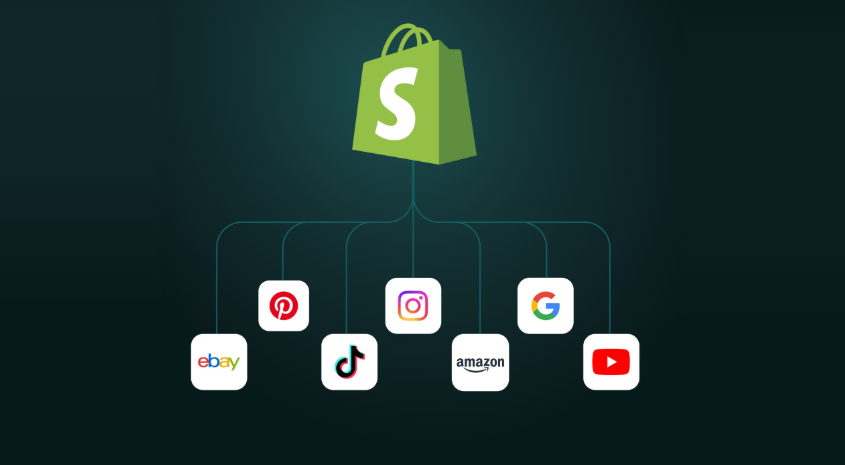
Shopify is a commerce platform serving 4.6M+ merchants across 175 countries that integrates with Treasure Data through both a Streaming Ingress connector for live behavioral events and a batch Import Integration V2 for historical records. The integration gives retail and B2C brands the transaction data they need for LTV modeling, abandonment recovery, and purchase-based personalization.
Source: Shopify
Key integration capabilities include:
Real-time webhook event streaming, delivering purchases, cart additions, product views, and abandoned carts into Treasure Data within seconds
Historical order and product data batch import via Shopify's GraphQL Admin API for LTV modeling and repurchase segmentation
Bidirectional export writing Treasure Data scores (predicted LTV, churn risk, product affinity) back to Shopify as metafields
Immediate abandonment response, activating journeys within seconds of a cart abandonment event
How Shopify Integrates with Treasure Data
Most production deployments use both connectors together: the streaming connector captures real-time behavior while the batch import supplies the historical depth that predictive models need.
1. Real-Time Webhook Event Streaming.
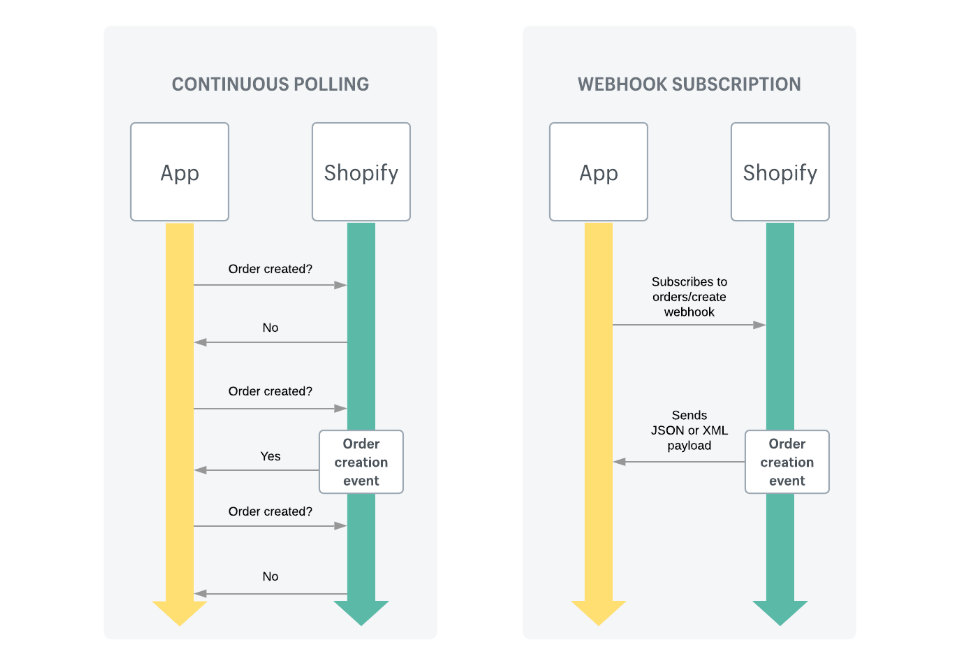
The Shopify Streaming Ingress connector captures Shopify webhook events (orders, checkouts, cart additions, product views) and forwards them into Treasure Data tables within seconds.
Treasure Data's journey orchestration can evaluate a cart abandonment event against the full customer profile (purchase history, channel preferences, churn risk) and trigger responses through Braze, Facebook, or other connected channels while the session is still active. Shopify's webhooks use HMAC-SHA256 signature verification, and Treasure Data's connector validates on ingest.
2. Historical Order and Product Data Batch Import.
The Import Integration V2 uses Shopify's GraphQL Admin API to batch-import the full historical record: orders with line items, products and variants, and customer records. This historical data makes LTV segmentation and repurchase modeling viable. The V2 connector uses Shopify's Bulk Operations API for large historical imports, bypassing standard rate limits through asynchronous jobs.
3. Bidirectional Data Export to Shopify.
The export connector writes Treasure Data scores back to Shopify as metafields on products, customers, or collections. LTV scores, product affinity labels, and churn risk buckets become readable by storefronts via the Storefront API or Liquid themes. This enables personalized homepage content, loyalty-gated pricing, and product recommendations without routing page requests through an external API.
Source: Shopify
Shopify Pricing
Shopify's plans scale through four tiers, and the integration with Treasure Data works on all paid plans:
Basic: $39/month; standard GraphQL API access and webhook event delivery
Shopify: $105/month (yearly); expanded reporting
Advanced: $399/month (yearly); advanced inventory and analytics
Shopify Plus: $2,300+/month; doubled GraphQL rate limits (2,000 cost units vs. 1,000 standard), Checkout Extensibility for additional webhook topics and metafield access at checkout, 99.99% uptime SLA
For high-volume retailers streaming events at scale, the rate limit difference between standard and Plus tiers is worth evaluating. The Bulk Operations API exemption from cost-model rate limits applies across all tiers during historical imports.
Who Should Use the Shopify Integration?
Direct-to-consumer Shopify brands that need their CDP to react to cart, purchase, and browse events in real time for abandonment recovery, personalized re-engagement, and churn prevention
Teams building LTV segmentation or repurchase models in Treasure Data that need actual transaction history grounded in the full order record, not just email engagement or session data
Brands using Shopify Plus that want Checkout Extensibility's additional webhook topics and metafield access to feed richer checkout-stage signals into the Diamond Record
Final Verdict
The best Treasure Data integrations feed data your CDP cannot generate on its own, activate segments across every channel, and keep your warehouse data governed while making it usable:
ZoomInfo: verified B2B data, buyer intent signals, and technographic data enriching customer profiles; the highest-impact integration on this list if your pipeline needs to connect consumer behavioral data with B2B account data
Salesforce: bidirectional CRM-CDP unification with SOQL import, enriched data export, and stage-triggered journey orchestration
Braze: cross-channel campaign activation pushing AI-built behavioral cohorts, churn scores, and LTV tiers into email, push, in-app, and messaging channels
Snowflake: zero-copy warehouse activation that lets you segment and activate against live Snowflake tables without duplicating data or re-certifying governance
Facebook Custom Audiences: CDP-powered paid social targeting with suppression, LTV-based lookalike seeding, and atomic audience refresh across Meta's 3.56 billion daily active users
Amplitude: in-product behavioral event data feeding full-lifecycle segments that combine feature usage patterns with cross-channel customer data
Shopify: real-time e-commerce event streaming and historical transaction data powering LTV modeling, abandonment recovery, and purchase-based personalization
These integrations compound: you might run ZoomInfo for B2B enrichment, Salesforce for CRM unification, Braze for campaign execution, and Snowflake for warehouse activation on the same Treasure Data instance, each adding a layer of data or activation that makes the others more valuable.
If your Treasure Data CDP holds behavioral and transactional data but lacks the verified B2B data your sales and ABM teams need, a B2B data platform fills that gap. ZoomInfo's integration through Tray.io gives your Treasure Data workflows access to 500M contacts, 135M+ verified phone numbers, and buyer intent signals calibrated to your actual win patterns. ZoomInfo Lite is free permanently, so you can evaluate the data before committing.
Frequently Asked Questions
How many integrations does Treasure Data support?
Treasure Data's integration catalog houses over 400 data integrations spanning CRM, marketing automation, data warehouses, analytics platforms, advertising networks, streaming event pipelines, e-commerce systems, and IoT devices.
Treasure Data's in-house engineering team maintains all integrations. For any gap in the catalog, the company commits to building custom connectors within 6-8 weeks. Beyond pre-built connectors, users can write custom code and deploy it onto Treasure Data's cloud environment using external APIs and webhooks.
Does Treasure Data support both batch and real-time data processing?
Yes. Treasure Data's Intelligent CDP processes data in both batch and real-time modes within the same platform. Millisecond-level processing powers time-sensitive experiences (like immediate abandoned cart responses), while batch processing handles large-scale operations like historical data imports, LTV model recalculation, and full audience refreshes. The platform chooses the appropriate mode based on the use case, and teams can run both at once.
What is the Diamond Record and how does it differ from a traditional golden record?
The Diamond Record is Treasure Data's identity resolution system that creates a persistent, real-time universal customer ID connecting every tool, channel, and data stream. Unlike a traditional golden record (which uses batch stitching and discards edge-case data), the Diamond Record uses continuous identity resolution combining deterministic, probabilistic, and rule-based matching methods.
Identities stitch in real time as new data arrives, profiles remain intact across lifecycle stages, and anonymous users are addressable without increased spend.
Can Treasure Data run directly on my existing data warehouse?
Yes. Treasure Data's Composable CDP mode layers on top of an existing cloud data warehouse (Snowflake, BigQuery, Databricks, Redshift) with zero-copy integration.
The Live Connect architecture runs federated queries that execute audience logic against warehouse tables, returning only audience identifiers to Treasure Data for activation. Customer records never leave the warehouse's storage and governance perimeter.
How does Treasure Data's pricing work?
Treasure Data charges based on the volume of customer data under management, not by seat count, query volume, or compute power. The company sells three tiers (Intelligent CDP, Intelligent CDP + AI Suites, and Treasure AI Studio) via annual subscription with custom quotes.
A structured 2-week Proof of Concept at no cost is available for standard use cases. The AI Suites also offer a 60-day free trial following an AI Workshop onboarding session.
Are Treasure Data integrations secure?
Treasure Data holds one of the broader certification portfolios among CDPs: SOC 2 Type 2, ISO/IEC 27001, ISO/IEC 27701, ISO/IEC 27017, ISO/IEC 27018, HIPAA Type 2, CSA STAR Level 1, TRUSTe Responsible AI Certification, PrivacyMark, and FISC.
Data is stored in AWS with customer-selectable regions (US East, US West, Europe, Asia Pacific). All API communication uses HTTPS, and data at rest is encrypted with at least AES-256 via AWS KMS. Role-based access controls and audit logs are available across all tiers.
What is the best way to enrich Treasure Data profiles with B2B intelligence?
Connecting a B2B data platform gives your Treasure Data CDP the verified contact data, company attributes, and buyer intent signals that consumer behavioral data cannot provide. ZoomInfo's integration through Tray.io enriches Diamond Record profiles with data from 500 million contacts, 100 million companies, and 135 million verified phone numbers, backed by a verification pipeline with 300+ human researchers.
For teams whose account-based campaigns or sales motions depend on data accuracy, a platform built for B2B intelligence closes the gap between what Treasure Data captures from consumer behavior and what your go-to-market teams need to act on.
Keep exploring:
