
Choosing between Planhat and Salesforce for your customer operations comes down to five questions:
Is your main challenge managing existing customers, or building new pipeline?
Do you need a platform designed for customer success, or a CRM that covers every go-to-market function?
How important is it that your post-sale teams (CS, services, renewals) have tooling as deep as your sales team's?
Are you willing to spend months on implementation for flexibility, or do you need faster results?
Does the data inside your CRM actually match the sophistication of the platform sitting on top of it?
In short, here's what we recommend:
Planhat is the platform for B2B companies where customer retention and expansion drive the business. Built from the ground up for customer success and now expanding into CRM and professional services automation, Planhat unifies health scoring, automation, and revenue tracking in a single data layer designed for post-sale teams. But Planhat demands significant configuration, its pricing requires a sales conversation, and its newer CRM and PSA modules are still catching up to its CS capabilities.
Salesforce is the platform for organizations that need everything under one roof. Salesforce dominates CRM for a reason: it covers Sales Cloud, Service Cloud, Marketing Cloud, Commerce Cloud, Data Cloud, Slack, Tableau, and now Agentforce for autonomous AI agents. But that breadth brings pricing complexity, implementation timelines measured in months, and an enterprise weight that can overwhelm teams who mostly need customer success tooling.
Both platforms handle customer relationships well. But here's what most comparisons miss: the intelligence behind your customer operations is only as good as the data feeding it. Incomplete contact records, stale company data, and missing buying signals create blind spots no platform can fix on its own.
ZoomInfo is an AI-powered go-to-market platform built on a B2B dataset of 500M contacts, 100M companies, 135M+ verified phone numbers, and 200M+ verified business emails. That data feeds ZoomInfo's GTM Context Graph, an intelligence layer that processes 1.5B+ data points daily, connecting your CRM records, conversation transcripts, and behavioral signals with ZoomInfo's third-party data to show the full context of your accounts. Whether you choose Planhat or Salesforce, ZoomInfo enriches your customer records with verified contacts, org charts, technographics, and intent signals.
Your team can run sales motions from the GTM Workspace, build go-to-market plays in GTM Studio, or connect their own tools through the API and MCP. ZoomInfo integrates directly with Salesforce and connects to Planhat through the same API and MCP access, so the same data powers whichever platform you run.
If verified, continuously updated B2B intelligence sounds like the missing foundation for your customer operations, see how ZoomInfo works with your stack.
Planhat vs. Salesforce at a glance
Planhat | Salesforce | ZoomInfo | |
|---|---|---|---|
Core strength | Customer success and post-sale lifecycle | Full CRM suite across sales, service, marketing, commerce | B2B data intelligence and GTM execution |
Primary buyer | VP of CS, RevOps, Services leaders | CIO, CRO, VP Sales, CMO | Sales, Marketing, RevOps leaders |
AI capabilities | GTM Context Graph with AI-powered account intelligence | ||
Health scoring | Configurable multi-profile, segment-adaptive | Basic via reports; advanced requires customization | Intent signals and account fit scoring |
CRM depth | Growing (native CRM launched 2024) | Industry-leading, 19 consecutive Gartner MQ Leader years | GTM Workspace for seller execution |
Post-sale tooling | Built for CS + PSA | Service Cloud add-on; CS requires partner apps | Complements either with data enrichment |
Pricing model | Quote-based, per-seat + account volume | Tiered per-user ($25-$550/user/month) + add-ons | Custom-quoted, consumption-based |
Implementation | Weeks to months (configuration-heavy) | Weeks to 12 months (partner-dependent) | |
Ecosystem | 30+ native integrations, open API | 9,000+ AppExchange apps, 14M+ installs | 120+ integrations, API, and MCP access |
The core tension: CS-first vs. CRM-first
Planhat and Salesforce approach customer management from opposite directions.
Planhat was built for the post-sale world. Its founders spent years in CRM before deciding that existing tools failed post-sales teams by being too sales-oriented. So they built a platform where health scoring, lifecycle automation, and renewal management are the foundation, not afterthoughts bolted onto a sales pipeline.
Salesforce was built for the pre-sale world. Pipeline management, lead routing, opportunity tracking, and sales forecasting are in its DNA. Customer success capabilities exist, but they come through Service Cloud, partner apps on AppExchange, or custom configuration. The platform can do almost anything, but its center of gravity is closing deals.
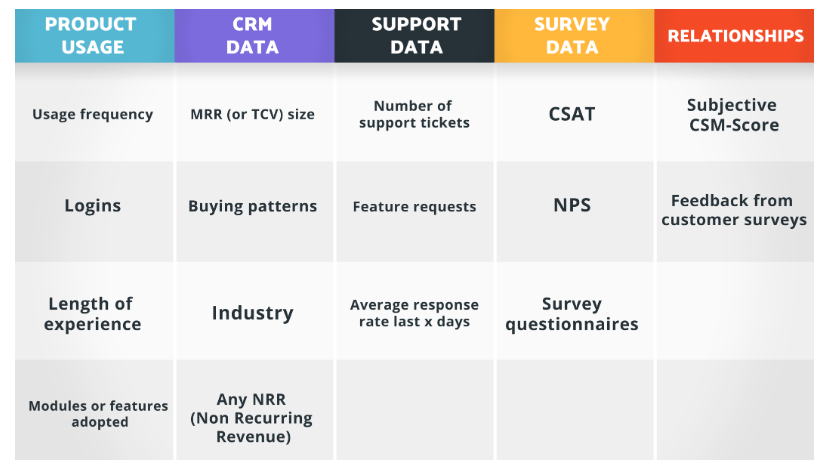
This distinction matters because it shapes how each platform handles customer data. In Planhat, a customer record connects product usage metrics, health scores, conversation sentiment, renewal timelines, and service delivery milestones by default. In Salesforce, building that same connected view requires assembling multiple clouds, configuring custom objects, and often adding third-party tools.
Neither approach is wrong. The question is where your business needs depth most.
Planhat goes deeper on customer success
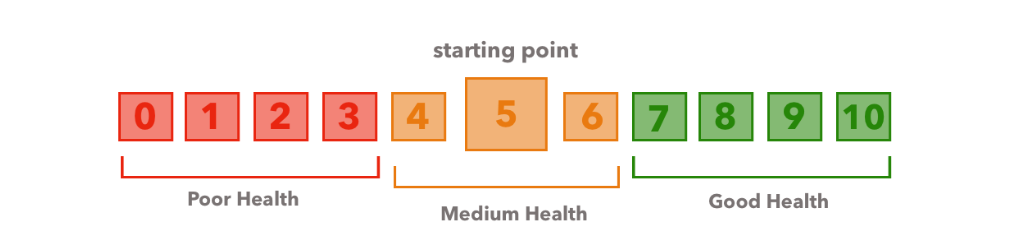
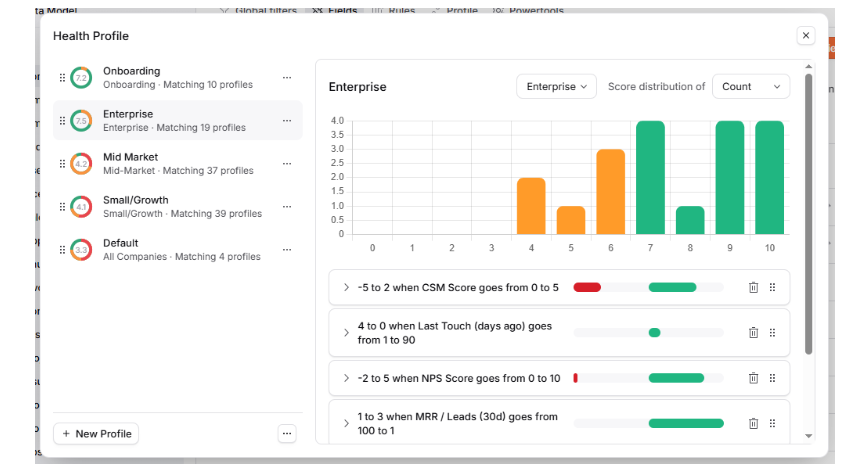
Planhat's health scoring system shows the depth difference. Instead of a single score applied to everyone, Planhat supports multiple Health Profiles with different scoring models for different customer segments.
Source: Planhat
An onboarding customer gets scored differently than an enterprise renewal. Each profile uses configurable Health Factors with both hard thresholds and sliding-scale conditions. When a company's attributes change, it automatically inherits the correct scoring profile.
Source: Planhat
The platform also wires conversation sentiment directly into health scores. Planhat analyzes emails, chats, and call transcripts to produce a sentiment score from -100 to +100, using a time-decay formula that weights recent conversations more heavily. That score feeds into health calculations as a core input, not a reporting overlay.
Source: Planhat
Salesforce can achieve similar outcomes, but the path is longer. Health scoring requires custom configuration or a third-party CS overlay like Gainsight. Sentiment analysis comes through Einstein AI add-ons. The building blocks exist in Salesforce's platform, but assembling them takes more work than using Planhat's built-in system.
Salesforce covers more ground
Where Planhat goes deep in customer success, Salesforce goes wide across the entire business.
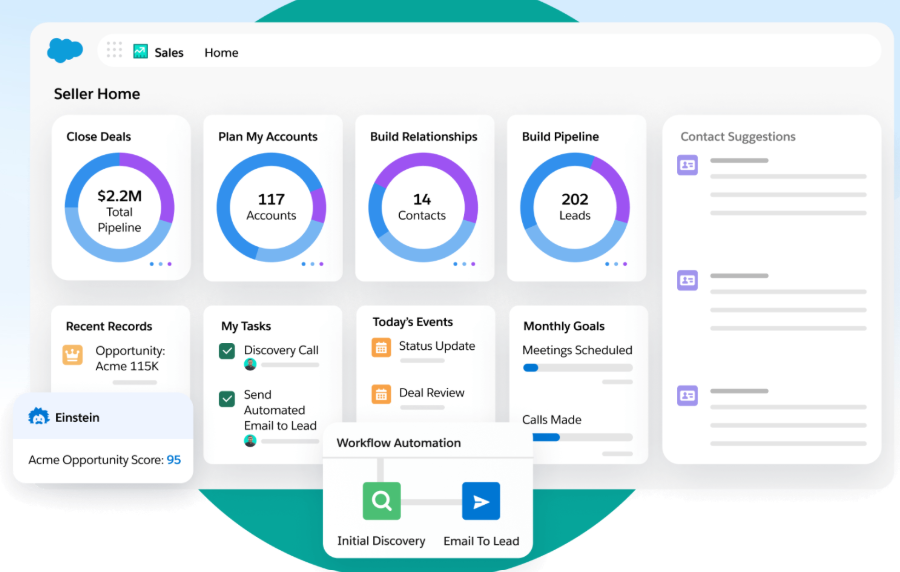
Sales Cloud alone offers lead management with AI scoring, pipeline visualization, forecast management with Einstein overlay, conversation intelligence, CPQ, territory planning, and partner relationship management. It has held the Gartner MQ Leader position for Sales Force Automation for 19 consecutive years.
Source: Salesforce
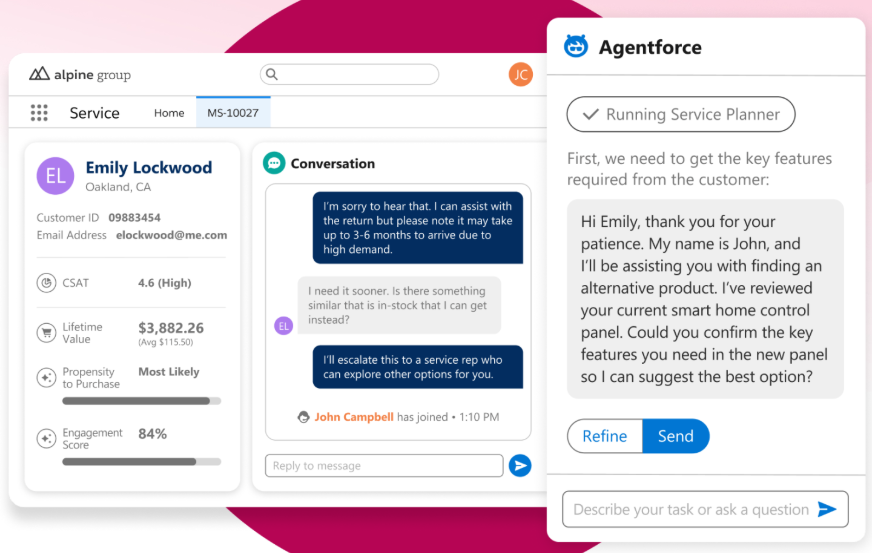
Beyond sales, Salesforce provides Service Cloud for case management and omnichannel support, Marketing Cloud for campaign orchestration and B2B nurture, Commerce Cloud for storefronts, Data Cloud for customer data unification, Tableau for analytics, Slack for collaboration, and MuleSoft for integration.
Source: Salesforce
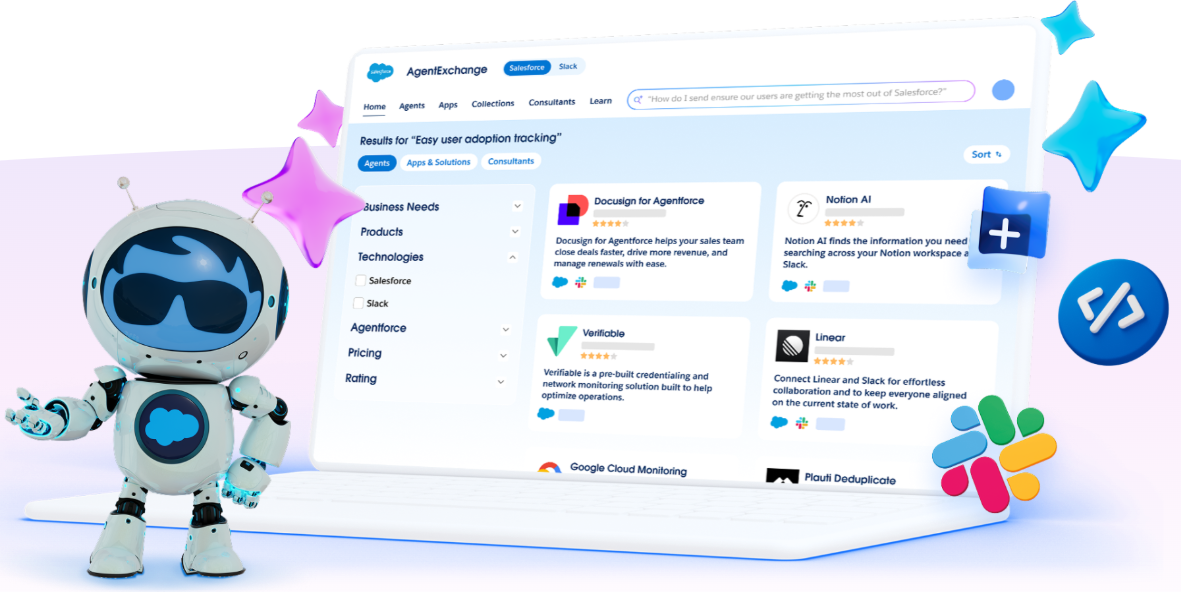
The AppExchange ecosystem adds another layer: 9,000+ apps with 14+ million installs and 91% customer adoption. Whatever Salesforce doesn't do natively, the ecosystem likely covers.
Source: Salesforce
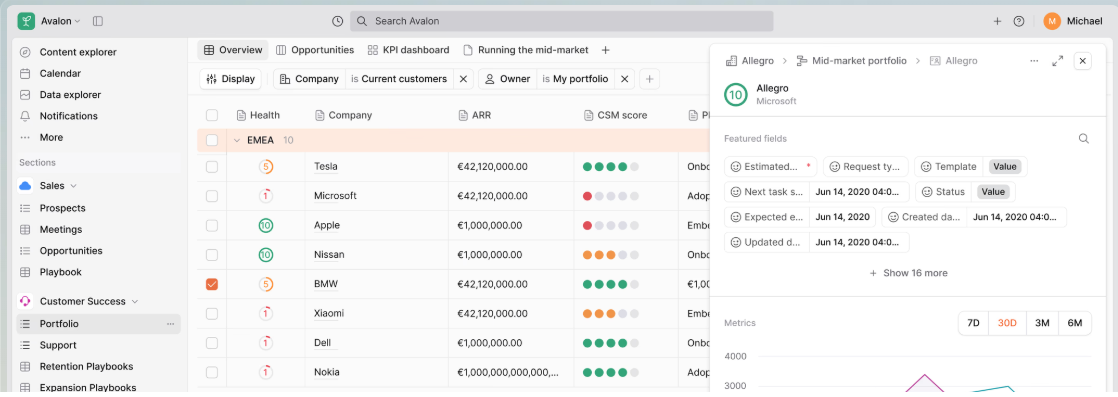
Planhat has begun expanding with its CRM application (launched June 2024) and PSA module, but these are newer and narrower. Planhat's CRM handles pipeline management, deal tracking, and renewals. Salesforce's CRM handles that plus quoting, commissions, partner management, territory planning, and revenue lifecycle management across sales, service, and commerce.
Source: Planhat
For organizations that need breadth, Salesforce remains the default. For organizations where post-sale operations are the priority, Planhat offers depth that Salesforce takes significant effort to replicate.
AI strategies diverge significantly
Both platforms invest heavily in AI, but their approaches reflect different philosophies.
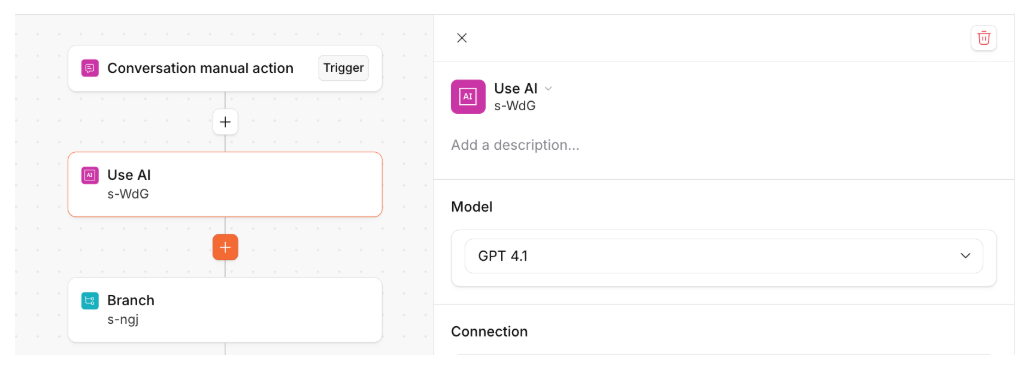
Planhat embeds AI steps directly inside its automation builder. An automation can read a call transcript, run it through an LLM with a structured JSON prompt, update Planhat fields with the output, and branch into different workflows, all in a single flow.
Source: Planhat
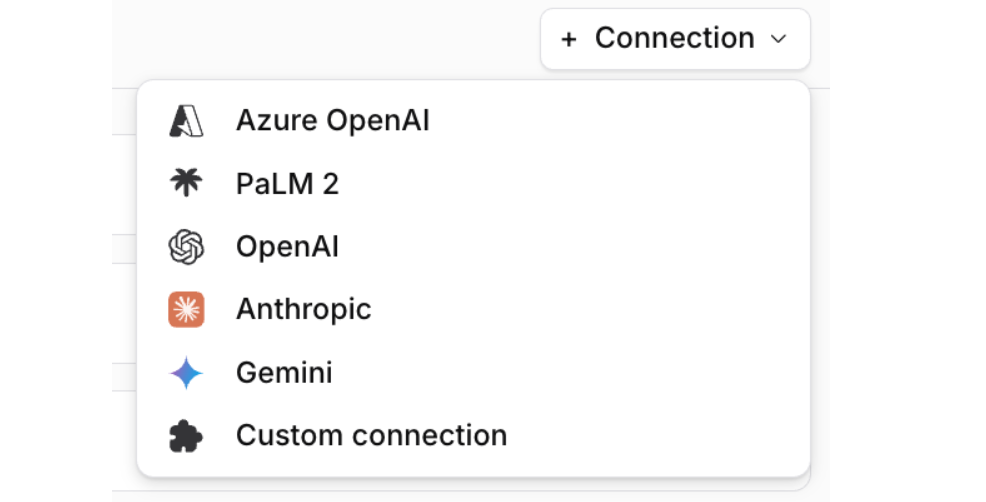
Planhat supports multiple models (GPT, Claude, Gemini) with either Planhat-managed connections or Bring Your Own Model, giving IT teams control over which AI models touch their data. AI as a configurable step in existing workflows, not a separate product.
Source: Planhat
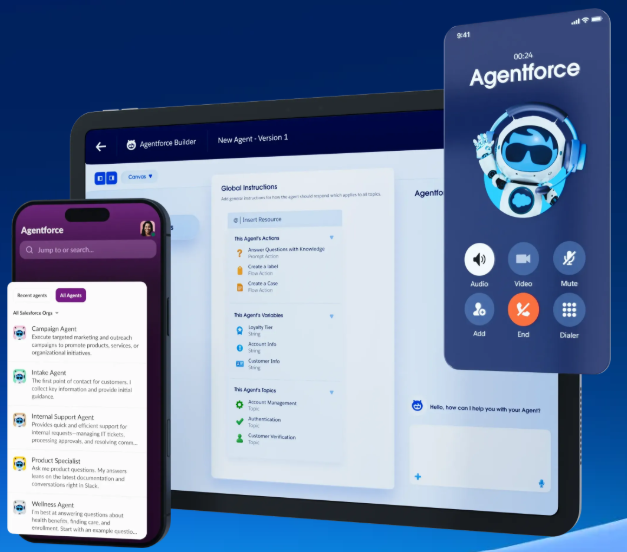
Salesforce's Agentforce takes a broader approach. Rather than AI as a workflow step, Agentforce deploys autonomous AI agents that perceive, plan, and execute tasks with minimal human involvement.
Source: Salesforce
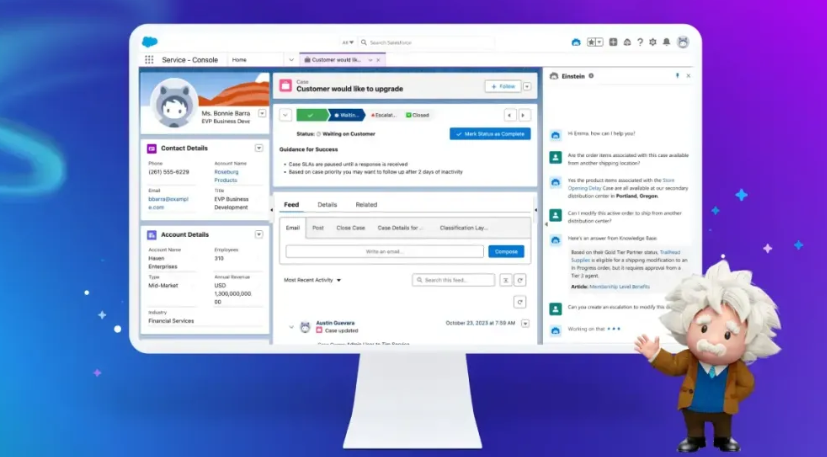
The proprietary Atlas Reasoning Engine uses a reason-act-observe-adapt loop. Pre-built agents cover service, sales coaching, campaign creation, and IT service management.
Source: Salesforce
The Einstein Trust Layer adds enterprise guardrails: zero data retention with LLM partners, PII masking, toxicity detection, and full audit trails. For regulated industries, these protections matter.
Planhat's AI is easier to configure (CS Ops teams can build AI automations without engineering support). Salesforce's AI is broader in scope (autonomous agents working across the entire business). The right choice depends on whether you need AI to enhance CS workflows or transform operations across multiple departments.
The data quality gap both platforms inherit
Here's what gets overlooked in most CRM comparisons: every platform is only as good as the data inside it.
Salesforce's own CEO said this at Dreamforce 2025: "You have got to get your data right." Salesforce's 2026 CIO AI Trends research found that trust in data is the top bottleneck for AI adoption.
Planhat faces the same problem from the other direction. Its health scoring and AI automations rely on clean, complete customer data flowing in from CRM systems, product analytics, and support tools. G2 reviewers note the Salesforce sync is complicated to manage, particularly with dirty data and record deletions.
This is where the data feeding your platform matters as much as the platform itself. Incomplete contact records mean health scores miss key stakeholders. Stale company data means account segmentation drifts from reality. Missing intent signals mean renewal risk surfaces too late.
ZoomInfo addresses this gap directly. With 500M contacts, 100M companies, 135M+ verified phone numbers, and 200M+ verified business emails, verified through a multi-source pipeline backed by 300+ human researchers achieving up to 95% accuracy on first-party data, ZoomInfo provides the intelligence that makes either platform work at its potential.

Source: ZoomInfo
For Salesforce users, ZoomInfo's native integration enriches account and contact records with verified company attributes, technographics, org charts, and direct-dial phone numbers. Buyer Intent signals tracking 210 million IP-to-Organization pairings identify in-market accounts before they reach out. For Planhat users, ZoomInfo data flows through its API and MCP access to enrich the customer records that health scores and automations depend on.
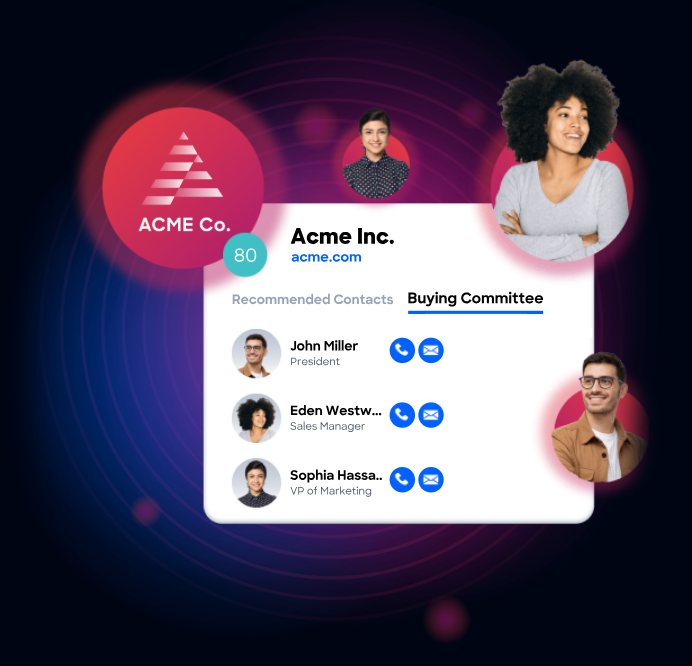
Source: ZoomInfo
The GTM Context Graph goes further by fusing ZoomInfo's third-party data with your CRM records, conversation transcripts, and behavioral signals. As ZoomInfo's CPO Dominik Facher writes: "The CRM recorded the state change. It has no record of why it happened." The GTM Context Graph captures that context and makes it available to whichever platform your team uses.
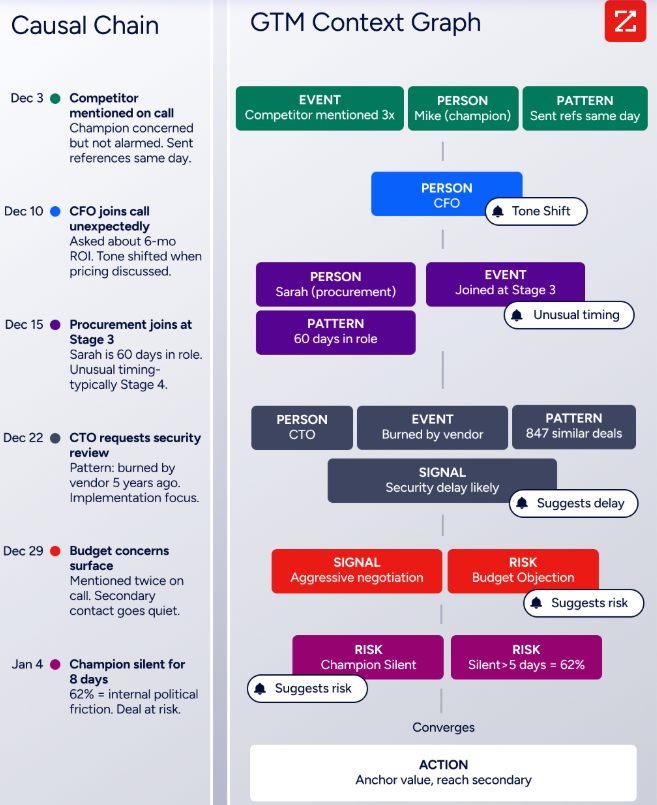
Source: ZoomInfo
Snowflake uses ZoomInfo for at least one-third of the most critical data features in their Account Propensity Scoring model, feeding over 70 firmographic and technographic data fields. Accounts monitored using ZoomInfo-powered scores showed 90% higher opportunity open rates and 2x higher customer conversion rates. (Snowflake Case Study)
Automation and workflow comparison
Planhat offers two automation systems. Workflows are sequential process templates (onboarding checklists, renewal sequences) that respond to live data changes while running.
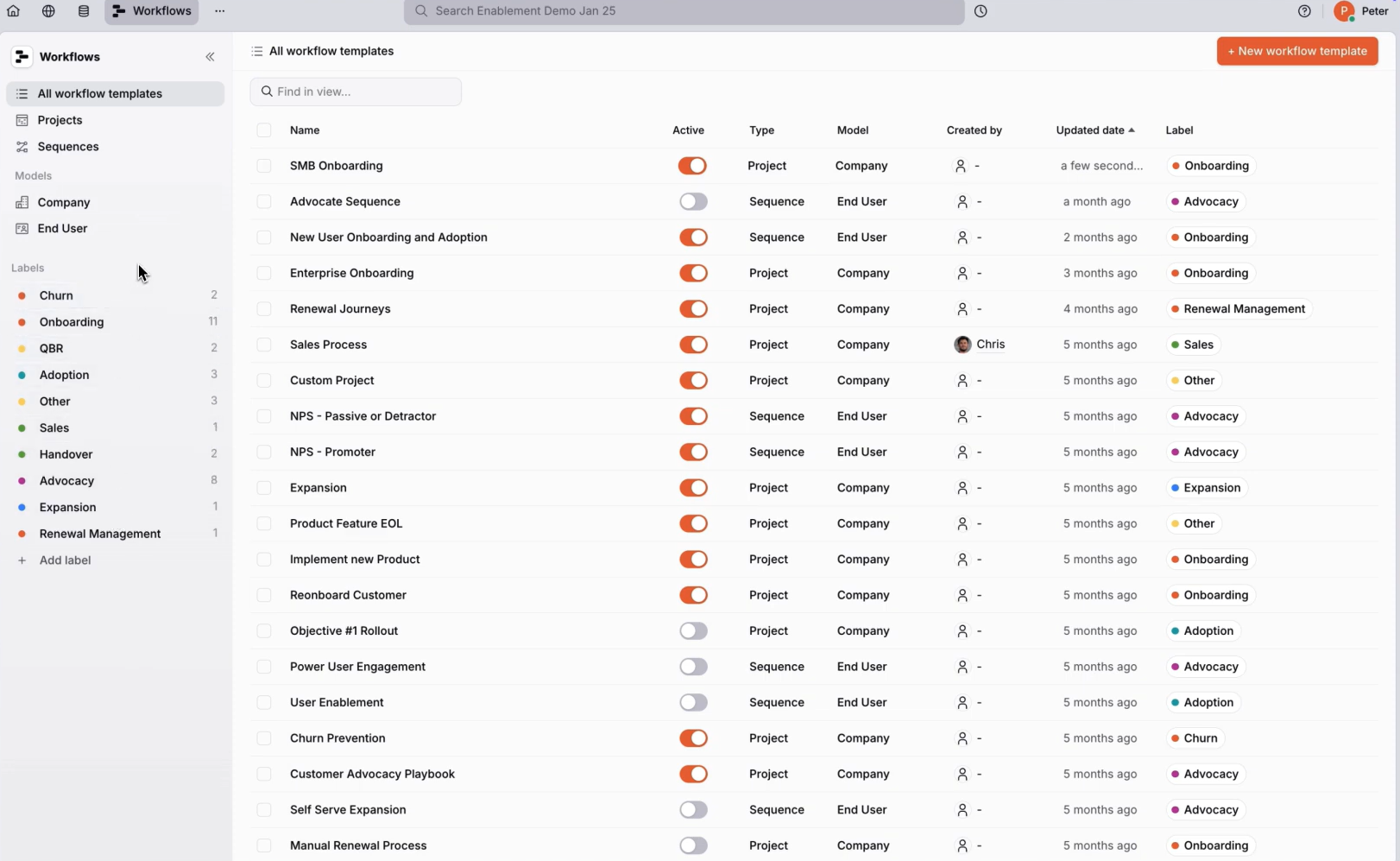
Source: Planhat
A re-engagement sequence stops automatically when a user logs back in, without a separate automation to terminate it. Custom Automations follow trigger-action logic with branching, conditional logic, wait steps, JavaScript execution, and AI steps.
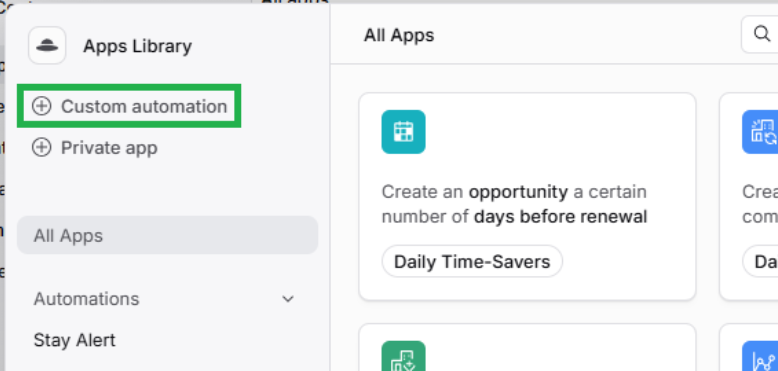
Source: Planhat
Planhat Workflows can also be exposed to customers through Portals, where clients view, interact with, and complete tasks. This makes onboarding plans and success milestones collaborative rather than one-sided.
Salesforce's automation runs primarily through Flow, its declarative automation engine, supplemented by Apex code for complex logic and MuleSoft for cross-system orchestration.
Flow handles record-triggered automations, scheduled processes, screen flows for guided user input, and platform events for real-time integration. The scope is broader than Planhat's, since automations can span Sales, Service, Marketing, and Commerce processes.
The difference: Planhat's automations are built for customer lifecycle scenarios. A CS Ops team can build a renewal playbook, wire in AI analysis of conversation sentiment, and surface tasks to customers through a portal, all without engineering help. Salesforce's automations are built for enterprise orchestration. A Salesforce admin can build processes that span lead routing, case escalation, marketing journeys, and order fulfillment, but the learning curve is steeper and complex implementations typically require certified partners (over 70% of deployments are partner-led).
Customer portals tell different stories
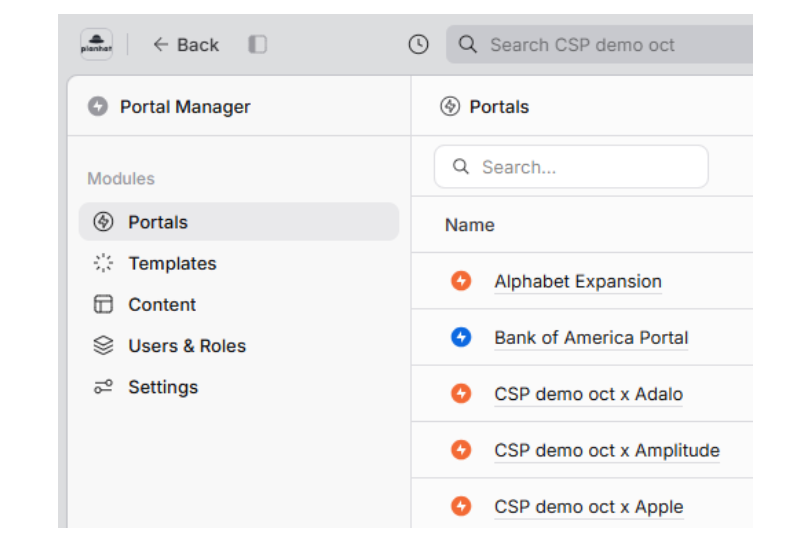
Planhat's Advanced Portals serve both pre-sale and post-sale collaboration. Each portal ties to a specific company record, pulling live data (product usage, health scores, account metrics) that auto-filters to that company.
Source: Planhat
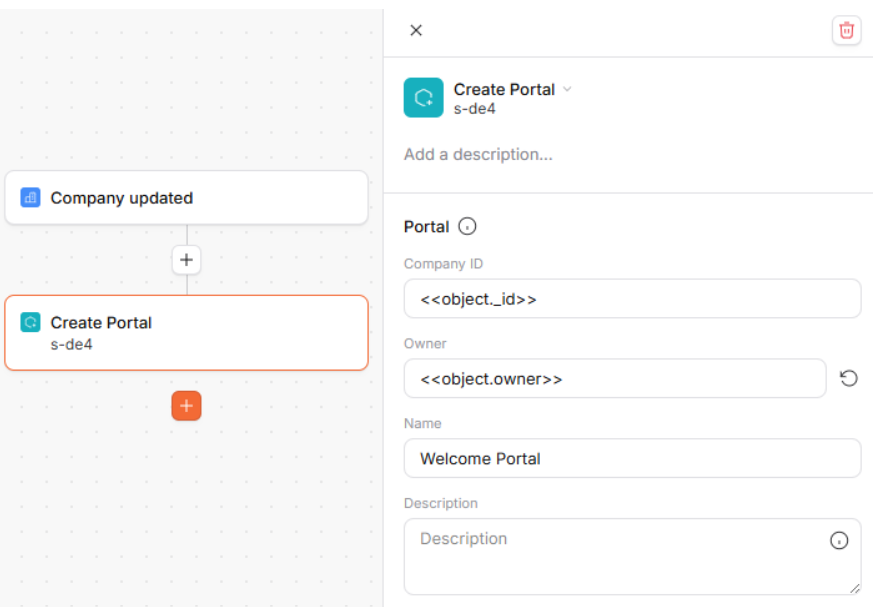
Portals can include collaborative documents, workflow views where customers complete tasks, and dashboard pages with real-time analytics. They can be provisioned automatically via automations at lifecycle milestones and embedded inside the vendor's own application through a signed URL flow.
Source: Planhat
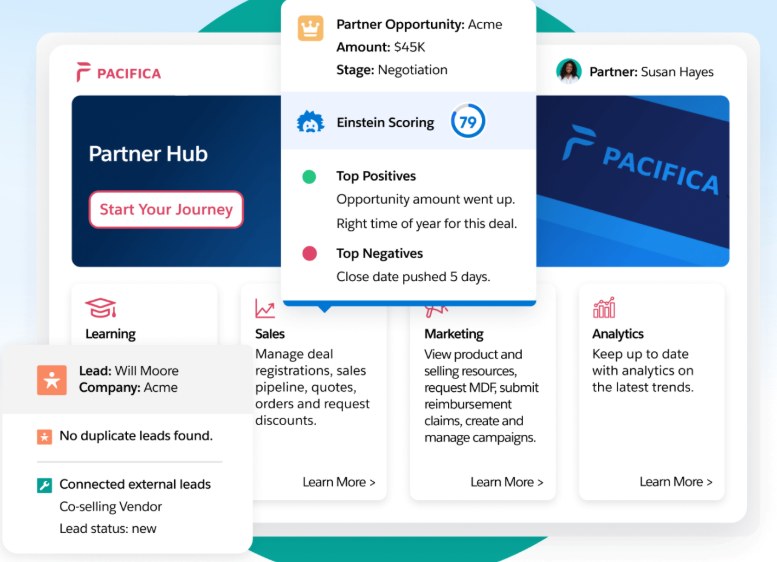
Salesforce handles customer-facing experiences through Experience Cloud (self-service portals,
community forums, service catalogs) and Partner Relationship Management for channel partner portals. The scope is wider (supporting customer communities, partner deal registration, and knowledge bases), but building a customer-specific collaboration space with live health data and shared task management requires more custom work than Planhat's portal framework.
Source: Salesforce
Pricing comparison: opacity vs. complexity
Neither platform makes pricing easy.
Planhat does not publish pricing. All tiers require contacting sales via the pricing page. Subscriptions typically include a one-time integration fee, a fixed recurring fee, and a variable fee based on account volume.
Contracts are annual with auto-renewal, requiring 60 days' notice to cancel. Add-ons (Upgraded AI Platform, Advanced Service for PSA, Email Marketing, Advanced Portals) are priced separately.
Salesforce publishes list prices, but the real cost is harder to predict. Sales Cloud ranges from a free suite (2 users) through Starter ($25/user/month), Pro ($100), Enterprise ($175), Unlimited ($350), to Agentforce 1 ($550/user/month). Each tier unlocks different capabilities. On top of that, Agentforce consumption runs $500 per 100,000 Flex Credits (each action costs 20 credits), Data Cloud credits are separate, the Premier Success Plan adds 30% to net license fees, and implementation typically requires partners. A 6% price increase hit Enterprise and Unlimited tiers in August 2025.
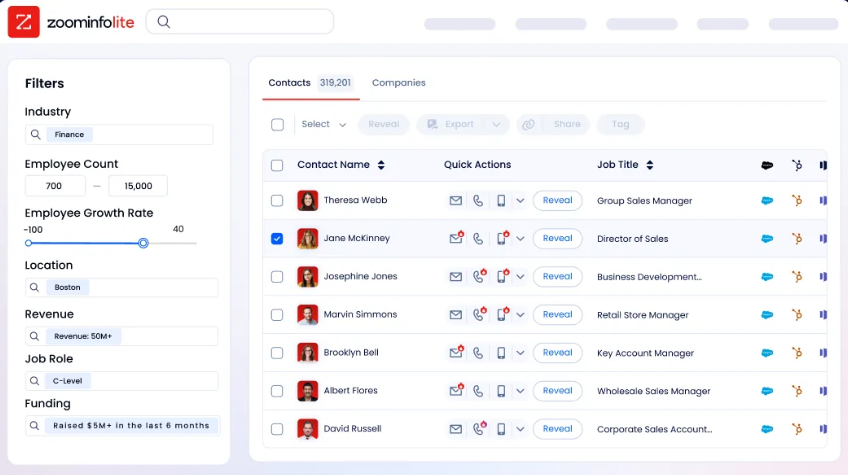
ZoomInfo uses consumption-based pricing based on usage patterns, user count, credit volume, and features. A permanent free tier (ZoomInfo Lite) provides database access with 10 monthly export credits. A 7-day free trial is also available. API access is included in all relevant plans.
Source: ZoomInfo
The important cost question is total cost of ownership, not just license fees. Planhat's configuration demands CS Ops expertise. Salesforce's implementation routinely costs 100-150% of annual license fees. Both platforms underperform when fed incomplete data. ZoomInfo's data enrichment and intent signals can improve the ROI of whichever platform you choose by keeping the data inside it accurate and complete.
Seismic's sales team attributed 39% of active pipeline to opportunities identified or influenced by ZoomInfo signals, boosted productivity by 54%, and saved 11.5 hours per week per seller. (Seismic Case Study)
Ecosystems and integrations
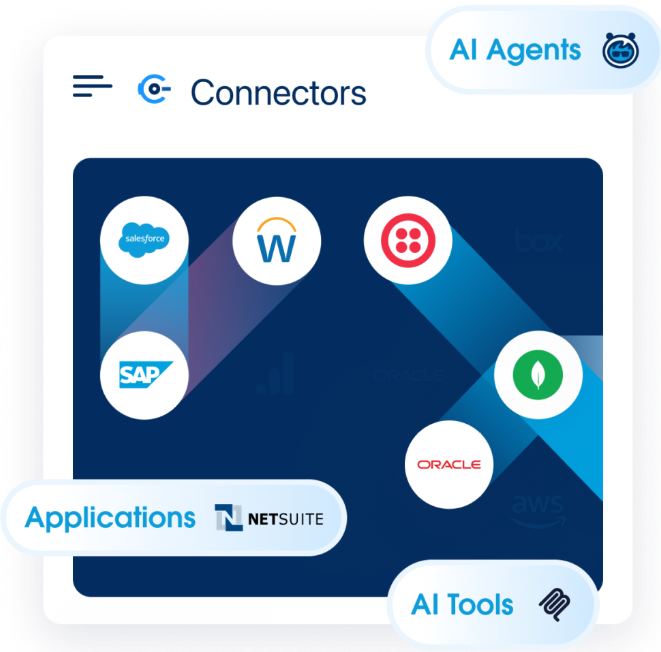
Salesforce's ecosystem is in a class of its own. The AppExchange offers 9,000+ apps spanning every enterprise function. MuleSoft provides pre-built connectors for complex integration scenarios. The Salesforce Platform supports custom development. Whatever you need to connect, Salesforce has a path.
Source: Salesforce
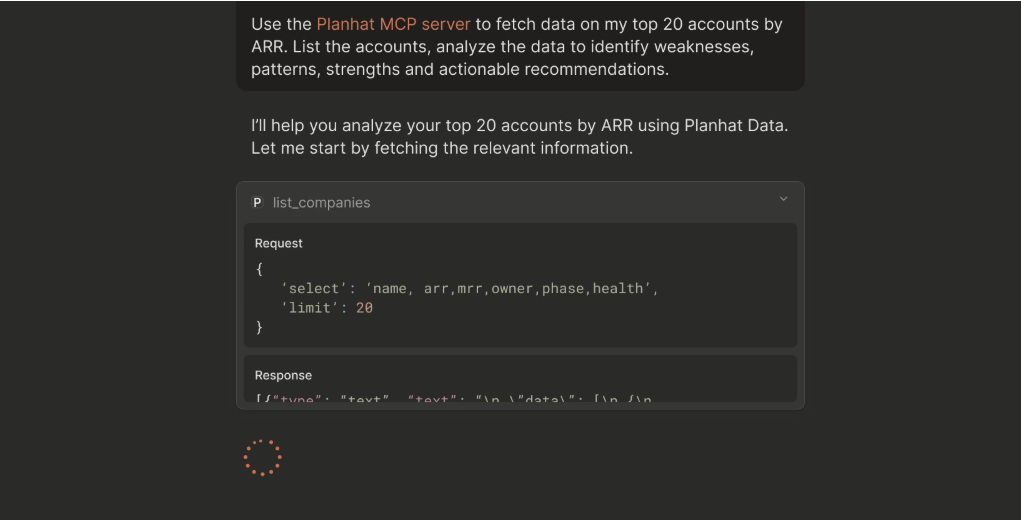
Planhat's integration catalog is smaller but covers the essentials: Salesforce, HubSpot, Pipedrive for CRM sync; Slack, Microsoft Teams, Gmail, Outlook for communication; Zendesk, Freshdesk, Intercom, Jira for support; Gong, Fathom, Fireflies for call recording; Pendo, Mixpanel, Segment, Amplitude for product analytics; and Snowflake, BigQuery, PostgreSQL for data warehouses. Planhat also offers a REST API and an MCP Server for Anthropic's Claude, plus Zapier for low-code connections.
Source: Planhat
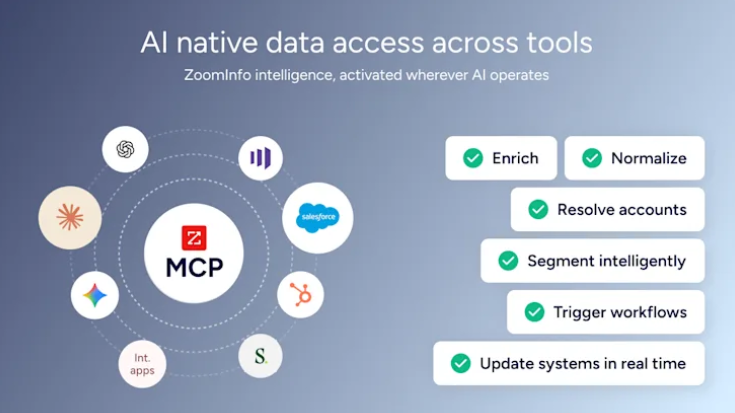
ZoomInfo connects to both ecosystems. The native Salesforce integration enriches CRM records with verified contact data, intent signals, and company attributes. The ZoomInfo App Marketplace lists 120+ partner integrations, and the Enterprise API and MCP server let any application (including Planhat) consume ZoomInfo intelligence programmatically. The same data powering ZoomInfo's own GTM Workspace and GTM Studio flows into whichever tools your team prefers.
Source: ZoomInfo
"The plug-and-play aspect of the API means I can integrate it very easily into any process and get information at a moment's notice." Jerry Wilson, Senior Marketing Intelligence Analyst at BDO Canada, which achieved an 87% reduction in time spent on internal data dashboard updates thanks to ZoomInfo's API. (BDO Canada Case Study)
Implementation and learning curve
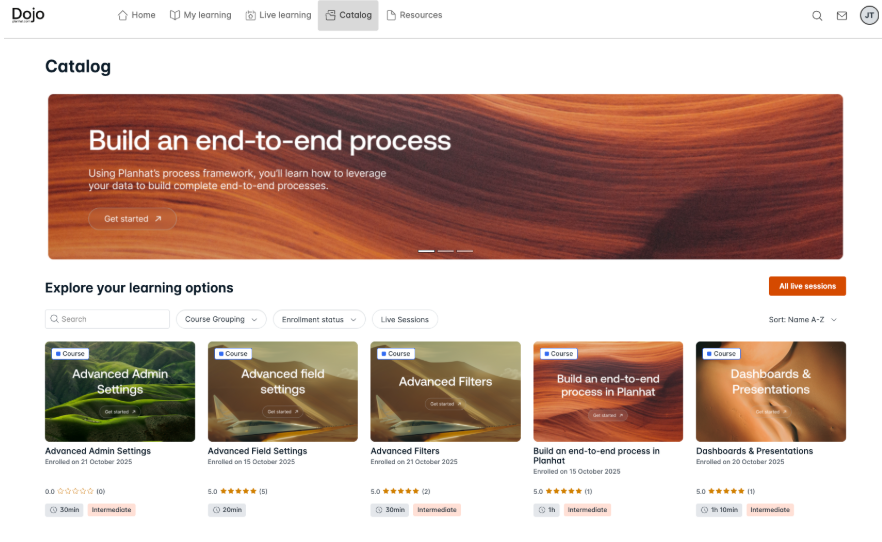
Planhat's learning curve splits sharply between admins and end users. The admin setup spans four phases: data ingestion, data modeling, tenant customization, and automation creation. G2 reviewers consistently note the feature set is large and data filters can confuse new teams. This is not a platform you plug in and use on day one. But once configured, end-user adoption benefits from CS workflows built into the product. Every customer receives a dedicated CSM and Technical Account Manager, and Planhat Dojo offers structured training with certification paths.
Source: Planhat
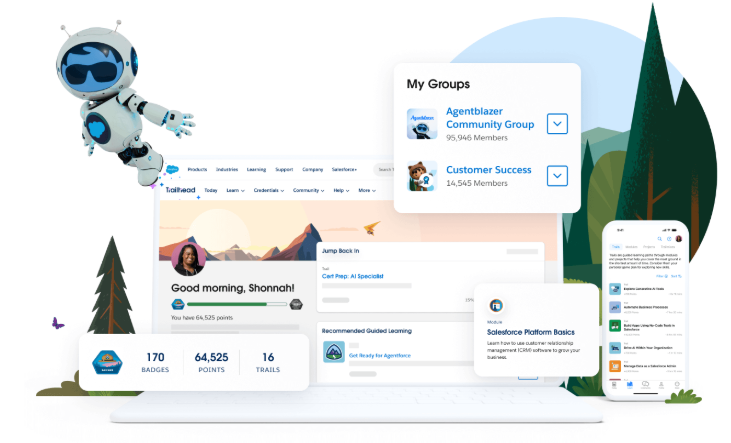
Salesforce's implementation timelines range from weeks (simple Sales Cloud deployment) to 3-12 months (enterprise multi-cloud). Over 70% of implementations are partner-led, adding cost and complexity. The learning curve for end users is manageable thanks to Lightning Experience, but meaningful configuration requires trained administrators. Trailhead (with 6+ million learners and 1,500+ badges) and the Trailblazer Community (with 20 million members) provide the strongest learning resources in the category.
Source: Planhat
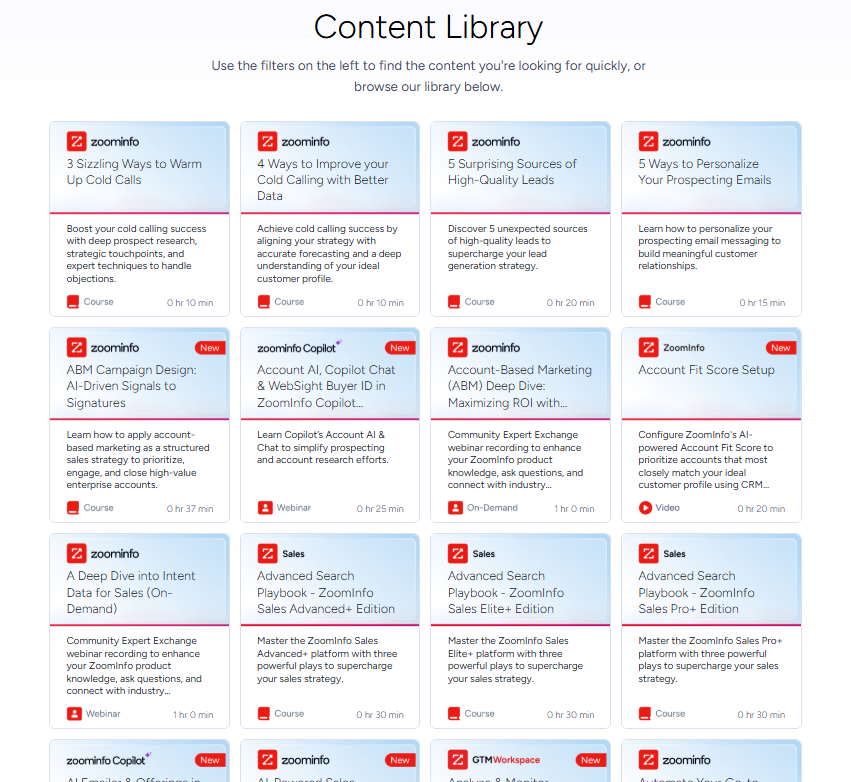
ZoomInfo's onboarding is lighter. The platform deploys in weeks, and ZoomInfo University offers role-specific learning paths for sales, marketing, and administrators. Because ZoomInfo enriches your existing CRM rather than replacing it, teams see value (verified contacts, intent signals, account intelligence) without overhauling their current workflows.
Source: ZoomInfo
Planhat vs. Salesforce vs. ZoomInfo: Which should you choose?
The right choice depends on where your business needs the most help.
Choose Planhat if:
Customer retention and expansion are your primary revenue drivers
You need native health scoring, lifecycle automation, and renewal management
Your CS, services, and post-sale teams need tooling as deep as your sales team's
You want a single platform for Customer Success, CRM, and Professional Services
You have CS Ops resources to configure and maintain a complex system
Choose Salesforce if:
You need a single platform spanning sales, service, marketing, commerce, and analytics
Your organization requires the largest ecosystem of apps and integrations
Autonomous AI agents working across departments fits your vision
You have the budget and implementation resources for a multi-cloud deployment
Industry-specific data models and compliance matter (17 industry clouds available)
Use ZoomInfo with either if:
You want verified, continuously updated B2B data powering your CRM and CS platform
Incomplete contact records, stale company data, or missing intent signals limit your team
You need account intelligence that captures why deals and customer relationships move, not just that they did
You want one intelligence layer accessible through any tool via API and MCP, not locked inside a single application
See how ZoomInfo's data and intelligence layer strengthens your stack.
Planhat and Salesforce both solve real problems for different organizations. Planhat gives post-sale teams depth built into the product. Salesforce gives the entire business breadth. But neither platform generates the verified B2B intelligence that makes health scores accurate, pipeline signals timely, and AI automations useful.
ZoomInfo provides that intelligence layer. Whether your team runs on Planhat's customer success workflows or Salesforce's CRM, the same GTM Context Graph, the same verified data, and the same intent signals flow into your platform of choice. The platform you pick manages the work. ZoomInfo makes sure the data behind it is worth managing.
"It's not just the data itself. It's more about the right data at the right time to help us reach out with the right message across that full buyer journey." Chelsea Kenyon, Senior Director of Digital Strategy, Redwood Logistics, which saw a 99% reduction in CPC and 310% increase in CTR. (Redwood Logistics Case Study)
Planhat vs. Salesforce vs. ZoomInfo FAQ
Is Planhat a replacement for Salesforce?
Planhat can replace Salesforce for organizations where customer success is the primary function. Planhat's native CRM, launched in 2024, handles pipeline management, deal tracking, and renewals on the same data layer as its CS and PSA modules. But Salesforce covers far more ground (marketing automation, commerce, field service, analytics, a 9,000+ app ecosystem). Organizations that need breadth across multiple go-to-market functions will likely still need Salesforce or a comparable full-suite CRM alongside or instead of Planhat.
Which platform is better for customer health scoring?
Planhat has the more sophisticated native health scoring system. It supports multiple Health Profiles with different scoring models for different customer segments, sliding-scale conditions, and conversation sentiment as a direct health input. Salesforce can achieve health scoring through custom configuration, Einstein Analytics, or third-party CS tools on AppExchange, but it requires more assembly. For teams where health scoring drives daily CS operations, Planhat offers depth out of the box that Salesforce takes effort to replicate.
How do the AI capabilities compare?
Planhat embeds AI steps (supporting GPT, Claude, and Gemini with Bring Your Own Model options) directly inside its automation builder, making it practical for CS Ops teams to build AI-powered workflows without engineering help. Salesforce's Agentforce deploys autonomous AI agents powered by the proprietary Atlas Reasoning Engine, designed to perceive, plan, and act across the entire business with minimal human involvement. Planhat's AI is easier to configure; Salesforce's AI is broader in scope.
Can ZoomInfo work with both Planhat and Salesforce?
Yes. ZoomInfo has a native integration with Salesforce for direct CRM enrichment, and connects to Planhat (and any other platform) through its Enterprise API and MCP server. The same verified B2B data, intent signals, and account intelligence power whichever tool your team uses. ZoomInfo does not replace either platform; it is the data and intelligence layer that makes either one more effective. For a direct comparison of how Salesforce and ZoomInfo stack up as platforms, see our Salesforce vs. ZoomInfo comparison.
What does Planhat cost compared to Salesforce?
Planhat does not publish pricing; all plans require a sales conversation. Salesforce publishes list prices starting at $25/user/month (Starter) up to $550/user/month (Agentforce 1), but real costs include add-ons (Agentforce consumption, Data Cloud credits, Premier Support at 30% of license fees) and partner-led implementation that routinely costs 100-150% of annual license fees. Both platforms should be evaluated on total cost of ownership, not just license prices.
Which platform has a faster implementation?
Planhat's implementation is generally faster for focused CS deployments, though configuration of data models, integrations, and automations takes weeks to months depending on complexity. Salesforce implementations range from weeks for simple Sales Cloud setups to 3-12 months for enterprise multi-cloud deployments, with over 70% requiring implementation partners. ZoomInfo deploys in weeks and enriches your existing CRM without requiring a platform migration.
Who should consider using all three platforms together?
B2B organizations with complex go-to-market operations benefit most from a combined stack. Salesforce handles the broad CRM and sales automation needs. Planhat provides customer success management on top of (or synced with) Salesforce's CRM data. ZoomInfo enriches both with verified contact data, company attributes, intent signals, and the GTM Context Graph. This combination gives sales teams the pipeline tools they need, CS teams the health scoring and lifecycle automation they need, and both teams the verified intelligence that makes those tools accurate.
What are the main limitations of each platform?
Planhat's primary limitations are a steep learning curve, complex Salesforce integration management, no publicly available entry-level pricing tier, and limited mobile app functionality. Salesforce's main limitations are pricing complexity (multiple credit types, consumption tiers, and add-on layers), implementation timelines and partner dependency, and the configuration effort required to match the customer success depth Planhat provides natively. ZoomInfo focuses on B2B intelligence and does not replace either platform's CRM or CS workflow capabilities.
Comparing Planhat and Salesforce? These related breakdowns go deeper:
