
If you're comparing Repsly vs. Salesforce for field sales or retail execution, you're asking a deeper question: should you invest in a specialized retail execution tool, or can a general-purpose CRM handle what your field team needs?
The answer depends on five things:
Are your field reps visiting retail stores to audit shelves and fix out-of-stocks, or managing a B2B sales pipeline?
Do you need reps to capture shelf photos and scan barcodes during store visits, or are they closing deals and managing accounts?
Is retail point-of-sale data from Walmart, Kroger, and Target critical to your daily operations?
Do you need a platform that spans sales, service, marketing, and commerce, or one that does retail execution well?
How important is it that your team can identify and reach the right retail buyers before they ever walk into a store?
In short, here's what we recommend:
Repsly is built for CPG brands and retail service providers that deploy field teams to physical stores. Its mobile app handles everything a merchandiser or field sales rep needs during a store visit: shelf audits, photo capture, barcode scanning, order entry, and route optimization. With AI-powered image recognition that returns shelf analysis within 60 seconds and direct integrations with retailer POS data from Walmart, Kroger, Target, and others, Repsly closes the gap between what happens at the shelf and what headquarters sees on a dashboard.
Salesforce is the world's #1 CRM, serving over 150,000 companies with a platform that spans sales, service, marketing, commerce, analytics, and AI agents. For CPG brands, Salesforce manages customer relationships, tracks deals, automates marketing, and coordinates across departments. Its Field Service module adds scheduling and dispatch. But Salesforce is a horizontal platform built for every industry, not a retail execution specialist, so CPG workflows like shelf compliance auditing and planogram checks require customization or third-party add-ons.
These two platforms solve different problems at different layers of the CPG go-to-market stack. Repsly owns in-store execution. Salesforce owns relationship and pipeline management. But both share a dependency: the quality of the data feeding them. Knowing which stores to prioritize, which buyers to contact, and when an account is ready to expand requires intelligence that neither platform generates on its own.
ZoomInfo is a GTM platform built on B2B data covering 500M contacts, 100M companies, 135M+ verified phone numbers, and 200M+ verified business email addresses. For CPG brands, ZoomInfo solves the upstream problem: identifying which retail chains, distributors, and buyers to target, finding verified contact information for category managers and procurement leads, and detecting buying signals that indicate when an account is ready to engage. Whether your execution runs through Repsly's field app or Salesforce's CRM, ZoomInfo's GTM Context Graph provides the intelligence that helps your team focus on the right accounts at the right time. And with direct Salesforce integration and API/MCP access for any system, that intelligence flows wherever your team works.
If finding the right retail buyers and accounts is a bottleneck for your CPG sales team, see how ZoomInfo can help.
Repsly vs. Salesforce vs. ZoomInfo at a glance
Repsly | Salesforce | ZoomInfo | |
|---|---|---|---|
Primary function | Retail execution for CPG field teams | Enterprise CRM and business platform | B2B data intelligence and GTM platform |
Shelf auditing and compliance | Core capability with AI image recognition | Not native; requires customization | Not applicable (upstream intelligence) |
Retail POS data integration | Native (Walmart, Kroger, Target, IRI) | Via third-party integrations | Not applicable |
B2B contact and company data | Not a focus | Basic account/contact records | 500M contacts, 100M companies, 135M+ verified phone numbers |
AI capabilities | ShelfScan image recognition | Agentforce AI agents | GTM Context Graph, AI-powered prospecting |
CRM functionality | Integrates with CRMs (not a CRM itself) | Industry-leading CRM | Enriches CRMs with verified data |
Mobile field app | Built for in-store execution | Salesforce Mobile (general CRM access) | ReachOut Chrome extension, mobile app |
Pricing | Custom-quoted, no public prices | Starts at $25/user/month (Starter Suite) | Custom-quoted, free Lite tier available |
Best for | Merchandisers and field sales reps in stores | Sales, service, and marketing teams across industries | Prospecting, account targeting, and data enrichment |
They solve different problems at different stages
The confusion between Repsly and Salesforce exists because both involve "field sales." But they operate at different stages of the CPG go-to-market process.
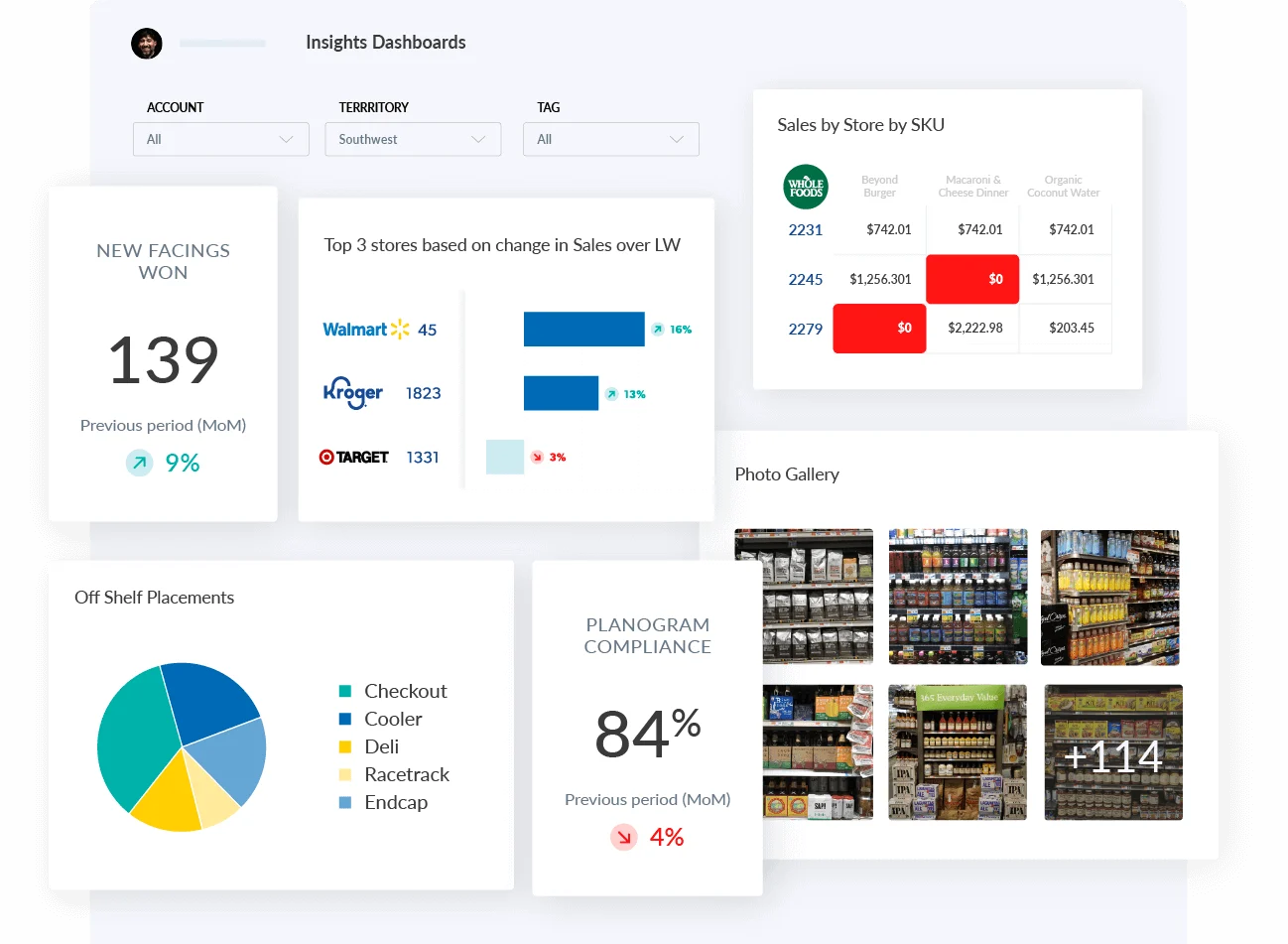
Repsly starts working when a rep walks into a retail store. Its entire design serves one question: "What needs to happen at this store right now?" The app surfaces account-level sales history, inventory data, and prior visit records so reps arrive informed. It builds optimized daily routes that cut drive time.
Source: Repsly
Once inside, reps complete shelf audits, capture compliance photos, place orders via barcode scanning, and process returns. Everything feeds into real-time dashboards that managers use to track execution across territories.
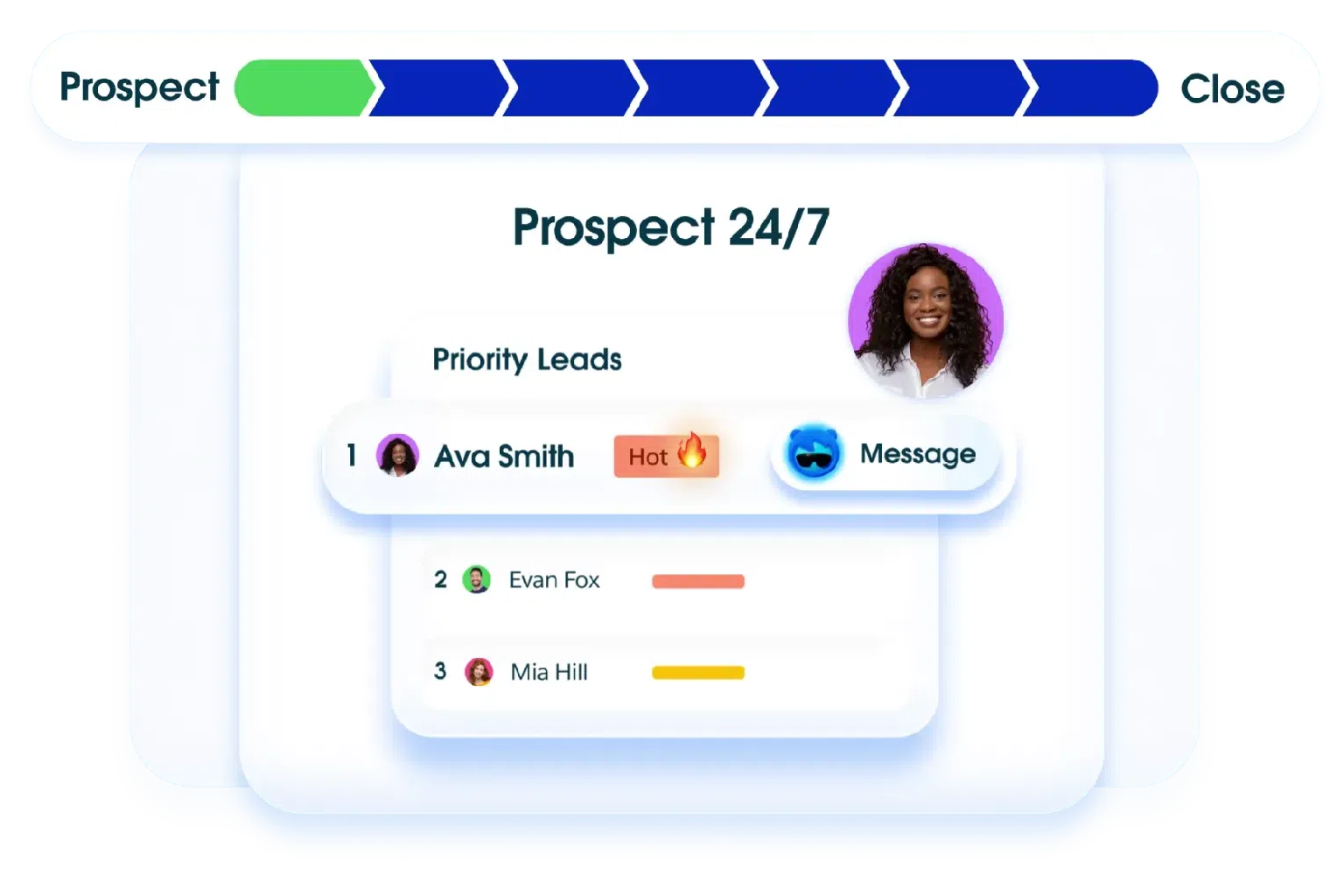
Salesforce starts working much earlier. It manages the full customer lifecycle: lead capture, opportunity tracking, pipeline management, contract negotiation, and ongoing account management. Sales Cloud centralizes deal data and deploys AI agents that handle account research, outreach drafting, and CRM updates.
Source: Salesforce
A CPG brand might use Salesforce to manage relationships with retail chain headquarters, track distribution agreements, and coordinate marketing campaigns. But Salesforce was not designed to tell a field rep whether the Kraft Heinz display in Aisle 7 of a specific Kroger matches the approved planogram.
ZoomInfo operates at the earliest stage: identifying who to sell to and when to reach out. Before a CPG brand can execute in stores or manage accounts in a CRM, it needs to know which retailers, distributors, and decision-makers to target.
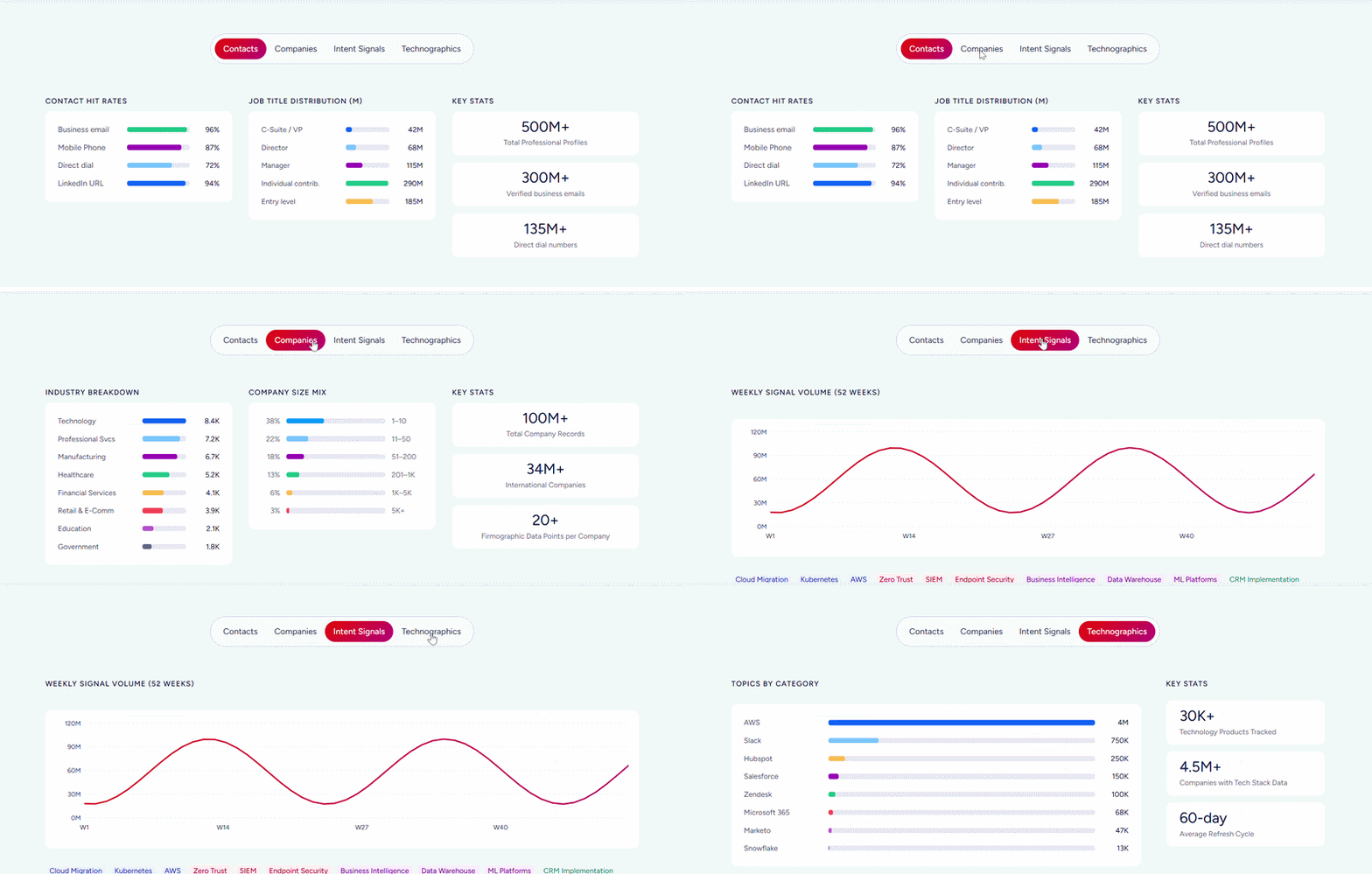
ZoomInfo's data covers 300+ company attributes for market segmentation, buyer intent signals that reveal when companies are actively researching, and verified direct-dial phone numbers and emails for the people who make purchasing decisions.
Seismic attributed 39% of active pipeline to opportunities identified or influenced by ZoomInfo signals, with 54% productivity gains. (Seismic Case Study)
In-store execution is where Repsly has no equal
If your field team visits retail locations to check shelf compliance, fix out-of-stocks, and run promotions, Repsly was built for this.
The platform's strongest differentiator is its integrated POS data layer. Unlike tools that only capture field activity, Repsly connects retailer point-of-sale and inventory data directly from Walmart, Kroger, Target, Whole Foods, and IRI. A rep standing in a store can see actual scan data showing which products are selling and which have gone dark.
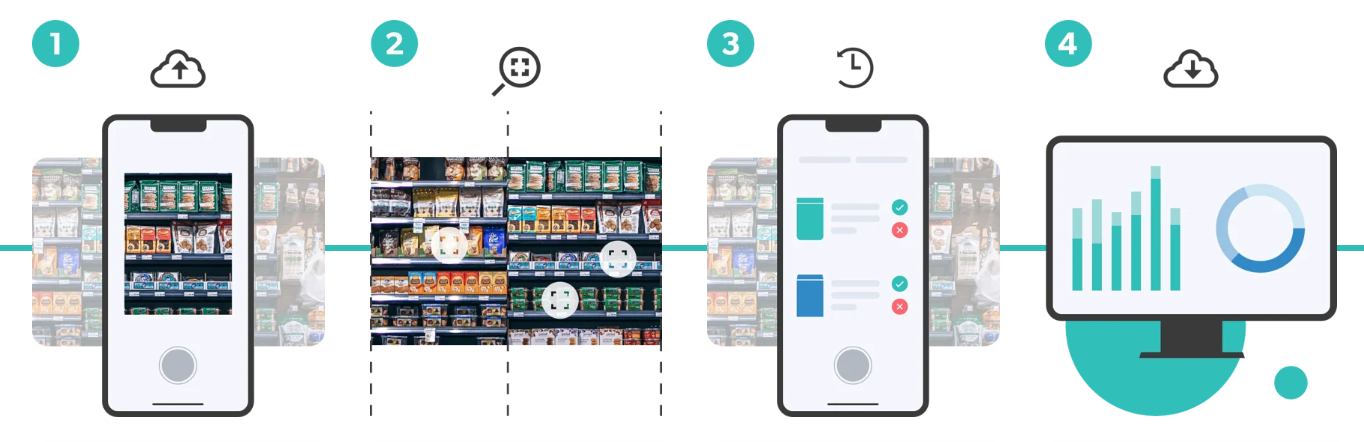
ShelfScan, Repsly's AI image recognition add-on, goes further. A rep photographs a shelf section, and the AI analyzes it within 60 seconds via ShelfAssist, flagging availability issues. Advanced KPI reports follow within 24 hours via ShelfAnalytics.
Source: Repsly
Salesforce has nothing equivalent. Its Field Service module handles scheduling, dispatch, and work orders for technicians and service teams, not retail merchandisers. You could customize Salesforce to capture some shelf data, but you would be building from scratch what Repsly provides out of the box: shelf audit workflows, planogram compliance checks, barcode scanning for order entry, and POS data integration.
Salesforce dominates as a business platform
Where Salesforce surpasses Repsly is in everything outside the store.
Salesforce manages the full customer relationship. A CPG brand negotiating a distribution agreement with a national retail chain needs opportunity tracking, contract management, forecasting, and multi-department coordination.
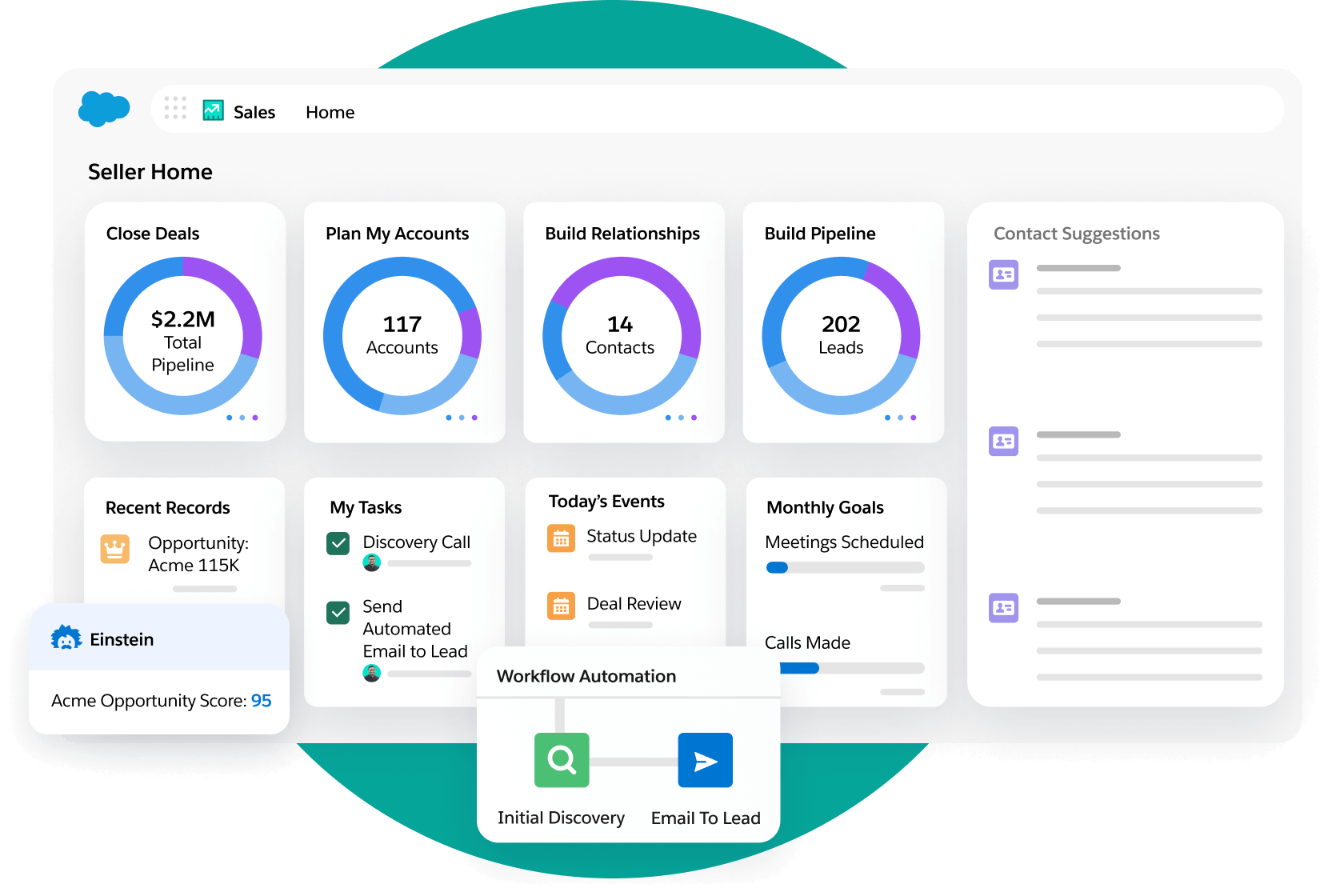
Sales Cloud provides pipeline management with AI deal insights, forecast rollups with Einstein overlay, and activity capture that auto-syncs emails and calendar from Gmail and Outlook. Agentforce agents can research accounts, draft follow-up emails, and update CRM records on their own.
Source: Salesforce
Beyond sales, Salesforce provides Service Cloud for customer support, Marketing Cloud for campaigns, Commerce Cloud for digital storefronts, and Data Cloud for unifying customer data across sources. The AppExchange marketplace offers 9,000+ partner apps with 14+ million installs.
Repsly is not a CRM. It integrates with Salesforce, Microsoft Dynamics, SAP, and NetSuite to share data, but it does not replace any of them. Repsly manages what happens at the shelf. Salesforce manages the business relationships that determine which shelves your products sit on.
The data gap both platforms leave open
Repsly tells your field team what to do inside a store.
Salesforce tracks the relationships and deals that determine your distribution. But neither answers a prior question: which accounts should you target in the first place?
A CPG brand expanding into new retail channels needs to identify distribution partners, find the category managers who make stocking decisions, and understand which accounts are evaluating new products. Repsly's data covers existing accounts your reps already visit. Salesforce contains whatever your team has manually entered or imported.
Neither generates the external market intelligence needed to find new opportunities.
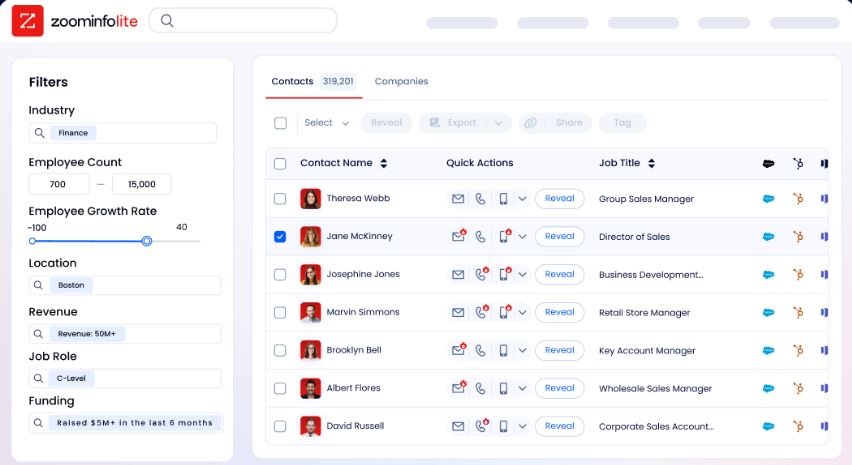
ZoomInfo fills this gap. Its data spans 500M contacts and 100M companies, verified through a pipeline backed by 300+ human researchers with up to 95% accuracy on first-party data. For a CPG brand, this means verified direct-dial phone numbers and emails for retail buyers, category managers, and procurement leads at chains where you want distribution.
Buyer Intent data tracks signals from 210 million IP-to-Organization pairings, revealing when a retailer or distributor is researching products in your category. WebSights identifies which companies visit your website, turning anonymous traffic into leads.
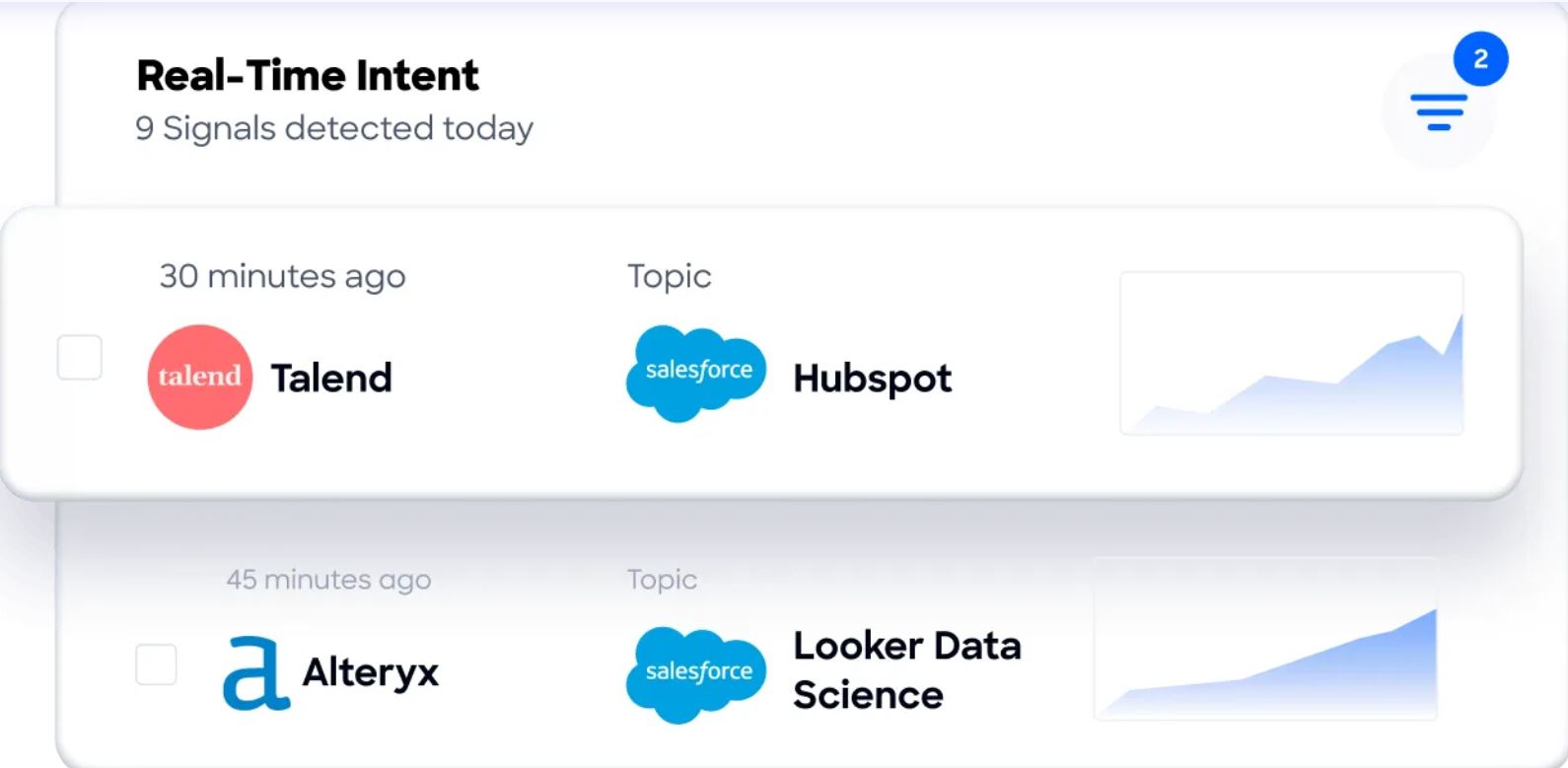
ZoomInfo integrates directly with Salesforce, enriching CRM records with verified contact data, company attributes, technographics, and intent signals. And because Repsly also integrates with Salesforce, data that ZoomInfo pushes into your CRM can inform which accounts your field team prioritizes in Repsly.
For a deeper look at how Salesforce and ZoomInfo compare as standalone platforms, see our Salesforce vs. ZoomInfo comparison.
SpringDB used ZoomInfo's enriched data to achieve 2x to 3x increases in campaign conversions, a 300% increase in database usability, and 30 to 50% uplift in average deal size. (SpringDB Case Study)
Pricing reflects different markets
The three platforms price themselves for different buyers.
Repsly uses a custom-quoted, per-seat subscription model with no published prices. Three tiers exist: Core (shelf management fundamentals), Scale (advanced analytics, product catalogs, and up to 2 days of custom analytics with Repsly's data team), and Flex (designed for retail service providers managing multiple brand clients). AI Image Recognition and CRM/ERP integrations are paid add-ons on the Scale tier.
There is no free trial; Repsly offers a self-guided product tour and proof-of-concept engagements instead. All contracts auto-renew annually with 30 days' written notice required to cancel.
Salesforce publishes its base pricing. Sales Cloud starts at $25/user/month for Starter Suite and scales to $550/user/month for Agentforce 1, which includes unmetered AI agents, Tableau, and Slack Enterprise+. Most teams need at least the $175/user/month Enterprise edition for AI capabilities and workflow automation.
But the listed price is rarely the total cost. Premier Support adds 30% of net license fees. Over 70% of implementations are partner-led, adding consulting costs. Field Service starts at $175/user/month as a separate add-on.
ZoomInfo uses a custom-quoted, consumption-based pricing model with Sales, Marketing, and standalone product tiers. Pricing scales based on seats, credit volume, and features. Unlike Repsly, ZoomInfo offers two free entry points: ZoomInfo Lite (a permanent free tier with 10 monthly export credits, no time limit) and a 7-day free trial of the full platform. API access is included in all relevant plans.
AI capabilities serve different goals
All three platforms invest in AI, but their implementations reflect different priorities.
Repsly's AI focuses on the shelf. ShelfScan uses image recognition to analyze shelf photos, replacing manual counting and recording.
Repsly has also explored AI chatbots for retail execution, with its 2026 Retail Outlook Report declaring "AI moves from Maybe to Must-Have for Retail Execution."
Salesforce's AI is the broadest. Agentforce deploys autonomous agents across sales, service, marketing, and commerce, powered by the Atlas Reasoning Engine. Pre-built agents handle prospecting, lead engagement, sales coaching, case resolution, and guided shopping.
But this AI is general-purpose. It does not know what a planogram violation looks like or how to read shelf conditions in a grocery aisle.
ZoomInfo's AI operates through the GTM Context Graph, which processes 1.5B+ data points daily to reveal not just what happened in a deal, but why it happened.
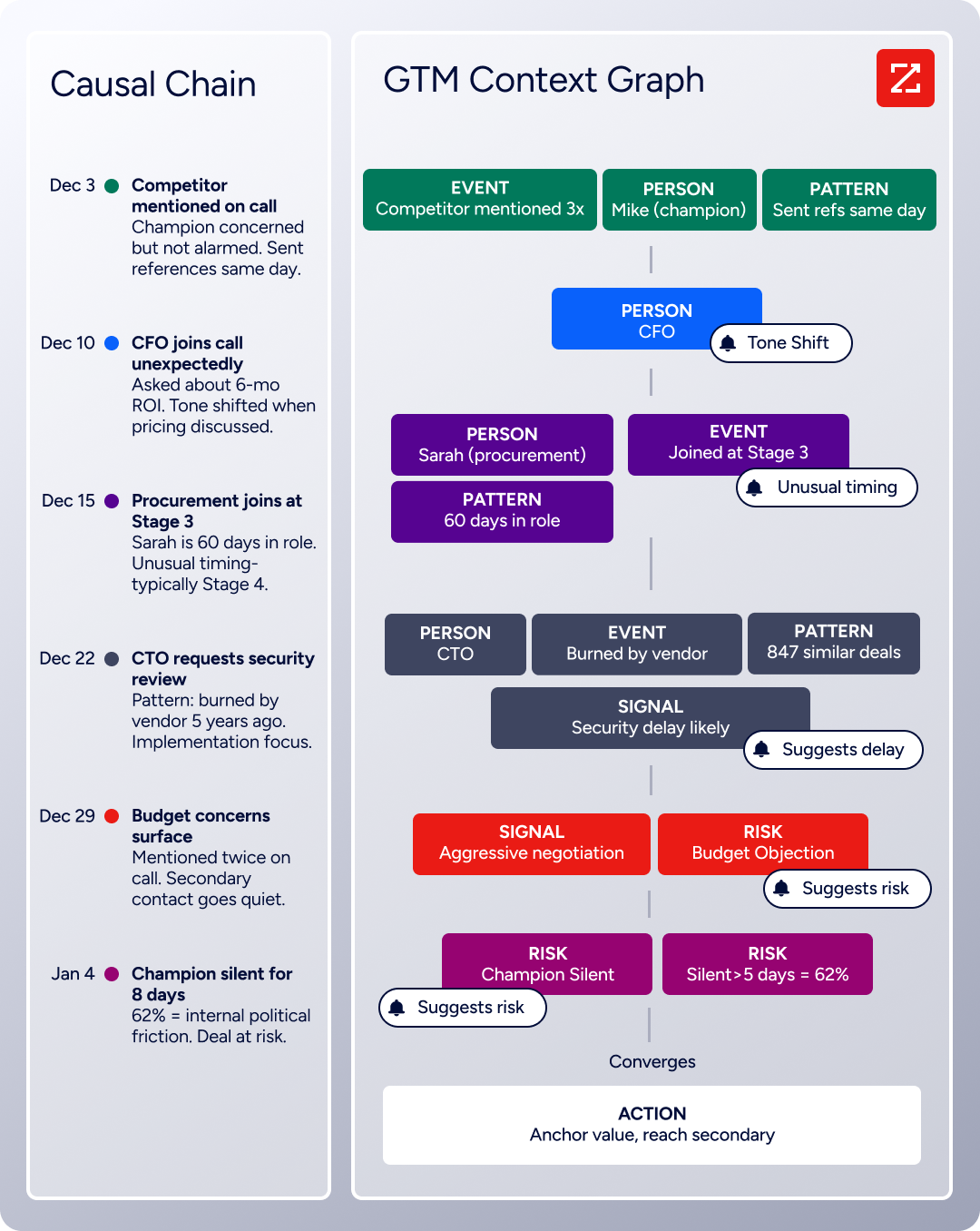
It combines ZoomInfo's B2B data with CRM records, conversation intelligence from Chorus, and behavioral signals to drive account prioritization, outreach generation, and deal intelligence.
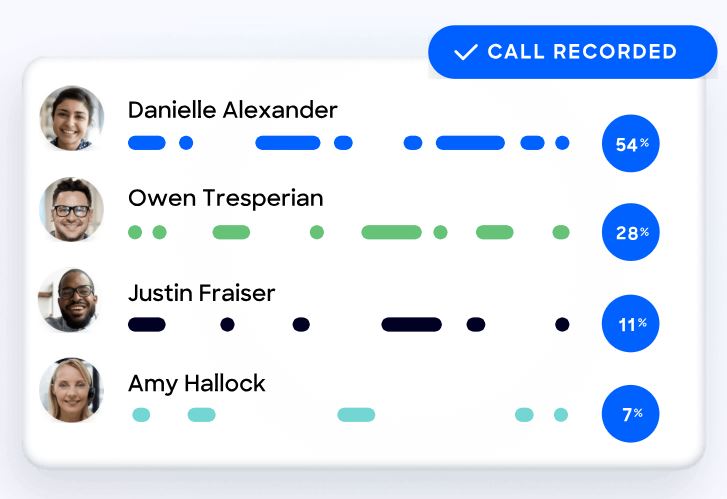
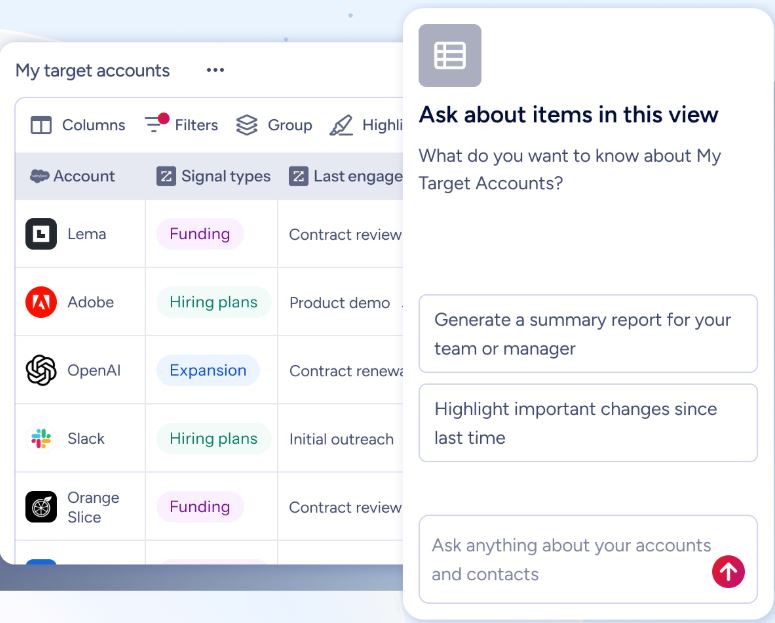
GTM Workspace uses AI agents to surface the right accounts, draft outreach, and monitor buying signals.
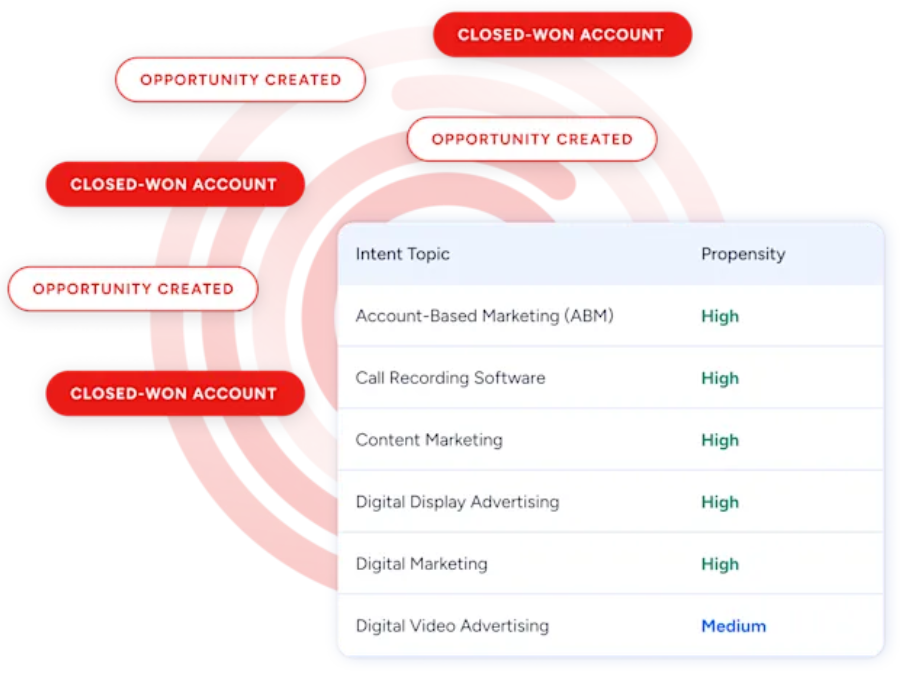
Guided Intent, exclusive to ZoomInfo, identifies topics historically correlated with deal success rather than requiring manual topic selection.
"ZoomInfo's not just a contact data company anymore. They've built a full system of execution. GTM Intelligence works the list, writes the outreach, triggers the play, and helps drive predictable growth." (Ian Brodie, CEO & Co-Founder, Levanta; Levanta Case Study)
Integration and ecosystem comparison
How each platform connects with your tech stack reveals its architectural philosophy.
Repsly integrates with the systems CPG brands already use: Salesforce, Microsoft Dynamics, SAP, and NetSuite for CRM and ERP data sharing, plus retailer POS feeds from Walmart, Kroger, Target, IRI, and Whole Foods. A published REST API (v3) supports bidirectional data exchange, and API access is included starting from the Core plan.
Technology partners include GoodData (analytics dashboards), ParallelDots (AI image recognition), and AWS (cloud hosting). The ecosystem is focused and narrow by design: CRM/ERP connectors and retail data feeds, not a general integration marketplace.
Salesforce has the largest integration ecosystem of any business platform. The AppExchange provides 9,000+ partner apps with 14+ million installs, and 91% of customers use at least one AppExchange app. MuleSoft provides enterprise integration with hundreds of pre-built connectors. Native integrations cover Google Workspace, Microsoft Outlook and Teams, and Slack.
APIs span REST, SOAP, Bulk, Metadata, Tooling, and Pub/Sub. The breadth is unmatched, but connecting multiple clouds and third-party apps requires planning and often dedicated administrators.
ZoomInfo connects through three channels. The Enterprise API provides programmatic access to search, enrich, and AI endpoints.
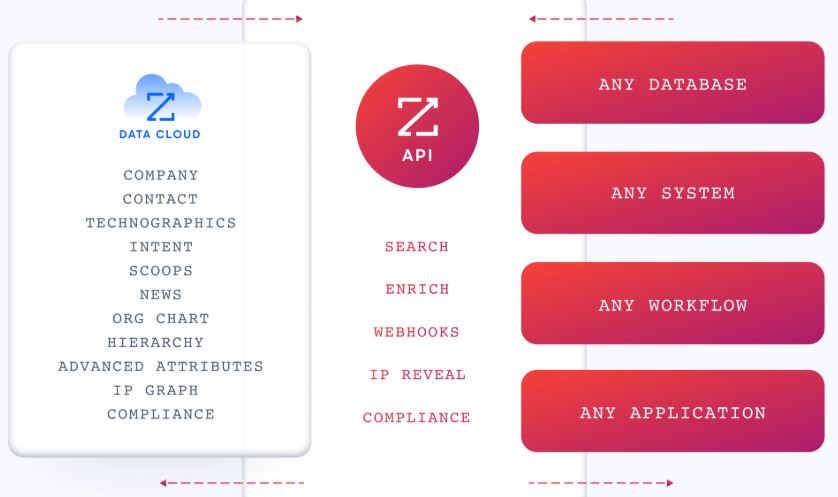
The MCP server lets AI models (including Claude and ChatGPT) query ZoomInfo data through natural language.
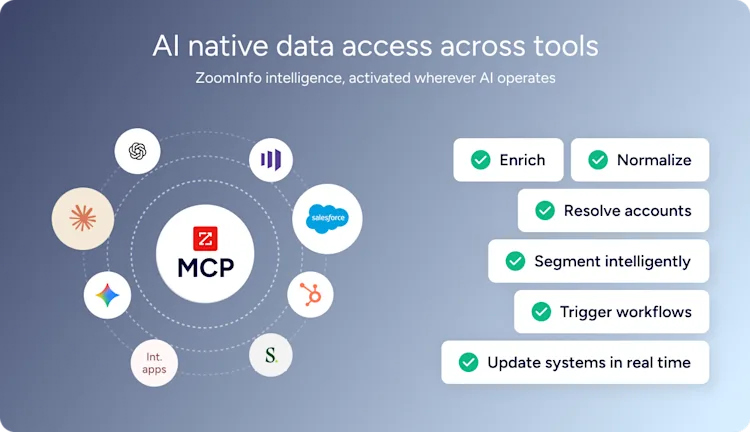
The App Marketplace lists 120 partner integrations including Salesforce, HubSpot, Snowflake, and Dynamics 365. Cloud Partners enable direct data ingestion into AWS, Google Cloud, Snowflake, and Databricks. The philosophy is open access: API access is included in all relevant plans, and the same data powers ZoomInfo's own products and any third-party tool.
"The plug-and-play aspect of the API means I can integrate it very easily into any process and get information at a moment's notice." (Jerry Wilson, Senior Marketing Intelligence Analyst, BDO Canada; BDO Canada Case Study)
Support and onboarding comparison
Repsly scores 4.5/5.0 for customer service on Capterra (134 reviews) and emphasizes "easy onboarding with zero technical training" for field reps. The Scale tier includes up to 2 days of custom analytics built with Repsly's data team.
The company maintains a Zendesk-powered knowledge base, a Resource Center, and a Buyer's Guide. It does not publish support tier structures, response time guarantees, or live chat details on its public website.
Salesforce offers three Success Plan tiers: Standard (free, self-service), Premier (30% of net license fees, with 1-hour response time for critical issues), and Signature (custom pricing, with a dedicated Customer Success Manager and 24/7 support with 15-minute response). Trailhead provides 6+ million learners and 1,500+ badges.
The Trailblazer Community spans 20 million members. The resources are extensive, but using Salesforce well requires ongoing learning and often a certified administrator.
ZoomInfo provides support through a Help Center with five resources: Knowledge Center, ZoomInfo University (role-specific learning paths and certifications), Release Notes Hub, Resource Center, and Modern GTM Community. Direct support is available via contact form and phone.

ZoomInfo redesigned its onboarding from 30 to 90 days, producing a 25% improvement in customer satisfaction scores. Enterprise customers get access to ZoomInfo Labs professional services.
Security and compliance
All three platforms meet enterprise security requirements, with certifications appropriate to their markets.
Repsly holds ISO 27001:2022 certification, complies with GDPR, CCPA, and VCDPA, and is listed as a TADPF-certified company for EU-US data transfers. All data is hosted in AWS US East region with encryption in transit and at rest, and the company publishes a 99.9% uptime goal.
Salesforce has the most extensive certification portfolio: ISO 27001/27017/27018, SOC 1/2/3, FedRAMP (Government Cloud), and HITRUST. Salesforce Shield adds event monitoring, platform encryption with BYOK, and field audit trail as a premium add-on. The Einstein Trust Layer provides zero data retention with LLM partners, PII masking, and toxicity detection for AI features.
ZoomInfo maintains ISO 27001, ISO 27701, SOC 2 Type II, TRUSTe GDPR, and TRUSTe CCPA certifications, all renewed annually. The company is a registered data broker in California and Vermont. A dedicated Trust Center provides security documentation and compliance details.
Repsly vs. Salesforce vs. ZoomInfo: Which should you choose?
These three platforms work at different layers of the CPG go-to-market stack. The right choice depends on which layer is your bottleneck.
Choose Repsly if:
Your primary challenge is executing consistently at the shelf across hundreds or thousands of retail locations
You need field reps to audit planograms, fix out-of-stocks, and capture shelf photos during store visits
Retailer POS data from Walmart, Kroger, and Target is central to how you prioritize field activity
You want AI image recognition that replaces manual shelf auditing
Your field team needs a mobile app built for the CPG store visit workflow
Choose Salesforce if:
You need a business platform spanning sales, service, marketing, and commerce
Managing complex B2B relationships with retail chain headquarters and distributors is your priority
Your organization requires enterprise CRM with extensive customization and integrations
You want AI agents that automate pipeline management, customer service, and marketing campaigns
Your field service needs go beyond retail execution into scheduling, dispatch, and work order management
Choose ZoomInfo if:
Finding and reaching the right retail buyers, category managers, and distribution partners is a bottleneck
You need verified B2B contact data and direct-dial phone numbers for decision-makers
You want intent signals that reveal when accounts are evaluating products in your category
Your CRM data is incomplete and you need automated enrichment
You want an intelligence layer that powers prospecting across any tool via API or MCP
Start with ZoomInfo's free Lite tier or 7-day trial.
Most CPG brands will benefit from more than one of these platforms. Repsly handles what happens inside the store. Salesforce manages the relationships and deals that determine your distribution. ZoomInfo provides the intelligence that helps you find and prioritize the right accounts before your reps walk through the door. Together, they cover the full go-to-market cycle from prospecting through in-store execution.
Repsly vs. Salesforce vs. ZoomInfo FAQ
What is the core difference between Repsly and Salesforce?
Repsly is a retail execution platform built for CPG brands and retail service providers deploying field teams to physical stores. It handles shelf audits, planogram compliance, AI-powered image recognition, route optimization, and order entry during store visits. Salesforce is a general-purpose CRM and business platform that manages customer relationships, sales pipelines, marketing campaigns, and customer service across any industry.
Repsly excels at what happens inside the store; Salesforce excels at managing the business relationships and deals around it.
Can Salesforce replace Repsly for CPG field teams?
Salesforce has a Field Service module for scheduling and dispatch, but it was built for service technicians, not retail merchandisers. It does not include native shelf compliance auditing, planogram checks, AI image recognition for shelf analysis, or direct POS data integrations with retailers like Walmart and Kroger.
Configuring Salesforce to replicate these CPG workflows would require significant customization and third-party add-ons.
Where does ZoomInfo fit if I already use Repsly or Salesforce?
ZoomInfo operates upstream of both platforms. It helps CPG brands identify which retailers, distributors, and buyers to target using verified B2B data covering 500M contacts and 100M companies. ZoomInfo integrates directly with Salesforce to enrich CRM records with verified contact information, company attributes, and buying signals.
Since Repsly also integrates with Salesforce, intelligence that ZoomInfo pushes into your CRM can inform which accounts your field team prioritizes.
Does Repsly have a CRM?
No. Repsly is not a CRM and does not position itself as one. It integrates with CRM platforms including Salesforce, Microsoft Dynamics, SAP, and NetSuite to share field activity and account data. Repsly manages in-store execution data; the CRM manages the broader customer relationship.
How do the platforms compare on pricing?
Repsly uses custom-quoted, per-seat pricing with no published prices and no free trial. Salesforce publishes base pricing starting at $25/user/month for Starter Suite, but real-world costs for CPG teams needing Field Service, AI capabilities, and premium support can reach several hundred dollars per user monthly.
ZoomInfo uses custom-quoted, consumption-based pricing but offers a permanent free Lite tier with 10 monthly export credits and a 7-day free trial of the full platform.
Which platform has the best AI capabilities for CPG?
It depends on the use case. For shelf-level intelligence, Repsly's ShelfScan AI image recognition is the most specialized, delivering results within 60 seconds of a shelf photo with up to 98% SKU accuracy. For enterprise AI agents handling sales, service, and marketing automation, Salesforce's Agentforce platform is the broadest.
For AI-powered prospecting, account prioritization, and deal intelligence, ZoomInfo's GTM Context Graph provides the deepest B2B data foundation.
Can I use all three platforms together?
Yes. Many CPG brands benefit from a layered stack: ZoomInfo identifies and enriches target accounts with verified data and buying signals, Salesforce manages the customer relationships and pipeline, and Repsly handles field execution at the store level. ZoomInfo and Repsly both integrate with Salesforce, making it the natural hub connecting prospecting intelligence with in-store execution data.
How does Repsly handle reporting and analytics?
Repsly provides Insights Dashboards with real-time updates on team performance, retail execution compliance, promotion results, and sales impact. The dashboards connect field activity data with retailer POS data to measure how execution affects sales velocity. The Scale tier includes up to 2 days of custom analytics built with Repsly's data team.
However, user reviews on Capterra and G2 note that self-serve analytics flexibility is limited, and building custom dashboards often requires working with Repsly's data team rather than configuring them independently.
More Salesforce comparisons:
