
Twilio Segment is a leading customer data platform that collects first-party behavioral data from websites, mobile apps, and servers, then routes it to 750+ downstream tools through a single API. For teams that need to unify behavioral event streams and activate audiences across marketing channels, Segment is a capable foundation.
But as your data strategy matures, a general-purpose data pipeline won't cover every challenge. Segment's MTU-based pricing climbs fast at high traffic volumes, implementation demands real engineering work, and the platform focuses on routing first-party behavioral data rather than providing the intelligence, activation, or analytics many teams need.
That's where this guide comes in. Whether you're looking to:
Add B2B intelligence and AI-powered prospecting to your go-to-market strategy
Collect mobile and multi-channel data with SDKs built for enterprise scale
Consolidate tag management and CDP governance under a single vendor
Own your customer data in your own warehouse with open-source, affordable infrastructure
Activate warehouse data directly without re-instrumenting your applications
Replace your analytics and experimentation stack with one free platform
Improve ad signal quality and ROAS through server-side first-party data collection
We'll cover alternatives that excel in each area.
Some businesses use these tools alongside Segment to fill gaps; others replace it entirely. This isn't about finding a "better" platform. It's about finding the right fit as your needs grow.
Here are the alternatives.
The Best Segment Alternatives |
|---|
Best Alternative for B2B Go-to-Market Intelligence and Prospecting We chose ZoomInfo because it takes a different approach to B2B growth. Instead of routing first-party behavioral data, ZoomInfo provides third-party B2B intelligence, AI-powered deal insights, and built-in execution tools for sales and marketing teams. |
Best Alternative for Enterprise-Scale Mobile and Multi-Channel Data Infrastructure We chose mParticle because its dedicated mobile SDKs, configurable identity resolution strategies, and built-in AI engine make it the strongest pick for large consumer-facing enterprises where mobile is the primary data channel. |
Best Alternative for Integration Breadth and Tag Management Governance We chose Tealium because its 1,300+ pre-built integrations and combined tag management and CDP under a single contract eliminate the extra work of maintaining separate governance models. |
Best Alternative for Cost-Conscious Developer Teams with Warehouse-Native Data Ownership We chose RudderStack because its open-source architecture, event-based pricing, and permanent free tier make it the most practical entry point for developer teams that want a warehouse-native Segment replacement. |
Best Alternative for Warehouse-Native Data Activation We chose Hightouch because it turns your existing data warehouse into a live activation layer, syncing warehouse models directly to 250+ destinations without duplicating data or re-instrumenting your applications. |
Best Alternative for Product Engineering Teams Seeking an All-in-One Free Platform We chose PostHog because it replaces the multi-vendor analytics stack most Segment users build on top of the pipeline, consolidating product analytics, session replay, feature flags, and A/B testing in one open-source platform. |
Best Alternative for Ad Signal Quality and No-Code Server-Side Data Collection We chose CustomerLabs because it solves the cookie and signal-loss problem Segment wasn't built to fix, pushing Meta Event Match Quality into the 7-10 range through server-side first-party domain tracking and signal engineering. |
What is Segment?
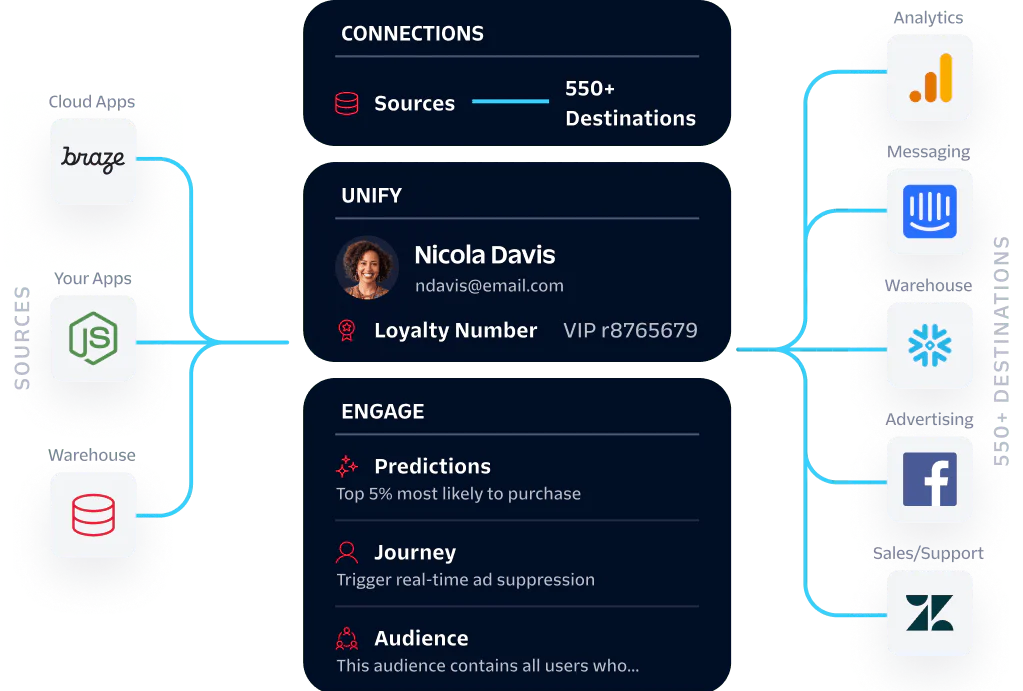
Twilio Segment is a customer data platform (CDP) that serves as the data layer within Twilio's Customer Engagement Platform. Twilio acquired Segment for $3.2 billion in November 2020. The platform collects first-party data from every customer touchpoint and routes it to downstream tools for a unified view. Its key features include:
Connections: Collects events from websites, mobile apps, and servers through a single API and routes them to 550+ destinations
Unify: Identity resolution that builds unified profiles from all sources, including the data warehouse
Engage: Audience building and personalized journey orchestration across channels
Protocols: Schema validation, consent management, and data quality enforcement
Reverse ETL: Two-way data flow between your warehouse and operational tools
CustomerAI: Predictive traits, recommendations, and ML-generated audiences
Source: Segment
When a user interacts with your product, Segment captures the event, resolves their identity across devices, enriches their profile, and routes the data to every connected destination at once. This "instrument once, route everywhere" approach eliminates duplicate tracking code and creates a single source of truth for customer behavior.
What sets Segment apart in the CDP category is its combination of CDP and communications infrastructure in one platform: collect data with Segment, then activate through Twilio's SMS, email, WhatsApp, and voice channels.
However, Segment's MTU-based pricing gets expensive at scale, implementation requires real engineering work, and the platform focuses on first-party behavioral data collection and routing. For teams that need broader capabilities (third-party intelligence, specialized mobile infrastructure, product analytics, or ad signal optimization), a more focused tool may fit better.
Looking for B2B intelligence that goes beyond behavioral data? ZoomInfo's AI GTM platform gives your sales and marketing teams access to 500M contacts, AI-powered deal insights, and built-in execution tools. Learn more about ZoomInfo.
How We Curated Our List of Segment Alternatives
After testing Segment and researching the market, we focused on tools that address gaps businesses hit as they scale. Segment collects and routes first-party behavioral data well, but teams often need more specialized capabilities for:
Building B2B pipeline with prospect intelligence and AI-powered outbound execution
Collecting mobile and multi-channel data with enterprise-grade SDK performance
Managing both tag governance and customer data in a single platform
Owning customer data in their own warehouse with cost-efficient, open-source infrastructure
Activating warehouse data directly in marketing and CRM tools without re-instrumentation
Running product analytics, experiments, and session replay alongside event collection
Improving ad platform ROAS by solving the signal-loss problem caused by privacy restrictions
Each tool on this list leads in one of these areas. You might use them alongside Segment or switch entirely.
DISCLAIMER: We aren't covering every tool in the market. We selected alternatives that address specific Segment limitations for different use cases. |
|---|
1. ZoomInfo: Best Alternative for B2B Go-to-Market Intelligence and Prospecting
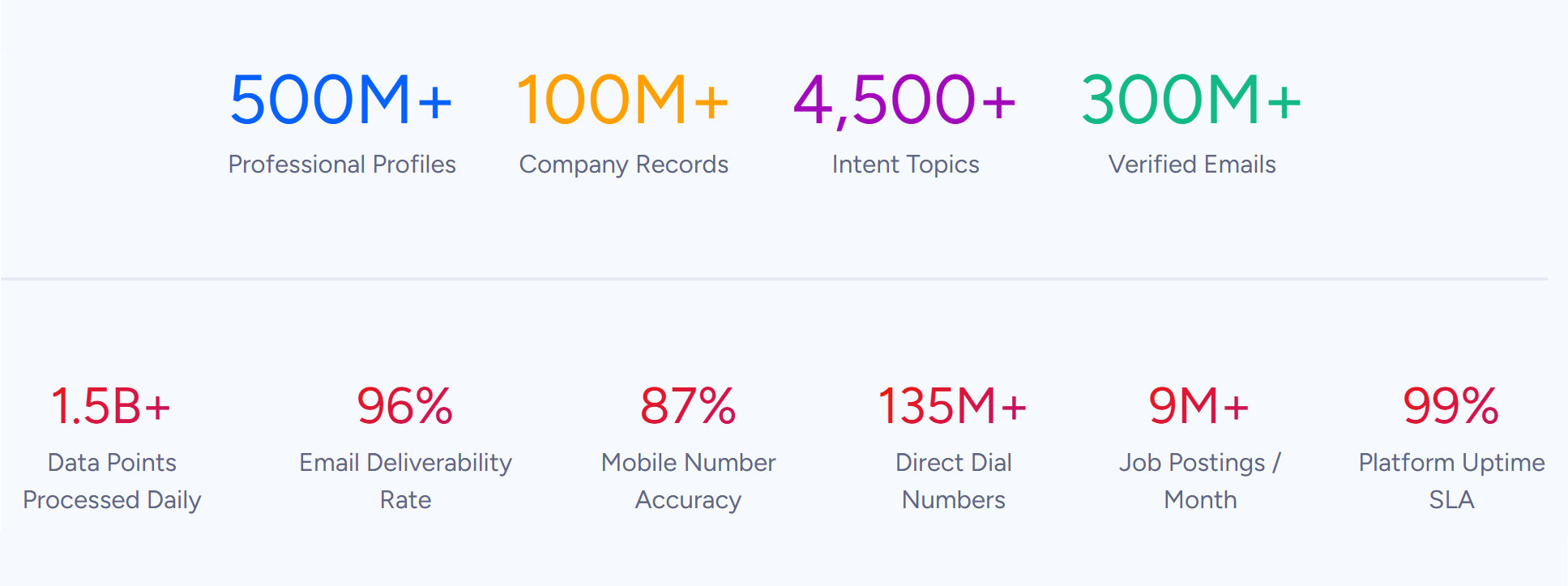
ZoomInfo is an AI GTM platform with the largest B2B database available: 500M contacts, 100M companies, 135M+ verified phone numbers, 120M direct dials, and 200M+ verified business emails. Its GTM Context Graph processes 1.5B+ data points daily, unifying this data with your CRM records, conversation transcripts, and behavioral signals to show the full context of your accounts.
Unlike Segment, which collects and routes first-party data about users who already interact with your properties, ZoomInfo provides third-party intelligence that helps you find and engage prospects you haven't reached yet. Teams access this intelligence through GTM Workspace for sellers, GTM Studio for marketers and RevOps, or APIs and MCP in any third-party tool. Its key features include:
B2B data: 500M contacts, 135M+ verified phone numbers, 120M direct dials, and 200M+ verified business email addresses with up to 95% accuracy on first-party data
GTM Context Graph: Processes 1.5B+ data points daily, fusing third-party intelligence with your CRM records, conversation transcripts, and behavioral signals
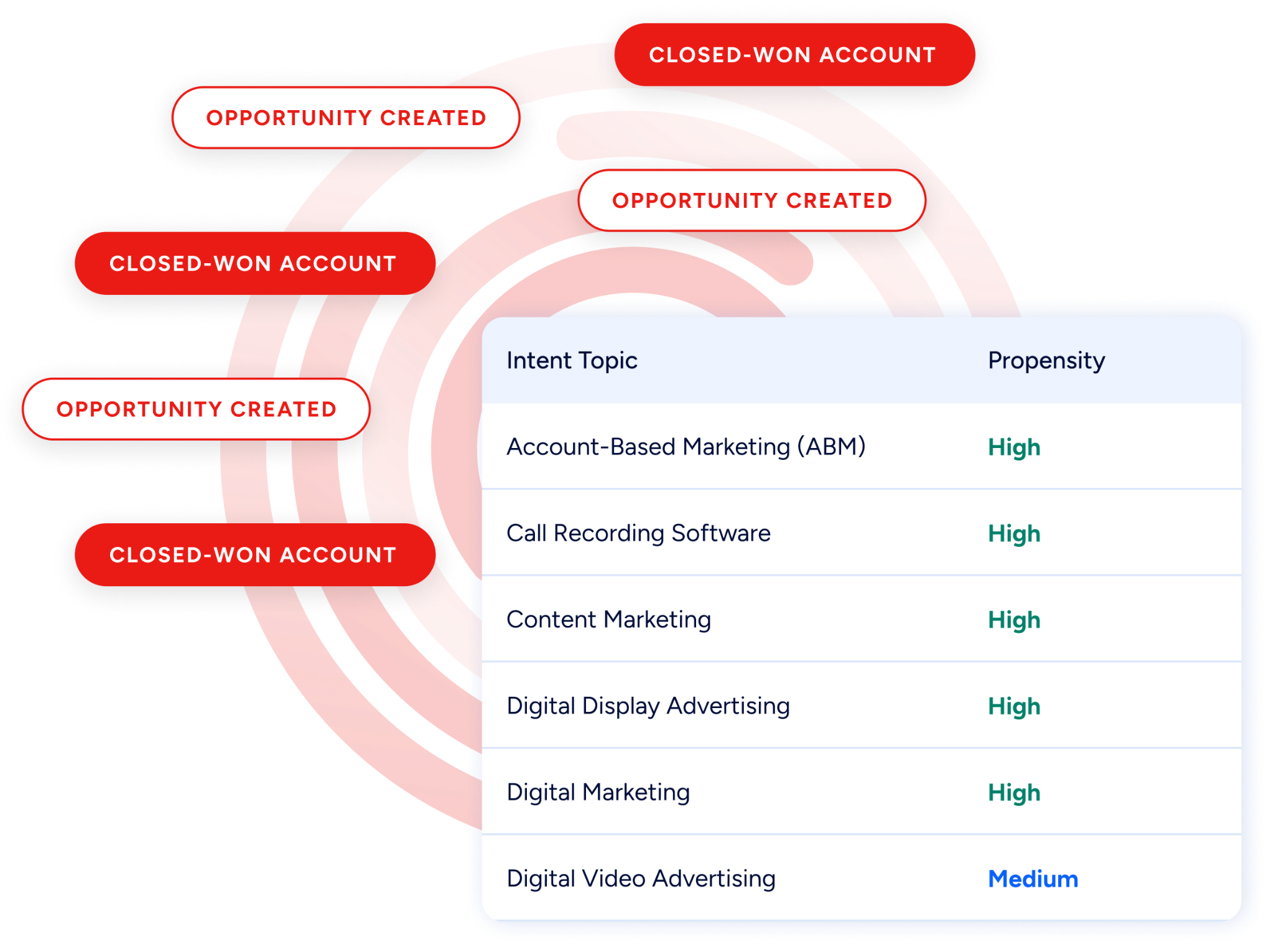
Buyer Intent Data: Tracks intent data signals from 210 million IP-to-Organization pairings and 6 trillion+ new keyword-to-device pairings sourced monthly to identify in-market accounts
Universal access: Available through GTM Workspace for sellers, GTM Studio for marketers and RevOps, or APIs and MCP in any third-party tool
Source: ZoomInfo
For B2B teams, the challenge isn't routing first-party data. It's finding prospects, understanding buying committees, and knowing when accounts are in-market. ZoomInfo fills this gap with a different approach to go-to-market execution.
Why Choose ZoomInfo Over Segment For B2B Go-to-Market Intelligence
Segment tracks what your existing users do on your properties. ZoomInfo identifies who you should target, why they're likely to buy, and how to reach them.
B2B Data Foundation: Find and Reach Decision-Makers Directly
Segment collects data about users who have already visited your website or used your product. ZoomInfo provides intelligence on 500M contacts and 100M companies in your total addressable market, including those who have never heard of you.
Source: ZoomInfo
The platform covers three data dimensions: identity data (who buyers are, where they work, how to reach them), company context (org charts and technographics across 30,000+ technologies), and signals that reveal when a company is in-market.
This data runs through a verification pipeline backed by 300+ human researchers and automated ML scanning of 28 million site domains daily. The resulting quality is externally validated: in a Fortune 500 competitive RFP analyzing 25 million contacts across vendors, the independent consultant concluded that "no other competitor came even close."
ZoomInfo in Action: Your sales team targets mid-market fintech companies that use Salesforce and recently received Series B funding
Instead of waiting for those prospects to visit your website and generate Segment events, ZoomInfo lets you search across 300+ company attributes, identify the VP of Engineering and CFO at each target account with verified direct dials and business emails, and export them to your CRM in one click.
"ZoomInfo gives us the information we need to execute. It's already there, so we can be three steps ahead." - William Kenimer, Vice President of Revenue Operations (Vensure)
GTM Context Graph: Understand Why Deals Move, Not Just What Happened
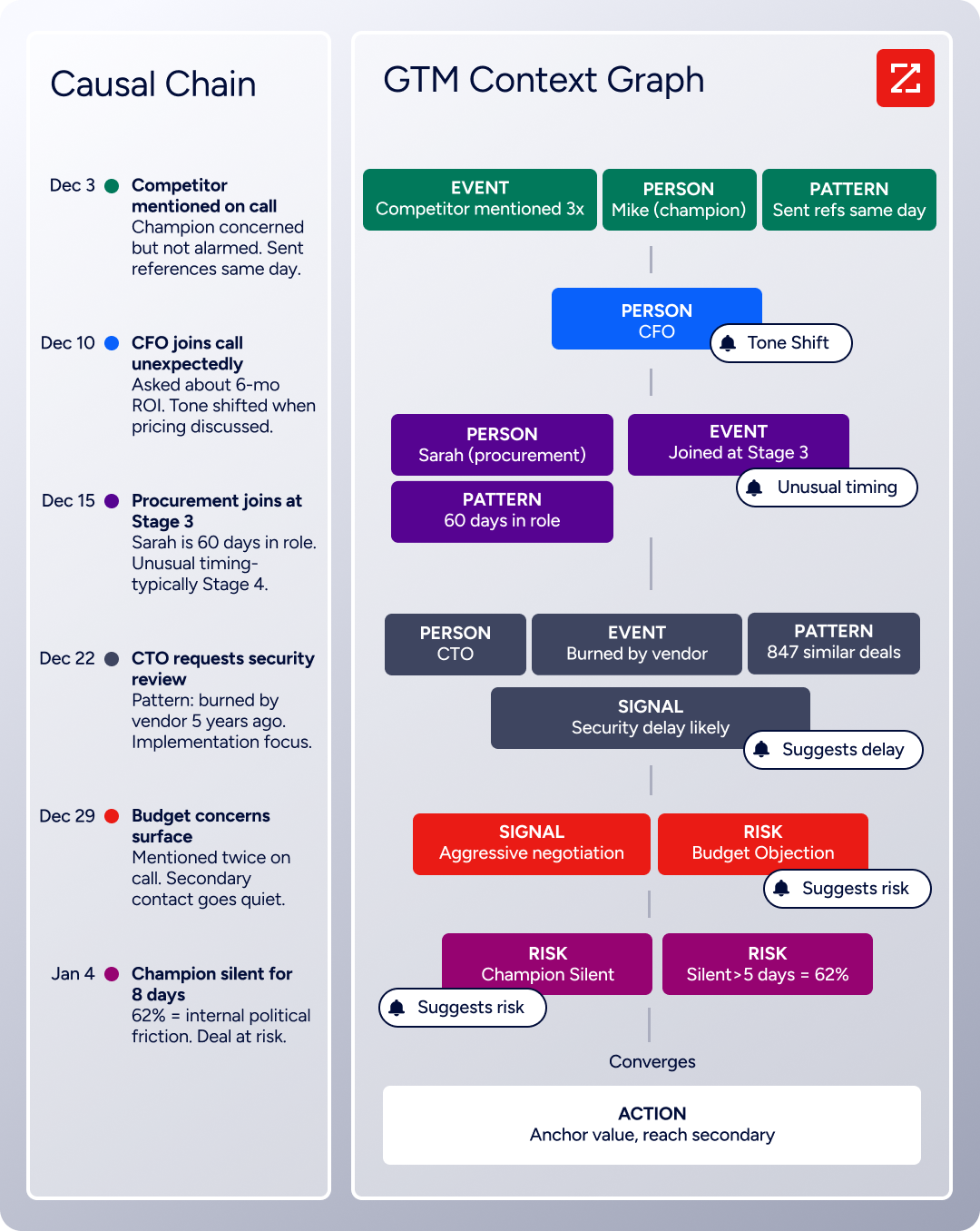
Segment records that a user visited your pricing page or completed an onboarding step. ZoomInfo's GTM Context Graph goes further, fusing your CRM records, conversation intelligence from calls and meetings, email interactions, and product usage signals with ZoomInfo's third-party intelligence into a graph that captures not just what happened in a deal, but why.
Source: ZoomInfo
As ZoomInfo's Chief Product Officer Dominik Facher writes: "The CRM recorded the state change. It has no record of why it happened." The GTM Context Graph reasons across all of this data to capture people and their relationships, actions and their outcomes, patterns and predictions, and exceptions and explanations.
ZoomInfo in Action: Your CRM shows a deal moved from Stage 3 to Stage 4 and the close date slid two weeks. Segment can tell you the prospect visited your ROI calculator page.
ZoomInfo's GTM Context Graph tells you the CFO joined the last call and asked about six-month ROI (the signal that accelerated the deal), combined with third-party signals showing the company is hiring three new VPs and researching your competitor. That reasoning flows into AI-drafted follow-up emails that address the CFO's concern.
Seismic attributed 39% of active pipeline to ZoomInfo-influenced opportunities, with reps 54% more productive. "That combination of our internal CRM data, external signals, and AI has helped us craft very specific account- and persona-based messages." — Toby Carrington, Chief Business Officer (Seismic)
AI-Powered GTM Execution: From Intelligence to Action in One Platform
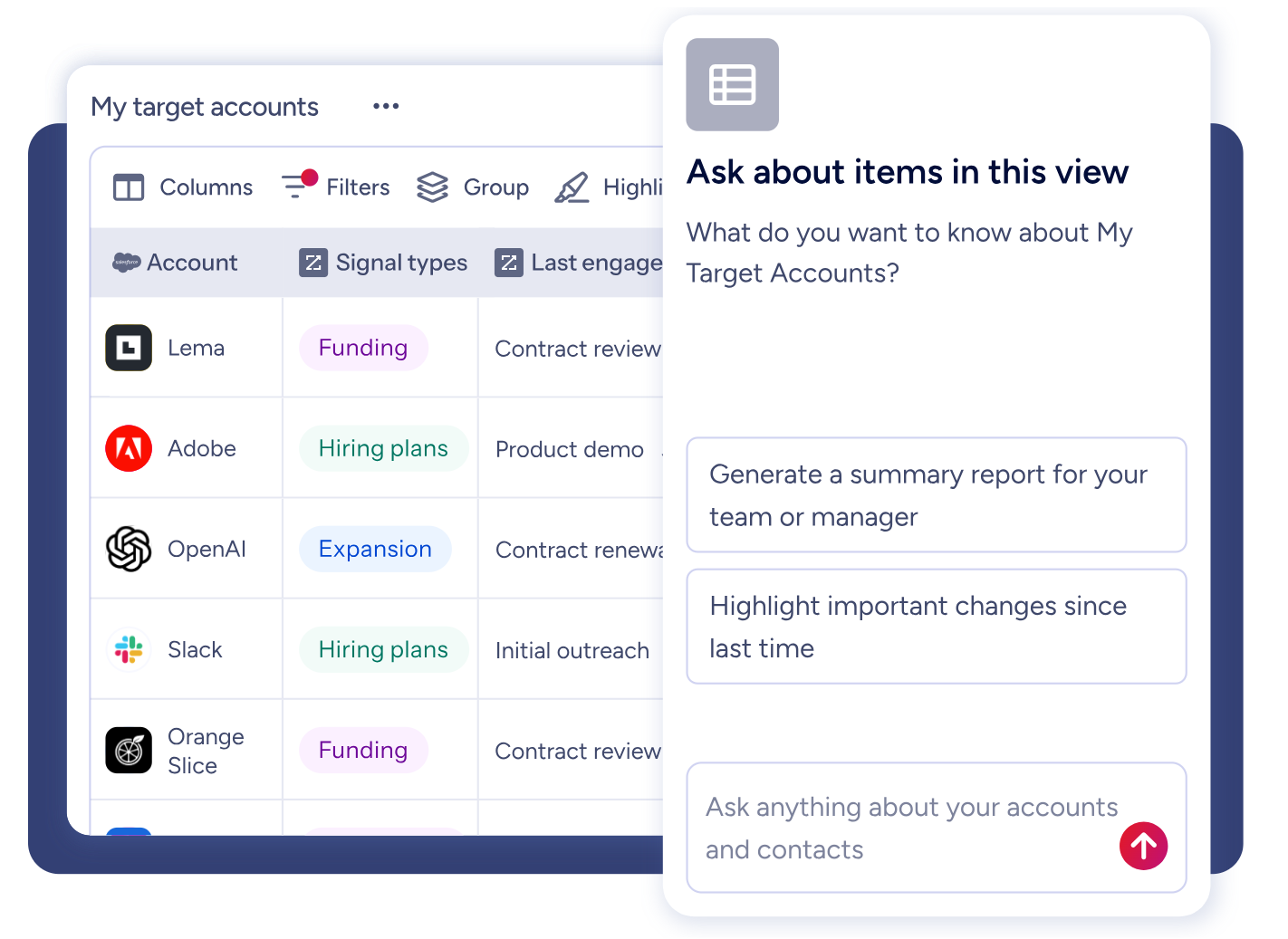
Segment routes data to execution tools. ZoomInfo is the execution tool. GTM Workspace gives sellers one screen where prioritized accounts, AI-drafted outreach, and deal execution come together. AI agents research accounts, generate follow-ups, monitor signals, draft outreach, and update CRM fields automatically.
Source: ZoomInfo
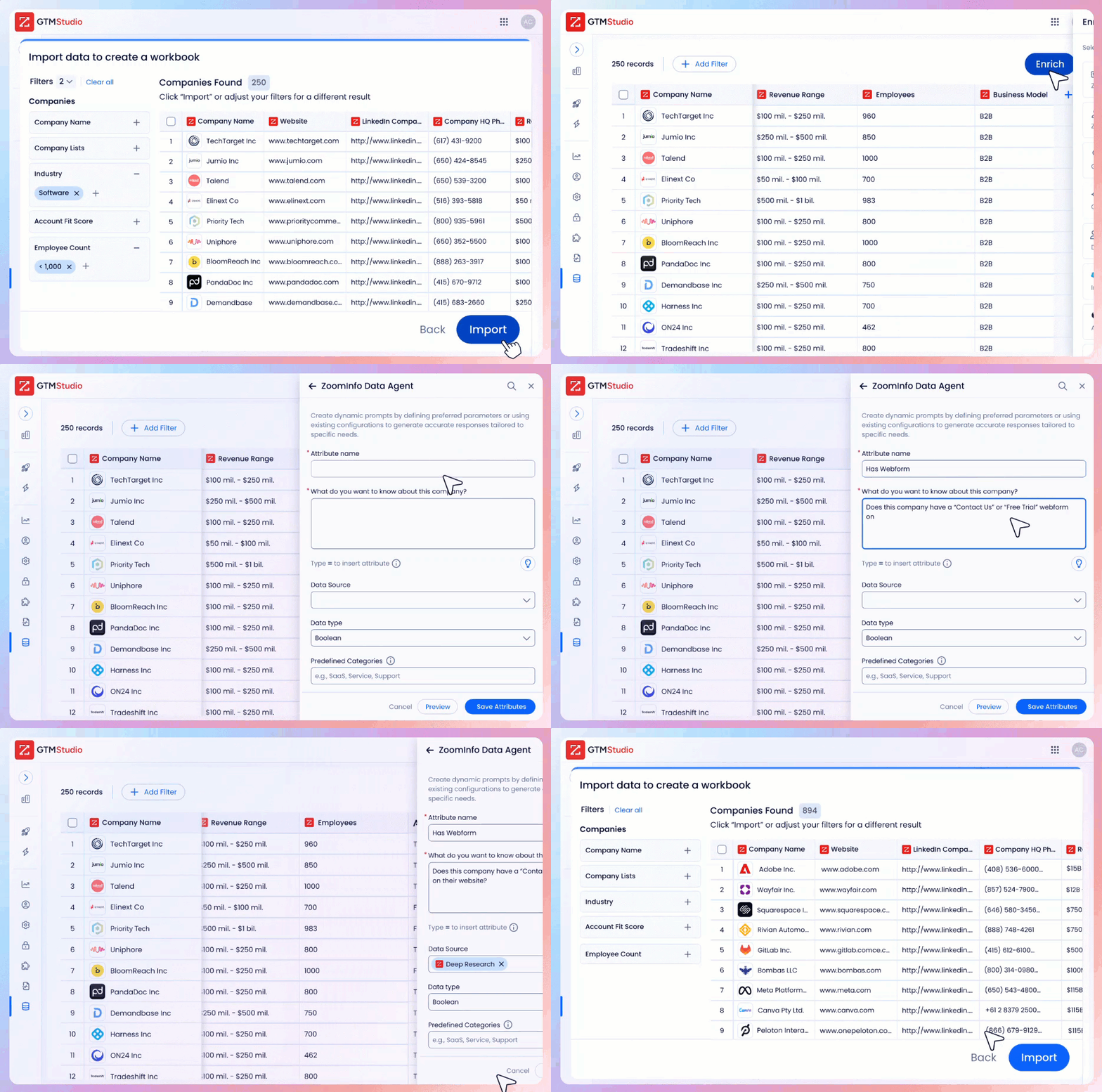
GTM Studio gives marketers and RevOps a builder where they define audiences, run campaigns, and measure pipeline in plain language instead of filing engineering tickets. Expansion plays that took 3 weeks now launch in 30 minutes, with no technical support needed.
Source: ZoomInfo
ZoomInfo in Action: A marketer in GTM Studio describes an audience in plain language ("mid-market SaaS companies in the US that use HubSpot and show intent signals for CRM migration"), launches a multi-channel play targeting accounts that match proven win patterns, and watches pipeline impact in real time. No engineering ticket needed.
Meanwhile, a seller opens GTM Workspace to an AI-drafted follow-up that addresses the objection from the last conversation, then updates the CRM without leaving the page.
"It's not just the data itself. It's more about the right data at the right time," said Chelsea Kenyon, Senior Director of Digital Strategy, after Redwood Logistics saw a 99% reduction in CPC and 310% increase in CTR. (Redwood Logistics)
Universal Access: Use ZoomInfo's Intelligence in Any Tool
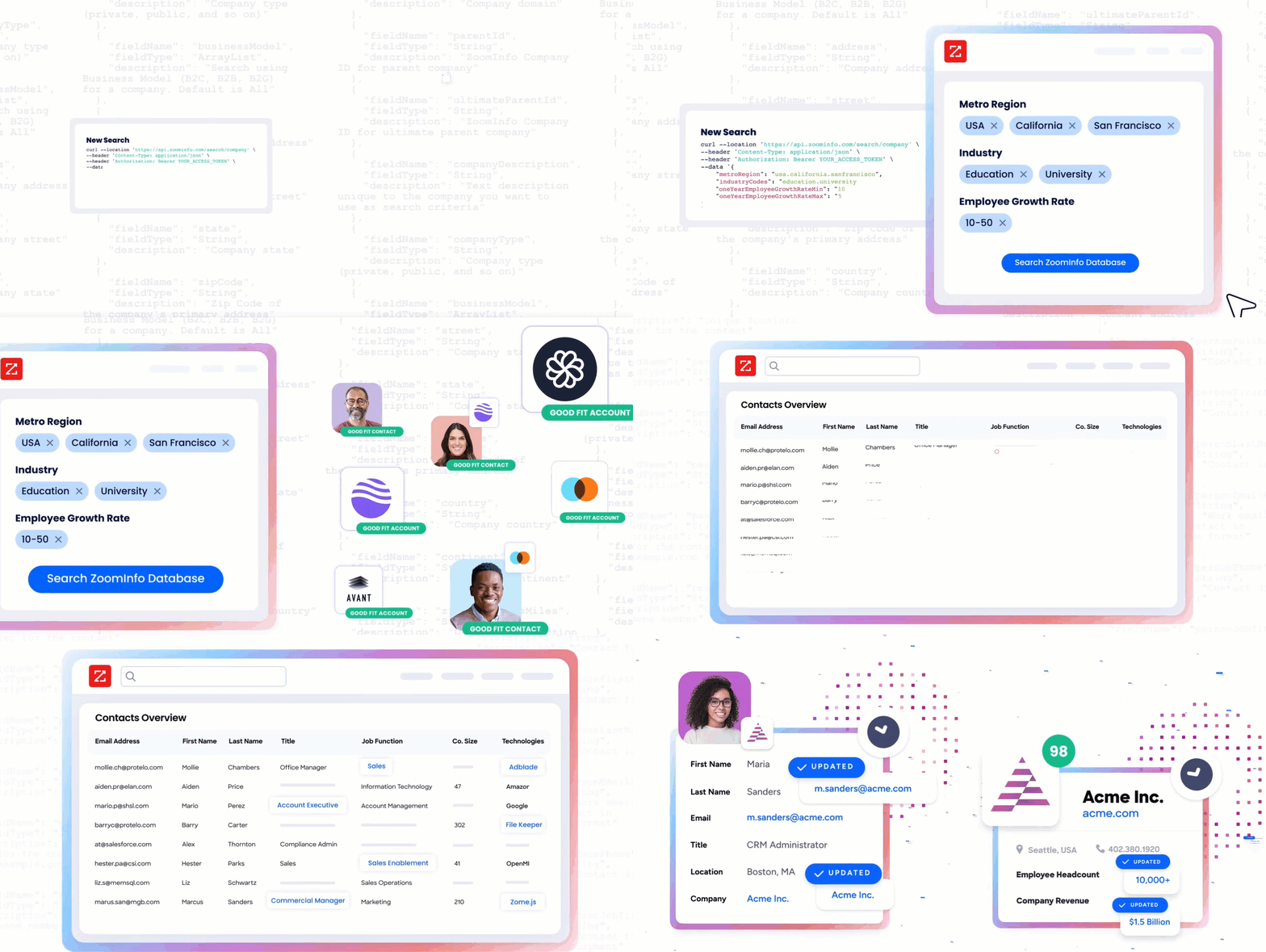
For teams building beyond ZoomInfo's own products, APIs and MCP expose the same intelligence to any custom agent, internal tool, or partner platform.
Source: ZoomInfo
ZoomInfo's MCP server connects AI models to its B2B data, currently supporting Claude and ChatGPT. API access is included in all relevant plans, and the ZoomInfo App Marketplace lists 172+ partner integrations across CRM, marketing automation, sales engagement, and data warehouses.
Source: ZoomInfo
The same data and intelligence, available in any tool, workflow, or AI agent.
ZoomInfo in Action: A data engineer connects ZoomInfo's Enterprise API to the company's lead scoring system. Every inbound lead gets enriched with company context, technographics, and intent signals.
A financial services firm builds an internal app using ZoomInfo's MCP server, giving their custom AI agent real-time access to prospect intelligence. As CEO Henry Schuck noted: "That's a surface area we would never see before."
NOTE: While other platforms on this list focus on collecting, routing, or activating first-party behavioral data, ZoomInfo addresses a different need: B2B intelligence and AI-powered GTM execution. For B2B teams, ZoomInfo and Segment can work together: Segment handles behavioral data collection, ZoomInfo provides the third-party intelligence. ZoomInfo is a Leader in the Gartner Magic Quadrant for ABM Platforms (2024 & 2025) and the Forrester Wave for Intent Data Providers B2B (Q1 2025).
ZoomInfo Pricing
ZoomInfo uses consumption-based pricing with custom quotes based on usage, user count, credit volume, features, and contract length. Paid tiers have no published prices.
The platform is organized into three product lines on its pricing page:
Sales plans: Three tiers (Professional, Advanced, Enterprise), scaling from contact and company data to AI-driven account prioritization and signal intelligence
Marketing plans: Three tiers (Marketing Demand, ABM Lite, ABM Enterprise), scaling from audience targeting to enterprise ABM with AI-powered insights
Additional products: Chorus (conversation intelligence) and Chat (data-powered website chat) are available as standalone products
ZoomInfo uses a credit system where 1 credit equals 1 export of a professional or company profile. Searching and viewing data does not consume credits.
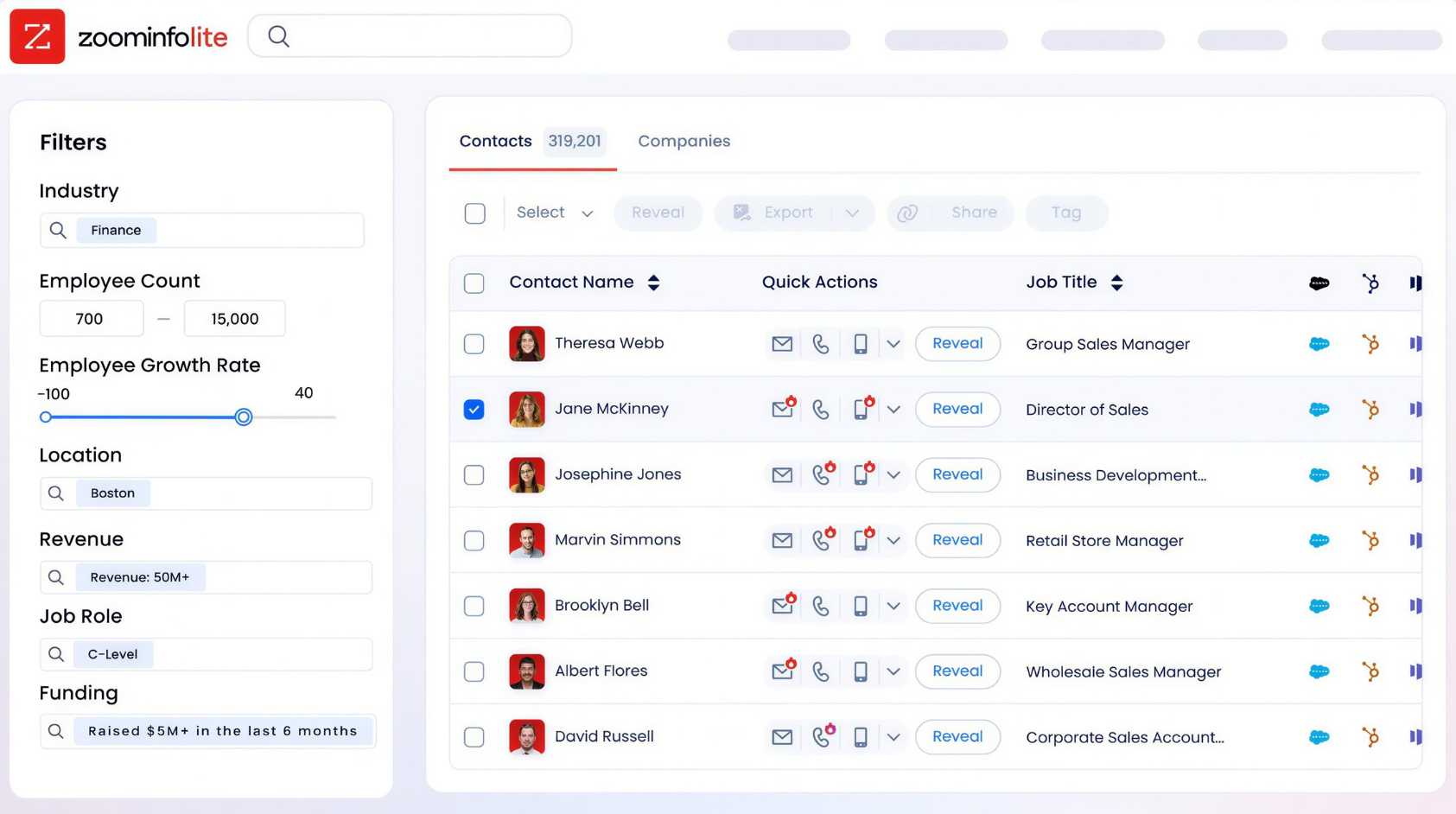
Free entry points: ZoomInfo Lite is a permanent free tier (not a trial) with access to ZoomInfo's B2B database, 10 monthly export credits, individual and company searches, the ReachOut Chrome Extension, and HubSpot integration. A 7-day free trial of paid features is also available, no credit card required.
Source: ZoomInfo
Who Should Use ZoomInfo?
Choose ZoomInfo if:
Your B2B sales team needs prospect data (verified direct dials, business emails, org charts, technographics) to build pipeline, rather than waiting for prospects to generate behavioral events on your website.
Your marketing team is building account-based programs and needs intent signals, audience targeting based on 300+ company attributes, and multi-channel orchestration to reach in-market accounts before competitors do.
Your RevOps team needs to enrich CRM data, automate lead routing, and maintain data quality across your GTM stack, with multi-vendor enrichment from approximately 60 vendors and automated workflows.
You want AI-powered GTM execution rather than a data pipeline you still need to build execution tools on top of. ZoomInfo's GTM Workspace and GTM Studio provide built-in execution surfaces.
Ready to go beyond behavioral data and equip your GTM teams with B2B intelligence? Start your free ZoomInfo trial or explore ZoomInfo Lite to see the platform in action.
2. mParticle: Best Alternative for Enterprise-Scale Mobile and Multi-Channel Data Infrastructure
mParticle is a hybrid customer data platform that combines real-time event streaming with warehouse-native activation, built for large consumer-facing enterprises where mobile apps are a primary revenue channel. Since its merger with Rokt in January 2025 (backed by a $300M committed investment), mParticle operates as "mParticle by Rokt." Its key capabilities include:
Dedicated mobile SDKs for iOS, Android, Roku, Fire TV, and connected TV, optimized for event latency, battery efficiency, and offline data buffering
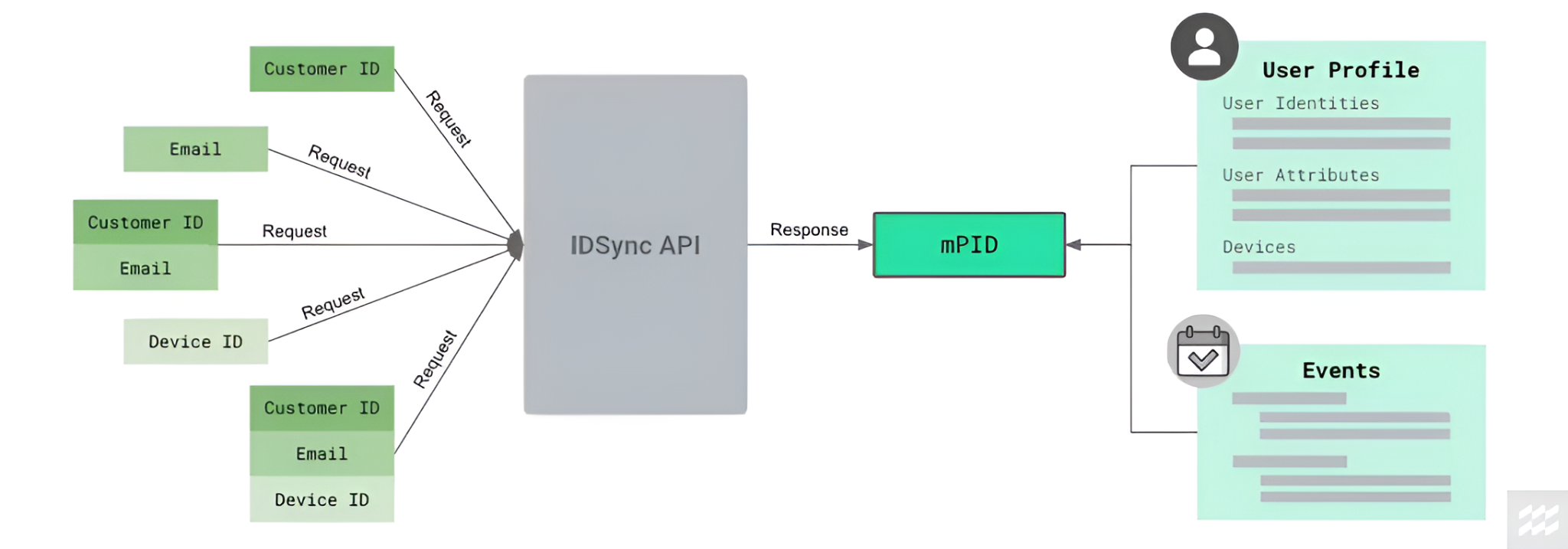
IDSync identity resolution framework with five named strategies for managing complex multi-platform identity environments
Data Planning with schema validation and enforcement at the point of ingestion
Cortex AI engine for churn prediction, purchase propensity, and Next Best Action without external data science tooling
Source: mParticle
For large B2C enterprises in media, retail, fintech, and streaming, mParticle's dedicated mobile infrastructure and pre-ingestion schema enforcement address requirements that Segment's general-purpose approach can't match at scale.
Why Choose mParticle Over Segment for Enterprise Mobile Data Infrastructure
mParticle stands out in the following areas:
Dedicated Enterprise Mobile SDKs
mParticle built its mobile SDKs from scratch for enterprise consumer apps, with lower event latency, battery efficiency controls, and offline data buffering that keeps recording when a device loses connectivity. For enterprises where the mobile app is the primary revenue channel, these differences translate directly into data completeness at scale.
The SDK catalog extends beyond iOS and Android to Roku, Fire TV, Smart TV, Xbox, and Unity. Segment adapted its mobile SDKs from a web-first architecture, and G2 and TrustRadius reviewers consistently flag mobile SDK performance as a limitation for high-volume consumer apps.
Configurable Identity Resolution with IDSync
Segment's Unify resolves identities well but applies one resolution model. mParticle's IDSync exposes five named identity strategies: Profile Conversion, Default, Profile Link, Profile Isolation, and Best Match. Profile Isolation strictly prevents anonymous behavioral history from being attributed to a known user (critical for regulated financial services).
Profile Conversion preserves the full anonymous journey and folds it into the authenticated profile at login. IDSync also includes Match Boost, which uses coverage gap insights to enrich profiles with privacy-compliant identifiers, improving audience match rates on Meta, Google Ads, and Rokt.
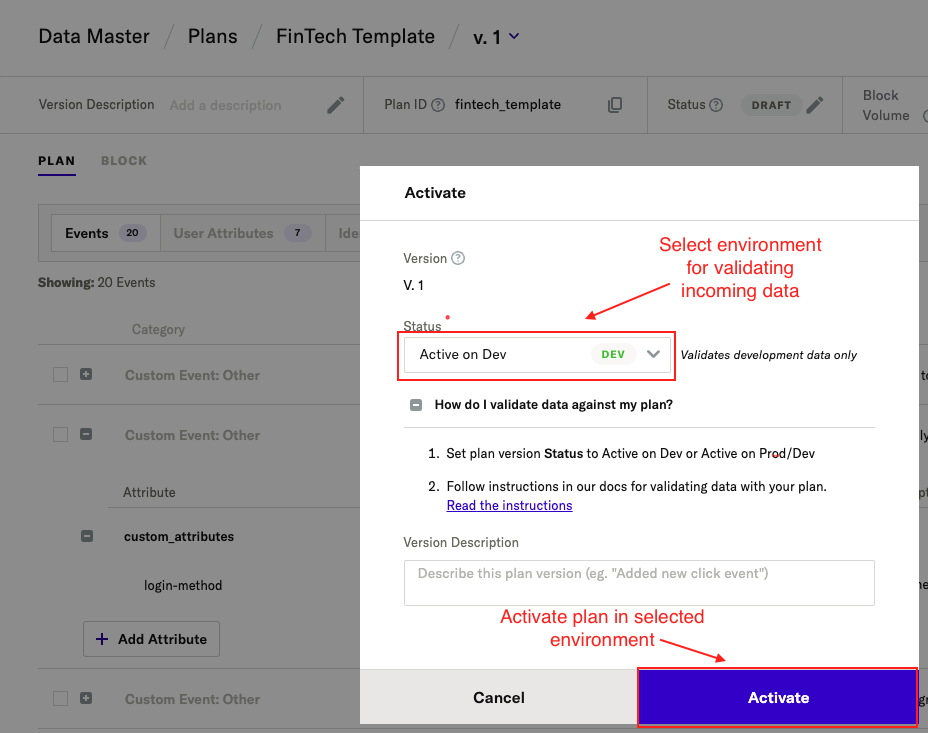
Pre-Ingestion Schema Enforcement
Segment's Protocols can identify violations and block unplanned events, but it operates on data that has already arrived.
mParticle's Data Planning enforces schema validation at the moment of ingestion, blocking non-conforming events before they enter profile storage or any downstream output. Organizations using mParticle's governance framework report faster tool onboarding and better marketing efficiency.
Source: mParticle
NOTE: We also evaluated Tealium and RudderStack for the enterprise slot. While Tealium offers strong enterprise governance (covered separately in this article), mParticle's combination of dedicated mobile infrastructure, IDSync's configurable identity strategies, and the built-in Cortex AI engine makes it the stronger pick for large consumer-facing enterprises with complex mobile data requirements.
For a direct comparison of how mParticle and Segment stack up across mobile infrastructure, identity resolution, and schema enforcement, see our mParticle vs Segment breakdown.
mParticle Pricing
mParticle uses a credit-based pricing model with pre-purchased credits as the currency for all platform usage. All features are accessible at any credit level; no features are gated by tier. No prices are published; all pricing comes through a custom quote. Annual contract required.
Who Should Use mParticle?
Choose mParticle if:
Your primary revenue channel is a mobile app and you need SDK performance built for enterprise mobile rather than a general-purpose SDK adapted from web.
You manage complex multi-platform identity environments across iOS, Android, web, and connected TV and need configurable identity resolution strategies for compliance-sensitive edge cases.
Data quality enforcement at the point of collection is a primary requirement, and you've experienced the downstream cost of bad data propagating across your stack.
3. Tealium: Best Alternative for Integration Breadth and Tag Management Governance
Tealium is a Customer Data Orchestration Platform that combines tag management with a real-time CDP and the largest pre-built integration catalog in the category. Its key capabilities include:
1,300+ pre-built integrations spanning analytics, advertising, CRM, email marketing, data warehouses, and AI services
iQ Tag Management and AudienceStream CDP in a single platform and contract
Patented real-time visitor stitching that merges anonymous and known identities within the active session
Zero-copy Data Cloud Activation connecting directly to Snowflake, Databricks, BigQuery, and Redshift
HIPAA BAA, SOC 2, and ISO 27701 certifications plus a built-in Consent Management Platform

Source: Tealium
Businesses that have outgrown Segment's integration catalog or need tag governance alongside their CDP, without adding a second vendor, will find Tealium's combined model more efficient. The platform holds two consecutive Gartner Magic Quadrant Leader placements (2024, 2025) in the CDP category.
Why Choose Tealium Over Segment for Integration Breadth and Tag Management
Tealium stands out in the following areas:
Nearly Double the Integration Catalog
Segment lists 750+ integrations, but as businesses add tools, they discover missing connectors that require custom engineering. TrustRadius reviewers flag "inconsistent functionality across different connectors" and source connectors that "lack necessary fields."
Tealium's 1,300+ pre-built connectors eliminate most of those engineering escalations. For a business expanding its marketing stack, the difference is adopting a new tool in a day versus opening a two-week engineering ticket.
Tag Management and CDP in One Platform
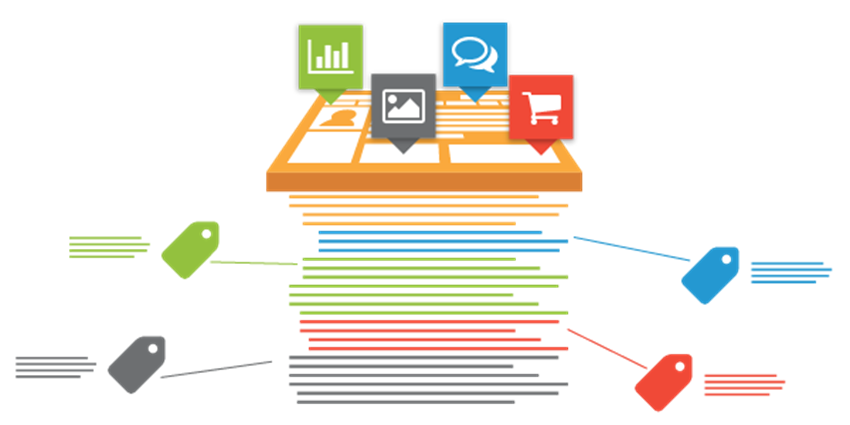
Most businesses that arrive at Segment still maintain a separate tag manager (Google Tag Manager, Adobe Launch). Segment is a data pipeline; it does not replace tag management. Tealium builds iQ Tag Management and AudienceStream CDP into a single platform under one contract.
A single utag.js snippet replaces all hardcoded vendor scripts, and the Universal Data Layer standardizes naming once, carrying through into AudienceStream profiles and audience activation without re-mapping. Tealium's iQ tag management also enforces consent at the point of tag firing, with built-in integrations for OneTrust, Didomi, and Usercentrics.
Source: Tealium
In-Session Identity Resolution and Real-Time Audience Activation
Tealium's patented visitor stitching merges identity data the moment a new identifier appears during the session, replaying all historical event data into a unified profile in real time. AudienceStream then recomputes audience memberships continuously, firing downstream actions the moment a visitor joins or leaves an audience.
By triggering personalization within the active session rather than on overnight batch cycles, brands recover more abandoned sessions and cut wasted ad spend on already-converted users.
NOTE: We also evaluated RudderStack for this slot. RudderStack is a developer-first, open-source CDP with lower cost of entry, but it requires dedicated data engineering. Tealium's large connector catalog, marketer-accessible configuration, and combined tag management and CDP make it the better fit for businesses scaling their marketing stack.
Tealium Pricing
Tealium sells exclusively through direct sales and negotiated enterprise contracts with no published pricing. The platform is modular: iQ Tag Management, AudienceStream CDP, EventStream, Data Cloud Activation, and Tealium for AI can be licensed separately or together. Support is tiered beyond the base license, with Basic (no SLAs), Enhanced (2-8 hour response SLAs), and Premium (dedicated TAM, 1-4 hour SLAs).
Who Should Use Tealium?
Choose Tealium if:
Your team is adding tools quickly and keeps hitting the edge of Segment's 700+ connector catalog.
You're running two separate governance models (a tag manager and Segment) and want to consolidate under one vendor.
You're scaling paid acquisition and need in-session suppression of converted users and real-time audience activation rather than overnight batch cycles.
4. RudderStack: Best Alternative for Cost-Conscious Developer Teams with Warehouse-Native Data Ownership
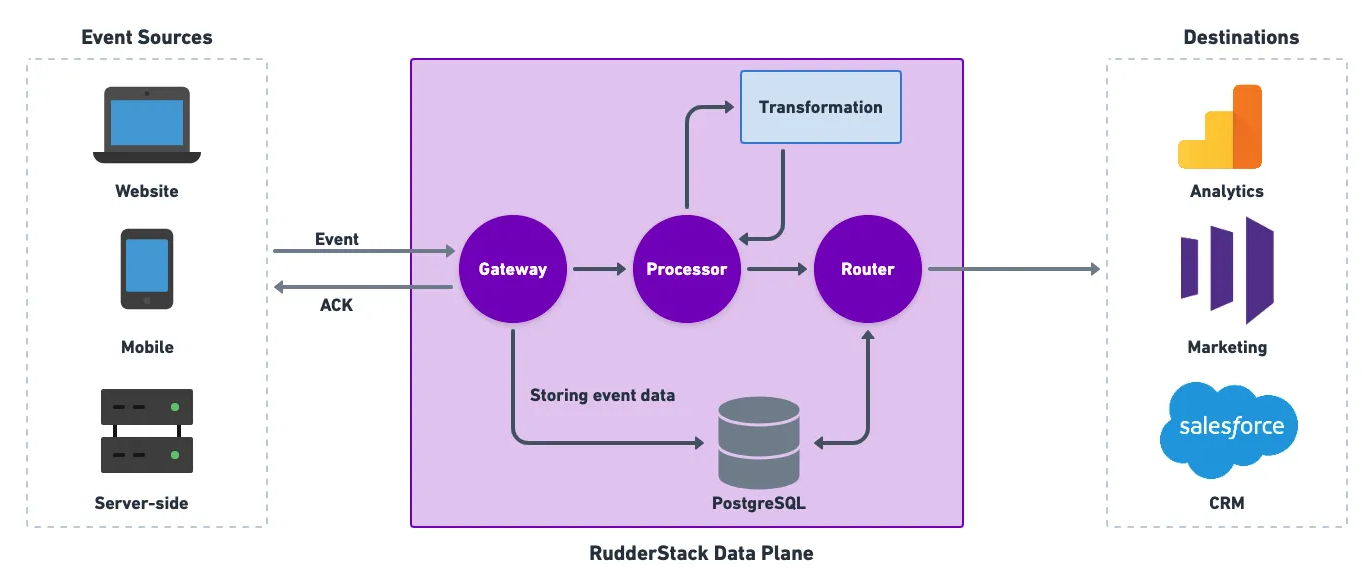
RudderStack is an open-source, warehouse-native customer data infrastructure platform that routes event data directly into your own cloud warehouse without storing any customer data on RudderStack's infrastructure. Its key capabilities include:
Real-time event streaming from 16+ SDKs to 200+ destinations
Warehouse-native Customer 360 and identity resolution via Profiles
Reverse ETL to activate warehouse data in marketing, CRM, and ad tools
Real-time JavaScript and Python Transformations that execute in-pipeline before delivery
Fully open-source data plane (self-hostable on Docker or Kubernetes)
Permanent free tier with 250,000 events/month at no cost, forever
Source: RudderStack
RudderStack's permanent event-based free tier, documented Segment API compatibility, and zero-vendor-data-storage architecture make it the most practical entry point for developer teams that want a warehouse-native Segment replacement.
Why Choose RudderStack Over Segment for Warehouse-Native Data Ownership
RudderStack stands out in the following areas:
Event-Based Pricing Eliminates the MTU Trap
Segment's free tier allows 1,000 Monthly Tracked Users, and pricing reportedly jumped 40% in 2025. RudderStack's event-based model starts with a permanent free tier of 250,000 events per month, with paid plans at $220/month for 1 million events.
Because pricing is tied to events rather than tracked users, teams with high anonymous-to-identified ratios pay for what they actually process. Documented migrations from Segment to RudderStack have produced cost savings at scale.
Your Data Never Leaves Your Own Infrastructure
Segment stores customer event data in Twilio's proprietary infrastructure. RudderStack does not store event data on its own infrastructure. Events land directly in your warehouse with sync times as fast as five minutes on the Enterprise tier.
RudderStack holds SOC 2 Type 2 certification and is HIPAA compliant with a BAA for healthcare customers. For businesses in regulated industries, the distinction between "data passes through a vendor's environment" and "data never leaves your environment" determines the scope of compliance audits.
Segment API Compatibility Makes Migration a Configuration Change
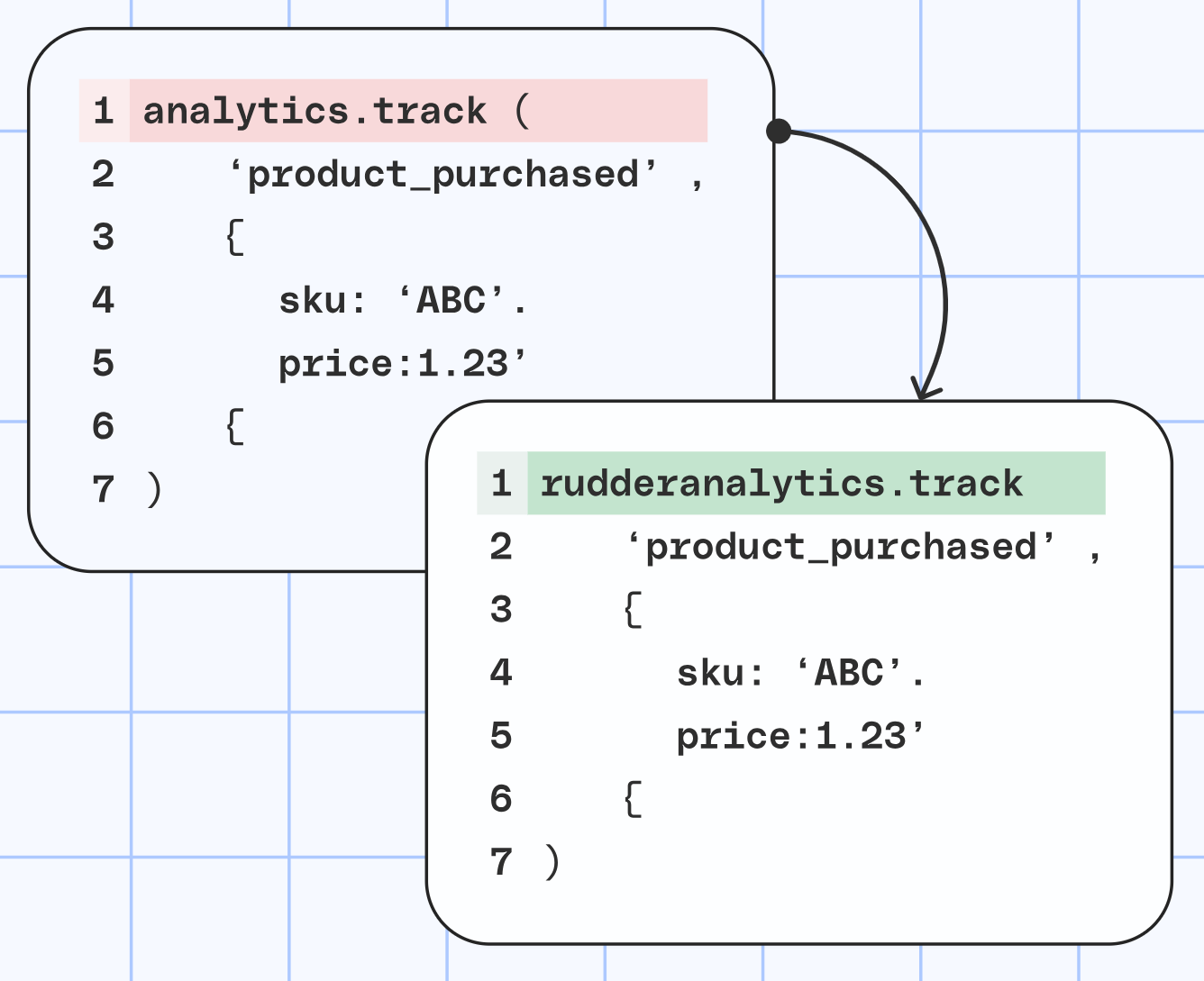
RudderStack maintains full API compatibility with Twilio Segment. Teams can switch by updating a single configuration endpoint, with no re-instrumentation required.
AnonymousIDs migrate automatically and warehouse schema continuity is maintained. Documented migrations confirm that teams handling billions of daily events can complete re-instrumentation across web, Android, and iOS in as little as two weeks.
Source: RudderStack
NOTE: We also evaluated PostHog for this slot. PostHog serves a different audience with its all-in-one product scope (analytics, feature flags, session replay). RudderStack's open-source architecture, event-based pricing, and permanent free tier make it the clearest pick for teams that want a warehouse-native Segment replacement focused on data infrastructure.
RudderStack Pricing
Free: $0/month (permanent), 250,000 monthly events, 16+ SDK sources, 200+ destinations, 3-hour warehouse sync
Starter: $220/month, 1 million events, unlimited Tracking Plans, 1-hour warehouse sync, 99.95% uptime SLA
Growth: Custom pricing, unlimited team members and transformations, 30-minute warehouse sync
Enterprise: Custom pricing, Python Transformations, Profiles and Data Apps, HIPAA (BAA), SSO, 5-minute warehouse sync
Who Should Use RudderStack?
Choose RudderStack if:
Your team has data engineers who can operate a code-first, API-driven platform and you want full data ownership in your own warehouse.
You are currently on Segment facing cost escalation and want to migrate with minimal re-instrumentation effort.
Your industry requires that customer data never leave your own infrastructure (healthcare under HIPAA, European businesses under GDPR, fintech under data residency mandates).
5. Hightouch: Best Alternative for Warehouse-Native Data Activation
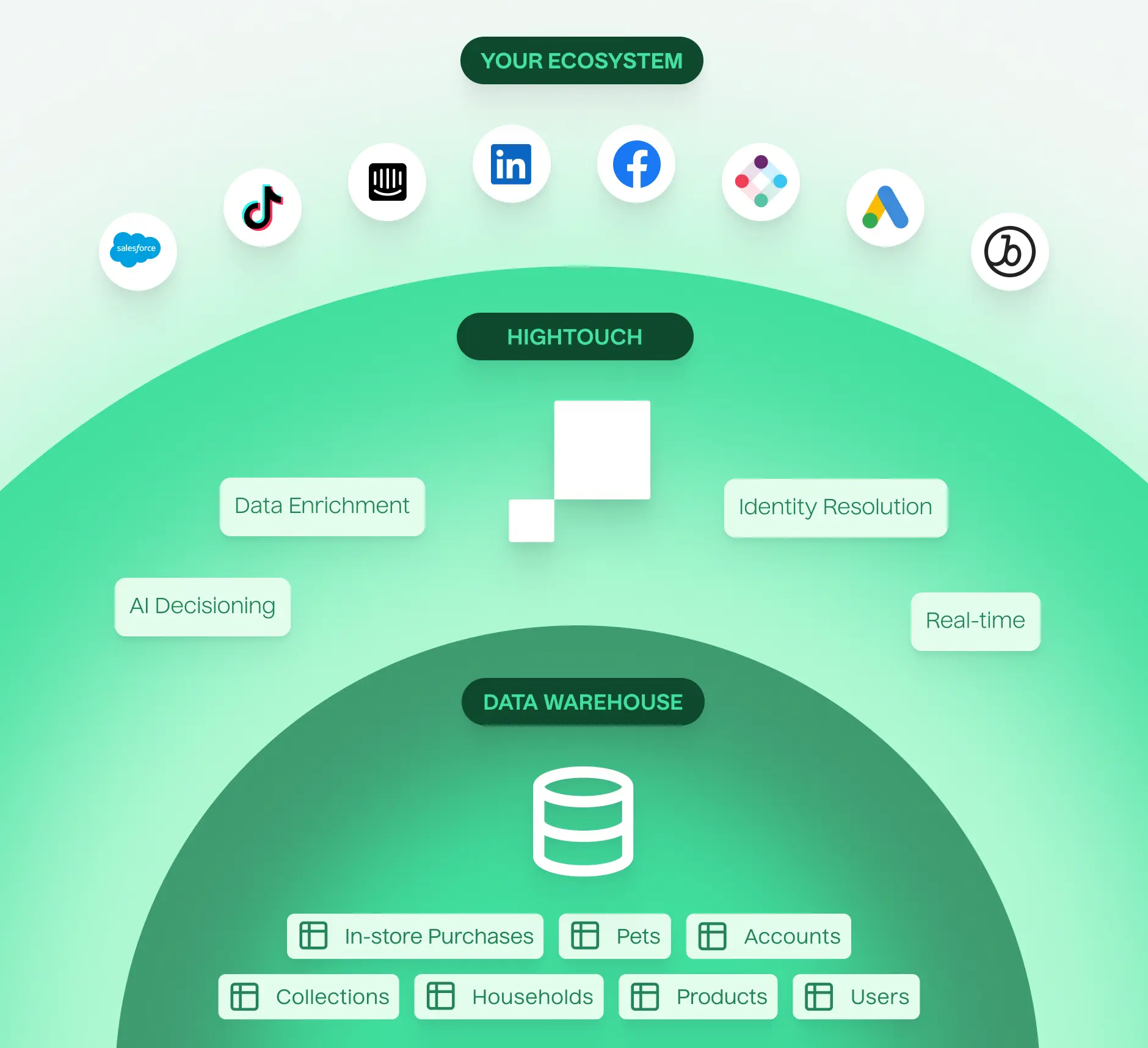
Hightouch is a warehouse-native composable CDP that reads directly from your existing Snowflake, BigQuery, Redshift, Databricks, or Postgres warehouse and syncs the results to 250+ destinations across marketing, advertising, CRM, and customer success. Its key capabilities include:
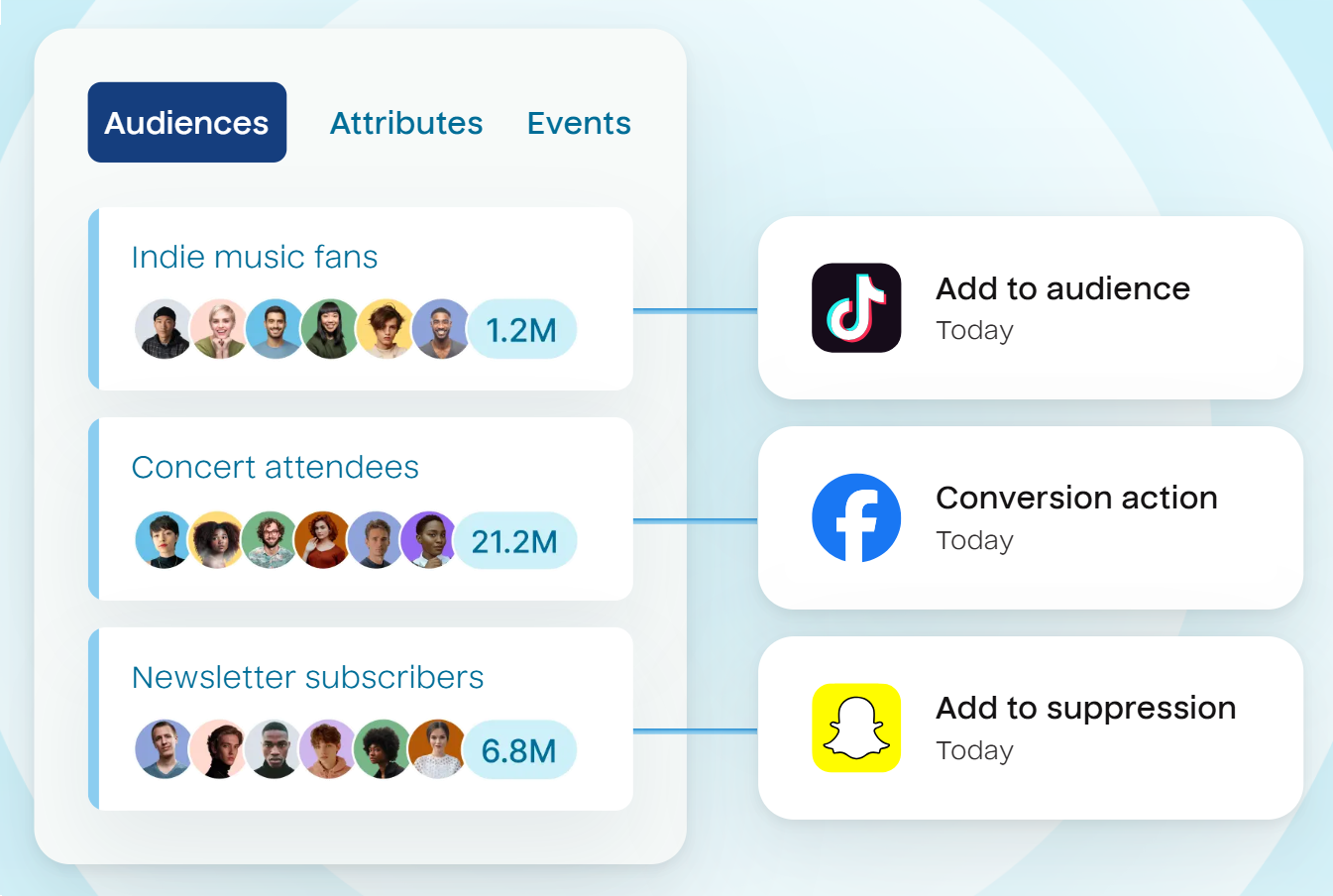
Reverse ETL syncing any SQL model, dbt transformation, or warehouse table to 250+ destinations
Customer Studio, a no-code visual audience builder giving marketing teams self-serve access to warehouse data
Adaptive Identity Resolution (launched July 2025) with AI-powered cross-device identity stitching inside the warehouse
AI Decisioning with reinforcement learning for autonomous message optimization
A permanently free tier with 2 active destination syncs
Source: Hightouch
For data-rich companies whose marketing teams are stuck filing tickets to access warehouse data, Hightouch turns the existing warehouse into a live activation layer rather than a passive analytics store.
Why Choose Hightouch Over Segment for Warehouse-Native Data Activation
Hightouch stands out in the following areas:
Zero Data Duplication
Segment stores customer data in its own managed store. Hightouch never stores a single byte of your customer data; workers are ephemeral, compute runs in your cloud, and the warehouse remains the only source of truth.
Enterprise retailers syncing millions of records daily have chosen Hightouch because their data includes thousands of custom objects (product categories, reservations, loyalty tiers) that Segment's user-plus-events schema can't accommodate.
Usage-Based Pricing Without MTU Penalties
Hightouch's Composable CDP tier charges based on active syncs (warehouse-to-destination pipelines that ran at least once in a calendar month), with no MTU caps, no seat limits, and no restrictions on source or destination count.
A company running a 70-million-member loyalty program doesn't face a ballooning MTU bill. The free tier covers 2 active syncs permanently free with unlimited seats and access to all 250+ integrations.
Warehouse-Native Audience Building Without Re-Instrumentation
Segment requires teams to instrument applications with Segment's SDK before data can be activated. Hightouch's Customer Studio reads directly from existing warehouse tables and dbt models. No SDK deployment, no schema migration. Enterprise deployments have gone from zero to hundreds of audiences in as little as six weeks, with first use cases running in under a week.
Source: Hightouch
NOTE: We also evaluated Census, the primary competing reverse ETL platform. Hightouch was selected for broader market recognition among Segment evaluators, a deeper enterprise customer roster, and because Adaptive Identity Resolution expanded its capability beyond pure reverse ETL into the CDP territory where Segment buyers are actively looking.
Hightouch Pricing
Free: Permanently free, 2 active destination syncs, unlimited seats, all 250+ integrations, hourly sync frequency
Composable CDP: Quote-based, usage-based on active syncs, no MTU caps or seat limits, enterprise security (SOC 2, ISO 27001, HIPAA, GDPR), dedicated CSM
Who Should Use Hightouch?
Choose Hightouch if:
Your team already has a cloud data warehouse with well-modeled customer data and wants to activate it across marketing and CRM tools without building custom pipelines.
You're frustrated by Segment's MTU pricing model, particularly if your business has high traffic volume relative to active customers.
Your marketing data includes complex objects beyond standard behavioral events that Segment's schema can't accommodate.
6. PostHog: Best Alternative for Product Engineering Teams Seeking an All-in-One Free Platform
PostHog is an open-source product analytics platform built for product engineers who need to understand user behavior, ship features safely, and replay sessions to debug UX problems, all without stitching together multiple vendors.
As a Segment alternative, its core argument is structural: where Segment routes events to analytics tools you still have to pay for separately, PostHog ships the analytics, session replay, feature flags, A/B testing, surveys, and a CDP in a single product. 98% of PostHog's 190,000+ teams use the platform entirely for free. Key capabilities include:
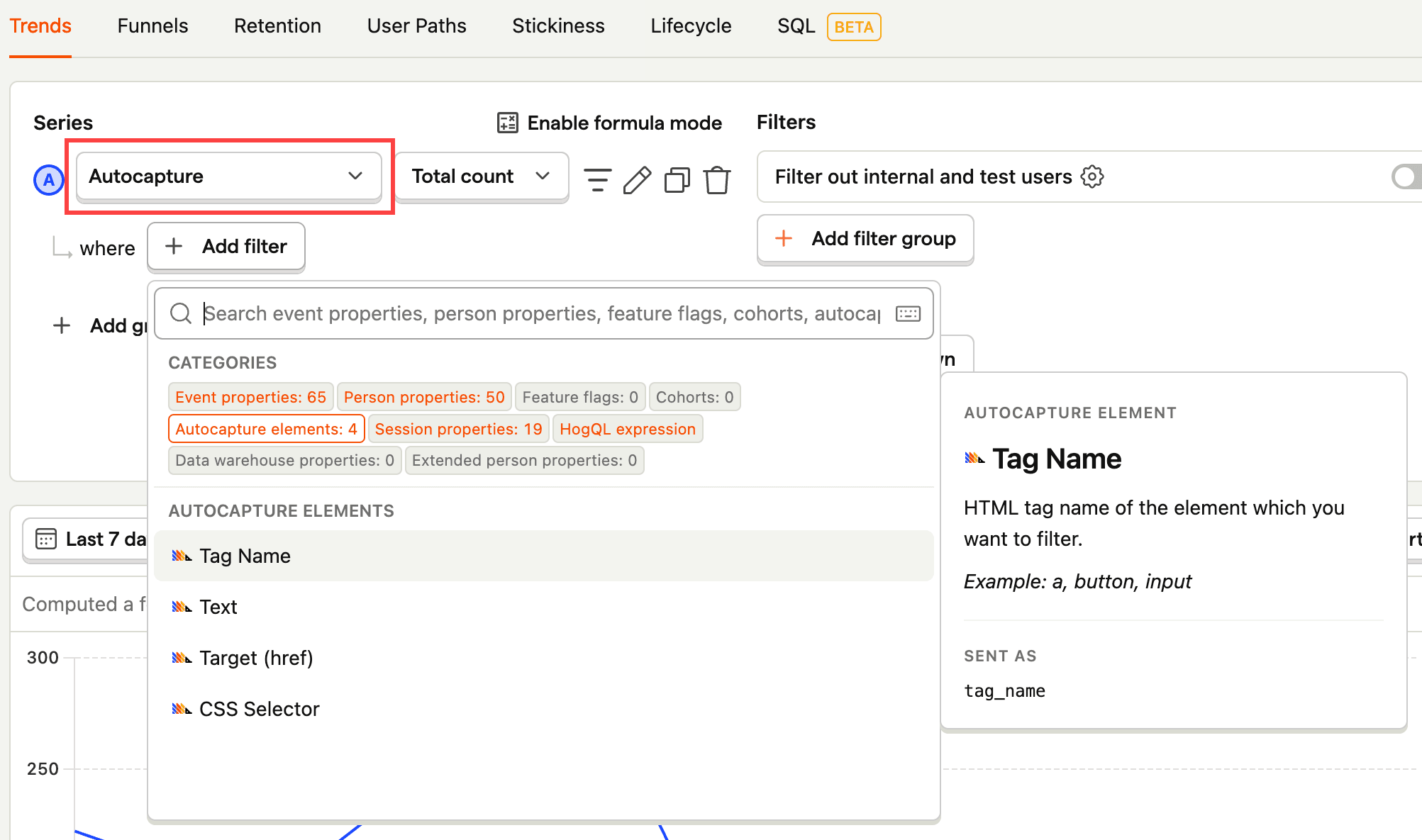
Autocapture of all DOM interactions requiring no predefined event taxonomy
Product analytics with funnels, retention, lifecycle, paths, trends, and a full SQL editor
Session replay with network request capture and console log recording
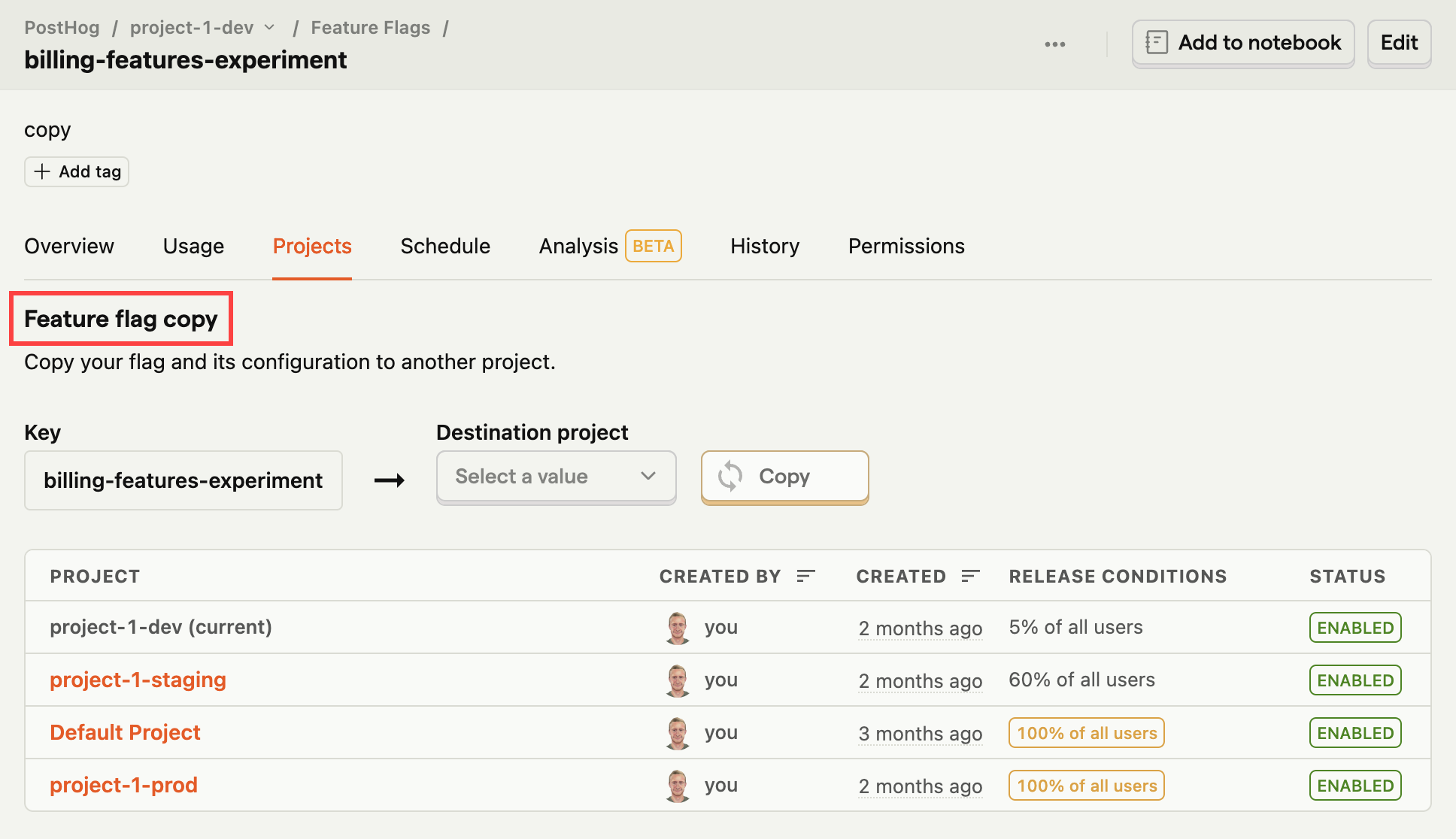
Feature flags with local evaluation and client-side bootstrapping for zero-flicker rollouts
A/B testing with Bayesian statistical analysis
Full open-source codebase, self-hostable via Docker Compose
Source: PostHog
Why Choose PostHog Over Segment for Product Engineering Teams
PostHog stands out in the following areas:
A Free Tier That Covers Production Traffic at Real Volume
Segment's free plan caps at 1,000 MTUs. PostHog's free plan covers 1 million analytics events, 5,000 session replays, and 1 million feature flag requests per month with no MTU concept, no time limit, and no credit card required.
98% of PostHog teams operate on this free tier permanently, and the free plan includes 1-year data retention, unlimited team members, and full access to every PostHog product.
Autocapture Eliminates the Tracking Plan Tax
G2 users note that Segment's "initial implementation and event taxonomy design are hard to get right, and mistakes are expensive long-term." PostHog's autocapture captures every click, form submission, pageview, and rage click from the moment the snippet loads.
Teams define actions retroactively, grouping past events into logical categories after the fact. Product teams have adopted PostHog because other tools required weeks of tracking-plan work before data could flow.
Source: PostHog
The CDP Pipeline Plus Every Tool That Consumes It, in One Product
Segment is a data pipeline. You still need an analytics platform, a session replay tool, a feature flagging service, and an A/B testing platform. PostHog consolidates this entire stack into a single product where every tool runs against the same underlying dataset.
Teams have attributed growth in user acquisition to insights from PostHog that they couldn't see before because their data was scattered across multiple analytics tools.
NOTE: We also evaluated RudderStack and Mixpanel. While RudderStack is a cost-efficient pipeline replacement, PostHog covers the most ground for product engineering teams, replacing not just the data pipeline but the analytics, session replay, feature flags, and experimentation tools most Segment users build on top of it.
PostHog Pricing
PostHog uses a fully usage-based model with no per-seat fees. Every product has a permanent monthly free allowance:
Free (no credit card): 1M analytics events, 5K session replays, 1M feature flag requests, 100K error tracking exceptions, 1 project, 1-year retention, unlimited team members
Pay-as-you-go (with credit card): Analytics at $0.00005/event (drops to $0.000009 at 250M+), session replay at $0.005/recording, feature flags at $0.0001/request. Unlocks up to 6 projects and 7-year data retention
Platform add-ons: Boost ($250/mo), Scale ($750/mo), Enterprise ($2,000/mo) for unlimited projects, HIPAA BAA, SSO, RBAC, and dedicated support
Who Should Use PostHog?
Choose PostHog if:
Your product team is engineering-led and wants to instrument, analyze, and iterate without routing everything through a data team or multi-vendor analytics stack.
You want session replay, feature flags, and A/B testing tightly integrated with behavioral analytics on a shared identity graph.
You're an early-stage startup that wants to avoid locking in analytics spend before product-market fit.
7. CustomerLabs: Best Alternative for Ad Signal Quality and No-Code Server-Side Data Collection
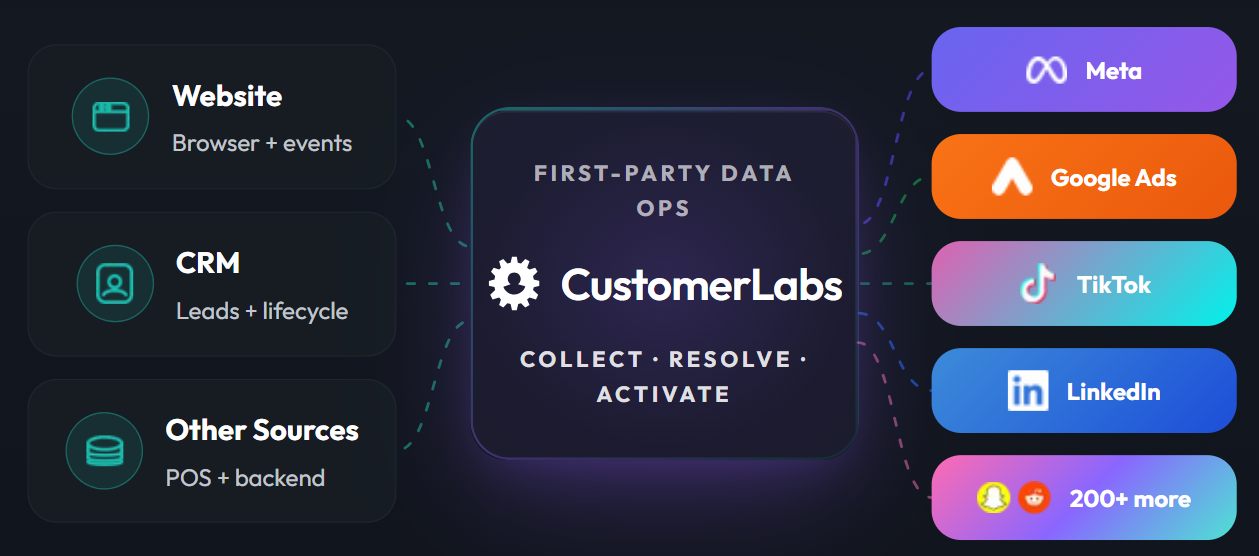
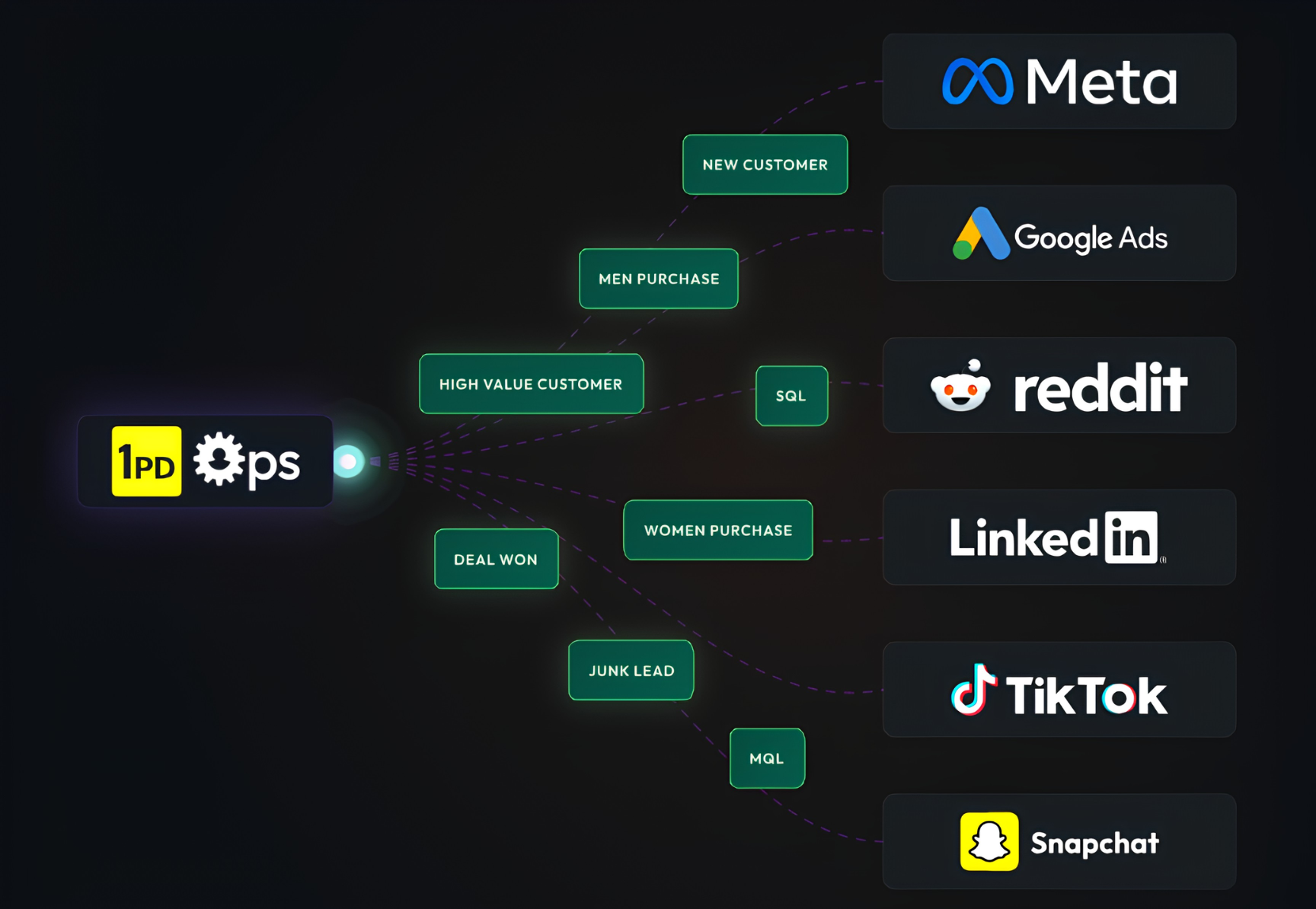
CustomerLabs is a First-Party Data Ops Platform built for performance marketers who need accurate, complete first-party data flowing into Meta, Google, TikTok, and LinkedIn without depending on engineers. It collects first-party events server-side, resolves customer identities, and routes business-specific signals to ad platform algorithms. Key capabilities include:
Server-side event collection via a brand's own first-party domain, bypassing iOS privacy restrictions, Safari ITP, and ad blockers that cause 15-30% event loss in client-side setups
No-code source connections for websites, CRMs (HubSpot, Salesforce, Zoho), Shopify/WooCommerce, and POS systems
Signal Engineering that separates new_customer_purchase from repeat_purchase for value-based bidding
Conversions API (CAPI) enrichment pushing Meta Event Match Quality from the industry-typical 3-5 range into the 7-10 "Excellent" tier
Audience Builder and real-time activation to 200+ destinations
Source: CustomerLabs
Why Choose CustomerLabs Over Segment for Ad Signal Quality
CustomerLabs stands out in the following areas:
Server-Side-First Architecture That Solves the Cookie Problem
Segment's tracking heritage is client-side JavaScript. iOS App Tracking Transparency, Safari's ITP, and ad blockers intercept client-side event collection. CustomerLabs' First-Party Domain Tracking routes all event collection through a CNAME subdomain on the brand's own domain, with cookies persisting up to one year rather than Safari's 7-day ITP cap.
Signal Engineering Trains Algorithms on Business Outcomes
Segment routes events neutrally. CustomerLabs' Signal Engineering splits a generic purchase into cl_new_customer_purchase and cl_repeat_purchase using server-side identity resolution with no cookie expiry. Industry-average returning-buyer contamination in "new customer" conversion data sits at 40-60%.
Brands switching from generic purchase events to CustomerLabs' engineered signals have reported up to 86% of purchases coming from genuinely new customers at 14% lower cost-per-purchase, with some achieving over 100% revenue increases.
Source: CustomerLabs
No-Code Setup and Accessible Pricing
Segment's implementation requires developer involvement and enterprise contracts can approach $400K annually. CustomerLabs starts at $129/month with all features included. G2 reviewers consistently highlight fast onboarding, with one Head of Performance noting "15 minutes to get started, integrations within an hour."
NOTE: We also evaluated DinMo, a warehouse-native European composable CDP. While DinMo is technically strong for teams with existing warehouse infrastructure, it requires a technical operator. CustomerLabs offers the most direct path to server-side ad signal quality for marketing teams without an engineering dependency.
CustomerLabs Pricing
All tiers include the full feature set: Signal Engineering, identity resolution, first-party domain tracking, CAPI, and privacy compliance.
Growth: $129/month, 500,000 events/month, 5 sources, 5 destinations, 5 audience segments
Agency Lite: $499/month, 5 client accounts, 2.5M events/month, multi-account management
Agency Premium: $999/month, 10 client accounts, 5M events/month, custom branding
Who Should Use CustomerLabs?
Choose CustomerLabs if:
Your Meta Event Match Quality is below 7 and you need server-side delivery, first-party domain cookies, and full identity enrichment to push it into the "Excellent" tier.
You're an eCommerce brand that wants prospecting campaigns to train on new customers only, not returning buyers mixed into acquisition audiences.
You're a performance marketing agency managing multiple client accounts and need centralized signal quality monitoring and multi-account architecture.
The Final Verdict
Segment excels at first-party data collection and routing. But businesses often need specialized tools in specific areas. Based on our research, here are the best alternatives:
ZoomInfo for B2B go-to-market intelligence, AI-powered prospecting, and built-in GTM execution
mParticle for enterprise-scale mobile and multi-channel data infrastructure with configurable identity resolution
Tealium for the broadest integration catalog and combined tag management and CDP governance
RudderStack for cost-conscious developer teams wanting open-source, warehouse-native data ownership
Hightouch for warehouse-native data activation without re-instrumentation or data duplication
PostHog for product engineering teams seeking an all-in-one analytics, experimentation, and CDP platform
CustomerLabs for performance marketers needing server-side ad signal quality and no-code data collection
You don't have to choose between Segment and these alternatives. Many businesses use Segment alongside specialized tools.
Ready to go beyond behavioral data and power your B2B go-to-market with intelligence? Start your free ZoomInfo trial or explore ZoomInfo Lite to see how AI-powered prospecting and deal intelligence work for your pipeline.
Segment Alternatives FAQ
Why do businesses look for Segment alternatives?
The most common reasons: MTU-based pricing that climbs at high traffic volumes, the engineering work required for implementation, limited built-in analytics (requiring additional paid tools), and a focus on first-party behavioral data routing rather than specialized capabilities like B2B intelligence, product analytics, or ad signal optimization.
Some businesses also encounter connector inconsistency or need more sophisticated identity resolution than Segment's standard model provides.
What is the best overall Segment alternative?
There is no single best alternative because Segment covers multiple functions across data collection, identity resolution, and audience activation.
ZoomInfo is the top choice for B2B teams needing prospect intelligence and GTM execution. RudderStack is the strongest option for developer teams wanting an open-source, cost-efficient pipeline replacement. PostHog is the best pick for product engineering teams who want to consolidate their analytics and experimentation stack.
Is there a free alternative to Segment?
Several alternatives offer substantial free tiers. PostHog provides 1 million analytics events, 5,000 session replays, and 1 million feature flag requests per month at no cost, permanently. RudderStack offers a permanent free tier with 250,000 events per month.
Hightouch provides 2 active destination syncs for free with unlimited seats. ZoomInfo Lite offers permanent free access to its B2B database with 10 monthly export credits.
Which Segment alternative is best for B2B companies?
ZoomInfo is built for B2B go-to-market teams, with 500M contacts, 135M+ verified phone numbers, intent signals, and AI-powered execution tools. While Segment collects behavioral data about existing users, ZoomInfo identifies prospects you haven't reached yet, understands buying committees, and detects when accounts are in-market. For B2B teams, the two platforms address complementary challenges.
How does Segment's pricing compare to alternatives?
Segment's free plan covers 1,000 MTUs, with Team plans starting at $120/month for 10,000 MTUs and overage fees of $10-$12 per 1,000 additional MTUs. Enterprise plans require contacting sales.
By comparison, RudderStack starts free with 250,000 events/month and paid plans at $220/month for 1 million events. PostHog covers 1 million events free. CustomerLabs starts at $129/month with 500,000 events and all features included. Hightouch offers 2 free syncs with no MTU concept.
Is it difficult to migrate from Segment to one of these alternatives?
Migration complexity depends on the alternative. RudderStack maintains full API compatibility with Segment, allowing teams to switch by updating a single configuration endpoint with no re-instrumentation required. Hightouch doesn't require migration at all since it reads directly from your existing warehouse. PostHog's autocapture eliminates the need to recreate Segment's event taxonomy.
For B2B teams adopting ZoomInfo, there is no migration per se since ZoomInfo addresses a different use case (third-party intelligence) and can run alongside Segment.
Which alternative is best for improving ad performance and ROAS?
CustomerLabs is built for ad signal optimization. Its server-side first-party domain tracking recovers 15-30% of events lost to privacy browsers and ad blockers, while Signal Engineering trains ad algorithms on business-specific conversion events rather than generic purchase signals.
CustomerLabs users have reported Meta Event Match Quality scores of 7-10, compared to the industry-typical 3-5 range with standard client-side implementations.
Can these alternatives work alongside Segment?
Yes. ZoomInfo and Segment serve complementary functions (third-party B2B intelligence and first-party behavioral data, respectively) and are commonly used together.
Hightouch reads from warehouses that Segment writes to, creating a natural bidirectional workflow. CustomerLabs can supplement Segment's client-side collection with server-side signal enrichment for ad platforms. Whether to replace or supplement Segment depends on your use case and budget.
Looking beyond Segment? Compare the strongest alternatives side by side:
