
Choosing between HubSpot and Vtiger for your CRM usually comes down to five questions:
Do you need a platform that scales from a free CRM into an enterprise suite, or one that bundles sales, marketing, and support at a fixed rate from day one?
Is your team 10 people or 200? How fast will costs grow as you add seats and features?
How important is a large third-party integration ecosystem versus having everything built into one system?
Do you need marketing automation with multi-touch attribution, or will email campaigns and basic workflows cover your needs?
How confident are you that the contact data inside your CRM is accurate, complete, and current?
In short, here's what we recommend:
HubSpot is the CRM platform for scaling companies that want marketing, sales, and service under one roof. Its six Hubs share a single Smart CRM, giving every team the same view of every customer. A free tier, 2,000+ app integrations, and the Breeze AI layer (which includes agents for prospecting, customer service, and CRM data queries) make it easy to start and useful to grow with. The trade-off is cost: Marketing Hub Professional runs $890/month with a $3,000 mandatory onboarding fee, per-seat pricing climbs with each Hub, and mixing tiers across departments forces all seats to the highest rate.
Vtiger is an all-in-one CRM built for small and mid-sized businesses that need sales, marketing, and support without enterprise prices. Its "One View" architecture gives every team the same customer record, and features like Deal Room (a buyer-facing deal microsite), Playbooks (stage-level task enforcement), and Calculus AI (deal scoring, sentiment analysis, and next-best-action recommendations) deliver capabilities usually reserved for pricier platforms. Starting at $12/user/month with a permanent free plan, Vtiger packs real depth for the price. But users consistently report a steep learning curve, performance issues during daily operations, and uneven integration quality.
Both platforms organize your existing customer data well. But a CRM is only as good as the data inside it. Neither HubSpot nor Vtiger generates verified B2B intelligence (direct-dial phone numbers, buyer intent signals, org charts, technographics) that determines whether your pipeline targets real opportunities or stale contacts.
ZoomInfo is an AI GTM platform that gives your sales reps the context to walk into every call knowing why a deal is moving, who's championing it, and what's likely to happen next. Marketers can describe audiences in plain language and launch plays against accounts matching your proven win patterns, no engineering ticket required. That depth comes from the GTM Context Graph, an intelligence layer built on a B2B dataset of 500M contacts, 100M companies, 135M+ verified phone numbers, and 200M+ verified business emails, unified with your CRM records, conversation transcripts, and behavioral signals. Your team accesses this intelligence through GTM Workspace for sellers, GTM Studio for marketers and RevOps, or API and MCP in any front-end. ZoomInfo integrates natively with HubSpot and connects to any CRM.
To see how verified data and buying signals change your prospecting, start with a free ZoomInfo trial.
HubSpot vs. Vtiger vs. ZoomInfo at a glance
HubSpot | Vtiger | ZoomInfo | |
|---|---|---|---|
Core function | CRM + Marketing + Sales + Service platform | All-in-one CRM for sales, marketing, and support | AI GTM platform |
Marketing automation | Full-suite (email, social, ads, content, AEO) | Email campaigns, landing pages, SMS, social | Signal-driven ABM, native DSP, multi-channel orchestration |
Sales tools | Pipeline management, CPQ, sequences, AI prospecting | Pipeline, CPQ, Playbooks, Deal Room, field sales | GTM Workspace with AI agents, Chorus conversation intelligence |
B2B contact data | CRM-stored + basic AI enrichment | CRM-stored + Vtiger Enrich (social data) | 500M contacts, 135M+ verified phones, 200M+ verified emails |
Buyer intent signals | None native | None native | Intent data from 210M IP-to-Organization pairings |
AI capabilities | Breeze (agents, assistant, content generation) | Calculus AI (scoring, sentiment, chatbot, predictions) | GTM Context Graph (contextual intelligence across deals) |
Integrations | 2,000+ marketplace apps | 500+ integrations | 120+ marketplace partners + API + MCP for any tool |
Starting price | Free CRM; Starter at $20/seat/mo | Free (10 users); Growth at $12/user/mo | Free (ZoomInfo Lite); paid plans custom-quoted |
Free tier | Unlimited contacts, 2 users, basic tools | Up to 10 users, 3,000 records | 10 monthly export credits, core search, Chrome extension |
Ideal for | Scaling companies (20–2,000 employees) | SMBs (10–200 employees) | B2B revenue teams (enterprise and upper mid-market) |
CRM platform vs. GTM intelligence platform
HubSpot and Vtiger both answer the question: how do I manage my customer relationships? ZoomInfo answers a different one: how do I find the right customers in the first place?
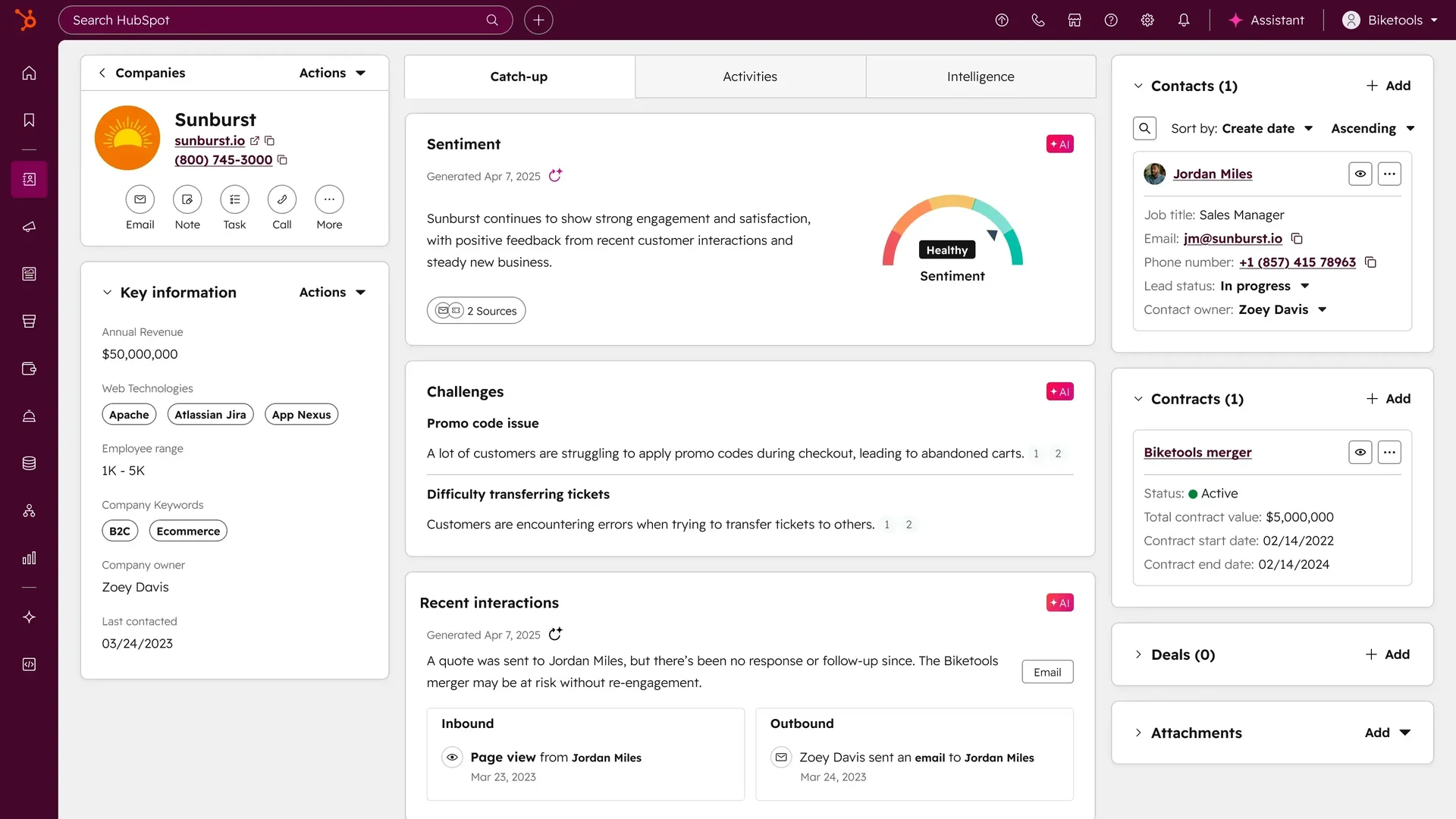
HubSpot built its reputation on inbound marketing: attract buyers with content, then nurture them through a CRM-powered funnel. Its six Hubs (Marketing, Sales, Service, Content, Data, Commerce) share a single Smart CRM. That unification is real. A lead captured on a Marketing Hub landing page appears instantly in Sales Hub's pipeline, and Service Hub agents see the full interaction history. For companies that generate pipeline through content and inbound channels, HubSpot makes the entire funnel visible. The company serves 288,706 customers across 135+ countries.
Source: HubSpot
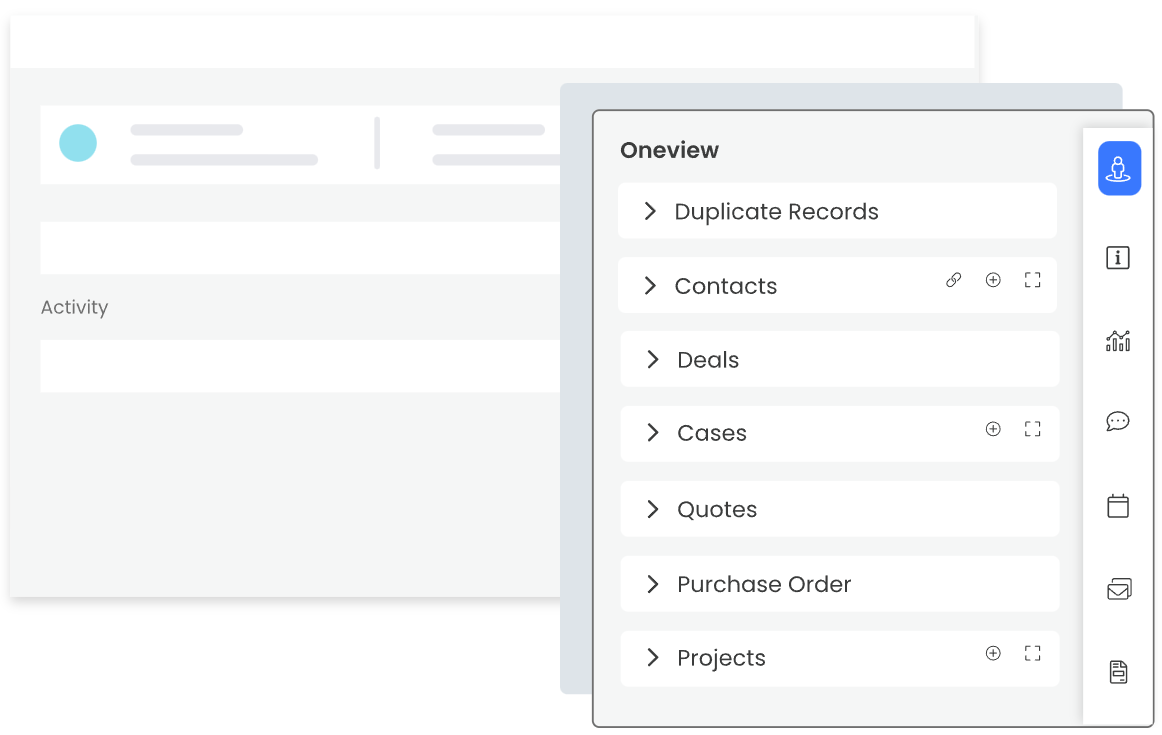
Vtiger took a different path. Born from the open-source movement in 2004, it packages sales, marketing, and help desk into one affordable system on a single data model. Where HubSpot sells separate Hubs at separate prices, Vtiger includes all three functions in every paid plan. The One View design means a support agent and a sales rep see the same customer record with no sync or integration layer between them. For SMBs that want one system instead of three, Vtiger removes the complexity of stitching tools together. The company reports 400,000+ businesses using the platform, a figure that includes both its cloud product and its open-source edition with over 5 million downloads.
Source: Vtiger
ZoomInfo starts from a different premise. HubSpot and Vtiger assume you already know who your prospects are and need help managing those relationships. ZoomInfo assumes you don't, and builds the intelligence layer that identifies them. Its database of 500M contacts and 100M companies, combined with buyer intent signals tracking which companies are researching topics relevant to your business, creates a prospecting foundation no CRM provides natively. ZoomInfo then connects that intelligence into your CRM through a native HubSpot integration or API/MCP for any system, so the data flows where your team already works.
For a focused look at how HubSpot and ZoomInfo stack up head-to-head, see our HubSpot vs. ZoomInfo comparison.
Marketing automation spans three levels of depth
Marketing capabilities are where the three platforms diverge most.
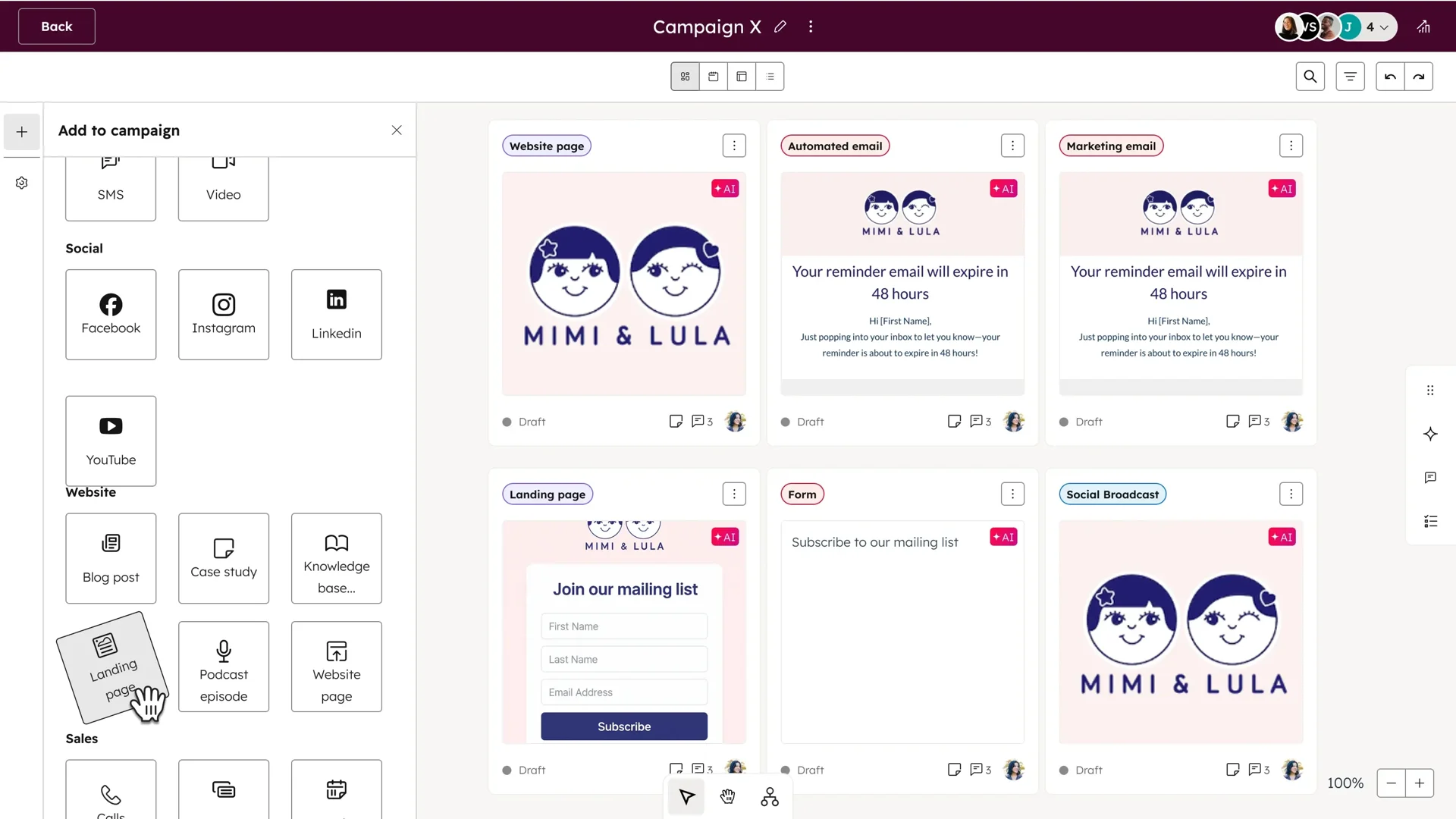
HubSpot Marketing Hub is a full-scale marketing automation engine. It handles email campaigns with A/B testing and send-time optimization, visual workflow automation with branching logic, social media management across multiple accounts, AI-powered content creation, and multi-touch revenue attribution that ties campaigns to closed deals. Content Remix turns a single blog post into social posts, email copy, and video scripts. AEO tools help content rank in AI-generated search results.
Source: HubSpot
The depth is real, but so is the price. Marketing Hub Professional costs $890/month with a mandatory $3,000 onboarding fee. Enterprise runs $3,600/month with a $7,000 onboarding fee. For companies that live on content marketing and inbound lead generation, the investment can pay for itself. For teams that need basic email campaigns and landing pages, it's expensive infrastructure for simple work.
Vtiger's marketing automation covers the fundamentals: email campaigns with 500+ preloaded templates, landing pages with a drag-and-drop builder, SMS campaigns, and a Social Module spanning Facebook, Instagram, Twitter, and Google My Business. The Social Module converts social interactions into CRM records automatically using configurable rules, and Search Streams monitor trending topics and competitor mentions in real time.

Source: Vtiger
Vtiger won't match HubSpot's sophistication in attribution modeling or workflow complexity. But for a team that needs to send targeted emails, capture leads from web forms, and post to social media (all connected to the same CRM their sales team uses) it handles the job at a fraction of HubSpot's cost. The free One Pilot plan includes 1,000 emails/month, autoresponders, and landing pages.
ZoomInfo approaches marketing from the signal layer. Instead of building campaigns and hoping they reach the right audience, ZoomInfo Marketing identifies which companies are researching your category and serves them ads through a native demand-side platform deploying display ads based on 300+ company attributes, with no separate ad-tech vendor required.
FormComplete reduces web forms to a single field, auto-filling the rest from ZoomInfo's verified database. GTM Studio lets marketers describe an audience in natural language, launch multi-channel plays targeting companies that match their win patterns, and track pipeline impact in real time, no engineering ticket required.
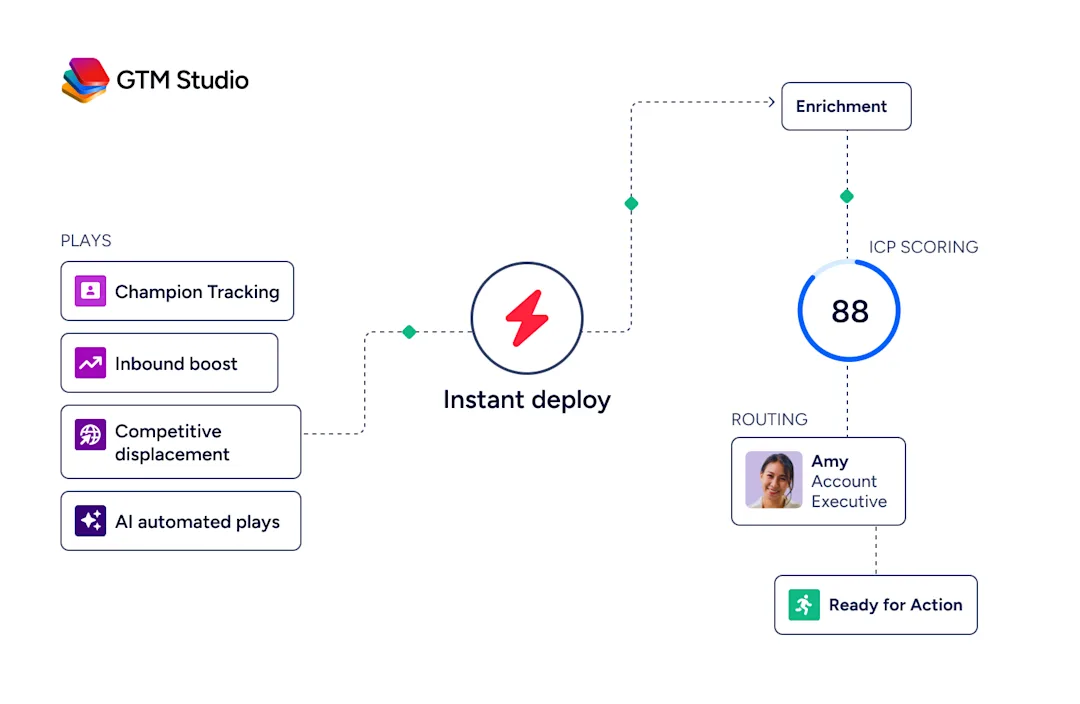
This is a different model. HubSpot and Vtiger automate the campaigns you design. ZoomInfo identifies which accounts deserve a campaign in the first place, then orchestrates across email, display ads, calls, and direct mail based on buyer behavior.
Redwood Logistics saw a 99% reduction in cost-per-click, a 310% increase in clickthrough rate, and saved 20-25 hours per week using ZoomInfo's data-driven targeting. "It's not just the data itself. It's more about the right data at the right time to help us reach out with the right message across that full buyer journey," said Chelsea Kenyon, Senior Director of Digital Strategy. (Redwood Logistics)
Sales execution tools reflect different priorities
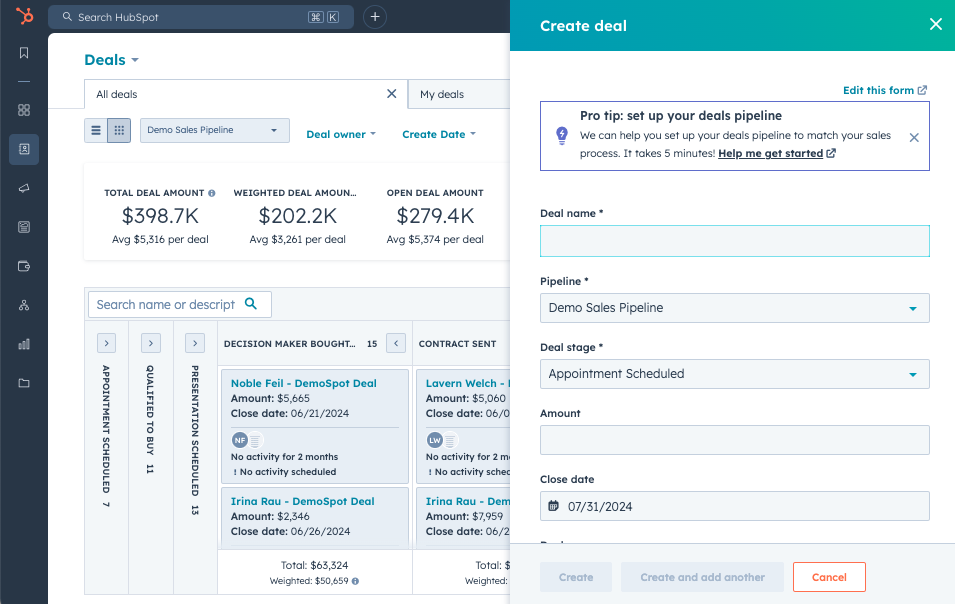
HubSpot Sales Hub gives reps a structured workspace for managing deals: Deal Pipelines with customizable stages, Sequences for multi-step automated outreach, call tracking with a power dialer, CPQ software for generating branded quotes in minutes, and Conversation Intelligence for call analysis and coaching. The Breeze Prospecting Agent monitors buying signals and drafts personalized outreach using HubSpot's customer history, with the option to run in review mode or fully autonomously. Sales Hub Professional costs $100/seat/month with a $1,500 onboarding fee; Enterprise is $150/seat/month with $3,500 onboarding.
Source: HubSpot
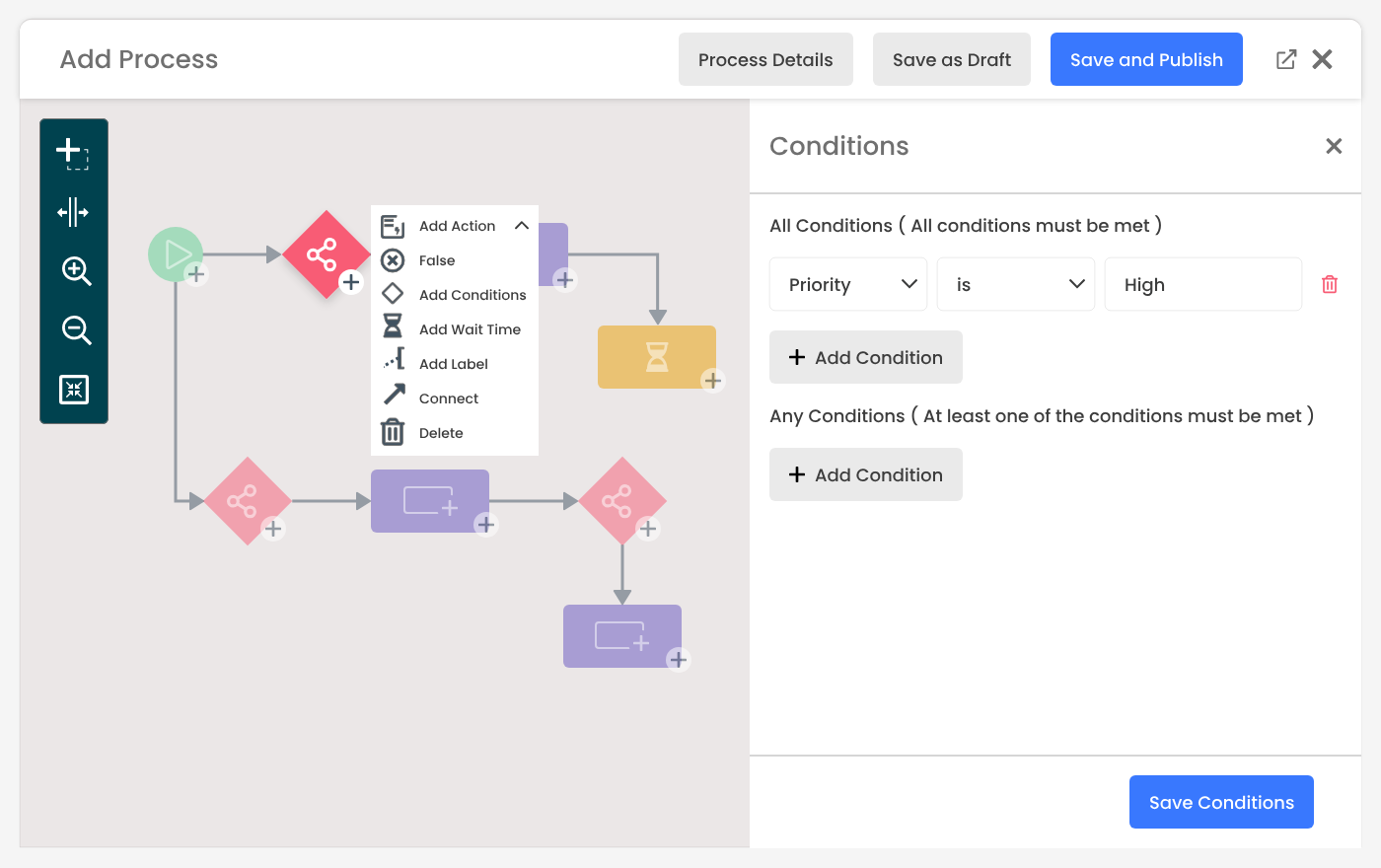
Vtiger differentiates with process enforcement. Playbooks auto-create required tasks when a deal enters a pipeline stage and block advancement until those tasks are complete, turning stage gates from labels into enforced checkpoints. Process Designer handles cross-department workflows visually without code, and Deal Room gives buyers their own deal-specific microsite with a Q&A tab, shared document library, and activity timeline that tracks every action by both rep and buyer. For SMBs that need sales process discipline without hiring a RevOps team, Vtiger builds the guardrails into the CRM itself. This depth is available at $30/user/month on One Professional.
Source: Vtiger
ZoomInfo's GTM Workspace starts from a different place: who should your reps talk to right now? Instead of waiting for leads to enter the pipeline, GTM Workspace surfaces prioritized accounts based on buyer intent signals, company news, funding events, and engagement data.
AI agents handle account research, draft personalized outreach using the full context of past interactions, and monitor signals across a rep's entire book of business. The Action Feed streams in-market buyers matched to target criteria, with pre-drafted actions on every signal. Chorus, ZoomInfo's conversation intelligence product backed by 14 technology patents, captures and analyzes every call and meeting, surfacing coaching insights and deal risk signals alongside ZoomInfo's contact data for every participant.
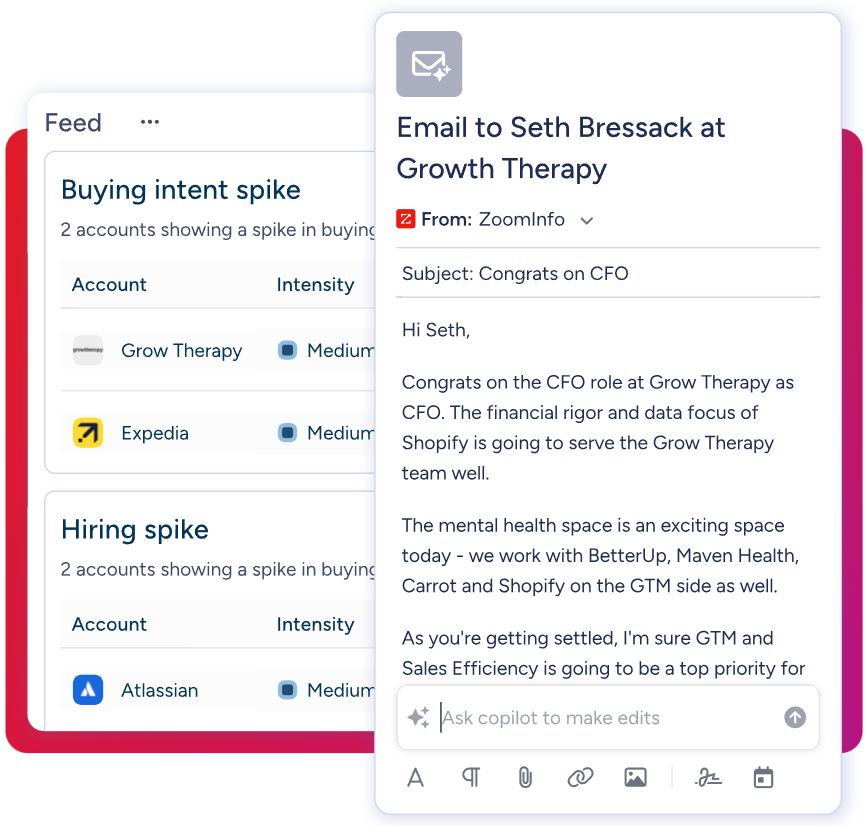
The difference is fundamental. HubSpot and Vtiger manage deals after they enter the pipeline. ZoomInfo identifies which accounts should be in the pipeline and gives reps the intelligence to engage them before a competitor does.
Seismic attributed 39% of active pipeline to opportunities identified or influenced by ZoomInfo signals, with reps becoming 54% more productive. "The combination of our internal CRM data, external signals, and AI has helped us craft very specific account-based messages, and people have responded right away," said Toby Carrington, Chief Business Officer. (Seismic)
The data your CRM runs on determines its value
This is the comparison most CRM articles skip.
HubSpot's Smart CRM stores contact, company, and deal records. It can enrich records automatically by pulling information from emails, call recordings, and HubSpot's own dataset. The Data Hub syncs data from 100+ external apps and includes AI-powered duplicate detection. HubSpot's enterprise CRM supports up to 15 million contacts, expandable to 50 million. For companies that generate leads through inbound marketing, HubSpot captures and maintains that data well.
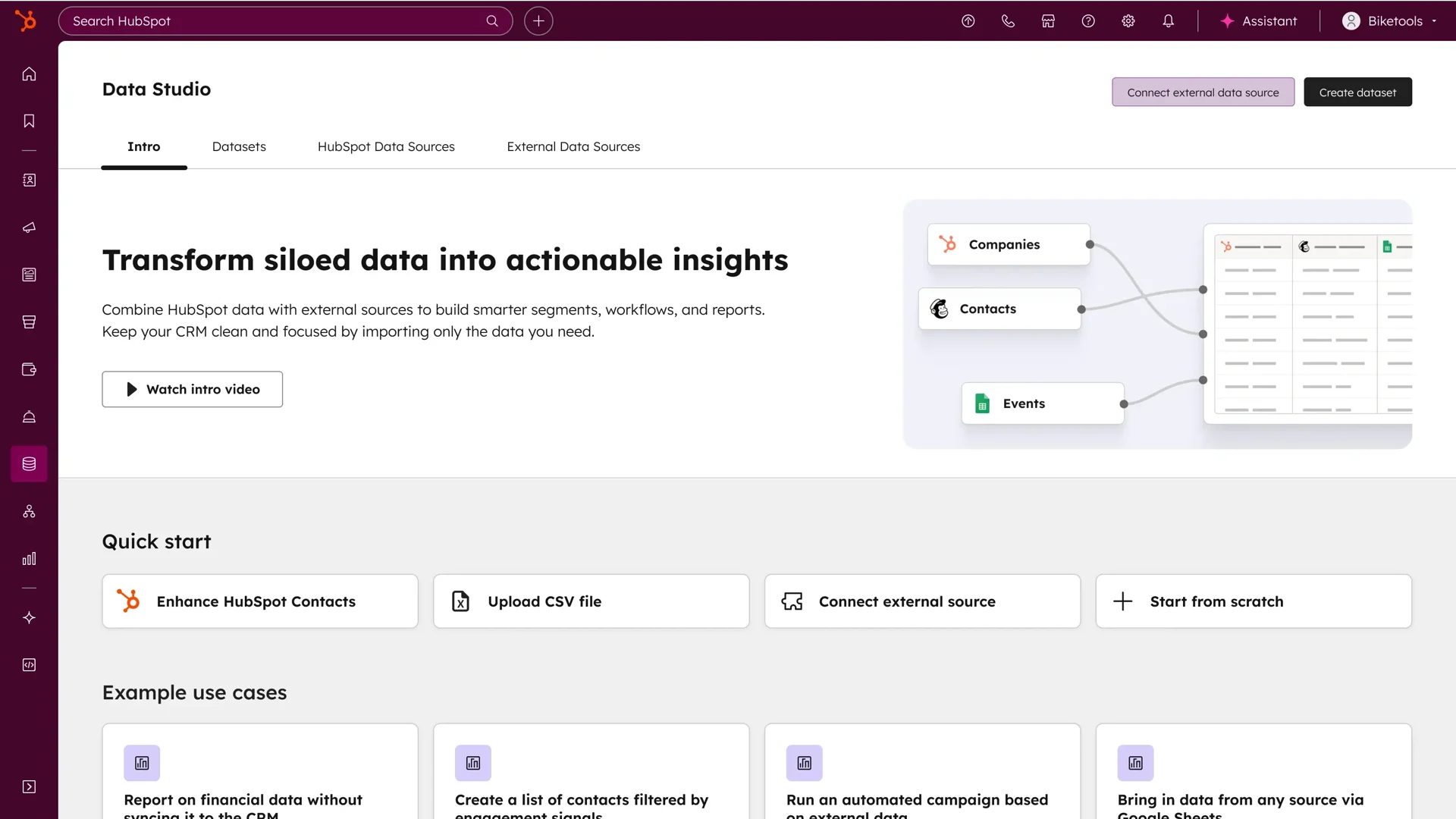
Source: HubSpot
Vtiger's data capabilities are more modest. Vtiger Enrich supplements contact profiles with social media data, and the platform supports multi-source lead capture from webforms, email, chat, and phone. But data quality tools are less developed. G2 reviewers note significant difficulties with data migration, including the inability to roll back a bad import and unexplained format errors during bulk operations.
Neither platform generates the B2B intelligence that outbound-focused teams need. They store what comes in. They don't tell you what's out there.
ZoomInfo's data platform operates at a different scale. 500M contacts with 200M+ verified business email addresses. 135M+ verified phone numbers, including 120M direct dials. 100M company profiles with org charts and technographics covering 30,000+ technologies across 30M+ companies.
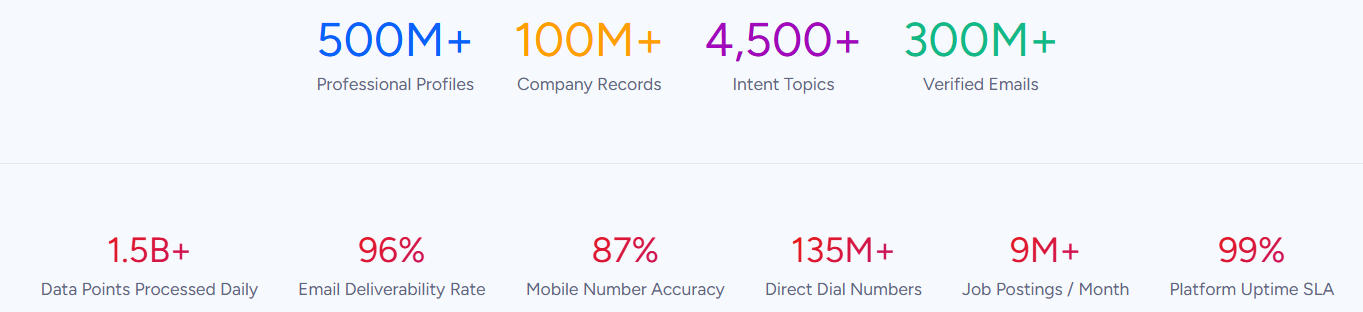
Buyer intent data from 210 million IP-to-Organization pairings and 6 trillion+ new keyword-to-device pairings sourced monthly. ZoomInfo maintains this data through automated ML scanning of 28 million site domains daily, 300+ human researchers, and a network of 200,000+ users who share data back, achieving up to 95% accuracy on first-party data.
The practical impact: reps using HubSpot or Vtiger can find contacts already in their CRM. Reps using ZoomInfo can find every relevant contact at every target account, with verified direct dials and emails, before a single form is filled out. That data flows into HubSpot through a native integration or into any CRM via API and MCP.
In a Fortune 500 competitive RFP analyzing 25 million contacts across vendors, an independent consultant concluded that "no other competitor came even close."
"ZoomInfo gives us the information we need to execute. We don't have to spend our time digging. It's already there, so we can be three steps ahead," said William Kenimer, Vice President of Revenue Operations at Vensure. (Vensure)
AI capabilities range from assistants to contextual intelligence
All three platforms invest in AI, but the scope differs.
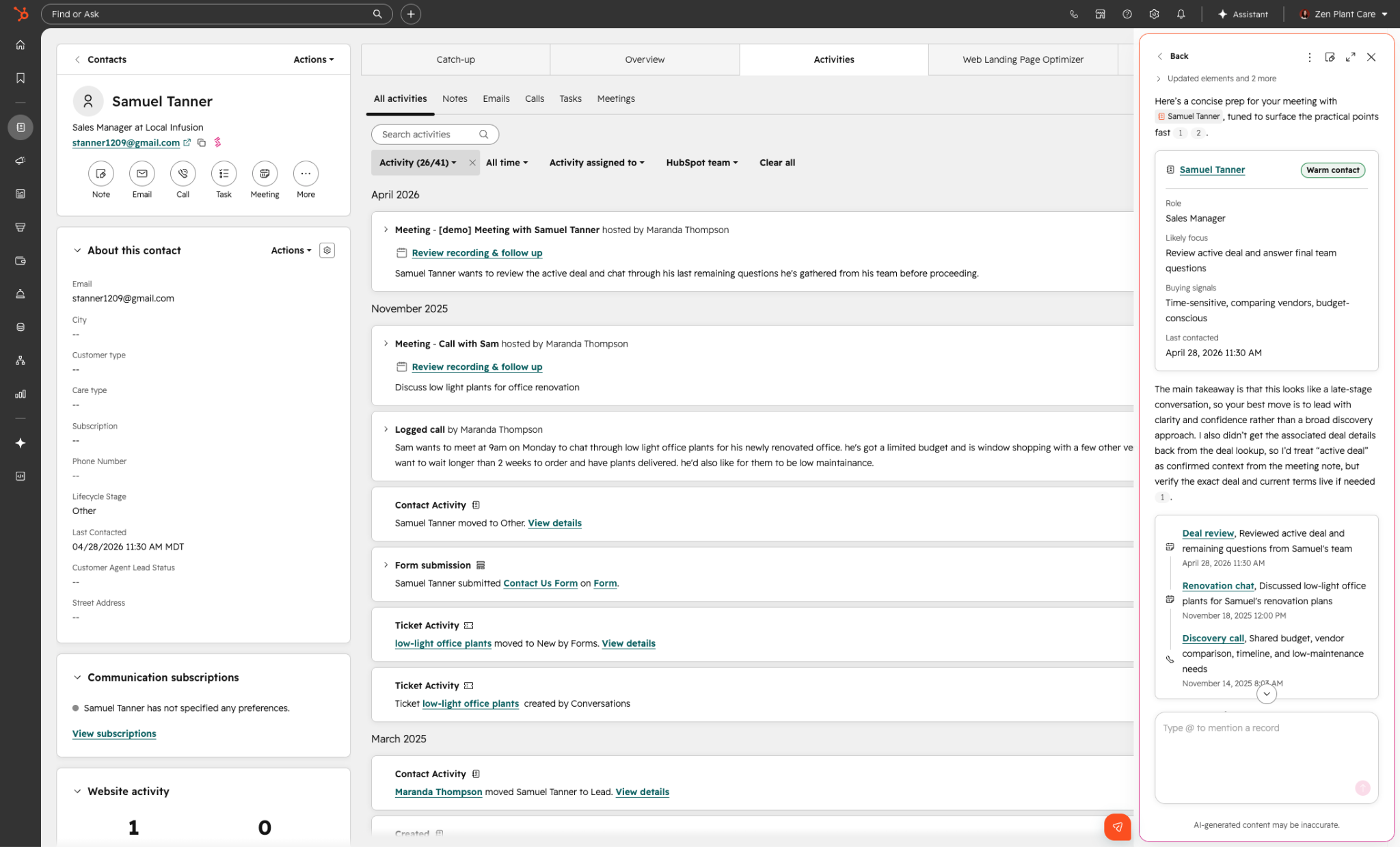
HubSpot's Breeze is an AI layer embedded across the platform. Breeze Assistant handles meeting prep, content drafting, and strategic analysis using CRM context. Named agents include a Customer Agent that handles support inquiries across chat, email, WhatsApp, and phone, a Prospecting Agent that monitors buying signals and drafts personalized outreach, and a Data Agent that answers natural-language questions about CRM data.
Breeze agents run on HubSpot Credits, included in Professional and Enterprise subscriptions. Several features remain in Beta, including AI-Powered Segmentation, Personalization, and Marketing Studio.
Source: HubSpot
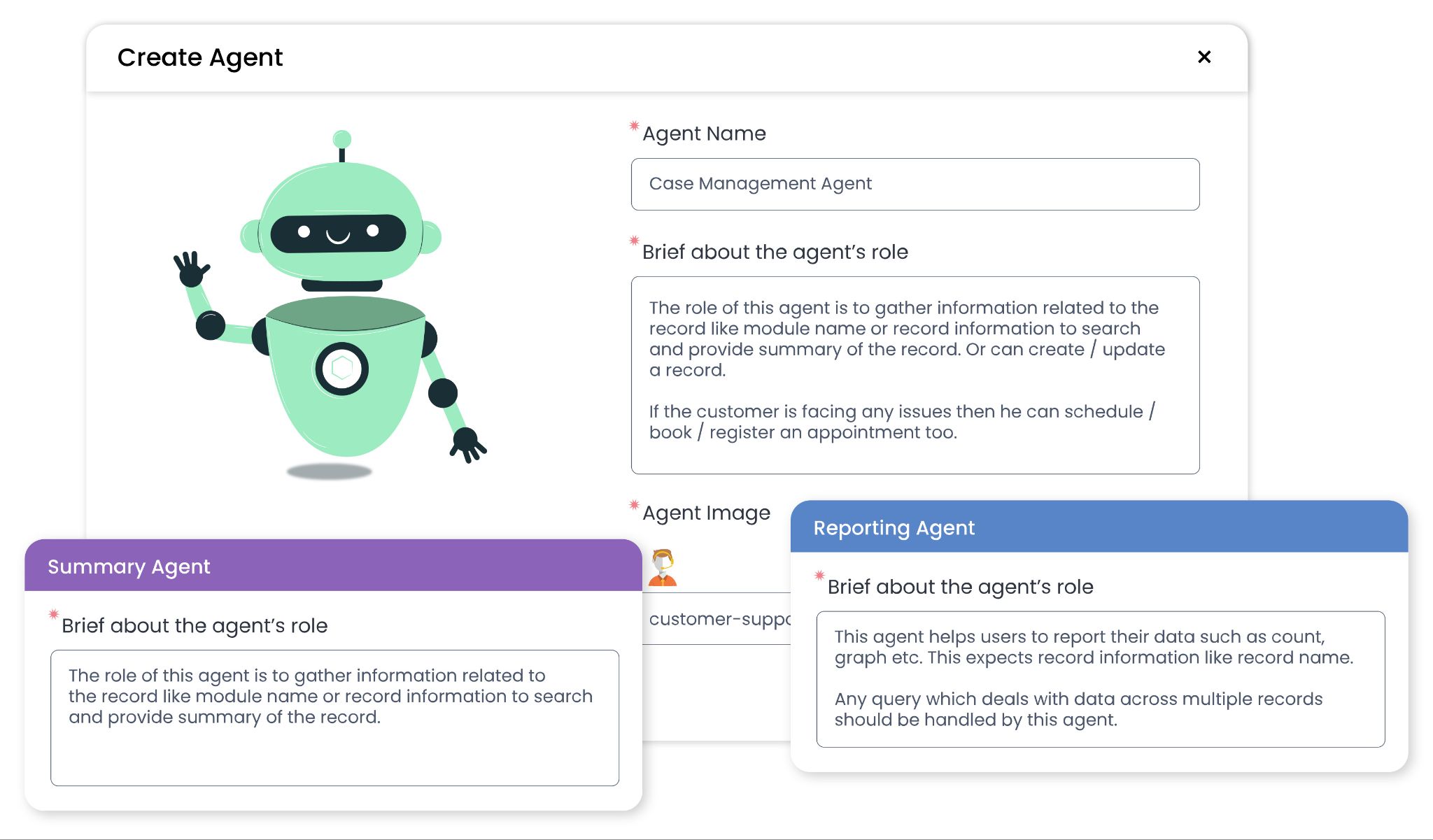
Vtiger's Calculus AI provides deal scoring using fit, sentiment, and engagement signals, call quality analysis monitoring talk-to-listen ratio and negative mood, email sentiment analysis, and best-time-to-contact recommendations.
The Agent Builder lets teams create autonomous AI agents without code that retain context from past interactions and can hand tasks to each other in multi-agent workflows. Prediction AI Designer offers a point-and-click interface for building classification and regression models on CRM data. For an SMB-focused platform, the AI breadth is notable.
Source: Vtiger
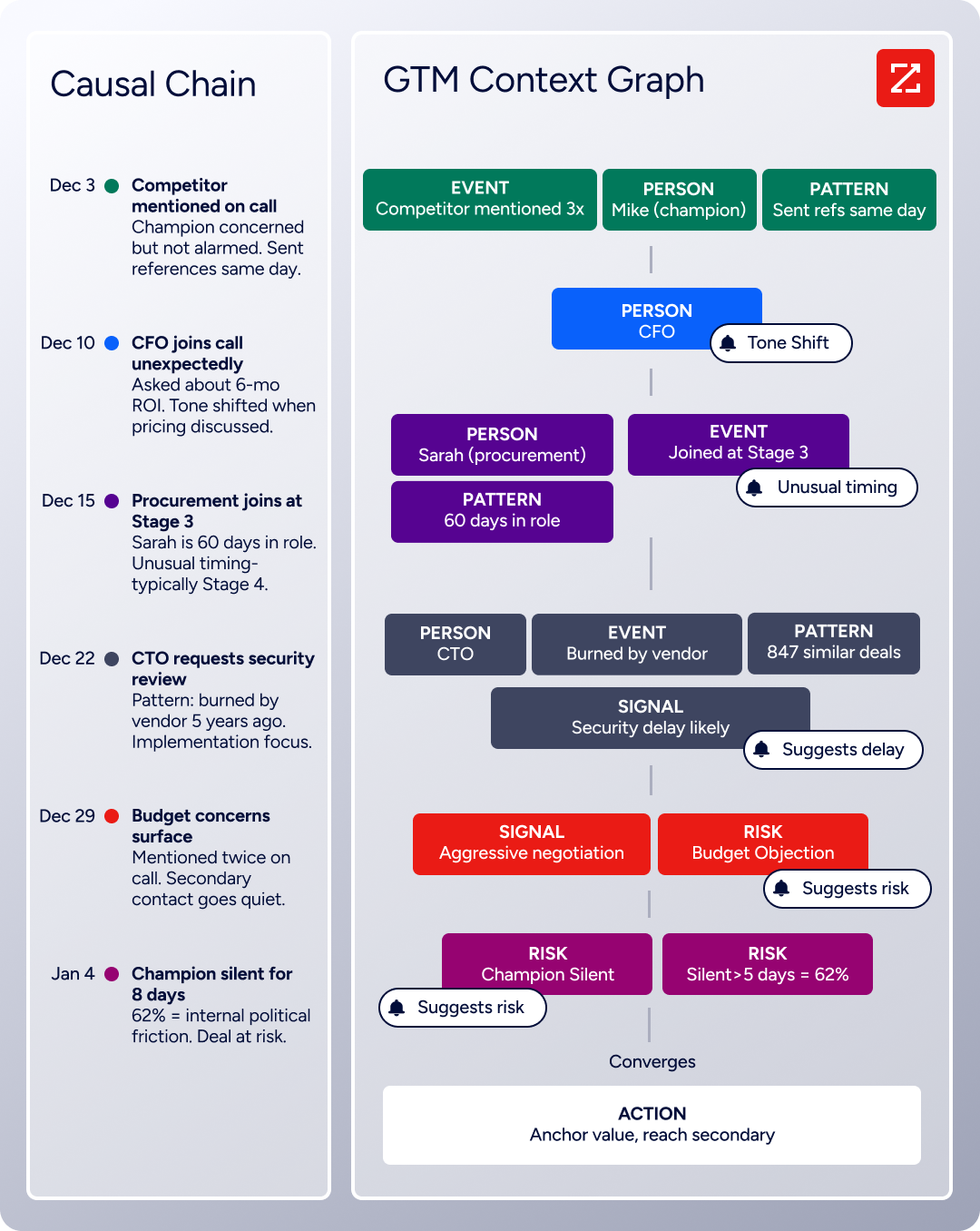
ZoomInfo's AI operates at a different level because it draws on a different data foundation. The GTM Context Graph processes 1.5B+ data points daily by fusing ZoomInfo's B2B database with customer CRM data, conversation intelligence, and behavioral signals. The distinction matters: Breeze and Calculus AI draw on data already in the CRM. The GTM Context Graph draws on both internal data and external signals (intent spikes, org changes, funding rounds, competitive mentions) to reveal why a deal is moving or stalling.
As ZoomInfo's CPO Dominik Facher explains: "The CRM recorded the state change. It has no record of why it happened." A CRM knows the deal moved to Stage 4. The GTM Context Graph knows it moved because the CFO joined the last call and asked about six-month ROI, and that pattern matches closed-won deals in your segment.
Pricing models serve different buyers
The three platforms price for different audiences.
HubSpot uses a hybrid model combining per-seat, per-contact, and flat-tier pricing. The free CRM is generous: unlimited contacts, basic tools for marketing, sales, and service, capped at two users. The Starter Customer Platform bundles all Hubs at $20/seat/month (monthly) or $15/seat/month (annual). But the jump to Professional is steep: Marketing Hub Professional costs $890/month with a $3,000 mandatory onboarding fee. Sales Hub Professional adds $100/seat/month plus $1,500 onboarding. Enterprise Marketing is $3,600/month with $7,000 onboarding.
The hidden cost most buyers miss: when subscribing to multiple Hubs at different tiers, all Core Seats are billed at the highest tier's rate. A company with Marketing Hub Professional and Sales Hub Enterprise pays the Enterprise seat rate for every seat across every Hub. This is confirmed in HubSpot's product catalog, but it surprises many buyers during renewal.
Vtiger is the most transparent of the three. One Growth starts at $12/user/month (annual). One Professional at $30/user/month unlocks unlimited users and records. One Enterprise at $42/user/month. One AI at $50/user/month. A distinctive feature: the Single App User license lets organizations give team members full access to one app (Sales, Marketing, or Help Desk) at a reduced rate ($20/user/month on Professional versus $30 for full access), while retaining read-only access to the rest.
Vtiger's base prices are low, but costs can accumulate through Booster Packs ($5–$50/month each for additional workflows, custom fields, mailboxes, or records) and feature add-ons like Calculus AI ($12/user/month), CPQ ($8/user/month), and Field Sales ($4/user/month). Live Chat, WhatsApp, and Surveys are also paid add-ons across all tiers. Still, a fully loaded Vtiger account costs a fraction of an equivalent HubSpot setup.
ZoomInfo uses consumption-based pricing with no published rates. Costs scale around seats, credits (1 credit = 1 data export), and feature access. ZoomInfo Lite is a permanent free tier with 10 monthly export credits and access to the core database. Paid plans span three tiers (Professional, Advanced, Enterprise) across Sales and Marketing product lines, each adding intent signals, AI capabilities, and dedicated support.
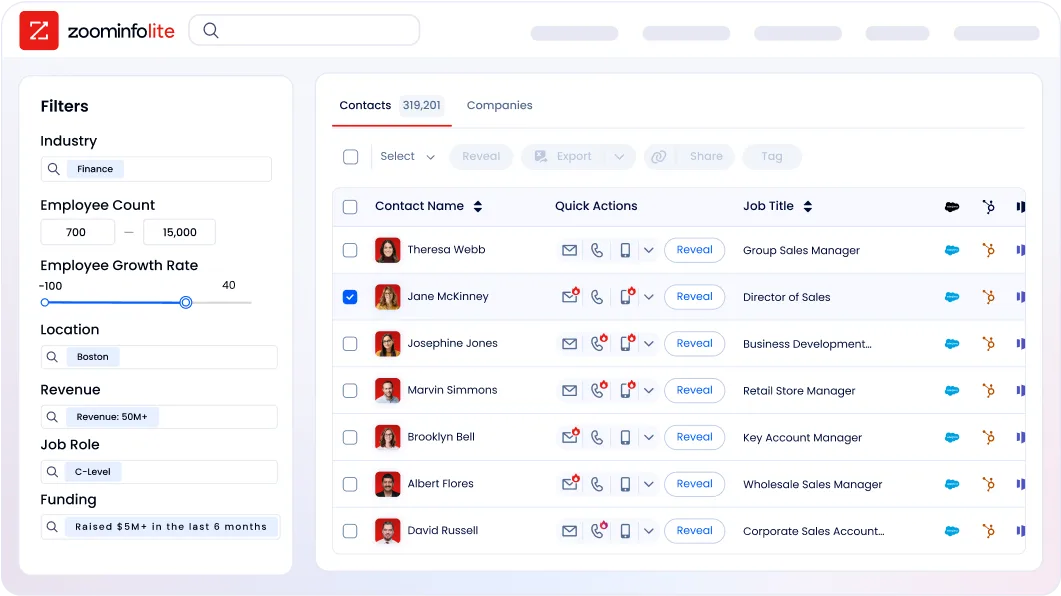
ZoomInfo's pricing targets enterprise and upper mid-market companies where the ROI from accurate data and intent signals justifies the investment. The lack of published pricing makes direct cost comparison difficult, but the value is measured in pipeline generated rather than per-seat cost.
HubSpot vs. Vtiger vs. ZoomInfo: Which should you choose?
The best platform depends on the problem you're solving.
Choose HubSpot if:
You're a scaling company (20–2,000 employees) that needs marketing, sales, and service on one platform
Content marketing and inbound lead generation are central to your growth strategy
You want a large integration ecosystem with 2,000+ apps
Your budget accommodates Professional-tier pricing ($890+/month for marketing, $100+/seat for sales)
You value an intuitive interface that teams can adopt quickly
Choose Vtiger if:
You're an SMB (10–200 employees) that needs sales, marketing, and support in one affordable package
Sales process enforcement (Playbooks, Deal Room, Process Designer) matters more than marketing sophistication
Your budget is under $50/user/month and you want features that competitors charge enterprise rates for
You value customization and are willing to invest time learning the platform
You need an open-source or self-hosted option for data residency requirements
Add ZoomInfo if:
Your growth depends on outbound prospecting, not just inbound leads
You need verified B2B contact data (direct dials, verified emails) for target accounts
Buyer intent signals would change how your team prioritizes accounts
You want AI that draws on both your CRM data and external market signals
You're ready to move from managing contacts to building intelligence-driven pipeline
Start with ZoomInfo Lite for free and see how verified data changes your prospecting, or request a full trial to experience the complete platform.
"Without ZoomInfo, it would be extremely difficult (if not impossible) to achieve our business objectives. Without it, we wouldn't be able to understand the market, have the right contact data, and make meaningful connections," said Thor Sanderson, Senior Manager of Sales Technology Enablement at Smartsheet. (Smartsheet)
The choice between HubSpot and Vtiger is a CRM decision: which platform best manages your customer relationships at your budget and scale. ZoomInfo addresses a different question: where do those customers come from? For teams that depend on outbound pipeline, the CRM you choose matters less than the intelligence that powers it. And ZoomInfo's data, with its native HubSpot integration and API/MCP access for any system, works regardless of which CRM sits underneath.
HubSpot vs. Vtiger vs. ZoomInfo FAQ
Is HubSpot or Vtiger better for small businesses?
Vtiger is the more practical choice for small businesses on a tight budget. Its One Growth plan starts at $12/user/month and includes sales, marketing, and help desk in a single subscription. HubSpot's free CRM works for basic use, but meaningful marketing automation (Professional tier) starts at $890/month with a $3,000 onboarding fee, a price point that puts it out of reach for many small teams. Vtiger's permanent free plan supports up to 10 users with core CRM features, while HubSpot's free tier caps at 2 users.
Can ZoomInfo replace a CRM like HubSpot or Vtiger?
No. ZoomInfo is a GTM intelligence platform, not a CRM. It identifies target accounts, provides verified contact data, tracks buyer intent signals, and powers AI-driven prospecting. But it doesn't manage deals, support tickets, or marketing campaigns the way a CRM does. ZoomInfo works best alongside a CRM, feeding verified data and signals into the system where your team manages relationships. It integrates natively with HubSpot and connects to other systems via API and MCP.
How do the AI capabilities compare across the three platforms?
HubSpot's Breeze AI includes agents for customer support, prospecting, and CRM data queries, all drawing on data stored in the CRM. Vtiger's Calculus AI provides deal scoring, sentiment analysis, call quality monitoring, and a no-code agent builder. ZoomInfo's GTM Context Graph processes 1.5B+ data points daily by drawing on both internal CRM data and external signals (intent spikes, org changes, funding rounds, competitive mentions), capturing not just what happened in a deal but why it happened. Each platform's AI depends on its data foundation: HubSpot and Vtiger draw on what's inside the CRM, while ZoomInfo draws on both the CRM and the broader market.
What does HubSpot's mixed-tier pricing mean in practice?
When you subscribe to multiple HubSpot Hubs at different tiers (for example, Marketing Hub Professional and Sales Hub Enterprise), all Core Seats are billed at the highest tier's rate. A company paying $100/seat for Sales Hub Professional would see all seats jump to $150/seat if any Hub is on Enterprise. This pricing rule is documented in HubSpot's product catalog but often surprises buyers during renewal negotiations.
Does Vtiger work for companies beyond the SMB market?
Vtiger has been recognized in the Gartner Magic Quadrant for Sales Force Automation for seven consecutive years (2019–2025) as a Niche Player, with strengths in activity management and collaboration. The platform can technically support larger organizations, but user reviews consistently note that limitations appear when businesses start scaling: performance slowdowns, reporting complexity, and integration reliability issues. Companies with 200+ employees or complex multi-department workflows may outgrow Vtiger's capabilities.
How does ZoomInfo's data accuracy compare to what CRMs provide natively?
ZoomInfo maintains its database through automated ML scanning of 28 million site domains daily, 300+ human researchers, and a network of 200,000+ users who share data back, achieving up to 95% accuracy on first-party data. In a Fortune 500 competitive RFP analyzing 25 million contacts across vendors, an independent consultant concluded that no other competitor came close. CRM platforms like HubSpot and Vtiger store the data users enter and can enrich it incrementally, but they do not independently verify contact accuracy, maintain direct-dial phone numbers at scale, or track buyer intent signals.
Can ZoomInfo integrate with both HubSpot and Vtiger?
ZoomInfo has a native integration with HubSpot providing direct CRM enrichment and data sync. For Vtiger and other CRMs, ZoomInfo connects through its REST API and can bridge via Zapier or similar middleware. ZoomInfo also offers an MCP server that enables any MCP-compatible AI client or tool to access its data programmatically. API access is included in all relevant ZoomInfo plans.
What is the cheapest way to get started with each platform?
HubSpot's free CRM includes unlimited contacts, basic tools across marketing, sales, and service, and up to 2 users with no time limit. Vtiger's One Pilot plan is free for up to 10 users and 3,000 records. ZoomInfo Lite is a permanent free tier with 10 monthly export credits and access to the core B2B database, including the Chrome extension and basic website visitor tracking. All three let you evaluate the platform before spending anything.
More HubSpot comparisons:
