
Gainsight is the leading customer success platform, serving 20,000+ customers including Docusign, Adobe, SAP, and LinkedIn, and holding the top position in both the 2024 and 2025 Gartner Magic Quadrant for Customer Success Management Platforms. Its CustomerOS platform combines health scoring, renewal forecasting, product analytics, customer education, and community engagement into a single post-sales operating system.
But a customer success platform only knows what happens inside it.
Gainsight tracks health scores, CTA workflows, NPS responses, and renewal timelines. On its own, it cannot verify whether your contact data is current, capture the full context of every support interaction, stream real-time product usage events into health scorecards, or surface customer intelligence in the channels where your teams work.
The right integrations close those gaps. They feed Gainsight verified data it cannot generate on its own, sync CRM records bidirectionally so health scores reflect live deal state, push customer signals into team workflows, and connect product telemetry to health dimensions so risk surfaces before the customer escalates.
This guide covers the strongest integration for each of the jobs Gainsight users most commonly need done:
Enrich customer records with verified B2B contact data and buyer intelligence
Synchronize CRM data bidirectionally with health scores and renewal forecasts
Surface customer intelligence in team communication channels without additional seat costs
Feed support ticket data into health scorecards as automated risk signals
Pipe data warehouse product telemetry into adoption-based health scoring
Route customer escalations and feature requests into engineering workflows
Stream real-time product usage events into health scores without batch delays
Each section walks through how the integration connects with Gainsight, what data flows between the platforms, pricing, and who benefits most.
Best Gainsight Integrations at a Glance | |
|---|---|
Best Gainsight Integration for B2B Data Enrichment and Customer Intelligence Enriches Gainsight customer records with verified contact data, buyer intent signals, and conversation intelligence, giving CS teams accurate stakeholder data and early warning signals for accounts showing buying or churning behavior. | |
Best Gainsight Integration for CRM Data Layer and Native Deployment Powers Gainsight health scores, renewal forecasts, and CTA workflows with live CRM record state through a certified bidirectional connector and an optional native in-Salesforce managed package deployment. | |
Best Gainsight Integration for Bringing Customer Intelligence Into Every Team's Daily Workflow Surfaces health score changes, CTA alerts, and AI-powered account queries in Slack channels through a dedicated AI Agent, extending Gainsight's CS intelligence to cross-functional stakeholders without additional Gainsight seat costs. | |
Best Gainsight Integration for Feeding Support Ticket Data Into Customer Health Scores Syncs ticket volume, severity, and resolution time into Gainsight health scorecards via a native connector, while embedding CS context in the Zendesk agent sidebar for bidirectional escalation workflows. | |
Best Gainsight Integration for Data Warehouse-Driven Health Scoring Pipes product usage, behavioral telemetry, and event-level customer data from the enterprise data warehouse into Gainsight health scores and adoption analytics without a separate ETL pipeline. | |
Best Gainsight Integration for Closing the Loop Between Customer Feedback and Engineering Prioritization Routes customer escalations and revenue-weighted feature requests from Gainsight into Jira tickets, while surfacing open engineering issues as risk signals in health scorecards. | |
Best Gainsight Integration for Real-Time Product Usage Health Scoring Streams product usage events into Gainsight health scorecards in near real time, eliminating scheduling dependencies and ETL delays between product behavior and CS visibility. |
What Is Gainsight?
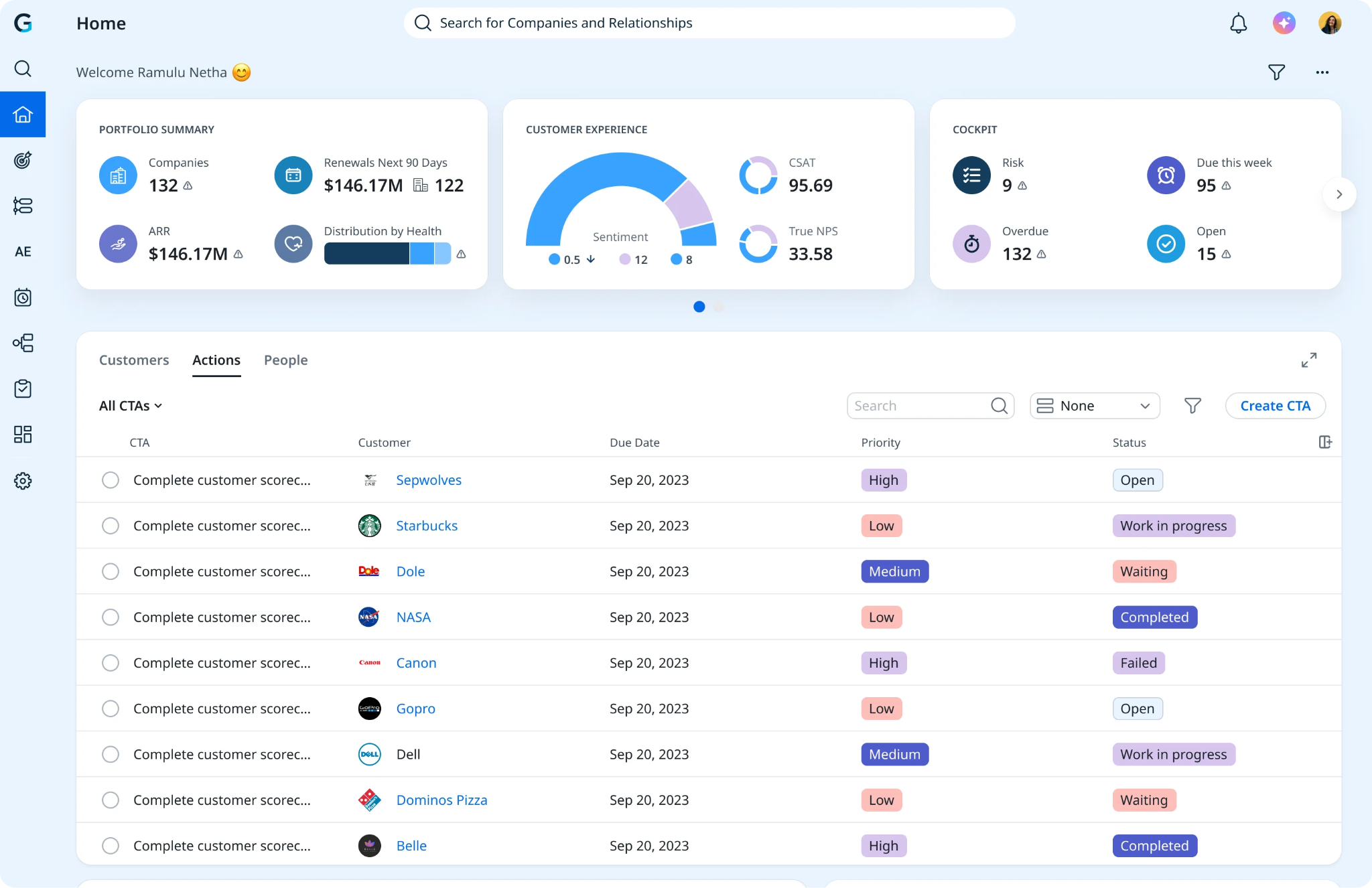
Gainsight is a customer success platform that combines health scoring, lifecycle management, renewal forecasting, product analytics, customer education, and community engagement into a single CustomerOS for post-sales teams.
Source: G2
The company calls itself "The Customer Success Company" and has repositioned around an agentic AI vision called "Retention-as-a-Service", combining 15 years of CS expertise with autonomous AI agents that manage retention outcomes across the long tail of accounts.
Gainsight's integration ecosystem is a core strength of the platform.
The Gainsight Marketplace contains over 110 apps, integrations, and service partners spanning CRM connectors, data warehouse connections, support platforms, analytics tools, and workflow automation.
On the technical side, Gainsight offers a RESTful API suite covering Company, Person, CTA, Timeline, and Custom objects, supports OAuth for API authentication, provides a Connectors 2.0 framework for admin-configurable data sync, and exposes MCP endpoints for both Gainsight CS and Staircase AI, enabling external AI agents to read and write customer data through a permission-aware interface.
The integration categories available to Gainsight users include:
CRM and sales data: Salesforce (native managed package and connector), Microsoft Dynamics, Pipedrive, HubSpot
Team communication: Slack (dedicated AI Agent), Microsoft Teams
Support and ticketing: Zendesk, Freshdesk, ServiceNow, Jira, Intercom
Data warehousing and analytics: Snowflake, Amazon Redshift, Google BigQuery, PostgreSQL
Customer data platforms: Segment, Mixpanel
Product roadmap and feedback: Jira, Aha!
Workflow automation: Zapier, SAP
AI and conversation intelligence: Staircase AI, Atlas AI Agents
With that ecosystem as context, here are the seven integrations we selected as the best options for extending Gainsight across the categories that matter most to customer success teams.
1. ZoomInfo: Best Gainsight Integration for B2B Data Enrichment and Customer Intelligence
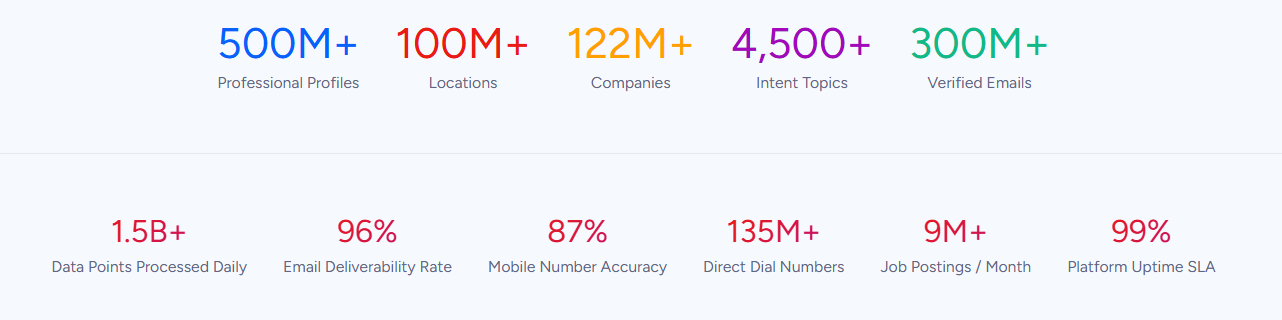
ZoomInfo is an AI-powered go-to-market platform built on a large B2B data foundation: 500M contacts, 100M companies, 135M+ verified phone numbers, and 200M+ verified business email addresses. Its GTM Context Graph processes 1.5B+ data points daily, combining this data with your CRM records and behavioral signals to capture the full context behind account activity. It integrates with Gainsight through Chorus–Staircase AI sync, plus third-party connectors like Workato and Stacksync for real-time data sync.
Connecting the two platforms unlocks:
Verified stakeholder data flowing into Gainsight's Customer 360, with direct dials, business emails, job titles, and seniority levels that keep People Maps and Sponsor Tracking accurate
Conversation intelligence feeding Staircase AI's signal layer, so customer call analysis and meeting transcripts enrich the sentiment and relationship signals Gainsight uses for health scoring
Buyer intent signals surfacing account risk and expansion opportunities, revealing which customers are researching competitors or adjacent solutions before those signals show up in NPS scores
Company intelligence for smarter segmentation, with technographic and organizational data enriching Gainsight's account profiles for more granular health scoring and playbook targeting
How ZoomInfo Integrates with Gainsight
ZoomInfo connects to Gainsight through multiple paths. The primary native connection runs through ZoomInfo Chorus, which syncs meeting transcripts and call analysis to Gainsight's Staircase AI via API token configuration. ZoomInfo is also listed as an integration partner in the ZoomInfo Marketplace, and third-party platforms like Workato and Stacksync provide bidirectional data sync between ZoomInfo and Gainsight for real-time enrichment.
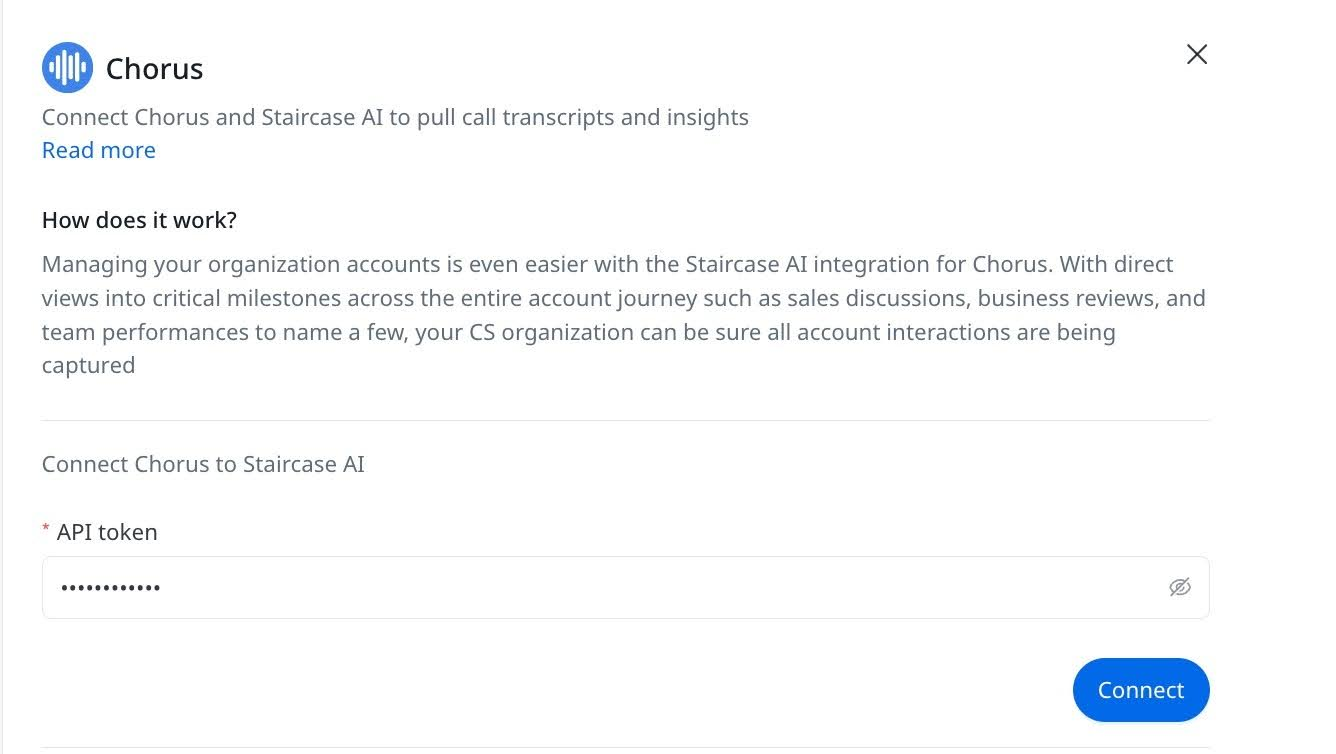
Teams can start with conversation intelligence flowing through Chorus and Staircase AI, then expand to full data enrichment via Workato recipes that push verified contact data, company attributes, and intent signals into Gainsight's data model.
Conversation Intelligence: Feed Call Context Into Staircase AI's Signal Layer
Gainsight's Staircase AI analyzes customer communications to surface sentiment shifts, relationship health changes, and emerging risk. ZoomInfo Chorus captures and analyzes every customer call, meeting, and email with 14 technology patents using proprietary ML, extracting not just what was said but the context behind it: objection patterns, competitive mentions, stakeholder engagement levels, and deal momentum.
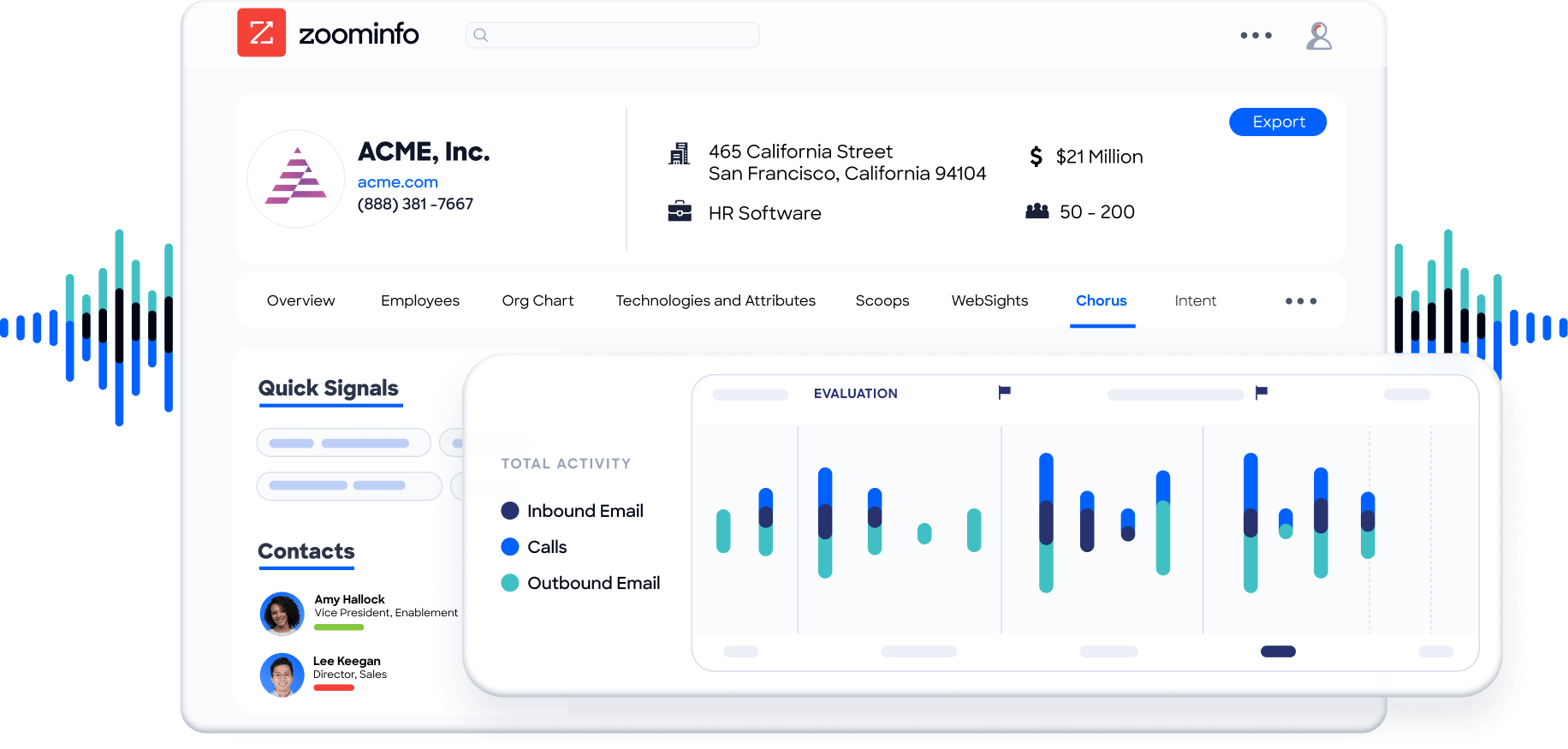
When Chorus transcripts and analysis flow into Staircase AI, the combined signal layer grows richer. Staircase AI can detect sentiment shifts from the actual conversation record rather than relying on email tone and support ticket patterns alone. A champion going quiet in meetings, a CFO raising budget concerns on a call, or a competitor being mentioned favorably across multiple interactions all surface as risk signals weeks before they would appear in traditional health score dimensions.
ZoomInfo in action: A CS team notices that Staircase AI flags sentiment deterioration for a key enterprise account. The Chorus integration reveals the trigger: the customer's VP of Engineering raised concerns about API performance on the last three calls, and a competitor was mentioned positively in each conversation. The CSM schedules a proactive technical review with engineering leadership before the customer initiates a formal evaluation.
Contact Data Enrichment: Keep Gainsight's People Maps and Sponsor Tracking Accurate
Gainsight's People Maps and Sponsor Tracking are only as reliable as the contact data behind them. When a key stakeholder changes roles, a new executive joins the buying committee, or a champion leaves the company, stale data creates blind spots that health scores cannot compensate for.
ZoomInfo maintains verified direct dials, business emails, job titles, seniority levels, and department information for 500M contacts, processed through a verification pipeline backed by 300+ human researchers reaching up to 95% accuracy on first-party data. Through data sync integrations, this verified contact data flows into Gainsight's Person records, keeping the stakeholder map current without manual CSM research.
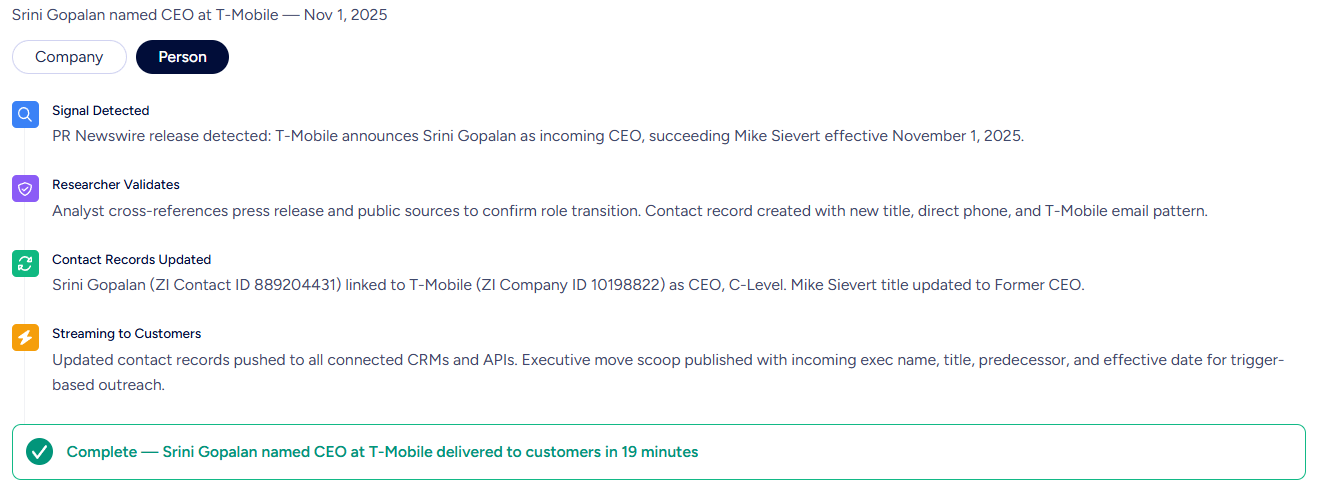
ZoomInfo in action: Gainsight's Sponsor Tracking detects that a tracked executive sponsor's LinkedIn profile changed, but the alert lacks context. ZoomInfo enrichment confirms the sponsor left the company entirely, identifies three potential new stakeholders in the same department with verified contact information, and surfaces that two of them previously evaluated a competitor. The CSM multi-threads the account immediately rather than discovering the gap at the next QBR.
Buyer Intent Data: Identify Churn Risk and Expansion Signals From Research Activity
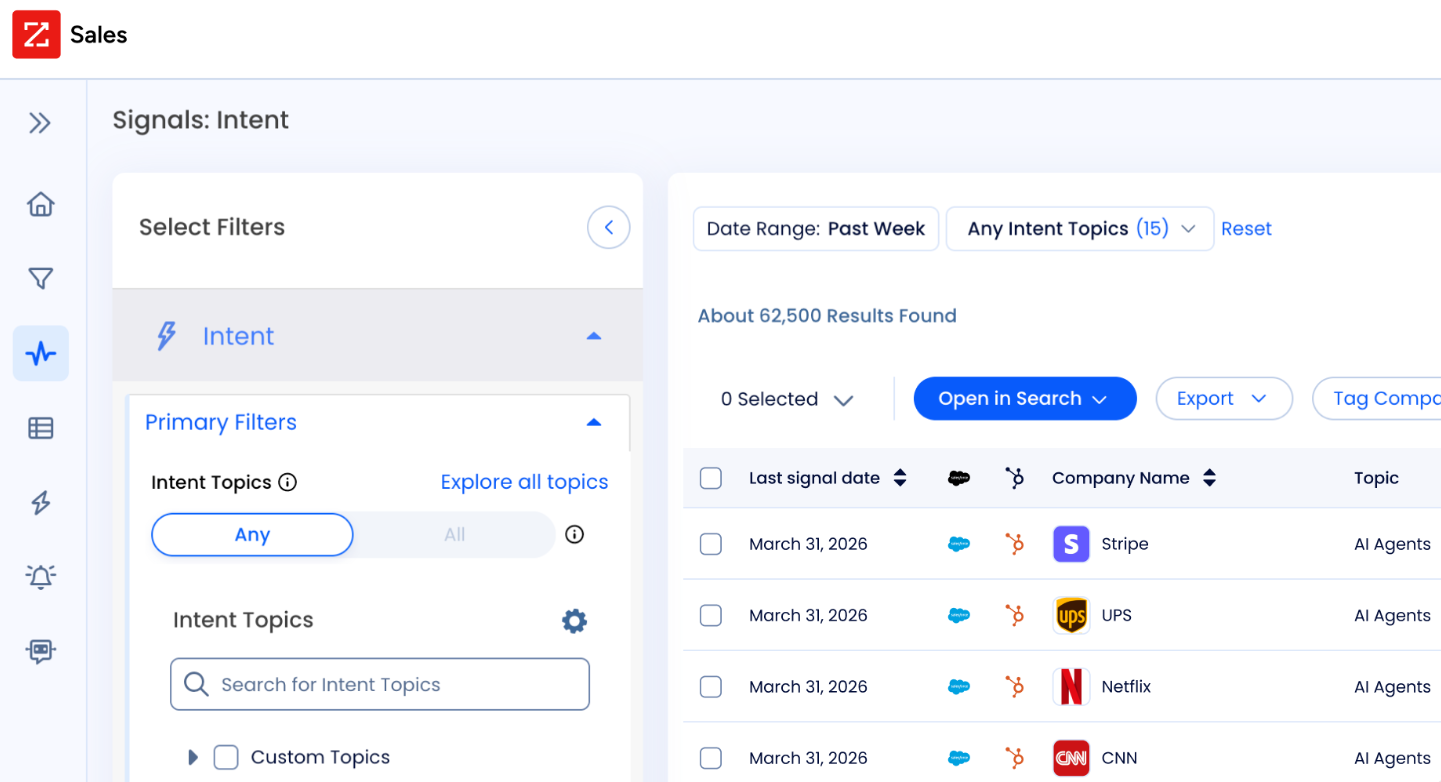
ZoomInfo's Buyer Intent tracks signals from 210 million IP-to-Organization pairings and 6 trillion+ new keyword-to-device pairings monthly, revealing which companies are actively researching topics relevant to your product category.
For customer success teams, intent data is a leading indicator of both risk and opportunity. A customer researching your competitor's features is a churn signal that should trigger a risk CTA in Gainsight before the customer raises it on a call. A customer researching adjacent capabilities you offer is an expansion signal that should surface as an opportunity CTA.
Guided Intent, exclusive to ZoomInfo, identifies research topics historically correlated with churn or expansion in your business, so the signals are calibrated to your actual patterns rather than generic keyword thresholds.
Seismic's sales team attributed 39% of active pipeline to opportunities identified or influenced by ZoomInfo signals, reporting 54% productivity gains and saving 11.5 hours per week per seller. (Seismic Case Study)
Technographic Intelligence: Enrich Account Profiles for Smarter Segmentation
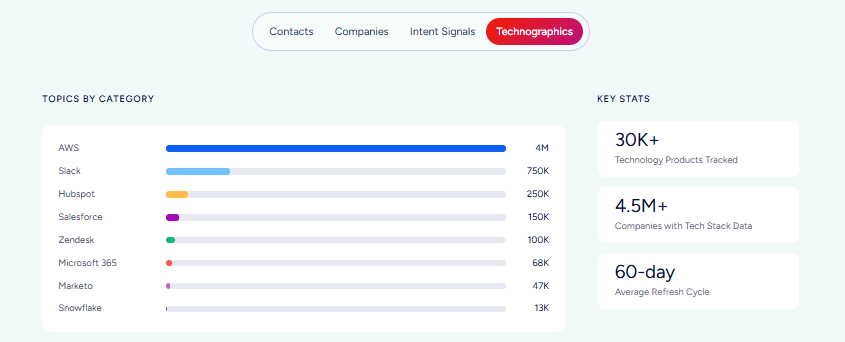
ZoomInfo profiles the tech stack of 30+ million companies, tracking 30,000+ technologies across 200+ categories. When technographic data enriches Gainsight's Company records, CS teams gain a segmentation dimension that product usage alone cannot provide: knowing what tools a customer runs reveals integration opportunities, competitive positioning context, and adoption risk factors that inform playbook selection and health score configuration.
ZoomInfo Pricing
ZoomInfo uses a consumption-based pricing model with custom quotes based on usage, users, credit volume, and features.
It is organized into Sales, Marketing, and standalone product lines, each in Professional, Advanced, and Enterprise tiers. Chorus conversation intelligence is available as a standalone product with separate pricing on the ZoomInfo pricing page. Advanced tiers add intent signals, website visitor tracking, and Champion Tracking, which are particularly relevant for the Gainsight use case.
ZoomInfo Lite is a permanent free tier (no credit card, no time limit) with 10 monthly export credits, searches, the Chrome extension, and CRM integrations, making it a practical way to evaluate data quality before committing. A separate 7-day free trial covers paid features.
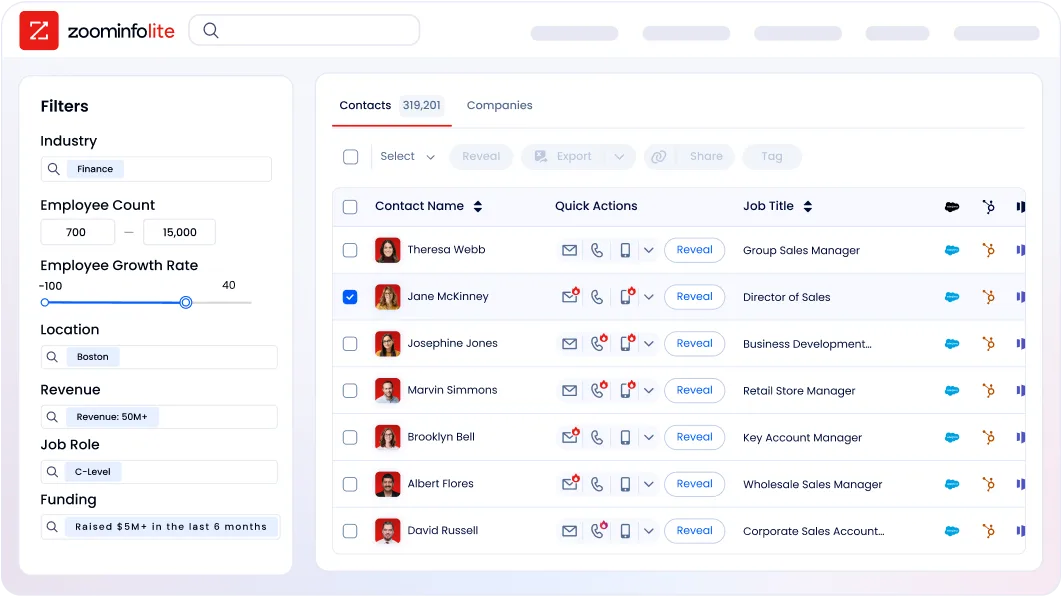
Who Should Use the ZoomInfo Integration?
CS teams managing enterprise accounts where stakeholder changes directly impact renewal risk: verified contact data and job change alerts keep Gainsight's People Maps and Sponsor Tracking accurate without manual research, and Chorus conversation intelligence feeds Staircase AI's risk detection layer
Revenue operations teams that need early warning signals beyond what product usage and NPS capture: buyer intent data surfaces competitive research and category evaluation activity as churn signals weeks before they appear in traditional health score dimensions
Organizations where the CS function is responsible for identifying expansion opportunities: technographic intelligence and intent signals reveal which customers are researching capabilities you offer, surfacing expansion CTAs in Gainsight's Cockpit based on real buying behavior
2. Salesforce: Best Gainsight Integration for CRM Data Layer and Native Deployment
Salesforce is the world's #1 CRM by IDC market share. It integrates with Gainsight to serve as the data backbone for post-sales customer success operations. The integration powers health scores, renewal forecasts, and CTA workflows with live CRM record state through a certified bidirectional connector and an optional native in-Salesforce deployment. Both Gainsight and Salesforce maintain this first-party integration.
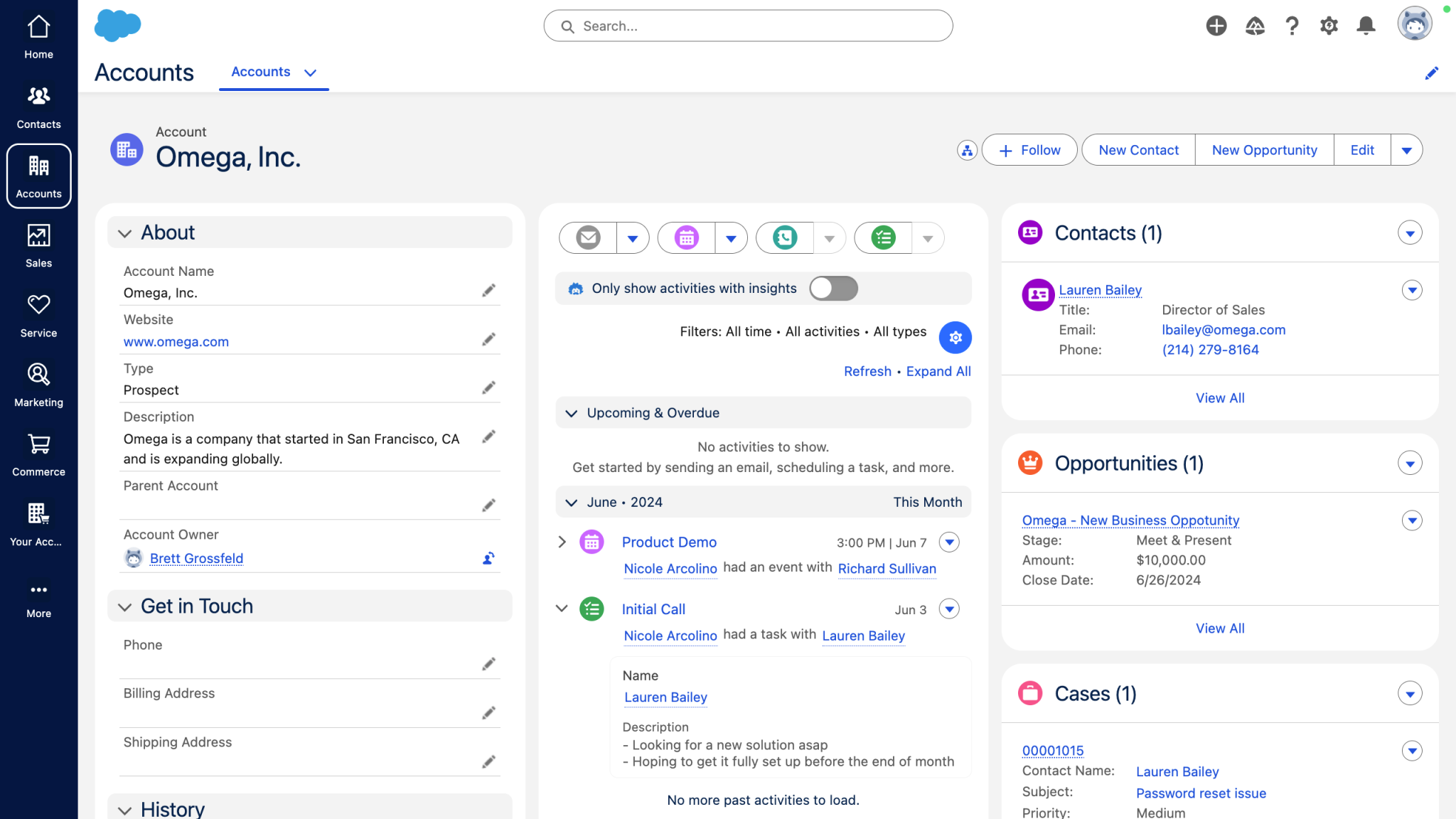
Source: Salesforce
Key integration capabilities include:
Native bidirectional sync of Account, Contact, and Opportunity records between Salesforce and Gainsight, keeping health scores and CTAs current without manual exports
Gainsight available as a Salesforce-native managed package that runs inside the Salesforce platform, eliminating a separate login for CS teams
Renewal Center enrichment of Salesforce Opportunity records with health score data, product usage metrics, and AI likelihood-to-renew scores, with forecast overrides syncing back in real time
Account hierarchy data pulled into Gainsight to map parent-child relationships across enterprise accounts for sub-account Relationship tracking
How Salesforce Integrates with Gainsight
Gainsight offers two deployment modes with Salesforce. The first is Gainsight NXT with a dedicated Salesforce Connector under Connectors 2.0, establishing bidirectional sync between Salesforce standard and custom objects and Gainsight's Matrix Data Architecture.
The second is Gainsight for Salesforce, a certified AppExchange managed package that runs inside the Salesforce platform using Salesforce's own data layer and authentication. Both share the same core feature set.
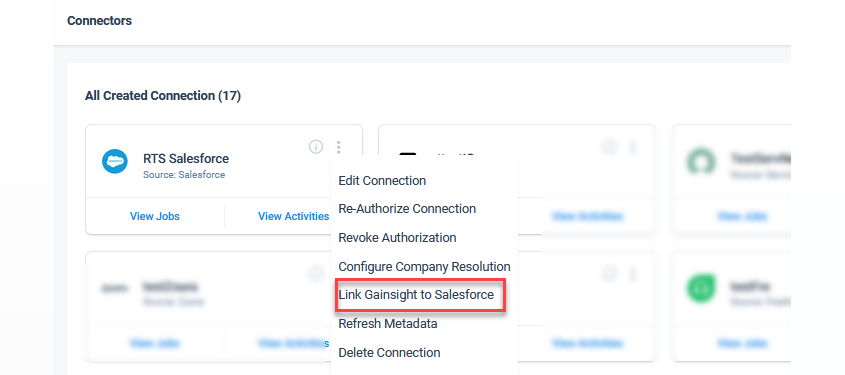
Source: Gainsight
1. Native Bidirectional CRM Data Sync.
The Salesforce Connector provides real-time bidirectional sync of Account, Contact, and Opportunity data. When a CSM updates a health score in Gainsight's Cockpit, the change propagates back into Salesforce fields. When a sales rep closes an expansion opportunity in Salesforce, it surfaces inside Gainsight's Renewal Center without a manual refresh. Health scores that incorporate CRM attributes (contract value, industry segment, renewal date) draw from the same Salesforce records that revenue operations trusts.
2. Native Salesforce Deployment (Managed Package).
The AppExchange managed package installs Gainsight's entire CS platform (Cockpit, C360, Scorecards, Journey Orchestrator, Renewal Center, Timeline) inside the Salesforce interface. CS team members log in once to Salesforce and access all Gainsight functionality without switching applications. Salesforce authentication carries over, so IT teams do not need to provision a separate identity for Gainsight users.
3. Renewal Center Opportunity Enrichment.
Gainsight's Renewal Center (Enterprise tier) maintains a synchronized view of Salesforce Opportunity records enriched with health score data, product usage metrics, Timeline activity, and an ML likelihood-to-renew score trained on the company's own historical outcomes. Forecast overrides entered in Gainsight sync back to Salesforce in real time, keeping the CRM forecast current without a second manual entry.
4. Account Hierarchy and Territory Mapping.
Gainsight pulls Salesforce account hierarchy data to map parent-child relationships across enterprise accounts. Each subsidiary or business unit in Salesforce can correspond to a Gainsight Relationship record with independent health scoring, CTA management, and Timeline tracking, while rolling up data to the parent Company view.
Salesforce Pricing
Salesforce uses per-user annual contracts. The tiers most relevant to Gainsight deployments are:
Enterprise: $175/user/month (annual contract); includes AppExchange access for managed package deployments and 100,000+ API requests per 24-hour rolling period
Unlimited: $350/user/month; adds full AI suite, conversation intelligence, and Premier Success Plan
Agentforce 1: $550/user/month; includes unmetered Agentforce, Tableau Next, and Slack Enterprise+
On the Gainsight side, the Salesforce Connector is available on both Essentials and Enterprise CS plans. The Renewal Center bidirectional opportunity enrichment requires Gainsight's Enterprise tier.
Who Should Use the Salesforce Integration?
CS teams that already operate in Salesforce daily and want to eliminate context-switching: the managed package puts Cockpit, C360, and health scoring inside the same interface
Organizations that need a shared, real-time renewal pipeline view between CS and Revenue Operations: Gainsight health scores and ML likelihood-to-renew scores appear inside the Salesforce Opportunity records that revenue operations builds forecasts from
Teams managing enterprise accounts with parent-child organizational structures that need independent health scoring at each subsidiary level while rolling up to a parent account view
3. Slack: Best Gainsight Integration for Bringing Customer Intelligence Into Every Team's Daily Workflow
Slack is a work platform that integrates with Gainsight to push real-time customer health intelligence into the channels where cross-functional teams already work, without requiring those teams to hold Gainsight licenses. The integration was among the first 20 AI applications in the Slack Marketplace. It is a native first-party integration with a dedicated AI Agent.
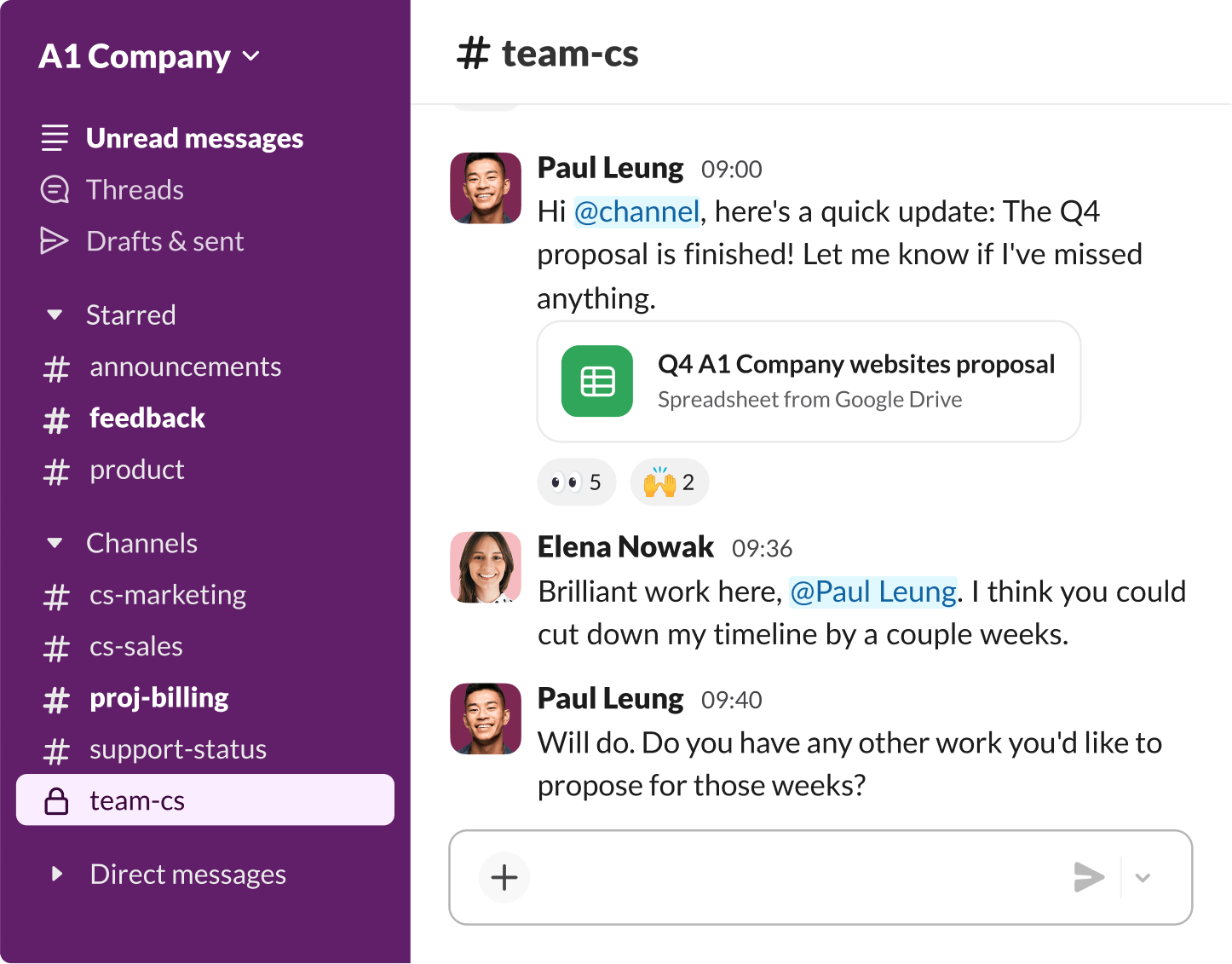
Source: Slack
Key integration capabilities include:
A dedicated AI Agent that answers natural-language questions about account health, ARR, risk signals, and escalations using live Gainsight data
Real-time push notifications for health score changes, CTA triggers, and at-risk account alerts delivered to configured Slack channels
Cross-functional customer visibility extending Gainsight's intelligence to Sales, Product, Finance, and Leadership without additional Gainsight seat costs
Bidirectional activity logging capturing CS responses from Slack back into Gainsight's Timeline
How Slack Integrates with Gainsight
The Gainsight AI Agent for Slack shipped as part of the May 2025 Pulse Edition release. Gainsight also supports PX Slack notifications for product experience alerts. Setup requires OAuth authorization from both platforms, with notification routing configured through Gainsight's admin panel.
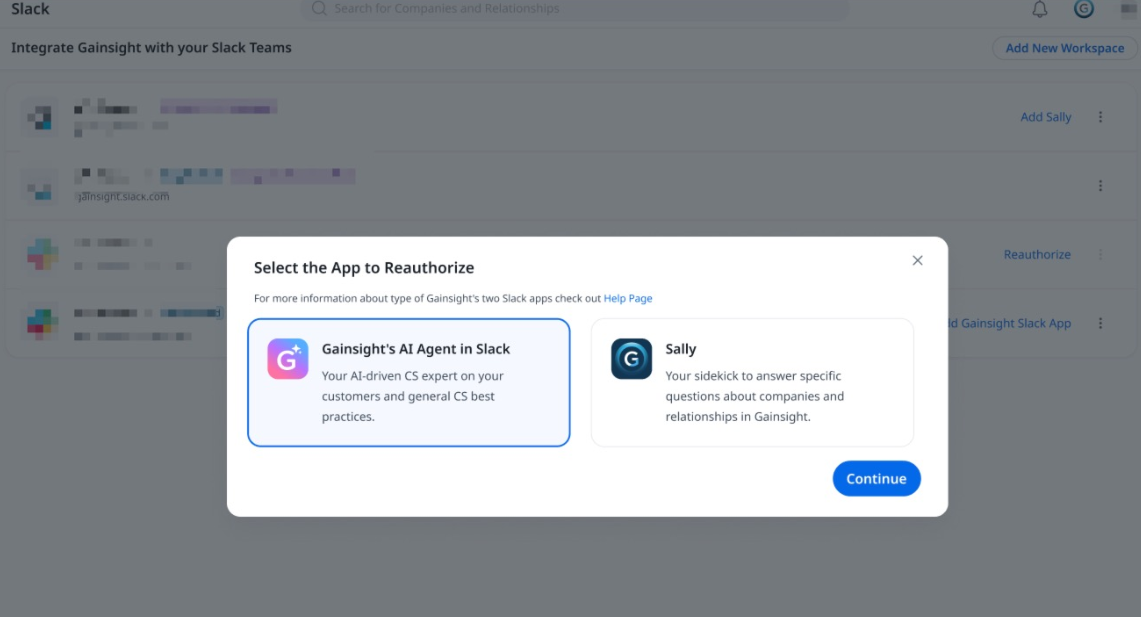
Source: Gainsight
1. AI Agent for Natural-Language Account Queries.
Any Slack user can ask a natural-language question about a customer account and receive an AI-generated answer drawn from live Gainsight data. Questions like "What is Acme Corp's current health score?" or "Which accounts are flagged as at-risk this week?" return answers inside Slack without navigating to Gainsight.
This extends Gainsight's data layer to Finance analysts, Product Managers, and Sales VPs who need account intelligence but would not justify a full Gainsight license. The AI Agent currently supports English-language queries only.
2. Real-Time CTA and Health Alert Notifications.
Gainsight administrators configure notification rules using the same trigger logic that drives CTAs and Rules Engine automations. A health score dropping below a threshold, an executive sponsor departure, or a renewal opportunity entering its 90-day window can all post automatically into designated Slack channels with full account context and record links.
3. Cross-Functional Customer Visibility Without Gainsight Seat Costs.
Gainsight prices by user seat. The Slack integration makes the AI Agent and notification channels accessible to any Slack user at no incremental Gainsight per-user cost. When Sales sees account health scores before an expansion conversation, and Finance monitors renewal pipeline signals in real time, the CS team's work generates organizational leverage it could not produce when the data was locked inside a CS-only tool.
4. Timeline Activity Logging from Slack Interactions.
CS responses initiated through or in response to Slack notifications can be logged back into Gainsight's Timeline, maintaining the complete customer interaction record. This matters most for teams using Slack Connect shared channels with customers, where customer-facing interactions can be reflected in Gainsight's C360 rather than existing only in Slack's message history.
Slack Pricing
Slack uses per-seat pricing with a Fair Billing Policy that credits inactive users:
Pro: $7.25/user/month (annual); unlimited message history, unlimited app integrations; the Gainsight AI Agent and notification channels function at this tier
Business+: $15/user/month (annual); adds SAML SSO, SCIM provisioning, and full Slackbot access
Enterprise+: Custom pricing; multi-workspace management, DLP, and HIPAA compliance
Who Should Use the Slack Integration?
CS teams whose renewal and expansion conversations involve stakeholders across Sales, Finance, and Product who do not hold Gainsight licenses and need account health visibility without a manual handoff from a CSM
Organizations that want faster risk response by receiving CTA alerts in real time rather than discovering at-risk situations during weekly dashboard reviews
Teams that need a complete Timeline record capturing CS activity regardless of whether it originated in Gainsight, in a Slack notification thread, or in a Slack Connect channel with the customer
4. Zendesk: Best Gainsight Integration for Feeding Support Ticket Data Into Customer Health Scores
Zendesk is a customer service platform that integrates with Gainsight to surface support ticket activity as a live input to customer health scoring and to give support agents real-time CS context inside their ticketing queue. The integration uses Gainsight's native Zendesk Connector within Connectors 2.0.
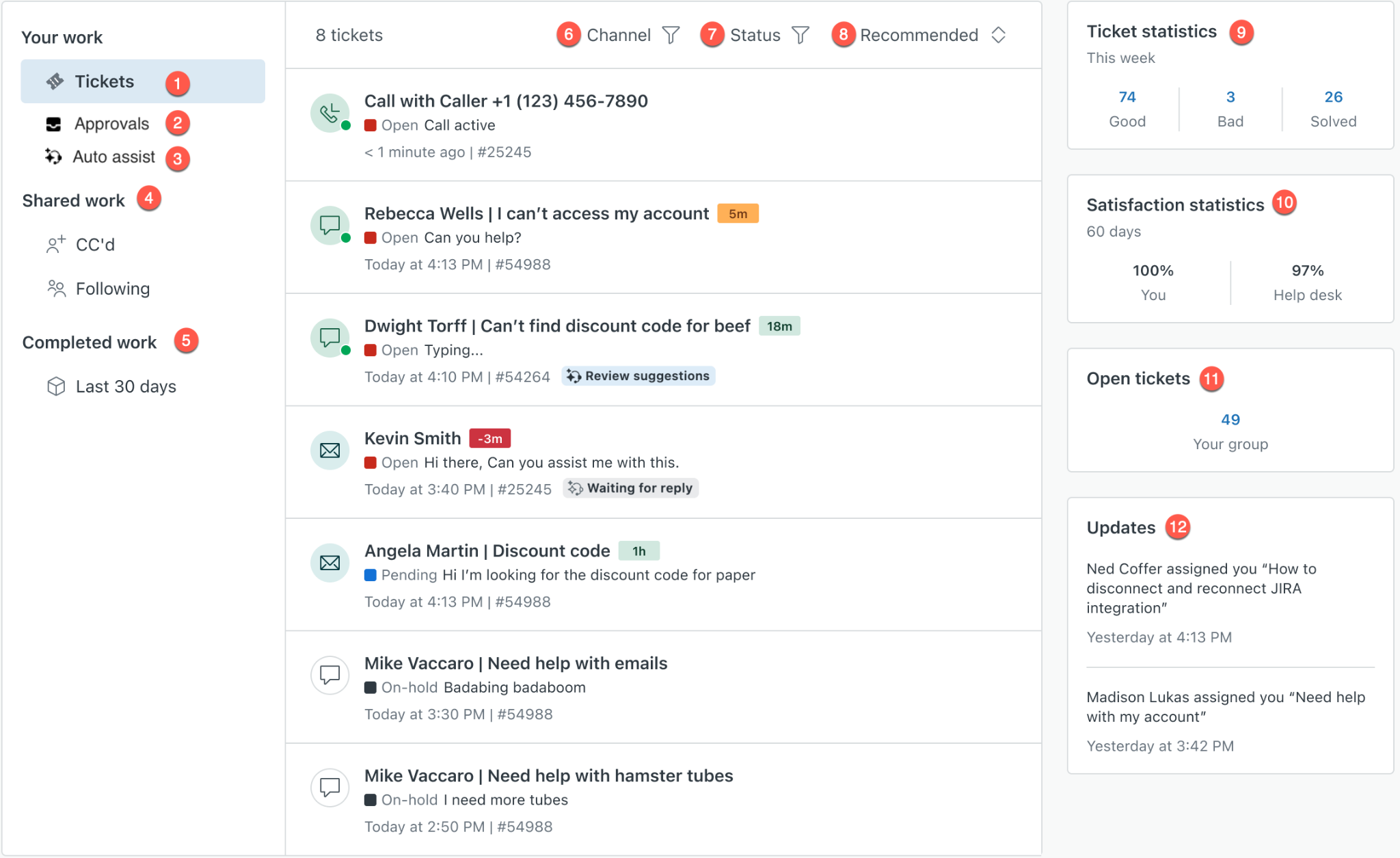
Source: Zendesk
Key integration capabilities include:
Ticket data sync into Gainsight health scorecards pulling volume, status, priority, and resolution time as configurable scorecard measures
A Gainsight context widget embedded in the Zendesk agent sidebar surfacing health scores, open CTAs, and recent CSM activity without agents leaving their queue
Bidirectional CTA and ticket linking allowing support agents to open Gainsight CTAs from Zendesk and CSMs to view linked tickets from Cockpit
Automated risk CTA generation via Rules Engine monitoring of incoming Zendesk ticket patterns
How Zendesk Integrates with Gainsight
The Zendesk Connector is a first-party Gainsight integration listed under the "Support Systems" category in Connectors 2.0. The connection is API-based, using Zendesk's REST API to pull ticket records into Gainsight's Matrix Data Platform, authenticated via OAuth or API token. The widget component is installed from the Zendesk Marketplace and configured to display Gainsight data in the agent sidebar.
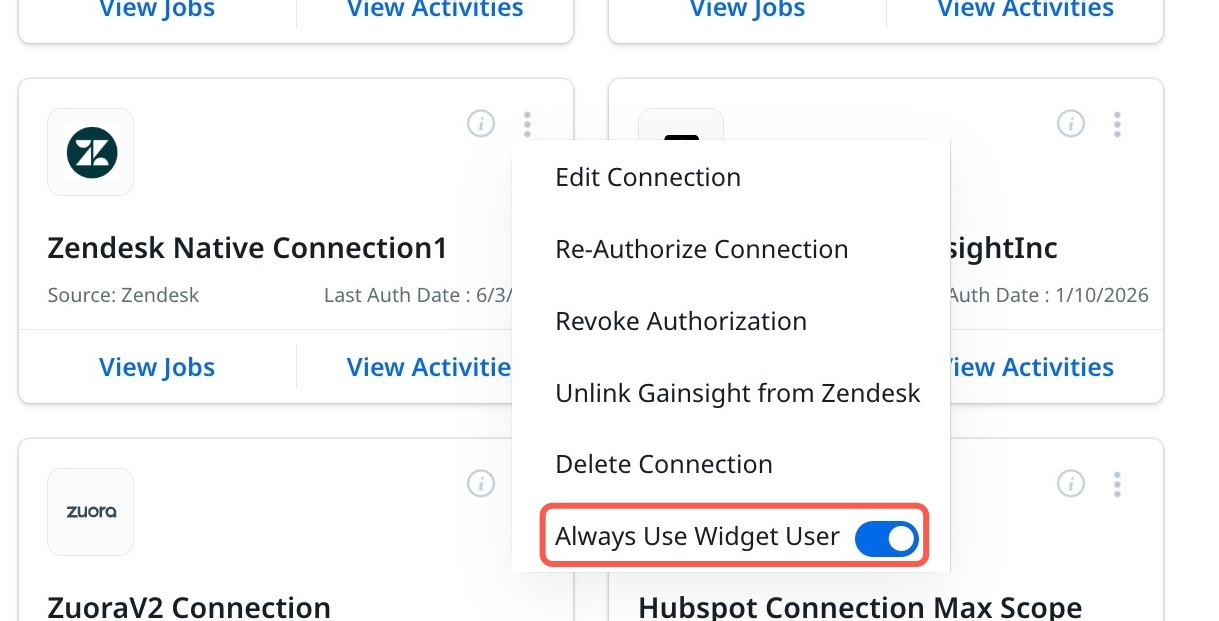
Source: Gainsight
1. Ticket Data Sync Into Health Scorecards.
The connector pulls ticket volume, status, priority, and resolution time from Zendesk into Gainsight objects on a scheduled sync. Gainsight's Rules Engine reads ticket data and uses those figures as inputs to Scorecard health measures. A customer with critical-priority tickets unresolved beyond a defined SLA threshold automatically updates their Support health dimension, adjusting the composite health score without manual CSM logging.
2. Gainsight Context Widget Inside the Zendesk Agent Interface.
When an agent opens a ticket, the widget populates with that customer's current Gainsight health score, recent CSM Timeline activity, open CTAs, and product usage signals. The agent sees immediately if the ticket belongs to a red-health-score account with an open risk CTA, which changes both the urgency and the handling approach. Support agents gain this context without holding a Gainsight license.
3. Bidirectional CTA and Ticket Linking.
Support agents can create Gainsight CTAs from open Zendesk tickets, flagging the CS team that a specific ticket warrants CSM attention. The CTA carries the ticket's priority, current status, and resolution timeline. CSMs working in Cockpit can view linked Zendesk tickets for their accounts. When the support team resolves a ticket, the CSM's linked CTA reflects that resolution.
4. Automated Risk CTA Generation from Ticket Patterns.
The Rules Engine evaluates incoming Zendesk ticket data against admin-defined thresholds and auto-generates risk CTAs when those thresholds are crossed. Thresholds can target ticket volume per rolling window, critical-priority tickets unresolved beyond SLA, or spikes in average resolution time. The CSM receives the risk signal at the moment conditions change, rather than discovering it during a weekly review.
Zendesk Pricing
Zendesk uses seat-based pricing with a 14-day free trial available:
Support Team: $19/agent/month (annual); email and ticketing; API access at 200 requests/minute
Suite Team: $55/agent/month (annual); adds messaging, omnichannel routing, and help center
Suite Professional: $115/agent/month (annual); adds SLA management and custom reports; 400 requests/minute API rate limit
Suite Enterprise + Copilot: Custom pricing; adds intelligent triage and advanced admin controls
The Gainsight Connector works via Zendesk's REST API, included at all paid tiers. The Gainsight widget requires Zendesk Marketplace access, included in all Suite plans.
Who Should Use the Zendesk Integration?
CS teams where support ticket volume is high enough that manual monitoring would miss emerging patterns: the Connector and Rules Engine automation make ticket-driven risk detection scalable across a large book without adding CSM workload
Organizations where CS and support teams operate in separate tools: the embedded widget and bidirectional CTA linking close the communication gap without requiring shared logins
Teams whose Gainsight health scores lack a support signal dimension: adding Zendesk ticket data as a Scorecard measure gives health scores a more complete picture of the post-sale experience
5. Snowflake: Best Gainsight Integration for Data Warehouse-Driven Health Scoring
Snowflake is a cloud-native data platform that integrates with Gainsight to pipe product usage, behavioral telemetry, and event-level customer data from the enterprise data warehouse into Gainsight health scores and adoption analytics. The integration uses Gainsight's native Snowflake Connector within Connectors 2.0.
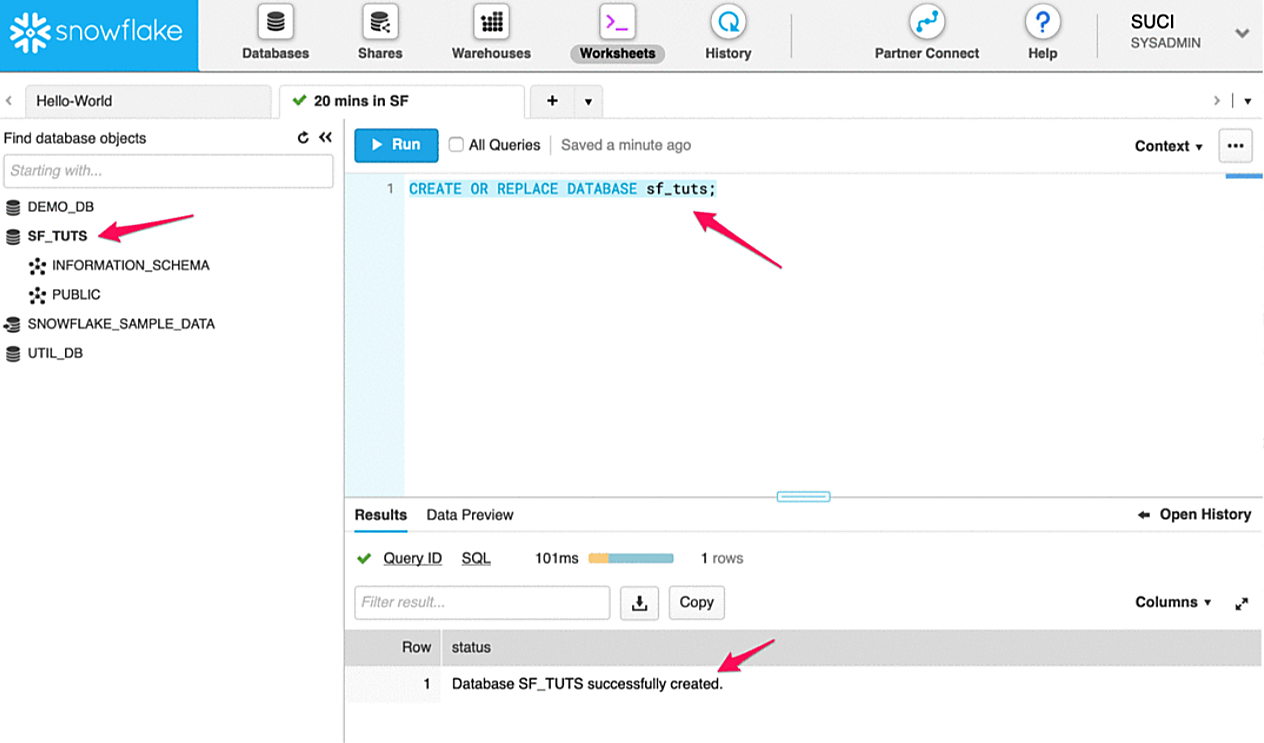
Source: Medium
Key integration capabilities include:
Native Snowflake Connector that ingests Views and Tables from a Snowflake instance into Gainsight destination objects for health scoring
Compatibility with Data Designer and Adoption Explorer for combining warehouse data with CRM, support, and survey signals in a single interface
Bidirectional data layer enabling Gainsight CS data to be exported back to Snowflake via Fivetran, Portable, and Estuary
Admin-configurable data fetch jobs controlling which Snowflake tables sync and how frequently
How Snowflake Integrates with Gainsight
The Snowflake Connector is listed under the DB-based connector category in Connectors 2.0. Admins define which Views or Tables from a Snowflake instance map to which Gainsight destination objects, configure sync schedules, and set field-level mappings without writing custom integration code. The outbound direction (Gainsight to Snowflake) uses third-party ETL connectors.
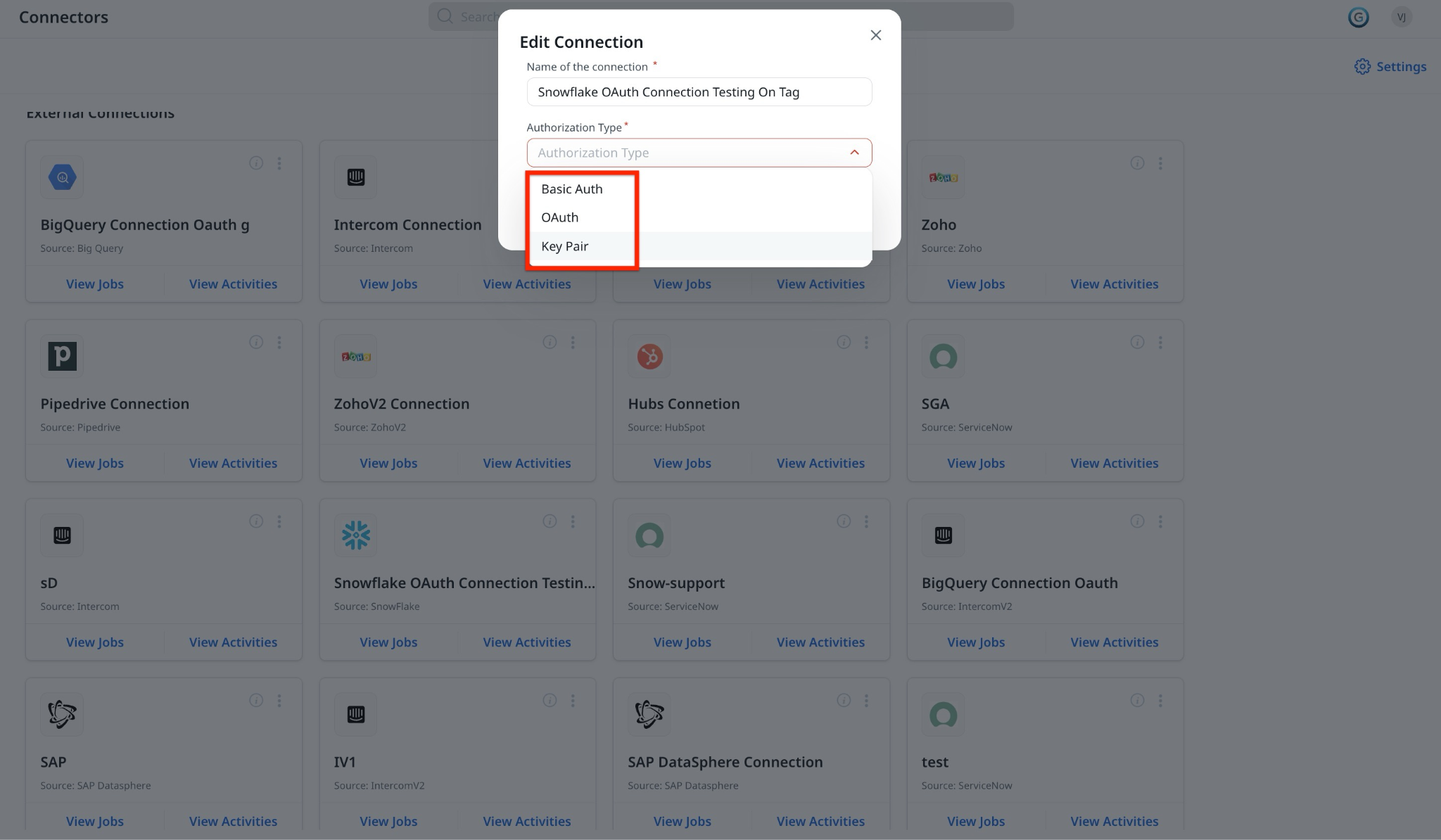
Source: Gainsight
1. Native Snowflake Connector for Warehouse-to-CS Data Ingestion.
Product usage data (feature adoption rates, session frequency, API call volumes, module engagement) lives natively in Snowflake in most enterprise SaaS organizations. The native connector closes the gap between that data and Gainsight health scores: CS operations admins configure the sync themselves, and updated product usage data begins appearing in Scorecard measures without an engineering ticket.
Fetch jobs run on admin-configurable schedules, controlling data freshness relative to health score recalculation cycles.
2. Data Designer and Adoption Explorer Compatibility.
Once Snowflake data is ingested, it becomes a first-class input to Gainsight's Data Designer (custom dataset creation by joining multiple Gainsight objects) and Adoption Explorer (feature adoption and engagement trend reports). Teams can build multi-source datasets combining Snowflake product telemetry with CRM fields from Salesforce, support data from Zendesk, and NPS responses, all within a single Data Designer workflow.
3. Bidirectional Analytics via Third-Party Connectors.
Gainsight CS data (health scores, CTA history, NPS responses, renewal outcomes) can be exported to Snowflake using Fivetran, Portable, and Estuary. Organizations running enterprise reporting out of Snowflake can then feed Looker or Tableau dashboards with CS metrics alongside product and revenue data, enabling cross-functional analysis without manual exports from Gainsight.
Snowflake Pricing
Snowflake operates on a consumption-based pricing model with no per-seat fees. Compute is measured in Snowflake Credits (billed per second); storage is a flat rate per TB per month:
Standard: Entry-level; all APIs accessible including the path used by the Gainsight connector; Time Travel up to 1 day
Enterprise: Adds multi-cluster warehouses, 90-day Time Travel, and Dynamic Data Masking; recommended for teams whose Gainsight integration runs alongside other warehouse workloads
Business Critical: Adds HIPAA and PCI DSS compliance for regulated environments
A 30-day free trial is available with $400 in free usage credits, no credit card required.
Who Should Use the Snowflake Integration?
Enterprise B2B SaaS companies whose product telemetry lives in Snowflake and want that data driving Gainsight health scores without building a custom ETL pipeline
CS operations teams that need health scorecard measures from product adoption signals (feature usage depth, session frequency, API consumption rates) calculated from event-level warehouse data
Organizations where enterprise analytics is Snowflake-centered and want Gainsight CS metrics available alongside product and revenue data for cross-functional RevOps reporting
6. Jira: Best Gainsight Integration for Closing the Loop Between Customer Feedback and Engineering Prioritization
Jira is a project management and issue tracking platform that integrates with Gainsight to route customer escalations and feature requests into engineering workflows, giving CS and product teams shared bidirectional visibility. The integration uses Gainsight's native Jira-Cloud Connector, which supports Jira Cloud (Jira On-Premise is not supported).
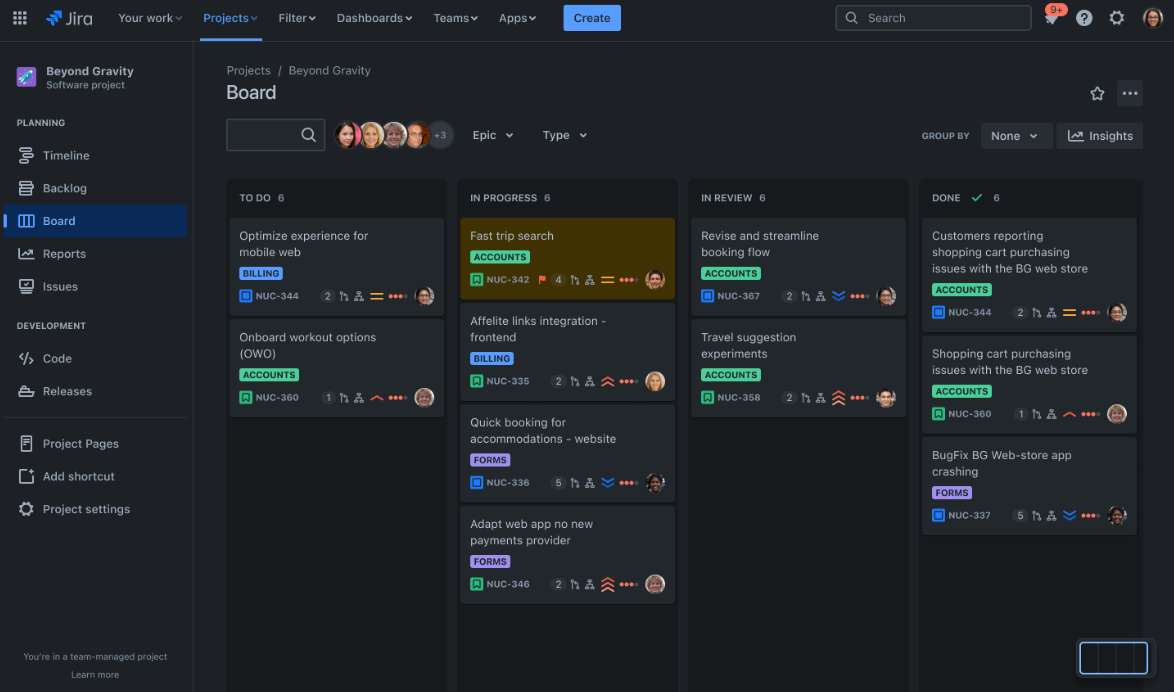
Source: Jira
Key integration capabilities include:
Customer escalation routing from Gainsight CTAs into Jira tickets, carrying account context and commercial priority into the engineering backlog
Jira ticket volume and severity data flowing into health scorecard measures as automated risk signals
Bidirectional CTA and Jira issue linking so CSMs track engineering resolution from Cockpit without querying Jira separately
Revenue-weighted product prioritization by routing Gainsight Customer Communities ideation votes into Jira with customer demand context
How Jira Integrates with Gainsight
The Jira Connector is configured via Connectors 2.0 and supports bidirectional data flows. Gainsight Customer Communities also lists Jira as a native integration for routing ideation data into the engineering backlog.
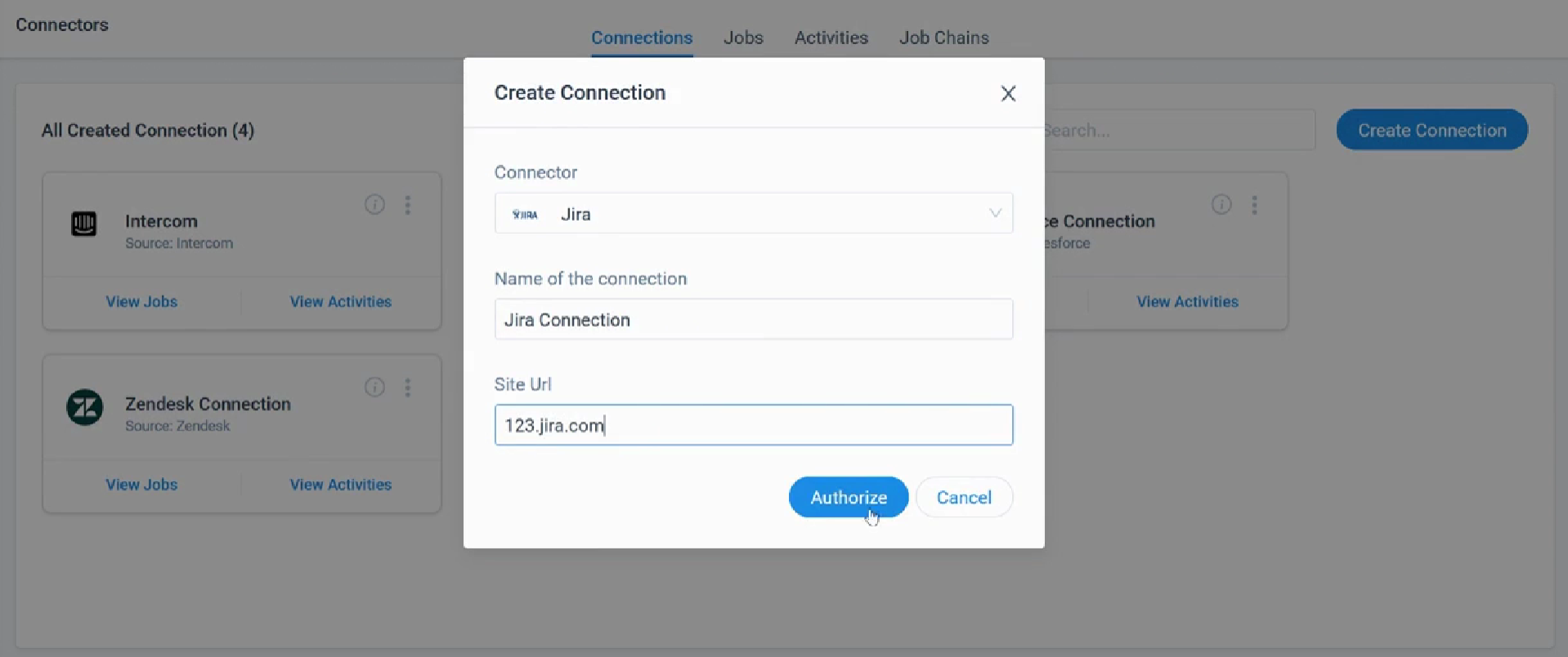
Source: Gainsight
1. Customer Escalation Routing from Gainsight to Jira.
When a CTA represents a customer escalation (a product bug blocking a workflow, a feature gap raised during a renewal conversation), CSMs can create a linked Jira issue from the CTA context. The Jira ticket inherits commercial account context: company name, ARR, health score, and the escalation description. Engineering teams receive tickets with revenue priority without cross-referencing a CRM.
2. Jira Ticket Data Feeding Health Scores.
Open ticket volume per account, ticket severity, and time-to-resolution flow back into Gainsight's Scorecard measures. A customer with multiple high-severity Jira tickets unresolved past SLA has that reflected in their health score, potentially triggering a risk CTA automatically. CSMs see engineering-layer risk signals in the same C360 view where they review NPS, product usage, and renewal dates.
3. Bidirectional CTA and Jira Issue Linking.
A persistent link between Gainsight CTAs and Jira issues means status changes in Jira propagate back to update the linked CTA. When engineering resolves a Jira issue, the CSM's CTA reflects that resolution. The CSM can then trigger an automatic customer acknowledgment through Journey Orchestrator or update the account's health score.
4. Revenue-Weighted Community Feedback Routing.
Gainsight Customer Communities' ideation module lets customers submit feature requests and vote on ideas. The Jira integration routes those requests into the engineering backlog with aggregate vote counts and revenue context. A feature request with 40 votes from accounts representing significant ARR surfaces differently in the backlog than one with 10 votes from smaller accounts. Product managers can assign status labels (under review, planned, launched) that propagate back to the community, closing the feedback loop.
Jira Pricing
Jira uses per-seat Cloud pricing:
Free: $0, up to 10 users; 100 automation rule runs per month
Standard: $7.91/user/month; Rovo AI features, user roles, and multi-region data residency; 1,700 automation runs per month; the recommended entry tier for Gainsight integration
Premium: $14.54/user/month; cross-team planning and dependency management; 24/7 support; 99.9% uptime SLA
Enterprise: Custom pricing; Atlassian Analytics, Data Lake, and advanced admin controls
The Gainsight connector operates at Standard tier and above.
Who Should Use the Jira Integration?
CS teams that regularly escalate product bugs and feature blockers to engineering and need a structured link between the Gainsight account record and the Jira ticket so both teams share visibility
Organizations that want open Jira issues affecting customer accounts to appear as risk signals in health scores, giving CSMs engineering-layer context alongside NPS and usage data
Product teams using Gainsight Customer Communities for ideation that want a workflow routing voted feature requests into the Jira backlog with revenue-weighted context
7. Segment: Best Gainsight Integration for Real-Time Product Usage Health Scoring
Twilio Segment is a customer data platform that integrates with Gainsight to stream product usage events into health scorecards in near real time, eliminating the scheduling dependencies and ETL delays that typically separate product behavioral data from CS visibility. The integration uses Gainsight's native Segment Connector within Connectors 2.0.
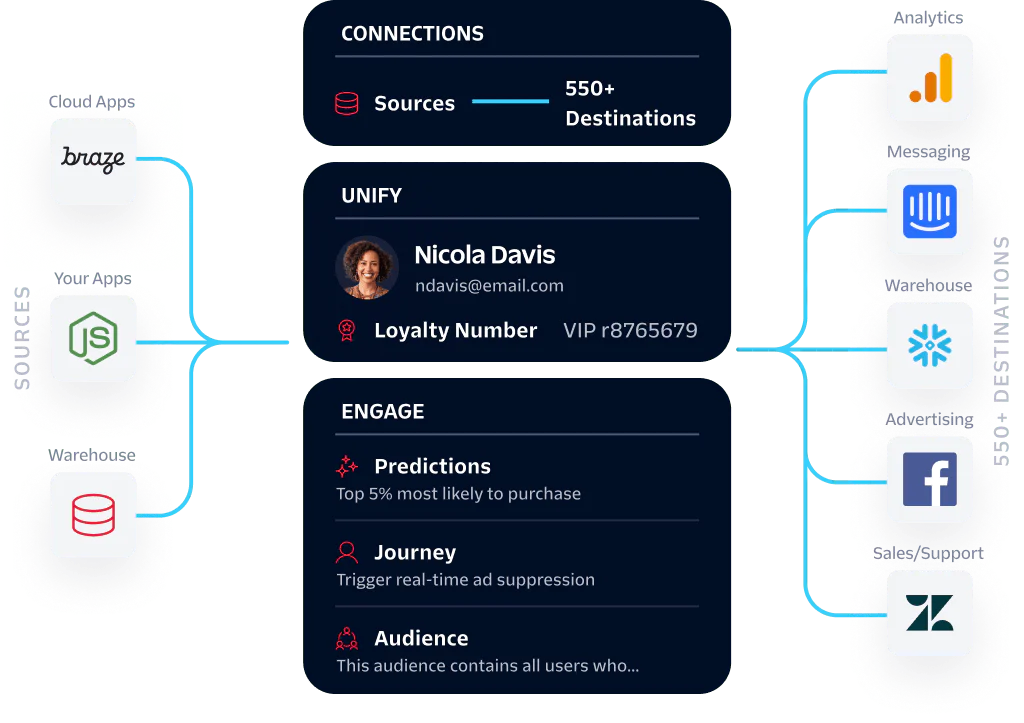
Source: Twilio Segment
Key integration capabilities include:
Real-time event streaming from web, mobile, and server-side sources into Gainsight's health scoring layer without batch jobs
Product adoption signals (feature interactions, session data, pageviews) translated into Scorecard adoption measures
Continuous health score updates throughout the day as events flow through the connector
Native compatibility with Gainsight PX, allowing Segment's behavioral streams to complement PX's in-app engagement and survey data
How Segment Integrates with Gainsight
The Segment Connector is listed natively as a Usage Data Connector in Connectors 2.0. On the Segment side, Gainsight is configured as a destination in the Segment workspace through Connections, and event streams from existing sources (web JavaScript, mobile SDKs, server-side libraries) fan out to Gainsight alongside other downstream destinations. Gainsight PX also integrates with Segment via a server-side integration.
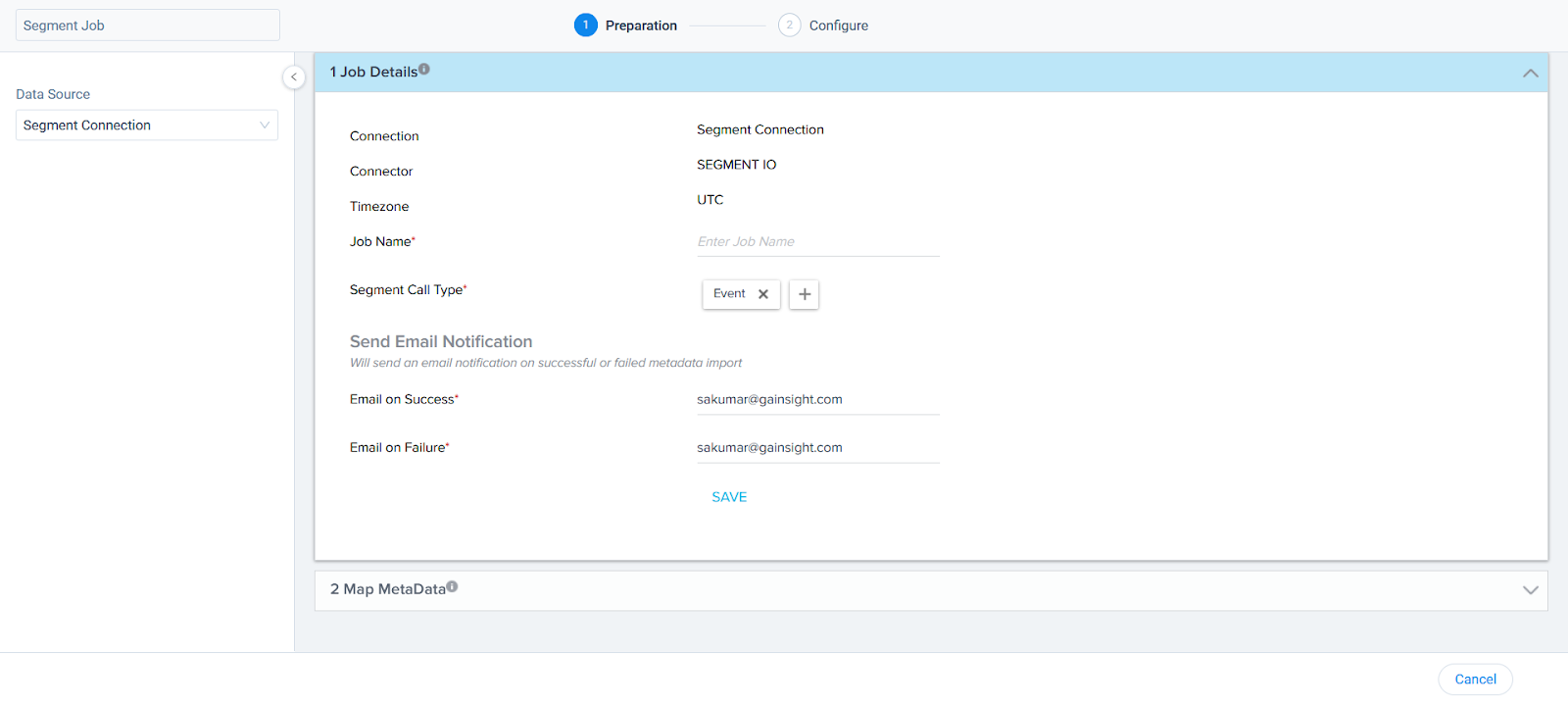
Source: Gainsight
1. Real-Time Product Usage Event Streaming.
Segment captures events at the moment they occur (pageviews, feature interactions, session starts, custom Track calls) and routes them to destinations in near real time. Gainsight receives behavioral signals as they happen rather than after an ETL batch completes. A customer who stops using a critical feature on Monday morning has that reflected in the health scorecard the same day, not after a nightly sync.
2. Product Adoption Signals as Scorecard Inputs.
Segment event streams become direct inputs to Gainsight's Scorecard adoption measures. The Rules Engine scores adoption continuously against behavioral thresholds (feature interaction frequency, session depth, time-in-product) without maintaining a separate scheduled data sync. If a customer drops below the threshold for healthy adoption mid-month, the Rules Engine scores that measure as at-risk and surfaces a CTA while there is still time to act.
3. Gainsight PX Complementarity.
Teams using both Segment and Gainsight PX get a layered behavioral picture. Segment supplies the raw behavioral signal (what users are doing, at what frequency, in which parts of the product). PX supplies the guided engagement outcome layer (whether users completed onboarding flows, responded to NPS prompts, or engaged with tooltips). Both data streams converge in the C360 without separate reconciliation.
Segment Pricing
Segment uses usage-based pricing billed against Monthly Tracked Users (MTUs):
Free: $0/month; up to 1,000 MTUs, 2 sources, access to 700+ integrations including the Gainsight connector
Team: Starts at $120/month; 10,000 MTUs, unlimited sources, public API access; 14-day free trial available
Business: Custom pricing; custom MTU volume, Protocols (data governance), and HIPAA eligibility
On the Gainsight side, the Segment Connector is available on both Essentials and Enterprise plans.
Who Should Use the Segment Integration?
Teams whose product instrumentation already runs through Segment and want to route existing event streams into Gainsight health scoring without re-instrumenting or building a separate pipeline
CS teams that need health scorecard adoption measures to reflect same-day product behavior rather than waiting for nightly warehouse ETL jobs
Organizations running Gainsight PX alongside Gainsight CS that want to close the loop between Segment's raw behavioral event stream and PX's in-app engagement targeting
Final Verdict
The best Gainsight integrations feed your customer success platform the signals it cannot generate on its own:
ZoomInfo: verified B2B contact data, conversation intelligence via Chorus and Staircase AI, and buyer intent signals enriching every account; the highest-impact integration on this list if your CS team depends on accurate stakeholder data and early warning signals
Salesforce: bidirectional CRM sync powering health scores and renewal forecasts with live deal state, plus a native managed package for zero-context-switch CS operations
Slack: customer intelligence surfaced in team channels through a dedicated AI Agent, extending Gainsight's data to cross-functional stakeholders without seat costs
Zendesk: support ticket data feeding health scorecards as automated risk signals, with embedded CS context in the agent sidebar
Snowflake: data warehouse product telemetry piped into adoption-based health scoring without custom ETL
Jira: customer escalations routed into engineering with commercial context, and open issues surfacing as health score risk signals
Segment: real-time product usage events streaming into health scores without batch delays
These integrations compound: you might run ZoomInfo for contact enrichment and intent signals, Salesforce for CRM sync, Slack for cross-functional alerts, Zendesk for support health scoring, and Segment for real-time usage data on the same Gainsight instance, each adding a signal layer that makes the others more valuable.
If your CS team's effectiveness starts with knowing exactly who you are talking to, whether they are still the right person, and what their buying or churning behavior signals, start with the data layer. ZoomInfo's conversation intelligence connects to Gainsight's Staircase AI natively, and ZoomInfo Lite is a permanent free tier, so you can evaluate the data quality and intent signals before committing to a subscription.
Frequently Asked Questions
How many integrations does Gainsight support?
Gainsight's Marketplace contains over 110 apps, integrations, and service partners spanning CRM connectors (Salesforce, Microsoft Dynamics, Pipedrive), data warehouse connections (Snowflake, Amazon Redshift, Google BigQuery, PostgreSQL), support platforms (Zendesk, Freshdesk, ServiceNow, Jira), customer data platforms (Segment), and workflow automation tools (Zapier, SAP). Beyond the Marketplace, Gainsight's REST API suite and Connectors 2.0 framework support custom integrations with any platform that has an API. MCP endpoints for both Gainsight CS and Staircase AI enable external AI agents to read and write customer data programmatically.
Do Gainsight integrations work on all plan tiers?
Gainsight CS offers two tiers: Essentials and Enterprise. Core connector access through Connectors 2.0 (including the Salesforce, Zendesk, Snowflake, Jira, and Segment connectors) is available on both tiers. However, features like the Renewal Center with bidirectional Salesforce Opportunity enrichment, Organizational Mapping and Sponsor Tracking, and Revenue Forecasting require the Enterprise tier. All seven AI-assisted CS features are included at no additional cost in both tiers. All Gainsight pricing is quote-based through the sales team.
How does Gainsight's Connectors 2.0 framework work?
Connectors 2.0 is Gainsight's admin-level integration framework accessed through the Gainsight admin panel. It organizes integrations into categories: CRM Integrations (Salesforce, Microsoft Dynamics, Pipedrive), Support Systems (Zendesk, Jira), Usage Data Connectors (Segment), DB Based Connectors (Snowflake, Redshift, BigQuery), and File-Based Connectors (Amazon S3). Admins configure connection credentials, select data objects to sync, define field mappings, and set fetch job schedules without writing custom code. Sync frequency is admin-configurable and varies by connector type.
Can I connect Gainsight to tools that are not in the Marketplace?
Yes. Gainsight's REST API suite covers Company, Person, CTA, Task, Timeline, Success Plan, and Custom objects, supporting integrations with any system that can make HTTP requests. The API supports up to 100 synchronous calls per minute and 50,000 per day. For bulk data loads, the asynchronous Bulk API handles large volumes via CSV files. Zapier extends connectivity to thousands of additional apps without code. Gainsight also exposes MCP endpoints for AI agent integration.
How does Gainsight's health scoring use data from integrations?
Gainsight's Scorecard framework lets CS teams define multiple health dimensions (Support, Product Adoption, Engagement, NPS) that score automatically via the Rules Engine based on incoming data from connected integrations. Zendesk ticket data becomes a Support dimension, Snowflake or Segment usage data becomes an Adoption dimension, and Salesforce CRM data informs Relationship and Commercial dimensions. The Rules Engine monitors these data streams continuously and fires CTAs when conditions cross admin-defined thresholds, giving CSMs risk signals at the moment conditions change rather than during periodic reviews.
Does connecting multiple integrations cause data conflicts in Gainsight?
Each integration operates through its own Connectors 2.0 configuration with independent sync schedules and field mappings. Gainsight's Matrix Data Architecture handles data from multiple sources by mapping each to designated objects and fields, so Salesforce CRM data, Zendesk ticket data, and Snowflake usage data populate different health dimensions without overwriting each other. Admins control which fields each connector can write to, preventing unintended conflicts. For overlapping data sources (such as Segment and Snowflake both providing usage data), admins should configure field mapping deliberately to avoid duplicate inputs to the same Scorecard measure.
What is Gainsight's MCP integration and how does it relate to third-party tools?
Gainsight exposes Model Context Protocol (MCP) endpoints for both Gainsight CS and Staircase AI, enabling external AI agents (including ChatGPT, Claude, and Gemini) to read Gainsight data (health scores, sentiment signals, usage metrics) and write back actions (updating records, logging activities, managing tasks) through a permission-aware interface. This makes Gainsight a composable layer inside enterprise AI workflows rather than a closed system, allowing teams to build custom agent processes that use Gainsight's customer intelligence alongside data from other platforms.
What is the best way to enrich Gainsight customer records with verified B2B data?
Integrating a dedicated B2B data platform provides the most complete and accurate enrichment for Gainsight's People Maps, Sponsor Tracking, and account profiles. ZoomInfo connects to Gainsight through Chorus conversation intelligence (syncing meeting transcripts and call analysis to Staircase AI) and through data sync platforms like Workato for contact and company enrichment. ZoomInfo's data platform covers 500 million contacts and 100 million companies, verified through 300+ human researchers, with buyer intent signals that surface competitive research and expansion opportunities as leading indicators for Gainsight health scores. For CS teams where stakeholder accuracy and early warning signals determine retention outcomes, connecting a platform built for B2B intelligence fills the gap between what Gainsight captures and what your team needs to act on.
Keep exploring:
