
Choosing between Braze and Customer.io comes down to five questions:
Do you need to run campaigns across 10+ channels for millions of consumers, or automate lifecycle messaging for a technical team?
Is your priority AI that optimizes each message for each user, or AI that builds entire campaigns from a single prompt?
Are you an enterprise with a dedicated marketing ops team, or a growth-stage company where engineers and marketers share the platform?
Do you need the platform to handle your data infrastructure, or do you already have a CDP and warehouse in place?
Does your business run on B2C engagement, B2B outbound, or a mix of both?
In short, here's what we recommend:
Braze is the platform for large B2C brands that need to coordinate messaging across email, push, SMS, WhatsApp, in-app, and regional channels like LINE and KakaoTalk, all from one system. Its Canvas journey builder handles multi-step campaigns with built-in experimentation, and BrazeAI Decisioning Studio uses reinforcement learning to optimize channel, timing, and content for each user.
The trade-offs: heavy engineering investment to implement, no public pricing, and costs that climb as you add channels and AI credits.
Customer.io serves product-led SaaS companies and digital businesses where marketing and engineering share the platform. Its behavioral event model lets you trigger campaigns from any user action, and LLM Actions let you call AI models inside campaign workflows for per-customer content generation.
At $100/month for Essentials with a 14-day free trial, Customer.io is more accessible than enterprise alternatives. The trade-offs: a steep jump to Premium ($1,000/month), limited analytics depth until recently, and a platform that requires technical users comfortable with APIs and Liquid templating.
Both platforms deliver personalized messages well. But engagement depends on more than execution. For companies with a B2B motion (or any business where knowing who to target matters as much as how you reach them), the quality of your contact data and timing signals determines whether campaigns connect or miss.
ZoomInfo is a B2B data intelligence platform that sits underneath your engagement stack. With 500M contacts, 100M companies, 135M+ verified phone numbers, and 200M+ verified email addresses, ZoomInfo provides the B2B data that neither Braze nor Customer.io offers.
The GTM Context Graph combines this data with your CRM records, conversation transcripts, and behavioral signals to show which accounts are active and why, so you can target the right people when they're ready to engage. ZoomInfo delivers this intelligence through GTM Workspace for sellers, GTM Studio for marketers and RevOps, or APIs and MCP for any tool in your stack.
If your engagement campaigns need a verified data foundation, see how ZoomInfo works.
Braze vs. Customer.io at a glance
Braze | Customer.io | ZoomInfo | |
|---|---|---|---|
Primary focus | Enterprise multichannel engagement | Product-led lifecycle automation | B2B data intelligence and go-to-market execution |
Target market | Mid-market to enterprise B2C | Growth-stage SaaS and digital businesses | Enterprise and mid-market B2B |
Channels | Email, push, SMS/RCS, WhatsApp, in-app, LINE, KakaoTalk, Content Cards | Email, SMS, push, in-app, WhatsApp, LINE, webhooks | Email, display ads, phone, direct mail (via GTM Studio) |
AI capabilities | Reinforcement learning decisioning, agentic campaign builder | AI Agent with persistent memory, LLM Actions in workflows | GTM Context Graph, AI account research and orchestration |
Data model | Real-time events + zero-copy warehouse segmentation | Behavioral events + custom Objects + built-in CDP | 500M contacts, 100M companies, intent signals, technographics |
Pricing entry point | Custom (no public pricing) | $100/month (Essentials) | Custom (ZoomInfo Lite free tier available) |
Free option | 30-day trial | 14-day trial (no credit card) | ZoomInfo Lite (permanent, no time limit) |
Best for | Large consumer brands with mobile apps | Technical teams automating product-led growth | B2B teams needing data intelligence to power engagement |
Braze is built for enterprise-scale consumer engagement
Braze started as a mobile engagement tool in 2011 and became a cross-channel platform. That mobile-first origin still shows: its push notification SDK is ranked #1 on G2, and channels like in-app messages, Content Cards, and iOS Live Activities are native features, not add-ons.
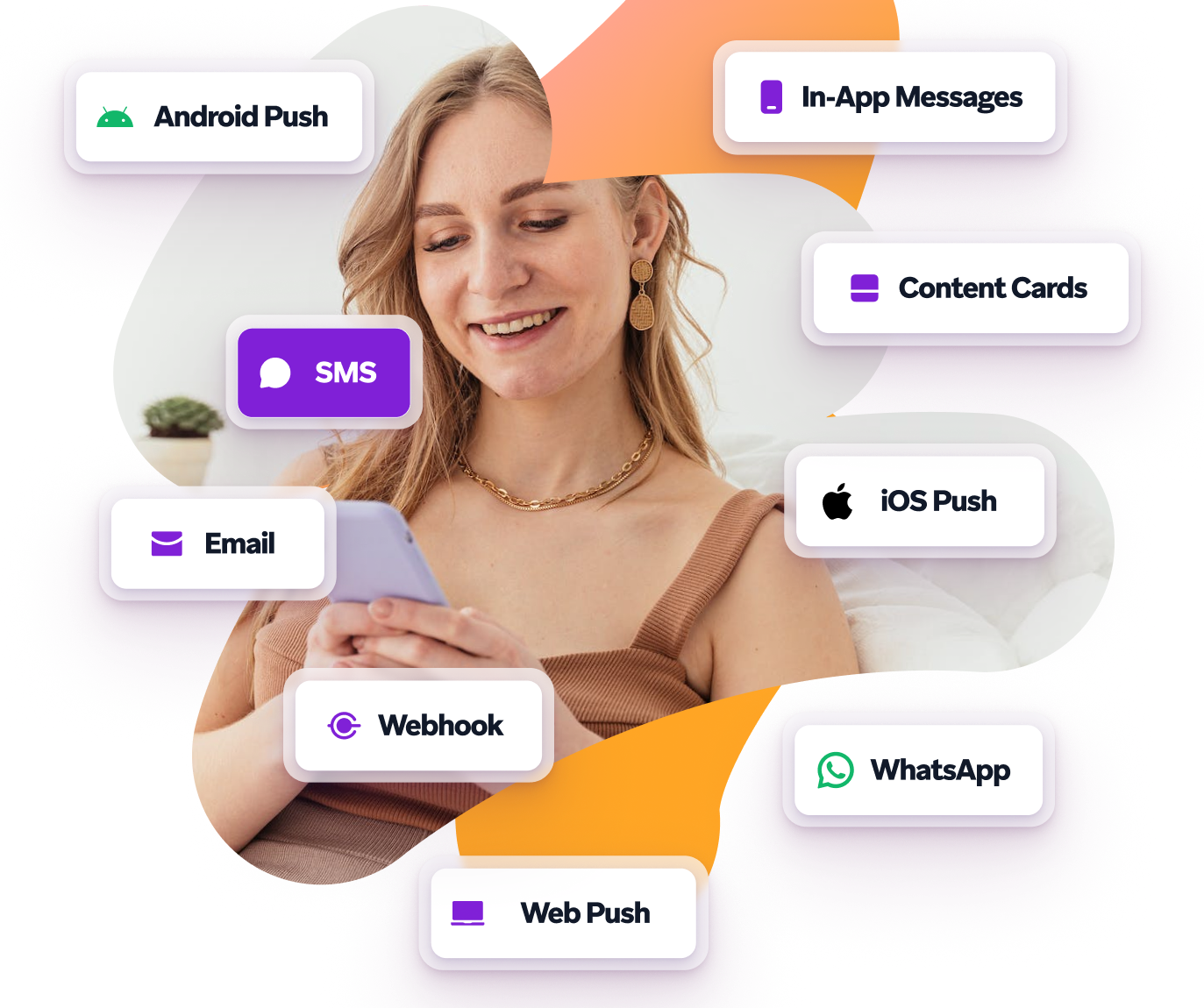
Channel breadth is where Braze separates from competitors. Beyond email, push, and SMS, Braze offers native WhatsApp integration (with WhatsApp Flows and Commerce), RCS for rich messages in Apple and Google Messages, LINE for Japan, Thailand, and Taiwan, and KakaoTalk for South Korea.
Source: Braze
Global B2C brands operating across these regions can run every channel from a single Canvas journey instead of bolting on regional point solutions.
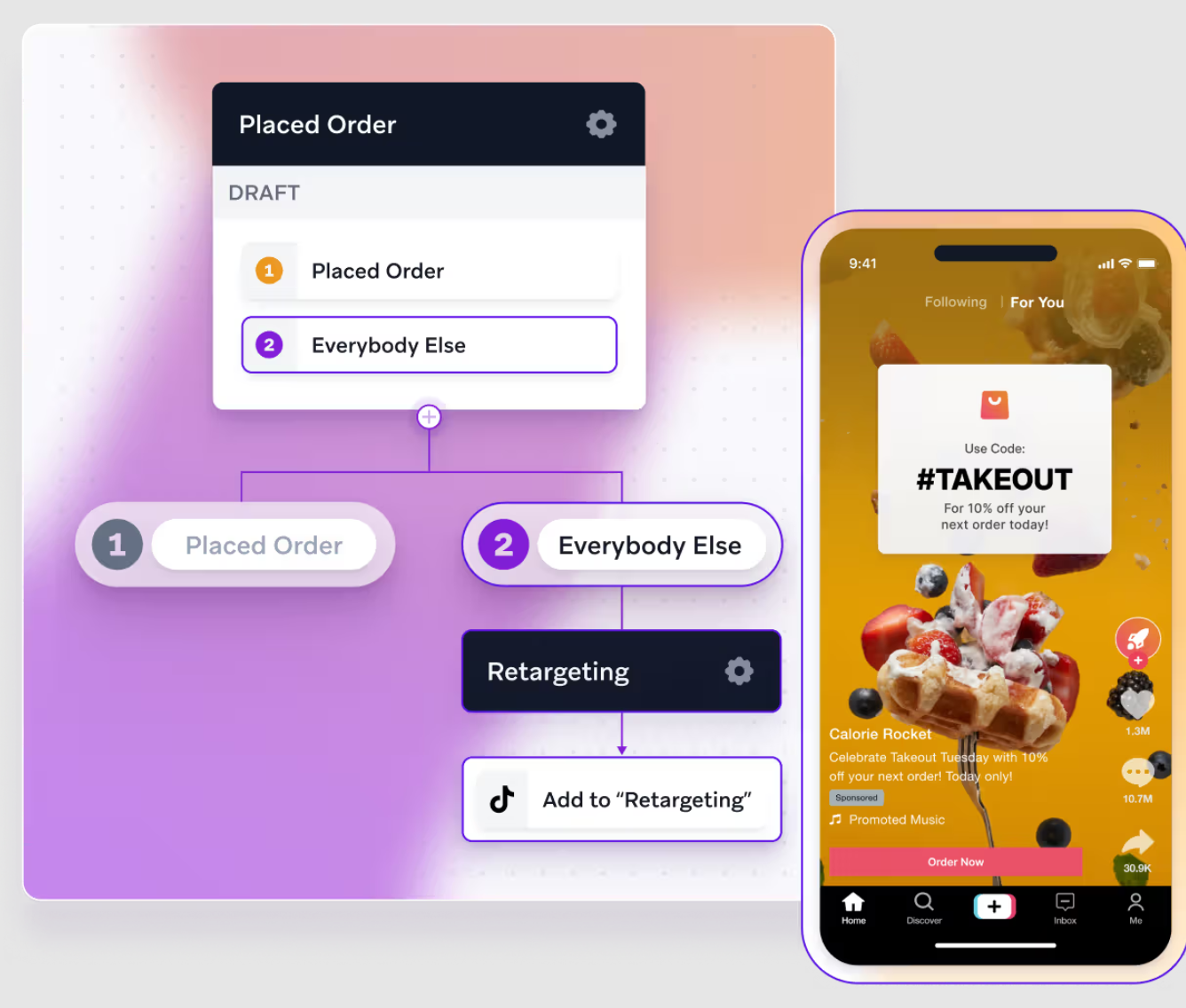
What makes Braze's architecture distinct is how channels connect. A user's response (or non-response) on email can trigger a push notification, which triggers an SMS, which syncs the user to a paid media audience on Meta or TikTok, all within the same Canvas. Media Audience Sync suppresses ads the instant a customer converts on an owned channel, cutting wasted ad spend.
Source: Braze
On data, the Braze Data Platform offers zero-copy warehouse segmentation via Connected Sources, letting marketers query live data in Snowflake, BigQuery, or Redshift without duplicating it into Braze. Cloud Data Ingestion syncs new or updated rows as often as every 15 minutes. Braze Currents streams engagement events back to data warehouses and analytics partners in real time.
This comes at a cost. G2 and TrustRadius reviewers flag that Braze needs heavy engineering work to deploy, particularly for data integration, identity management, and custom event design.
Non-technical marketers struggle with Liquid logic and advanced Canvas configurations. And with no public pricing, budget planning means navigating a sales process where add-on costs for segmentation extensions, premium support, and AI credits can push totals well above the base contract.
Customer.io gives technical teams complete control
Customer.io approaches the same problem from the opposite direction. Where Braze scales outward across channels and enterprise features, Customer.io goes deeper into data flexibility.
The platform was founded in 2012 on a simple premise: send messages based on what users do in your product. That behavioral event model remains the foundation. Any user action (signing up, completing a tutorial, hitting a usage threshold, abandoning a workflow) can trigger a campaign.
Customer.io goes further by supporting custom Objects for non-person entities like accounts, subscriptions, or courses, letting teams model complex data structures and trigger campaigns based on relationships between them.
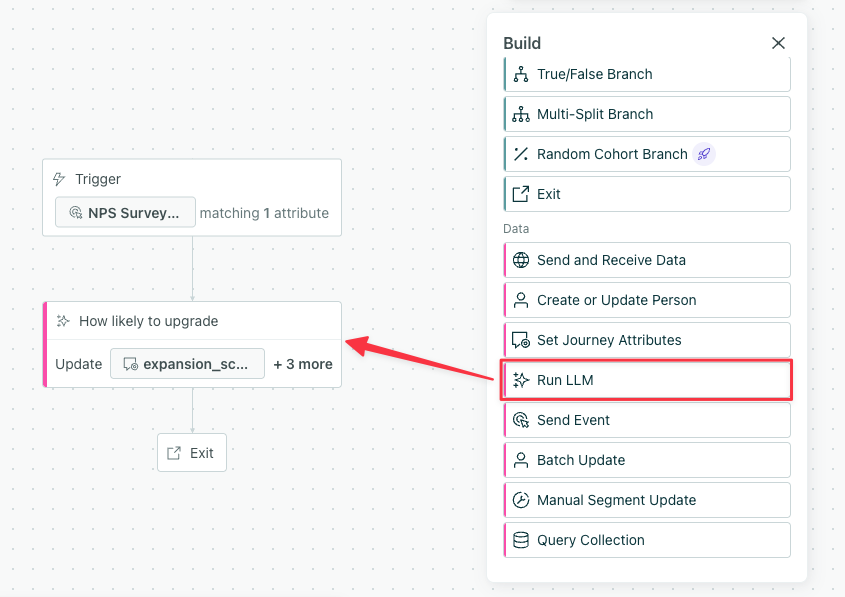
The standout feature in Customer.io's 2026 lineup is LLM Actions: the ability to call any large language model inside a campaign workflow. A marketer can generate personalized copy, score a lead, or classify intent per customer, then store the output as an attribute for downstream branching.
Source: Customer.io
This isn't a copywriting assistant next to the campaign builder. It's AI running in the sending pipeline at send time against live customer data.
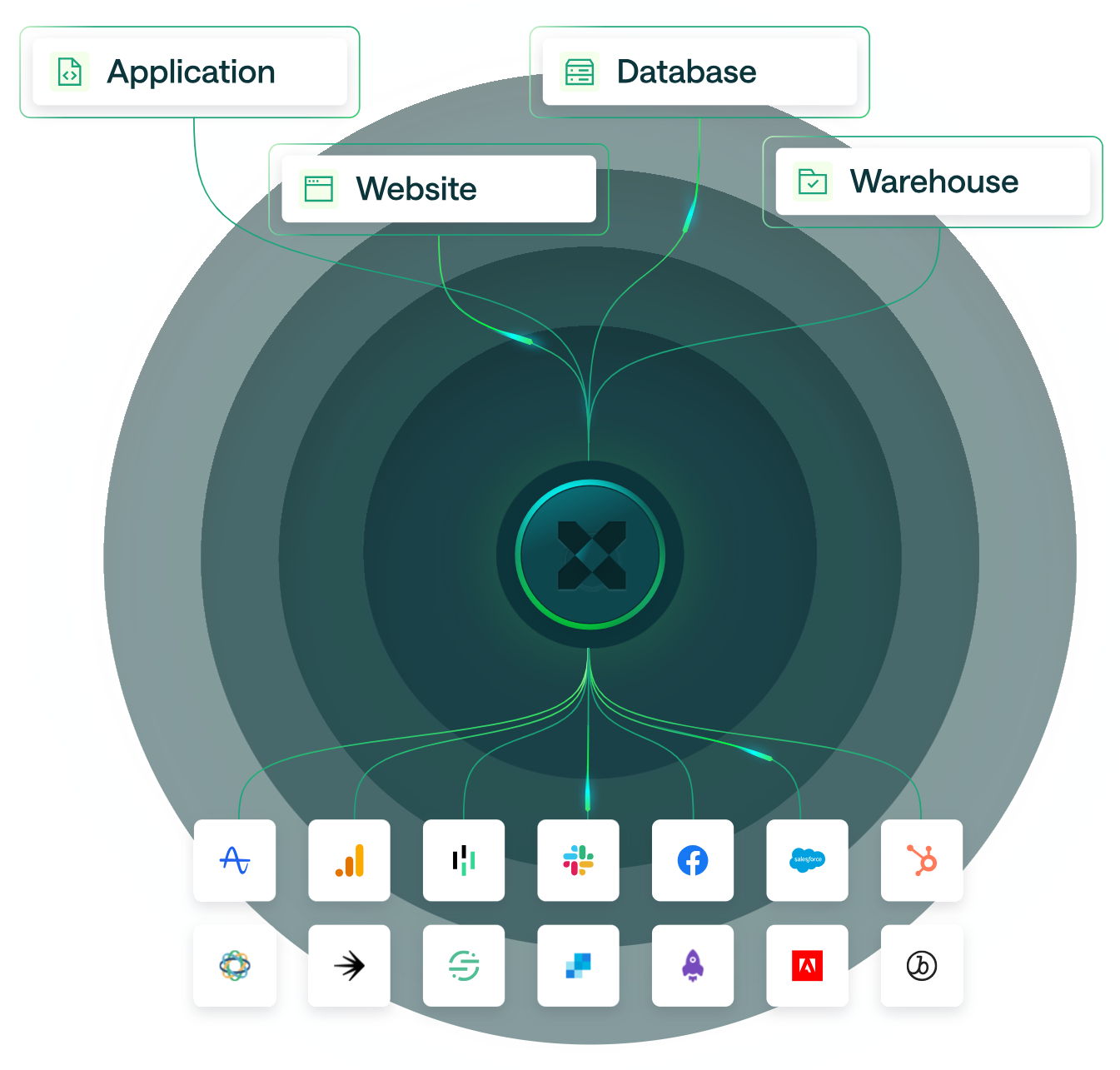
Customer.io also ships with what it calls a built-in CDP. Data Pipelines ingest data from Salesforce, HubSpot, Segment, Typeform, and data warehouses via Reverse ETL, while Data Replay lets teams add a new destination and retroactively resend historical data without new API calls.
Source: Customer.io
All plans include unlimited API calls, and the platform exposes four APIs (Pipelines, Track, App, and Reporting Webhooks) for programmatic control.
Pricing is transparent. Essentials starts at $100/month with 5,000 profiles and 1 million emails, including unlimited user seats. A Startup Program offers up to 12 months free for companies that raised under $10M, backed by 150+ accelerators including Y Combinator and Techstars.
But the jump from Essentials to Premium is a 10x cost step ($100 to $1,000/month) with no middle tier, and features like WhatsApp, data warehouse destinations, HIPAA compliance, reusable Design Studio components, and managed deliverability sit behind that gate.
Customer.io falls short where Braze has spent years building. Its channel roster covers the essentials (email, SMS, push, in-app, WhatsApp, LINE) but lacks Braze's native RCS, KakaoTalk, Content Cards, or iOS Live Activities.
And while the April 2026 launch of Goals brought workspace-level outcome measurement with people-based attribution, the analytics depth still trails Braze's Query Builder (direct Snowflake SQL access) and Global Control Group reporting.
Your campaigns are only as effective as your data
Both Braze and Customer.io do one thing well: they execute. Give them clean behavioral data, accurate contact profiles, and well-defined segments, and they deliver the right message at the right time.
But where does that data come from?
For B2C e-commerce brands, the answer is straightforward. Customers sign up, browse products, make purchases, and the engagement platform captures every event. The data pipeline feeds itself.
For B2B companies, SaaS platforms selling to businesses, and any organization with an outbound motion, the picture changes. Your CRM has incomplete records. Contact details go stale as people change jobs. You don't know which accounts are researching your category. Neither Braze nor Customer.io solves these problems. They act on data; they don't source it.
This is the gap ZoomInfo fills. Not as a replacement for your engagement platform, but as the intelligence layer underneath it.
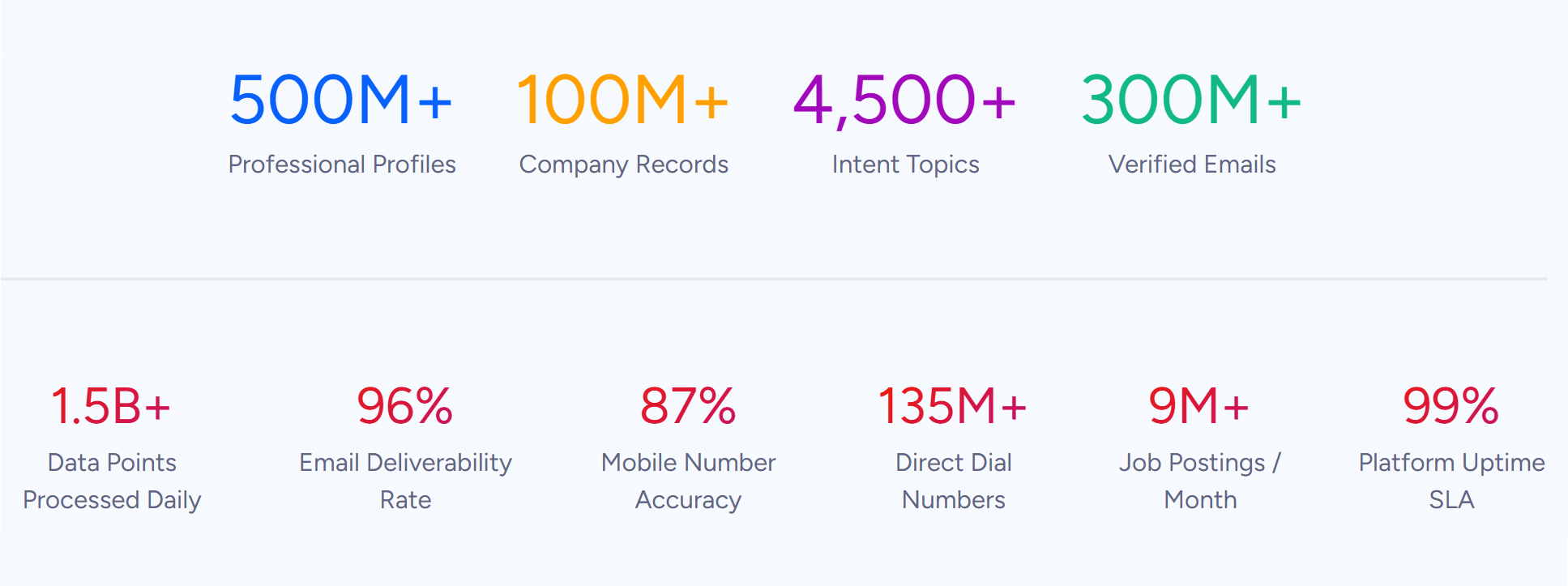
ZoomInfo runs a B2B data platform with 500M contacts, 100M companies, 135M+ verified phone numbers, and 200M+ verified email addresses. That data flows through a verification process backed by 300+ human researchers, reaching up to 95% accuracy on first-party data.
Source: ZoomInfo
In a Fortune 500 competitive RFP analyzing 25 million contacts across vendors, the independent consultant concluded that "no other competitor came even close."
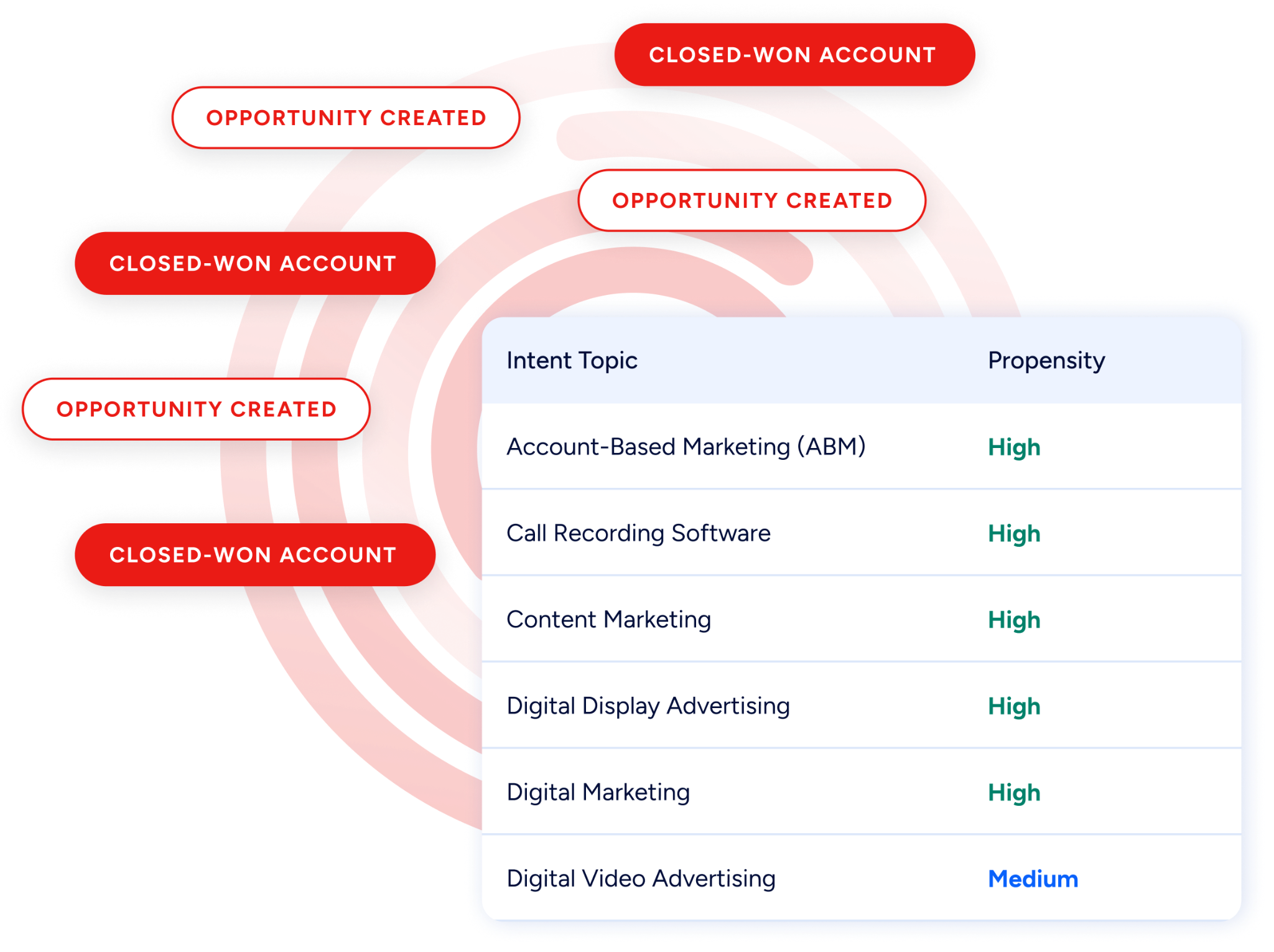
What this means for your campaigns: enriched contact profiles let you segment by verified titles, departments, and company attributes rather than self-reported form fills. Intent signals (drawn from 210 million IP-to-Organization pairings) tell you which accounts are researching your category, so your campaigns reach people during their buying window instead of at random.
Source: ZoomInfo
ZoomInfo's technographics (covering 30,000+ technologies across 30+ million companies) let you personalize messaging based on the tools a prospect already uses.
This data reaches your engagement stack through APIs, MCP, or cloud partners including Snowflake, AWS, and Databricks. Since both Braze and Customer.io connect to data warehouses (Braze via Cloud Data Ingestion, Customer.io via Reverse ETL), ZoomInfo's enriched data can flow into either platform's segmentation and personalization engine.
SpringDB saw 2x to 3x increases in campaign conversions and a 300% increase in database usability after building their data foundation on ZoomInfo. "You'll get 10x the value if you think of ZoomInfo as a full platform and not just a tool for one team," said John Kotsuros, Founder and CEO. (SpringDB Case Study)
AI capabilities serve different purposes
All three platforms use AI, but they solve different problems.
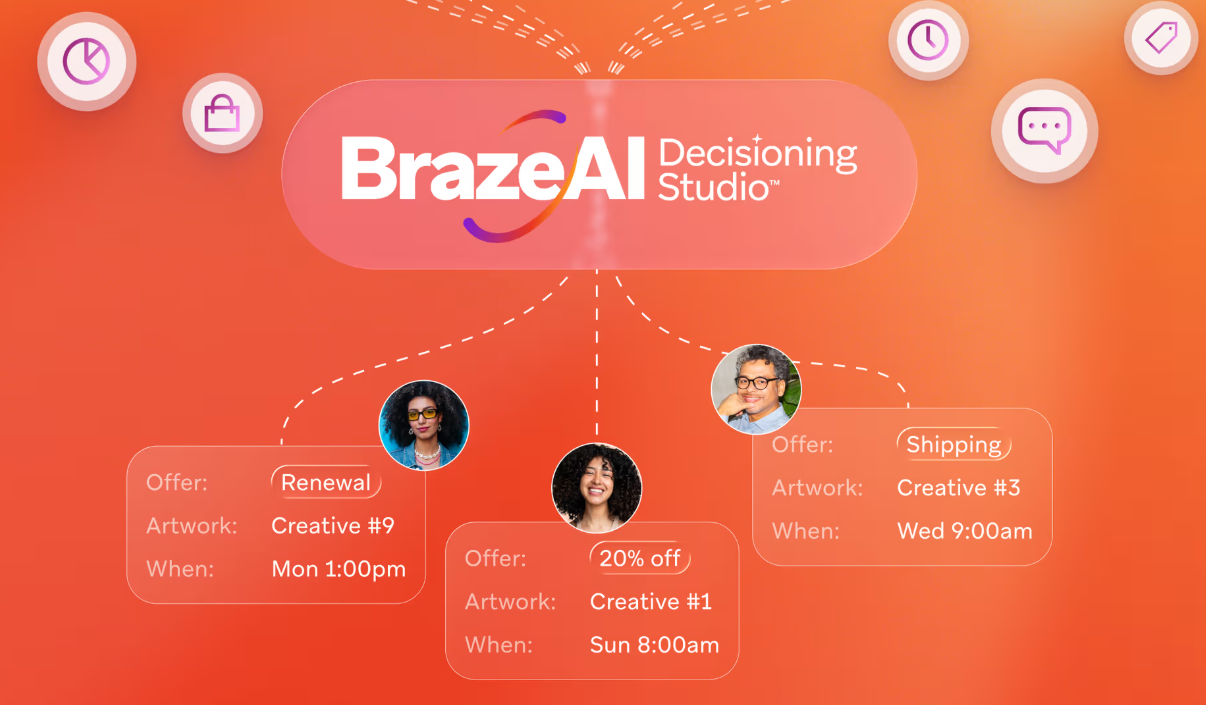
Braze optimizes each message. BrazeAI Decisioning Studio uses reinforcement learning to optimize channel, timing, content, and incentive for each user.
Source: Braze
Rather than running A/B tests and picking one winner, the system experiments at the individual level, learning which combination works best for each person. Teams can trace every decision to the customer level, explaining to executives exactly why a particular message was sent to a particular user.
BrazeAI Operator is a conversational AI agent inside the dashboard that builds, launches, and debugs campaigns. Describe what you want in natural language, and the Operator writes Liquid code, sets guardrails, and deploys agents into Canvases. The BrazeAI Agent Console handles tasks like real-time segmentation, product affinity identification, and structured data extraction from unstructured inputs.
Personalized Paths works the same way: instead of routing everyone through the single best-performing journey path, it trains a predictive model and routes each user to the path most likely to convert them.
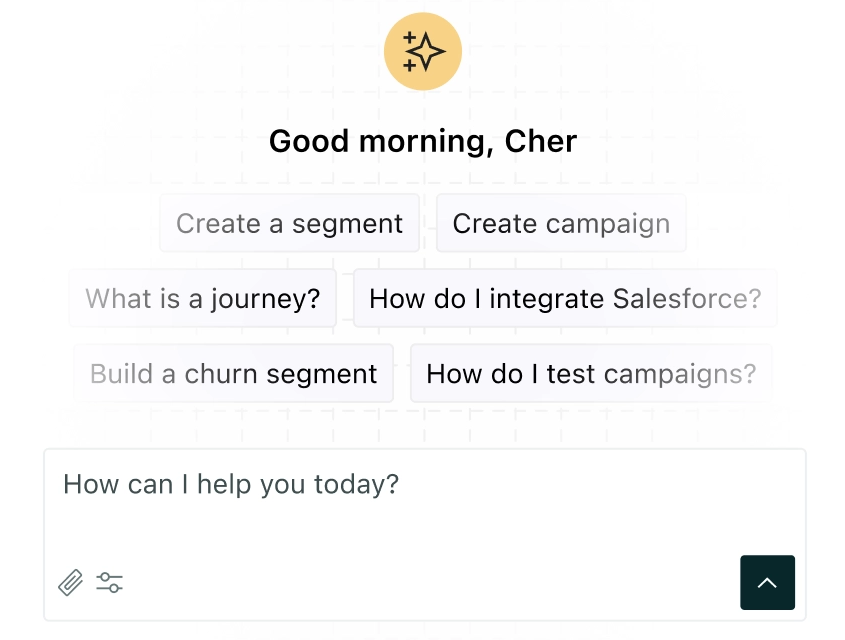
Customer.io assists the marketer and embeds AI in the workflow. Customer.io's AI Agent acts as a persistent collaborator rather than a per-task assistant.
Source: Customer.io
Because it maintains memory across sessions (brand voice, goals, past decisions), each interaction builds on the last. Ask it to build a re-engagement campaign, and it reviews your existing inactive segments and engagement data before proposing a solution based on your actual setup.
Customer.io's AI stands apart with LLM Actions, which let you call any language model inside a live campaign workflow. AI decisions run at send time, per customer, inside the pipeline.
Generate a personalized product recommendation, classify user intent, or translate content on the fly, all as a workflow step, not a pre-campaign planning exercise. The Agent also supports Routines (scheduled automated checks like deliverability monitoring or churn early warnings) that run without user initiation.
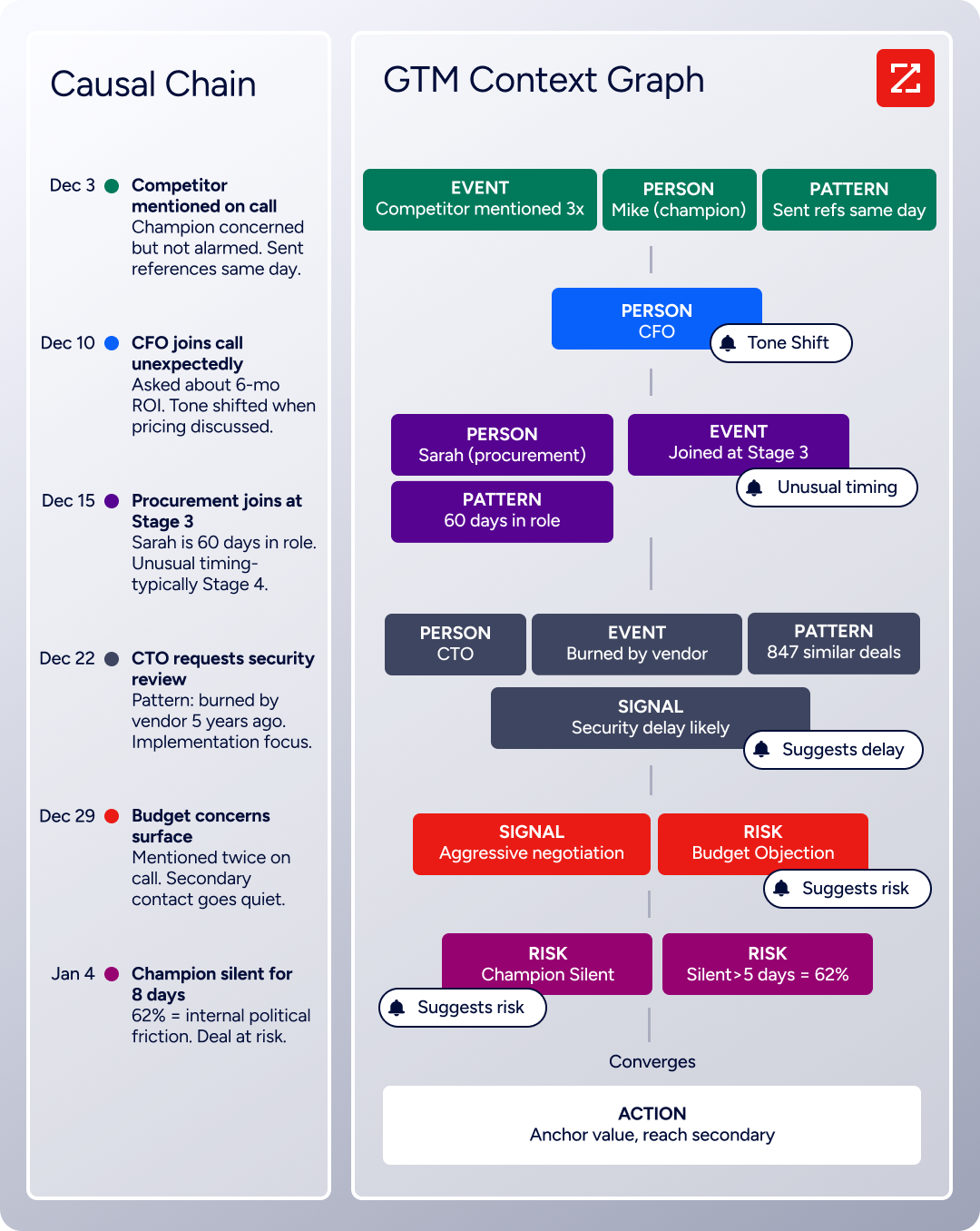
ZoomInfo's AI reveals who to target and why. The GTM Context Graph processes 1.5B+ data points daily, combining ZoomInfo's B2B data with CRM records, conversation transcripts, and behavioral signals.
Source: ZoomInfo
While Braze and Customer.io optimize how you engage, ZoomInfo's AI answers the questions that come before: which accounts are in-market, who the decision-makers are, and what signal patterns predict a deal will close.
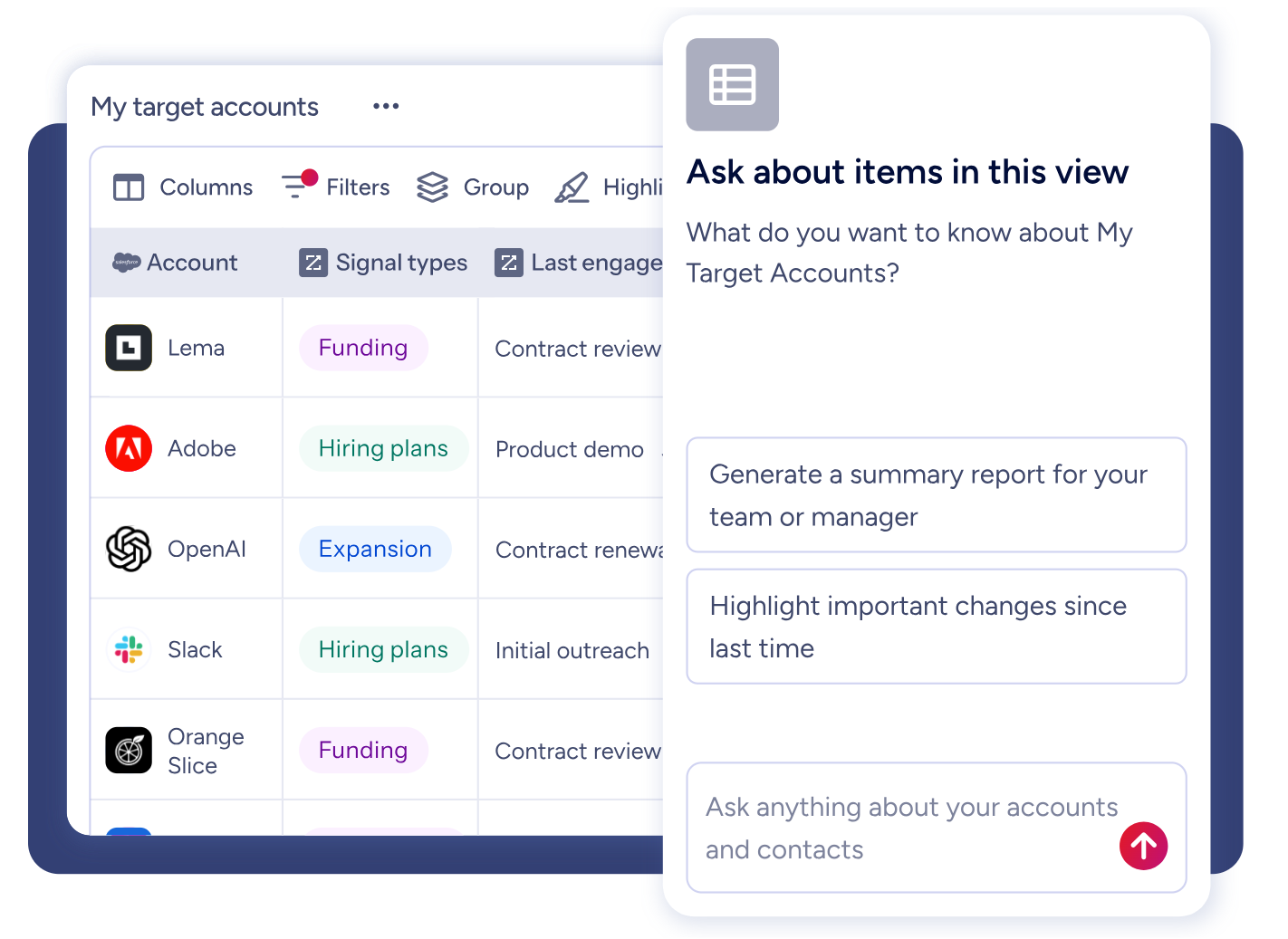
In GTM Workspace, AI agents research accounts, generate personalized outreach, and surface next actions based on the context of each relationship. In GTM Studio, marketers describe audiences in plain language and launch multi-channel campaigns that improve as prospects respond. Via MCP, the same intelligence is available inside Claude, ChatGPT, and any MCP-compatible tool.
Source: ZoomInfo
These three AI layers complement each other. ZoomInfo identifies who to engage and when. Braze or Customer.io determines the best message, channel, and timing. Together, they close the gap between knowing your market and acting on it.
Seismic attributed 39% of its active pipeline to opportunities identified or influenced by ZoomInfo signals and reported 54% productivity gains. "That combination of our internal CRM data, external signals, and AI that's given all that context has helped us craft very specific account- and persona-based messages," said Toby Carrington, Chief Business Officer. (Seismic Case Study)
Journey builders reflect different design philosophies
The journey builder is where marketers spend most of their time, and the design choices reveal what each platform values.
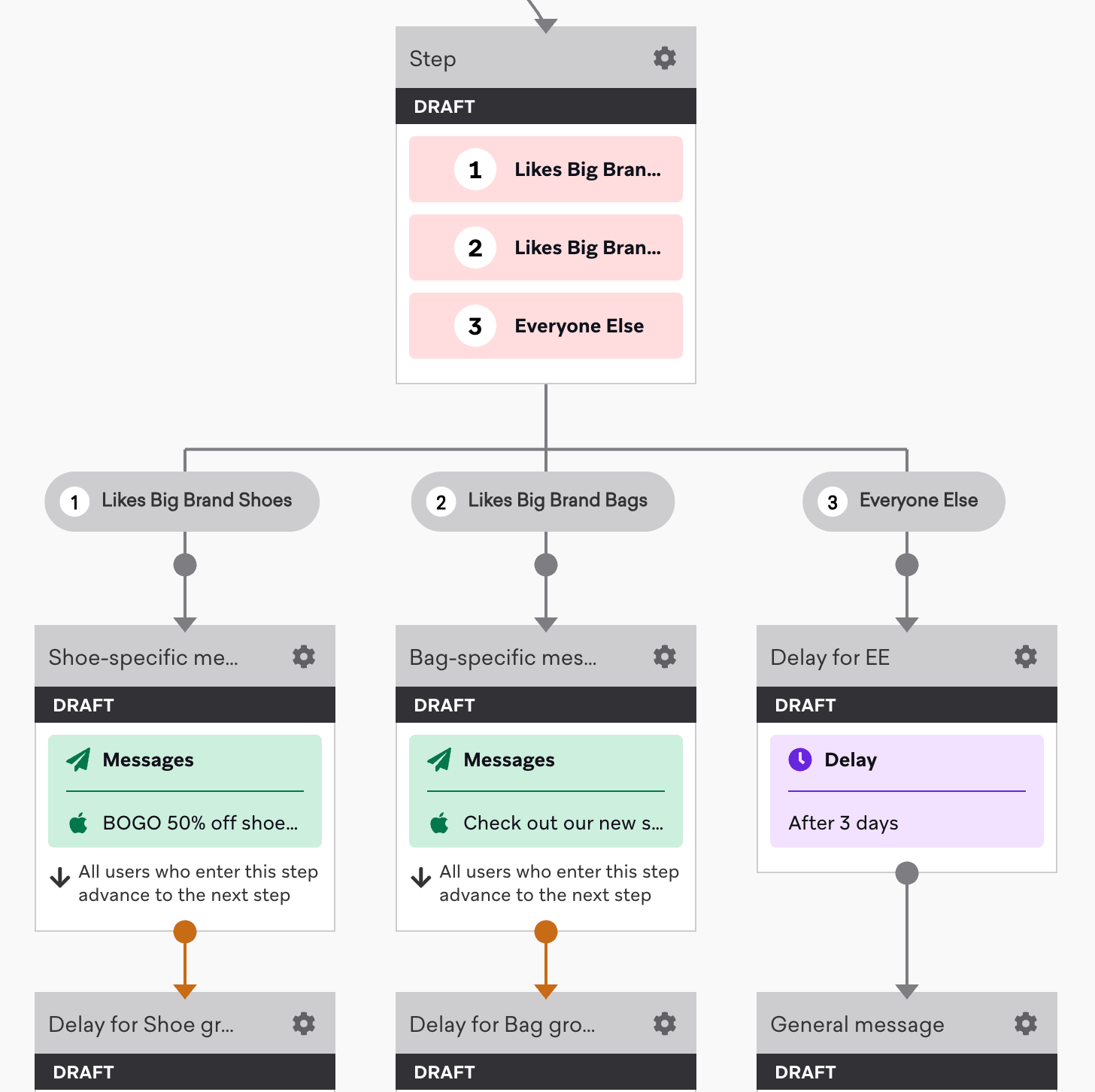
Braze Canvas is modular. Marketers assemble journeys from a library of step types: Message, Delay, Action Paths, Audience Paths, Decision Split, Experiment Paths, User Update, Audience Sync, Feature Flags, and Agent steps. Canvas supports up to eight variants with a control group and allows experiments at any node in a journey, not just at the start.
Action Paths can evaluate user behavior over windows up to 31 days, and Audience Paths evaluate attributes at the moment a user reaches a step (up to eight groups per step). Pre-built Canvas templates cover common use cases like abandoned cart, back in stock, onboarding, and lapsed user re-engagement.
Source: Braze
Canvas also supports Audience Sync steps that push journey segments to ad platforms (Meta, Google, TikTok, Snapchat, Pinterest, LinkedIn, Criteo, The Trade Desk) mid-journey.
Customer.io's Visual Workflow Builder takes a different approach. Campaigns combine a trigger, optional filters, and a sequence of steps including messages, delays, branches (True/False, Multi-Split, Random Cohorts, Exit Blocks), attribute updates, webhooks, and LLM Actions.
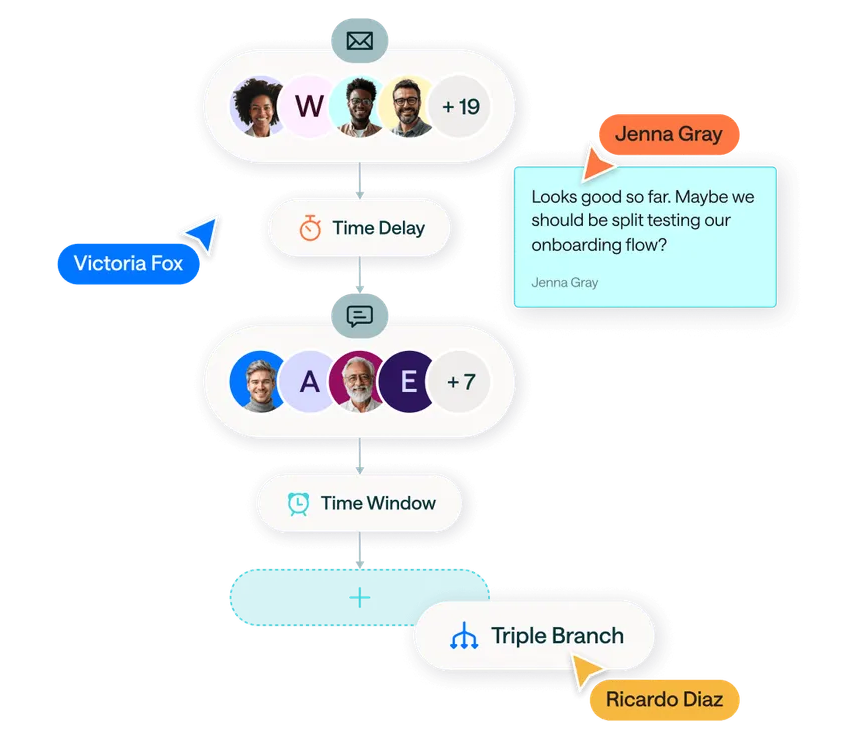
Source: Customer.io
The builder handles three sending types in one workspace: automated campaigns, broadcasts and newsletters, and transactional messages (password resets, order receipts) that bypass marketing suppression lists.
Customer.io's Object-based triggering is useful for B2B scenarios. A campaign can fire based on changes to a company account, a subscription status, or a course enrollment, not just individual user behavior. Combined with LLM Actions, workflows can make AI decisions mid-journey in real time.
The practical difference: Braze Canvas offers more granular experimentation (Personalized Paths, Winning Paths, Experiment Paths at any node) and wider channel coverage within a single journey. Customer.io's workflows offer more structural flexibility for teams that need to model complex data relationships and embed AI logic in the sending pipeline.
Pricing structures reveal different market priorities
The pricing gap between Braze and Customer.io tells you who each platform was designed for.
Braze does not publish pricing. All terms go through a sales process, with costs set by platform edition (Go, Select, Pro, Enterprise), monthly active users, and Flexible Credits consumed across channels. There is no per-seat charge for dashboard users. Email and push are included in all editions, while SMS, WhatsApp, in-app, and Content Cards consume credits from a shared pool.
A 30-day free trial and a Braze for Startups program (4 months free for qualifying VC-backed startups) provide entry points, but ongoing access requires a contract with non-cancelable payment obligations and renewal price increases capped at 7%.
Customer.io publishes three tiers. Essentials at $100/month includes 5,000 profiles and 1 million emails, with month-to-month billing. Premium at $1,000/month (annual billing required) adds WhatsApp, LINE, data warehouse destinations, HIPAA compliance, and managed deliverability. Enterprise is custom-priced.
All plans include unlimited user seats and unlimited API calls. Profile overages on Essentials cost $0.009 per profile, and additional emails run $0.12 per 1,000. LLM Actions are priced via AI Credits at $10 per 100,000 credits.
ZoomInfo uses consumption-based pricing based on data access, API usage, and AI activity. The permanent free tier, ZoomInfo Lite, includes access to the B2B database with 10 monthly export credits, contact searches, the Chrome extension, and HubSpot integration, with no time limit or credit card required.
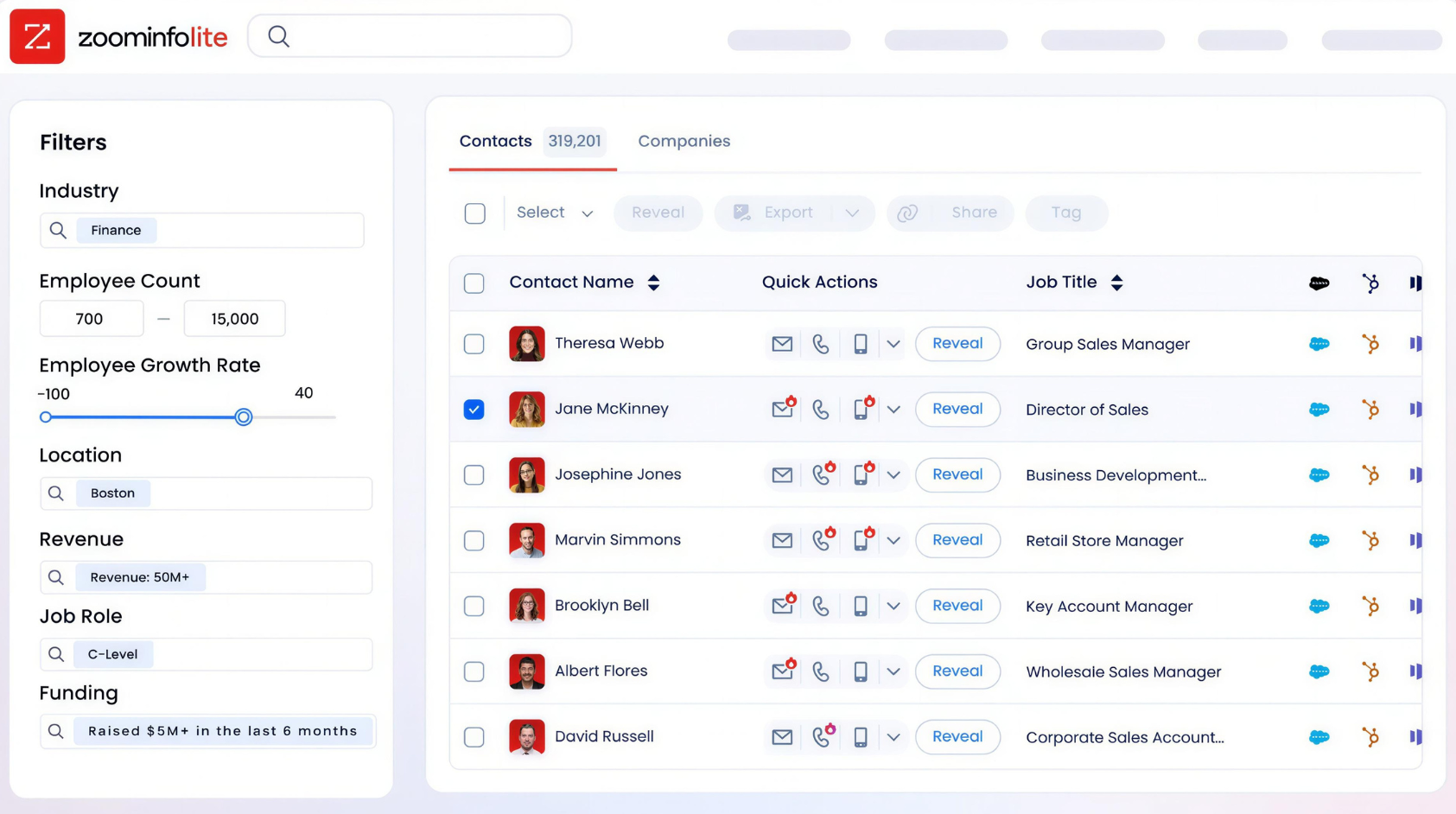
Source: ZoomInfo
A 7-day free trial of the full platform is also available. Paid plans span Sales (Professional, Advanced, Enterprise) and Marketing (Marketing Demand, ABM Lite, ABM Enterprise) tiers.
The comparison shows a market split. Braze's opaque pricing and enterprise focus reflect a platform designed for companies where six-figure annual commitments are routine. Customer.io's transparent tiers and startup program target companies still counting monthly software spend. ZoomInfo's consumption model and free Lite tier make data intelligence accessible at entry level while scaling for enterprise use.
Integration ecosystems determine your stack flexibility
How each platform connects to the rest of your technology stack matters as much as what the platform does on its own.
Braze runs the Braze Alloys partner network with 150+ certified technology partners and a searchable marketplace.
Key categories include CDPs (Segment, mParticle, Tealium, Amplitude, Rudderstack), data warehouses (Snowflake, BigQuery, Redshift, Databricks via Cloud Data Ingestion), ad platforms (Meta, Google, TikTok, Snapchat, Pinterest, LinkedIn, Criteo, The Trade Desk via Audience Sync), and personalization engines (Movable Ink, Dynamic Yield).
The REST API covers user data management, messaging triggers, analytics export, and catalog management. Native SDKs span iOS, Android, Web, React Native, Flutter, Unity, and Roku.
Customer.io maintains a large Integration Directory spanning Data In (Sources) and Data Out (Destinations). Notable connections include Salesforce, HubSpot, Amplitude, Mixpanel, Snowflake, Google Ads, Facebook Lead Ads, and Segment.
The platform exposes four APIs with unlimited calls on all plans. Mobile SDKs cover iOS, Android, React Native, Expo, and Flutter. A Model Context Protocol (MCP) server lets AI tools like Claude and ChatGPT interact with Customer.io directly. Customer.io is also available on the Google Cloud Marketplace.
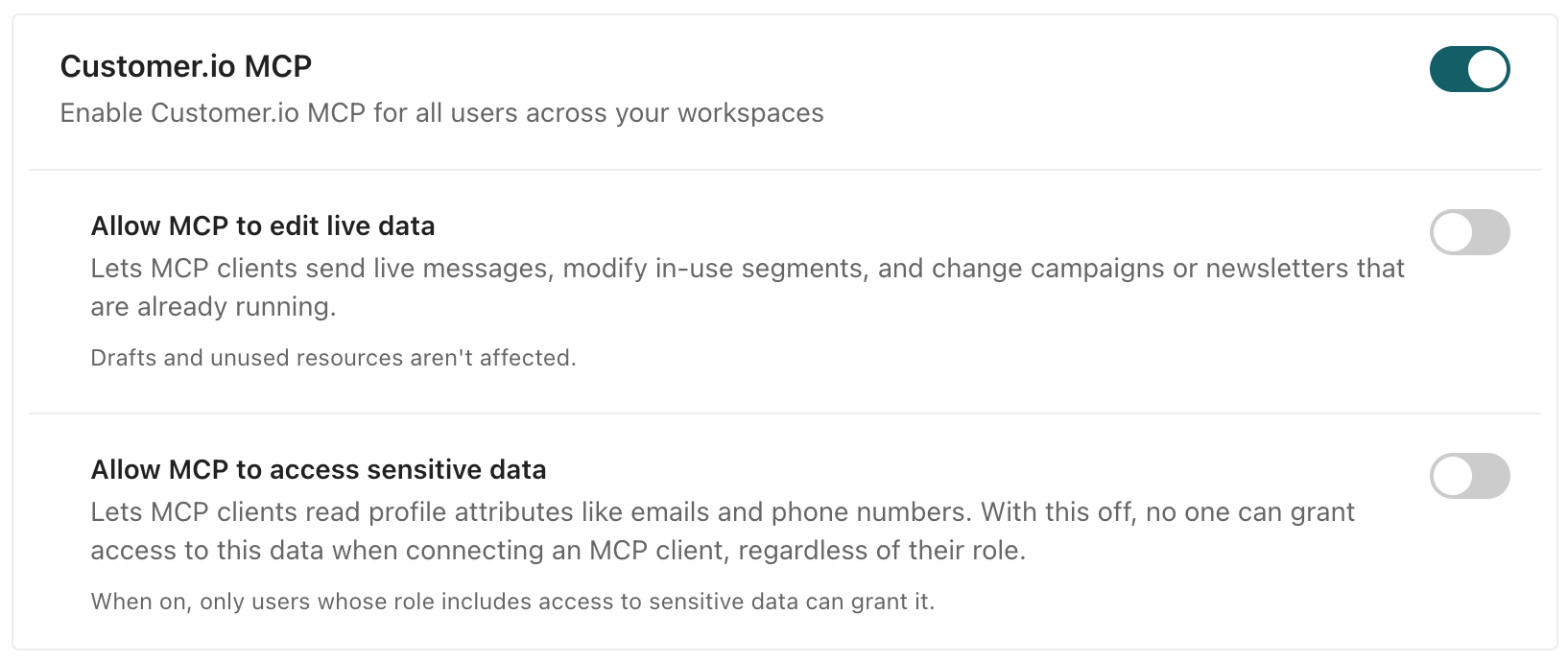
Source: Customer.io
ZoomInfo runs a Marketplace with 172+ integration partners across CRM, marketing automation, sales engagement, data warehouses, and AI categories. Featured integrations include Salesforce, HubSpot, Microsoft Dynamics 365, and Snowflake.
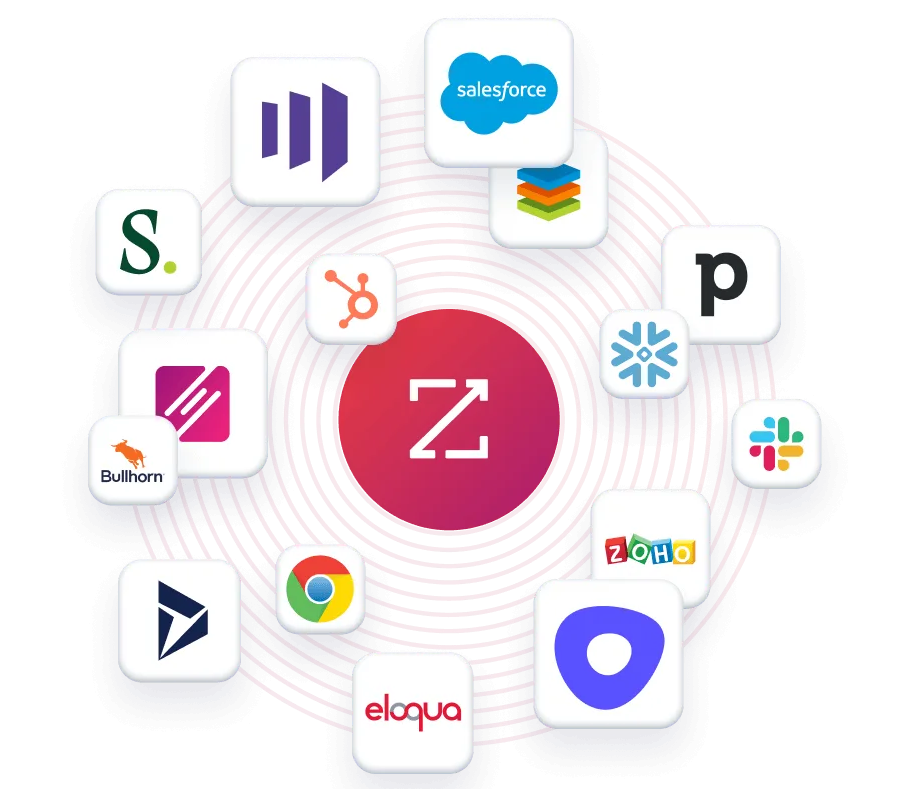
Source: ZoomInfo
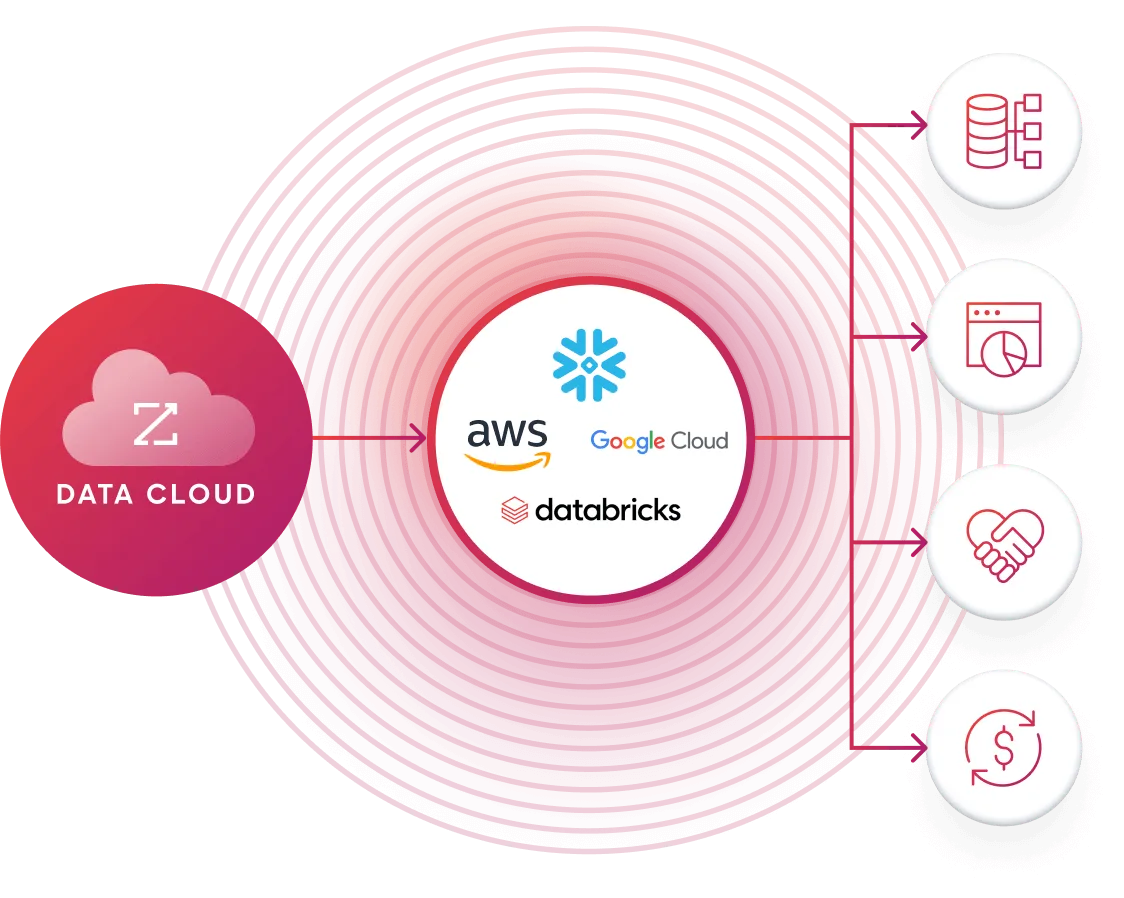
The Cloud Partners program delivers ZoomInfo data into AWS, Google Cloud, Snowflake, and Databricks as structured Data Cubes. The Enterprise API gives programmatic access to search, enrich, intent, and AI research endpoints, and the ZoomInfo MCP server connects AI models to ZoomInfo's B2B data. API access is included in all relevant plans.
Source: ZoomInfo
The overlap matters: all three platforms connect to Snowflake, Salesforce, and HubSpot. ZoomInfo's enriched contact and company data can flow into your warehouse, then into Braze or Customer.io for segmentation and campaign execution, creating a data pipeline from intelligence to engagement.
Braze vs. Customer.io vs. ZoomInfo: Which should you choose?
The right answer depends on what problem you're solving first.
Choose Braze if:
You're a mid-market or enterprise B2C brand with a mobile app and millions of active users
You need native support for regional channels (LINE, KakaoTalk, RCS) alongside standard channels
Individual-level AI optimization (channel, timing, content, incentive) is a priority
You have engineering resources for implementation and ongoing Liquid/Canvas customization
Your budget supports enterprise pricing without public rate cards
Choose Customer.io if:
You're a product-led SaaS company or digital business where marketing and engineering work together
You need to trigger campaigns from granular behavioral events and complex data relationships (Objects)
Embedding AI in campaign workflows (LLM Actions) matches how your team works
Transparent pricing and a startup-friendly entry point matter to your budget
Your team is comfortable with APIs, Liquid, and event-driven data models
Add ZoomInfo to your stack if:
You have a B2B motion and need verified contact data, company intelligence, or intent signals to power engagement campaigns
Your CRM data is incomplete and your campaigns suffer from targeting gaps
You want to know which accounts are in-market before launching campaigns
You need a data intelligence layer that works with any engagement platform through APIs, MCP, or data warehouse connections
You're building AI agents or custom workflows that need access to B2B intelligence
See how ZoomInfo's data intelligence powers your engagement stack.
The takeaway: Braze and Customer.io compete on message execution. ZoomInfo operates at a different layer, providing the data foundation that makes whichever engagement platform you choose more effective. For B2B companies, adding ZoomInfo to either platform isn't optional. It's the difference between campaigns built on verified intelligence and campaigns built on incomplete data.
Redwood Logistics saw a 99% reduction in cost-per-click and a 310% increase in clickthrough rate after building their targeting on ZoomInfo data. "It's not just the data itself. It's more about the right data at the right time to help us reach out with the right message across that full buyer journey," said Chelsea Kenyon, Senior Director of Digital Strategy. (Redwood Logistics Case Study)
Braze vs. Customer.io vs. ZoomInfo FAQ
What is the fundamental difference between Braze, Customer.io, and ZoomInfo?
Braze is an enterprise engagement platform for large B2C brands, offering multichannel messaging across email, push, SMS, WhatsApp, in-app, LINE, KakaoTalk, and more, with individual-level AI optimization via BrazeAI Decisioning Studio.
Customer.io is a developer-friendly engagement platform for product-led SaaS companies, built around behavioral event triggers, custom data Objects, and AI embedded in campaign workflows through LLM Actions.
ZoomInfo is a B2B data intelligence platform that provides verified contact data, company information, and intent signals, serving as the data foundation that powers engagement campaigns in either platform.
Can ZoomInfo integrate with Braze or Customer.io?
ZoomInfo's data can flow into either platform through shared data warehouse connections. Both Braze (via Cloud Data Ingestion supporting Snowflake, BigQuery, Redshift, and Databricks) and Customer.io (via Reverse ETL from the same warehouses) support syncing enriched data from external sources.
ZoomInfo also delivers data through its Cloud Partners program into Snowflake, AWS, Google Cloud, and Databricks, and through its Enterprise API and MCP server for custom integrations.
Which platform is best for a B2B SaaS company?
Customer.io is the stronger choice for the engagement layer, given its behavioral event model, custom Objects for account-level data, developer-friendly APIs with unlimited calls, and LLM Actions for per-customer AI decisions inside workflows.
Pair it with ZoomInfo for data intelligence (contact enrichment, intent signals, technographics) and you cover both the "who to target" and "how to engage them" sides of B2B marketing.
How do Braze and Customer.io compare on pricing?
Customer.io is more accessible, starting at $100/month with unlimited user seats and unlimited API calls, plus a 14-day free trial with no credit card required. Braze does not publish pricing and requires a sales process for all plans. Customer.io's Premium tier ($1,000/month, annual billing) adds WhatsApp, data warehouse destinations, and HIPAA compliance.
Both platforms bill for usage as you grow: Braze on monthly active users and flexible credits, Customer.io on profiles ($0.009 per additional profile) and email volume ($0.12 per 1,000 additional emails).
Which platform has better AI capabilities?
It depends on the use case. Braze's AI excels at individual-level message optimization: BrazeAI Decisioning Studio uses reinforcement learning to find the best channel, timing, and content for each user, and Personalized Paths routes each user through the journey path most likely to convert them.
Customer.io's AI excels at marketer productivity and runtime personalization: the persistent AI Agent builds campaigns from context that compounds across sessions, and LLM Actions embed any language model in the campaign workflow. ZoomInfo's AI excels at account intelligence, using the GTM Context Graph to identify in-market accounts, recommend buying committees, and synthesize account research.
Which platform handles more messaging channels?
Braze offers the widest channel coverage: email, mobile push, web push, SMS/RCS, WhatsApp, in-app messages, Content Cards, iOS Live Activities, LINE, KakaoTalk, and paid media audience sync across eight ad platforms. Customer.io covers email, SMS, push notifications, in-app messages, WhatsApp, LINE, and webhook-delivered channels.
ZoomInfo is not a messaging execution platform but can activate campaigns through GTM Studio across email, display ads, phone, and direct mail.
What are the main drawbacks of each platform?
Braze needs heavy engineering investment to implement, has opaque pricing with potential add-on costs, and limits event data lookback to one year with 250 custom attributes by default.
Customer.io has a steep 10x price jump between Essentials ($100/month) and Premium ($1,000/month), requires technical users to unlock its full potential, and only recently added outcome-level analytics with the Goals feature. ZoomInfo focuses on B2B data intelligence and does not replace a dedicated engagement platform for lifecycle messaging.
Do any of these platforms offer a permanent free tier?
ZoomInfo offers ZoomInfo Lite, a permanent free tier with access to the B2B database, 10 monthly export credits, contact searches, the Chrome extension, and HubSpot integration, with no time limit or credit card required.
Neither Braze nor Customer.io offers a permanent free plan. Braze provides a 30-day free trial and a Braze for Startups program with 4 months free for qualifying VC-backed startups. Customer.io offers a 14-day free trial and a Startup Program with up to 12 months free for companies that raised under $10M.
More sales tool comparisons:
