
Choosing between BuiltWith and SimilarTech for technology intelligence comes down to five questions:
Do you need historical data on technology adoption, or real-time signals tied to web traffic and engagement?
Are you researching what technologies websites use, or prospecting for sales leads based on that data?
Is technographic data your main need, or do you also need verified contacts, intent signals, and execution tools in one platform?
How important is it to understand not just what tech a prospect uses, but why they're likely to buy now?
Do you want to export spreadsheets for manual outreach, or feed intelligence into AI workflows that act on it?
In short, here's what we recommend:
BuiltWith is the largest technographic database. It tracks 113,002+ web technologies across 478 million root domains, with historical data stretching back 41 years to January 1985. For sales teams selling web technologies or eCommerce solutions, BuiltWith's filtering by technology spend, location, and vertical lets you build targeted prospect lists. But BuiltWith is a data export tool at heart. It gives you the spreadsheet; what you do with it is up to you.
SimilarTech is no longer a standalone product. Acquired by Similarweb in April 2021, its technographic capabilities now live inside Similarweb's Sales Intelligence suite. The advantage: technology data comes layered with web traffic metrics, engagement data, and buyer intent signals. The disadvantage: you buy into Similarweb's full platform, with opaque enterprise pricing, to access what was once a focused technographics tool.
Both platforms answer the question "what technologies does this company use?" But for go-to-market teams, that question is the starting point. Knowing a prospect runs Shopify is useful. Knowing that the VP of Engineering has a verified direct dial, the account shows buying intent, and an AI agent can draft personalized outreach based on the full account context is what generates pipeline. That's where ZoomInfo comes in.
ZoomInfo is a GTM platform built on a B2B dataset of 500M contacts, 100M companies, 135M+ verified phone numbers, and 200M+ verified business emails. That foundation includes 30,000+ tracked technologies across 200+ categories for 30M+ companies, but what separates ZoomInfo is what it does with technographic data. The GTM Context Graph (an intelligence layer processing 1.5B+ data points daily) unifies your CRM records, conversation transcripts, and behavioral signals with ZoomInfo's B2B data, showing why deals move or stall so every outreach reflects the full account context. Teams act on that intelligence through GTM Workspace for sellers, GTM Studio for marketers and RevOps, or APIs and MCP in any front-end.
If you need technology intelligence connected to verified contacts, buying signals, and AI-powered execution, see how ZoomInfo works.
BuiltWith vs. SimilarTech vs. ZoomInfo at a glance
BuiltWith | SimilarTech (Similarweb) | ZoomInfo | |
|---|---|---|---|
Primary focus | Web technology profiling and lead generation | Technographics within a digital intelligence suite | AI GTM platform |
Technologies tracked | 113,002+ | 8,000+ | 30,000+ across 200+ categories |
Domains/companies covered | 478M+ root domains | 100M+ websites | 100M companies, 30M+ with technographics |
Historical data depth | 41 years (back to 1985) | Multi-year installation/removal history | Technology adoption trends with change signals |
Verified contact data | Limited (names, emails, titles outside EU/CA) | 400M+ professional records via Similarweb | 500M contacts, 135M+ verified phones, 200M+ verified emails |
Intent signals | Technology stack changes (Actionable Insights) | Traffic spikes, tech changes, ad network shifts | Buyer Intent from 210M IP-to-Org pairings, 6T+ keyword signals monthly |
AI capabilities | MCP server, AI Agent CLI | AI Prospecting Agent, AI Meeting Prep | GTM Context Graph, AI agents in Workspace and Studio |
CRM integrations | Salesforce, HubSpot, Pardot, Zoho, Dynamics 365, Close.io | Salesforce, HubSpot | 120+ integrations via App Marketplace |
Pricing | $295-$995/month (published) | $99/month Individual; Business/Enterprise custom | Custom-quoted; free tier available (ZoomInfo Lite) |
Technology coverage: depth vs. breadth vs. context
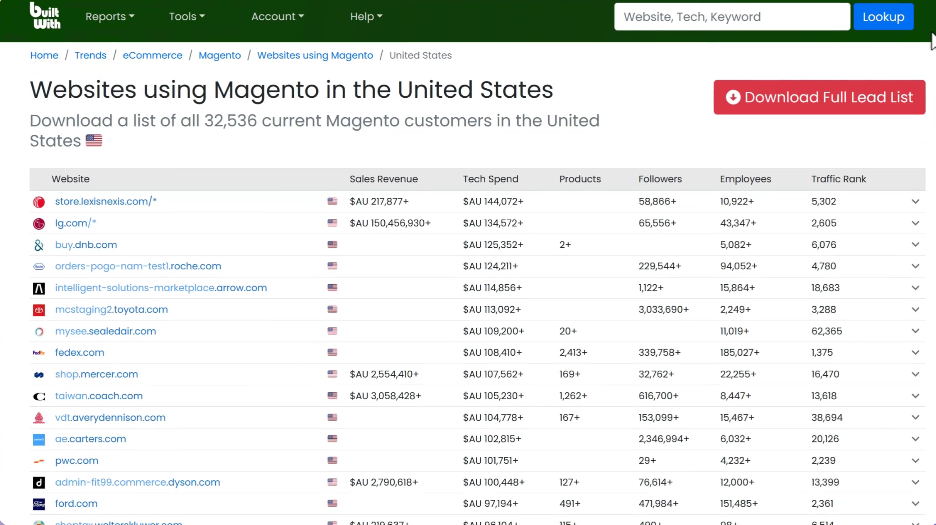
BuiltWith has the largest technology taxonomy. With 113,002+ tracked technologies and patent-pending detection algorithms developed over 19 years, it identifies technologies other platforms miss.
BuiltWith proved this by running a year-long controlled test where a secret domain went undetected by every competitor. If your job is to know exactly which analytics script, CDN, or JavaScript widget a website runs, BuiltWith has the most granular answer.
Source: BuiltWith
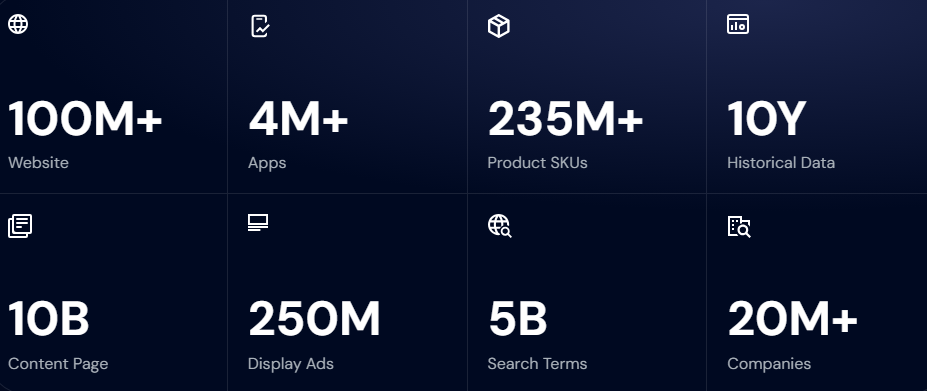
SimilarTech (via Similarweb) tracks 8,000+ technologies across 100M+ websites, with the Technologies Dataset updating daily.
That's a smaller taxonomy than BuiltWith's, but Similarweb pairs each detection with traffic volume, engagement metrics, and audience demographics. You don't just see that a company uses Shopify; you see whether their traffic grew 500% year-over-year, which changes the conversation.
Source: Similarweb
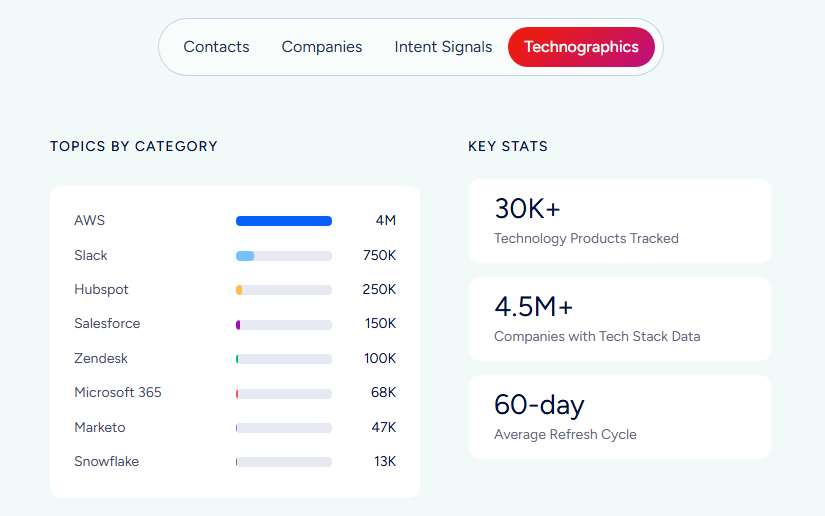
ZoomInfo tracks 30,000+ technologies across 200+ categories for over 30 million companies, drawing from 20+ source types with nearly 90% of pairings updated within three months.
The count is smaller than BuiltWith's, but most sales teams care more about knowing a prospect uses Salesforce, HubSpot, or Snowflake than cataloging every JavaScript library on their site. The difference: every ZoomInfo technology detection connects to a verified contact, an org chart, and buying signals, so the data feeds a sales motion rather than sitting in a spreadsheet.
Source: ZoomInfo
Historical data vs. real-time signals
BuiltWith's historical depth is unmatched.
With technology trends data going back to January 1985, you can trace technology adoption over four decades. Market researchers, hedge funds (including Winton Capital, the world's sixth-largest), and competitive intelligence teams find this historical record valuable. Harvard Business School and MIT Technology Review have both cited BuiltWith data in published research.
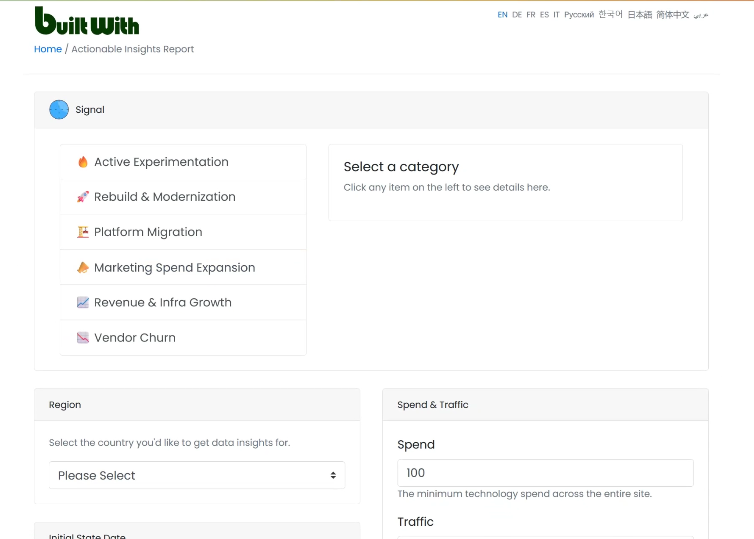
BuiltWith's Actionable Insights feature analyzes real-time stack changes to spot companies showing buying signals through platform migrations, vendor churn, and active experimentation. It moves BuiltWith toward intent data, though the signals are limited to what's observable in a website's source code.
Source: BuiltWith
Similarweb layers technographic changes with broader digital signals. When a company drops a competitor's technology, that removal becomes an outreach trigger. Similarweb also detects traffic spikes, ad network changes, and search behavior shifts that reveal buying activity beyond what technology profiling alone shows.
ZoomInfo's intent data operates at a different scale.
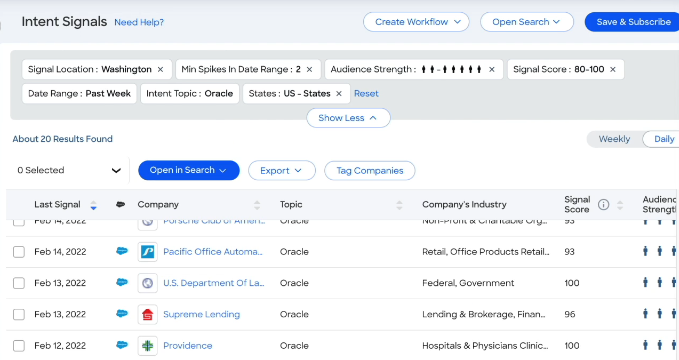
ZoomInfo Intent tracks signals from 210 million IP-to-Organization pairings and 6 trillion+ new keyword-to-device pairings sourced monthly. Guided Intent, exclusive to ZoomInfo, identifies the topics historically correlated with deal success rather than requiring manual topic selection.
These signals feed into the GTM Context Graph, which connects intent data, CRM records, and conversation intelligence to show not just that a company is researching a solution, but why the timing matters for your sales motion.
Source: ZoomInfo
Seismic's sales team attributed 39% of active pipeline to opportunities identified or influenced by ZoomInfo signals, with 54% productivity gains and 11.5 hours saved per week per seller. (Seismic case study)
Contact data separates research tools from sales tools
This is the dividing line between technology intelligence and go-to-market intelligence.
BuiltWith provides contact names and emails for businesses outside the EU and CA as part of its exports. Contact data isn't BuiltWith's core product. The contacts aren't verified at scale, and there are no direct-dial phone numbers, org charts, or department-level filtering.
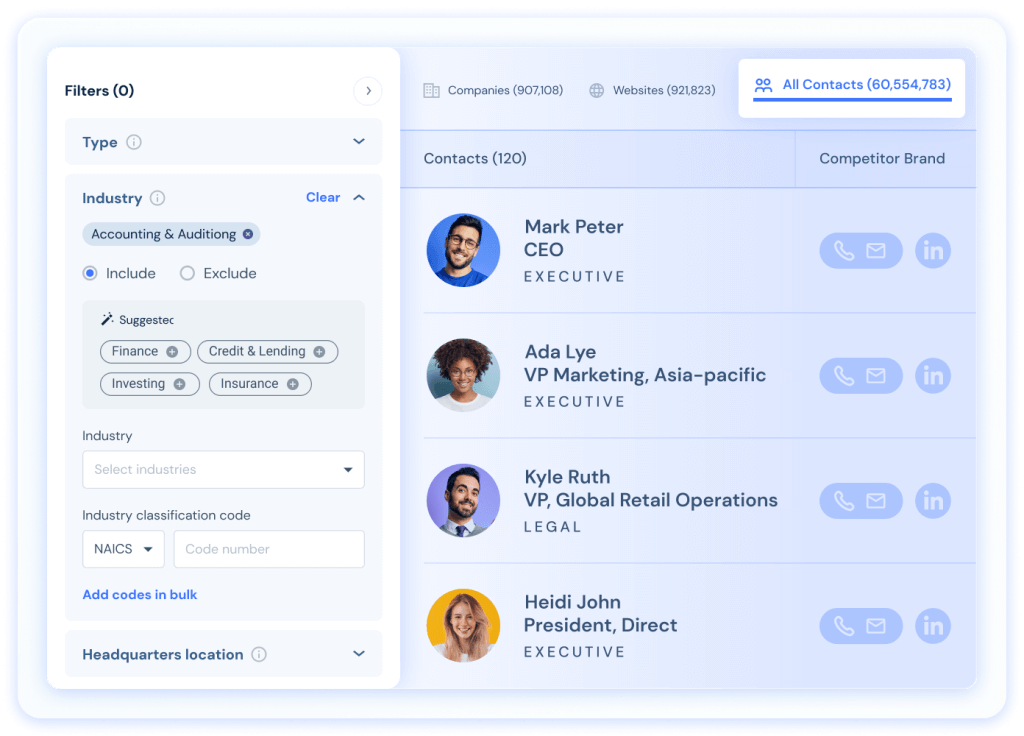
Similarweb added a 400M+ professional contacts database in December 2021, with verified emails, phone numbers, and LinkedIn profiles filterable by department, seniority, and role. This makes Similarweb a more complete sales tool than BuiltWith, though contact data is a recent addition rather than the platform's core strength.
Source: Similarweb
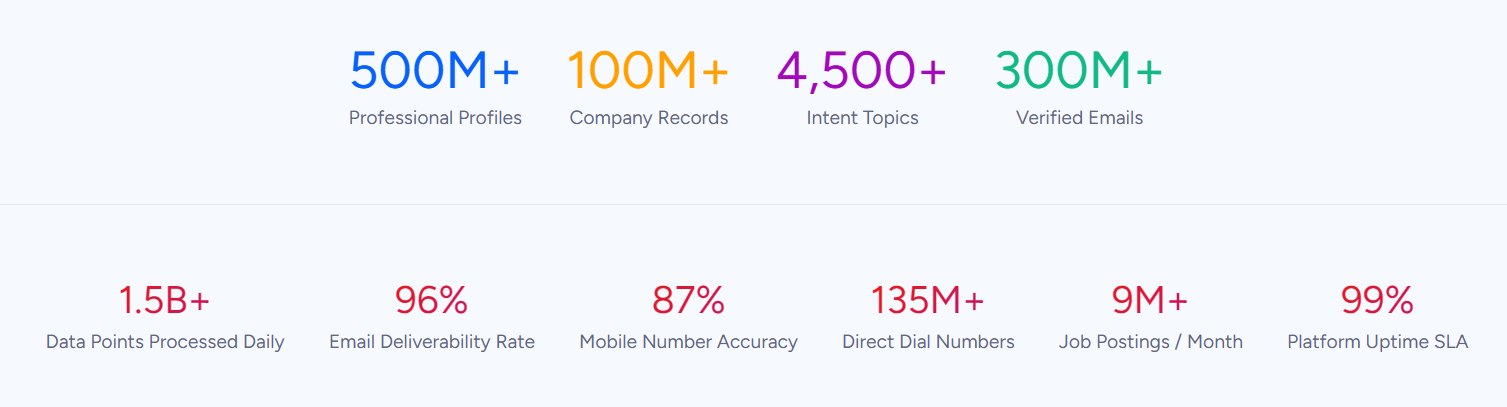
ZoomInfo's contact database is the foundation the platform was built on: 500M contacts, 135M+ verified phone numbers, 120M direct dials, and 200M+ verified business email addresses, maintained by 300+ human researchers and a multi-source verification pipeline delivering up to 95% accuracy on first-party data.
In a Fortune 500 competitive RFP analyzing 25 million contacts across vendors, the independent consultant concluded that "no other competitor came even close."
Source: ZoomInfo
For sales teams, this difference shows at the point of action.
A technographic report telling you a company uses Marketo is useful only if you can reach the marketing director who manages it. With BuiltWith, you get the technology list and need a separate tool for contacts. With Similarweb, you get contacts alongside the data. With ZoomInfo, the contact has a verified direct dial, sits within an org chart showing the full buying committee, and the platform's AI can draft personalized outreach based on the complete account context.
Smartsheet's Thor Sanderson, Senior Manager of Sales Technology Enablement: "ZoomInfo is our one source of truth for account data, and even more so for contact data. There's no other provider in the market that provides you with that level of detail." (Smartsheet case study)
eCommerce intelligence: BuiltWith's specialty
BuiltWith has a specific advantage in eCommerce data.
The platform tracks over 2,500 eCommerce technologies and 2 billion unique eCommerce products across over 26 million eCommerce websites, with exportable attributes including spend, revenue, employee count, and product SKU counts.
This matters for companies selling to online retailers. A payment processor can find every Shopify store in Germany with more than 10,000 SKUs. A logistics provider can identify all eCommerce sites using a specific shipping integration. A marketing agency can filter by estimated revenue to target high-value merchants. No other platform offers product-level search across 2 billion SKUs.
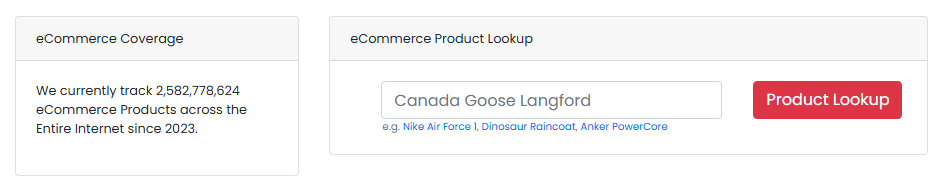
Source: BuiltWith
Similarweb expanded into retail intelligence with its Retail Intelligence Suite launched in March 2026, combining Amazon and cross-retail analytics. The focus is competitive analysis of retail performance rather than building prospect lists from product catalogs.
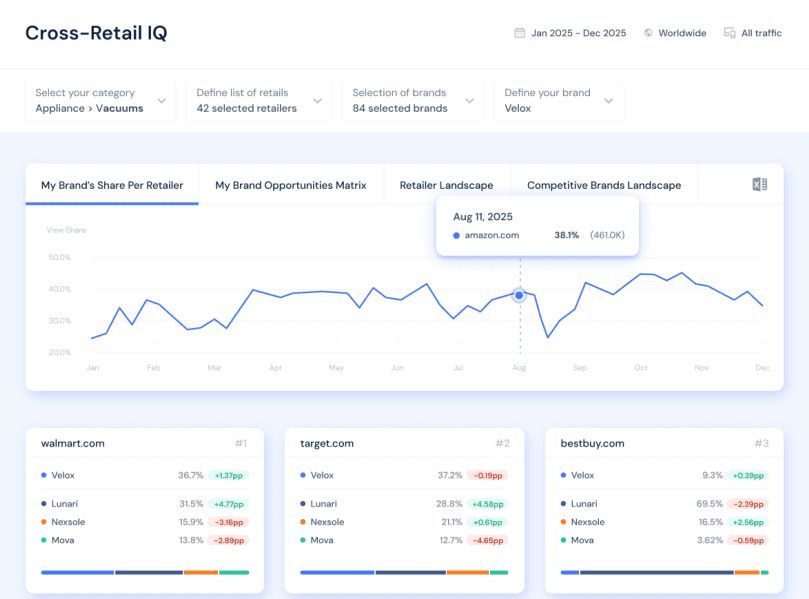
Source: Similarweb
ZoomInfo covers eCommerce companies through its standard company and technographic data but doesn't offer BuiltWith's product-level search or SKU-count filtering. If your primary use case is eCommerce market research or building prospect lists filtered by what products a store sells, BuiltWith is the specialized tool for that job.
From data to action: the execution gap
BuiltWith gives you data exports: CSV files, Excel spreadsheets, CRM pushes to Salesforce, HubSpot, Pardot, Zoho, Dynamics 365, and Close.io. The data is fully exportable with no fields locked behind the interface. But once the data reaches your CRM, the work of prioritizing accounts, writing outreach, and running sequences falls on your team.
Similarweb has moved further toward execution.
The AI Prospecting Agent automates prospect searches using natural language, the AI Meeting Prep Agent builds account dossiers before calls, and Sales Signals trigger alerts when target accounts show buying behavior. These features bring Similarweb closer to a sales execution platform, though it still lacks the contact depth and conversation intelligence that complete the picture.
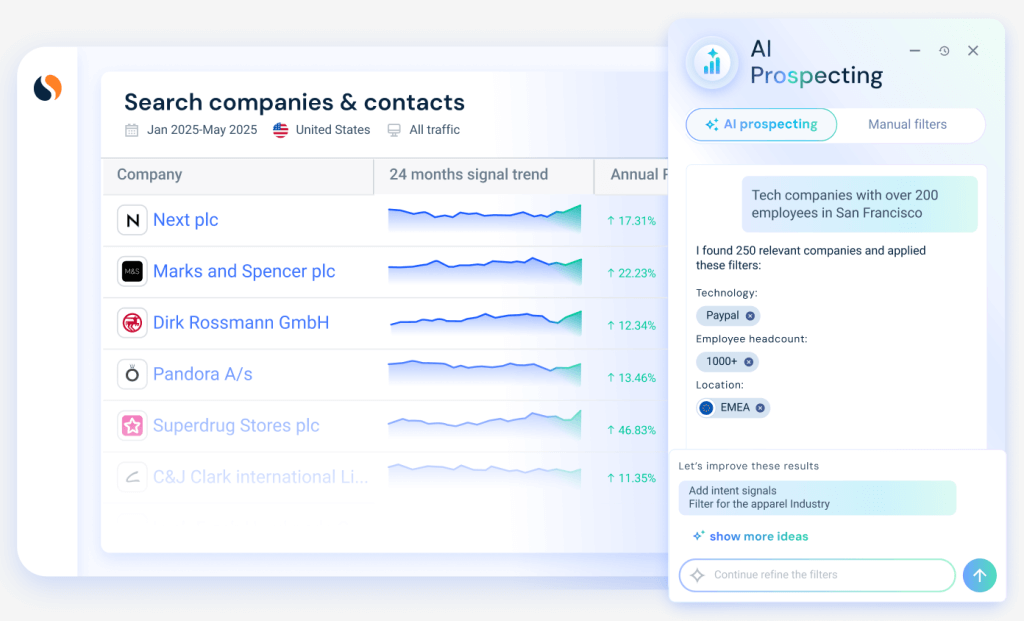
Source: Similarweb
ZoomInfo closes the execution gap.
GTM Workspace gives sellers a single workspace where AI agents handle account research, outreach drafting, CRM updates, and signal monitoring. GTM Studio lets marketers and RevOps teams describe audiences in natural language, launch multi-channel plays, and measure pipeline impact without engineering tickets.
The GTM Context Graph powers all of it, processing 1.5B+ data points daily to connect technology signals, CRM data, conversation transcripts, and intent into one intelligence layer.
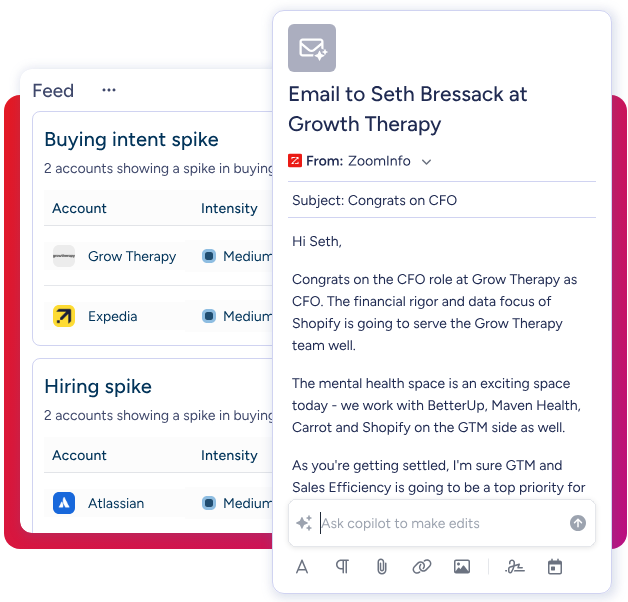
Source: ZoomInfo
The practical difference: BuiltWith tells you a company switched from WooCommerce to Shopify. Similarweb tells you that the company's traffic grew 200% after the switch. ZoomInfo tells you the VP of eCommerce who led the migration has a verified direct dial, the company is researching your category, and here's an AI-drafted email addressing their situation.
Levanta's CEO Ian Brodie: "ZoomInfo's not just a contact data company anymore. They've built a full system of execution. GTM Intelligence actually works the list, writes the outreach, triggers the play, and helps drive predictable growth." (Levanta case study)
Pricing reflects different value propositions
BuiltWith is transparent about pricing.
Three tiers are published on their website: Basic at $295/month (limited to 2 technology reports), Pro at $495/month (unlimited reports), and Team at $995/month (unlimited logins and API access). Annual billing saves roughly one month's cost. There's no free trial of paid plans because all data is fully exportable, but free individual site lookups are available permanently.
SimilarTech's pricing routes through Similarweb, where transparency drops.
The Individual plan is $99/month billed annually ($129 monthly), but Business and Enterprise plans require contacting sales. No published prices, non-refundable fees, and a preference for multi-year subscriptions (64% of ARR) mean the actual team cost is higher than the entry-level price suggests.
ZoomInfo also uses custom-quoted pricing based on seats, credits, and features, with no published dollar amounts for paid tiers.
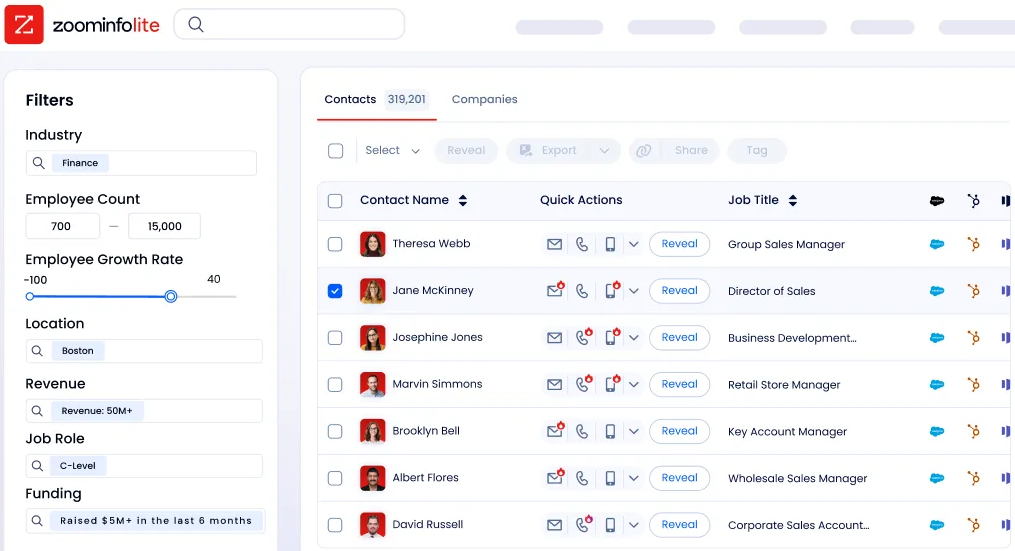
But ZoomInfo offers two free entry points that neither competitor matches: ZoomInfo Lite, a permanent free tier with access to the B2B database, 10 monthly export credits, and the Chrome extension; and a 7-day free trial of the full platform. For teams weighing whether ZoomInfo's broader capabilities justify the investment over a specialized technographics tool, these entry points let you test before committing.
Source: ZoomInfo
Note: ZoomInfo is transitioning toward a consumption-based pricing model.
The pricing comparison needs honest framing. BuiltWith is the most affordable option for pure technographic data. But if you need verified contacts, you'll add a separate data provider. If you need intent signals, that's another subscription. If you need sales execution tools, add a third. ZoomInfo's higher price includes all of these in one platform.
API access and AI-readiness
All three platforms have invested in programmatic access and AI integrations, reflecting the shift toward agentic workflows.
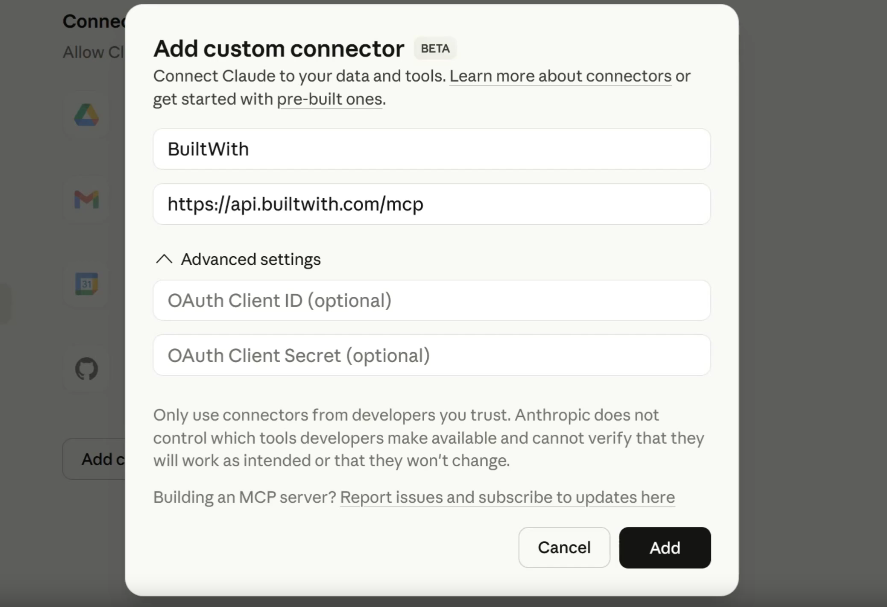
BuiltWith offers API access with 15+ specialized endpoints, an MCP integration with Claude AI, an AI Agent CLI, and an AI-first SDK. Bulk data is available via Snowflake, Databricks, Redshift, and BigQuery. For technical teams building automated research pipelines, BuiltWith's API infrastructure is well-developed.
Source: BuiltWith
Similarweb provides REST and Batch APIs with up to 7 years of data, native integrations with Snowflake, Databricks, Tableau, and Power BI, and an MCP server supporting Claude, ChatGPT, Cursor, Zapier, and n8n. API access is included on Business and Enterprise plans with a credit-based consumption model.
ZoomInfo's API architecture spans four areas: Data API for search and enrichment, Copilot API for AI intelligence (account summaries, lookalike expansion, contact recommendations), Marketing API for audience management, and Platform API for engagement data.
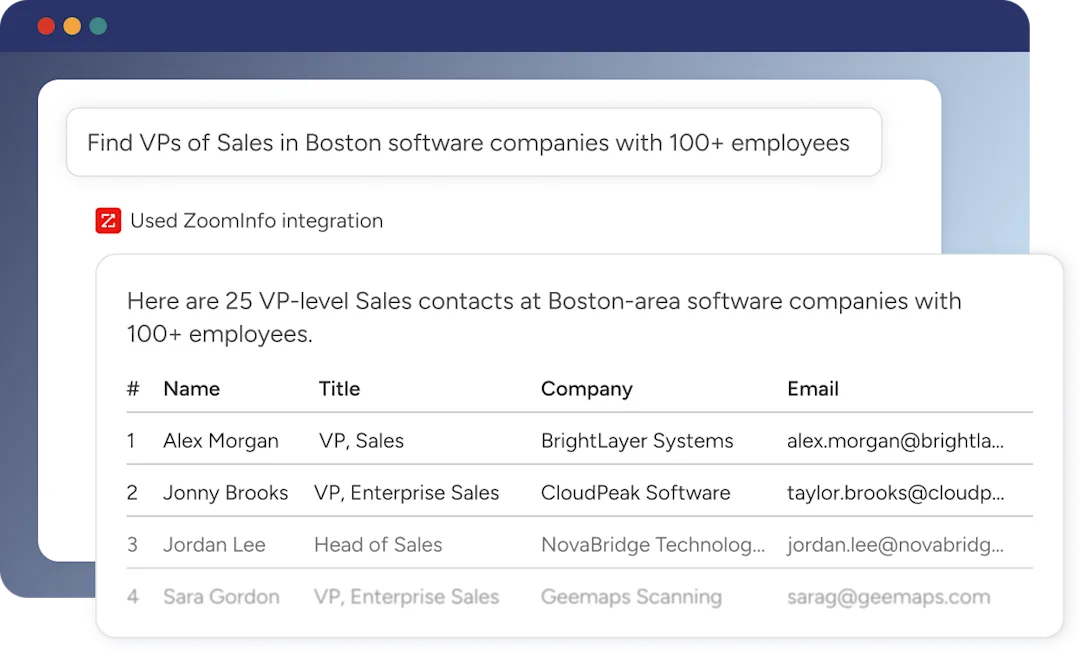
The ZoomInfo MCP server connects AI models to ZoomInfo's data for searching, enriching, and researching accounts through natural language. API access is included in all relevant plans.
Source: ZoomInfo
BDO Canada's Jerry Wilson, Senior Marketing Intelligence Analyst: "The plug-and-play aspect of the API means I can integrate it easily into any process and get information at a moment's notice," achieving an 87% reduction in time spent on data dashboard updates. (BDO Canada case study)
Security and compliance
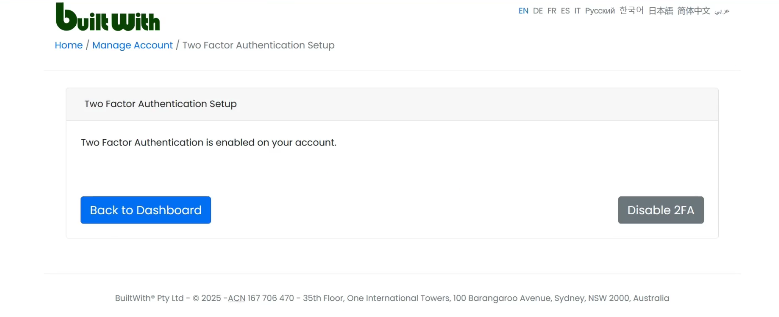
BuiltWith is GDPR compliant with SAML2 SSO (supporting Google, Microsoft Entra, Okta, and Ping Identity), two-factor authentication, and a security vulnerability bounty program. As a bootstrapped company with roughly 11 employees, BuiltWith doesn't publish SOC 2 or ISO certifications.
Source: BuiltWith
Similarweb holds SOC 2 Type II and ISO 27001 certifications, with GDPR and CCPA compliance processes in place. As a NYSE-listed company, Similarweb is subject to SEC reporting requirements. Its technographic data collection is cookie-free and privacy-safe.
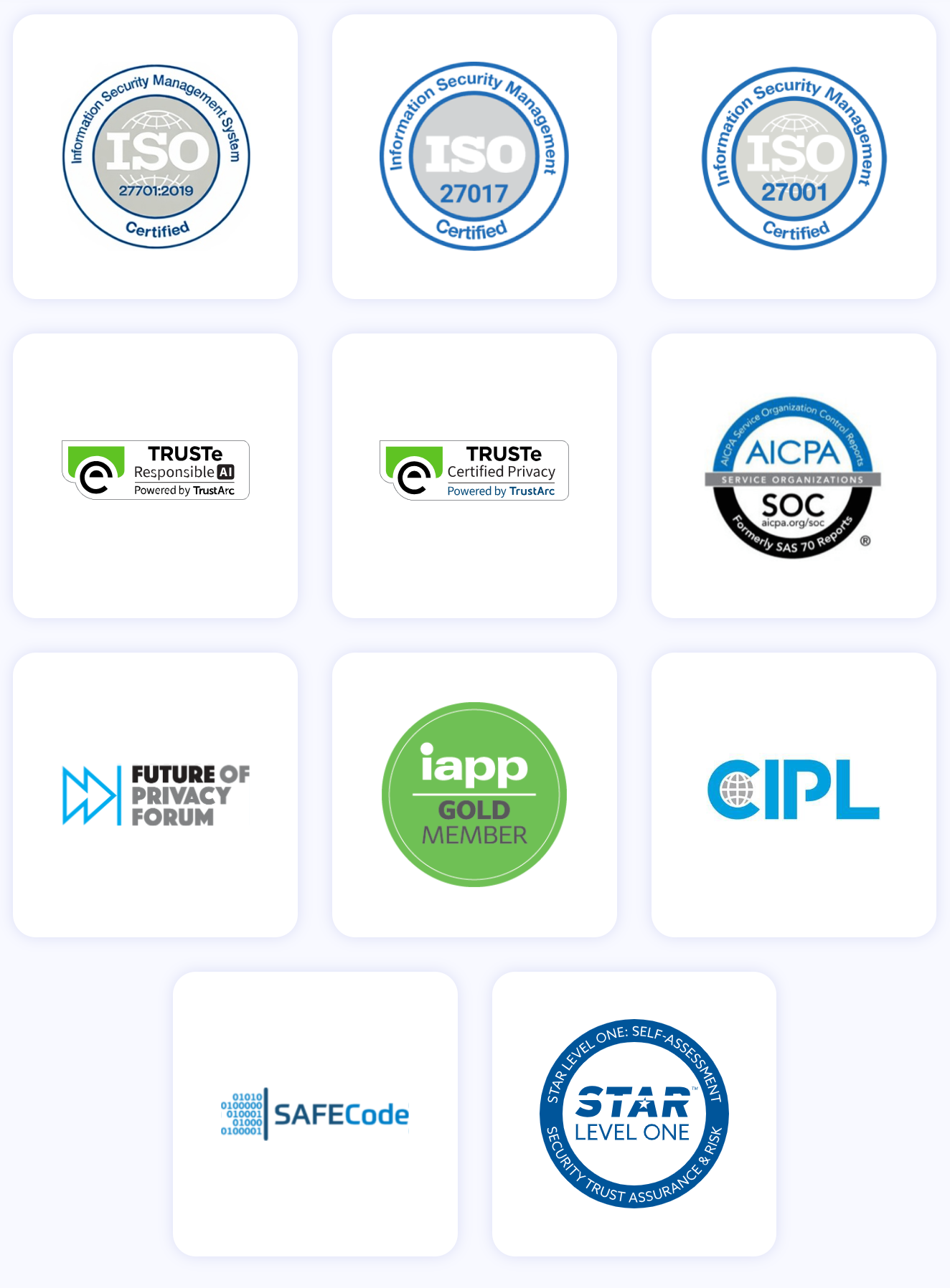
ZoomInfo maintains the broadest compliance stack: ISO 27001, ISO 27701, SOC 2 Type II, TRUSTe GDPR Practices Validation, and TRUSTe CCPA Practices Validation, all renewed annually. ZoomInfo is a registered data broker in California and Vermont and maintains a dedicated Trust Center. For enterprises in regulated industries, ZoomInfo's compliance documentation is the most thorough of the three.
BuiltWith vs. SimilarTech vs. ZoomInfo: Which should you choose?
The right platform depends on what you're trying to accomplish with technology intelligence.
Choose BuiltWith if:
Technology profiling and web technology research are your primary use case
You need the largest taxonomy (113,002+ technologies) and historical data going back decades
eCommerce intelligence with product-level search across 2 billion SKUs matters to your business
You want transparent, published pricing and full data export with no fields locked behind the interface
Your team already has separate tools for contacts, outreach, and CRM management
Choose SimilarTech (Similarweb) if:
You want technographic data combined with web traffic analytics and engagement metrics
Your prospecting benefits from understanding not just what tech a company uses, but how their digital presence performs
You need a broader digital intelligence platform covering competitive analysis, SEO, and advertising insights alongside technographics
You're comfortable with enterprise sales processes and unpublished pricing
Choose ZoomInfo if:
You need technology intelligence connected to verified contacts, org charts, and direct-dial phone numbers
Buyer intent signals and AI-powered execution matter more than cataloging every JavaScript library on a website
You want one platform for data, intelligence, and action, so your team isn't stitching together separate tools for technographics, contacts, intent, and outreach
You value AI that connects your CRM, conversations, and market signals to show not just what's happening, but why
API and MCP access for building your own AI agents and custom workflows matters
Start with ZoomInfo Lite for free, or request a demo.
Technology intelligence is useful. But it becomes valuable when it connects to the people you need to reach, the signals that reveal when they're ready to buy, and the tools that turn intelligence into action. BuiltWith and SimilarTech each do one part of that equation well. ZoomInfo does all of it.
BuiltWith vs. SimilarTech vs. ZoomInfo FAQ
What is the main difference between BuiltWith, SimilarTech, and ZoomInfo?
BuiltWith is a web technology profiling platform that tracks 113,002+ technologies across 478 million domains with historical data going back 41 years.
SimilarTech is the technographics layer inside Similarweb's Sales Intelligence suite, combining 8,000+ tracked technologies with web traffic and engagement data across 100M+ websites.
ZoomInfo is an AI GTM platform that includes technographics for 30M+ companies alongside 500M contacts, verified phone numbers, buyer intent signals, conversation intelligence, and AI-powered execution tools.
Is SimilarTech still available as a standalone product?
No. Similarweb acquired SimilarTech in April 2021, and all sign-up CTAs on similartech.com redirect to Similarweb account registration. There is no standalone SimilarTech pricing, product, or support. To access SimilarTech's technographic capabilities, you purchase Similarweb's Sales Intelligence product.
Which platform has the best technology detection coverage?
BuiltWith has the largest taxonomy at 113,002+ tracked technologies, far more than SimilarTech's 8,000+ or ZoomInfo's 30,000+. BuiltWith also proved its detection lead with a year-long test where a secret domain went undetected by every competitor.
For exhaustive technology cataloging and historical research, BuiltWith is the most thorough.
Which platform provides the best contact data alongside technographics?
ZoomInfo leads by a wide margin: 500M contacts, 135M+ verified phone numbers, 120M direct dials, and 200M+ verified business email addresses, maintained by 300+ human researchers at up to 95% accuracy.
Similarweb added a 400M+ professional contacts database in 2021. BuiltWith provides limited contact data (names, emails, titles) only for businesses outside the EU and California.
How does pricing compare across the three platforms?
BuiltWith has the most transparent pricing, starting at $295/month for Basic and going up to $995/month for the Team plan. Similarweb's Individual plan is $99/month billed annually, but Business and Enterprise plans require contacting sales.
ZoomInfo uses custom-quoted pricing with no published dollar amounts, though it offers a permanent free tier (ZoomInfo Lite) and a 7-day free trial. BuiltWith is the most affordable for pure technographic data; ZoomInfo's higher cost reflects a broader platform.
Which platform is best for eCommerce intelligence?
BuiltWith leads in eCommerce data, tracking over 2,500 eCommerce technologies, 2 billion unique products, and 26 million eCommerce websites. You can search by product name, SKU count, and eCommerce revenue estimates. Neither Similarweb nor ZoomInfo offers this level of eCommerce product-level intelligence.
Do any of these platforms offer AI-powered sales execution?
ZoomInfo is the most advanced, with AI agents in GTM Workspace that handle account research, outreach drafting, CRM updates, and signal monitoring, all powered by the GTM Context Graph.
Similarweb offers an AI Prospecting Agent and AI Meeting Prep Agent. BuiltWith has invested in AI infrastructure (MCP server, AI Agent CLI) for automated research workflows but does not include built-in sales execution tools.
Which platform is best for market research and trend analysis rather than sales prospecting?
BuiltWith is the strongest choice for market research. Its 41-year historical dataset, technology trends analysis, and academic credibility (cited by Harvard Business School and MIT Technology Review) make it the preferred tool for researchers, analysts, and investors studying technology adoption patterns.
Similarweb adds web traffic trend data. ZoomInfo is designed for go-to-market execution rather than historical research.
Comparing BuiltWith and SimilarTech? These related breakdowns go deeper:
