
Choosing between ConnectWise and Salesforce comes down to a few direct questions:
Are you running an MSP or IT services business, or a general sales and marketing organization?
Do you need a platform that manages service delivery and endpoint monitoring, or one that manages customer relationships and sales pipelines?
Is your primary challenge automating ticket resolution and patch management, or accelerating deals and marketing engagement?
How important is verified buyer intelligence and intent signals in your sales process?
Do you want a tool built for a specific industry, or a horizontal platform that adapts to any business model?
In short, here's what we recommend:
ConnectWise is the platform of choice for managed service providers and IT departments that need to run their entire operation from one system. It combines PSA (ticketing, billing, project management), RMM (endpoint monitoring and patching), remote access via ScreenConnect, and a growing cybersecurity stack under a single vendor.
With its Predictive Intelligence Platform and AI Agents handling ticket triage in 9 seconds, ConnectWise pushes MSPs from reactive break-fix toward autonomous IT operations. The tradeoff: steep implementation complexity, an interface that reviewers on G2 and Capterra describe as dated, and pricing opacity that requires a sales conversation for every product except ScreenConnect.
Salesforce is the #1 CRM by IDC market share, serving over 150,000 companies across every industry. Its Customer 360 suite spans Sales Cloud, Service Cloud, Marketing Cloud, Commerce Cloud, and the Agentforce AI platform, all sharing customer data.
Salesforce excels at managing complex sales cycles, automating marketing journeys, and building custom business applications. But that breadth comes with significant cost (Enterprise at $175/user/month before add-ons), implementation timelines measured in months, and a learning curve that demands dedicated administrators.
Both platforms do their respective jobs well. ConnectWise runs IT service delivery. Salesforce runs customer relationship management. But neither answers the question that sits upstream of both: who should your team be selling to right now, and why?
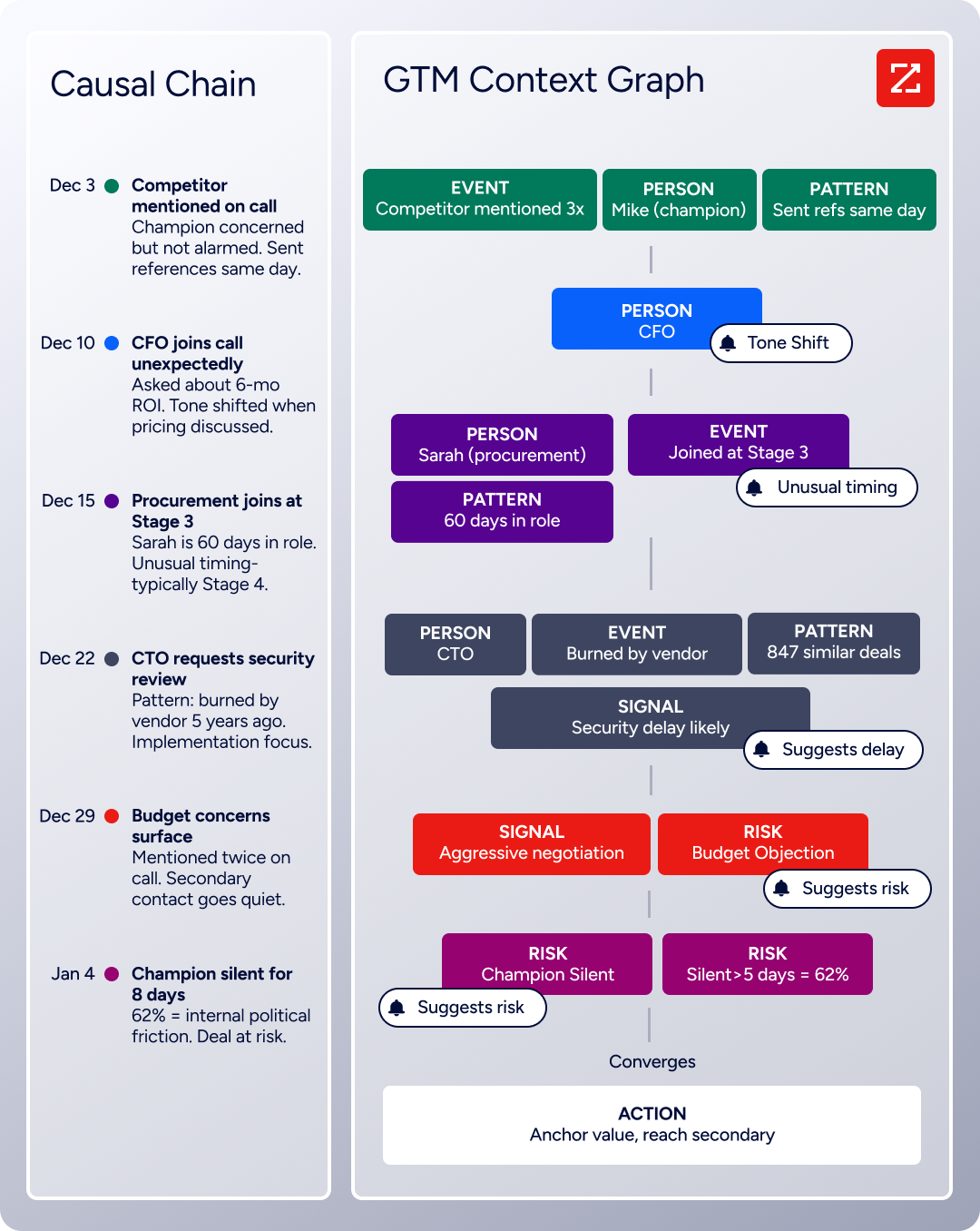
ZoomInfo is an AI-powered GTM platform built on 500M contacts, 100M companies, 135M+ verified phone numbers, and 200M+ verified business email addresses. ZoomInfo's GTM Context Graph fuses this data with your CRM records, conversation transcripts, and behavioral signals to reveal not just what happened in your pipeline, but why.
That intelligence flows into GTM Workspace for sellers, GTM Studio for marketers and RevOps, or into any tool via APIs and MCP. For companies using ConnectWise or Salesforce as their operational backbone, ZoomInfo adds the intelligence layer that tells you which accounts deserve attention and how to win them.
If verified buyer intelligence and AI-driven deal context sound like the missing piece in your stack, see how ZoomInfo works.
ConnectWise vs. Salesforce vs. ZoomInfo at a glance
ConnectWise | Salesforce | ZoomInfo | |
|---|---|---|---|
Core function | MSP operations platform (PSA, RMM, security) | CRM and enterprise application platform | AI-powered GTM intelligence platform |
Built for | MSPs, IT departments, VARs | Sales, service, marketing teams across all industries | Revenue teams (sales, marketing, RevOps) in B2B |
AI capabilities | Ticket triage, scripting assist, predictive IT | Agentforce autonomous agents, Einstein AI | GTM Context Graph, AI-drafted outreach, intent signals |
Sales/prospecting | Basic opportunity tracking in PSA | Full pipeline management, forecasting, CPQ | Buyer intent, verified contacts, AI account intelligence |
Service delivery | Deep (ticketing, RMM, endpoint management) | Service Cloud, Field Service, ITSM | Not a service delivery tool |
Data coverage | Internal client/endpoint data | Customer records you enter | 500M contacts, 100M companies, intent signals |
Integrations | 461 MSP-focused partners | 9,000+ AppExchange apps | 172+ integrations, MCP for AI agents |
Pricing transparency | Opaque (except ScreenConnect) | Published tiers, complex add-ons | Custom-quoted, consumption-based |
Free option | Limited trials | Free Suite (2 users) | ZoomInfo Lite (permanent free tier) |
These platforms solve fundamentally different problems
ConnectWise and Salesforce overlap far less than most head-to-head matchups suggest. They sit on opposite sides of the same business.
ConnectWise operates downstream of the sale.
Once you've won a managed services client, ConnectWise takes over: monitoring their endpoints, resolving their tickets, patching their systems, backing up their data, and generating their invoices. Its value concentrates after the deal closes, in the ongoing delivery and billing of IT services.
Salesforce operates upstream.
It manages the pipeline that produces those clients: tracking leads, automating marketing, managing deals, and forecasting revenue. Its value concentrates before and during the sale, in finding and closing opportunities.
ZoomInfo operates at the top of that funnel and throughout the deal cycle.
Before a prospect enters your CRM, ZoomInfo identifies which companies are researching solutions like yours, surfaces the right contacts, and provides the context that turns cold outreach into informed conversations. The GTM Context Graph processes 1.5B+ data points daily to capture signals that indicate buying readiness, then delivers those insights wherever your team works.
This is why many B2B companies, including MSPs, use all three: ZoomInfo to find and prioritize buyers, Salesforce (or another CRM) to manage the deal, and ConnectWise to deliver the service.
ConnectWise is the deepest MSP operations platform available
ConnectWise's strength is the breadth of its MSP-specific tooling.
No other single vendor covers PSA, RMM, remote access, SIEM, managed EDR, BCDR, email security, vulnerability management, CPQ, payments, documentation, reporting, and customer feedback in one integrated stack.
The PSA handles everything from ticket intake and dispatching to agreement management and billing reconciliation. Service agreements map work to billable contracts automatically, and the Unified Billing Intake module reconciles vendor and service data before invoices go out. For MSPs losing revenue to unbilled time, this integration between service delivery and finance is the core value proposition.
The RMM ships with 1,200+ pre-tuned monitoring conditions calibrated by ConnectWise's own NOC team, covering 7,000+ patchable applications. When an alert fires, a remediation script can run automatically, often resolving the issue before anyone creates a ticket.
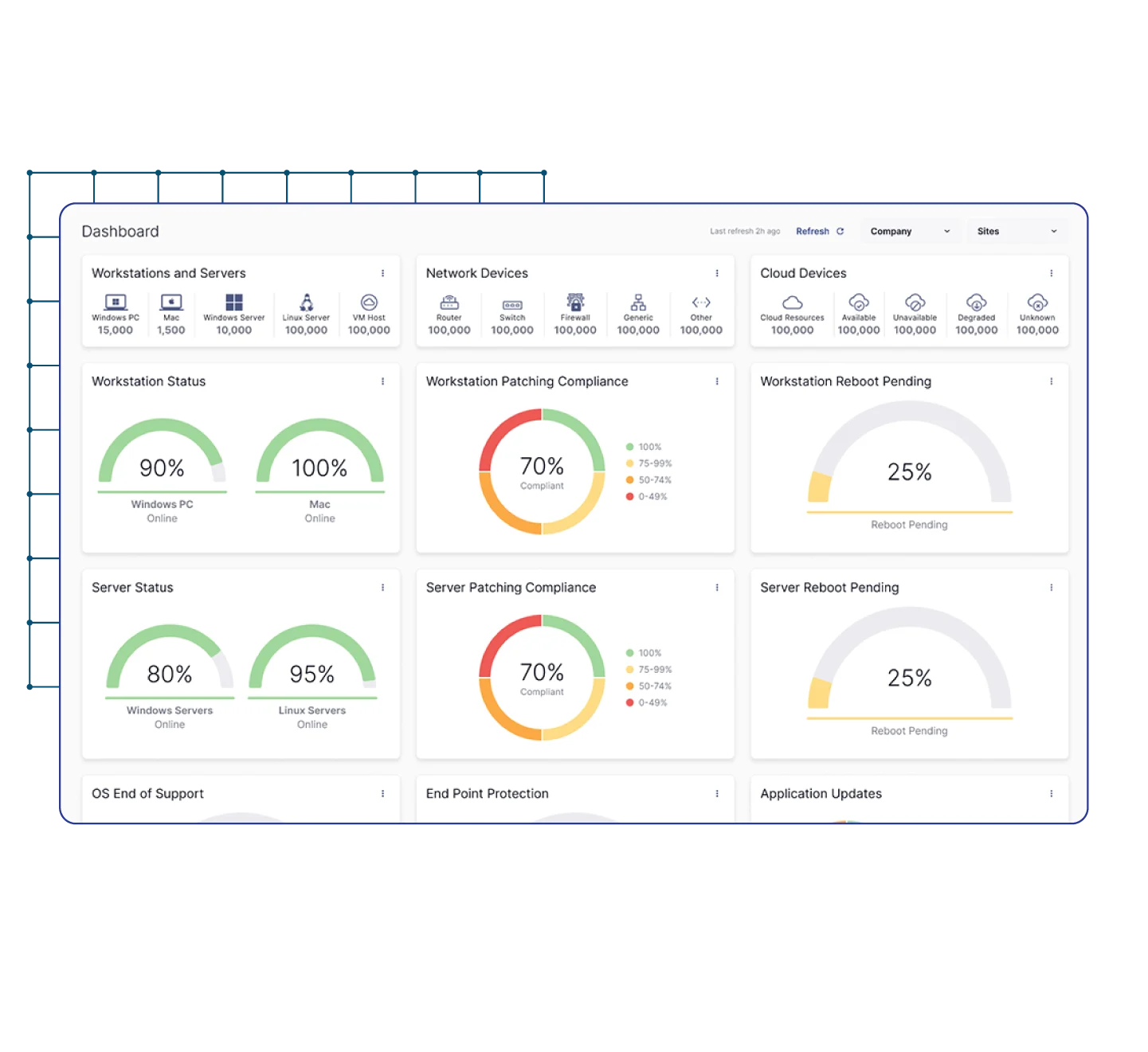
Source: ConnectWise
ScreenConnect earned the 2026 TrustRadius Buyer's Choice Award and uses patented Backstage technology that lets technicians work on a remote machine without interrupting the user's session. It's bundled with every RMM package.
The cybersecurity suite adds SIEM, Managed EDR with a contractual 15-minute response SLA, email security co-branded with Proofpoint, and BCDR with chain-free backup technology. For MSPs that previously stitched together five or six security vendors, consolidating under one data layer matters.
But ConnectWise was not designed for general-purpose CRM or sales pipeline management. Its opportunity tracking exists within the PSA, but it lacks the depth of a dedicated CRM: no marketing automation, no lead scoring, no campaign management, no forecasting models. If your challenge is finding and winning new MSP clients, ConnectWise handles what happens after you win them.
Salesforce dominates CRM and customer engagement
Salesforce approaches business from the opposite direction.
It manages every interaction between your company and your customers, from first touch through ongoing relationship management.
Sales Cloud gives sales teams pipeline visibility, deal tracking, forecasting, and now Agentforce Sales Agents that can prospect, research accounts, and draft follow-ups autonomously. The Revenue Lifecycle Management module covers CPQ, contract lifecycle, and subscription management.
Service Cloud handles customer support across every channel (chat, email, phone, social, WhatsApp) with AI-powered case routing and a knowledge management system.
Marketing Cloud covers B2C cross-channel engagement, B2B marketing automation (formerly Pardot), real-time personalization, and analytics. Commerce Cloud runs B2C and B2B storefronts with 99.99% historical uptime.
The Atlas Reasoning Engine powers agents that resolve support cases, qualify leads, and manage deals without human intervention. Salesforce reports that 85% of its own support requests are resolved without human escalation.
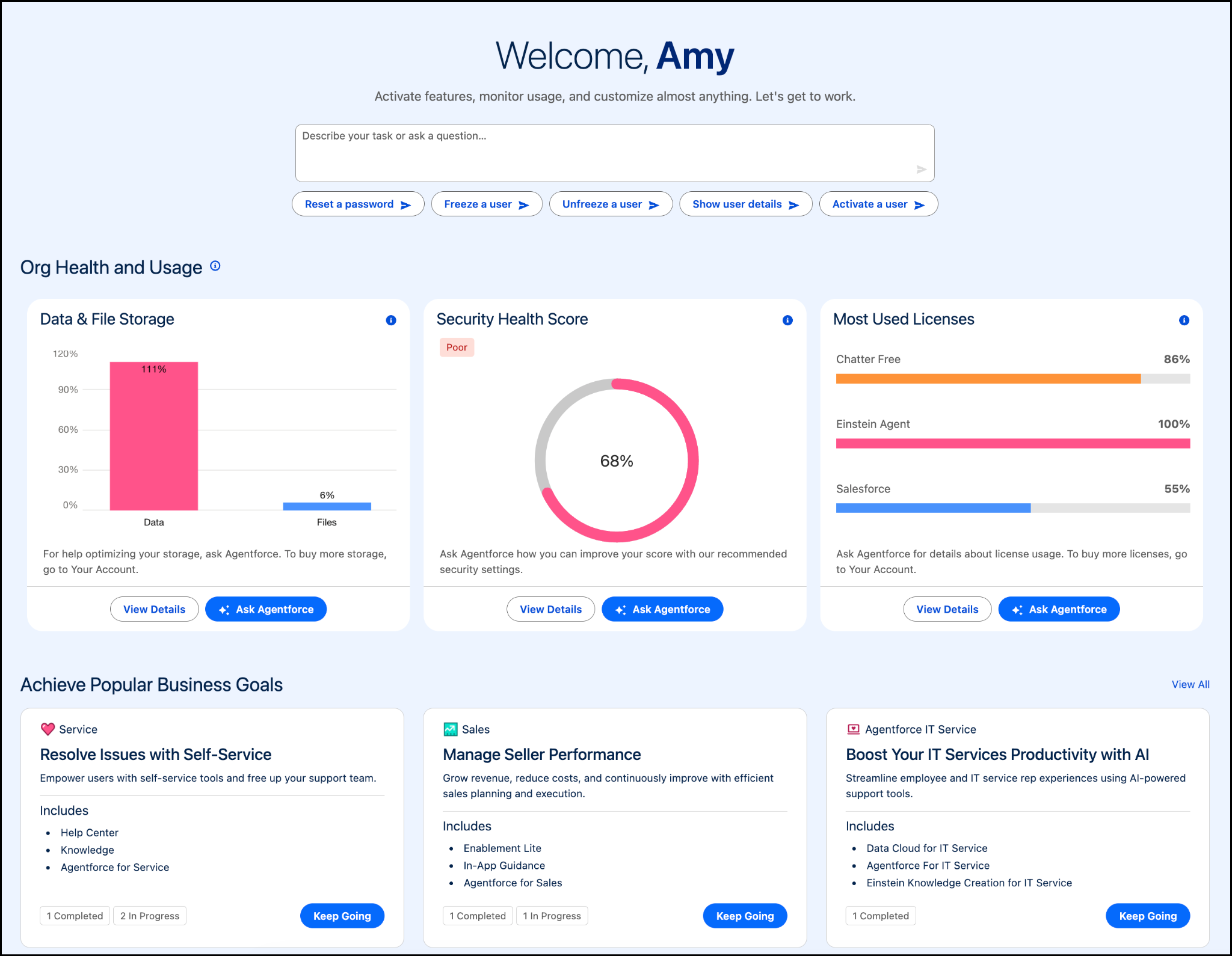
Source: Salesforce
What Salesforce does not do is generate the buyer intelligence that feeds those pipelines. Salesforce manages the contacts and accounts you already know about. It doesn't tell you which companies are researching solutions, which contacts have buying authority, or what signals indicate a deal is about to move. The CRM records state changes, not the reasons behind them.
ZoomInfo adds the intelligence layer both platforms lack
ConnectWise knows your existing clients' endpoints. Salesforce knows your existing contacts' deal stages. ZoomInfo knows the 500M contacts and 100M companies in the B2B landscape, including the ones you haven't met yet, and which of them show buying signals right now.
The difference starts with data verification.
ZoomInfo maintains 135M+ verified phone numbers and 200M+ verified business email addresses through a multi-source pipeline backed by 300+ human researchers, achieving up to 95% accuracy on first-party data.
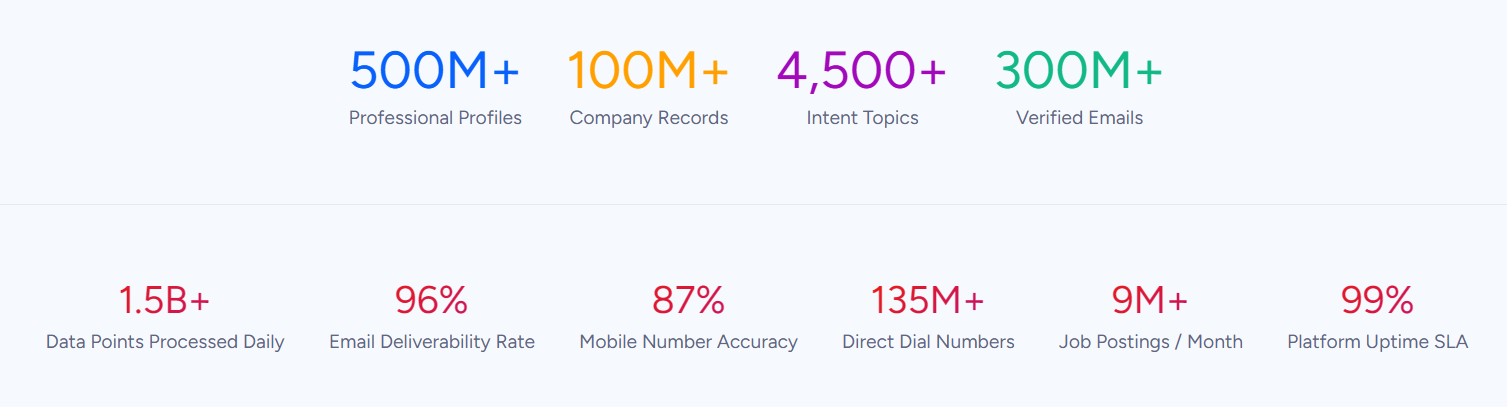
In a Fortune 500 competitive RFP analyzing 25 million contacts across vendors, the independent consultant concluded that "no other competitor came even close."
Buyer Intent tracks signals from 210 million IP-to-Organization pairings and 6 trillion+ new keyword-to-device pairings monthly. Guided Intent, exclusive to ZoomInfo, identifies the topics historically correlated with deal success in your business rather than requiring manual topic selection.
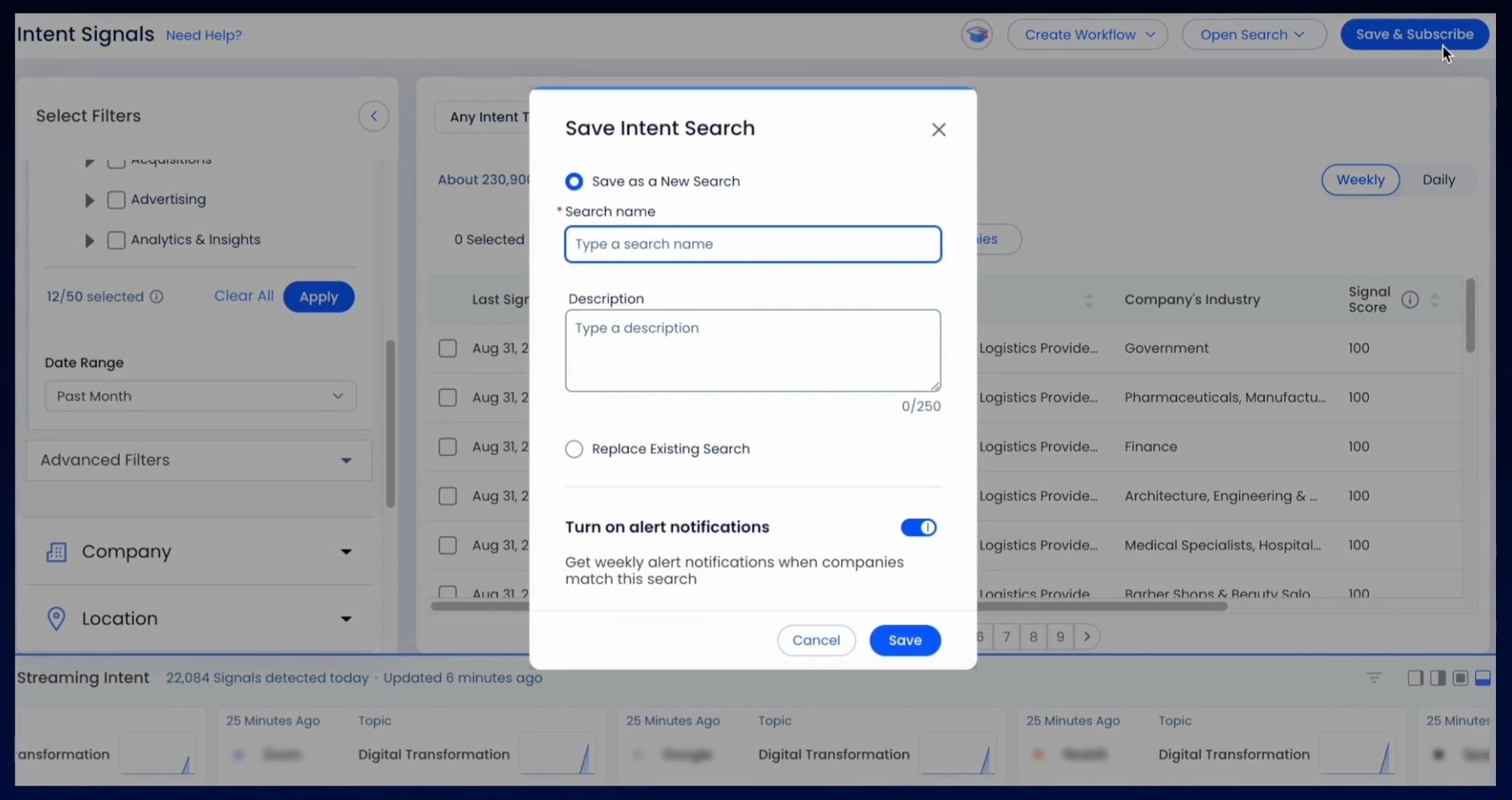
Source: ZoomInfo
Where ZoomInfo diverges from a static database is the GTM Context Graph. This layer fuses ZoomInfo's third-party data with your CRM records, conversation intelligence from Chorus, email interactions, and behavioral signals.
As ZoomInfo's Chief Product Officer Dominik Facher writes: "The CRM recorded the state change. It has no record of why it happened." The GTM Context Graph captures that context, connecting signals, conversations, and outcomes into a graph where AI can reason about go-to-market decisions.
"That combination of our internal CRM data, external signals, and AI that's given all that context has helped us craft very specific account- and persona-based messages. And people have responded to them right away." (Toby Carrington, CBO, Seismic)
For a detailed look at how Salesforce and ZoomInfo compare as complementary tools in a B2B stack, see our Salesforce vs. ZoomInfo comparison.
AI capabilities reflect different missions
All three platforms invest heavily in AI, but each applies it to a different problem.
ConnectWise uses AI to automate IT service delivery.
The zofiQ-powered Triage Agent classifies, labels, prioritizes, and routes incoming tickets through a four-step loop: Interpret, Decide, Execute, Learn. ConnectWise reports an 80%+ reduction in escalations and 25% increase in first-touch resolution.
Sidekick generates PowerShell scripts from natural language, summarizes tickets, and drafts customer emails. The Predictive Intelligence Platform projects 5-12 percentage point margin uplift for a representative $3M revenue MSP.
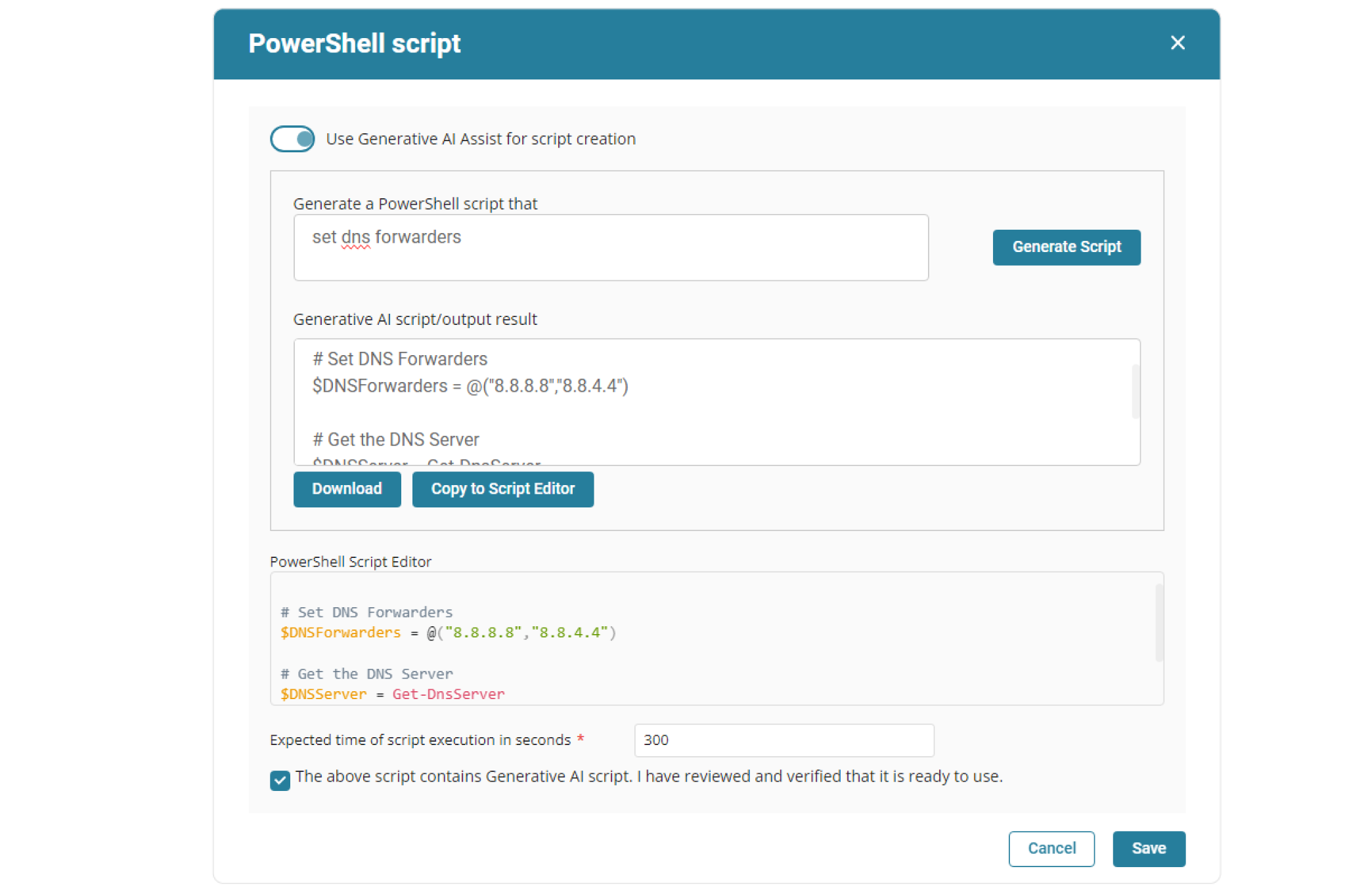
Source: ConnectWise
This AI serves MSP operations. It doesn't find new accounts or accelerate sales cycles. It reduces ticket volume.
Salesforce uses AI to automate customer-facing interactions.
Agentforce agents handle sales prospecting, case deflection, campaign creation, and guided shopping. Pre-built agents cover Service, SDR, Sales Coach, Personal Shopper, Campaign Assistant, and Employee roles. The Einstein Trust Layer provides zero data retention with LLM partners and PII masking. Salesforce has delivered 2.4 billion Agentic Work Units and closed 29,000 Agentforce deals.
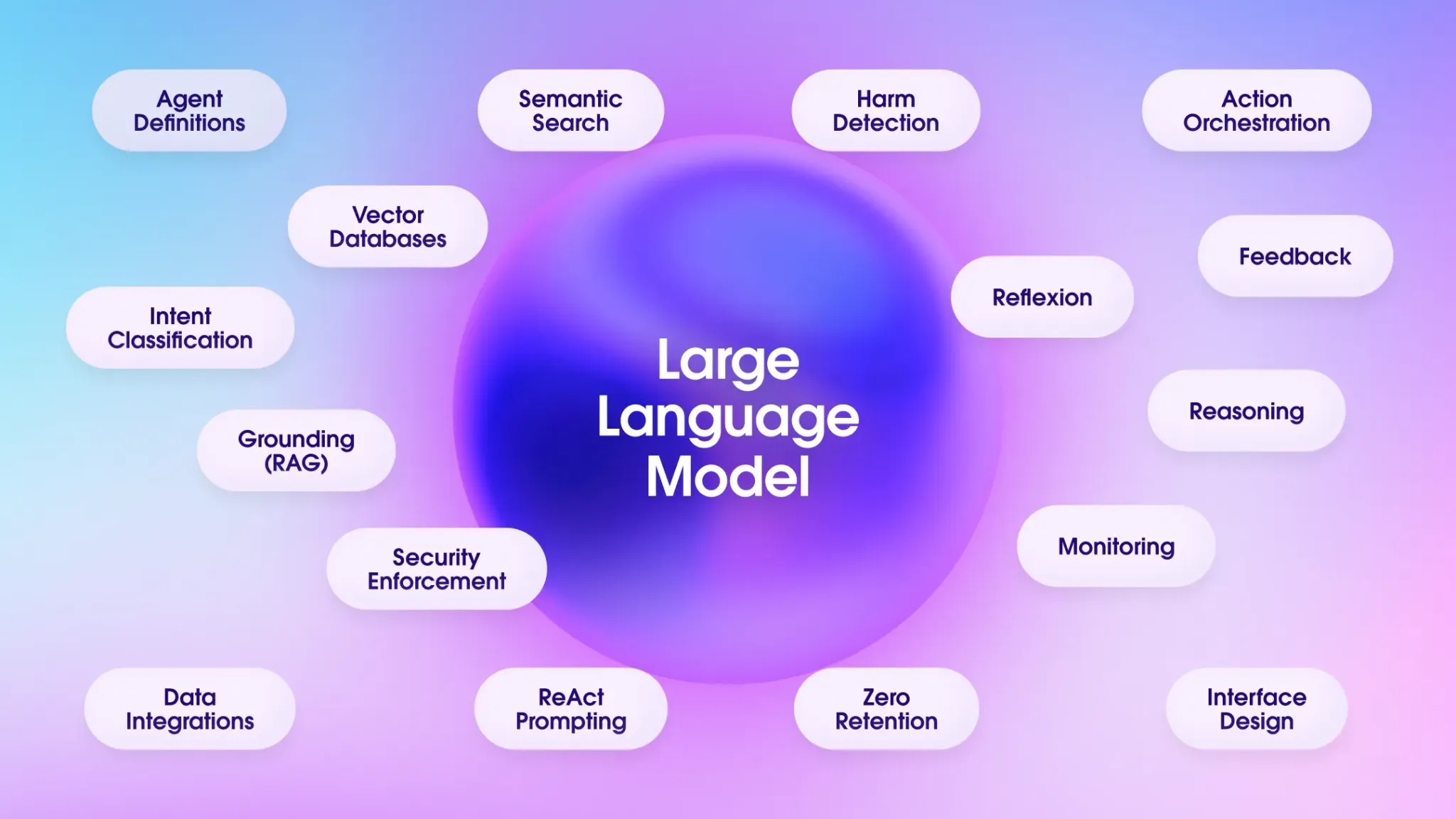
Source: Salesforce
This AI automates workflows on the data already inside Salesforce. It acts well on information it has, but it cannot generate buyer intelligence it doesn't have.
ZoomInfo uses AI to generate buyer intelligence and accelerate revenue.
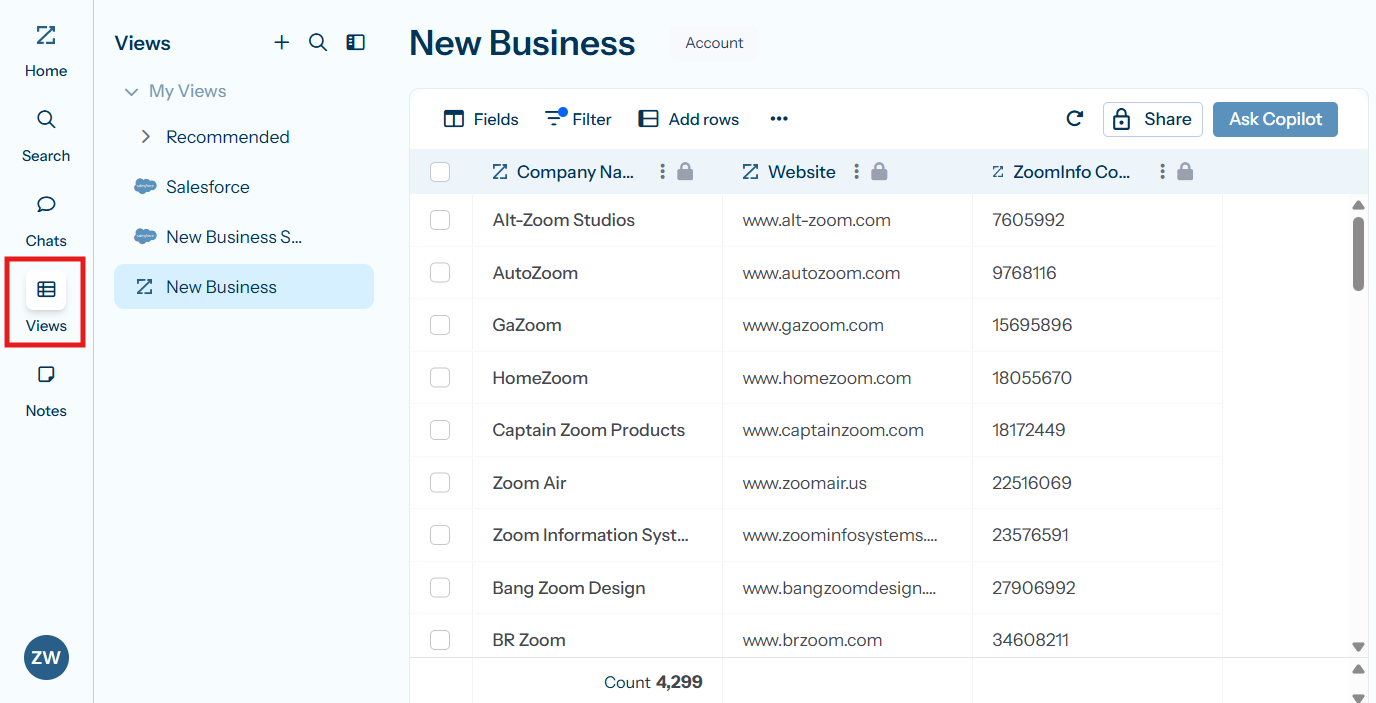
GTM Workspace deploys AI agents that research accounts, generate personalized outreach from deal context, monitor signals across a seller's book of business, and surface next best actions. GTM Studio lets marketers describe audiences in natural language and launch multi-channel plays targeting accounts that match actual win patterns, with plays that improve as prospects respond.
Source: ZoomInfo
The distinction: ConnectWise AI reduces operational costs. Salesforce AI automates existing workflows. ZoomInfo AI generates the intelligence that makes both more effective.
"ZoomInfo's not just a contact data company anymore. They've built a full system of execution. GTM Intelligence works the list, writes the outreach, triggers the play, and helps drive predictable growth." (Ian Brodie, CEO & Co-Founder, Levanta)
Integration and data architecture
How these platforms connect to each other reveals their intended role in the technology stack.
ConnectWise operates as a closed-loop MSP system.
Its 461 marketplace partners are overwhelmingly MSP-focused: RMM tools, security vendors, documentation platforms, and billing connectors. The Asio platform creates a shared data layer across PSA, RMM, and security, so monitoring alerts convert to tickets natively and billing data flows from time entries to invoices without manual reconciliation.
ConnectWise's REST APIs use compound Basic Auth with a mandatory clientId header, with significant documentation behind a partner registration wall.
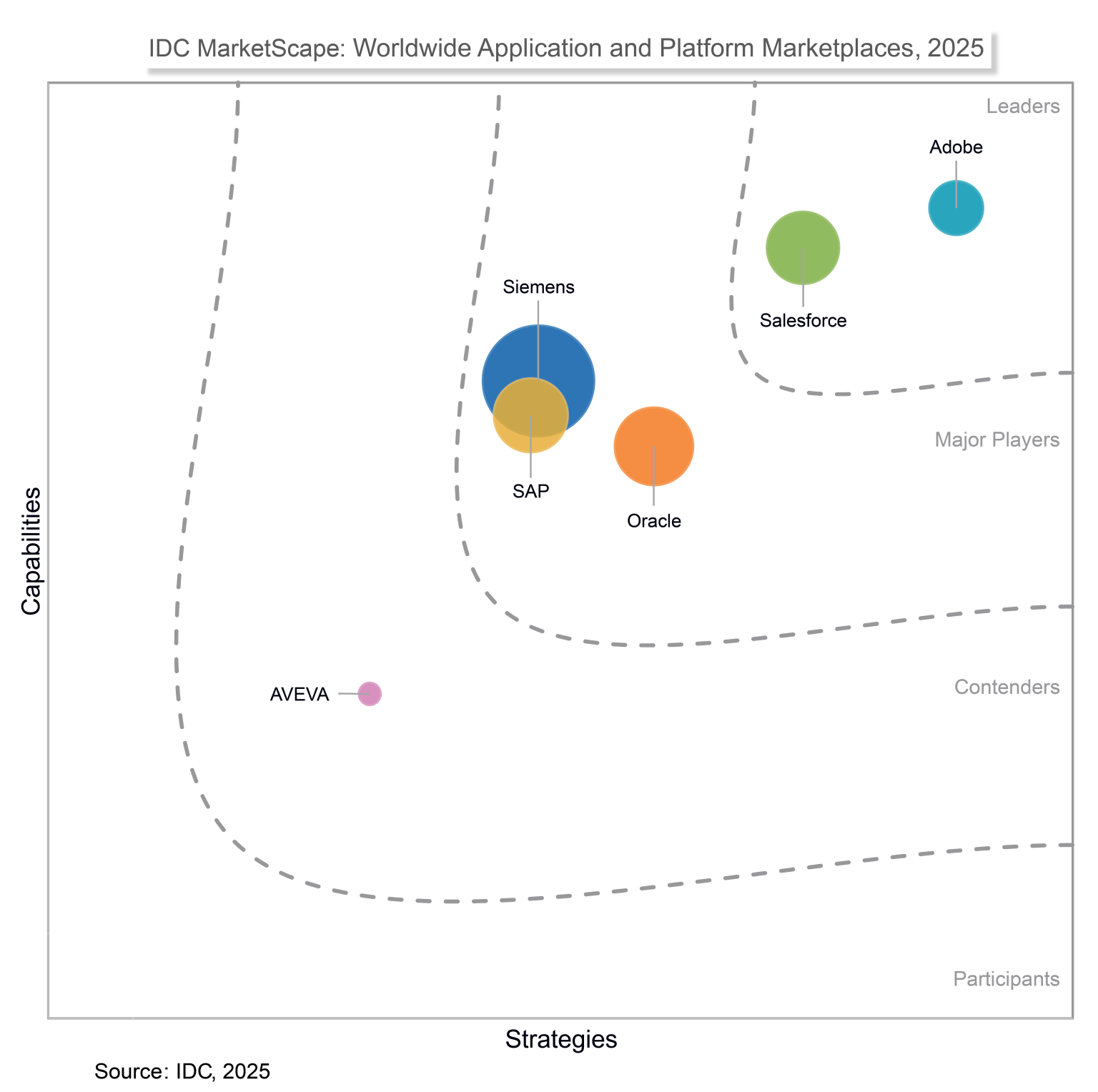
Salesforce has the largest enterprise application ecosystem in CRM.
AppExchange hosts 9,000+ apps with 14+ million installs, and 91% of customers use at least one AppExchange app. MuleSoft provides enterprise integration with hundreds of pre-built connectors. Salesforce APIs span REST, SOAP, GraphQL, Bulk, Streaming, and Pub/Sub, with up to 100,000+ daily API calls on Enterprise plans. The platform works as a hub where other systems push and pull data.
Source: Salesforce
ZoomInfo feeds intelligence into both types of systems.
The ZoomInfo Marketplace lists 172+ integrations across CRM, marketing automation, sales engagement, data warehouses, and AI platforms. Native integrations with Salesforce, HubSpot, and Microsoft Dynamics 365 push enriched data directly into CRM records. Cloud Partners deliver data into AWS, Google Cloud, Snowflake, and Databricks.
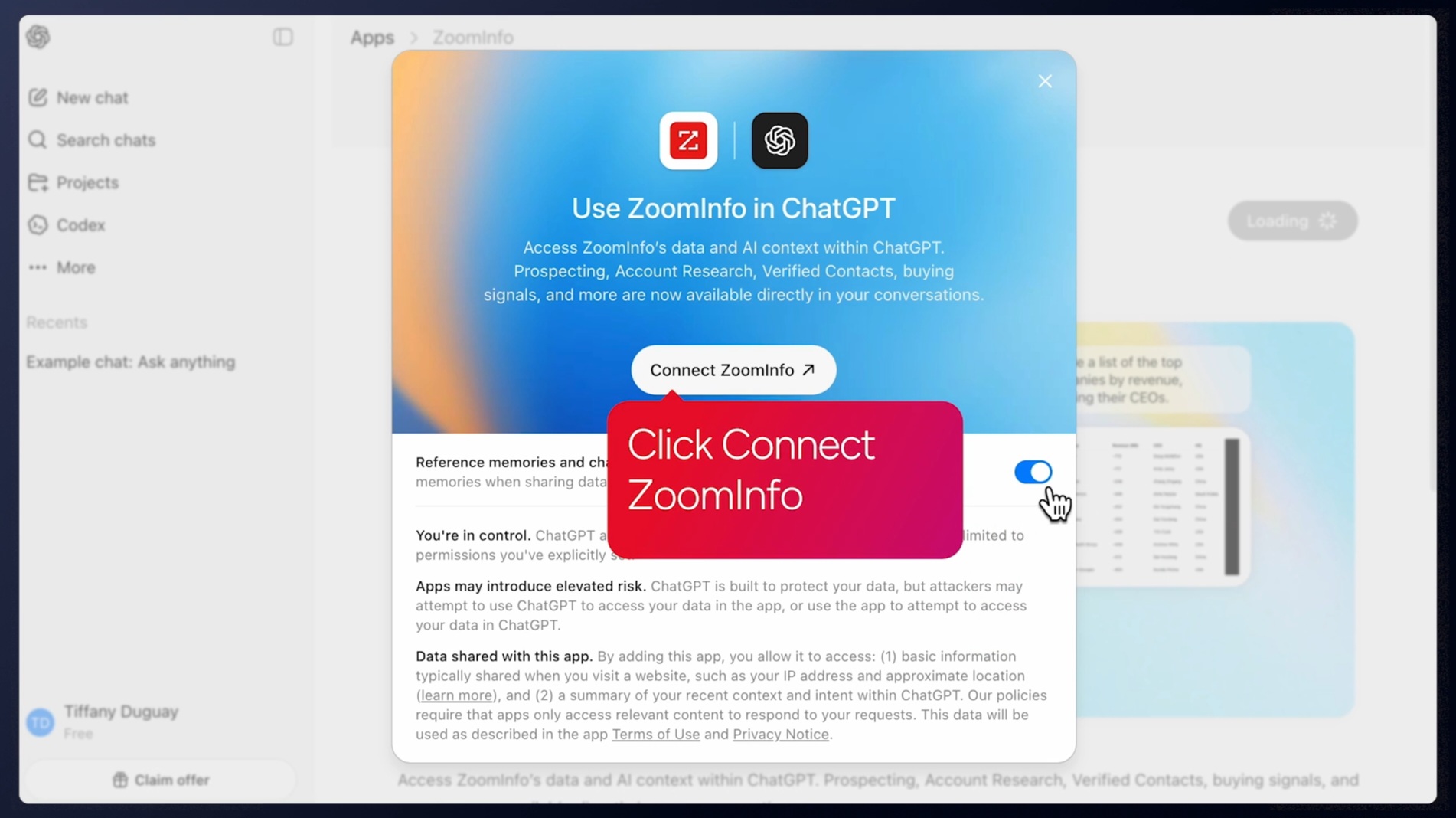
The MCP server connects ZoomInfo's data to AI agents in Claude, ChatGPT, and any MCP-compatible tool, so buyer intelligence flows wherever decisions happen.
Source: ZoomInfo
The practical result: ZoomInfo enriches the CRM data that Salesforce manages, while ConnectWise handles operations in a separate lane. For MSPs, a common architecture puts ZoomInfo's prospecting intelligence into Salesforce (or HubSpot), which manages the sales process, and then ConnectWise takes over service delivery once the deal closes.
Pricing models reveal different business models
Each platform's pricing structure reflects who it serves and how it delivers value.
ConnectWise does not publish pricing for any product except ScreenConnect.
ScreenConnect Remote Support starts at $30/month for a single user (annual only) and scales to $55/month per concurrent technician for Premium. Unattended Access starts at $33/month for 25 agents.
For PSA, RMM, SIEM, EDR, BCDR, and every other product, the pricing page shows only "Request a Quote." Capterra reviewers note that total cost of ownership can grow faster than revenue when layering the full suite.
Salesforce publishes tiered pricing, but the total cost builds quickly.
Sales Cloud and Service Cloud each range from Free (2 users) through Starter ($25/user/month) to Unlimited ($350/user/month). Marketing Cloud starts at $1,500/org/month. Agentforce consumption costs $2 per conversation or $500 per 100,000 Flex Credits. Data Cloud charges $500 per 100,000 credits. Premier Support adds 30% of net license fees.
With over 70% of implementations partner-led, implementation costs must be budgeted separately.
ZoomInfo uses custom-quoted, consumption-based pricing with no published dollar amounts.
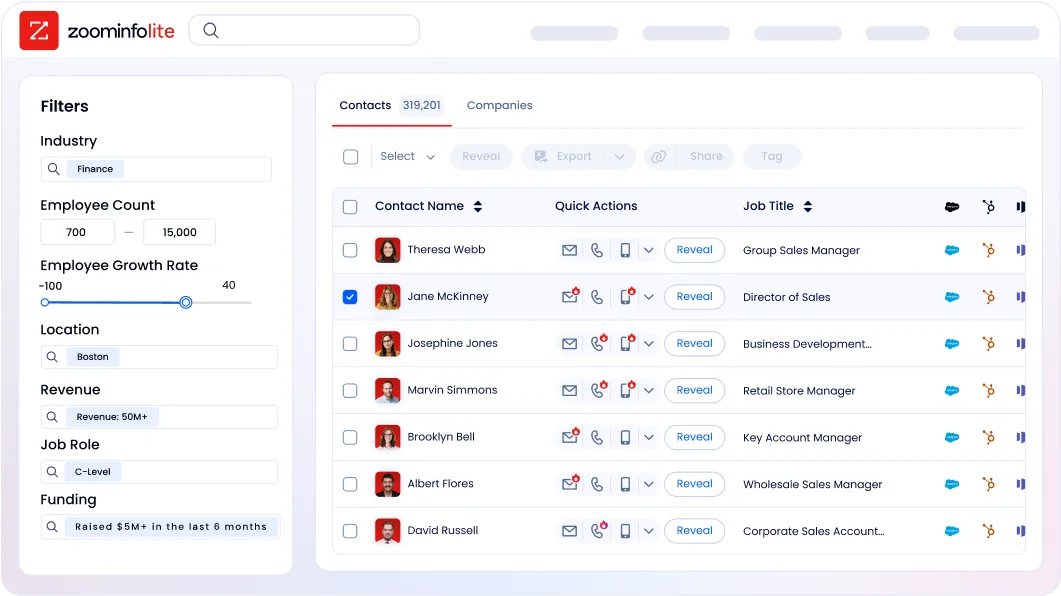
Pricing scales around seats, credit volume, features, and contract length. Three product lines (Sales, Marketing, and Operations) each offer tiered packaging from Professional through Enterprise. ZoomInfo Lite is a permanent free tier with access to the B2B database, 10 monthly export credits, and basic search. A 7-day free trial of the full platform is also available.
The takeaway: ConnectWise and Salesforce are operational platforms where cost scales with team size and usage. ZoomInfo is an intelligence investment where ROI shows up in pipeline generated and deals accelerated.
The learning curve and implementation reality
ConnectWise has the steepest onboarding of the three.
PSA implementation follows three stages over 5 to 16 weeks, and reviewers consistently cite the need for a "dedicated admin."
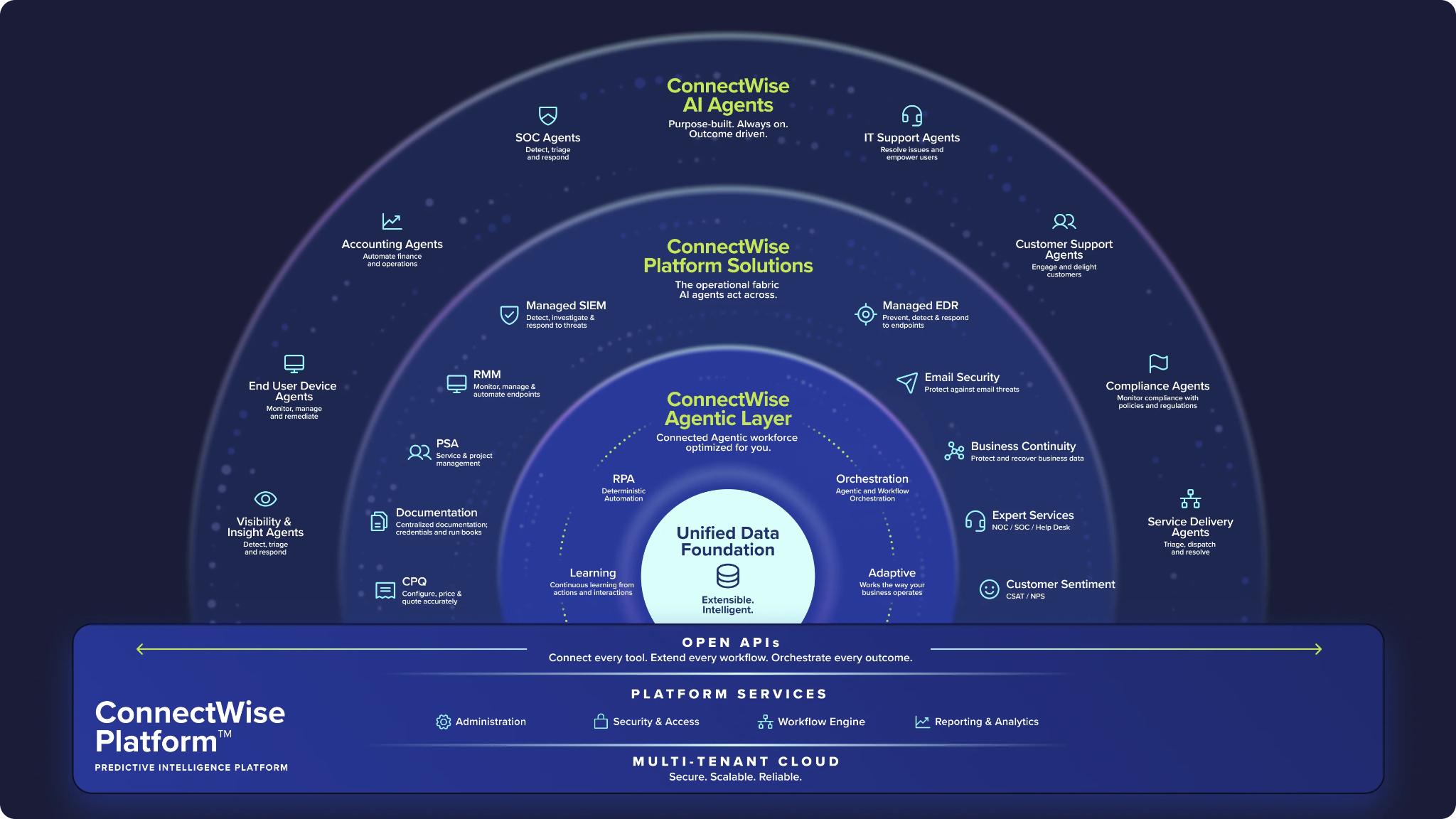
ConnectWise has modernized the interface through the Asio platform, claiming 40-60% faster task execution and 66% reduction in training time for partners on the new system, but legacy Manage users face a migration that requires significant script rewriting and workflow rebuilding. Full product documentation at docs.connectwise.com requires an active partner login.
Source: ConnectWise
Salesforce requires trained administrators for meaningful customization.
Trailhead provides 1,500+ badges and 6+ million learners, making self-education accessible. Implementation timelines range from weeks for simple Sales Cloud deployments to 3-12 months for enterprise multi-cloud configurations. The platform's depth is both its advantage and its complexity.
ZoomInfo redesigned its onboarding from 30 to 90 days, producing a 25% improvement in customer satisfaction scores.
ZoomInfo University provides role-specific learning paths. CEO Henry Schuck has noted that GTM Workspace "deploys in weeks, not months". The permanent free tier (ZoomInfo Lite) lets teams evaluate data quality before committing.

"Without ZoomInfo, it would be extremely difficult, if not impossible, to achieve our business objectives. Without it, we wouldn't be able to understand the market, have the right contact data, and make meaningful connections." (Thor Sanderson, Senior Manager of Sales Technology Enablement, Smartsheet)
Security and compliance comparison
ConnectWise holds SOC 2 assessments across major product categories, with ISO 27001, ISO 27701, and CSA STAR Level 2 certifications for Cloud Backup and SaaS Security.
ScreenConnect offers on-premises deployment for organizations with strict data sovereignty requirements, supporting HIPAA, PCI DSS, CJIS, and FIPS compliance. ConnectWise has committed to a "Secure by Design" pledge with MFA and audit logging on by default.
However, the CVE-2024-1709 ScreenConnect vulnerability (CVSS 10.0), exploited by ransomware actors in 2024, highlighted the security risks inherent in remote access platforms.
Salesforce maintains ISO 27001/27017/27018, SOC 1/2/3, FedRAMP (Government Cloud), and HITRUST certifications.
Source: Salesforce
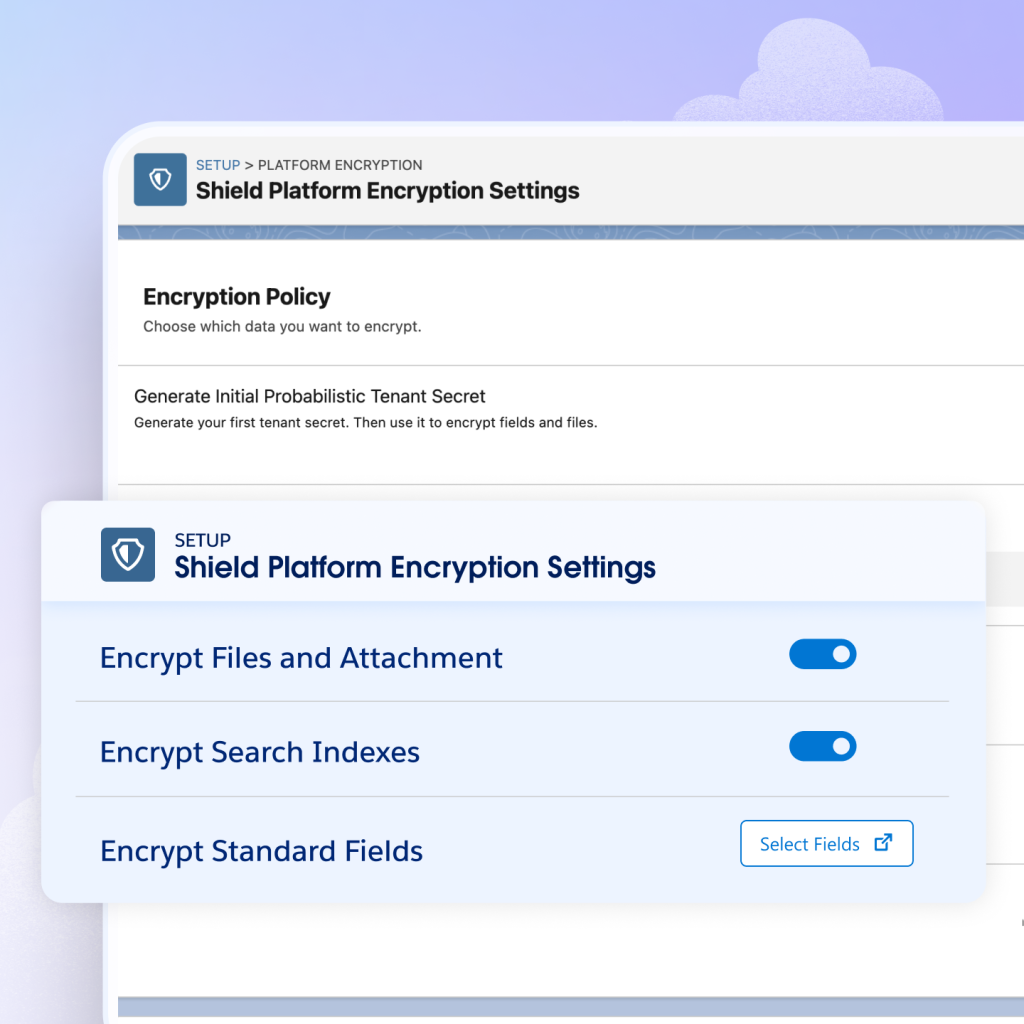
Salesforce Shield adds event monitoring, platform encryption with BYOK, and field audit trail. Hyperforce enables regional data residency on public cloud infrastructure. The Einstein Trust Layer provides zero data retention with LLM partners, making it relevant for regulated industries deploying AI agents.
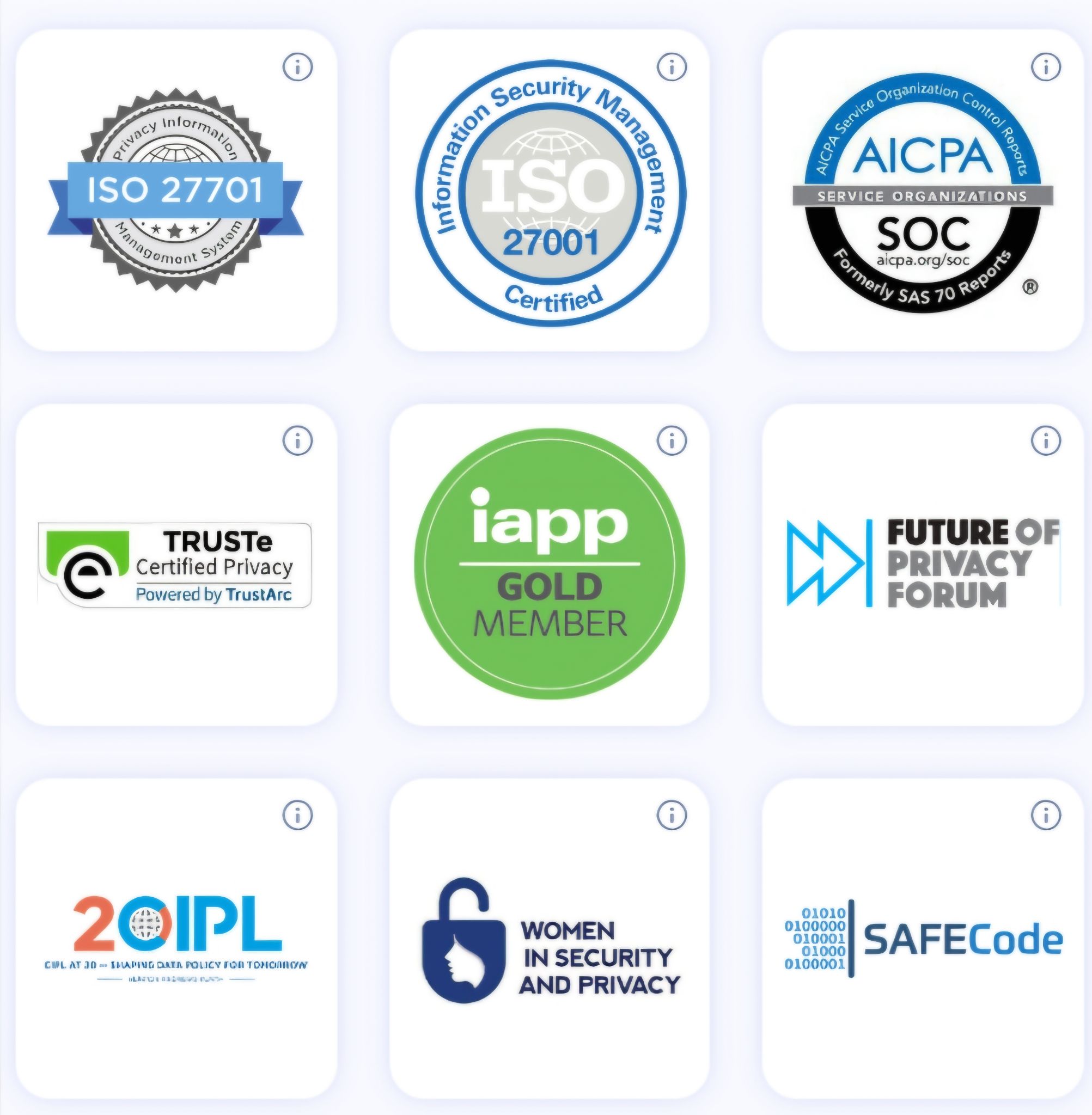
ZoomInfo holds ISO 27001, ISO 27701, SOC 2 Type II, TRUSTe GDPR, and TRUSTe CCPA certifications, all renewed annually.
Source: ZoomInfo
The company is a registered data broker in California and Vermont. For enterprises in regulated industries evaluating data providers, this compliance infrastructure is built into the data layer itself, not added after the fact.
ConnectWise vs. Salesforce vs. ZoomInfo: Which should you choose?
The right answer depends on where your primary operational challenge sits.
Choose ConnectWise if:
You're an MSP or IT department managing client endpoints and service delivery
You need PSA, RMM, remote access, and cybersecurity under one vendor
Ticket automation, patch management, and billing reconciliation are your daily pain points
You're willing to invest in a steep implementation for deep MSP-specific functionality
Your sales and marketing needs are secondary to service delivery operations
Choose Salesforce if:
You need a CRM for managing sales pipelines, customer service, and marketing campaigns
Your organization spans multiple departments that need shared customer data
You want the broadest ecosystem of third-party apps and enterprise integrations
You have the budget and administrative resources for a full enterprise platform deployment
Industry-specific workflows and compliance requirements matter to your business
Choose ZoomInfo if:
Your top priority is finding and winning new business, not just managing existing relationships
You need verified buyer contact data, direct dials, and business emails that work
You want intent signals that tell you which accounts are researching solutions now
Your team needs AI that understands deal context, not just CRM field values
You want intelligence that works inside your existing tools via API, MCP, or native integrations
Start with ZoomInfo Lite for free, or request a demo of the full platform.
These platforms aren't competing for the same budget. ConnectWise runs service delivery for IT businesses. Salesforce manages customer relationships across industries. ZoomInfo generates the buyer intelligence that makes both more effective.
The most successful B2B organizations treat them as complementary layers: ZoomInfo provides the intelligence foundation, the CRM manages the relationship, and the operational platform delivers the service.
The question isn't which one to choose. It's which combination matches how your business wins and retains customers.
ConnectWise vs. Salesforce vs. ZoomInfo FAQ
What is the core difference between ConnectWise, Salesforce, and ZoomInfo?
ConnectWise is an operations platform built for managed service providers, combining ticketing, remote monitoring, endpoint management, cybersecurity, and billing into one system.
Salesforce is the world's largest CRM platform, managing sales pipelines, customer service, marketing campaigns, and commerce across all industries.
ZoomInfo is an AI-powered GTM intelligence platform that provides verified B2B contact data, buyer intent signals, and contextual deal intelligence to help revenue teams find and win new business.
Can these platforms work together?
Yes, and many B2B organizations use them in combination. ZoomInfo integrates natively with Salesforce to enrich CRM records with verified contact data and intent signals.
ConnectWise handles service delivery after deals close.
ZoomInfo also offers API and MCP access that can feed intelligence into any system, including custom tools built on Salesforce or alongside ConnectWise.
Which platform is best for an MSP looking to grow its client base?
ConnectWise excels at running MSP operations but has limited sales and marketing capabilities.
Salesforce provides CRM and pipeline management.
ZoomInfo offers the prospecting intelligence layer (500M contacts, 135M+ verified phone numbers, buyer intent signals, and AI-drafted outreach) that helps MSPs identify and engage potential clients before competitors reach them. The combination of ZoomInfo for prospecting and ConnectWise for delivery is common in the MSP market.
How does pricing compare across the three platforms?
ConnectWise does not publish pricing for most products; ScreenConnect Remote Support starts at $30/month per concurrent technician.
Salesforce publishes tiered pricing, with Sales Cloud ranging from free (2 users) to $350/user/month for Unlimited, though add-ons like Agentforce, Data Cloud, and Premier Support can increase total cost significantly.
ZoomInfo uses custom-quoted, consumption-based pricing with no published dollar amounts, though a permanent free tier (ZoomInfo Lite) and 7-day trial are available.
Which platform has the best AI capabilities?
Each platform's AI serves a different purpose. ConnectWise AI automates IT service delivery, with ticket triage in 9 seconds and automated endpoint remediation.
Salesforce Agentforce provides autonomous agents for sales, service, and marketing workflows, with $800M ARR and 29,000 deals closed.
ZoomInfo's GTM Context Graph generates buyer intelligence by fusing CRM data, conversation transcripts, and third-party signals to reveal why deals move, powering AI-drafted outreach and account prioritization.
Do any of these platforms provide verified B2B contact data?
Only ZoomInfo provides a verified B2B contact database at scale. ZoomInfo maintains 500M contacts, 100M companies, 135M+ verified phone numbers, and 200M+ verified business email addresses, with up to 95% accuracy on first-party data.
ConnectWise tracks data for existing managed clients but does not provide prospect intelligence.
Salesforce stores whatever contact data users or integrations enter, but does not independently verify or source B2B contacts.
Which platform is easiest to implement?
ZoomInfo deploys fastest, with GTM Workspace launching in weeks and ZoomInfo Lite available immediately at no cost.
Salesforce varies widely: simple Sales Cloud deployments can go live in weeks, while multi-cloud enterprise implementations take 3-12 months and typically require partner support.
ConnectWise has the most complex implementation, with PSA setup spanning 5-16 weeks and reviewers noting the need for a dedicated administrator.
Which platform is best for companies outside the IT services industry?
Salesforce and ZoomInfo serve B2B companies across all industries. ConnectWise is built for MSPs, IT departments, and VARs, with billing structures, service agreement logic, and monitoring tools specific to managed services.
Organizations outside IT services would typically combine Salesforce (for CRM) with ZoomInfo (for buyer intelligence) rather than using ConnectWise.
More Salesforce matchups worth a look:
