
All go-to-market teams rely on accurate, complete, and timely data to drive revenue.
From what I saw during my brief stint in sales, lead and account records are often riddled with missing fields, outdated job titles, or duplicate entries. And that's where data enrichment tools and software come in.
These platforms automatically supplement CRM or MAP records with verified business information, so the data is accurate, current, and most importantly, actionable. Whether you're prioritizing target accounts, routing inbound leads, or improving segmentation, enriched data makes your go-to-market motion more precise.
How We Evaluated These Data Enrichment Tools
We assessed the platforms listed below based on a defined set of criteria:
Data accuracy and verification methodology: How does the enrichment software compare in accuracy rate based on reviews, and how do they verify their data?
Match rate methodology: Distinguishing match rate from accuracy rate
How often the data is refreshed: Refresh frequency, breadth of data types (contact, firmographic, technographic, intent)
Data enrichment method: Enrichment architecture (waterfall vs. batch vs. real-time)
Integration capabilities: Native CRM and MAP integrations, and use of the data through API, MCP, or CLI.
User feedback: From third-party review sources including G2 and TrustRadius.
Quick Table Comparison
Here's how the best data enrichment tools compare across key dimensions:
Platform | Key Strength | Data Types | Pricing Model | Best For |
|---|---|---|---|---|
ZoomInfo | Parallel waterfall enrichment via GTM Studio with Intelligent Scoring across 25+ vendors | Contact, company, technographic, intent | Free to start with consumption credits based on usage | Enterprise teams requiring comprehensive B2B intelligence |
Breeze Intelligence | Real-time API enrichment for marketing automation | Firmographic, technographic, contact | Credit-based (HubSpot Credits) | Growth teams focused on form enrichment and visitor identification |
Apollo | Combined prospecting database and enrichment | Contact, company, engagement data | Seat-based ($49/$79/$119) | Sales teams running outbound sequences |
Lusha | Chrome extension for instant contact enrichment | Contact, firmographic | Seat-based ($37.45-$299.95) | SMB sales teams and individual sellers |
Cognism | GDPR-compliant data with EMEA coverage | Contact, firmographic, mobile numbers | Enterprise-quote | International teams requiring compliant data |
6sense | Predictive analytics and buying stage signals | Intent, firmographic, technographic | Enterprise-quote | ABM teams prioritizing high-intent accounts |
Seamless.AI | Real-time contact search engine | Contact, email verification | Seat-based (free tier available) | SDR teams focused on prospecting velocity |
Demandbase | Account-based enrichment with advertising integration | Firmographic, technographic, intent | Enterprise-quote | Enterprise ABM programs |
Clay | Waterfall enrichment across 150+ data providers | Contact, company, custom data sources | Usage-based ($0-$495/mo) | Teams building automated enrichment workflows |
LeadIQ | LinkedIn prospecting with job change tracking | Contact, job change alerts | Seat-based | Outbound teams focused on relationship-based selling |
Crunchbase | Funding and startup data | Funding announcements, growth outlook | Seat-based ($49-$199), custom plan also available | Investor teams who need funding data |
1. ZoomInfo
ZoomInfo is an all-in-one AI GTM Platform that combines the largest continuously verified B2B database (500M+ contacts, 100M+ companies) with intelligence, automation, and engagement capabilities under a single platform. The platform enriches CRM and MAP records in real time, filling missing fields with accurate contact and company data through native HubSpot data enrichment and integrations with Salesforce and other core GTM systems. Customizable enrichment rules and field mapping allow revenue operations teams to define exactly which fields get populated, in what order, and under what conditions, reducing manual data entry and improving record completeness at scale.
Underneath the enrichment layer sits the GTM Context Graph, a reasoning layer that processes 1.5B+ data points daily by fusing B2B contact and company data with CRM records, conversation intelligence from Chorus, and behavioral signals. The GTM Context Graph does not just enrich records; it reasons across these data layers to surface why an account is likely to buy now, not just what a contact's title is. For RevOps teams building scoring models or routing logic, this cross-signal reasoning replaces the manual CSV joins across four systems that most teams rely on today.
How ZoomInfo enrichment works
A key differentiator is how ZoomInfo handles waterfall enrichment inside GTM Studio. Rather than querying providers sequentially and stopping at the first match (the traditional waterfall approach), GTM Studio starts with ZoomInfo's proprietary database and automatically bridges remaining gaps using 25+ additional third-party vendors queried in parallel. Intelligent Scoring then selects the highest-confidence match across all sources, not just the first result returned. This eliminates the first-match quality limitations that affect traditional sequential waterfalls, and it removes the operational overhead of manually managing vendor priority logic, API keys, and enrichment routing. The result is higher match rates and higher-confidence data without RevOps having to build or maintain the enrichment stack themselves.
GTM Workspace extends enrichment into signal-based selling workflows. AI agents inside GTM Workspace automatically enrich profiles based on buyer intent, technographics, and org charts, then route records based on in-market behavior. Marketing and sales teams can prioritize accounts using dynamic buying signals, ensuring leads arrive at the right rep already complete and qualified.
ZoomInfo customer outcomes
Sendoso (data quality + pipeline): Sendoso reduced inaccurate data by 70% after implementing ZoomInfo's data enrichment. Their CRM had become a mix of incomplete records, duplicates, and outdated contacts. The results: more than 1,100 hours saved in manual enrichment efforts, a 10% increase in access to ICP contacts, and $4.9 million in new pipeline generated in two quarters.
Momentive (speed-to-lead): Momentive compressed speed-to-lead to 60 seconds, down from 20 minutes. When an inbound lead arrives, enrichment fires, the routing rule evaluates a complete record, and the rep receives a fully qualified lead before the prospect has moved on.
Outreach (connect rates): Outreach lifted connect rates 7x using ZoomInfo's verified direct dials, demonstrating how data quality at the enrichment layer translates directly into downstream sales outcomes.
ZoomInfo maintains ISO 27001, ISO 27701, SOC 2 Type II, and TRUSTe GDPR/CCPA compliance while delivering measurable outcomes in pipeline velocity and conversion rates. The platform synchronizes bi-directionally with Salesforce, HubSpot, Outreach, Salesloft, and other GTM tools, keeping data current across the entire tech stack.
Key Features:
Parallel waterfall enrichment via GTM Studio, querying 25+ vendors simultaneously with Intelligent Scoring to return highest-confidence matches
Enrichment across contact, company, technographic, and intent data fields
Automatic CRM updates with customizable enrichment rules and field mapping
CRM enrichment with bi-directional sync across Salesforce, HubSpot, and other systems
GTM Studio-driven lead scoring and routing based on dynamic buying signals
Access to 500M+ contacts, 100M+ companies, and 1.5B+ data points processed daily
AI agents inside GTM Workspace for enriched profiles, account prioritization, and workflow automation
API access and MCP integration for AI agent builders, with MCP available through Anthropic Claude and Google
Org chart mapping and technographic insights for account-based strategies
ISO 27001, ISO 27701, SOC 2 Type II, and TRUSTe GDPR/CCPA compliance with enterprise-grade security
Pricing: Free to start with consumption credits based on usage.
Get a demo to see how GTM Studio's parallel waterfall enrichment can consolidate your enrichment stack.
2. Breeze Intelligence (Clearbit)
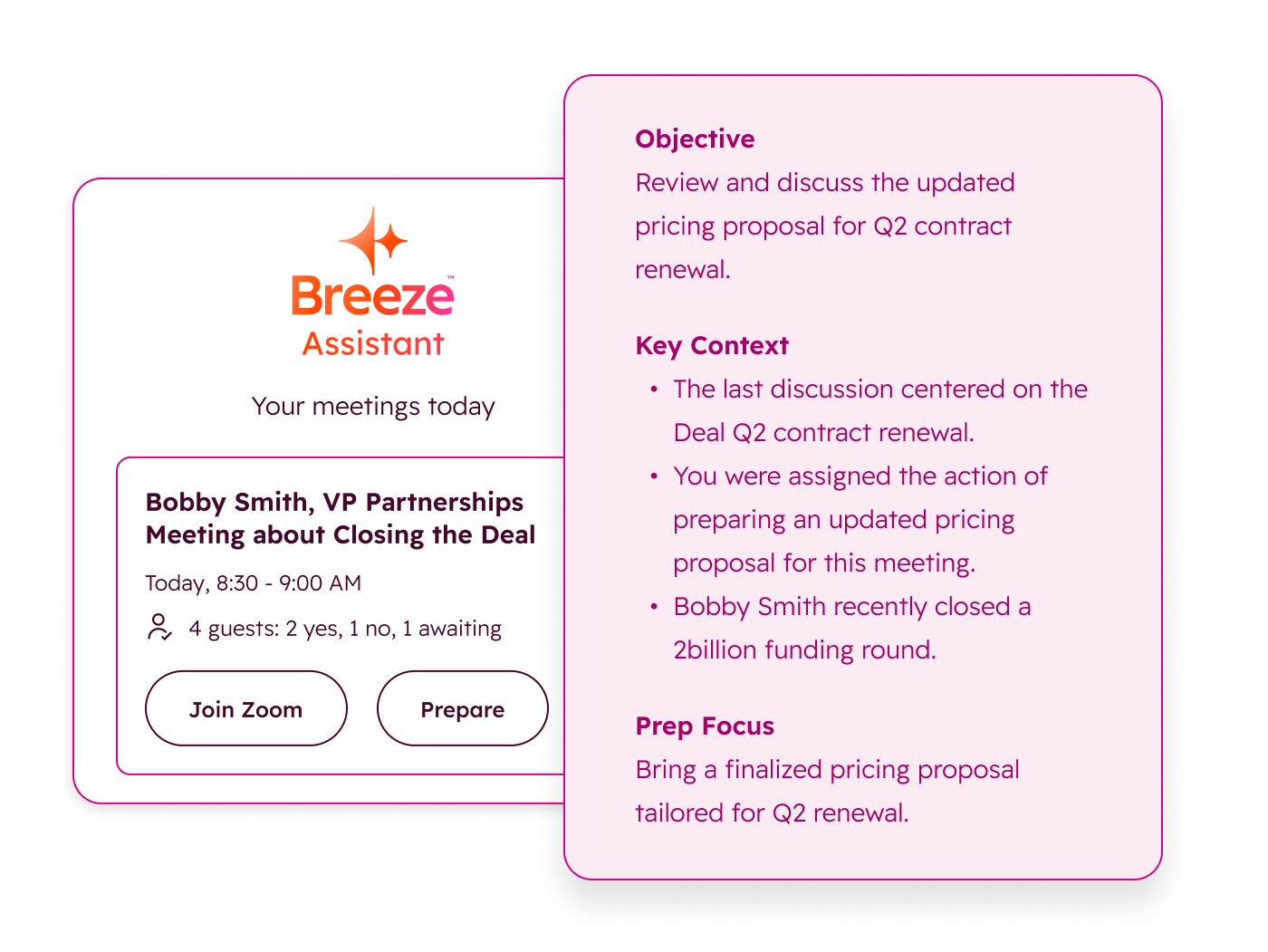
Breeze Intelligence provides real-time data enrichment focused on marketing and growth teams. Breeze Intelligence Data Enrichment indexes 100M+ company domains and 380M email addresses, enriching contact and company records with firmographic and technographic context through native HubSpot CRM integration or API connections.
The platform specializes in form enrichment, automatically populating hidden fields when prospects submit contact information. This capability reduces form friction significantly: shortening forms from 7 fields to 3 has been shown to increase completion rates by 30-50%, making it a genuine differentiator for demand generation teams optimizing conversion. Breeze Intelligence also offers visitor identification, revealing which companies are browsing your website before they convert, enabling earlier outreach and account-based targeting.
The API-first architecture supports custom enrichment workflows for technical teams. The platform maintains firmographic and technographic fields covering company size, industry, funding, technology stack, and employee data. Integration with HubSpot, Salesforce, Marketo, and other marketing automation platforms enables automated segmentation and scoring based on enriched attributes. For growth teams that live inside HubSpot's ecosystem, the native alignment between Breeze Intelligence and HubSpot's CRM reduces the integration overhead that often slows enrichment adoption.
Key Features:
Real-time CRM enrichment within seconds via API or native integrations
100M+ company domains and 380M email addresses indexed
Configurable field handling per attribute
Form enrichment to reduce friction and capture hidden data
Visitor identification for anonymous website traffic
Account identification and lead scoring tools
Native sync with Salesforce, HubSpot, and Marketo
Technology stack tracking for technographic targeting
Company hierarchy and parent-subsidiary mapping
Strengths:
Native HubSpot CRM integration is a genuine advantage for HubSpot-native teams, with enrichment, form shortening, and visitor identification bundled under shared HubSpot Credits
Form enrichment capability (7 fields to 3) with measurable conversion rate improvement
Real-time API enrichment with sub-second response times
Limitations:
Breeze Intelligence is gated behind a paid HubSpot Hub subscription; teams not on HubSpot cannot access the enrichment layer
No verified phone numbers or direct dials at ZoomInfo's scale
No stand-alone data licensing for non-HubSpot environments (cannot license data into Snowflake, BigQuery, or non-HubSpot CRMs independently)
Pricing: Credit-based pricing through HubSpot Credits, bundled with HubSpot Hub subscriptions.
How Clearbit compares against ZoomInfo
Clearbit (now Breeze Intelligence) is the strongest fit for teams fully committed to HubSpot's ecosystem, with native CRM enrichment, form shortening, and visitor identification bundled under shared HubSpot Credits.
ZoomInfo's edge is 500M contacts vs. Breeze Intelligence's 100M+ company domains and 380M email addresses, with 135M+ verified phone numbers Breeze does not offer, CRM-agnostic enrichment across Salesforce, HubSpot, and other systems vs. HubSpot-only licensing, and GTM Studio parallel waterfall enrichment querying 25+ vendors vs. single-source enrichment.
3. Apollo
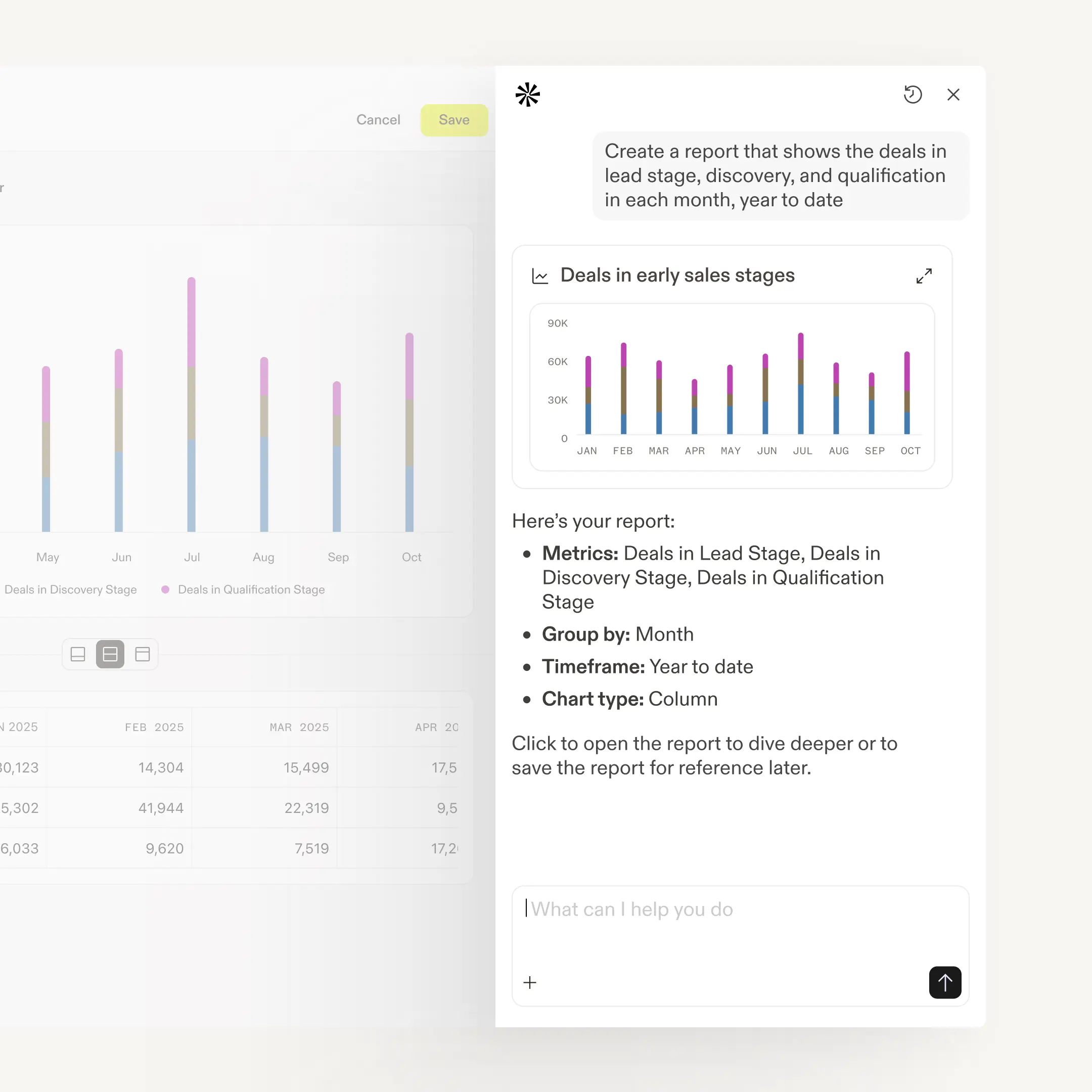
Apollo combines a B2B contact database with enrichment and sales engagement tools in a single platform. The system enriches existing CRM records or net-new leads with verified emails, job titles, and company details, supporting lead routing, scoring, and personalization across outbound sequences. Apollo claims 230M+ contacts and 30M+ companies in its database.
The platform offers waterfall enrichment, attempting to fill missing fields through multiple data sources to maximize match rates. Apollo integrates with Salesforce, HubSpot, and other CRMs to sync enriched data bi-directionally, ensuring records stay current across systems. AI agents handle prospecting and outreach, drafting personalized emails and generating conversation summaries from synced calls. The enrichment engine also powers AI-driven job change alerts, notifying users when contacts switch roles or companies and creating re-engagement opportunities at a natural moment in the buyer's journey.
Apollo's sales engagement functionality allows teams to build sequences using enriched contact data, automating outreach while maintaining personalization through dynamic fields. The platform includes email verification, direct dial numbers, and bulk enrichment from CSV uploads or CRM sync, making it accessible for teams running high-volume prospecting motions. Apollo is a strong fit for smaller sales teams that want prospecting, enrichment, and sequencing under one roof without managing multiple vendor contracts.
Key Features:
AI agents for prospecting and outreach with AI-drafted personalized emails
Conversation summaries from synced calls
Enrichment of contact and company profiles from proprietary database
Bulk enrichment from CSV uploads or CRM sync
Verified emails and direct dial numbers
AI-driven job change alerts for re-engagement
Waterfall enrichment across multiple data sources
Sales engagement sequences with enriched personalization fields
Native Salesforce and HubSpot integrations
Email verification and deliverability scoring
Strengths:
All-in-one platform with public per-seat pricing ($49/$79/$119) and a free tier
AI agents for prospecting, drafting, and follow-up built into the platform sellers already use
Strong fit for SMB and mid-market teams evaluating enrichment + engagement bundles
Limitations:
230M+ contacts is roughly half ZoomInfo's 500M, with thinner enterprise proof points
AI agents operate on Apollo's data alone without cross-signal reasoning across CRM + intent + conversation + behavioral signals
No conversation intelligence equivalent
Pricing: Seat-based pricing at $49, $79, and $119 per month with a free tier available.
How Apollo compares against ZoomInfo
Apollo's all-in-one positioning with public per-seat pricing ($49/$79/$119) and a free tier lands hardest with SMB and individual sellers who want prospecting, enrichment, and sequencing under one roof.
ZoomInfo's edge is 500M contacts and 100M companies vs. Apollo's 230M+ contacts and 30M+ companies, parallel waterfall enrichment across 25+ vendors via GTM Studio vs. Apollo's single-database enrichment, and conversation intelligence via Chorus feeding enrichment signals vs. no conversation intelligence equivalent.
See the Apollo vs. ZoomInfo all-in-one platform comparison for the full head-to-head.
4. Lusha
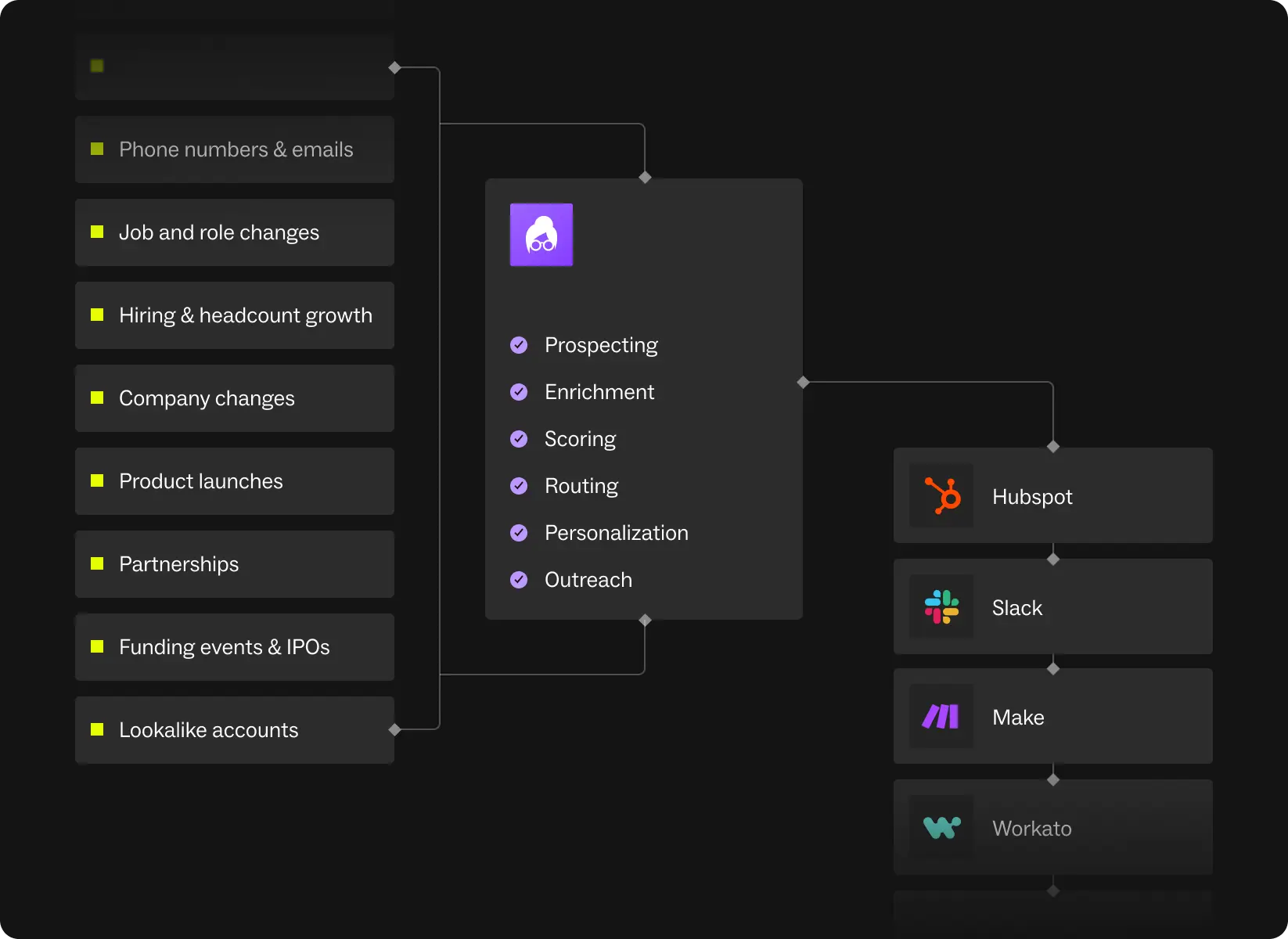
Lusha offers B2B contact and company data enrichment designed for sales teams. The platform enables users to enrich CRM records with verified business profiles, complete with phone numbers and firmographic information. Lusha's Chrome extension allows reps to capture contact data directly from LinkedIn profiles or company websites, instantly enriching records without leaving their browser.
A notable development is Lusha MCP, a Model Context Protocol server for AI agent integration. Lusha is one of only three competitors in this list (alongside ZoomInfo and Clay) with a documented MCP offering, making it compatible with the Claude, ChatGPT, and Anthropic agent ecosystem. Lusha MCP surfaces contact lookups for AI agents, though it does not expose verified intent, intelligence, or reasoning context the way ZoomInfo MCP does (ZoomInfo MCP exposes verified data + GTM Context Graph signals + GTM Workspace context, providing a broader intelligence layer for agent grounding).
The platform integrates with Salesforce, HubSpot, and other CRMs to keep records current through automatic sync. Lusha operates on a credit-based pricing model with public tiered pricing ($37.45-$299.95/seat), making it accessible for SMB teams and individual sellers who need flexible enrichment without enterprise contracts. The browser extension workflow reduces manual data entry by pulling contact details in real time during prospecting activities, a practical fit for individual contributors who prospect directly from LinkedIn rather than through a formal outbound sequence tool.
Lusha focuses on contact-level enrichment rather than comprehensive company intelligence, prioritizing speed and ease of use over breadth of data fields. The platform includes API access for teams building custom enrichment workflows, supporting both real-time lookups and batch processing for larger data sets.
Key Features:
MCP server for AI agent integration, compatible with Claude/ChatGPT/Anthropic agent ecosystem
Contact and account enrichment with verified phone and email data
Chrome extension for LinkedIn and web-based prospecting
Real-time updates via browser extension or CRM integration
Direct dial and mobile number appending
Credit-based pricing model for flexible usage
API access for custom enrichment workflows
Native Salesforce and HubSpot integrations
Bulk enrichment from CSV uploads
Strengths:
Public tiered pricing ($37.45-$299.95/seat) is the lowest-friction entry point for SMB sales teams
MCP server for AI agent builders is a genuine differentiator in the enrichment category
Chrome extension workflow minimizes context switching for LinkedIn-based prospecting
Limitations:
Smaller verified contact database than ZoomInfo's 500M contacts
Lusha MCP surfaces contact lookups only, not verified intent + intelligence + reasoning
Limited workflow orchestration compared to GTM Studio's parallel waterfall architecture
Pricing: Tiered seat-based pricing at $37.45, $74.95, $149.95, and $299.95 per seat per month.
How Lusha compares against ZoomInfo
Lusha's public tiered pricing ($37.45-$299.95/seat) and Chrome extension workflow make it the lowest-friction entry point for SMB sales teams and individual sellers who prospect directly from LinkedIn.
ZoomInfo's edge is 500M contacts with 95%+ accuracy via 300+ human researchers vs. Lusha's smaller verified dataset, ZoomInfo MCP exposes verified data + intelligence + GTM Workspace context vs. Lusha MCP's contact-lookup-only surface, and parallel waterfall enrichment across 25+ vendors vs. single-database enrichment.
See the Lusha vs. ZoomInfo comparison for the full head-to-head.
5. Cognism
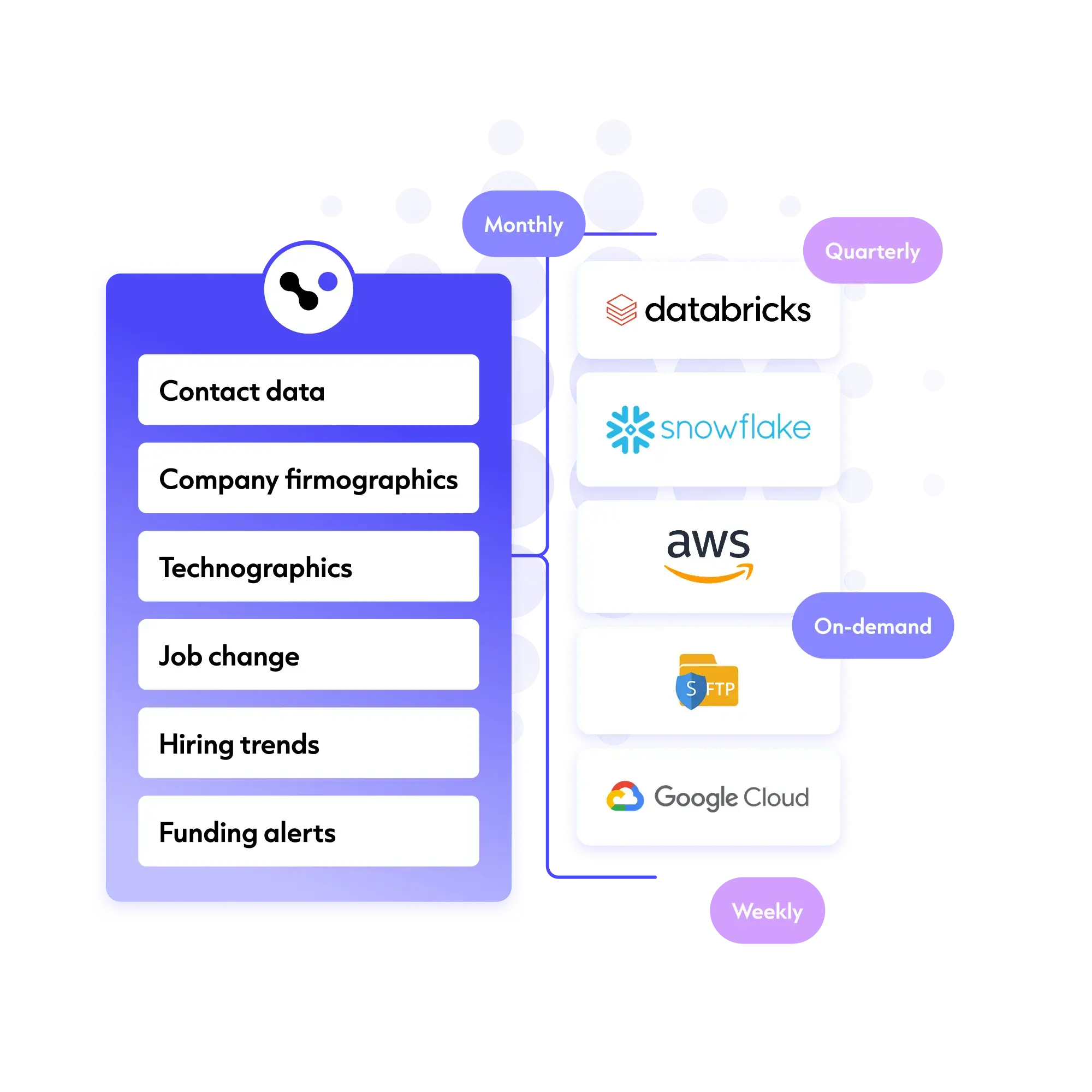
Cognism delivers globally compliant data enrichment with a strong focus on GDPR and international data regulations. The platform appends contact and company-level information to lead records with verified phone numbers and email addresses, helping sales teams connect with the right buyers while maintaining regulatory compliance. Cognism specializes in EMEA coverage, offering Diamond Verified Data, a premium tier of phone-verified mobile numbers for European contacts that claims 87%+ accuracy on verified records.
The phone-verification rigor on EU mobile data is Cognism's clearest differentiator. Diamond Verified Data is the strongest EU mobile number offering in the market, with human-verified phone numbers and DNC list checking to ensure compliance with telemarketing regulations across multiple jurisdictions. Cognism enriches records with firmographic and technographic insights, supporting account-based targeting and segmentation. The system integrates natively with Salesforce, HubSpot, Outreach, and Salesloft, syncing enriched data across sales and marketing tools.
Cognism's compliance-first approach addresses the specific challenges of international prospecting, particularly in regions with strict data privacy laws. For enterprise teams operating across multiple jurisdictions, the platform's audit trails and consent-based data collection provide the governance controls that legal and compliance teams require. Teams running EMEA-focused outbound programs often find that Cognism's mobile number coverage and DNC compliance reduce the friction that comes with cross-border prospecting.
A note on match rate vs. accuracy rate: these are distinct metrics. Match rate measures how many of your records a provider can enrich; accuracy rate measures how correct the appended data is. ZoomInfo's 300+ human researchers and up to 95% accuracy on first-party data address both coverage and confidence. GTM Studio's Intelligent Scoring selects highest-confidence matches per field, not just first-match results, which means the enrichment layer optimizes for accuracy at the field level rather than simply returning the first available value. Diamond Verified Data's 87%+ accuracy claim applies to a narrower scope (EU mobile data), while ZoomInfo's global verified data covers 135M+ verified phone numbers, 120M+ direct dials, and 45M+ international mobile numbers across all regions.
Key Features:
Phone-verified mobile numbers with EU focus (Diamond Verified Data)
87%+ accuracy claim on verified records
GDPR-compliant data enrichment with consent-based collection
DNC list checking and compliance controls
Firmographic and technographic insights for account targeting
Native CRM integrations with Salesforce and HubSpot
Sales engagement platform sync with Outreach and Salesloft
Human-verified contact data with quality guarantees
International coverage with focus on European markets
Strengths:
Diamond Verified Data is the strongest phone-verified EU mobile number offering in the market
GDPR/CCPA compliance signaling and DNC list checking are built into the enrichment workflow
Strong fit for teams running EMEA-focused outbound programs
Limitations:
Diamond Verified scope is narrow (EU mobile data) vs. ZoomInfo's global verified data
No conversation intelligence, ABM motion, or APIs/MCP at parity with ZoomInfo
Pricing is fully quote-based with no public tiers
Pricing: Enterprise quote-based pricing.
How Cognism compares against ZoomInfo
Cognism's Diamond Verified mobile numbers and GDPR-first compliance posture make it the strongest choice for teams running EMEA-focused outbound programs where DNC compliance and phone-verified EU mobile data are non-negotiable.
ZoomInfo's edge is 135M+ verified phone numbers, 120M+ direct dials, and 45M+ international mobile numbers vs. Cognism's EU-focused Diamond Verified subset, parallel waterfall enrichment across 25+ vendors vs. Cognism's single-source data model, and a full compliance suite (ISO 27001, ISO 27701, SOC 2 Type II, TRUSTe GDPR/CCPA) at platform level vs. Cognism's GDPR-focused compliance.
See the Cognism vs. ZoomInfo comparison for the full head-to-head.
6. 6sense
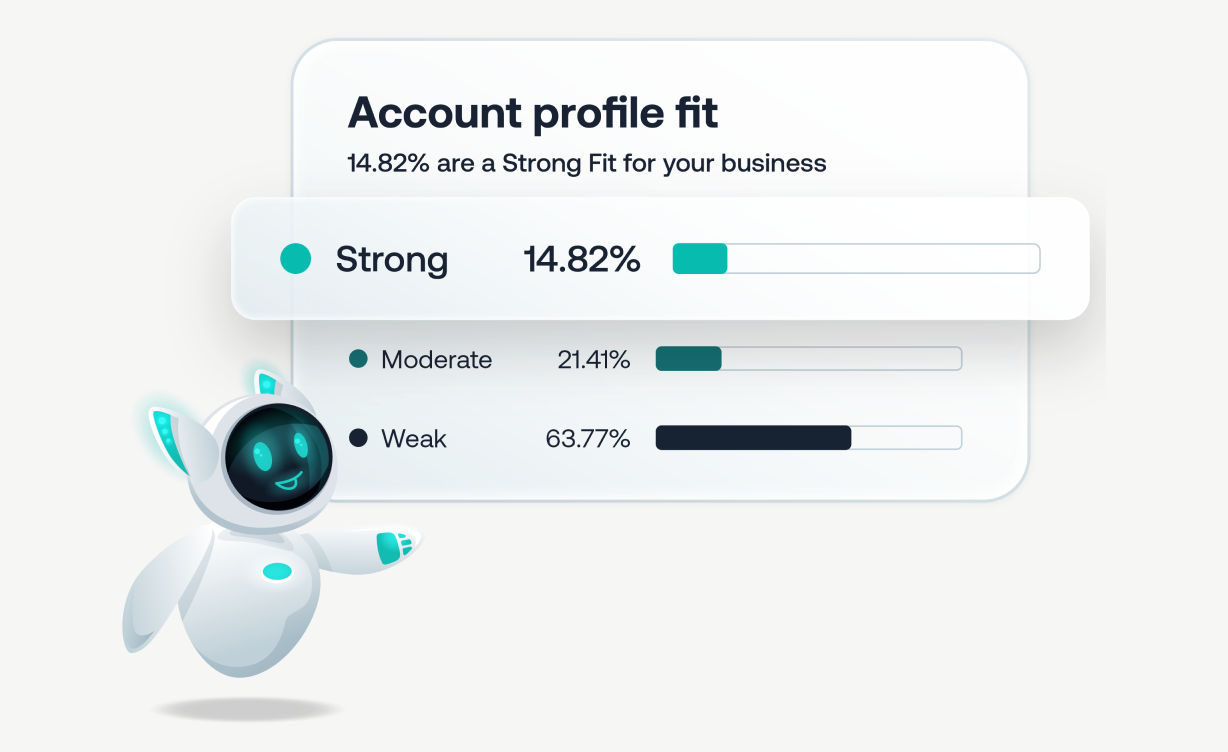
The 6sense ABM Platform combines ABM capabilities with predictive analytics and enrichment focused on account-level intelligence. The platform enriches company records with firmographic, technographic, and intent data, helping revenue teams identify and prioritize high-fit accounts based on buying stage signals. 6sense uses predictive AI to identify in-market accounts, scoring them by likelihood to purchase and current position in the buyer journey across stages from Awareness through Purchase. The platform earned Forrester Wave Q1 2026 Leader recognition for Revenue Marketing Platforms.
6sense aggregates intent signals from multiple sources, including web activity, content consumption, and third-party research behavior, to build a comprehensive view of account engagement. Multi-channel campaign orchestration spans display, LinkedIn, and email, enabling marketing teams to time campaigns around buying windows and sales teams to prioritize outreach based on account readiness. Anonymous buyer-journey identification reveals which accounts are engaging before they fill out forms, enriching traffic data with firmographic attributes and intent signals to surface high-value prospects.
6sense's predictive AI identifies accounts that are in-market, but it does not reason across CRM + intent + conversation + behavioral signals the way the GTM Context Graph does. The GTM Context Graph fuses these data layers into a unified reasoning surface that surfaces not just which accounts are active, but why they are likely to buy now. For RevOps teams building scoring models, this cross-signal reasoning is the architectural difference between predicting account fit and understanding account readiness.
Key Features:
In-market account identification via predictive AI
Multi-channel campaign orchestration (display, LinkedIn, email)
Anonymous buyer-journey identification
Buying stage signals and intent data aggregation
Account-level enrichment with firmographic and technographic data
Revenue intelligence and pipeline prediction models
Native integrations with leading CRM and marketing automation platforms
ABM orchestration and campaign targeting tools
Strengths:
Most sophisticated account-scoring models in the ABM category with buying-stage classification
Forrester Wave Q1 2026 Leader recognition for Revenue Marketing Platforms
Strong fit for enterprise ABM teams prioritizing account-level intelligence over contact-level enrichment
Limitations:
No conversation intelligence equivalent to Chorus
No documented MCP/agent ecosystem
Pricing is fully quote-based
Thinner contact-level data compared to ZoomInfo's 500M contacts
Pricing: Enterprise quote-based pricing.
How 6sense compares against ZoomInfo
6sense's predictive AI and buying-stage classification (Awareness through Purchase) are the most sophisticated account-scoring models in the ABM category, with a Forrester Wave Q1 2026 Leader recognition for Revenue Marketing Platforms.
ZoomInfo's edge is the GTM Context Graph reasoning layer that fuses CRM + intent + conversation intelligence + behavioral signals, which 6sense's predictive model does not incorporate, conversation intelligence via Chorus feeding enrichment and account signals, which 6sense lacks entirely, and 500M contacts and 135M+ verified phone numbers as the data foundation under the intelligence layer vs. 6sense's thinner contact-level data.
See the 6sense vs. ZoomInfo comparison for the full head-to-head.
7. Seamless.AI
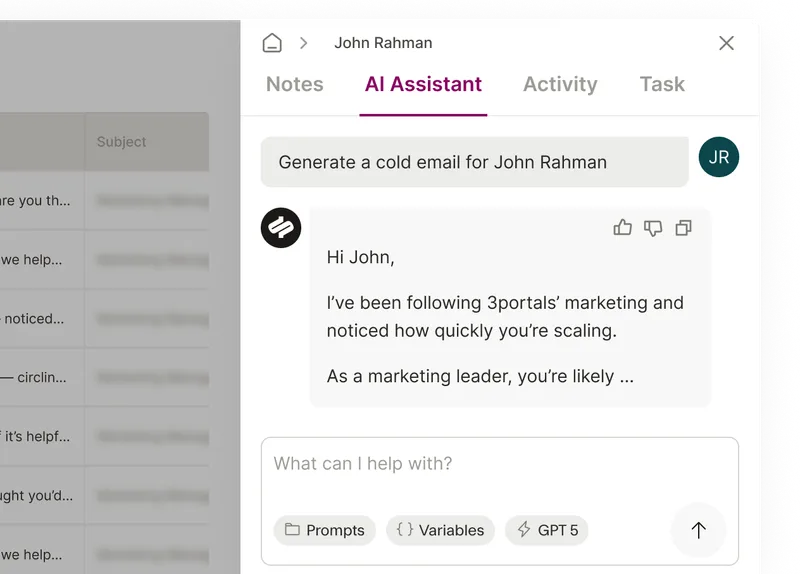
Seamless.AI enriches contact records with real-time email and phone number discovery through the Seamless Data Engine, which includes the Prospector and Buyer Intent modules. The platform operates as a real-time AI search engine for B2B contacts, allowing SDRs and outbound sales teams to find and update prospect information on demand. Seamless.AI includes a Chrome extension for prospecting directly from LinkedIn or company websites, capturing contact details and enriching records without switching between tools.
The platform uses real-time verification to validate contact data, checking email deliverability and phone number accuracy before appending records. Seamless.AI integrates with Salesforce, Outreach, and other sales platforms to sync enriched data automatically. The system includes pitch intelligence features that suggest talking points based on enriched company and contact data.
Seamless.AI prioritizes prospecting velocity over comprehensive firmographic enrichment. The platform's real-time search capabilities support high-volume outbound motions where reps need immediate contact access during active prospecting. Teams running large-volume cold outreach programs tend to value Seamless.AI for the speed of its contact discovery rather than the depth of its account-level data. The Buyer Intent module is narrower than ZoomInfo's 1.5B+ daily data points feeding the intelligence layer.
Key Features:
Real-time AI search engine for B2B contacts
Buyer Intent module
Chrome extension for LinkedIn and web prospecting
Real-time verification for email deliverability and phone accuracy
Pitch intelligence with suggested talking points
Salesforce and Outreach integrations
Contact discovery from company websites and social profiles
Bulk enrichment and list building tools
Strengths:
Free tier and real-time search model offer the lowest-friction entry point for SDR teams
Chrome extension workflow supports high-velocity prospecting without context switching
Pitch intelligence features add outreach context on top of enrichment
Limitations:
Smaller verified dataset than ZoomInfo's 500M contacts with lower market-reported data quality
Buyer Intent module is narrower than ZoomInfo Intent Data
Less rigorous verification than ZoomInfo's 300+ human researchers and up to 95% accuracy
Pricing: Seat-based pricing with a free tier available; paid tiers require contacting sales.
How Seamless.AI compares against ZoomInfo
Seamless.AI's free tier and real-time search model offer the lowest-friction entry point for SDR teams focused on high-volume prospecting velocity.
ZoomInfo's edge is 500M verified contacts with 300+ human researchers and up to 95% accuracy vs. Seamless.AI's smaller dataset with lower market-reported data quality, and parallel waterfall enrichment across 25+ vendors vs. single-source real-time search.
See the Seamless.AI vs. ZoomInfo comparison for the full head-to-head.
8. Demandbase
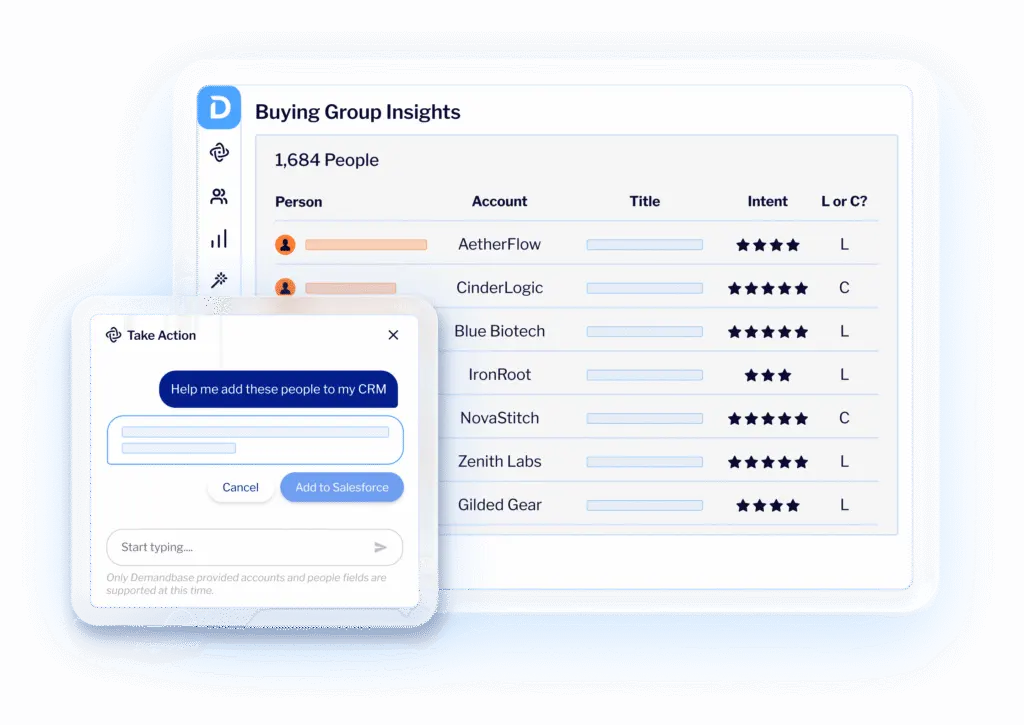
Demandbase is the most tenured ABM platform in the market, combining unified ABX capabilities with account-based data enrichment. The platform enriches and updates company records with a focus on account-level insights including intent data, technographics, and firmographics, helping teams identify and prioritize high-fit accounts with enriched context. Demandbase aggregates signals across multiple channels to build comprehensive account profiles that inform targeting and personalization strategies.
Demandbase's native ad-buying platform is more developed than ZoomInfo Marketing's ad partner ecosystem, with native display and programmatic ad targeting and retargeting that use enriched account data directly. This is a genuine strength for enterprise marketing teams running coordinated ABM programs who want to connect paid media targeting directly to enriched account data, reducing wasted ad spend on out-of-profile accounts. Demandbase enriches website visitor data with firmographic attributes, revealing which accounts are engaging with your content before they fill out forms.
Demandbase One orchestrates across account intelligence, but it does not fuse conversation intelligence or behavioral signals into its account intelligence layer the way the GTM Context Graph does. The GTM Context Graph incorporates Chorus conversation intelligence alongside CRM, intent, and behavioral signals into a unified reasoning surface. For RevOps teams evaluating ABM platforms, this is the architectural difference: Demandbase reasons across account fit and intent, while ZoomInfo reasons across account fit, intent, conversation context, and behavioral signals.
Demandbase integrates with leading CRM and marketing automation platforms through its integrations marketplace to sync enriched account data across the tech stack. Predictive scoring prioritizes accounts based on fit, intent, and engagement, combining enriched firmographic data with behavioral signals to surface the highest-value opportunities.
Key Features:
Unified ABX platform spanning ABM ads + account intelligence + sales intelligence + data
Native ad targeting and retargeting (display and programmatic)
Predictive scoring and intent signals
Account identification for website visitors
Journey analytics tracking engagement across touchpoints
Integrations with leading CRM and marketing automation platforms
ABM orchestration and campaign management tools
Intent data aggregation from multiple sources
Strengths:
Most established ABM platform with native display and programmatic ad-buying capabilities
Unified ABX platform reduces the number of point solutions for enterprise ABM programs
Strong account-level intelligence and journey analytics
Limitations:
No conversation intelligence (no Chorus equivalent)
No documented MCP/agent ecosystem
Pricing is fully quote-based
Thinner contact-level data compared to ZoomInfo's 500M contacts
Pricing: Enterprise quote-based pricing.
How Demandbase compares against ZoomInfo
Demandbase One is the most tenured ABM platform in the market, with native display and programmatic ad-buying capabilities that go beyond what ZoomInfo Marketing offers through ad partner integrations.
ZoomInfo's edge is the GTM Context Graph reasoning layer that fuses CRM + conversation intelligence (Chorus) + behavioral signals into account intelligence, which Demandbase One does not incorporate, Gartner Magic Quadrant Leader for ABM Platforms in both 2024 and 2025 vs. Demandbase's non-Leader positioning, and 500M contacts and 135M+ verified phone numbers as the data foundation under the ABM layer vs. Demandbase's thinner contact-level data.
See the Demandbase vs. ZoomInfo comparison for the full head-to-head.
9. Clay
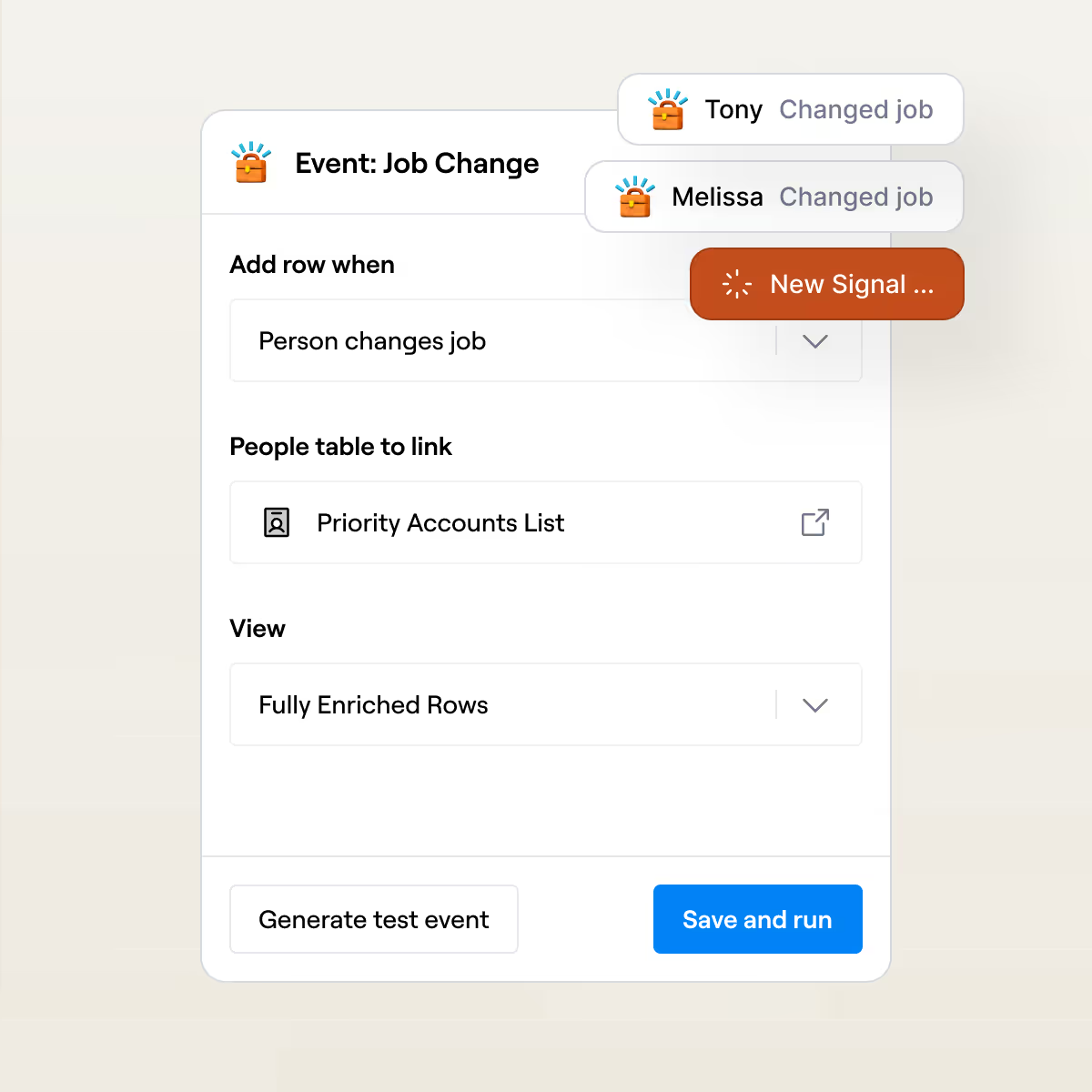
Clay Waterfall Enrichment operates as a workflow automation platform that aggregates data from 150+ enrichment providers into no-code workflows. Rather than maintaining a proprietary database, Clay enables waterfall enrichment, querying multiple data sources in sequence until a match is found for each missing field. The platform offers wholesale provider rates and transparent provider attribution, so teams know exactly which provider returned each data point. Clay's architectural pitch is straightforward: "Why use one database when you can use them all?"
Customer-cited results include a 30% to 80% coverage improvement at OpenAI using Clay's multi-provider waterfall approach. The platform includes AI personalization capabilities that use enriched data to generate customized outreach messages at scale. Clay's spreadsheet-like interface allows users to build enrichment workflows without coding, chaining together data lookups, transformations, and AI-generated content. The system integrates with CRMs, sales engagement platforms, and other tools to push enriched data into downstream systems.
Clay's orchestration model positions it as a layer above traditional enrichment providers, allowing teams to mix and match data sources based on specific use cases. Revenue operations teams and growth engineers tend to gravitate toward Clay when they need to build custom enrichment logic that a single-provider solution cannot support: for example, combining a contact data provider with a news API and a funding database to build a composite account profile.
Clay's "waterfall confidence scoring" framework selects the best match across providers per field. ZoomInfo GTM Studio's Intelligent Scoring is architecturally equivalent but backed by ZoomInfo's proprietary verified data (500M contacts) as the primary source, bridging gaps with 25+ additional vendors. The difference: GTM Studio starts with a verified database and fills gaps externally, while Clay starts with no database and depends entirely on external provider quality.
One watch-out for teams running both real-time and batch enrichment modes: field overwrite logic can conflict when real-time enrichment updates a record that batch enrichment later overwrites with a different provider's value. Teams should define clear field-level priority rules before deploying both modes simultaneously.
Key Features:
Multi-provider waterfall enrichment with 150+ supported providers
Wholesale provider rates with transparent attribution
Custom data point waterfalling
No-code workflow builder for enrichment automation
AI personalization for outreach content generation
Data aggregation from multiple sources in a single workflow
CRM and sales engagement platform integrations
Pre-built templates for common enrichment use cases
Spreadsheet-like interface for data manipulation
Custom data transformations and field mapping
Strengths:
Maximum flexibility with 150+ data providers and public tiered pricing ($0-$495/mo)
Transparent provider attribution lets teams audit exactly which source returned each field
Strong fit for GTM engineers building custom enrichment logic
Limitations:
No primary contact database: Clay is an orchestration layer that requires data vendors plugged in
No inherent verification rigor; data quality depends entirely on plugged-in providers
Per-enrichment cost can scale unpredictably at high volumes
Pricing: Usage-based pricing from $0 (free tier) to $495/month, with custom enterprise plans available.
How Clay compares against ZoomInfo
Clay's orchestration model with 150+ data providers and public tiered pricing ($0-$495/mo) gives GTM engineers maximum flexibility to mix and match data sources for custom enrichment workflows.
ZoomInfo's edge is a proprietary verified database of 500M contacts as the primary enrichment source vs. Clay's dependency on plugged-in third-party providers with no inherent verification, and GTM Studio's Intelligent Scoring selects highest-confidence match per field backed by proprietary data, vs. Clay's confidence scoring that depends entirely on external provider quality.
See the Clay vs. ZoomInfo comparison for the full head-to-head.
10. LeadIQ
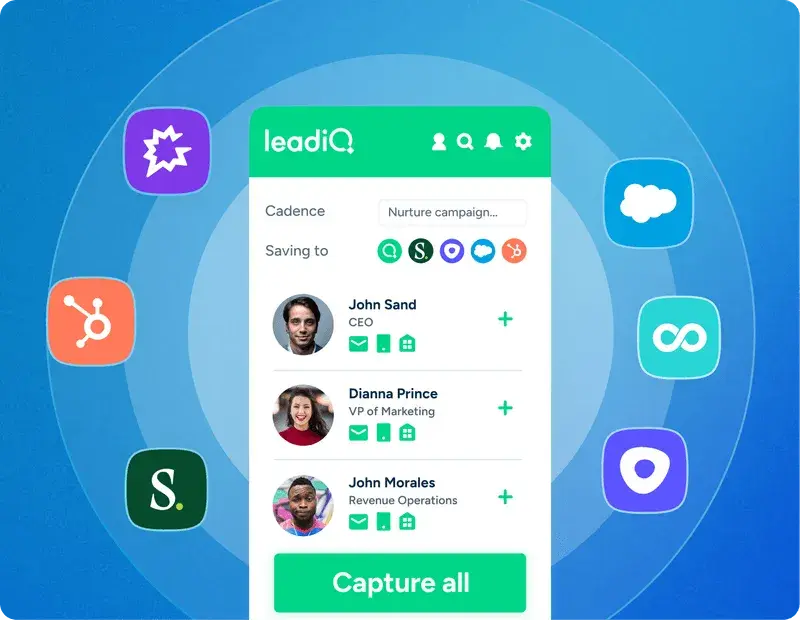
LeadIQ specializes in enriching contact data for outbound sales with a focus on LinkedIn prospecting workflows. Users can capture leads from LinkedIn profiles and instantly enrich them with emails, phone numbers, and job titles through LinkedIn-integrated contact data capture. The platform includes job-change tracking, alerting users when contacts switch roles or companies and creating natural re-engagement opportunities for relationship-based selling.
LeadIQ reduces manual data entry by syncing captured contacts directly to CRM systems with Salesforce push for one-click prospecting. The platform monitors contact records for job changes, automatically refreshing fields when contacts move to new companies or roles. This capability helps teams maintain data accuracy over time without manual verification or re-enrichment processes, which is particularly valuable for enterprise account teams managing long-cycle deals where key contacts frequently change roles before a deal closes.
The platform's LinkedIn-centric workflow supports outbound teams building targeted prospect lists from Sales Navigator searches or company employee listings. LeadIQ enriches these captured contacts with verified email addresses and phone numbers, then pushes them into CRM or sales engagement tools for immediate outreach.
Key Features:
LinkedIn-integrated contact data capture
Salesforce push for one-click prospecting
Job-change tracking and alerts for re-engagement
Verified email and phone number appending
CRM sync for automated data entry
Automatic job change updates for tracked contacts
Sales Navigator integration for list building
Chrome extension for browser-based prospecting
Contact enrichment from company employee listings
Strengths:
Most streamlined LinkedIn-to-Salesforce workflow for outbound teams
Job-change tracking creates natural re-engagement opportunities
One-click capture reduces manual data entry for relationship-based selling
Limitations:
Smaller dataset than ZoomInfo's 500M contacts
Less rigorous verification than ZoomInfo's 95%+ verified data validated by 300+ human researchers
No conversation intelligence, ABM, or marketing-side products
Pricing: Seat-based pricing; contact LeadIQ for current plans.
How LeadIQ compares against ZoomInfo
LeadIQ's one-click LinkedIn-to-Salesforce workflow and job-change tracking make it the most streamlined prospecting tool for outbound teams managing relationship-based selling cycles.
ZoomInfo's edge is 500M contacts verified by 300+ human researchers with up to 95% accuracy vs. LeadIQ's smaller, less rigorously verified dataset, and parallel waterfall enrichment across 25+ vendors via GTM Studio vs. LeadIQ's single-database enrichment model.
See the LeadIQ vs. ZoomInfo comparison for the full head-to-head.
11. Crunchbase
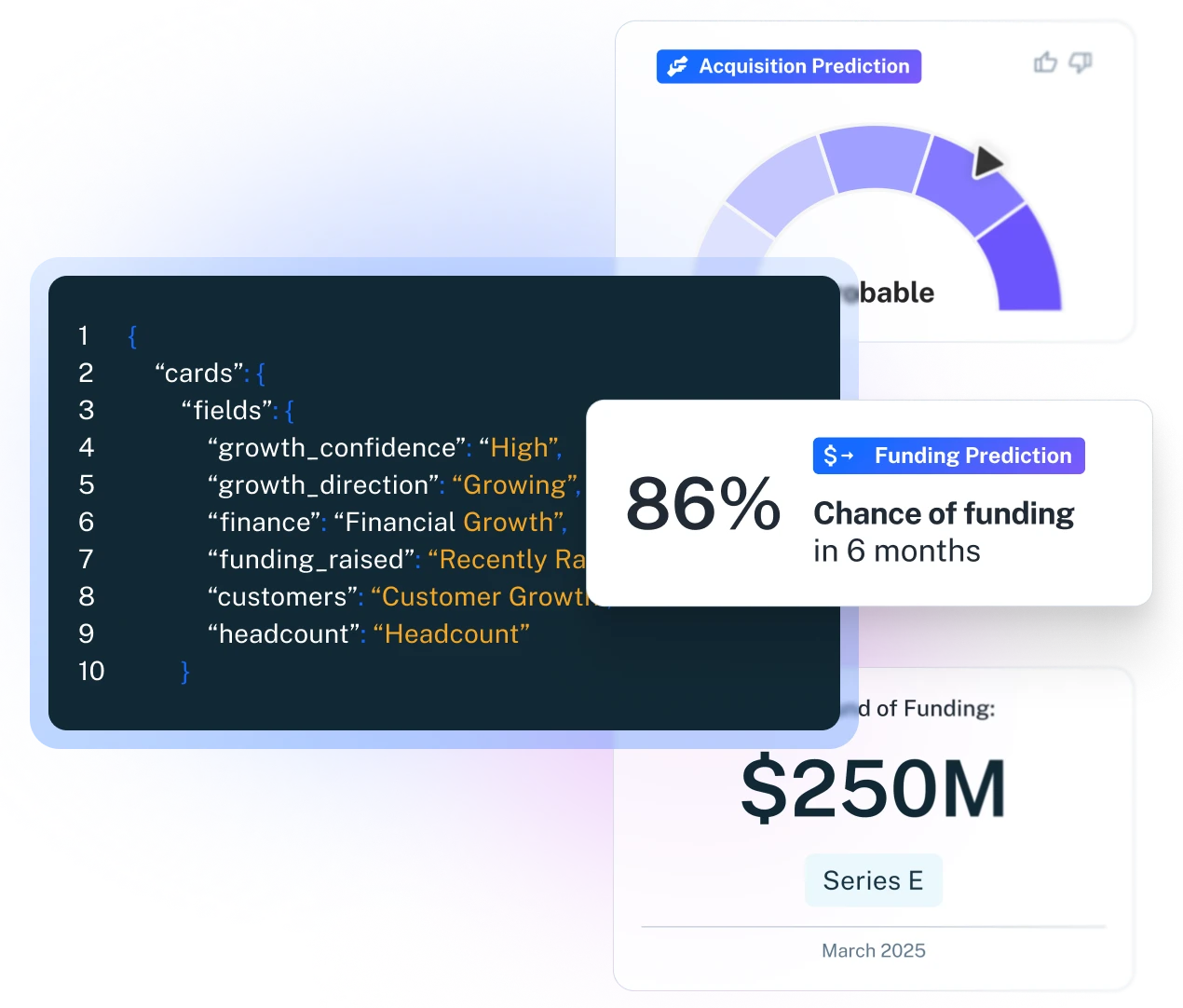
Crunchbase is an AI-powered private market intelligence platform built around funding, investor, and startup data rather than verified contact records. Founded in 2007 and grown from a startup wiki into a database covering 4M+ private companies and 18M contacts, it draws on 600,000+ community contributors and data from 4,000+ VC firms to track funding rounds, valuations, and investor activity. Its AI prediction engine forecasts fundraising, acquisitions, and IPOs, generating close to 100,000 predictions a month with reported precision as high as 95-96% for funding and acquisition events.
Crunchbase's core use case is surfacing companies at the moment they become sales-ready: a Series B close, a new executive hire, or a leadership change that signals budget and buying intent. Heat Score and Growth Score metrics rank companies by momentum, helping VCs source deals and sales teams prioritize accounts that "just raised $20M" before competitors reach out. The platform syncs directly into Salesforce and HubSpot with bidirectional updates, letting teams push funding-triggered accounts into existing pipeline workflows without manual list-building.
Crunchbase's strength is depth on the private company and investor side, not breadth on the contact side. Its 18M contacts sit far behind dedicated B2B contact databases, and it offers no buyer intent or technographic signals to show which specific decision-makers are actively in-market. Predictions and CRM sync are also gated behind its Business tier, and export caps limit high-volume prospecting workflows, making Crunchbase better suited to research and deal-sourcing than full-funnel outbound execution.
Key Features:
AI-powered funding, acquisition, and IPO predictions
Heat Score and Growth Score momentum rankings
Funding database covering 20+ funding types and 4,000+ VC firms
Natural language AI search across companies, funding rounds, and investors
Salesforce and HubSpot bidirectional CRM sync
Community-maintained company profiles from 600,000+ contributors
Funding and leadership-change alerts
Free tier for basic company and funding lookups
Metered contact unlocks by plan tier
Strengths:
Deepest private market funding and investor data of any provider in this list
High-precision AI predictions for funding, acquisitions, and IPO events
Strong fit for VC/PE deal sourcing and funding-triggered sales outreach
Limitations:
Contact database of 18M is a fraction of ZoomInfo's 500M contacts
No intent data or technographic signals to identify active buyers
Predictions and CRM sync locked behind the higher-priced Business tier
Export caps restrict high-volume outbound workflows
Coverage gaps outside the U.S. and Western Europe
Pricing: Free tier available; Pro from $49/month (billed annually); Business from $119/month (billed annually), with contact unlocks metered at 10/month on Pro and 500/month on Business.
How Crunchbase compares against ZoomInfo
Crunchbase is the sharper tool for VC/PE deal sourcing and catching companies at the moment they raise funding, thanks to its AI predictions and investor-grade funding database.
ZoomInfo's edge is contact depth and execution: 500M contacts with 135M+ verified phone numbers and 200M+ verified business emails versus Crunchbase's 18M contacts, plus intent signals from 210M IP-to-Org and 6T+ keyword-to-device pairings that identify which decision-makers are actively in-market, all inside one platform for research, contact identification, and outreach.
See the Crunchbase vs. ZoomInfo comparison for the full head-to-head.
How to Choose Data Enrichment Software
Selecting the right data enrichment tools depends on your team's specific workflow, tech stack, and data requirements. The wrong choice leads to integration headaches, incomplete records, or compliance issues that create more work than they solve. The subsections below break down the evaluation criteria that matter most for b2b data enrichment tools.
Data Accuracy and Verification
Enrichment only delivers value if the appended data is accurate. Look for platforms with transparent verification processes and published accuracy metrics. A hard bounce rate above 3-5% is a reliable signal that your database is already degraded, and appending more unverified data compounds the problem rather than solving it.
Smartsheet drove 84% more MQLs after implementing enrichment-driven form intelligence, along with a 26% opportunity rate and 59% win rate. Those downstream conversion metrics demonstrate what happens when enrichment accuracy is high enough to trust for scoring and routing decisions.
Bad data creates measurable downstream problems:
Bounced emails that damage sender reputation and deliverability
Wrong-number calls that waste rep time and erode morale
Incorrect routing that delays deal progression
Poor segmentation that reduces campaign performance and increases cost per lead
Key considerations:
Verification process: How does the provider validate contact data before appending it to your records? Human verification, AI validation, and third-party cross-referencing each carry different accuracy profiles.
Refresh frequency: How often are records updated to account for job changes, company moves, and contact turnover? A record that was accurate six months ago may already be stale.
Match rates vs. accuracy rates: Match rate measures how many of your records a provider can enrich; accuracy rate measures how correct the appended data is. A provider with a 90% match rate and 60% accuracy is worse than one with a 70% match rate and 95% accuracy. Evaluate both.
Source quality: Where does the data come from, and how is it collected and maintained? First-party contributed data, web crawling, and licensed third-party sources each carry different reliability characteristics.
CRM and Tech Stack Integration
Enrichment platforms must sync with your existing systems or they create manual reconciliation work that offsets their value. Native connectors reduce setup time and ensure bi-directional data flow without custom development. Teams that rely on manual CSV exports and re-imports often see enrichment gains erode within weeks as records drift out of sync.
Spekit qualified leads 58% faster by combining CRM enrichment with Chorus conversation intelligence, demonstrating how enrichment value compounds when the enrichment layer connects to the conversation and engagement layers in the same workflow.
Key considerations:
Native CRM connectors: Does the platform integrate directly with Salesforce, HubSpot, or your CRM of choice?
Sales engagement tool integration: Can enriched data flow into Outreach, Salesloft, or other sequencing tools automatically?
Bi-directional sync: Does data flow both ways, keeping enrichment current as records change in your CRM?
API access: Can you build custom enrichment workflows or connect to proprietary systems?
Data warehouse connectors: Does the platform support direct connections to Snowflake, BigQuery, or Databricks for teams centralizing data infrastructure outside the CRM?
Enrichment Architecture: Sequential vs. Parallel Waterfall
Not all waterfall enrichment is the same. The architecture determines both match rate and data confidence.
Sequential waterfall queries providers one at a time in a fixed priority order. Provider A fills 60% of missing fields, Provider B fills 25% of the remaining gaps, and the process stops at the first match per field. This is the model most enrichment tools use, including Clay's 150+ provider orchestration.
Parallel waterfall queries all providers simultaneously and uses confidence scoring to select the best match per field. GTM Studio's Intelligent Scoring evaluates results from 25+ vendors and selects the highest-confidence value for each field, not just the first result returned. The difference is measurable: parallel waterfall with confidence scoring returns higher-accuracy data because it compares across sources rather than accepting the first available value.
How to Evaluate Match Rates
Match rate claims vary widely across vendors, and most are not directly comparable because they measure different things against different benchmarks. A structured POC is the only reliable way to evaluate match rates for your specific data.
Run this evaluation:
Upload 500-1,000 records from your CRM that represent your actual account and contact mix (not a cherry-picked list)
Measure field-level fill rates, not just record-level match rates (a record that fills company name but misses phone number and email is not a useful match)
Run a 30-day deliverability test on enriched email addresses to measure real-world accuracy, not just provider-claimed accuracy
Compare results across 2-3 vendors using the same input set
Enrichment Trigger Patterns
Enrichment can fire in three modes, each with different latency, cost, and use-case profiles:
Trigger Type | Latency | Best Use Case | Cost Profile |
|---|---|---|---|
Real-time | Sub-second to seconds | Inbound form fills, chatbot conversations, live prospecting | Higher per-record cost; justified by speed-to-lead impact |
Batch | Minutes to hours | Quarterly CRM hygiene, territory planning, list imports | Lower per-record cost; best for bulk operations |
Event-driven | Seconds to minutes | Job change alerts, funding announcements, technographic shifts | Variable; depends on event volume and trigger frequency |
Most teams need a combination. Real-time enrichment handles inbound leads where speed-to-lead matters (Momentive's 20-minute to 60-second compression is a real-time enrichment outcome). Batch enrichment handles quarterly CRM hygiene and territory refreshes. Event-driven enrichment catches changes between cycles.
Compliance and Data Privacy
Data regulations vary by geography and industry. Platforms must support GDPR, CCPA, and other privacy requirements, especially for teams operating internationally or in regulated sectors. Compliance failures in enrichment carry legal and reputational consequences that can far outweigh the cost of the platform itself.
There is an important distinction between compliant data collection and compliant data use. A provider may collect data in full compliance with GDPR, but if your team uses that data in ways that violate consent requirements (for example, emailing contacts who have opted out of your specific communications), the compliance burden falls on you. Evaluate both the provider's collection practices and the tools they give you to manage compliant use.
Key considerations:
GDPR compliance: Does the platform support consent-based data collection and right-to-erasure requests?
CCPA compliance: Can you honor opt-out requests and maintain audit trails for California contacts?
Data governance controls: What admin tools exist for managing data usage, access, and retention policies?
Consent management: How does the platform handle opt-ins, opt-outs, and DNC list compliance across different jurisdictions?
Pricing and Scalability
Enrichment pricing models range from credit-based to seat-based to consumption-based to enterprise contracts. Understanding total cost of ownership, including overage fees and the cost of re-enriching records as data decays, is essential before committing to a platform. A low per-record cost can become expensive at scale if match rates are low or refresh cycles are infrequent.
Key considerations:
Credit-based vs. seat-based vs. consumption-based pricing: Which model aligns with your usage patterns and team size?
Batch vs. real-time pricing: Are you charged differently for bulk enrichment versus on-demand lookups?
Enterprise scaling: Does pricing accommodate growth without forcing a platform migration as your database expands?
ROI measurement: Can you track enrichment impact on conversion rates, pipeline velocity, and deal size to justify the investment?
Choose the Right Data Enrichment Platform for Your Team
ZoomInfo, the all-in-one AI GTM Platform, combines the largest continuously verified B2B database with parallel waterfall enrichment, cross-signal intelligence, and native CRM integration to turn incomplete records into actionable pipeline. The Sendoso results referenced earlier (70% less inaccurate data, over 1,100 hours saved, and $4.9M in new pipeline) illustrate what becomes possible when enrichment at scale is treated as a foundational GTM investment rather than a supplemental tool.
When evaluating data enrichment platforms, prioritize these factors:
Data accuracy and verification processes that ensure appended information is current and correct
Native integrations with your CRM, MAP, and sales engagement tools to automate data flow
Compliance capabilities that support GDPR, CCPA, and other applicable privacy regulations
Pricing model that scales with your team's growth and usage patterns without creating cost surprises
Enrichment architecture that optimizes for field-level confidence, not just first-match speed
Frequently Asked Questions About Data Enrichment
What Is Data Enrichment and Why Does It Matter?
Data enrichment appends missing contact and company information to CRM records, transforming incomplete leads into actionable profiles. Most B2B purchases involve 6-10 stakeholders, yet most CRM records contain only one contact per account. Enriched data gives revenue teams the complete buying committee view they need to engage the right people, improve conversion rates, and reduce the time reps spend on manual research. A CRM enrichment platform that runs continuously prevents the 30% annual data decay that erodes record accuracy between quarterly hygiene cycles.
How Do Data Enrichment Tools Integrate with CRMs?
Enrichment tools integrate through native connectors that sync automatically with platforms like Salesforce and HubSpot, APIs that enable custom workflows and real-time lookups, and data warehouse connections for organizations centralizing data in Snowflake, BigQuery, or Databricks. Bi-directional sync ensures that enriched fields stay current as records change in both the CRM and the enrichment platform. GTM Studio automates enrichment workflow building without requiring engineering tickets, so RevOps teams can configure field mapping, trigger logic, and vendor priority rules through a codeless interface. CSV enrichment remains an option for teams without native connectors, though it requires more manual oversight to maintain data freshness.
What Is the Difference Between Data Enrichment and Data Cleansing?
Data enrichment adds new information to fill gaps in existing records, appending missing phone numbers, job titles, firmographics, and intent signals. Data cleansing corrects or removes inaccurate data, fixing errors like duplicate records, misspelled company names, and outdated email addresses. Enrichment and cleansing work best as complementary processes within a broader CRM hygiene program. Cleansing without enrichment leaves records accurate but incomplete; enrichment without cleansing risks appending good data to corrupted base records.
Can Data Enrichment Tools Work with Existing CRM Data?
Enrichment tools append data to existing CRM records and can backfill missing fields across your entire database through bulk enrichment processes. Most platforms support both real-time enrichment for new records entering the system and retroactive enrichment for historical records that were captured without complete information. The scope of backfill enrichment depends on match rates, which vary by the age and completeness of your existing records. Running a structured POC with 500-1,000 records from your actual CRM is the most reliable way to measure expected fill rates before committing to a platform.
What Types of Data Can Enrichment Tools Provide?
Data enrichment tools provide:
Firmographic data: Company size, revenue, industry classification, headquarters location, and organizational structure
Technographic data: Software stack and technology usage, enabling targeting based on existing vendor relationships
Demographic data: Job titles, roles, seniority levels, and reporting structure
Contact data: Verified emails and phone numbers, including direct dials and mobile numbers
Intent data: Buying signals and research behavior that indicate when an account is actively evaluating solution
