

If you're comparing Highrise vs. Salesforce, know this first: Highrise stopped accepting new signups on August 20, 2018. If you're already a Highrise customer, this comparison matters. If you're not, Highrise isn't an option.
That said, the questions behind this comparison still matter:
Do you need a simple contact manager or a full CRM platform?
Is your team small enough that simplicity beats power, or have you outgrown lightweight tools?
Can you afford the time and money to implement an enterprise CRM?
How important are sales automation, pipeline reporting, and AI features to your process?
Do you have the data infrastructure to make a CRM useful?
Here's what we recommend:
Highrise is a simple CRM and contact manager from 37signals (the company behind Basecamp), designed for freelancers and small teams who wanted to track people, conversations, and follow-ups without enterprise overhead. Its email dropbox, tagging system, and flat-rate pricing attracted users who valued simplicity.
But Highrise is now frozen: no new features, no new signups, deals limited to three stages, no automation, and no built-in sales pipeline reporting. It exists only for the 10,000+ businesses still running on it.
Salesforce is the largest CRM by market share, serving over 150,000 companies with $41.5 billion in annual revenue. Sales Cloud, Service Cloud, Marketing Cloud, and the Agentforce AI platform cover pipeline management, customer service, marketing automation, and AI agents.
But that scope comes at a cost: pricing runs from $25/user/month for Starter Suite to $550/user/month for Agentforce 1, implementation often takes months, over 70% of deployments require partners, and serious configuration demands dedicated administrators.
Both platforms manage customer relationships. Neither tells you which prospects are worth calling, when they're ready to buy, or what to say when you reach them. That gap is where sales teams lose deals before they start.
ZoomInfo is a B2B intelligence and GTM platform built on a large database: 500M contacts, 100M companies, 135M+ verified phone numbers, and 200M+ verified business email addresses.
ZoomInfo's GTM Context Graph combines this data with your CRM records, conversation transcripts, and behavioral signals, processing 1.5B+ data points daily to show what's happening in your deals and why.
Whether you use Salesforce, another CRM, or build your own tools, ZoomInfo delivers this intelligence through the GTM Workspace for sellers, GTM Studio for marketers and RevOps, or APIs and MCP for custom front-ends.
If your sales team needs better prospecting data and buying signals, see how ZoomInfo works.
Highrise vs. Salesforce vs. ZoomInfo at a glance
Highrise | Salesforce | ZoomInfo | |
|---|---|---|---|
Primary function | Simple contact manager | Full CRM and enterprise platform | B2B intelligence and GTM platform |
Current status | Frozen since 2018 (existing customers only) | Active, regularly updated | Active, regularly updated |
Target user | Freelancers and small teams (1–15 people) | Mid-market to enterprise | Enterprise and upper mid-market GTM teams |
Pricing | Flat-rate monthly (no new signups) | $25–$550/user/month | Custom-quoted, consumption-based |
Sales automation | None | Extensive (workflows, sequences, AI agents) | Signal-triggered outreach and workflows |
B2B data and intelligence | Only what you manually enter | Only what you enter (plus enrichment add-ons) | 500M contacts, intent signals, buyer intelligence |
Pipeline management | Three stages only (pending, won, lost) | Configurable pipelines with AI forecasting | Account prioritization, deal intelligence, buying group mapping |
AI capabilities | None | Agentforce (autonomous AI agents) | GTM Context Graph, AI-drafted outreach, signal-based prioritization |
Integrations | Zapier and limited third-party ecosystem | 9,000+ AppExchange apps | 120+ integrations, native Salesforce/HubSpot connectors, API/MCP |
Learning curve | Minimal (hours) | Steep (weeks to months) | Moderate (deploys in weeks) |
Highrise stopped accepting new users seven years ago
This is the most important fact in this comparison. On August 20, 2018, Highrise closed to new signups. The homepage states plainly: "If you already have a Highrise account, you can continue to use Highrise forever."
Jason Fried confirmed that "Today's version of Highrise is the forever version of Highrise." No new features. No roadmap. Permanent maintenance mode.
37signals backs this with their "Until the End of the Internet" policy: existing customers keep access indefinitely, security updates continue, and the infrastructure stays maintained. Help center articles were updated as recently as January 2026, confirming active support operations.
For existing Highrise customers, this means stability. Your data is safe. Your workflows won't break tomorrow (unless a third-party integration evolves past Highrise's static API). But it also means the product will never improve. Deals will always be limited to three stages (pending, won, lost).
There will never be automation, pipeline reporting, or AI features. The product is what it was designed to be, but the market has moved on.
For new buyers, Highrise isn't available. If you're reading this comparison as a prospective user, your real decision is between Salesforce and the alternatives that have emerged since Highrise closed its doors.
Simple contact management vs. full CRM platform
Highrise and Salesforce represent opposite philosophies about what a sales tool should do.
Highrise was built as a shared contact notebook. You track people, log conversations, set follow-up reminders, and manage lightweight deals. The interface reflects 37signals' conviction that simplicity is a feature.
Contacts are organized into People and Companies, with tags and custom fields for segmentation.
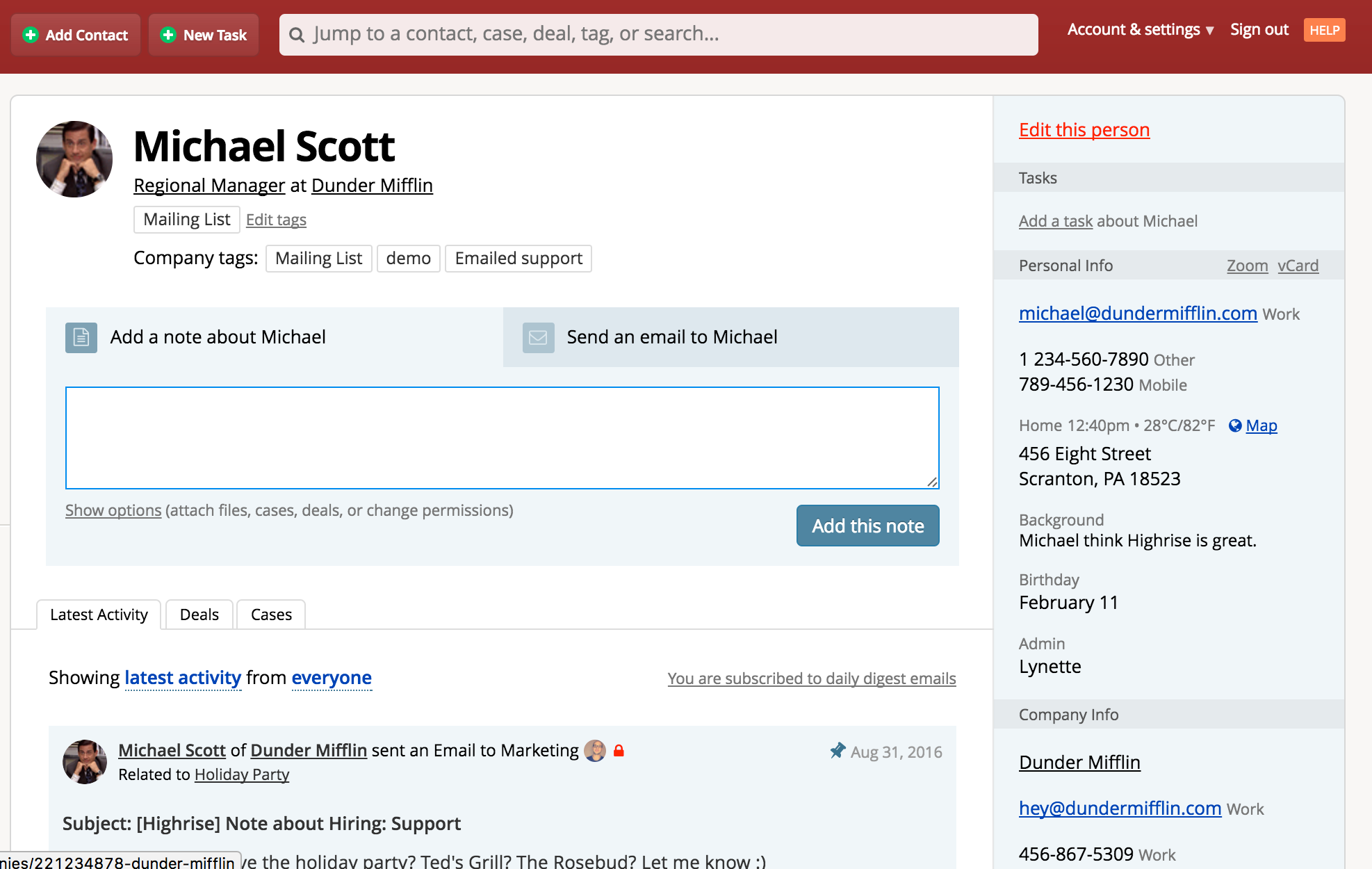
Source: Highrise
The email dropbox lets you forward emails from any client to automatically log them to a contact's timeline. Tasks tie to contacts, not abstract to-do lists. Cases group communications around a project or initiative without a monetary component.
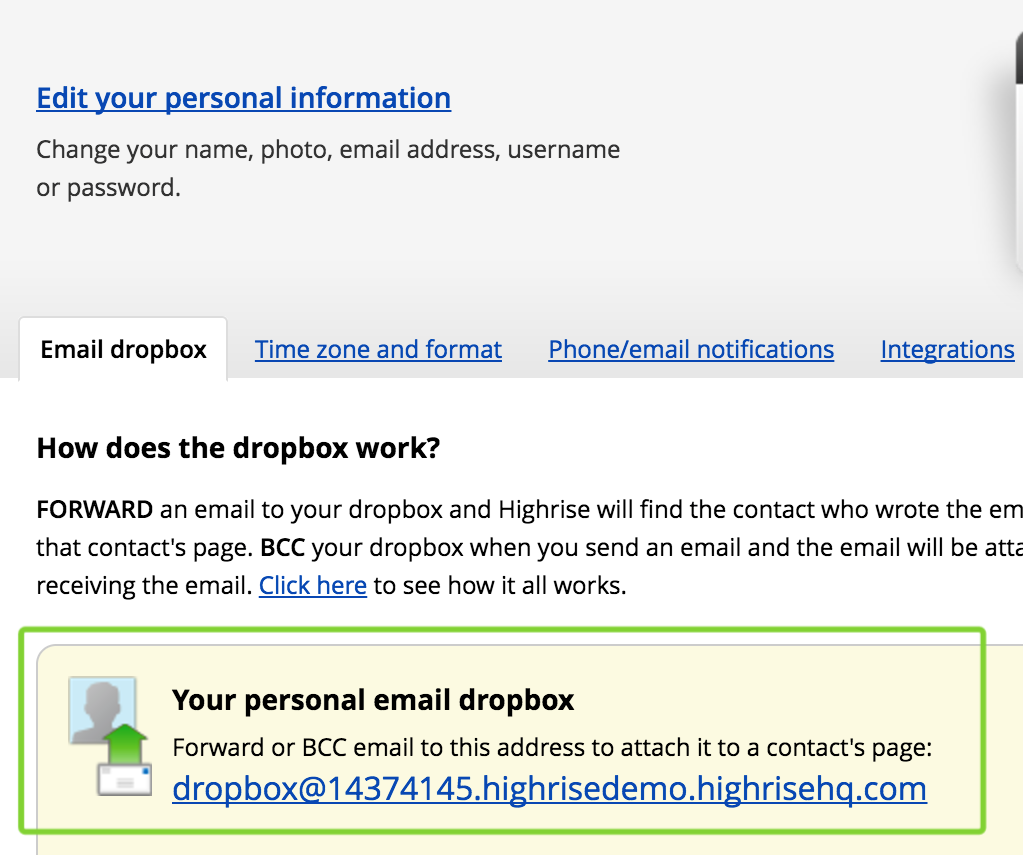
Source: Highrise
It works for what it is. But it stops there. No sales sequences. No pipeline dashboards. No automated lead scoring. No workflow triggers. Every follow-up, every status change, every task assignment is manual.
Salesforce starts where Highrise stops. Sales Cloud provides lead management with Einstein Lead Scoring, opportunity tracking with AI deal insights, pipeline management with change signals, forecast management with real-time rollups, and conversation intelligence with Call Explorer.
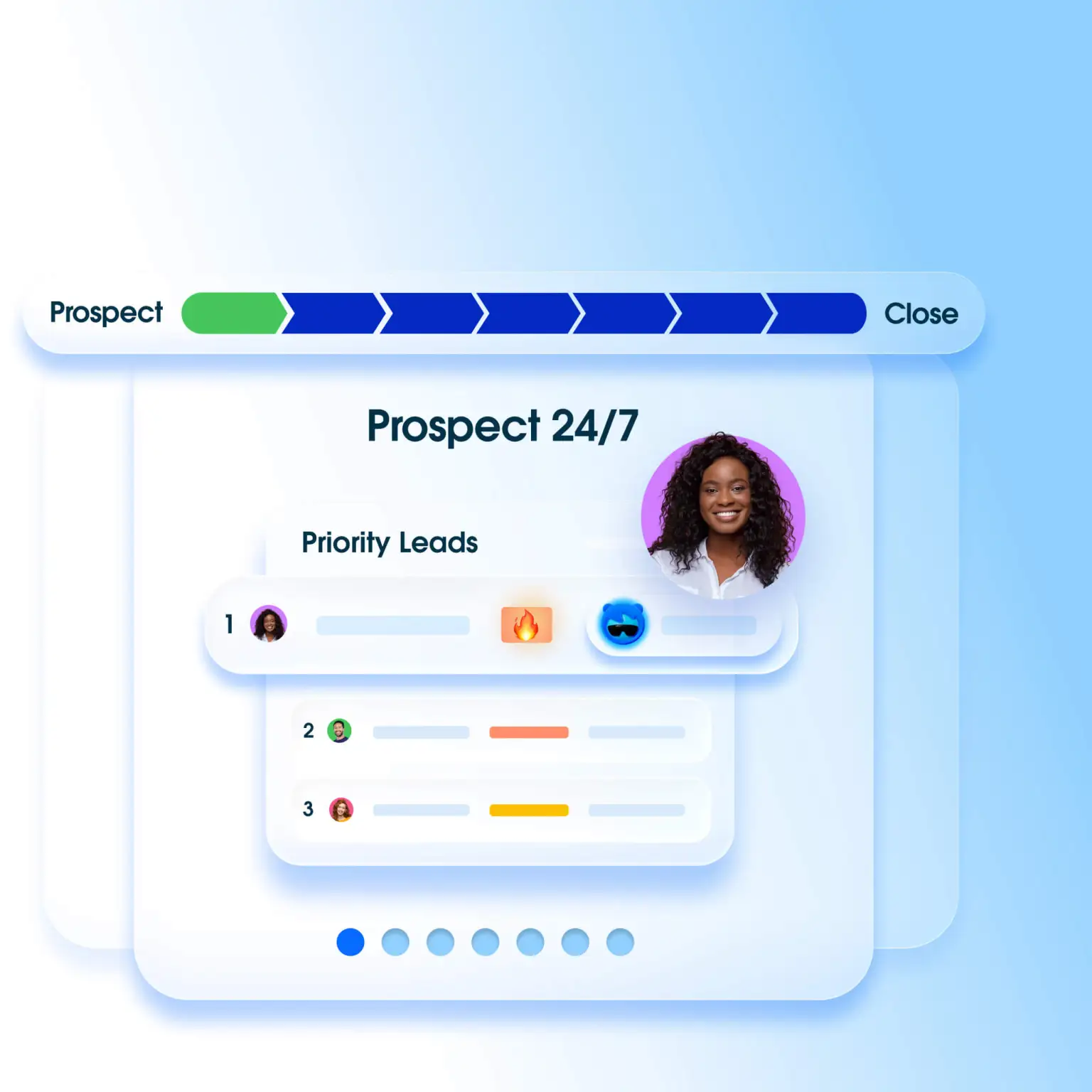
Source: Salesforce
Agentforce Sales Agents handle prospecting, inbound lead engagement, account research, and sales coaching on their own.
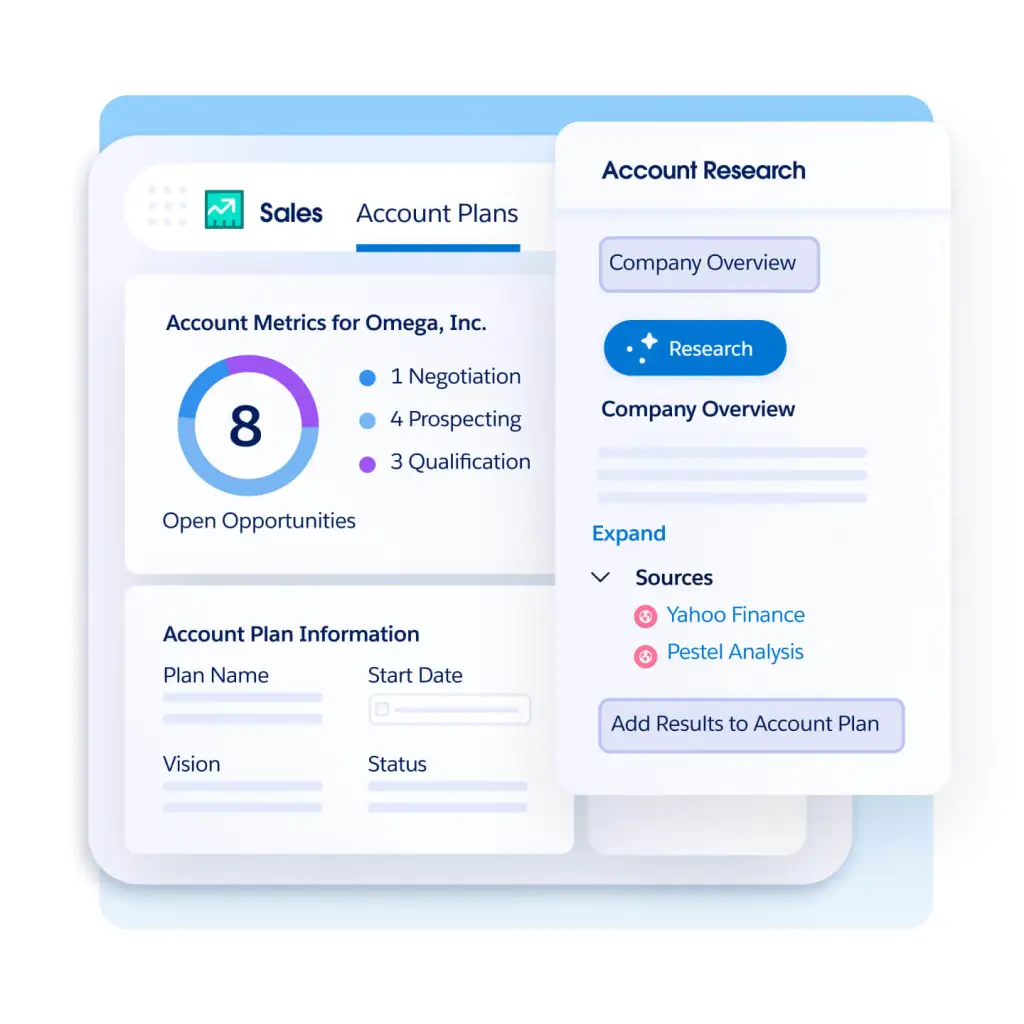
Source: Salesforce
The trade-off is complexity. Salesforce has held the Gartner MQ Leader position for Sales Force Automation for 19 consecutive years for good reason, but using all that capability requires trained administrators, implementation partners, and months of configuration. Many small teams that adopt Salesforce end up using a fraction of what they pay for.
The data problem neither CRM solves on its own
Here's what Highrise and Salesforce have in common: they're both empty databases until you fill them. Highrise stores the contacts you manually enter or import. Salesforce stores the leads, accounts, and opportunities your team creates.
Neither platform tells you which companies match your ideal customer profile, which prospects are researching solutions like yours, or who the decision-makers are at your target accounts.
This is the gap that separates a contact database from a revenue engine. Your CRM tracks what already happened. It doesn't tell you what should happen next.
ZoomInfo exists to close this gap. The platform's B2B data covers 500M contacts and 100M companies, with 120M direct-dial phone numbers and 200M+ verified business email addresses, verified through a multi-source pipeline backed by 300+ human researchers achieving up to 95% accuracy on first-party data.
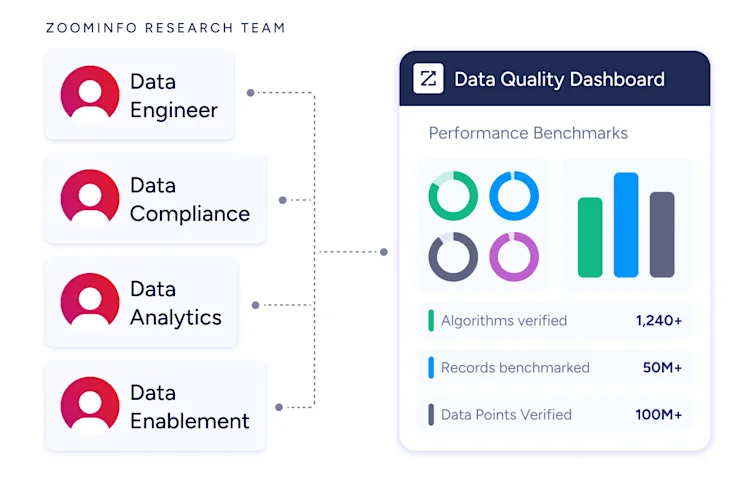
Source: ZoomInfo
Buyer Intent data tracks signals from 210 million IP-to-Organization pairings and 6 trillion+ new keyword-to-device pairings monthly to identify which accounts are in-market before they contact you.
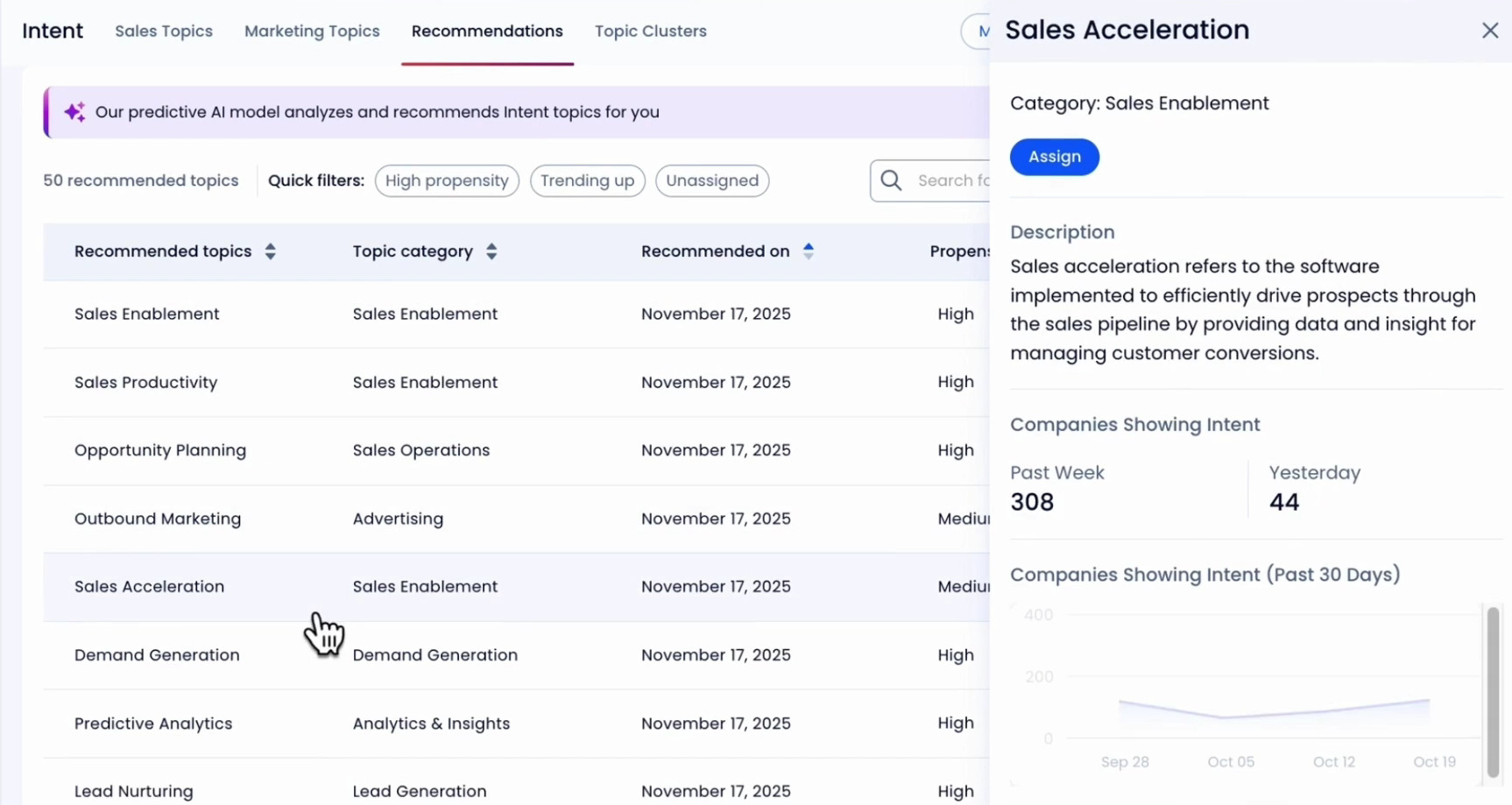
But raw data only gets you so far. ZoomInfo's GTM Context Graph combines that third-party data with your CRM records, conversation transcripts, email interactions, and behavioral signals into a single intelligence layer.
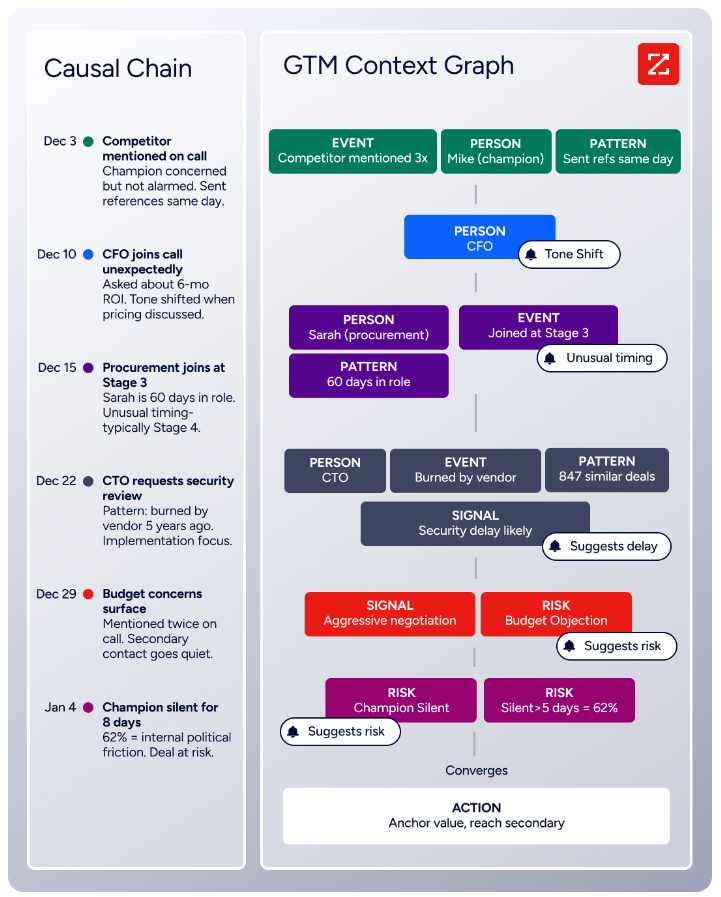
Source: ZoomInfo
As ZoomInfo's Chief Product Officer Dominik Facher explains: "The CRM recorded the state change. It has no record of why it happened." The GTM Context Graph captures that "why," connecting signals and outcomes across thousands of deals so AI can reason about what should happen next, not just summarize what already did.
For Salesforce users, ZoomInfo integrates natively to enrich accounts, surface buying signals, and trigger outreach.
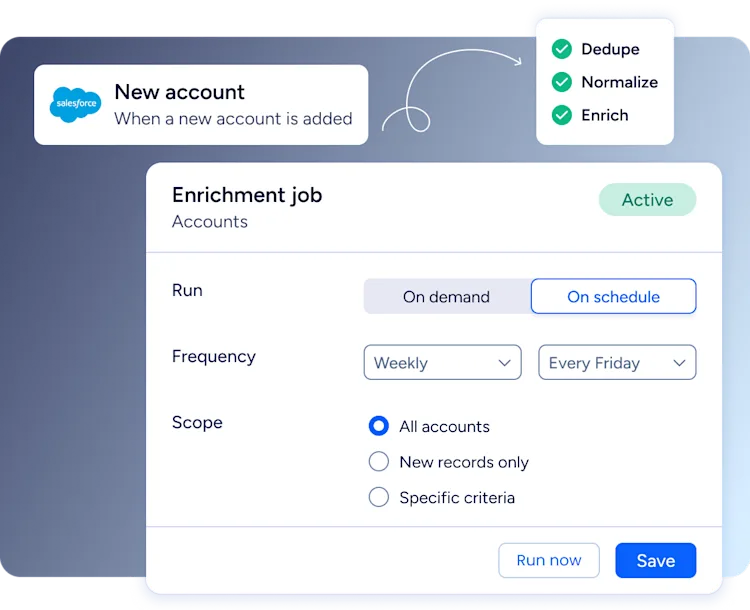
Source: ZoomInfo
For legacy Highrise users, ZoomInfo's GTM Workspace provides the execution layer that Highrise never built. Either way, the intelligence comes from ZoomInfo's data and context graph, not from what a rep typed into a CRM.
"ZoomInfo is our one source of truth for account data, and even more so for contact data. There's no other provider in the market that provides you with that level of detail." (Smartsheet)
Pricing reflects who each platform was built for
Highrise charged flat monthly rates based on plan tiers (number of users, contacts, and storage), not per seat. A team of 10 paid the same as a team of 2 on the same plan. No annual contracts were offered, month-to-month only.
A 10% non-profit discount was the only special pricing available. Predictable costs with no surprises.
Since Highrise no longer publishes pricing or accepts new customers, specific dollar amounts aren't publicly available. But the model was built for small budgets.
Salesforce uses tiered per-user pricing that scales with features:
Edition | Price (USD) |
|---|---|
$0/user/month (max 2 users) | |
$25/user/month | |
$100/user/month | |
$175/user/month | |
$350/user/month | |
$550/user/month |
Most teams need at least Pro Suite ($100/user/month) for customization, quoting, and AppExchange access. Enterprise ($175/user/month) unlocks AI features and workflow automation.
On top of license fees, Premier Success support costs 30% of net license fees, Agentforce AI usage costs extra via Flex Credits ($2 per conversation or $500 per 100,000 credits), and implementation typically runs 100–150% of annual license costs through partner firms.
For a 10-person sales team on Salesforce Enterprise, expect $21,000+ per year in licenses alone, before implementation, support, and add-ons.
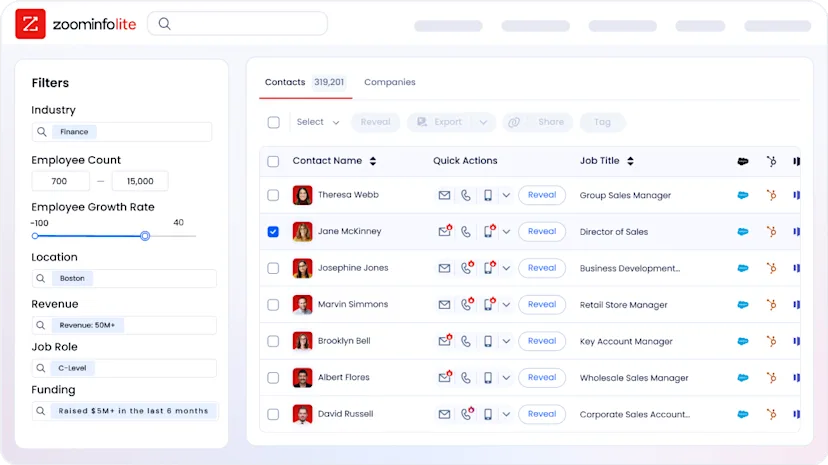
ZoomInfo uses custom-quoted, consumption-based pricing across Sales, Marketing, and Operations plans. No prices are published, but the model scales around seats, monthly credits (1 credit = 1 contact export), and feature tier (Professional, Advanced, Enterprise).
ZoomInfo Lite provides permanent free access to the B2B database with 10 monthly export credits, and a 7-day free trial is available for the full platform.
Source: ZoomInfo
The pricing comparison is somewhat misleading because these tools serve different functions. Highrise and Salesforce are CRMs that store and organize customer data. ZoomInfo is the intelligence platform that fills those CRMs with verified contacts, intent signals, and actionable insights. Many teams use Salesforce and ZoomInfo together, with ZoomInfo feeding the data and intelligence that Salesforce organizes and tracks.
Automation separates a modern sales tool from a static database
Highrise has zero automation. Every task assignment, every follow-up reminder, every deal status change requires manual action. 37signals made this choice deliberately, believing simplicity should come before automation.
But in 2026, every minute your team spends on administrative work is a minute not spent selling.
Salesforce sits at the other extreme. Flow automates business processes through visual workflows. Einstein Activity Capture auto-syncs emails and calendar events from Gmail and Outlook.
Agentforce Sales Agents handle prospecting, pipeline management, account research, and sales coaching on their own, powered by the Atlas Reasoning Engine.
The Einstein Trust Layer provides zero data retention with LLM partners, PII masking, and audit trails for AI-generated actions.
This automation costs real dollars and real complexity. Setting up workflows, configuring agents, and maintaining the system requires dedicated administrators or consultants.
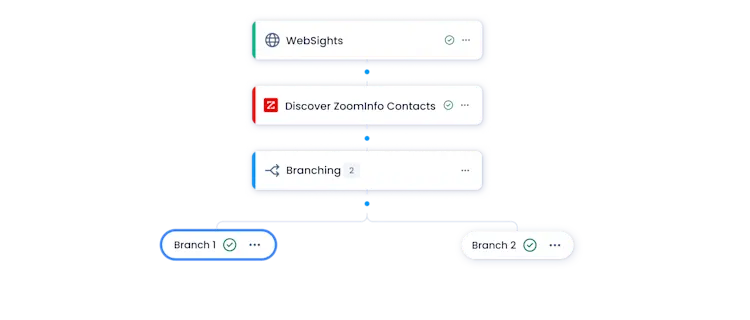
ZoomInfo approaches automation differently. Rather than automating CRM processes, it automates the intelligence that drives those processes. Workflows trigger outreach when buying signals fire.
Source: ZoomInfo
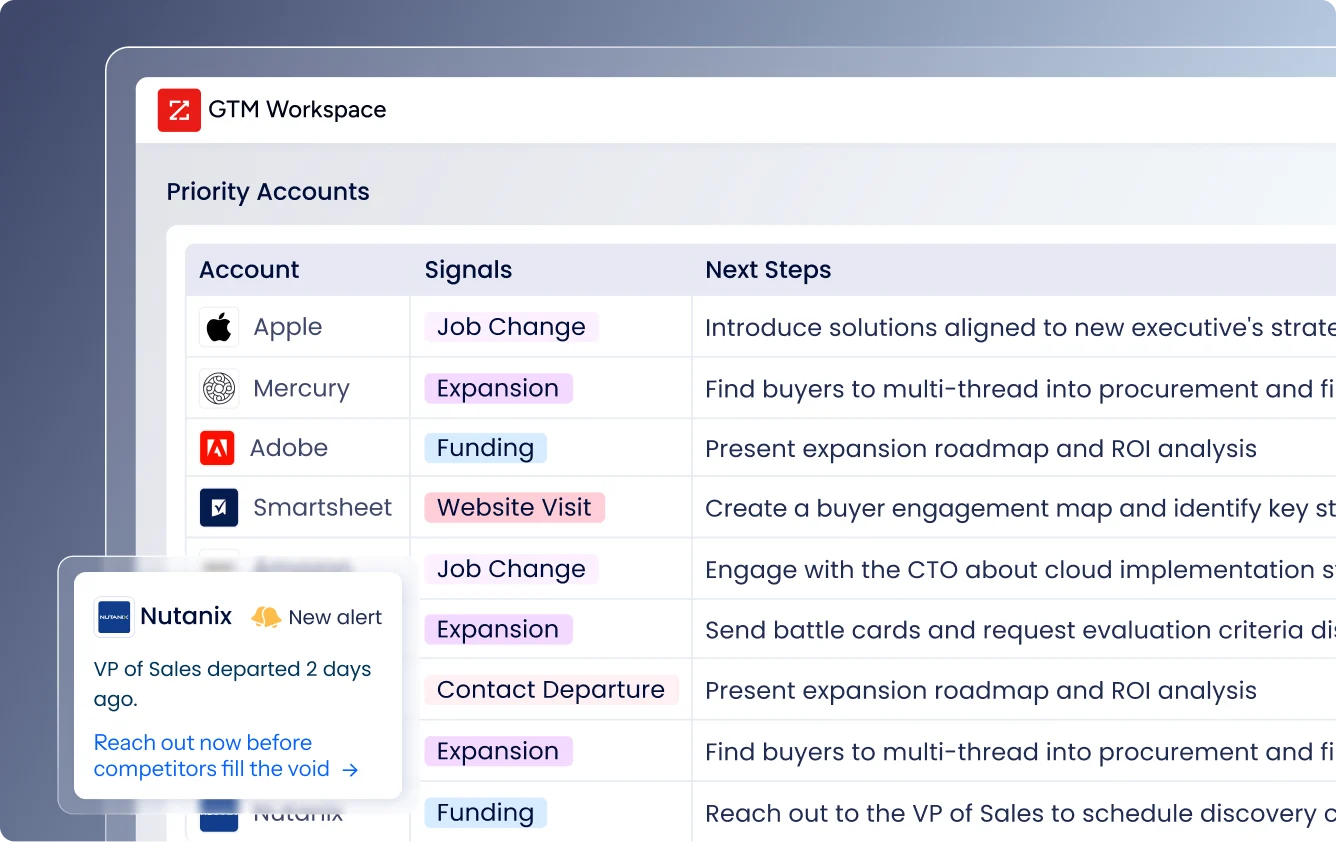
GTM Workspace's AI agents research accounts, draft personalized outreach, monitor signals, and update CRM fields.
Source: ZoomInfo
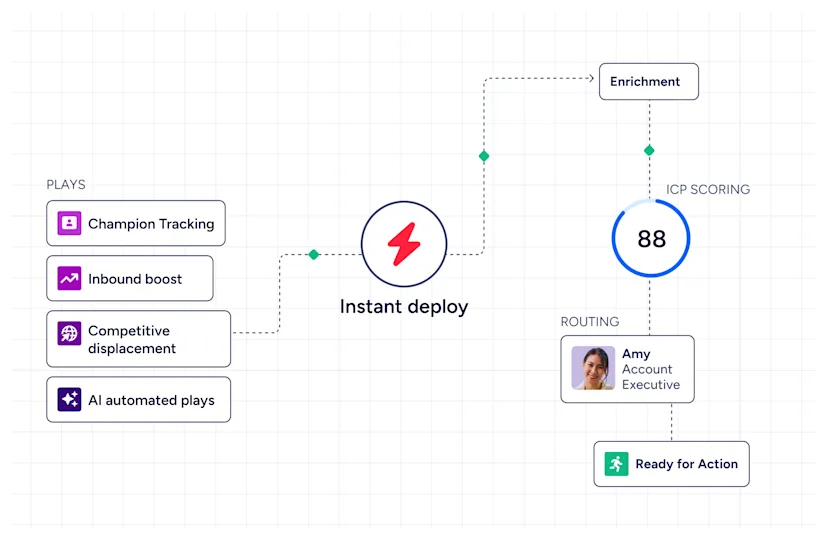
GTM Studio's pre-built plays launch inbound acceleration, champion tracking, and competitive displacement campaigns without engineering support. Expansion plays that used to take three weeks now launch in 30 minutes.
Source: ZoomInfo
The distinction: Salesforce automates what happens inside your CRM. ZoomInfo automates the intelligence that tells your team what to do, then feeds the results into whatever CRM you use.
"That combination of our internal CRM data, external signals, and AI that's given all that context has helped us craft very specific account- and persona-based messages. And people have responded to them right away." (Seismic)
For a direct head-to-head look at how Salesforce and ZoomInfo stack up as platforms, see our Salesforce vs. ZoomInfo comparison.
Integration ecosystems show different ambitions
Highrise maintained a modest integration ecosystem through its Extras page and Zapier. Connections to FreshBooks, Help Scout, Mailchimp (via PieSync), and a handful of others covered common small-business workflows.
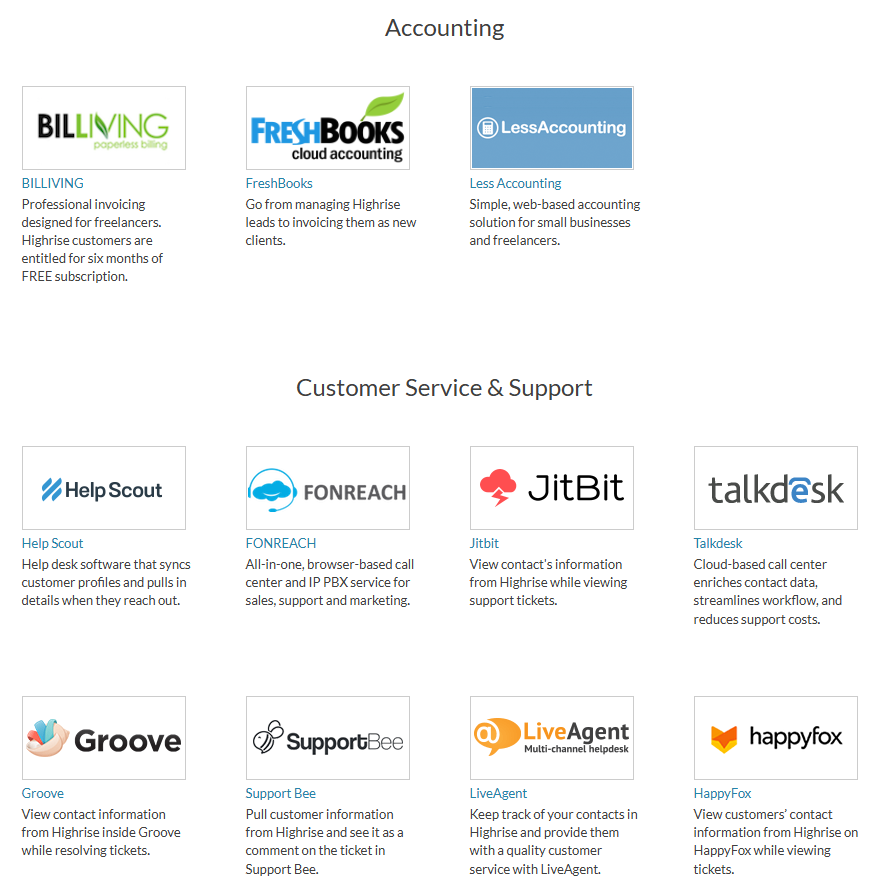
Source: Highrise
The REST API supports XML over HTTP with 18 resource categories. But since Highrise doesn't maintain third-party integrations, the ecosystem erodes as partners move on. Integrations built against a static API break over time without replacement.
Salesforce operates the largest enterprise app marketplace in the industry. AppExchange offers 9,000+ partner apps with 14+ million installs, and 91% of customers use at least one.
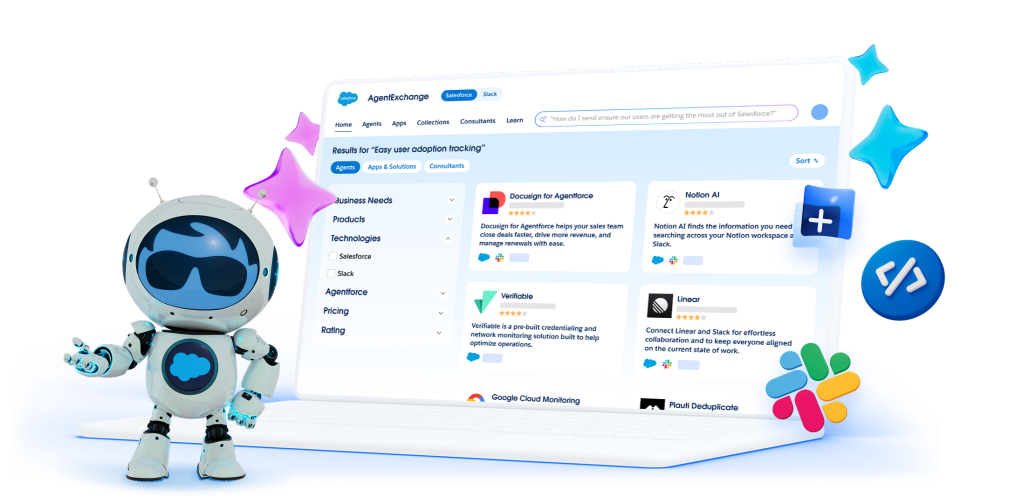
Source: Salesforce
MuleSoft provides enterprise integration with hundreds of pre-built connectors and API management. Native integrations cover Google Workspace, Microsoft Outlook and Teams, and Slack.
The API surface includes REST, SOAP, Bulk, Metadata, Tooling, and Pub/Sub APIs.
ZoomInfo takes a different approach. The ZoomInfo App Marketplace lists 120+ partner integrations across CRM, marketing automation, sales engagement, and data warehouse categories.
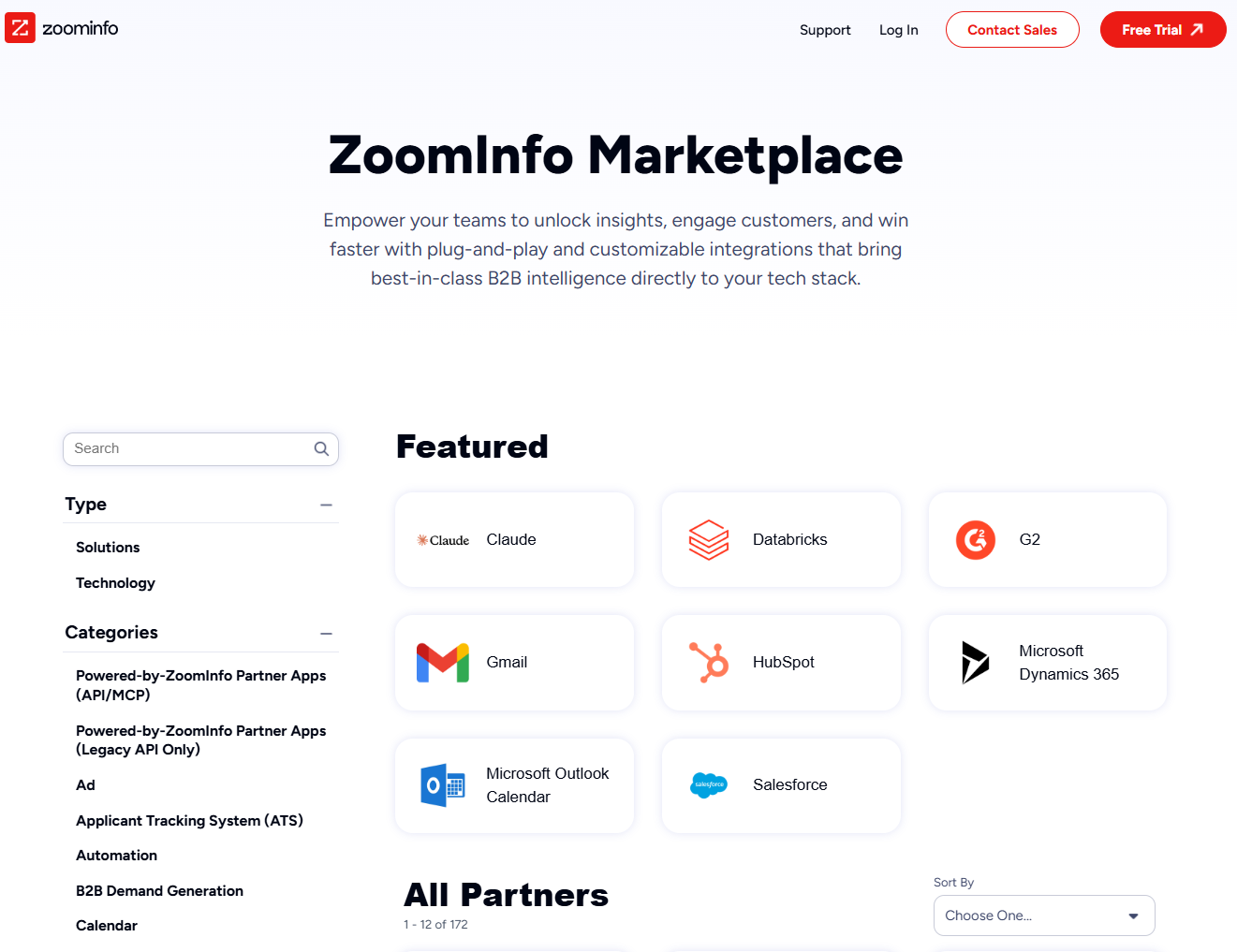
Source: ZoomInfo
ZoomInfo added API Access to all relevant plans and launched an MCP server that connects AI models directly to ZoomInfo's data without custom coding.
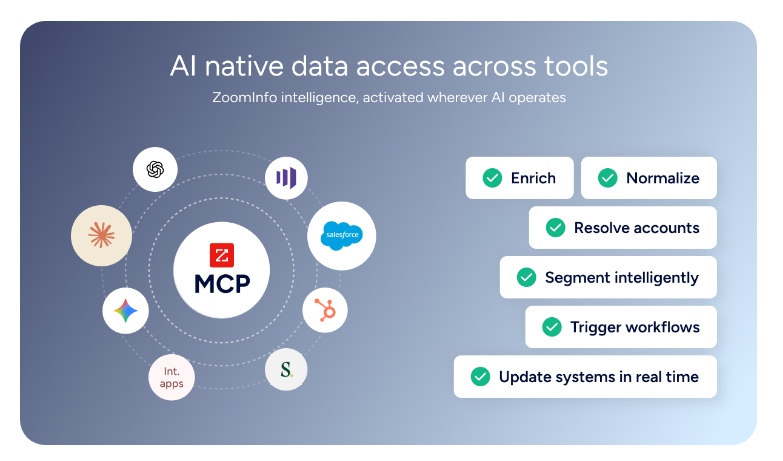
Source: ZoomInfo
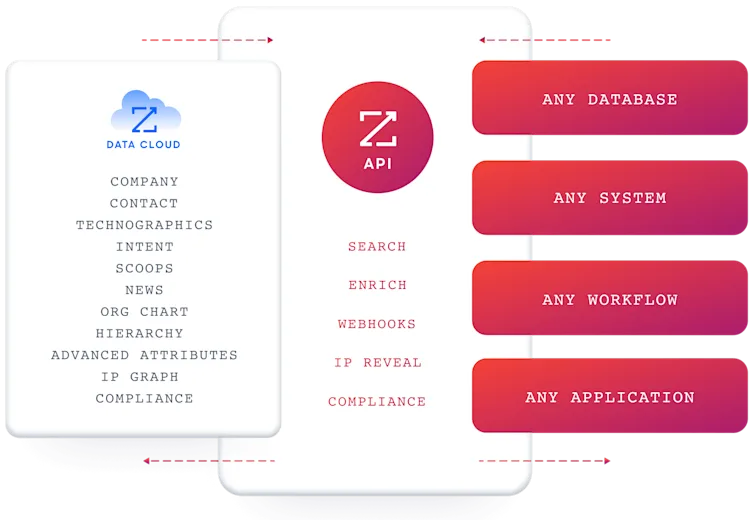
The Enterprise API provides programmatic access through Search, Enrich, Copilot (AI Intelligence), Marketing, and Engagement endpoints.
Source: ZoomInfo
The integration story matters because these tools work best together. ZoomInfo's native Salesforce integration pushes enriched contact data, intent signals, and account intelligence directly into Salesforce records, so reps see ZoomInfo intelligence without leaving their CRM. For legacy Highrise users, ZoomInfo's GTM Workspace can serve as both the prospecting tool and the execution layer that Highrise never developed.
"The plug-and-play aspect of the API means I can integrate it very easily into any process and get information at a moment's notice." (BDO Canada)
Support and learning resources
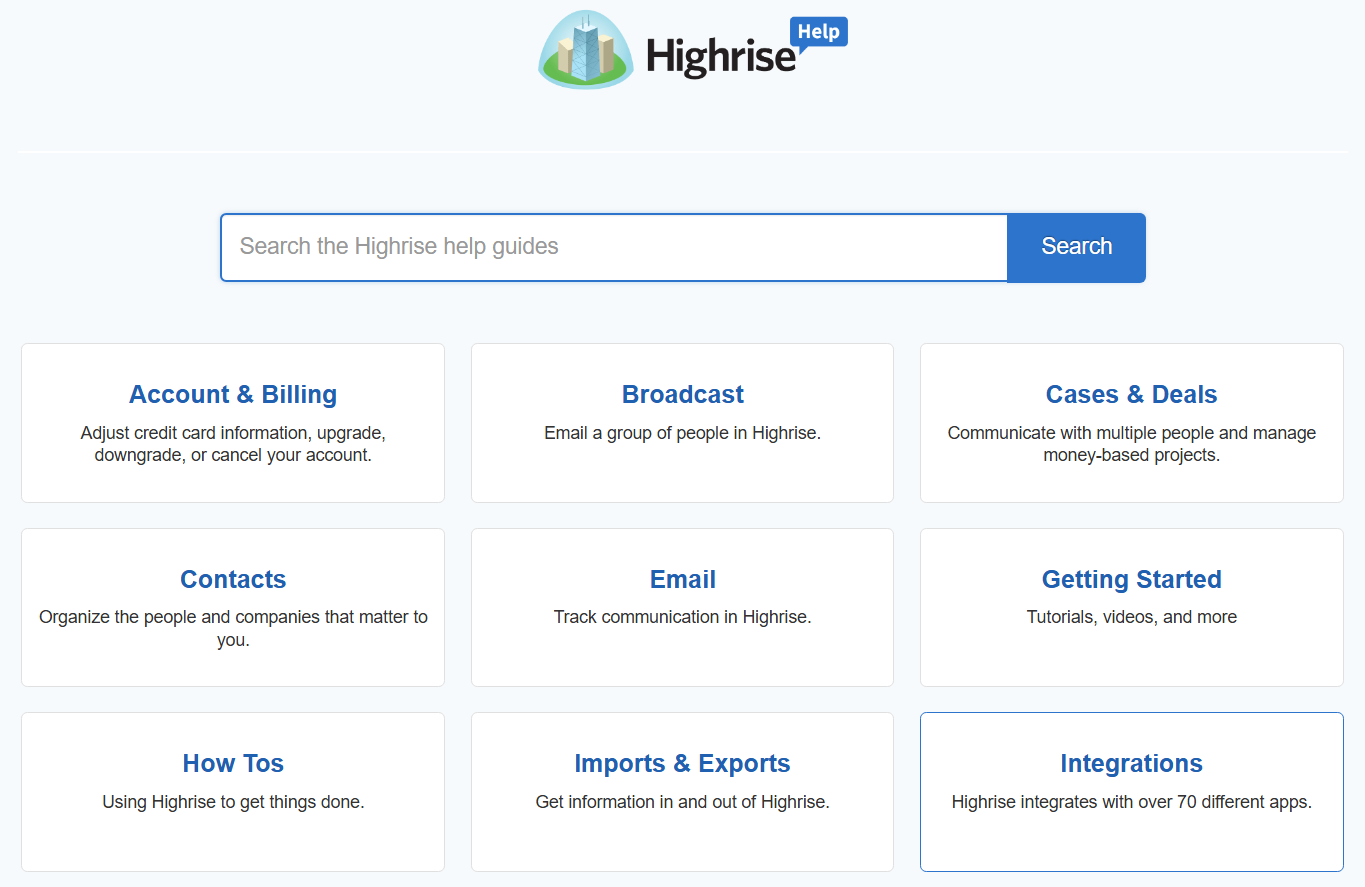
Highrise maintains a help center organized into topical categories, with email support. Articles are still being updated. But there's no live chat, no phone support, and no published SLA.
Source: Highrise
Salesforce offers three Success Plan tiers: Standard (free, self-service via Trailhead and docs), Premier (30% of license fees, with 1-hour response time for business-impacting issues and 1:1 expert coaching), and Signature (custom pricing, dedicated Customer Success Manager, 24/7 support with 15-minute response for critical issues).
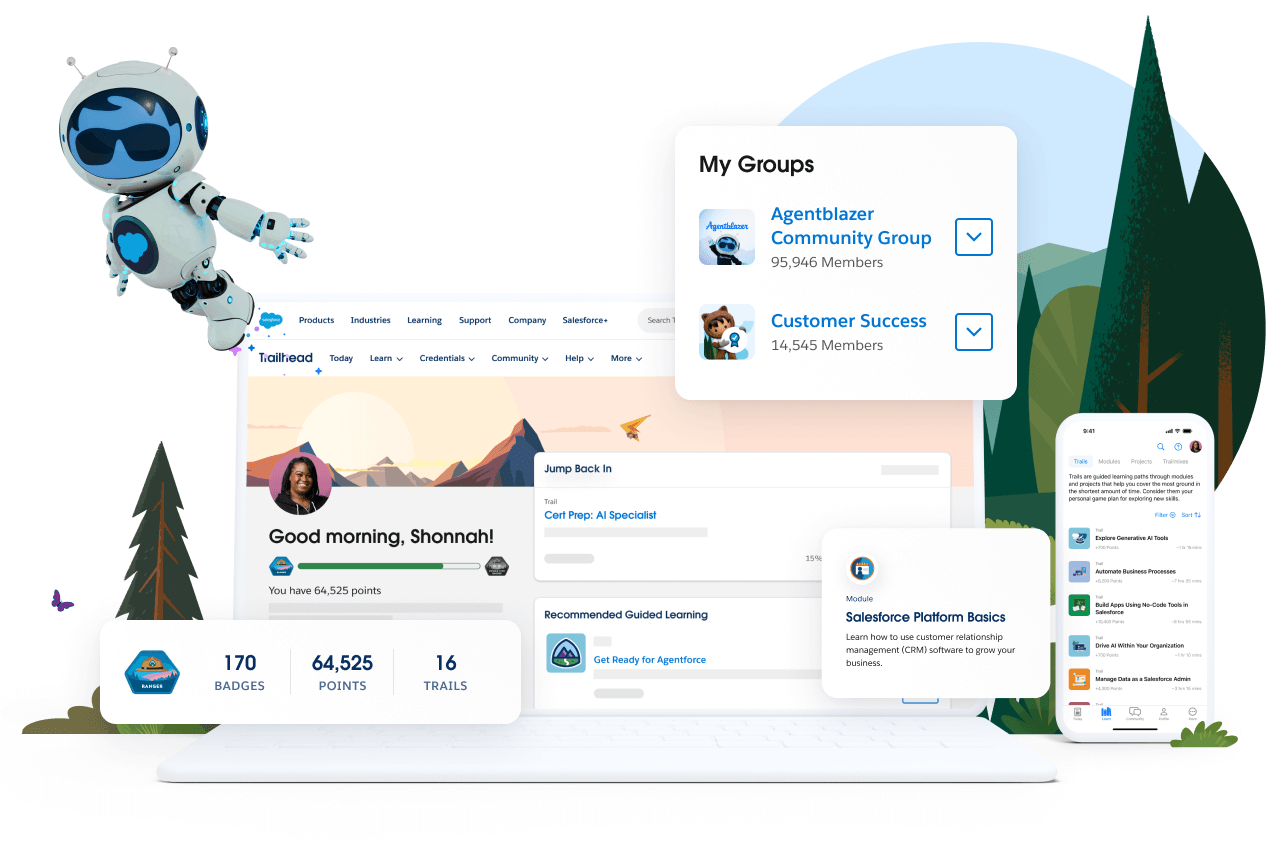
Trailhead provides 1,500+ learning badges and 60+ certifications. The Trailblazer Community spans 20 million members with 1,300+ local groups in 90 countries.
Source: Salesforce
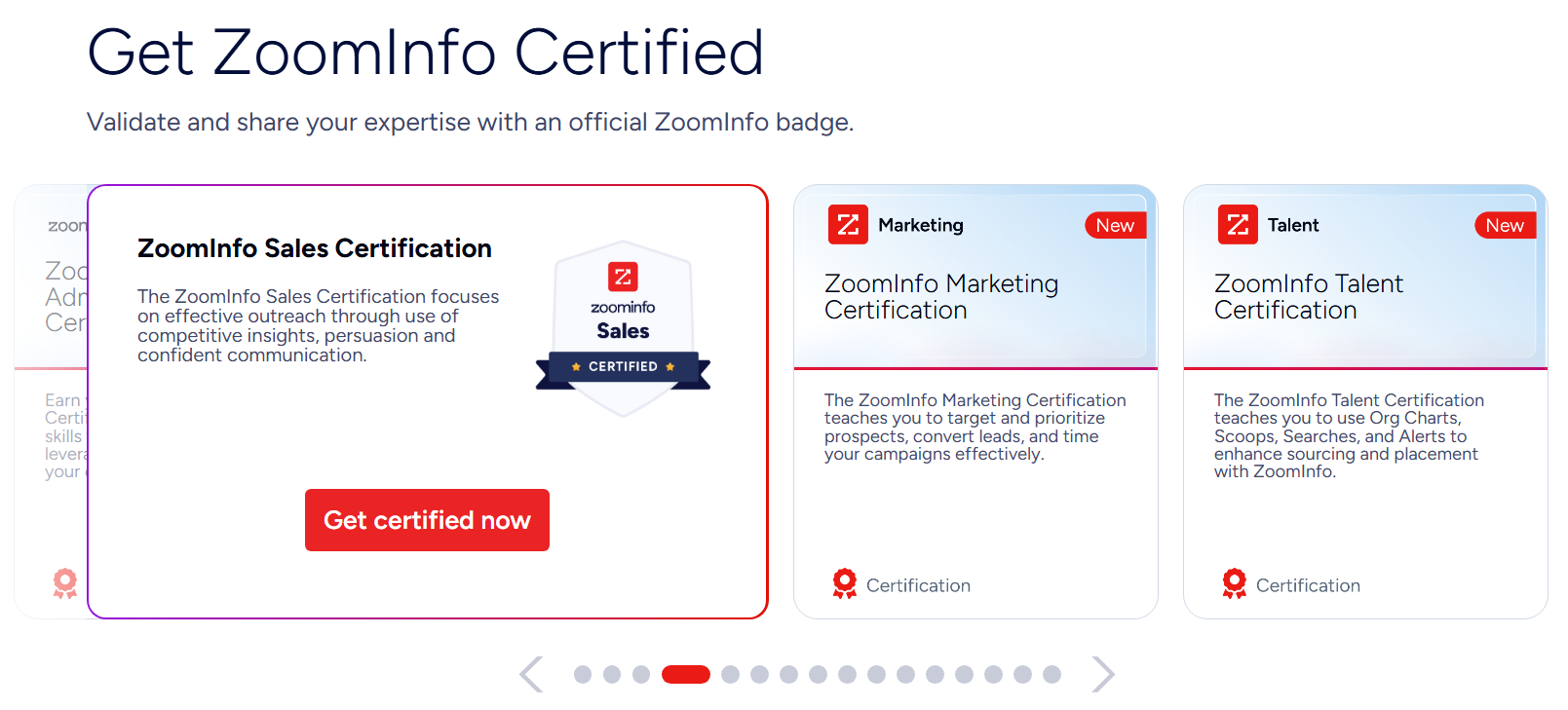
ZoomInfo provides support through its Help Center (Knowledge Center, Release Notes, Resource Center), ZoomInfo University with role-specific learning paths and certifications, and direct support via contact form and phone.
Source: ZoomInfo
Enterprise plans include dedicated customer service managers and guided onboarding. ZoomInfo redesigned its onboarding to a 90-day program and saw a 25% improvement in customer satisfaction scores.
The learning investment tracks platform complexity. Highrise requires almost none. ZoomInfo is moderate, with most users productive within weeks. Salesforce requires the most sustained learning, though Trailhead makes that investment more accessible than any other enterprise platform.
Highrise vs. Salesforce vs. ZoomInfo: Which should you choose?
The answer depends on where your team is today and where it needs to go.
Stay on Highrise if:
You're an existing customer with simple contact management needs
Your team is small (under 15 people) and doesn't need pipeline reporting or automation
Stability and simplicity matter more than growth features
You're not ready to invest in migrating to a new platform
Highrise continues to work for 10,000+ existing businesses with straightforward relationship tracking needs. Just know that no new features will ever arrive.
Choose Salesforce if:
You need a full CRM platform with configurable pipelines, forecasting, and automation
Your organization has the budget and personnel to implement and administer it
You want access to the largest enterprise app ecosystem
AI-powered sales agents and autonomous workflows matter to your strategy
You're operating at mid-market or enterprise scale
Add ZoomInfo if:
You want verified B2B data powering your prospecting, not just the contacts you already know
Knowing which accounts are in-market would change how your team prioritizes its time
You use Salesforce and want enriched data, intent signals, and AI-driven insights inside your CRM
You're leaving Highrise and need a modern execution platform with built-in intelligence
You want AI that understands your deals, not just your CRM fields
Start with ZoomInfo Lite for free, or request a demo to see the full platform.
The CRM you choose matters less than the intelligence feeding it. Highrise and Salesforce both organize your relationships. ZoomInfo reveals the relationships worth building, the signals that indicate readiness, and the context that makes every conversation count. Whether you run Salesforce or still use Highrise, ZoomInfo is the intelligence layer that turns your sales process from guesswork into informed action.
"It brings time back to our day, something we're all begging for. And it helps us reach the company's goals and get more clients faster." (Vensure)
Highrise vs. Salesforce vs. ZoomInfo FAQ
Is Highrise still available for new users?
No. Highrise stopped accepting new signups on August 20, 2018. Existing customers can continue using the product indefinitely under 37signals' "Until the End of the Internet" policy, which guarantees ongoing security updates and infrastructure maintenance. No new accounts can be created, and no new features will be added.
Can Highrise data be migrated to Salesforce?
Highrise supports CSV and vCard exports for contacts, notes, and emails. Salesforce supports CSV imports through its data loader tools.
The migration is technically feasible, but Highrise's tag-based organization and flat deal structure (three stages only) won't map directly to Salesforce's configurable pipeline architecture. Plan for manual cleanup and reconfiguration during migration.
How does ZoomInfo work with Salesforce?
ZoomInfo integrates natively with Salesforce to enrich account and contact records with verified B2B data, surface buyer intent signals inside CRM workflows, and trigger outreach based on buying activity.
The integration pushes data directly into Salesforce fields, so sales reps see ZoomInfo intelligence without leaving their CRM. ZoomInfo also offers an Account Deal Story feature inside Salesforce for pipeline visibility.
What does Salesforce cost for a small team?
Salesforce offers a Free Suite for up to 2 users at no cost, and Starter Suite at $25/user/month. Most teams need Pro Suite ($100/user/month) or Enterprise ($175/user/month) for meaningful customization, automation, and AI features. Additional costs include Premier Support (30% of license fees), Agentforce AI consumption, implementation through partners (typically 100–150% of annual license costs), and various add-ons.
Does ZoomInfo replace a CRM like Highrise or Salesforce?
No. ZoomInfo is a B2B intelligence platform, not a CRM. It provides the data, intent signals, and AI-powered insights that feed your CRM with verified information.
ZoomInfo's GTM Workspace gives sellers a workspace for prospecting and deal management, but the system of record for customer relationships remains your CRM. Many teams use ZoomInfo alongside Salesforce, HubSpot, or Microsoft Dynamics.
What is ZoomInfo's GTM Context Graph?
The GTM Context Graph is ZoomInfo's intelligence layer. It combines ZoomInfo's third-party B2B data with a customer's CRM records, conversation transcripts, and behavioral signals, processing 1.5 billion data points daily. The result is a layer that captures not just what happened in a deal, but why. This lets AI reason about buying patterns, predict deal outcomes, and recommend next actions based on evidence rather than assumptions.
Which platform is best for a team currently using Highrise?
It depends on your primary gap. If you need a full CRM with pipeline management and automation, Salesforce is the direct upgrade (though with more complexity and cost). If your primary gap is finding the right prospects and knowing when to engage them, ZoomInfo's GTM Workspace and data platform address that directly. Many teams leaving Highrise adopt a modern CRM and add ZoomInfo for the intelligence layer they never had.
How does ZoomInfo's data accuracy compare to manual CRM entry?
ZoomInfo's multi-source verification pipeline, backed by 300+ human researchers, achieves up to 95% accuracy on first-party data. In a Fortune 500 competitive RFP analyzing 25 million contacts across vendors, an independent consultant concluded that no other competitor came close. Manual CRM entry depends entirely on your team's diligence and decays as people change jobs, companies, and contact information.
Comparing Highrise and Salesforce? These related breakdowns go deeper:
