

Choosing between HubSpot and Ontraport often comes down to these questions:
Are you looking for a platform with thousands of integrations and a large ecosystem, or a focused all-in-one system with fewer moving parts?
Does your team need AI agents that draft outreach and resolve support tickets, or visual automation you configure yourself?
How important is native payment processing with subscriptions, decline recovery, and affiliate tracking?
Do you need custom objects in your CRM without paying enterprise prices?
Do you already know who your best prospects are, or do you need help identifying them, reaching them, and understanding when they're ready to buy?
In short, here's what we recommend:
HubSpot is the CRM platform for teams that want marketing, sales, and service under one roof. Its 288,706 customers across 135+ countries reflect its breadth: a free CRM, AI agents through Breeze that handle prospecting and customer support, and an app marketplace with over 2,000 integrations. But prices rise fast past Starter tiers, mandatory onboarding fees add thousands upfront, and mixing hub tiers across departments triggers unexpected cost jumps.
Ontraport targets growing businesses that want automation without enterprise prices. It bundles CRM, marketing automation, payments, a no-code CMS, and a shared inbox into a single platform starting at $29/month. Ontraport's visual campaign builder handles branching automations, its native payment system covers everything from subscriptions to affiliate programs, and it offers custom objects at non-enterprise pricing that HubSpot gates behind its most expensive tier. The trade-off: a steeper learning curve, fewer integrations, and weaker AI than HubSpot.
Both platforms manage and nurture customers in your pipeline. But neither answers the question that determines whether your pipeline fills: who should you target, and when are they ready to buy?
ZoomInfo is a B2B data and go-to-market platform that fills the intelligence gap both HubSpot and Ontraport leave. Built on a database of 500M contacts, 100M companies, 135M+ verified phone numbers, and 200M+ verified business email addresses, ZoomInfo's GTM Context Graph fuses that data with your CRM records, conversation transcripts, and behavioral signals to reveal not just what happened in a deal, but why. Your team accesses that intelligence through GTM Workspace for sellers, GTM Studio for marketers and RevOps, or APIs and MCP in any front-end, including a native HubSpot integration. For B2B teams that need to find and engage prospects before a competitor does, ZoomInfo makes either CRM more effective.
If better prospecting data and go-to-market intelligence are what's missing from your stack, see ZoomInfo in action with a free trial.
HubSpot vs. Ontraport vs. ZoomInfo at a glance
HubSpot | Ontraport | ZoomInfo | |
|---|---|---|---|
Core function | CRM + marketing/sales/service platform | All-in-one CRM + automation + payments + CMS | B2B data + go-to-market platform |
Target buyer | SMB to enterprise | SMB to mid-market | Mid-market to enterprise B2B teams |
Marketing automation | Visual workflows, AI email, social, ads, AEO | Visual campaign builder, email + SMS, Meta audiences | GTM plays, multi-channel orchestration, signal-triggered outreach |
CRM custom objects | Enterprise tier only ($3,600/mo for Marketing) | Available at non-enterprise pricing | N/A (feeds data into your CRM) |
Native payments | Commerce Hub (HubSpot Payments or Stripe) | Built-in with subscriptions, upsells, affiliates | N/A |
AI capabilities | Breeze AI agents across all hubs | AI Assistant add-on (limited scope) | GTM Context Graph, AI agents in GTM Workspace |
B2B contact data | CRM stores what you capture | CRM stores what you capture | 500M contacts, 200M+ verified emails, 135M+ verified phones |
Buyer intent signals | Not native | Not native | Native intent data from 210M IP-to-Org pairings |
Integrations | 2,000+ app marketplace | 80+ integrations | 172+ marketplace integrations + API/MCP access |
Starting price | Free CRM; Starter from $15/seat/mo | $29/mo (Basic) | Free tier (ZoomInfo Lite); paid plans custom-quoted |
Free plan/trial | Permanent free CRM | 14-day free trial, no credit card | ZoomInfo Lite (permanent free) + 7-day paid trial |
CRM depth: ecosystem scale vs. focused flexibility
HubSpot and Ontraport both call themselves all-in-one CRM platforms, but they serve different customers differently.
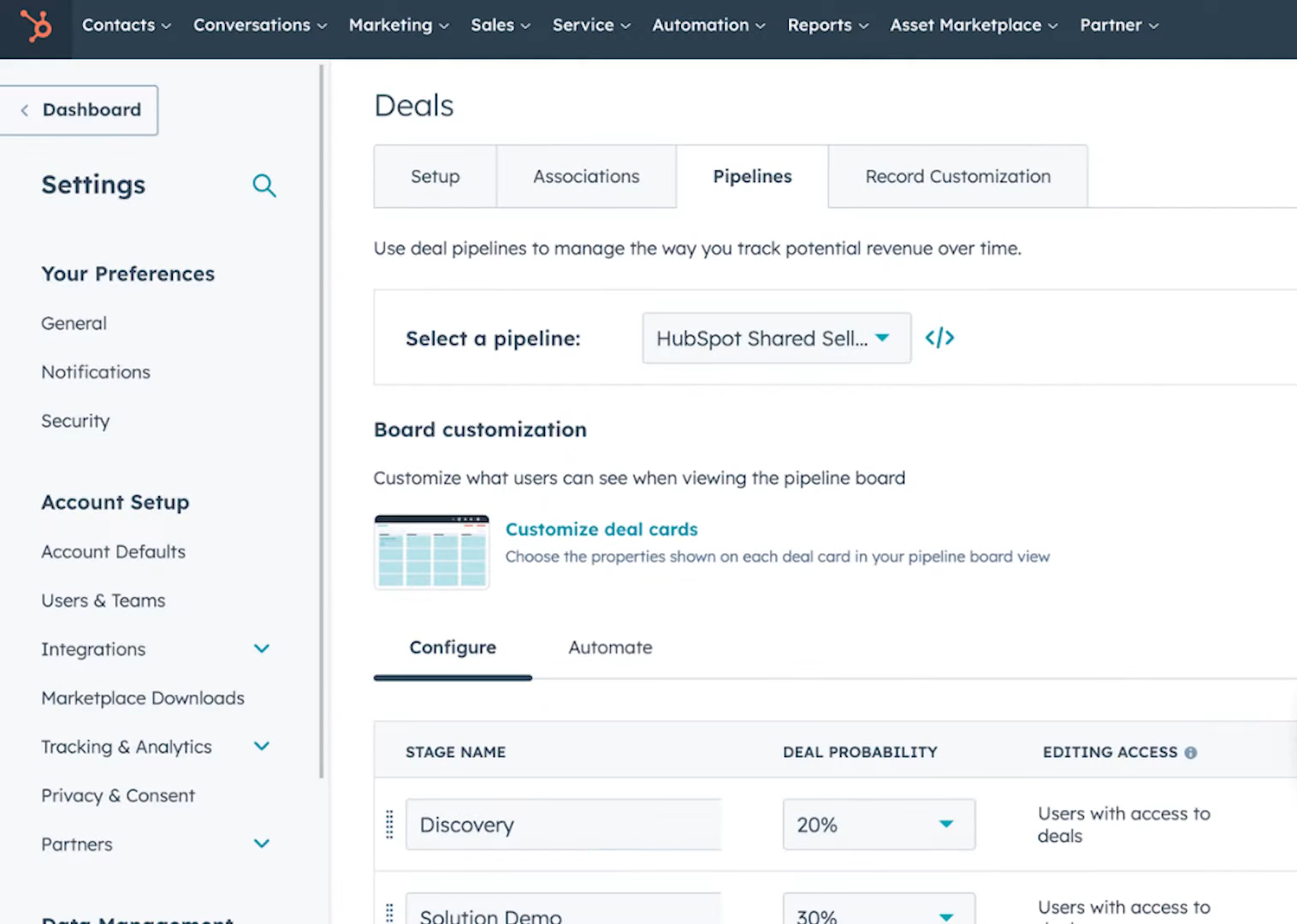
HubSpot's Smart CRM connects six product hubs (Marketing, Sales, Service, Content, Data, and Commerce), all sharing a single data layer. A lead captured by a marketing form instantly appears in a sales rep's pipeline, triggers a service workflow, and feeds an analytics dashboard without integration work. The platform supports up to 15 million contacts (expandable to 50 million), custom objects, field-level permissions, and sandbox environments. For large teams, the shared data model works well.
But HubSpot gates custom objects behind its Enterprise tier. For Marketing Hub, that means $3,600/month plus a $7,000 one-time onboarding fee. If your business needs to track entities beyond standard contacts, companies, and deals, you pay enterprise prices regardless of company size.
Source: HubSpot
Ontraport took the opposite approach.
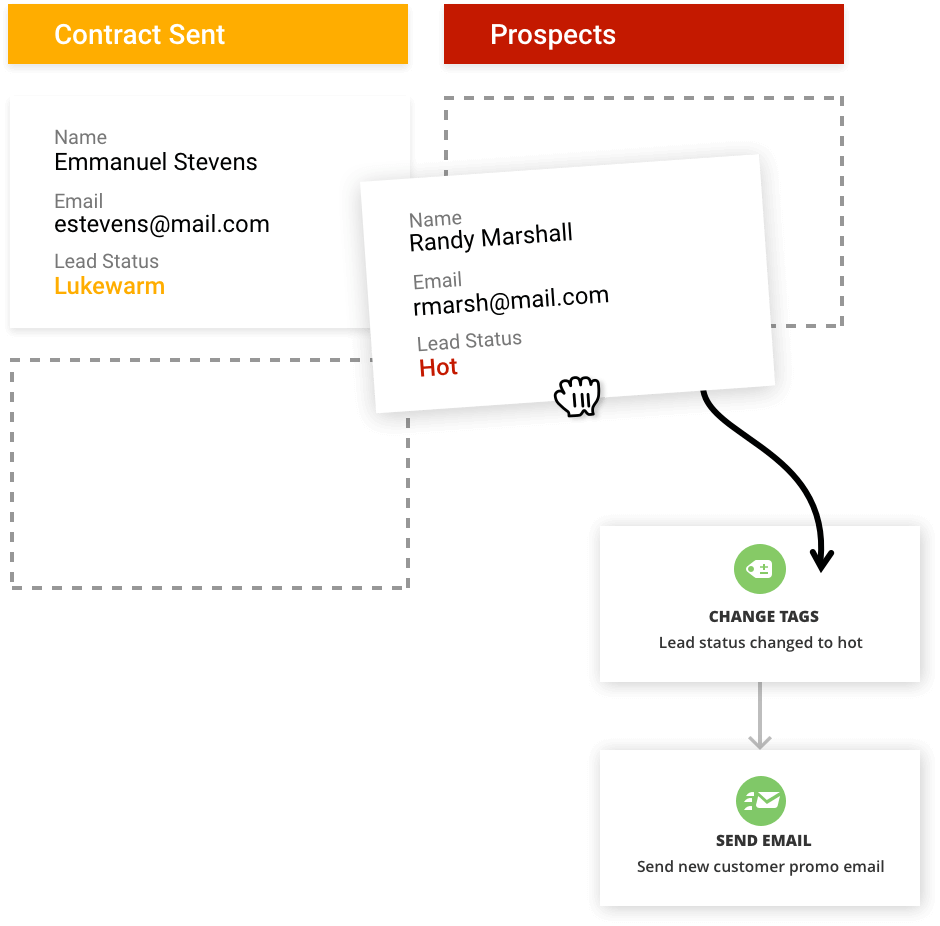
It positions itself as "the only non-enterprise CRM with custom objects," supporting one-to-one, one-to-many, and many-to-many relationships at tiers well below HubSpot Enterprise. Its Smart Pipelines sync both ways with automation: dragging a card to a new stage triggers automation, and automation updates the card position in real time. The contact history logs every page visit, email open, purchase, refund, and form submission chronologically.
Source: Ontraport
Ontraport falls short on scale and polish. Capterra reviewers consistently describe the CRM interface as "clunky and messy," with basic tasks requiring more clicks than competitors. HubSpot's interface, by contrast, earns praise for feeling more like a consumer app than enterprise software.
Neither platform generates the B2B intelligence that fills your CRM with the right prospects. That's a different problem, and ZoomInfo solves it.
Marketing automation: broad reach vs. deep funnels
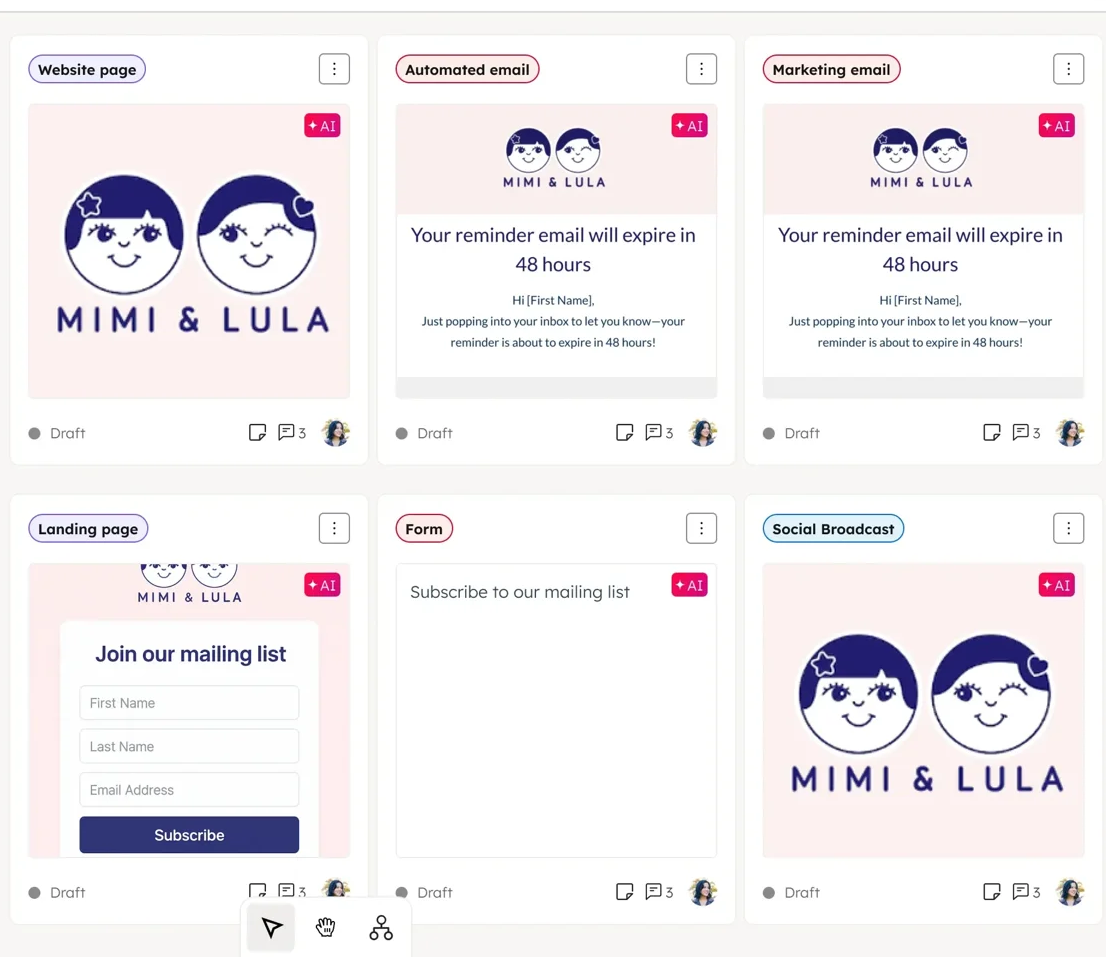
HubSpot's Marketing Hub covers the full marketing stack: email, social media scheduling, ad management, landing pages, blog hosting, SEO tools, and an emerging focus on Answer Engine Optimization for AI-powered search.
Its visual workflow builder handles multi-step nurture sequences with branching logic, and the Breeze Content Agent automates content creation. From one login, you can manage social posts, run paid ads, build landing pages, and track multi-touch attribution.
Source: HubSpot
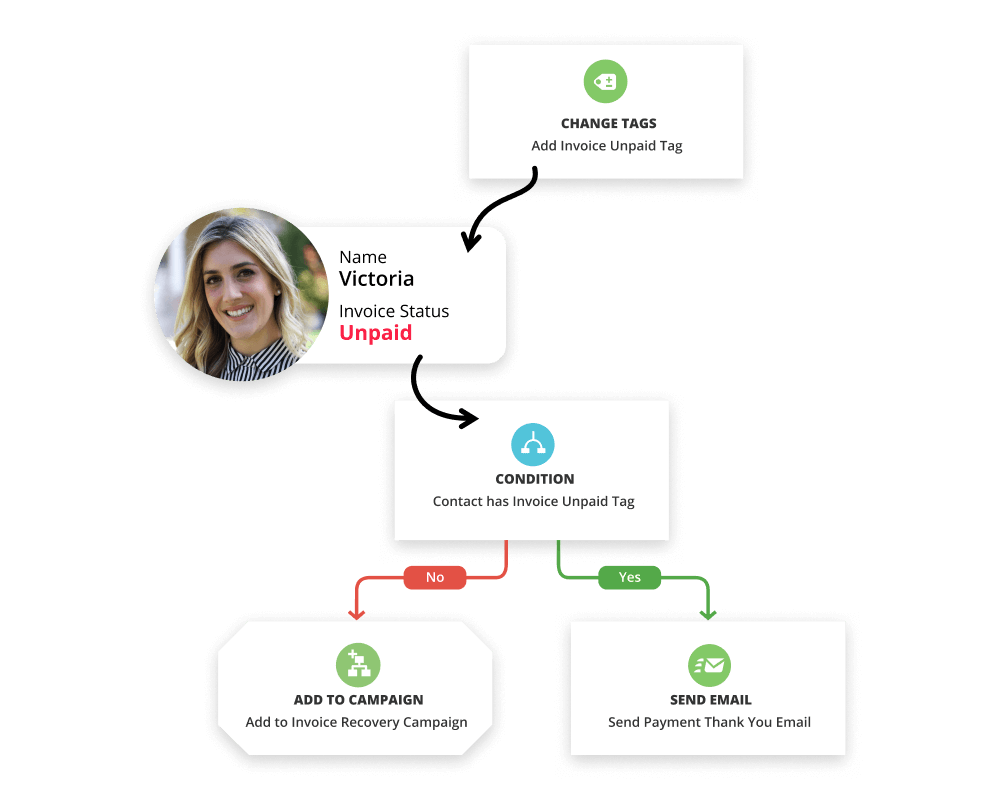
Ontraport's marketing automation trades breadth for depth. Its visual campaign builder maps complete funnels using goals, conditions, forks, split tests, webhooks, and notifications on one canvas.
Where HubSpot's automation split tests subject lines and landing page variants, Ontraport extends split testing to entire campaign branches and business processes. Campaign Performance Mode surfaces funnel-level conversion data on the campaign map, connecting ad spend to revenue.
Ontraport also manages its own email delivery infrastructure. Most platforms route email through third-party services. Ontraport has managed its email delivery chain internally since 2004, with a postmaster team that handles deliverability issues directly. SPF, DKIM, custom sending domains, and private IPs are available at every plan level.
Source: Ontraport
HubSpot offers broader channel coverage. Its social media management, ad integrations, and content tools give marketing teams a single platform for channels Ontraport doesn't touch. Ontraport's Meta Custom Audiences integration handles Facebook and Instagram retargeting, but social publishing and ad management across Google, LinkedIn, and other platforms require separate tools.
The gap neither platform closes: both automate what you do with leads, but neither tells you which accounts are researching solutions like yours right now.
The intelligence gap both CRM platforms leave open
HubSpot and Ontraport both manage the customer journey well after a prospect enters your pipeline. But a CRM only knows what you put into it. If your team prospects with incomplete data, guesses which accounts are in-market, and reaches out to contacts whose information is months old, neither platform can fix that.
This is the problem ZoomInfo was built to solve.
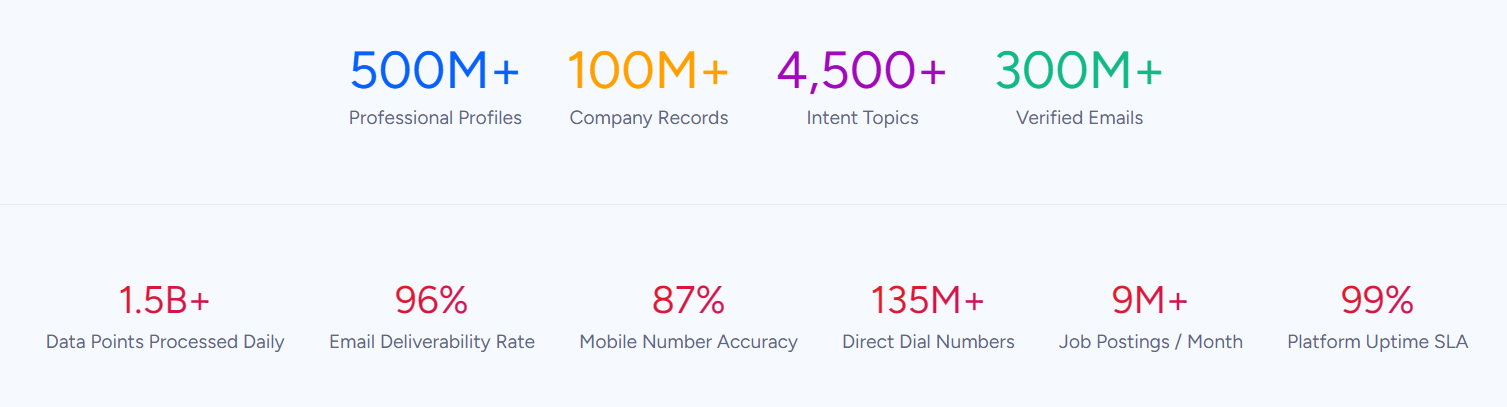
ZoomInfo runs a B2B data platform of 500M contacts, 100M companies, 135M+ verified phone numbers, 120M direct-dial phone numbers, and 200M+ verified business email addresses. That data runs through a multi-source verification pipeline backed by 300+ human researchers and reaches up to 95% accuracy on first-party data.
In a Fortune 500 competitive RFP analyzing 25 million contacts across vendors, the independent consultant concluded that "no other competitor came even close."
Source: ZoomInfo
But data is only the foundation.
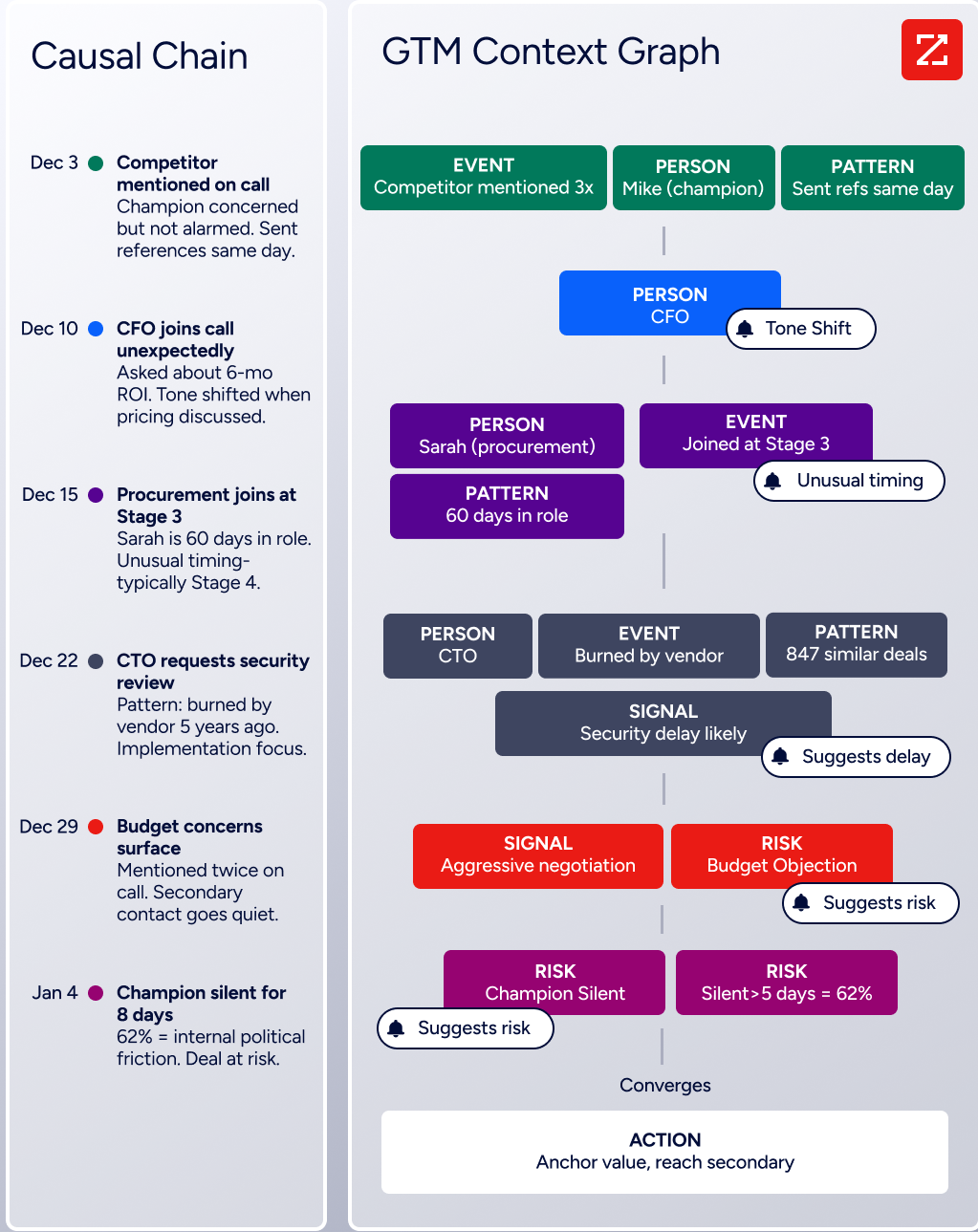
ZoomInfo's GTM Context Graph fuses that data with your CRM records, conversation intelligence, and behavioral signals to capture not just what happened in a deal, but why it happened. A CRM records that a deal moved to Stage 4. The GTM Context Graph surfaces that executive sponsorship at this stage, combined with ROI-focused questions and a competitor research spike, matches the pattern behind closed-won deals in your segment.
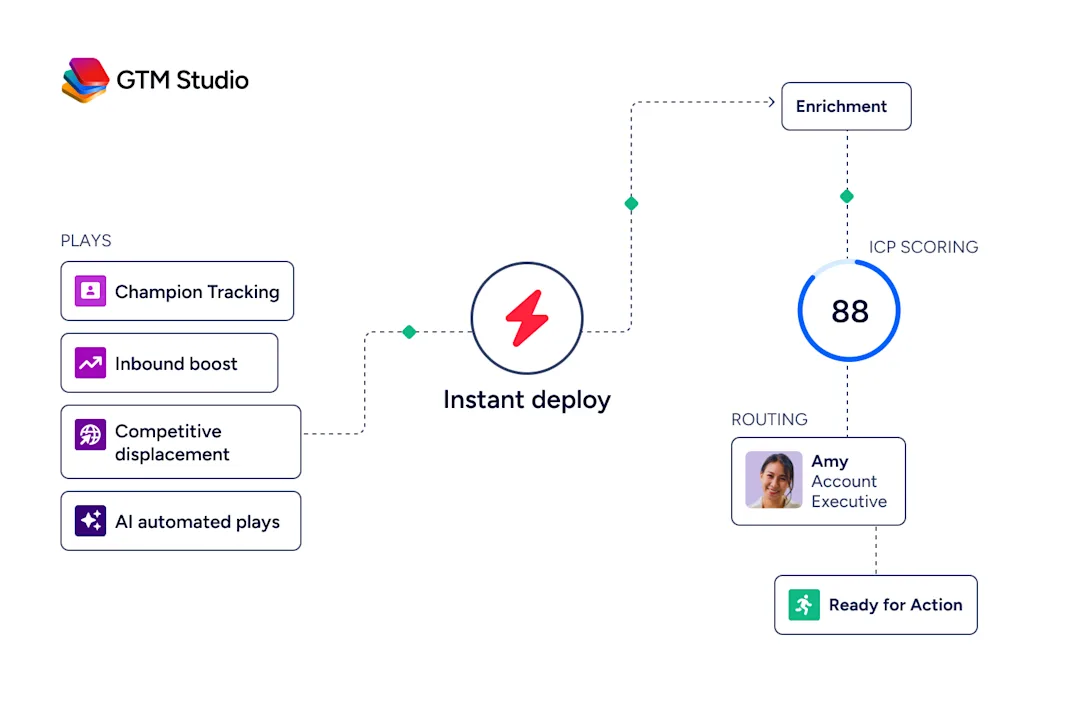
That intelligence flows into GTM Workspace, where sellers see prioritized accounts, AI-drafted outreach, and deal execution in one view. It flows into GTM Studio, where marketers describe audiences in plain language and launch campaigns without engineering tickets. And it flows into any tool your team already uses via APIs and MCP, including a native HubSpot integration.
Source: ZoomInfo
"ZoomInfo gives us the information we need to execute. We don't have to go through and spend our time digging. It's already there, so we can be three steps ahead." (William Kenimer, VP of Revenue Operations, Vensure; Case Study)
For B2B teams, combining ZoomInfo's intelligence with either HubSpot or Ontraport creates something neither platform offers alone: a pipeline built on verified data and real-time buying signals, managed through the CRM workflows you already know.
AI capabilities separate the two platforms
This is where the gap between HubSpot and Ontraport has widened fastest.
HubSpot has invested in Breeze, an AI layer that runs across all hubs.
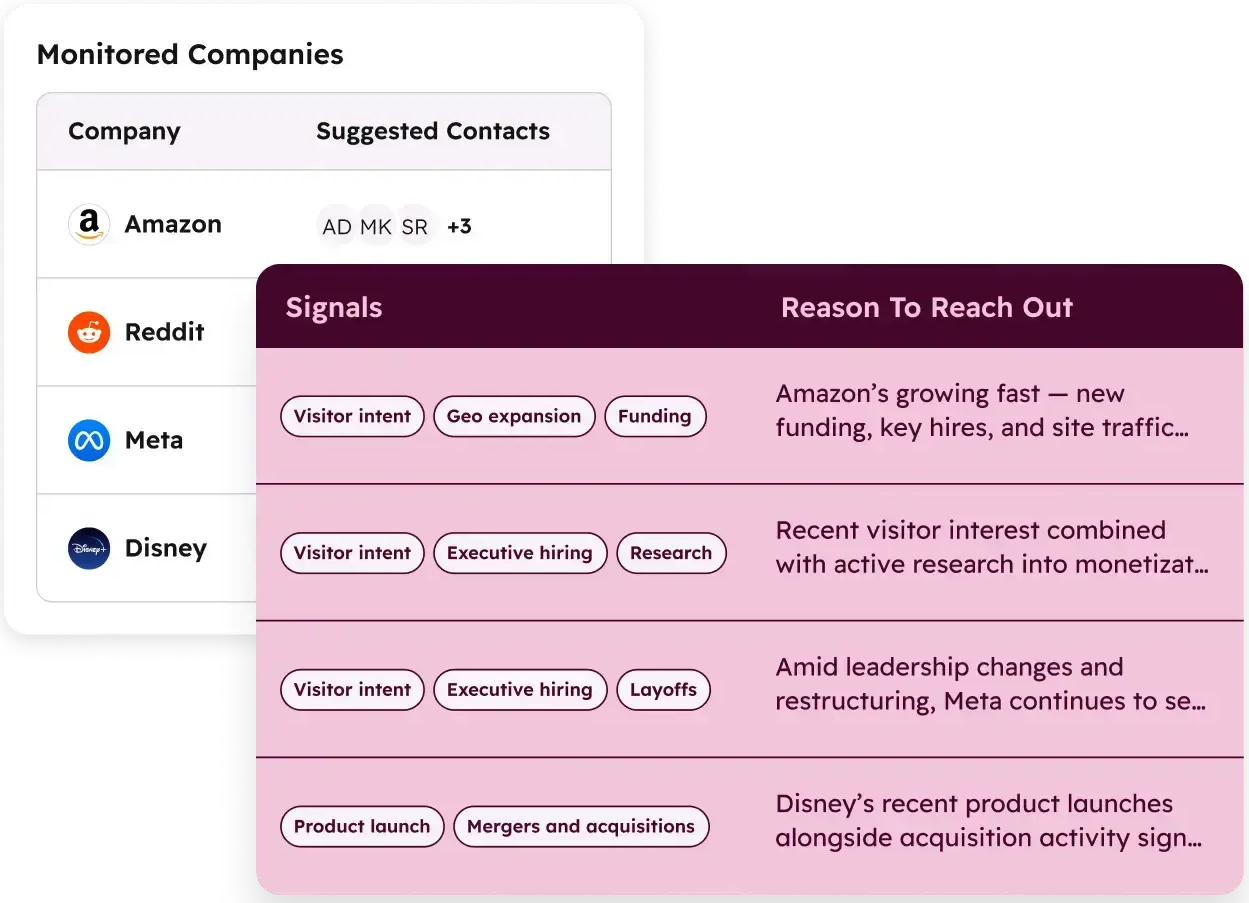
The Prospecting Agent researches prospects, monitors buying signals, and drafts outreach using HubSpot's customer history. The Customer Agent handles support conversations across chat, email, WhatsApp, and Facebook, resolving over 50% of customer conversations autonomously. The Data Agent answers natural-language questions about your CRM data.
Breeze Agents come with Professional and Enterprise subscriptions and run on HubSpot Credits, a consumption-based system where subscriptions include a monthly allotment.
Source: HubSpot
Ontraport's AI story is thinner.
An AI Assistant is a paid add-on within the Campaign Builder for content creation and call transcript analysis, but Ontraport has no announced AI automation, predictive lead scoring, or AI-powered analytics. No AI agents. No natural-language CRM queries. As competitors ship more AI, this gap shows.
For B2B teams, both platforms' AI is limited by the data it operates on. Breeze agents know only what your CRM knows. They can't identify accounts showing buying intent before those accounts visit your website, and they can't verify whether the direct-dial number for a VP of Operations actually rings.
ZoomInfo's GTM Context Graph addresses this.
It fuses ZoomInfo's third-party B2B data with a customer's CRM records, conversation transcripts, and behavioral signals into a layer that processes 1.5B+ data points daily. The AI agents in GTM Workspace identify which accounts match your win patterns, surface hidden stakeholders, and draft follow-ups that address specific concerns from the last call.
Source: ZoomInfo
For a closer look at how HubSpot and ZoomInfo compare on AI, data, and go-to-market capabilities, see our HubSpot vs. ZoomInfo comparison.
Seismic's sales team boosted productivity by 54%, saved 11.5 hours per week, and attributed 39% of pipeline to ZoomInfo signals. (Seismic Case Study)
Pricing models: complexity vs. simplicity vs. custom
HubSpot, Ontraport, and ZoomInfo each price differently, and the model matters as much as the number on the invoice.
HubSpot uses a hybrid model combining per-seat pricing, contact-based tiers, and flat-fee products.
The free CRM is useful (unlimited contacts, basic tools, no time limit), but paid tiers rise fast. Marketing Hub Professional starts at $800/month with a $3,000 mandatory onboarding fee. Sales Hub Professional runs $90/seat/month (annual) with a $1,500 onboarding fee. A costly detail: when you subscribe to multiple hubs at different tiers, all Core Seats are billed at the highest tier's rate. A company using Marketing Hub Professional and Sales Hub Enterprise pays Enterprise seat rates across the board.
Ontraport uses flat-fee, contact-count pricing.
Basic starts at $29/month, Plus at $99/month, Pro at $149/month, and Enterprise at $299/month. No mandatory onboarding fees. Annual billing gives you two months free. The pricing is simple, but add-ons (Dynamic CMS, Shared Inbox, SMS, AI Assistant, private IPs) are billed separately, making total cost harder to predict. A 3% annual price increase is written into the Terms of Service for all active accounts.
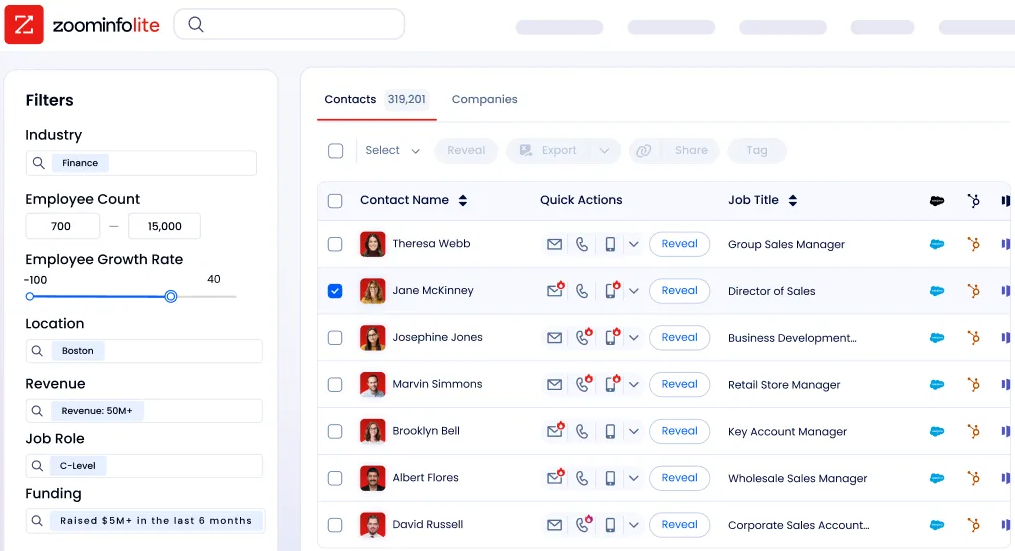
ZoomInfo uses custom-quoted, consumption-based pricing with no published dollar amounts for paid tiers. Costs scale around seats, monthly credit volume, features, and contract length.
ZoomInfo offers two free entry points: ZoomInfo Lite (a permanent free tier with access to the B2B database and 10 monthly export credits) and a separate 7-day free trial of paid features.
Source: ZoomInfo
The real pricing question isn't which platform costs less per month. It's what incomplete data costs your pipeline. Running campaigns to the wrong accounts, missing buying signals, and prospecting with stale contact information carry costs that no CRM subscription covers.
Payments and commerce: built-in vs. bolted-on
HubSpot and Ontraport both include native payment processing, but their implementations reflect different priorities.
Ontraport's payment system is embedded in the CRM.
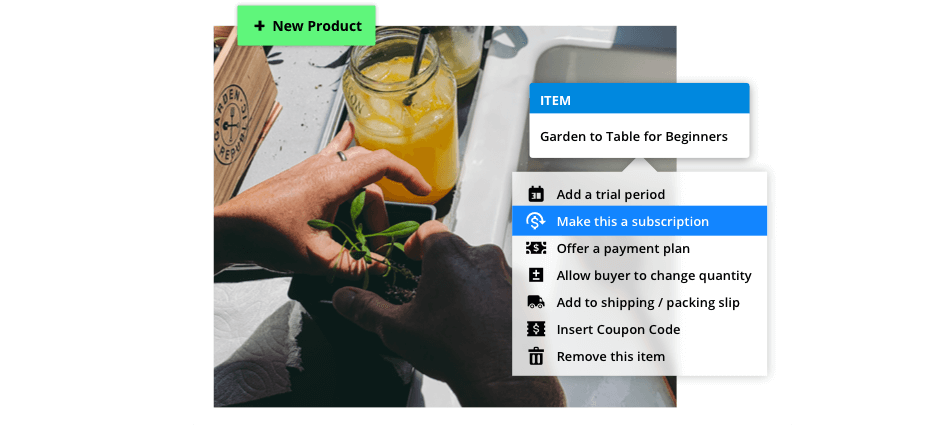
Businesses can sell subscriptions, payment plans, one-time offers, free trials, deposits, and bundles through branded order forms. Because payments are tied to the contact record, content or product access can be released progressively to match an installment plan.
Decline recovery sends reminders before a card expires and triggers follow-up sequences after a decline. One-click upsells and order bumps accept additional offers without re-entering payment information. A built-in referral tracking program handles affiliate commissions. The platform is PCI DSS Level 1 certified.
Source: Ontraport
HubSpot's Commerce Hub focuses on the B2B quote-to-revenue cycle.
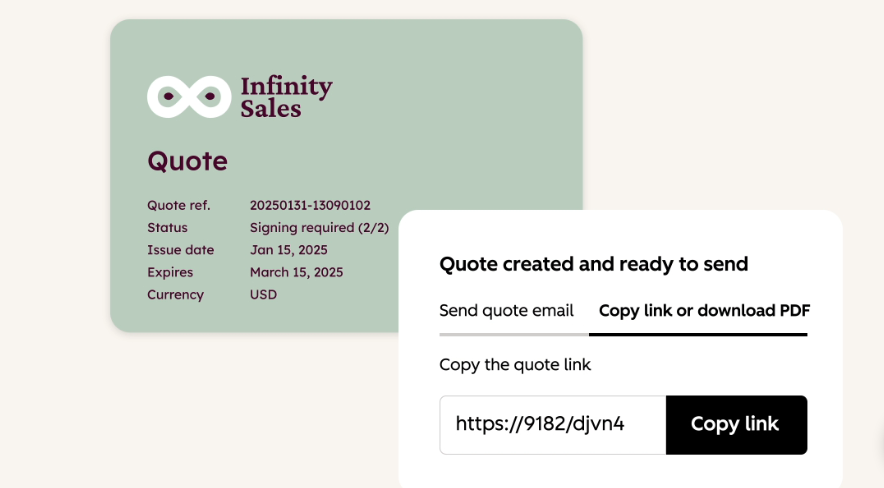
CPQ generates branded quotes from deal records in minutes. Invoicing is free for all users. Payments flow through either HubSpot Payments (available in US, UK, and Canada) or a connected Stripe account, supporting 130+ currencies for credit cards. HubSpot adds a 0.75% platform fee on top of Stripe's standard transaction fee.
Source: HubSpot
For digital product businesses, membership sites, and coaching programs, Ontraport's payment options give it an advantage. It handles the offer structures, subscription dunning, and affiliate tracking these businesses need without third-party tools. For B2B companies with longer sales cycles and formal quoting processes, HubSpot's CPQ workflow fits more naturally.
Integrations and ecosystem maturity
HubSpot's ecosystem is the largest of the three by a wide margin.
The App Marketplace offers over 2,000 integrations with 2.5 million active installs, including connections with Salesforce, Microsoft Teams, Slack, Zoom, Google Workspace, LinkedIn, Shopify, and hundreds more. HubSpot maintains official SDKs for six languages (PHP, Java, Ruby, Go, TypeScript, Python) and has built a developer platform with REST APIs, GraphQL, custom UI extensions, and a CLI tool. For teams connecting a complex tech stack, HubSpot's integration library is hard to match.
Ontraport's integration catalog lists 80+ integrations across 22 categories, including Stripe Connect, Facebook Custom Audiences, Zoom, and JotForm.
Ontraport relies more on middleware: PlusThis adds SMS platforms, video tagging, and webinar integrations; Make enables no-code connections to other software; Zapier fills remaining gaps. Ontraport's own REST API is well-documented with a live interactive explorer and no monthly request limits (180 requests per minute rate limit), but it provides only a PHP client library, which limits teams working in other languages.
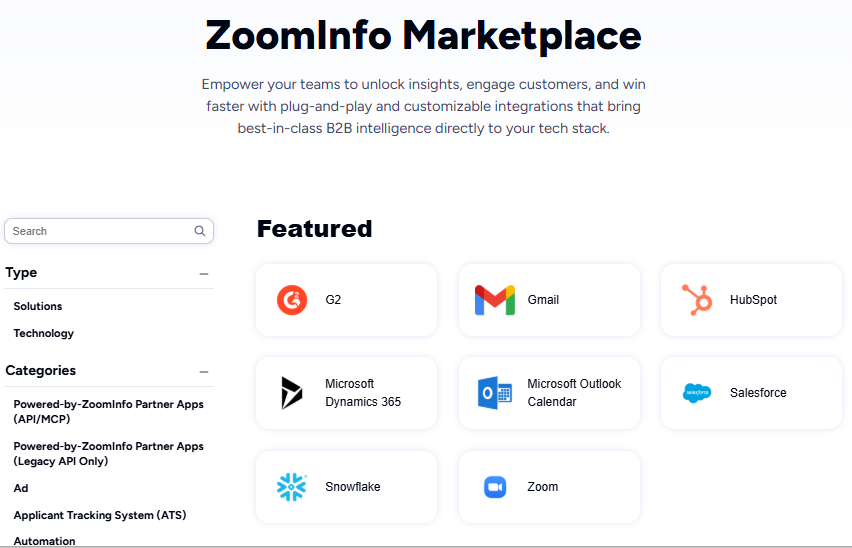
ZoomInfo's Marketplace lists 172+ partner integrations, including connections with Salesforce, HubSpot, Microsoft Dynamics 365, and Snowflake.
The Cloud Partners program delivers ZoomInfo data into AWS, Google Cloud, Snowflake, and Databricks. The MCP server connects AI models to ZoomInfo's data, supporting Claude and ChatGPT with more MCP-compatible tools coming.
Source: ZoomInfo
The integration story matters at the seams. HubSpot connects to almost everything but doesn't generate the B2B data that fills its CRM. Ontraport is self-contained but harder to connect to outside tools. ZoomInfo integrates with both, enriching whichever CRM you choose with verified contacts, company data, and buying signals.
BDO Canada cut 87% of the time spent on internal data dashboard updates through the ZoomInfo API. "The plug-and-play aspect of the API means I can integrate it into any process and get information at a moment's notice." (Jerry Wilson, Senior Marketing Intelligence Analyst; Case Study)
Support and onboarding reflect different scales
HubSpot ties support to your subscription tier. Free users get community forums only. Starter adds email and chat. Professional and Enterprise add phone support.
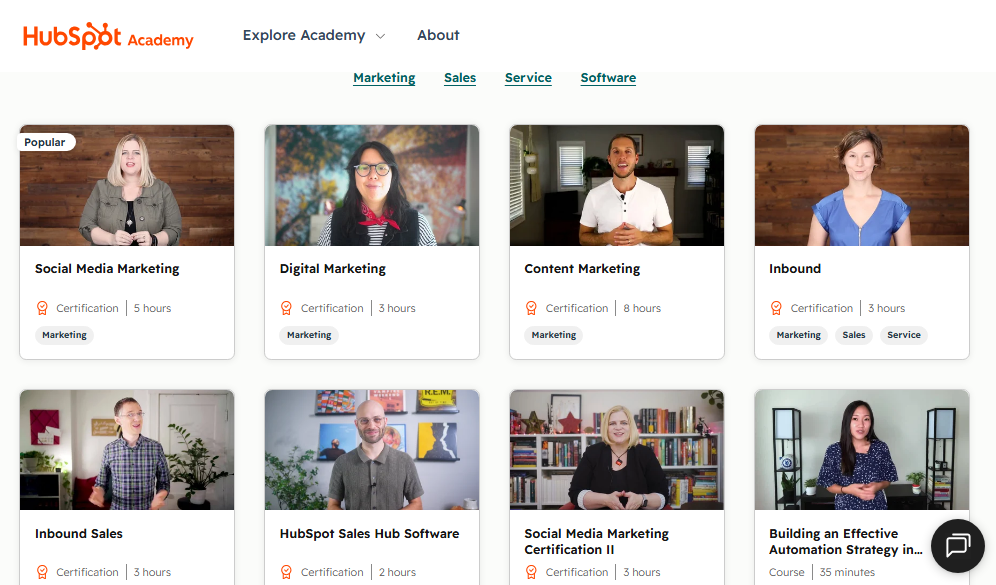
HubSpot Academy offers all courses and certifications free, with 200,000+ professionals certified. A Solutions Partner network handles complex implementations. This matters because HubSpot's professional services revenue is only ~2% of total revenue, meaning its internal services team is small for complex deployments.
Source: HubSpot
Ontraport treats support as a differentiator. The company claims a 4.6/5 on Trustpilot and a 9/10 support rating on TrustRadius. Live chat, email, and screen-share support run Monday through Sunday, with reps dedicated to a single channel.
VIP Support gives direct access to senior technical reps, launch monitoring during big sends, and scheduled account review calls. Ontraport University offers 150+ video lessons across structured courses. Setup Wizards walk new users through building campaigns step by step.
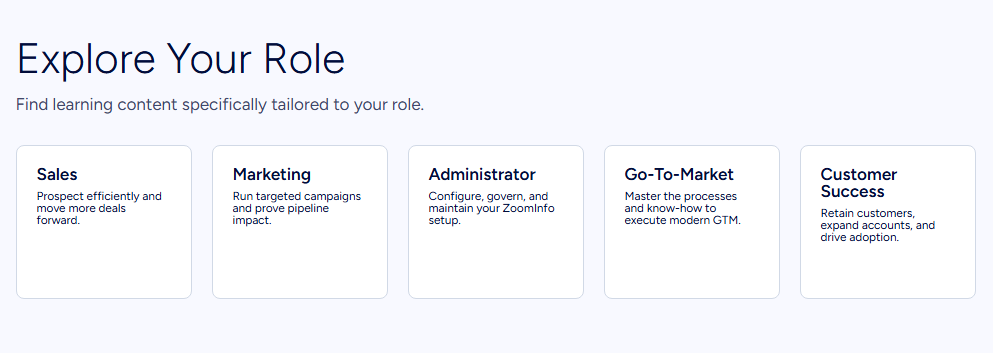
ZoomInfo provides role-specific support through ZoomInfo University (learning paths for Sales, Marketing, Administrator, and Customer Success roles), a Help Center with knowledge base articles, and dedicated customer service managers for Enterprise accounts.
The company extended its onboarding program from 30 to 90 days, improving customer satisfaction scores by 25%. Professional services are available through ZoomInfo Labs.
Source: ZoomInfo
HubSpot vs. Ontraport vs. ZoomInfo: Which should you choose?
The right choice depends on what your business needs: customer management, prospect intelligence, or both.
Choose HubSpot if:
You want a CRM platform that scales from startup to enterprise
Your team needs marketing, sales, and service sharing one data layer
AI agents for prospecting, content, and support matter to you
You rely on a large ecosystem of third-party integrations
You're willing to invest in onboarding and higher-tier pricing for advanced features
Choose Ontraport if:
You run a digital product business, membership site, coaching program, or service company
Native payment processing with subscriptions, decline recovery, and affiliate tracking is a priority
You need custom objects in your CRM without paying enterprise prices
You prefer configuring visual automations yourself rather than relying on AI
A focused platform with fewer moving parts appeals more than a large ecosystem
Add ZoomInfo if:
Your B2B team needs verified contact data, direct dials, and business emails that work
You want to know which accounts are researching solutions like yours before they fill out a form
You need AI that understands not just your CRM data but the full context of why deals move or stall
You want one intelligence layer that feeds into HubSpot, Ontraport, or any other tool in your stack
Prospecting accuracy and pipeline quality matter more than CRM features alone
See what ZoomInfo can do with a free trial or explore ZoomInfo Lite at no cost.
HubSpot and Ontraport each solve the customer management problem well, with different trade-offs in scale, flexibility, and cost. But for B2B companies, the quality of what goes into your CRM determines the quality of what comes out.
ZoomInfo provides the intelligence that builds your pipeline on verified data, real-time buying signals, and contextual reasoning, regardless of which CRM you choose.
"Without ZoomInfo, it would be extremely difficult (if not impossible) to achieve our business objectives. Without it, we wouldn't be able to understand the market, have the right contact data, and make meaningful connections." (Thor Sanderson, Senior Manager of Sales Technology Enablement, Smartsheet; Case Study)
HubSpot vs. Ontraport vs. ZoomInfo FAQ
What is the core difference between HubSpot, Ontraport, and ZoomInfo?
HubSpot is a CRM platform with marketing, sales, and service hubs that scales from startup to enterprise, with 2,000+ integrations and AI agents through Breeze.
Ontraport combines CRM, marketing automation, native payments, and a no-code CMS for growing businesses, starting at $29/month.
ZoomInfo is a B2B data and go-to-market platform that provides verified contact data, company intelligence, buyer intent signals, and deal context, feeding that data into either CRM through native integrations.
Which platform is cheapest for a small business?
Ontraport is the most affordable all-in-one option at $29/month for its Basic plan. HubSpot's free CRM is useful but limited; once you need marketing automation, Professional starts at $800/month with a $3,000 onboarding fee. ZoomInfo Lite is permanently free with 10 monthly export credits, making it a free prospecting layer alongside either CRM, though paid plans are custom-quoted for teams that need more volume.
Can I use ZoomInfo with HubSpot or Ontraport?
ZoomInfo integrates directly with HubSpot through a native integration in the ZoomInfo Marketplace, enabling CRM enrichment, lead routing, and data sync. For Ontraport, ZoomInfo data can flow through its REST API or middleware platforms like Zapier and Make. ZoomInfo's APIs and MCP server also allow custom integrations with any tool in your stack.
Which platform has better marketing automation?
HubSpot offers broader channel coverage: social media management, ad integrations, SEO tools, and AI content creation. Ontraport offers deeper funnel automation, with split testing that extends to entire campaign branches, email delivery infrastructure managed in-house since 2004, and real-time Meta Custom Audiences sync tied to CRM actions.
The right choice depends on whether you need breadth across channels or depth within your core funnels.
Does Ontraport have AI features comparable to HubSpot's Breeze?
No. Ontraport offers an AI Assistant add-on for content creation and call transcript analysis within the Campaign Builder, but it lacks AI agents, predictive lead scoring, natural-language CRM queries, and the autonomous support resolution that Breeze provides. This gap grows as competitors ship more AI.
Which platform is best for a business selling subscriptions or digital products?
Ontraport fits best. Its native payment system handles subscriptions, payment plans, free trials, deposits, decline recovery, one-click upsells, and affiliate tracking, all tied to the CRM contact record.
HubSpot's Commerce Hub supports quoting, invoicing, and subscription billing but is oriented more toward B2B sales cycles than digital product businesses. ZoomInfo does not handle payments; it provides the prospecting intelligence that helps you find the businesses most likely to buy.
How does ZoomInfo's data compare to what HubSpot and Ontraport provide?
HubSpot and Ontraport store the data your team captures through forms, imports, and interactions. Neither generates B2B contact data independently.
ZoomInfo maintains a verified database of 500M contacts, 100M companies, 135M+ verified phone numbers, and 200M+ verified business email addresses, verified by automated scanning of 28 million site domains daily and 300+ human researchers. In a Fortune 500 competitive evaluation of 25 million contacts, the independent consultant found no other vendor came close to ZoomInfo's accuracy and coverage.
Which platforms offer a free plan or trial?
HubSpot offers a permanent free CRM with unlimited contacts, basic tools, and no time limit, capped at two users. ZoomInfo Lite is also permanent and free, providing access to the B2B database with 10 monthly export credits. Ontraport offers a 14-day free trial with no credit card required but has no permanent free plan. ZoomInfo also offers a separate 7-day free trial of paid features beyond what Lite includes.
More HubSpot comparisons:
