
Choosing between HubSpot and Streak for your CRM often comes down to five questions:
Do you need a full marketing, sales, and service platform, or a CRM that tracks relationships inside your inbox?
Is your team willing to learn a new system, or will they only use a tool that meets them where they already work?
Do you need marketing automation, content management, and customer service tools alongside your pipeline, or just the pipeline?
Are you running on Google Workspace, or does your team span multiple email platforms?
Is knowing who to sell to as important as managing the deals you already have?
In short, here's what we recommend:
HubSpot is the full-stack CRM platform for teams that want marketing, sales, and service under one roof. Its Smart CRM connects six product hubs through a single data layer, from marketing automation and email campaigns to deal pipelines, service ticketing, and AI agents that handle prospecting, support, and data queries. With a free CRM tier and over 2,000 app integrations, HubSpot scales from a solo founder's first contact database to an enterprise system serving 288,706 customers worldwide. The tradeoff: pricing complexity grows fast as you add hubs, seats, and tiers, and the platform's breadth means a real learning curve.
Streak is the CRM for teams that refuse to leave Gmail. Instead of opening a separate app, Streak runs as a browser extension that turns your inbox into a pipeline manager with deal tracking, email open notifications, mail merge, and AI-powered field population. Its pipeline architecture handles sales, hiring, fundraising, real estate, and partnerships with no setup beyond installing the extension, and its AI features scan email threads to fill CRM fields, summarize deal history, and answer questions about accounts. The limitation: Streak works only in Gmail, has a mobile app that lags the desktop experience, and its reporting and automation cannot match a full CRM platform.
Both platforms help you manage relationships and track deals. But a CRM is only as useful as the data inside it. Neither HubSpot nor Streak answers the question that comes before pipeline management: which companies should you target, who are the right people to contact, and when are they ready to buy?
ZoomInfo is a B2B intelligence and GTM platform that provides the data layer both CRMs lack. Built on a B2B dataset of 500M contacts, 100M companies, 135M+ verified phone numbers, and 200M+ verified business emails, ZoomInfo's GTM Context Graph combines this data with your CRM records, conversation transcripts, and behavioral signals to show not just what's happening in your pipeline, but why deals move or stall. ZoomInfo integrates natively with HubSpot, feeds data into any CRM via APIs and MCP, and gives sellers a GTM Workspace for AI-driven account prioritization and outreach. For teams serious about outbound sales, ZoomInfo turns either CRM from a record-keeping system into a data-driven revenue engine.
If building your pipeline on verified data and real buying signals sounds like the missing piece, see how ZoomInfo works with your CRM.
HubSpot vs. Streak vs. ZoomInfo at a glance
HubSpot | Streak | ZoomInfo | |
|---|---|---|---|
Core function | All-in-one CRM platform | Gmail-native CRM | B2B intelligence and GTM platform |
Where it lives | Standalone web app | Inside Gmail (browser extension) | Standalone + CRM integrations + API/MCP |
AI capabilities | Breeze agents for prospecting, support, data | AI Autofill, summaries, Q&A from email threads | GTM Context Graph, AI account research, AI-drafted outreach |
Integrations | 2,000+ app marketplace | Google Workspace + Zapier + limited native | 120+ native + API + MCP for any tool |
Marketing tools | Marketing automation suite | Mail merge and email tracking | ABM, display ads, intent-driven campaigns |
Reporting | Dashboards and attribution | Pipeline and funnel reports | GTM analytics and signal-based insights |
Data enrichment | AI enrichment from emails, calls, and web | Auto-enrichment of titles, phones, social profiles | 500M contacts, 100M companies, up to 95% accuracy |
Free plan | Free CRM with unlimited contacts (up to 1M) | Free email tools only (no CRM pipelines) | ZoomInfo Lite with 10 monthly exports |
Paid starting price | $15/seat/month (Starter, annual) | $49/user/month (Pro, annual) | Custom-quoted |
Best for | Teams needing marketing + sales + service | Gmail-first teams wanting CRM without tab-switching | Teams needing prospecting data, buyer intent, and account intelligence |
The architectural divide: full platform vs. inbox CRM
HubSpot and Streak give two different answers to the same question: where should CRM happen?
HubSpot says CRM should be a dedicated system. You log in, navigate to your deal pipeline, update records, run automation workflows, and analyze dashboards. The advantage is depth. HubSpot's Sales Hub connects to its Marketing Hub, Service Hub, Content Hub, and Data Hub through a shared database. A lead who downloads a whitepaper, receives a nurture sequence, books a meeting, and becomes a customer leaves a complete trail across every touchpoint, all in one system.
Streak says CRM should be invisible. The product's thesis rests on an observation stated on its homepage: "Most CRMs don't get used" because they pull teams out of the tool where customer communication actually happens. If your sales process runs through Gmail, every conversation, every attachment, every scheduling exchange already lives in your inbox. Streak adds a pipeline layer on top of what's already there.
This isn't just a preference. It's a filter. Teams on Google Workspace who spend most of their day in Gmail will gravitate toward Streak's low-friction approach. Teams needing marketing automation, multi-channel campaigns, and cross-department visibility will need HubSpot's platform depth. Choose the architecture that matches your workflow before comparing features.
HubSpot's depth covers the full customer lifecycle
HubSpot's advantage is breadth that stays connected. Marketing Hub handles email campaigns, landing pages, social media, and lead capture.
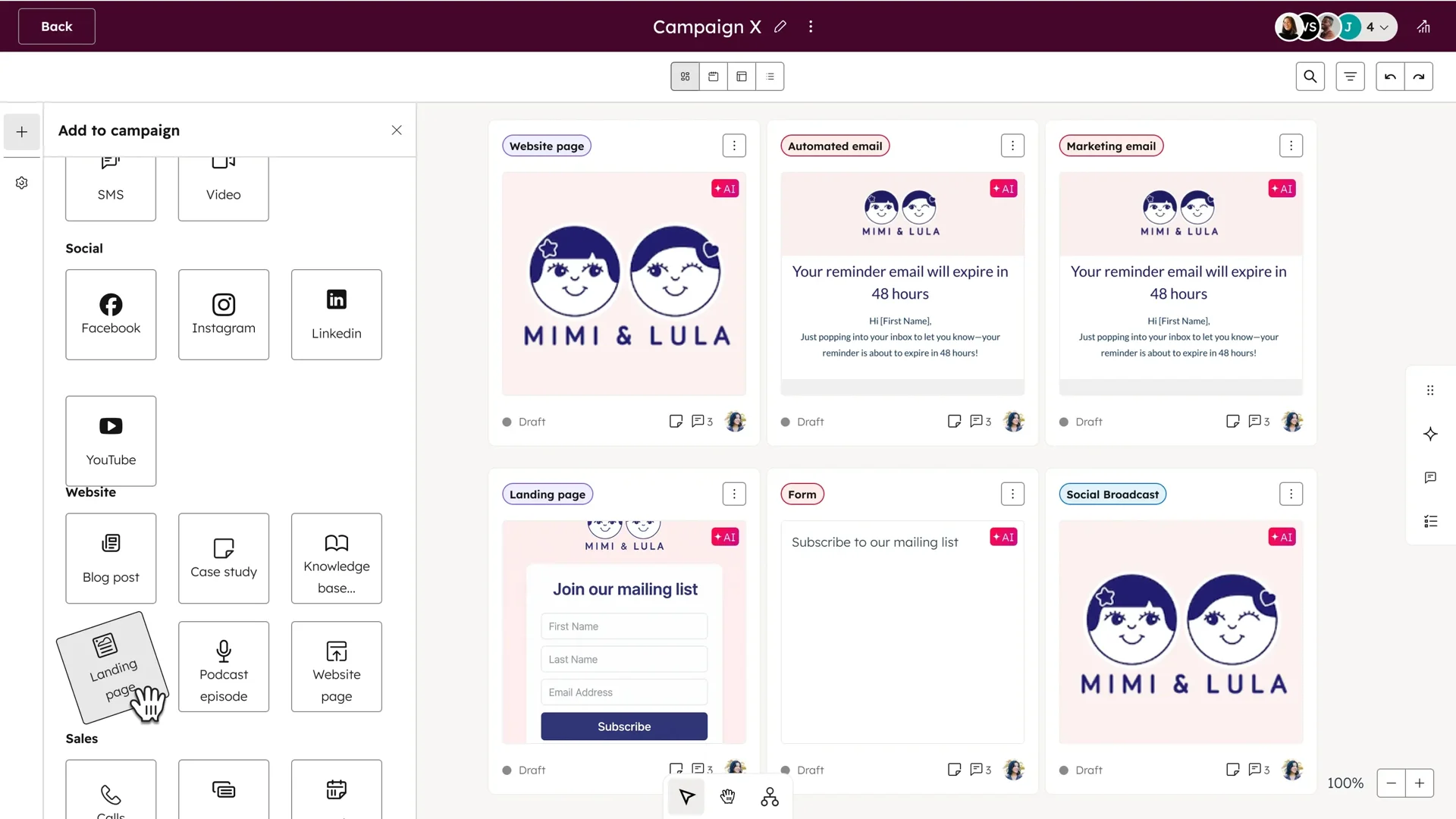
Source: HubSpot
Sales Hub manages deal pipelines, sequences, call tracking, and CPQ. Service Hub runs help desk ticketing, knowledge bases, and customer health scores.
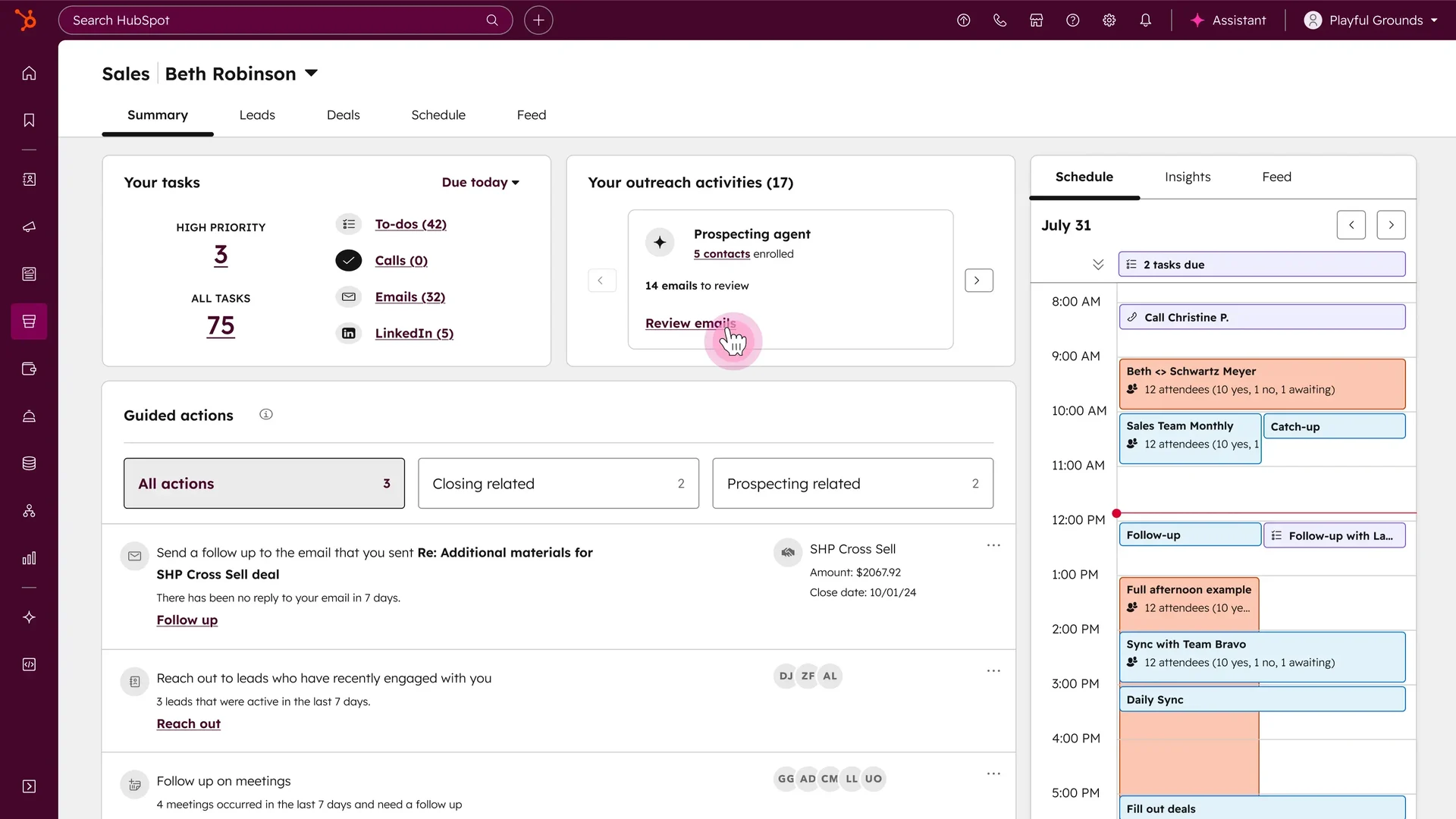
Source: HubSpot
Content Hub powers website and blog management. All share a single contact database, so a marketer's campaign data flows into the sales pipeline and a support ticket links back to the deal record.
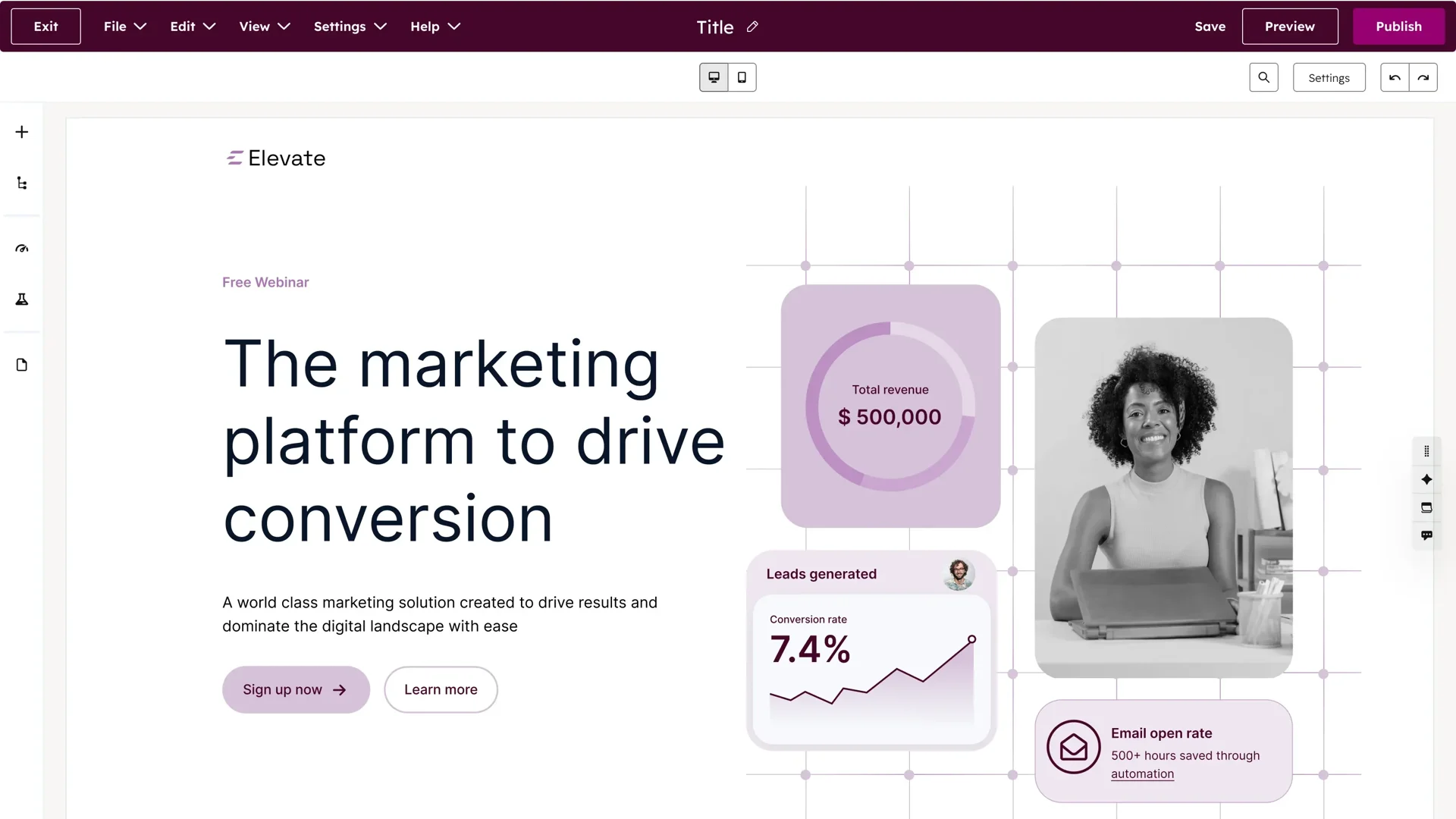
Source: HubSpot
For growing businesses, this interconnection matters. A marketing team can trigger sales sequences when leads hit a scoring threshold. A service agent can see the full deal history before responding to a post-sale question. A content marketer can tie blog performance directly to pipeline influence. This kind of cross-functional visibility requires multiple point solutions and significant integration work outside HubSpot.
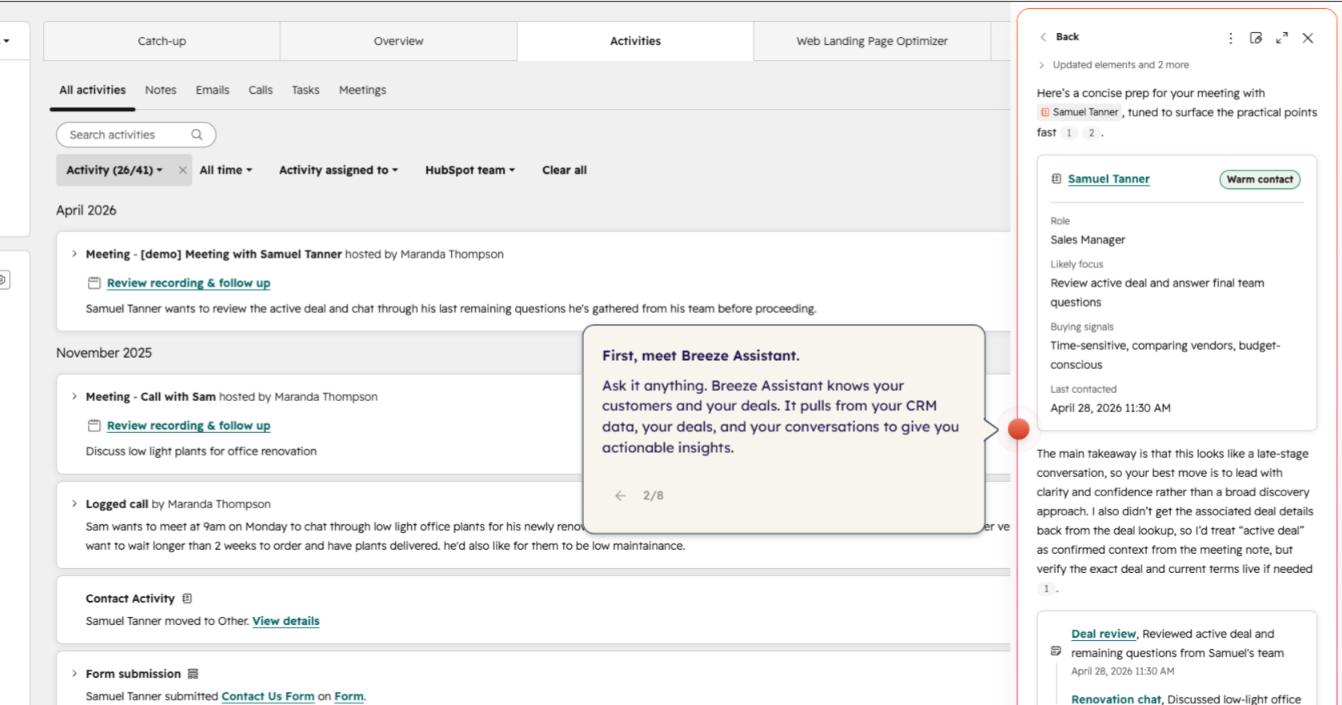
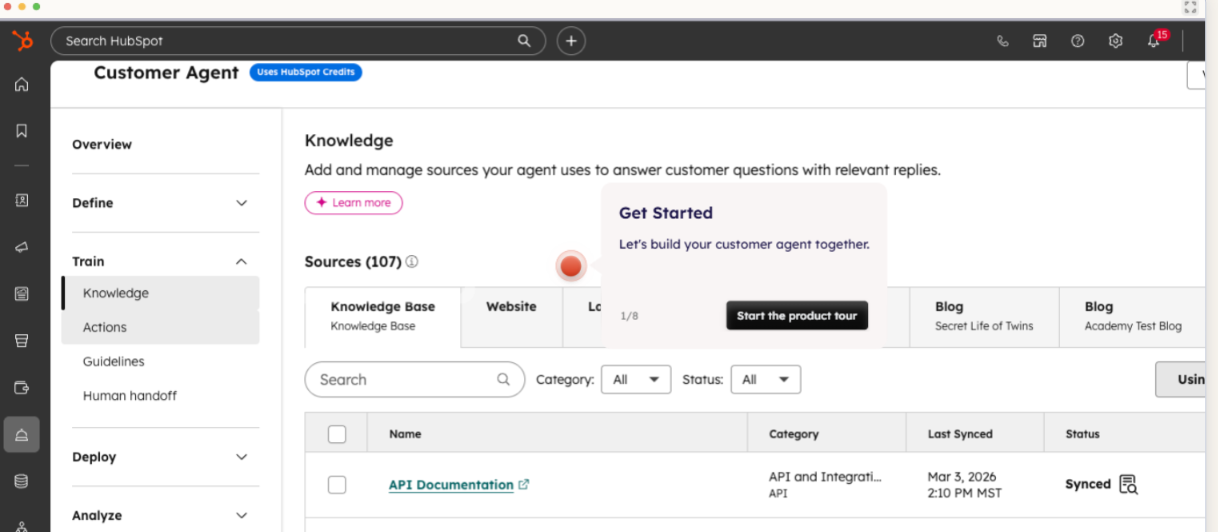
HubSpot's Breeze AI layer extends this further. The Customer Agent resolves over 50% of support conversations on its own.
Source: HubSpot
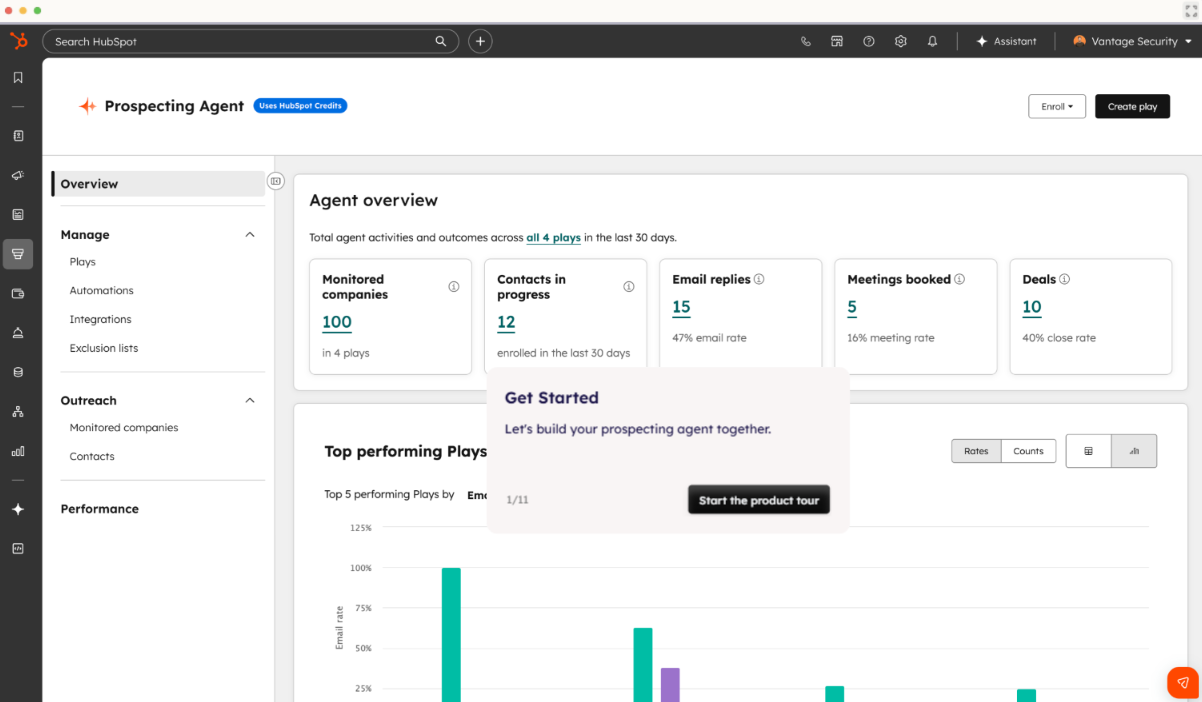
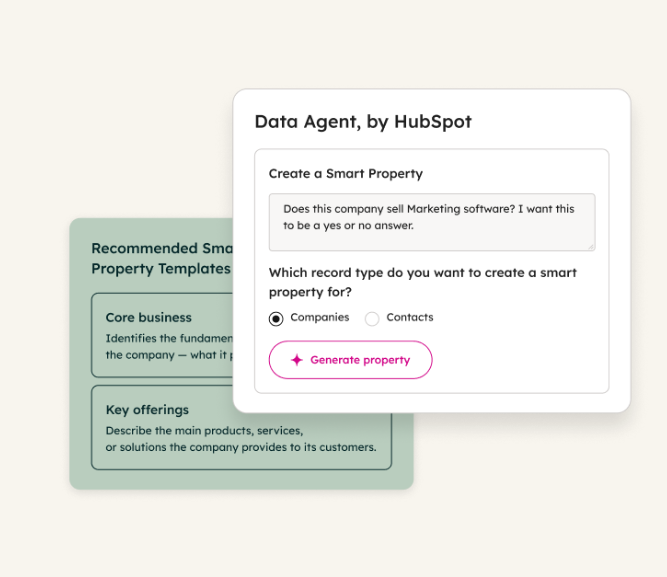
The Prospecting Agent drafts personalized outreach using the full customer history. The Data Agent answers natural-language questions about CRM data. These AI features work because HubSpot has context across marketing, sales, and service interactions.
Source: HubSpot
The cost of this breadth is complexity. HubSpot's pricing involves per-seat fees, hub-specific tiers, and mandatory onboarding charges at Professional and Enterprise levels. A rule where mixing hub tiers forces all Core Seats to the highest tier's price can inflate costs when one department needs Enterprise features but others don't. These mechanics make total cost hard to predict without a detailed configuration exercise.
Streak wins on adoption and speed to value
Streak's edge is measured in what it removes, not what it adds. Install the Chrome extension, and your Gmail inbox becomes a CRM within minutes. Pre-built pipeline templates cover sales, fundraising, hiring, real estate, and support.
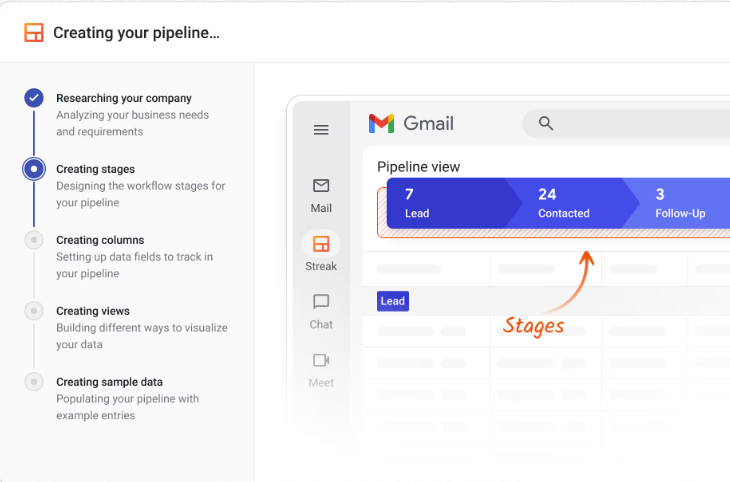
The AI Pipeline Creator generates custom stages, fields, and sample data from a plain-language description of your process. Users on the small business and startup pages report going live with a working pipeline within 30 minutes.
Source: Streak
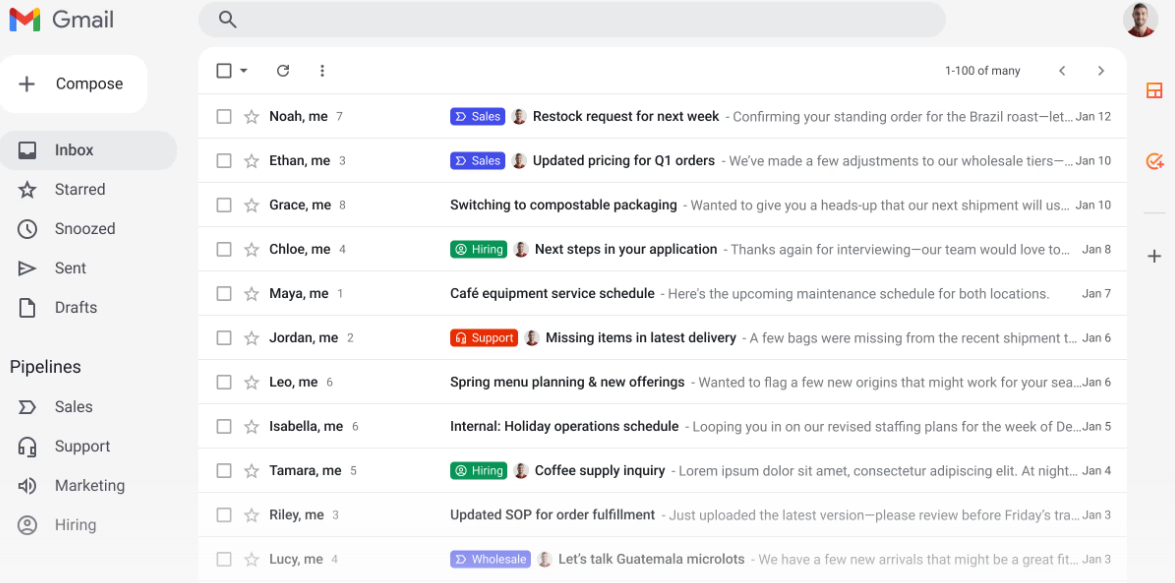
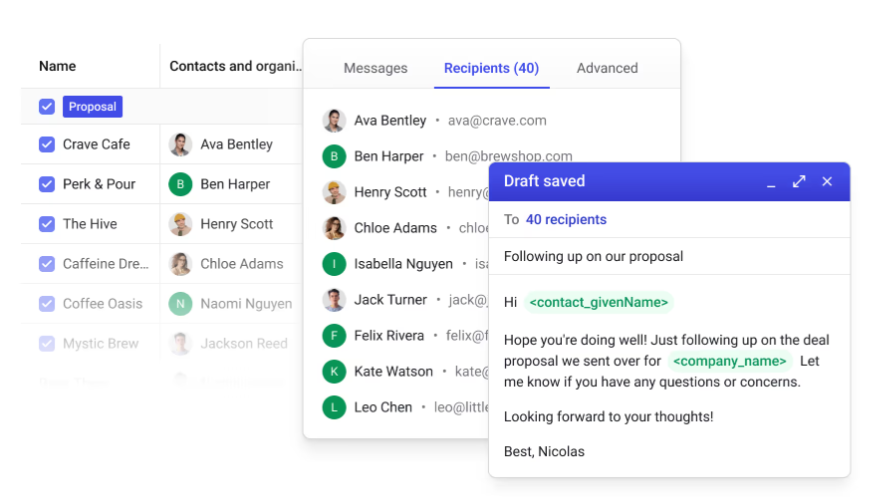
This speed has a practical consequence: adoption. CRM systems fail when teams resist the behavior change required to use them. Streak removes that resistance by meeting teams inside the application they already have open all day. Pipelines render as spreadsheet grids inside Gmail. Deal records open alongside email threads.
Source: Streak
Email tracking, mail merge, and snippets work from the compose window. A sales rep updating deal status or logging a call note does it without leaving the conversation.
Source: Streak
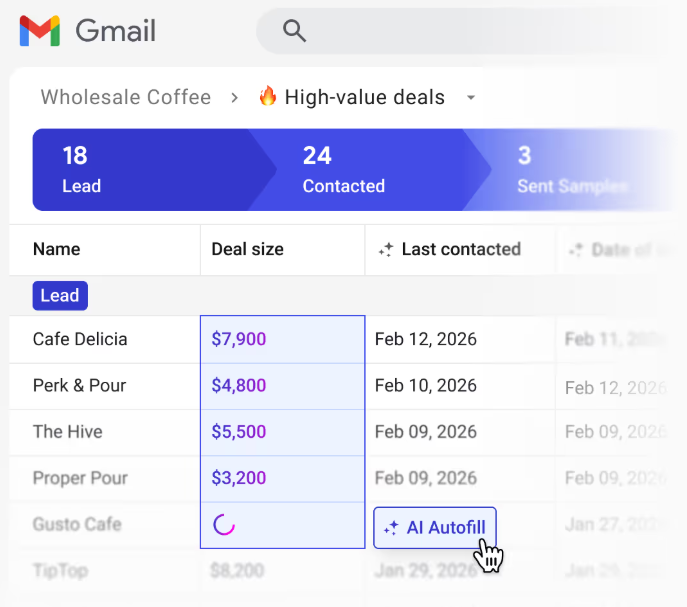
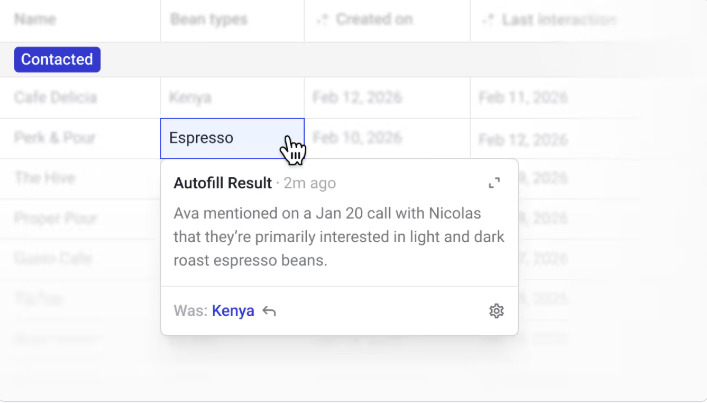
Streak's AI follows the same inbox-native philosophy. AI Autofill scans email threads and call logs to populate CRM fields without manual entry.
Source: Streak
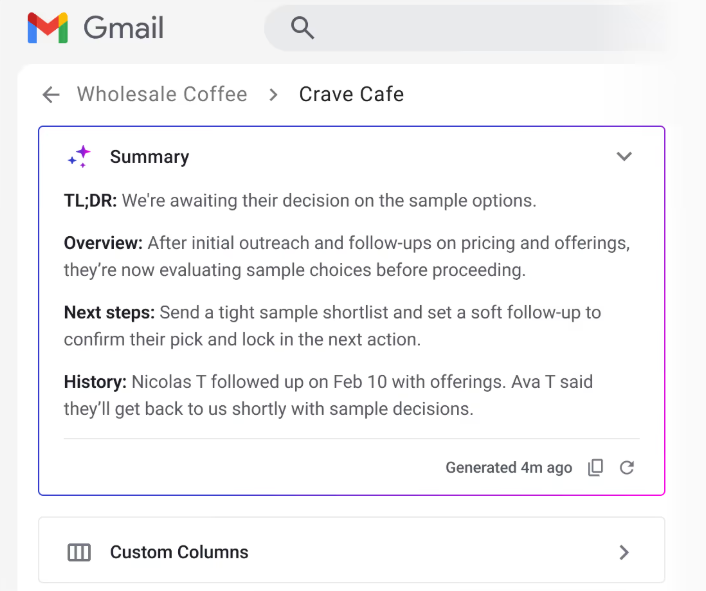
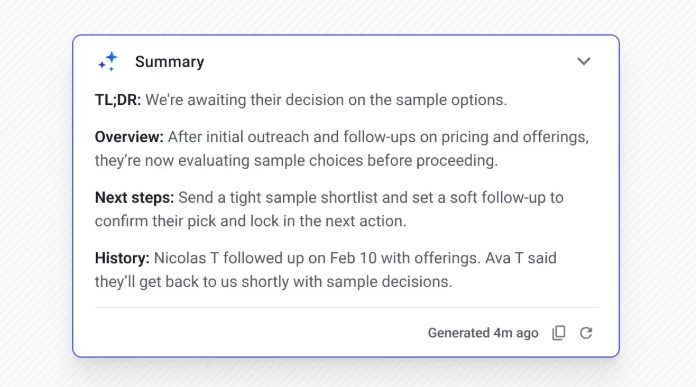
AI Summaries produce one-click deal recaps pinned to the top of each record. Deal Q&A lets managers ask natural-language questions and receive cited answers drawn from the deal's full email history. As of mid-2026, deal summaries and Q&A are available in the Gmail sidebar, and AI citations show the exact source email behind each answer.
Source: Streak
The trade-off is scope. Streak has no marketing automation, no help desk, no content management, and no native advertising tools. Reporting is limited to pipeline and funnel views, with advanced reports gated behind the Pro+ tier.
Integrations outside Google Workspace require Zapier or the Streak API, and the mobile app remains limited compared to the desktop extension. Streak manages relationships. It does not run every customer-facing operation.
The intelligence gap both CRMs share
HubSpot and Streak both help you manage deals once they exist. Neither tells you which companies to target, which contacts to reach, or when accounts are actively researching solutions.
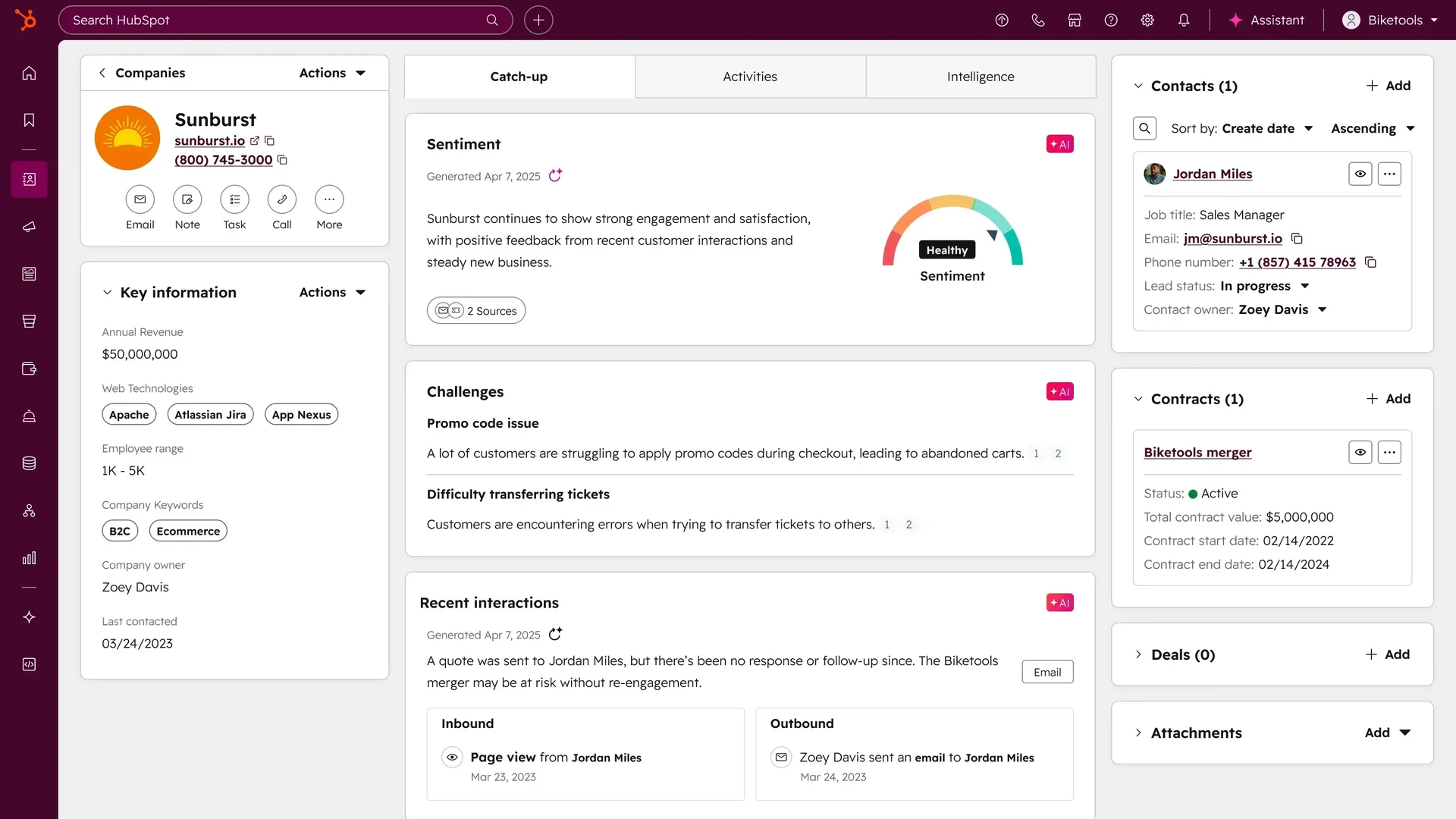
HubSpot's Smart CRM enriches records using email threads, call recordings, and web data, but this enrichment operates on contacts already in your database.
Source: HubSpot
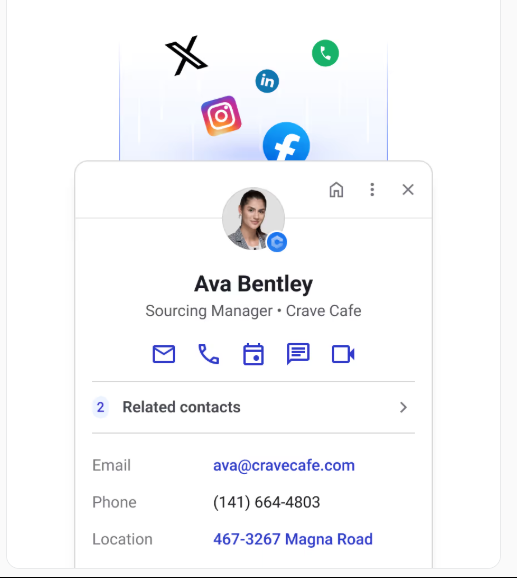
Streak's contact enrichment pulls publicly available data like titles and social profiles for known contacts. Both approaches improve data on people you've already found. They don't find the people you haven't.
Source: Streak
This is where ZoomInfo changes the equation. With 500M contacts, 100M companies, 135M+ verified phone numbers, and 200M+ verified business emails (verified through a pipeline backed by 300+ human researchers and achieving up to 95% accuracy

Source: ZoomInfo
on first-party data), ZoomInfo provides the prospecting intelligence that sits upstream of any CRM. In a Fortune 500 competitive RFP analyzing 25 million contacts across vendors, the independent consultant concluded that "no other competitor came even close."
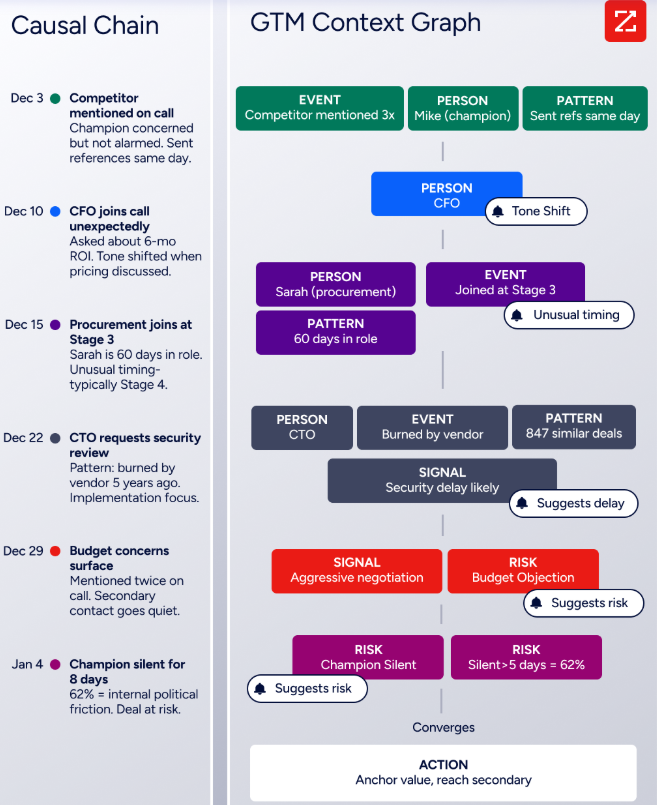
ZoomInfo's value goes beyond a contact database. The GTM Context Graph combines ZoomInfo's third-party data with your CRM records, conversation transcripts, and behavioral signals, processing 1.5B+ data points daily.

Source: ZoomInfo
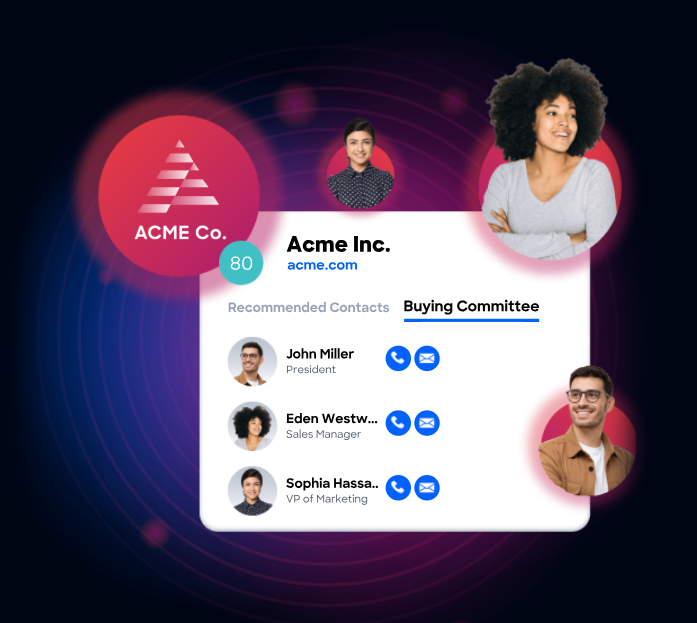
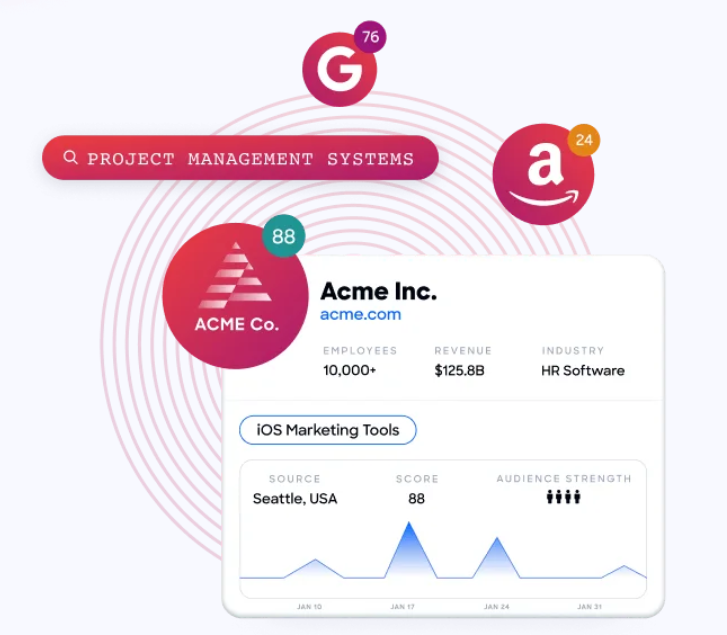
It captures not just that a deal moved stages, but why it moved, correlating executive involvement on calls, intent signals, and hiring patterns to predict what happens next. Buyer Intent data tracks signals from 210 million IP-to-Organization pairings and 6 trillion+ new keyword-to-device pairings monthly, identifying companies actively researching solutions before they fill out a form.
Source: ZoomInfo
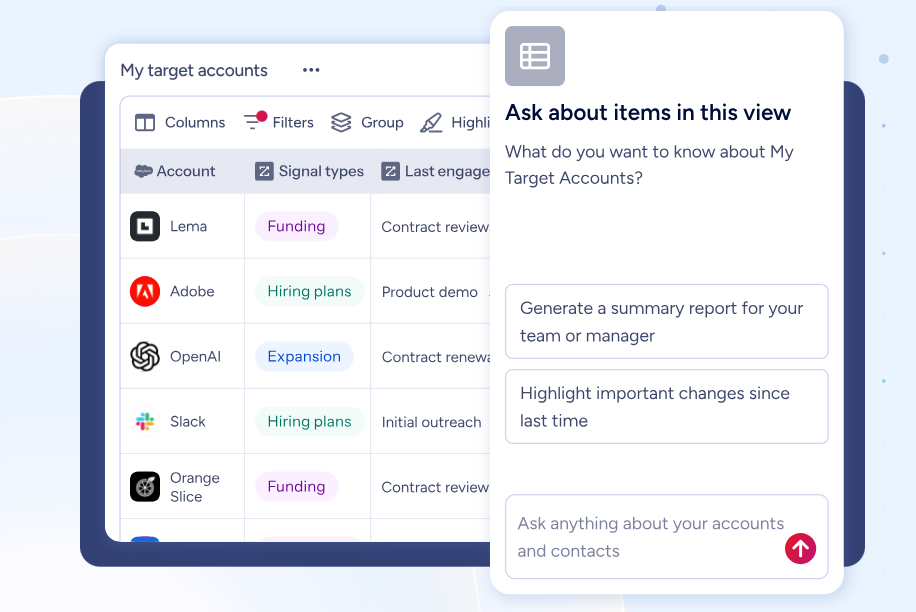
ZoomInfo delivers this intelligence through GTM Workspace for sellers (account prioritization, outreach drafting, and signal monitoring), GTM Studio for marketers and RevOps (audience building and campaign orchestration in natural language), and APIs and MCP for any third-party tool. It integrates natively with HubSpot and connects to any CRM through its API, making it a layer that works with your existing stack rather than replacing it.
Source: ZoomInfo
"That combination of our internal CRM data, external signals, and AI that's given all that context has helped us craft very specific account- and persona-based messages. And people have responded to them right away." (Seismic)
For a direct head-to-head breakdown of how HubSpot and ZoomInfo stack up, see our HubSpot vs. ZoomInfo comparison.
AI takes different shapes across all three
Each platform's AI reflects its architecture and data access.
HubSpot's Breeze operates across the full platform. The Prospecting Agent drafts personalized outreach using the complete HubSpot customer history, including won deals, support tickets, and marketing engagement.
Source: HubSpot
The Customer Agent handles support conversations across chat, email, WhatsApp, and Facebook.
Source: HubSpot
The Data Agent answers natural-language questions by searching CRM records, call recordings, and documents. HubSpot's AI is strongest for teams that have fully adopted the platform: the more data HubSpot has about your customers, the more useful Breeze becomes.
Source: HubSpot
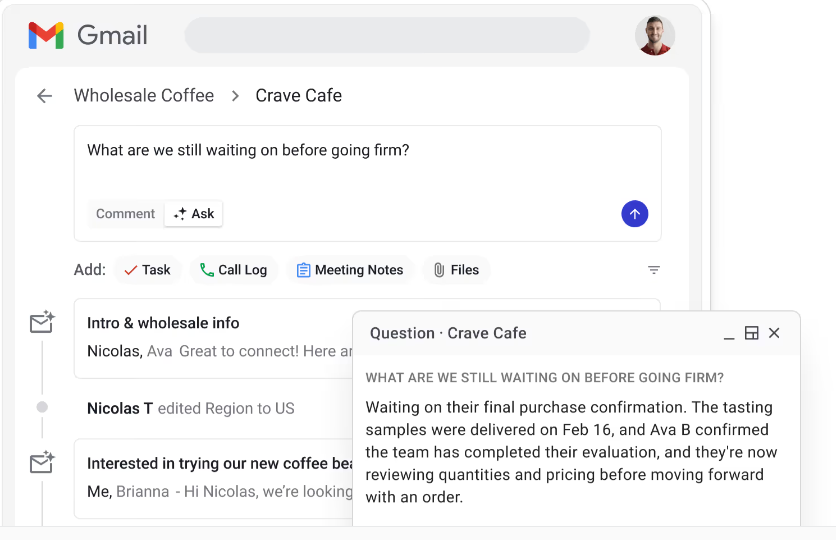
Streak's AI is focused and contextual. Because Streak lives inside Gmail, its AI reads actual email threads rather than synced summaries. AI Autofill extracts data from conversations to populate CRM fields.
Source: Streak
AI Summaries synthesize deal history from emails, call logs, and notes.
Source: Streak
Deal Q&A answers specific questions with citations from the deal's full interaction history. Streak also supports AI action steps in automations, letting pipeline events trigger AI-powered field extraction and summary generation. The strength is fidelity to raw communication data. The limitation is scope: Streak's AI only knows what's in your inbox and deal records.
Source: Streak
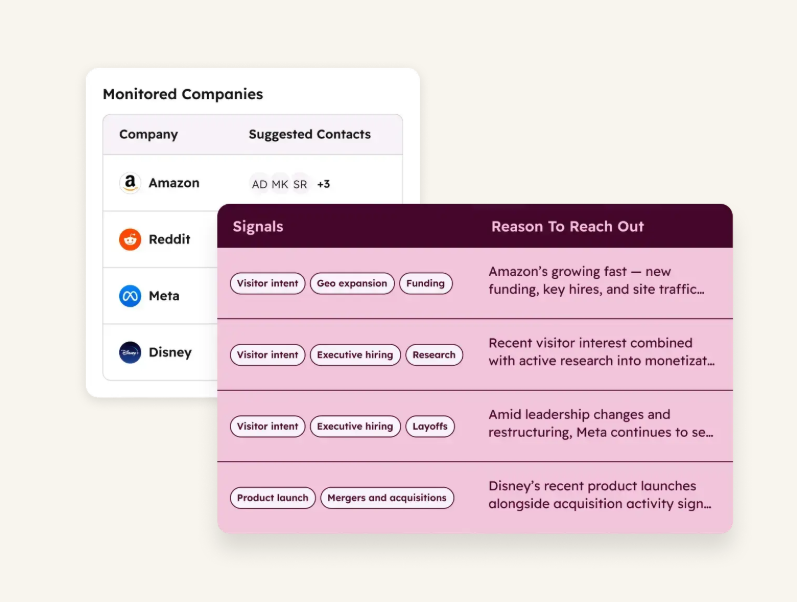
ZoomInfo's AI operates on a different data layer. Where HubSpot and Streak build intelligence from your team's internal activity, ZoomInfo's GTM Context Graph combines your internal data with external signals: intent data, technographic profiles of 30+ million companies, org chart movements, funding rounds, and competitive research activity.
Source: ZoomInfo
Guided Intent (exclusive to ZoomInfo) identifies topics historically correlated with deal success rather than requiring manual topic selection. This external intelligence layer means ZoomInfo's AI can identify opportunities your CRM doesn't know about yet.
Source: ZoomInfo
"ZoomInfo's not just a contact data company anymore. They've built a full system of execution. GTM Intelligence actually works the list, writes the outreach, triggers the play, and helps drive predictable growth." (Levanta)
Pricing reveals who each platform serves
HubSpot uses a freemium model with tiered, hub-based pricing. The free CRM tier is useful: unlimited contacts up to 1M records, basic email tracking, a deal pipeline, and live chat. Starter plans begin at $15–20/seat/month and bundle all hubs. But Professional tiers jump: Marketing Hub Professional costs $800–890/month with 3 seats included, and Sales Hub Professional runs $90–100/seat/month. Both carry mandatory onboarding fees ($3,000 for Marketing Pro, $1,500 for Sales Pro). A five-person sales team on Sales Hub Professional with Marketing Hub Professional pays roughly $1,400–1,700/month before one-time onboarding costs, and that climbs if you mix in Enterprise tiers.
Streak is simpler. Pro costs $49/user/month, Pro+ is $69/user/month, and Enterprise is $129/user/month on annual billing. No mandatory onboarding fees, no hub stacking, no mixed-tier seat inflation. A five-person team on Pro+ pays $345/month. The catch is feature gating: automations, integrations, and advanced reports require Pro+ or higher. AI credits are bundled per user (20 on Pro, 150 on Pro+, 500 on Enterprise) with add-on packs from $100/month for 1,000 credits to $1,000/month for 25,000 credits. Streak also requires Gmail, which means a Google Workspace subscription is a prerequisite.
ZoomInfo uses custom-quoted, consumption-based pricing with no published prices. Costs scale around data access, user seats, credit volume, and AI activity.
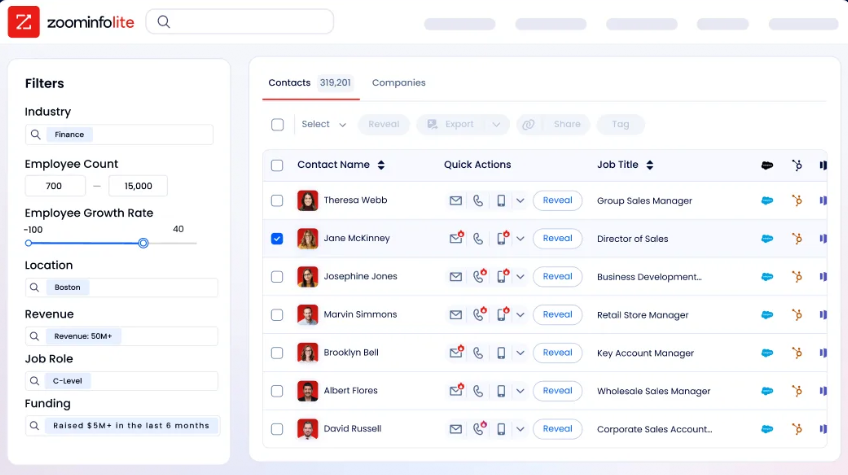
While the entry point is higher than either CRM, ZoomInfo provides capabilities neither offers: verified contact data, intent signals, website visitor identification, and AI-driven account intelligence. ZoomInfo Lite is a permanent free tier with access to the B2B database and 10 monthly export credits, and a 7-day free trial of full platform features is also available. ZoomInfo is not a CRM replacement. It's the data layer that makes your CRM investment pay off.
Source: ZoomInfo
Integration ecosystems reflect different philosophies
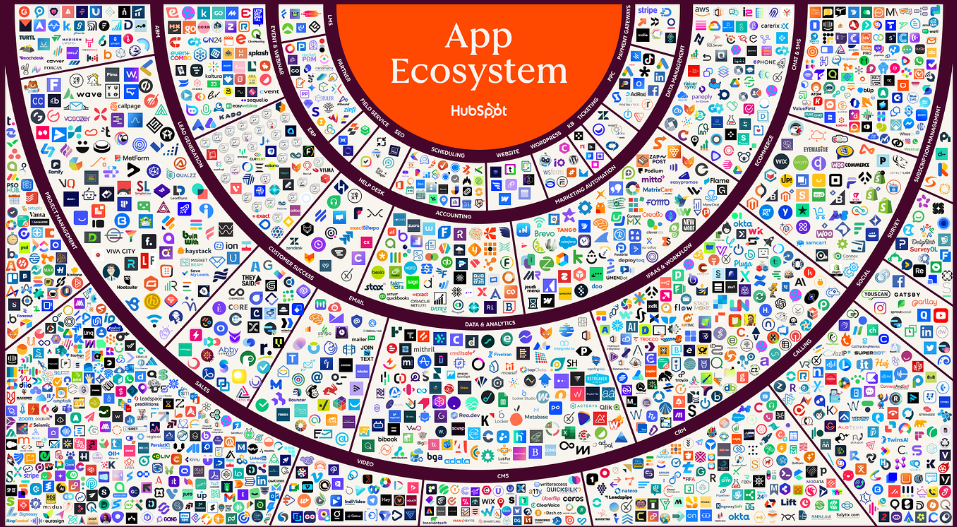
HubSpot has the largest ecosystem of the three. The App Marketplace offers over 2,000 integrations with 2.5 million active installs, covering CRMs, ERPs, advertising platforms, analytics tools, and communication apps.
Source: HubSpot
For developers, HubSpot provides a full API covering the CRM data model, UI extensions, and custom apps. The Solutions Partner Program offers implementation support, and HubSpot Academy has certified over 200,000 professionals. HubSpot aims to be the center of your stack.

Source: HubSpot
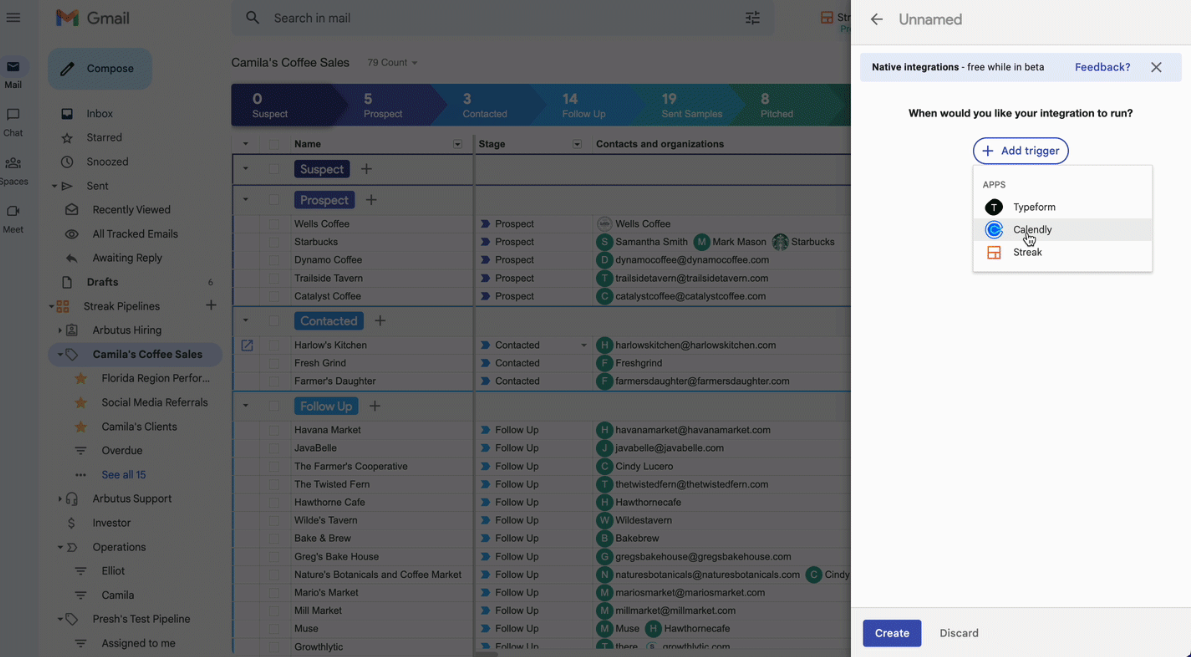
Streak is intentionally narrow. Integration with Gmail, Google Calendar, Google Drive, Google Contacts, and Google Chat is native. Beyond Google, Calendly, Typeform, Google Forms, Slack, LinkedIn, and Allo connect directly on Pro+ plans. Everything else goes through Zapier (connecting to 9,000+ apps) or the Streak REST API.
Source: Streak
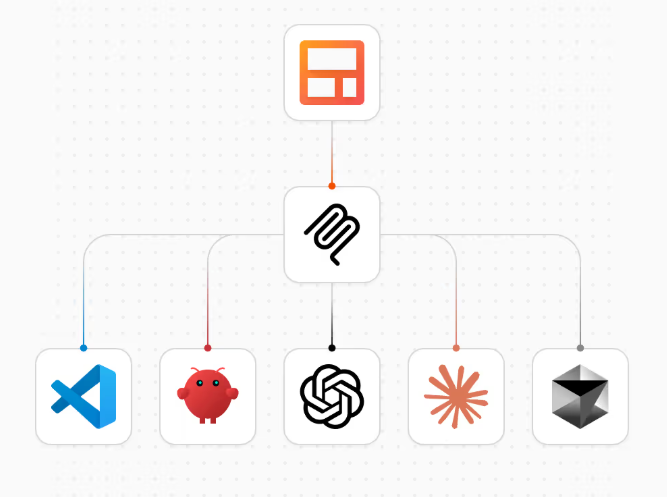
Streak's MCP server is a notable recent addition, letting Claude, ChatGPT, Cursor, and other MCP-compatible AI assistants read, create, and update CRM records directly. This makes Streak accessible to external AI agents without custom integration work.
Source: Streak
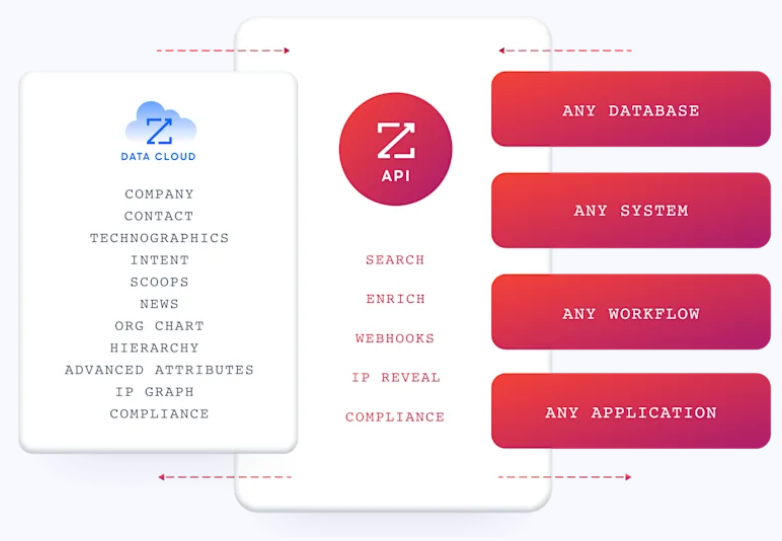
ZoomInfo is built to power other tools. The Enterprise API provides programmatic access to contact search, company enrichment, intent data, org charts, and AI-powered account intelligence.
Source: ZoomInfo
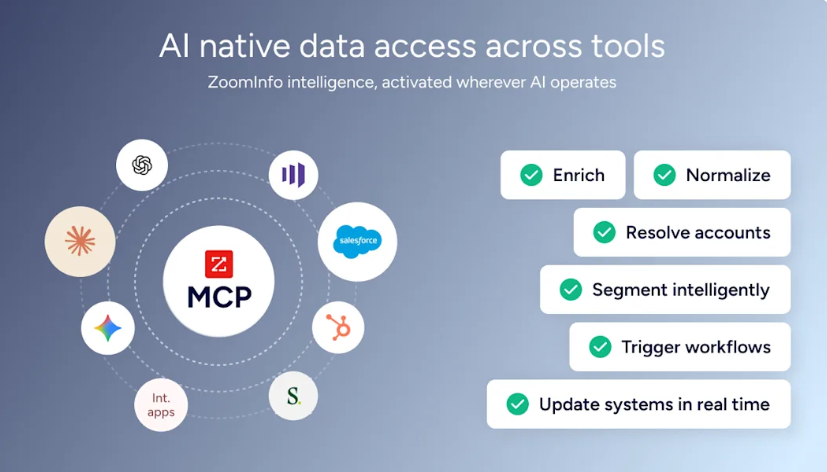
The MCP server makes ZoomInfo data available to AI assistants as a native tool.
Source: ZoomInfo
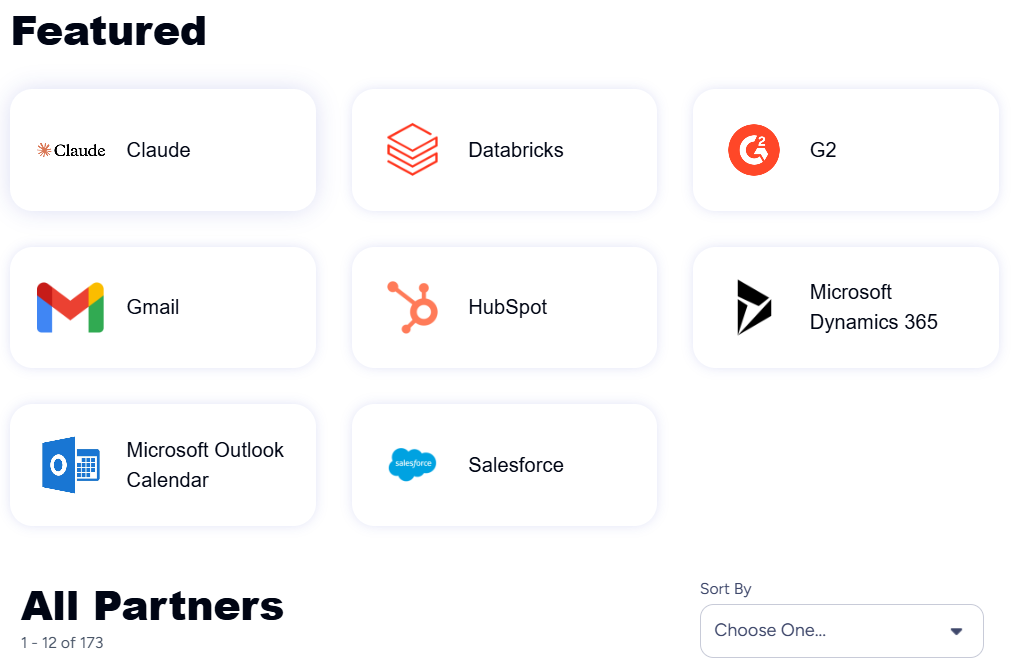
The App Marketplace offers 120 partner integrations, with Salesforce, HubSpot, and Microsoft Dynamics 365 as featured connectors. Cloud partnerships with AWS, Google Cloud, Snowflake, and Databricks enable direct data ingestion. ZoomInfo's philosophy: API access is included in all relevant plans, so the intelligence isn't locked inside ZoomInfo's own interface.
Source: ZoomInfo
"The plug-and-play aspect of the API means I can integrate it very easily into any process and get information at a moment's notice." (BDO Canada)
HubSpot vs. Streak vs. ZoomInfo: Which should you choose?
The right answer depends on what problem you're solving.
Choose HubSpot if:
You need marketing automation, sales pipeline management, and customer service in one platform
Your team spans marketing, sales, and support, and they need shared customer data
You want automation workflows that trigger actions across departments
You're prepared to invest in learning and configuring a full CRM platform
Your budget accommodates professional-tier pricing and mandatory onboarding fees
Choose Streak if:
Your team lives in Gmail and will only use a CRM that meets them there
You need a lightweight pipeline manager with near-zero setup time
Sales, fundraising, hiring, or deal tracking is your primary use case
Your team is small enough that per-seat costs stay manageable
You don't need marketing automation or multi-channel customer service
Add ZoomInfo to either if:
You need to find the right prospects before you can manage them in a CRM
Verified contact data, direct-dial phone numbers, and business emails are critical to your outbound motion
You want to know which accounts are actively researching solutions through buyer intent signals
Your sales team needs AI-driven account research and outreach, not just a place to log deals
You want a data and intelligence layer that works inside HubSpot, connects via API to any CRM, or powers custom AI agents through MCP
Start with ZoomInfo Lite for free or request a full platform trial.
HubSpot and Streak are both strong CRMs for their audiences. HubSpot gives you the full platform. Streak gives you adoption. But the question that comes before choosing a CRM is whether your team has the data to fill it with the right opportunities. ZoomInfo provides that foundation, and it works with whichever CRM fits your workflow.
"Without ZoomInfo, it would be extremely difficult to achieve our business objectives. Without it, we wouldn't be able to understand the market, have the right contact data, and make meaningful connections." (Smartsheet)
HubSpot vs. Streak vs. ZoomInfo FAQ
Is Streak a real CRM or just an email plugin?
Streak is a full CRM that happens to run inside Gmail. It offers pipelines with customizable stages, deal records with unified timelines, contact management with enrichment, reporting dashboards, AI-powered field population, mail merge, and automations. The pipeline architecture handles sales, hiring, fundraising, and project management. What it lacks compared to standalone CRMs like HubSpot is marketing automation, service ticketing, and content management.
Can I use HubSpot and Streak together?
There is no native integration between the two, but connecting them through Zapier is possible. Running both creates data duplication and maintenance overhead. Most teams are better served by choosing one CRM and making it work well. If you want HubSpot's platform depth with inbox convenience, HubSpot's own Gmail integration and mobile app provide CRM access from email, though not at the depth Streak offers.
How does ZoomInfo work with HubSpot?
ZoomInfo has a native HubSpot integration available through the ZoomInfo App Marketplace. It enables automatic CRM enrichment with verified contact and company data, export of prospect lists into HubSpot, and syncing of buying signals and intent data into HubSpot workflows. GTM Workspace also integrates with HubSpot, letting sellers act on ZoomInfo intelligence without leaving their workspace.
Which platform is cheapest for a small sales team?
For a five-person team on annual billing, HubSpot's free CRM costs nothing but limits features. HubSpot Sales Hub Starter runs approximately $75/month for five seats. Streak Pro costs approximately $245/month, and Pro+ runs $345/month. ZoomInfo Lite is free with 10 monthly export credits. Among plans with meaningful CRM features like automation and advanced reporting, Streak Pro+ at $345/month costs less than HubSpot Sales Hub Professional at $450–500/month for the same team size, before HubSpot's $1,500 mandatory onboarding fee.
Does Streak work outside of Gmail?
No. Streak runs as a browser extension inside Gmail and has no standalone web app or Outlook version. Mobile apps for iOS and Android provide basic CRM access, but the full experience requires the Chrome, Safari, or Edge extension running inside Gmail. If your team uses Outlook or any non-Gmail email platform, Streak is not an option.
What does ZoomInfo do that a CRM's built-in data enrichment doesn't?
CRM enrichment tools improve data on contacts already in your database. ZoomInfo operates upstream: it identifies target accounts, surfaces verified contacts you haven't discovered yet, tracks buyer intent signals showing when companies are actively researching, and provides org charts so you know who influences purchasing decisions. ZoomInfo's dataset covers 500M contacts and 100M companies, verified through a multi-source pipeline including 300+ human researchers with up to 95% accuracy. CRM enrichment is reactive. ZoomInfo is proactive.
Which platform has the best AI for sales teams?
Each platform's AI serves a different purpose. HubSpot's Breeze agents work best when your team has fully adopted the platform, drawing from the complete CRM history to personalize outreach and resolve support inquiries. Streak's AI is strongest at eliminating data entry by extracting information from live email threads and producing cited answers from deal history. ZoomInfo's AI operates on the widest data layer, combining your internal CRM data with external signals like buyer intent, technographics, and organizational changes to identify opportunities and draft context-aware outreach before you've made first contact.
Can ZoomInfo replace my CRM?
No. ZoomInfo does not manage deal pipelines, store service tickets, or run marketing automation workflows. It is the data and intelligence layer that feeds your CRM with verified contacts, company intelligence, and buying signals. It integrates with HubSpot, Salesforce, Microsoft Dynamics, and other CRMs to enrich records and surface opportunities your CRM wouldn't find on its own. ZoomInfo tells you who to target, when to engage, and what to say. Your CRM provides the workspace to manage those relationships once they begin.
Want more HubSpot and Streak comparisons? These related breakdowns go deeper:
