
Choosing between LeadSquared and Salesforce often comes down to five questions most comparison articles skip:
Are you running high-volume consumer sales, or complex B2B deal cycles with multiple stakeholders?
Do you need a CRM built for a specific industry, or a platform you can configure for any use case?
How important is it that your CRM includes accurate buyer data and intent signals, rather than relying on what your reps manually enter?
Does your team include field sales agents who need offline access and GPS tracking, or do you sell primarily by phone and email?
Are you prepared for a multi-month enterprise implementation, or do you need your team productive in weeks?
In short, here's what we recommend:
LeadSquared is a CRM built for high-volume sales organizations in specific verticals: financial services, healthcare, education, and automotive. Its pre-built industry workflows, field sales mobile app with GPS tracking, and lead routing designed to prevent drops make it the strongest option for companies processing thousands of consumer leads per day, especially in India and Southeast Asia. But LeadSquared's strength is also its limitation: it's not designed for complex B2B deal cycles, reviewers on G2 note that reporting requires developer intervention for cross-functional analysis, and its international presence outside core markets is still growing.
Salesforce is the world's #1 CRM by market share, serving over 150,000 companies across every industry and geography. With Sales Cloud, Service Cloud, Marketing Cloud, and the new Agentforce AI agents, Salesforce covers the widest range of use cases. Its 9,000+ AppExchange partner apps and 17 industry-specific clouds mean you can configure it for almost any sales motion. The trade-off is cost and complexity: Salesforce deployments require dedicated administrators, over 70% of implementations are partner-led, and pricing layers across clouds, add-ons, and consumption credits can be hard to predict.
Both platforms manage your sales process. But a CRM is only as good as the data inside it. Neither LeadSquared nor Salesforce generates the buyer intelligence that tells your team which accounts are in-market, who the decision-makers are, or what direct-dial number will reach them. That's a different problem, and it requires a different kind of platform.
ZoomInfo is a B2B data and go-to-market platform built on 500M contacts, 100M companies, 135M+ verified phone numbers, and 200M+ verified business email addresses. ZoomInfo's GTM Context Graph processes 1.5B+ data points daily, combining this data with your CRM records, conversation transcripts, and behavioral signals to reveal not just what's happening in your pipeline, but why. That intelligence reaches your team through GTM Workspace (a workspace for sellers), GTM Studio (a workflow builder for marketers and RevOps), or APIs and MCP that feed the same intelligence into any tool, including Salesforce.
If buyer intelligence and go-to-market execution are what's missing from your sales stack, see how ZoomInfo works.
LeadSquared vs. Salesforce vs. ZoomInfo at a glance
LeadSquared | Salesforce | ZoomInfo | |
|---|---|---|---|
Core function | CRM for high-volume B2C sales | Enterprise CRM platform | B2B data intelligence + GTM execution |
Best for | Consumer-facing sales teams in BFSI, healthcare, education | Any industry, any sales motion | B2B prospecting, pipeline intelligence, data-driven GTM |
Starting price | Free (ZoomInfo Lite); paid plans custom-quoted | ||
AI capabilities | Lead scoring, propensity predictions | Agentforce autonomous agents | GTM Context Graph, AI-drafted outreach, intent signals |
Field sales | Full mobile CRM with GPS, geo-fencing, offline mode | Field Service add-on ($175+/user/month) | Not applicable |
B2B data coverage | Limited to CRM data | Limited to CRM data | 500M contacts, 100M companies, 135M+ verified phones |
Industry verticals | 6 verticals (India-focused) | 17 industry clouds (global) | B2B across all industries |
Ecosystem | 9,000+ AppExchange apps | 120+ integrations, APIs, MCP | |
Implementation | Weeks to months | 3–12 months (partner-led) | Weeks |
Free trial | No public free trial | 30-day trial (Starter+) | 7-day free trial + permanent Lite tier |
Different tools for different sales motions
LeadSquared, Salesforce, and ZoomInfo solve different problems, even though all three touch the sales process.
LeadSquared is a CRM for companies where speed and volume define success. Think lending companies processing 10,000 loan applications a day, hospitals managing patient inquiries, or universities tracking admissions funnels
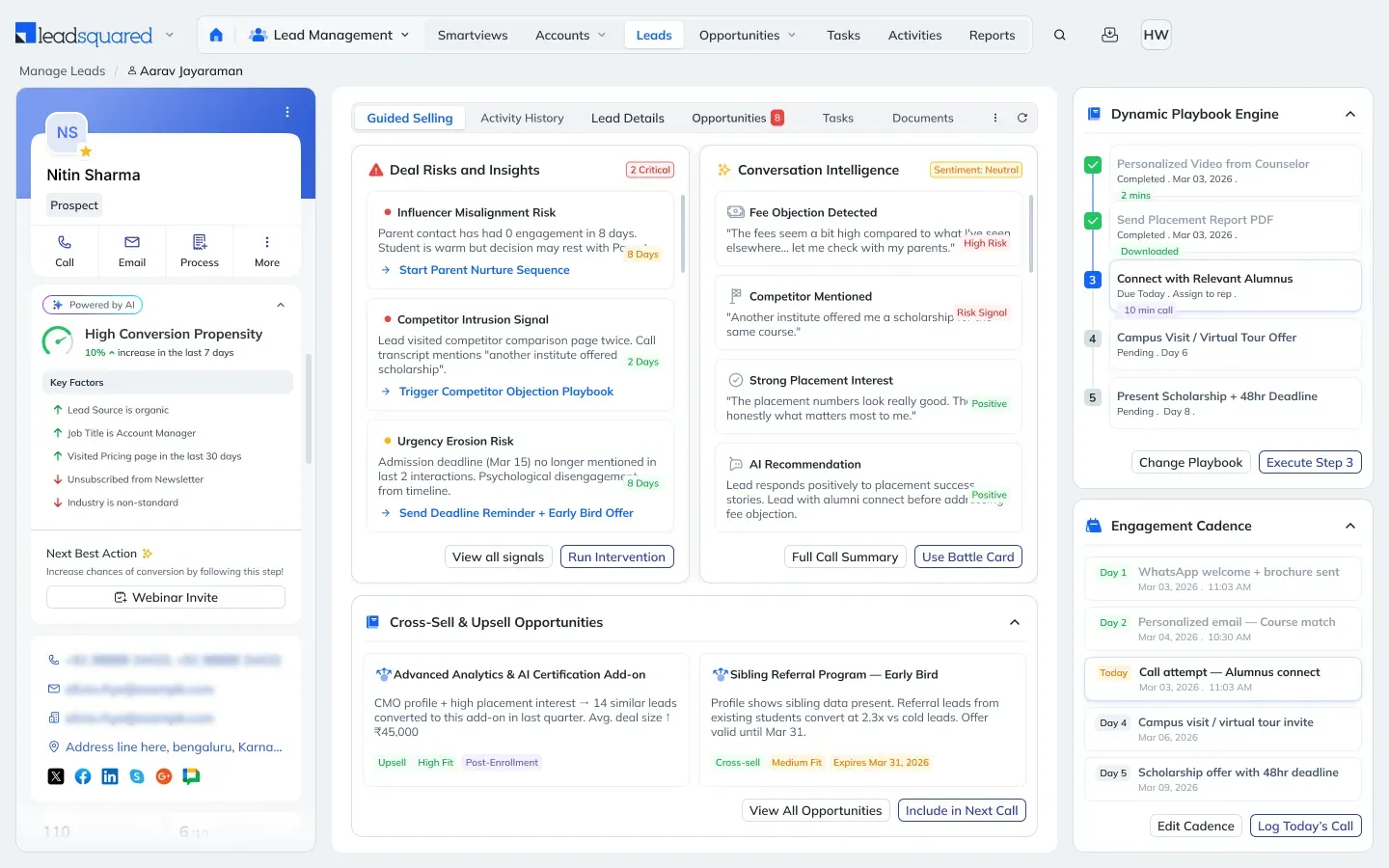
Source: LeadSquared
Its Weighted Round Robin Distribution Engine routes leads to available reps within seconds using a credit-based algorithm that self-corrects for fairness without manual intervention. A single contact can carry multiple simultaneous opportunities for different products, each with its own workflow, stages, and assigned team.
Field agents check in with GPS-verified selfies and complete tasks offline in low-connectivity areas. This is a CRM built for B2C sales at the ground level.
Salesforce is the platform for organizations that need a CRM capable of handling any sales motion, in any industry, at any scale. Sales Cloud tracks leads through pipelines.
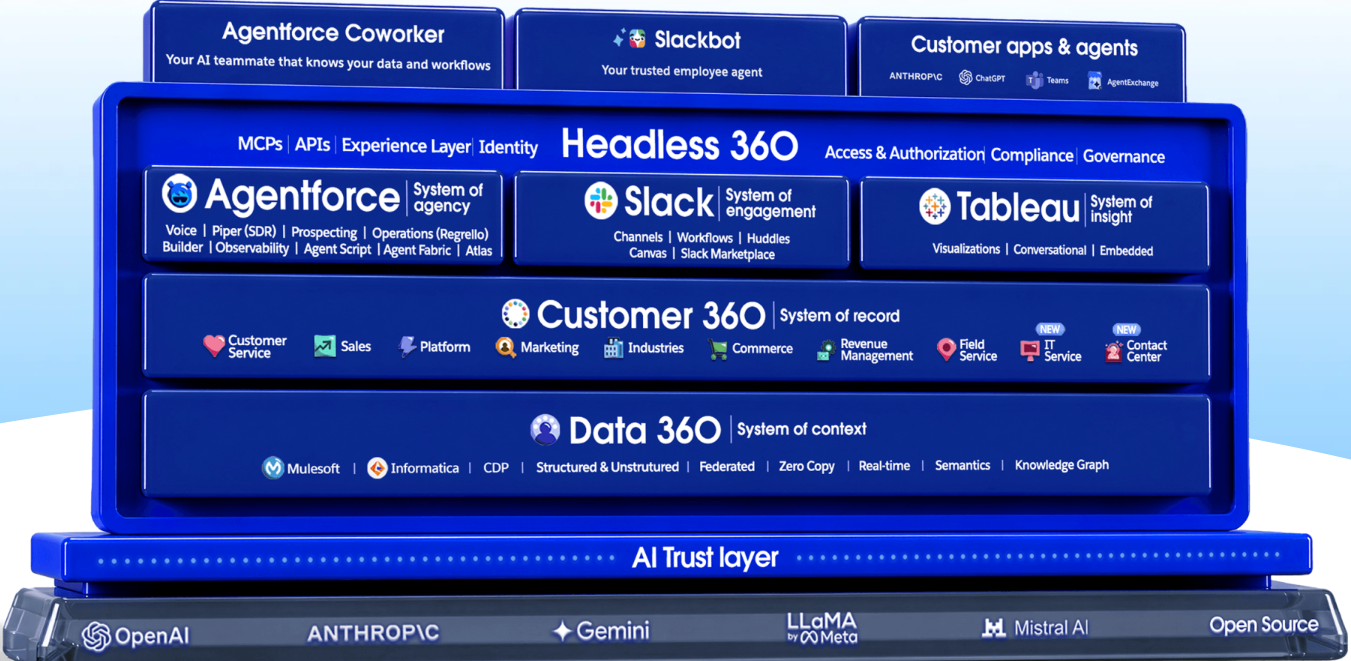
Source: Salesforce
Agentforce AI agents handle prospecting, coaching, and quoting, working autonomously across channels. The customization options are broad. But Salesforce's power comes with weight: configuring it to match your workflows requires trained administrators, and the ecosystem of clouds, add-ons, and integrations demands ongoing management
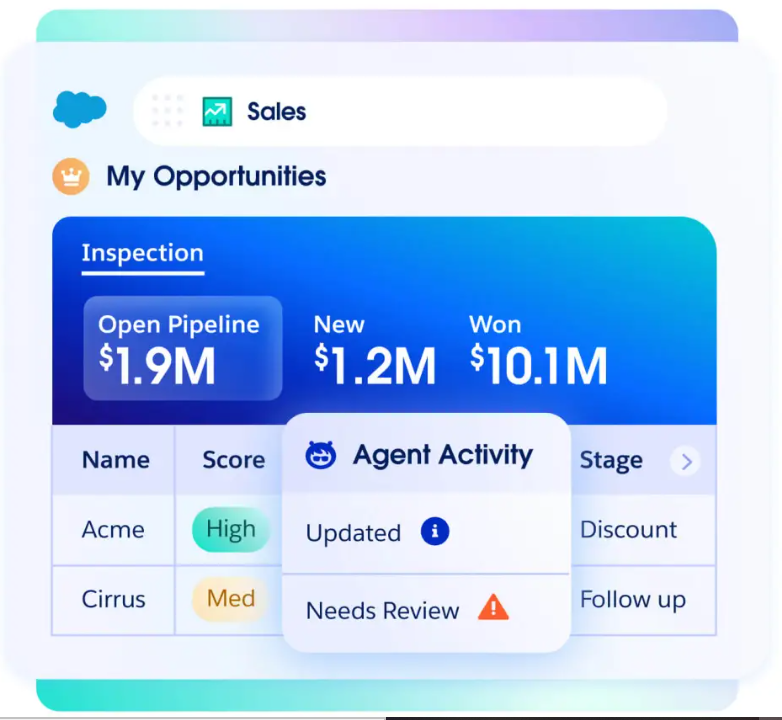
Source: Salesforce
ZoomInfo operates at a different layer. Instead of managing your sales process, it generates the intelligence that makes that process productive. The platform's B2B database (500M contacts, 100M companies, 135M+ verified phone numbers, and 200M+ verified business email addresses) provides the contact data your CRM doesn't have.
Buyer Intent signals surface accounts researching solutions before they fill out a form.
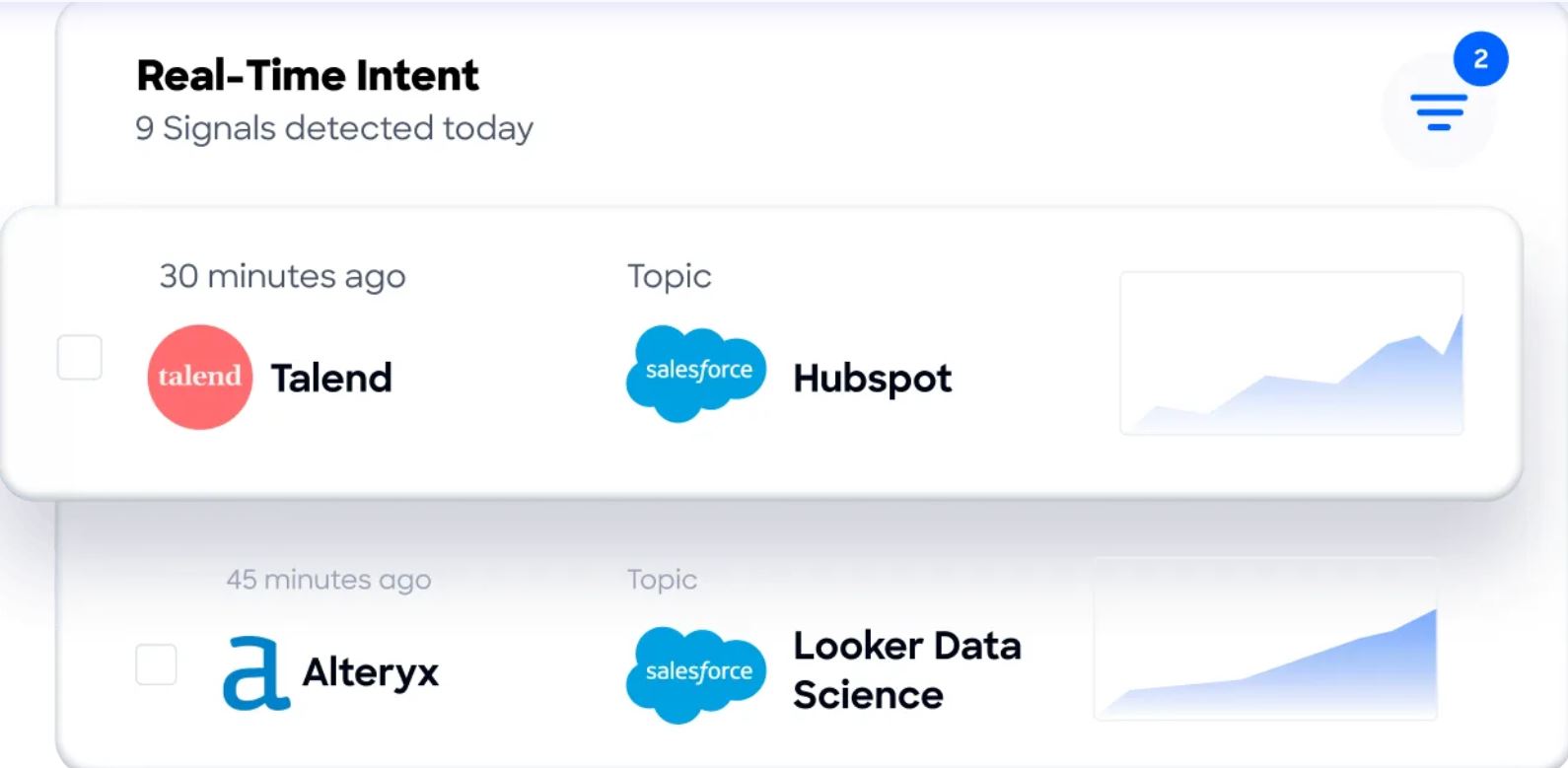
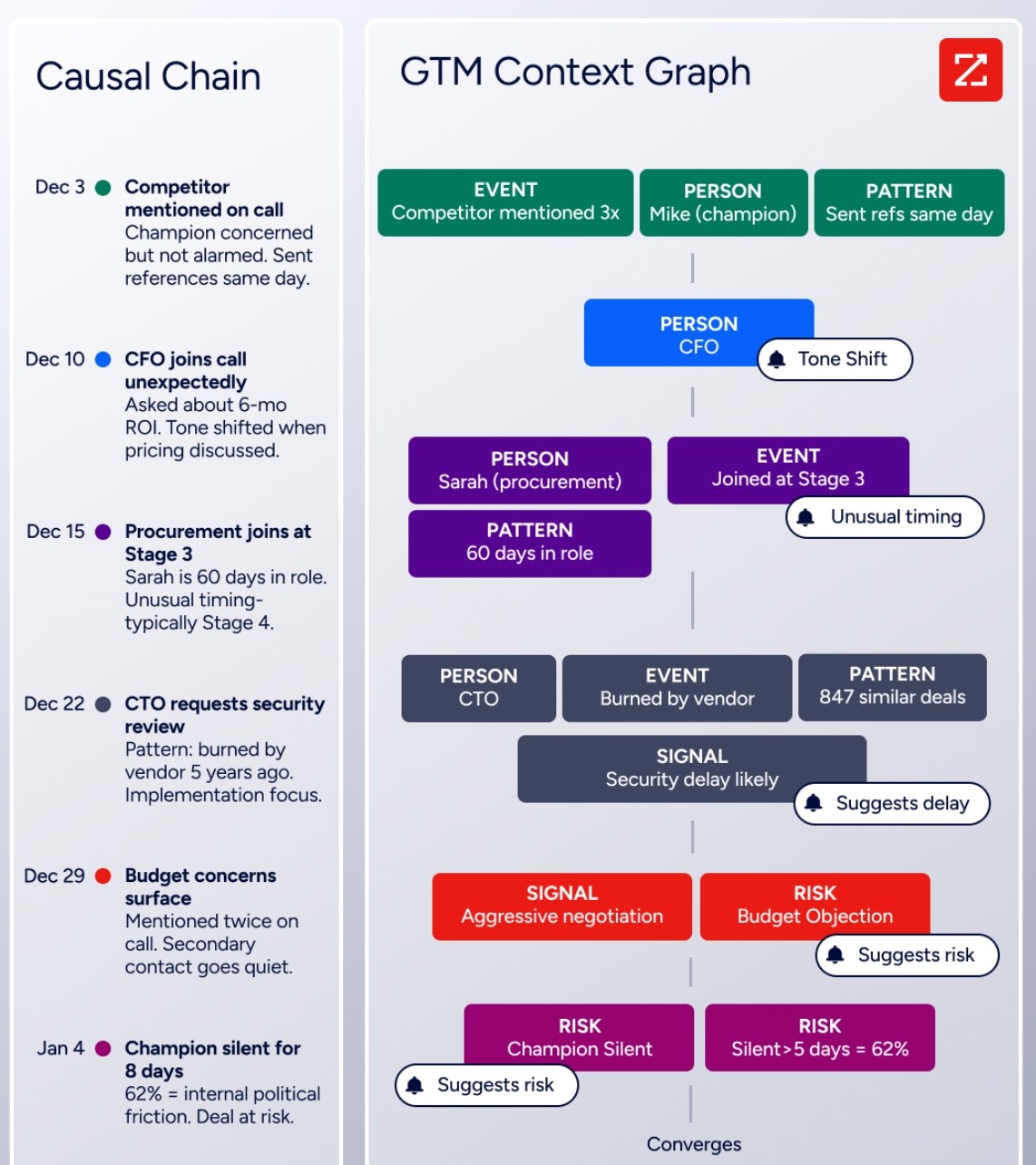
The GTM Context Graph connects all of this with your CRM data, call recordings, and engagement history to reveal why deals move or stall. For B2B teams, ZoomInfo works alongside either CRM (it integrates directly with Salesforce) or serves as the primary workspace through GTM Workspace.
LeadSquared owns high-velocity verticals, Salesforce owns enterprise breadth
LeadSquared's strongest advantage is vertical depth for consumer-facing industries.
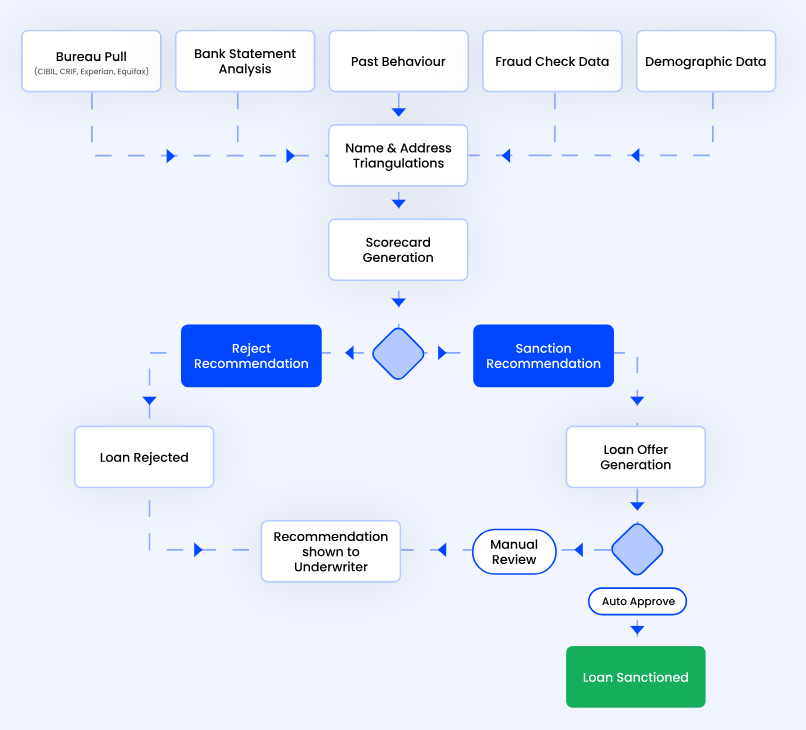
Its financial services CRM ships with distinct configurations for lending, insurance, broking, fintech, and banking.
Source: LeadSquared
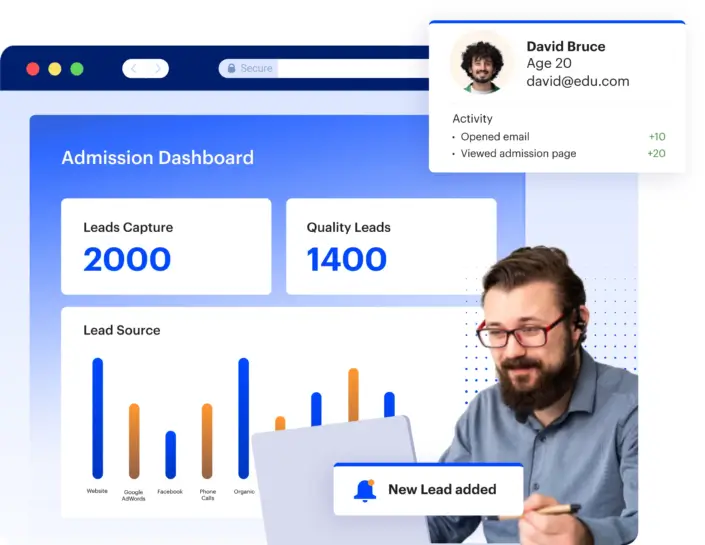
The education CRM covers higher education, overseas admissions, K-12, and EdTech as separate segments. This isn't generic CRM with industry labels slapped on; it's pre-built workflows, forms, and automation sequences designed for how those industries actually sell.
Source: LeadSquared
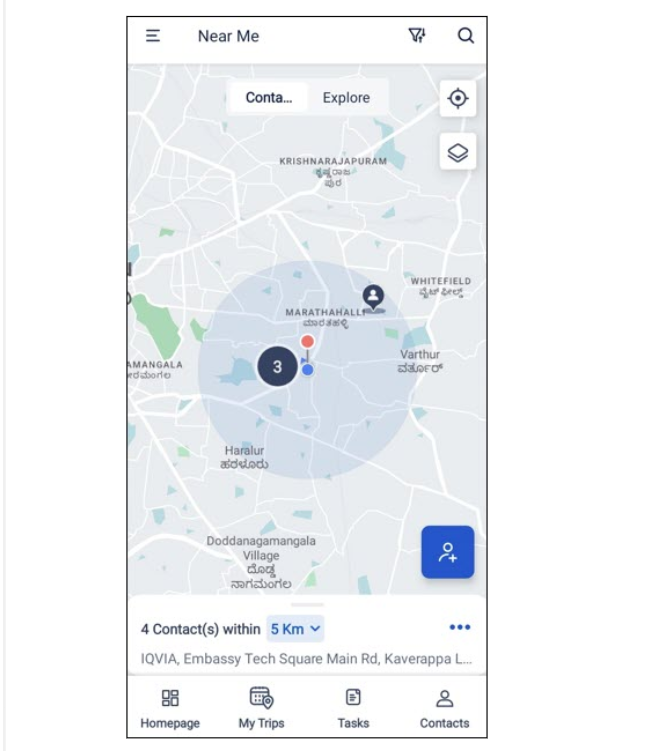
Features like Leads Near Me (showing prospects within a 15-kilometer radius), territory management with five levels of nested sub-territories, and device binding for anti-fraud control reflect a platform built for on-the-ground sales teams in emerging markets.
Source: LeadSquared
Salesforce covers more ground. With $6.6 billion in industry-specific ARR across 17 verticals, Salesforce spans Financial Services (3.2 billion financial accounts powered), Healthcare (30% greater patient volume reported), Manufacturing, Retail, Education, Public Sector, and more.
The AppExchange marketplace adds another dimension: 9,000+ partner apps with 14+ million installs mean that if a native feature doesn't exist, someone has probably built it.
The practical difference: LeadSquared gives you a CRM that works for your vertical on day one. Salesforce gives you a CRM that can be configured for any vertical, given time and resources.
The data quality problem neither CRM solves alone
Here's the question both platforms sidestep: where does the buyer intelligence come from?
A CRM tracks what your sales team does. It records calls, logs emails, moves deals through stages. But it cannot tell you which companies are researching your competitors right now, who the economic buyer is at a target account, or what direct-dial number will reach them.
That intelligence either comes from your reps (who spend 72% of their time on non-selling activities, including manual research) or from a dedicated data platform.
ZoomInfo was built to solve this problem. The platform maintains a B2B database verified through a multi-source pipeline backed by 300+ human researchers with up to 95% accuracy on first-party data. In a Fortune 500 competitive RFP analyzing 25 million contacts across vendors, an independent consultant concluded that "no other competitor came even close."
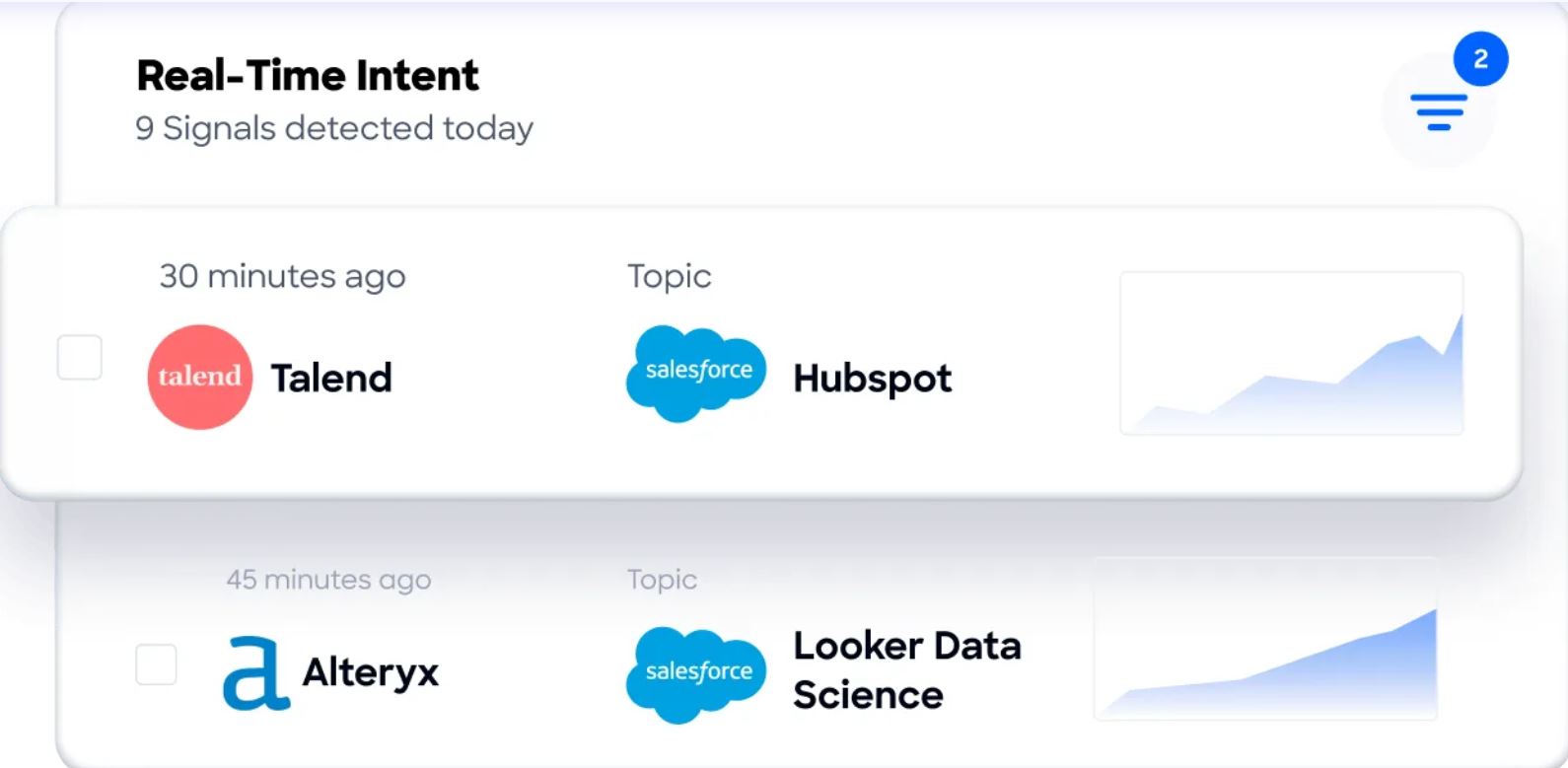
That data isn't static. ZoomInfo's Intent signals track buying behavior across 210 million IP-to-Organization pairings, identifying companies actively researching solutions.
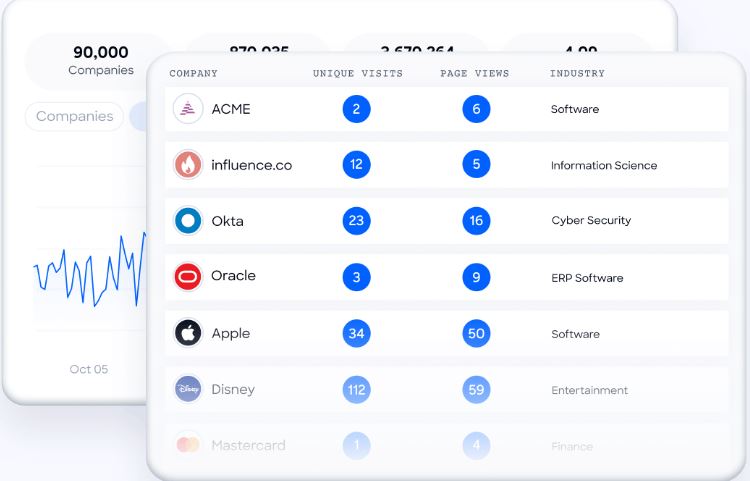
WebSights resolves anonymous website visitors to companies with direct contact information.
Technographics profiles the tech stack of 30+ million companies across 30,000+ technologies.
For Salesforce users, ZoomInfo's native integration enriches CRM records automatically: filling in missing contacts, updating stale data, and surfacing intent signals directly in the Salesforce interface. The result is a CRM that stops being a record-keeping system and starts functioning as an intelligence platform.
For a deeper look at how Salesforce and ZoomInfo compare as standalone platforms, see our Salesforce vs. ZoomInfo guide.
Snowflake uses ZoomInfo for one-third of its Account Propensity Scoring model. Monitored accounts show 90% higher opportunity open rates and 2x higher customer conversion rates. (Snowflake Case Study)
AI takes three different forms
All three platforms invest in AI. The implementations differ.
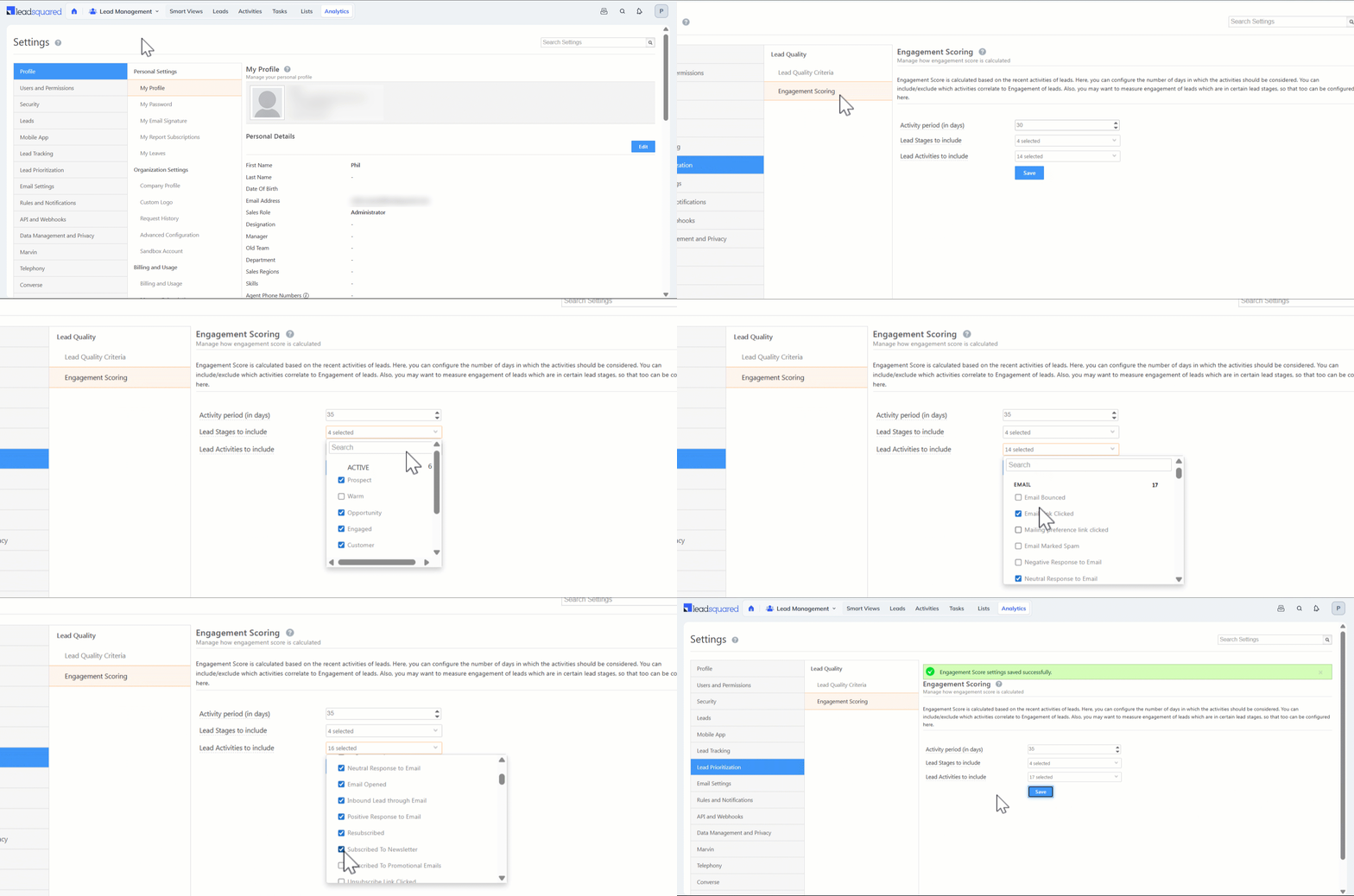
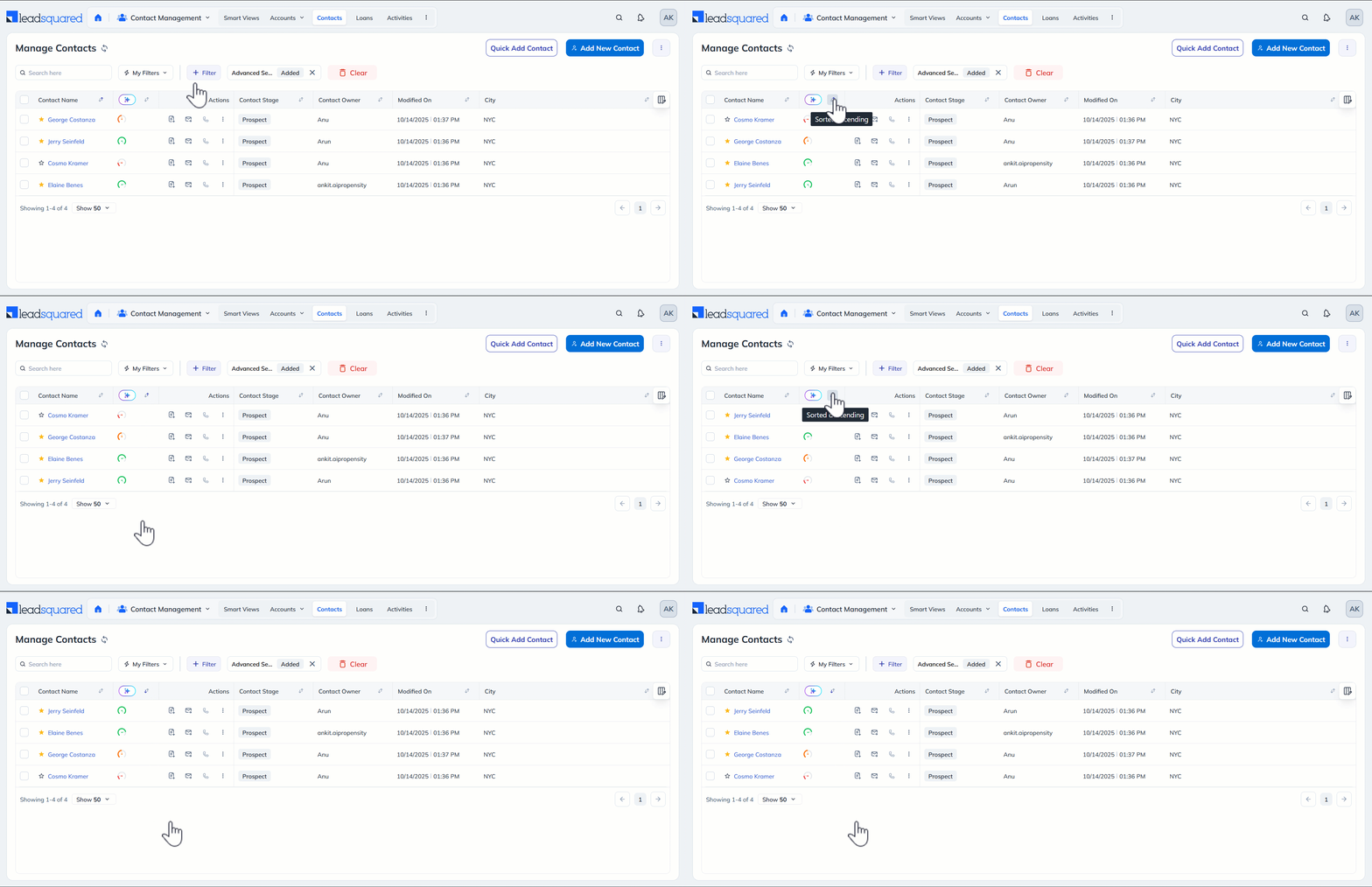
LeadSquared's AI focuses on lead prioritization. The platform offers three scoring layers: a Lead Quality Score based on ideal customer profile attributes, a cumulative Lead Score from historical interactions, and a time-windowed Engagement Score.
Source: LeadSquared
An AI Propensity Score classifies each lead's conversion likelihood as High, Medium, or Low, retraining as new data arrives.
Source: LeadSquared
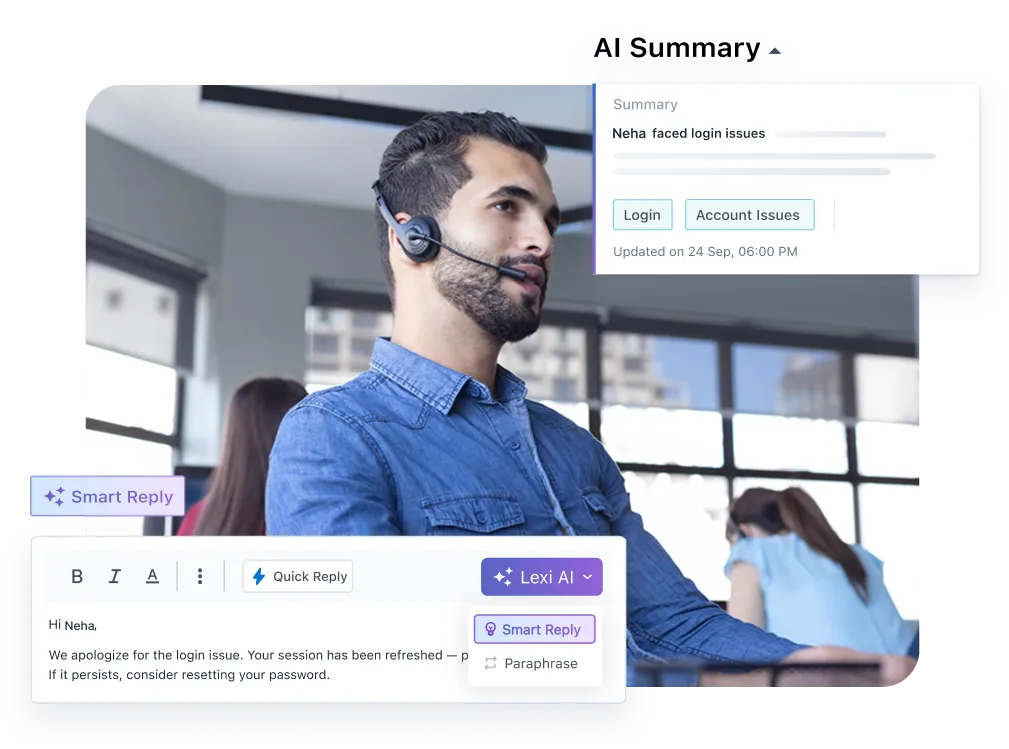
The Service Cloud includes Lexi AI for conversation summaries, reply drafts, and sentiment tracking. These are practical tools for managing high-volume lead flows.
Source: LeadSquared
The company's AI roadmap, according to CTO Pankaj Goel, centers on predictive lead scoring, AI agents for service, ticket summarization, and multilingual lead engagement.
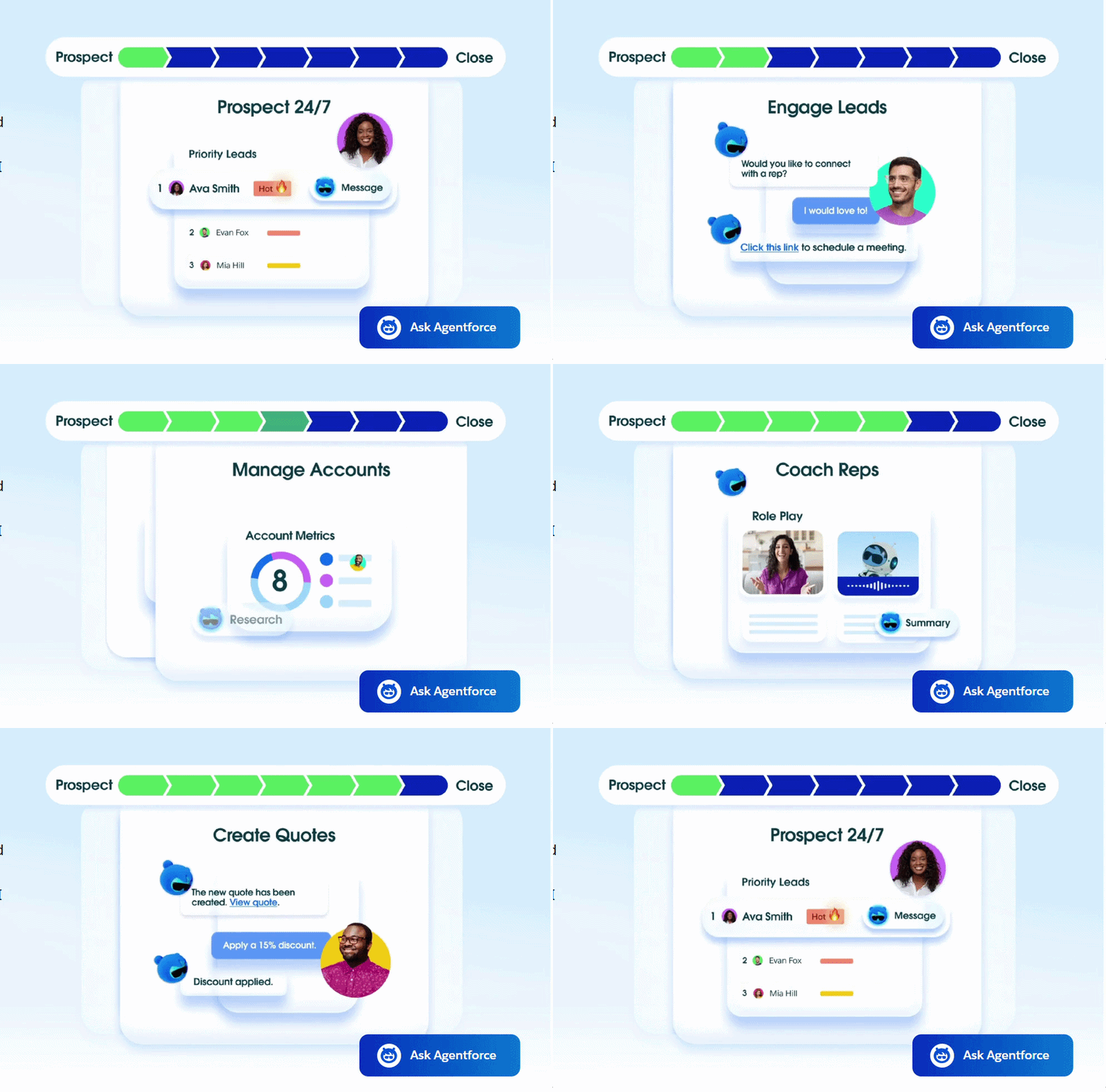
Salesforce's Agentforce is the broadest AI initiative of the three. Powered by the Atlas Reasoning Engine, Agentforce deploys autonomous agents that prospect and engage leads, manage pipeline, research accounts, coach sellers, and generate quotes 75% faster.
Source: Salesforce
The Einstein Trust Layer provides zero data retention with LLM partners and PII masking, addressing enterprise AI governance concerns.
But accessing Agentforce requires Enterprise-tier licensing or above, plus Flex Credits at $500 per 100,000 for consumption-based usage.
ZoomInfo's GTM Context Graph (ZoomInfo's intelligence layer) approaches AI from the data foundation up. Instead of automating CRM workflows, it processes 1.5B+ data points daily, combining your CRM records, conversation transcripts, and engagement signals with ZoomInfo's third-party data. As ZoomInfo's Chief Product Officer Dominik Facher writes: "The CRM recorded the state change. It has no record of why it happened."
The GTM Context Graph captures that missing context (a CFO joining a call and asking about ROI, a champion going quiet because of internal budget friction) and turns it into reasoning that powers AI agents in GTM Workspace.
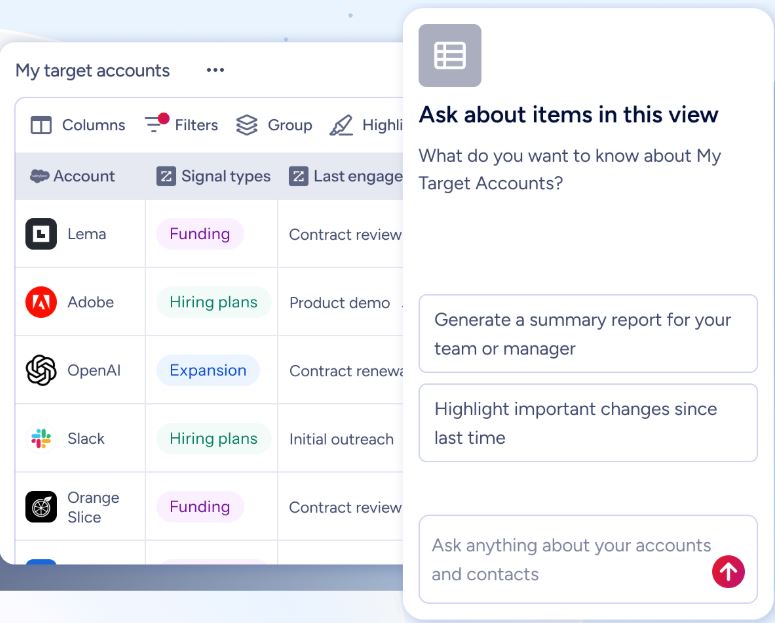
Those agents draft outreach addressing the specific concern raised on the last call, surface next-best actions grounded in actual deal patterns, and prioritize accounts based on buying evidence rather than CRM stage labels.
Seismic attributed 39% of active pipeline to opportunities identified or influenced by ZoomInfo signals. The sales team reported 54% higher productivity and saved 11.5 hours per week per seller. (Seismic Case Study)
Pricing reveals who each platform is built for
LeadSquared prices its Sales CRM at two tiers: $60/user/month (Pro) and $100/user/month (Super), both billed annually. Marketing Automation costs $2,000/month (Pro) and $3,500/month (Super) per account.
The pricing works for mid-market companies in LeadSquared's core markets, but add-ons accumulate: Sandbox, Territory Management, Journeys, the Analytics Platform, and the White-Label App are all optional paid features. Reviews on G2 and Capterra consistently note that total cost of ownership is hard to predict until you're deep in the sales conversation.
No public free trial exists; the entry point is a demo request. A startup program offering up to 60% off exists for India-registered startups under 5 years old, at Series B or below.
Salesforce spans a wider range: from $0 (Free Suite, limited to 2 users) to $550/user/month (Agentforce 1) for the full AI stack. The practical starting point for most teams is Pro Suite at $100/user/month, with Enterprise at $175/user/month for AI features and pipeline insights.
On top of license fees, Salesforce layers Agentforce consumption credits, Data Cloud credits at $500 per 100,000, Premier Success plans at 30% of net license fees, and partner-led implementation costs. Salesforce itself acknowledged its pricing "needed to be easier to understand, more predictable, and more flexible" in a September 2025 pricing update.
ZoomInfo uses consumption-based pricing with no published dollar amounts for paid tiers. Costs scale around seats, monthly credit volume, features, and contract length. The free entry points set it apart: ZoomInfo Lite is a permanent free tier (not a trial) with access to the B2B database, 10 monthly export credits, advanced search filters, the ReachOut Chrome Extension, and HubSpot integration.
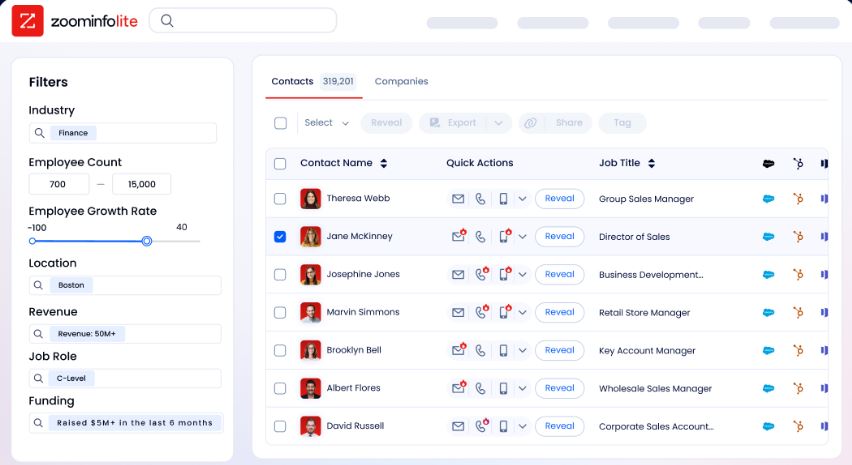
A separate 7-day free trial provides full platform access. For organizations already running Salesforce, ZoomInfo acts as an intelligence layer that improves the return on your CRM spend by ensuring reps focus on the right accounts with the right contacts.
Implementation and learning curves diverge
LeadSquared gets teams to value faster than enterprise CRMs, with Business Process Mapping, Migration, and Onboarding included at both plan tiers. The help center offers separate Quick Start guides for administrators, marketing users, and sales users, reflecting how the platform's breadth creates different learning paths for different roles.
An Academy provides self-paced certification programs. The admin setup is substantial (lead settings, object types, opportunities, workflow automation, Distribution Engine, Converse messaging, and more), but for organizations in LeadSquared's target verticals, the pre-built industry logic reduces the customization needed.
Salesforce has the steepest learning curve of the three. Trailhead, Salesforce's free learning platform, offers 1,500+ badges and has trained 6+ million learners, which tells you both how much Salesforce invests in education and how much education the platform demands. Implementation timelines range from weeks for a basic Sales Cloud setup to 3–12 months for enterprise multi-cloud deployments.
Most organizations rely on certified partners for implementation, adding cost and a dependency on external expertise. In-app guidance lets admins deploy prompts and walkthroughs, but configuration beyond out-of-the-box features requires dedicated, trained administrators.
ZoomInfo redesigned its onboarding to span 30 to 90 days across planning, technical implementation, education, and adoption phases.
That redesign produced a 25% improvement in customer satisfaction scores and won Rocketlane's Golden Comet award for Best Customer Onboarding Team of 2024. ZoomInfo University provides role-specific learning paths for sales, marketing, administrators, and customer success teams. CEO Henry Schuck has stated that GTM Workspace "deploys in weeks, not months".

Access and integration define long-term flexibility
How each platform connects to your broader technology stack matters as much as what it does on its own.
LeadSquared lists 162 integrations across its directory, with a focus on the Indian ecosystem: Indian payment gateways, telecom APIs, and regional marketplaces. For custom integrations, LAPPS provides a serverless development platform (Super tier only), and Universal Data Sync offers no-code connection building.
The REST API covers lead, opportunity, and activity management with an Async API variant for high-volume operations. Integration depth narrows outside LeadSquared's core markets and verticals, and webhook limits (3 on Pro, 30 on Super) can constrain event-driven automation at scale.
Salesforce has the largest integration ecosystem in enterprise software. The AppExchange marketplace spans 9,000+ apps with 14+ million installs, and 91% of customers use at least one. MuleSoft provides API management with hundreds of pre-built connectors. Native integrations with Google Workspace, Microsoft Outlook and Teams, and Slack are built in.
The trade-off: managing this many integrations takes dedicated administration, and MuleSoft itself is a significant additional investment with no publicly listed pricing.
ZoomInfo takes a different approach. Rather than building a broad app marketplace, it focuses on making its data and intelligence available everywhere. API access is included in all relevant plans. The MCP server connects AI models directly to ZoomInfo's data without custom coding, currently supporting Claude and ChatGPT.
The ZoomInfo App Marketplace lists 120 partner integrations, with deep connections to Salesforce, HubSpot, and Microsoft Dynamics 365.
The Enterprise API provides programmatic access across four areas: data search and enrichment, AI intelligence (account summaries, lookalikes, contact recommendations), marketing audience management, and engagement data.
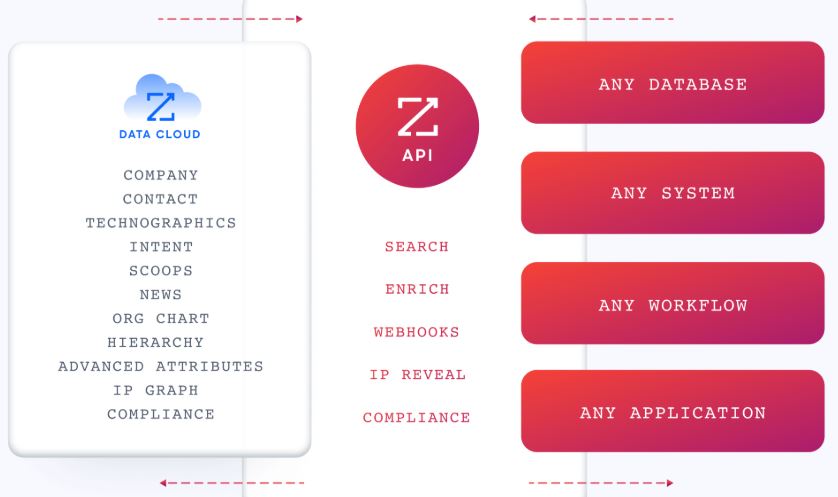
For Salesforce users, this means ZoomInfo data flows directly into CRM records, enriching contacts and surfacing signals within the Salesforce interface.
Smartsheet uses ZoomInfo as its single source of truth for account and contact data. Its sales technology team reports that understanding the market and making meaningful connections would be "extremely difficult, if not impossible" without the platform. (Smartsheet Case Study)
Security and compliance for regulated industries
All three platforms hold serious security credentials, but the specifics matter for regulated buyers.
LeadSquared holds ISO 27001:2022 and SOC 2 Type II certifications, with HIPAA compliance and BAA availability for healthcare customers and GDPR data processing agreements with EU Standard Contractual Clauses. LeadSquared encrypts data with AES-256 at rest and FIPS-140-2 standard TLS in transit.
The platform uses a multi-tenant architecture with separate databases per customer, hosted on Amazon Web Services with data centers in Mumbai and the US. For Indian financial services and healthcare companies, these certifications remove common procurement blockers.
Salesforce offers the most extensive compliance portfolio: ISO 27001/27017/27018, SOC 1/2/3, FedRAMP (Government Cloud), and HITRUST. Salesforce Shield (a premium add-on) adds event monitoring across 50+ event types, platform encryption with bring-your-own-key, and field audit trail with indefinite retention.
The Einstein Trust Layer provides zero data retention with LLM partners, PII masking, and toxicity detection for AI interactions. Hyperforce enables deployment with regional data residency across the US, UK, Germany, India, Japan, and additional regions.
ZoomInfo maintains ISO 27001, ISO 27701, SOC 2 Type II, TRUSTe GDPR, and TRUSTe CCPA certifications, all renewed annually. ZoomInfo is a registered data broker in California and Vermont. The ISO 27701 certification (Privacy Information Management System) addresses the privacy requirements of a B2B data platform that handles personal data at scale.
LeadSquared vs. Salesforce vs. ZoomInfo: Which should you choose?
The right choice depends on what kind of sales organization you're building and where your biggest gaps are.
Choose LeadSquared if:
You run high-volume consumer sales (lending, insurance, education admissions, patient acquisition)
Your sales team includes field agents who need mobile access with GPS tracking, offline capability, and geo-fenced task verification
You're based in India or Southeast Asia and need a CRM with strong local ecosystem support
Pre-built industry workflows for your specific vertical matter more than horizontal configurability
Your budget is $60–$100/user/month for CRM, and you want to avoid multi-month implementation projects
Choose Salesforce if:
You need a CRM platform that scales across industries, geographies, and team sizes
Your organization has (or plans to hire) dedicated Salesforce administrators
You want the broadest ecosystem of integrations, partner apps, and customization options
You're investing in AI automation through Agentforce and can budget for Enterprise tier and above
Long-term platform flexibility matters more than speed of initial deployment
Choose ZoomInfo if:
Your primary challenge is B2B prospecting: finding the right buyers, understanding their intent, and reaching them with accurate contact data
You want AI grounded in buyer intelligence, not just CRM workflow automation
You already use Salesforce (or another CRM) and need the intelligence layer that makes it productive
Your team needs intent signals, technographics, org charts, and verified direct dials in one platform
You want to start quickly, with the option to scale from ZoomInfo Lite (free) to enterprise go-to-market execution
Start with ZoomInfo Lite for free, or request a demo of GTM Workspace.
For organizations in B2C-heavy verticals like Indian financial services or healthcare, LeadSquared delivers the fastest path to managing high-volume sales with vertical-specific logic built in.
For enterprises that need a configurable platform spanning every department and function, Salesforce remains the standard.
For B2B sales teams where buyer intelligence directly determines pipeline performance, ZoomInfo provides the data foundation and execution tools that neither CRM offers on its own.
The most effective sales organizations don't treat these as either/or decisions. Many pair ZoomInfo's intelligence with Salesforce's CRM, using ZoomInfo to identify and prioritize buyers while Salesforce manages the deal process. The question isn't just which tool to buy. It's which layer of your sales operation needs the most help.
LeadSquared vs. Salesforce vs. ZoomInfo FAQ
What is the fundamental difference between LeadSquared, Salesforce, and ZoomInfo?
LeadSquared is a CRM built for high-volume consumer sales in specific verticals like financial services, education, and healthcare, with particular depth in India and Southeast Asia. Salesforce is the world's largest CRM platform, designed to handle any sales motion in any industry through configuration and an ecosystem of 9,000+ partner apps.
ZoomInfo is a B2B data intelligence and go-to-market platform that provides buyer data (500M contacts, 135M+ verified phone numbers), intent signals, and AI execution tools. LeadSquared and Salesforce manage your sales process; ZoomInfo generates the buyer intelligence that fuels it.
Which platform is cheapest to get started with?
Salesforce offers a Free Suite (limited to 2 users) and Starter Suite at $25/user/month. ZoomInfo offers ZoomInfo Lite, a permanent free tier with access to the B2B database, 10 monthly export credits, and search capabilities. LeadSquared starts at $60/user/month with no public free trial.
Real-world costs for all three scale well beyond starting prices: Salesforce layers add-ons, AI consumption credits, and implementation fees; LeadSquared's add-on modules compound the base subscription; and ZoomInfo's paid plans are custom-quoted based on usage volume.
Can ZoomInfo replace a CRM like LeadSquared or Salesforce?
ZoomInfo is not a traditional CRM. It does not manage deal pipelines, track sales activities, or handle customer service tickets the way LeadSquared and Salesforce do. But for B2B sales teams, ZoomInfo's GTM Workspace lets sellers research accounts, generate personalized outreach, monitor buying signals, and manage their book of business.
Many organizations use ZoomInfo alongside Salesforce, with ZoomInfo providing the data and intelligence layer and Salesforce handling deal management and reporting.
Which platform is best for high-volume consumer sales in India?
LeadSquared is the strongest fit. Its pre-built workflows for Indian financial services, healthcare, and education verticals, combined with a mobile CRM serving over 500,000 field users, offline capability, GPS-verified check-ins, and support for the Indian telecom and payment ecosystem, make it the most specifically designed option for this use case. Salesforce covers India through its industry clouds but requires more customization.
ZoomInfo focuses on B2B data intelligence and is not designed for high-volume B2C sales.
How does Salesforce's Agentforce compare to ZoomInfo's AI capabilities?
Salesforce Agentforce deploys autonomous AI agents that automate CRM workflows: prospecting, lead engagement, account research, coaching, and quoting. It works within the Salesforce ecosystem and draws on CRM data.
ZoomInfo's GTM Context Graph processes 1.5 billion data points daily, combining CRM data with third-party B2B intelligence (verified contacts, intent signals, technographics, conversation transcripts) to understand why deals move or stall. Agentforce automates the sales process; ZoomInfo provides the contextual intelligence that makes those automated actions accurate and relevant.
Which platform has the strongest integration ecosystem?
Salesforce leads by a wide margin with 9,000+ partner apps on AppExchange and MuleSoft for API management. ZoomInfo offers 120+ partner integrations with deep connections to major CRMs, plus API access in all relevant plans and an MCP server for AI agent integration. LeadSquared lists 162 integrations focused on the Indian technology ecosystem.
For Salesforce users, ZoomInfo's native integration means the two platforms work together directly, enriching CRM records with verified data and intent signals.
Is ZoomInfo worth the investment if I'm already using Salesforce?
Many ZoomInfo customers are Salesforce users. ZoomInfo enriches Salesforce records with verified contact data, intent signals, and company intelligence that Salesforce does not generate on its own. Snowflake, for example, uses ZoomInfo data for one-third of its Account Propensity Scoring model within Salesforce, with monitored accounts showing 90% higher opportunity open rates.
The value for Salesforce users comes from filling the data and intelligence gaps in any CRM populated primarily by manual rep input.
Which platform handles field sales operations best?
LeadSquared is the clear leader for field sales. Its mobile CRM includes GPS-verified check-ins with selfie requirements, activity-level geo-fencing, territory management with five levels of nested sub-territories, beat planning for daily visit schedules, offline task completion, and manager oversight dashboards with animated route playback.
Salesforce offers Field Service as an add-on starting at $175/user/month, focused on scheduling, dispatch, and work orders for service technicians rather than sales-oriented field visits. ZoomInfo does not include field sales management features.
Comparing LeadSquared and Salesforce? These related breakdowns go deeper:
