
If you're comparing Base CRM vs. Salesforce in 2026, one fact changes everything: Base CRM no longer exists as an independent product. The platform, now called Zendesk Sell, is being retired on August 31, 2027.
That doesn't make this comparison irrelevant. If you're a current Zendesk Sell user evaluating options, or if someone recommended Base CRM and you need to understand the landscape, these questions matter:
Are you already on Zendesk Sell and need a migration plan before the August 2027 deadline?
Does your team need a CRM they can deploy in weeks, or can you invest months in a larger platform?
Is your sales team 5 people or 500?
How important is having accurate, verified contact data inside your CRM?
Do you need your CRM to just track deals, or do you need it to tell you which deals to pursue?
Here's what we recommend:
Base CRM (Zendesk Sell) was built for sales teams that wanted simplicity over complexity. 70% of teams deployed it in fewer than 8 weeks, and its clean interface meant reps actually used it. The native integration with Zendesk Support gave companies a single view across sales and service. However, Zendesk announced on September 9, 2025 that Sell will be retired on August 31, 2027, with no new feature development planned. If you're evaluating CRM platforms today, Base CRM is not a viable long-term option.
Salesforce is the #1 CRM by IDC market share and a Gartner Magic Quadrant Leader for Sales Force Automation for 19 consecutive years. With over 150,000 customers and $41.5 billion in annual revenue, it covers sales, service, marketing, and commerce. Salesforce can handle virtually any sales workflow. The trade-off is real: complex implementation, a steep learning curve, and pricing that climbs fast beyond entry-level plans.
Both platforms handle CRM (the system of record for your deals and customer relationships). But a CRM is only as good as the data inside it, and neither Base CRM nor Salesforce solves the challenge of getting accurate, verified prospect data into your pipeline in the first place.
ZoomInfo is an AI GTM platform that lets your sales reps walk into every call knowing why the deal is moving, who's championing it, and what's likely to happen next. Your marketers can describe audiences in plain language and launch plays against accounts that match your proven win patterns. No engineering ticket required. Your leaders can see deal risk before it shows up in CRM stage fields.
That capability comes from the GTM Context Graph, an intelligence layer built on 500M contacts, 100M companies, 135M+ verified phone numbers, and 200M+ verified business emails, unified with your CRM records, conversation transcripts, and behavioral signals. Your team accesses it through GTM Workspace for sellers, GTM Studio for marketers and RevOps, or APIs and MCP in any front-end.
If you want to see how ZoomInfo's intelligence layer can strengthen your sales pipeline, start with a free trial.
Base CRM vs. Salesforce vs. ZoomInfo at a glance
Base CRM (Zendesk Sell) | Salesforce | ZoomInfo | |
|---|---|---|---|
Primary function | Sales CRM | Full CRM + enterprise platform | AI GTM platform |
Status | Retiring August 31, 2027 | Active, growing | Active, growing |
Best for | Small sales teams wanting simplicity | Mid-market to enterprise organizations | Any team needing verified B2B data and intelligence |
Starting price | $19/seat/month | $0 (Free Suite, max 2 users) | Free (ZoomInfo Lite, permanent) |
Paid plans | $19–$169/seat/month | $25–$550/user/month | Custom-quoted, consumption-based |
Setup time | Under 8 weeks (70% of teams) | Weeks to 12+ months | Weeks |
Native AI | None | Agentforce autonomous agents | GTM Context Graph + AI agents |
Contact database | 44M+ businesses, 350M+ prospects | No native B2B database | 500M contacts, 100M companies |
Key integration | Zendesk Support | 9,000+ AppExchange apps | Salesforce, HubSpot, 120+ integrations |
Learning curve | Low | Steep | Moderate |
Base CRM is retiring: plan accordingly
This is the most important fact in this comparison. Zendesk officially announced on September 9, 2025 that Zendesk Sell (formerly Base CRM) will be permanently retired on August 31, 2027. After that date, all Sell customer data will be deleted.
The product is in maintenance mode. No new features are being developed. The signs were visible earlier: Zendesk removed the Shopify integration for Sell on April 14, 2025, five months before the retirement announcement. The advanced analytics capability (Zendesk Explore) was removed for Sell on January 16, 2024 with no replacement.
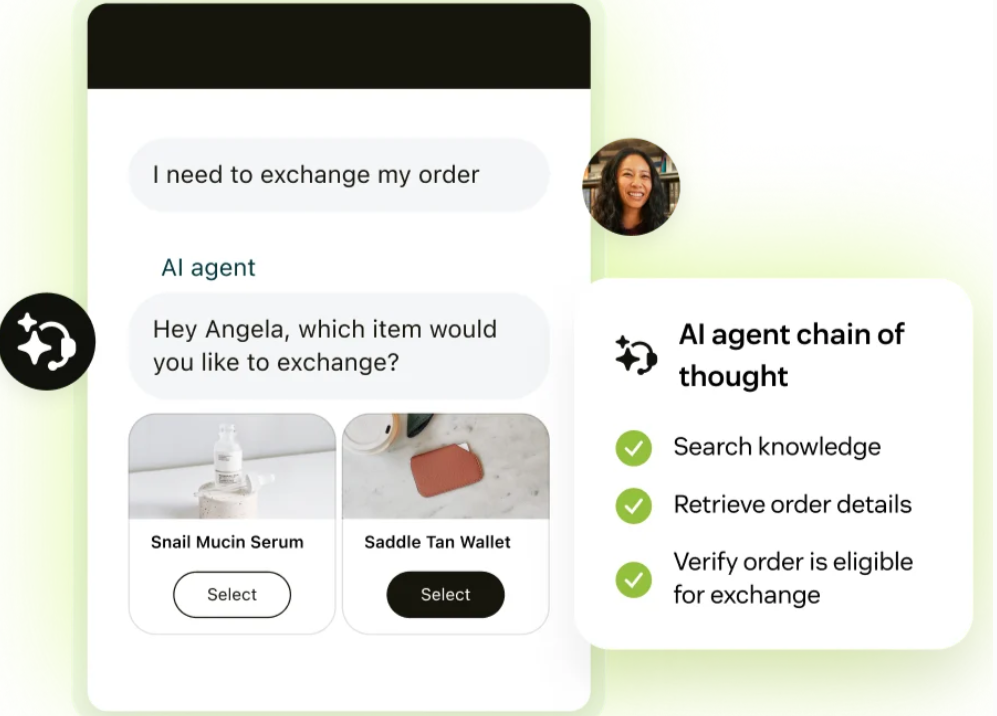
Zendesk's strategic focus has shifted to AI-first customer service under the Resolution Platform. Sales is no longer part of that future. Zendesk has partnered with Pipedrive as the official migration path, with tooling to transfer leads, contacts, deals, notes, tasks, and smart list data.
Source: Zendesk
A data portability concern worth noting: activity history, appointments, emails, call logs, and documents cannot be exported from Zendesk Sell. The migration covers core records but not everything.
If you're on Zendesk Sell, the clock is ticking. If you're evaluating it for the first time, look elsewhere.
What Base CRM did well (and why people liked it)
Base CRM earned its following for real reasons, and understanding those strengths helps clarify what to look for in a replacement.
The product was founded in 2009 with a clear philosophy: build a CRM that salespeople would actually use. As founder Uzi Shmilovici put it, "Legacy sales tools were never built for the people actually using them." The result was an interface clean enough that reps adopted it without resistance, and a setup process simple enough that 70% of teams deployed in fewer than 8 weeks.
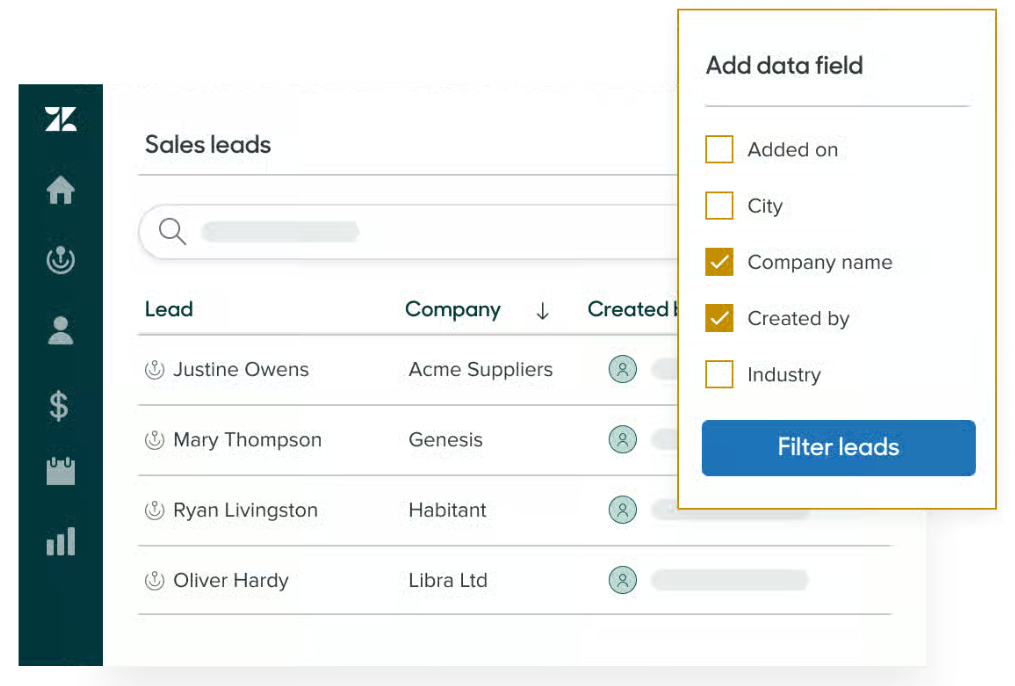
The built-in sales engagement tools set it apart from many CRMs at its price point. Email sequences, a power dialer, bulk outreach, and a prospecting database of 44M+ businesses and 350M+ prospect records were all included on Growth plans and above, not sold as add-ons.
Source: Zendesk
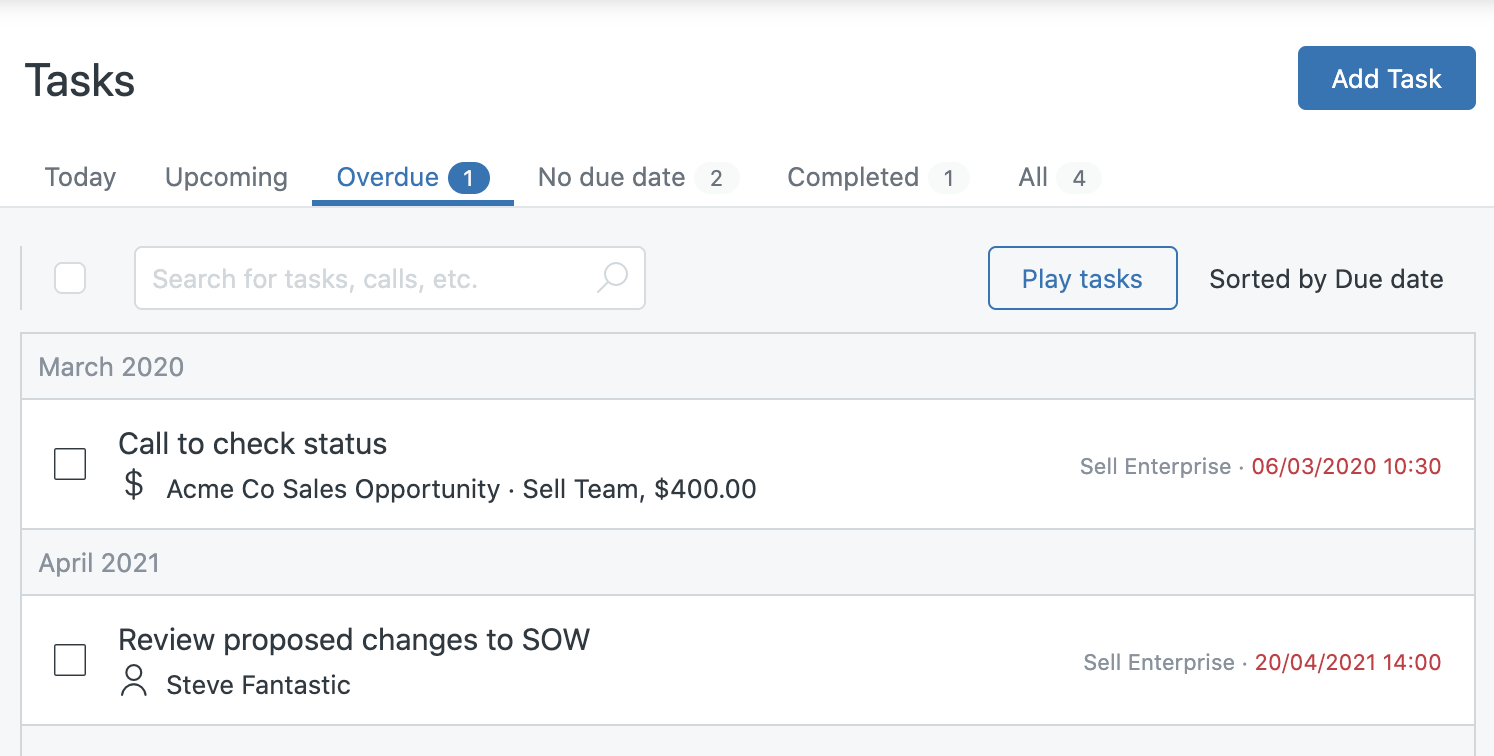
The task player created a focused work mode where reps moved through their to-do list without distraction.
Source: Zendesk
Sell Voice, powered by Twilio, gave every rep a dedicated phone number for calls and texts directly from the CRM, with automatic logging on every plan.
Source: Zendesk
For companies already using Zendesk Support, the native Sell + Support integration was the product's clearest differentiator. Sales reps could see open support tickets and service history inside deal records. Support agents could see deal status. No middleware, no Zapier, no manual data transfers.
But none of these strengths matter for a platform that won't exist in fourteen months.
Salesforce offers depth that Base CRM never matched
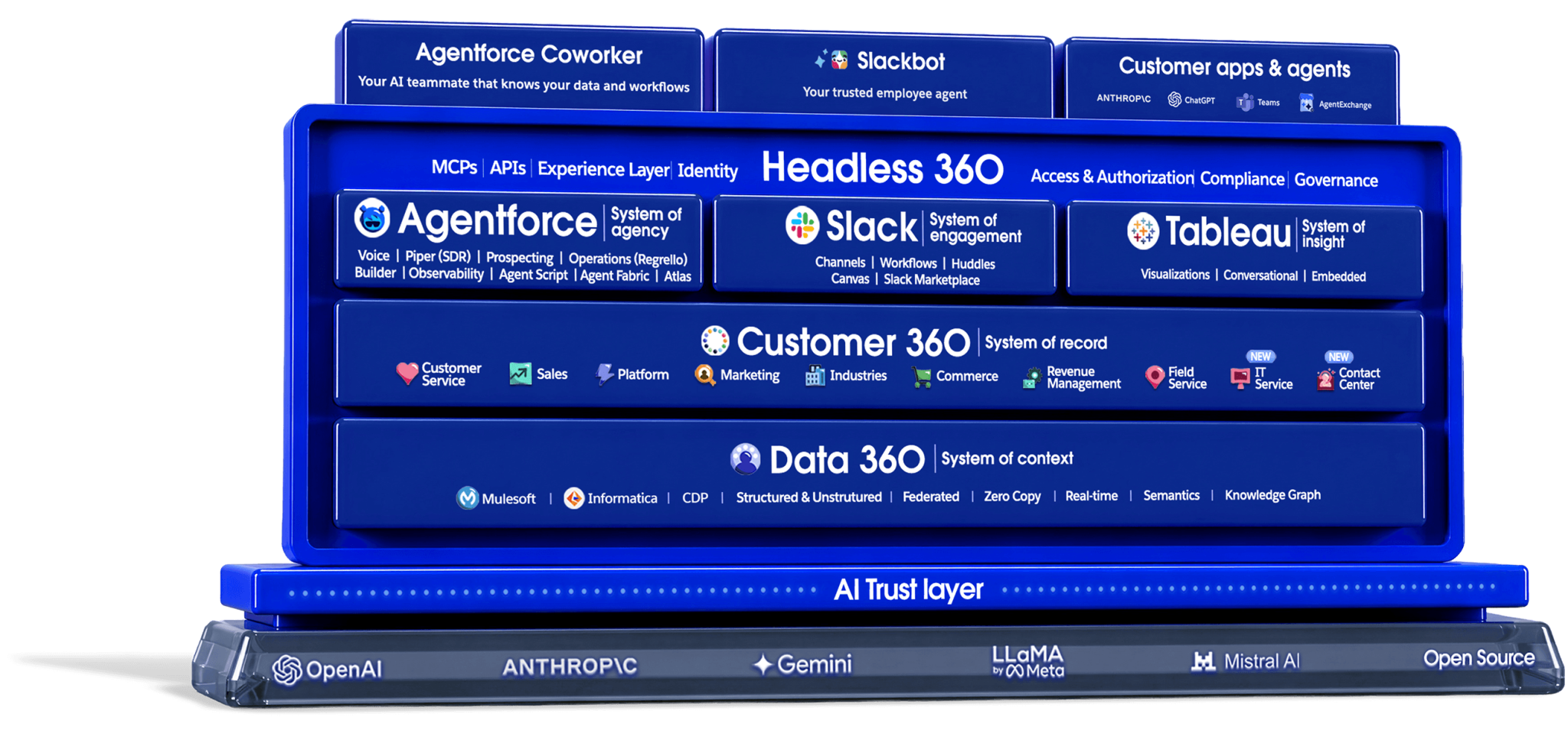
Salesforce operates at a different scale. Where Base CRM served over 5,000 customers at the time of its acquisition, Salesforce serves over 150,000 companies worldwide with over 76,000 employees across 105 offices in 92 cities.
Source: Salesforce
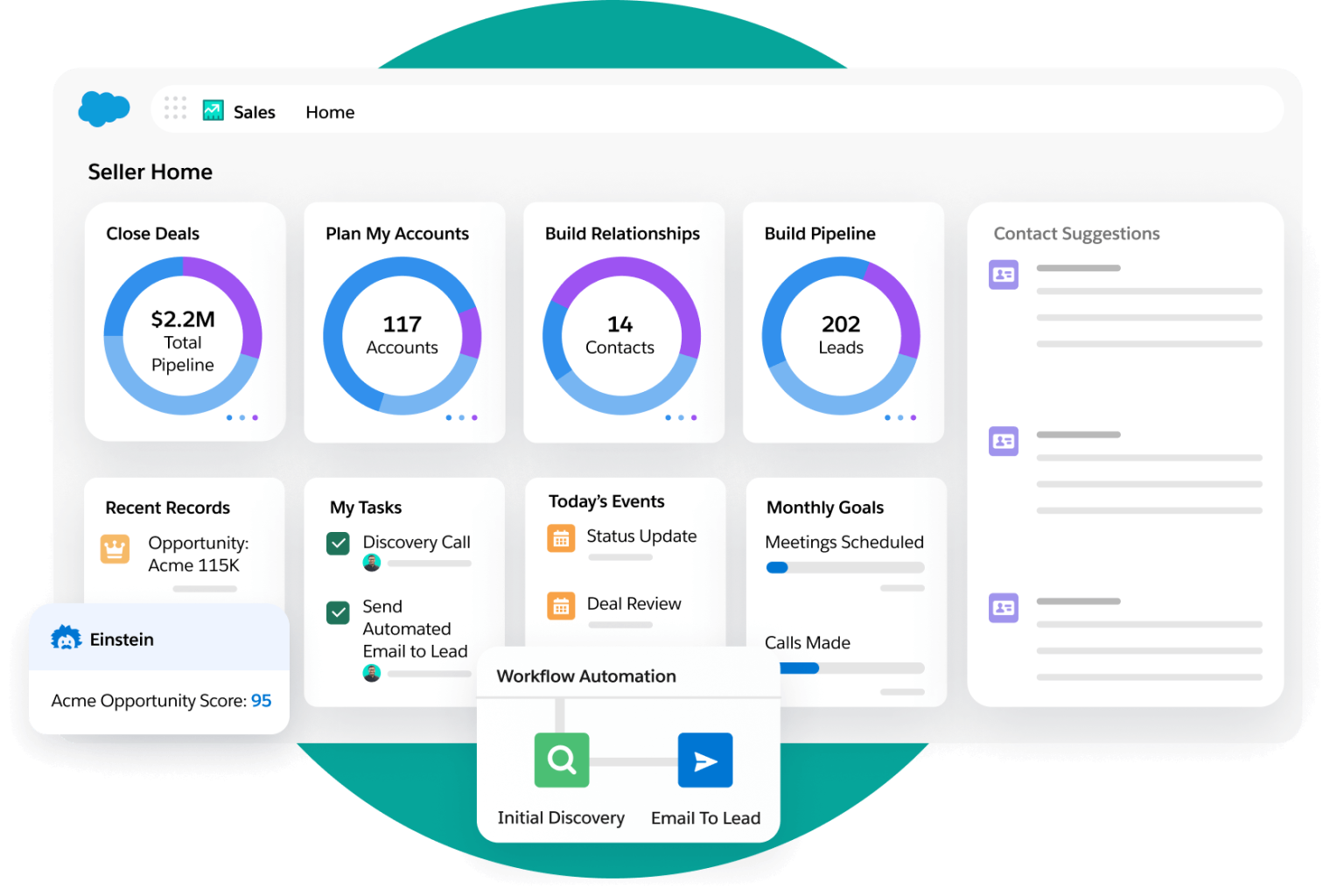
Sales Cloud covers the full range of sales operations: lead management with Einstein Lead Scoring, AI-generated account plans with SWOT analysis, pipeline management with AI deal insights, forecast management with real-time rollups, revenue lifecycle management including CPQ and contract lifecycle, and sales performance management with territory planning and commissions.
Source: Salesforce
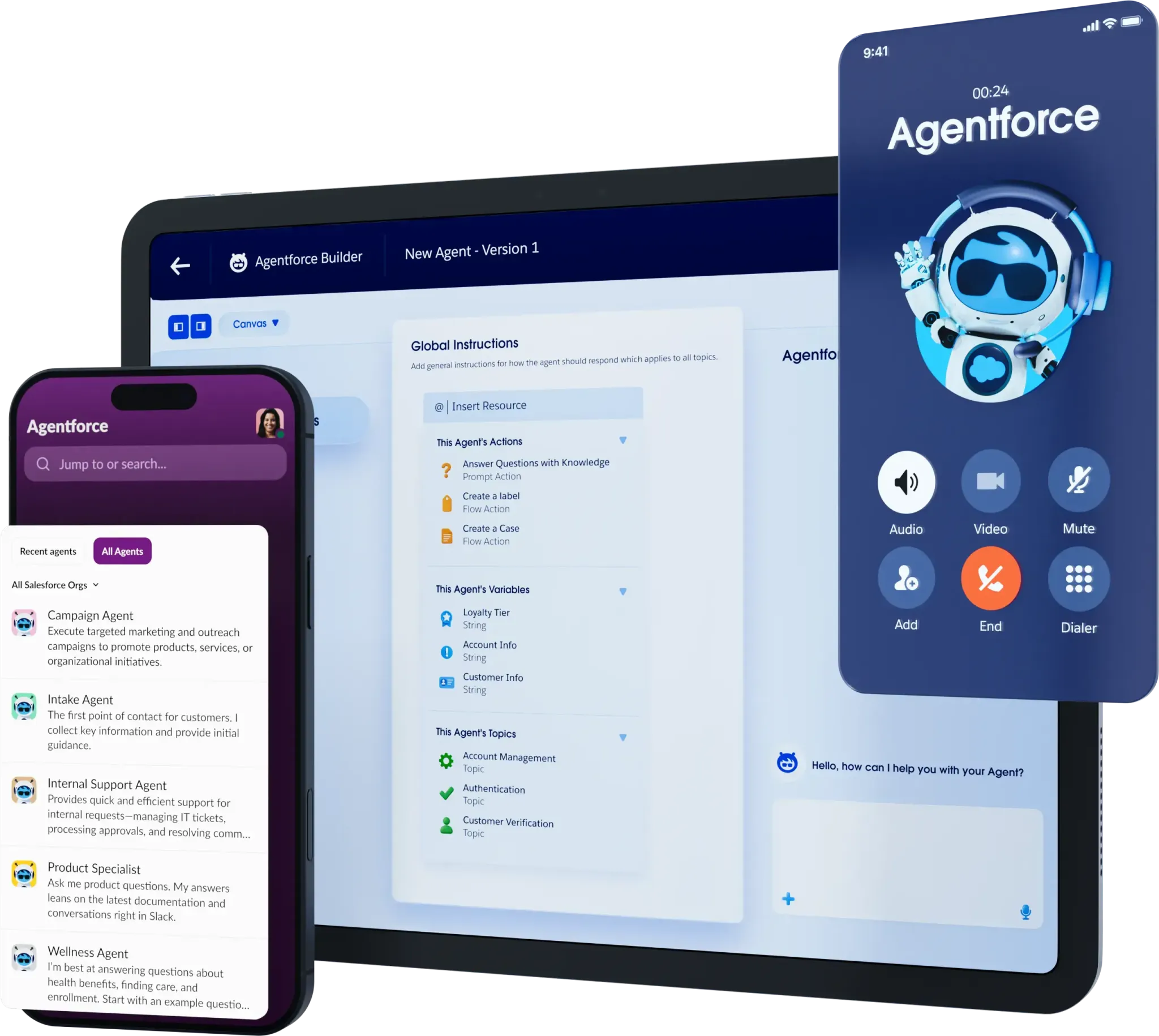
Pre-built agents handle prospecting, inbound lead engagement, pipeline management, account research, sales coaching, and automated quoting.
Source: Salesforce
Beyond sales, Salesforce extends into Service Cloud, Marketing Cloud, Commerce Cloud, Data Cloud, Tableau analytics, and Slack (acquired for $27.7 billion). The AppExchange marketplace offers 9,000+ partner apps with 14+ million installs.
The trade-off for all this is complexity. Salesforce has acknowledged being "historically built for large enterprises." Over 70% of implementations are led by partners, meaning consultants on top of license fees. Configuration requires dedicated, trained administrators. Trailhead offers 1,500+ badges and 6+ million learners, a sign of both the platform's educational investment and the amount there is to learn.
Your CRM is only as good as the data inside it
Neither Base CRM nor Salesforce addresses a basic question: where does the data come from?
Base CRM included a built-in prospecting database of 44M+ businesses and 350M+ prospect records on Growth plans and above, but those records were limited in depth and scope. Salesforce has no native B2B contact database at all. Both platforms assume you'll enter your data manually, import it from spreadsheets, or bolt on a third-party provider.
This is where most sales organizations stall. Reps spend hours researching prospects. Contact information goes stale. Emails bounce. Phone numbers don't connect. The CRM fills up with incomplete records that obscure the pipeline rather than clarifying it.
ZoomInfo exists to solve this problem. The platform maintains the largest B2B dataset in the industry: 500M contacts, 100M companies, 135M+ verified phone numbers, 120M direct dials, and 200M+ verified business email addresses, verified through a proprietary collection system backed by 300+ human researchers with up to 95% accuracy on first-party data.
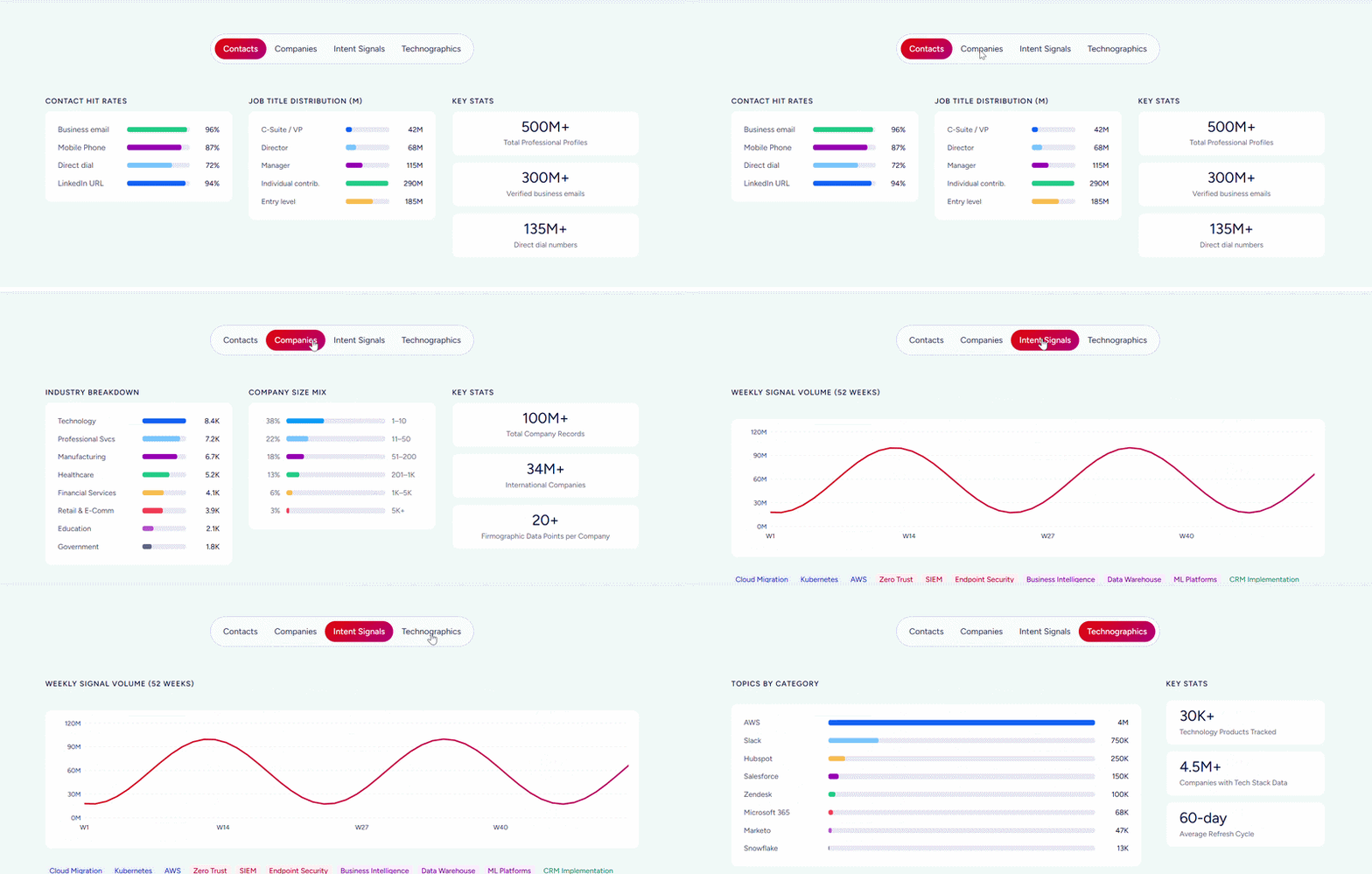
The difference shows at the point of action. When a rep dials a ZoomInfo-verified direct number, it rings. When they send to a verified email, it lands. A 30% bounce rate doesn't just waste time; it damages your sender reputation and buries future outreach in spam folders.
ZoomInfo's data spans three dimensions: identity data (who buyers are and how to reach them), company context (firmographics, org charts, technographics covering 30,000+ technologies across 30+ million companies), and dynamic signals that reveal when accounts are actively in-market.
ZoomInfo Intent tracks signals from 210 million IP-to-Organization pairings and 6 trillion+ new keyword-to-device pairings sourced monthly.
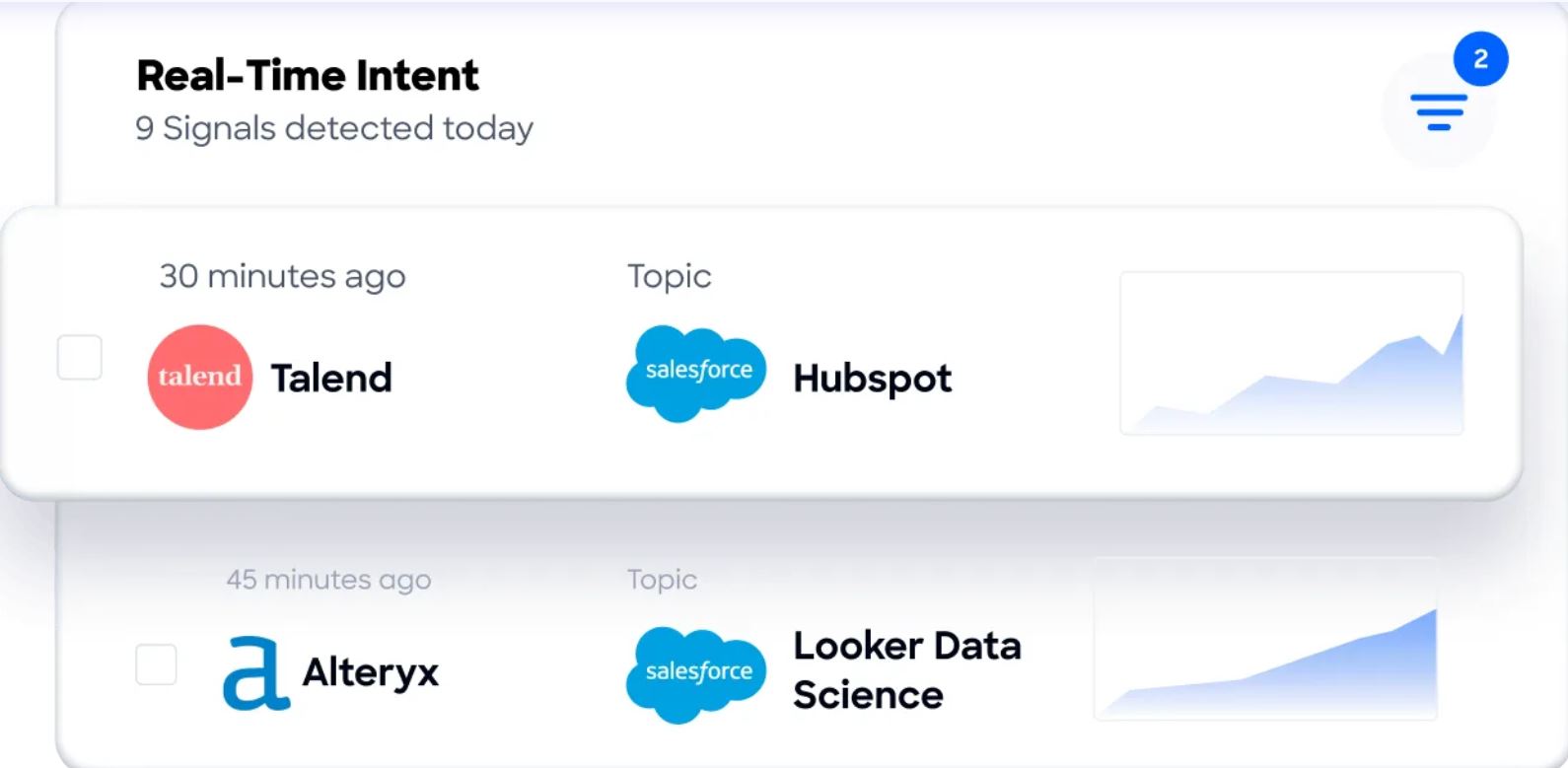
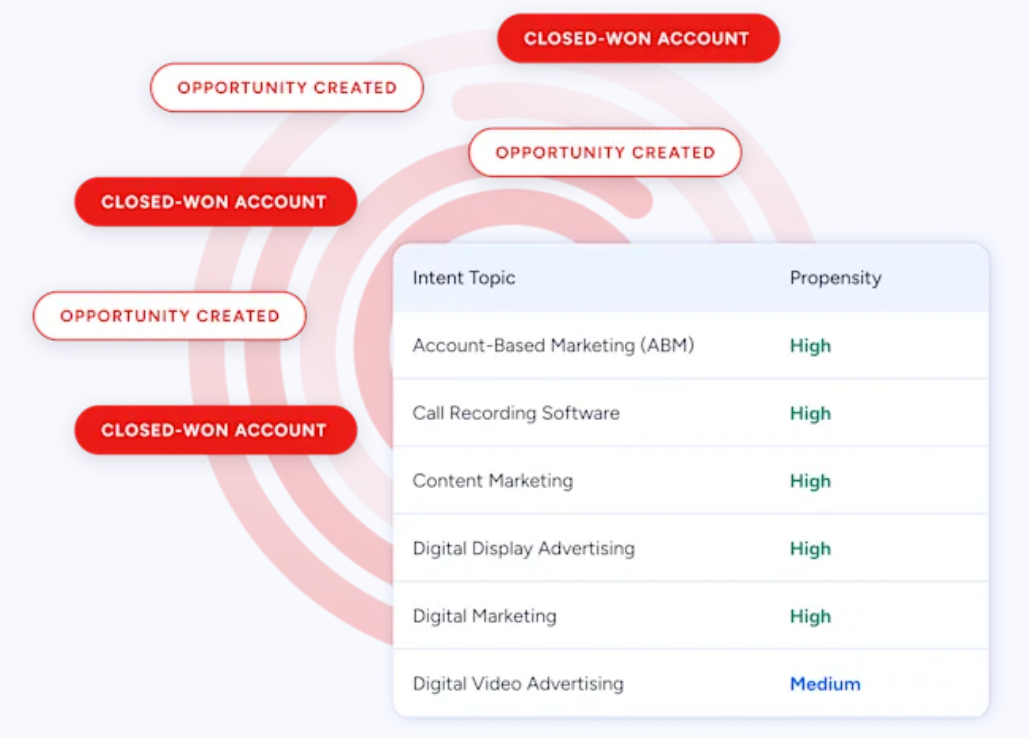
Guided Intent, exclusive to ZoomInfo, identifies the topics historically correlated with deal success rather than requiring manual topic selection.
This intelligence is externally validated. In a Fortune 500 competitive RFP analyzing 25 million contacts across vendors, the independent consultant concluded that "no other competitor came even close." ZoomInfo holds 133 No. 1 rankings on G2 across Sales Intelligence, Buyer Intent, Data Quality, and related categories.
"ZoomInfo gives us the information we need to execute. We don't have to spend our time digging, it's already there, so we can be three steps ahead." — William Kenimer, Vice President of Revenue Operations (Vensure Case Study)
From data to intelligence: the GTM Context Graph
ZoomInfo doesn't stop at contact records. Its GTM Context Graph processes 1.5B+ data points daily, combining ZoomInfo's B2B data with a customer's own CRM records, conversation transcripts, email interactions, and behavioral signals into a single intelligence layer.
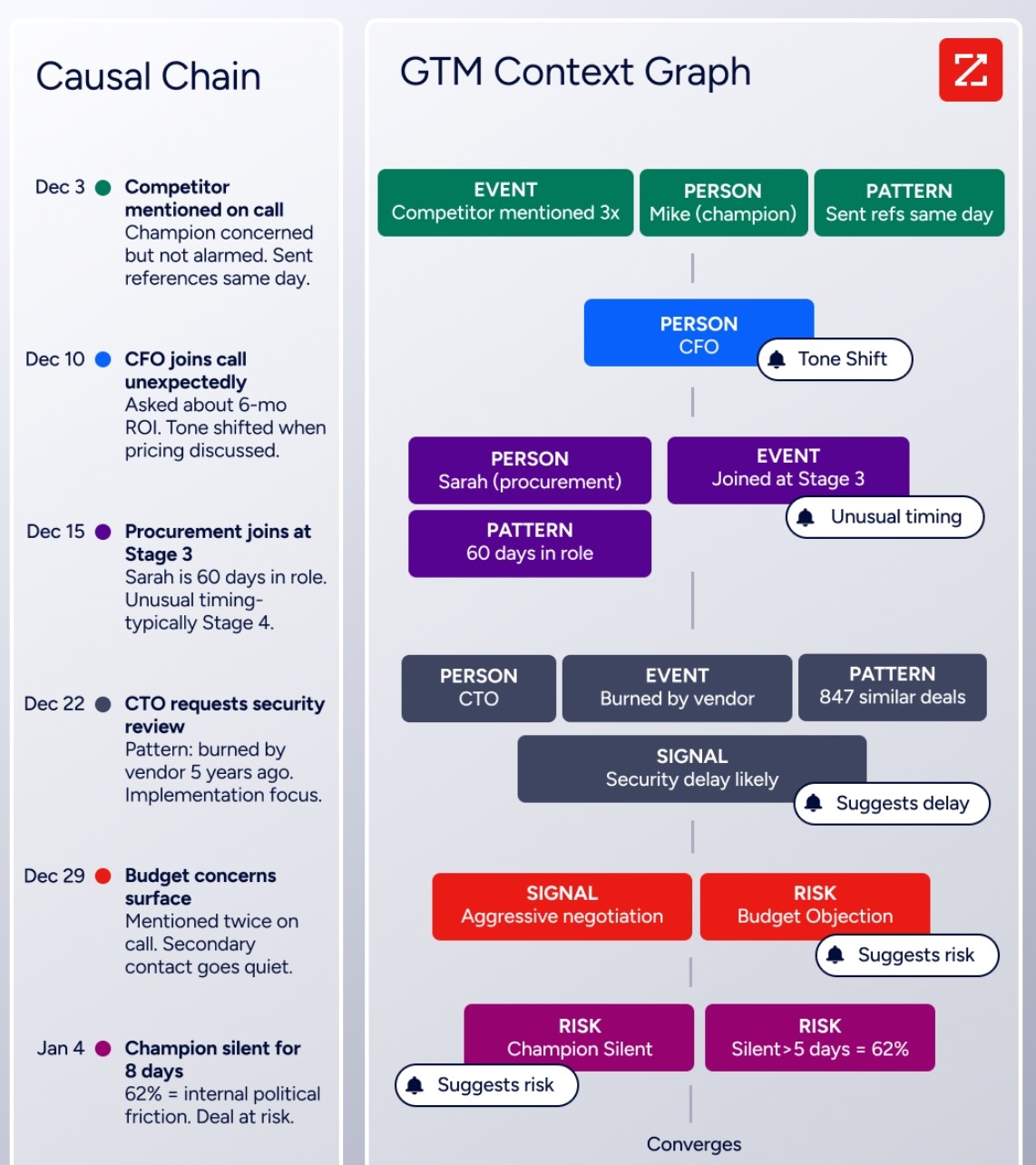
The distinction matters. A CRM records that a deal moved from Stage 3 to Stage 4. Conversation intelligence transcribes what the VP of Finance said on the last call. An intent platform logs a research spike.
The GTM Context Graph reasons across all three to capture why the deal moved, connecting the executive sponsorship that appeared mid-cycle with the intent signals showing the company was researching a competitor.
As ZoomInfo CPO Dominik Facher writes: "The CRM recorded the state change. It has no record of why it happened."
This is a different capability from what either CRM provides. Base CRM tracked deals and logged calls. Salesforce tracks deals, logs calls, and layers on AI scoring and forecasting. ZoomInfo's GTM Context Graph captures the context behind every interaction, learns patterns across thousands of deals, and surfaces the intelligence that tells reps which accounts to prioritize and why.
That intelligence flows into GTM Workspace, where sellers get a single view of prioritized accounts, AI-drafted outreach, and deal execution.
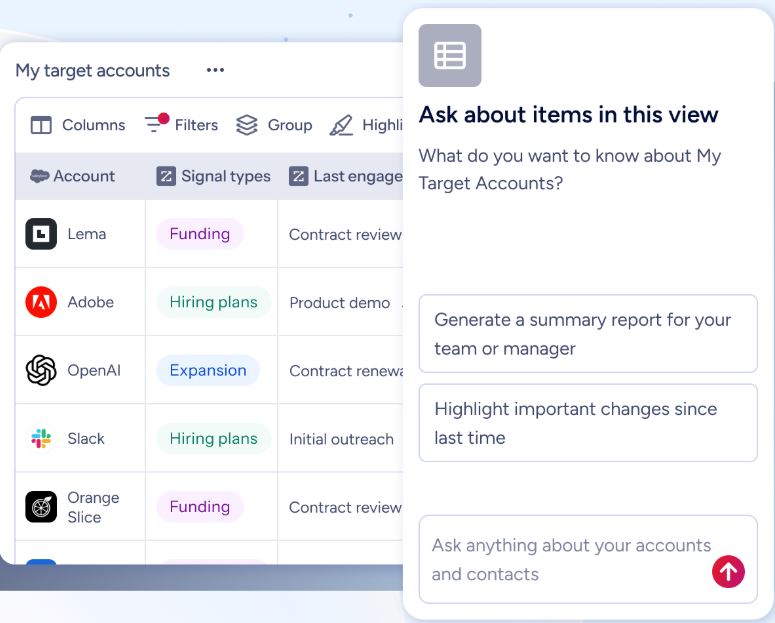
It powers GTM Studio, where marketers and RevOps teams build audiences in natural language and launch plays targeting accounts that match proven win patterns.
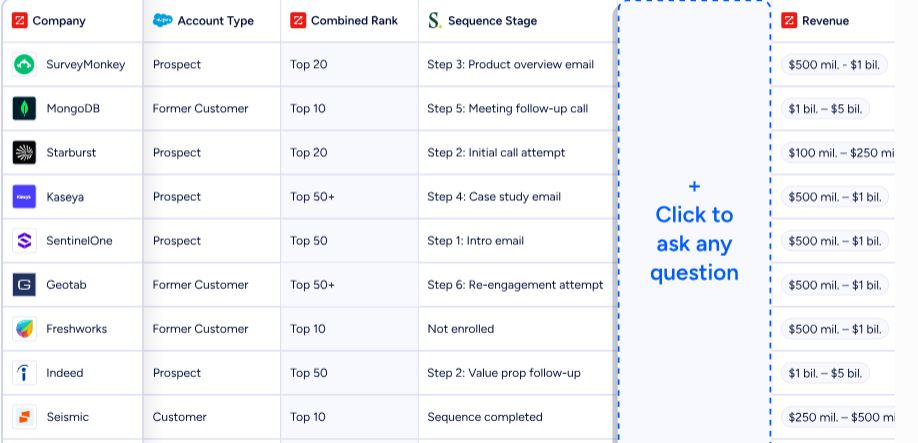
Through APIs and MCP, the same intelligence is accessible in any third-party tool or AI agent.
For Salesforce users, ZoomInfo's native Salesforce integration enriches records directly inside Salesforce, and ZoomInfo's Chorus conversation intelligence captures the context from every sales call and meeting that Salesforce's CRM fields were never designed to hold.
For a direct comparison of how ZoomInfo and Salesforce stack up as standalone platforms, see our Salesforce vs. ZoomInfo breakdown.
Seismic's sales team attributed 39% of active pipeline to opportunities identified or influenced by ZoomInfo signals, reported 54% productivity gains, and saved 11.5 hours per week per seller. (Seismic Case Study)
Pricing reflects very different markets
Base CRM (Zendesk Sell) uses straightforward per-seat pricing with four tiers:
Plan | Price (Annual Billing) |
|---|---|
Sell Team | $19/seat/month |
Sell Growth | $55/seat/month |
Sell Professional | $115/seat/month |
Sell Enterprise | $169/seat/month |
The entry price is accessible, but important features are gated. The $19 Team plan doesn't include sequences, prospecting tools, or the Sales Engagement suite. Advanced reporting requires the $115 Professional plan. There's also a billing quirk: removing a user doesn't automatically reduce seat count. Admins must manually adjust seats, or deleted users continue to be charged.
Salesforce pricing starts free but climbs steeply:
Edition | Price |
|---|---|
Free Suite | $0/user/month (max 2 users) |
Starter Suite | $25/user/month |
Pro Suite | $100/user/month |
Enterprise | $175/user/month |
Unlimited | $350/user/month |
Agentforce 1 | $550/user/month |
Beyond license fees, costs compound. Agentforce consumption runs $2 per conversation or $500 per 100,000 Flex Credits. Data Cloud credits are purchased separately. The Premier Success Plan costs 30% of net license fees (bundled with Unlimited tier). Most implementations require paid partners. A 6% price increase was applied to Enterprise and Unlimited tiers in August 2025.
ZoomInfo uses custom-quoted, consumption-based pricing with no publicly listed prices. ZoomInfo Lite is a permanent free tier (not a trial) with access to ZoomInfo's B2B database, 10 monthly export credits, individual and company searches, a Chrome extension, and WebSights Lite.
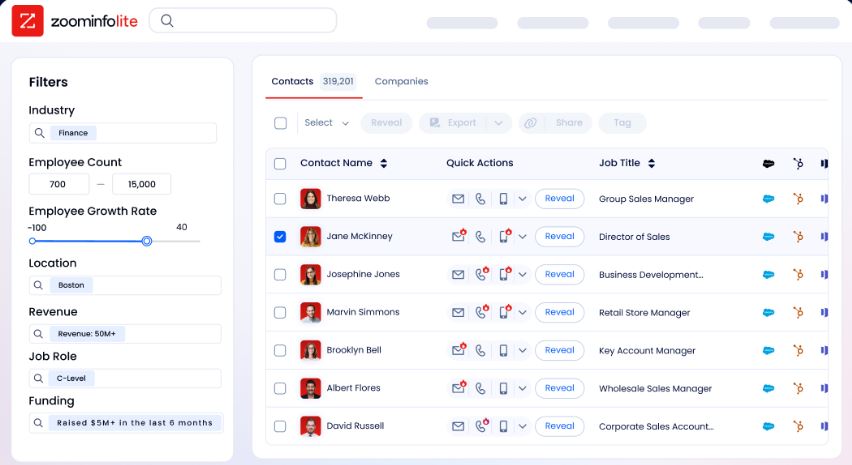
Paid plans scale based on seats, credit volume, and feature access across Professional, Advanced, and Enterprise tiers. A separate 7-day free trial offers full feature access.
ZoomInfo and your CRM are separate line items, but ZoomInfo often pays for itself by keeping you from wasting CRM budget on uncontactable prospects. When reps spend less time researching and more time selling, the cost of the intelligence layer earns itself back.
Integration ecosystems set the boundaries
Base CRM offers a native Zendesk Support integration, Google Workspace sync (Gmail, Calendar, Contacts, Drive on all plans), Zapier connectivity to 750+ apps (Growth plans and above), and an open REST API with 36,000 requests per hour. The broader Zendesk marketplace lists 1,800+ apps, though most serve Zendesk's support products rather than Sell.
Salesforce has the largest integration ecosystem in enterprise software. The AppExchange offers 9,000+ partner apps with 14+ million installs and 91% customer adoption. MuleSoft provides enterprise integration with hundreds of pre-built connectors. Native integrations cover Google Workspace, Microsoft Outlook and Teams, and Slack. The API layer includes REST, SOAP, Bulk, Metadata, and Pub/Sub APIs.
ZoomInfo integrates with 120+ partner applications across CRM, marketing automation, sales engagement, and data warehouses. Featured integrations include Salesforce, HubSpot, Microsoft Dynamics 365, and Snowflake.
API access is included in all relevant plans, and the ZoomInfo MCP server enables any AI agent to access ZoomInfo's data natively, supporting Claude, ChatGPT, and additional MCP-compatible tools.
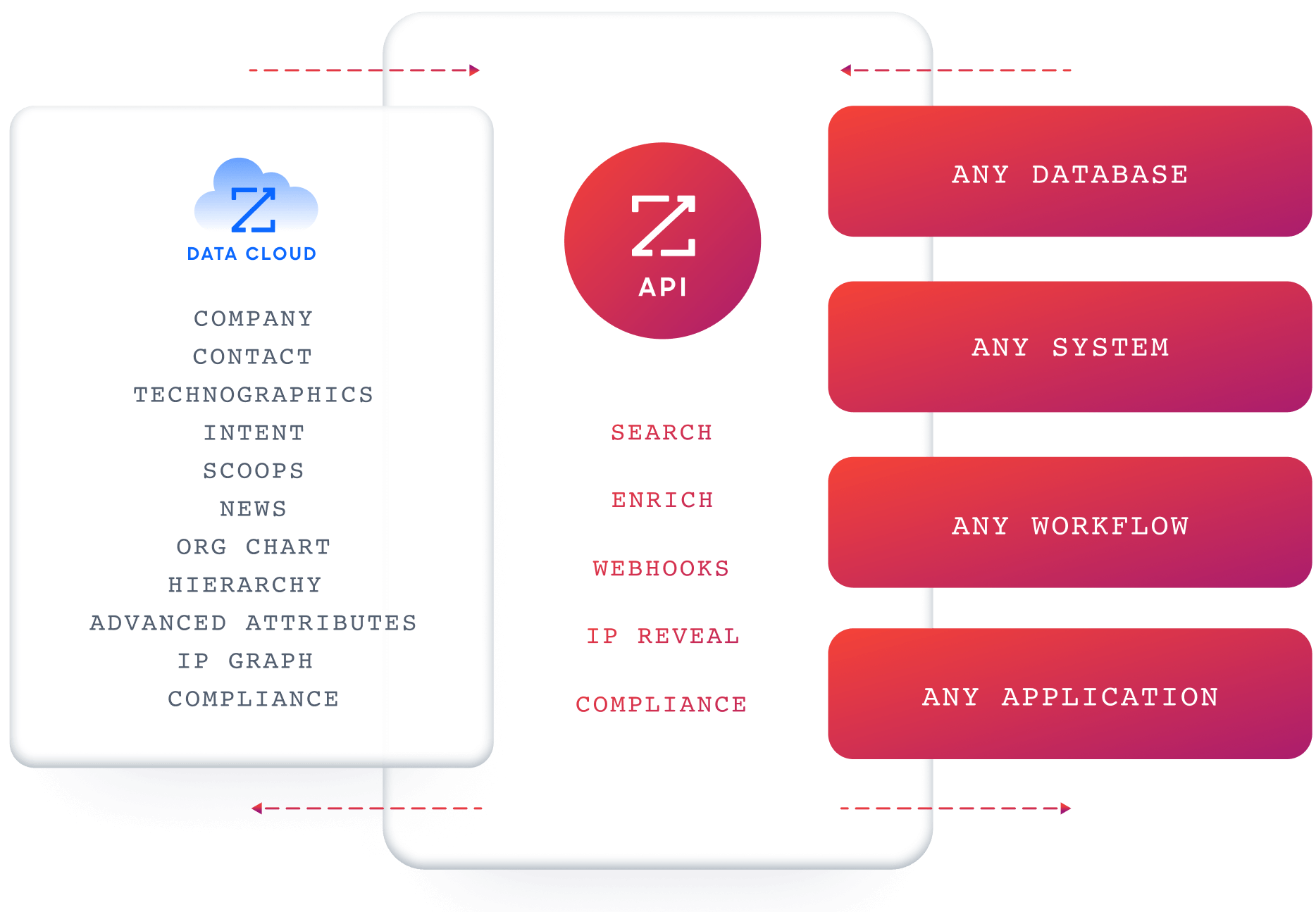
The integration question matters most for ZoomInfo because it works alongside your CRM, not instead of it. For Salesforce users, ZoomInfo enriches records directly in Salesforce. For teams migrating from Base CRM to another platform, ZoomInfo's broad integration support means your intelligence layer transfers with you regardless of which CRM you choose.
"The plug-and-play aspect of the API means I can integrate it into any process and get information at a moment's notice." BDO Canada reported an 87% reduction in time spent on internal data dashboard updates. (BDO Canada Case Study)
Base CRM vs. Salesforce vs. ZoomInfo: Which should you choose?
The answer depends on where you are today and where you need to be.
If you're currently on Base CRM (Zendesk Sell):
Your most urgent task is migration planning. The product is retiring August 31, 2027, and waiting until the last minute risks data loss (activity history, emails, call logs, and documents cannot be exported). Evaluate Salesforce if you need enterprise-grade CRM with room to grow. Consider Pipedrive (Zendesk's official recommendation) or HubSpot if you valued Base CRM's simplicity and want a faster implementation.
Regardless of which CRM you choose, adding ZoomInfo ensures you start fresh with verified contact data rather than importing stale records into a new system.
Choose Salesforce if:
You need a CRM that can scale from a small team to a global sales organization
Your sales process requires advanced automation, AI agents, and customization
You're willing to invest in implementation, administration, and training
You need a platform that extends beyond sales into service, marketing, and commerce
Integration with thousands of third-party apps is important to your workflow
Add ZoomInfo to your stack if:
You need verified B2B contact data to fill your CRM with actionable prospects
You want intent signals that reveal which accounts are actively researching solutions
Your reps spend too much time researching and not enough time selling
You need an intelligence layer that works across your entire GTM stack, not just one tool
You want AI that understands why deals move, not just that they moved
Start with ZoomInfo Lite for free, or request a full trial of the platform.
"ZoomInfo's not just a contact data company anymore. They've built a system that works the list, writes the outreach, triggers the play, and helps drive predictable growth." — Ian Brodie, CEO & Co-Founder (Levanta Case Study)
The CRM market has no shortage of options to replace Base CRM. But whichever platform you choose, the quality of data flowing into it determines whether your team spends their time selling or searching. ZoomInfo provides the data and intelligence foundation that makes any CRM more effective.
Base CRM vs. Salesforce vs. ZoomInfo FAQ
What happened to Base CRM?
Base CRM was founded in 2009 and acquired by Zendesk in September 2018, then rebranded as Zendesk Sell. Zendesk announced on September 9, 2025 that Sell will be retired on August 31, 2027. No new features are being developed and all customer data will be deleted at retirement. Zendesk recommends migrating to Pipedrive.
Is Salesforce worth the higher cost compared to Base CRM?
Base CRM starts at $19/seat/month while Salesforce offers a free plan for up to 2 users, with paid plans from $25/user/month.
However, Salesforce's full capabilities require Enterprise ($175/user/month) or higher tiers, plus costs for implementation partners, Premier Success plans, and add-ons like Agentforce and Data Cloud. The investment is justified for organizations that need scale, AI-powered automation, and an ecosystem of 9,000+ integrations.
For smaller teams that valued Base CRM's simplicity, Salesforce can be more platform than they need.
Can ZoomInfo replace my CRM?
No. ZoomInfo is not a CRM. It's an AI GTM platform that works alongside your CRM. It provides verified contact data, company intelligence, and buyer intent signals that feed into CRM systems like Salesforce, HubSpot, and Microsoft Dynamics. ZoomInfo's GTM Workspace provides an execution layer for sellers, but it integrates with your CRM rather than replacing it.
How does ZoomInfo integrate with Salesforce?
ZoomInfo has a native Salesforce integration that enriches lead, contact, and account records directly inside Salesforce.
The integration supports automatic data updates, lead routing, and workflow triggers based on ZoomInfo's intent and signal data. API access is included in all relevant ZoomInfo plans, and the MCP server enables AI agents built on Salesforce or other platforms to access ZoomInfo's intelligence programmatically.
What should current Zendesk Sell users do right now?
Start migration planning immediately. Key steps: evaluate replacement CRMs (Pipedrive is Zendesk's official recommendation, but Salesforce and HubSpot are common destinations), export all transferable data (leads, contacts, deals, notes, tasks, and smart list data), and build your timeline well before the August 31, 2027 deadline.
Activity history, emails, call logs, and documents cannot be exported, so plan for that data loss.
How does ZoomInfo's data compare to Base CRM's built-in prospecting database?
Base CRM (Zendesk Sell) includes a prospecting database of 44M+ businesses and 350M+ prospect records on Growth plans and above. ZoomInfo's database spans 500M contacts, 100M companies, 135M+ verified phone numbers, and 200M+ verified business email addresses, with up to 95% accuracy on first-party data and verification by 300+ human researchers.
ZoomInfo also provides buyer intent data, technographics across 30,000+ technologies, org charts, and company hierarchies that Base CRM's database does not cover.
Does Salesforce include a built-in contact database like ZoomInfo?
No. Salesforce stores and manages your customer data, but it does not include a native B2B contact database for prospecting. You populate Salesforce through manual entry, imports, or third-party data providers. This is a primary reason organizations pair Salesforce with ZoomInfo: Salesforce manages the relationships, ZoomInfo provides the verified data and intelligence that feeds them.
Which platform is best for a small sales team migrating from Base CRM?
For small teams that valued Base CRM's simplicity, Salesforce's Starter Suite at $25/user/month provides a reasonable entry point with unlimited users, though it lacks advanced features. Pipedrive (Zendesk's official migration recommendation) is another option for teams wanting a simpler CRM.
Adding ZoomInfo Lite (free, permanent) gives any team access to ZoomInfo's B2B database with 10 monthly export credits and a Chrome extension, providing contact intelligence that neither CRM includes on its own.
Keep comparing your options:
