
Choosing between Eloqua vs. HubSpot for your B2B marketing often comes down to five questions:
Do you need enterprise campaign orchestration for complex, multi-stakeholder buying cycles, or would a broader platform covering marketing, sales, and service serve you better?
Is your marketing team large enough to justify a dedicated marketing operations function?
How important is it that your marketing platform connects natively to sales, service, and customer data in one system?
Are you willing to invest $2,000 or more per month before sending a single campaign, or do you need to start smaller and scale?
Do you have a reliable source of verified B2B contact data, intent signals, and account intelligence to fuel whichever platform you choose?
In short, here's what we recommend:
Eloqua is Oracle's enterprise B2B marketing automation platform, built for large organizations running complex campaigns across multiple products, regions, and business units.
With 13 consecutive years as a Gartner Magic Quadrant Leader for B2B Marketing Automation, a dual-canvas architecture that separates campaign execution from data management, and support for up to 30 concurrent scoring models, Eloqua delivers the orchestration depth that dedicated marketing operations teams need.
The tradeoff: pricing starts at $2,000/month for 10,000 contacts, there's no free trial or self-serve access, implementation packages can exceed $78,000, and the platform is complex enough that Oracle built a separate simplified interface for non-technical users.
HubSpot is the all-in-one customer platform that unifies marketing, sales, service, content, and commerce under a single Smart CRM.
With 288,706 customers and a free tier, HubSpot makes marketing automation accessible to teams of any size while scaling to enterprise needs. Its AI layer, Breeze, adds agents that handle customer service, sales prospecting, and content creation across the platform.
The tradeoff: HubSpot's marketing automation doesn't match Eloqua's depth for complex multi-model scoring and enterprise B2B orchestration, and the per-seat, per-hub pricing model creates cost surprises as your organization grows.
Both platforms do their jobs well: building campaigns, scoring leads, nurturing prospects, and measuring results. But execution is only half the equation. The other half is knowing who to target, when to engage, and why an account is worth your attention now. Neither platform includes a B2B data layer or buyer intent intelligence. That's where a different kind of platform enters the picture.
ZoomInfo is an AI GTM platform that provides the data and intelligence foundation both Eloqua and HubSpot need.
Built on a B2B dataset of 500M contacts, 100M companies, 135M+ verified phone numbers, and 200M+ verified business email addresses, ZoomInfo gives your campaigns verified targets instead of stale lists.
Its GTM Context Graph processes 1.5B+ data points daily, combining this data with your CRM records, conversation transcripts, and behavioral signals to reveal which accounts are actively researching solutions and why deals move or stall.
ZoomInfo integrates with both Eloqua and HubSpot, enriching campaigns with accurate contact data and real-time buying signals. For teams that want execution built on that intelligence, GTM Studio handles marketing orchestration, GTM Workspace handles AI-powered sales execution, and the Enterprise API and MCP connect that intelligence to any other tool.
If building your campaigns on verified B2B data sounds like the missing piece, start a free trial with ZoomInfo.
Eloqua vs. HubSpot vs. ZoomInfo at a glance
Eloqua | HubSpot | ZoomInfo | |
|---|---|---|---|
Core function | Enterprise B2B marketing automation | All-in-one CRM and customer platform | AI GTM platform |
Starting price | $2,000/mo (10K contacts) | Free; Marketing Hub Pro from $800/mo (annual) | Free (Lite); paid plans custom-quoted |
Free plan or trial | No | Permanent free tier | Permanent free tier (Lite) + 7-day trial |
B2B contact database | Not included (bring your own) | CRM stores your data; no third-party database | 500M contacts, 200M+ verified emails |
Buyer intent signals | Not native | Not native | Native (210M IP-to-org pairings) |
Marketing automation | Dual canvas (enterprise) | Visual workflow builder | GTM Studio (AI-powered plays) |
Sales tools | Engage and Profiler (extensions) | Full Sales Hub (pipeline, sequences, CPQ) | GTM Workspace (AI-driven execution) |
Lead scoring | Up to 30 concurrent models | Predictive AI scoring | Intent-driven + Account Fit Score |
AI capabilities | Advanced Intelligence (included for all) | Breeze agents and assistant | GTM Context Graph + AI agents |
Integrations | 500+ (Marketing AppCloud) | 2,000+ (App Marketplace) | 120+ partners + API/MCP (any tool) |
Best for | Large enterprise B2B with dedicated ops | SMB to enterprise all-in-one needs | Teams needing data + intelligence layer |
Three platforms built for three different jobs
Eloqua, HubSpot, and ZoomInfo solve different problems. Understanding those differences is the first step.
Eloqua is a marketing automation specialist.
It orchestrates complex B2B campaigns: multi-step email sequences, progressive profiling forms, dynamic content, and lead scoring models that route qualified prospects to sales.
Within Oracle's CX suite, Eloqua sits alongside Oracle Unity CDP and Oracle Responsys, handling the B2B side of Oracle's marketing portfolio. Its buyer is the enterprise marketing operations team managing campaigns across products, regions, and business units.
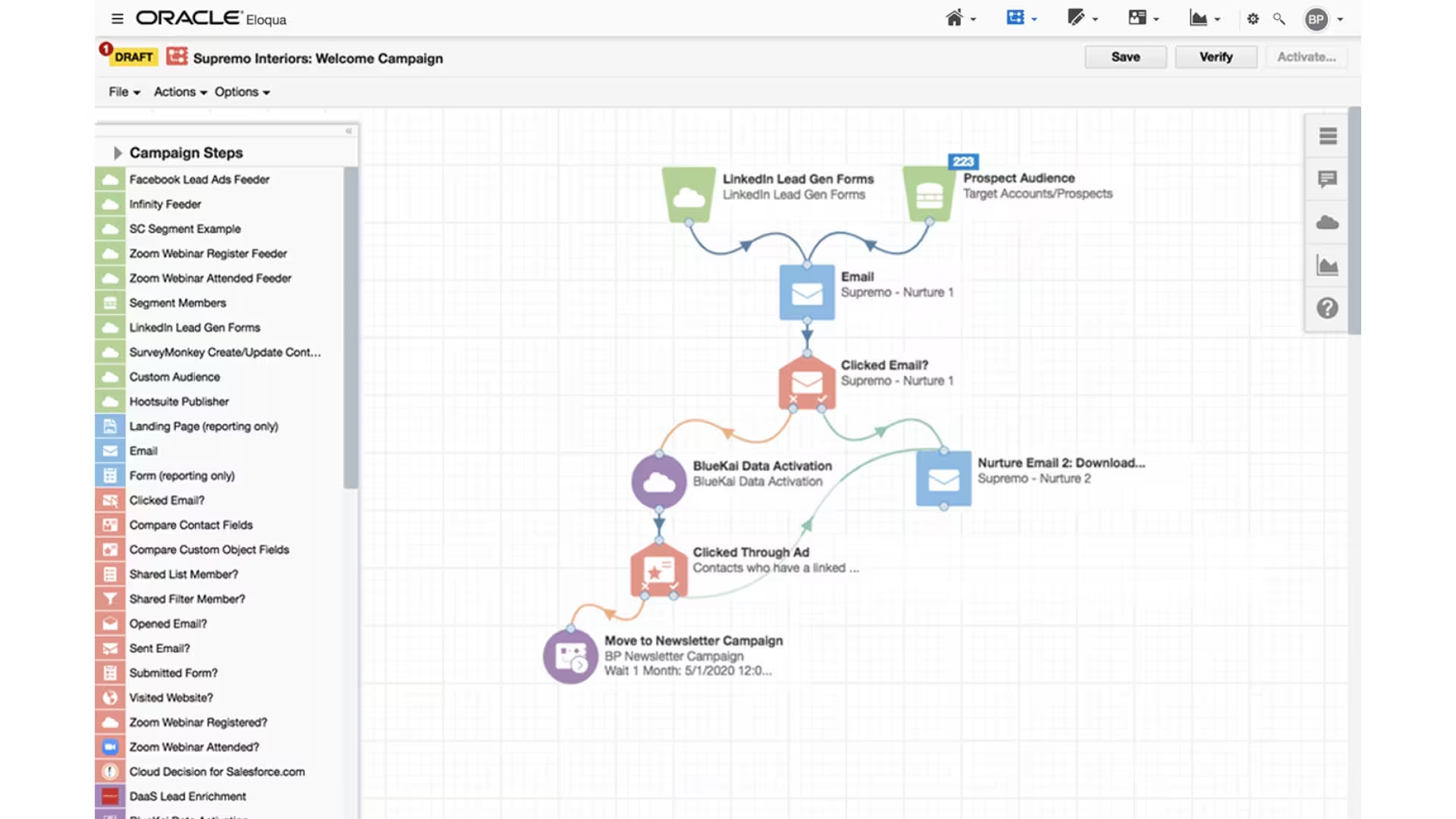
Source: Eloqua
HubSpot is a full customer platform.
Marketing automation is one of eight integrated products, alongside Sales Hub, Service Hub, Content Hub, Data Hub, Commerce Hub, Smart CRM, and Breeze AI.
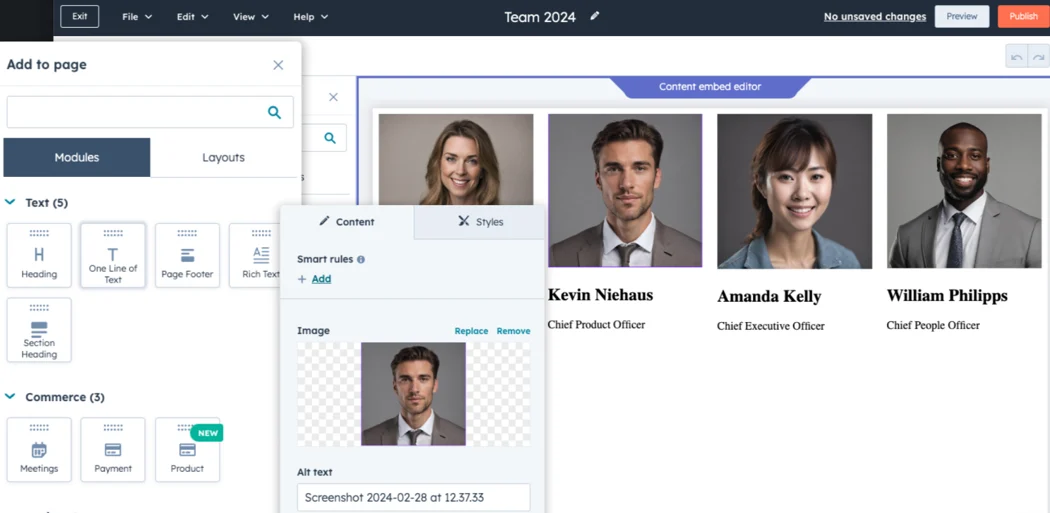
Source: HubSpot
HubSpot's thesis is that fragmented tools create disconnected data, and connected teams using shared customer data outperform teams juggling point solutions. Its buyer ranges from startups using the free CRM to enterprises consolidating their tech stack.
ZoomInfo is the data and intelligence layer that powers go-to-market teams.
Rather than competing with Eloqua or HubSpot on campaign execution, ZoomInfo delivers the data both platforms need: verified contact data, company intelligence, buyer intent signals, and the GTM Context Graph that connects them into usable context.
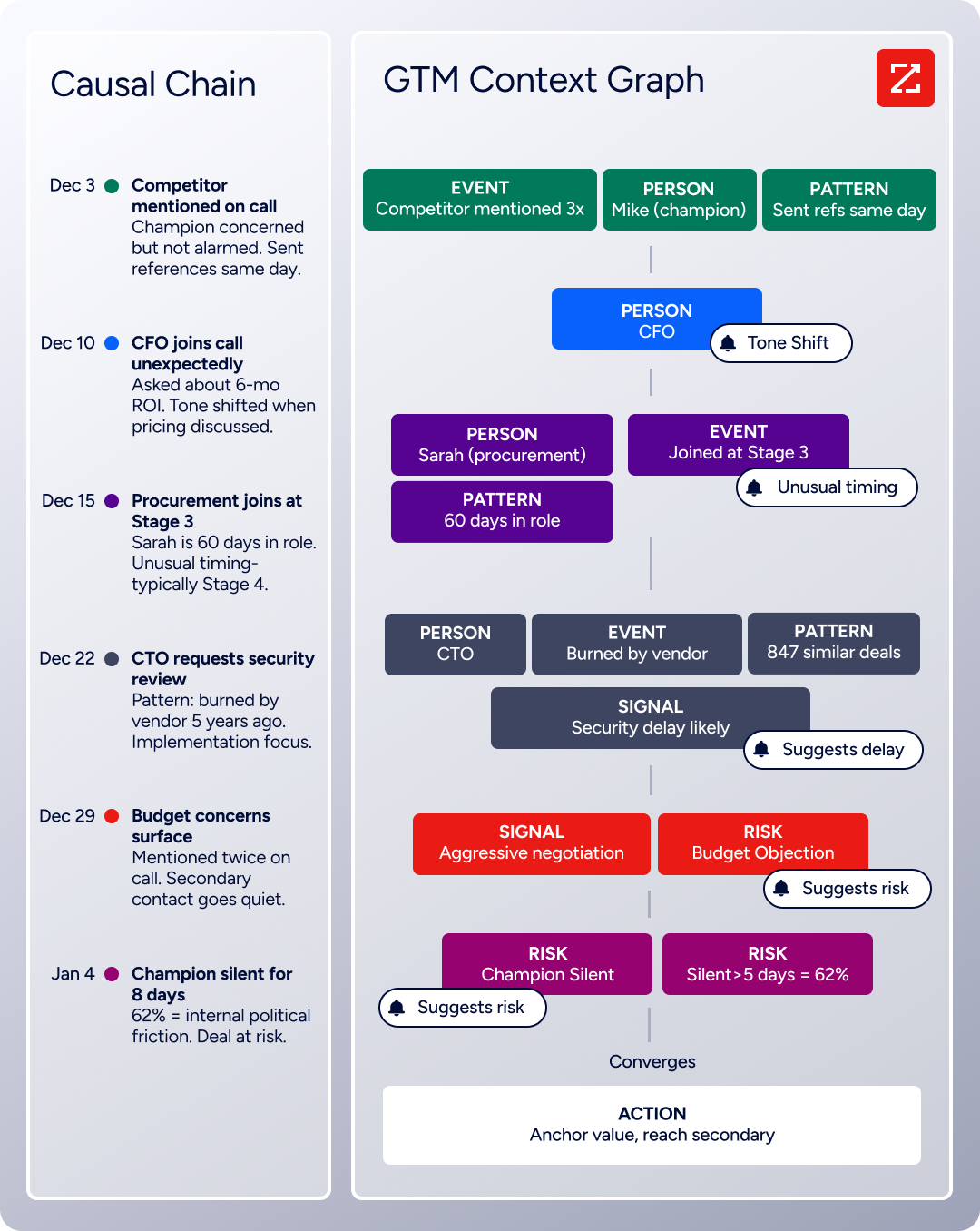
ZoomInfo integrates with both platforms, and for teams that want execution tools built on that intelligence, GTM Studio and GTM Workspace offer their own orchestration and selling capabilities.
The practical question isn't which one to choose in isolation. It's which execution platform fits your organization, and whether you're feeding it the data it needs to produce results.
Eloqua wins on orchestration depth, HubSpot wins on breadth
For B2B campaign orchestration, Eloqua is hard to match.
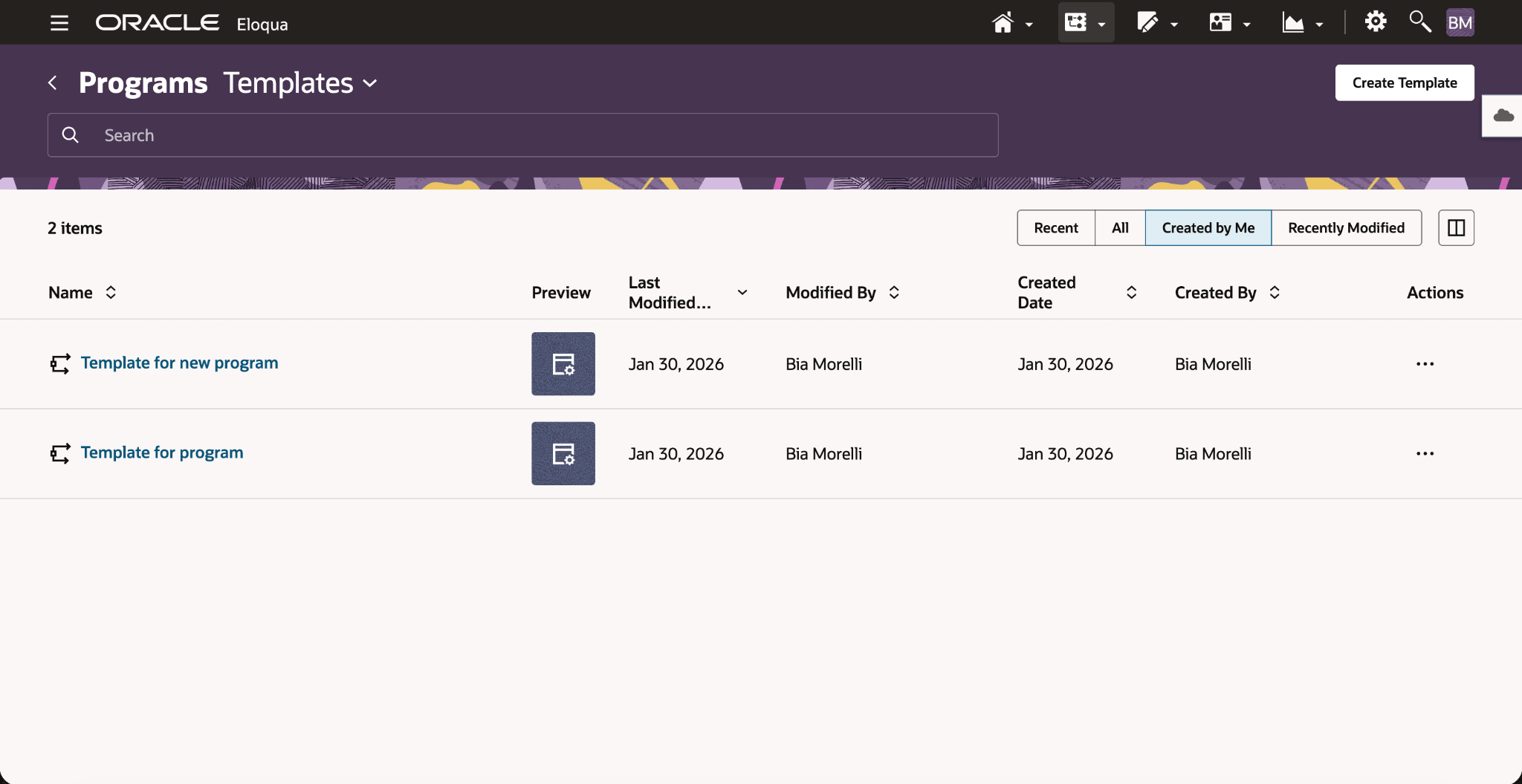
Its architecture separates the Campaign Canvas (where marketers build audience-facing campaigns with branching logic based on email opens, form submissions, page visits, and lead scores) from the Program Canvas (where operations teams manage data workflows, CRM synchronization, and hygiene automation).
Source: Eloqua
This dual-canvas design lets a campaign manager build nurture sequences without touching data plumbing, while the operations team handles field normalization and deduplication separately.
Eloqua also supports complexity that most marketing automation platforms cannot. A global enterprise running 30 products across multiple regions can maintain up to 30 concurrent scoring models on the Enterprise tier, each with its own profile and engagement criteria.
Progressive profiling on forms, dynamic content blocks that adapt to visitor attributes, and real-time listener architecture that triggers actions without campaign re-activation all serve marketing operations teams running complex programs.
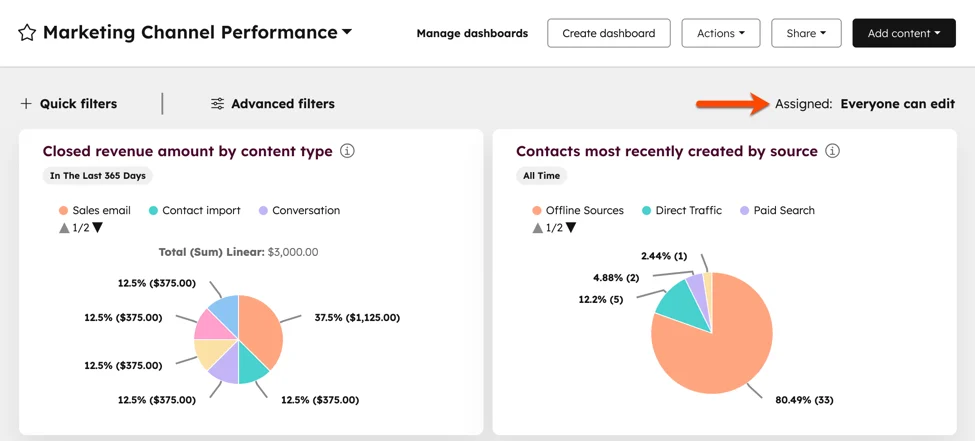
HubSpot's Marketing Hub takes a different approach.
Source: HubSpot
Rather than separating campaign logic from data management, HubSpot puts everything in one visual workflow builder. This makes it faster to launch campaigns but means data operations and campaign orchestration share the same interface. For teams without a dedicated marketing operations function, this simplicity helps. For teams managing dozens of complex programs, it can feel constraining.
Where HubSpot pulls ahead is breadth. Eloqua is a marketing automation platform. HubSpot is an entire customer platform.
When a lead converts in HubSpot, sales reps see it in Sales Hub, service agents see it in Service Hub, and content teams see it in Content Hub, all sharing the same contact record. When a lead converts in Eloqua, that data needs to sync to a separate CRM (Oracle CX Sales, Salesforce, or Microsoft Dynamics) before sales can act on it.
For organizations where marketing, sales, and service alignment matters more than campaign orchestration depth, HubSpot's unified approach has clear advantages.
Both platforms share a blind spot: B2B data
Eloqua and HubSpot are both execution platforms. They send emails, score leads, build landing pages, and measure campaign performance. Neither provides a database of B2B contacts, companies, and buying signals to power those campaigns.
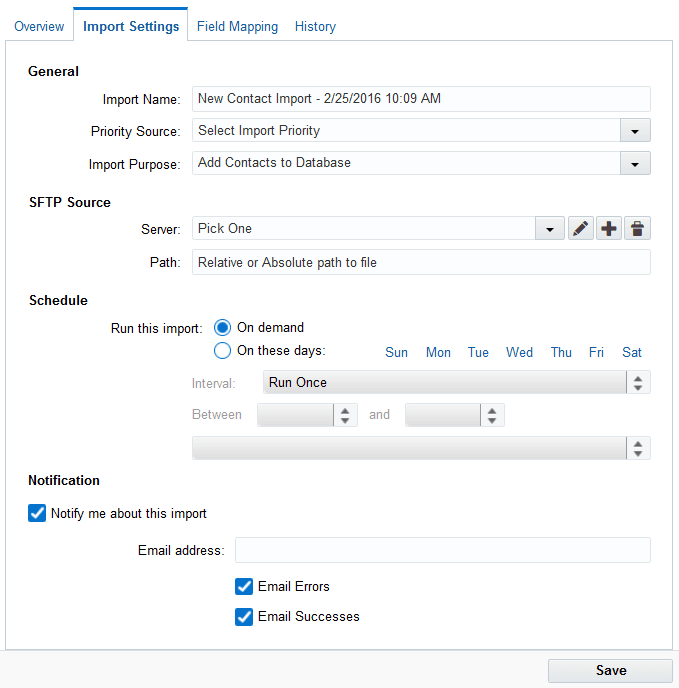
Eloqua's contact database starts empty.
Source: Eloqua
You populate it through form submissions, manual uploads, CRM syncs, and SFTP imports. The platform manages and segments the contacts you give it, but it doesn't tell you who to target.
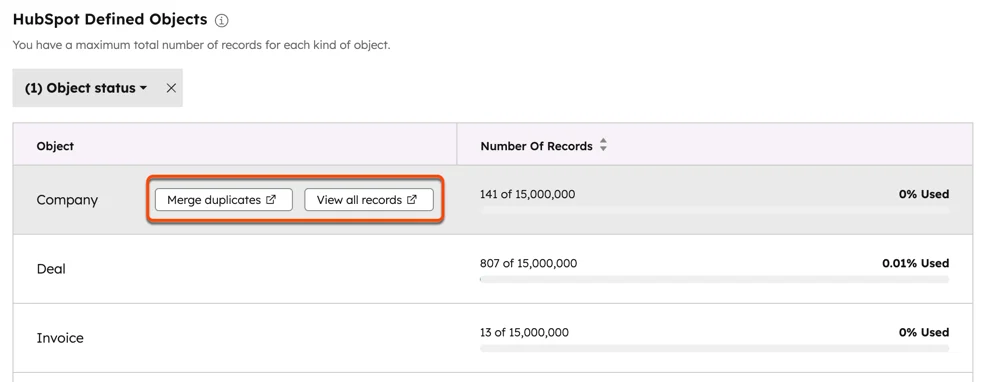
The same applies to HubSpot. Its free CRM stores unlimited contacts, but those contacts need to come from somewhere: form fills, imported lists, or manual entry.
Source: HubSpot
This creates a dependency that shapes every campaign you run. Your lead scoring models are only as good as the data behind them. Your ABM campaigns can only target accounts you already know about. Your nurture sequences can only reach contacts whose email addresses you've collected. The quality of your execution platform becomes irrelevant if you're working with incomplete or outdated data.
ZoomInfo addresses this gap directly. With 500M contacts, 100M companies, 135M+ verified phone numbers, and 200M+ verified business email addresses, ZoomInfo provides the verified B2B data that both Eloqua and HubSpot need.
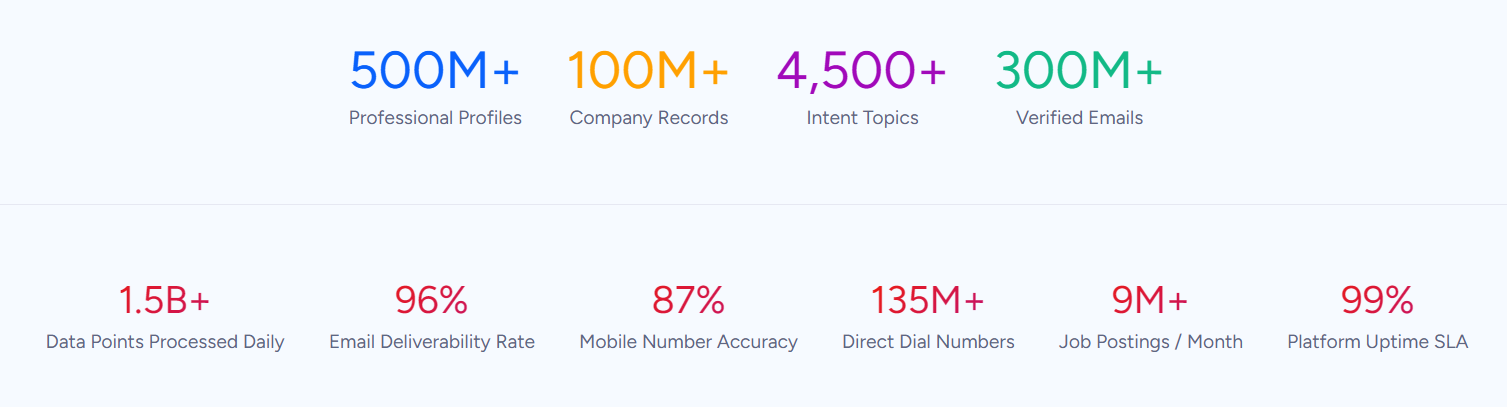
The data comes from multiple sources: automated ML scanning of 28 million site domains daily, third-party partner data covering 95 million businesses, a community of 200,000+ ZoomInfo Lite users who share data back, and an in-house team of 300+ human researchers. First-party data reaches up to 95% accuracy.
ZoomInfo integrates with both platforms natively. For Eloqua users, ZoomInfo is available as a MAP integration, pushing enriched contacts and account data into Eloqua segments.
For HubSpot users, ZoomInfo's native HubSpot integration syncs contact and company data into HubSpot's CRM, where it feeds into Marketing Hub workflows and Sales Hub pipelines. In both cases, your campaigns run on verified, current data rather than whatever your team collected manually.
SpringDB achieved 2x to 3x increases in campaign conversions and a 300% increase in database usability using ZoomInfo's enriched data. Founder and CEO John Kotsuros: "You'll get 10x the value if you think of ZoomInfo as a full platform and not just a tool for one team." (SpringDB case study)
For a deeper look at how HubSpot and ZoomInfo compare as a data and intelligence pairing, see our HubSpot vs. ZoomInfo comparison.
Lead scoring and buyer intelligence take different approaches
All three platforms score leads, but the methods reflect their different philosophies.
Eloqua evaluates every lead against two independent criteria: profile criteria (job title, industry, company revenue, geography) producing a letter grade from A to D, and engagement criteria (website visits, email opens, form submissions) producing a number from 1 to 4.
The two combine into a matrix score: A1 means best fit and highest interest, D4 means wrong fit and no activity. Each combination maps to an action: routing to sales, enrolling in nurture, or suppressing. For enterprise buyers, this model is transparent and controllable. The marketing operations team defines exactly what qualifies a lead, with no black-box algorithms involved.
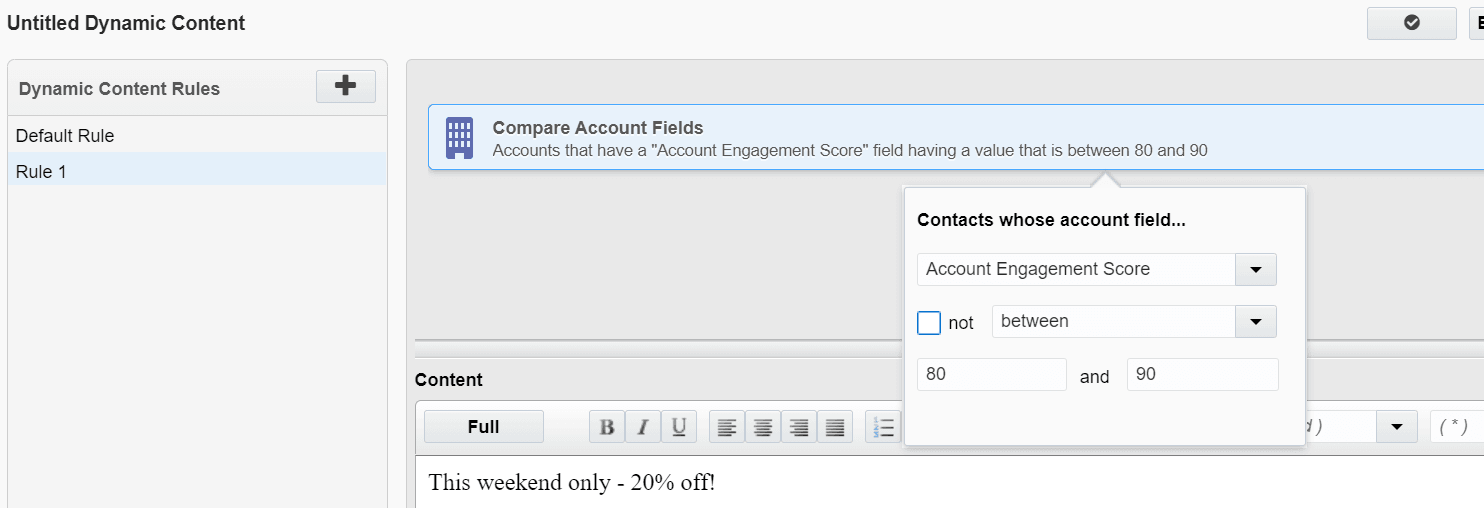
At the account level, Eloqua's Account Engagement Score (0-100) aggregates individual contact engagement across an account, calculated from email opens, clickthroughs, and form submissions. It recalculates weekly based on the last 90 days of activity, showing marketing teams which accounts are heating up.
Source: Eloqua
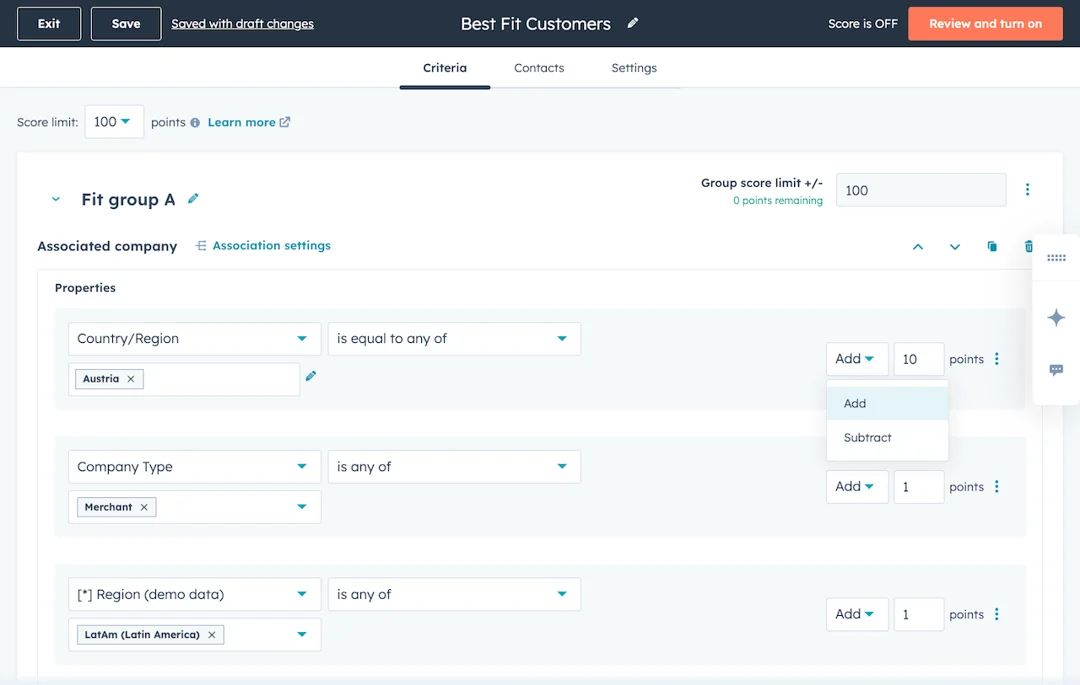
HubSpot takes a more automated approach with predictive lead scoring that uses AI to analyze CRM data and identify high-fit prospects.
Source: HubSpot
Rather than requiring manual scoring configuration, HubSpot's models learn from your historical data to predict which leads are most likely to convert. For teams without a dedicated marketing operations function to build and maintain scoring models, this automation is a real advantage.
ZoomInfo brings a different dimension: external buying signals.
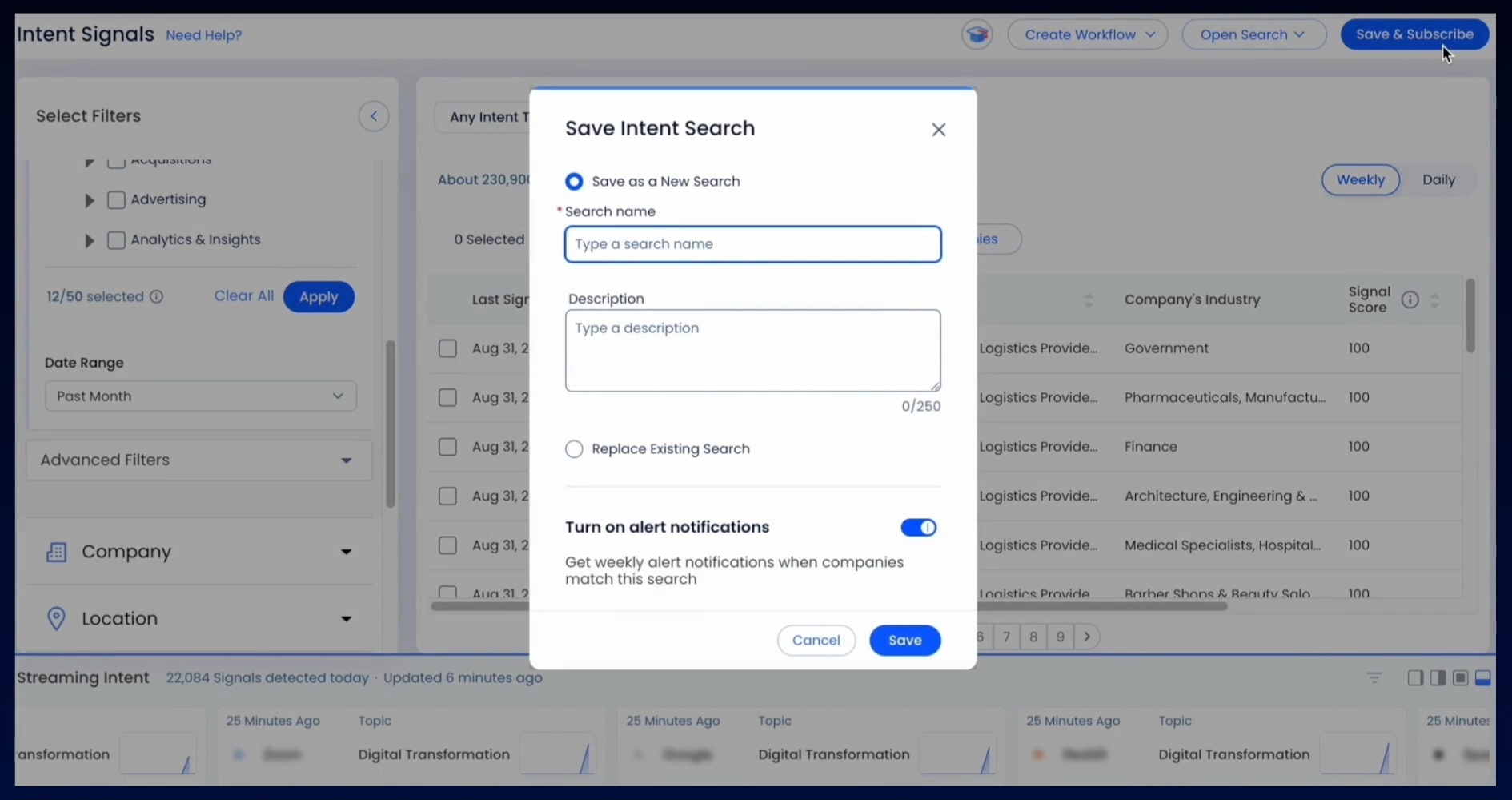
ZoomInfo Intent tracks signals from 210M IP-to-Organization pairings and 6 trillion+ new keyword-to-device pairings sourced monthly, revealing when companies are actively researching topics related to your solution. Guided Intent, exclusive to ZoomInfo, identifies topics historically correlated with deal success rather than requiring manual topic selection.
Source: ZoomInfo
This matters because Eloqua and HubSpot can only score leads based on interactions with your own marketing assets: your emails, your website, your forms. If a prospect is researching your category on third-party review sites, reading competitor content, or attending industry events, neither platform sees it.
ZoomInfo's intent data catches those signals and pushes them into your scoring and routing workflows, whether you're running Eloqua or HubSpot.
The GTM Context Graph goes further. It combines ZoomInfo's third-party data with your CRM records, conversation transcripts, and behavioral signals to capture not just what happened in a deal, but why it happened.
As ZoomInfo's CPO Dominik Facher writes: "The CRM recorded the state change. It has no record of why it happened." The GTM Context Graph makes that decision context available to every downstream action.
Seismic's sales team attributed 39% of active pipeline to opportunities identified or influenced by ZoomInfo signals, boosted productivity by 54%, and saved 11.5 hours per week. CBO Toby Carrington: "That combination of our internal CRM data, external signals, and AI that's given all that context has helped us craft very specific account- and persona-based messages." (Seismic case study)
Ease of use and time to value differ dramatically
Eloqua's learning curve is steep by design.
The dual-canvas architecture, multi-model scoring, and granular permission systems are built for dedicated marketing operations professionals.
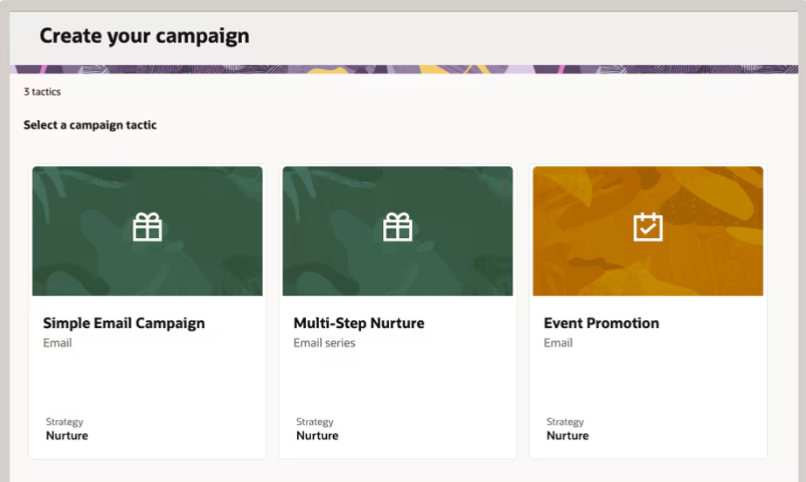
Oracle acknowledges this complexity through Guided Campaigns, a separate simplified interface that lets non-technical marketers execute campaigns using pre-approved templates and step-by-step guidance. Guided Campaigns is useful, but it's an overlay on the core platform, not a simplification of it.
Source: Eloqua
Implementation reinforces the enterprise commitment. Oracle recommends all new customers purchase a Smart Start package, ranging from $8,870 to $78,338 depending on scope and geography. There is no self-serve signup, no free trial, and no way to evaluate the platform without contacting Oracle sales.
For enterprise buyers with procurement processes and dedicated evaluation teams, this is expected. For mid-market companies trying to move quickly, it's a barrier.
HubSpot's approach is the opposite.
The permanently free CRM lets anyone create an account and start immediately. HubSpot benchmarks against traditional enterprise systems that can take 12+ months to implement, claiming customers achieve value within 90 days.
HubSpot Academy offers free certifications and courses, with over 200,000 professionals certified. Onboarding fees exist ($3,000 for Marketing Hub Professional, $7,000 for Enterprise), but they're a fraction of Eloqua's implementation cost.

Source: HubSpot
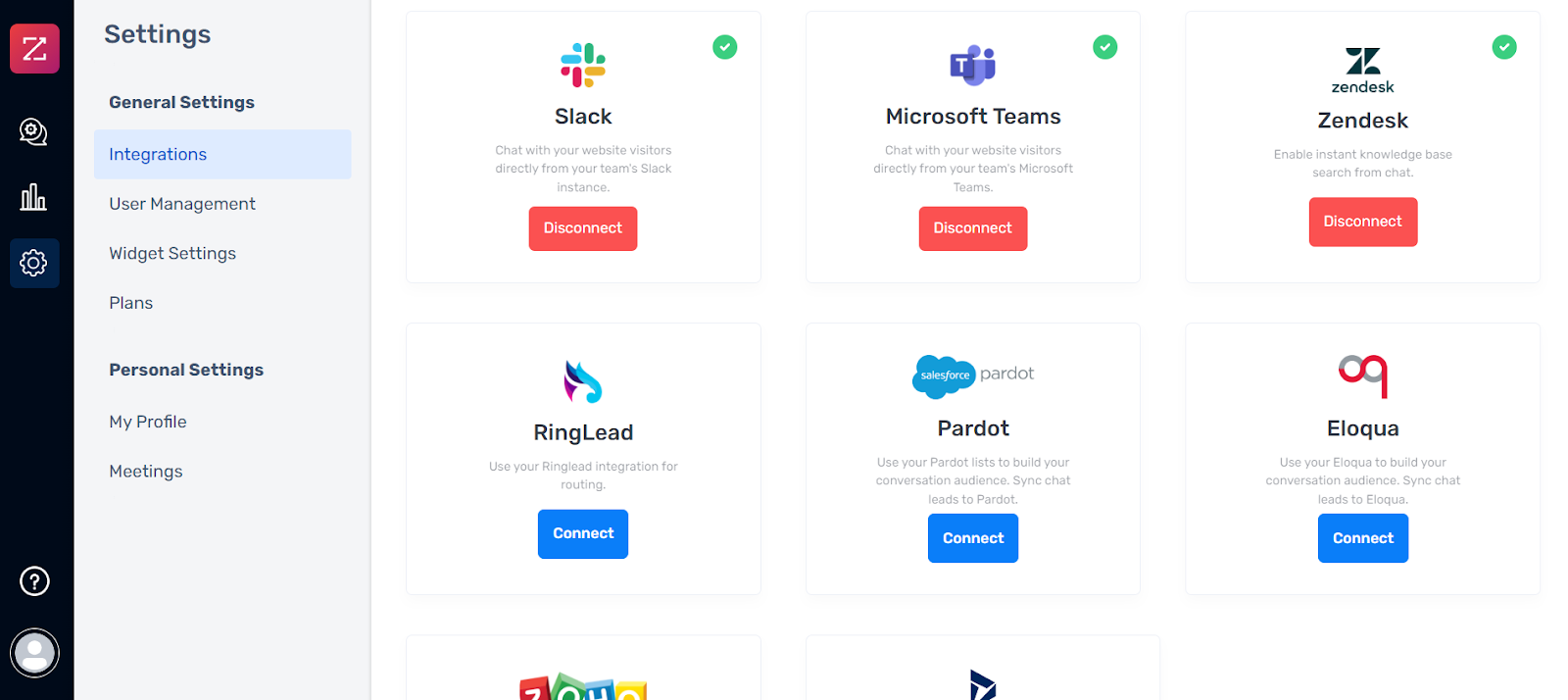
ZoomInfo fits into either environment without replacing the execution platform.
The native HubSpot integration and Eloqua MAP integration connect through standard configuration, not custom development. ZoomInfo Lite offers a permanent free tier with access to ZoomInfo's B2B database, 10 monthly export credits, and WebSights Lite for up to 10 website visitor reveals per day, so teams can evaluate the data quality before committing. GTM Workspace deploys in weeks, not months.
Source: ZoomInfo
Pricing tells you who each platform was built for
Eloqua's pricing reflects its enterprise DNA. The Oracle Marketing Cloud Global Price List shows three tiers based on contact volume:
Contact Maximum | Basic ($/mo) | Standard ($/mo) | Enterprise ($/mo) |
|---|---|---|---|
10,000 | $2,000 | $4,000 | — |
50,000 | $3,500 | $7,000 | — |
100,000 | $4,500 | $9,000 | — |
500,000 | — | — | $29,200 |
1,000,000 | — | — | $35,200 |
These are list prices; actual contracted prices are typically negotiated lower. But even with discounts, add implementation packages ($8,870 to $78,338), SMS as a purchased add-on, additional marketing users at $840/user/year, and optional priority support at $1,250/month plus 10% of your subscription fee.
Eloqua is priced for organizations where marketing automation is a strategic investment, not an experiment.
HubSpot's pricing is more accessible but more complex.
Marketing Hub starts free, jumps to $20/seat/month at Starter, then $800/month (annual) at Professional with 3 Core Seats included, and $3,600/month at Enterprise with 5 Core Seats. Mandatory onboarding fees apply at Professional ($3,000) and Enterprise ($7,000). Additional marketing contacts cost extra: $250 per 5,000 contacts per month at Professional.
The complexity multiplies when you add other Hubs. If your account has Marketing Hub Professional but Sales Hub Enterprise, all Core Seats get billed at the highest tier across your subscriptions. This mixed-tier billing rule can raise total costs for organizations using multiple Hubs at different tiers.
ZoomInfo uses consumption-based pricing that scales with usage.
There are no published dollar amounts for paid tiers; all plans are custom-quoted based on seats, credit volume, features, and contract length.
ZoomInfo Lite is permanently free with 10 monthly export credits. Paid plans are organized into Sales tiers (Professional, Advanced, Enterprise) and Marketing tiers (Marketing Demand, ABM Lite, ABM Enterprise), with Chorus and Chat available as standalone products. API access is included in all relevant plans.
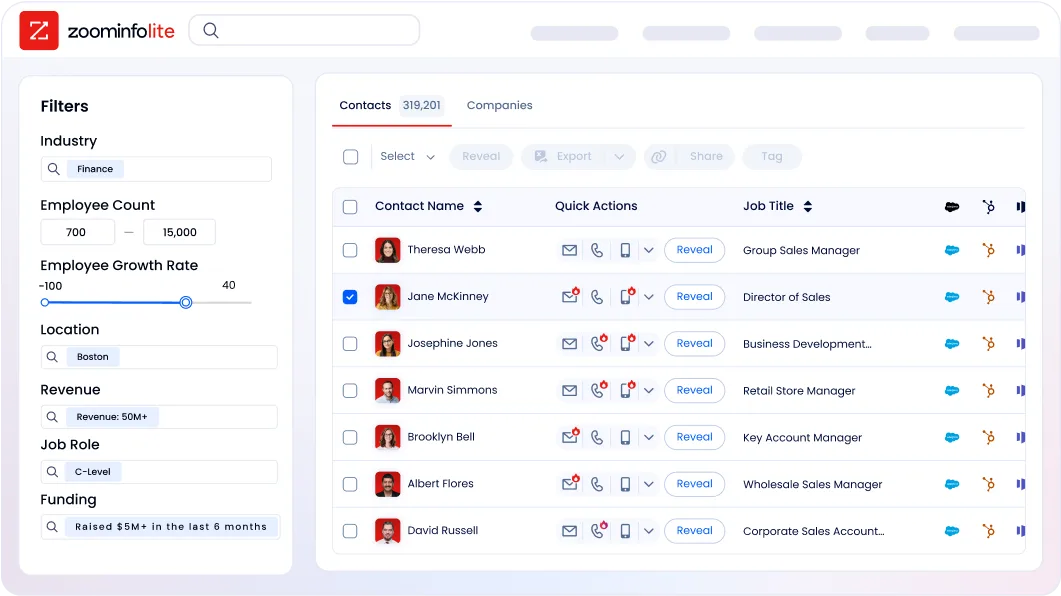
The economic case for ZoomInfo alongside either platform is straightforward: better data produces better campaign performance. If enriched contacts and intent signals improve your conversion rates, the ZoomInfo investment pays for itself through the marketing automation platform you're already running.
Integration ecosystems reflect different strategies
Eloqua's integration approach is Oracle-centric with broad third-party reach.
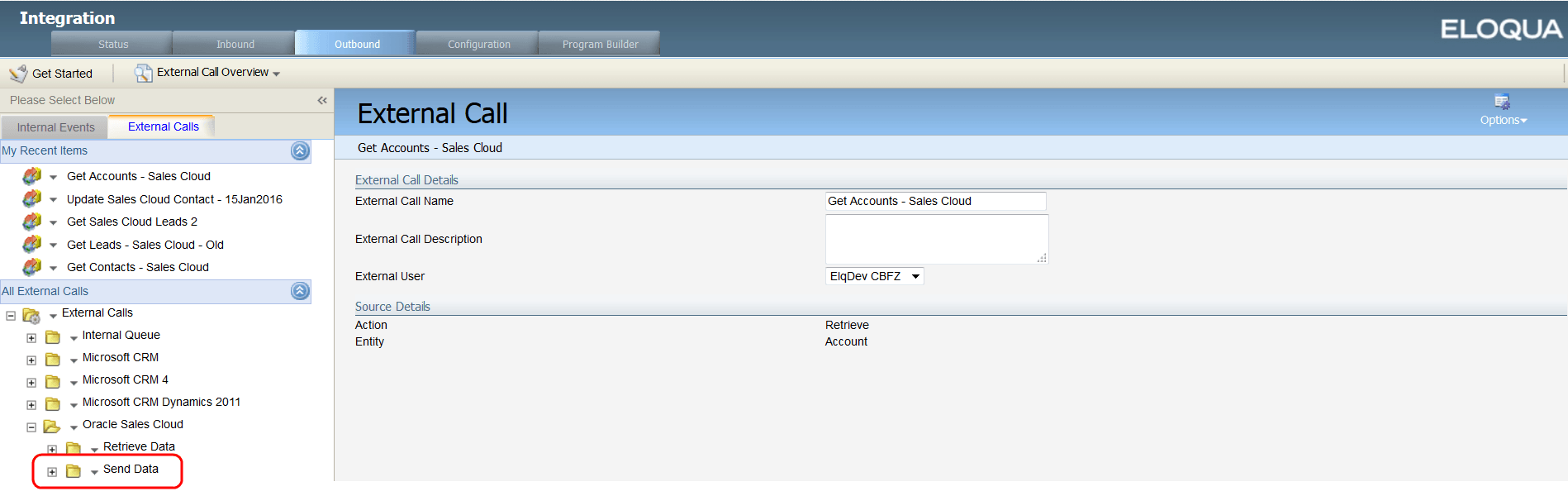
The platform is natively integrated with Oracle CX Sales, Oracle Unity CDP, and Oracle Fusion CX Analytics, sharing data infrastructure directly. Outside Oracle, the Marketing AppCloud offers 500+ prebuilt integrations covering CRMs, ad platforms, ABM vendors, and data providers.
Pre-built CRM connectors exist for Oracle Sales, Salesforce, Microsoft Dynamics, and Oracle CRM On Demand with bidirectional sync. For organizations already invested in Oracle's ecosystem, Eloqua's native connectivity matters. For everyone else, the 500+ AppCloud integrations cover most common tools.
Source: Eloqua
HubSpot's integration ecosystem is the largest of the three.
The HubSpot App Marketplace has more than 2,000 integrations with 2.5 million active installs. The REST API covers the full CRM data model, and Data Hub provides 100+ pre-built data sync connectors with bidirectional, real-time sync. HubSpot's breadth means nearly any tool in your stack has an existing connector, and the free Data Sync feature handles basic integrations without additional cost.
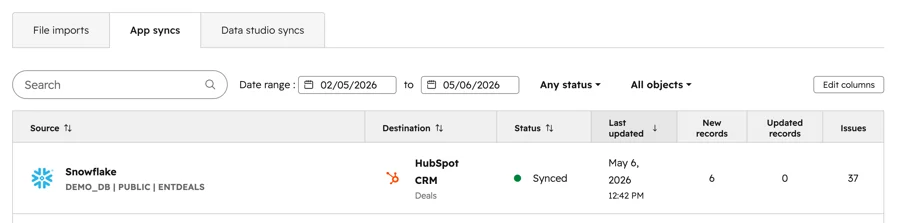
Source: HubSpot
ZoomInfo takes an open approach.
Rather than building a walled garden, ZoomInfo delivers its intelligence three ways. The ZoomInfo App Marketplace lists 120+ partner integrations, with connections to Salesforce, HubSpot, Microsoft Dynamics, Snowflake, and more.
The Enterprise API provides programmatic access to search, enrich, and manage B2B data in any system. And the ZoomInfo MCP server connects AI models to ZoomInfo's data as a native tool, currently supporting Claude and ChatGPT.
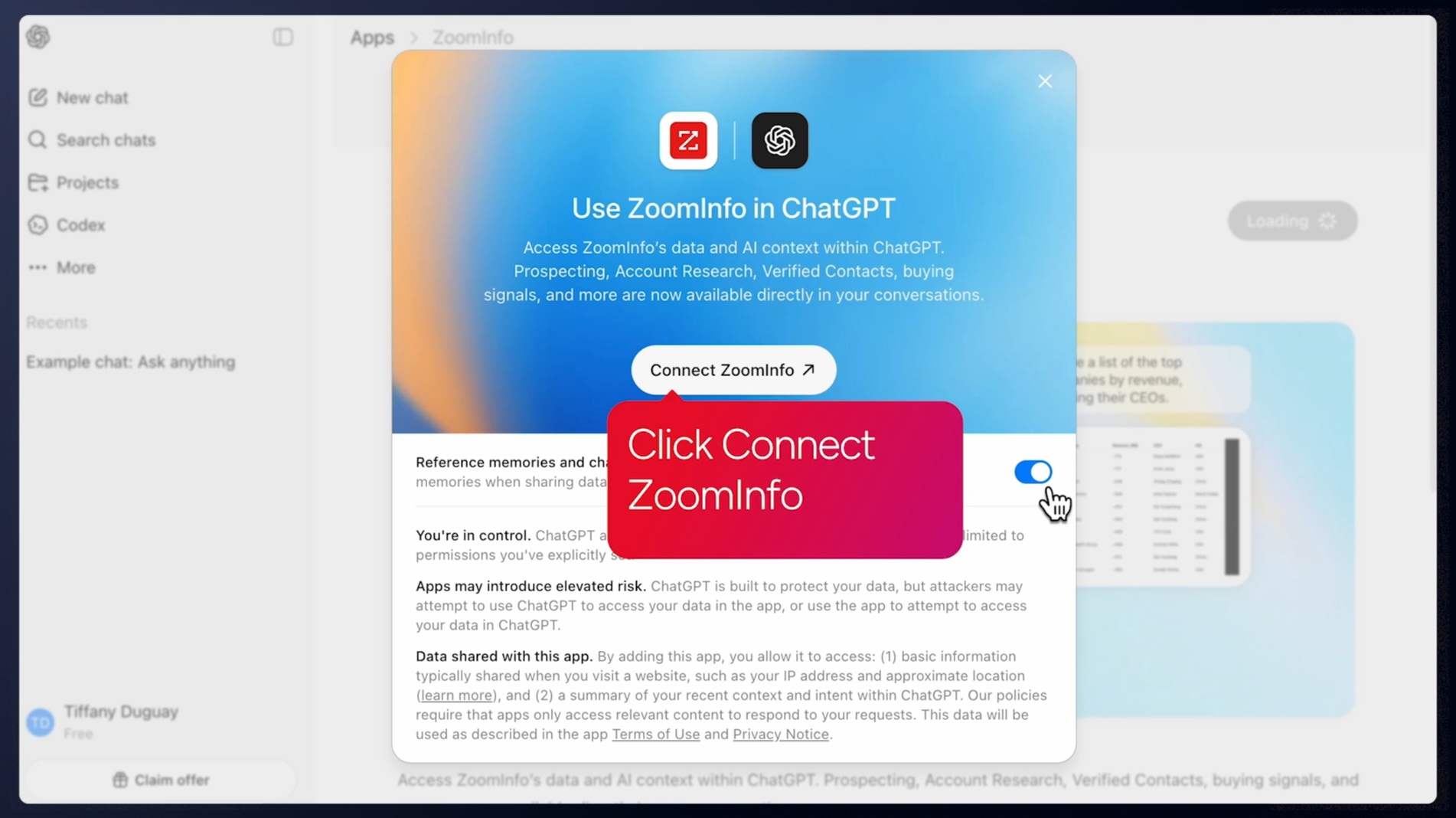
Source: ZoomInfo
For teams using Eloqua or HubSpot, this open approach matters. ZoomInfo's data and signals flow into your chosen execution platform without requiring you to adopt ZoomInfo's own marketing or sales tools.
Use GTM Studio alongside Eloqua for ABM orchestration, or use ZoomInfo's HubSpot integration to enrich Smart CRM records and trigger Breeze AI workflows. The data layer works regardless of which execution platform you're running.
AI capabilities show where each platform is heading
Eloqua's AI, branded Advanced Intelligence, focuses on optimizing existing campaigns rather than replacing human judgment.
Send Time Optimization delivers emails at each contact's best time based on historical open behavior. Email Fatigue Analysis classifies contacts into nine engagement health levels, preventing over-saturation. Generative AI handles subject line generation and content creation across seven languages.
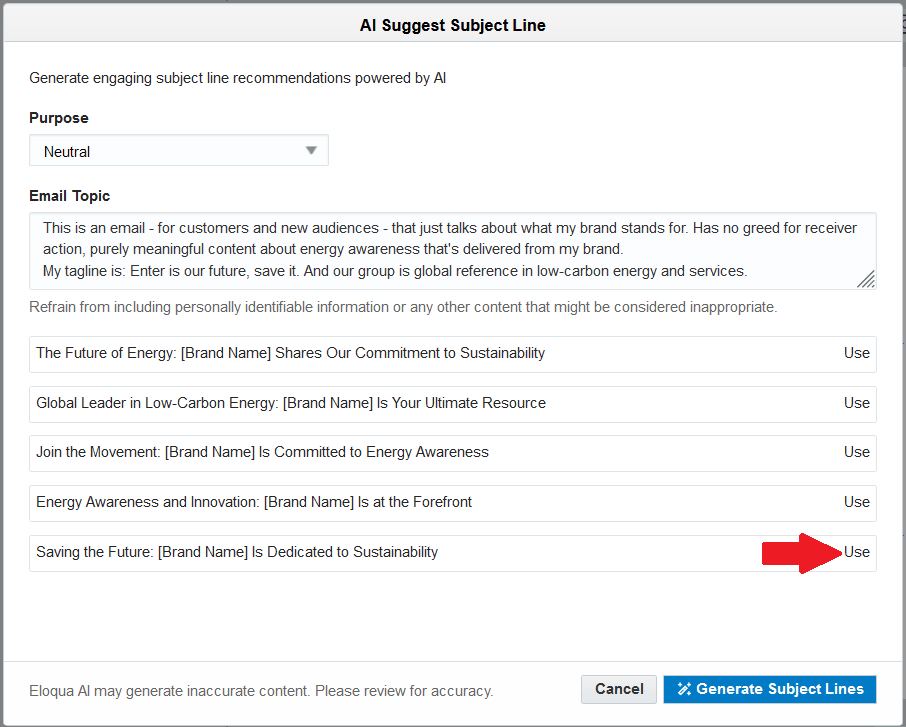
Source: Eloqua
A notable differentiator: all AI runs on Oracle Cloud Infrastructure with no data sharing with third-party LLM providers, which matters for regulated industries. As of June 2025, Advanced Intelligence became available to all Eloqua customers at no additional cost.
HubSpot's AI strategy is broader.
Breeze is not a single feature but an AI layer spanning the entire platform: the Customer Agent resolves customer inquiries across multiple channels, the Prospecting Agent monitors buying signals and drafts personalized outreach, the Data Agent answers natural-language questions about your CRM data, and Content Remix transforms one piece of content into formats for multiple channels.
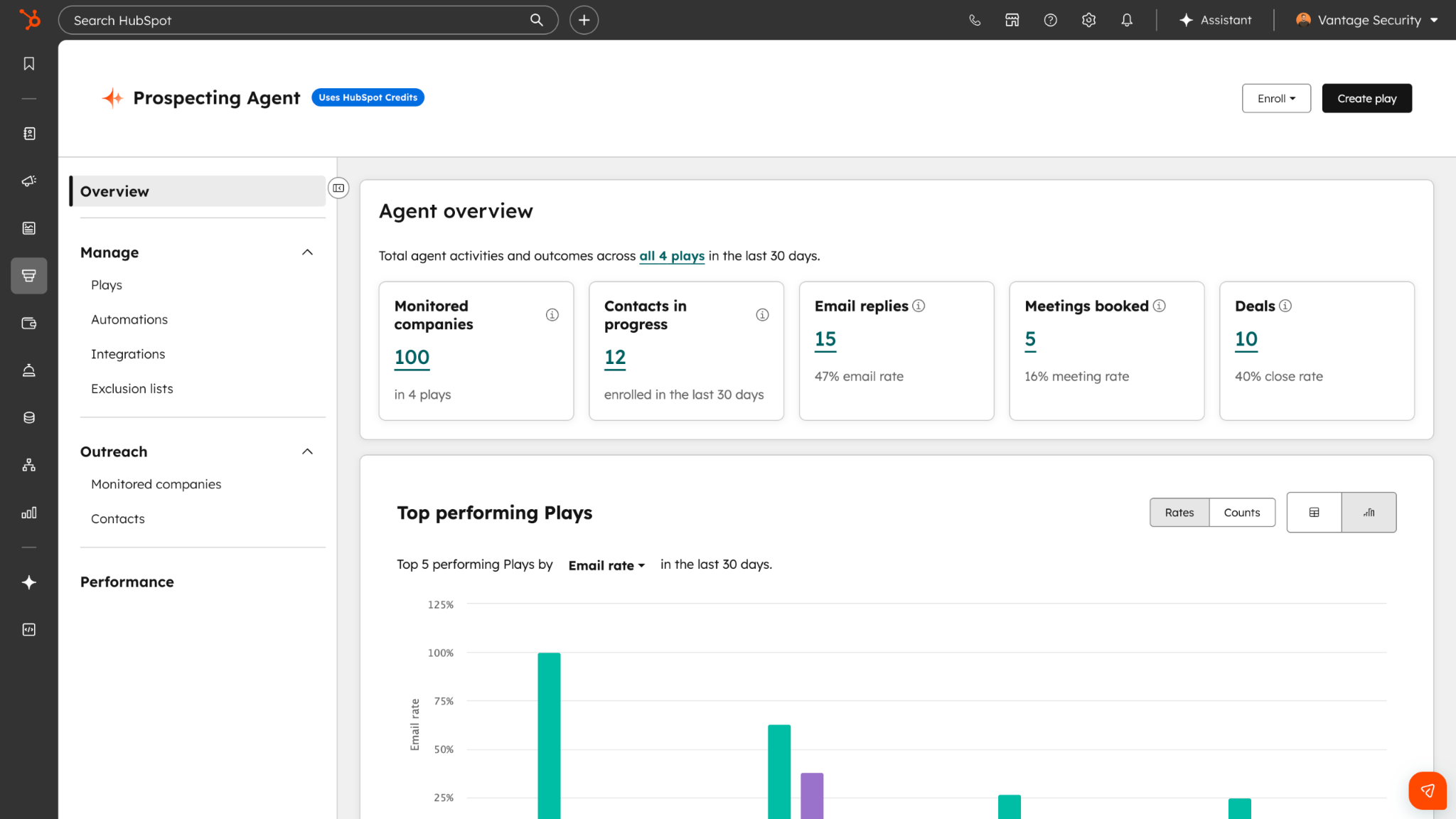
Source: HubSpot
HubSpot says Breeze is contextually intelligent because it draws on the full Smart CRM dataset. Several features (AI-Powered Segmentation, Personalization, Marketing Studio) are still in Beta as of Fall 2025, and Breeze Agents run on HubSpot Credits, a consumption-based system that can add costs beyond your subscription.
ZoomInfo's AI operates at the intelligence layer rather than the execution layer.
The GTM Context Graph processes 1.5B+ data points daily, combining CRM records, conversation transcripts, and buying signals to identify patterns across thousands of deals. Inside GTM Workspace, AI agents handle account research, outreach generation, CRM updates, and signal monitoring for sellers.
Inside GTM Studio, AI powers natural-language audience building, waterfall enrichment from 25+ data sources, and pre-built GTM plays that launch in minutes instead of weeks.
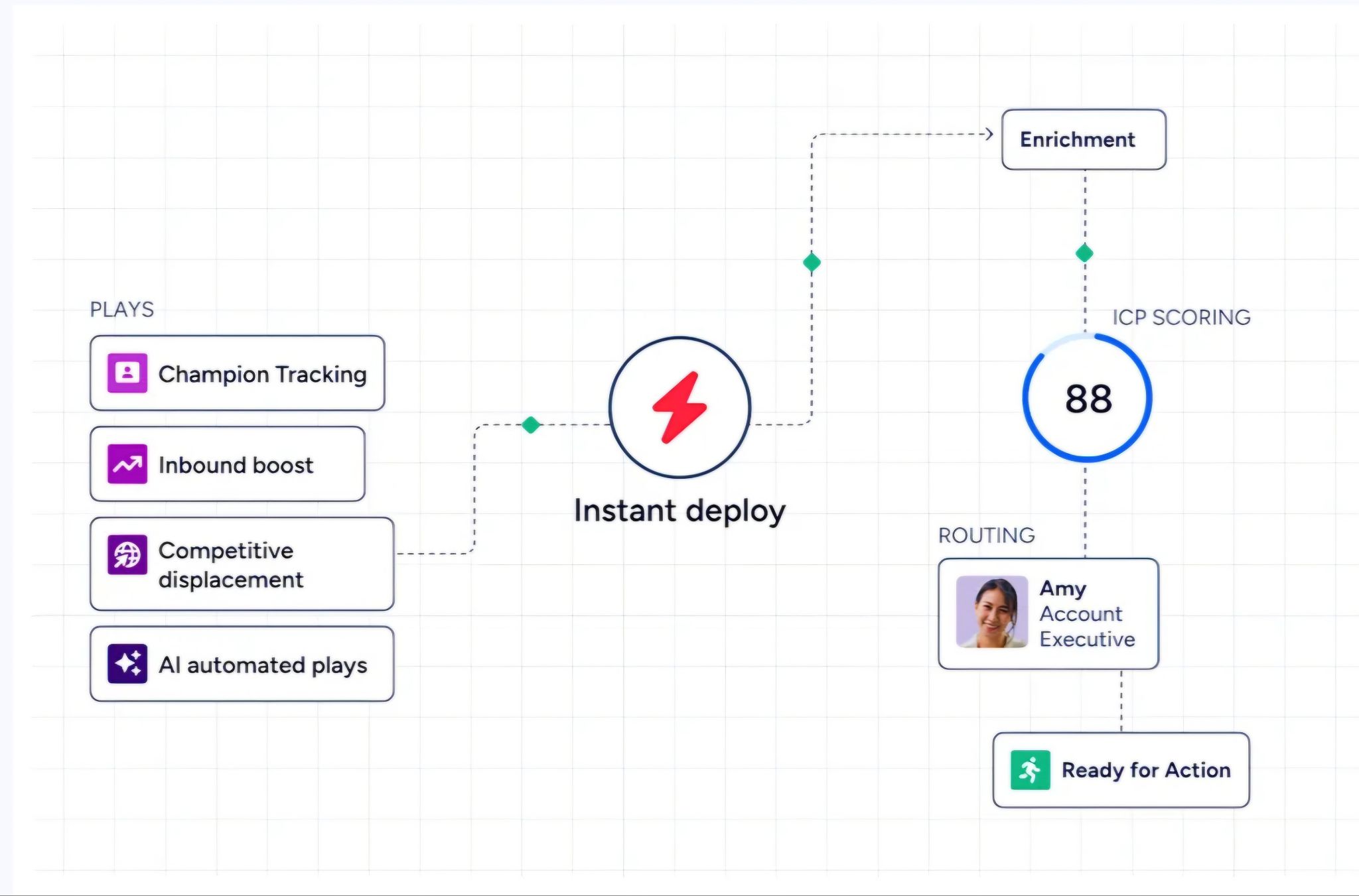
Source: ZoomInfo
The distinction matters. Eloqua's AI optimizes how you send. HubSpot's AI automates tasks across your customer platform. ZoomInfo's AI identifies who to target and why they're worth targeting now, then pushes that intelligence into whichever execution platform you're using.
Eloqua vs. HubSpot vs. ZoomInfo: Which should you choose?
The right choice depends on your team's size, your go-to-market complexity, and how much of the stack you want under one roof.
Choose Eloqua if:
You're a large enterprise with dedicated marketing operations staff
You run complex, multi-segment B2B campaigns across multiple products and regions
You need lead scoring with many concurrent models
You're already invested in the Oracle CX ecosystem
Data security on private AI infrastructure is a compliance requirement
You have the budget for enterprise pricing and professional implementation
Choose HubSpot if:
You want marketing, sales, service, and content under one platform
Your team values ease of use and fast time to value over orchestration depth
You need to start small and grow into enterprise features
Platform consolidation and reducing tool sprawl are priorities
You want a large integration ecosystem and active partner community
Add ZoomInfo if:
You need verified B2B contact data to power your campaigns
Buyer intent signals and account intelligence are critical to your targeting
You want to identify in-market accounts before they fill out a form
Your lead scoring and ABM programs need external buying signals, not just first-party engagement
You want the same intelligence available in your marketing automation platform, your CRM, your sales tools, and any AI agent through API and MCP
Start a free trial or explore ZoomInfo Lite to see the data firsthand.
The strongest B2B go-to-market stacks don't force teams to choose between execution and intelligence. They combine a campaign platform (Eloqua for enterprise orchestration depth, HubSpot for all-in-one breadth) with an intelligence layer (ZoomInfo for verified data, intent signals, and contextual AI).
The execution platform sends the message. ZoomInfo ensures it reaches the right person, at the right company, at the right time.
Eloqua vs. HubSpot vs. ZoomInfo FAQ
What is the fundamental difference between Eloqua, HubSpot, and ZoomInfo?
Eloqua is an enterprise B2B marketing automation platform focused on complex campaign orchestration, multi-model lead scoring, and integration with Oracle's CX suite.
HubSpot is an all-in-one customer platform combining marketing, sales, service, content, and commerce under a single CRM.
ZoomInfo is an AI GTM platform providing verified contact data, buyer intent signals, and the GTM Context Graph. ZoomInfo integrates with both Eloqua and HubSpot to enrich their campaigns with accurate data and buying signals.
Which platform is cheapest to get started with?
HubSpot is the most accessible, with a permanent free tier that includes a CRM, basic marketing tools, and up to 2,000 email sends per month.
ZoomInfo Lite is also permanently free with 10 monthly export credits and access to the B2B database.
Eloqua has no free plan or free trial. Pricing starts at $2,000 per month for 10,000 contacts on the Basic tier, with implementation packages adding $8,870 to $78,338 on top.
Can ZoomInfo replace Eloqua or HubSpot?
ZoomInfo is designed to complement both platforms, not replace them. It provides the B2B data, buyer intent signals, and account intelligence that feed into Eloqua or HubSpot campaigns.
That said, ZoomInfo's GTM Studio offers marketing orchestration (audience building, multi-channel plays, workflow automation) and GTM Workspace provides AI-powered seller execution, so teams looking to consolidate may find ZoomInfo covers some of the same use cases.
Which platform has the best lead scoring?
Each takes a different approach. Eloqua supports up to 30 concurrent lead scoring models with explicit profile and engagement criteria, giving marketing operations teams full manual control.
HubSpot uses predictive AI scoring that learns from historical CRM data without manual configuration.
ZoomInfo adds external buying signals through intent data tracking 210 million IP-to-organization pairings, identifying when companies are actively researching your category. This is a dimension neither Eloqua nor HubSpot captures natively.
Which platform is best for account-based marketing?
ZoomInfo is the strongest for ABM targeting and intelligence, with native buyer intent data, contact-level website visitor identification, a built-in demand-side platform for display advertising, and predictive Account Fit Scores.
Eloqua provides account-level engagement scoring and campaign orchestration for ABM execution, with integrations to ABM vendors like 6sense and LinkedIn.
HubSpot offers ABM tools within Marketing Hub, including target account lists and company scoring, but its ABM capabilities are less specialized than ZoomInfo's.
How do the AI capabilities compare?
Eloqua's Advanced Intelligence focuses on campaign optimization: send-time optimization, email fatigue analysis, and generative content creation, all running on Oracle Cloud Infrastructure with no third-party data sharing.
HubSpot's Breeze is a broader AI layer with specialized agents for customer service, prospecting, data analysis, and content creation across the entire platform.
ZoomInfo's AI operates at the intelligence layer, using the GTM Context Graph to combine CRM data, conversation intelligence, and buying signals to surface insights about which accounts to target and why.
Do Eloqua and HubSpot integrate with ZoomInfo?
Yes. ZoomInfo integrates natively with both platforms.
For Eloqua, ZoomInfo is available as a marketing automation platform integration, pushing enriched contacts and account data into Eloqua segments and campaigns.
For HubSpot, ZoomInfo's native integration syncs contact and company data into the Smart CRM, where it feeds into Marketing Hub workflows and Sales Hub pipelines. ZoomInfo also offers API and MCP access for custom integrations with any tool.
Which platform is best for a mid-market B2B company with a small marketing team?
HubSpot is the strongest fit for smaller teams, with its free tier, easier learning curve, and all-in-one approach that reduces the need for separate tools.
Adding ZoomInfo Lite or a paid ZoomInfo plan enriches HubSpot's CRM with verified B2B data and intent signals, making campaigns more targeted without adding operational complexity.
Eloqua is generally not suited for small marketing teams due to its pricing, implementation requirements, and the specialist expertise needed to run the platform.
Comparing Eloqua and HubSpot? These related breakdowns go deeper:
