
Key takeaways
Data quality is the real moat. Construction is one of the largest B2B verticals in the US, but its fragmented buyer base punishes stale data. Firms reorganize, get acquired, and rename constantly, and NAICS misclassification is common.
The market splits two ways. Sellers targeting construction firms need verified B2B contact data; contractors hunting bids need project intelligence. Most pages confuse the two.
Deals close through committees, not contacts. Commercial construction buying committees run three to five people. Multi-threading from the first touch is the difference between a moving deal and a stalled one.
No single tool covers the whole motion. ZoomInfo anchors the data layer with verified contacts, intent, and org-chart depth. Apollo, Bombora, UserGems, and LinkedIn Sales Navigator fill in specific roles like signals, job-change triggers, and relationship-led prospecting.
According to the U.S. Census Bureau, U.S. construction spending hit a seasonally adjusted annual rate of $2.2 trillion in early 2026. That spend is spread across general contractors, subcontractors, specialty trades, and building product manufacturers.
For teams selling into it, the bottleneck is rarely demand. It’s reaching the right decision-maker at the right firm with verified contact data and a relevant trigger.
This guide walks through how to source, qualify, and act on construction industry leads, with a comparison of the tools that actually fit the job.
What are construction industry leads?
For B2B sales teams, a construction industry lead is a contact or company inside the construction sector that fits your ideal customer profile (ICP) and shows some signal of buying readiness. B2B construction leads cover a wide range of firms and roles:
General contractors (GCs) and subcontractors
Specialty trades (electrical, mechanical, plumbing, concrete, steel)
Building product manufacturers and distributors
Design and engineering firms
The operations, finance, IT, and procurement leaders inside any of the above
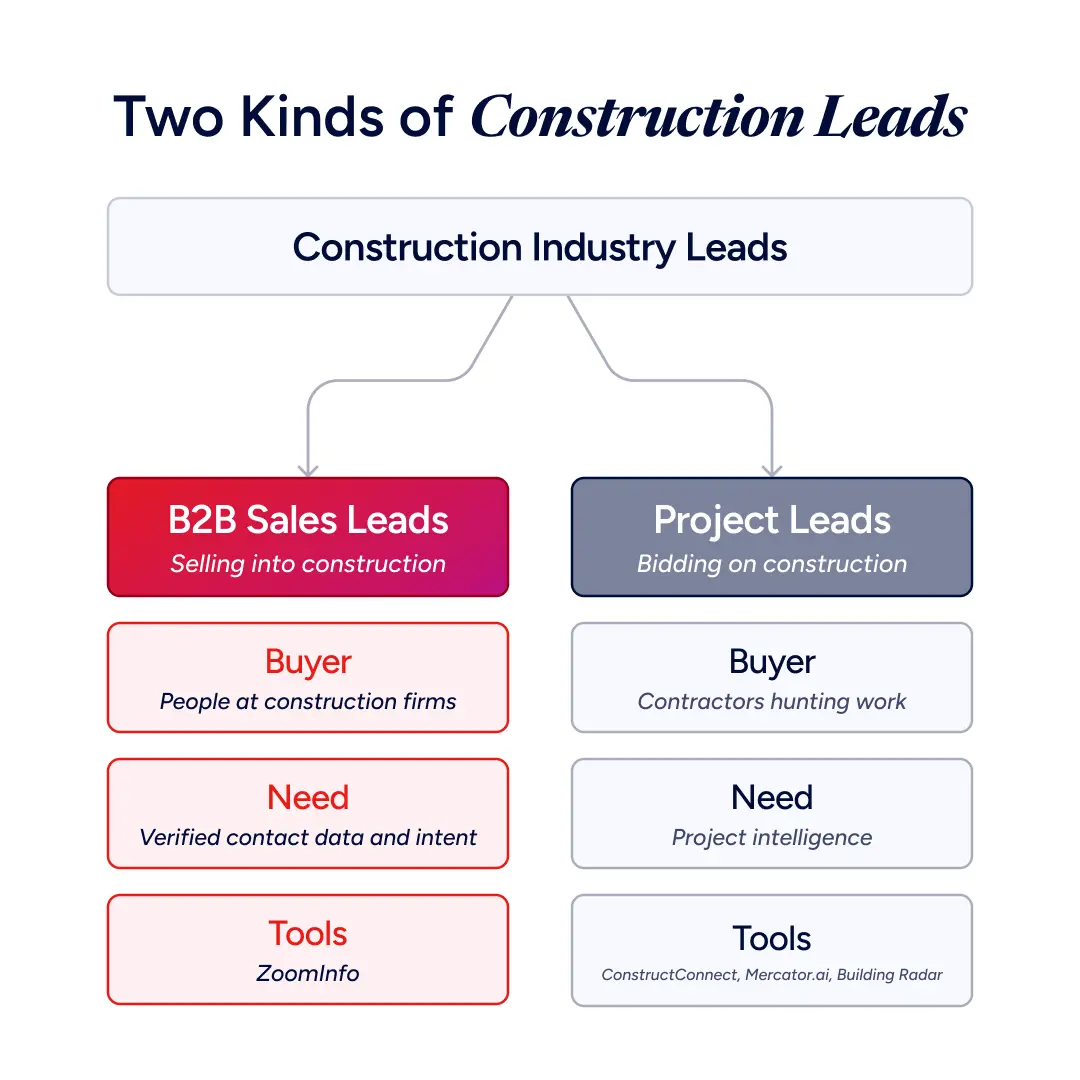
This is distinct from project leads, which is what contractors buy to find work to bid on (project intelligence platforms and building permit feeds). If your buyer is a person at a construction company rather than the construction project itself, you are looking at sales leads.
Commercial vs. residential construction leads
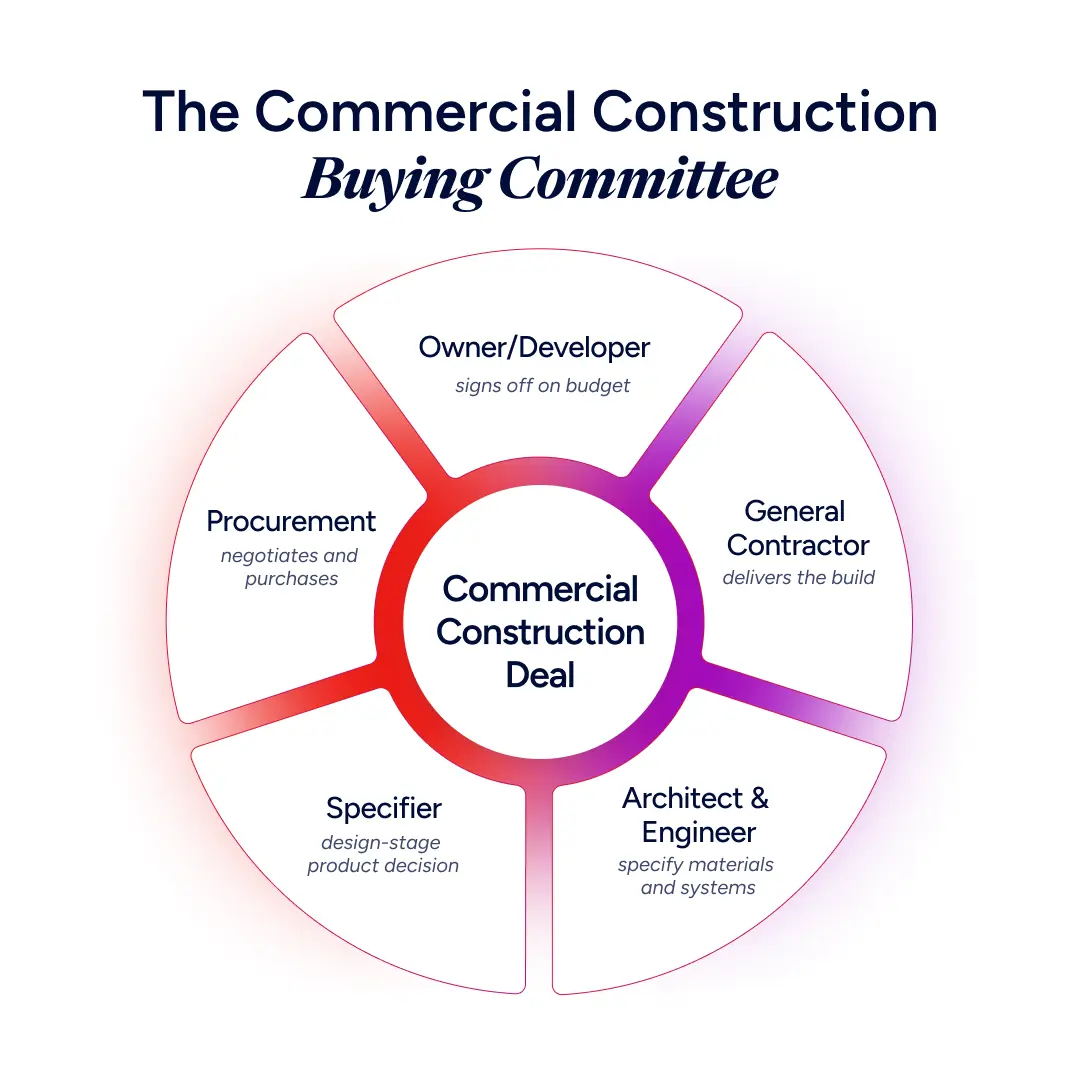
Commercial construction covers offices, retail, healthcare, education, industrial, and public infrastructure. Deal sizes are larger, sales cycles longer, and the buying committee is broader.
Each role pulls on a different lever:
Owner or developer holds the budget and the final say
General contractor controls delivery and brings in the subcontractor network
Architect and engineer write the specs — get on the spec sheet and you're in the build
Specifier makes the design-stage product call
Procurement negotiates the final contract
Residential covers single-family homes, multifamily, remodels, and custom builds. Cycles are shorter and the buyer is often a single contractor or homeowner.
The split matters because tools, channels, and messaging do not transfer cleanly between them. Residential lead marketplaces will not serve a company selling HVAC systems to commercial GCs, and the data platforms built for B2B prospecting are wasted on a custom home builder marketing to homeowners.
Quick tip: Decide which side of the line your buyer sits on before picking a tool. Enterprise software, capital equipment, financial services, or design-stage building products put you in commercial. Consumer-adjacent services or finishes put you in residential.
Why construction is a high-value vertical for sales teams
A few characteristics explain why construction sits near the top of most B2B target list rankings:
Scale. U.S. construction is a multi-trillion-dollar annual market and one of the largest non-financial sectors in the economy.
Firm density. Hundreds of thousands of construction firms operate in the U.S., from single-trade subs to ENR Top 400 GCs. The long tail is real, and so is the enterprise tier above it.
Tech adoption inflection. Construction historically lags other industries in software spend, which means the addressable market for SaaS, fintech, and analytics vendors is still expanding rather than saturated.
High search demand. Keywords in this category routinely carry cost-per-click (CPC) bids above $10, signalling sustained commercial competition for visibility.
The vertical also rewards data quality more than most. Construction firms are heavily regional, often privately held, and frequently misclassified under the wrong North American Industry Classification System (NAICS) code. Generic prospect lists waste rep time on firms that do not match your real ICP. Verified firmographic data and direct-dial contacts are the actual moat.
Construction lead generation strategies for modern sales teams
Five strategies consistently produce qualified pipeline in this vertical. Each is presented with the play, the inputs needed, and a typical outcome to expect.
Spot in-market accounts with intent data
The play. Surface accounts showing in-market behavior before they enter a competitive bid or request for proposal (RFP). Intent data captures research signals at the account level, like keyword spikes, content consumption, and vendor evaluation activity. For sellers targeting GCs and specifiers, you can layer in publicly available project signals (rezoning filings, land transactions, permit applications) as a supplementary trigger source.
Inputs needed. A dedicated intent platform like Bombora, or a B2B data platform with intent built in like ZoomInfo. Either way, pair it with a verified contact database so signals turn into outreach.
What to expect. Reps prioritize the 5 to 15 percent of accounts in active research mode rather than blanket outreach. Companies running this play consistently report higher reply rates and shorter cycles because timing matches buyer readiness.
Note: Intent data is most powerful when paired with verified contact data. Knowing an account is researching "fleet telematics" is useless if you cannot reach the fleet manager directly.
Build firmographic target lists from a B2B data platform
The play. Define your ICP across firmographics (size, revenue, region, segment), technographics (what they already use), and decision-maker titles. Pull a fresh list from a B2B data platform with verified emails and direct dials.
Inputs needed. A clear ICP, a data platform with construction coverage, and a CRM to push the list into.
What to expect. This is the foundational play for any outbound motion into construction. The output quality depends entirely on the data source. Construction is unusually punishing on stale data because firms reorganize, get acquired, and rename frequently.
ICP filters worth setting:
NAICS code (236 building construction, 237 heavy and civil, 238 specialty trade)
Headcount band (matters more than revenue for many construction firms)
Geographic radius (regional concentration is the norm)
Job title and seniority (specifier, estimator, project manager, VP construction, CFO)
Technographic stack (Procore, Autodesk, Sage, Viewpoint signal sophistication and budget)
Tap public procurement and tendering data
The play. Public-sector projects are required to publish bid notices, awards, and contract data. For sellers whose buyers include public agencies or contractors winning public work, this is a free, structured lead source.
Inputs needed. Time to monitor portals (SAM.gov in the U.S., regional procurement sites, state DOT bid boards) or a paid aggregator.
What to expect. High volume, mixed quality. Use as a trigger source rather than a primary prospecting channel. A new federal award to a GC tells you that GC just unlocked budget and procurement cycles for materials, equipment, and services.
Maximize search visibility and local optimization
The play. Construction buyers research vendors via search before they ever speak to a rep. Rank for the bottom-funnel queries your ICP uses, and for vertical-specific queries that pull in qualified traffic.
Inputs needed. Vertical landing pages (one per construction sub-segment you sell into), local schema markup if you serve specific regions, and a content engine that addresses the actual buying questions.
What to expect. Slower than paid channels, but compounding. Construction buyers are particularly responsive to detailed, technical content because the industry rewards depth of expertise.
Warm up the buying committee on LinkedIn
The play. Use LinkedIn (and Sales Navigator) to identify and warm up the construction buying committee before outbound. Track job changes, follow account-level content, and engage decision-makers with relevant insights before sending the first sales touch. The construction industry is relationship-heavy, and a connection request from someone with mutual contacts converts better than a cold email from a stranger.
Inputs needed. Sales Navigator licences for the reps doing the work, plus a content cadence (rep-led posts, executive thought leadership, or sponsored content) and a clear ICP.
What to expect. Slower top-of-funnel volume than pure data-platform outbound, but higher reply and meeting rates. Most effective when paired with verified contact data from a B2B platform, since LinkedIn alone does not give you direct dials or verified work emails.
Best tools for finding construction sales leads
The five tools below give B2B teams selling into construction the three things that matter most: verified contact data, in-market signals, and the workflows to act on both.
ZoomInfo
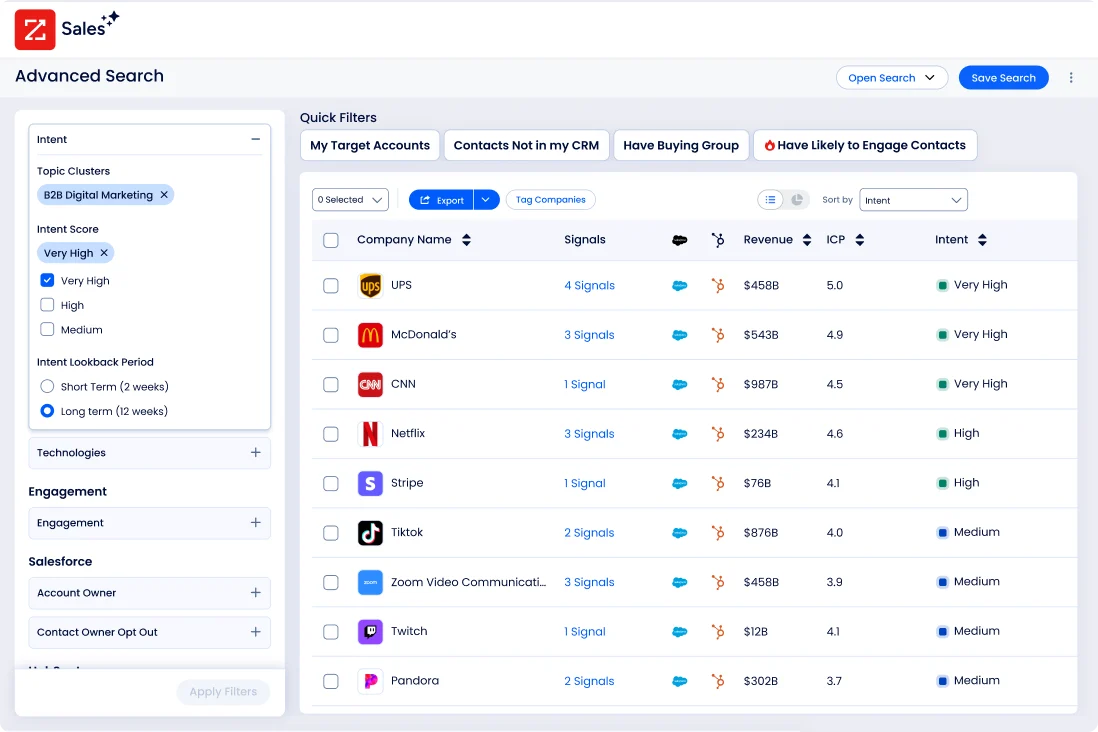
ZoomInfo is an all-in-one AI GTM Platform built on the largest verified B2B dataset on the market: 500 million contacts, 100 million companies, 135 million phone numbers, and 200 million business emails.
That scale matters in construction because the vertical is full of regional firms, privately held GCs, and businesses misclassified under the wrong NAICS code that thinner databases miss.
Two products sit on top of the data. GTM Workspace is where account executives and account managers run their book, replacing the spreadsheet most reps still default to. GTM Studio is where revenue operations and marketing build the plays that fire on triggers like a new project win, a leadership move, or a competitor switch.
Key features:
Contact and company search across 300+ firmographic and technographic attributes, with NAICS filters for construction segments
ZoomInfo Intent and Guided Intent for surfacing accounts actively researching your category
WebSights to resolve anonymous website visitors to companies and contacts
Org charts and direct-dial numbers to multi-thread the buying committee in commercial deals
API and MCP access for piping data into custom agents or existing systems
Native integrations with Salesforce, HubSpot, Outreach, Salesloft, and 120+ tools
Pricing:
Consumption-based. Cost is tied to what you use (exports, API calls, enrichment) rather than rigid per-seat licensing. ZoomInfo Lite is permanently free with 10 monthly export credits. A 7-day trial of paid plans is also available.
Best for:
Materials suppliers and equipment vendors
Construction-tech SaaS, fintech, and insurance vendors
Staffing firms targeting construction labor
Any seller whose buyer is the VP of Construction, CFO, Procurement Lead, or Specifier inside a construction company
Apollo
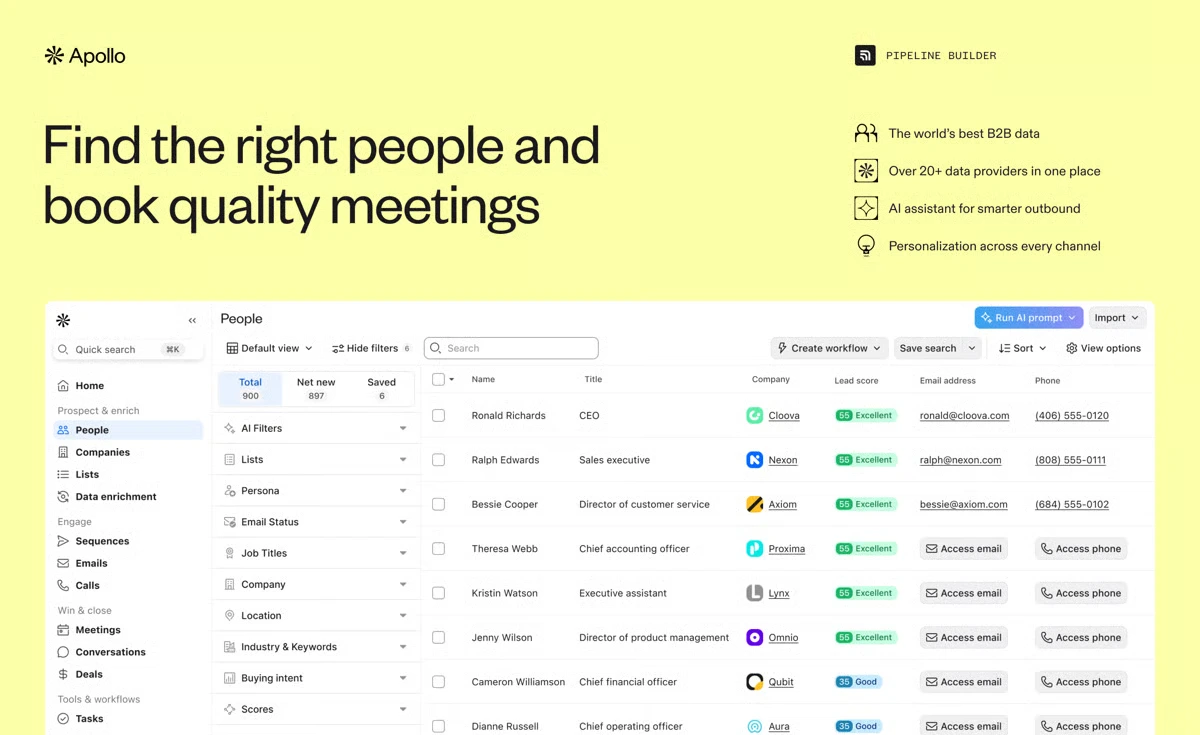
Apollo is a B2B sales platform combining a contact and company database with built-in outreach and engagement tooling.
The platform has a dedicated construction lead use case and markets directly to sales teams targeting general contractors, subcontractors, and project leaders. For construction sellers, the appeal is being able to build a list, send the sequence, and track replies from one workspace, which works well for smaller teams without a separate sales engagement tool.
Key features:
Contact database with filters by role, trade, and region
Verified emails and phone numbers, refreshed automatically
Native sequencing, email tracking, and dialer
Chrome extension for prospecting on LinkedIn and company sites
Salesforce and HubSpot CRM sync
Pricing:
Apollo uses four pricing tiers, billed annually.
Free: $0, 900 credits per seat per year
Basic: $49 per seat per month
Professional: $79 per seat per month
Organization: $119 per seat per month (three-seat minimum)
Professional is the most popular tier. Add-ons are available for inbound lead identification and advanced dialing.
Best for:
Smaller sales teams that want data and outreach in one platform
SDR-led motions targeting construction firms
Teams looking for a lower price point than enterprise data platforms
See how Apollo compares to ZoomInfo.
Bombora
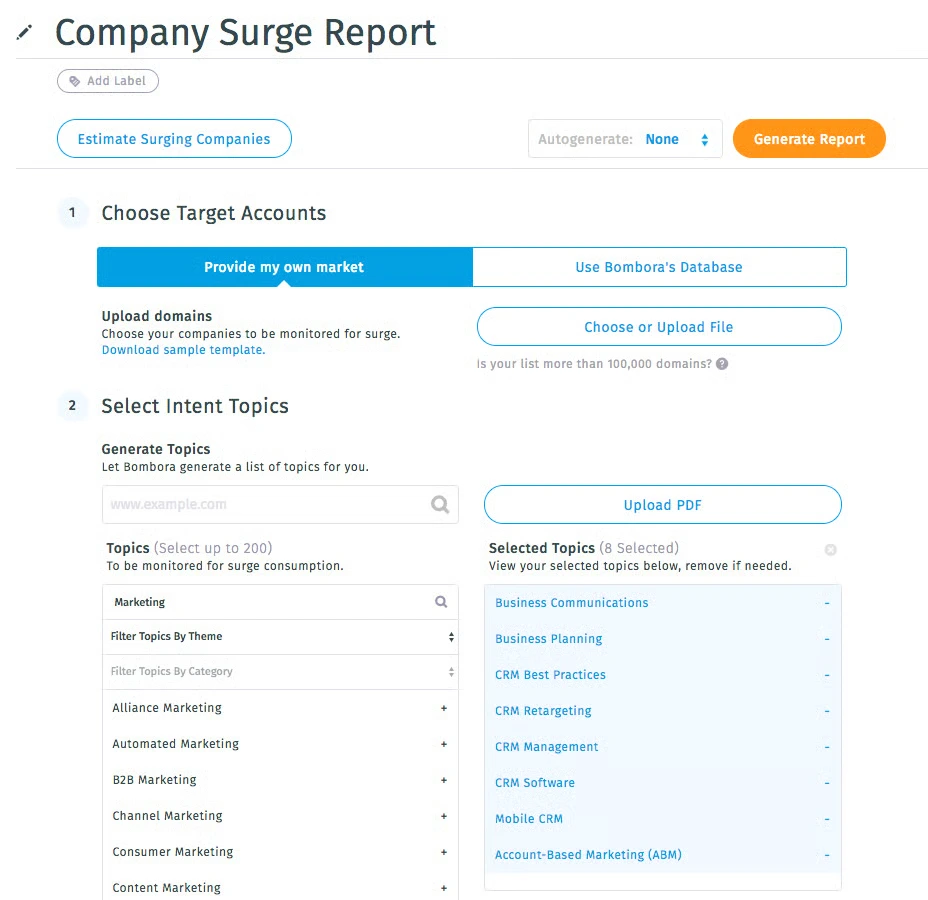
Bombora is the largest independent B2B intent data provider, with a co-op of thousands of B2B publisher sites feeding signals into its Company Surge product.
Its topic taxonomy covers construction-related research (construction management, building products, tools, and related categories), which lets B2B sellers see which firms are actively researching their space. Bombora doesn’t provide contact data; it surfaces in-market accounts that you then enrich and reach through another tool like ZoomInfo.
Key features:
Company Surge intent data covering thousands of B2B topics, including construction-related categories
Privacy-compliant, cooperative-sourced data from thousands of B2B publishers
Account-level intent scoring rather than just keyword counts
Native delivery into 100+ partner platforms including ZoomInfo, Salesforce, and major ad networks
Custom topic creation for product-specific or category-specific research signals
Pricing:
Custom, sold either directly or through partner platforms that bundle Bombora signals at a lower entry point. Forrester named Bombora a Leader in B2B intent data in 2025.
Best for:
Marketing and sales teams running ABM in construction
Sellers who want to prioritize accounts by research activity before outreach
Pairing with a B2B data platform for full lead-to-outreach motions
UserGems
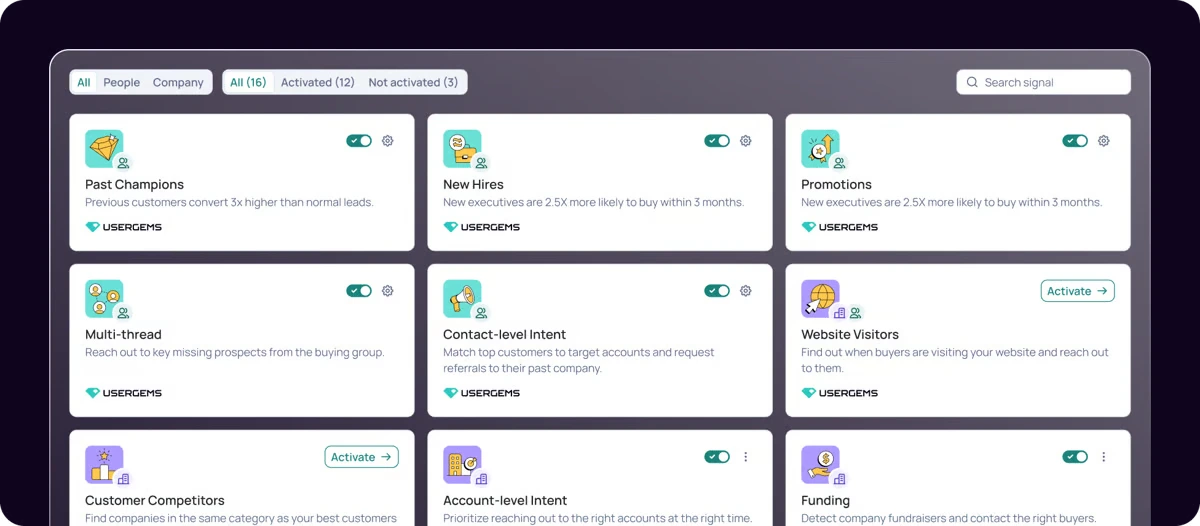
UserGems tracks when your past customers, champions, and prospects change jobs, then surfaces those moves as warm pipeline opportunities.
For construction sellers, this is particularly valuable because leadership changes at construction firms (a new CFO, VP of Construction, or Procurement Head) consistently rank among the highest-converting trigger events. Instead of cold outreach, reps re-engage someone they already have a relationship with.
Key features:
Automated tracking of contact job changes across your CRM
New buyer alerts when someone takes a relevant role at a target account
AI-generated outreach messaging based on the past relationship and new role
Native Salesforce and HubSpot integration
Sequence enrollment via Outreach, Salesloft, and Salesloft Rhythm
Pricing:
UserGems uses three pricing tiers.
Core: $2,750/month ($33k/year)
Advanced: $5,750/month ($69k/year)
Elite: $10,000/month ($120k/year)
One-time implementation fees apply ($3k to $10k). UserGems offers a results-guaranteed model with money back if customers don't see ROI in closed-won revenue. A free Starter tier is also available through Salesloft Rhythm.
Best for:
Teams with an installed base of past customers and champions in construction
Sellers targeting accounts where leadership turnover signals budget release
Account managers running expansion and re-engagement plays
LinkedIn Sales Navigator
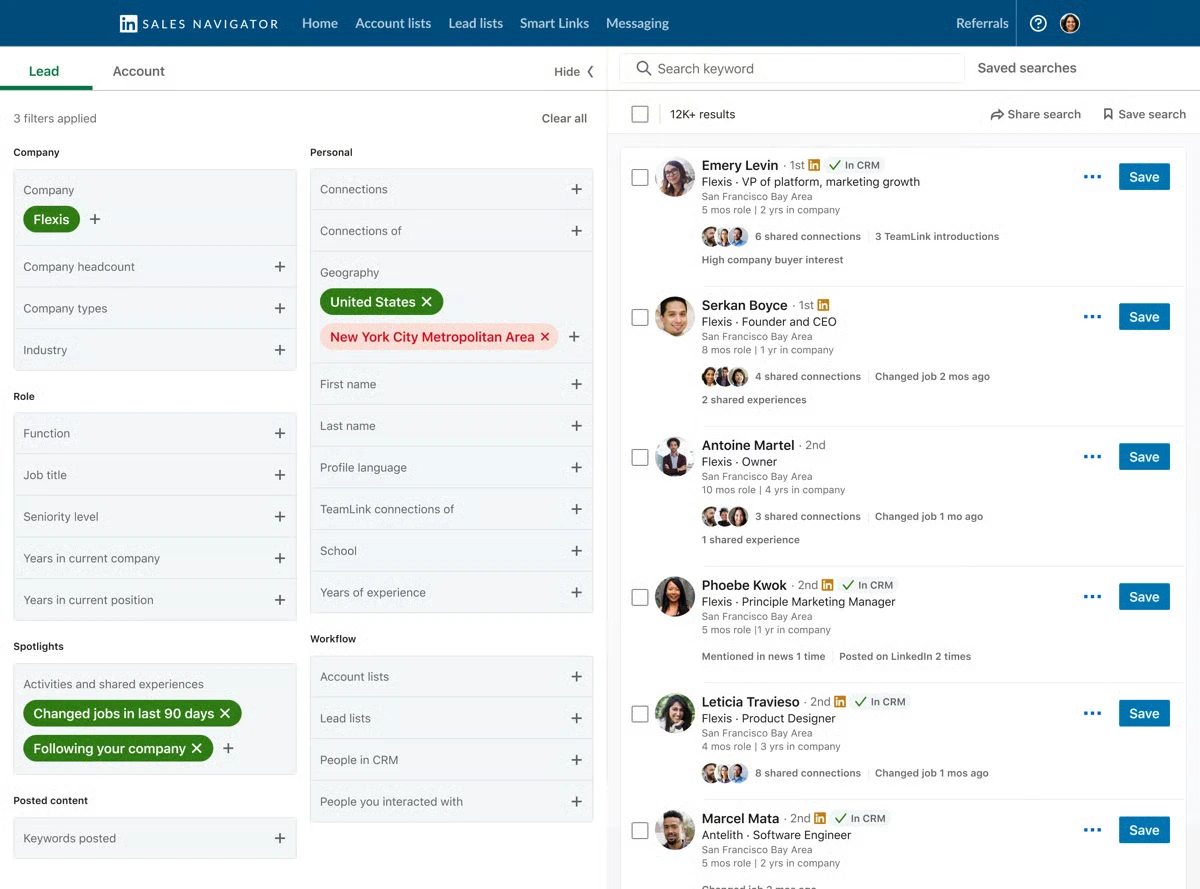
Sales Navigator is LinkedIn's B2B prospecting platform, used by virtually every sales team selling into mid-market and enterprise accounts. For construction sellers, it shines at identifying buying committee members by title, tracking job changes at target accounts, and warming up outreach through mutual connections. It does not provide verified direct dials or business emails, so most teams pair it with a B2B data platform for contact data.
Key features:
Advanced search with 50+ filters including industry, headcount, hiring activity, and tech stack
Job change alerts for tracked accounts and contacts
TeamLink to map mutual connections across the sales team
InMail credits for direct outreach to second- and third-degree contacts
Native CRM sync with Salesforce and HubSpot (Advanced and above)
Pricing:
Three tiers: Core (individual sellers), Advanced (sales teams), and Advanced Plus (enterprise with CRM integration). LinkedIn gates exact pricing behind login or a sales request. 30-day free trial on Core and Advanced.
Best for:
Sellers prospecting into named construction accounts
Teams running referral and warm-intro motions
Pairing with a B2B data platform for verified emails and direct dials
How to qualify construction leads
The qualification framework below filters out the volume of low-fit records that plague construction prospect lists.
1. ICP fit first. Before any outreach, every lead should pass three filters:
Segment. Commercial, residential, heavy and civil, or specialty trade. NAICS 236, 237, or 238 narrows this further.
Size. Headcount and revenue band that matches your average customer.
Geography. Construction is hyper-regional. A national list almost never fits.
2. Trigger event second. A fit account becomes a real lead when something has changed. Triggers that consistently predict buying readiness:
New project announcement or award (especially federal, state, or large private)
Funding round or expansion announcement
Leadership change in a relevant role (CFO, VP Construction, IT Director, Head of Procurement)
Technology adoption signal (newly added Procore, Sage, or other relevant system)
Intent spike on relevant research topics
3. Buying committee third. Commercial construction deals rarely close with a single contact. Map at minimum three roles before the first meeting:
Economic buyer (CFO, VP of Operations, owner)
Technical buyer or specifier (architect, engineer, IT, fleet manager, project manager)
Champion or daily user (foreman, estimator, ops lead)
Quick tip: Multi-threading is not optional here. Single-threaded deals stall when your one contact loses internal sponsorship, so verify at least two contacts per account, and reach them on mobile. Field roles like project managers and superintendents are rarely at a desk, so verified mobile numbers and a short SMS beat desk phones and email in this vertical.
Find construction industry leads with ZoomInfo
Construction outbound lives or dies on whether reps reach the right person at the right firm at the right moment.
ZoomInfo gives go-to-market teams the construction industry leads that actually convert: verified decision-makers at fit accounts, surfaced when intent signals say they are in-market. The org-chart depth then lets reps multi-thread the committee from the first touch.
Talk to our team to see how ZoomInfo fits your construction motion.
FAQs
What is the best source for construction industry leads?
A verified B2B data platform like ZoomInfo. It gives you decision-maker contact data, intent signals, and the org-chart depth commercial construction deals require.
Commercial vs. residential construction leads: what's the difference?
Commercial deals are larger, slower, and close through buying committees of three to five people. Residential deals are smaller and faster, with a single contractor or homeowner as the buyer. The two motions require different tools and different messaging.
How do you generate B2B leads in the construction industry?
Combine three inputs: a firmographic target list filtered by NAICS, size, and region; intent or trigger data; and multi-threaded contact data for the buying committee. Most teams underinvest in data quality and overinvest in channel volume.
How much do construction leads cost?
Most platforms in this space are now custom-quoted. The metric that matters is cost per qualified opportunity, which depends more on data accuracy than headline price.
