
At most companies, sales coaching works like this: a manager listens to a handful of recorded calls, jots down notes, and delivers feedback in a scheduled 1:1. The problem is scale. The average frontline sales manager oversees eight to twelve reps, and there isn't enough time in the week to coach every conversation.
AI sales coaching changes the math. This page covers what it is, how it differs from traditional training, which tools lead the category, and how to pick the right one.
What Is AI Sales Coaching?
AI sales coaching is the use of artificial intelligence to analyze sales conversations, evaluate rep performance, and deliver personalized feedback that helps reps improve. It works across live calls, recorded conversations, and simulated roleplays, scoring reps against defined criteria like talk-to-listen ratio, objection handling, discovery question quality, and adherence to a methodology like MEDDIC or Gap Selling.
Unlike traditional sales training, which happens in scheduled blocks and applies the same content to everyone, AI sales coaching is continuous and individualized. Every rep gets feedback tailored to the specific gaps in their own conversations, delivered close enough to the moment of action that they can apply it on the next call.
The technology typically combines three capabilities:
Conversation intelligence captures what happens on real customer calls. It transcribes the conversation, identifies key moments, tracks competitor mentions, flags risk signals, and scores the call against a defined framework. Managers and reps both get an analyzable record of what was said and how.
AI-powered roleplay lets reps practice without a real prospect on the line. The AI plays a buyer persona, responds dynamically to what the rep says, and scores the simulation on the dimensions that matter. Reps can run the same scenario ten times, fail safely, and only enter live conversations once they have rehearsed.
Skill tracking and analytics turn individual call data into longitudinal performance signals. Sales leaders see which reps are improving on objection handling, which are stuck on discovery, and where coaching investment is paying off versus stalling.
AI sales coaching vs traditional sales training
Traditional sales training is content-driven and scheduled. New hires sit through a curriculum during onboarding, then attend periodic refreshers, methodology certifications, or product launches. It's consistent across the team, but it's also static. A two-day MEDDIC workshop in February doesn't help a rep who keeps fumbling the same objection in October.
AI sales coaching is behavior-driven and continuous. It doesn't replace the curriculum, but it changes what happens between training sessions. A rep finishes a discovery call, the AI scores it within minutes, and they get specific feedback on the two questions they skipped and the buying signal they missed. That feedback is grounded in their actual conversation, not a generalized lesson.
The two work together. Training gives reps the framework. AI sales coaching makes sure they apply it, identifies where they drift, and gives managers the data to coach with precision instead of guesswork.
The 9 best AI sales coaching tools in 2026
The market for AI sales coaching tools has consolidated around a handful of strong platforms, each with a distinct emphasis.
Some lead on conversation intelligence and deal insights, others on roleplay and readiness, others on real-time in-call guidance. Here's how they line up.
Tool | Category | Key Differentiator | Best For |
ZoomInfo | Post-call coaching + conversation intelligence + Agent Teams | Agent Teams runs complete GTM plays end to end, with coaching insights tied to the GTM Context Graph | Revenue teams that want coaching grounded in real account context and automated follow-through |
Gong | Post-call coaching + revenue intelligence | Deep deal analytics and risk scoring across the pipeline | Enterprise sales orgs focused on deal inspection |
Mindtickle | Post-call coaching + simulation | Structured readiness programs with AI roleplay built in | Enablement teams running formal certification tracks |
Allego | Simulation + post-call coaching | Unscripted AI roleplay in 32 languages and 71 voices | Teams that want roleplay as a daily habit |
Highspot | Post-call coaching + enablement | Unifies content, training, and coaching in one platform | Sales orgs consolidating their enablement stack |
Dialpad | Real-time coaching | Live in-call guidance with battle cards and suggested responses | Teams that need help reps in the moment, not after the call |
Seismic | Post-call coaching + enablement | Enterprise-grade enablement with embedded skill coaching | Large sales orgs running global enablement programs |
Hyperbound | Simulation | AI-powered roleplay focused on SDR and outbound practice | SDR teams that want repeatable, scenario-based practice |
Salesforce Agentforce | Real-time + simulation | CRM-native roleplay using real customer data from Salesforce | Salesforce-first teams that want coaching inside the CRM |
1. ZoomInfo

ZoomInfo Chorus is the conversation intelligence layer of the ZoomInfo GTM platform. It records and transcribes every customer call, scores reps against defined criteria, tracks competitor mentions, and flags risksacross the pipeline. The output is a structured view of what's happening in your conversations and where coaching investment will pay off. Beyond insights, Agent Teams—available in GTM Studio—can run complete plays from a coaching signal: when a rep misses a key follow-up, the Agent Team drafts the message, routes the task, and tracks completion.
What separates Chorus from standalone conversation intelligence tools is the data foundation behind it. Coaching insights connect to the GTM Context Graph, which links 500M+ verified contacts and 100M+ companies to your CRM records and buyer intent signals. The feedback reps get is rooted in real account data, not a generic transcript analyzed in isolation. When coaching surfaces a gap, Agent Teams can act on it—turning a missed objection into a follow-up play that runs end to end within controls you set. Chorus is also aTrustRadius Buyer's Choice award winner.
Key features:
Automatic transcription, scoring, and key moment detection across every recorded call
Coaching scorecards with personalized 1:1 feedback and peer review workflows
Smart Playlists that curate top-performer calls for new hire ramp and virtual shadowing
Competitor mention and risk signal tracking with deal-level rollups
Coaching insights tied to the GTM Context Graph and verified buyer data
Native integrations across Salesforce, HubSpot, and the full ZoomInfo platform
Pricing: Consumption-based. Cost is tied to platform usage rather than rigid per-seat licensing. Free trial available.
2. Gong
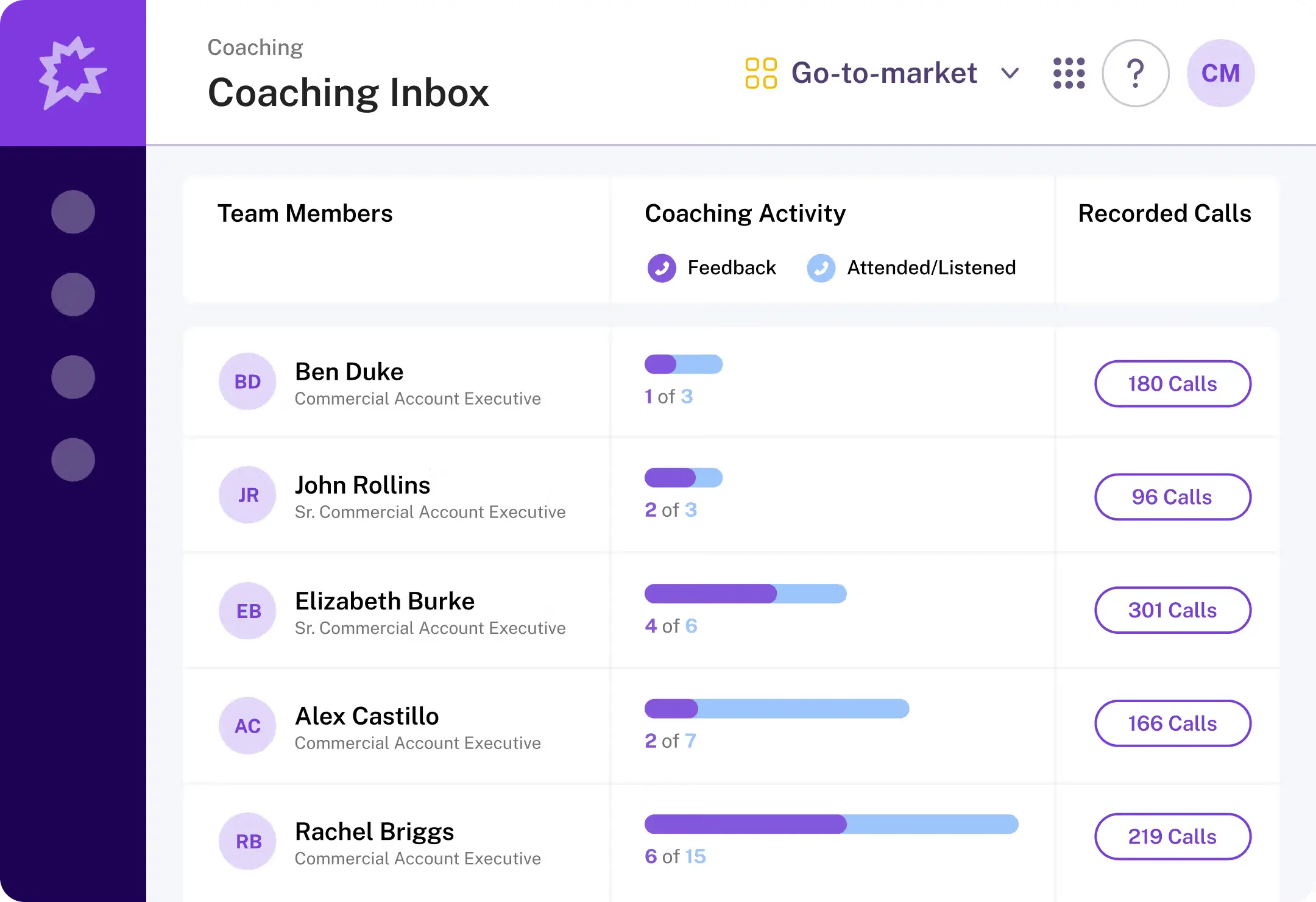
Gong is the most widely recognized conversation intelligence platform in B2B sales, known for deep deal analytics and revenue intelligence. It records and analyzes calls, surfaces deal risk, and gives sales leaders visibility into what's happening across the pipeline at the conversation level.
For coaching, Gong gives managers a structured way to review calls, leave time-stamped feedback, and track rep performance on dimensions like talk ratio, question rate, and key topic coverage. It's strongest as a deal inspection and revenue intelligence tool, with coaching as one of several use cases on the platform.
Key features:
Call recording, transcription, and analysis across video, voice, and email
Deal intelligence with risk scoring at the opportunity level
Coaching scorecards and time-stamped manager feedback
Salesforce and HubSpot integrations with automated activity sync
Library of best-performing calls for shared learning
Pricing: Custom, available on request.
3. Mindtickle
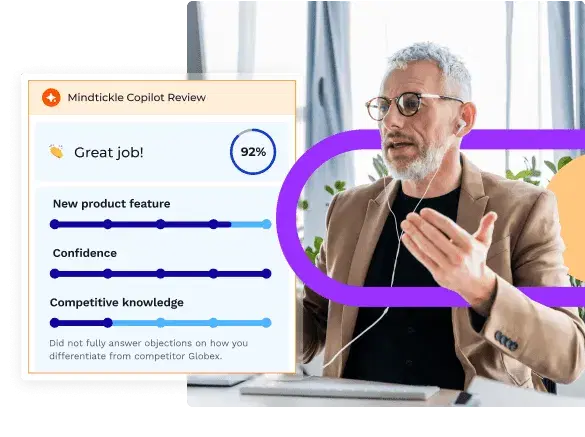
Mindtickle is a sales readiness platform with AI coaching embedded across the rep lifecycle. It's built for enablement teams that want a structured approach to onboarding, certification, ongoing skill development, and pre-call practice, all tied together by data on rep readiness.
AI roleplay is one of its strongest capabilities. Reps practice scenarios that adapt as the conversation progresses, get scored on the criteria managers define, and receive feedback that ties back to specific skill rubrics. For teams running formal readiness programs, Mindtickle gives leadership a clear view of where each rep stands and what they need next.
Key features:
AI roleplay with adaptive buyer personas and skill-based scoring
Onboarding and certification tracks with progress tracking
Conversation intelligence on live calls with coaching feedback
Skill scorecards that map performance to defined competencies
Salesforce and HubSpot integrations with readiness data sync
Pricing: Custom, available on request.
4. Allego
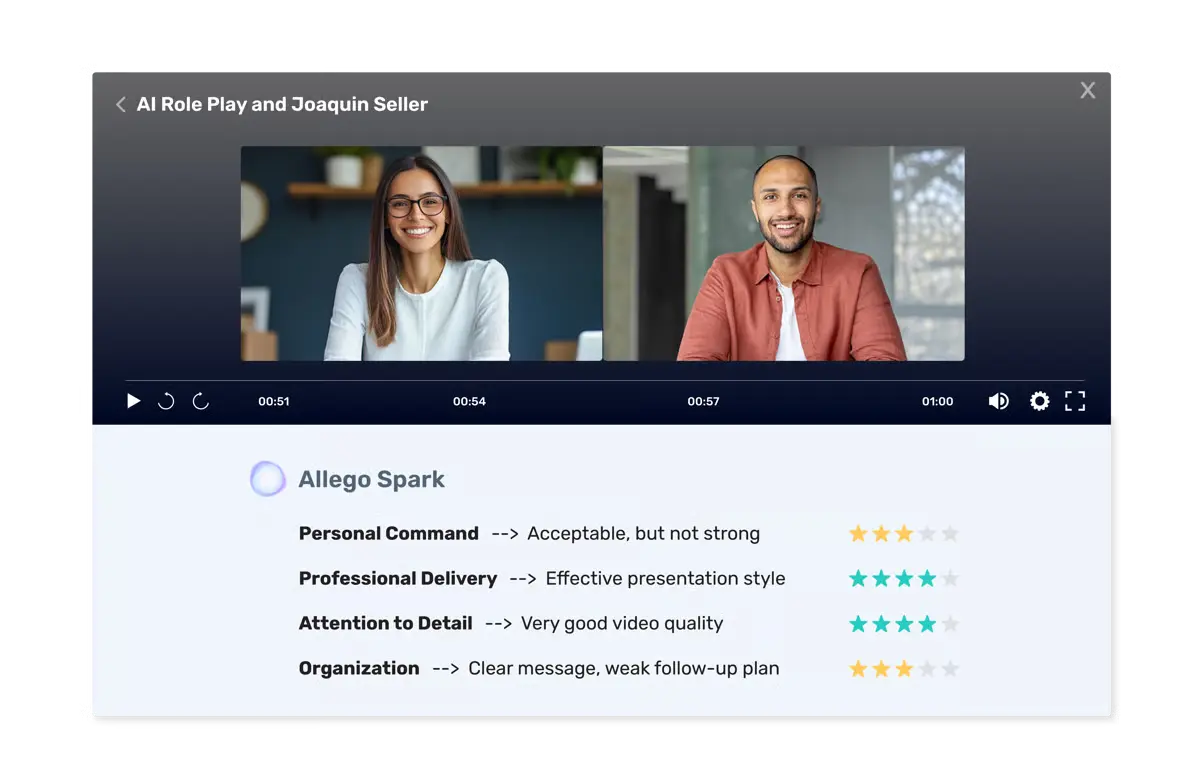
Allego is a revenue enablement platform with a strong focus on practice, roleplay, and readiness. Its AI roleplay supports unscripted simulations across 32 languages and 71 voices, with scoring rubrics that align coaching to the same standards across roles and regions.
Allego works well for teams that want rehearsal to be a daily habit rather than a one-time training activity. Reps practice high-pressure conversations like objection handling, messaging rollouts, and hot seat drills, get instant structured feedback, and build a record of skill progression over time. Allego was named a Leader in the 2025 Gartner Magic Quadrant for Revenue Enablement Platforms.
Key features:
AI roleplay with adaptive scenarios in 32 languages and 71 voices
Scoring rubrics that apply shared coaching standards across the team
Skill signals that track growth, gaps, and coaching priorities over time
Readiness dashboards connecting practice to live performance
Salesforce and HubSpot integrations
Pricing: Custom, available on request.
Compare Allego vs Seismic vs ZoomInfo.
5. Highspot
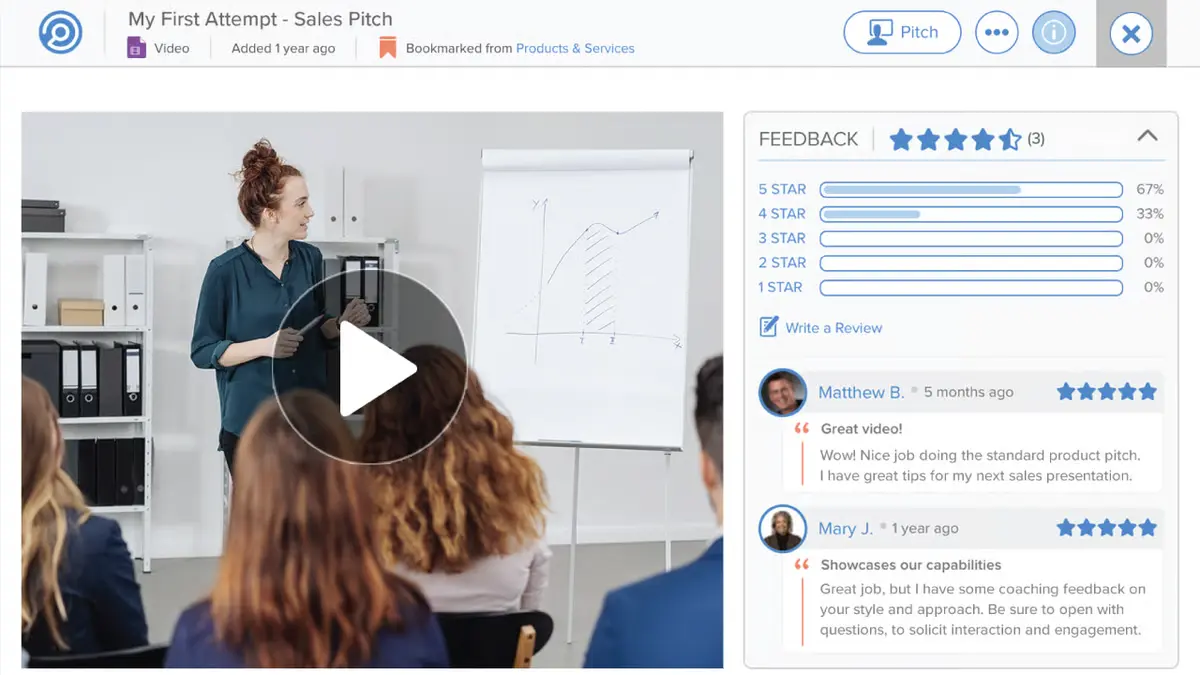
Highspot is a sales enablement platform that unifies content management, training, and coaching in one place. Its coaching capabilities include scorecard-based call reviews, deal inspection intelligence, and performance analytics that link coaching activity to revenue outcomes.
For organizations that want content, training, and coaching to live under one platform rather than across multiple point solutions, Highspot is a strong fit. Coaching is one layer of a broader enablement system, so it works best when the team is also adopting Highspot for content delivery and training.
Key features:
Coaching scorecards with structured manager feedback workflows
Deal inspection intelligence tied to enablement content effectiveness
Performance analytics linking coaching to revenue outcomes
Native conversation intelligence on recorded calls
Salesforce and HubSpot integrations with activity sync
Pricing: Custom, available on request.
See how Highspot compares to Gong and ZoomInfo.
6. Dialpad
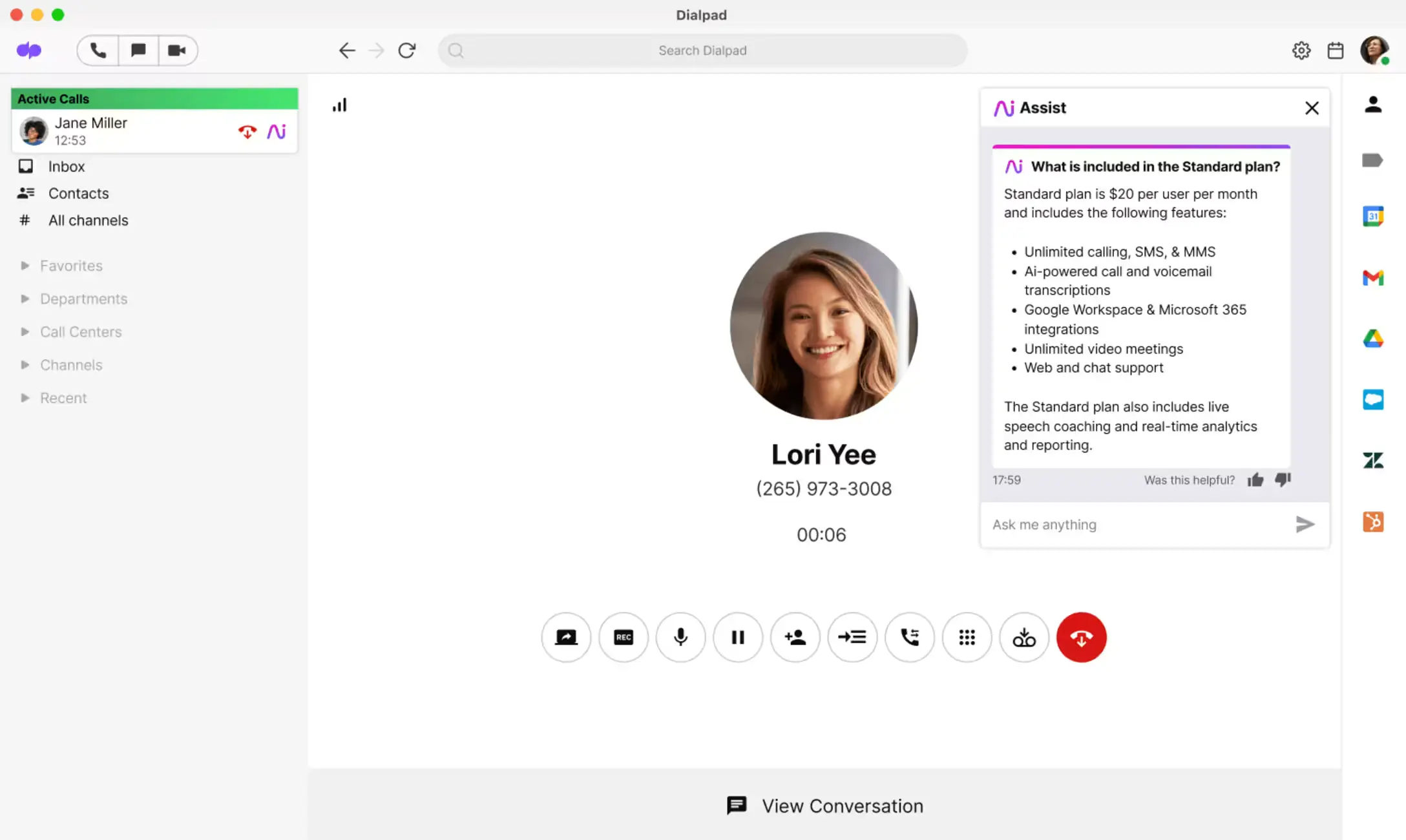
Dialpad is a unified communications platform with AI-powered coaching built directly into the calling experience. Its core differentiator is real-time guidance. While a rep is on a live call, Dialpad surfaces battle cards, suggested responses, and live transcription, helping less experienced reps handle conversations they would otherwise struggle with.
It's the strongest option in the lineup for in-call coaching specifically. Post-call analytics, sentiment scoring, and coaching reports round out the platform, but the real-time layer is where it stands apart.
Key features:
Real-time call coaching with live battle cards and suggested responses
Live transcription and sentiment analysis during active calls
Post-call AI summaries and coaching insights
Built-in voice, video, and messaging on a unified platform
Salesforce and HubSpot integrations
Pricing: Conversation-based pricing through a pool of AI Agent Credits. Credits are consumed only when the AI delivers value on a billable conversation. Custom plans available.
See how Dialpad compares to ZoomInfo.
7. Seismic
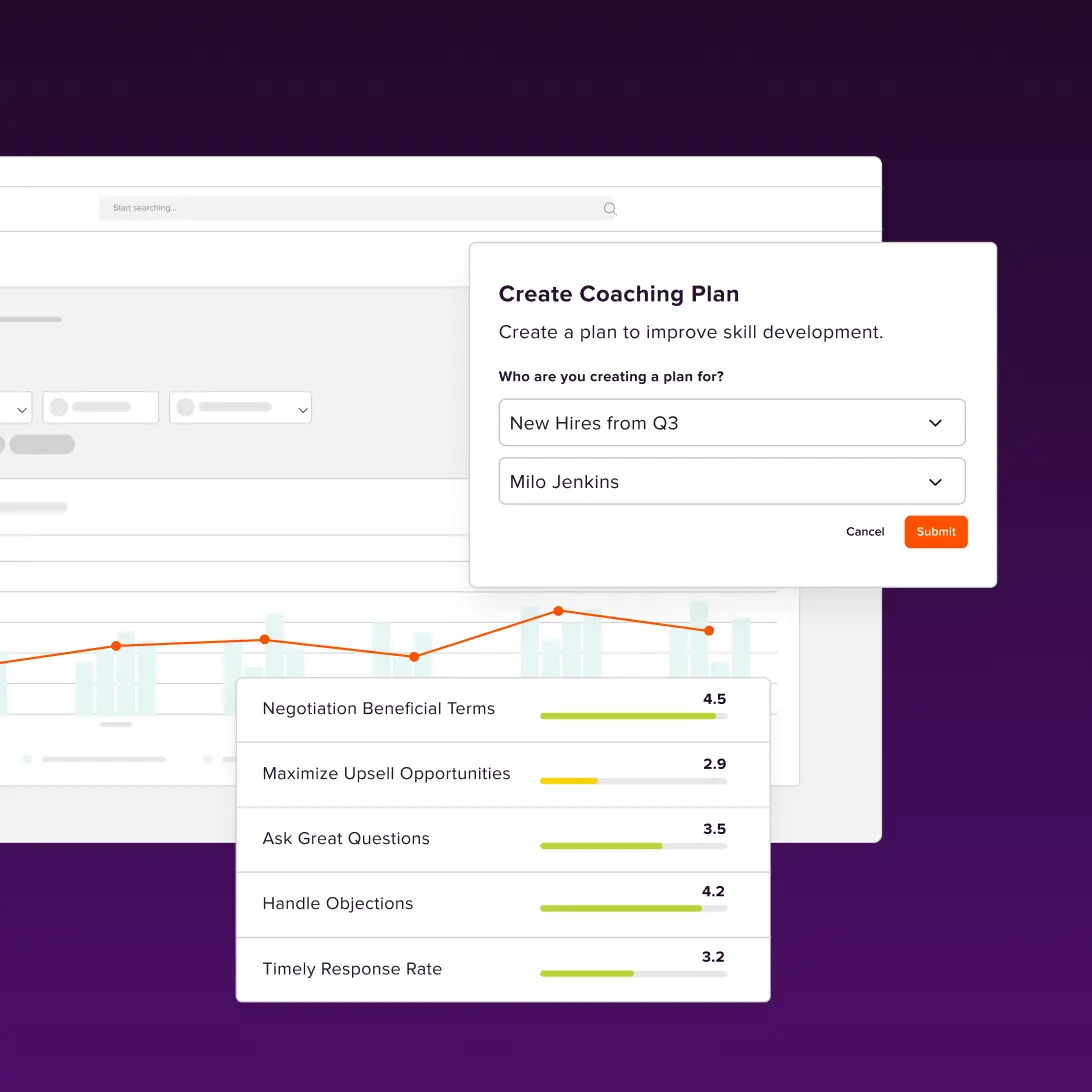
Seismic is an enterprise-grade revenue enablement platform with embedded AI coaching across the rep lifecycle. It pairs content management and training with skill coaching, making it a strong fit for large global sales organizations that need consistency across regions, languages, and product lines.
Coaching in Seismic is tied to broader enablement programs rather than standing alone. Managers run structured coaching plans, reps practice scenarios that align with active content and messaging, and skill development connects directly to the enablement work happening across the organization. For teams running global enablement at scale, Seismic gives leadership a unified view of readiness and performance.
Key features:
AI-powered call analysis with coaching feedback on recorded conversations
Practice scenarios tied to active enablement content and messaging
Skill development tracking across roles, regions, and product lines
Manager coaching plans with structured workflows
Salesforce and HubSpot integrations with content engagement analytics
Pricing: Custom, available on request.
See the detailed Seismic review.
8. Hyperbound
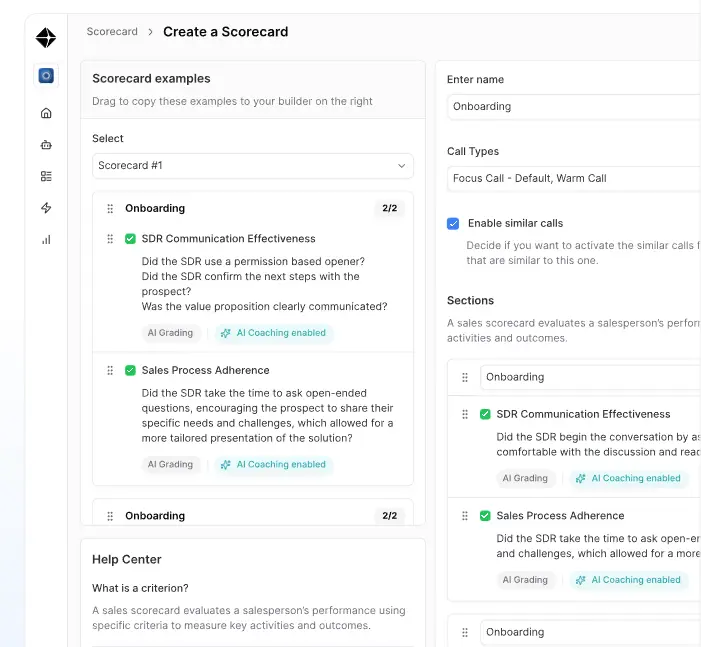
Hyperbound is a focused AI roleplay platform built for sales practice. Reps run simulated calls against AI buyer personas, get scored on how they handle objections, discovery, and pitch delivery, and build skills without burning real pipeline. The platform's emphasis is repetition and realism rather than broader enablement or post-call analysis.
It works well for SDR and BDR teams that need a high-volume, scenario-based way to practice cold outreach and discovery calls. Managers can build custom personas and scenarios that reflect their actual ICP, so practice maps to live conversations rather than generic templates.
Key features:
AI buyer personas customizable by industry, role, and scenario
Scenario libraries covering cold calls, discovery, objection handling, and demos
Performance scoring with manager review workflows
Team leaderboards and skill progression tracking
Salesforce and HubSpot integrations
Pricing: Custom, available on request.
9. Salesforce Agentforce
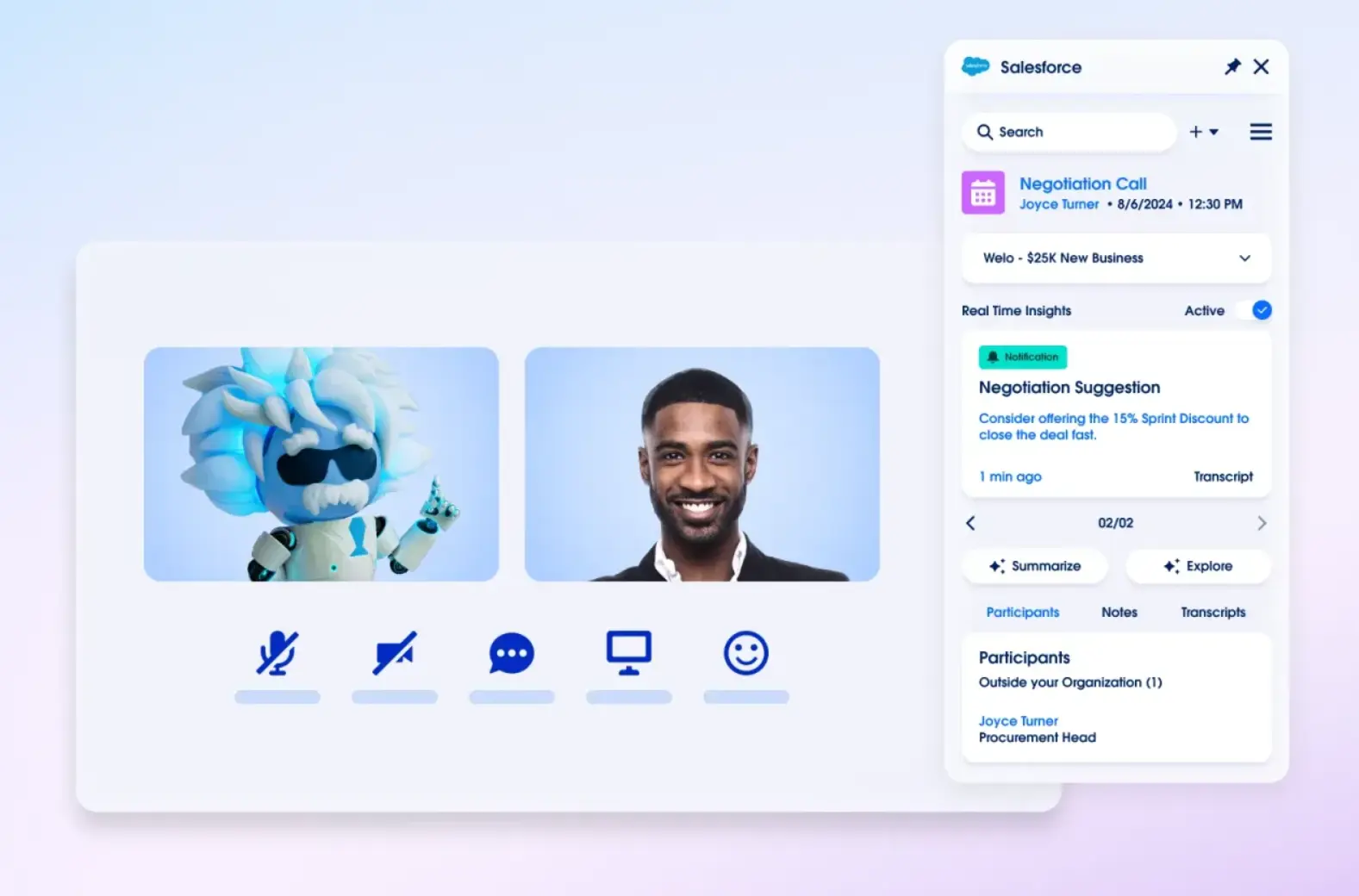
Salesforce Agentforce brings AI coaching directly into the Salesforce CRM. Reps practice with AI-powered roleplay that pulls real customer data from their Salesforce instance, so scenarios reflect actual accounts and deal context. Coaching activity stays connected to pipeline and opportunity records without requiring a separate platform.
For teams already operating inside the Salesforce ecosystem, Agentforce is a natural fit because it removes the need to push coaching data between systems. The tradeoff is depth: specialist platforms like Chorus or Gong typically offer richer call analysis and broader coaching workflows than what's currently available in Agentforce.
Key features:
AI roleplay grounded in real CRM customer data
Native Salesforce integration with no third-party platform required
Coaching insights tied to pipeline and opportunity records
Autonomous AI agents for guided next-best-action recommendations
Available across Sales Cloud editions
Pricing: Included in select Salesforce editions.
How to choose the right AI sales coaching tool
The category looks crowded, but the choice usually comes down to a few clear questions about what your team needs most and how coaching fits into the rest of your sales motion.
Start with the coaching gap you're trying to close
Different problems call for different platforms:
If new reps take too long to ramp, prioritize a platform with strong roleplay and structured readiness over a deal inspection tool.
If average reps aren't improving and deals slip without anyone seeing why, conversation intelligence is the right starting point.
If reps fumble live calls because they don't know what to say in the moment, real-time coaching is the use case to lean into.
Consider how coaching connects to the rest of your revenue stack
Standalone coaching platforms can deliver strong call analysis, but the insights often stay siloed in their own dashboards. The teams that get the most from AI sales coaching are the ones whose coaching data flows into pipeline, forecasting, and account planning.
When evaluating platforms, ask specifically how coaching outputs reach the systems where reps and managers already work, and what verified account data is behind the coaching feedback.
Evaluate the underlying data quality
AI sales coaching is only as accurate as the conversations it analyzes and the customer data it ties them to. If the platform can't reliably match calls to the right account record, attribute insights to the right deal stage, or surface the right competitive context, the coaching feedback degrades quickly. Platforms built on a verified data foundation produce more useful signal than platforms reasoning over fragmented CRM data.
Think about adoption realities
A coaching platform that requires reps to log into a separate tool, navigate a separate dashboard, and review feedback in a workflow disconnected from their day-to-day will struggle with adoption. The strongest implementations are the ones where insights show up where reps already work:
In Slack, alongside the rest of their daily communication
In the CRM, attached to the deals they're actively working
In the same workspace they use for account research and prep
Look at how managers are supported
Coaching is still a human activity. The platform should make managers more effective, not replace them. That means giving them prepared call reviews, prioritized rep lists, and ready-made coaching sessions rather than dumping raw transcripts on their desk. The best platforms reduce the prep work managers have to do, so they spend their time coaching instead of digging through call libraries.
Factor in the methodology you run
If your team is built on MEDDIC, Gap Selling, Sandler, or another defined framework, the platform should support scoring calls against that framework specifically. Generic call analysis is less useful than coaching tied to the language and stages your reps already use.
Make AI coaching part of your revenue motion
AI sales coaching isn't a future investment anymore. The teams pulling ahead in 2026 are the ones already running it continuously, using it to ramp new hires faster, raise the floor on average performers, and give sales leaders visibility into why deals move or stall at the conversation level. In ZoomInfo's State of AI in Sales & Marketing survey, sellers using AI at least once a week reported 81% shorter deal cycles, 73% larger deal sizes, and 80% higher win rates.
ZoomInfo Chorus gives revenue teams that capability inside the broader ZoomInfo GTM platform. Calls are analyzed, insights connect to verified account context through the GTM Context Graph, and coaching becomes part of the same intelligence layer that drives the rest of the revenue motion. With Agent Teams, those insights turn into action: when a call reveals a risk signal or coaching gap, coordinated agents can run the follow-up play from signal to outreach, keeping the full context from the conversation.
Talk to our team and see what AI sales coaching looks like when it's built on verified data.
Frequently asked questions
What is the difference between AI sales coaching and conversation intelligence?
Conversation intelligence is the technology that records, transcribes, and analyzes sales calls. AI sales coaching uses that analysis, along with roleplay and skill tracking, to deliver personalized feedback that helps reps improve. Conversation intelligence is one input. Coaching is the outcome.
Can AI sales coaching replace sales managers?
No. It handles the volume and consistency problem that managers can't solve alone, like reviewing every call and scoring it against defined criteria. Managers still do the judgment work, like deciding what to prioritize, navigating individual rep dynamics, and making strategic coaching calls. AI makes managers more effective. It doesn't replace them.
How long does it take to see results from AI sales coaching?
Teams typically see measurable improvement in ramp time and call quality within one to two quarters. The strongest leading indicator is engagement. If reps and managers are actually reviewing the insights and acting on them, performance gains follow within a few months. If the platform sits unused, no result is coming.
Does AI sales coaching work for outbound prospecting calls as well as later-stage deal calls?
Yes. The use cases differ. For outbound calls, coaching focuses on opener effectiveness, objection handling, and meeting conversion. For later-stage deal calls, it focuses on discovery quality, multi-threading, competitive positioning, and risk signals. Most platforms cover both, with different scorecards for each stage.
What data sources does AI sales coaching rely on?
Recorded calls and meetings, CRM data, email and engagement signals, and where available, third-party intelligence like buying intent and account context. Platforms tied to a verified data foundation produce more reliable insights than platforms reasoning over CRM data alone, since CRM data is incomplete in most organizations.
