
What is a B2B contact database?
B2B contact data goes out of date. People change jobs, companies restructure, and phone numbers go stale. For sales teams, the cost is concrete: bounced emails hurt sender reputation, wrong numbers burn calling blocks, and reps chase contacts who left months ago.
A B2B contact database provides verified business contact information (emails, direct-dial phone numbers, job titles, and company details) so you can find and reach decision-makers without manual research. Static databases give you a snapshot that starts decaying the moment you export it. Intent-enriched platforms add intent data and buying signals to contact records, so you know who to call and when they're researching.
Teams building AI prospecting workflows can connect verified contacts, firmographics, and buying signals to their own agents through GTM AI, which gives your agent, terminal, or application the same connected context through MCP, a CLI, or a REST API.
ZoomInfo publishes this guide, and ZoomInfo is on the list. Every provider is judged on the five criteria covered below: data quality and verification, coverage, integrations, compliance, and pricing. Vendor figures come from each vendor's own site or announcements, checked in October 2026.
Check out our handy video to learn more:
A modern B2B contact data provider should deliver four core capabilities:
Verified emails, direct-dial phone numbers, job titles, and org-chart relationships that show who reports to whom
Firmographic and technographic data like revenue, employee count, and the software a company runs, for technographic targeting at scale
Buyer signals tracking research behavior, funding announcements, hiring spikes, and technology changes
Native connections to Salesforce, HubSpot, and sales engagement platforms like Outreach and Salesloft
The right platform supports the whole go-to-market motion, from finding high-fit accounts to reaching buyers while they're researching. That's the difference between a contact list and a sales prospecting engine.
Top B2B contact database providers compared
The table below compares 11 B2B database providers on coverage, key strength, pricing, free options, and best-fit buyer. Use it to narrow your shortlist before reading the profiles. For a wider view, our guide to the best B2B data providers for GTM teams covers more platforms and evaluation criteria.
Platform | Database coverage | Key strength | Pricing model | Free option | Best for |
|---|---|---|---|---|---|
ZoomInfo | 500M contacts, 100M companies | GTM Context Graph and 300+ human researchers | Free to start with consumption credits based on usage | ZoomInfo Lite, a permanent free plan | Mid-market and enterprise revenue teams |
Apollo | 240M+ contacts, 30M+ accounts | Data, sequences, and dialer in one tool | Per seat; Basic $49 a month billed annually | Free plan | SMB and mid-market teams |
Cognism | Hundreds of millions of profiles; 10M+ phone-verified contacts | Phone-verified mobiles and European data | Quote-based Standard and Pro plans | Free data sample | EMEA-focused teams |
Lusha | 515M+ contacts, 29M+ companies | Browser extension and APIs | Plans from $37.45 a month billed yearly | Free plan, 40 credits a month | Individual sellers and small teams |
LinkedIn Sales Navigator | 1B+ LinkedIn members | Research and InMail inside LinkedIn | Per license; Core $119.99 a month or $1,079.88 a year | Free trial for eligible members | Social selling and relationship mapping |
Seamless.AI | 1.8B+ verified business emails, 414M+ phone numbers | Real-time contact search | Quote-based | Free for up to 50 credits | High-volume prospecting |
HubSpot data enrichment (formerly Clearbit) | 200M+ company and buyer profiles | Enrichment inside HubSpot | Included in paid HubSpot plans; buyer intent uses HubSpot Credits | None; needs a paid HubSpot Starter plan or above | Marketing teams on HubSpot |
UpLead | 200M+ leads | 95% accuracy with refunds for bounces | Essentials $99 a month, or $74 a month billed annually | 7-day free trial, 5 credits | Mid-market teams that want public pricing |
Lead411 | Not published | Sales triggers and Bombora intent | Export-credit plans; Bombora on annual Pro and Enterprise | 7-day free trial, 50 exports | Event-driven outreach |
RocketReach | 700M profiles, 60M companies | Lookups plus built-in sequences | Essentials $69 a month, or $399 a year | Free account, 5 lookups | Individual lookups |
Leadfeeder (formerly Dealfront) | 400M verified contacts, 60M companies | Company-level visitor ID, EU-hosted | Discover from €79 a month billed annually | Free Lite plan, up to 100 companies a month | GDPR-first European teams |
Not every platform fits every buyer. Use this quick-match guide to find your starting point based on how your team sells:
Mid-market and enterprise revenue teams that want verified data, intent signals, and workflow in one platform: ZoomInfo
SMB founders and lean teams doing their own outbound in one tool: Apollo
Teams calling into Europe who want phone-verified mobiles: Cognism
Individual sellers who want fast lookups on a free or low-cost plan: Lusha
Social selling and relationship mapping inside LinkedIn: LinkedIn Sales Navigator
High-volume teams looking up contacts on demand: Seamless.AI
Marketing teams already running HubSpot: HubSpot data enrichment (formerly Clearbit)
Mid-market teams that want public pricing and an accuracy guarantee: UpLead
Event-driven outreach with triggers and Bombora intent: Lead411
Individual lookups with built-in sequences: RocketReach
European teams that want GDPR-first website visitor identification: Leadfeeder
The buying signals each platform surfaces vary. Read the profiles below to see what each B2B contact database delivers.
1. ZoomInfo
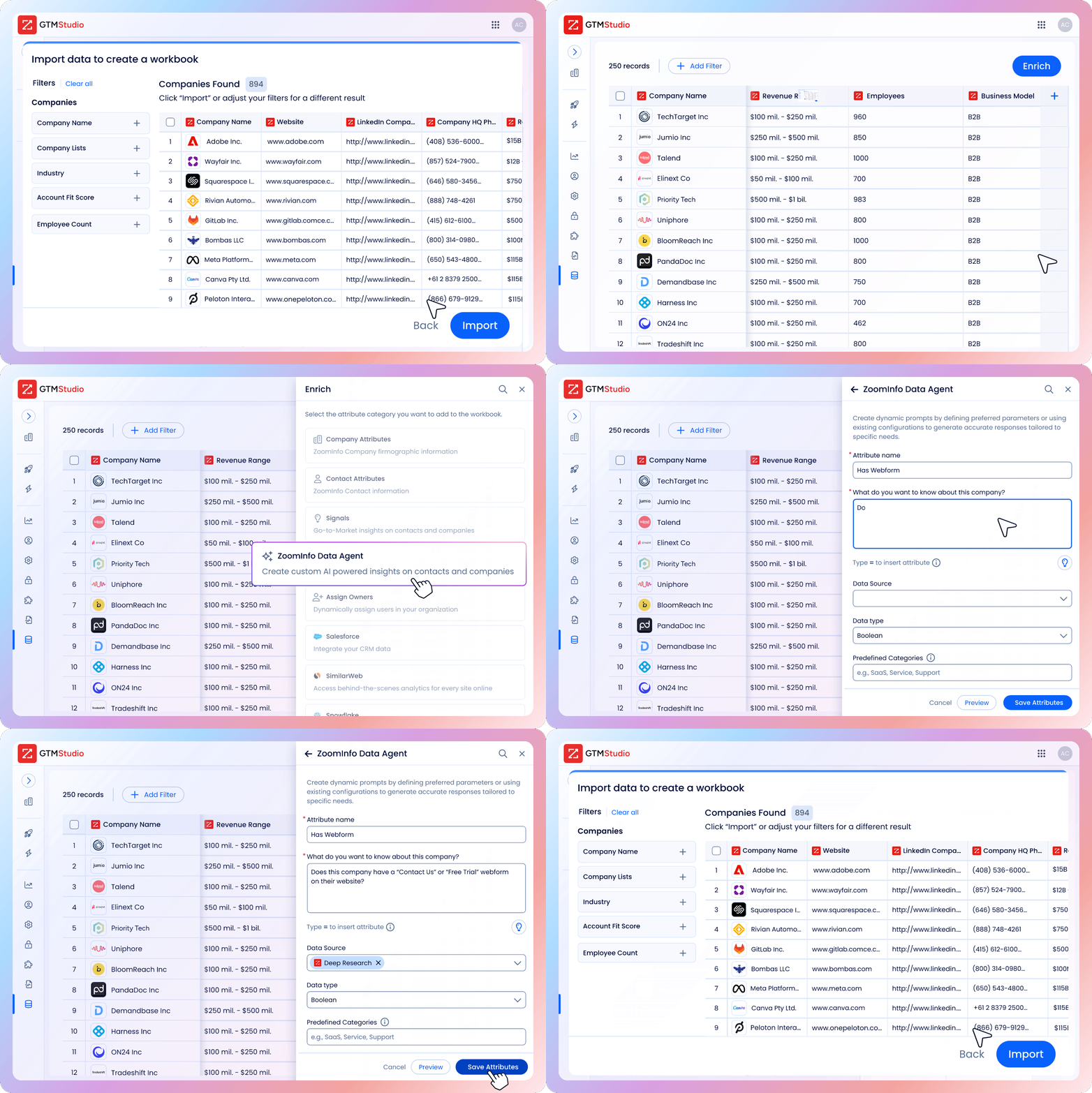
ZoomInfo is an all-in-one AI GTM Platform with verified data on 500M contacts and 100M companies, including 135M+ verified phone numbers, 120M+ direct dials, and 200M+ verified business emails. The GTM Context Graph reasons across ZoomInfo data, your CRM, conversations, and buying signals to show why accounts are moving. Sellers build lists with 300+ search filters that target by industry, revenue, technology, and intent signals.
GTM Workspace gives sellers AI agents for account research, meeting prep, and deal prioritization. Its Pulse Feed surfaces up to 1,000 daily signals across 15+ signal types, including buying intent, job changes, funding, hiring activity, and competitive research.
GTM Workspace integrates bidirectionally with Salesforce, HubSpot, and Microsoft Dynamics. ZoomInfo Operations handles data enrichment of existing records and prevents duplicates at the point of entry. AI handles deduplication, 300+ human researchers verify records, and ZoomInfo reports a 96% email deliverability rate.
ZoomInfo is trusted by 35,000+ companies and was named a Leader in the 2025 Gartner Magic Quadrant for Account-Based Marketing Platforms, its second year in a row. It holds ISO 27001, ISO 27701, SOC 2 Type II, TRUSTe GDPR, and TRUSTe CCPA certifications. For raw data feeds, Data as a Service delivers ZoomInfo data into your own infrastructure, and GTM AI connects the same data to Claude, ChatGPT, Codex, Cursor, and other agents through MCP, a CLI, or a REST API.
Key features:
Intent data showing which accounts are researching topics related to what you sell
Org charts for mapping buying committees
GTM Workspace AI agents for account research, meeting prep, and deal prioritization
300+ search filters, including technology stack, funding, and buyer intent signals
Chorus conversation intelligence that captures and analyzes customer calls, meetings, and emails
Automated enrichment that fills missing CRM fields
Custom datasets through ZoomInfo Data Services
Results from ZoomInfo customers
Outreach (direct dials): Outreach increased connect rates 7x within three weeks of adding ZoomInfo's direct dials.
Spekit (Chorus and account scoring): Spekit boosted sales efficiency with ZoomInfo: opportunities at higher-scoring accounts were 43% more likely to turn into qualified pipeline and moved 58% faster on average.
Smartsheet (FormComplete): On its highest-volume demo form, Smartsheet saw an 84% increase in MQLs and a 26% increase in opportunity rate with FormComplete.
Pricing
Free to start with consumption credits based on usage.
Limitations
Best suited for mid-market to enterprise teams. SMB buyers may find the feature depth exceeds their current needs.
Request a demo to see how ZoomInfo fits your team's workflow.
2. Apollo
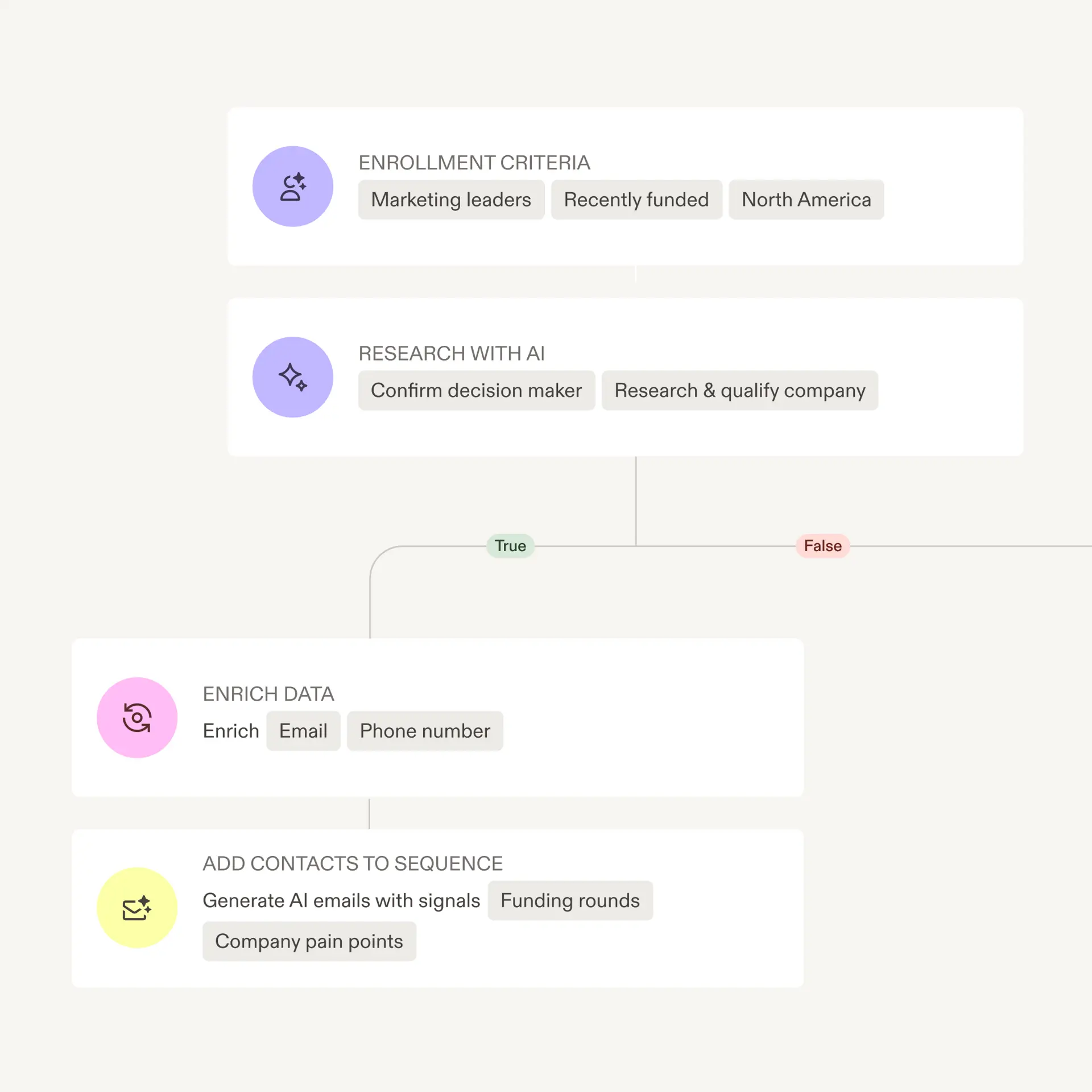
Apollo calls itself an AI GTM system, with prospecting data, multichannel sequences, a dialer, and deliverability tools in one interface. It lists 240M+ contacts and 30M+ accounts and says its emails pass a seven-step verification process for a 98% accuracy rate.
Search filters cover job title, company size, industry, and location, and you can launch sequences from the same lists. The dialer supports local presence and call recording, and Apollo MCP connects the data to AI assistants.
Key features:
240M+ contacts and 30M+ accounts
Multichannel sequences across email, calls, and social steps
Dialer with local presence and call recording
Chrome extension for company websites, your CRM, and Gmail
Apollo MCP for AI assistants and agents
Free plan with 900 credits per seat per year
Pricing
Apollo's pricing includes a free plan with 900 credits per seat per year. Paid plans start at $49 per seat per month billed annually (Basic), with Professional at $79 and Organization at $119 (minimum three seats).
Limitations
Apollo builds its data from a contributor network, web crawling, email reply and bounce tracking, and third-party providers, so test accuracy in your target segments before you commit. Teams that need to fill gaps can add data enrichment tools.
How Apollo compares against ZoomInfo
Apollo's free plan and public per-seat pricing suit SMB teams and individual sellers who want prospecting, sequencing, and a dialer in one tool without an enterprise contract.
ZoomInfo's edge is scale and context: 500M contacts and 100M companies against Apollo's 240M+ contacts and 30M+ accounts, with the GTM Context Graph adding CRM, conversation, and buying-signal context and 300+ human researchers verifying records.
See the Apollo vs. ZoomInfo all-in-one platform comparison for the full head-to-head.
3. Cognism
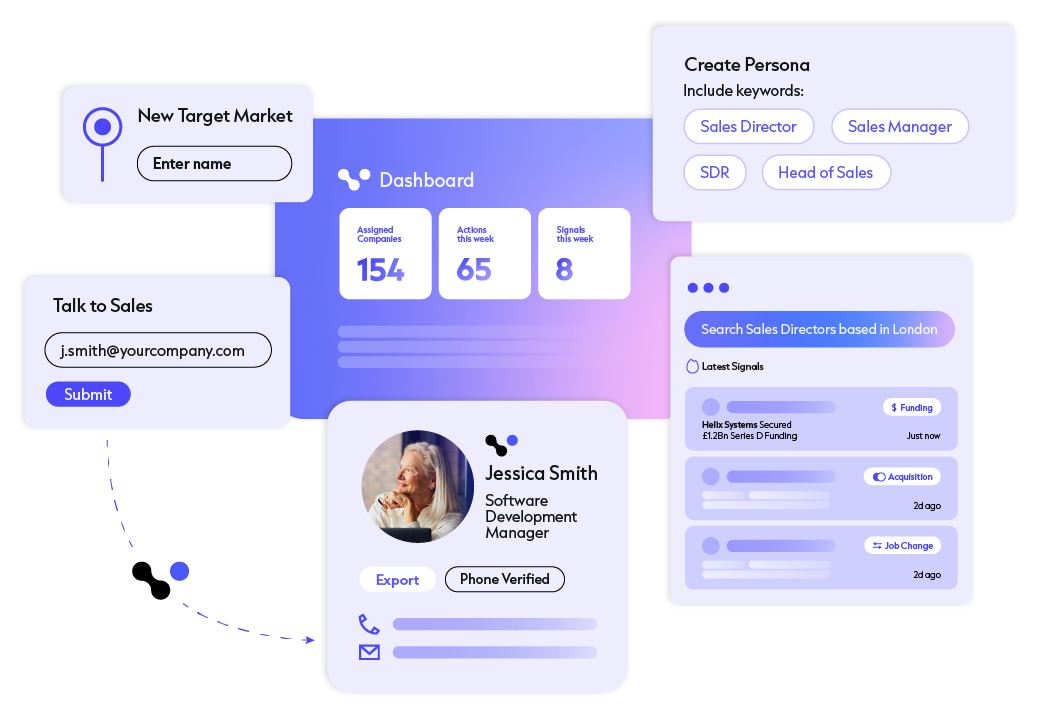
Cognism sells B2B contact data built around Europe and describes its database as "hundreds of millions of company and contact profiles." Its Diamond Data mobiles are phone-verified: Cognism calls the numbers to confirm the right person picks up. It cross-checks its data against 15 DNC lists globally and lists over 10M phone-verified contacts.
Director-level and above data is refreshed on a 30-day basis. The platform integrates with Salesforce, HubSpot, Outreach, and Salesloft, and its Chrome extension works on LinkedIn, Sales Navigator, and company websites.
The Pro plan adds Bombora intent data (up to 12 topics from a library of over 11,000), and both plans include firmographic, technographic, and signal-based filters plus MCP and API access. Cognism's security page lists ISO 27001, ISO 27701, SOC 2 Type II, GDPR, and CCPA.
Key features:
Phone-verified mobile numbers through Diamond Data
DNC screening against 15 lists globally
Director-level and above data refreshed every 30 days
Bombora intent data on the Pro plan
Firmographic, technographic, and signal-based filters
Chrome extension for LinkedIn and company websites
MCP and API access
Pricing
Cognism's pricing is quote-based with Standard and Pro plans, five seats included, and one credit per revealed contact. CRM Enrichment and Data-as-a-Service are priced separately.
Limitations
Bombora intent is on the Pro plan only, and prices aren't public, so you'll need a sales call to compare costs.
How Cognism compares against ZoomInfo
Cognism's phone-verified mobiles and European focus suit outbound teams calling into Europe.
ZoomInfo's edge is scale: 135M+ verified phone numbers and 120M+ direct dials alongside 200M+ verified business emails, WebSights visitor identification, and Chorus conversation intelligence on one platform.
See the Cognism vs. ZoomInfo comparison for the full head-to-head.
4. Lusha
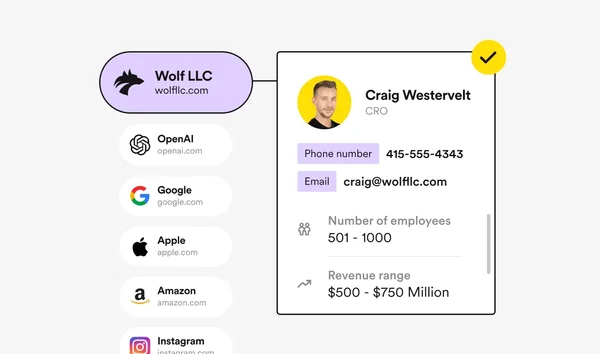
Lusha lists 515M+ verified contacts and 29M+ companies, enriched with 26 buying signals refreshed weekly. Lusha Workspace is where sellers search, enrich, and build lists, and the browser extension shows contact details on LinkedIn profiles and company sites.
Lusha uses a credit-based pricing model: revealing an email costs 1 credit and a phone number 5. Its APIs cover search and enrichment, prospecting, signals, and buying groups, and the Lusha MCP server connects the data to AI tools.
Lusha suits individual sellers and small teams that want quick lookups and simple list building, with bulk enrichment included from the Starter plan.
Key features:
515M+ contacts and 29M+ companies
Browser extension for LinkedIn and company websites
Lusha Workspace for search, enrichment, and lists
26 buying signals, including job changes, promotions, and hiring surges
APIs and an MCP server
Bulk enrichment from the Starter plan
Free plan with 40 credits a month
Pricing
Free plan with 40 credits a month. Starter costs $37.45 a month billed yearly ($49.90 monthly), Pro $52.45 ($69.90), and Premium $299.95 ($399.90). Each plan includes a set number of seats, and Scale is custom-priced.
Limitations
Lusha doesn't automatically refund credits for data that turns out to be inaccurate, so check a sample in your target segments first.
How Lusha compares against ZoomInfo
Lusha's free plan and low starting price suit individual sellers and small teams who want quick lookups without an enterprise contract.
ZoomInfo's edge is company depth and context: 100M companies against Lusha's 29M+, the GTM Context Graph, and 300+ human researchers verifying records.
See the Lusha vs. ZoomInfo comparison for the full head-to-head.
5. LinkedIn Sales Navigator
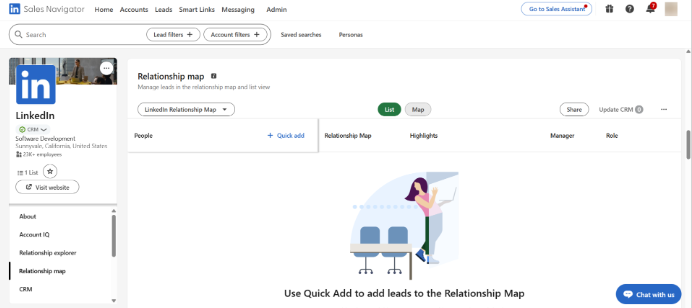
LinkedIn Sales Navigator runs on LinkedIn, which describes itself as the world's largest professional network, with more than 1 billion members. Every plan includes 50+ advanced search filters, lead and account alerts, and 50 InMail credits a month.
Advanced and Advanced Plus add TeamLink, which shows warm introduction paths through your colleagues' networks. CRM sync with Salesforce, HubSpot, Microsoft Dynamics 365, and Oracle Sales is on Advanced Plus.
Sales Navigator is a research and messaging tool, so teams that need emails and direct dials in the CRM can pair it with a data provider.
Key features:
50+ advanced search filters across LinkedIn members
50 InMail credits a month on every plan
Lead and account alerts for job changes and new content
TeamLink on Advanced and Advanced Plus
Account IQ on Advanced and Advanced Plus
CRM sync on Advanced Plus
Pricing
LinkedIn Sales Nav pricing is public: Core costs $119.99 a month or $1,079.88 a year per license, Advanced $159.99 a month or $1,799.88 a year, and Advanced Plus is custom-priced.
Limitations
LinkedIn doesn't offer CSV or XLS export of leads and accounts, though Advanced Plus has alternative options, and CRM sync is on Advanced Plus only.
How LinkedIn Sales Navigator compares against ZoomInfo
Sales Navigator runs on LinkedIn's own member profiles, and TeamLink shows warm paths into target accounts.
ZoomInfo's edge is contact data that lands in your systems: 200M+ verified business emails and 120M+ direct dials, bidirectional sync with Salesforce, HubSpot, and Microsoft Dynamics, and APIs and MCP for automation and AI agents.
See the Sales Navigator vs. ZoomInfo comparison for the full head-to-head.
6. Seamless.AI
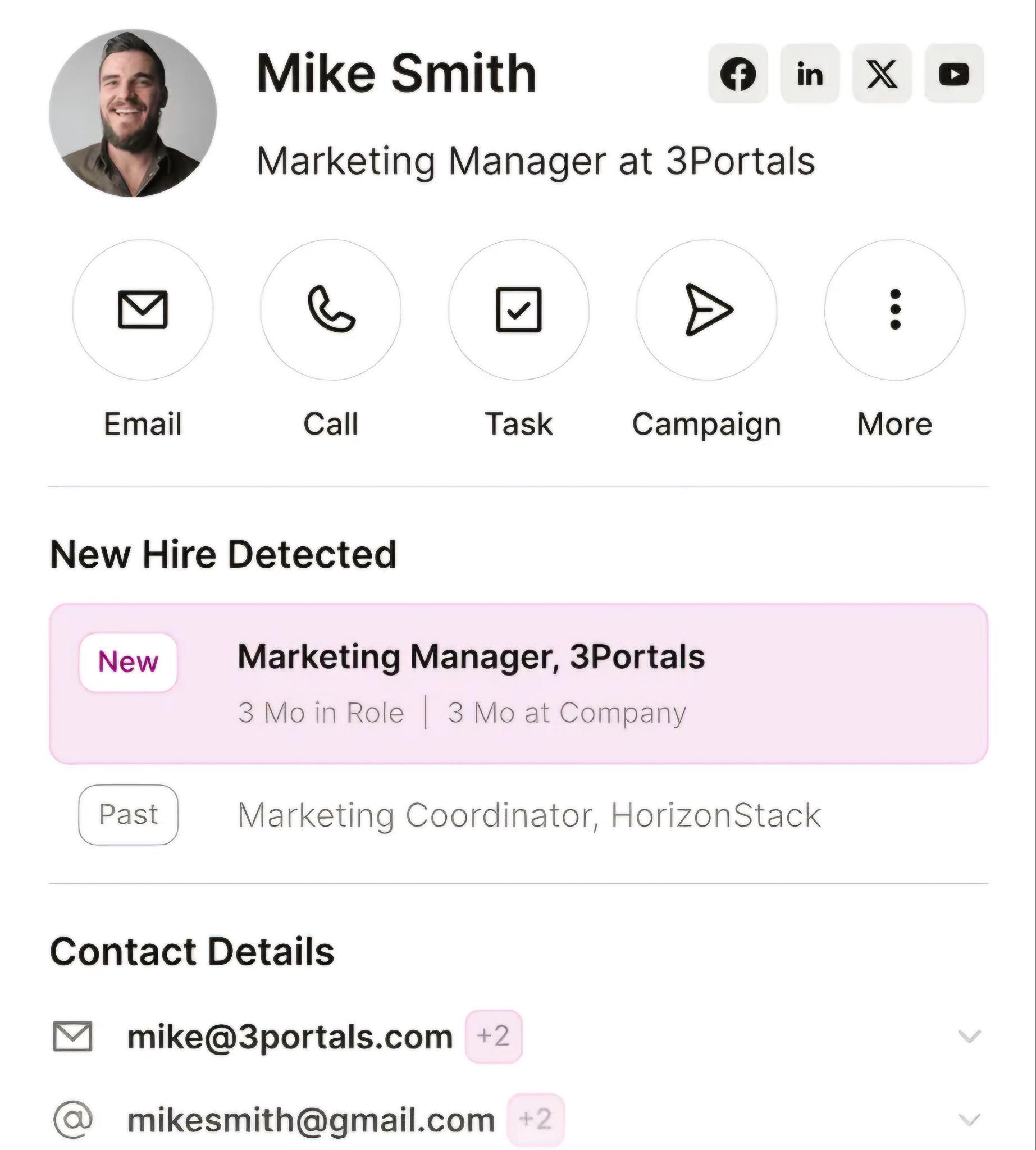
Seamless.AI describes itself as a real-time search engine that helps B2B companies find accurate sales leads. It lists 1.8B+ verified business emails and 414M+ phone numbers.
The Chrome extension works across professional networks, company sites, and search results. Autopilot researches the emails, cell phones, and direct dials that match your ideal customer and builds lists automatically, and Seamless.AI also offers buyer intent data and an MCP server.
Seamless.AI suits high-volume prospecting teams that look up contacts on demand.
Key features:
Real-time contact search
1.8B+ verified business emails and 414M+ phone numbers
Autopilot for automated list building
Chrome extension for professional networks and company sites
Buyer intent data
MCP server
Pricing
The pricing for Seamless.AI is quote-based beyond a free account with up to 50 credits.
Limitations
Pricing isn't published, so compare costs on a sales call before you commit.
How Seamless.AI compares against ZoomInfo
Seamless.AI's real-time search and free credits make it easy for high-volume prospecting teams to start.
ZoomInfo's edge is the account context around each contact: 100M companies with firmographic and technographic data, the GTM Context Graph, and 300+ human researchers verifying records.
Review our head-to-head Seamless.AI vs. ZoomInfo walkthrough.
7. HubSpot data enrichment (formerly Clearbit)
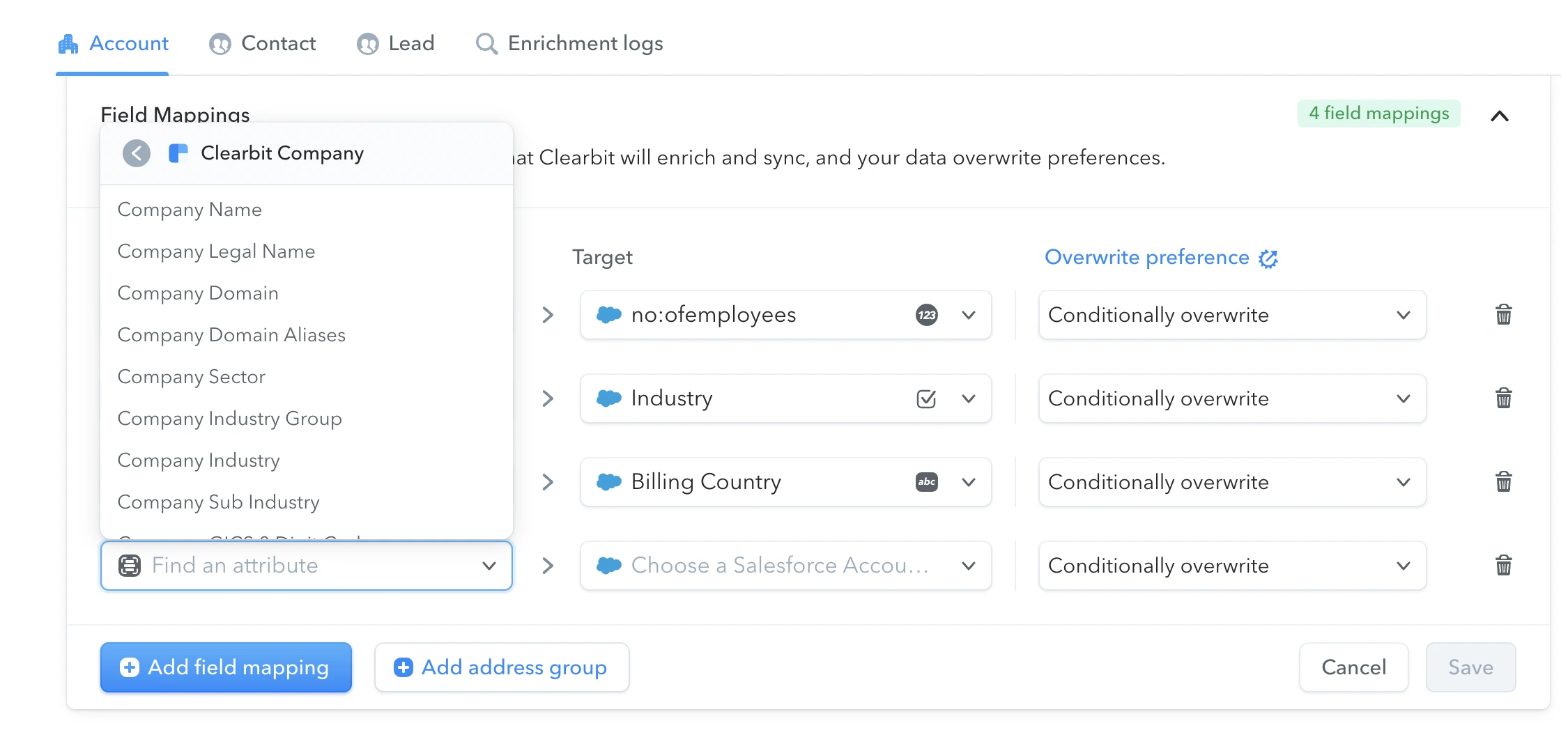
HubSpot announced its acquisition of Clearbit in November 2023 and closed it in December 2023. Clearbit's free tools were sunset on April 30, 2025, its Logo API on December 1, 2025, and clearbit.com now points customers to HubSpot.
Inside HubSpot, data enrichment fills company and contact records, and form shortening only displays the fields that can't be enriched. Buyer intent connects anonymous web visitors to known companies by IP address. HubSpot says its data covers over 200 million company and buyer profiles.
The feature suits marketing teams that already run a paid HubSpot subscription and want enrichment without another vendor contract.
Key features:
Company and contact enrichment inside HubSpot
Form shortening that only shows fields that can't be enriched
Buyer intent that matches anonymous visitors to companies
200M+ company and buyer profiles
Enriched data stored on HubSpot company and contact records
Pricing
Data enrichment comes with paid HubSpot subscriptions and doesn't consume HubSpot Credits. Buyer intent does: tracking a company costs 10 credits.
Limitations
It's only available inside HubSpot, on a paid Starter, Professional, or Enterprise subscription.
How HubSpot data enrichment compares against ZoomInfo
For teams already on HubSpot, built-in enrichment means no separate vendor contract.
ZoomInfo's edge is reach beyond one CRM: bidirectional sync with Salesforce, HubSpot, and Microsoft Dynamics, plus 500M contacts and 100M companies with 120M+ direct dials.
See a head-to-head Clearbit vs. ZoomInfo walkthrough.
8. UpLead
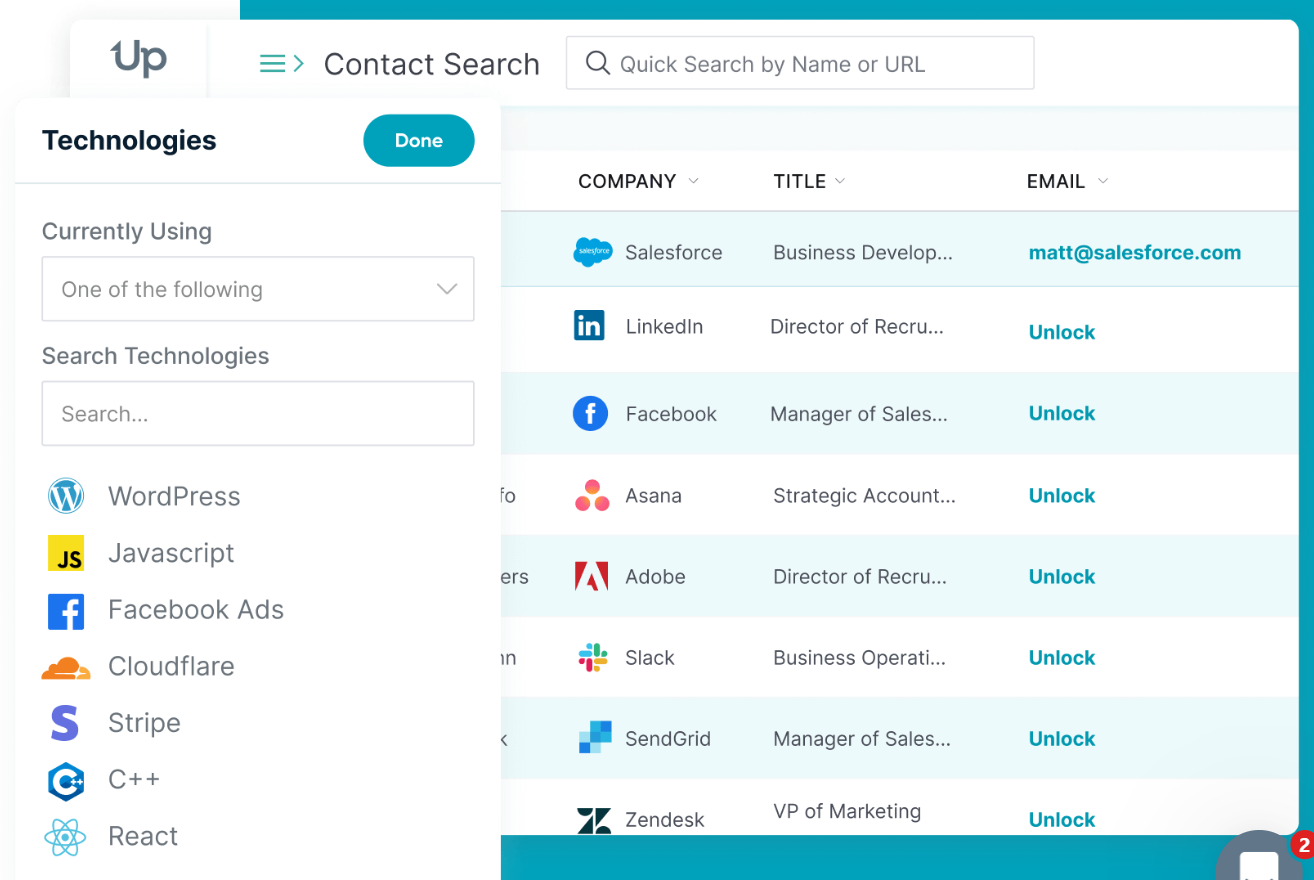
UpLead advertises 95% data accuracy and refunds credits for bounces and poor data. It lists 200M+ leads, verified as you search, and verifies emails again when you export them.
Technographic filters on Plus and above show which technologies companies use, and the Professional plan adds buyer intent data and bi-directional CRM sync. The Chrome extension is available, including on the free trial.
UpLead suits mid-market teams that want public pricing and an accuracy guarantee.
Key features:
95% data accuracy with refunds for bounces
Email verification at every export
Technographic filters
Buyer intent data on the Professional plan
Chrome extension
Public monthly pricing with no long-term contract
Pricing
UpLead has public tiered pricing. Essentials costs $99 a month billed monthly or $74 a month billed annually, Plus $199 or $149, and Professional is custom-priced with annual billing only. A 7-day free trial includes 5 credits.
Limitations
Buyer intent data and bi-directional CRM sync are on the Professional plan only, which is billed annually.
How UpLead compares against ZoomInfo
UpLead's accuracy guarantee and public monthly pricing suit mid-market teams that want quality assurance without an annual contract.
ZoomInfo's edge is scale and platform breadth: 500M contacts against UpLead's 200M+ leads, with WebSights visitor identification and Chorus conversation intelligence on the same platform.
See a head-to-head UpLead vs. ZoomInfo walkthrough.
9. Lead411
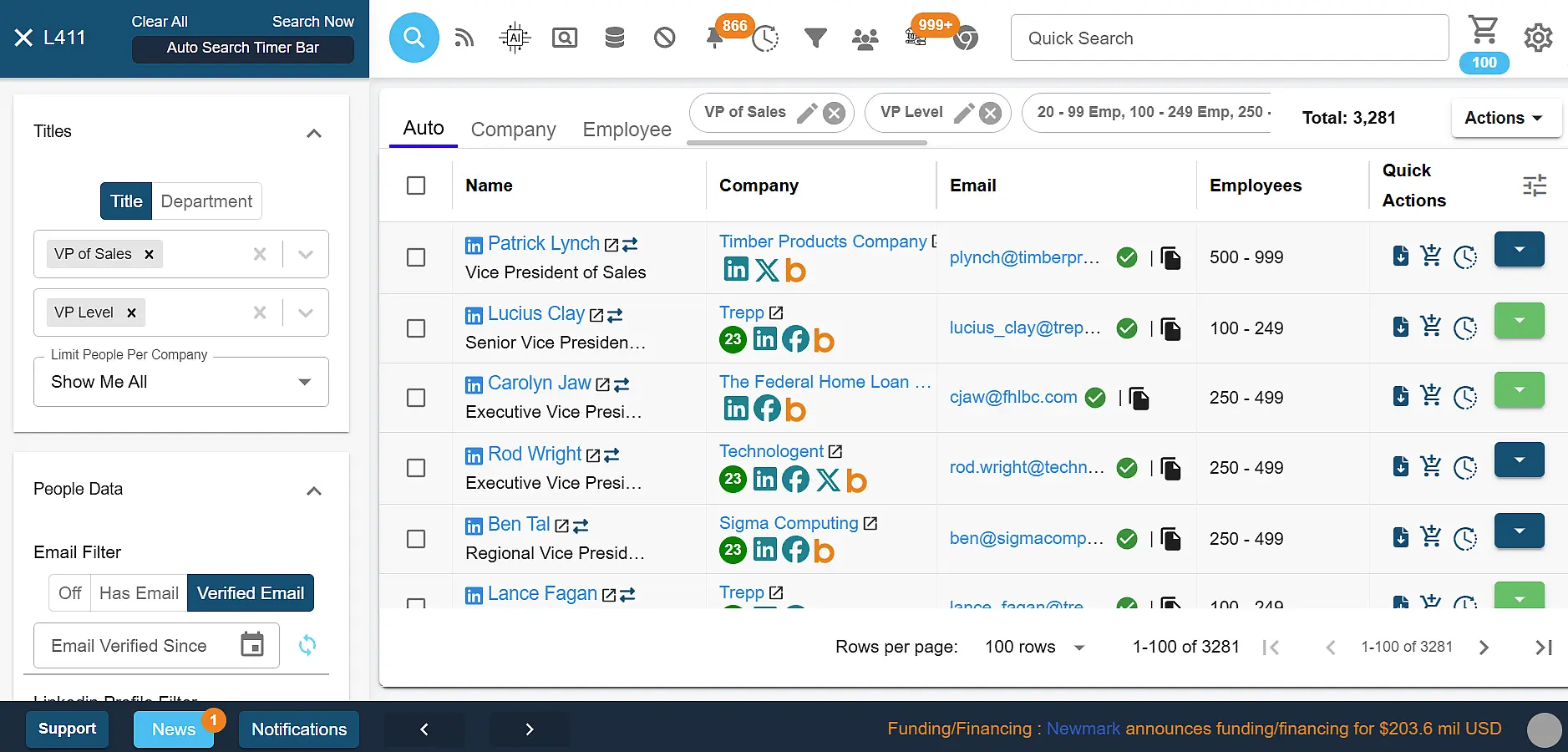
Lead411 combines contact data with sales intelligence triggers and intent. It advertises triple-verified emails and double-verified mobile direct dials, and lets you create custom triggers for your ideal customer profile.
Bombora buyer intent data is available on Pro and Enterprise annual subscriptions, and as an optional add-on on Unlimited. Lead411 also offers a Chrome extension for LinkedIn and an MCP server.
Lead411 suits sales teams running event-driven outreach that want triggers and intent in one tool.
Key features:
Triple-verified emails
Double-verified mobile direct dials
Custom sales triggers
Bombora intent on Pro and Enterprise annual plans
Chrome extension for LinkedIn
MCP server
Pricing
Plans run on export credits: Basic Plus Unlimited includes 200 exports a month or 2,400 a year, Pro with Bombora Intent 10,000 exports a year, and the Unlimited tier unlimited exporting. A 7-day free trial includes 50 exports.
Limitations
On Basic Plus Unlimited, "unlimited" covers email and direct phone views while exports are capped at 200 a month, so match the tier to your export volume.
How Lead411 compares against ZoomInfo
Lead411's triggers and Bombora intent on annual plans suit event-driven outreach teams.
ZoomInfo's edge is scale and first-party signals: 500M contacts and 100M companies, WebSights visitor identification, and Chorus conversation data, with 300+ human researchers verifying records.
See a head-to-head Lead411 vs. ZoomInfo walkthrough.
10. RocketReach
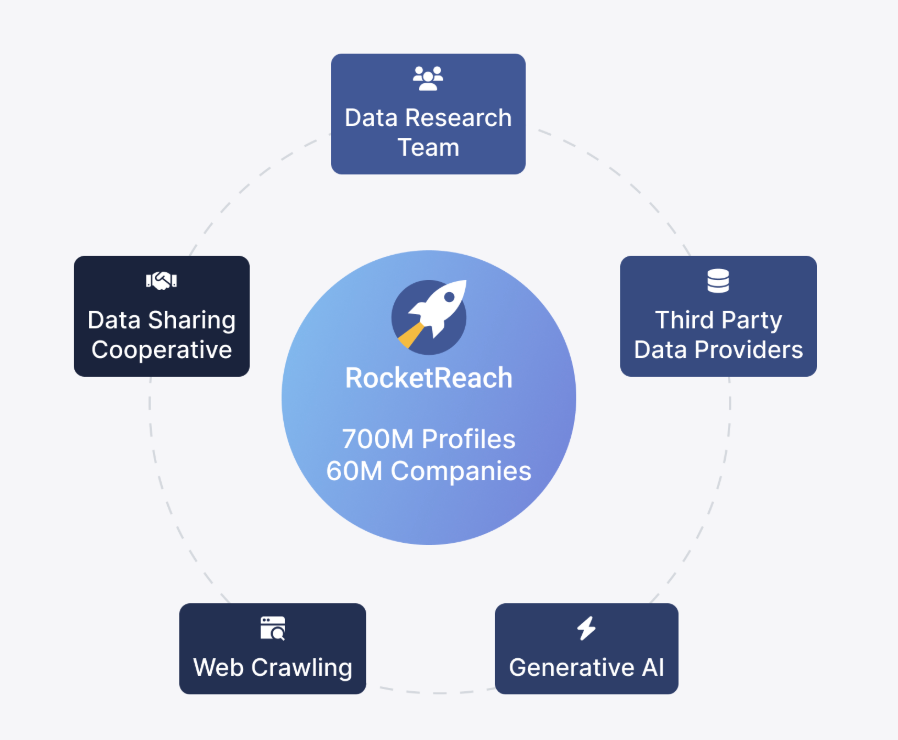
RocketReach lists 700M profiles and 60M companies. Every plan includes Messages, Sequences, and an AI Email Writer alongside lookups, CSV enrichment, API access, MCP access, and a Chrome extension.
Intent data, powered by Intentsify through a partnership with 5x5 Data, covers 35,000+ topics on the Ultimate plan.
RocketReach suits individual sellers who look up specific people and want outreach in the same tool.
Key features:
700M profiles and 60M companies
Messages, Sequences, and AI Email Writer
Intent data on the Ultimate plan
CSV enrichment and API access
MCP access on every plan
Chrome extension
Pricing
RocketReach publishes its pricing. Essentials costs $69 a month billed monthly or $399 a year, Pro $119 a month or $899 a year, and Ultimate $209 a month or $1,699 a year. Enterprise plans start at $6K a year. A free account includes 5 lookups.
Limitations
Intent data is on the Ultimate plan only, and the free account stops at 5 lookups.
How RocketReach compares against ZoomInfo
RocketReach's public self-serve pricing and built-in outreach tools suit individual sellers who want lookups and sequences without an enterprise contract.
ZoomInfo's edge is company depth and verification: 100M companies against RocketReach's 60M, the GTM Context Graph, and 300+ human researchers verifying records.
Review a head-to-head RocketReach vs. ZoomInfo walkthrough.
11. Leadfeeder (formerly Dealfront)
Dealfront rebranded as Leadfeeder on March 24, 2026. Leadfeeder identifies companies visiting your website by IP, including employees working remotely, and says it identifies up to 45% of companies visiting your site. It's GDPR compliant and built and hosted in the EU.
Leadfeeder also offers a database of 60M companies and 400M verified contacts, plus an MCP server for ChatGPT, Claude, and Copilot.
Leadfeeder suits European teams that want GDPR-first visitor identification and contact data.
Key features:
Company-level website visitor identification, including remote workers
Identifies up to 45% of visiting companies, by its own figures
EU-hosted, GDPR-compliant infrastructure
60M companies and 400M verified contacts
MCP server for ChatGPT, Claude, and Copilot
Free Lite plan for up to 100 identified companies a month
Pricing
Lite is free for up to 100 identified companies a month with 7 days of history. Discover starts at €79 a month billed annually or €113 billed monthly ($79 or $113 in USD) for up to 50 identified companies.
Limitations
Visitor identification is company-level: Leadfeeder says it does not do person-level identification, apart from named clicks from connected email campaigns.
How Leadfeeder compares against ZoomInfo
Leadfeeder's free Lite plan and EU hosting suit European teams that want visitor identification with a GDPR-first setup.
ZoomInfo's edge is scale: 100M companies and 500M contacts against Leadfeeder's 60M and 400M, plus GTM Workspace for sellers and Chorus conversation intelligence.
How to choose a B2B contact database
Start with your ideal customer profile: the industries, company sizes, and geographies you target. Then check which B2B contact data provider covers those segments best.
Data quality and verification methods
Dirty data costs your team time. Bounced emails hurt your sender reputation, and wrong numbers frustrate prospects and burn calling capacity.
Look for platforms that verify emails in real time at export as well as in periodic batch updates. Phone verification should check against carrier data and DNC lists. Ask how often records are refreshed: on a quarterly cycle, some contacts will be months out of date.
Before signing an annual contract, request a sample export of 500 contacts matching your ICP and validate it. Check bounce rates, phone connect rates, and whether job titles are current. A test on your own accounts tells you more than any vendor claim.
Ask for accuracy guarantees or SLAs that specify deliverability rates. Some providers, UpLead among them, refund credits for bounced contacts.
Coverage for your target market
Coverage depth in your market matters more than database size. A platform with a huge database but weak coverage in your industry is worth less than a smaller one with verified contacts in your niche.
Check these coverage factors:
Geographic reach: North American-focused databases can be thin in European and Asian markets, and EMEA-first platforms are built around European data. If you sell globally, verify coverage in every region you target.
Industry depth: Some platforms are strong in tech and SaaS but thinner in healthcare or manufacturing.
Company size segments: Enterprise-focused databases may have fewer SMB contacts, and SMB platforms may be thinner at large organizations.
Seniority levels: Verify the database includes the decision-maker levels you need to reach.
CRM and tech stack integration
Your contact database should fit the workflows you already run. Native CRM connectors enable bidirectional sync, enriching records and pushing new contacts into your pipeline.
Evaluate integration depth beyond basic contact sync by asking three questions: Can the platform trigger workflows based on intent signals? Does it enrich existing records with missing fields? Will it deduplicate contacts before adding them to your CRM? The answers separate a contact lookup tool from a platform that improves your CRM data over time.
Sales engagement platform compatibility matters for outbound sales teams. Look for integrations with Outreach, Salesloft, or your sequencing tool that let you build lists and launch campaigns without manual exports.
Compliance and data privacy
Data regulations vary by geography and industry. GDPR requirements apply to contacts in the EU, regardless of where your company operates. CCPA governs California resident data, with similar laws emerging in other states.
Verify that providers document their data sourcing methods and maintain opt-out processes. A SOC 2 Type II report shows the security controls around data handling. Ask how the platform screens against DNC lists and manages consent for phone outreach.
Enterprise buyers should request a data processing agreement (DPA) that sets out liability and compliance responsibilities.
Pricing model and total cost
Contact database pricing ranges from free plans to custom enterprise contracts. Credit-based models charge per contact reveal or export, which keeps costs predictable at low volume but adds up at scale. Plans with high or unlimited export limits cost more up front but remove per-contact friction.
The pricing model shapes how reps work. Credit limits make reps selective about exports, which can slow prospecting. If reps pull 200+ contacts a week for outbound sequences, check that the plan's credits cover it.
Calculate total cost beyond the platform fee:
Integration costs and setup time
Training and onboarding resources
Ongoing data quality management
Add-on features like intent data or technographics
Consider contract terms and renewal structures. Annual contracts often provide discounts but lock you in if the platform underperforms. Month-to-month pricing offers flexibility but costs more over time.
How to find the right business contact database for your team
The right B2B contact database matches your team's coverage needs, workflows, and compliance standards, and providers differ in data quality, geographic coverage, and features.
Match the evaluation to your use case, and weigh these factors alongside database size:
Coverage depth in your target markets and industries
Data accuracy guarantees and verification methods
Integration capabilities with your existing tech stack
Compliance requirements for your target geographies
ZoomInfo is an all-in-one AI GTM Platform: verified data on 500M contacts and 100M companies, the GTM Context Graph, and access through GTM Workspace, GTM Studio, APIs, and MCP.
Request a demo to see how ZoomInfo fits your team's workflow.
Frequently asked questions about B2B contact databases
What do sales teams use B2B contact databases for?
Sales teams use B2B contact databases to find and reach decision-makers at target accounts, build prospecting lists from ideal customer profiles, and enrich CRM records with missing contact information. Marketing teams use them to build campaign audiences and segment contacts by firmographics or technographics. Some platforms also deliver data feeds directly into your infrastructure through Data as a Service models for custom applications and analytics.
How do B2B contact databases verify email accuracy?
Verification usually runs in layers. The platform validates email syntax and domain configuration, then checks the mail server (an SMTP check) to confirm the address exists without sending a message. Some providers add ongoing monitoring that flags contacts when they change jobs, so stale records don't pile up between exports. Look for providers that verify at several points: during collection, before export, and through ongoing monitoring.
Which B2B contact databases are GDPR compliant?
Compliance varies by provider. ZoomInfo holds ISO 27001, ISO 27701, SOC 2 Type II, TRUSTe GDPR, and TRUSTe CCPA certifications. Cognism's security page lists ISO 27001, ISO 27701, SOC 2 Type II, GDPR, and CCPA. Leadfeeder says it is GDPR compliant and built and hosted in the EU. Ask every provider for its compliance documentation and a data processing agreement. A GDPR compliance guide can help you evaluate what to look for during vendor selection.
What's the difference between a B2B contact database and a CRM?
CRMs store your customer and prospect data, including the contacts you own and your history with them. A B2B contact database provides external prospect data to fill your pipeline with new contacts that match your ideal customer profile. You use a contact database to find prospects, then store them in your CRM.
How much does a B2B contact database cost per month?
Prices range from free plans to custom enterprise contracts. Among published prices, Lusha starts at $37.45 a month billed yearly, Apollo at $49 per seat per month billed annually, UpLead at $74 a month billed annually, RocketReach at $399 a year, Leadfeeder Discover at 79 euros a month billed annually, and LinkedIn Sales Navigator Core at $1,079.88 a year. ZoomInfo is free to start with consumption credits based on usage, and Cognism and Seamless.AI quote their paid plans.
Can I integrate a B2B contact database with Salesforce?
Many providers offer native Salesforce integrations with bidirectional sync and automatic enrichment. These let you search for contacts inside Salesforce, enrich existing records, and push new contacts into your pipeline without manual exports. ZoomInfo's GTM Workspace integrates bidirectionally with Salesforce, HubSpot, and Microsoft Dynamics.
What is the difference between a B2B contact database and a data enrichment tool?
A B2B contact database provides net-new prospect records: names, emails, phone numbers, and company details for people not yet in your system. A data enrichment tool fills in missing fields on records you already have, appending firmographics, technographics, or updated contact details to existing CRM entries. Many platforms, ZoomInfo included, do both. Redwood Logistics saved 20-25 hours per week with ZoomInfo Operations.
How do I know if a B2B contact database provider is GDPR compliant?
Check for five things: documented lawful basis for data collection, DNC list screening, data subject access request handling, opt-out processes, and data processing agreements available for enterprise customers. A SOC 2 Type II report shows the security controls around data handling. Ask the provider to walk you through their compliance documentation before signing. A list of compliance risk questions for data vendors can help structure that conversation.
