
If you are a sales leader staring at a pipeline shortfall, outsourced SDR companies can look like a fast fix. Often, they are.
Providers today offer dedicated reps, multi-channel outreach, and data-driven targeting that rival what most companies build internally. But choosing the wrong partner wastes budget and burns your brand with prospects.
This guide breaks down the top outsourced SDR companies for 2026, what they cost, and how to evaluate them. You'll also see why ZoomInfo sits at the top of the list as the data foundation underneath every high-performing SDR program, in-house or outsourced.
What Is an Outsourced SDR Company?
An outsourced SDR company provides trained sales development representatives who prospect, qualify leads, and book meetings for your account executives. Instead of hiring and managing SDRs internally, you contract with a firm that handles the entire top-of-funnel sales process.
SDRs focus on outbound prospecting: cold calls, cold email outreach, LinkedIn messages, and follow-ups. Their job is to identify potential buyers, confirm fit against your ideal customer profile (ICP), and deliver qualified leads to your closers.
This is different from a business development representative (BDR) role, which some companies define as inbound-focused or oriented toward partnership development. In practice, the titles overlap. What matters is the function: generating qualified pipeline.
Outsourced SDR agencies typically offer three engagement models:
Dedicated reps work exclusively on your account, functioning like an extension of your team.
Shared teams split SDR capacity across multiple clients, lowering cost but reducing focus.
Hybrid models combine a core dedicated team with shared overflow capacity for high-volume campaigns or new market tests.
Data quality is the foundation of any SDR program. If your reps are dialing disconnected numbers or emailing invalid addresses, your cost per meeting skyrockets and your brand takes a hit. The intelligence layer behind the outreach matters as much as the people doing it.
The 8 Best Outsourced SDR Companies for 2026
Each provider serves a different niche, so the best fit depends on your team size, target market, and outbound strategy.
Company | Best for | Key differentiator | Pricing |
ZoomInfo | The data layer powering SDR teams (in-house or outsourced) | 500M+ contacts, intent signals, GTM Context Graph | Consumption-based (custom) |
memoryBlue | SDR talent development and hire-away | Hire-away model, 20+ years in market, global via Operatix | ~$11,000/month |
Belkins | High-volume B2B appointment setting | Multi-channel outreach, 92% AE acceptance rate | Omnichannel from $7,995/month; email-only from $6,500/month |
Callbox | Multi-channel B2B lead generation | Global coverage, co-managed GTM model | $15,000–$30,000/month per Campaign Pod |
CIENCE | Data-driven outbound at scale | Proprietary GO Data platform, modular pricing | $5,000 setup + $2,000/month + optional SDR marketplace |
Martal Group | B2B technology companies | North American SDR talent, fast ramp | Tiered monthly retainer (custom) |
SalesRoads | Phone-first outbound sales | US-based reps, consultative approach | $9,950 per 4-week cycle |
LevelUp Leads | Mid-market teams needing pipeline capacity | US-based SDRs, cold-calling led, fractional model | Starts at $5,000/month |
1. ZoomInfo
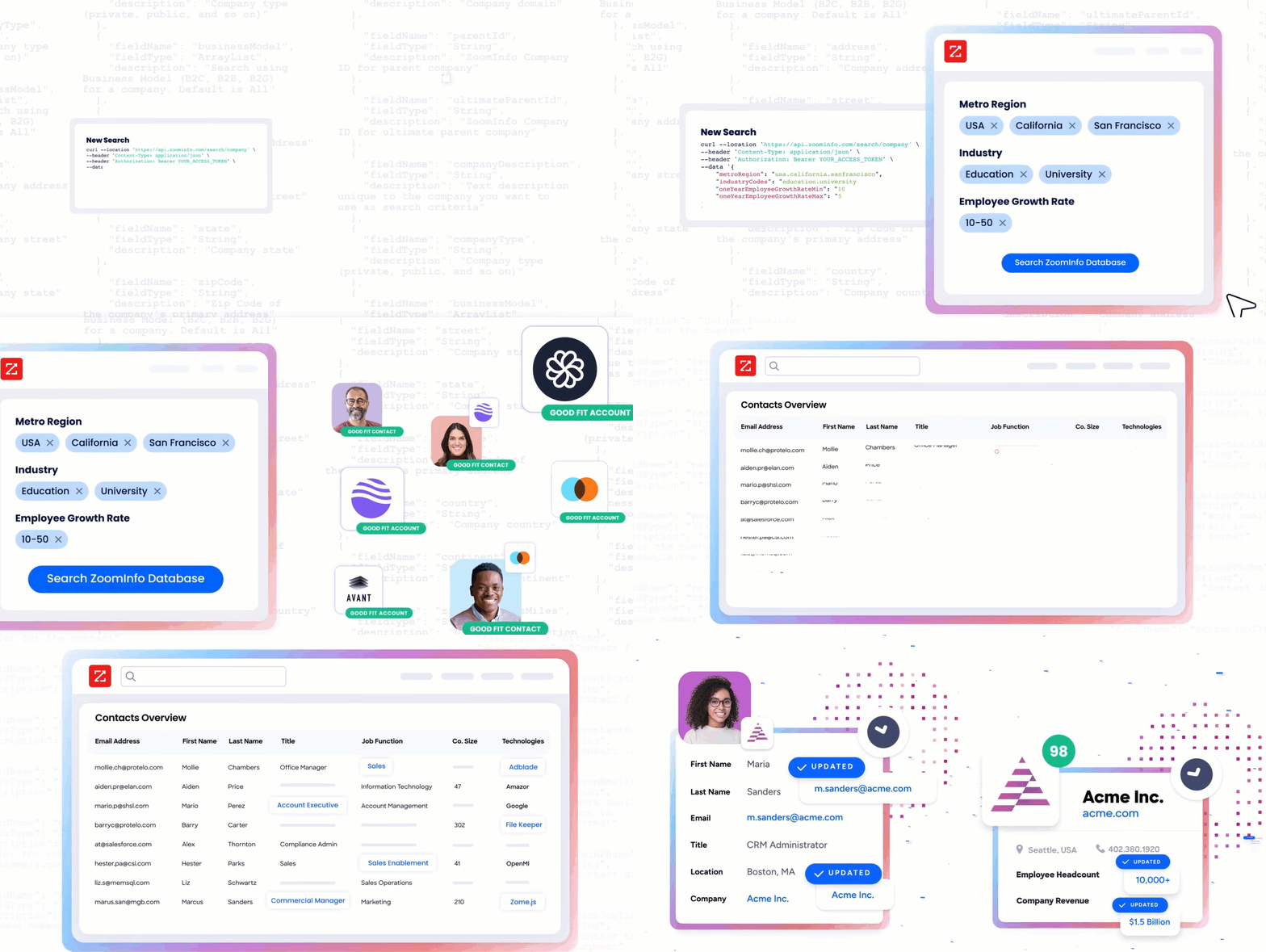
ZoomInfo is the B2B intelligence platform used by 35,000+ companies to find, qualify, and engage their next customers. Every outsourced SDR program lives or dies on the quality of its contact data, and ZoomInfo is the foundation that powers it, whether your reps are in-house or at one of the firms below.
The data foundation underneath is the largest in B2B: 500M+ business contacts, 135M+ verified phone numbers, and 200M+ verified business email addresses, all refreshed continuously through 1.5B+ data points processed daily with up to 95% accuracy on first-party data.
On top sits the GTM Context Graph, which fuses that B2B data with your CRM records, conversation intelligence, and buyer intent signals so reps know not just who to call but why that person is worth calling right now.
For SDR teams, that shows up in the daily work:
Verified direct dials cut the time it takes to reach a real person.
Intent signals surface which accounts are actively researching your category this week.
ZoomInfo Copilot drafts personalized outreach based on each account's recent activity, so reps spend their day talking to buyers instead of researching them.
ZoomInfo has been named a Forrester Wave Leader and earned 142 #1 rankings in G2's Spring 2026 reports across sales intelligence, intent data, and lead intelligence categories.
Key features:
Verified contact data with direct dials and mobile numbers across 500M+ profiles
Buyer intent signals identifying accounts actively researching solutions in your category
GTM Context Graph connecting first-party CRM data with third-party intelligence
Multi-channel engagement tools for orchestrating email, phone, and ad sequences
Native integrations with Salesforce, HubSpot, Outreach, Salesloft, and 100+ other platforms
Ideal for:
Sales teams that need accurate, verified data to power outbound prospecting and revenue growth
Sales operations and revenue operations leaders building scalable, repeatable pipeline processes
Companies evaluating outsourced SDR vendors who want verified, analyst-recognized contact data behind every outbound touch
Pricing: Consumption-based pricing tailored to your data access, seats, and feature tier. Free trial available.
What our customers say
Seismic's outbound team attributes 39% of its active pipeline to opportunities identified or influenced by ZoomInfo signals, with reps saving 11.5 hours per week.
"I'm really excited about the power of generative AI in general, and working with Copilot is a no-brainer because ZoomInfo is one of the key platforms in our tech stack."
Toby Carrington, Chief Business Officer, Seismic
2. memoryBlue
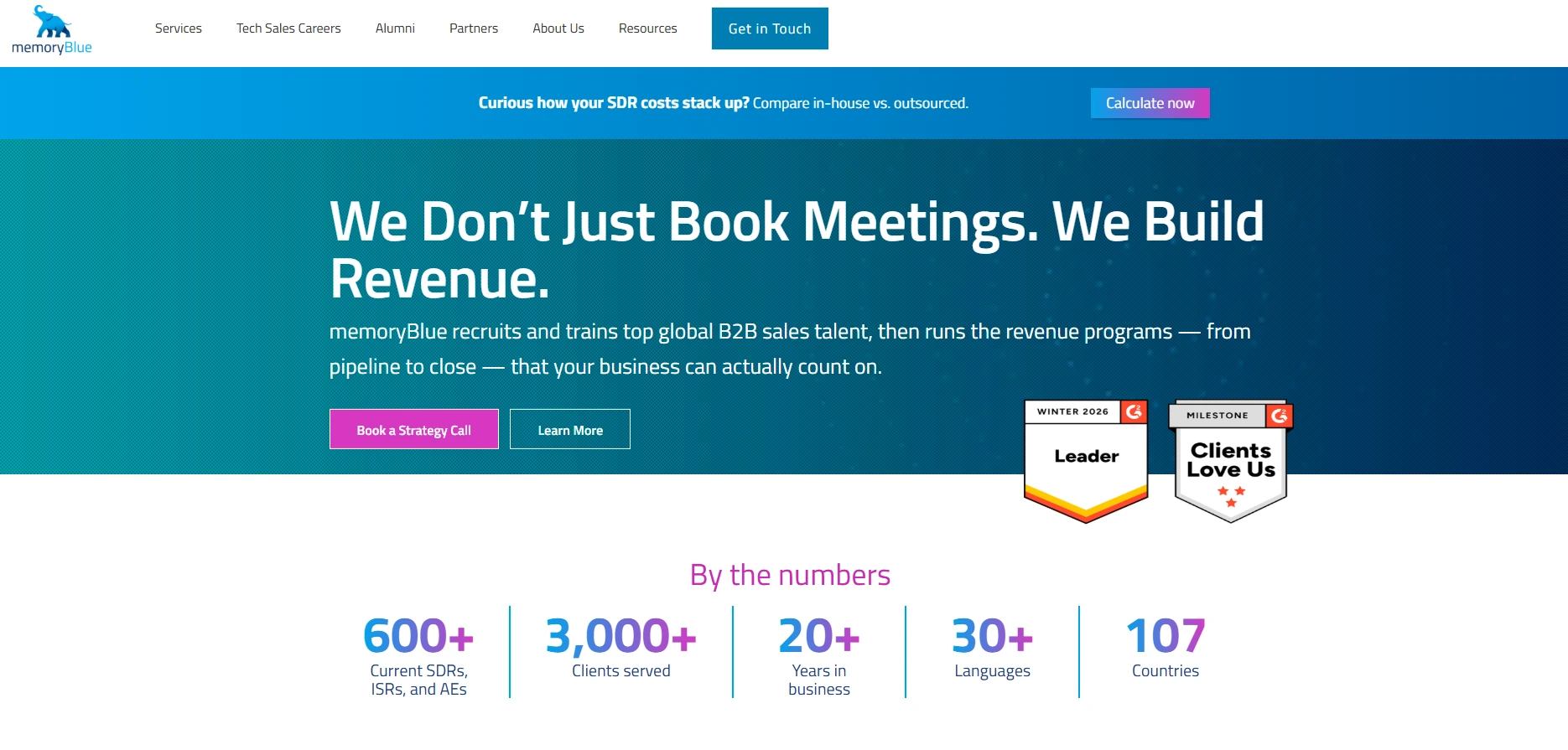
memoryBlue has been in the outsourced SDR business for over 20 years, with 650+ SDRs supporting clients across 30+ languages. The company acquired Operatix in 2023, adding multilingual EMEA and APAC coverage to its North American base for clients that need global SDR reach.
What sets memoryBlue apart is their hire-away model. Through the Rising Stars program, clients can convert top-performing outsourced SDRs into full-time employees. This gives you a try-before-you-hire path that reduces the risk of bad SDR hires. SDRs complete the Academy training program (a 2-day bootcamp followed by six weeks of foundation training) before working with clients.
Key features:
Academy training program for all SDRs before client deployment
Hire-away model through the Rising Stars program
Dedicated SDRs supported by sales managers and weekly strategy meetings
Multi-touch cadences across phone, email, and LinkedIn
Global coverage through the Operatix acquisition
Ideal for:
B2B tech companies building long-term SDR functions
Teams that want to test SDRs before committing to full-time hires
Companies expanding into FED/SLED or enterprise tech verticals
Pricing: Approximately $11,000/month per dedicated SDR. Custom pricing based on team size and management requirements.
3. Belkins
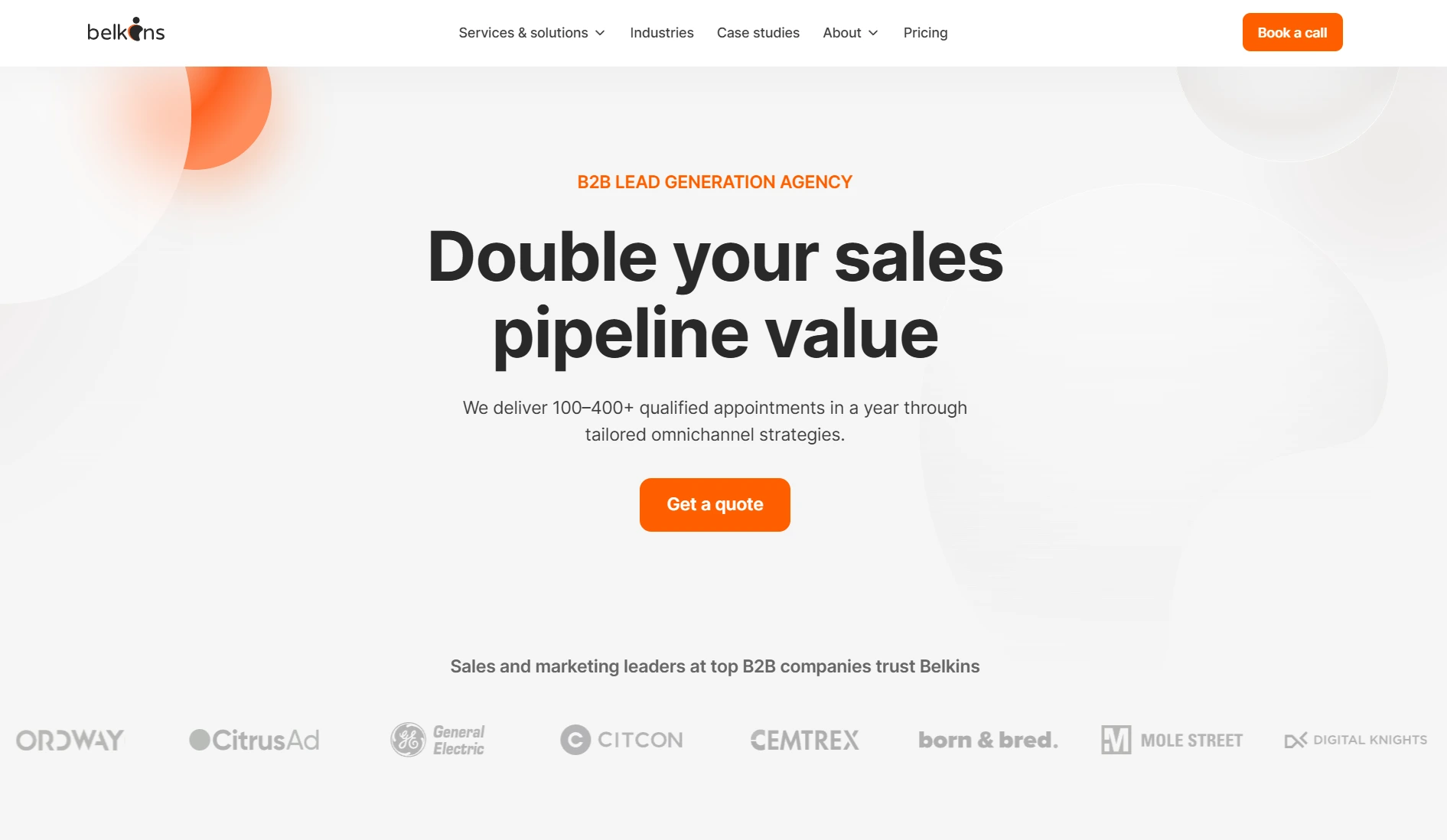
Belkins was founded in 2017 and has grown to serve over 1,000 clients across 50+ industries. The company specializes in multi-channel B2B appointment setting, combining email outreach, LinkedIn engagement, and cold calling into coordinated campaigns.
Belkins reports a 92% AE acceptance rate on booked meetings, meaning the vast majority of appointments their SDRs set are with genuinely qualified prospects. That metric matters because a meeting that never converts wastes AE time without producing pipeline.
The team builds custom outreach sequences for each client, researching target accounts and personalizing messaging at scale. Belkins earned the #5 spot in Clutch's 2025 Global 1000.
Key features:
Omnichannel outreach across email, LinkedIn, and cold calling
Dedicated cross-functional pod (account manager, SDR, researcher, copywriter, deliverability lead)
Folderly platform for real-time email deliverability monitoring
HubSpot CRM integration and reporting
Manual contact verification on every prospect before outreach
Ideal for:
Companies selling into complex B2B markets with multiple stakeholders
Teams that need omnichannel outreach (not just email or just phone)
Brand-sensitive industries where outreach quality matters more than volume
Pricing: Omnichannel packages start at $7,995/month. Email-only campaigns start at $6,500/month.
4. Callbox
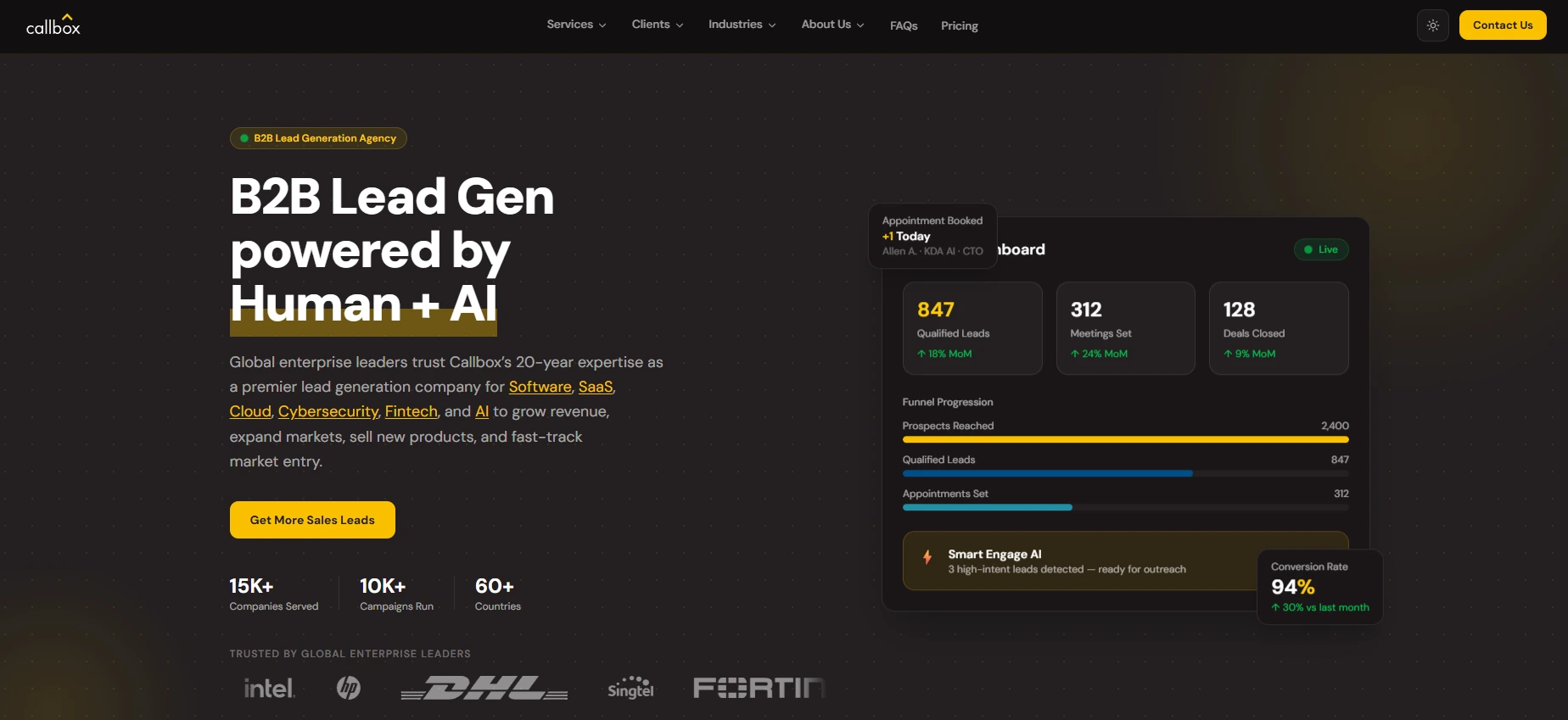
Callbox is a global B2B lead generation and appointment setting company founded in 2004. The company operates across voice, email, social media, web, and live chat, and serves 15,000+ companies across 60+ countries.
Callbox uses a co-managed GTM model, meaning their team works alongside yours rather than operating as a separate unit. Their pricing is structured around Campaign Pods, with each pod including a dedicated SDR, multi-channel outreach cadence, AI-enriched contact data, campaign manager oversight, and weekly performance reporting.
This pod model makes them a strong fit for companies that want outsourced SDR support without losing control of messaging and process.
Key features:
Campaign Pod structure with dedicated SDR, campaign manager, copywriter, and data analyst per pod
Proprietary Callbox Pipeline CRM included
Multi-channel cadence (voice, email, LinkedIn, web, chat)
Global delivery across North America, APAC, EMEA, and LATAM
Account-based marketing framework built into every engagement
Ideal for:
Mid-market to enterprise B2B teams needing global SDR coverage
Companies running ABM motions that require multi-channel coordination
Sales teams that want a co-managed model with weekly reporting
Pricing: $15,000–$30,000/month per Campaign Pod, scaling with pod count.
5. CIENCE
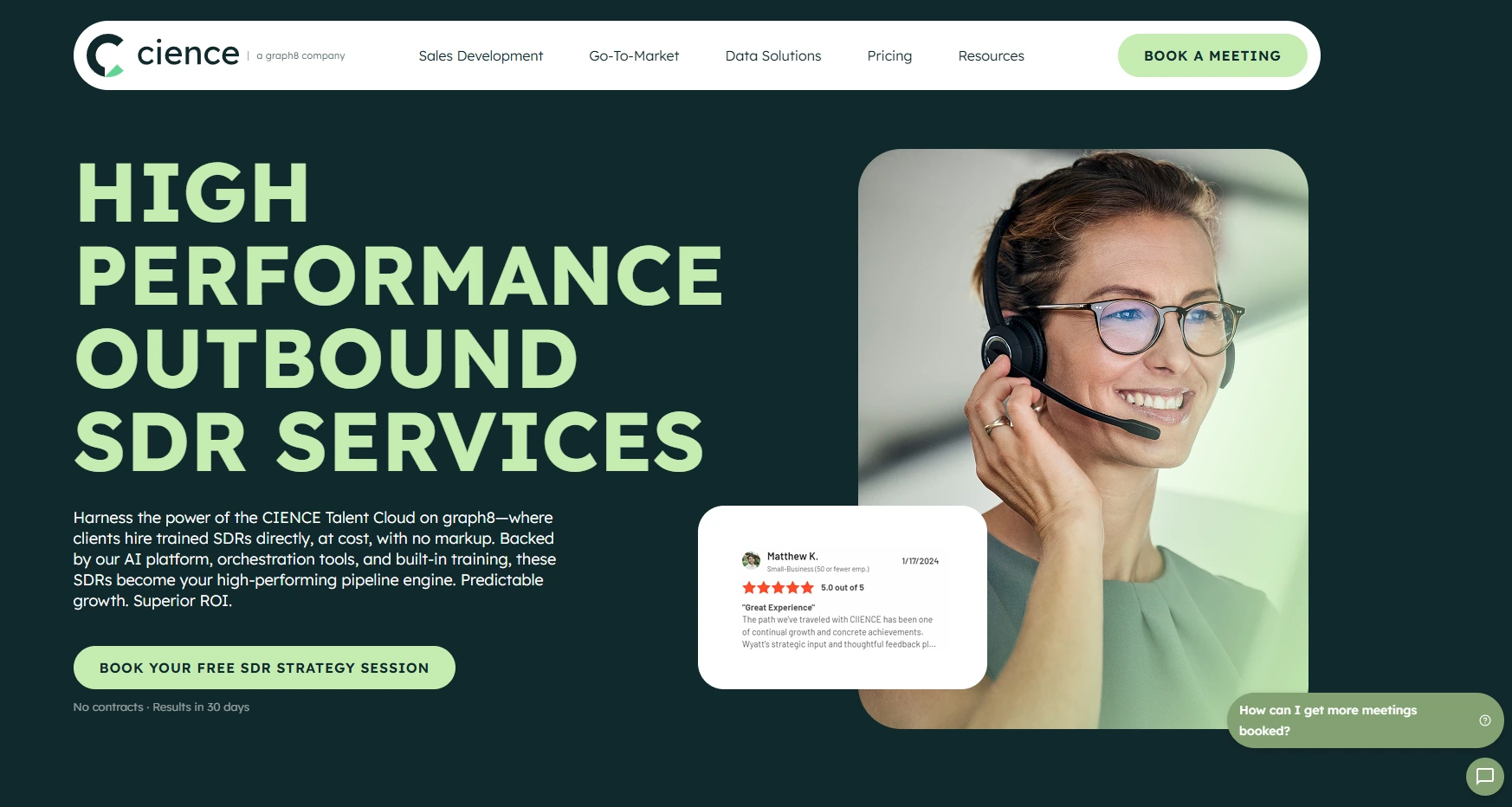
CIENCE (a graph8 company) combines human SDR talent with AI-powered tools and a proprietary data platform called GO Data. Their pricing is more modular than most agencies in this list: a one-time GTM setup fee, a monthly platform license, and optional SDR capacity through their marketplace.
CIENCE assigns dedicated SDR teams to each client and builds outbound campaigns using their own data alongside whatever CRM and intent data you bring. Their approach works well for companies that need high-volume outbound but lack the internal data infrastructure to support it. Clients get visibility into activity metrics, pipeline contribution, and rep-level performance.
Key features:
Proprietary GO Data platform and graph8 AI infrastructure
Modular pricing (GTM setup + platform + optional SDRs)
SDR marketplace with three experience tiers (offshore and US/Western Europe)
14-day deployment from contract to live campaigns
Multi-channel outreach with visitor de-anonymization built in
Ideal for:
Companies that want to control SDR pricing by paying reps at cost
High-volume outbound programs with strong RevOps support
Teams that need AI-driven automation alongside human SDRs
Pricing: $5,000 one-time GTM setup, $2,000/month strategic execution, $499/month platform license. Optional SDR marketplace from $1,500–$5,500/month per SDR depending on experience level and geography.
6. Martal Group
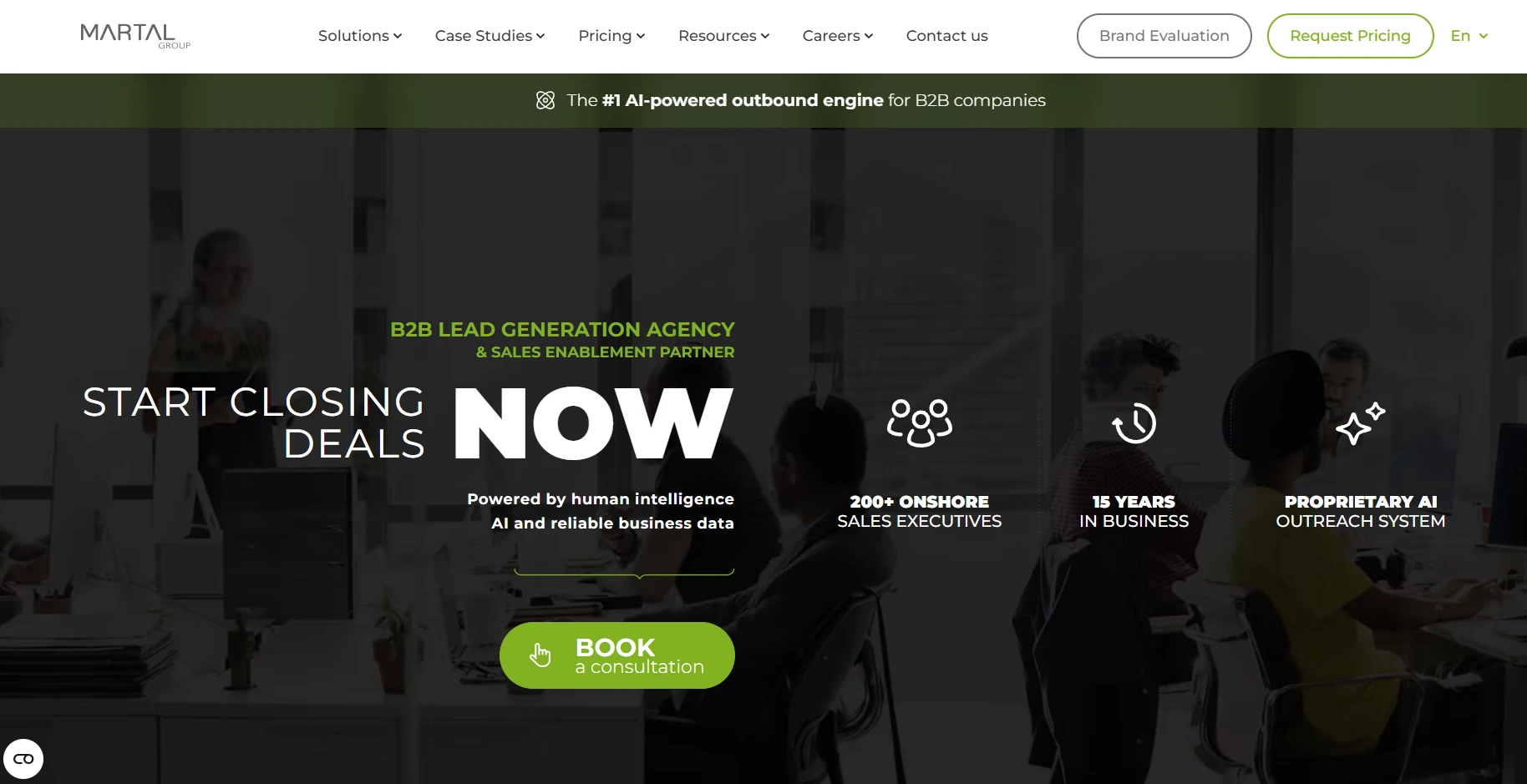
Martal Group specializes in outsourced sales development for B2B technology companies, from early-stage startups to publicly traded firms. The company sources North American SDR talent and typically gets reps productive within a few weeks.
Martal offers tiered engagements ranging from lead generation only (Tier 1) up through full lead generation, customer onboarding, and account management (Tier 3). Smaller companies can start with the lead generation tier and scale up as pipeline results materialize. Pilot campaigns run 3 to 4 months before transitioning to monthly subscription.
Key features:
Three service tiers covering lead gen through account management
North American SDR talent for outbound prospecting and discovery calls
Onshore team structure (sales executive, research manager, sales ops)
5-7 touchpoint outreach cadence across email, LinkedIn, and calls
Weekly meetings, reports, and KPI tracking
Ideal for:
B2B technology companies (SaaS, fintech, AI, cybersecurity) needing North American outreach
Smaller teams that want to start with fractional coverage and scale
Companies that may eventually want SDR + sales + account management bundled together
Pricing: Custom monthly retainer based on tier and engagement scope. Pilot campaigns required before monthly subscription.
7. SalesRoads
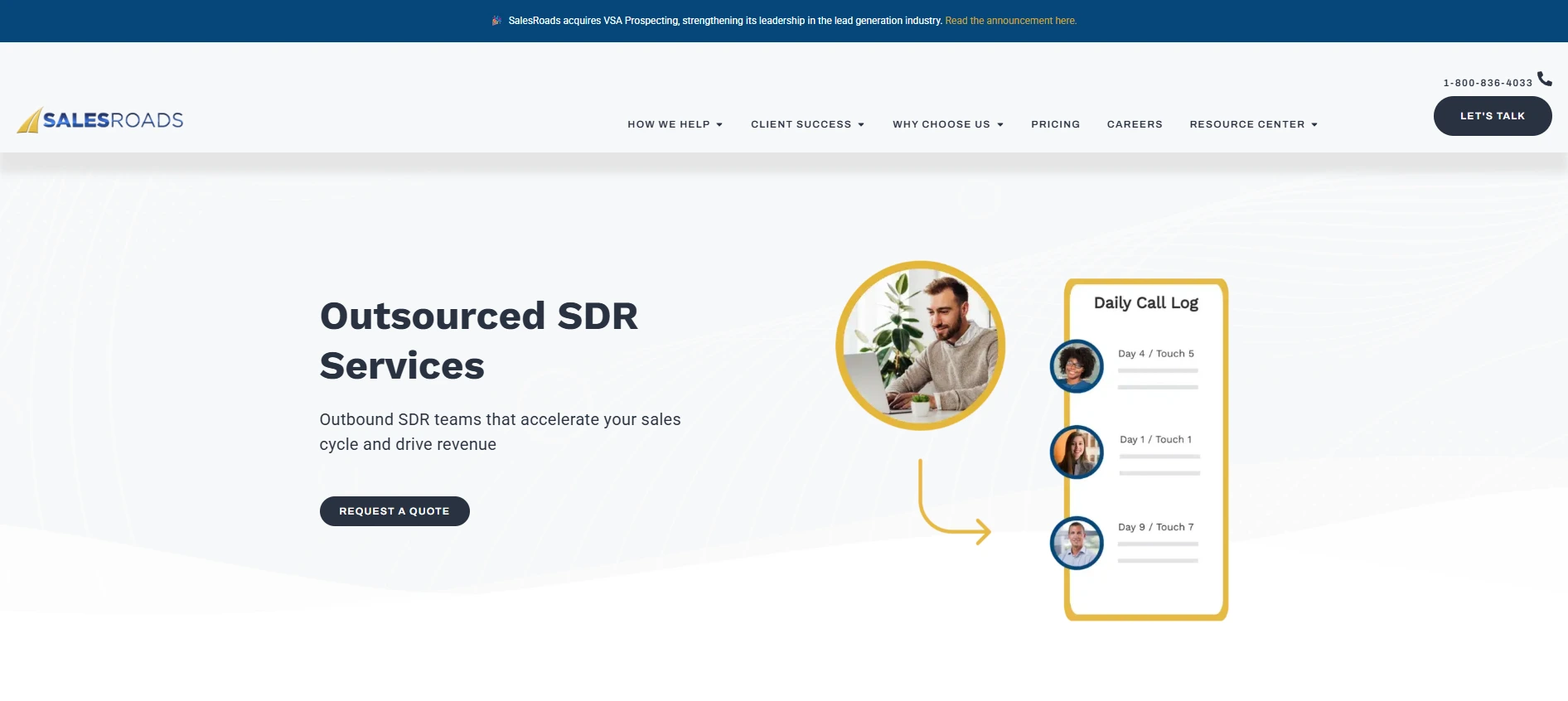
SalesRoads takes a phone-first approach. Every rep is US-based and trained in a consultative selling methodology that prioritizes conversation quality over call volume. The company has been operating since 2007 and recently acquired VSA Prospecting, strengthening its lead generation position.
This makes SalesRoads a strong fit for companies selling complex or high-value solutions where a real conversation matters more than an email sequence. The company focuses on quality over quantity: fewer meetings but higher conversion rates downstream. Every engagement begins with a "Demand Generation Playbook" codifying ICP, messaging, objection handling, and outreach sequences.
Key features:
US-based SDRs averaging 5-10 years of sales experience
Phone-first methodology with email prospecting as a layered channel
Dedicated SDR plus sales ops team, client success director, and talent development manager
Demand Generation Playbook delivered at engagement start
Robust email deliverability infrastructure on the Appointment Setting tier
Ideal for:
Complex B2B sales with long sales cycles and high ACV
Industries where phone outreach outperforms email (manufacturing, healthcare, government)
Companies that want US-based reps and consultative outreach
Pricing: Starts at $9,950 per 4-week cycle for full SDR programs.
8. LevelUp Leads
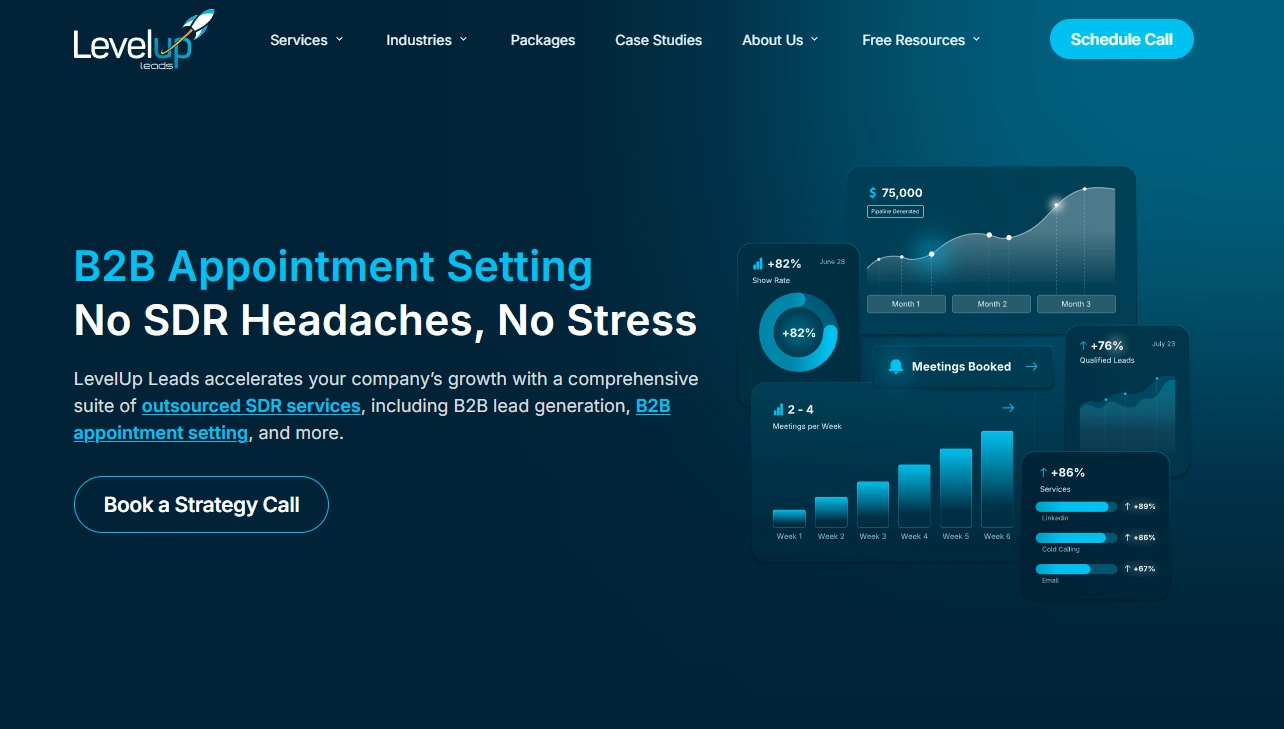
LevelUp Leads acts as a fractional SDR department for mid-market B2B companies that already have sales teams in place but need more pipeline capacity. The company positions itself as an extension to your existing AEs rather than a standalone vendor, integrating with your CRM and coordinating through Slack and weekly strategy calls.
Clients include Vodafone, Siemens, Hootsuite, Boston Dynamics, and Northwestern Mutual. A $5,000/month entry point and month-to-month rollover after the initial term make them a strong fit for teams that want to test outsourcing without a long lock-in.
Key features:
Three packages: Fractional SDR, Full-Service SDR, and Growth (multi-SDR)
Native English-speaking SDRs based in the US
Multi-channel outreach led by cold calling, with email and LinkedIn layered on
Custom reporting dashboard with call recordings and meeting tracking
10-14 day onboarding at no charge
Ideal for:
Mid-market B2B companies that have AEs but lack pipeline capacity
Teams that want a lower-commitment entry point to test outsourcing
Companies that prefer cold calling as the primary channel
Pricing: Starts at $5,000/month. Three tiers (Fractional SDR, Full-Service SDR, Growth) with custom pricing per tier. Three-month initial commitment, then month-to-month.
How To Evaluate an Outsourced SDR Company
Not all outsourced SDR providers are built the same. Run every vendor through these five criteria before signing a contract.
Industry expertise and ICP alignment
Start with vertical fit. A company that has run SDR campaigns for enterprise SaaS will approach outreach very differently from one focused on healthcare staffing. Request case studies in your space.
Ask the vendor:
What buyer personas and titles do your reps reach most often?
What signals do you use to identify accounts in-market for our category?
Walk us through a campaign you ran for a company like ours.
If the answers stop at logo lists or stay generic, the team probably hasn't sold into your buyer at depth.
Data quality and how they protect your market
The quality of contact data determines the ceiling of any outbound program. Off-the-shelf databases decay quickly without continuous verification, so providers relying on stale lists burn through your TAM with bad outreach.
Ask the vendor:
Where does your contact data come from and how often is it verified?
How do you calculate our TAM and build suppression lists from our CRM?
How do you track market penetration over time?
If a provider cannot clearly articulate their data sourcing and verification process, that is a red flag.
Domain reputation and deliverability
Agencies paid per meeting have an incentive to pump up email volume. But high volume with poor deliverability does more damage than no outreach at all.
Ask the vendor:
Do you monitor inbox placement in real time, and what's your threshold?
Do you use dedicated mailboxes or subdomains to isolate domain risk?
How do you document GDPR and CCPA compliance?
A vendor without documented compliance and risk-aware email setup is a vendor who'll burn your domain.
SDR training and talent quality
A well-run shop gets reps productive in two to four weeks, not two months. High turnover means you are constantly re-ramping new reps on your account.
Ask the vendor:
What's your average SDR tenure?
How do you match rep seniority to our buyer (junior reps shouldn't be calling C-suite)?
Do we get to approve messaging and scripts before launch?
Reps running generic scripts on your account is the fastest way to burn budget and brand at the same time.
Reporting, scalability, and pipeline accountability
You should see exactly what your outsourced SDR team is doing and producing. Activity metrics alone are not enough; what matters is whether meetings turn into pipeline.
Ask the vendor:
What baseline metrics do you report (meetings booked, meetings held, AE acceptance, pipeline generated)?
Do we get real-time dashboards or weekly reporting with rep-level data?
What's the contract structure: 12-month lock-in or quarterly flexibility?
Multi-channel capability (phone, email, LinkedIn) is table stakes. The right provider should flex with your go-to-market strategy, not constrain it.
In-House vs. Outsourced SDR Teams
The decision is not binary. Both models work, and many high-performing companies run a hybrid.
When outsourcing makes sense:
You need pipeline fast and cannot wait months for hiring and ramping.
You are testing a new market (vertical or geography) and want to validate before committing headcount.
You want to prove outbound ROI before building an internal team.
Your AE team is underutilized and needs more at-bats quickly.
When building in-house makes sense:
You have a proven playbook and want reps who live inside your product and culture.
Your sale requires deep product knowledge that is hard to train externally.
You use the SDR role as a promotion path into AE positions.
You have the management bandwidth to recruit, train, and coach SDRs directly.
The hybrid model:
Many companies start with outsourced SDRs to generate early pipeline, then bring the function in-house as they learn what messaging, channels, and personas convert best. Others keep a core in-house team for strategic accounts and use outsourced reps for volume plays or new market entry.
Whichever model you choose, the data layer is the constant. In-house SDRs and outsourced reps both need verified contact information, accurate direct dials, and intent signals to prioritize the right accounts. ZoomInfo provides that foundation, ensuring your outbound SDR program runs on real intelligence rather than assumptions.
Build Your SDR Program on Verified Intelligence
Outsourced SDR companies give you speed, flexibility, and access to trained talent without the overhead of building from scratch. But reps are only as good as the data behind them.
The providers in this guide each bring something different: appointment volume, phone expertise, global coverage, talent development. Evaluate them against the framework in this article. Then make sure whichever path you choose, your sales efforts rely on verified contacts, real-time intent signals, and the buyer context that turns outreach into sales pipeline.
See how verified data and buyer intent can accelerate your SDR program.
Frequently Asked Questions
How much does it cost to outsource SDR services?
B2B sales outsourcing typically costs between $3,000 and $12,000 per month per dedicated rep, according to industry benchmarks. Pay-per-appointment models typically range from $200 to $800 per meeting. Total cost depends on your industry, target seniority, geography, and contract length.
What is the difference between an SDR and a BDR?
SDRs (sales development representatives) typically focus on outbound prospecting: cold outreach, lead qualification, and booking meetings for account executives. BDRs (business development representatives) often handle inbound lead follow-up or strategic partnership development. Many companies use the titles interchangeably.
How do you measure the success of an outsourced SDR program?
Track meetings held (not just booked), AE acceptance rate, pipeline generated, and conversion from meeting to opportunity to closed-won. Activity metrics like calls and emails are leading indicators, but the metrics that matter are tied to revenue. Vendors that only report meetings booked are hiding the rest.
Can you use outsourced SDRs alongside an in-house sales team?
Yes. Many companies run a hybrid model where in-house SDRs handle strategic accounts while outsourced reps cover volume outbound, new market entry, or campaign-based prospecting. The key is clear territory and lead routing rules so teams do not overlap on the same prospects.
What questions should I ask an outsourced SDR vendor before signing?
The five that separate good vendors from bad ones: How do you protect domain reputation while scaling outreach? How do you calculate my TAM and prevent burnout? How do you integrate with my CRM, and who owns the contact data if we cancel? What performance metrics do you report, including show-up and AE acceptance rates? If we don't hit the guaranteed meeting minimum, what happens?
